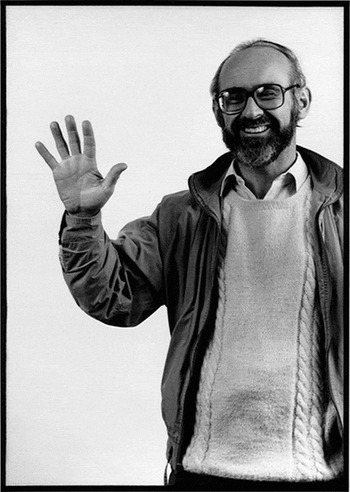
The killing in 1989 of Ignacio Martín-Baró along with five Jesuit brothers, their housekeeper, and her daughter at the Campus of the Universidad Centroamericana José Simeón Cañas (Central American University or UCA) deeply impressed the academic world.
In the United States, the American Psychologist devoted a full-page obituary to this social psychologist, the only Spanish-born psychologist so far to earn such an honor; Harvard University Press published an anthology of his articles under the title of Writings for a Liberation Psychology (Aron & Corne, Reference Aaron and Corne1994); the University of Chicago endowed The Ignacio Martín Baró Program to honor his memory; and Boston College created the Ignacio Martín-Baró Fund for Mental Health and Human Rights.
In Latin America, the Universidad de Guadalajara in Mexico published a selection of his writings (Pacheco, G. & Jiménez, 1990); Universidad Javeriana in Colombia, in collaboration with UCA and Universidad Alberto Hurtado in Chile, instituted an Ignacio Martín-Baró International Chair to promote interdisciplinary reflection on issues related to the conditions of socio-political violence and its relation to mental health in Latin American societies; and Martín-Baró’s work initiated a movement, the Liberation Social Psychology (Pickren & Rutherford, Reference Pickren and Rutherford2010, p.255), which regularly holds conferences, the last of which took place in Bogotá, Colombia, from November 15–17, 2012.
In Spain his work was not so widely known, except among social psychologists through the publication of his writings by Amalio Blanco and Luis de la Corte (Martín-Baró, Reference Martín-Baró1998, Reference Martín-Baró2003), as well as Luis de la Corte’s 2001 book Memoria de un compromiso. La psicología social de Ignacio Martín-Baró [Memory of a commitment: the social psychology of Ignacio Martín-Baró].
Most of the studies focus on his contributions to social psychology and his struggle for justice, leaving in the background his broader worldview. Martín-Baró was a psychologist, but also a learned man with a great variety of interests; he was well versed in contemporary literature, had excellent philosophical and theological training, and, above all, a Jesuit committed to the promotion of faith and social justice in the modern world. With the perspective afforded by the lapse of years since his untimely death, we analyze the seminal ideas that led him to sacrifice his life, and from this perspective, consider the whole body of his work for a more comprehensive picture of his many accomplishments.
The life and death of Ignacio Martín-Baró
Ignacio Martin-Baró was born in Valladolid, Spain, on November 7, 1942, in a large family of six brothers and sisters. His father, Francisco Javier Martín Abril, was a well-known poet, essayist and journalist who headed the local newspaper and collaborated with other national newspapers. Ignacio was the youngest of the four brothers and a sister was behind him. A boy full of vitality and charm, he attended the Jesuit high school in his hometown, where became interested in literature, drama, and other cultural activities. He was an accomplished magician in school plays and was fond of sports such as soccer and cycling.
On September 28, 1959, Ignacio Martín-Baró entered the Jesuit novitiate in the Basque town of Orduña, only to move one month later to the new novitiate built in Villagarcía de Campos, Valladolid, replacing the original seventeenth-century center. On this historical site, not far from his hometown, Martín-Baró began his long Jesuit training.
Jesuit Formation
In the summer of 1960, Martín-Baró was sent to El Salvador to continue his novitiate in Santa Tecla, a small town near San Salvador. After completing his training in the fall of 1961, he began his studies in Classical Humanities at the Universidad Pontificia Católica de Quito, Ecuador, where he improved his writing style and stood out as a skilled speaker.
One year later, in 1962, he moved to Santa Fe de Bogotá, Colombia, to study philosophy at the Universidad Javeriana. Right at the start of the term, on October 11, Pope John XXIII opened the Second Vatican Council, an event that brought significant changes to ecclesiastical universities. The old scholastic philosophy gave way to new currents of philosophical thought, and young Jesuits were allowed to read the books of Teilhard de Chardin and other philosophers hitherto barred. Taking advantage of this new climate, Martin-Baró became acquainted with Darwin’s theory of evolution, studied the Marxist theories of knowledge and became very fond of the existential philosophy of Martin Heidegger.
His interest in psychology dates from this time, when he avidly read the writings of Freud and other psychoanalysts such as Alfred Adler, Erich Fromm and Karen Horney. However, the psychoanalytical school he found most congenial was Logotherapy, developed by psychotherapist and World War II Holocaust survivor Viktor Frankl (1905–1997).
In his second year of philosophy studies, Martin-Baró participated in a seminar on existential philosophy, writing a paper entitled “Sufrir y Ser” (To Suffer and to Be), which he later submitted to the faculty of philosophy in fulfillment of the requirements for the Licentiate of Philosophy degree (Martín-Baró, Reference Martín-Baró1964). Inspired by Frankl’s Reference Frankl1955 book Homo Patiens (Suffering Man), it was to be followed by a doctoral thesis on the entire work of the founder of the third Viennese school of psychotherapy. However, Martín-Baró was unable to realize this project because, as he wrote to Viktor Frankl in a letter dated 1965:
I must confess that I had to abandon my project of Doctoral Thesis on your writings. This due to uncontrollable circumstances at Universidad Javeriana, circumstances which impeded me to pursue my Philosophical studies in Bogotá. I nevertheless keep on working arduously and personally on your works. Even with the amount of work I have, I figure on terminating a big writing on Dr. Viktor E. Frankl by the end of his year. This writing shall treat specially of your philosophical points of view, since it is more related to my actual studies [sic] (Martín-Baró, 1965, March 22).
Apparently the “uncontrollable circumstances at Javeriana University” had to do with changes in the academic authorities and the opposition of the new dean of philosophy to a project that implied some alterations in the regular curriculum. The letter concludes with his plans to become a college professor of psychology and a pastoral counselor for students. In this regard, he was considering two alternatives for 1966:
-
1. A) Psychological studies in the USA (Harvard, Cornell, Columbia...), towards the Master degree. This in order to acquire an experimental and laboratory experience so characteristic of the American Mind. B) Further studies in Austria (Vienna) for the Ph.D. degree, in order to acquire a more humanist and holistic formation in Psychology.
-
2. Or undertake all the Psychological studies in Austria (Vienna), or Europe [sic] (Martín-Baró, 1965, March 22).
Neither of these projects could be realized because, after receiving his licentiate degree in philosophy, Martín-Baró had to interrupt his studies and spend a year teaching at the Externado de San José in San Salvador, as required by Jesuit training.
After a successful year as a teacher, in 1967 he returned to Europe to study theology in Frankfurt, Germany. There he did not stay long, because German theology was too speculative and not very congenial to his lively personality. Looking for a more social approach, he moved to Louvain University, Belgium, which gave him the opportunity to watch the Paris student strikes of May ‘68. Two years later, in June 1970, he was ordained as a Roman Catholic priest in his hometown of Valladolid, Spain.
During this early period Martín-Baró published many newspaper articles on current topics such as the Beatles, German youth and the European danger, in addition to more extensive articles on topics including “Death as a philosophical problem” (1966) and “The macho complex” (1968a).
After his ordination, Martín-Baró returned to El Salvador to conclude his theological studies more in touch with the reality of his adoptive country. There he found the new religious climate created by the Latin American Bishops Conference held in Medellín, Colombia, in August 1968. The bishops had reviewed the role of the Church in a continent ravaged by poverty and decided to “take a preferential option for the poor.” This conclusion was strongly supported by liberation theology, a movement that reached maturity soon thereafter with the publication of a book by the same title by Gustavo Gutiérrez (Reference Gutiérrez1971).
This calling for social justice was eagerly welcomed by the young Central American Jesuits who were trying to apply the teachings of the Second Vatican Council to the world in which they were living. Father Pedro Arrupe (1907–1991), general of the order since 1965, visited Central America on his way to the conference in Medellín. His presence gave a strong impetus to the group headed by Ignacio Ellacuría (1930–1989), a philosopher and theologian very close to Xavier Zubiri (1898–1983), who later served as rector of UCA. Responsible for the Jesuits’ formation, Ellacuría pushed for structuring the Jesuit vice-province around the principle of liberation. Under his leadership, Martín-Baró enthusiastically embraced liberation theology and studied the works of Paulo Freire, Karl Marx, and the Latin American dependency theorists whose socio-economic analyses were at the bottom of the new theological movement. At the same time, he began his teaching at UCA as assistant professor of psychology.
Studying and Teaching Psychology
The Universidad Central Americana was founded in 1965 on the crest of a wave of what became known as desarrollismo or “developmentalism”, a period of remarkable economic growth fueled, in part, by the Alliance for Progress launched by President John Kennedy. In its early days the new university was enthusiastically committed to the development the country was experiencing. However, the economic bonanza did not last long. The number of landless peasants grew at an extraordinary rate, and, in 1969, El Salvador entered a five-day war with Honduras which left 2,000 dead. Blatant fraud in the 1972 presidential elections forced the winner and opposition leader Napoleon Duarte (1925–1990) to fly to Guatemala and dashed all hopes for a democratic government (Whitfield, Reference Whitfield1994).
Martín-Baró became the editor of Estudios Centroamericanos, the influential journal of UCA, and combined pastoral work with teaching and studying social psychology. In 1972, he took up the post of dean of students and in 1975 received his licentiate in psychology from UCA. His first social psychology textbook, Psicodiagnóstico de América Latina [Psychodiagnostic of Latin America] (1972d), dates to this period, clearly reflecting the influence of Jesús Arroyo (1925–2000), a Jesuit and psychoanalyst who tutored his licentiate thesis (Martín-Baró, Reference Martín-Baró1975a). He also published several articles on education and university-related issues (Martín-Baró, Reference Martín-Baró1971b, Reference Martín-Baró1972a, Reference Martín-Baró1972c, Reference Martín-Baró1974, Reference Martín-Baró1979b).
In 1976, after becoming head of the UCA department of psychology, Martín-Baró was able to fulfill his long-held plan of specialize in the United States. Having received a Fulbright scholarship, in September he left his adoptive country once again to spend three years completing first a master’s degree and then his Ph.D. at the University of Chicago. His field of specialization was to be social psychology, rather than clinical psychology, because it offered him the opportunity of bringing together the related fields of psychology and sociology.
The Ordeal of War
Upon his return to San Salvador in 1979, the continuing clashes between popular movements and military or paramilitary forces had generated thousands of political assassinations. In March 1980, the killing of Monsignor Romero gave new impetus to the guerrilla organizations. In October of that year the formation of the Farabundo Martí National Liberation Front (FMLN), a coalition of five armed revolutionary organizations, and the murder in December 1980 of four American church women precipitated the outbreak of the civil war on January 10, 1981 (Whitfield, Reference Whitfield1994).
From this moment on, Martin-Baró continued his work in conditions where he was constantly at risk. He was appointed academic vice-rector at UCA in 1980, and chair of the department of psychology in 1982; in 1986 he founded the University Institute of Public Opinion (IUDOP) to counter the institutional propaganda, giving a voice to people who hitherto had none (Martín-Baró, Reference Martín-Baró1989a).
As a committed scientist, he lectured in most countries of the Americas and Europe (Marin, Reference Marin1991). He was a visiting professor at the Universidad Central de Venezuela, the Universidad de Puerto Rico, Universidad Javeriana in Bogota, Universidad Complutense in Madrid and the Universidad de Costa Rica in San José, among others. His published lectures (Martín-Baró, Reference Martín-Baró1985, 1985/1992, 1987/1992, 1988b) and his writings on the civil war and politics (Martín-Baró, Reference Martín-Baró1981a, Reference Martín-Baró1981b, Reference Martín-Baró1982, Reference Martín-Baró1983b, Reference Martín-Baró1984, 1987/1994, 1988a, 1988b, 1988c, 1989c) were widely read.
Through his advocacy, research and rehabilitation programs, Martín-Baró worked to heal the individual and collective scars of wars. Moreover, he found time to write the two volumes of his second textbook of social psychology (Martín-Baró, Reference Martín-Baró1983a, Reference Martín-Baró1989b), a provocative work aimed at ascertaining the ideology of groups and individuals by unraveling the social interest behind their actions.
On November 19, 1989, at approximately 1:00 AM, a unit of the Salvadoran Army broke into the Jesuit residence at the UCA campus. The residents were told to go out to the garden, where they were shot dead. Martín-Baró’s last words were: “This is an injustice! This is an abomination!” His death, however, was not entirely in vain because it served to accelerate the process of peace that put an end to a cruel and inhuman war (De la Corte, 2001).
Under the influence of Existential Analysis
In an undated academic paper entitled “Nietzsche y Freud (a modo de ensayo)” [Nietzsche and Freud (by way of essay)], the young Martín-Baró expressed his admiration for these two “pioneers of truth,” as he called them. Both had contributed to expanding our knowledge of human nature: Nietzsche as a forerunner of existential philosophy and Freud as the explorer of the innermost layers of human personality. However, in recent years they were superseded by existential philosophy, a movement that was “revolutionary” in its interest in the individual. “For me,” wrote Martín-Baró, “existential psychology is a mighty stream that intends to soak the entire world, all sciences, to bow before the divine wonder which every human being represents.” (Martín-Baró, Reference Martín-Baró1963, p.1).
Existentialism was centered on the person who suffers, loves or hates, and tries to fulfill his destiny, rather than on the abstract human being. This was extremely important for any science of human nature worthy of the name.
Psychoanalysis and Existential Philosophy
Martín-Baró developed these thoughts in the academic paper “Sufrir y Ser” [to suffer and to be] (1964), which, as noted above, was the first step on the way to a “humanistic anthropology” based on Viktor Frankl’s Logotherapy (Frankl, Reference Frankl1967).
He began with a critique of Freudian “pan hedonism” based on Karen Horney’s criticisms to the sexual theory of the founder of Psychoanalysis (Horney, Reference Horney1939). If the libido were only understood as the tendency to satisfy the needs arising from sexual instincts, suffering would be absurd and meaningless. Freud, however, was unable to reach the upper spiritual layers of human personality, working as he did with neurotic patients in desperate search for pleasure. He made the logical mistake of generalizing what was only a characteristic of people affected by neurosis. As Viktor Frankl had noted, the principle of pleasure was not a principle of psychology, but of psychopathology.
Martín-Baró did not share Freud’s pessimistic view of human nature. His religious faith told him that the essential core of a human being could not be evil, since humans had been created in the image of God. It is true that humans can behave cruelly under pathological influences, but if they are placed in a healthy environment they develop the positive tendencies postulated by humanistic psychology (Maslow, Reference Maslow1954). The pursuit of pleasure is not the only motivating force in human beings; there is also the tendency toward self-actualization.
The opposition to Freudian physiological reductionism was a consistent feature of Martin-Baró’s thought, even in the darkest moments of war when violence seemed to confirm the Freudian theory of death instincts. He always believed in the possibilities of change and growth inherent in human nature.
Existential philosophy was the antithesis of Freudian theory in the sense of opposing freedom to determinism and process to structure. The existentialists gave much attention to anxiety, a transcendent pain that sets a human being against the abyss of his nothingness and leads him to a more authentic existence. If freely accepted, anxiety could bring men and women to their real existing, that is, to “be-being-free” and to choose what they wanted to become. Martín-Baró agreed that each person is his own free existence, and, since there is no immutable essence capable of encompassing human existence, then by existing a human being comes to be his real self.
Victor Frankl’s Existential Analysis
According to Martín-Baró, Frankl had achieved a remarkable synthesis of psychoanalysis and existential philosophy. While accepting Freud’s principle of pleasure, which existentialists rejected because it plunges us into inauthenticity, Frankl limited it to the lower strata of personality and argued that the upper strata operated freely and responsibly, as held by existentialists.
The human being was for Frankl a dynamic unity of “soma,” “psyche” and “spirit” or “logos”. Soma is the same as body, the physiological reality given by inheritance and depending on many conditions, both internal and external; psyche stands for the rational and emotional mind, also conditioned by the environment; spirit represents the uppermost level of human existence with all features of creativity, freedom, responsibility and self-transcendence that place humans above other animal species.
According to Frankl, becoming oneself means overcoming the environmental conditioning factors to the point of being the master of one’s own fate. By freeing one’s self from these factors, humans are able to create their own world and develop their individuality; their psychosomatic reality is only meaningful to the extent that is open to the spirit and is illuminated by a purpose or meaning in life. The will to meaning is the most powerful motivating force in the human being.
There were three ways to achieve meaning: first, through what we give to the world by using our talents, which Frankl called creativity values; second, by what we take from the world through nature, culture, and interactions in terms of experiencing values; and third, through the stand we take toward fate. We can choose our attitude toward fate and these attitudinal changes are the so-called attitude values.
Pain, Suffering and Sacrifice
The human being is a psychophysical reality who is thrown into the world with a predisposition to pain caused by frustration, illness, failure or events such as the death of a beloved person. Pain is a constant in human life: there are many unsatisfied needs and many irreparable losses.
Martín-Baró distinguished between “pain,” “suffering” and “sacrifice” in function of Frankl’s triple division of personality: pain was an unpleasant sensation in the soma; suffering, the experiencing of pain at the psychical level, and sacrifice, the pain-suffering made meaningful by the spirit. In his own words:
We reserve the name of pain to the physical phenomenon, that is, to suffering in our somatic layer. To the painful phenomenon penetrating the psychic sphere we call suffering. In both cases we consider the painful experience as something meaningless, something remaining in the simple animal psychosomatic stratum, i.e. suffering of man as superior animal….and not as open to the world of the axiological. Finally, we give the name of sacrifice to the pain-suffering meaningful, that is, to suffer “for love” (Martín-Baró, Reference Martín-Baró1964, p.36).
Martín-Baró did not explain what he meant by suffering “for love,” but a little later he quoted a passage from Buytendijk (Reference Buytendijk1962) in which the attitude toward pain refers to God as the foundation of our being-in-the-world, (Martin-Baró, Reference Martín-Baró1964, p. 54). The Christian teaching on sacrifice was the background of his existential philosophy.
After a concise summary of the psychology of pain, Martín-Baró goes into a chapter on sacrifice, always bearing in mind Frankl’s theory. Now, if the nucleus of human personality, the spirit, is free and responsible, then humans can take a stand against suffering; and meaningful suffering implies rising above the somatic and psychic levels to the noetic dimension, in which, by reflecting upon himself, the human being becomes an intentional object of thought.
Pain or suffering had to be inevitable in order to become sacrifice. Pain as such was an evil—metaphysically a non-being—and was to be rejected because it prevented us from achieving greater good. But when nothing could be done to avoid it, such as the presence of an incurable disease, we had to take a stand and raise it to the noetic dimension of sacrifice. Otherwise, the only options available would be to escape or not to think about it, and neither of these would be satisfactory because they would not eliminate evil. Therefore, meaningful pain must be a necessary pain.
However, asked Martín-Baró, assuming that pain is bad, how is it possible that suffering might be enriching? The answer was that “pain, like existential anxiety, puts us before our authenticity, our free and decisive self, a self that must go from the conditioned to the unconditioned, from not-being to being” (Martín-Baró, Reference Martín-Baró1964, p. 54). Precisely in the stress generated by suffering we can see the axiological ideal shining by way of contrast.
Sacrifice could enrich our lives in many ways. First of all, it was self-creation, in the sense of demanding an ability which only through sacrifice could be acquired. If the power of suffering were innate, we would be apathetic, and this condition would make us incapable of suffering. Secondly, making us to grow in moral strength, sacrifice brings us closer to our most authentic self. If we freely accept it, we find out the truth that dwells within us, and finding the truth is ontologically the greatest acquisition that humans can make. In this sense, to suffer is to be.
To conclude, as existential philosophy tells us, “man is a continuous becoming. But when fate closes to us the doors of creation, when life takes away the power of fulfilling life values, we still have the most sublime, the most personal … the realization of the most authentic values: the attitude values. So, more than ever, existentially, TO SUFFER IS TO BE” (Martín-Baró, Reference Martín-Baró1964, p. 62).
When writing these pages, Martín-Baró couldn’t imagine that some years later he would offer his life in sacrifice for the values that gave meaning to his existence. But the belief in an axiological world gave him the force required to face the most challenging situations in a world shaken by injustice and war.
Psychology of the Caress
Before being ordained as a priest, Martín-Baró published an essay on the psychology of the caress (1970a), which reveals his profound humanity as well as the influence of Martin Buber (1878–1965), the existentialist philosopher who popularized the philosophy of dialogue (Buber, Reference Buber1958).
In his view, touching is one of the most human expressions of affection. Something as simple as gently moving the hand over a person’s face or an animal’s back is quite different from pushing a door or pressing a button. It expresses our desires, dreams and hopes, and goes far beyond education, because the caress of an illiterate peasant is as significant as that of the sophisticated intellectual.
The caress cannot be reduced to movement and nerve sensations; it is language dressed with flesh and modulated by motion. As a word it expresses and transmits personal vibrations that bring people together.
Caress can be presented as dialogue or monologue. In the first case, it is the vehicle of communication between “you” and “me,” existentially bound in a “we.” This is what happens, for instance, in a mother caressing the forehead of her sick child; or in the excited caress of a father stirring his child’s unruly hair; or in the caress of an encounter after years of distance. In all these, wrote Martín-Baró:
The hand that touches the face of the loved one seems to be drawing with his fingers the features of his being. There is no pleasure … —mere sensitive pleasure, of course. There is much more: there is the communion, the palpitation of two people identified through contact. The dialogue caress is more expressive than the word. The happiness, the fullness that overwhelms us through it, is indicating that we have encountered the other and this contact has left us fully realized. The dialogue caress seeks to give. But this giving is already a receiving. Thus, the authentic caress is enriching, it makes us more human (Martín-Baró, Reference Martín-Baró1970a, p. 497).
By contrast, the monologue caress does not communicate anything to the other party. To explain this difference, Martín-Baró recalled a childhood experience of Martin Buber on his grandparents’ farm (Buber, Reference Buber1961). During the summer, Buber used to go to the barn to caress the back of his favorite horse, and the animal, in turn, raised his head happily wagging his ears. But, one day the child became aware of his hand’s movements, his mind was far from his friend. The next day, when returning to pet the animal’s back, the horse did not look up at him. There was caress, of course, but the hand was made opaque because it did not reach the other.
A copy of the article was kept in Martín-Baró’s personal files. Along with the copy, we found a piece of paper on which there was handwritten this “Epilogue”:
Who had hands to sing about life!
Handless by choice, I struggle and dream of caresses for all human beings. (Martín-Baró, Reference Martín-Baró1970b.)
The note was signed “Nacho,” the name used by Martín-Baró’s friends. He probably felt “handless” because he had decided to become a priest with all that this meant to his affectivity, but in return he felt free to embrace all humankind. As an accomplished player of the Spanish guitar, he knew from experience the power of the hands for expressing feelings.
A Psychological Analysis of Latin American Society
After completing his theological studies and accepting liberation theology, Martín-Baró began to teach social psychology at UCA, which brought a significant change in his psychology. Leaving aside the individualistic point of view of Viktor Frankl’s Logotherapy, he approached the more social theories of the Frankfurt School and other Marxist thinkers, and was deeply influenced by Paolo Freire’s literacy teaching methodology (Freire, 1970, Reference Freire1971). This early period as a social psychologist ended in September 1976 with his move to the University of Chicago.
Original and Critical Thinking
The first reference to liberation theology came in the article entitled “Del Pensamiento Alienado al Pensamiento Crítico” [From Alienated Thinking to Creative Thinking] (Martín-Baró, Reference Martín-Baró1971a), in connection with a critique of foreign theories that did not take into account the reality of Latin America. This was apparent in the theological categories underlying the pastoral efforts of the Latin American Church, which ignored the oppression under which the majority of the population was living. Although a conscience of this dramatic situation had begun to grow in some sectors of the Latin American Church, there was still a long way to go until the theology of liberation would be generally accepted. Now, since the problem of Latin America was unique and had no parallels in the world, it required new and original solutions, and this demanded a creative mind.
Latin American thinkers were not inferior to those of other countries, but they were alienated by the use of patterns of thought which did not belong to them. Therefore, if they wanted to work for the liberation of their peoples, they would have to start by getting rid of these foreign categories and release their creative thinking.
The article furthered the analysis begun in another paper on the effects of propaganda (Martín-Baró, Reference Martín-Baró1968b), and its main goal was to unravel the psychological mechanisms that opposed creative thinking. Following Jean Piaget’s theory of language (Piaget, Reference Piaget1969), Martin-Baró concluded that the speech of politicians and publicists had the effect of causing in their listeners a regression to the intuitive stage where thoughts and feelings were controlled by sensory-motor images. To break the link between these images and thinking it was necessary to become aware of them, and this required the help of others because human subjectivity was necessarily inter-subjectivity. The article concluded with a call for dialogue and political engagement, because according to Martín-Baró:
It is precisely the dialogue with the world, and in the world, that makes history, that incorporates man in history by giving him the reins of his realization as a human being; hence the importance of the relationship in every true therapy. This involves a politicization of language (Martín-Baró, Reference Martín-Baró1971a, p.183).
In conclusion, creative thinking, that is, critical and original thinking, was clearly related to society: it was bound to be historical and interpersonal. These ideas set the stage for his first social psychology textbook.
A Social Psychology for Latin America
Psicodiagnóstico de América Latina [Psychodiagnostic of Latin America] (Martín-Baró, Reference Martín-Baró1972d) is a work of transition, full of psychoanalytic interpretations of social phenomena and structured according to the “oppressor-oppressed” distinction suggested by Paolo Freire in his Pedagogy of the Oppressed (1970). There were no chapters on the socialization of North American boys and girls, or democratic leadership versus authoritarian leadership, because these were not the most pressing problems for the Latin Americans. His main interest was to detect as objectively as possible the symptoms manifested in the Latin American peoples in order to build a more just, freer, and humane society.
Using the analogy of the doctor-patient relationship, Martín-Baró stated that the social psychologist ought to live close to people and this proximity should take the form of a political commitment, given the historical nature of human beings. Against the prevailing view among social scientists, he proclaimed that only those who engage in the struggle can decipher the riddles of the world in which they live. For this reason, social psychologists had to take the social community as their departure point, and focus their attention on the field of interests and exchanges that constitute politics, not in a narrow partisan sense, but in the broader sense of working for the community.
Martín-Baró took the construct “ideology” from the French Marxist philosopher Louis Althusser (1965/1968) and made it the subject matter of the discipline. However, he admitted that ideology could be the network of evaluations received from society as the foundation of our attitudinal systems, provided they were regarded as unconscious. In his own words:
If social psychology must consider psychic phenomena from the social valuations variable, it has to focus on the analysis of ideology. Its proper task will be to unmask that unconsciousness or collective unconscious that beats through the multitude of symptoms manifest to our consciousness, the meaning of which we ideologically rationalize (Martín-Baró, Reference Martín-Baró1972d, pp.15–16).
In the chapter on “individual and society,” he criticized the construct “adaptation” as used by the majority of psychologists because, in his opinion, it presupposed that the human being was passively receiving the ruling social structure without doing anything to change it. Instead he would rather talk of adaptation as a process of assimilation and accommodation in the Piagetian sense, i.e, human beings try to modify the external world to satisfy their needs and these changes, in turn, modify their structures.
Following Herbert Marcuse’s Eros and Civilization (1955), Martín-Baró conceived the task of social psychology as a struggle for a new man, a new morality and a new society, which in the final analysis could be reduced to a struggle for human freedom. The task of social psychology, he wrote, “only can be understood as a work for human liberation in function of values” (Martín-Baró, Reference Martín-Baró1972d, p.36).
Social psychology had to help men and women to free themselves from ideological alienation, which, according to Marx, prevented them from determining their destiny due to their immersion in an impersonal mass. However, once the chains are broken, it was necessary to define a new ethical code including the union of all human beings in freedom. Social Evolution, according to Martín-Baró, should go from technical rule to dominion of man; from competition to social cooperation; from the impersonal “it” to the personal “we”; from repression to freedom; from institutional human beings to human institutions.
Oppressors and Oppressed
As mentioned above, Martín-Baró used Paolo Freire’s distinction of oppressor and oppressed as the criterion for classifying social symptoms. In particular, he distinguished four groups: a) symptoms of the oppressive power, such as the “social paranoia” of dictatorial political regimes; b) symptoms of the troops of the power, including hoarding and selective un-attention in the oppressor, and social conformism in the oppressed; c) symptoms of people rebelling against power in an immature way, as did drug addicts or “machistas”; d) symptoms of the marginalized, either involuntarily or by free choice, as was the case of the revolutionary.
In the interpretation of symptoms, he relied on the social psychoanalysts of the Frankfurt School. Thus, he repeatedly cited Erich Fromm’s Escape from Freedom (1940) and Man for Himself (1947), as well as Herbert Marcuse’s Eros and Civilization (1955) and One Dimensional Man (1964). Moreover, he was also dependent on Carlos Castilla del Pino (1922–2009), a Spanish psychiatrist close to Marxism whose works on depression (1966), guilt (1968a), and loneliness (1969), were widely known in Spanish speaking countries.
Constraints of space prevent us from reviewing Martín-Baró’s observations on the paranoid leadership, concentration of wealth in El Salvador, selective social attention filtering facts without their meaning, or the different types of social conformity that could be seen in Latin America. As Erich Fromm noted, freedom becomes a heavy burden when leading to actions against the established order, and as a result, many decide to abandon the fight and take refuge in the small world of the family, work, friends, city, language, etc.
More interesting were those who rebelled against power because they were open to change. However, some of them, like the drug addicts or “machistas” (Martín-Baró, Reference Martín-Baró1968a, Reference Martín-Baró1972b), actually affirmed the system rather than breaking with it, because their rebellion was no more than an immature backlash against parental authority.
Quite different were the marginalized by sociopolitical power, people deprived from any access to material goods, culture or politics, the passive objects of decisions taken by others without their consent. Psychologically, they could harbor feelings of envy and social resentment when finding that not everyone had equal opportunities. However, resentment was not necessarily bad (Castilla del Pino, Reference Castilla del Pino1968b); it could be a driving force for change if these people were given the opportunity of community conscientization and became aware of the sources of social injustice.
Finally, there was the small group of the marginalized by choice, breaking with the established power on ethical grounds. Martín-Baró drew an idealistic picture of the revolutionary, probably moved by his admiration for Che Guevara and other utopian idealists who had joined guerrillas in different Latin American countries.
The revolutionary was basically an intellectual and a strategist in the sense of living and working in the real world. In depicting his or her personality traits, Martín-Baró stressed their solitude after breaking all ties with a corrupt and unjust social life. Dialectical negation was required as a condition for social revolution, and precisely the experience of the loneliness to which they were doomed by social structure was the deepest of negations. Only in this way could they become their real being.
The true revolutionary was full of love for the people, and was trying to affirm his real being, even when forced to act violently. This altruistic feeling paved the way to the liberating dialogue or community “praxis” that can change the world. Once again, Martín-Baró insisted on dialogue, this time by considering it the very essence of revolutionary action.
Latin American Revolt
In the last chapter, Martín-Baró summarized his diagnostic of Latin American society into four basic features: alienation, structural rigidity, hierarchy of power, and oppression. Alienation meant that lifestyle and patterns of work, family life and political action were determined by factors that were external to people’s idiosyncrasy. By structural rigidity he meant that the frontier separating elite from masses hindered any progress in the distribution of wealth. This dualist structure was organized into a pyramidal hierarchy of power. On the top stood the economic and political forces ruling the countries; then came the host of conformists that surrendered to social pressure and the escapists rebelling against the rules; at the base was the marginalized multitude which supported the weight of the entire structure without any access to whatever is decision-making or self-determination.
In conclusion, Latin American society held structures of oppression, which meant a lack of autonomy, absence of freedom, and slavery. In order to put an end to the oppression, Latin Americans needed to gain historical awareness of how the oppressors enslaved the majority by the use of force, breaking down the community.
From a scientific point of view, the situation was hopeless; but Martín-Baró had not lost the hope that eventually Latin Americans would overcome the fatalism of a history of oppression. They had not yet said their last word, because they had had no chance to express themselves. However, the critical conditions under which they were living required a radical option for change. In that crucial moment of history, Latin America was ready to speak out, make its revolution and affirm its autonomy.
Popular Religiosity
The analysis of Latin American society could not be complete without an examination of the social function of religion, given the proverbial religiosity of the Latin American people. This is the reason that Martín-Baró devoted his psychology licentiate thesis to the study of “Culpabilidad Religiosa en un Barrio Popular” [Religious Guilt in a Lower-class Neighborhood] (Martín-Baró, Reference Martín-Baró1975a).
Guilt had a prominent place in Christian teaching because of the doctrine of redemption and salvation from sin. Therefore it seemed important to determine its dimensions, origins and social functions in Latin American popular religiosity.
Psychologically, guilt was a powerful motivation of human behavior. On the one hand, it could make people prey to a remorse that prevented them from living in the present; on the other hand, it could be an incentive to repair the effects of bad behavior and construct a better world. The prevalence of one influence or another depended on the structure and sense of guilt.
Martin-Baró adopted a critical attitude in assessing popular religiosity. A cursory examination of the Latin American Church revealed a tension between conservatives and progressives that led to the political struggle between right-wing militants and leftists. If the same religion had evolved in these antagonistic directions, it was clear that it contained both types of elements, for and against change. Hence the need for objective analyses to determine which elements favored the liberation process and which opposed it.
In 1974, Martín-Baró spent several months in Medellin, Colombia, for his tertianship, the period of preparation before taking the final vows in the Society of Jesus. He stayed in a lower-class neighborhood built on the occasion of Pope Paul VI’s visit to Colombia to provide housing for families living in ramshackle huts. This gave him the opportunity to observe their religious behavior.
He prepared two questionnaires; one to measure religiosity in a sample of 51 adult subjects from that neighborhood, and another to assess guilt among two groups of girls aged 14 to 17, one attending the neighborhood school and the other an upper middle class school. The items in the first questionnaire related to religious beliefs, moral standards and feelings of guilt, while the second questionnaire focused on the cognitive, affective and behavioral components of guilt.
All of the data supported the importance of religious factors in the populations studied. A major feature of their religiosity was the belief in the immediate role of God in their lives, more evident in the general sample than among the school girls. Religion served to satisfy at least three needs; first, it gave meaning to events and situations that otherwise remained inexplicable, thereby contributing to placate social resentment; second, it contributed to social subjection by justifying current social organization; third, it facilitated historical entrenchment by relinking the individual to his past history.
Guilt was present across all of the groups. The young school girls showed lower degrees of guilt than the other people from the neighborhood, although they were above the average. Regarding the origin of guilt, the data supported the prominent role of the family, since feelings of guilt were more frequent in girls with poor relationships at home. However, the feelings did not seem too strong and were discharged through the sacrament of reconciliation and not through action to change society. Thus, guilt was reinforcing traditional and conformist religious schemes.
Martín-Baró was not in favor of abolishing popular religion, since it was playing an important role in the lives of people, but he did think that it should be given a new orientation. Thus, for instance, it could be taken to interpret events in the light of Christian utopia of the Kingdom of God, a new society where there would be no oppression and everybody would be equal. That is what some popular communities were attempting under the guidance of liberation theology, and their experience demonstrated the potential of religion as a force of change in society.
A Critical Social Psychology
Martín-Baró’s time in the United States from 1976 to 1979 was a period of intellectual enrichment in a privileged environment. His doctoral studies at the University of Chicago allowed him to learn the latest developments in social psychology, especially those related to the sociology of knowledge (Berger & Luckman, Reference Berger and Luckman1966) and the critical approaches that emerged after the Vietnam War crisis.
In his master’s thesis, he skillfully used the content analysis method (Pool, Reference Pool and de1959) to study the conflict created by the “Project of Agrarian Transformation” decreed by the Salvadoran Legislative Assembly in June 1976. After analyzing the written documents published by the two groups in conflict—landowners and government—he concluded that their attitudes were quite similar, belonging as they did to the same social class (Martín-Baró, Reference Martín-Baró1977a).
His doctoral dissertation was an in-depth study of the influence of housing density on the feelings of crowding and residential satisfaction, based on data from two questionnaires administered to people from five lower-class neighborhoods in metropolitan San Salvador (Martín-Baró, Reference Martín-Baró1979a).
The problem of population density, so pressing in such a small country as El Salvador, had drawn his attention a few years earlier (Martín-Baró, Reference Martín-Baró1973). Under the direction of Dr. Suzanne C. Kobasa, he attempted to integrate both sociological and psychological approaches to human crowding in a new model that would include the relational and historical factors hitherto neglected. The experience of crowding, he wrote, depended “upon a level of household density relatively high with respect to one’s own social group” (Martín-Baró, Reference Martín-Baró1979a, p.124).
In the case of the lower-class Salvadorans, the standards by which they measured the conditions of density within their own homes had to be influenced by the standards of the social group to which they belonged, as indeed happened. They had learned how to build deep interpersonal relationships with a minimum of material and spatial resources, and although they were living under conditions of very high home density, the levels of density at which they reported feeling crowded were higher than those found in other cultures.
Action and Ideology
Upon returning to El Salvador in the summer of 1979, Martín-Baró was fully aware of the critical situation of a country on the brink of civil war. But he considered it his duty to go back to his beloved UCA to use his social psychology chair to bring to the surface the issues that lay at the root of the problem.
In March 1980, he witnessed paramilitary forces shoot into the crowd of thousands of mourners gathered in the square outside the Cathedral of San Salvador at the funeral of Monsignor Romero. In October of that year, the residence of the Jesuit professors at UCA was partially destroyed by two bombings within a week, and by December the number of political assassinations that year amounted to ten thousand (Whitfield, Reference Whitfield1994). Despite such adverse conditions, Martín-Baró combined his key administrative and academic posts at UCA with writing his major work, the two volumes of a new social psychology textbook entitled, respectively, Acción e Ideología [Action and Ideology] (1983a) and Sistema, Grupo y Poder [System, Group, and Power] (1989b).
In the prologue to the first volume, Martín-Baró qualified his criticism of current social psychology by drawing on the sociology of knowledge to affirm that its contents were determined by the perspective of the established power (Gergen, Reference Gergen1973). In his opinion, it was not possible to understand revolutionary violence under the assumption that social resentment was always degrading, nor could solidarity of the oppressed be understood from the supposition that the main purpose in life is the pursuit of individual satisfaction. There were other critical perspectives that also demanded attention.
This criticism, however, did not mean that all knowledge from social sciences should be thrown away. It was not a matter of destroying research data but of “building from reality,” that is, from the conflicts of Central American peoples, trying to unravel the ideology underlying their actions to respond to their real needs. Unlike the previous textbook, this included most of the topics studied in social psychology manuals, along with chapters on sociological issues that indicated a broader approach to sociology than usual.
To emphasize his rooting in Central American reality, Martín-Baró began explaining the subject matter of the discipline with three regular occurrences in San Salvador, namely, torture, living in a tenement, and a workers’ strike. In these examples, the social psychologist intended to study the action of individuals or groups as referring to other individuals or groups. Social psychology was a frontier science aimed at discovering the existing connection between individual and society. It could be defined as “the scientific study of the action as ideological” (Martín-Baró, Reference Martín-Baró1983a, p.17).
The term “action” indicated that human acts were not a simple concatenation of movements, as behaviorists claimed, but always included a goal, for instance to punish a subversive in the case of torture.
“Ideological” meant practically the same as in previous textbook, but this time Althusser’s structuralist approach came under criticism because, as Martín-Baró wrote, “It practically eliminates the role of the subject. This seems absurd, especially from a psychological perspective. The individual acts within the framework of ideology, but is not confined to it; put another way, the person is not reduced to the ideology to which he is able to transcend through awareness” (Martín-Baró, Reference Martín-Baró1983a, p.18).
However, Althusser’s reference to social class and group interests was of paramount importance because it provided a conceptual framework for unifying research data in existence at the time.
In reviewing the various approaches to social psychology, Martín-Baró showed a marked preference for dialectic models, but did not identify himself with any one in particular. Precisely because social psychology was a frontier science, there was the risk of dropping interdisciplinary tension and becoming absorbed in the dynamics of one of its poles. Thus psychological sociology took social system or social action as the unit of analysis, whereas classical social psychology tended to look to the individual and neglect the social. Martín-Baró sought a balance between both perspectives, avoiding any reductionism, either psychological or sociological. He felt that both individual and society should be taken into account when explaining human action.
In his opinion, dialectic method managed to integrate the two by considering them as mutually constituted. The individual is a person who exists in a society (not individual) which makes him a person, but society is such because there are individuals (denial of society) who reflect and make it real. By assuming that the subject is constituted by a mutual denial of poles which takes place in a historical process, the dialectical model states that human action is shaped by social forces operating in a particular historical setting. Evidently, social psychology was not history, but had to relate to history in some way and thus become historical. In order to be truly scientific, social psychology had to refer human action to a specific context and social situation.
In the section on the history of social psychology, Martín-Baró praised three contemporary perspectives, namely, social constructionism, conflicting Marxist approaches to social order, and the political role of social psychology. In his opinion, while not mainstream, they represented the most original contributions.
The views of social reality as a historical construction and as a product of the confrontation between social forces had destroyed the reification of society, typical of North American functionalist theories, as well as the false idea of social unity, as if social forces were uniformly working for all sectors. Social reality had contradictions that could not be assimilated to a uniform structure.
The third critical area had to do with social psychology’s service to the established power. Almost since its beginnings, psychology had claimed a scientific asepsis that relieved it from making any value choices. But, in fact, it dealt with the topics that the system demanded and was not able to question the system’s foundations. Martín-Baró praised the new emphasis on the urgent need to theorize and not just construct short-term models (Moscovici, Reference Moscovici, Israel and Taifels1972), as well as the insistence on the social interests underlying psychological practice. In his opinion, the psychologist who refuses to take a stand on values is actually serving the interests of the ruling class.
From all this it followed that the liberation of individuals and groups was the main task of the social psychologist. Martín-Baró was convinced that a critical consciousness of the roots of social alienation would allow freer personal choices and more conscious actions, and this conscientization would contribute to changing the conditions that dehumanized the lives of the majority of the Latin American population.
Social Violence
With respect to the contents of the book’s two volumes, the chapter on social violence and aggression is particularly interesting, given the state of war that existed in El Salvador. Avoiding any kind of dogmatism, Martín-Baró recognized that since research data on violence were incomplete and fragmentary, social psychology only offered a perspective which could be either illuminating if framed within broader perspectives or misleading if considered as an absolute. There was much confusion in defining violence and aggression, especially in the common view that violence is malignant in all cases while aggression can be necessary for adaptation.
Relying on Ian Lubek’s interesting analysis of research on aggression in social psychology (1979), Martín-Baró stated that, save for a few exceptions, “violent material” taken as an object of study was the act contrary to the established regime, and its malignant character was assumed to derive from the injury to the social order. So it was not surprising that the stated objective of most of the studies on violence was that of reducing or controlling antisocial violence, placing the responsibility with the individual agent and ignoring the institution. Little effort was made at the society level, for example, to end institutionalized racism, improve housing, redistribute wealth, etc.
Martín-Baró agreed with the definition of aggression as violence intended to inflict injury or damage to the target person or object. However, he emphasized that the assessing of an act of violence or aggression required understanding its significance for the agent in the social context in which it occurs. Every violent act was accompanied by a justification that expressed the social value which the agent had introjected as if it were really his own. The relationship between the act and the dominant social interests was the most significant factor of social justification.
After examining the different views of aggression and pointing out the pros and cons of each, Martín-Baró tried to integrate them into a “psychosocial history of violence,” which, in his opinion, had the following stages:
-
1) Openness to violence. Every living organism has a tendency to preserve life, which leads to reacting violently against environmental threats. At least at this basic level, Martín-Baró considered relevant the distinction between defense and attack, or between benign and malignant aggression (Fromm, Reference Fromm1973); but clarity disappears as soon as the violent act is set in a social context, because its performance depends on many factors.
-
2) Historical Context. The social organization of countries like El Salvador revealed a structural violence that prevented the basic needs of the majority of the people from being satisfied. The social order was the result of the dominion of a capitalist minority over the popular masses and reflected the class interests of the former. In this context, the power holders claimed that insurgent violence was the cause of the civil war, but it was clear that insurgents had only radicalized a process of liberation in response to oppression. The spiral of violence did not begin with their uprising, but with the establishment of their oppression, which was followed by popular movements of nonviolent response and the resulting radicalization of the regime’s repressive violence.
-
3) Social processing of violence. The intermediate causes of violence lay in the justifying values, and in the practices that transmitted and reinforced violent responses. Generally, the social order defined as violent only the individual acts against it and ignored those coming from its own institutions. Hence, it tended to justify and promote violence that benefited the dominant interests. But this justification prompted the rejection of those suffering from the social order. People who resented a social system that kept them in such inhumane conditions would try to overcome it.
-
4) Immediate causes. The triggers of violent behavior were many and varied, as indicated by the different approaches, such as ethology (Lorenz, Reference Lorenz1966), psychoanalysis (Freud, 1920/1948), the frustration-aggression model (Dollard, Doob, Miller, Mowrer, & Sears, Reference Dollard, Doob, Miller, Mowrer and Sears1939), social learning theories (Bandura, Reference Bandura1973), Eric Fromm’s historical model (1973), etc.
-
Martin-Baró mentioned frustration, favorable environmental stimuli, group pressure, social power and, above all, belief in the instrumental value of violence. An analysis of the murders carried out in El Salvador showed that most of them corresponded to a political objective and involved much more rational planning and execution than passion.
-
5) Institutionalization. Every social order determines the forms and degrees of violence that are permissible. Socially accepted violence is defined according to four elements, namely, the authorized agent, the individual suffering the violence, the circumstances, and the degree or extent to which the force is applied. But class interest becomes the key to justifying violence in those cases in which the dominion of the minority is endangered.
According to Martín-Baró, there was a difference between the violence of state terrorism by a professional army and the crime of passion committed in a state of emotional excitement. Personality traits may explain the violence triggered by anger or hatred, but the massive assault on entire populations only could be explained by the oppressive institutions at the service of the ruling class in each historical situation. However, the reaction of the masses to institutional violence seemed unpredictable for the social science of the time.
Toward a Liberation Psychology
During the 1980s Martín-Baró frequently traveled abroad, among other reasons, because he thought that high intellectual visibility would make it more difficult to kill UCA faculty; and he took advantage of contacts with his Latin American colleagues to present his project of a new psychology much more centered on the real problems of Latin America.
In October 1985, in a lecture at the University of Costa Rica, he reflected on the role of the Latin American psychologist, which, in the opinion of some critics, was in the service of the well-to-do social sectors and ignored social factors.
Consciousness was not private, subjective knowledge, but represented the confines within which each person encountered the reflexive impact of his or her action in society. Understood as such, the fundamental horizon for psychology as a field of knowledge was Paolo Freire’s “conscientization” and the task of the psychologist was to achieve the de-alienation of groups of persons by helping them to attain a critical understanding of themselves and their reality. Psychology had not yet clearly stated the relationship between the liberation of the individual and the liberation of the social group. Nor had it addressed the question of the mechanisms that block the consciousness of an individual’s social identity.
Thus the Latin American psychologists faced the historical challenge of discovering the main problems burdening Central American peoples and defining psychology’s contribution to their resolution. Martín-Baró wrote:
If it is not the calling of the psychologist to intervene in the socioeconomic mechanisms that cement the structures of injustice, it is within the psychologist’s purview to intervene in the subjective processes that sustain those structures of injustice and make them viable. If the psychologist is not called upon to make peace for the forces and social interests at war, he or she is competent to help find paths for replacing violent habits with more rational ones; and, if the definition of a project for national autonomy does not lie within his or her competence, the psychologist can contribute to the formation of a personal and collective identity that responds to people’s most real demands.”(Martín-Baró, 1985/1994, pp. 45–46).
One year later, on November 5, 1986, he launched what might be called his Manifesto on the psychology of liberation at a lecture at the Ríos Piedras campus of the University of Puerto Rico in San Juan. Martin-Baró thought it was time to call American psychologists to join in the struggle for freedom and human rights.
A New Latin American Psychology
Latin American culture attaches great importance to personal characteristics and interpersonal relations. In this cultural context psychology could exert vast influence. Yet, instead of helping, psychology had stayed away from the distresses of people, and, save a few exceptions, had served to strengthen the oppressive structures by drawing attention toward individual and subjective factors.
Martín-Baró pointed out three factors that could explain this historical weakness of Latin American psychology: a) scientist mimicry; b) lack of an adequate epistemology; c) provincial dogmatism.
-
a) Latin American psychology had borrowed methodological and conceptual tools from its “big brother” in the hope of gaining a social status equivalent to that attained by the North Americans. However, uncritical acceptance of theories and modes was precisely the negation of science’s own fundamental principles and the ahistorical importing of ideas led to ideological thinking.
-
b) Martín-Baró was particularly harsh in his criticism of positivist epistemology underlying behaviorist psychologies. Discarding everything that could be characterized as metaphysical, it became blind to the most important meanings of human existence and necessarily ignored everything prohibited by the existing reality. He also criticized the individualism, ahistoricism and hedonism prevalent in other psychological theories. The belief that all behavior is driven by a quest for pleasure was a concession to the profit motive that underlies the capitalist system.
-
c) Latin American psychology was embroiled in dilemmas such as humanistic vs. materialistic, or reactionary vs. progressive, which were false because they did not respond to the real problems of the communities. Moreover, the dogmatism underlying these debates indicated an inability to freely use those theories and models which praxis showed to be the most valid and useful.
From the preceding reflections Martín-Baró concluded that it was necessary to redesign the tools of psychology from the standpoint of real people. This was not simply a theoretical task, but first and foremost a practical task. In his own words, “to achieve a psychology of liberation depends first that psychology be liberated” (Martín-Baró, 1986/1994, p.25).
Elements and Task of Liberation Psychology
Taking liberation theology as the model and source of inspiration, Martin Baró recalled three intuitive truths that summarized its theological content:
-
1) The object of Christian faith is a God of life and Christians must accept the promotion of live as their primordial task. What is contrary to faith in God is not atheism, but rather idolatry, that is, the belief in false gods that produce death. The search for life requires a first step of liberating the social and personal structures that maintain a situation of sin; that is, of the mortal oppression of the majority of people.
-
2) Primacy of practice over theory. Actions are more important that affirmations in liberation theology. Therefore, the true faith must be shown in historical achievements that give evidence and make credible the existence of a God of life.
-
3) Christian faith calls for a preferential option for the poor. The theology of liberation affirms that one has to look for God among the poor and marginalized, and with them and from them, live the life of faith. Martín-Baró identified three reasons justifying this option. First and foremost, that was the option of Jesus. Second, the poor constitute the majority of Latin American peoples. Third, they offer the objective and subjective conditions for opening up to the other. In other words, poor communities are the best theological place for the construction of the Kingdom of God.
Relying on these ideas, Martín-Baró proposed three essential elements for building a liberation psychology:
-
1) New Horizon. Latin American psychology should stop focusing attention on itself, on its scientific and social status, and instead propose an effective service to the needs of the majority population. And nowadays the most important problem they face is their condition of marginalized dependence. Psychology always has been clear about the necessity for personal liberation, but it has forgotten the intimate relationship between the liberation of each person and the liberation of the whole people. The latter should be the focus of all work of liberation.
-
2) New Epistemology. If the main goal is the liberation of the people, psychology must change its way of seeking knowledge, for the truth of the Latin American people is not in their present oppression, but rather in the tomorrow of their liberty. Martín-Baró thought that the truth of the popular majority was to be made, which in turn required a new perspective from below, from the same oppressed majorities whose truth was to be created. Just as liberation theology had underlined the fact that only from the poor was it possible to find the God annunciated by Jesus, only from the oppressed would it be possible to build the existential truth of the Latin American peoples.
-
3) New Praxis. In many respects reality is opaque, and the only way of getting information about reality is by acting upon it. Psychologists should engage in a transforming action allowing them to know reality as it is, with all the deficits and shortcomings, and this required teamwork with community groups. Martín-Baró recognized that it was difficult to give up the role of technocratic or professional superiority, but if psychologists did not embark upon this new praxis it would be hard for them to develop a science that contributed to the liberation of people.
The new praxis raised the problem of power and the politicization of psychology. To be sure, to put oneself inside a popular praxis is to take sides and, therefore, to be biased. But bias does not necessarily mean subjectivity, especially when it is the result of an ethical choice. For example, taking a position with respect to torture or assassination does not mean that one cannot be objective in understanding the torturer or assassin. If we were not able to take an ethical stand while still maintaining objectivity, wrote Martín-Baró, “we might easily condemn as murder a death caused by a guerrilla, but condone and even exalt as an act of heroism a death produced by a soldier or the police” (Martín-Baró, 1986/1994, pp. 29–30).
The manifesto concluded by proposing the three most important tasks of psychology of liberation, namely, recovering historical memory, de-ideologizing everyday experience, and utilizing people’s virtues.
To recover historical memory meant picking up those elements of the past which had proved useful in defending the interests of exploited classes and which might be applied to the present struggles. In other words, it implied the reconstruction of models of identification that, instead of chaining and caging people, opened up new horizons of freedom and fulfillment.
De-ideologizing everyday experience was the main task of social psychology, as discussed earlier. It meant retrieving the original experience of groups and persons in order to articulate a consciousness of their own reality, and by so doing, verify the validity of acquired knowledge. According to Martín-Baró, this process should be realized as much as possible through critical participation in the life of the poor, which represented a certain departure from the predominant forms of research.
Finally, Martín-Baró insisted in utilizing the virtues of Latin American peoples. His own experience with the Salvadoran people had taught him that their uncompromising solidarity, their faith in the human capacity for change, and their hope for a better tomorrow, were still alive in popular religious practices and in those social structures which allowed them to survive in conditions of inhuman oppression. “How is it possible,” he asked, “that we Latin American psychologists, have not been able to discover all the rich potential in the virtues of our peoples, and, consciously or unconsciously, have turned our eyes to other countries and other cultures?” (Martín-Baró, 1986/1994, p. 31)
Latin American psychologists had a big task ahead if they wanted to make a significant contribution to universal psychology. They had to engage themselves in a liberation psychology, but this required a prior liberation of psychology, and that liberation could only come from a praxis committed to the sufferings and hopes of their peoples.
Ignacio Martín-Baró.

Conclusion
Martín-Baró could not finish his work because he devoted most of his attention and energy to the civil war during the last years of his life. He wrote extensively about traumatic effects of the war on refugees, children, combatants and civilian populations, and worked tirelessly to heal the wounds of war.
His most remarkable accomplishment was the founding of the University Institute of Public Opinion (IUDOP), one of the most successful of all of UCA’s forms of social projection (Whitfield, Reference Whitfield1994). Under his direction, twenty-three surveys were conducted among metropolitan, urban, and rural populations on subjects ranging from dialogue and negotiations to health, religion and the upcoming elections. Proof of the IUDOP’s objectivity was that it was accused of being an instrument both of the FMLN guerrilla organization and of the right-wing ARENA party. Martín-Baró knew perfectly well the real situation of the country, and was not influenced by the propaganda of any of the contenders in the war. Thus, in 1989, in an interview the week before the launching of the FMLN “final offensive,” he said that the objective conditions for popular insurrection did not exist, since the polls said that the majority was in favor of peaceful settlement through dialogue.
The world has undergone great changes since Martín-Baró’s days. On November 9, 1989, a week before his death, the East Germany government announced the fall of the Berlin Wall, paving the way for German reunification, which formally took place on October 3, 1990. The end of cold war between the Western and Eastern Blocks was beneficial for El Salvador. On January 16, 1992 negotiations between the government and the FMLN culminated in the peace accord signed at Chapultepec Castle, in Mexico City. The process of democratization began; the demobilization and reduction of personnel in the armed forces proceeded on schedule, and the FMLN candidate won the country’s presidential elections in 2009.
There is still a long way to go in eliminating poverty in El Salvador, and criminal violence from the “maras” or gangs is ravaging the streets of San Salvador despite the eradication efforts of successive governments. However, political violence is a thing of the past and the country is recovering from the scars of war.
Martín-Baró’s work, although unfinished, is being continued by his former students and collaborators at UCA and other Latin American countries. His advocacy for freedom stands as the testimony to a life committed to the values of democracy, social justice, and service to the world’s poorest.