Introduction
Sudden sensorineural hearing loss (SNHL) is defined as abrupt unilateral hearing loss of 30 dB or more affecting three consecutive frequencies and occurring within a period of three days. Although this disease is still considered idiopathic, many authors have suggested viral infections, vascular insufficiency, and immunological or inflammatory conditions as possible aetiologies.Reference Plaza and Herráiz1, Reference Banerjee and Parnes2
Without treatment, the spontaneous recovery rate is 30–60 per cent, mostly within the first two weeks of hearing loss.Reference Plaza and Herráiz1, Reference Rauch3, Reference Mattox and Simmons4 The degree of hearing loss and the interval before commencing treatment are the two main factors influencing prognosis.Reference Mattox and Simmons4 In fact, hearing loss greater than 50 dB has been associated with a poorer recovery rate.Reference Lefebvre and Staecker5 A longer interval of time before starting therapy is also associated with a lower recovery rate.Reference Byl6 Other factors linked to poorer prognosis have been postulated, such as the presence of vertigo.Reference Slattery, Fisher, Iqbal, Friedman and Liu7
Although there is contradictory advice on treating sudden SNHL, high-dose systemic steroids are the current first-line treatment.Reference Filipo, Covelli, Balsamo and Attanasio8, Reference Wilson, Byl and Laird9 However, approximately 30–50 per cent of patients are refractory to two-week oral or intravenous steroid treatment.Reference Plaza and Herráiz1, Reference Rauch3, Reference Parnes, Sun and Freeman10 In addition, side effects associated with high-dose systemic steroid administration have limited its clinical use, particularly in patients with hypertension or diabetes; these conditions are commonly seen in sudden SNHL patients.
Many researchers have reported that intratympanic steroid injection provides higher perilymph concentrations in the inner ear with minimal systemic toxicity.Reference Rauch3, Reference Parnes, Sun and Freeman10–Reference Chandrasekhar12 In fact, the efficacy of intratympanic steroids as salvage therapy for patients who fail to respond to high-dose systemic corticosteroids has been an interesting option.Reference Plaza and Herráiz1, Reference Slattery, Fisher, Iqbal, Friedman and Liu7, Reference Dallan, De Vito, Fattori, Casani, Panicucci and Berrettini13–Reference Li, Zeng, Ye, Yang, Zhang and Li15 Some authors have proposed the use of intratympanic injection as first-line therapy in all sudden SNHL cases.Reference Banerjee and Parnes2, Reference Xenellis, Papadimitriou, Nikolopoulos, Maragoudakis, Segas and Tzagaroulakis16 Banerjee and Parnes demonstrated a significantly better hearing improvement in patients treated with intratympanic steroids within 10 days of idiopathic sudden SNHL onset, compared with those treated after 10 days.Reference Banerjee and Parnes2
This study aimed to assess the role of intratympanic steroids (methylprednisolone) as a salvage treatment for sudden SNHL and to identify which patients are likely to benefit the most from intratympanic injections.
Materials and methods
Participants
A retrospective chart review of patients who sought medical care for sudden SNHL from 2004 to 2010 in our tertiary care centre was conducted. All patients were examined and treated by the senior author. Patients diagnosed with sudden SNHL (i.e. unilateral hearing loss of 30 dB or more, affecting three consecutive frequencies and occurring within a 72-hour period) and confirmed by audiography were included. All patients included in the study received an initial oral steroid treatment (1–2 mg/kg/day prednisone) for 7–10 days. Patients who failed to recover after the initial oral therapy underwent three intratympanic injections of methylprednisolone. Patients were given fewer than three injections if their hearing recovered before the third injection.
Intratympanic injections were performed up to the second month after sudden SNHL onset; thus, patients who presented more than two months after disease onset were excluded. We also excluded patients with hearing loss that did not correspond to the definition of sudden SNHL. The study was approved by our institutional review board.
Study design
After initial oral steroid treatment, patients were given up to three intratympanic injections of methylprednisolone at one-week intervals. We analysed and compared a series of audiograms comprising those before and after systemic steroid (oral prednisone therapy) administration, before the first, second and third injections, and one and six months after the third injection (follow-up audiogram). Each audiogram measured bone conduction at 0.25, 0.5, 1, 2, 3 and 4 kHz and air conduction at 0.25, 0.5, 1, 2, 3, 4 and 8 kHz. We also evaluated the pure tone average (PTA; calculated as the mean of air conduction at 0.5, 1, 2 and 4 kHz) and the speech discrimination score for the affected ear (given as a percentage).
Hearing loss remission after intratympanic methylprednisolone injection was assessed. For this, patient hearing was classified according to the Committee on Hearing and Equilibrium guidelines of 1995.17 For patients with initial non-functional hearing (class C or D), remission was defined as improved functional level (class A or B). For patients with initially functional hearing, remission was defined as a PTA reduction of 10 dB or more, or an increase of at least 20 per cent in the speech discrimination score. Patients were classified into the non-remission group if their hearing level did not improve according to these criteria.
Other possible factors affecting prognosis were also analysed. These included the period between symptom onset and the start of oral prednisone therapy, and the period between the end of oral steroid therapy and the first intratympanic methylprednisolone injections, as well as the overall period between symptom onset and the first intratympanic injection. The presence of vertigo, tinnitus, otalgia and aural fullness were also considered.
Statistical analysis
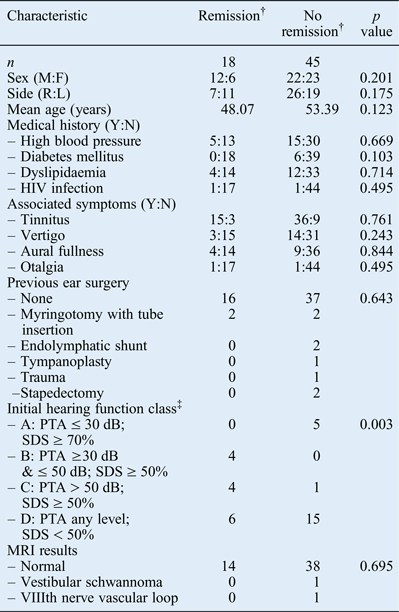
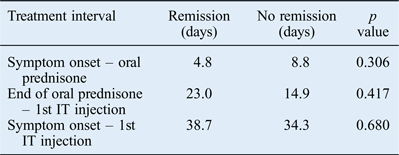
A paired t-test was used to determine means. Two-tailed Student's t-tests and Pearson's chi-square tests were used to determine the statistical significance of associations between patient characteristics (Table I) and treatment outcome; a paired t-test was used to determine the effect of age. Pearson's chi-square test was used to determine the effects of sex, the affected side, medical history, the presence of associated symptoms (vertigo, tinnitus, otalgia and aural fullness) or previous ear surgery, magnetic resonance imaging (MRI) results, and the initial hearing function class. A paired t-test was also used to analyse the effects of different time intervals on remission (Table II). Pearson's chi-square and McNemar tests were used to compare remission rates after intratympanic injections. A mixed model for repeated measures controlling for the effects of time, sound frequency and remission was also used to analyse remission rates and changes in the PTA and speech discrimination score over time. Statistical significance was set at p < 0.05.
Patient characteristics*

*(n=63). †For patients with initial non-functional hearing (class C or D), remission was defined as improved function (class A or B). For patients with initial functional hearing, remission was defined as a decrease of more than 10 dB in PTA, or an increase of more than 20 per cent in discrimination. All patients not meeting these criteria were classified as ‘No remission’. ‡Hearing function class according to the hearing classification system of the Committee on Hearing and Equilibrium, 1995.17 M = male; F = female; R = right; L = left; Y = yes; N = no; HIV = human immunodeficiency virus; PTA = pure tone average; SDS = speech discrimination score; MRI = magnetic resonance imaging
Mean treatment intervals between symptom onset and treatment
IT = intratympanic
Results
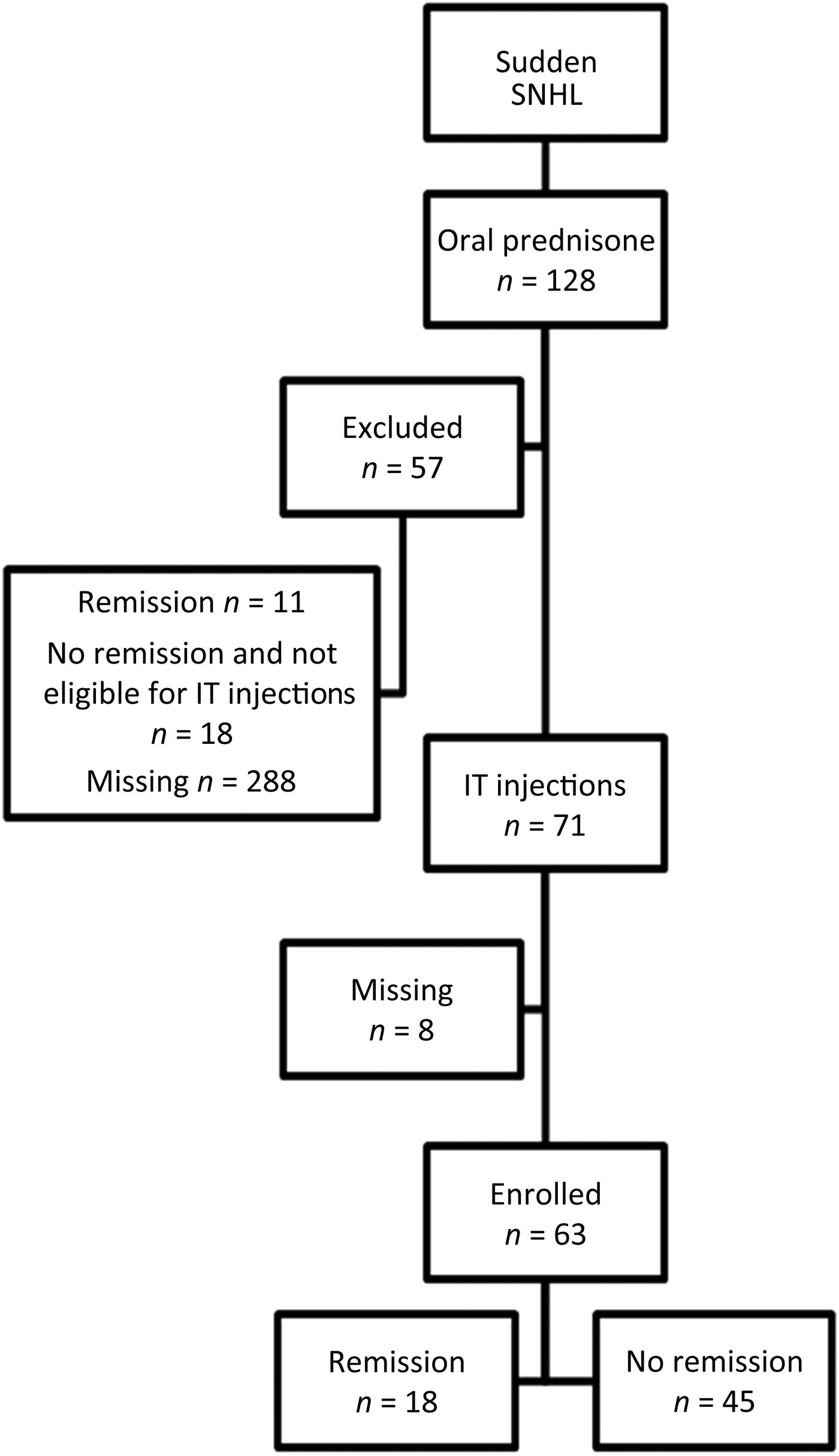
A total of 128 patients diagnosed with sudden SNHL and initially treated with oral prednisone were identified (Figure 1). Of these, 57 patients were excluded because of remission in their hearing level after systemic therapy (n = 11) or because they were not eligible for intratympanic injections (presentation after two months; n = 18) or had missing audiograms (n = 28). Of the 71 patients treated with intratympanic injections, 8 were lost to follow up because of missing audiograms. Therefore, a total of 63 patients were enrolled in the study.
Flowchart showing study design. A total of 63 patients were enrolled in the study (see ‘Materials and methods’ section for details). SNHL = sensorineural hearing loss; IT = intratympanic
Patient characteristics
Table I shows the characteristics of patients who did or did not respond to intratympanic methylprednisolone injections. There was no significant difference between the two groups regarding age, sex, medical history or associated symptoms, although this could be a consequence of the small number of cases. However, there was a significant difference in initial hearing function class between groups (p = 0.003): hearing function classes B and C were associated with higher rates of remission.
Remission rates
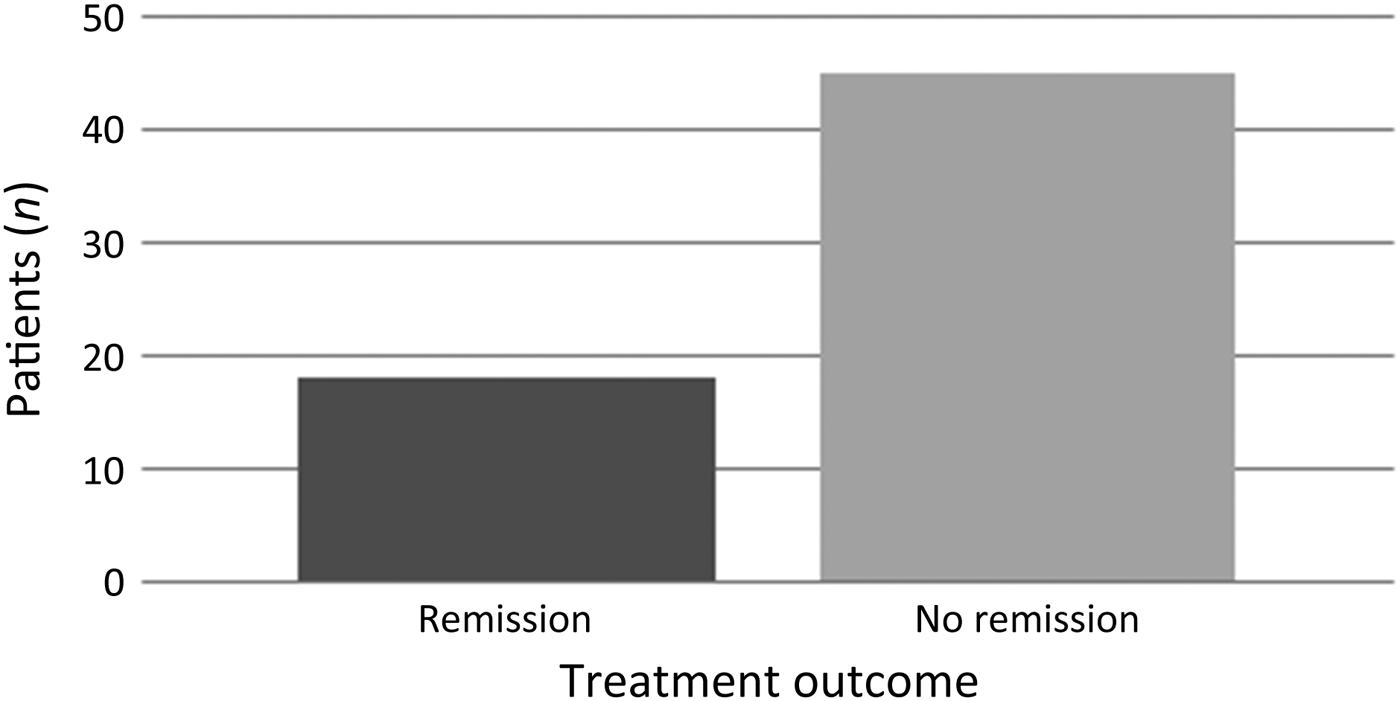
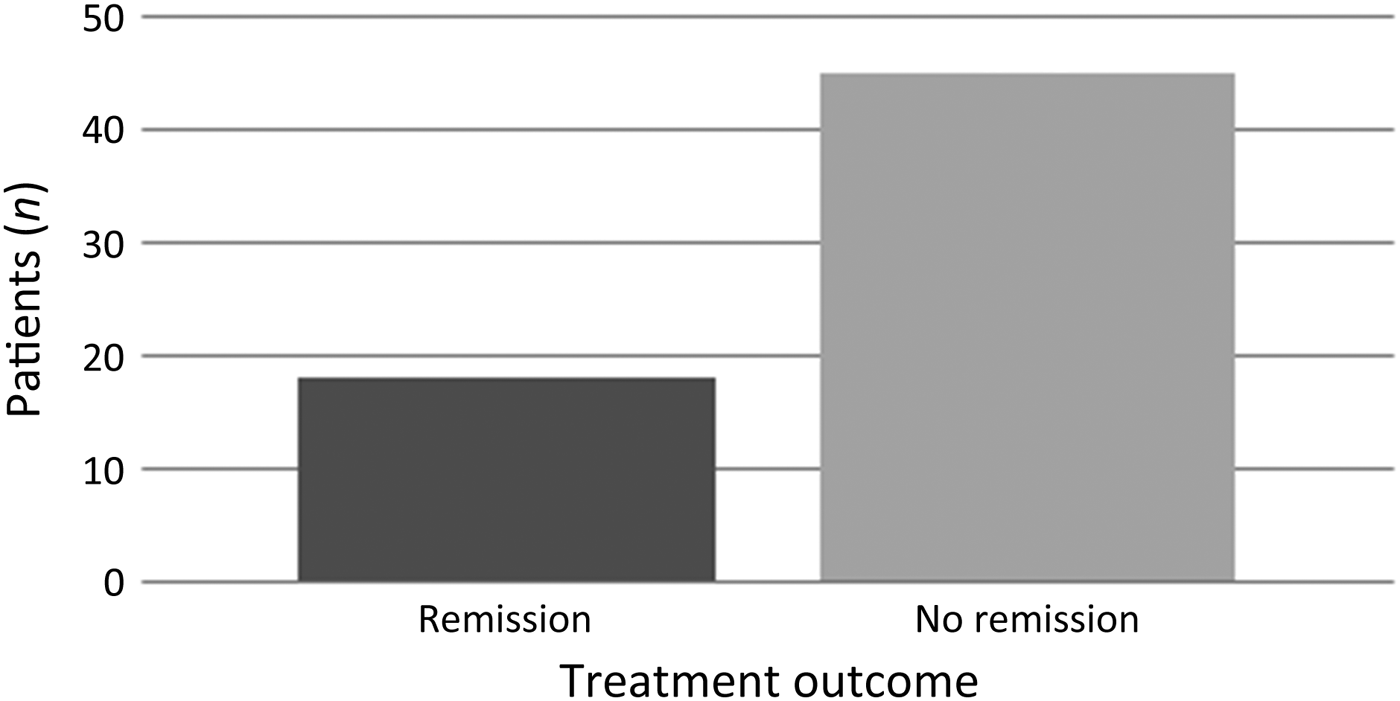
Figure 2 shows the number of patients with remission after intratympanic injections. Out of 63 patients, 18 (28.6 per cent) showed remission of their hearing loss and 45 (71.4 per cent) did not (p = 0.039).
Graph showing the effect of intratympanic methylprednisolone injections after oral prednisone failure. Eighteen patients (28.6 per cent) had hearing remission and 45 did not (71.4 per cent). The difference in outcome is statistically significant (p=0.039).
Intratympanic methylprednisolone improves the pure tone average and speech discrimination score
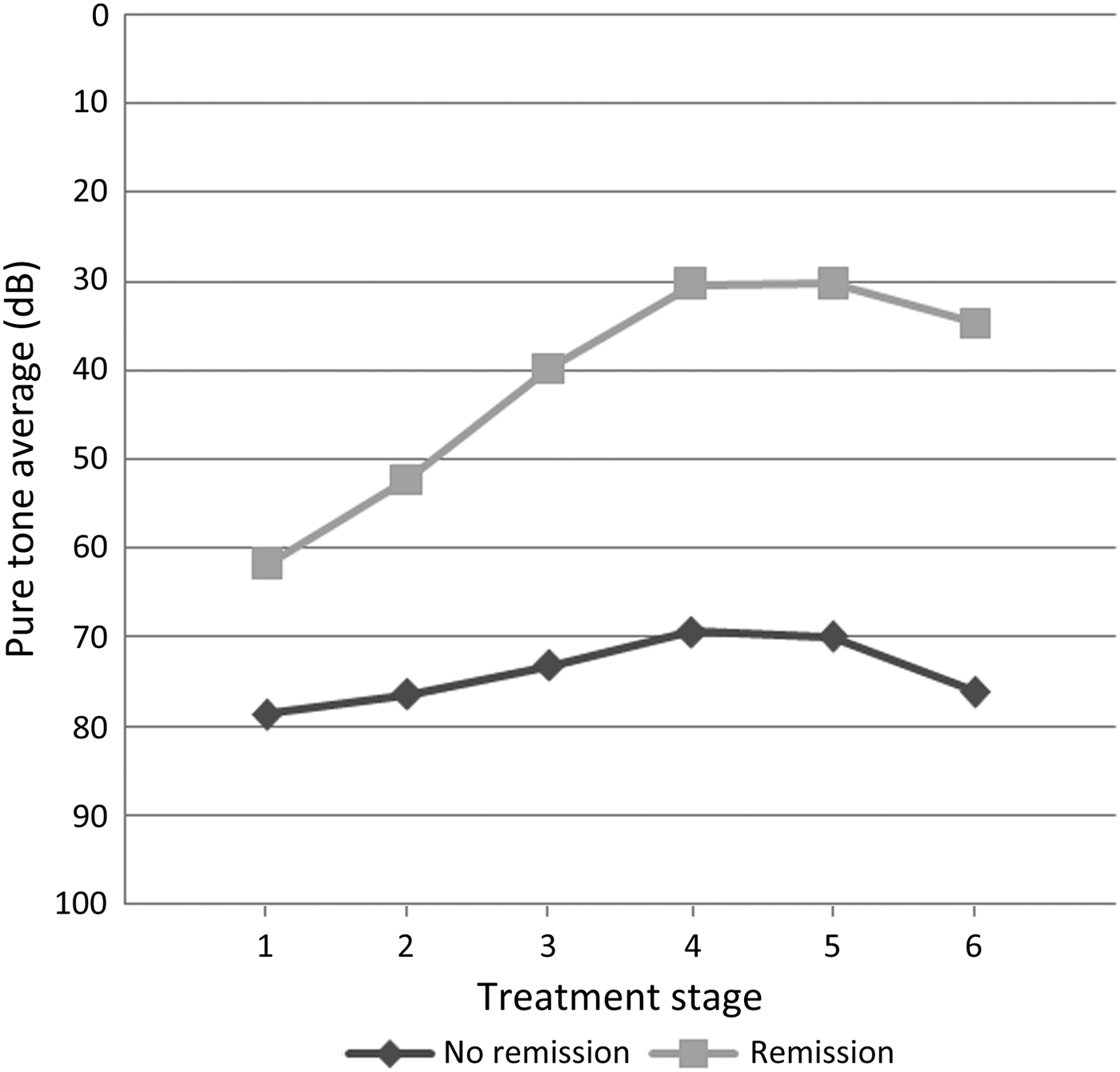
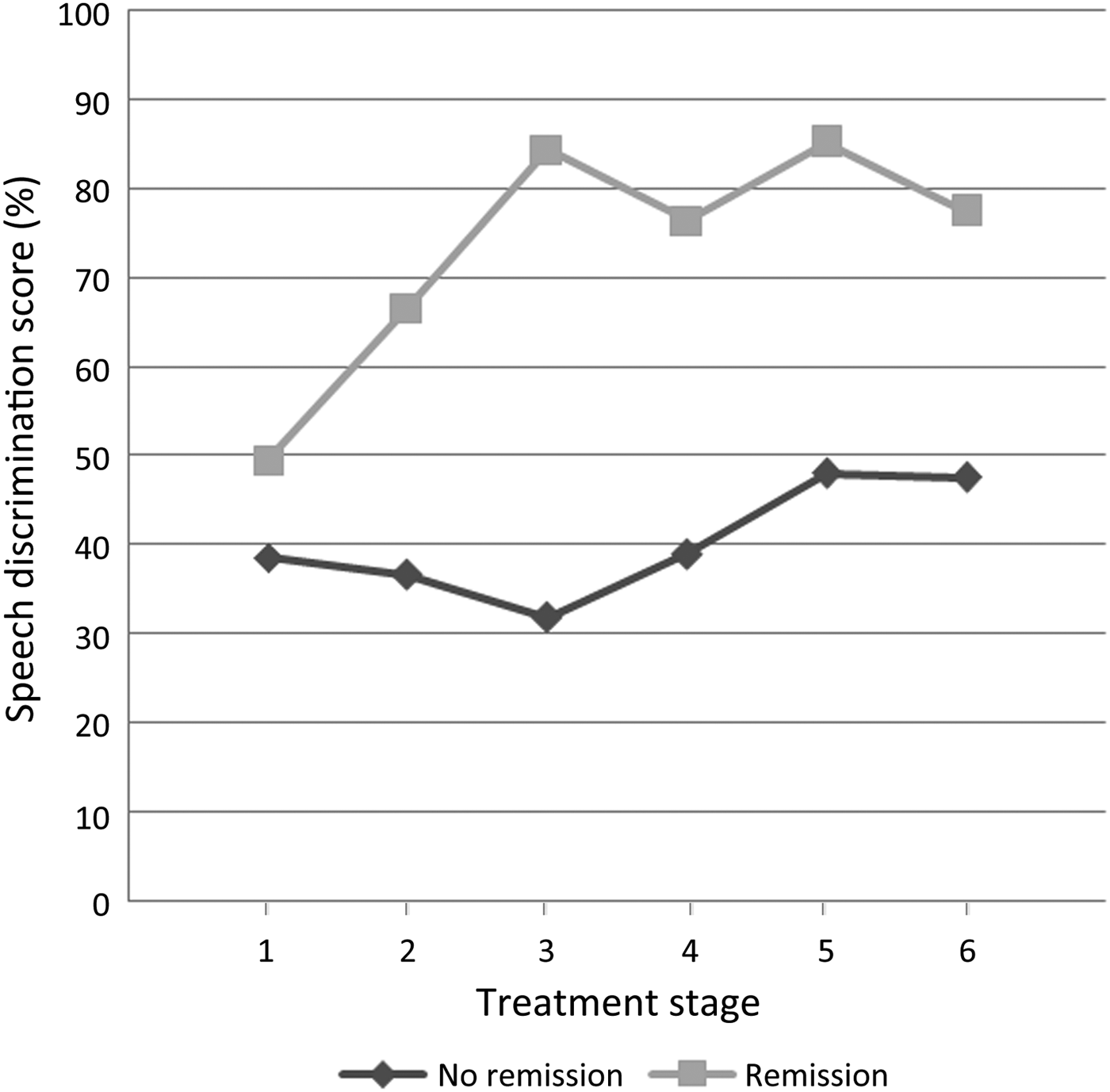
Changes in PTA and speech discrimination score were followed after intratympanic methylprednisolone treatment (Figures 3 and 4). The PTA reached a maximum and stabilised after the second injection in both remission and non-remission groups. In contrast, the speech discrimination scores improved after the first intratympanic injection and stabilised thereafter.
Graph showing pure tone average values at different treatment stages in both patient groups. 1 = initial hearing level before oral prednisone treatment; 2 = after oral prednisone treatment; 3 = after the first intratympanic methylprednisolone injection; 4 = after the second injection; 5 = after the third injection; 6 = control audiogram between 1 and 6 months after third injection.
Graph showing speech discrimination scores at different treatment stages in both patient groups. 1 = initial hearing level before oral prednisone treatment; 2 = after oral prednisone treatment; 3 = after the first intratympanic methylprednisolone injection; 4 = after the second injection; 5 = after the third injection; 6 = control audiogram between 1 and 6 months after the third intratympanic injection.
Frequency-related hearing improvement following intratympanic methylprednisolone injections
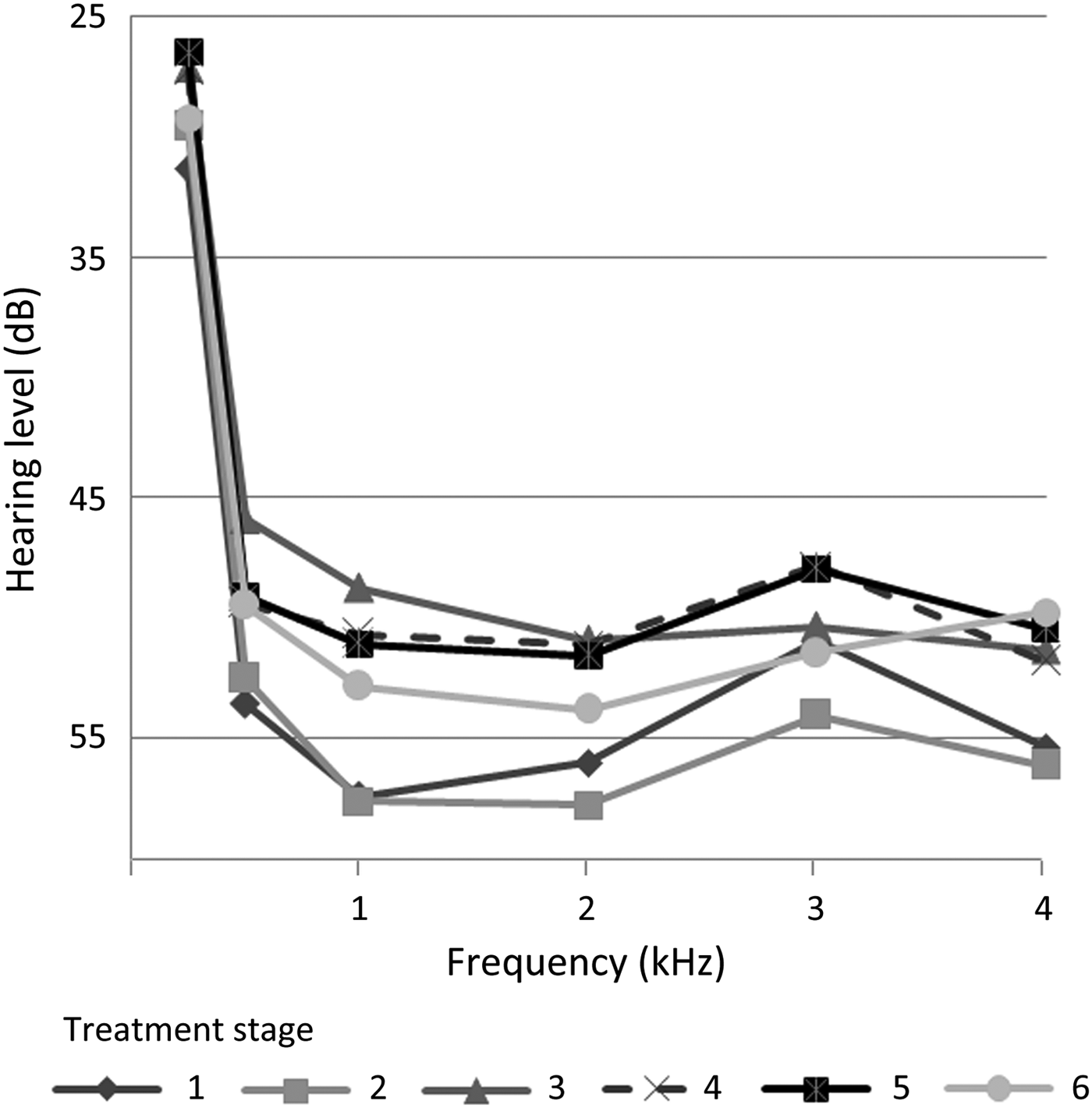
Figure 5 shows frequency-related hearing improvements in bone conduction. Hearing improvement was significantly better at lower frequencies than at high frequencies (p = 0.027).
Bone conduction frequency-related hearing improvement following intratympanic methylprednisolone injections. 1 = before treatment with oral prednisone; 2 = after treatment with oral prednisone; 3 = after the first intratympanic methylprednisolone injection; 4 = after the second injection; 5 = after the third injection; 6 = control audiogram between 1 and 6 months after the third intratympanic injection.
Time interval between symptom appearance and treatment initiation has no effect on outcome
Table II shows the time intervals between symptom appearance and starting oral prednisone therapy, between the end of oral prednisone and the first intratympanic injection, and finally between symptoms apparition and the first intratympanic injection. There was no significant association between these time intervals and outcome.
Discussion
Intratympanic steroids are mainly used as a salvage option after the failure of standard systemic therapy for sudden SNHL, or as a first-line modality in combination with oral steroids. The current standard treatment is systemic steroids as a first-line approach for sudden SNHL; however, 30–50 per cent of patients are refractory to this approach.Reference Plaza and Herráiz1, Reference Rauch3, Reference Parnes, Sun and Freeman10 With increasing evidence for intratympanic steroid efficacy following systemic prednisone therapy failure in sudden SNHL treatment, authors such as Banerjee and Parnes have promoted its use as a first-line therapy.Reference Banerjee and Parnes2 Vestibular symptoms, mostly the presence of vertigo, have previously been associated with a poorer prognosis.Reference Chandrasekhar12, Reference Tsai, Liang, Wu, Ding, Chiang and Wu18 However, in our study the presence of vertigo was not associated with a poorer prognosis (p = 0.243). Furthermore, we found no significant difference between the two groups regarding age, sex, medical history or associated symptoms (Table I).
Interestingly, the initial hearing function class seems to be a good predictor of the recovery rate associated with intratympanic methylprednisolone injections. Most patients in the remission group presented with moderate or severe hearing loss (class B and C), and most patients in the non-remission group presented with profound hearing loss (class D; p = 0.003). Lee et al. studied the efficacy of intratympanic dexamethasone as a salvage option in sudden SNHL treatment.Reference Lee, Park, Lee, Park and Lee19 However, their data did not support intratympanic dexamethasone as an effective salvage treatment for patients with profound hearing loss, compared with those with severe hearing loss. Our study supports reports that intratympanic steroid injections as a salvage option are effective in the treatment of sudden SNHL for moderate and severe hearing loss (p = 0.0039).
We also studied the pattern of hearing recovery over the course of intratympanic injections. The initial PTA increase reached a plateau after the second injection in both remission and non-remission groups. In contrast, the speech discrimination score improved with oral prednisone and after the first intratympanic injection, but then stabilised. Parnes et al. studied the pharmacokinetics of three intratympanic corticosteroids: hydrocortisone, methylprednisolone and dexamethasone (short acting, intermediate acting and long acting, respectively).Reference Parnes, Sun and Freeman10 They found the inner-ear methylprednisolone concentration was highest 2 hours after intratympanic injection, remained high for 6 hours and then declined over the next 24 hours. We noted that hearing improvement mainly occurs at low frequencies. In theory, steroids should penetrate the round window niche following intratympanic injection; it is therefore plausible that they would have a greater effect on the basal turn than on the apex of the cochlea, leading to hearing improvement mainly at high frequencies. However, a review by Seggas et al. found the main improvement to occur at low frequencies.Reference Seggas, Koltsidopoulos, Bibas, Tzonou and Sismanis20 This may be explained by the base of the cochlea being more vulnerable to free radicals and developing ultrastructural abnormalities more rapidly than the hair cells in the apical turn following cochlear ischaemia.
Sudden SNHL can be caused by various aetiologies, with approximately 1 per cent of cases being caused by retrocochlear lesions related to neoplasms, demyelinating disease or stroke.Reference Shaia F and Sheehy J21 Lee et al. reported that a higher percentage (4 per cent) can be attributed to the widespread use of MRI.Reference Lee, Lee and Hwang22 However, we recommend three-dimensional fast imaging employing steady state precession (‘3D FIESTA’) MRI for all patients with sudden SNHL because of its cost-effectiveness and to rule out a retrocochlear aetiology.
Many authors have found that the length of time before treatment initiation affects the sudden SNHL recovery rate. Banerjee and Parnes found a significantly better outcome in patients treated solely with intratympanic steroids within 10 days of idiopathic sudden SNHL onset compared with those treated after 10 days.Reference Banerjee and Parnes2 Tsai et al. reported that patients treated solely with intratympanic dexamethasone within seven days of disease onset achieved a significantly better response rate compared with the delayed treatment group.Reference Tsai, Liang, Wu, Ding, Chiang and Wu18 In addition, Rauch et al. studied the effectiveness of oral vs intratympanic steroids as a first-line therapy for sudden SNHL, and concluded that the intratympanic treatment was not inferior to oral prednisone treatment.Reference Rauch, Halpin, Antonelli, Babu, Carey and Gantz23 In our study, three time intervals were evaluated: between symptom onset and oral prednisone initiation; between the end of oral prednisone and the first intratympanic injection; and between symptom onset and starting intratympanic injections. None of these intervals were significantly associated with outcome. The mean interval between symptom onset and the first intratympanic methylprednisolone injection was 38.7 days and 34.3 days in the remission and no remission groups respectively.
• Intratympanic methylprednisolone injections are an effective second-line therapy for sudden sensorineural hearing loss
• Initial hearing function class is a good predictor of recovery
• Pure tone average improvement stabilises after the second injection in both remission and non-remission groups
• Hearing improvement mainly occurs at low frequencies
• Speech discrimination scores improve until after the third injection
Treatment of sudden SNHL with oral steroids is widespread, but remains controversial. A prospective, randomised, triple-blinded, placebo-controlled study by Nostrati-Zarenoe et al. demonstrated that a high tapering dosage of oral corticosteroids has no effect on idiopathic sudden SNHL compared with placebo.Reference Nosrati-Zarenoe and Hultcrantz24As previously mentioned, intratympanic injections provide higher drug concentrations to the inner ear and reduce systemic effects. However, some possible disadvantages of intratympanic injections compared with systemic therapy should be considered, for example its potential ineffectiveness in the presence of a systemic inflammatory disorder.Reference Banerjee and Parnes2 Consequently, in the absence of a contraindication to systemic therapy, it would be interesting to assess a combination of both treatment modalities to provide both systemic and local anti-inflammatory effects.
Conclusion
Our study supports previous reports that intratympanic steroid injections are an effective salvage option for sudden SNHL, with mid- and low-frequency hearing loss associated with higher remission rates. However, a delay of up to two months between symptom onset and the first intratympanic methylprednisolone injection seems to have no effect on prognosis. Further randomised studies and meta-analyses are recommended to address the current controversy regarding optimal sudden SNHL treatment.