Introduction
Life in the village must be made worth living … Only then can we fight the ailment of modern civilization – the rural exodus. With great care, we want to determine which social and cultural facilities can be installed in our villages so that the one-sided migration gap between rural and urban areas can be corrected. Georg-August Zinn (Hessian Minister President, 1950–69)Footnote 1
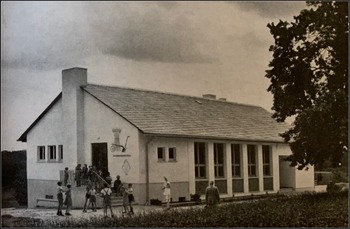
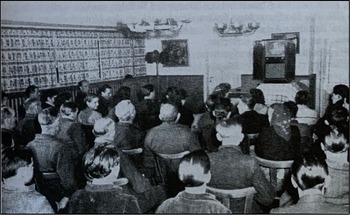
In his address to the Hessian Parliament in January 1951, Hessian Minister President, Georg-August Zinn presented the so-called Hessenplan, which sought to rebuild the war-torn cities, expand state infrastructure, as well as facilitate the integration of the roughly 800,000 displaced persons and refugees by providing housing and employment opportunities. During this complex period of reconstruction after the Second World War, Zinn, who has become known as the symbolic ‘father of Hesse’, notably stressed the seriousness of rural exodus (Landflucht) in the Federal Republic of Germany (FRG), and especially in Hesse. To balance the chronic urban-rural divide, Zinn and the Social Democratic Party (SPD) introduced a programme entitled ‘Social Armament of the Village’ (Soziale Aufrüstung des Dorfes) that promoted and subsidised the construction of rural community centres (Dorfgemeinschaftshäuser), which were designed to provide modern (urban) amenities (for example, kitchens, libraries, medical assistance, childcare) in the countryside. To reduce the hardship of the rural lifestyle, especially for women, facilities such as kindergartens, communal laundry rooms, bakeries, slaughterhouses, and freezers were offered to reduce the amount of time it took to complete daily chores. With the newfound free time, programme officials hoped that locals would use the common rooms for leisure activities, for example, to read books from the library and get involved in various clubs and organisations (Figures 1 and 2). The SPD hoped that the programme would improve the standard of living in the countryside and prevent further migration to (sub)urban communities; however, there were additional objectives, namely the desire to prevent further individual anomie and to instill within the rural populace the importance of becoming responsible citizens.Footnote 2
Rural community centre in Watzhahn.
Source: Heinrich Fischer, Das Hessische Dorfgemeinschaftshaus: Ein Weg zur Schafung sozialer Einrichtungen in Landgemeinden (Wiesbaden, 1954), p. 37.

Villagers in Meiches gather to watch television.
Source: Fischer, Das Hessische Dorfgemeinschaftshaus, p. 52.

Branded ‘Castles of Peace’Footnote 3 (Burgen des Friedens) by Hessian economic minister Heinrich Fischer, these rural community centres represented a potential space for political influence and ethical self-transformation.Footnote 4 Further, they offered a shared space to voice concerns, allowed individuals and communities to work towards common goals, and presented locals the chance to become familiar with the basics of democratic principles. They not only assisted in bridging the urban-rural divide by offering an environment where an individual outlook could develop into a communal mindset, but also aided in offsetting the social, cultural, and moral imbalances that had developed throughout the previous century. As Martin Conway has shown, democracy in Western Europe was used as an ‘instrumental device – the means by which the populations could be remade into citizens’.Footnote 5 Within a relatively short period of time, the state-inspired measures turned into a growing movement throughout rural Hesse (Figure 3).Footnote 6
Symbol of the Hessian Dorfgemeinschaftshäuser.
Source: ‘Der Sozialdemokrat’, No. 9, September 1958 (Frankfurt a.M.), p. 3, Stadtarchiv Wiesbaden, NL 35, No. 509.

Largely opposed to the military rearmament of the FRG, the SPD urged a more peaceful and practical alternative, namely the social, and eventually culture, rearmament of society. By reducing rural migration, the SPD also sought to provide relief to their main (urban) constituents by securing food quantities, stabilising prices of agricultural products, preventing an overflow of newcomers to urban areas, and, of course, attract new supporters among the rural communities.Footnote 7 Further, these postwar measures sought to finally resolve the Bauernfrage that had been a concern of national identity since the industrial revolution and discouraged farmers’ support of the democratic government of the Weimar Republic. As Gesine Gerhard aptly concludes, first farmers had to become democratised and confident that the new political system would solve the agricultural crisis in order to enable their social cohesion in the new postwar society. Ultimately, the goal was to prevent the failures of Weimar from happening to the government in Bonn.Footnote 8
While the SPD is historically a party for the urban, working class, its programme to improve social welfare in the traditionally conservative countryside remains relatively unexplored. Thomas Fuchs, the only scholar to focus specifically on the Hessian SPD’s postwar programme, argues that the party exaggerated the extent of rural exodus during the postwar era as a way for the state to ‘ … take on the role of a helper or even savior, who stood by the allegedly weak villages to help them regain their strength.’ Further, he questions the impact and sincerity of the SPD’s programme to balance the urban-rural divide.Footnote 9 Yet, apart from their general role as spaces for public meetings and social gatherings, the history of rural community centres, especially their potential as a political, social, and cultural tool largely remains overlooked. Therefore, this article will bring together the ‘history from above’ (that is, the SPD’s plans to increase social cohesion and to prevent rural exodus) and the ‘history from below’ (that is, how the rural community centres were used and perceived by rural communities) to help understand the role and impact of rural community centres in postwar Hesse.
Influence of historical attempts to combat rural exodus on postwar policies
The term rural exodus most commonly represents the migration from rural communities (particularly with less than five thousand residents) to more urban areas. The increased anonymity and modern cultural and social amenities of (sub)urban communities attracted many individuals to leave the difficult conditions in the countryside; however, it also involved the structural transition away from agricultural occupations to other careers, largely in urban industry. Many of the individuals involved in the latter still resided in rural communities and commuted to cities for work; however, both forms were not mutually exclusive.Footnote 10
The ‘long 1950s’ (from the late 1940s until the mid-1960s) was characterised by both dramatic changes and substantial continuities.Footnote 11 That the (re)construction of (sub)urban communities benefited greatly from the ‘economic miracle’ is well known; however, rural communities did not equally benefit from this economic growth. Still, villages were gradually improved through the development of infrastructure, for example, indoor plumbing, running water, public transportation and transportation network, and increased access to the mechanisation of labour. Even when the relevant improvements were not available to individual households, rural community centres, as will be clarified, offered these modern comforts, and quickly became the new focal point of villages.Footnote 12
While Gerhard accurately describes that West German agriculture was characterised by continuity rather than change prior to the currency reform in 1948, this date could arguably be extended into the mid-1950s when considering the attempts to hinder the rural exodus and the overall urban-rural divide.Footnote 13 Postwar attempts to combat rural exodus represented a continuation of strategies that echoed efforts from the Kaiser Reich, Weimar Republic, Third Reich, and the US-occupation. Influenced, for example, by Max Weber’s (and others) attempt to turn the rural exodus into an issue of national identity, conservative political theorist Armin Rieger recommended in 1914 the modernisation of social, cultural, and working facets of the rural environment. He envisioned building community centres (Gemeindehäuser), based on urban, working-class community centres (Volksheime), to bring select urban amenities to rural communities to reduce rural migration and prevent the conservative constituents from being swayed by socialist dogmas.Footnote 14 Although motivated by opposing political agendas, the similarities between of Rieger’s concept and Zinn’s postwar programme cannot be ignored.
Following the Great War, the moderate wing of the SPD adapted Rieger’s concepts and endorsed the notion of balancing the urban-rural divide during the Weimar Republic. Advocating for agricultural subsidies and protection, the SPD’s goal was to help control food prices, especially for their largely urban constituents. To combat rural exodus, Social Democrats endorsed ‘making life in the countryside worth living’ – the precise goal Zinn echoed during the 1950s. However, the instability caused by the Great Depression, during a period that already was experiencing political and social unrest, made any attempt to implement plans to modernize the rural setting and hinder rural exodus all but impossible.Footnote 15
By the late 1930s, the NSDAP’s ‘Strength Through Joy’ (Kraft durch Freude) organisation took on the task of deterring rural exodus and sought to ‘make the means of entertainment available to the countryside, which have been a prerogative of the city’.Footnote 16 The Nazi regime proposed building rural community centres (Gemeinschaftshäuser) based on Rieger’s concepts; however, they were designed as political and cultural centres meant to disseminate Nazi rhetoric and propaganda. While the project no longer became a priority as the war intensified, the Nazi regime continued to plan a programme that could be implemented after Germany’s fantasised victory. Entitled ‘Armament of the Village’ (Aufrüstung des Dorfes), the plan sought to remodel rural communities after the war, ‘giving the villages what has become a matter of course in the cities throughout the last decades’, according to August Dobler, who was an influential figure in the history of rural community centres.Footnote 17 The slogan was reused by Social Democrats in Hesse during the 1950s, modified to ‘Soziale Aufrüstung des Dorfes’, because it offered access to the rural population, who already knew of the concept under the Nazi regime, and who had generally supported it during in the 1930s–1940s.Footnote 18
Dobler’s influential idea not only addressed the urban-rural divide, but also the social, economic, and cultural problems triggering rural migration. His plan addressed the need to provide relief to farmers and rural laborers through mechanisation. Based on his suggestions, a report from the Reich Association for Technology in Agriculture, published in the periodical Deutsche Agrarpolitik in 1943, described that ‘All work, such as washing, drying, ironing, slaughtering, baking, etc., which are not necessarily tied to the household, can be processed here [in rural community centres] by machine to keep the workload [especially for women] to a minimum.’ The concepts and reasonings of this plan to counter rural exodus – by modernising rural communities and seeking to eliminate urban-rural differences – became the foundation of the SPD’s postwar programme.Footnote 19
Following the defeat of the Nazi regime, the Western Allies actively assisted West Germany in the daunting reconstruction process (most prominently through the aid of the Marshall Plan) and the challenging de-Nazification of German society. As the recovery process took shape, and in preparation for the formation of the FRG in 1949, the Allies established the United States’ High Commission for Occupied Germany (HICOG) to assist with the reorientation of Germany’s political and social milieu towards a peaceful and stable democratic society. Seeking to cultivate a strong democratic foundation and lasting values of equality, freedom, and civic mindedness, the most difficult task, however, was to stimulate grassroots democracy.
As America’s primary enemy relatively quickly changed from Nazi Germany to the Soviet Union, so too did their policies towards Germany, as securing global safety (including safeguarding Germany’s democratic future) became paramount. Simply imposing American democratic traditions would prove to be ineffective. Therefore, the objective was for German society to use the American example as a guide, from which it could adjust and design its own democratic character and system. To achieve this, it was essential for German liberals and moderates to redefine their immediate objectives and collaborate with their primary political adversaries to preserve a democratic foundation and have a chance at realising their long-term goals.Footnote 20 Despite the US government’s fear of the SPD’s Marxist past, the party’s insistence of German reunification over Western integration, as well as its anti-rearmament stance, the US reorientation policies for democratisation and (to an extent) social welfare also influenced the SPD’s ‘Social Armament of the Village’.
Between 1949 and 1952 local HICOG representatives, known as resident officers, were dispersed throughout Germany to work as an intermediary between HICOG and local German communities and political parties tasked with facilitating the democratic transition. Schools, vocational institutes, organisations and clubs, and community centres received support and encouragement as they offered opportunities to prepare individuals to be responsible citizens. Women and youth were especially targeted, as they would be the key to fanning the sparks of democracy.
Using established and makeshift town halls, and eventually supporting the construction of community centres, HICOG cultivated these meeting points, especially in rural villages, to further demonstrate the need and advantage of responsible citizenship in a democracy. Through vocational classes, where youth learned, for example, to be electricians, woodworkers, bakers, and seamstresses, along with communal gatherings (for example, watching films, meetings of social and political organisations, reading newspapers and books, discussing local public affairs, and participating in sporting events), the community centres reinforced democratic principles with modern, urban amenities. The villages ‘at the edge of the free world’ (that is, bordering East Germany) were of particular focus, and remained so throughout the 1950s and 1960s. Films produced by the US Information Service (USIS) were shown, depicting the responsibilities and advantages of the citizen in a democratic state, especially compared to a communist state.Footnote 21 These visual aids stimulated discussions within local communities as citizens sought to comprehend and define democracy in their own terms as well as to improve and develop their local communities while maintaining their unique traditions and cultural heritage. The latter was especially important for rural villages.Footnote 22
To further build confidence in the new government and encourage grassroots democracy, local German officials (assisted by resident officers) created programmes that introduced the youth to the duties and responsibilities of running local government. These opportunities allowed adolescents to run public offices for a day (for example, municipal and county offices as well as the US resident officer and newspaper offices) and demonstrated the difficulties and problems that local officials faced. The hope was to instill within the young residents an interest in local politics, civic-mindedness, and a desire to create an improved society based on equality, freedom, and justice. Among the participants, both the youth and adults commonly agreed that the relatively progressive ‘… project gave them a wonderful start in political enlightenment.’Footnote 23 Apart from being directed towards the youth, the programme instilled within city officials the importance of teaching self-government to the community’s youth as well. As the police director in Gießen, Wilhelm Duesing, reported, ‘I am all for such youth government days, and I am very proud that so many students wanted to go to the police. That, to me, is enough proof they are interested in public affairs. I would like to see students in my office again soon – but this time for a whole week.’Footnote 24
Following the project, the participants generally met with public officials in a forum to discuss their experiences and openly spoke about their problems, concerns, and opinions. The youth generally agreed that the numerous positions involved in local administration were much more involved than they had imagined. One young man, who participated in Gießen remarked that ‘I have seen that the many reproaches made to state and city government that they do not take care of youth are unjustified; a lot is being done at the Youth Office, as I have observed.’ Called a ‘quiet revolution’ by reporters in Gießen, the youth government days marked a break with Germany’s political traditions.Footnote 25 At a youth forum for political awareness in Frankfurt in November 1951, the mayor, Walter Kolb (SPD), reminded his audience that ‘political life … requires honesty and decency … [M]uch of the bitterness could be taken out of politics if leaders and voters would maintain close contact and try to understand each other.’ Referring to the example of US President Abraham Lincoln, who faced a similar situation in the wake of the US Civil War, Kolb echoed Lincoln’s second inaugural address and stressed that ‘“malice toward none, charity for all, firmness in the right of God gives us to see the right” are now more essential in this war-shattered country than ever before.’Footnote 26
As salesmen of democracy, resident officers also assisted members of rural communities to visit state and federal officials. One such programme began in Hünfeld County in 1951 and provided several hundred representatives from small towns and villages the opportunity to visit the Bundestag in Bonn. This programme also led to an increased discussion of, and genuine interest in, the operation of the federal government. These trips helped dispel the vast rumours about politicians’ excessive spending on lavish furnishings in the Bundestag and aided in building trust in the new political system. One visitor commented that ‘I was amazed to see an SPD member of the Bundestag talking amicably with a CDU member.’Footnote 27
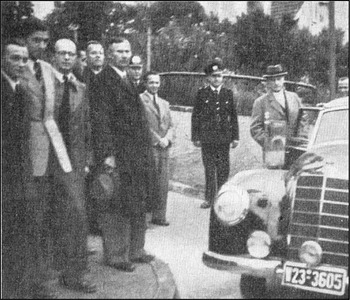
The politicians spent hours listening to groups and answering their questions, explained the stances of the political parties on various topics, their own personal opinions on pending issues, along with the procedure for passing laws. One group of visitors from Hünfeld even happened to meet the Chancellor, Konrad Adenauer, as they passed by his house (Figure 4). A report from the resident officer, Paul R. Phillips, recounted that ‘The importance of these visits … cannot … be overemphasized. … [M]ost West Germans have not yet developed the feeling that the government is “their government”.’Footnote 28 These personal experiences to see the government at work, have their concerns heard, and generally feel that the elected officials are working in the interest of the people peaked the citizens’ curiosity in politics. Further, these encounters emphasised the importance of citizens taking an active role in society (beginning in their local communities) and the significance of unity and peace for a prosperous society, which became a key theme of the SPD’s ‘Social Armament of the Village’.
Group of visitors from Hünfeld stops Chancellor Adenauer (next to car, wearing a hat) near his home in Bonn at the end of 1951.
Source: Paul R. Phillips, ‘Meeting “Their Government”’, Information Bulletin: US HICOG, Office of Public Affairs, December 1951, pp. 31–2 <https://images.library.wisc.edu/History/EFacs/GerRecon/omg1951Dec/reference/history.omg1951dec.franklinseminar.pdf> [10th March 2021].

Upon returning to their hometowns, the visitors spoke to their friends, family, and neighbours in town halls, at communal gatherings and in private; several newspaper articles even depicted the trips. All of this assisted in arousing interest throughout the rural communities. The chance to experience a new (and urban) setting as well as to even meet famed officials (such as Adenauer) peaked people’s interests in learning more about the new government, how to improve their own future potential for success, and how to overcome the past and their own personal complications.Footnote 29
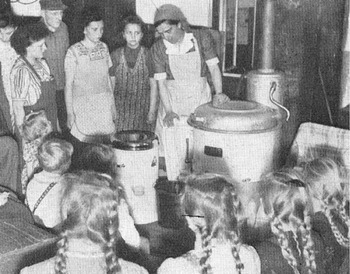
Various women’s organisations, councils, and communal advisory centres were also supported by HICOG programmes and funds to further emphasise civic mindedness (Figures 5 and 6). These groups acted largely as advisors for social and economic concerns.Footnote 30 For example, the Women’s Work Council of Hersfeld functioned as a centre for communication, collaborating with representatives of various women’s groups dealing with issues related to welfare, religion, trade unions, rural life, refugees, housewives, and politics. The council coordinated groups to act on projects of interest, served to exert influence on local government officials, and acted as a source of stimulation of educational programmes. The Service Bureau for Women’s Organizations similarly facilitated the spread and exchange of ideas and information throughout the state and the FRG. The bureau actively promoted and provided financial assistance – either through fundraising or directly from HICOG funds – to promote increased access to education and to assist in distributing non-partisan information to women throughout the state.Footnote 31
Community washing machines are demonstrated to women and girls in a rural Hessian community.
Source: Betsy Knapp, ‘Women in Hesse’, HICOG Information Bulletin, May 1952 <https://images.library.wisc.edu/History/EFacs/GerRecon/omg1952May/reference/history.omg1952may.knappwomen.pdf> [10th March 2021].

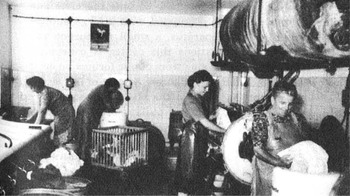
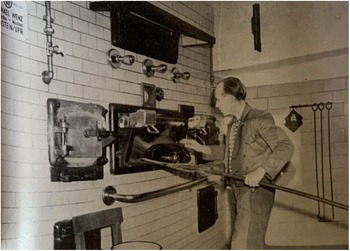
Modern laundry room in a rural community centre.
Source: Haynes R. Mahoney, ‘Investment in Democracy’, HICOG Information Bulletin, February 1953 <https://images.library.wisc.edu/History/EFacs/GerRecon/omg1953Feb/reference/history.omg1953feb.mahoneyinvestment.pdf> [10th March 2021].

In addition to the US exchange programme, travelling exhibits, such as mobile libraries and ‘homemobiles’, which addressed household management and improvements, helped begin to stabilise, reconstruct, and balance the social, cultural, economic, and even gender divisions throughout society beginning at the local level.Footnote 32 These opportunities stimulated grassroots efforts, especially women’s organisations as an outlet for women in (rural) society, and increased the desire for closer relations between urban and rural women (and communities in general). The public affairs programmes sponsored by HICOG put citizens in control of their own future and facilitated both social cohesion and social mobility. It should be noted, however, that as supportive as the resident offices were, German individuals, organisations, and institutions themselves were also an important source for local democratic inspiration.Footnote 33
With the closure of the HICOG resident offices in January 1952, it created a vacuum, which was partly filled by the numerous America Houses spread throughout the FRG; however, there remained much to improve.Footnote 34 The need for (and potential of) community centres became clear to the SPD and Zinn, who seized the opportunity to improve social welfare in rural communities through modernisation and the cultivation of grassroots democratic values.Footnote 35 Influenced not only by the historical attempts to overcome the urban-rural divide, two examples from 1949 were also important, namely the introduction of houses for rural women (Haus der Bäuerin) in Bavaria and the so-called ‘Schlüchtern Plan’. The Bavarian government built a small number of these establishments to help reduce the workload of rural women by offering communal laundry facilities, washrooms, and freezers. The Schlüchtern Plan was envisioned by Ludwig Neundörfer (Frankfurt Sociographic Institute), to test his theories of social organisation by building and balancing housing, industry, and agriculture in Schlüchtern, Hesse. The plan gave hope to rural communities as well as a renewed spirit to overcome the consequences of the war and to counter the persistent urban-rural divide.Footnote 36
The SPD’s ‘Social Armament of the Village’
Despite the improvements that stemmed from the economic miracle in Western Europe, economic disparities (sparked by soaring unemployment and inflation) and structural inequalities (that limited access to housing, education, and social welfare) remained difficult obstacles for millions to overcome.Footnote 37 Social inequalities persisted, for example, between social milieus, white-collar and blue-collar workers, cities and villages, and even between established residents and newcomers. Reduced access to healthcare (especially in rural communities), income disparities between agriculture and industry, increased housing costs (particularly in congested urban centres), reduced access to education for newcomers and individuals with a lower socioeconomic background, and limited employment opportunities in rural communities remained (and in many cases continue to be) problematic. Although instruments of state intervention refined social inequality, for example, through increased tax on the wealthy, policies to improve access to education, and the overall expansion of the welfare state, rural migration remained (and continues to remain) a lasting complex problem, along with the limitations of (particularly vertical) social mobility.Footnote 38 The lifestyle and image of rural communities, historically represented by long, arduous workdays, limited possibilities for education and employment, lack of leisure, as well as the physical and psychological detachment from (urban) modernism, remained rather unchanged from the early 1900s until the early 1950s. As Hartmut Kaelble and other scholars have shown, only by the end of the ‘long 1950s’ were the firm social dividing lines drawn for a significant part of society – through owning a house, modern amenities such as refrigerators, televisions, and cars, as well as having leisure time and taking a vacation – gradually replaced by less exclusive divisions such as the brand of the car and appliances as well as the destination of travel.Footnote 39
Borrowing and modifying the plans to combat rural exodus from the previous decades, Zinn and the SPD introduced the Hessenplan (1951–65), which focused on reducing the urban-rural divide by integrating the influx of displaced persons as well as modernising and mechanising the rural lifestyle. Further, the party emphasised the need for citizens to take control of their own future by playing an active role in government, organisations, and their community. This was in line with the SPD’s national agriculture reform presented at the party’s national convention in May 1950 in Hamburg. The SPD sought to overcome the disparities between town and country throughout the FRG by improving the agricultural education, training, and advisory system. Further, the party sought to create general educational opportunities by funding libraries in rural communities to develop a progressive, democratic mentality in the countryside.Footnote 40
In April 1952, after more than a year of planning, Ludwig Bodenbender, Hessian Minister for Agriculture and Forestry, addressed the Hessian Landtag and requested 1.5 million Deutsche Mark (DM) to initiate the ‘Social Armament of the Village’. Explaining to members of the Hessian Landtag that this initial request was ‘a humble start’ and that the rural exodus problem would not be quickly resolved, Bodenbender reasoned that,
Anyone who deals with the village, life in the village, as well as the habits and possibilities of life in the village … sees from day to day the extraordinarily great dangers that arise in the direction that our villages are losing their inner style and design, and that they are in danger of being overrun by a wrong culture. … Anyone who knows these conditions also knows the deeper causes of the rural exodus, about which there is so much talk. … To name only the most important, it concerns operational, social, and cultural problems. … Today our rural villages, far removed from the cities and the centers of culture, run the risk of being culturally undermined. … In addition, there is a great concern that customs and traditions, including national dress, will be completely lost. All of this taken together is the cause of the rural exodus. If one wants to counteract the rural exodus, one must ensure that the old customs and traditions are maintained and that the advantages and improvements of the technical working methods also benefit the village. We believe that a start can be made … with the creation of community centers. … These community centers are not only intended to making things easier from a technical point of view, but also it is important to us that these establishments also become the cultural focal points of the village. … We are of the opinion that with this motion we are tackling a social, culture and thus an economic task, the fulfillment of which we hope will turn the situation in the country around.Footnote 41
To stop this alleged ‘wrong culture’ from taking over the rural village milieu, the SPD sought to use the cities as examples of cultural progress to preserve the rural traditions; however, this was merely lip service to the rural population, especially, farmers, to gain access to the communities. As an article in the German socialist publication, Der Sozialdemokrat, reported, the SPD’s programme was designed to be ‘a peaceful weapon against primitiveness.’ Thus, rural tradition was actually the ‘wrong culture’ that Bodenbender and the SPD hoped to transform.Footnote 42
Not without opposition, CDU and FDP members of the Hessian Landtag criticised the relatively miniscule amount requested to tackle the immense problem and suggested that it would be wiser to fund communal washrooms in existing buildings to expand the immediate impact of the programme. The timing of the programme’s announcement was also criticised, as local elections were scheduled one month later in May 1952, and the opposing parties claimed that the SPD simply sought to secure additional votes from rural communities. Bodenbender and his fellow SPD politicians insisted that the SPD’s intention was sincere. As Hans Sudheimer (SPD member of the Hessian Landtag) reasoned, ‘We all agree … that the reason why we are faced with material ruins is to be found in the intellectual realm. We all agree that this cause can also be seen in the fact that people have forgotten how to really talk and live with one another under sensible aspects. … Our endeavors must therefore be to form a new community.’ Ultimately, the SPD and most opposition parties agreed that the new society needed to grow from success at the village level. With the ‘Social Armament of the Village’, the SPD sought to use rural community centres as ‘classrooms of democracy’ and to develop communal ideals, nurture grassroots engagement, and extend their political influence on the structure of rural communities. Within many of these villages, the mayors were not affiliated with a political party and the SPD (along with the other main parties) sought to gain their support. After securing the backing of local leaders, the SPD then focused on gaining confidence in the rural population.Footnote 43
Immediately following the public announcement of the programme, the government received interest from villages throughout the state, eagerly requesting to participate. However, there were several conditions that communities had to meet to be able to take part in the programme, for example, villages needed to already have a modern water supply and sanitation system, residents had to be willing to provide their own labour to construct the community centre, a suitable property (preferably in the centre of the village) was necessary, and the community needed to be prepared to finance, operate, and maintain the facility. Until 1960, the programme only considered communities with less than five thousand inhabitants and sought to distribute the projects evenly throughout the state to best promote the programme.Footnote 44 A committee comprising state parliament officials determined which villages were most in need based on their requests and ultimately visited the villages to make the final decision. Once a village was selected, the committee held a meeting with residents to elect a local board that included, for example, the mayor, business owners, teachers, church officials, and other local leaders, who assisted in identifying the specific needs, concerns, and desires of their community as well as helped organise the construction process.
At a cost of roughly 100,000 Deutsch Mark (DM) each, thirteen community centres were completed, and eight additional houses were under construction, by the end of 1953. Construction progress was occasionally delayed by the harvest seasons, as most volunteers worked in the agriculture industry, but a shortage of labourers was never reported. While the locals financed most of the expenses, the state offered low-interest mortgages to prevent the projects from being financially burdened from the outset. It was a significant undertaking that required hard work, collaboration, and commitment. Given the non-profit nature of the project, companies would often provide materials and furnishings at reduced prices, and builders would offer their time for free, asking only for their expenses to be covered. The project provided a great opportunity for locals and newcomers (refugees and displaced persons) to work together to overcome any existing barriers and stereotypes and facilitated integration in the community.
The SPD also sought to use these establishments to assist and alleviate the overburdened women working on farms by simplifying their tasks and providing a communal space for social gatherings, to discuss public affairs, to facilitate social cohesion, and hopefully gain their support in future elections. After all, women made up over half of the workers in the agricultural industry in the early 1950s.Footnote 45 As a HICOG report from 1953 identified, community centres could enable ‘farm women … to free themselves from household slavery and wield their rightful influence in the community’.Footnote 46 Many women were even inspired to use the opportunity as a springboard to expand women’s organisations on a state, national, and even international level in their attempt for increased participation and representation. In addition, sport, youth, and other organisations were encouraged to use the communal space for meetings and various social gatherings in hopes of preventing isolation.Footnote 47
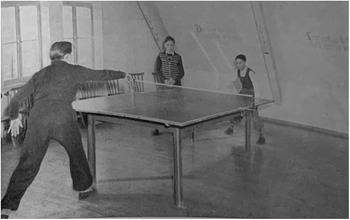
The programme intended for each community centre to be slightly different in design and emphasised the importance of tailoring the facilities to the needs and desires of each village. Every building was equipped with a kitchen and common room, and many included communal washrooms (with toilets, showers, and baths), libraries, freezers, kindergartens, nurse’s station (including an apartment), youth room, playground, and occasionally even a sauna (Figures 7 and 8).
Children enjoying free time playing table tennis in Ronshausen.
Source: Fischer, Das Hessische Dorfgemeinschaftshaus, p. 57.

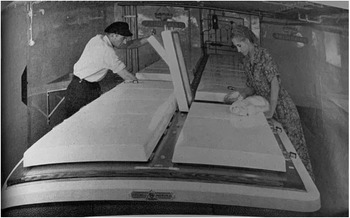
Communal freezers in Kirberg.
Source: Fischer, Das Hessische Dorfgemeinschaftshaus, p. 95.

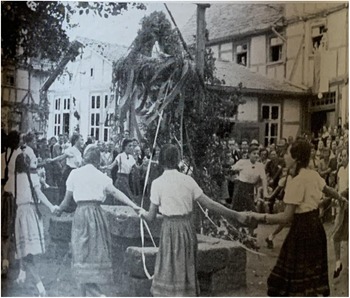
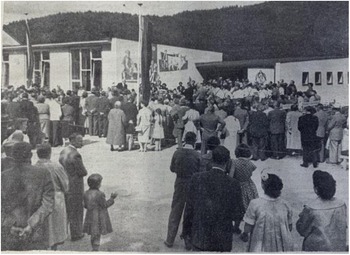
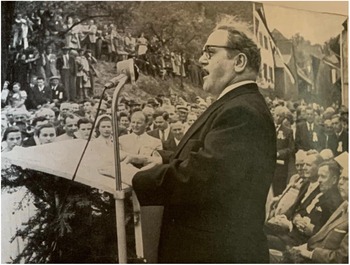
After a community centre was constructed, government officials, often including Minister Zinn, attended an inauguration ceremony to officially open the building and to acknowledge the importance of individuals’ hard work. Often, these ceremonies were planned to coincide with traditional festivals (for example, Erntedankfest or Heimatfest) to attract as much attention as possible (Figures 9–11). After all, publicity was vital for the programme’s success. In addition to speeches about the importance of the programme by both state officials and locals, signs and banners were displayed throughout the villages, which read, for example, ‘Community is strength’, and ‘Unity – Peace – Prosperity’. Further, journalists and radio broadcasters advertised the ceremonies with great praise for the programme’s achievements. The programme sought to create an image of villages doing the work with state assistance; however, Fuchs argues that the villages simply followed the guidance of the state. While the programme was introduced by the government, the communities had to take the initiative and the financial risk. Ultimately, the programme assisted the rural populace to gain confidence in the government and it made significant strides in eliminating the isolation of the villages.Footnote 48
Inauguration of community centre during Erntedankfest in Altenburschla.
Source: Fischer, Das Hessische Dorfgemeinschaftshaus, p. 32.

Inauguration of the 100th rural community centre in Arnoldshain, June 1958.
Source: Der Sozialdemokrat, September 1958, Stadtarchiv Wiesbaden, NL35, No. 509.

Minister Fischer delivering a speech at the inauguration in Rothenberg.
Source: Fischer, Das Hessische Dorfgemeinschaftshaus, p. 111.

This is not to say, however, that the programme was not met with criticism. Local businesses, for example, bakeries, taverns, and butchers, did occasionally complain about a fear of competition; however, the SPD quickly resolved the concerns by not authorising such facilities to be incorporated in the community centre if there would be a rivalry to local businesses (Figure 12). Further, the programme’s intent on turning the community centres into new focal points of villages caused much concern among the religious communities, particularly the Catholic church. Bishop Michael Keller of Münster, for example, protested that ‘the church had to remain the center of the village.’ However, the programme proved not to be a threat to the church.Footnote 49
Communal baking facility in Niederkalbach.
Source: Fischer, Das Hessische Dorfgemeinschaftshaus, p. 89.

The main issue came from farmers, who, according to an internal report by the programme committee, ‘have not understood the meaning of this house. First, they are afraid they will have to pay for it if it … “goes wrong”. Then the house is too far away for them. … The most common expression is: “that is only for people who have free time”.’Footnote 50 The SPD understood that farmers wanted to preserve rural traditions, which often rejected the unfamiliar and, especially, unproven. As previously noted, the attempts to modernise the countryside were not new and had been occurring on and off throughout the previous decades. Because farmers often linked these failed historical measures as attempts to break up the rural milieu, they remained sceptical about any new liberal policies and feared that the Social Democrat’s programme simply paid lip service to their concerns. This fear, in part, explains the SPD’s motive to use the rural community centres to help bridge tradition and modernity, as the appeal to preserve local traditions and culture eased farmers concerns about freeing the villages from their insular seclusions.Footnote 51 Over time, however, the programme gained the trust of most farmers, who learned to make the most of the situation. As a farmer and former (Independent) mayor of Böhne, Heinrich Sauer, said: “he could milk the red cows [SPD] in Wiesbaden and the black cows [CDU] in Bonn so that he would have the knowledge to raise money for his village.’Footnote 52
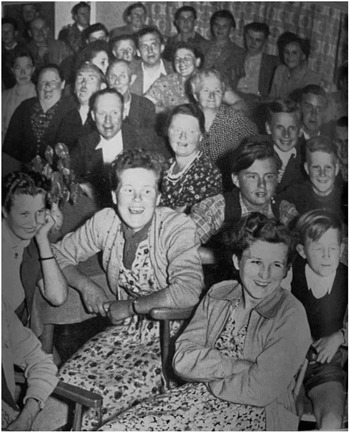
Beginning in 1953, the Hessian public broadcasting corporation (Hessischen Rundfunk) partnered with the SPD’s programme and created an endowment that provided televisions for every rural community centre. This significantly impacted the number of visitors, who gathered in the common room at night to watch the latest television programmes and sporting events (Figure 13). The West German victory at the 1954 football World Cup drew particularly large crowds, as individuals from neighbouring villages joined to partake in the event. The televisions functioned not only as a social and cultural bridge between rural and urban societies, but it also opened the door to the endless potentials of the world. Confronted with a wealth of images, products, and (particularly liberal) values of the city, the new technology forced rural citizens to gradually reevaluate their own values and lifestyle.
Residents of all ages enjoy watching television in Stockhausen’s community centre.
Source: Fischer, Das Hessische Dorfgemeinschaftshaus, p. 108.

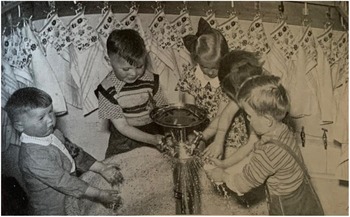
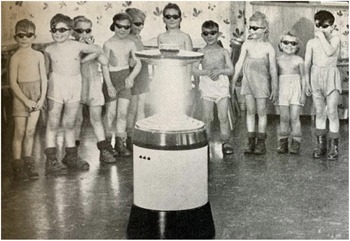
In addition to the timesaving measures of the modern appliances, the kitchens and communal freezers were intended to improve the diet among rural populace. While individual freezer compartments were relatively small, they offered the ability to have a more balanced diet throughout the year. Similarly, the communal laundry rooms, washrooms, and nursing stations sought to improve the health of rural citizens and modernise their hygiene practices (Figures 14 and 15). Yet, it took time for the washrooms and other facilities to gain acceptance in the communities, as many were more comfortable to the traditional, self-sufficient lifestyle. For many, especially women, free time remained a rather foreign concept, as they felt it was unusual to not stay productive. Overtime, libraries became quite popular, especially among women and youth, and the local clubs, organisations, and even families increasingly reserved communal rooms for meetings and celebrations. Usually, the part-time farmers and non-agricultural families, who in many cases already had contact with the urban environment – mostly by commuting to work in cities – were the first to take advantage of the new facilities.
Sinks for children in the kindergarten.
Source: Fischer, Das Hessische Dorfgemeinschaftshaus, p. 75.

Light therapy for children in Mittelbuchen during the winter months.
Source: Fischer, Das Hessische Dorfgemeinschaftshaus, p. 63.

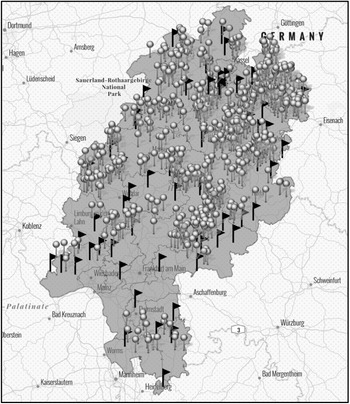
By 1960, 150 rural community centres were built in Hesse at the cost of over fifteen million DM; however, this represented only a tiny portion of the roughly 2,600 villages with less than five thousand inhabitants.Footnote 53 As Fuchs argues, the SPD never intended to provide every village with a community centre, but rather demonstrate a successful model for others to replicate. In the seventy years since the first rural community centre was built, over one thousand have been constructed throughout Hesse, which indicates the rather widespread acceptance for the establishments (Figure 16).Footnote 54 Ironically, by the early 1960s the SPD’s attempt to use rural community centre to modernise the countryside fell victim to modernity, as most modern amenities in community centres became increasingly standard in rural households. The SPD’s programme was forced to adapt to the varying structural, economic, and social circumstances and focused more on promoting cultural and leisure programmes and less on making work and life easier. With the increasing globalisation, the rural village began to lose its traditional function as the centre of residents’ life, which many rural citizens, especially farmers, had long feared. These changes forced villages to either renovate the community centres, for example, into the mayor’s office, a youth centre, a storage facility, bowling alleys, or rent the facility to a restaurant or storeowner. Nevertheless, the precedent set by Zinn’s programme provided a foundation for subsequent administrations to use and adapt to the continuous and varying social and cultural disparities.
List of rural community centres built prior to 1955 (black flags) and after 1955 (grey pins).
Source: Created by author.

Beginning in 1965, Zinn built upon the success of the Hessenplan and focused on expanding the rural infrastructure, for example, by improving access to education, constructing sporting facilities, as well as cultivating social and cultural welfare by developing additional community centres in both rural villages and in small towns; called Bürgerhäuser, these establishments built upon the successes of the rural community centres. In addition, multipurpose halls (Mehrzweckhallen) were funded to stimulate sporting activities and various cultural and social gatherings. These became part of what was called the large Hessenplan (Große Hessenplan). Since the labour-saving facilities were generally not necessary in the towns, these establishments offered common rooms, libraries, youth rooms, and public health care facilities. Nevertheless, like the counterparts in the villages, these establishments were intended to counter isolation and promote social interactions.Footnote 55
As Wendelin Strubelt and Detlef Briesen conclude, both adaptations of the Hessenplan were ‘successful examples of balancing state planning. With them … the most devastating postwar problems were solved, and they helped integrate Hesse.’ Further, they provided the FRG with an alternative to the conservative federal politics of Chancellor Adenauer, namely the framework of a Social Democratic solution in Hesse.Footnote 56 Ultimately, the ‘Social Armament of the Village’ became part of several other domestic and national programmes, promoted under the slogan ‘Hesse at the Front’ (Hessen vorn), which focused on improving the appearance of the countryside. These included, for example, Stallmistwettbewerb (literally manure competitions), which recognised the most well-kept manure storage facilities to urge farmers to store and dispose of manure in less visible locations, and the national competition ‘Our village should be more beautiful’ (Unser Dorf soll schöner werden). The latter programme, which continues till today, urges villages to enhance the appearance of their communities by planting flowers and maintaining a clean and structured environment.Footnote 57
In 1968, the Hessian government conducted surveys in over 250 communities regarding locals’ opinions of the rural community centres and the SPD’s programme. By this point in the history of the programme, the Hessian government had supported the construction of nearly six hundred community centres, meaning that one out of every five of Hessian’s cities and villages (comprising roughly 1.6 million citizens) had access to one of these establishments. Individuals confirmed the popularity of the community centres and wrote that they ‘have become an integral part of the life of the communities’ and that ‘interests in organizations, clubs, along with cultural and sporting activities have received new momentum.’Footnote 58 The principal of a school in the small village of Braach, located directly along the inner-German border, noted that ‘we have had the best experiences with our community center. … [T]he joy of life in the village has increased.’Footnote 59 Similar responses were widespread throughout the state.
While the implementation of rural community centres was not exclusive to Hesse, the SPD’s programme was unique; it inspired similar plans in other German states (for example, in Lower Saxony, North Rhine-Westphalia, Bavaria, Schleswig-Holstein, and Baden-Württemberg) and even drew interest from other countries (for example, Austria, Italy, Denmark, and Turkey). In Lower Saxony especially, rural community centres became part of the Cold War border politics between East and West Germany. For example, by 1966 the majority of the nearly ninety rural community centres in Lower Saxony were built in villages located along the inner-German border. The SPD used them to represent Western progress, modernity, and freedom, and often compared them to the so-called ‘culture houses’ or ‘palaces of culture’ (Kulturhäuser or Kulturpalast) in the DDR, which were similarly designed for cultural, social, and leisure activities. Although the conservative opposition occasionally attempted to draw parallels with the socialist establishments in the East, claiming the SPD’s community centres represented ‘socialist political schools’ and as a ‘first step to the collective farm’, the SPD reassured West Germans that their programme was not an attempt to control citizens, but rather improve living standards and quality of life as well as facilitate social cohesion in the new democratic age.Footnote 60
Conclusion
The SPD’s programme to combat rural exodus drew upon several historical attempts in Germany to actively balance the social, cultural, economic, and political divide between urban and rural communities. While it focused on improving the infrastructure and living standards in rural communities to prevent an overflow of migrants in urban communities and to secure enough food to sustain the population, the SPD also encouraged reforming the social order with a renewed moral compass. This was especially necessary given the significant portion of the population that had passively permitted (and actively participated in) the violence of the Nazi regime, and due to the complicated de-Nazification process, that rarely filtered down to the local level.Footnote 61 Zinn reasoned that the ‘de-individualization of man resulted in the loss of conscience and sense of responsibility’, and that ‘mobilizing the spirit’ of individuals would allow people to better deal with the existing issues and, ultimately, ‘master the future’.Footnote 62 The goal of the party’s programme was to instill within the population of Hesse a deep sense of responsibility, and the importance of thinking and acting independently, but at the same time emphasising the significance of a community, where respect, solidarity, freedom, and tolerance for each other were routine.Footnote 63 Further, the programme was an attempt by the socialist-led Hessian government to contribute, albeit modestly, to a new European social order during the struggle to redefine German (and European) identity between the polarisation of American capitalism and Soviet communism.Footnote 64
After the war, it was clear to politicians and even ordinary citizens that the process of reconstructing a democratic society was going to be measured. As sociologist Helmut Thome clarifies, the transition from a dictatorship to democracy was a process that required individuals to ‘… learn to speak where they were previously silent; to move in spaces that had been avoided; to exercise options that were previously not there; to use techniques and equipment that were [heretofore] not available – in everyday interpersonal relationships, in political disputes, in the competition for jobs, careers and markets shares …’.Footnote 65 As a result, ambivalent attitudes towards the old (traditional) and the new realities emerged along with resentment for the foreign influence on the FRG’s new political system. Nevertheless, as Hessian Economic Minister Heinrich Fischer aptly declared, ‘In a time when envy, resentment and selfishness prevail everywhere, thousands of people have been brought together in a community and bridges are being built between town and country.’Footnote 66
As communities were largely dependent on the financial support of the central state bureaucracy, the paternalistic guidance of the ‘Social Armament of the Village’ offered politicians and government officials an opportunity to construct a lasting democratic government by modelling and adjusting the conviction and mindset of German society. The programme also provided rural communities with a basic sense of autonomy (even if it was minimal) to establish a secure, just, and enduring democratic society. As Gerhard confirms, through these government measures, rural citizens, especially farmers, did not feel helpless or without support, and thereby did not consider the government as the enemy, as they had done during the interwar years.Footnote 67 While Conway correctly argues that pro-democratic parties were concerned more with constraining popular participation than encouraging it during the initial postwar decade, by the early 1950s, the Hessian SPD began to urge active civic involvement, as exemplified by the rural community centres.Footnote 68 Villages actively took part in tailoring their community centres to fit their specific needs and the shifting social milieu. Public forums were regularly held (stemming from seminars in democracy supported by HICOG) for local citizens to meet, ask questions, and relay their concerns to their elected representatives. Even the youth government days, as previously described, continued.Footnote 69
Rural community centres acted as a space for the social, cultural, and political reorientation and provided an opportunity for individuals’ direct involvement in the modernisation process of the FRG and can be viewed as an attempt to prevent further societal and individual anomie.Footnote 70 After all, such stark societal contrasts (that is, rich—poor, urban—rural, traditional—modern, old—young, collective—individual, liberalism—conservativism), which were exacerbated by the war, weakened the cohesiveness and foundation of society. Viewed as instruments of modernisation, these establishments provided an important environment that encouraged social and cultural cohesion, leisure activities, and technical improvements during the complex transformation of the rural milieu and the integration of rural areas into the desired postwar community.Footnote 71 Ultimately, rural community centres facilitated democracy as an ideal and (even more so) as a lived experience, which assisted in countering the negative memories of past government instability, violent conflict, and defeat.Footnote 72
Acknowledgements
The author would like to thank the Alexander von Humboldt Stiftung for the generous support in funding the archival research for this article.