Introduction
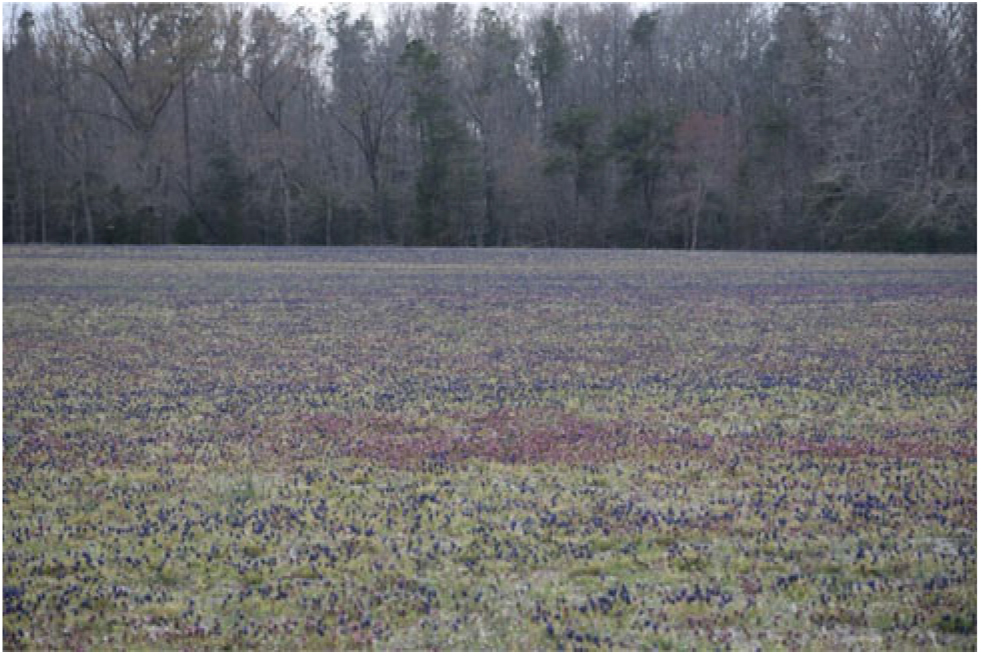
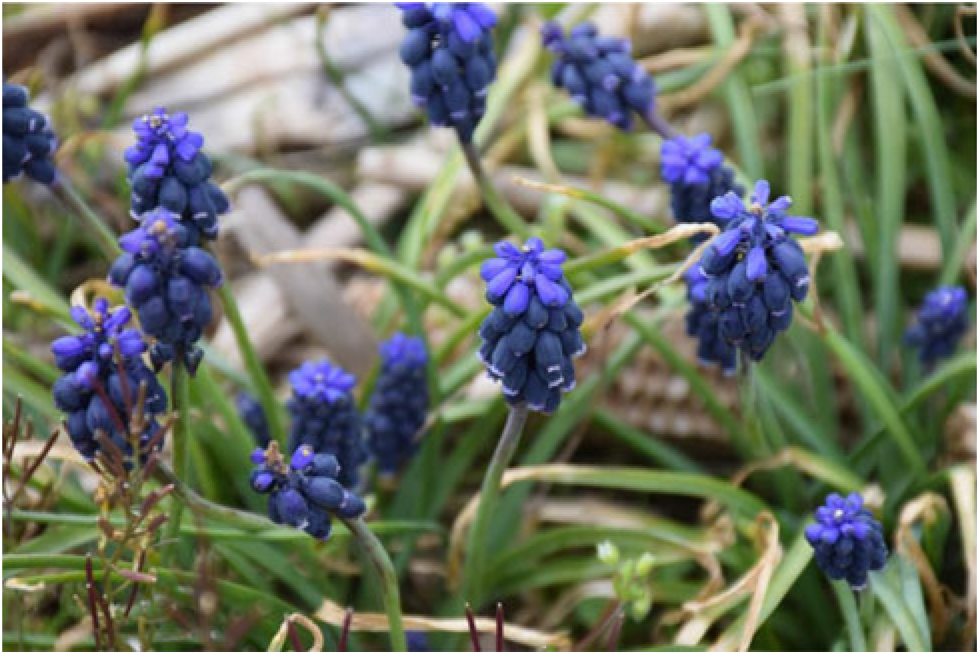
Grape hyacinth is a perennial spring-flowering bulbous species that was introduced from the Mediterranean region to the United States (Doussi and Thanos Reference Doussi and Thanos2002; USDA 2018). Muscari spp. are commonly planted in ornamental beds (Qi et al. Reference Qi, Lou, Li, Yue, Liu and Wang2013; Skroch et al. Reference Skroch, Warren and De Hertogh1988). The life cycle of grape hyacinth is different than that of many flowering bulb species. The plant emerges in the fall, overwinters, and flowers in early spring (Mahr Reference Mahr2010). After flowering, the foliage dies back during the summer but then reemerges in mid to late fall, coinciding with soybean harvest and wheat planting. The life cycle of grape hyacinth results in little to no foliage present at the time when POST herbicide applications would be made in soybean. Grape hyacinth can potentially become an invasive weed (Figures 1–3) in no-tillage agricultural fields (Bowen et al. Reference Bowen, Johnson, Franklin, Call and Webber2002). Reports of grape hyacinth infestation of no-tillage fields are increasing in the Mid-Atlantic region, as are questions regarding control.
Grape hyacinth infestation in a no-tillage production field in Dunnsville, VA, 2017.
Grape hyacinth flowering in a production field in Dunnsville, VA, 2017.
Grape hyacinth in a field near Dunnsville, VA, 2017.
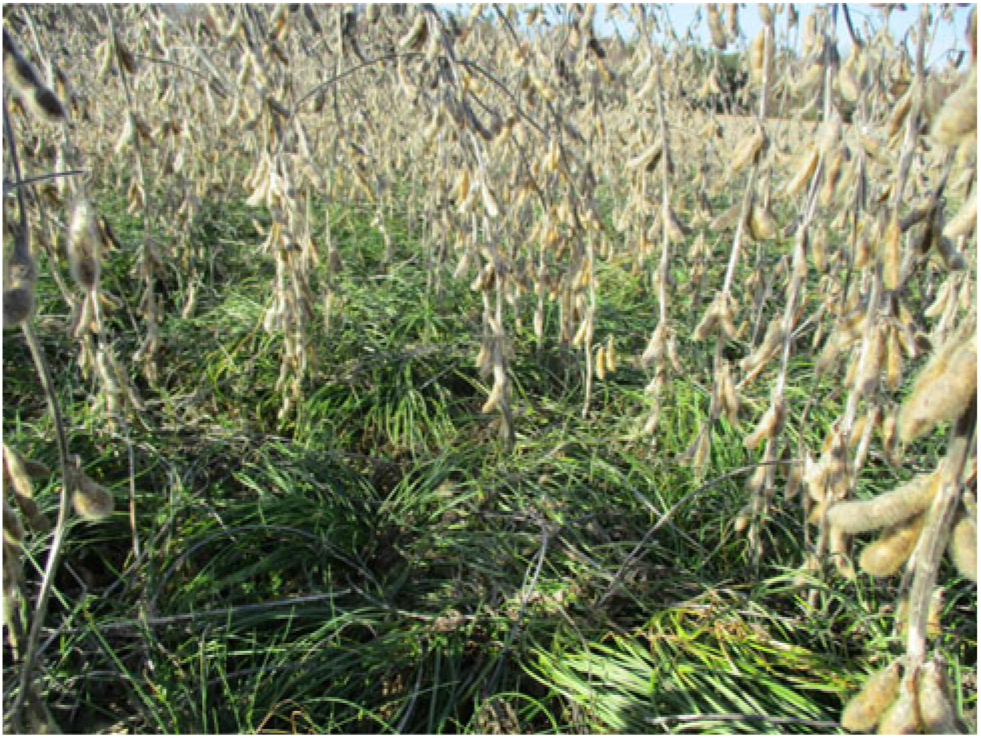
The presence of weeds such as grape hyacinth in fields in the fall can negatively affect soybean harvest by reducing harvest efficiency and increasing grain moisture (Burnside Reference Burnside1973). Greater moisture in harvested soybean can lead to increased drying costs or a dockage in price received when that crop is delivered to the elevator (Anderson and McWhorter Reference Anderson and McWhorter1976; Burnside Reference Burnside1973; Burnside et al. Reference Burnside, Wicks, Warnes, Somerhalder and Weeks1969; Ellis et al. Reference Ellis, Shaw and Barrentine1998; McWhorter and Anderson Reference McWhorter and Anderson1976a, Reference McWhorter and Anderson1976b; Nave and Wax Reference Nave and Wax1971). In addition to harvest issues in soybeans (Figure 3), weeds present in the fall may compete with newly planted winter wheat. Weed competition early in the season may reduce winter wheat yield, but this varies by weed species (Rydrych Reference Rydrych1974, Reference Rydrych1981; Swan Reference Swan1971; Swan and Furtick Reference Swan and Furtick1962). Bulb-producing species also have the potential to affect crop establishment by limiting seed-to-soil contact, especially when bulbs are present at high densities (Johanning et al. Reference Johanning, Preece and Young2012, Reference Johanning, Young and Young2016).
There is little published research on controlling grape hyacinth, but there are data on control of similar Liliaceae species with slightly different life cycles but similar morphology, including wild garlic (Allium vineale L.) and star-of-Bethlehem (Ornithogalum umbellatum L.) in turf and agronomic cropping systems. Opportunities for chemical control of grape hyacinth are during the vegetative stage in the fall or spring at the onset of flowering. Control of grape hyacinth and related species is difficult due to their perennial nature and morphological features, including an upright growth habit and narrow cylindrical leaves that limit herbicide spray interception and retention (DeFelice Reference Defelice2003; Steckel and McClure Reference Steckel and McClure2015). In addition, a waxy cuticle slows absorption of herbicides. Leys and Slife (Reference Leys and Slife1988) and Troutman et al. (Reference Troutman, King and Frans1981) reported slower absorption and translocation of chlorsulfuron, metsulfuron, and glyphosate in wild garlic compared with other plant species. Members of the Liliaceae can also be prolific bulb producers, making long-term management difficult. Star-of-Bethlehem main bulbs can produce up to seven bulblets each year, and estimated bulb density can be as high as 91 million bulbs ha−1 (Steckel and McClure Reference Steckel and McClure2015).
Herbicides commonly used to control grape hyacinth, wild garlic, or star-of-Bethlehem include paraquat, glyphosate, 2,4-D, dicamba, and multiple acetolactate synthase–inhibiting herbicides. When evaluated shortly after planting, glyphosate at 1,120 and 1,680 g ae ha−1 applied in early April had better initial grape hyacinth control (78% to 87%) than applications made in early-May (43% to 57%). However, when grape hyacinth control was evaluated at soybean harvest and 1 yr after application, control was poor (<65% and <50%, respectively) and no differences between treatments were observed (VanGessel Reference VanGessel2015). Paraquat applied at 1,100 g ai ha−1 and glyphosate applied at 1,100 g ae ha−1 in late April reduced wild garlic 100% and 64%, respectively, 1 yr after treatment (YAT) (Peters and McKelvey Reference Peters and Mckelvey1982). Glyphosate and 2,4-D applied in a spring-fall-spring sequence can result in up to 79% reduction of wild garlic bulbs (Troutman et al. Reference Troutman, King and Frans1981). Leys and Slife (Reference Leys and Slife1986) reported that fall- versus spring-applied chlorsulfuron resulted in 32% and 57% wild-garlic density reductions, respectively. Paraquat applied at three different timings resulted in 47% to 99% star-of-Bethlehem control 21 d after treatment (DAT) and 33% to 78% control 1 YAT, but glyphosate performed poorly, resulting in less than 30% control 21 DAT and 1 YAT (Johanning et al. Reference Johanning, Young and Young2016).
Some of the previously described studies used acetolactate synthase–inhibiting herbicides, such as chlorsulfuron and metsulfuron, to control grape hyacinth and other weedy members of the Liliaceae. However, these herbicides have the potential for carryover injury if applied in the spring before full-season soybean planting or to double-cropped soybean if applied in wheat. Tolerance to the sulfonylurea herbicides is present in some but not all soybean varieties. It has been reported that applications of metsulfuron 3 mo prior to soybean planting at rates of 4.5 and 18 g ai ha−1 caused no injury (Ritter et al Reference Ritter, Haris and Kaufman1988). Chlorsulfuron applied 3 to 10 mo before soybean planting has the potential to cause soybean injury, depending on the rate applied (Khodayari et al. Reference Khodayari, Frans and Akkari1985; Ritter et al. Reference Ritter, Haris and Kaufman1988).
Because of limited research for control options for grape hyacinth in wheat and soybean, research was conducted with the objective to evaluate the efficacy of multiple herbicides labeled for use in wheat or as a preplant application for soybean for grape hyacinth control. A secondary objective was to assess potential herbicide carryover from these herbicides to soybean.
Materials and Methods
Separate field studies were conducted to evaluate grape hyacinth control and herbicide carryover to soybean. In the first study, herbicides were applied in the fall after corn harvest and the site was left fallow over the winter, followed by a summer soybean crop. Response of grape hyacinth populations were monitored for 16 mo after initial application. In the second study, herbicides were applied in the spring when grape hyacinth was near or at flowering, and populations were monitored until harvest of the summer-planted soybean crop.
Fall Applications
Studies were conducted on adjacent sites in Dunnsville, VA (37.802139°N, −76.852528°W) in 2015 and 2016. Soil was an Atlee silt loam (fine-loamy, siliceous, semiactive, thermic Fragiaquic Paleudults) with pH of 6.1 and 1.7% organic matter at both sites. The studies were arranged as a randomized complete block with four replications; plot sizes were 3 × 7.6 m. Treatments (Table 1) were applied on November 16, 2015, and November 15, 2016. Applications were made using a CO2-pressurized backpack sprayer with a four-nozzle boom on 46-cm spacing with TeeJet XR8002VS (2015) and AIXR11002 (2016) nozzles (Spraying Systems Co, Wheaton, IL) calibrated to deliver 140 L ha−1 of spray solution. A nontreated control (NTC) was included for comparison.
Herbicide treatments for the fall application study.

a Manufacturer is listed only at first mention.
Soybeans were planted in early May 2016 and 2017 at recommended seeding rates for the region, and standard production practices were followed (Brann et al. Reference Brann, Holshouser and Mullins2000). Prior to soybean planting, a preplant application of glyphosate (1,260 g ae ha−1; Roundup PowerMAX, Monsanto Co., St. Louis, MO) plus S-metolachlor (1,215 g ai ha−1) plus fomesafen (266 g ai ha−1; Prefix, Syngenta Crop Protection, Greensboro, NC) was applied to control emerged summer and winter annual weeds and provide residual control of summer annual weeds. Grape hyacinth cover at the time of soybean planting was less than 5% across the entire study. A POST application of glyphosate plus fomesafen (Flexstar GT, Syngenta Crop Protection) at 1,107 g ae ha−1 plus 274 g ai ha−1, respectively, was applied when soybeans were at the V4 to V5 growth stage, and no grape hyacinth foliage was visible at this application. In 2017, the soybean crop was lost due to deer herbivory and was replanted in late June. At the time of replanting glyphosate (1,107 g ae ha−1 plus) plus fomesafen (274 g ai ha−1) was applied, and no subsequent herbicides were applied.
Data collected included grape hyacinth cover and control, assessed visually on a 0 (no cover or control) to 100 (full plot coverage or control) scale (Frans et al. Reference Frans, Talbert, Marx, Crowley and Camper1986). Visual evaluations were made before fall herbicide application, at 2 wk after application (WAA), monthly from 3 to 6 mo after application (MAA), after soybean harvest 12 MAA, and a final rating 16 MAA. Following soybean harvest the field was left fallow until the final rating 16 MAA. Grape hyacinth line-intersect measurements were collected by counting every 15 cm for 7 points, resulting in a 0 to 7 scale. If any aboveground part of a grape hyacinth plant or plants touched a line at the assessment points, it was counted as 1, as adapted from Canfield (Reference Canfield1941). Measurements were conducted prior to herbicide application, in the first spring after application, after soybean harvest, and a final measure was made in the second spring after application. Soybean was harvested and yield adjusted to 13% moisture.
Data were analyzed using JMP Pro 13 (SAS Institute, Cary, NC). Grape hyacinth cover, visible control, line intersect, and soybean yield were subjected to ANOVA with main model effects of treatment, year, block, and interaction of year by treatment. Treatment was considered a fixed effect in the model, and year and block were considered random effects. If no significant interactions were observed, data were combined over years. At some evaluation dates for grape hyacinth cover and control, a significant (P < 0.1) year-by-treatment interaction was observed; at those evaluation dates, data were analyzed separately by year. When the overall model and treatment were significant (P < 0.1), means were separated using Fisher protected LSD (P = 0.1). For grape hyacinth control data, the NTC was excluded from the analysis.
Spring Applications
Studies were conducted in Dunnsville, VA, in 2016; Georgetown, DE, in 2016; and South, VA, in 2017, for a total of 3 site-years. The Dunnsville, VA, location was described in the Fall Applications section. The Georgetown, DE, location (38.647510°N, −75.340758°W) in 2016 was a Rosedale loamy sand (loamy, siliceous, mesic, Arenic Hapludults) with pH 6.2 and 1.5% organic matter. The South, VA, location (37.825417°N, −221276.823778°W) in 2017 was a Kempsville sandy loam (fine-loamy, siliceous, subactive, thermic Typic Hapludults) with pH 5.5 and 1.9% organic matter.
The studies were arranged as a randomized complete block with four replications, except the Delaware location, which only had three replications, with plot sizes of 3 × 7.6 m. Treatments (Table 2) were applied on April 4 and 20 in 2016, at Dunnsville, VA, and Georgetown, DE, respectively, and at the South, VA, site on April 7, 2017. These dates correspond to when approximately 80% of the visible grape hyacinth was flowering. Applications for both site-years in Virginia were made as described under Fall Applications. At the Delaware site, Greenleaf 11002 Airmix nozzles (Greenleaf Technologies, Covington, LA) calibrated to deliver 187 L ha−1 of spray solution were used. An NTC was included for comparison. Soybean were planted in early May, approximately 4 WAA, in all site-years, as described under Fall Applications.
Herbicide treatments for the spring-application study.

a Manufacturer is listed only at first mention.
Data collected included assessments of grape hyacinth cover and control, as described in the Fall Applications section, 2 WAA at the Delaware location and 4 WAA at both Virginia locations, and after soybean harvest 7 MAA. Grape hyacinth line-intersect measurements were conducted after soybean harvest, as described under Fall Applications. Grape hyacinth bulb samples (three subsamples per plot) were collected by taking a core sample 10.8-cm diameter by 7.6-cm deep. The bulbs were separated from the soil, counted, and then dried at 50 C for 48 h and weighed. Soybean was harvested in both-site years in Virginia and yield adjusted to 13% moisture; the Delaware location was not harvested.
Using JMP software, grape hyacinth cover, visible control, bulb counts, bulb weights, and soybean yield were subjected to ANOVA with main model effects of treatment, site-year, block, and interaction of site-year by treatment. Treatment was considered a fixed effect in the model, and site-year and block were considered random effects. Across all data, no significant site-year by treatment interactions were observed, so all data were pooled across site-year by data type. When the model was significant, means were separated using Fisher protected LSD (P = 0.1). For the grape hyacinth control data, the NTC was excluded from the analysis.
Results and Discussion
Fall Applications
Grape hyacinth cover
The initial cover of all plots ranged from 28% to 41%, and averaged 33%, with no significant differences between plots (data not presented). Only the main effect of treatment was significant for grape hyacinth cover; therefore, data are presented pooled across year. Contact herbicides, such as paraquat, initially provided the greatest reduction in grape hyacinth cover. However, long-term reduction of grape hyacinth cover was best with glyphosate and glyphosate plus dicamba. At 2 WAA, the NTC had 40% grape hyacinth cover (Table 3), whereas metsulfuron plus paraquat, paraquat, and carfentrazone treatments resulted in the lowest grape hyacinth cover of 1%, 2%, and 7%, respectively. Therefore, treatments containing contact herbicides resulted in the best initial performance.
Grape hyacinth cover after fall herbicide application in Dunnsville, VA, 2015–2016 and 2016–2017. a

a Values not followed by the same letter are significantly different according to Fisher protected LSD (α = 0.1).
b Abbreviations: MAA, mo after application; N/A, not applicable; WAA, wk after application.
Six MAA, all treatments except paraquat, carfentrazone, glyphosate plus dicamba, dicamba, and metsulfuron plus paraquat reduced grape hyacinth cover (1% to 5%) compared with the NTC (8%) (Table 3). Grape hyacinth cover was greater than in the NTC after paraquat (18%) and metsulfuron plus paraquat application 14%). At 12 MAA, the NTC had the greatest grape hyacinth cover, at 40%. Grape hyacinth cover was less than in the NTC after carfentrazone (29%), glyphosate (22%), dicamba (29%), and glyphosate plus dicamba (20%) applications. At the last rating, 16 MAA, glyphosate and glyphosate plus dicamba treatments resulted in the least grape hyacinth cover at 3%, compared with the NTC, which was 8%.
Grape hyacinth control
The effect of treatment was significant 2 WAA, 6 MAA, and 16 MAA (Table 4). In addition, there was a significant year-by-treatment interaction when plots were rated at 2 WAA and 16 MAA; therefore, data for those dates are presented separately by year. Similar results to cover data were observed in that treatments containing contact herbicides resulted in the best initial performance, but control with these herbicides declined over time. Two WAA, the paraquat and metsulfuron plus paraquat treatments provided 90% to 93% grape hyacinth control in 2015, and 100% control in 2016 (Table 4).
Grape hyacinth control after fall herbicide application in Dunnsville, VA, 2015–2016 and 2016–2017. a

a Values not followed by the same letter are significantly different according to Fisher protected LSD (α = 0.1).
b Abbreviations: MAA, mo after application; WAA, wk after application.
c Denotes the year herbicides were applied.
Treatments resulting in the greatest grape hyacinth control 6 MAA were glyphosate, metsulfuron at 8.4 and 16.8 g ai ha−1, and sulfosulfuron, at 91%, 84%, 88%, and 91% control, respectively (Table 4). These findings are supported by the grape hyacinth cover data (Table 3). All other treatments resulted in control ranging from 0% to 62% (Table 4). Twelve MAA, there were no differences in treatment, with control ranging from 0% to 35%, as was also observed in the line-intersect data (Table 5). This lack of difference could be due to differences in growth of grape hyacinth and environmental conditions in the fall of the year. Studies of other perennial bulbous weeds have also reported weed control shortly after application is not a good predictor of long-term management (Johanning et al. Reference Johanning, Young and Young2016).
Grape hyacinth line-intersect measurements before and after fall herbicide applications in Dunnsville, VA, 2015–2016 and 2016–2017. a

a Values not followed by the same letter are significantly different according to Fisher protected LSD (α = 0.1).
b Abbreviations: MAA, mo after application; N/A, not applicable.
c The 4 MAA data are from 2015–2016 only. Similarly, 5 MAA data are from 2016–2017 only.
In 2015, glyphosate plus dicamba treatment provided the greatest grape hyacinth control (81%), whereas control with all other treatments was less than 65%, and most treatments provided 0% control 16 MAA (Table 4). In 2016, 16 MAA, glyphosate controlled grape hyacinth similarly to carfentrazone, dicamba, and glyphosate plus dicamba and better than all other treatments. The differences in grape hyacinth control between years could be due to different environmental conditions at the time of application or differences in grape hyacinth density at the time of application.
Grape hyacinth line-intersect measurements
Initial line-intersect counts were not different in grape hyacinth populations, with counts ranging from 3.5 to 4.9 (average, 4.3) (Table 5). After fall applications, the measurements were conducted in March 2016 and April 2017 for each experimental repetition, respectively. Spring line-intersect measurements showed a significant year-by-treatment interaction and are presented by year. In March 2016, glyphosate and glyphosate plus dicamba treatments resulted in the lowest population of grape hyacinth, with line-intersect counts of 1 and 0.3, respectively. All other treatments resulted in populations that were not different or were greater than the NTC 4 MAA. In April 2017, glyphosate, dicamba, and sulfosulfuron treatments resulted in populations of grape hyacinth that were the lowest compared with the NTC, with line-intersect counts of 1, 1, and 0.8, respectively, 5 MAA (Table 5). Twelve MAA, the data showed no significant year-by-treatment interaction and are presented pooled across years. The subsequent overall model was not significant (P = 0.499) and line-intersect counts across all treatments ranged from 3.6 to 5.6, which agrees with control data. This finding indicates that 1 yr after application, the grape hyacinth populations were approximately the same as before treatment. Sixteen MAA, glyphosate and glyphosate plus dicamba treatments resulted in lower populations of grape hyacinth compared with all treatments except paraquat (Table 5); this finding agrees with cover and control results (Tables 3 and 4).
Studies of fall applications of herbicides for grape hyacinth control are not reported in the literature, to our knowledge. However, studies examining wild garlic, which is a related perennial species with similar growth habit, have reported results of glyphosate treatment were not different from the NTC for plant density 1.5 MAA, but long-term control of wild garlic (12 MAA) after fall-spring sequential applications resulted in densities of 6.8 to 17.5 plants dm−2 in the treated plots and 32.2 plants dm−2 in the nontreated plot (Troutman et al. Reference Troutman, King and Frans1981). Fall applications of paraquat at 560 and 1,100 g ai ha−1 have been reported to be effective at reducing wild garlic density in the following spring by 83% and 79%, respectively (Peters and McKelvey Reference Peters and Mckelvey1982). In the current study, fall-applied paraquat controlled grape hyacinth less than it did wild garlic when evaluated 12 MAA.
Soybean yield
No soybean injury was observed during the growing season. The effect of year and treatment was not significant for soybean yield. Soybean yields ranged from 1,900 to 2,140 kg ha−1 (data not shown). These results are similar to those of Khodayari et al. (Reference Khodayari, Frans and Akkari1985) and Ritter et al. (Reference Ritter, Haris and Kaufman1988), who reported soybean yield after applications of chlorsulfuron and metsulfuron in the fall resulted in no soybean yield loss in a crop planted the next spring.
Spring Applications
Grape hyacinth cover
Ground cover data did not differ by location, with initial grape hyacinth cover ranging between 5% and 7%. End-of-season grape hyacinth cover in the NTC was 45% (Table 6). All herbicide treatments except halauxifen plus florasulam reduced grape hyacinth cover compared with the NTC at the end of the season, with cover ranging from 22% to 31%.
Grape hyacinth visible cover and control after spring herbicide application in Dunnsville, VA, and Georgetown, DE, in 2016 and South, VA, in 2017. a

a Values not followed by the same letter are significantly different according to Fisher protected LSD (α = 0.1).
b Abbreviations: MAA, mo after application; N/A, not applicable; WAA, wk after application.
c Assessment only made in Georgetown, DE, in 2016.
d Assessment pooled across Dunnsville and South, VA, in 2016 and 2017, respectively.
Grape hyacinth control
In Delaware, treatments containing paraquat resulted in 92% to 95% control 2 WAA (Table 6). All other herbicide treatments resulted in less than 57% control. At the Virginia sites, all treatments containing paraquat or glyphosate provided at least 79% control 4 WAA. The difference in time of rating between sites allowed more time at the Virginia locations for herbicidal activity, which resulted in a greater impact on control of grape hyacinth plants, and treatments with either paraquat or glyphosate resulted in the best control of grape hyacinth.
At 7 MAA, grape hyacinth control after soybean harvest was significant by treatment (P = 0.061) (Table 6). However, all treatments provided less than 26% control of grape hyacinth at this timing. Trends are similar to data reported by VanGessel (Reference VanGessel2015), which indicated glyphosate applied preplant burndown before soybean planting initially resulted in better grape hyacinth control compared with sulfosulfuron. However, by the end of the growing season, no differences were observed between herbicide treatments. Johanning et al. (Reference Johanning, Young and Young2016) reported control of star-of-Bethlehem, another perennial bulbous species, by paraquat and glyphosate treatment was 97% and 38%, respectively, 2 WAA, which is similar to the control achieved with paraquat and glyphosate reported in this study. Star-of-Bethlehem control after paraquat or glyphosate treatment was improved by delaying application in the spring until mid-April instead of early- or mid-March (Johanning et al. Reference Johanning, Young and Young2016). It has been reported that paraquat applied at 1,100 g ai ha−1 in April reduced wild garlic populations 85% to 88% 1 MAA; at 12 MAA, populations were reduced by 100% (Peters and Mckelvey Reference Peters and Mckelvey1982).
Grape hyacinth bulb counts and weights
Bulb count and bulb weight data did not have a significant site-year–by–treatment interaction; therefore, data are combined over site-years. The NTC had an average end-of-season grape hyacinth bulb count of 1,180 bulbs m−2 (Table 7). The treatment that resulted in the greatest reduction in bulb numbers at the end of the season compared with the NTC was paraquat, with 317 bulbs m−2, which is a 73% reduction. The total weight of bulbs in the NTC was 167 g m−2 (Table 7). All herbicide treatments except dicamba, metsulfuron plus chlorsulfuron, and pyrasulfotole plus bromoxynil reduced bulb weight compared with the NTC. The treatments that resulted in the greatest reduction in bulb weight were metsulfuron and paraquat, with weights of 36 and 38 g m−2, respectively (Table 7). Johanning et al. (Reference Johanning, Young and Young2016) reported an 88% reduction in star-of-Bethlehem bulbs with paraquat. Paraquat applied at 1,100 g ai ha−1 has been reported to be highly effective at reducing wild garlic bulb numbers when applied from March to April (Peters and McKelvey Reference Peters and Mckelvey1982).
Grape hyacinth end-of-season bulb counts and weights 7 mo after spring herbicide applications in Dunnsville, VA, and Georgetown, DE in 2016, and South, VA in 2017. a

a Values not followed by the same letter are significantly different according to Fisher protected LSD (α = 0.1).
Grape hyacinth line-intersect measurements
Line-intersect measurements were conducted after soybean harvest. The overall model was significant (P < 0.001), but treatment was not (P = 0.054), indicating that no treatments reduced grape hyacinth density. Counts ranged from 3.9 to 5.3 on a 0-to-7 scale across all site-years (data not shown).
Soybean yield
No soybean injury was observed throughout the growing season. Yield data were collected for both site-years in Virginia, but not at Delaware. The overall model was significant (P < 0.001), but treatment was not (P = 0.091), indicating that all treatments had similar soybean yield, which ranged from 2,455 to 2,730 kg ha−1 (data not shown). These data are similar to those of Khodayari et al. (Reference Khodayari, Frans and Akkari1985) and Ritter et al. (Reference Ritter, Haris and Kaufman1988), who reported that soybean yields were not impacted by spring applications of metsulfuron or chlorsulfuron. Furthermore, Grey et al. (Reference Grey, Braxton and Richburg2012) reported soybean yield was not affected by spring applications of sulfosulfuron at 35 g ai ha−1.
Although there was variable (Table 4) long-term grape hyacinth control by some treatments, fall-applied glyphosate-containing treatments were most effective (≤81% control 16 MAA) across parameters and assessment dates. Fall-applied herbicides labeled for use in wheat were not as effective as glyphosate. For soybeans to be planted in a weed-free field with no issue of herbicide label restrictions, spring-applied paraquat resulted in the best control (>90%) (Table 6). Despite little evidence of effectiveness aboveground, as indicated by cover, control, and line-intersect parameters, paraquat resulted in the greatest reduction in grape hyacinth bulb number (73%) and weight (77%) (Table 7).
Additional research is needed on control methods of grape hyacinth; the best treatments evaluated in this study failed to result in acceptable control. Such research may evaluate sequential applications of herbicides such as paraquat in an effort to starve the bulb or systemic herbicides such as glyphosate in an effort to translocate more herbicide to the bulb. Another opportunity for research is tillage. Observationally, grape hyacinth appears to be infesting primarily no-tillage fields. As such, inversion tillage may be worthwhile because bulbs are less than 5-cm deep. Research should include below- and aboveground measurements, as in this study. For now, growers can use paraquat prior to planting summer crops or glyphosate in the fall before wheat planting to suppress grape hyacinth growth to limit negative impacts on soybean harvest.
Author ORCIDs
Shawn C Beam https://orcid.org/0000-0001-9206-5693
Acknowledgements
The authors acknowledge Robert Mitchell, who provided locations in Virginia, and Jay Baxter, who provided the location in Delaware. The Virginia Soybean Board, the Virginia Agricultural Experiment Station, and the Hatch Program of the National Institute of Food and Agriculture, U.S. Department of Agriculture, provided funding for this research. Although no specific funding was received related to this manuscript from manufacturers of products mentioned, funding has been provided to Virginia Tech from the following sponsors in support of Dr. Flessner’s research and extension program, either through unrestricted gifts, research contracts, or grants: BASF Corporation, Bayer CropScience, Dow AgroSciences, E.I. du Pont de Nemours and Company, FMC Corporation, Monsanto Company, and Syngenta Crop Protection.