Introduction
First bite syndrome was first defined by Netterville et al. as severe sharp or cramping pain in the parotid region that occurs with the first bite of mastication and improves with subsequent bites.Reference Netterville, Jackson, Miller, Wanamaker and Glasscock1 First bite syndrome most commonly occurs as a post-operative complication. The incidence of first bite syndrome as a complication after parotid or parapharyngeal surgery is rare, but has been found to range between 9.6 and 18 per cent for deep lobe parotid surgical procedures.Reference Linkov, Morris, Shah and Kraus2, Reference Cohen, Burkey and Netterville3
Far less commonly, first bite syndrome has been observed following other surgical procedures, including carotid endarterectomy, bimaxillary osteotomy and bilateral temporomandibular joint replacement.Reference Shiozaki, Izumo, Morofuji, Horie, Anda and Matsuo4–Reference Alwanni, Altay, Baur and Quereshy6 It has also been described in cases of parotid or submandibular malignancies, in the absence of any surgical intervention.Reference Masood, Di and Hackman7, Reference Guss, Ashton-Sager and Fong8 In these instances, surgical resection of the tumour may bring relief to patients suffering from first bite syndrome.
Certain risk factors, such as female sex, younger age and existing symptoms before surgery, have been found to be associated with the development of first bite syndrome.Reference Linkov, Morris, Shah and Kraus2, Reference Lammek, Tretiakow and Skorek9 In one of the largest cohort studies undertaken, following post-surgical patients who developed first bite syndrome, Linkov et al. found that tumours arising in the parapharyngeal space and parotid region had a higher risk of first bite syndrome, whereas it was not seen in tumours arising from the infratemporal fossa.Reference Linkov, Morris, Shah and Kraus2 These researchers also found that the majority of parotid first bite syndrome cases arose from deep lobe pathology and/or surgery,Reference Linkov, Morris, Shah and Kraus2 although another study did not identify this association between parotid pathology location and incidence of first bite syndrome.Reference Lammek, Tretiakow and Skorek9
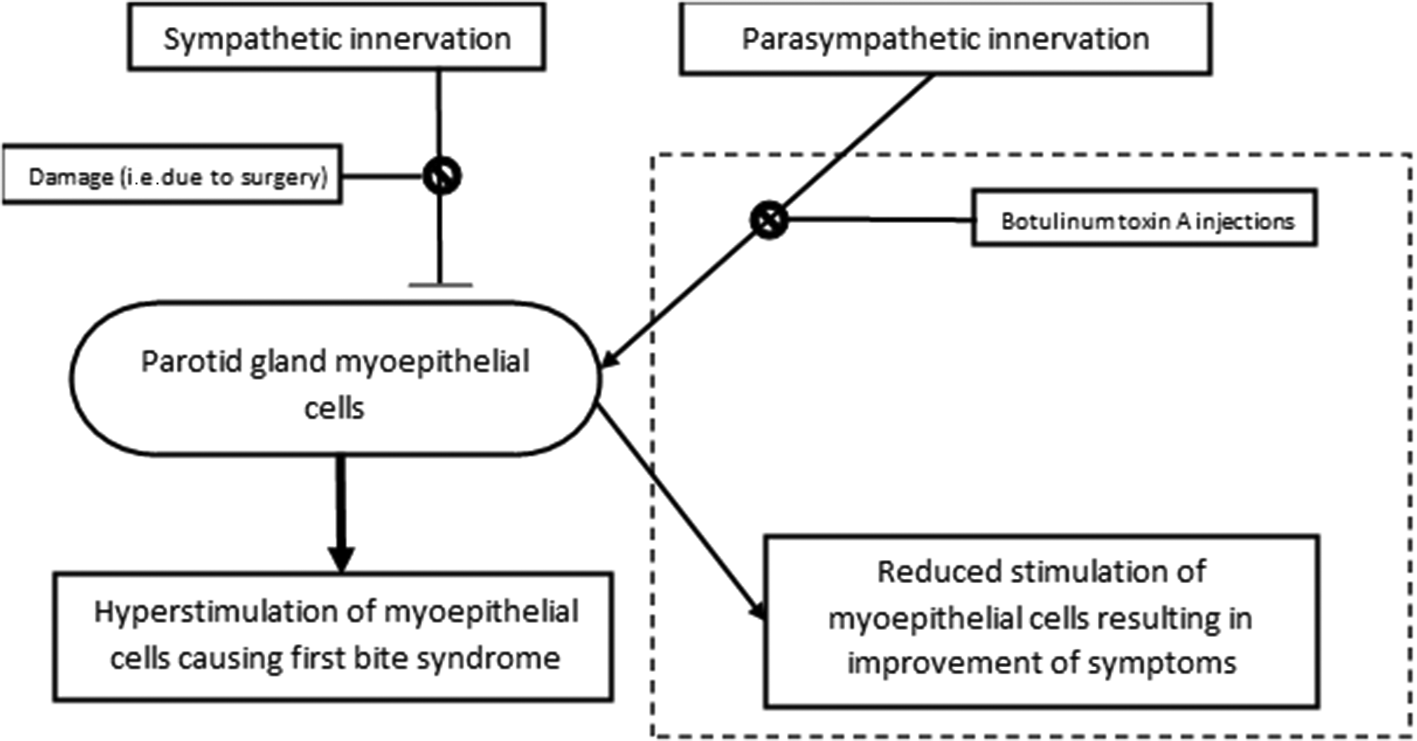
Additionally, Linkov et al. found that there were higher incidences of first bite syndrome when the sympathetic chain was sacrificed, when dissection involved the parapharyngeal space and when resection involved the whole parotid gland.Reference Linkov, Morris, Shah and Kraus2 These independent predictors of first bite syndrome may be explained by the most widely accepted aetiology of first bite syndrome. It is proposed that during surgical dissection or exploration, loss of sympathetic innervation to the parotid gland leads to denervation of sympathetic receptors located on the parotid myoepithelial cells. These cells also possess parasympathetic receptors, which become hypersensitive to unopposed parasympathetic simulation. This leads to an intense parasympathetic contractile response at the first bite, causing pain.Reference Netterville, Jackson, Miller, Wanamaker and Glasscock1
Treatment for first bite syndrome is varied, ranging from conservative observation to medication and procedural interventions. The last published literature review based on first bite syndrome was done by Laccourreye et al. in 2013,Reference Laccourreye, Werner, Garcia, Malinvaud, Tran Ba Huy and Bonfils10 and multiple treatment options were explored. Non-steroidal anti-inflammatory drugs, acupuncture or common analgesia such as paracetamol or codeine were not found to be effective.Reference Phillips and Farquhar-Smith11–Reference Ali, Orloff, Lustig and Eisele14 There were mixed results with carbamazepine, gabapentin or pregabalin, with some studies showing partial improvementReference Abdeldaoui, Oker, Duet, Cunin and Tran Ba Huy13, Reference Cernea, Hojaij, De, Plopper, Vanderley and Guerreiro15 and others demonstrating no effect.Reference Albasri, Eley and Saeed16, Reference Casserly, Kiely and Fenton17 Neoadjuvant radiotherapy was found to reduce the incidence of first bite syndrome post-neck lymph node dissection, although this carries a significant side-effect profile.Reference Costa, De Araujo, Filipe and Pereira12, Reference Abdeldaoui, Oker, Duet, Cunin and Tran Ba Huy13, Reference Chiu, Cohen, Burningham, Andersen and Davidson18 Two studies utilised botulinum toxin injections, which resulted in complete resolution of first bite syndrome symptoms.Reference Ali, Orloff, Lustig and Eisele14, Reference Lee, Lee, Lee, Wang and Kim19 Multiple studies also reported complete symptom resolution without any intervention after a period of several months to one year of observation.Reference Abdeldaoui, Oker, Duet, Cunin and Tran Ba Huy13, Reference Albasri, Eley and Saeed16, Reference Chiu, Cohen, Burningham, Andersen and Davidson18, Reference Wong, Farrier and Cooper20
First bite syndrome significantly impairs quality of life because pain associated with eating leads to diet change and meal avoidance.Reference Linkov, Morris, Shah and Kraus2 The last literature review exploring management options for first bite syndrome was in 2013, which found botulinum toxin injections to be the most effective first-line treatment option, although as it was a relatively new method the injection protocol and long-term efficacy were not clearly defined.Reference Laccourreye, Werner, Garcia, Malinvaud, Tran Ba Huy and Bonfils10 Since then, there have been many related published articles looking at management options for first bite syndrome, including cohort studies, case series and case reports. This study aimed to review the latest literature since then, analysing the treatment options available in managing first bite syndrome and their efficacy, with particular attention on new evidence for botulinum toxin injections.
Methods
Literature search strategy
This review was carried out based on guidelines for robust systematic reviews recommended by Tawfik et al.Reference Tawfik, Dila, Mohamed, Tam, Kien and Ahmed21 A preliminary search was performed with the search terms ‘first bite syndrome’ and ‘treatment’ in PubMed. This was to ensure there was sufficient evidence in the current literature for the authors to conduct this systematic review, and to ensure there were no similar studies published recently. The authors identified a systematic review undertaken by Laccourreye et al.Reference Laccourreye, Werner, Garcia, Malinvaud, Tran Ba Huy and Bonfils10 in 2013, therefore it was decided to limit our search to the 10-year period between January 2012 and January 2022 to provide an up-to-date account since then.
The Population, Intervention, Comparison, Outcome tool was utilised to develop our literature search strategy, as shown in Table 1.
Use of PICO tool to generate the literature search strategy

The search strategy ‘(first bite syndrome) AND (treatment OR management OR therapy)’ was used across four databases: PubMed and/or Medline, the Cochrane Database of Systematic Reviews, ProQuest and ScienceDirect. Articles were then screened through following the Preferred Reporting Items for Systematic Reviews and Meta-Analyses flowchart.
Inclusion and exclusion criteria
Articles concerning any form of treatment for first bite syndrome were included in our analysis. Papers focused on the aetiology or pathogenesis of first bite syndrome were excluded, and studies that looked at other surgical complications, such as Frey’s syndrome, were also excluded. Articles that reviewed treatment options prior to January 2012 were excluded. Abstracts, conference titles, books, letters to editors and articles that were not in English were excluded. All articles were screened by two independent reviewers and the results compared.
Data extraction
The data extraction process for the included articles was done by two authors (W.W.A. and E.T.G.). The extracted data included year, country, study design, number of patients treated, demographic (including age and sex), treatment used, patient outcome (as defined by individual studies) and follow-up period. The extracted data were then tabulated to facilitate data interpretation and analysis.
Quality assessment of studies
The quality of studies included was also assessed using the appropriate Study Quality Assessment Tool templates by the National Heart, Lung, and Blood Institute based on the type of study.22 This process was done independently by two reviewers (W.W.A. and E.T.G.), and an overall quality rating was given to each study once a consensus was achieved.
Results
Literature search result
The search yield and screening process is shown in Figure 1.
Preferred Reporting Items for Systematic Reviews and Meta-Analyses flowchart showing the article selection process for this review.

Thirty-six articles were included for full-text review after initial abstract screening, alongside one other article identified through related articles. The 37 full-text articles were reviewed by two authors (W.W.A. and E.T.G.). Sixteen articles were deemed irrelevant, five comprised reviews of current treatments, three were not in English, and we were unable to obtain full text for two articles. This resulted in 11 articles that were ultimately included in this review.
Study characteristics and patient demographics
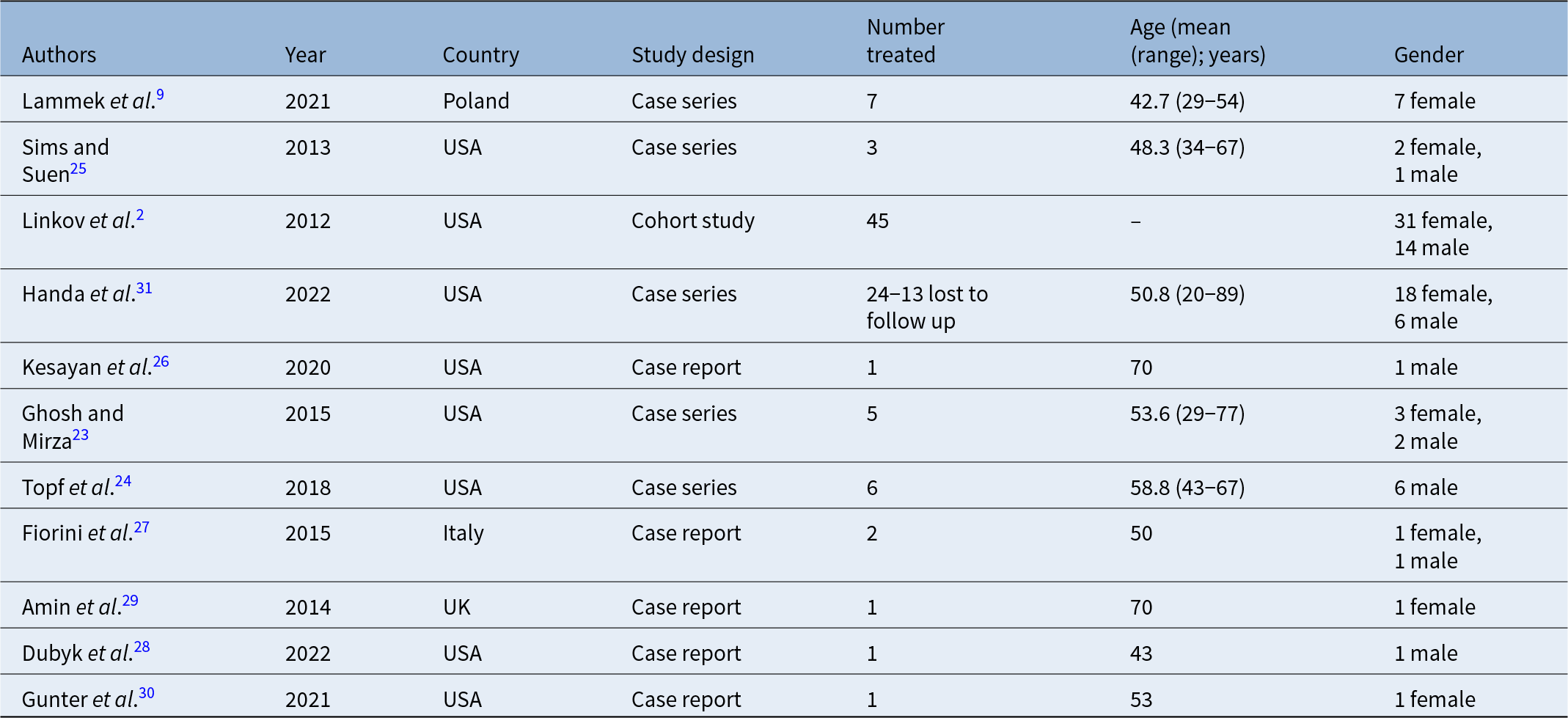
The extracted data from the 11 included articles regarding study characteristics and patient demographics are displayed in Table 2. There was one cohort study,Reference Linkov, Morris, Shah and Kraus2 five case seriesReference Lammek, Tretiakow and Skorek9, Reference Ghosh and Mirza23–Reference Sims and Suen25 and five case reports.Reference Kesayan, Brock, Shah and Padalia26–Reference Gunter, Llewellyn, Perez, Hohman and Roofe30 A total of 96 patients (64 females, 32 males) were treated for first bite syndrome, although in one study 13 patients were lost to follow upReference Handa, Shafik, Intini and Keith31 so the authors could only obtain treatment outcomes for 83 patients. The mean age across all 96 patients was 51.37 years (20–89 years). During the data-collection process, the authors noted that most patients experienced first bite syndrome as a post-operative complication, which included superficial or deep parotidectomies, neck dissections, parapharyngeal surgery, temporomandibular joint surgery or transoral robotic surgery. However, there were three patients in Handa et al.’s case series who had idiopathic first bite syndrome.Reference Handa, Shafik, Intini and Keith31
Data extracted from the 11 articles included in the review

Treatment methods, outcomes and follow-up periods
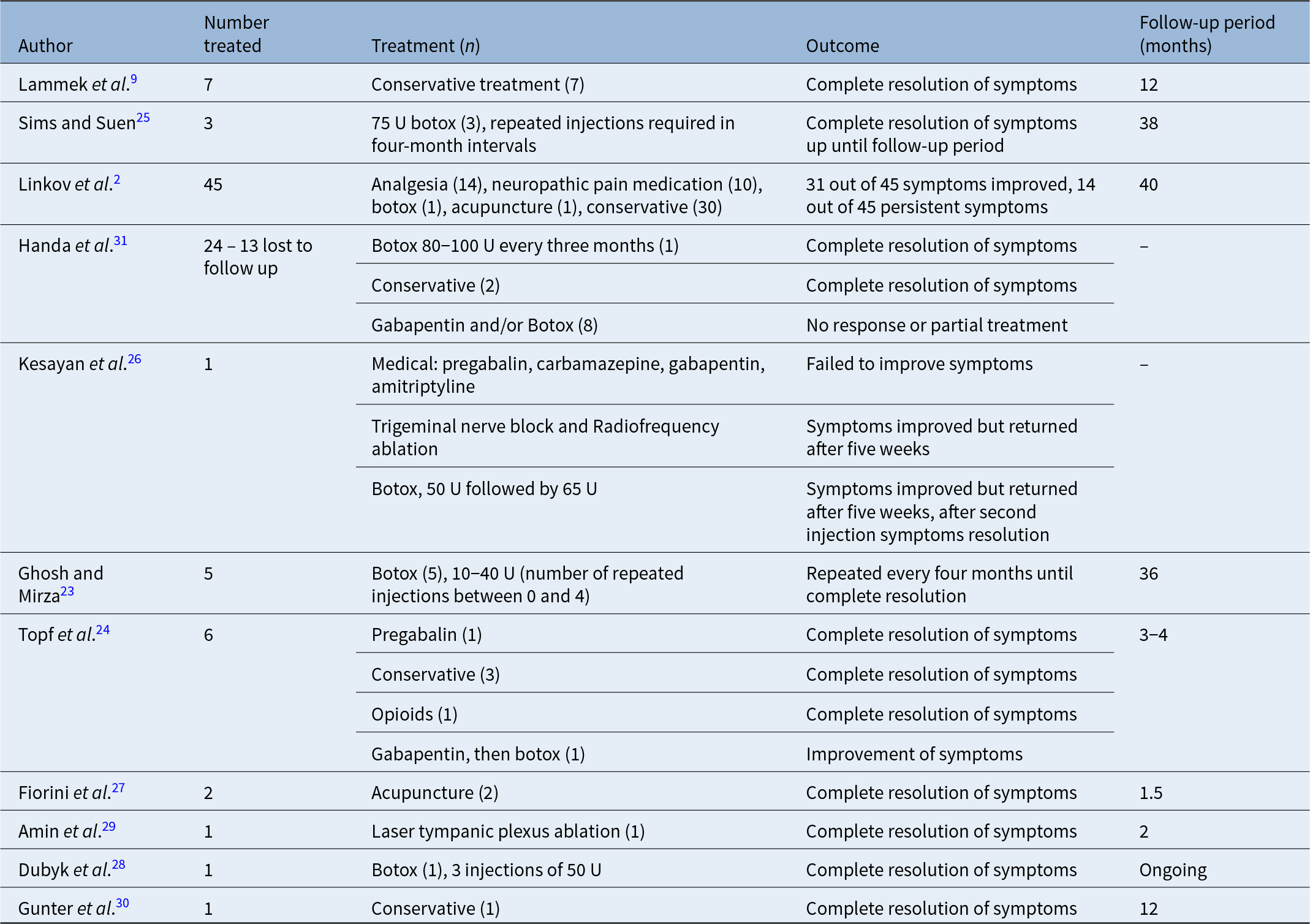
Table 3 contains the extracted data for the various treatment options used by the studies, alongside the corresponding treatment outcomes. One study had 45 patients, of which 15 received some form of treatment, but it did not correlate the specific treatments that led to a particular outcome.Reference Linkov, Morris, Shah and Kraus2 As a result, we were unable to analyse data from that study in treatment efficacy. The follow-up period ranged between 1.5 and 40 months.
Treatment options and corresponding treatment outcomes for the 11 articles included in the review

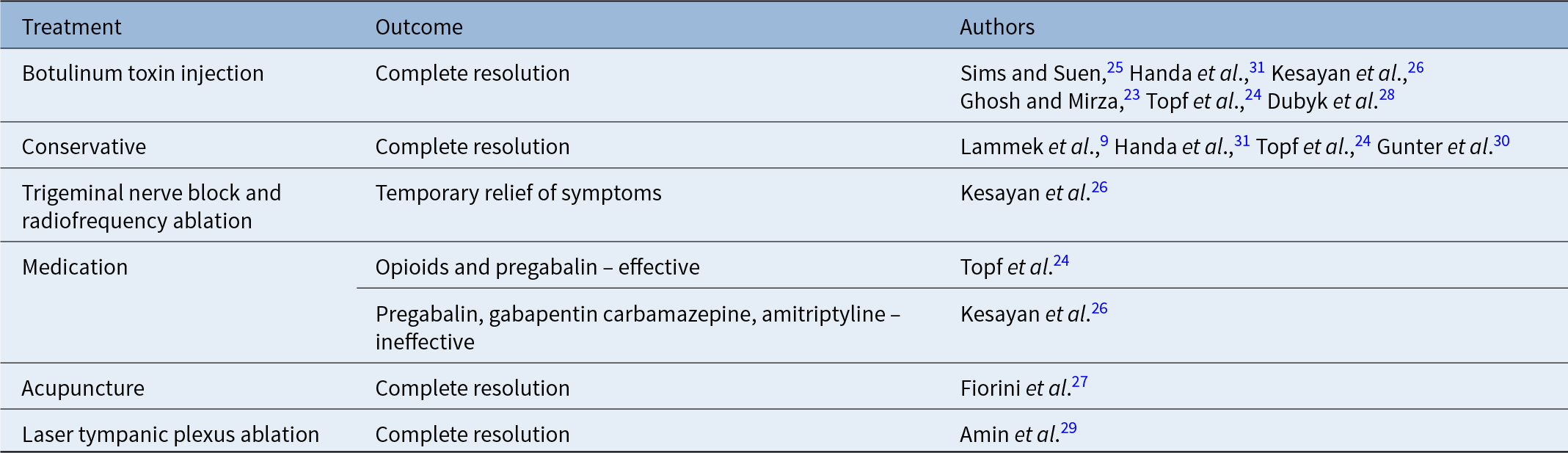
The authors found six articles that used botulinum toxin injection of various doses for treatment of first bite syndrome. These all resulted in complete resolution of symptoms.Reference Ghosh and Mirza23–Reference Kesayan, Brock, Shah and Padalia26, Reference Dubyk, Smith, Criddle, Jones and Hawkins28, Reference Handa, Shafik, Intini and Keith31 Four articles found conservative management sufficient in allowing symptom resolution.Reference Lammek, Tretiakow and Skorek9, Reference Topf, Moritz, Gleysteen, Curry, Cognetti and Luginbuhl24, Reference Gunter, Llewellyn, Perez, Hohman and Roofe30, Reference Handa, Shafik, Intini and Keith31 Topf et al.’s study found opioids and pregabalin to be effective treatments for first bite syndrome,Reference Topf, Moritz, Gleysteen, Curry, Cognetti and Luginbuhl24 but Kesayan et al.’s study found medical treatments to be ineffective.Reference Kesayan, Brock, Shah and Padalia26 Various other treatment options were used, as listed in Table 4.
Treatment options and outcomes of treatment grouped according to the articles included in the review

Quality of studies
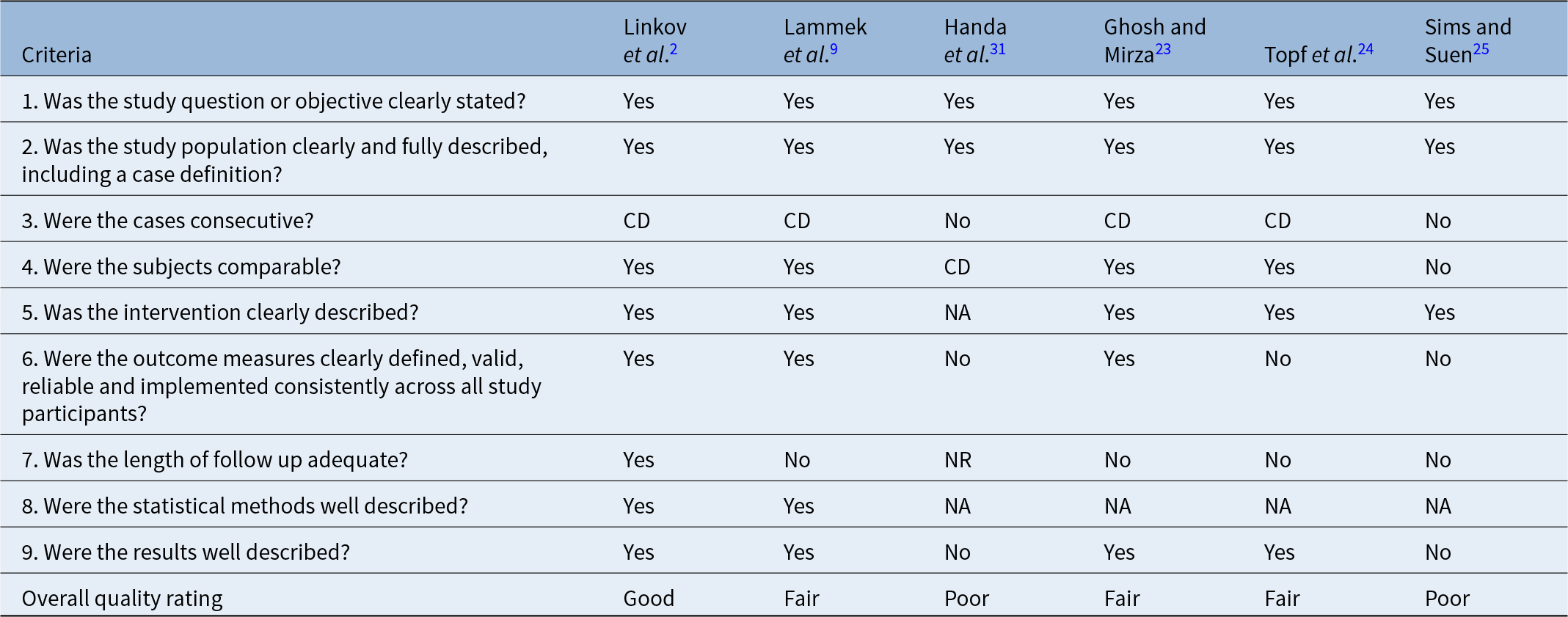
Assessment of bias was performed using a recognised quality assessment tool, the details of which are shown in Table 5. Based on this quality assessment tool, two studies were rated poor,Reference Sims and Suen25, Reference Handa, Shafik, Intini and Keith31 three were rated fairReference Lammek, Tretiakow and Skorek9, Reference Ghosh and Mirza23, Reference Topf, Moritz, Gleysteen, Curry, Cognetti and Luginbuhl24 and one was rated good.Reference Linkov, Morris, Shah and Kraus2
Results of quality assessment of case series studies based on the quality assessment tool for case series studies by the National Heart, Lung, and Blood Institute22

CD = cannot determine; NA = not available; NR = not reported
Discussion
Botulinum toxin as treatment for first bite syndrome
Laccourreye et al.’s review suggested that botulinum toxin injections were the most effective first-line treatment option and found neuropathic pain medications to be ineffective.Reference Laccourreye, Werner, Garcia, Malinvaud, Tran Ba Huy and Bonfils10 Since their review, there have been five further studies which used botulinum toxin as a treatment; all patients with first bite syndrome included in these studies experienced complete resolution of symptoms. Various treatment doses and regimens were used. Doses ranged between 10 and 100 U, and injections tended to be repeated over 3–8 months.Reference Ghosh and Mirza23–Reference Kesayan, Brock, Shah and Padalia26, Reference Dubyk, Smith, Criddle, Jones and Hawkins28, Reference Handa, Shafik, Intini and Keith31 Only one patient (in Ghosh and Mirza’s study) did not require a repeat injection to achieve symptom resolution.Reference Ghosh and Mirza23 Three studies used a botulinum toxin A,Reference Ghosh and Mirza23, Reference Kesayan, Brock, Shah and Padalia26, Reference Dubyk, Smith, Criddle, Jones and Hawkins28 whereas the others did not specify the type of botulinum toxin used.Reference Topf, Moritz, Gleysteen, Curry, Cognetti and Luginbuhl24, Reference Sims and Suen25, Reference Handa, Shafik, Intini and Keith31 None of the studies reported any complications from the usage of botulinum toxin injection, even with higher doses of 100 U. Unfortunately, none of the studies included statistical analysis to demonstrate statistically significant outcomes in patients who received botulinum toxin for first bite syndrome.
Ali et al. was the first study to use botulinum toxin to treat first bite syndrome.Reference Ali, Orloff, Lustig and Eisele14 They used one injection of 75 U, which resulted in complete resolution of symptoms, a higher dose than the 11 U (repeated 3 successive times) used by Lee et al., which resulted in partial improvement of symptoms.Reference Lee, Lee, Lee, Wang and Kim19 In our review, Ghosh and Mirza was the only study which used the technique of low-dose botulinum toxin injections (10–40 U) at multiple sites in the parotid (2–7 sites) in 1 treatment session.Reference Ghosh and Mirza23 All the other studies used 1 injection of higher-dose botulinum toxin (≥50 U) at a single site.Reference Topf, Moritz, Gleysteen, Curry, Cognetti and Luginbuhl24–Reference Kesayan, Brock, Shah and Padalia26, Reference Dubyk, Smith, Criddle, Jones and Hawkins28, Reference Handa, Shafik, Intini and Keith31 Kesayan et al. initially used 50 U, which resulted in 75 per cent improvement in symptoms, followed by 65 U, which had complete resolution of symptoms.Reference Kesayan, Brock, Shah and Padalia26
There is no clear consensus on the technique of using botulinum toxin to treat first bite syndrome. Single injections of a higher dose (50–80 U) or multiple lower-dose injections (10–40 U) have both been shown to be effective in achieving symptom resolution. One study specified the location of botulinum toxin injection as the point of maximal pain,Reference Ghosh and Mirza23 but the remaining studies did not define precisely the injection location.
The use of botulinum toxin as treatment for first bite syndrome is likely explained by its known mechanism of action. Botulinum toxin works by blocking acetylcholine release into the neuromuscular junction, leading to reduction in parasympathetic stimulation and weaker myoepithelial cell contraction in the parotid gland. This pathway is illustrated in Figure 2. Although there are theoretical complications, such as facial nerve paralysis or dry mouth secondary to inhibition of salivation, these have not been encountered in the literature. Sims and Suen suggested that this is because there are no neuromuscular junctions along the intra-parotid neural pathway of the facial nerve, therefore it is unlikely that botulinum toxin will affect facial nerve function as a result of its mechanism of action.Reference Sims and Suen25
Hypothesised pathogenesis of first bite syndrome, with action of botulinum toxin type A injections as depicted in box with dashed border.

Conservative treatment of first bite syndrome
Our review identified four studies that showed that patients with first bite syndrome recovered without any form of treatment.Reference Lammek, Tretiakow and Skorek9, Reference Topf, Moritz, Gleysteen, Curry, Cognetti and Luginbuhl24, Reference Gunter, Llewellyn, Perez, Hohman and Roofe30, Reference Handa, Shafik, Intini and Keith31 This was in addition to the four studies identified by Laccourreye et al.Reference Laccourreye, Werner, Garcia, Malinvaud, Tran Ba Huy and Bonfils10, Reference Abdeldaoui, Oker, Duet, Cunin and Tran Ba Huy13, Reference Albasri, Eley and Saeed16, Reference Chiu, Cohen, Burningham, Andersen and Davidson18, Reference Wong, Farrier and Cooper20 Most of the cases analysed resolved within a few months to a year after a conservative approach to management. This suggests that if the pain is tolerated by the patient, using a watch and wait approach is a viable option. However, some form of treatment to relieve symptoms should be proposed if the pain is affecting the patient’s eating habits and quality of life.
The authors have not found any explanation within the literature to explain the efficacy of conservative treatment. Based on the aetiology of first bite syndrome, it could be that the initial loss of sympathetic innervation to myoepithelial cells of the parotid gland recovers with time. This leads to less sensitivity to parasympathetic stimulation and thus no further hypercontractile response of the cells. However, this theory would be difficult to prove as no histological sample has been taken from the parotid glands of patients with first bite syndrome.
Other treatments for first bite syndrome
Apart from conservative treatment and botulinum toxin, the authors have identified a few other treatment methods, such as trigeminal nerve block, acupuncture and laser tympanic plexus ablation, to be effective in treating first bite syndrome.Reference Kesayan, Brock, Shah and Padalia26, Reference Fiorini, Santoro, Cristofaro, Buongiorno, Mannelli and Picconi27, Reference Amin, Pelser and Weighill29 Nonetheless, evidence of the effectiveness of these treatment options is lacking, and previous studies have shown tympanic neurectomy and acupuncture to be ineffective.Reference Ali, Orloff, Lustig and Eisele14, Reference Chiu, Cohen, Burningham, Andersen and Davidson18 The same goes for medical treatments such as analgesia or anticonvulsants, which have contradictory findings in our review and the existing literature, although most studies have shown medications to be ineffective.Reference Costa, De Araujo, Filipe and Pereira12–Reference Ali, Orloff, Lustig and Eisele14, Reference Albasri, Eley and Saeed16, Reference Chiu, Cohen, Burningham, Andersen and Davidson18, Reference Topf, Moritz, Gleysteen, Curry, Cognetti and Luginbuhl24, Reference Kesayan, Brock, Shah and Padalia26 Previously, neoadjuvant radiotherapy was shown to be effective, but there have been no recent studies that used radiotherapy as treatment for first bite syndrome, likely due to the high morbidity related to it.Reference Costa, De Araujo, Filipe and Pereira12, Reference Abdeldaoui, Oker, Duet, Cunin and Tran Ba Huy13, Reference Chiu, Cohen, Burningham, Andersen and Davidson18
Diagnostic criteria for first bite syndrome
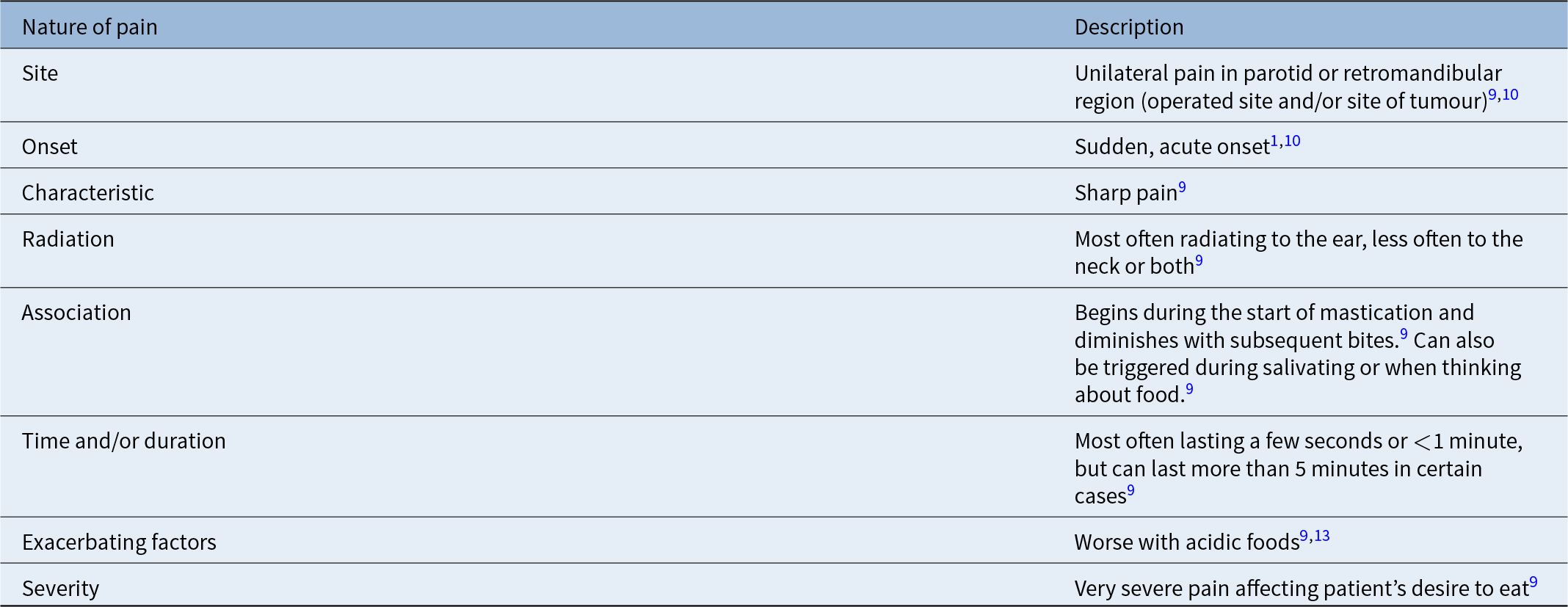
First bite syndrome has been described by previous authors as a syndrome characterised by severe sharp or cramping pain in the parotid region that occurs with the first bite of mastication and improves with subsequent bites.Reference Netterville, Jackson, Miller, Wanamaker and Glasscock1, Reference Laccourreye, Werner, Garcia, Malinvaud, Tran Ba Huy and Bonfils10 However, there are no established diagnostic criteria to assist clinicians in diagnosing this rare complication. Presentations of post-operative pain around the parotid or submandibular region might be confused with dental pain, temporomandibular disorders or other forms of facial neuralgia, which delays treatment for patients suffering from first bite syndrome.
By looking through all the articles included in this systematic review and in the literature, the authors have attempted to establish a diagnostic criterion for first bite syndrome to guide clinicians with diagnosis and to facilitate clarity in future research in this topic. The characteristics of the pain associated with first bite syndrome are listed in Table 6.
Characteristics of pain associated with first bite syndrome as part of diagnostic criteria to aid with diagnosis

Limitations of studies included
The methodology and literature search design utilised in this review were comprehensive and based on robust guidelines. The inclusion and exclusion criteria were clear, and the article screening was corroborated by two independent reviewers. Thus, we believe this review presents a comprehensive analysis of treatments of first bite syndrome since 2013 and have confidence in our search strategy. The main limitations are related to the individual study designs of the papers included.
A key limitation in data reliability is the small sample population size analysed. First bite syndrome is a rare complication and the articles included reflect this, with small numbers of patients treated. The largest study, Linkov et al.,Reference Linkov, Morris, Shah and Kraus2 included 45 patients, but the patient outcomes were not directly linked to an intervention therefore these patients were not included in analysis, which further reduced the total number of participants to 38.
The other main limitation was the study design and quality. Most of the studies were case reports and case series, level 6 evidence. None of the studies were blinded, placebo-controlled interventional studies, therefore we are limited in the conclusions that can be drawn. The studies included failed to provide relevant statistical analysis of results that may aid appropriate interpretation. There was also high variation in dosage, frequency and site of medication administration between studies, which made drawing a unifying conclusion difficult. This heterogeneity hampers our ability for direct comparison or meta-analysis.
In the studies included where botulinum toxin was used to treat first bite syndrome, most patients experienced recurrence of symptoms after a certain period, after which a repeat injection was required. Ghosh and Mirza noted that in between their four-monthly follow-up visits, patients reported symptom recurrence with the same level of intensity as the initial episode.Reference Ghosh and Mirza23 The pattern continued until the symptoms eventually resolved for good. This phenomenon, along with the fact that first bite syndrome symptoms also tended to resolve independently with conservative management, gives rise to the question of whether botulinum toxin alters the natural history of the condition and enhances recovery. It could be hypothesised that botulinum toxin only serves as symptomatic relief while the condition runs its self-limiting course. A good-quality randomised, controlled trial would go some way to improving our understanding of therapeutic approaches to this phenomenon, but we recognise the practical challenges this would pose in a patient group seeking immediate symptomatic relief.
Recommendations
Because of the lack of high-quality studies, the authors are only able to make a cautious recommendation of an overall treatment approach for patients with first bite syndrome. Clinicians encountering patients with first bite syndrome may consider conservative treatment for patients for a period of 6–12 months if the pain can be tolerated by patients without significantly affecting their quality of life. Otherwise, although there has been no demonstration of statistically improved outcome, botulinum toxin injections appear to be effective for symptom management, which will need to be repeated as required until complete symptom resolution. Unfortunately, there is a lack of evidence to recommend the dose, frequency or site of injection. Treatment options such as acupuncture, medications including analgesia or anticonvulsants, or trigeminal nerve block lack sufficient evidence for authors to recommend their use in treatment for first bite syndrome.
Conclusion
As identified in this review, there have been more recent published articles about the efficacy of various treatments for first bite syndrome in the past 10 years. Some studies have found that symptoms eventually resolve with conservative management, and other studies have found botulinum toxin to be effective for symptom resolution, although this improvement was not statistically proven. Unfortunately, there is no established technique including dose, frequency or site of injection. Other treatment options lack robust evidence to justify their application. All evidence found was of insufficient quality.
As discussed, there are various limitations in the conclusions we can draw from the data available. Higher-level evidence would help in further understanding this topic, and the ‘gold standard’ recommendation is a high-quality placebo-controlled, double-blinded randomised, controlled trial. However, this brings logistical, financial and ethical challenges, especially for a rare complication such as first bite syndrome. The authors therefore suggest the formation of a national registry to support data collection and subsequent further research into this topic.
● Six new studies were identified that have found botulinum toxin injections to be an effective treatment for first bite syndrome, affirming findings from the previous review, but these outcomes are not statistically proven
● Conservative treatment can be trialled initially as some studies have shown symptoms improve with time, a finding not identified from the previous review
● There is a lack of evidence of efficacy for neuropathic pain medications for first bite syndrome, which correlates with findings from the previous literature review
● Case reports were identified that describe novel methods, such as acupuncture or tympanic plexus ablation, that are effective for first bite syndrome
● Cautious recommendations for patients suffering from first bite syndrome are made, for example conservative treatment could be trialled initially and botulinum toxin injections performed if the symptoms do not improve
● A form of national registry to gather sufficient data into this research topic would be useful because of the logistical and ethical challenges in carrying out a high-quality randomised, controlled trial for first bite syndrome patients.
Competing interests
None declared.