

In a nutshell
The Elective Orthopaedic Centre Post-Anaesthetic Care Unit (PACU) team are constantly looking for new and innovative ways to ensure we provide an exceptional service at every step of the patient journey. This means continually reviewing the care pathway provided and maintaining consistantly high standards. In one particular case, this meant the development of a new role within the PACU team, a designated transfer nurse who's role would develop and become an integral part of the PACU experience in ways we were not necessarily expecting.
Who are we?
We are the Elective Orthopaedic Centre or the ‘EOC’ for Short. We are the leading National Health Service treatment centre for hip, knee, ankle and shoulder replacement surgery along with foot arthrodesis, shoulder joint reconstruction, cruciate ligament repair and spinal surgery. The centre was the answer to dealing with waiting list pressures from across an expanding South West London area. We use a formal care pathway for all our elective patients (enhanced recovery or high-risk), which is characterised by a rigourous pre-admission education programme, involving the patient in every step of their journey. The centre has five operating theatres; a PACU and 52 in-patient beds.
Our PACU team
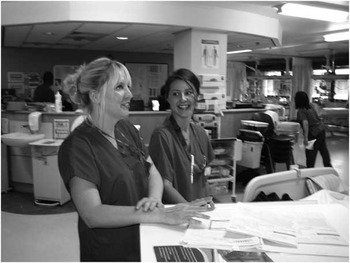
We have an 17-bedded PACU for our five theatres. This deals with a throughput of around 20 plus cases a day. These are a mixture of elective day cases for whom we go on to discharge home immediately from the PACU, but also patients requiring high dependancy and intensive care; fully embrasing the ‘step-up’ approach to immediate post-operative recovery. We are open 24 hours a day, 7 days a week and are predominatly nurse-led with Consultant Intensivist cover 24 hours a day. Our Senior Sisters are able to practice a wide range of extended skills including nurse prescribing, physical assessment and critical care.
Transfering patients to the ward
Here at the EOC, the PACU ‘primary nurse’ was traditionaly responsible for the patient's transfer from PACU to the ward. This provided valued consistancy of care for the patient as well as a streamlined handover. However, it also meant a PACU nurse leaving the unit with a well patient already deemed ‘fit’ for discharge via our strict discharge criteria. This often left the PACU short staffed.
Our PACU has its own set of written Standards of Care to ensure best practice at all times. Compiled by our Practice Educator, these take into consideration leading associations such as the British Anaesthetic and Recovery Nurse Association (BARNA), the American Society of Peri-Anaesthesia Nurses (ASPAN) and the Association of Anesthetists of Great Britain and Ireland (AAGBI). They cover all areas of post-anaesthetic care including the safe transfer of a PACU patient to the ward environment.

Growing pains
It is now 8 years since our doors were first opened by the Queen in 2004. As the services have expanded, so have the pressures upon the PACU and the centre as a whole. Initially, to cope with these pressures we increased the size of our PACU nursing team, which now includes newly qualified staff and staff from other specialities, adding to the scope of our skill mix. However, it was felt that staff were spending more and more time away from the unit on ‘transfer-related’ business, reducing the skill mix in PACU dramatically.
Despite the widereaching implications of delayed discharge in the PACU, it is a comperatively under-researched area. A planned audit was conducted and went on to highlight some room for improvement in the area of PACU transfer to the ward. Patients were found to be spending an increased length of stay in the PACU enviroment, despite fulfilling their discharge criteria. A number of reasons were highlighted for this.
• The need for safe staffing levels in the PACU at all times.
• Portering staff busy with other transfers.
• Ward nurses too busy to receive the PACU patient safely.
The aim of a PACU is to provide a high level of monitoring for the post-operative patient. We require a large number of staff to do this safely and ensure that we maintain adequate nurse-to-patient ratios (BARNA, 2005). Doing so is an expensive business, and thus we must constantly aim to streamline the services we provide. These factors are not just financial; excellent patient experience is vital. Extended times in a critical care environment can lead to undue stress for the patient and their families (Plowright, Reference Plowright1995). It's not hard to see why making improvments in this area became a top priority.
The answer?

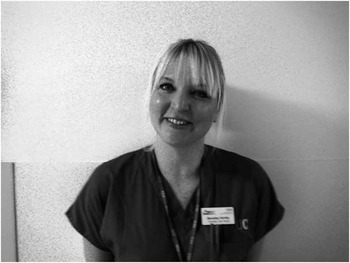
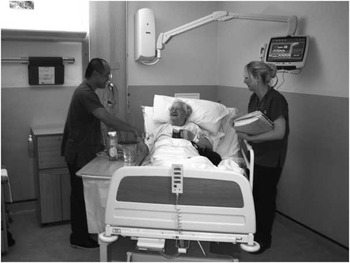
This is Beverley. She is a trained PACU nurse who is now a dedicated transfer nurse for the EOC. She receives handover from the nurse in PACU and escorts the patient to the ward. Once there she spends time with the patient orientating them to their new environment and settling them in. Whether it is getting them a cup of tea, unpacking their things into the lockers or just staying with them until their new nurse comes to introduce themselves, Beverly provides a much-needed intensive service to the ‘step-down’ PACU patient. She then is able to give a full handover, adhering to our safe transfer standards. Beverley can spend time with the patient without having to worry about getting back to other patients in the PACU. Creating an environment that values effective, unrushed handover in this arena is a vital part of patient safety (NPSA, 2007).
Beverly says; Handover is extremely important. If we don't spend time doing it correctly and to a high standard then vital information may get missed and the patient may feel as though they are being rushed. They often have relatives that obviously want to spend time with them, which can sometimes be difficult in a busy PACU, so we do not want to delay that process. The patients obviously appreciate it.
What do the patients say?
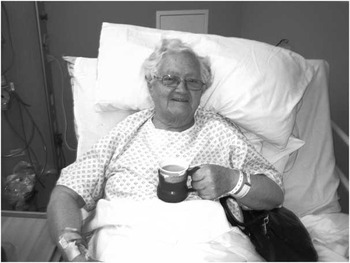
This is Sheila. Sheila is 77 years old and is recovering from a revision total hip arthroplasty. I've unfortunately had lots of experience when it comes to ‘coming round’ from anaesthetics. Sometimes I've felt like I haven't known whether I'm coming or going; a bit like a conveyer belt, you know… Today, I was constantly checked, nothing was too much trouble. She (Beverley) went and got me a cup of tea whilst we were waiting for my new nurse and told me all about my new ward. What lovely service!

Sue Tyne; Lead Practitioner for PACU says: Having Beverley in this role has made it easier to staff PACU effectively and maintain our high standards of patient safety. Our specifically trained PACU nurses are able to remain where we need them most. Having this role spanning both the wards and PACU has also opened further channels of communication between the units and added to the friendly feel of the centre.
Jessica Inch; PACU Practice Educator says: This role has inadvertently become a form of outreach, with a skilled immediate post-operative care nurse now regularly spending time in the ward environment. A PACU houses nurses with a high level of competence in assessment, with excellent skills for recognising and attending the deteriorating patient. We often have had to hide them away in the theatre/recovery environment but now we can go one-step further in skill-sharing.
Helen Hyett; Staff nurse from the ward says: Having Beverley in this designated role has meant that I no longer have to interrupt the care I am giving to other patients in order to take handover, I can complete the task I am doing safely. I may be in the middle of a drug round or a Doctor's round, or something else that requires my uninterrupted attention. I am receiving a handover from an individual that isn't rushed.
Overcoming the challenges
Despite this being a very successful venture for patient experience and service productivity, we had to be ‘hot on the heels’ of any teething problems. The research surrounding miscommunication during handover is vast. You do not have to do much digging to find evidence that the more ‘links’ involved in the chain of handover, the greater the likelihood of errors occurring (Dean, Reference Dean2012). By adding our transfer nurse to this great ‘chain’, there was the possibility of leaving our patients vulnerable to the effects of multiple handovers. From the written Transfer Standards of Care, we have introduced a Transfer Checklist. This ensures a thorough handover, prevents errors in communication and provides evidence of the safe journey and handover. This Transfer Checklist not only ensures effective communication at this step, but makes certain that the patient is kept as safe as possible at every stop along their journey.

Summary
This role has been so successful that we are now introducing another transfer nurse to the team so that we may offer this experience to every single patient in our pathway. The problem of maintaining safe staffing in the PACU and ensuring that the patient is discharged safely and in a timely manner has become easier. The transfer link nurse remains with the patient until the ward nurse is ready to take over their care, leaving the ward nurse to complete care without being interrupted. This is vital as we found that effectively ‘bedding in’ the patient from PACU into their new environment takes in the region of 30 minutes to complete properly. This role has undoubtedly led to a smoother patient ‘step-down’ experience and is adding to a greater level of patient satisfaction. Most importantly, the patient feels valued and cared for at one of the most vulnerable times in their pathway. This makes us different in the PACU service we provide and most importantly makes a difference for our patients.
Disclaimer
All photographs and vignettes of staff and patients are displayed with documented permission.