This 25th Anniversary Special Issue of Development and Psychopathology provides an opportunity to look back at the last quarter century of progress in autism research in the areas of early detection and intervention with the goal of informing future directions and priorities. The last two and a half decades have involved significant changes in prevalence, early detection, and intervention methods for autism spectrum disorder (ASD). In 1989, the prevalence of autism was estimated to be 4 per 10,000 individuals, and 66% of the autism population scored below 70 on standardized IQ tests (Ritvo et al., Reference Ritvo, Freeman, Pingree, Mason-Brothers, Jorde and Jenson1989). In comparison, ASD is currently estimated to occur in about 1% of children in the United States (1 in 88), with 1 in 54 boys affected. The distribution of intellectual disability among individuals with ASD has also changed significantly, with only 38% of individuals with ASD now classified in the range of intellectual disability (IQ ≤ 70; Centers for Disease Control and Prevention [CDC], 2012). The reported increase in prevalence of ASD has been demonstrated across multiple studies (Cavagnaro, Reference Cavagnaro2009; CDC, 2009, 2012; Hertz-Picciotto & Delwiche, Reference Hertz-Picciotto and Delwiche2009; King & Bearman, Reference King and Bearman2009; Newschaffer, Falb, & Gurney, Reference Newschaffer, Falb and Gurney2005). Although it is clear that some of the increase in prevalence of ASD is related to improved identification and broadening definitions, a true increase in prevalence cannot be ruled out (Rice et al., Reference Rice, Rosanoff, Dawson, Durkin, Croen and Singer2012). Current research is focusing on a variety of prenatal and early postnatal environmental risk factors that could help explain some of the increase in prevalence. Multiple risk factors, including genetic and environmental factors and their interaction, contribute to risk for autism (Newschaffer et al., Reference Newschaffer, Croen, Daniels, Giarelli, Grether and Levy2007).
Regardless of the reasons for the increases in prevalence, it is clear that ASD now represents a major public health challenge. It is estimated that the annual cost of caring for individuals with ASD in the United States is $137 billion, with the lifetime cost per individual estimated to be $2.4 million for those with co-occurring intellectual disability and $1.4 million for those without intellectual disability (Buescher, Cidav, Knapp, & Mandell, Reference Buescher, Cidav, Knapp and Mandell2013). These estimates are based on services and supports received, as well as opportunity costs and productivity losses. Given that early detection and early behavioral intervention has been shown to ameliorate the intellectual impairment associated with autism, thus leading to better long-term outcomes, improvements in the ability to recognize autism early in life and access to effective interventions can help reduce the costs of autism and increase quality of life (Peters-Scheffer, Didden, Korzilius, & Matson, Reference Peters-Scheffer, Didden, Korzilius and Matson2012). This paper provides a perspective on the considerable progress that has been made over the past quarter of a century in the ability to identify children at risk for autism and the development of evidence-based early interventions that can lead to improved outcomes. There has been a paradigm shift in the way that autism is viewed, evolving from a lifelong condition with very poor prognosis to one in which significant gains and neuroplasticity is expected, especially when the condition is detected early and appropriate interventions are provided. The field of developmental psychopathology has been a significant contributing factor in this shift in perspective on autism and long-term outcome, particularly in demonstrating the dynamic and developmental nature of autism and the important role of the environmental in shaping developmental outcomes.
The Changing Landscape of Early Detection of Autism
Identification of autism in the 1980s
The landscape of early detection of autism has changed considerably over the past quarter century. Formative work conducted in the 1980s helped to define the core distinguishing early characteristics of autism. This foundational understanding set the stage for the systematic examination of autism in infancy, originally through home videotape studies and more recently through studies of high-risk infants, which has led to tools for early screening. Looking ahead, the science of early detection of autism will increasingly rely on the use of genetics, neuroimaging, and other biomarkers.
There is a clear and significant increase in the ability to diagnose autism at younger ages, with the current national average age of diagnosis for children with autistic disorder estimated to be 3.1 years of age (Mandell, Novak, & Zubritsky, Reference Mandell, Novak and Zubritsky2005). This shift can be largely traced back to the seminal work conducted in the 1980s examining the early distinguishing characteristics of autism from a developmental psychopathology perspective. Only with the identification of these key early features could we consider how autism may look in early development and therefore develop methods to accurately identify young children with autism. The foundational work in identifying these early characteristics highlighted behaviors that were not necessarily part of the diagnostic nomenclature but that over the course of early development would result in the social communicative impairments that serve as the hallmark diagnostic criteria.
Pioneering work in the 1980s clarified the nature of the impairments in affective reciprocity shown by young children with autism. Although children with autism show similar frequency and duration of facial expressions of positive affect overall, they show less positive affect in conjunction with attention to others, such as mothers and teachers, or when engaged in interactions (Dawson, Hill, Spencer, Galpert, & Watson, Reference Dawson, Hill, Spencer, Galpert and Watson1990; Kasari, Sigman, Mundy, & Yirmiya, Reference Kasari, Sigman, Mundy and Yirmiya1990; Yirmiya, Kasari, Sigman, & Mundy, Reference Yirmiya, Kasari, Sigman and Mundy1989). It is this pattern of intact positive affect in general but reduced facial expressions in conjunction with engagement with others that contributes to the impairments in affective reciprocity. Dawson and colleagues (Reference Dawson, Hill, Spencer, Galpert and Watson1990) coded videotaped observations of naturalistic, face-to-face interactions between children with autism and their caregivers. Raters unaware of diagnosis status found that the frequency and duration of smiles and positive affect did not differ between children with autism and typically developing peers but that the children with autism were much less likely to combine smiles with eye contact in acts to convey affective reciprocity (Dawson et al., Reference Dawson, Hill, Spencer, Galpert and Watson1990). Further, although the groups did not differ in the frequency with which they smiled at social (mother's verbalization) and nonsocial (playing with a chair) actions, the children with autism were much less likely to smile in response to mother's smile than were the typically developing children. In addition, results indicated that the mothers of the children with autism smiled less frequently overall and in response to their children's smiles than did the mothers of the typical children, highlighting a critical, developmental interaction: the behavior of children with autism can influence the behavior of those with whom they interact. Through careful and systematic coding of behaviors and facial expressions using the Maximally Discriminative Movement Coding System, Sigman and colleagues found that children with autism were more neutral in their facial expressions and showed more ambiguous facial expressions relative to typically developing children and children with mental retardation, thereby disrupting the sense of emotional reciprocity (Yirmiya et al., Reference Yirmiya, Kasari, Sigman and Mundy1989). Further, coding of facial expressions elicited during a semistructured interaction between a child and experimenter in which joint attention and requests are elicited, the Early Social-Communication Scales (Mundy, Sigman, Ungerer, & Sherman, Reference Mundy, Sigman, Ungerer and Sherman1986) highlighted that when jointly attending to toys or making requests of others, children with autism show significantly less positive affect than typical peers or peers with intellectual disability (Kasari et al., Reference Kasari, Sigman, Mundy and Yirmiya1990). This early work identified that although the display of affect overall differs little from comparison children, the affect displayed during interactions with others is significantly impaired in autism, highlighting the disruption to affective reciprocity in young children with autism.
The observation that children with autism show marked reductions in orienting to social information was another critical finding that helped improve early detection and establish tools for screening young children with autism. Dawson and colleagues documented a failure to orient to social stimuli and introduced the term “social orienting impairment” as a core early feature of autism. A social orienting impairment was documented in preschool age children with autism (Dawson, Meltzoff, Osterling, Rinaldi, & Brown, Reference Dawson, Meltzoff, Osterling, Rinaldi and Brown1998) and subsequently noted in videotapes of 10-month-old infants who go on to develop autism as well (Werner, Dawson, Osterling, & Dinno, Reference Werner, Dawson, Osterling and Dinno2000). In the “social orienting task,” a child seated across from an experimenter while playing quietly is presented with a series of auditory stimuli that are either social (e.g., the child's name being called, clapping hands) or nonsocial (e.g., car horn honking, kitchen timer). Using this paradigm, Dawson and colleagues (Reference Dawson, Meltzoff, Osterling, Rinaldi and Brown1998) found that children with autism more frequently failed to orient to all stimuli on the social orienting task, with greater impairment for the social stimuli compared to typical peers and children with Down syndrome. Further, those children with autism who oriented to the social stimuli were delayed in doing so relative to the comparison children. Subsequent work examining social orienting in young children with autism has found that impairments on the social orienting task, in conjunction with impairments in joint attention, best discriminate children with autism from their same age typically developing and developmentally delayed peers (Dawson, Toth, et al., Reference Dawson, Toth, Abbott, Osterling, Munson, Estes and Liaw2004). These and other findings led to the introduction of the “social motivation hypothesis” (Dawson, Webb, & McPartland, Reference Dawson, Webb and McPartland2005), which posited that autism is associated with reduced social reward sensitivity that manifests in a failure to affectively tag socially relevant stimuli. This failure to attend to social stimuli was further hypothesized to disrupt the neural and behavioral development of a wide range of social and communicative skills, further compounding the impairments associated with autism (Dawson, Reference Dawson2008; Grelotti, Gauthier, & Schultz, Reference Grelotti, Gauthier and Schultz2002).
Impairments in imitation were also viewed as a fundamental impairment that broadly affected social learning in young children with autism. These imitation impairments were elucidated through a series of studies that explored their prevalence and nature (Dawson & Adams, Reference Dawson and Adams1984; Rogers, Bennetto, McEvoy, & Pennington, Reference Rogers, Bennetto, McEvoy and Pennington1996; Rogers, Hepburn, Stackhouse, & Wehner, Reference Rogers, Hepburn, Stackhouse and Wehner2003). A deficit in joint attention, the ability to jointly share a common point of reference or coordinate attention with a social partner, is another distinguishing characteristic of children with autism that was influential in shaping our understanding of autism and early detection efforts. Mundy, Sigman and colleagues first demonstrated the critical contribution of joint attention deficits to autism by comparing children with autism to typically developing children and children with intellectual disability and observing a much lower frequency of sharing, showing, and pointing despite similar general levels of responsiveness to their caregivers among groups (Mundy et al., Reference Mundy, Sigman, Ungerer and Sherman1986). Further, they found these deficits in nonverbal communicative behaviors, such as pointing, better discriminated children with autism from the comparison groups than did other behaviors, such as object play. Finally, this early work highlighted the contributions of joint attention behaviors to subsequent language development in young children with autism (Mundy, Sigman, Ungerer, & Sherman, Reference Mundy, Sigman, Ungerer and Sherman1987). Research has shown that autism is marked by impairments in initiating joint attention (i.e., spontaneously sharing and directing others' attention), as opposed to requesting (Mundy et al., Reference Mundy, Sigman, Ungerer and Sherman1986) or responding to joint attention bids (i.e., following others' gaze and gestures to share a common point of reference; Mundy, Sigman, & Kasari, Reference Mundy, Sigman and Kasari1994). Further exploration of these deficits has revealed that these impairments are consistent over time (Mundy, Sigman, & Kasari, Reference Mundy, Sigman and Kasari1990), correlate with subsequent language use (Mundy et al., Reference Mundy, Sigman and Kasari1990), and are related to the intensity of subsequent social symptoms and outcomes (Mundy et al., Reference Mundy, Sigman and Kasari1994; Sigman et al., Reference Sigman, Ruskin, Arbeile, Corona, Dissanayake and Espinosa1999).
Subsequent experimental work examining young children's responses to others' affective cues revealed differences associated with autism. In a series of three experiments, Sigman and colleagues observed the behavior of children with autism in response to experimenter and parent displays of different emotions and compared this to the behavior of children with mental retardation and typical development (Sigman, Kasari, Kwon, & Yirmiya, Reference Sigman, Kasari, Kwon and Yirmiya1992). In the first experiment, examiners and parents pretended to hurt themselves with a plastic hammer during play and then proceeded to display facial and vocal expressions of distress. Overall the 3- to 4-year-old children with autism often failed to notice or ignored the affective displays of the adults, whereas the comparison children were very attentive to the emotional displays, regardless of the type of affective display. Further, when the adults showed a hurt expression, the children with autism were much more likely to stay engaged with playing with a toy than to attend to the adult in distress. Taken together with findings on social orienting and joint attention, these findings led to a general picture of autism involving a global impairment in social attention (Dawson, Bernier, & Ring, Reference Dawson, Bernier and Ring2012; Dawson, Toth, et al., Reference Dawson, Toth, Abbott, Osterling, Munson, Estes and Liaw2004).
Finally, within the last few decades, the notion of a deficit in theory of mind was proposed and has played a key role in the advancement of our understanding of the characteristics of autism in children. By using Wimmer and Perner's Sally and Anne puppet scenario (Wimmer & Perner, Reference Wimmer and Perner1983), Baron-Cohen and colleagues demonstrated that, despite cognitive ability greater than that of comparison children, children with ASD failed to make inferences about another's beliefs (Baron-Cohen, Leslie, & Frith, Reference Baron-Cohen, Leslie and Frith1985). Charman and Baron-Cohen further clarified that this deficit was specific to the imputation of other's mental states and beliefs and not only a metarepresentation impairment by demonstrating intact performance on false drawing but not false belief tasks (Charman & Baron-Cohen, Reference Charman and Baron-Cohen1992). These studies identified and clarified the disruption in theory of mind present in children with ASD and underscored that autism is a disorder of social cognition.
Concurrent to the illumination of the distinguishing characteristics of children with ASD, examination of the early manifestations of ASD in infancy was taking place. By collecting home videotapes recorded by parents of children who went on to receive an ASD diagnosis, these studies established a relatively consistent picture of few symptoms apparent at 6 months of age followed by a loss of social behaviors and the emergence of symptoms between 6 and 12 months. By coding behaviors observed on the videotape clips of children who later were diagnosed with ASD and children with typical development while unaware of the child's diagnostic status, Osterling and Dawson (Reference Osterling and Dawson1994) found that children with ASD, even at 1 year of age, showed a failure to orient to their name and demonstrated reduced eye contact, pointing, and showing. Further, by examining these behaviors in first birthday party videotapes, Dawson and colleagues were able to reliably distinguish children who subsequently received an ASD diagnosis from those who later were diagnosed with intellectual disability without autism (Osterling, Dawson, & Munson, Reference Osterling, Dawson and Munson2002). Examination of videotapes of infants between the ages of 8 and 10 months of age showed that a failure to orient to name and reduced social smiling accurately discriminated children with ASD from those with typical development (Werner et al., Reference Werner, Dawson, Osterling and Dinno2000). The findings from these early studies highlighted the key early identifying features of autism and underscored the idea that autism can be reliably observed as early as the first year of life. The findings that emerged from home videotapes, summarized by Ozonoff and colleagues (Palomo, Belinchon, & Ozonoff, Reference Palomo, Belinchon and Ozonoff2006) were consistent with the first case study of an infant who was followed prospectively from birth through diagnosis, which was published in 2000 (Dawson, Small, Logan, & Geringer, Reference Dawson, Small, Logan and Geringer2000). The development of this infant was documented in medical records made by a pediatric neurologist who noted that the infant was socially engaged at 6 months but then began to withdraw and show distress reactions between 6 and 12 months. By 13 months of age, this toddler showed many symptoms of autism and eventually received an autism diagnosis.
The identification of the early emerging distinguishing characteristics of autism, such as deficits in joint attention and affective reciprocity, paved the way for the development of toddler screening tools. The Checklist for Autism in Toddlers (CHAT) emerged as an early screening tool for autism, which combined parent reports with clinical observation to examine the presence or absence of these distinguishing autism characteristics. Through nine short parent-report yes and no questions and five short yes and no validation items used by the clinician to cross-check the parent report, the CHAT allows a clinician in the community to screen for ASD in 18-month-old children in the typical population. In a study of 91 18-month-old toddlers, 40 of which were younger siblings of children with ASD, Baron-Cohen and colleagues found that 4 of the 91 failed the CHAT, and of the 4 toddlers that failed, all went on to receive a diagnosis of ASD (Baron-Cohen, Allen, & Gillberg, Reference Baron-Cohen, Allen and Gillberg1992). Results from a population-based study of the CHAT suggested that screening of autism in the population is not only important but also possible through quick assessment of the core behaviors first reported by seminal work in the 1980s highlighting the social deficits in ASD (Baron-Cohen et al., Reference Baron-Cohen, Wheelwright, Cox, Baird, Charman and Swettenham2000).
Current approaches to the identification of autism
Building on work conducted in the 1980s and 1990s, screening parameters were developed and implemented and a new wave of screening tools was introduced in the community. The American Academy of Neurology issued practice parameters highlighting a two-tiered screening approach in which level 1 consists of routine developmental surveillance at all well-child visits to identify children at risk for atypical development, followed by identifying those specifically at risk for autism, and Level 2 consists of formal diagnostic procedures by expert evaluators (Filipek et al., Reference Filipek, Accardo, Ashwal, Baranek, Cook and Dawson2000). In addition to the recommendation that surveillance occur during all well-child visits, the practice parameters stipulated that further evaluation was required whenever a child failed to meet certain milestones (babbling by 12 months, gesturing by 12 months, using single words by 16 months, using spontaneous two-word phrases by 24 months) if there was a loss of language or social skills at any age. The practice parameters highlighted the importance of screening instruments, such as the CHAT, for any child failing routine developmental surveillance. More recently, the American Academy of Pediatrics highlighted that although surveillance, the process of identifying children at risk for developmental delay (Council on Children With Disabilities, Section on Developmental Behavioral Pediatrics, Bright Futures Steering Committee, & Medical Home Initiatives for Children With Special Needs Project Advisory Committee, 2006), should be undertaken in an ongoing manner at every visit, specific screening should take place using an autism screening tool at 18 and 24 months of age regardless of whether any risks have been identified through ongoing surveillance (Johnson, Myers, & American Academy of Pediatrics Council on Children With Disabilities, Reference Johnson and Myers2007).
There are several screening measures for infants at Level 1 screening that are currently available to meet the American Academy of Pediatrics' recommendations: modified CHAT (M-CHAT), the Pervasive Developmental Disorders Screening Test and the First Year Inventory and Infant Toddler Checklist. The M-CHAT (Robins, Fein, Barton, & Green, Reference Robins, Fein, Barton and Green2001) and Pervasive Developmental Disorders Screening Test (Siegel, Reference Siegel2004) offer Level 1 screening for toddlers, which are parent-report screeners that provide clinicians with key information through quickly completed questionnaires. The First Year Inventory (Baranek, Watson, Crais, & Reznick, Reference Baranek, Watson, Crais and Reznick2003) increases the lower age boundary for screening through parent report of behaviors in children as young as 12 months old. Level 2 screening measures include the Screening Tool for Autism in Toddlers (Stone, Coonrod, & Ousley, Reference Stone, Coonrod and Ousley2000) and the Communication and Symbolic Behavior Scales Developmental Profile (Wetherby & Prizant, Reference Wetherby and Prizant2002). Both are interactive tools that, in a 20-min play-based interaction, provide the clinician with information regarding the presence of autism along with key targets for intervention. In addition to the short play-based interaction, the Communication and Symbolic Behavior Scales Developmental Profile includes a general developmental screener, the Infant Toddler Checklist, and a follow-up caregiver questionnaire.
At the same time that screening tools have increased in sophistication, so, too, has our understanding of early defining characteristics of autism in young children. Studies of high-risk infants, the younger siblings of children with ASD, have painted a fuller yet more complicated picture of autism in early childhood. The sibling recurrence rate of autism is about 20%, much higher than the general population risk of about 1% (Ozonoff et al., Reference Ozonoff, Young, Carter, Messinger, Yirmiya and Zwaigenbaum2011). This makes this population of high-risk siblings fertile ground for examining the early emerging traits of autism. By following younger children from very early on, 20% of whom will go on to develop ASD, greater insight into the developmental course and trajectory of autism can be gained. Even the 80% of siblings who do not go on to develop ASD provide valuable contributions to our understanding of the disorder because many share some of the characteristic features of ASD but to a lesser degree, termed the broader autism phenotype. In this way, prospective studies of at-risk infants provide a mechanism for increasing our understanding of etiology and course as well as enhance methods for early detection and indicate avenues for intervention.
Prospective studies of high-risk infants are consistent with the case study that was reported in 2000 showing that, during the earliest months of life, young infant siblings exhibit only subtle differences from low-risk infants, often displaying clear social engagement (Ozonoff et al., Reference Ozonoff, Iosif, Baguio, Cook, Hill and Hutman2010; Rogers, Reference Rogers2009; Tager-Flusberg, Reference Tager-Flusberg2010). However, these prospective studies demonstrate that by 12 months of age the young children that ultimately develop ASD show notable differences from those that do not. These children begin to show motor delays (Landa & Garrett-Mayer, Reference Landa and Garrett-Mayer2006), demonstrate unusual repetitive behaviors (Iverson & Wozniak, Reference Iverson and Wozniak2007), display atypical visual attention (Ozonoff et al., Reference Ozonoff, Macari, Young, Goldring, Thompson and Rogers2008) and disengaging and shifting attention (Zwaigenbaum et al., Reference Zwaigenbaum, Bryson, Rogers, Roberts, Brian and Szatmari2005), as well as display characteristic deficits in social communication, such as reduced social orienting, joint attention skills, eye contact, imitation abilities, and use of gestures (Mitchell et al., Reference Mitchell, Brian, Zwaigenbaum, Roberts, Szatmari and Smith2006; Nadig et al., Reference Nadig, Ozonoff, Young, Rozga, Sigman and Rogers2007; Ozonoff et al., Reference Ozonoff, Iosif, Baguio, Cook, Hill and Hutman2010; Presmanes, Walden, Stone, & Yoder, Reference Presmanes, Walden, Stone and Yoder2007). However, despite these clear differences observed at 1 year of age, there is no one single atypical behavior that differentiates those children who go on to develop ASD, reflecting the complexity of the disorder and highlighting that it is the constellation of these behaviors that indicates increased risk, not any one single behavioral deficit (Tager-Flusberg, Reference Tager-Flusberg2010).
Even those young siblings who do not go on to develop ASD show differences from low-risk comparison infants, which suggests that these observed behavioral differences could be phenotypic risk markers for autism, or endophenotypes. Enhanced performance on working memory tasks focused on nonsocial stimuli (Noland, Reznick, Stone, Walden, & Sheridan, Reference Noland, Reznick, Stone, Walden and Sheridan2010), increased latencies to disengage from a central stimulus (Elsabbagh et al., Reference Elsabbagh, Volein, Holmboe, Tucker, Csibra and Baron-Cohen2009), decreased preference for infant-directed speech (Nadig et al., Reference Nadig, Ozonoff, Young, Rozga, Sigman and Rogers2007), reduced affective facial expressions (Yirmiya et al., Reference Yirmiya, Gamliel, Pilowsky, Feldman, Baron-Cohen and Sigman2006), and reduced smiling (Cassel et al., Reference Cassel, Messinger, Ibanez, Haltigan, Acosta and Buchman2007) have all been observed in high-risk younger siblings relative to low-risk younger siblings. Recent work suggests that 19% of high-risk siblings who do not go on to develop ASD by 3 years of age show the presence of broader autism phenotype traits by 1 year of age (Georgiades et al., Reference Georgiades, Szatmari, Zwaigenbaum, Bryson, Brian and Roberts2013).
The development of the Autism Observation Scale for Infants (AOSI) stemmed from the work on infant siblings. The AOSI was initially designed to identify and monitor early emerging autism signs as observed in high-risk infant siblings of children with ASD (Bryson, Zwaigenbaum, McDermott, Rombough, & Brian, Reference Bryson, Zwaigenbaum, McDermott, Rombough and Brian2008). The goal of its development was to provide developmentally appropriate activities for infants so that through 20 min of direct play interaction and coding behaviors in several domains, putative signs of autism can be detected. The interactive approach requires an examiner skilled with both infants and autism to administer a series of presses during the interactive play through which behaviors in the social, affective, communication, visual, and motor domains can be coded. The contribution of this measure to our understanding is underscored by findings resulting from its use. Longitudinal studies utilizing the AOSI has revealed increased repetitive motor mannerisms in at-risk siblings at 12 and 18 months (Loh et al., Reference Loh, Soman, Brian, Bryson, Roberts and Szatmari2007), differences in sensory responsivity evidenced at 12 months (Zwaigenbaum et al., Reference Zwaigenbaum, Bryson, Rogers, Roberts, Brian and Szatmari2005), atypical levels of behavioral activity and motor control (Brian et al., Reference Brian, Bryson, Garon, Roberts, Smith and Szatmari2008), and increased presence of the broader autism phenotype in high-risk siblings who do not develop ASD (Georgiades et al., Reference Georgiades, Szatmari, Zwaigenbaum, Bryson, Brian and Roberts2013).
The work of the last few decades ultimately paved the way for the development of screening instruments and tools to identify and diagnose autism earlier and earlier. The study of at-risk, younger siblings of children with autism has yielded critical information leading to breakthroughs in our understanding of early symptom emergence and course and development of ASD and has provided insight into etiological mechanisms. Recent advances in technology and genetics suggest that we are on the crest of a wave of advances in our ability to detect autism through the use of biomarkers and new screening tools.
Looking ahead
The future of the early identification of autism will see increased application of neuroimaging and genetics. The identification of biomarkers for autism is a high priority for the scientific community; the National Institutes of Health Interagency Autism Coordinating Committee Strategic Plan calls for the identification of biological markers that separately, or in combination with behavioral markers, “accurately identify, before age 2, one or more subtypes of children at risk for developing ASD” (Interagency Autism Coordinating Committee, 2011). Developmental perspectives increasingly incorporate multiple levels of analysis (Cicchetti & Dawson, Reference Cicchetti and Dawson2002) as a means of exploring the early indices of autism.
Electrophysiological studies of toddlers and preschoolers with ASD have demonstrated the utility of the study of event-related potentials (ERPs) and electroencephalography (EEG) in elucidating differential brain activity in infants with autism. Because electrophysiological paradigms do not rely on language or behavioral responses beyond passive viewing they are excellent for studying neurophysiological processes in infants. EEG, with its temporal sensitivity, provides insight into aspects of brain activity that functional magnetic resonance imaging studies are unable to illuminate. ERPs, which can be derived from EEG recordings, reflect the averaged brain response to the repeated presentation of a single stimulus event. Atypical ERPs have been observed in young children with autism in response to the observation of faces and facial expressions (Dawson et al., Reference Dawson, Carver, Meltzoff, Panagiotides, McPartland and Webb2002; Dawson, Webb, et al., Reference Dawson, Webb, Carver, Panagiotides and McPartland2004; Webb, Dawson, Bernier, & Panagiotides, Reference Webb, Dawson, Bernier and Panagiotides2006) as well as to speech sounds (Kuhl, Coffey-Corina, Padden, & Dawson, Reference Kuhl, Coffey-Corina, Padden and Dawson2005). These findings have been replicated in high-risk infants. In an ERP paradigm in which infants viewed pictures of faces and toys, 10-month-old high-risk infants showed slower responses to faces and faster responses to objects and failed to show the hemispheric specialization that the low-risk infants did (McCleery, Akshoomoff, Dobkins, & Carver, Reference McCleery, Akshoomoff, Dobkins and Carver2009). High-risk infants between 6 and 10 months of age who go on to develop ASD also show decreased amplitude of the ERP signal to eye-gaze stimuli relative to high-risk siblings who do not develop ASD and control infants (Elsabbagh et al., Reference Elsabbagh, Mercure, Hudry, Chandler, Pasco and Charman2012). Nine-month-old high-risk infants have also shown reduced habituation to repeated pure tone stimuli and attenuated amplitude responses to deviant auditory stimuli using an ERP paradigm (Guiraud et al., Reference Guiraud, Kushnerenko, Tomalski, Davies, Ribeiro and Johnson2011). These downward extensions of the electrophysiological work conducted with children with ASD suggest that atypical neurological functioning in response to specific social stimuli such as faces and speech sounds, measured using EEG and ERP paradigms, may prove to be useful biomarkers for the early detection of autism.
Although electrophysiological measures provide fine temporal resolution and insight into the brain's activity, magnetic resonance imaging and diffusion tensor imaging, provide insight into the brain's structure, circuitry, and connectivity. By following toddlers from 12 months to 4 years, Courchesne and colleagues examined the hypothesis that there is an abnormal brain growth trajectory in autism (Schumann et al., Reference Schumann, Bloss, Barnes, Wideman, Carper and Akshoomoff2010). They identified significant differences in brain enlargement between 41 children diagnosed with ASD and 44 typically developing peers. By 30 months of age, toddlers who were ultimately diagnosed with ASD showed significantly greater enlargement of cerebral gray and white matter, which was most pronounced in the frontal, temporal and cingulate cortices. Further, in the toddlers with ASD, all gray matter regions, except for that in the occipital cortex, showed an abnormal growth rate. Early developmental abnormalities to white matter pathways in the brain may also serve to illuminate potential biomarkers for autism. In infants who later developed ASD, the development of white matter fiber tracts between 6 and 12 months of age was characterized by increases in fractional anisotropy, which indexes axonal diameter, fiber density, and myelination at 6 months; but by 24 months the development was characterized by significant slowing in development (Wolff et al., Reference Wolff, Gu, Gerig, Elison, Styner and Gouttard2012). The observation of atypical development of white matter pathways using diffusion tensor imaging provides further evidence that autism is marked by aberrant neurodevelopmental connectivity very early in life. Taken together, these findings highlight that altered patterns and rates of brain growth could potentially serve as a biomarker for autism.
The rapid advances in genetics over the past decade have led to significant leaps in our understanding of the etiological heterogeneity of autism. The number of genes believed to confer autism risk has reached far into the 100s with predictions of close to 1,000 different genes being implicated in the disorder (O'Roak, Vives, Girirajan et al., Reference O'Roak, Vives, Girirajan, Karakoc, Krumm and Coe2012; Sanders et al., Reference Sanders, Murtha, Gupta, Murdoch, Raubeson and Willsey2012; State & Sestan, Reference State and Sestan2012). Multiple studies have confirmed the role of rare and de novo chromosomal structural rearrangements and point mutations in increasing autism risk. The collaborations that have developed over the past decade, including the Autism Genetic Resource Exchange, the Simons Simplex Collection, and the Autism Genome Project, as well as repositories such as NIMH's Autism Genetics Initiative, have provided valuable resources for geneticists and have radically quickened the pace and advanced efforts toward gene discovery in autism. Further collaborations with increasingly larger samples, in conjunction with increased numbers of identified risk genes, will allow for the quantification of risk in the near future. This will provide medical geneticists and genetic counselors the necessary tools to offer meaningful and relevant information to families impacted by autism.
Following the successes of gene discovery, the role of proteomics (the study of protein structure and function) in autism has dramatically increased. The identification of specific proteins implicated in autism, ranging from synaptic adhesion molecules (NRXN1) to chromatin modifiers (CHD8), has provided insight into the biology of autism whereas the elucidation of networks of implicated proteins has suggested that common molecular pathways underlie the phenotypic expression from a multitude of genotypic presentations (Geschwind, Reference Geschwind2011; Sakai et al., Reference Sakai, Shaw, Dawson, Dugas, Al-Mohtaseb and Hill2011; Voineagu et al., Reference Voineagu, Wang, Johnston, Lowe, Tian and Horvath2011). Illumination of molecular pathways, such as the highly interconnected beta-catenin/chromatin remodeling protein network revealed through large-scale exome sequencing (O'Roak, Vives, Fu, et al., Reference O'Roak, Vives, Fu, Egertson, Stanaway and Phelps2012; O'Roak, Vives, Girirajan, et al., Reference O'Roak, Vives, Girirajan, Karakoc, Krumm and Coe2012), provides new avenues for understanding the biological pathways in autism and identifying risk earlier than before.
The increased understanding of the genetic contributors to autism has led to closer scrutiny of the phenotypic expression of those specific mutations or rearrangements, each of which accounts for no more than 1% of ASD cases. The focus on identifying meaningful phenotypic subtypes that reflect this genetic heterogeneity has become an important research priority (Geschwind, Reference Geschwind2011). Atypical physical features (dysmorphologies), such as macro- and microcephaly, have been shown to reflect the divergent genetic etiologies in ASD (O'Roak, Vives, Fu, et al., Reference O'Roak, Vives, Fu, Egertson, Stanaway and Phelps2012). Children with autism have significantly greater numbers of major and minor dysmorphologies relative to typically developing control children (Ozgen et al., Reference Ozgen, Hellemann, Stellato, Lahuis, van Daalen and Staal2011). Recent work assessing unusual physical characteristics, such as a prominent forehead, asymmetrical face, and hair whorls, suggests that the presence of these three dysmorphologies alone can significantly differentiate children with autism from comparison children with typical development (Ozgen, Hellemann, de Jonge, Beemer, & van Engeland, Reference Ozgen, Hellemann, de Jonge, Beemer and van Engeland2013). Therefore, the presence of particular dysmorphologies could serve as a useful biomarker and aid in the detection of ASD.
Early detection through the use of biomarkers has the potential to allow us to intervene much earlier than we do currently (Glatt et al., Reference Glatt, Tsuang, Winn, Chandler, Collins and Lopez2012; Kong et al., Reference Kong, Collins, Shimizu-Motohashi, Holm, Campbell and Lee2012). Studies employing multiple levels of analysis will likely reveal risk profiles for autism that incorporate genetic, brain structural, physiological, and behavioral information (Cicchetti & Dawson, Reference Cicchetti and Dawson2002). With earlier detection, families can begin treatments that we know are effective, such as behavior-based therapies, prior to a full syndrome being present so that atypical developmental trajectories can be recalibrated and, ideally, diagnoses even averted (Dawson, Reference Dawson2008).
The Changing Landscape of Early Autism Intervention
Early autism intervention in the 1980s
With the advent of Skinnerian principles in psychological research, as early as the 1960s and 70s, practitioners began using operant conditioning to address impairments associated with autism (Hingtgen, Coulter, & Churchill, Reference Hingtgen, Coulter and Churchill1967; Leff, Reference Leff1968; Lovaas, Schreibman, & Koegel, Reference Lovaas, Schreibman and Koegel1974; Mazuryk, Barker, & Harasym, Reference Mazuryk, Barker and Harasym1978) and taught parents to use these methods as well (Berkowitz & Graziano, Reference Berkowitz and Graziano1972). With the publication of Lovaas' Reference Lovaas1987 controlled trial of intensive early intervention based in applied behavior analysis (Lovaas, Reference Lovaas1987), the notion that autism is a treatable condition that responds to early intervention was embraced by many in the professional and parent community. Particularly compelling was the finding that significant changes in cognitive abilities, as reflected on IQ tests, resulted from early intensive behavioral intervention. Furthermore, Lovaas later showed that initial gains achieved through early intensive intervention were sustained in later life (McEachin, Smith, & Lovaas, Reference McEachin, Smith and Lovaas1993). From the beginning, parents were viewed as important participants in the intervention, and parent-training methods typically accompanied therapist-delivered treatment programs (Berkowitz & Graziano, Reference Berkowitz and Graziano1972). This tenant has continued as part of the most recent approaches to early intervention in autism (Vismara & Rogers, Reference Vismara and Rogers2010).
Lovaas's model of intervention used discrete trial training as its primary intervention strategy, a method that involves presentation of a stimulus, a child response, and a consequence, followed by repeated trials of those steps. Soon after the Lovaas method was developed, variations began to be created that attempted to increase children's motivation and engagement in the treatment (Koegel & Mentis, Reference Koegel and Mentis1985). These new approaches were based on studies that had explored ways of increasing motivation through stimulus variation (Dunlap & Koegel, Reference Dunlap and Koegel1980), novel prompting strategies (Schreibman, Charlop, & Koegel, Reference Schreibman, Charlop and Koegel1982), optimal response–reinforcer contingencies (Koegel & Mentis, Reference Koegel and Mentis1985), and use of child-preferred activities (Koegel, Dyer, & Bell, Reference Koegel, Dyer and Bell1987). Approaches that incorporated these new strategies included natural language teaching paradigms (Koegel, O'Dell, & Koegel, Reference Koegel, O'Dell and Koegel1987) and pivotal response training (Pierce & Schreibman, Reference Pierce and Schreibman1995; Stahmer, Reference Stahmer1995). These approaches incorporated natural rather than artificial reinforcers and emphasized child choice of materials, reinforcement of approximations and communicative attempts, and trials that occurred within the context of a natural exchange. The concept of teaching “pivotal” behaviors was introduced; these behaviors are those that impact multiple areas of functioning (Koegel & Koegel, Reference Koegel and Koegel1988), leading to response covariation, generalization, and improvements in response classes. These modifications were consistent with developmentally oriented behavioral interventions which were emerging at about the same time.
The integration of developmental principles into methods of early intervention was motivated by an explosion of new developmental science that elucidated the core developmental impairments in autism, such as joint attention and social orienting, as well as a better understanding of the developmental precursors and pathways that led to many of the core autism symptoms, such as impairments in imaginary and symbolic play. Several core developmental principles began to influence treatment approaches with young children with autism. First, the importance of prelinguistic development in the form of communicative babbling, imitation, toy play, and joint attention for setting the stage for language development was underscored by several studies of both infants and toddlers with typical and atypical development (Loveland & Landry, Reference Loveland and Landry1986; Mundy et al., Reference Mundy, Sigman and Kasari1990; Tomasello & Farrar, Reference Tomasello and Farrar1986; Toth, Munson, Meltzoff, & Dawson, Reference Toth, Munson, Meltzoff and Dawson2006), leading to increased emphasis on teaching these skills as a way of promoting language development. In addition, these studies suggested that language should be promoted within the context of joint activities involving shared participation and control between the therapist and child that allow for opportunities to promote skills such as imitation, shared toy play, and joint attention.
Second, research findings revealed that infants are active participants and constant hypothesis testers who are involved in cocreating their learning experiences (Baldwin, Reference Baldwin1991; Meltzoff, Kuhl, Movellan, & Sejnowski, Reference Meltzoff, Kuhl, Movellan and Sejnowski2009), which emphasized the need to provide opportunities for children with autism to initiate and explore within the therapeutic context rather than be passive recipients of antecedent requests and prompts and reinforcers. Research suggested that infants are capable of detecting statistical patterns and rely on statistical learning to detect such patterns and make predictions (Saffran, Aslin, & Newport, Reference Saffran, Aslin and Newport1996). Thus, interventions began to incorporate strategies that helped direct children's attention to relevant stimuli, making key information such as language, faces, and gestures more salient to the child. Third, developmental research shed light on the important role of affective engagement between the child and his or her social partner in the promotion of learning, including language, social, cognitive, and perceptual development. Studies demonstrated that learning is facilitated when it occurs within the context of an affectively rich social relationship (Kuhl, Reference Kuhl2007; Kuhl, Tsao, & Liu, Reference Kuhl, Tsao and Liu2003). In light of studies that demonstrated that children with autism show deficits in affective sharing (Dawson et al., Reference Dawson, Hill, Spencer, Galpert and Watson1990) and have reduced sensitivity to the reward value of social information (Dawson, Bernier, et al., Reference Dawson, Bernier and Ring2012), developmental interventions began to incorporate intervention strategies that promote affective engagement and increased social motivation on the part of the child with its social partner (Rogers & Pennington, Reference Rogers and Pennington1991). Concurrent studies that demonstrated reduced neural responses to social and affective stimuli by young children with autism further supported the need to focus directly on social engagement as part of the intervention program (Dawson et al., Reference Dawson, Carver, Meltzoff, Panagiotides, McPartland and Webb2002; Dawson, Webb, et al., Reference Dawson, Webb, Carver, Panagiotides and McPartland2004).
Current approaches to autism intervention
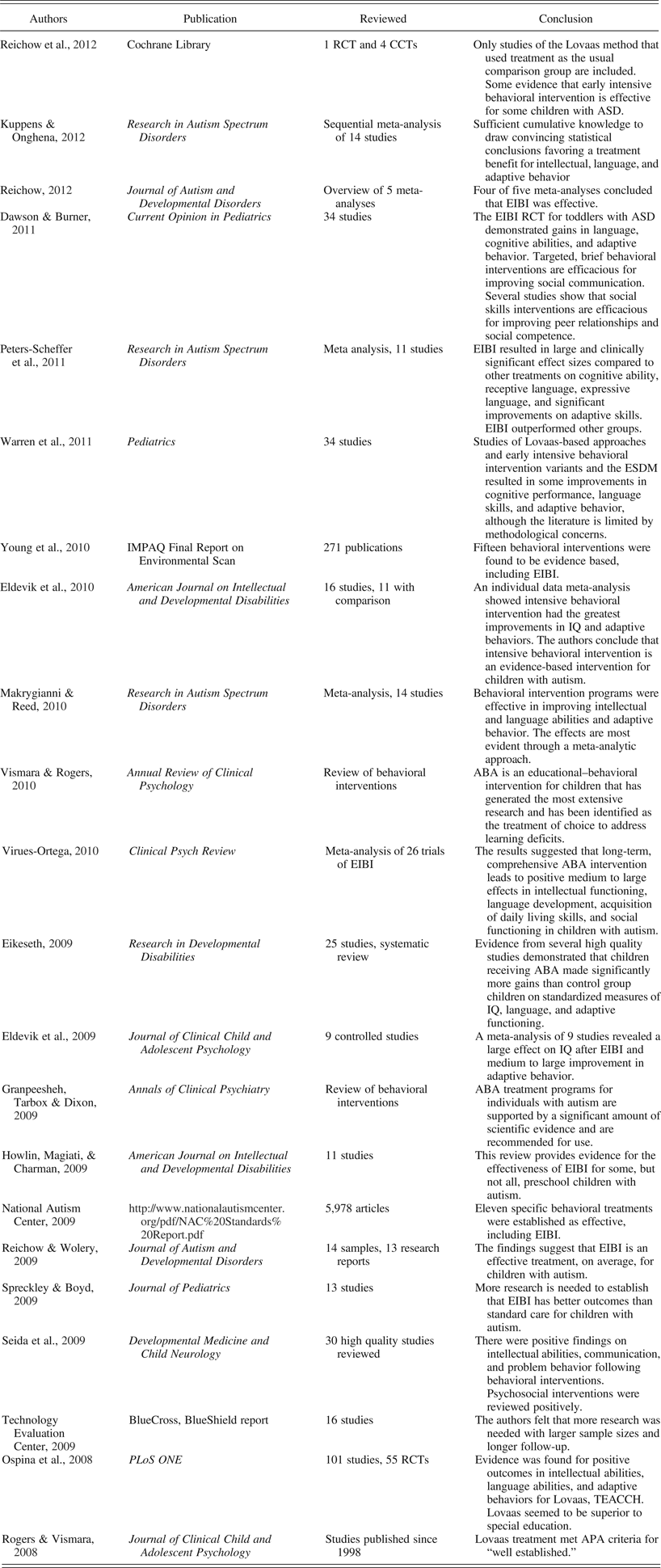
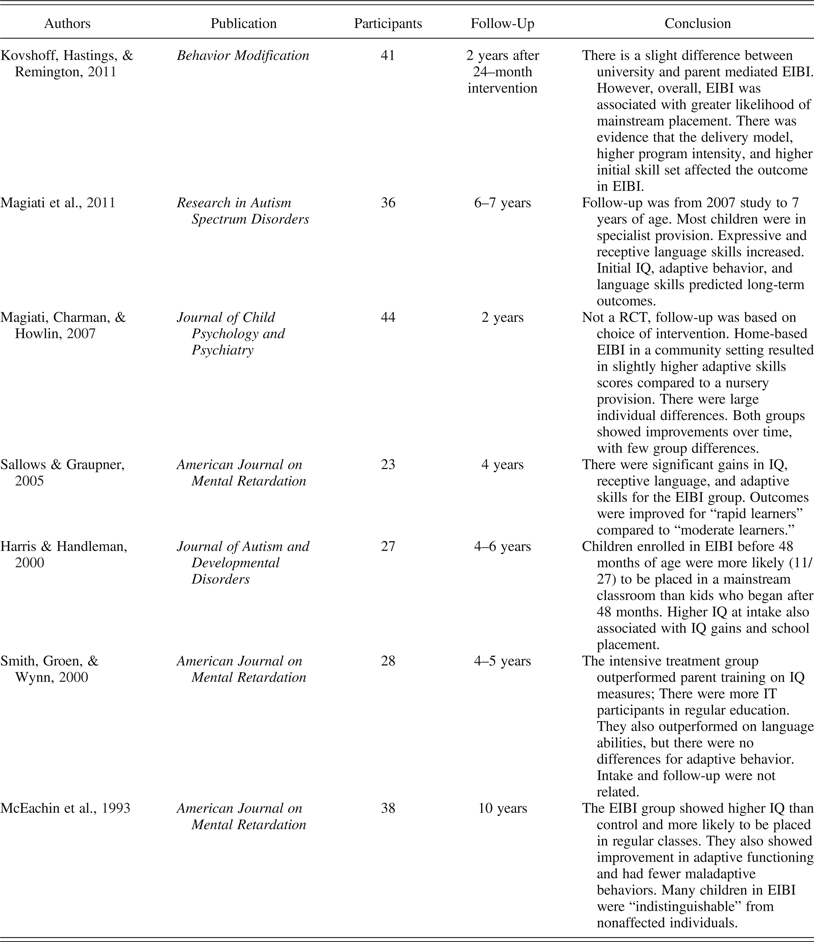
The evidence base for the efficacy of interventions based on the principles of applied behavioral analysis (ABA) has continued to grow, such that treatments based on ABA principles are now widely acknowledged as those with the most empirical support (National Research Council, 2001). One review of 13 studies including a total of 373 children with ASD indicated significant gains in cognitive ability following ABA treatment using the Lovaas model (Reichow & Wolery, Reference Reichow and Wolery2009). Since Lovaas' Reference Lovaas1987 report, many studies have replicated findings of efficacy (Cohen, Amerine-Dickens, & Smith, Reference Cohen, Amerine-Dickens and Smith2006; Howard, Sparkman, Cohen, Green, & Stanislaw, Reference Howard, Sparkman, Cohen, Green and Stanislaw2005; Sallows & Graupner, Reference Sallows and Graupner2005), demonstrated long-standing effects (McEachin et al., Reference McEachin, Smith and Lovaas1993) and shown that treatment intensity alone does not account for the gains (Eikeseth, Smith, Jahr, & Eldevik, Reference Eikeseth, Smith, Jahr and Eldevik2002; Howard et al., Reference Howard, Sparkman, Cohen, Green and Stanislaw2005). Further effectiveness studies of ABA-based approaches to treat communication deficits, social skills impairments, and problematic behavior have yielded positive support (Cohen et al., Reference Cohen, Amerine-Dickens and Smith2006; Horner, Carr, Strain, Todd, & Reed, Reference Horner, Carr, Strain, Todd and Reed2002; McConnell, Reference McConnell2002; Sallows & Graupner, Reference Sallows and Graupner2005). In the multiple systematic reviews or meta-analyses of early comprehensive behaviorally based interventions, the consistent conclusion is that behaviorally based interventions resulted in gains in cognition, language skills, and adaptive behaviors for children with autism and showed some evidence of sustained benefit (see Table 1 and Table 2). This strong scientific support for ABA-based intervention as an effective treatment for ASD has prompted significant policy changes, including substantial insurance reform. State insurance programs and many private agencies have revised policies to provide insurance coverage for ABA-based treatment approaches for ASD.
Reviews of evidence of efficacy of early intensive behavioral intervention

Note: RCT, Randomized controlled trial; CCT, clinical controlled trial; ASD, autism spectrum disorder; EIBI, Early Intensive Behavioral Intervention; ABA, applied behavioral analysis; ESDM, Early Start Denver Model; TEACCH, Treatment and Education of Autistic and Related Communication Handicapped Children.
Studies on long-term outcomes following early intensive behavioral intervention
Note: EIBI, Early Intensive Behavioral Intervention; RCT, randomized controlled trial.
Although traditional ABA-intervention models based on discrete trial training remain in wide use today, several naturalistic, developmental models have been created to incorporate ABA-based principles into a developmental framework, taking into account the significant gains in knowledge about infant learning and developmental trajectories that have occurred over the past two decades.
One such developmental intervention, the Social Communication, Emotional Regulation, and Transactional Support model, incorporates a developmental framework to address the specific learning styles of children with ASD (Prizant, Wetherby, Rubin, & Laurent, Reference Prizant, Wetherby, Rubin and Laurent2003). According to the model, the developmental dimensions of social communication, emotional regulation, and transactional support must be addressed within a comprehensive treatment approach. The treatment priority goals therefore fall into these three primary domains. For example, in the social communication domain, the focus is on enhancing joint attention skills and increasing symbolic behavior, such as spontaneously communicating. Another prioritized treatment goal is in the ability to regulate emotional arousal to support learning and engagement with others. The third priority domain concerns the incorporation of transactional supports, such as the use of environmental modifications, support for family members, and supporting developing relationships. The Social Communication, Emotional Regulation, and Transactional Support model proposes a developmental framework to address the core deficits in ASD through the integration of an individual's strengths and weaknesses into evidence-based treatment planning (Prizant, Wetherby, Rubin, Laurent, & Rydell, Reference Prizant, Wetherby, Rubin, Laurent and Rydell2005).
Another model, joint attention training, has also emerged as a developmental approach in the treatment of ASD. As demonstrated through pioneering work into the early characteristics of autism, joint attention is impaired in ASD (Sigman, Mundy, Sherman, & Ungerer, Reference Sigman, Mundy, Sherman and Ungerer1986). The ability to share attention with others about a common event or object is a prelinguistic skill that affects later language development because it affords a child an opportunity to share attention in a social interaction, thereby facilitating socially acquired skills such as language (Adamson, Bakeman, & Deckner, Reference Adamson, Bakeman and Deckner2004). Because the development of speech prior to age 5 has been proposed to be a strong indicator of later positive outcomes in children with ASD (Billstedt, Gillberg, & Gillberg, Reference Billstedt, Gillberg and Gillberg2005; Venter, Lord, & Schopler, Reference Venter, Lord and Schopler1992), by focusing on joint attention, a developmental precursor to language, Kasari and colleagues (Kasari, Freeman, & Paparella, Reference Kasari, Freeman and Paparella2006) proposed to improve language and overall outcomes in ASD. In a randomized controlled trial in which interventionists provided joint attention skills training for 30 min each day over 6 weeks to 3- to 4-year-old children with ASD, the children undergoing the intervention demonstrated improved joint attention skills and greater spoken language compared to the control group. At follow-up five years later, the children who began intervention earlier and those showing improved joint attention skills and higher levels of play exhibited wider use of spoken vocabulary (Kasari, Gulsrud, Freeman, Paparella, & Hellemann, Reference Kasari, Gulsrud, Freeman, Paparella and Hellemann2012). Moreover, following the 6-week administration of this joint attention intervention in a preschool setting by trained public school teachers, the preschoolers with ASD undergoing the training used more joint attention skills compared to control preschoolers who did not (Lawton & Kasari, Reference Lawton and Kasari2012). The findings of these intervention trials demonstrate the utility of focusing on the improvement of developmental precursors of language to improve outcomes in children with ASD.
A comprehensive developmental intervention model appropriate for children as young as 12 months of age is the Early Start Denver Model (ESDM). ESDM is a downward extension of the Denver Model (Rogers et al., Reference Rogers, Hayden, Hepburn, Charlifue-Smith, Hall and Hayes2006; Rogers & Lewis, Reference Rogers and Lewis1989) such that it meets the needs of infants and toddlers. Results of studies testing the Denver Model using pre–post test study designs demonstrated significant language and social emotional developmental gains in children with ASD undergoing the treatment (Rogers & DiLalla, Reference Rogers and DiLalla1991; Rogers, Herbison, Lewis, Pantone, & Reis, Reference Rogers, Herbison, Lewis, Pantone and Reis1986; Rogers & Lewis, Reference Rogers and Lewis1989; Rogers, Lewis & Reis, Reference Rogers, Lewis and Reis1987). In ESDM, ASD treatment is conceptualized from a multidisciplinary approach encompassing all aspects of development with a specific focus on social reciprocity, affective engagement, social attention and motivation. A randomized, controlled trial of ESDM, in which 48 toddlers with ASD were randomized either to 2 years of ESDM intervention or to treatment as usual in the community, showed significantly greater gains in cognitive, language, social, and adaptive behavior for the children who received the ESDM intervention (Dawson, Jones, et al., Reference Dawson, Jones, Merkle, Venema, Lowy and Faja2012; Dawson et al., Reference Dawson, Rogers, Munson, Smith, Winter and Greenson2010). Although at baseline the groups did not differ on cognitive ability, ASD severity, gender or socioeconomic status, following treatment the ESDM group showed an average gain of 17.6 points in overall cognitive abilities relative to 7 points in the community intervention group. Further, although adaptive skills in communication, daily living, and motor ability remained stable in the ESDM group, there was a decline in the community intervention group, providing further support for the efficacy of ESDM.
The impact that behaviorally based interventions have had on cognitive and adaptive functioning has prompted the examination of the effect of the intervention on brain activity, especially those neural systems that support social processing. Animal studies suggest that early enrichment has a significant impact on brain structure and activity. Changes in the weight and thickness of the cortex (Diamond, Rosenzweig, Bennett, Lindner, & Lyon, Reference Diamond, Rosenzweig, Bennett, Lindner and Lyon1972), increases in neurotransmitter receptor density (Bredy, Humpartzoomian, Cain, & Meaney, Reference Bredy, Humpartzoomian, Cain and Meaney2003), increases in synapse number and density (Kleim, Lussnig, Schwarz, Comery, & Greenough, Reference Kleim, Lussnig, Schwarz, Comery and Greenough1996), and diminished effects of early injury or genetic risk (Nithianantharajah & Hannan, Reference Nithianantharajah and Hannan2006) have been noted in mice, rat, and nonhuman primate studies. These findings suggest the utility of behaviorally based interventions in altering the course of both behavioral and brain development. By integrating biological measures into the design and evaluation of the ESDM model (Cicchetti & Gunnar, Reference Cicchetti and Gunnar2008), the impact of early intervention on brain activity could be assessed. Following 2 years of intervention using ESDM, children undergoing treatment showed normalized spectral power in the alpha and theta ranges using an EEG paradigm comparing faces and houses. Control children who received a range of community interventions during the same interval failed to show that normalization. Further, in this study, increased cortical activation during the viewing of faces correlated with improved social communication outcomes, underscoring the contribution of this treatment approach to changes in brain activity (Dawson, Jones, et al., Reference Dawson, Jones, Merkle, Venema, Lowy and Faja2012). A second EEG study examining the effects of adult intervention on brain activity suggests that neural plasticity in response to intervention may exist throughout the life span. This study assessed the impact of face training on ERP responses to faces in adults with ASD (Faja et al., Reference Faja, Webb, Jones, Merkle, Kamara and Bavaro2012). Specifically, adults with ASD were randomly assigned to a computerized training program focusing on either faces or houses. Participants were tested pre- and posttraining in behavioral measures of face and house recognition as well as on electrophysiological indices of face processing. Following training, participants demonstrated behavioral expertise with the specific stimuli to which they were randomly assigned, but only the group with face training showed more normalized behavioral and electrophysiological responses to faces. Taken together, these two studies provide strong support that behaviorally based treatments are associated not only with behavioral improvement, but can also normalize some aspects of brain activity. Furthermore, they provide evidence of neural plasticity throughout the life span in individuals with ASD.
Looking ahead
The future of intervention research holds promise for improving the lives of individuals with autism. Although a quarter of a century ago the conversation about autism treatment was in its infancy, through advances in our understanding of early detection and behaviorally based treatments, the possibility of intervening prior to the development of ASD symptoms is now within reach. The evidence that behavioral interventions are effective at changing both behavior and brain functioning suggests that intervening prior to the emergence of behavioral symptoms, which only hint at the underlying atypical brain development already underway, will allow for significant neural plasticity and adaptation and the possibility of avoiding or ameliorating the presentation of ASD symptoms altogether (Cicchetti & Gunnar, Reference Cicchetti and Gunnar2008; Dawson, Reference Dawson2008). A recent study found that a minority of children with autism lose their autism symptoms altogether and demonstrate an overall level of function within normal limits (Fein et al., Reference Fein, Barton, Eigsti, Kelley, Naigles and Schultz2013). It is clear that parents play a central role in providing intervention, especially when those interventions are being provided to infants and toddlers. Parents spend more time with their children than any therapist can and thus can be the most effective therapists. In this way, every interaction becomes a learning opportunity for the child. By training parents how to intervene with their infants and toddlers who are at risk of developing autism, such as younger siblings of children with autism or young children presenting with early warning signs, infants and toddlers can be directed to a more typical developmental trajectory.
Another primary focus of future autism intervention research will include an understanding of the variability in response to intervention. Although all children with ASD benefit from early intervention, some children make extremely rapid progress whereas progress for others is slower. Improved understanding of the mediating and moderating factors will allow for a more comprehensive understanding of the mechanisms of change and how best to intervene with each individual. Given that autism is a group of disorders with wide heterogeneity in terms of etiology, course, response to treatment, and outcome, advances in understanding the biological processes underlying the heterogeneity of the disorder and their interaction with treatment and prevention approaches will allow for more targeted interventions that are specific and appropriate for differing individuals with autism.
In order to understand the biological mechanisms at play in autism and evaluate the effectiveness of interventions, identifying meaningful biomarkers is a necessary step for the field. Neurophysiological indicators such as cortical activation in response to viewing faces (Dawson, Bernier, et al., Reference Dawson, Bernier and Ring2012) or functional brain responses to rewarding stimuli (Scott-Van Zeeland, Dapretto, Ghahremani, Poldrack, & Bookheimer, Reference Scott-Van Zeeland, Dapretto, Ghahremani, Poldrack and Bookheimer2010) provide insight both into the biological mechanisms underlying autism but may also serve as avenues for identifying what tailored approaches are needed for each individual. Further, the assessment of neurophysiological change following onset of an intervention can serve as an information-rich index of the anticipated behavioral change.
Finally, the future of autism intervention likely includes greater understanding of the efficacy and contribution of biomedical treatments. Only two drugs have been approved by the FDA for the treatment of ASD, and those treat associated symptoms of irritability rather than core autism symptoms (McPheeters et al., Reference McPheeters, Warren, Sathe, Bruzek, Krishnaswami and Jerome2011). There are few studies demonstrating clear support for the efficacy of any of the full array of biomedical interventions that have been proposed to treat autism and that are currently in use (Warren et al., Reference Warren, McPheeters, Sathe, Foss-Feig, Glasser and Veenstra-Vanderweele2011). Initial clinical trials evaluating the efficacy of biomedical treatments that address the core social impairments of autism, such as arbaclofen (Gurkan & Hagerman, Reference Gurkan and Hagerman2012) and oxytocin (Domes et al., Reference Domes, Heinrichs, Kumbier, Grossmann, Hauenstein and Herpertz2013), have yielded encouraging results. The next several years of ASD intervention research likely will lead to the discovery of a number of novel biomedical treatments that will address core autism symptoms (Farmer, Thurm, & Grant, Reference Farmer, Thurm and Grant2013). These can be used in combination with behavioral interventions to enhance social motivation (Dawson, Bernier, et al., Reference Dawson, Bernier and Ring2012) and neural plasticity (Smith & Ehlers, Reference Smith and Ehlers2012), perhaps allowing higher rates of improvement in those children whose response to behavioral intervention alone has not been robust. By tailoring treatment approaches to meet the specific biological and behavioral needs of individuals presenting with specific autism subtypes and using well-defined biomarkers to examine and assess response to treatment, the ultimate hope is that the lives of all individuals impacted by ASD will be markedly improved (Hammock et al., Reference Hammock, Veenstra-VanderWeele, Yan, Kerr, Morris and Anderson2012).
The grand challenge we face: Dissemination and implementation of evidence-based practices
At the same time that we applaud the significant advances that have taken place in the development of methods for earlier detection and intervention for children with ASD, we are sorely aware of the significant challenge in disseminating and implementing such interventions within community settings, especially in those settings that have low resources. Even though it is possible to reliably diagnose autism by 18 to 24 months of age (Johnson et al., Reference Johnson and Myers2007) and despite the availability of evidence-based, efficacious early interventions, diagnosis lags behind in many cases (CDC, 2012; Shattuck et al., Reference Shattuck, Durkin, Maenner, Newschaffer, Mandell and Wiggins2009). The CDC reported that the average age at diagnosis for autism in the United States is approximately 48 months and is 53 and 75 months for ASD/pervasive developmental disorder and Asperger disorder, respectively (CDC, 2012). Without a diagnosis, children are not able to access the early interventions in a timely manner.
Several factors have been found to be associated with a delay in autism diagnosis in the United States, including lower socioeconomic status and racial/ethnic minority background (Mandell et al., Reference Mandell, Wiggins, Carpenter, Daniels, DiGuiseppi and Durkin2009). Several studies have documented the lower prevalence of ASD among African American and Latino children (Boyle et al., Reference Boyle, Boulet, Schieve, Cohen and Blumberg2011; CDC, 2012; Jarquin, Wiggins, Schieve, & Van Naarden-Braun, Reference Jarquin, Wiggins, Schieve and Van Naarden-Braun2011; Kogan et al., Reference Kogan, Strickland, Blumberg, Singh, Perrin and van Dyck2008).
Many children with autism do not have access to high-quality, intensive, early behavioral interventions. Only half of the states in the United States mandate insurance coverage for behavioral health interventions for children with autism, and thus parents often must pay out of pocket for intervention. Research has shown that mothers of children with autism earn 35% less than mothers of children with other chronic health conditions, and family earnings are 28% lower (Cidav, Marcus, & Mandell, Reference Cidav, Marcus and Mandell2012). Parents of children with autism report higher levels of unmet health care needs and family support and difficulty receiving appropriate referral information, as compared to parents of children with other chronic health conditions (Kogan et al., Reference Kogan, Strickland, Blumberg, Singh, Perrin and van Dyck2008).
A global perspective only accentuates the scale of the challenge we face in disseminating and implementing evidence-based practices across the globe, especially in low-resource countries (Patel, Kieling, Maulik, & Divan, Reference Patel, Kieling, Maulik and Divan2013). There is an urgent need to scale up services for developmental disorders both in the United States and abroad (Lancet Global Mental Health et al., Reference Chisholm, Flisher, Lund, Patel and Saxena2007). Two strategies for scaling up services in remote and low-resource communities have received recent attention. First, clinical services that can be delivered by persons who are not trained professionals, including both parents and paraprofessionals, will allow communities greater access to screening and some forms of treatment (Lancet Global Mental Health et al., Reference Chisholm, Flisher, Lund, Patel and Saxena2007). Second, the use of eLearning and telehealth programs that can provide both professionals and parents training from remote locations promises to expand access to expertise and support (Szeftel, Federico, Hakak, Szeftel, & Jacobson, Reference Szeftel, Federico, Hakak, Szeftel and Jacobson2012; Vismara, Young, & Rogers, Reference Vismara, Young and Rogers2012). In order for such strategies to be effective, sustained collaboration and dedication of a variety of stakeholders, including government, professionals, parents, donors, and nongovernment organizations, will be necessary (Wallace et al., Reference Wallace, Fein, Rosanoff, Dawson, Hossain and Brennan2012).