


Introduction
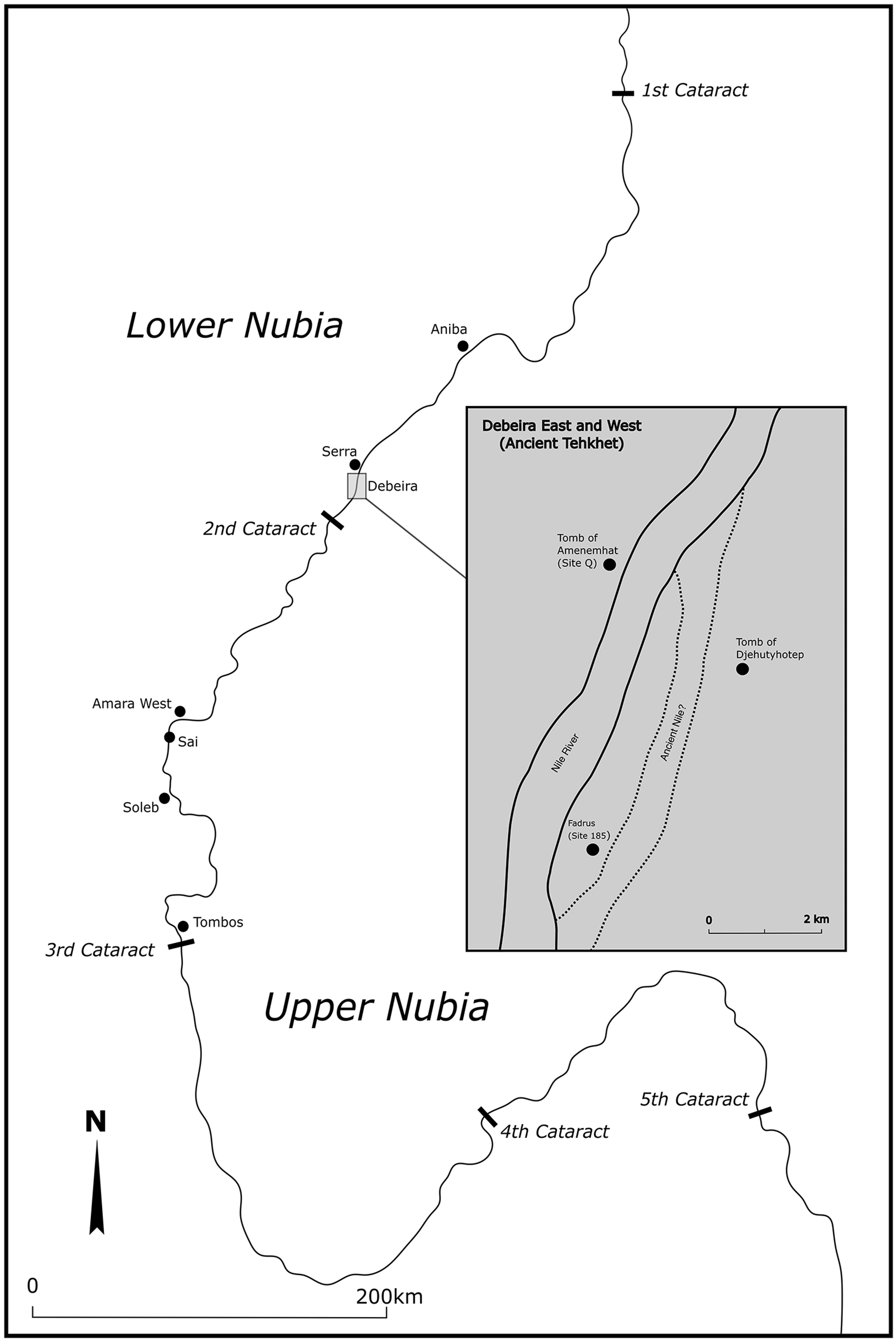
Several New Kingdom colonial cemeteries were situated in the Debeira region of Lower Nubia, north Sudan, before the flooding of the area following the construction of the Aswan High Dam in the 1960s. The Debeira region encompasses several highly significant archaeological sites, including the elite rock-cut tombs of local chiefs Djehutyhotep (Lemos Reference Lemos2024a; Thabit Reference Thabit1957) and Amenemhat (Säve-Söderbergh & Troy Reference Säve-Söderbergh and Troy1991, 182–209) as well as the Fadrus cemetery, one of the largest and best-excavated non-elite burial grounds of the 18th Dynasty (c. 1550–1295 bce) in New Kingdom colonial Nubia (1550–1070 bce) (Säve-Söderbergh & Troy Reference Säve-Söderbergh and Troy1991, 212). The range of elite and non-elite burial contexts in Debeira all date to the 18th Dynasty, a period of intense Egyptian colonial control and expansion. These contexts attest not only to the Egyptian state’s administrative investment in the region but also this region’s capacity to sustain a substantial agricultural population (Säve-Söderbergh Reference Säve-Söderbergh and Vivian Davies1991, 247). Together, these sites represent the long-term impact of ancient Egyptian colonialism upon a population living and working in a local settlement (Lemos Reference Lemos, Ashby and Brody2024b), likely managed from the nearby fortress of Serra (Williams Reference Williams, Spencer, Stevens and Binder2017) (Fig. 1).
Map of Nubian sites mentioned in text. (Map: authors.)
The Egyptian state’s early New Kingdom efforts to establish and reproduce a hierarchical system of exploitation and control in Lower Nubia were largely motivated by its strategic interest in managing local desert routes leading to gold mines in the Sudanese Eastern Desert (Bettenay & Ross Reference Bettenay and Ross2025; Davies Reference Davies, Davies and Welsby2020, 188; Klemm & Klemm Reference Klemm and Klemm2013). This is evident in the steady expansion of the cemetery of Fadrus, which housed the burials of the majority of the local population through the mid-18th Dynasty (Säve-Söderbergh & Troy Reference Säve-Söderbergh and Troy1991, 247). Indeed, the landscape of Debeira bears the physical transformation of the space into a representation of Egyptian social structures, attesting to major colonial structural impositions (Smith Reference Smith2025). High slopes above the valley feature decorated rock-cut and pyramid tombs belonging to local elites, while lower elites or associates were buried in undecorated tombs on the slopes below (Sherif Reference Sherif1960). However, subaltern groups, comprising the working majority of the population, were buried on the lower slopes or the valley floor at the cemetery of Fadrus, which served as the primary burial ground for these groups. These burials vary from simple individual pits without grave goods to collective mudbrick vaulted structures equipped with a variety of objects (Säve-Söderbergh & Troy Reference Säve-Söderbergh and Troy1991).
Recent research in Egypt has shed new light on how poverty shaped and was shaped by patterns of social organization, best revealed by mortuary landscapes along the Nile valley (Bussmann Reference Bussmann, Bussmann and Helms2020; Bussmann & Vanthuyne Reference Bussmann and Vanthuyne2023; García González et al. Reference García González, Rubio Salvador, Botella López and Jiménez-Serrano2018; Kemp et al. Reference Kemp, Stevens, Dabbs, Zabecki and Rose2013; Lemos Reference Lemos, Maynart, Velloza and Lemos2018; Stevens et al. Reference Stevens, Dabbs, Shepperson and Wetzel2015). Access to labour and resources is an essential aspect of such hierarchical social organization, which resonates especially in colonial contexts such as at Fadrus, where most individual members of the local community could not gain access to simple burial items (Lemos Reference Lemos, Ashby and Brody2024b). The ability of the local Debeira elites to appropriate labour is therefore evident in their ability to construct complex, monumental architecture and further emphasized in the material record through their ability to accumulate an overflow of resources. Removing valuable resources, such as gold and copper alloys, from circulation by depositing them in tombs is a sign of power and a deliberate intent to set elites apart from most of the local population. If it is easier to navigate power relations and inequality from the perspective of ancient elites, the lived experiences of the substantially larger subaltern population buried at Fadrus, and their engagement with or resistance to colonial structures of power, remain insufficiently explored.
In this paper, we explore the availability of metal objects among the subaltern populations of colonized Debeira region in the early New Kingdom, based on an analysis of alloys from both non-elite burials at Fadrus and objects from the elite tomb of Amenemhat kept at Gustavianum, Uppsala University Museum. By identifying specific alloys and their distribution across the mortuary landscape of Debeira, we identify people’s ability to access resources and technologies necessary to produce metal objects. These objects are part of a greater assemblage that was used by the deceased and their community to express social standings. Our results reveal the struggle of individuals to access resources that are deemed to be under state control and highlight potential changes in resource management strategies of the local ancient Egyptian colonial administration during the 18th Dynasty.
Between colonial structures and subaltern agency
The central focus of this paper is to characterize broadly the agency of subaltern populations in the ancient colonial context of Lower Nubia. Comparing object assemblages from elite contexts with burial goods from the cemetery of Fadrus offers an opportunity to examine the dynamics between the ruling elite and the subaltern, as well as their capacity to access state-controlled resources, including gold, silver and advanced technologies essential for producing copper alloys and intricate metal objects. For the following argument, it is necessary to define the term ‘subaltern’.
The concept can be traced to Antonio Gramsci’s preoccupation with the political representation of the lower classes and their ability to express their ideas in contexts of social struggle (Buttigieg Reference Buttigieg and Zene2013). In subaltern studies and among postcolonial theorists, ‘subaltern’ describes a relational position of disadvantage in the way power is conceptualized in a colonial context (Pandey Reference Pandey2006; Spivak Reference Spivak and Morris2010). ‘Elite’ then becomes an indicator of an actor or group that can appropriate, accumulate, preserve or destroy resources and is active in the struggle to establish and perpetuate subalternity or dominance. Spivak’s early work characterized the subaltern as those who cannot ‘speak’, i.e. those who cannot represent themselves and are muted in colonial narratives of power (Spivak Reference Spivak, Nelson and Grossberg1988).
Recently, archaeologists have increasingly engaged with the concept of subalternity as a relational and historical condition of subordination. This approach acknowledges the inherent diversity of what is often homogenously labelled as the ‘non-elite’ in ancient complex societies (Ambridge Reference Ambridge2007; Blackmore Reference Blackmore2016; Judson Reference Judson, Gooch and Ruddick2025; Lemos Reference Lemos, Maynart, Velloza and Lemos2018), while opening analytical avenues for examining negotiation, compliance, adaptation, contradiction, conflict and cultural reproduction (Marín-Aguilera Reference Marín-Aguilera2021). Within this framework, agency becomes a central component of how the ‘subaltern’ is understood, not as a general or inherent capacity to act, but as a historically situated ability to act within relationships (Robb Reference Robb2010). In this sense, subaltern agency presupposes the archaeological recognition of the material traces of social contributions made by those relegated to subaltern positions, despite their structural marginalization, thereby challenging long-standing colonial and disciplinary perceptions of passive poverty (Puddu & van Dommelen Reference Puddu and van Dommelen2026; cf. Driaux Reference Driaux2020).
Non-elites in Egypt and colonized people in Nubia during the New Kingdom were relegated to a position of subalternity, widely portrayed in Egyptian art, but also materialized in burial contexts marked by scarcity. However, archaeological contexts also reveal various strategies deployed by the subaltern to partake, which can be interpreted as ways through which the subaltern ‘speak’ as unveiled in the archaeological record (Bussmann et al. Reference Bussmann, Bernbeck and Burmeister2024; Lemos Reference Lemos, Maynart, Velloza and Lemos2018; Reference Lemos2023). More recently, discussions in postcolonial and subaltern studies have emphasized the way in which the subaltern can ‘speak’ or partake in dominant power structures—usually surreptitiously or, in modern Western societies, through the vote (Pandey Reference Pandey2006; Spivak Reference Spivak and Morris2010). The ‘subaltern’ is defined in relation to the ‘elite’ and their strategies to participate in wider social interactions through consumption, appropriation and adaptation can be seen as strategies to set themselves apart from a context of subalternity through institutions of oppression. Yet often, it is the subaltern individuals who make active efforts to redefine themselves and overcome this asymmetrical relationship by innovating, reinventing, or avoiding. However, within the context of colonial structures of power, these creative strategies usually end up reinforcing subalternity (Lemos Reference Lemos, Ashby and Brody2024b). Studying the subaltern, therefore, allows us to recognize the intricate mechanisms of political structures and institutions—the Egyptian colonial system, in this case—which perpetuate, reinforce and re-inscribe subalternity at different times and places (Bintliff Reference Bintliff, Hussain and Dusseldorp2025; Pandey Reference Pandey2006).
From an archaeological perspective, the ‘struggle’ of the subaltern populations is best reflected in their ability to access resources: resources that have been attributed special value based on either economic factors or ideological attributes (Cooney Reference Cooney2007; Maze Reference Maze, Miniaci, Moreno García, Quirke and Stauder2018). In northeast Africa, and in the Nile valley, production and burial of metal alloys have been associated with elite contexts from prehistory all the way into the New Kingdom. In general, arguments for metal objects as being circumscribed under the purview of the elites reference the scarcity of raw materials (copper and gold) or their remoteness in respect to Nile valley settlements (Baines Reference Baines, Karlshausen and De Putter2000, 29–31; Klemm & Klemm Reference Klemm and Klemm2013; Maze Reference Maze, Miniaci, Moreno García, Quirke and Stauder2018, 118–21; Ogden Reference Ogden, Nicholson and Shaw2000, 149–54; Wengrow Reference Wengrow2006, 14). Much like everywhere else, value is understood to be dynamic, changing and a part of a ‘social’ construction that provides meaning not only to the object but also to the material(s) used in its production (Graeber Reference Graeber2001, 75–7). Consequently, our examination of alloys in colonized Debeira also reflects the social context of the object’s use and the investment (both economic and social) over time in the production, use and discarding of metal-alloy objects.
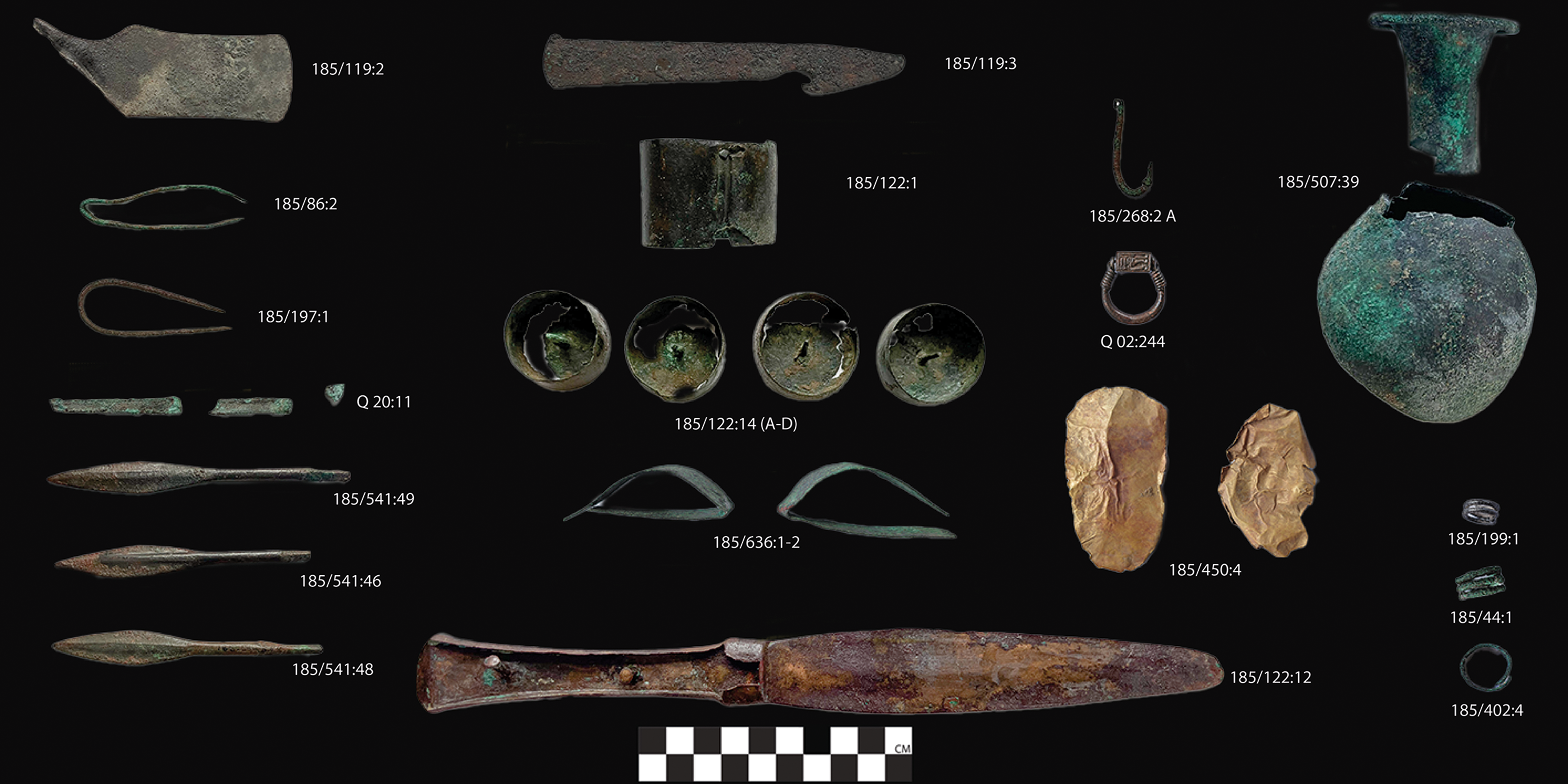
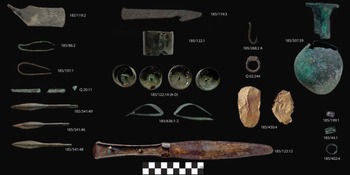
As the early Egyptian state apparatus and institutions developed over time, it became evident that accessing copper and gold sources, mainly located in the Sinai and the Eastern Desert, was crucial to the state. This necessity led to large, state-organized expeditions to meet the high demand (Abd el-Raziq et al. Reference Abd el-Raziq, Castel, Tallet and Fluzin2011; Haring Reference Haring1997; Tallet Reference Tallet2018). Both textual and archaeological evidence show that, particularly during the New Kingdom, control and access to copper became crucial to Egyptian institutions as individuals working for the state, or in close association with the state, received payment in copper (Janssen Reference Janssen1975, 101–2; Rademakers Reference Rademakers2015, 231–45; Rademakers et al. Reference Rademakers, Rehren and Pernicka2017; Rehren & Pusch Reference Rehren, Pusch, Kassianidou and Papasavvas2012). Therefore, the production and control of copper-alloy tools and objects were closely linked to large-scale state enterprises (Hodgkinson Reference Hodgkinson2018; Rademakers Reference Rademakers2015; Rehren & Pusch Reference Rehren, Pusch, Kassianidou and Papasavvas2012) and administrative elites, perhaps even more so in colonial Nubia, where access to rare metals like tin—essential for making bronzes—was more restricted (Rademakers et al. Reference Rademakers, Auenmüller and Spencer2023, 19–22). Yet high-value items like those found in elite tombs north of the First Cataract circulated in Debeira among the powerful and, occasionally, among non-elite groups. These objects, including silver and gold-plated funerary masks as well as finely crafted metal vessels such as bowls and globular jars, were made from restricted materials and required specialized metalworking skills (Fig. 2).
A selection of objects from the non-elite cemetery of Fadrus and the elite, rock-cut tomb of Amenemhat analysed using pXRF. (Image: authors.)
By exploring these objects, this study not only contributes to ongoing research on metal access, consumption and use in New Kingdom colonial Nubia (e.g. Rademakers et al. Reference Rademakers, Auenmüller and Spencer2023), but also highlights how archaeology can shed light on the ability of subaltern populations to access restricted materials usually associated with elites who controlled narratives of representation amid strict colonial hierarchization (cf. Gosden Reference Gosden2004). Examining metal objects from colonized Debeira also highlights inequalities within internal colonial systems (Engerman & Sokoloff Reference Engerman, Sokoloff, Banerjee, Bénabou and Mookherjee2006), the economic developments of such systems and their impacts on local populations. Debeira in Lower Nubia provides a prime opportunity in this context, exhibiting a rich diversity of materials and tomb architecture that can be utilized to differentiate distinctly between elite and subaltern groups within a specific region and time. Despite not yielding settlements, Debeira consists of a clear snapshot of colonial society in ancient Nubia in microcosm (Lemos Reference Lemos, Ashby and Brody2024b; Säve-Söderbergh Reference Säve-Söderbergh and Vivian Davies1991). As metal production and objects continue to be imbued with high value under the umbrella of state control, examining the alloy selection available to the local population can nuance our understanding of the relationship between elite control and subaltern consumption (Wilkinson & Sherratt Reference Wilkinson and Sherratt2023).
Colonized Nubia: Debeira in the 18th Dynasty
The comprehensive excavations at Fadrus offer a statistically significant sample essential for understanding how valuable resources were accessed during approximately 250 years of Egyptian colonization in the Debeira region and Nubia as a whole. Meticulous documentation of the burials, their contents and the cemetery’s development makes it possible to distinguish the subaltern populations from local elites and understanding their relations by analysing choices behind access to and use of metal alloys. At the cemetery of Fadrus, c. 91% of a total of excavated units (691) were undisturbed (Säve-Söderbergh & Troy Reference Säve-Söderbergh and Troy1991, 212).
If we consider materiality as a means of social distinction among elites in Egypt, then its manifestation in Nubia should reflect not just a replication of social hierarchies in this colonial context but also serve as an active instrument of colonial strategy as implemented through local elites (Lemos Reference Lemos, Ashby and Brody2024b; cf. Smith Reference Smith2025, 357). As such, the archaeological record allows us to explore the experiences of subaltern populations in a colonial setting through their material assemblages. This includes not only artefacts, but most importantly in our case, infrastructure and technologies (González-Ruibal Reference González-Ruibal2021, 373).
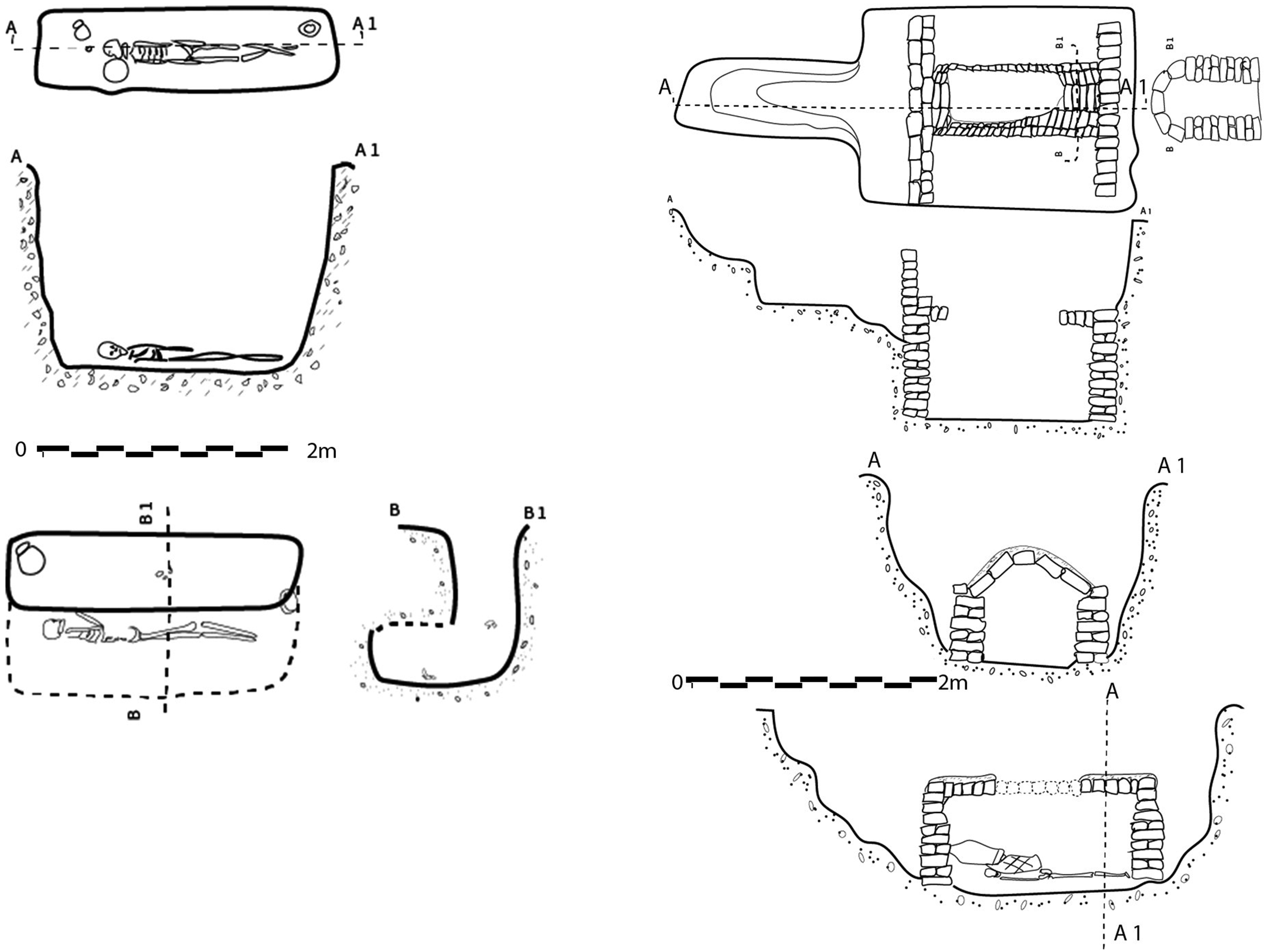
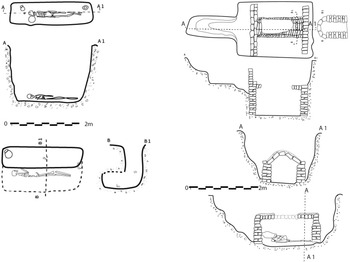
The pottery corpus from Fadrus provides a foundational understanding of subaltern relationships, as ceramics comprise one of the most common artefact types at the cemetery (Säve-Söderbergh & Troy Reference Säve-Söderbergh and Troy1991). Access to and inclusion of ceramic vessels in non-elite mortuary assemblages is evident across a wide spectrum of tombs at Fadrus. However, the quantity, quality and type of vessels varied considerably depending on tomb type and time period. When considered alongside tomb infrastructure, they allow us to infer the effort and access to labour individuals were afforded at burial. Therefore, the pyramid tomb of Amenemhat (Site Q), the chambers with ramps and the chambers with pits would have taken significantly more effort and time to construct and furnish than the simple pit graves and other tomb types (Fig. 3). Furthermore, a visible pattern of scarcity in artefacts is observed in pit and side- or end-niched graves when compared to the objects recovered from the burials associated with more complex infrastructure (Säve-Söderbergh & Troy Reference Säve-Söderbergh and Troy1991, 5–22).
Tomb types from Fadrus in which the analysed objects were discovered. (Top left) 185/133: pit burial; (bottom left) 185/119: pit with side niche (variation: double side-niche); (top right) 185/156: mud-brick chamber with ramp; (bottom right) 185/517: mud-brick chamber in pit. (Drawn by M.T. after Säve-Söderbergh & Troy Reference Säve-Söderbergh and Troy1991, pl. 73, 89, 158, 166.)
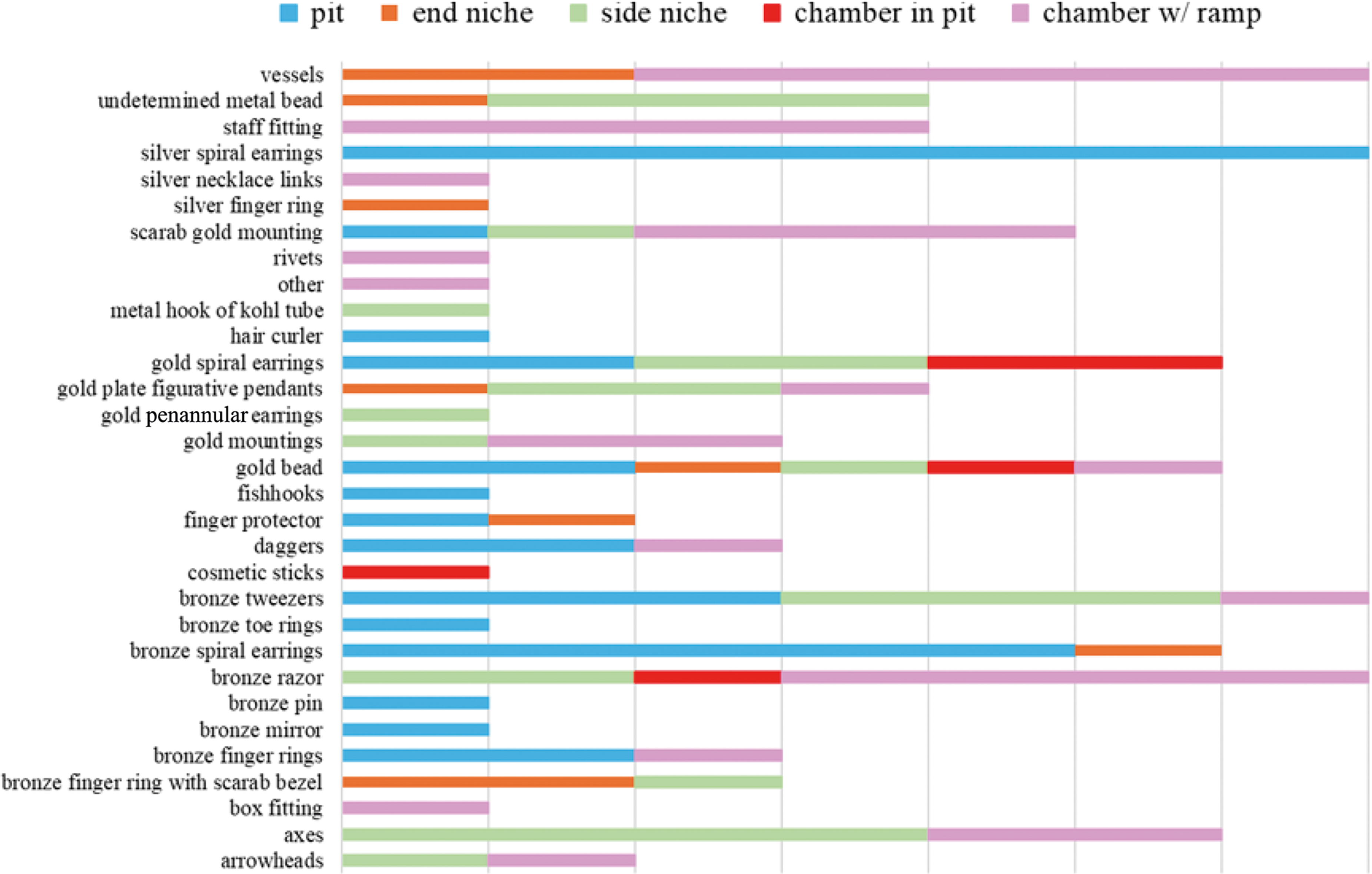
This is further supported by the distribution of ceramic assemblages in pit and side- or end-niche graves, which contain between zero and four vessels, accounting for a total of 71.8% of the graves in Fadrus (Spence Reference Spence and Raue2019, 557). Conversely, mud-brick chambers with ramps and mud-brick chambers in pits hold more than four vessels and feature a wider assortment of objects such as alloyed metal weapons and vessels, precious metals, cosmetic materials, funerary masks, coffins, and more (Säve-Söderbergh & Troy Reference Säve-Söderbergh and Troy1991, 225). Accordingly, objects originating from contexts associated with mud-brick chambers in pits and mud-brick chambers with ramps are associated with individual or collective efforts to display wealth or social status, while contexts of individual scarcity, expressed through simple architectural constructions, such as pits and pits with end or side niches, qualify as representative of subaltern individuals at Fadrus. Nevertheless, in the following analysis, it is evident that subaltern individuals make a constant effort to access resources and redefine their position, socially and economically, vis-à-vis the elite. Thirty-two of the 61 analysed metal alloys (52.5%) originated from subaltern contexts, indicating their ability to access precious materials even in this strict colonial setting. This opens space for the investigation of both colonial supply policies and potentially surreptitious strategies for ensuring access to resources among non-elite groups.
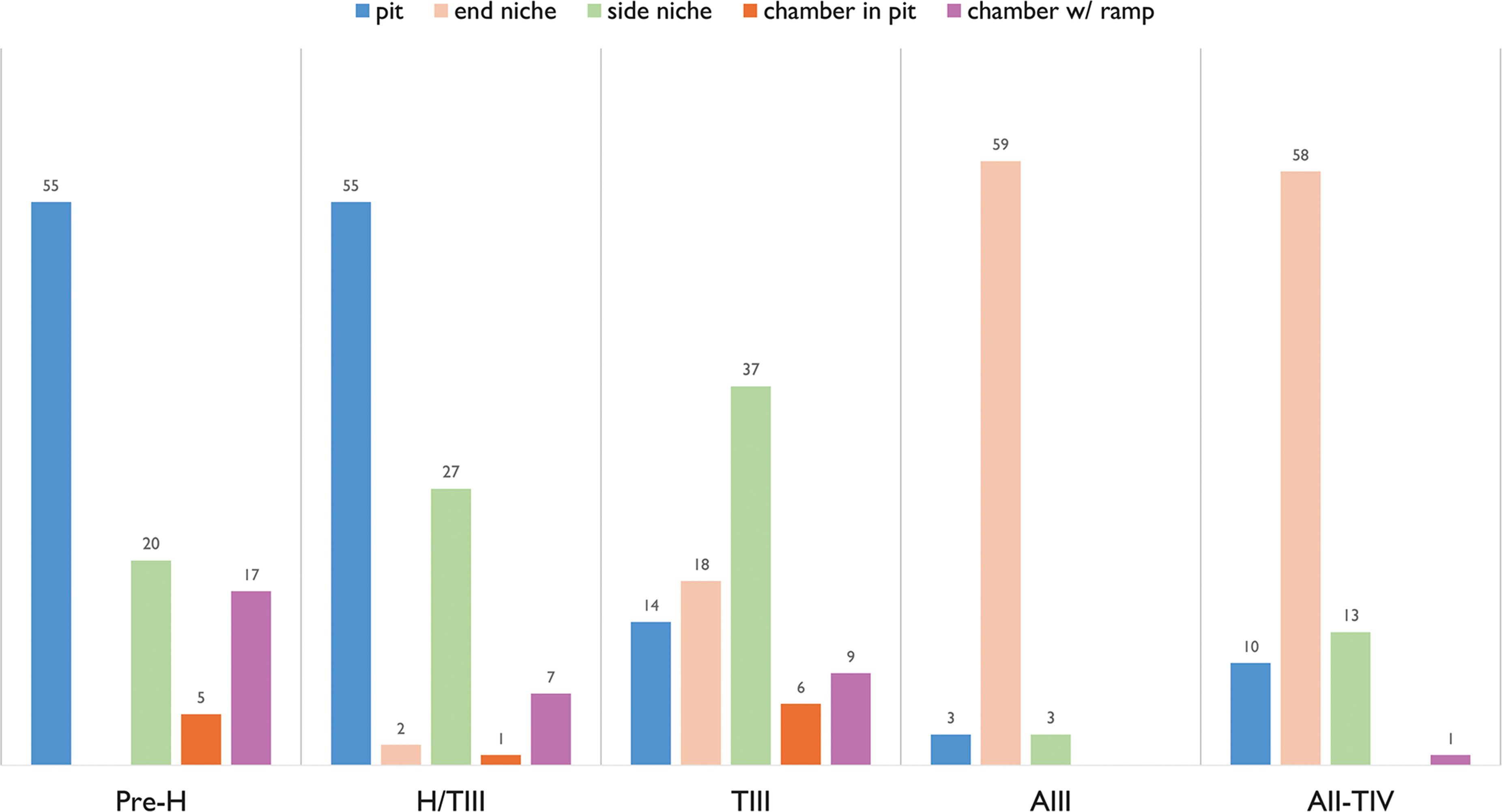
The distribution of tomb types also illustrates intentionally demarcated zones for wealthier burials. The north and south-central part of the cemetery was reserved for high-status chamber with ramp burials (Säve-Söderbergh & Troy Reference Säve-Söderbergh and Troy1991, 239). The considerable effort invested in their construction is evident in not only their subterranean architecture and more extensive burial assemblages, but also their superstructures on the surface. The association of chambers with ramp and chambers in pit tombs with early possibilities to display wealth is further reinforced by their disappearance from the valley floor towards the end of the reigns of Hatshepsut and Thutmose III, precisely when figures like Djehutyhotep and Amenemhat appear with their decorated rock-cut, monumental tombs as a result of their control over resources and collaboration with the Egyptian colonial enterprise (Fig. 4; Säve-Söderbergh & Troy Reference Säve-Söderbergh and Troy1991, 241). From this point, wealthier groups were buried exclusively above the valley floor, physically and spatially distinguished from the subaltern pit graves below.
Distribution of tomb types over time. (Based on data collated in Säve-Söderbergh & Troy Reference Säve-Söderbergh and Troy1991, 223–41.) ‘Pre-H’ refers to pre-Hatshepsut; ‘H/TIII’ refers to the coregency of Hatshepsut and Thutmose III; ‘TIII’ refers to the reign of Thutmose III; ‘AIII’ refers to the reign of Amenhotep III; ‘AII–TIV’ refers to the reigns of Amenhotep II and Thutmose IV. (Chronology based on dating by Säve-Söderbergh Reference Säve-Söderbergh and Vivian Davies1991, 225–38.)
Metal assemblages
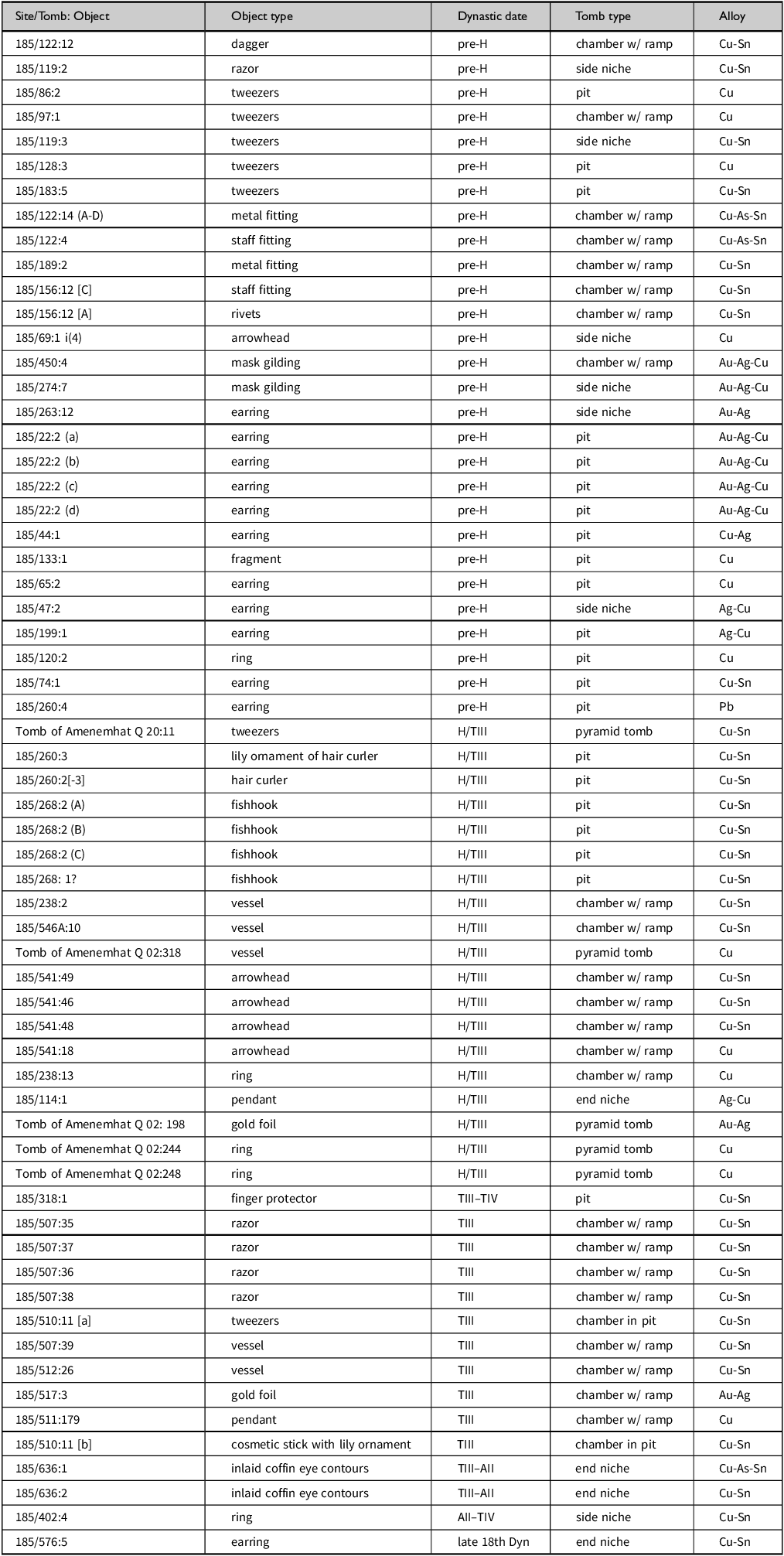
Out of the estimated 900 tombs at Fadrus, a total of 680 burials were excavated (Säve-Söderbergh & Troy Reference Säve-Söderbergh and Troy1991). Out of 102 burials containing metal objects (Fig. 5), 35 are represented in this study. Because most graves in this cemetery were undisturbed, these numbers already suggest that metal objects were not widely available among the community. For this study, we analysed 61 gold, silver and copper objects from Fadrus, as well as 5 objects from the tomb of Amenemhat (Site Q) (Table 1). Object selection began with randomized sampling from a broader survey of contemporaneous cemeteries in the Debeira region and was subsequently expanded to include all Fadrus objects accessible in the Gustavianum collection (see Supplementary Table 2).
Distribution of metal objects across all excavated burial contexts. (Based on Säve-Söderbergh & Troy Reference Säve-Söderbergh and Troy1991.)
Summary of analysed artefacts (in chronological order). ‘Pre-H’ refers to pre-Hatshepsut; ‘H/TIII’ refers to the coregency of Hatshepsut and Thutmose III; ‘TIII’ refers to the reign of Thutmose III; ‘TIII–TIV’ refers to the reigns of Thutmose III and Thutmose IV; ‘TIII–AII’ refers to the reigns of Thutmose III and Amenhotep II; ‘AII–TIV’ refers to the reigns of Amenhotep II and Thutmose IV. (Chronology based on dating by Säve-Söderbergh Reference Säve-Söderbergh and Vivian Davies1991, 225–38.)
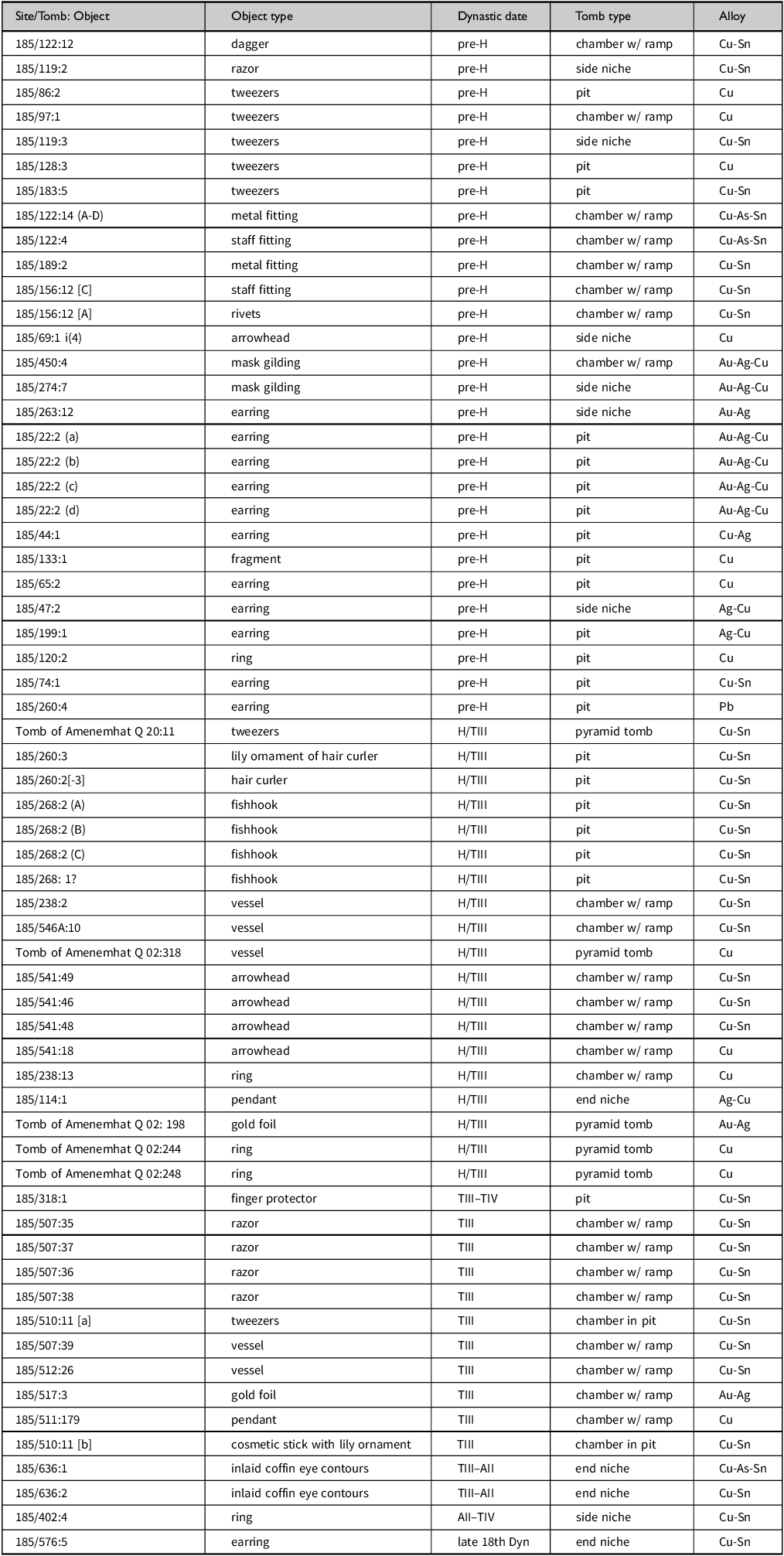
Table 1 Long description
A table with 61 rows and 5 columns summarizing analyzed artefacts from various tombs. The columns are labeled as follows: Site/Tomb: Object, Object type, Dynamic date, Tomb type, and Alloy. The table lists different objects found in tombs, their types, dynamic dates, tomb types, and the alloys used in the objects. The objects include daggers, razors, tweezers, metal fittings, staff fittings, rivets, arrowheads, mask slidings, earrings, fragments, hair cutters, fishhooks, vessels, arrowheads, pendants, gold foil, cosmetic sticks, inlaid coffin eye contours, finger protectors, and razors. The dynamic dates range from pre-H to AII-TIV, indicating different periods of the artefacts. The tomb types include chamber with ramp, pit, side niche, and pyramid tomb. The alloys used in the objects include Cu-Sn, Cu-As, Cu, Au-Ag-Cu, Au-Ag, Ag-Cu, and Pb.
Elemental characterization of the alloys was carried out using a Bruker TRACER 5i handheld X-ray fluorescence (XRF) spectrometer. The instrument is equipped with a high-performance graphene window silicon drift detector and a rhodium thin window X-ray. The instrument’s Precious Alloys setting was used to analyse gold and silver, at 40 kV and 4 μA for 70 seconds. A qualitative analysis was performed on cuprous materials, and the spectra were interpreted in Artax. On each object, 3–5 measurements were conducted from areas of least visible corrosion and, in rare circumstances, where the original metal was visible or corrosion was not visibly identified. The measurement for each 8 mm spot analysis with a Ti/Al filter was performed at 40 kV and 8 μA for 70 seconds. The limitations of pXRF surface-level analysis are well-known (Charalambous Reference Charalambous2016; Charalambous et al. Reference Charalambous, Kassianidou and Papasavvas2014; Frahm & Doonan Reference Frahm and Doonan2013; Heginbotham et al. Reference Heginbotham, Bezur, Bouchard, Mardikian, Chemello, Watters and Hull2011; Karydas Reference Karydas2007) and considered while performing this qualitative study. To demonstrate the accuracy and reliability of our measurements we have included certified and in-house reference materials along with detection limits of the instrument (Supplementary Table 3). Raw instrument outputs are provided unmodified in the Supplementary Materials and decimal precision reflects software reporting rather than analytical accuracy. All interpretations are based on comparative trends in elemental representation, not absolute concentration values, and account for the methodological constraints inherent to pXRF analysis (e.g. Rademakers et al. Reference Rademakers, Verly, Delvaux and Degryse2018; Reference Rademakers, Verly, Degryse, Vanhaecke, Marchi and Bonnet2022).
Patterns of access to metals
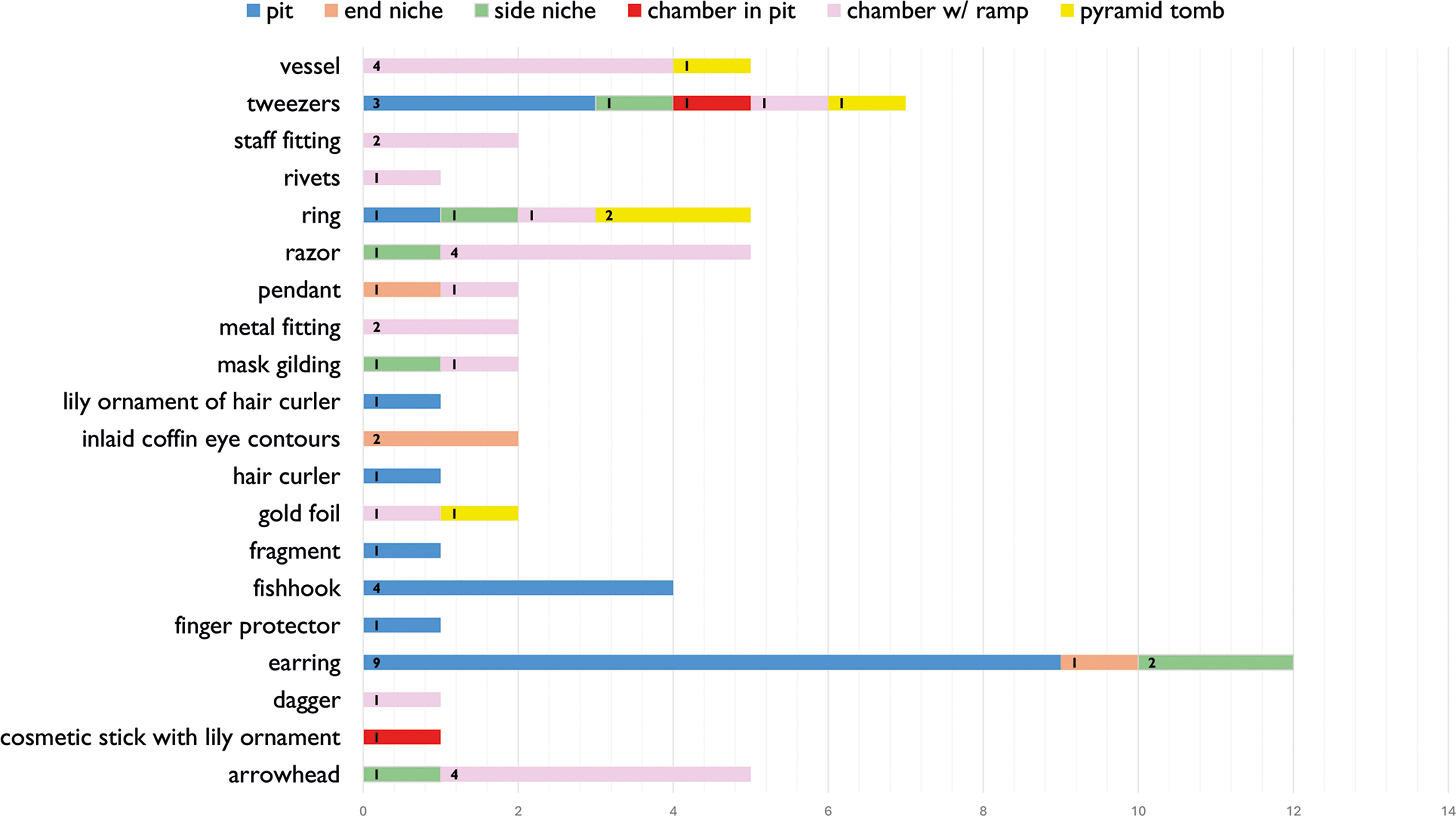
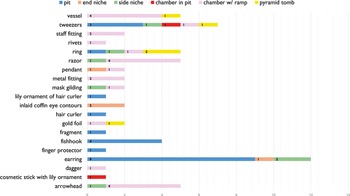
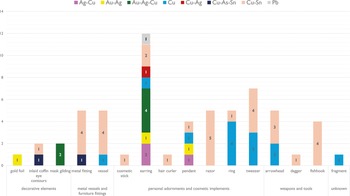
The 61 metal objects analysed are subdivided into 4 categories: (1) personal adornments and cosmetic implements, (2) metal vessels and furniture fittings, (3) decorative elements and (4) weapons and tools (Figs 6 & 7). This reflects a deliberate analytical framework, structured first by the intended function of the finished objects, followed by considerations of the technical skill and, finally, by the raw materials required for their manufacture. Personal adornments, including rings and beads, and cosmetic implements, such as kohl sticks and razors, are discussed conjointly due to their broad usage across diverse social strata for personal dress. Metal vessels and furniture fittings are distinguished by their demand for specialized craftsmanship and, frequently, interdisciplinary collaboration among artisans. Decorative elements, including items such as gold foil and gilding employed on masks and coffins, comprise a discrete category given their ornamental function and distinctive mortuary context. Finally, weapons and tools are grouped together owing to their fundamentally utilitarian roles; in particular, weapons are posited to have been produced primarily to equip the garrison and military personnel stationed at Serra (Williams Reference Williams, Budka and Auenmüller2018). In at least one case, weapons such as arrowheads could have helped marginalized communities maintain indigenous Nubian traditions in a context of Egyptian cultural imposition as suggested by tomb 185/69, which contained various arrowheads in association with Nubian pottery, resembling Kerma customs (cf. Honegger Reference Honegger2023). The predominance of personal adornments and cosmetic implements, which account for 57.4% of the analysed assemblage, underscores both the significance attributed to individual items and the cultural practices associated with adorning the deceased. Weaponry and utilitarian implements, together with metal vessels and furniture fittings, each comprise 16.3% of the analysed assemblage. Decorative elements originating from coffins or funerary masks make up the remainder of the object categories (10%).
Distribution of analysed metal object types across burial context.
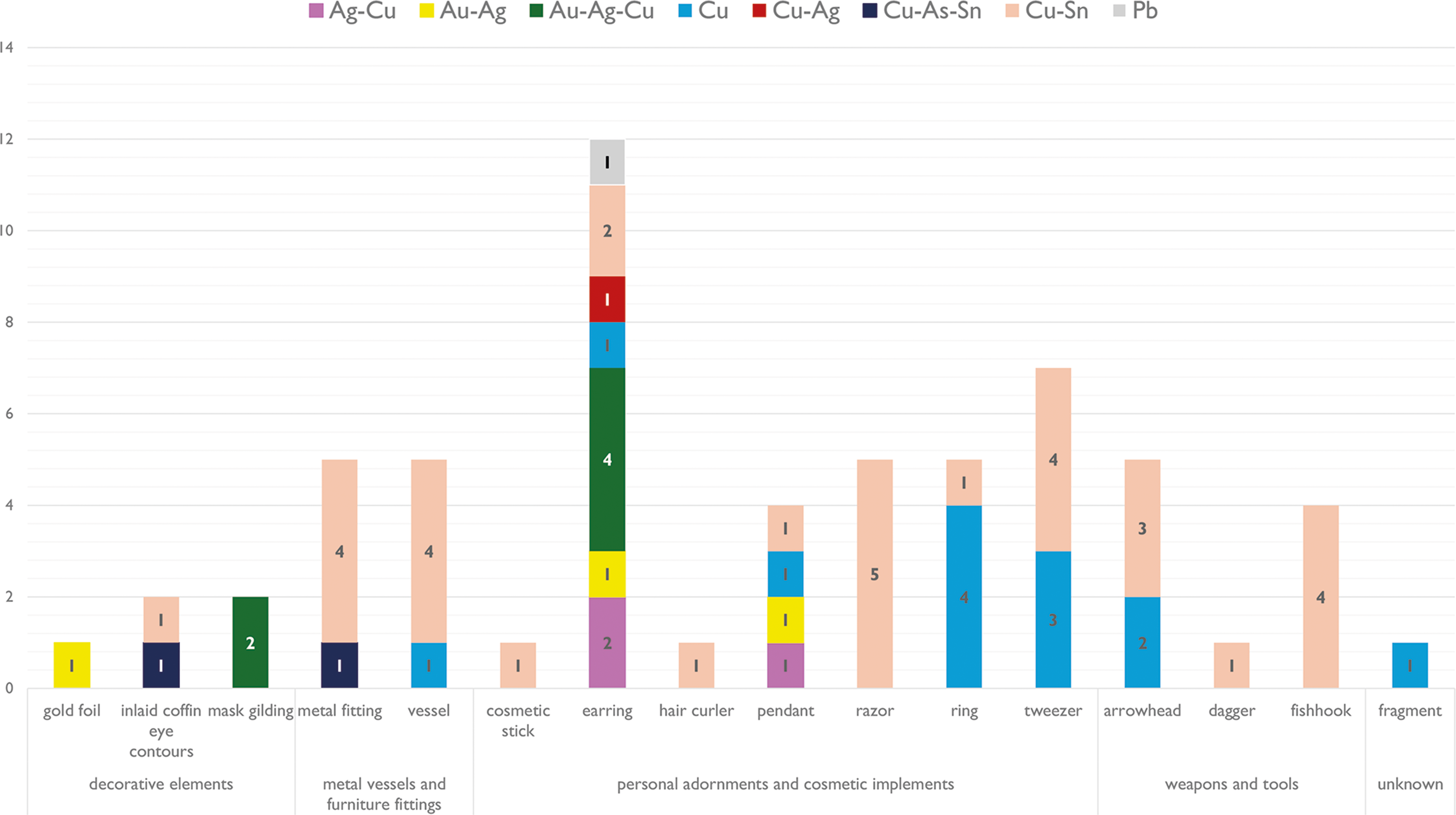
Alloy distribution across object type and category.
Central to this study’s compositional analysis is the interpretative framework of ancient metalworking intent. Rather than applying purely geochemical categories, this paper prioritizes the perspective of the craftspeople themselves, who likely selected alloys based on desired properties suited to the functional and aesthetic demands of the finished object (Mödlinger et al. Reference Mödlinger, Kuijpers, Braekmans and Berger2017).
Unalloyed copper is defined as worked metal that has not been intentionally mixed, although it might contain trace elemental impurities, most notably arsenic and lead. Unalloyed gold is frequently treated as electrum, and the ratio of gold to silver varies between 1:1 and 10:1 and often includes small amounts of copper, depending on geological origin (Abdelnasser Reference Abdelnasser, Hamimi, Goldfarb and Pradhan2025, 172; Hamimi et al. Reference Hamimi, Goldfarb and Pradhan2025). Considering that more accurate methods of analysis are needed to determine the origin and manipulations that gold/electrum objects underwent, this study maintains a distinction between gold/electrum (Au-Ag) and ternary alloys (Au-Ag-Cu) to identify potential markers of recycling, intentional alloying, or discrete manufacturing choices. This distinction is particularly relevant in cases such as earrings 185/22:2 a–d, which the compositional data suggests are likely gold-plated, though confirmation requires further analytical investigation. Regarding silver, geochemical studies of native silver demonstrate that it occurs predominantly as electrum (Abdelnasser Reference Abdelnasser, Hamimi, Goldfarb and Pradhan2025, 172; Hassaan et al. Reference Hassaan, Alsayed, Dardir, Nassar, Hamimi, Goldfarb and Pradhan2025, 385). The distinction drawn here between silver-dominant alloys (Ag-Cu) and copper-silver alloys (Cu-Ag) is therefore necessary to illuminate differences in the alloys’ original visual appearance and the intentional choices made by ancient craftspeople either in obtaining purer silver through long-distance trade (Gale & Stos-Gale Reference Gale and Stos-Gale1981; Sowada et al. Reference Sowada, Newman, Albarède, Davis, Murphy and Gore2023) or in selectively mixing high-silver electrum. The differentiation between arsenical bronzes (Cu-As-Sn) and standard bronzes (Cu-Sn) is based on comparative peak intensity values for arsenic (see Supplementary Materials). Finally, the single lead object (185/260:4) is classified as unalloyed based on its spectral profile and the negligible presence of trace elements (Fig. 7).
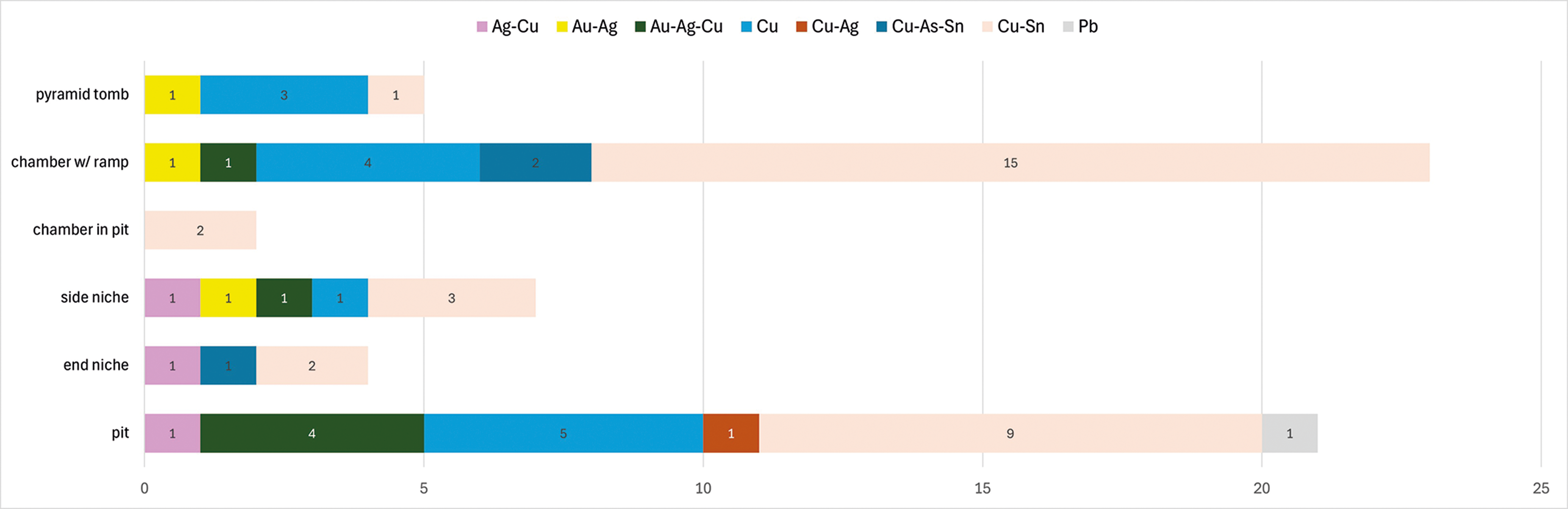
Personal adornments and cosmetic implements were recovered from all tomb types, exhibiting a notably higher frequency within subaltern burial contexts (Fig. 6). Most objects (72%) are best classified as binary alloys. Among these, electrum (a naturally occurring Au-Ag alloy) was sourced from Eastern Desert regions of Egypt and Sudan, while copper-based alloys such as bronze (Cu-Sn) reflect technologically complex production processes necessitating specialized metallurgical knowledge and scarce raw materials like tin. Bronze was predominantly employed for functional items requiring durability, such as razors, tweezers, and cosmetic sticks. In contrast, gold/electrum or copper-silver alloys were preferentially chosen for earrings and other decorative items by subaltern groups, emphasizing aesthetic qualities and value. Unalloyed metals form the second largest category, comprising approximately 19.6% of the assemblage. However, we cannot rule out the possibility that multiple sources of electrum, bearing various degrees of gold and silver, would have been combined as a diverse range of Au-Ag ratios are observable in the XRF results. Nevertheless, a more detailed metallographic analysis is required to determine the extent of human intervention in their production. Within this category, unalloyed copper tweezers, rings, and earrings dominate, showing an even distribution across both wealthier and subaltern burial contexts. This suggests that object functionality may be considered in tandem with resource availability. Notably, unalloyed precious metal items, i.e. gold/electrum and silver, alongside the lead artefact, were primarily recovered from simpler pit graves. Five ternary alloyed earrings have been found in pit graves with gold and silver dominant readings. The presence of copper in these alloys could be interpreted as evidence of recycling practices or contamination occurring during the metalworking process (Fig. 8).
Alloy distribution across tomb contexts.
Weapons and tools afford a more refined insight into access to raw materials and technology among subaltern and wealthier groups at Fadrus. Although weaponry is frequently linked to social status, it is plausible that individuals interred with weapons at Fadrus were affiliated with the Egyptian colonial military garrison situated at the nearby fortress of Serra. A chariot scene in the tomb of Djehutyhotep shows workers employed as soldiers accompanying the chief of Tehkhet in a likely patrol scene (Lemos Reference Lemos2024a, 6–7). In contrast, utilitarian implements—especially fishhooks—are broadly accessible and have widespread distributions among subaltern populations in Egyptian settlements such as Amarna (Stevens Reference Stevens2007). Bronzes (Cu-Sn) dominate the Fadrus assemblage with four fishhooks recovered from pit graves. A significant number of arrowheads were recovered, and our analysis contains three bronze and two unalloyed copper arrowheads from elite and non-elite contexts. The dagger (185/122:12) recovered from a well-furnished chamber with a ramp tomb is an exceptionally well-produced bronze object that combines various manufacturing techniques and alloys. This includes the use of unalloyed copper for the rivets, which probably helped to affix a wooden or ivory inlay, similar to daggers found in earlier Nubian and Egyptian contexts (Rademakers et al. Reference Rademakers, Verly, Degryse, Vanhaecke, Marchi and Bonnet2022).
Metal vessels and furniture fittings are exclusively attested within wealthy mortuary contexts, specifically within the pyramid tomb of Amenemhat and chamber tombs featuring ramps. All artefacts analysed in this category are manufactured from bronze and arsenical bronze alloys. The prevalence of arsenical bronze is particularly noteworthy, as it likely reflects practices associated with the recycling of bronze objects and the deliberate or incidental introduction of arsenical copper ores during secondary production phases (Odler & Kmošek Reference Odler and Kmošek2020; Rademakers et al. Reference Rademakers, Rehren and Pernicka2017; Rademakers et al. Reference Rademakers, Verly, Delvaux and Degryse2021). One of the vessels attributed to Amenemhat was manufactured exclusively from unalloyed copper, setting it apart from the metal vessel assemblage recovered from the analysed corpus. It is also important to note that the concentrations of tin (Sn) in metal vessels and furniture fittings in Debeira are significantly lower (∼5–8 wt% less) than contemporaneous objects from similar elite contexts in Egypt (cf. Festa et al. Reference Festa, Caliri and Botticelli2025, 52–3). In such cases, the lower levels of tin might promote hammering during the manufacturing processes and reduce brittleness, or reflect difficulties in accessing tin sources.
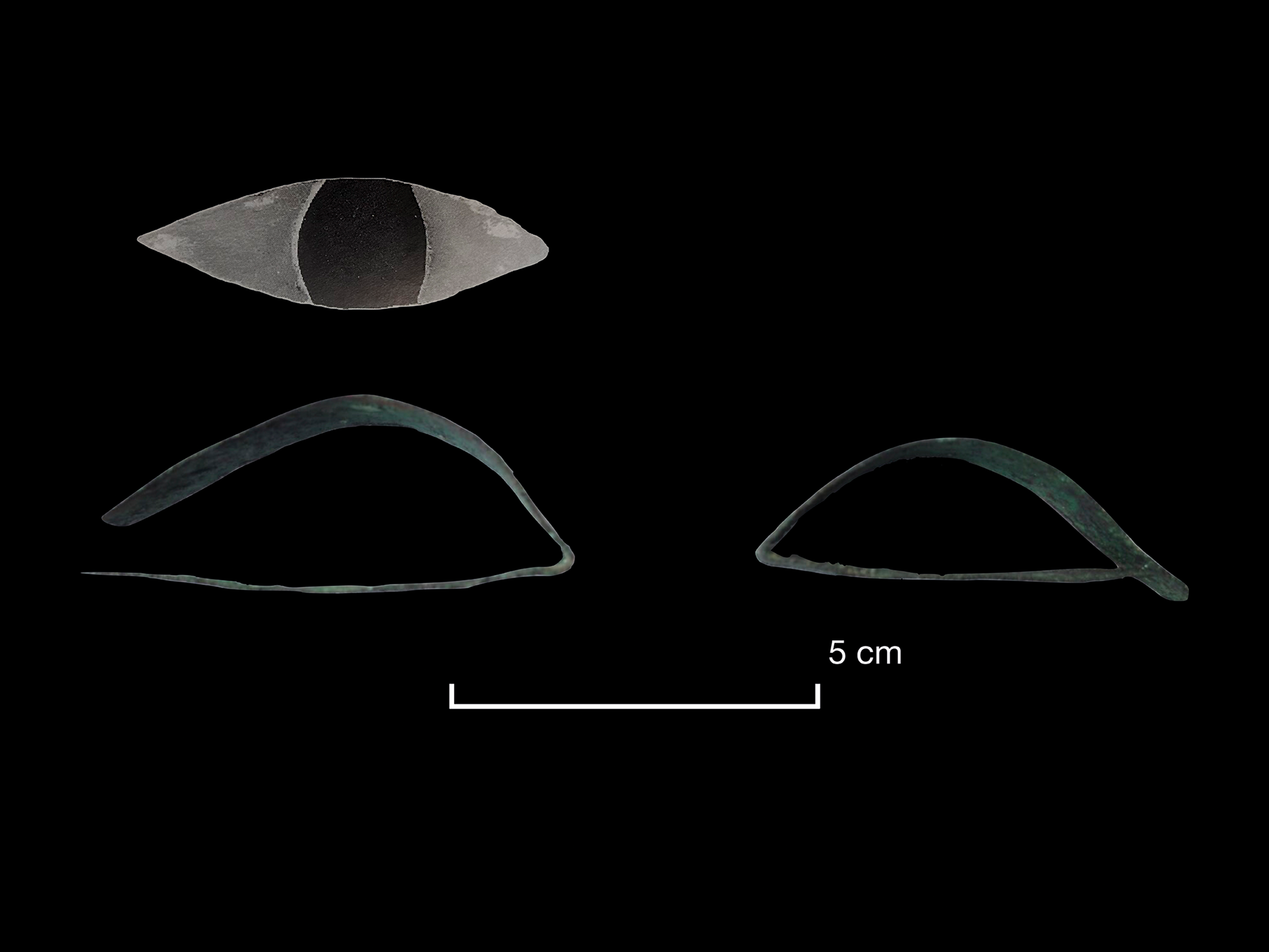
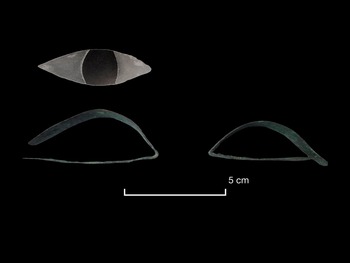
In this study, decorative elements are confined chiefly to fragmentary metal pieces affixed to wooden coffins or funerary masks. The corpus comprises predominantly gold foil fragments, from a range of archaeological contexts. At Fadrus, 155 tombs (22.4% of the total) exhibited material evidence for the presence of wooden coffins or funerary masks (Lemos Reference Lemos2020; Spence Reference Spence and Raue2019; Thill Reference Thill1996). An exception to the predominance of gold alloys in the ornamentation of coffins and masks is represented by a pair of bronze eye contours, which were most likely inlaid to an anthropoid wooden coffin (Fig. 9).
Pair of bronze eye contours originally attached to an anthropomorphic wooden coffin (185/636:1–2). Above, one faience eye inlay from the same tomb, originally placed in the middle of the bronze feature to decorate the coffin’s face. (Photograph: R. Lemos (eye contours); faience inlay image adapted from Säve-Söderbergh & Troy Reference Säve-Söderbergh and Troy1991, pl. 6, no. 5.)
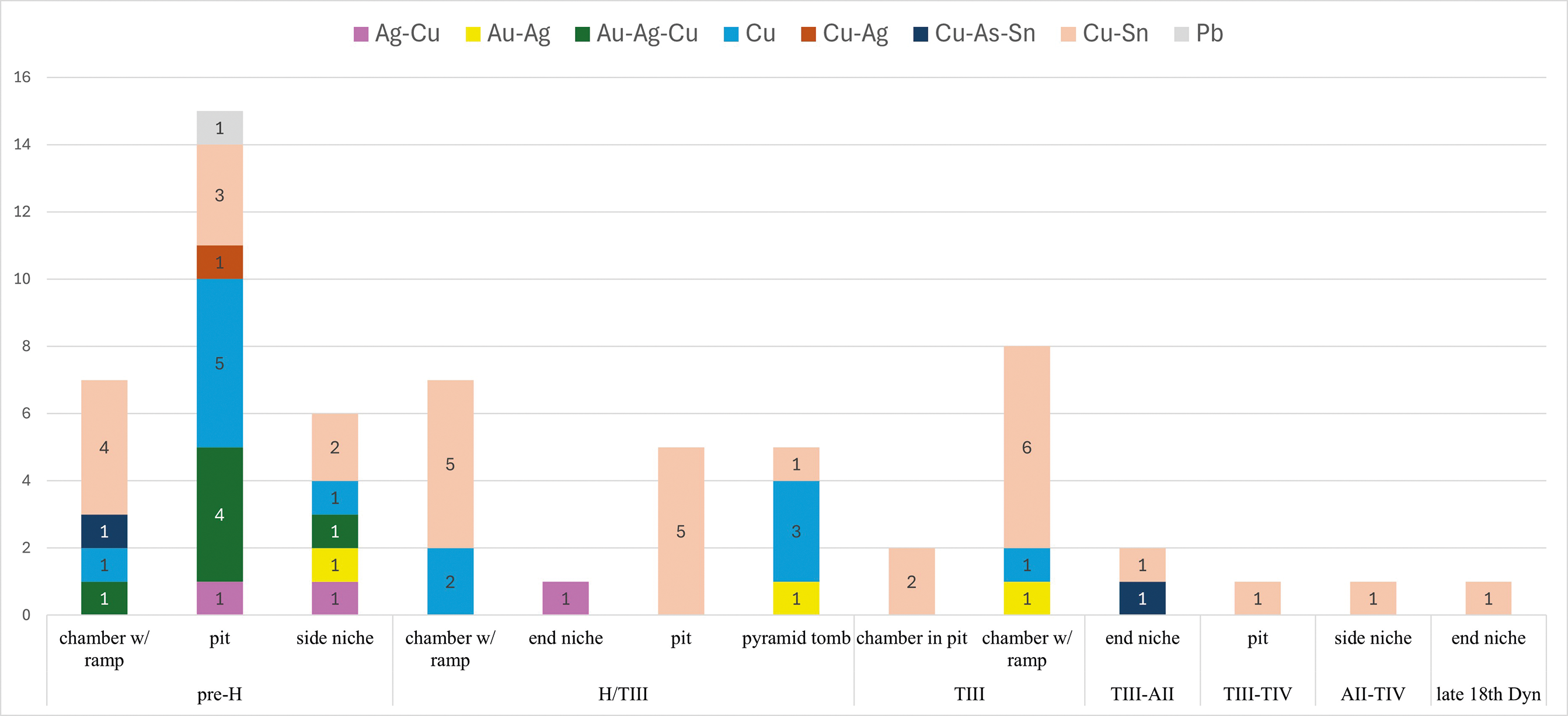
Patterns of access to metals and production methods at Fadrus shifted significantly across the cemetery’s 250-year span (Fig. 10). In the early 18th Dynasty (prior to Hatshepsut’s reign), there was a wide array of alloy types, with both unalloyed and alloyed metal objects found in subaltern contexts. Bronze (Cu-Sn) objects appear in both chambers with ramps and in simpler, pit and niched graves. Unalloyed copper, as well as gold and silver alloys, was used to manufacture personal adornments. During the reigns of Hatshepsut and Thutmose III, the assemblage demonstrates a marked shift. Bronze alloys became much more common, while finds of gold and silver, particularly in pit and niched burials, declined sharply. As suggested by our data set, this trend continued and intensified later in the New Kingdom colonial period. Bronze emerged as the dominant alloy in most tombs, whereas unalloyed copper and gold were found mostly in small quantities as personal adornments.
Alloy selection, deposition, and abundance in various contexts at Fadrus. Periodization after Säve-Söderbergh & Troy Reference Säve-Söderbergh and Troy1991, 225–38.
Agency and resource access in colonized Lower Nubia
Djehutyhotep and his family exemplify local elite power display, with his and his brother Amenemhat’s tombs (Site Q) overlooking the floodplain and low-lying Fadrus cemetery. Depictions of Djehutyhotep and Amenemhat in typical Egyptian elite attire, together with their monumental architectural choices and titles as scribes and chiefs of Tehkhet, present them as members of a local ruling elite integrated into the Egyptian colonial administration. Furthermore, the pyramid tombs of Djehutyhotep and Amenemhat contained additional burials, some dating to the later New Kingdom (Taylor Reference Taylor, Spencer, Stevens and Binder2017), suggesting that later elites continued a local tradition of associating themselves with the princes’ display of power.
The fragmentary metal objects from Amenemhat’s pyramid tomb analysed in this study were retrieved from the side chamber housing the statues of his relatives (Site Q:02), and from the entrance shaft to the main burial chamber beneath the pyramid chapel structure (Site Q:20). Five burials were excavated in the side chamber, including a black-type coffin typical of the 18th Dynasty and another bearing a seal with the name of Amenhotep III (Säve-Söderbergh & Troy Reference Säve-Söderbergh and Troy1991, 184). This strongly suggests that these burials were closely related to the tomb owner, who was active during the reigns of Hatshepsut and Thutmose III in the 18th Dynasty. The objects retrieved in the main shaft, including a pair of tweezers analysed in this study (Q20:11), were likely redeposited there by later plundering, but almost certainly comprise items deposited in the tomb as part of earlier, 18th Dynasty burial assemblages. The individuals buried in this elite space, and/or those that participated in burial preparation, had the means to obtain a wide range of materials, including gold to decorate their funerary masks and bronzes for their cosmetic implements. However, their rings bearing royal names as sign of the colonial authority were manufactured from unalloyed copper (Cu). This might suggest that even colonial elites could not always afford objects that contemporaneous elites in Egypt would have accessed more easily, as supported by a recent survey of this type of 18th Dynasty elite finger ring (David Reference David2025).
Personal adornments and cosmetic implements exhibit the greatest diversity in alloy composition. This category illustrates the capacity of subaltern groups to access precious metals and diverse alloy types, providing a context for the active negotiation of power relations. Given the long-standing importance of personal appearance and dress in ancient northeast Africa, shared by both Egyptian and Nubian communities into the New Kingdom (Galczynski Reference Galczynski2024a,b; Yvanez Reference Yvanez2023), the evidence from Fadrus enables an analysis of how elite and subaltern groups actively negotiated and distinguished their social identities. It is somewhat expected that cosmetic tools such as razors, tweezers and cosmetic sticks are found in both contexts (Fig. 6); however, there is a clear distinction, with bronzes (Cu-Sn) occurring mainly in elite settings. Only one bronze razor (185/119:2) and a pair of tweezers (185/119:3) were recovered from the same niched-pit burial. Conversely, unalloyed copper tweezers are found in subaltern contexts. Similarly, personal adornments made of tin bronze (Cu–Sn) appear to have been confined to the elite sphere, with only four examples recovered from pits or pits with niches. This restricted distribution suggests that access to tin and, perhaps, the knowledge required to produce bronze alloys were mediated through administrative control, reflecting broader mechanisms of economic and technological regulation within the ancient colonial system. This pattern parallels evidence from Amara West, where tin bronze production and recycling were conducted within the confines of the town and therefore controlled by the colonial system (Rademakers et al. Reference Rademakers, Auenmüller and Spencer2023, 17–18).
Nevertheless, the range of alloys and unalloyed metals employed by subaltern groups in their personal adornments reveals not only resourcefulness but also subtle forms of negotiation and resistance within the broader colonial economy. The deliberate selection of materials—such as crafting a lead earring to imitate the pale sheen of silver or coating unalloyed copper earrings with gold to replicate the luster of electrum (Au–Ag)—suggests a conscious engagement with the aesthetics and values of elite material culture within subaltern contexts, characterized by limitations. Notably, all analysed gold and silver earrings and pendants derive from pits and pits with niches, indicating that subaltern populations retained some degree of access to metals typically associated with Egyptian elite display. This is particularly striking given that gold extraction was the prime directive of the Egyptian colonial enterprise in Nubia. However, subaltern ability to access gold in Debeira was restricted to the earlier stages of the New Kingdom colonial period, which might be connected to earlier engagement of Nubian communities with gold extraction (see Bettenay & Ross Reference Bettenay and Ross2025; Edwards Reference Edwards2020, 398; Williams Reference Williams, Budka and Lemos2024). While the relative ease of accessing gold in Debeira could have facilitated more opportunistic mining and metalworking activities, this sort of material access and display by subaltern groups challenges assumptions of total administrative control over valuable resources. Moreover, the rare gold items buried in subaltern burials at Fadrus might also reflect surreptitious strategies to acquire materials that, according to colonial impositions, should not have been made accessible to these groups, as has been suggested for kohl, especially following the ascension of local administrators controlling gold and other resources for the Egyptian colonial system (Lemos et al. Reference Lemos, Tichindelean and Erban Kochergina2024).
Given the military component of the Egyptian state’s presence at the nearby fortress of Serra, weapons such as daggers and arrowheads, by far the most common weapon type at Fadrus and nearby Serra fortress (Williams Reference Williams1993), are primarily associated with individuals interred in wealthier chamber with ramp tombs and were generally manufactured from tin bronze, with the exception of a single pre-Hatshepsut unalloyed copper arrowhead (185/69:1 i(4)). A comparison with arrowheads from Serra suggests that both unalloyed copper and tin bronze were employed in weapon production, possibly reflecting pragmatic responses to resource availability and the need for mass production. The presence of arrowheads in elite burials not only suggest the individuals’ association with the colonial administration, but also their ability to take valuable military equipment out of circulation, an act that is seemingly not afforded to subaltern individuals at Fadrus.
Despite the overall scarcity that characterized Fadrus, a few individuals managed to have access to more restricted objects. Of the recorded units at the site, c. 18% showed traces of wooden coffins (Säve-Söderbergh & Troy Reference Säve-Söderbergh and Troy1991, 54–5). Masks were considerably rarer at Fadrus, with only c. 4% of recorded units showing evidence for their use. These were mostly found in mud-brick chamber tombs containing a single burial (Säve-Söderbergh & Troy Reference Säve-Söderbergh and Troy1991, 71–2). Some of these individuals, like the one buried in tomb 185/274, managed to access a ternary cuprous electrum alloy (Au-Ag-Cu), likely produced either by the addition of a more accessible raw copper to electrum or recycling and reworking of a previous ternary alloy, to decorate their funerary mask. Similarly, the individual buried in niched pit 185/636 managed to incorporate bronze eye contours into the decoration of their anthropomorphic wooden coffin (cf. Säve-Söderbergh & Troy Reference Säve-Söderbergh and Troy1991, pl. 33, no. 10). While the clustering of bronze (Cu–Sn) metal fittings and mask gilding within a select, higher-status tomb at Fadrus points to efforts to restrict certain practices to certain individuals, these exceptions highlight attempts of subaltern individuals to engage with material culture used in elite display.
The alloy selection and production trends at early 18th Dynasty Fadrus also reveal significant shifts linked to broader economic changes under Egyptian colonial rule. Before the reigns of Hatshepsut and Thutmose III, there was a degree of diversity in alloy use across mortuary contexts, particularly among simpler subaltern burials (Fig. 10). This spectrum of alloy use suggests relatively open access to raw materials and technologies. However, during the reigns of Hatshepsut and Thutmose III, a marked decline in metal access for subaltern groups becomes evident. The preference for tin-bronze alloys in higher-status burials, coupled with a notable decrease in the quantity of metals found in subaltern pit and niched-pit burials, points to increased restrictions imposed by the Egyptian colonial administration, leading to unavailability of resources among the local community. These observations support earlier perceptions of the gradual impoverishment of the local community in Debeira, reflecting broader anthropological trends observed in colonial systems of exploitation (Bruhn & Gallego Reference Bruhn and Gallego2012). This has been contextualized as part of a broader decline of Lower Nubia with a political shift towards Upper Nubia from the late 18th Dynasty (Säve-Söderbergh & Troy Reference Säve-Söderbergh and Troy1991, 250–51).
Access to metal objects among subaltern groups was significantly constrained, particularly in the case of bronze, which became the preferred material of the period but remained difficult to obtain in Nubia, likely due to both the region’s distance from tin sources and possible restrictions imposed by Egyptian elites. Whether these trends reflect disruptions in trade networks or deliberate policies to control metal resources remains uncertain, but the evidence strongly indicates that colonial associates began to distinguish themselves by coopting bronzes and precious metal alloys. In contrast, the rare burial contexts bearing such objects attest to subaltern engagement and negotiations taking place with long-established colonial systems and social relations. The efficacy of local subaltern communities’ agency in accessing resources necessary for daily life, as well as their afterlife, began to decline with apparent changes imposed by Djehutyhotep and Amenemhat during the reigns of Hatshepsut and Thutmose III.
Conclusion
The burial record of 18th Dynasty Lower Nubia holds key insights into the anxieties and struggles of colonized local people in accessing materials necessary for self-expression in a context of significant inequality as attested by the contrast between the well-preserved burials at Fadrus and the archaeological record of local elites in Debeira. This paper addressed some of the struggles and strategies of subaltern groups to access resources within the broader region. At the same time, our study illuminates further aspects of the agency of the subaltern in contexts of increasing hierarchization imposed by colonial systems, with implications for understanding how local communities experience colonial impositions cross-culturally and diachronically. In order to guarantee their access to metal objects, the non-elite groups of Debeira needed to deploy creative strategies, relying on selective adoption and adaptation of mainstream elite objects and their ability to communicate power within a framework of relationships between dominant and subaltern groups.
The compositional analysis of alloy distributed across subaltern and elite burials, considered both contextually and diachronically, highlights attempts by individuals and the greater community at exercising their agency and engaging with material culture historically coopted by Egyptian elites and local rulers. While the vast majority of the Debeira community remained at the margins of social interactions, experiencing significant scarcity throughout Egypt’s direct control of Lower Nubia, our analysis showed that there was more room to acquire a diverse range of metal alloys and precious metals among subaltern groups at the beginning of the 18th Dynasty than in later parts of the 18th Dynasty following the coregency of Hatshepsut and Thutmose III. It is possible that the early 18th Dynasty variability and access to precious metals observable in subaltern contexts at Fadrus is a remnant of local social realities that predated the establishment of the New Kingdom colonial authority in the area, while during and after Hatshepsut’s and Thutmose III’s reigns, the Egyptian colonial administration severely constrained the capacity of subaltern communities to participate in social exchange through metal consumption. This simultaneously demonstrates how colonial systems expand and consolidate control over resources, as well as how individuals and communities negotiate and navigate newly imposed hierarchies.
Our analysis aligns with previous statistical studies of the Fadrus cemetery, which indicate a progressive impoverishment of the local community over time. This trend illustrates a fundamental dynamic of colonial systems: while such regimes extract resources and labour from local populations, a small number of individuals benefit materially through their affiliation with the colonial apparatus of exploitation. In the case of the Debeira region, this pattern is exemplified by local elites such as Djehutyhotep, Amenemhat and their close associates, who are likely represented among the wealthier tombs.
This work thus develops our understanding of subalternity along the Nile valley under Egyptian control. While subaltern groups experience an overall material scarcity, a few individuals managed, to partake in interactions with the more powerful groups. Their continuously evolving struggle to tap into elite material culture attests to their agency: sometimes managing to integrate elite materials in their burials, while at other times they fall short and, through their attempt to imitate, adapt, or reinvent, produce—albeit briefly—a new material assemblage reflecting their social status. These forms of engagement, however, when viewed through a diachronic lens reveal that most people’s attempts were not sufficient to change their subaltern status, which is supported by the overall structural conditions of poverty that most of the population of Debeira experienced in colonized Nubia.
Supplementary material
To view supplementary material for this article, please visit https://doi.org/10.1017/S0959774326100778
Acknowledgements
This research was funded by the British Academy (grant number SRG23\231449 awarded to RL) in combination with a grant from the Cotsen Institute of Archaeology (awarded to MT). We are immensely grateful to Ludmila Werkström, Emma Hocker and John Worley at Gustavianum, Uppsala University Museum, for granting us access to the collection and facilitating our work there. We are also grateful to Sarah Semple and Robert Witcher for their comments on an earlier draft of this paper, and to the three anonymous reviewers for their constructive criticism, which helped to strengthen our arguments. Any remaining inaccuracies are our own.






 Open access

