Assessing subjective memory complaints
Everyday lapses or memory difficulties are commonly reported by older adults (Jonker et al., Reference Jonker, Launer, Hooijer and Lindeboom1996), tend to increase with age (Ginó et al., Reference Ginó2010), and can be a source of considerable concern about the potential decline of cognitive abilities with age. Memory complaints are associated with lower quality of life (Mol et al., Reference Mol, Carpay, Ramakers, Rozendall, Verhey and Jolles2007; Montejo et al., Reference Montejo, Montenegro, Fernández and Maestú2012), and in some cases are more distressing than physical conditions such as heart attacks (Begum et al., Reference Begum, Morgan, Chiu, Tylee and Stewart2012).
However, the relationship between subjectively reported memory complaints and actual memory performance is complex. Some studies have found a positive relationship between subjective memory complaints (SMCs) and objective memory performance (Bassett and Folstein, Reference Bassett and Folstein1993; Jonker et al., Reference Jonker, Launer, Hooijer and Lindeboom1996), and suggest that SMCs could be an important indicator of potential cognitive decline (as in conditions such as mild cognitive impairment). Other studies have found no evidence of this association (Jungwirth et al., Reference Jungwirth, Fischer, Weissgram, Kirchmeyer, Bauer and Tragl2004), or that factors such as mood and physical health confound the relationship between subjective and objective memory (Jonker et al., Reference Jonker, Geerlings and Schmand2000; Reid and MacLullich, Reference Reid and MacLullich2006).
Differences among these findings have been in part attributed to the methods used to assess SMCs (Abdulrab and Heun, Reference Abdulrab and Heun2008; Apolinario et al., Reference Apolinario2013). Some studies determine the presence or absence of SMCs by one simple yes/no question (e.g. “Do you find that you have trouble with your memory?”; Bassett and Folstein, Reference Bassett and Folstein1993); others use similar questions with two or more response options (e.g. “Do you have complaints about your memory?” – “no;” “sometimes, but is a problem;” “yes, is a problem;” or “yes, is a serious problem;” Geerlings et al., Reference Geerlings, Jonker, Bouter, Adèr and Schmand1999); still others may use a set of questions or an established questionnaire measure of SMCs (Jorm et al., Reference Jorm, Christensen, Korten, Jacomb and Henderson2001; Smith et al., Reference Smith, Petersen, Ivnik, Malec and Tangalos1996). Questionnaires tend to provide a number of examples of memory difficulties, and ask participants to rate how often they experience each of them. While questionnaires undoubtedly garner more detailed information than single-question assessment of SMCs, Mattos et al. (Reference Mattos, Lino, Rizo, Alfano, Araújo and Raggio2003) found that SMCs assessed via questionnaire methods were not associated with objective memory impairment, whereas assessment of SMCs with an open-ended question was predictive of actual impairment and thus demonstrated greater clinical utility. Questionnaires also only assess the presence of those particular difficulties that comprise their items. The items used vary widely across different questionnaires, and how well they represent the actual memory difficulties experienced by adults is undocumented.
As well as a relative lack of research concerning methods of assessing SMCs without providing fixed examples of particular memory difficulties (such as open-ended questioning), current questionnaires are potentially missing the kinds of SMCs that are most distressing for adults. Presenting pre-existing examples of SMCs discourages the discussion of any other SMCs participants might have experienced, and indeed older adults tend not to volunteer such additional information or seek help for their memory complaints (Begum et al., Reference Begum, Morgan, Chiu, Tylee and Stewart2012). Questionnaire methods also fail to assess which kinds of SMCs are the most distressing, instead focusing on the frequency of their occurrence.
One appropriate point at which to determine which complaints are the most subjectively distressing would be during the construction of SMC questionnaire measures. However, many of the questionnaires commonly used to assess SMCs appear to have neglected this opportunity, and instead the initial types of complaints that formed questionnaire items were constructed by the researchers without apparent consultation with participants. For example, Broadbent and colleagues’ (Reference Broadbent, Cooper, FitzGerald and Parkes1982) Cognitive Failures Questionnaire was assembled from the experiences of the authors or their acquaintances. Items in the Memory Complaint Questionnaire (MAC-Q) of Crook et al. (Reference Crook, Feher and Larrabee1992) were selected “based on clinical experience and empirical evidence regarding patterns of age-related memory loss” (Crook et al., Reference Crook, Feher and Larrabee1992, p. 167), with no supporting evidence given. Other questionnaires selected items based on those in previous measures (e.g. Metamemory Questionnaire; Troyer and Rich, Reference Troyer and Rich2002), or omitted information about the source of items altogether (e.g. Smith et al., Reference Smith, Del Sala, Logie and Maylor2000).
More recently, one attempt has been made at understanding memory complaints from a more inclusive perspective. Apolinario and colleagues (Reference Apolinario2013) assessed SMCs among older adults via both open-ended and questionnaire methods. The number of complaints reported spontaneously and the number of questionnaire items participants endorsed were moderately correlated, yet the kinds of information gathered via each method were only somewhat consistent. Many questionnaire items that participants endorsed were not mentioned spontaneously, demonstrating a cueing effect. One explanation for this discrepancy is that endorsed questionnaire items likely do reflect actual difficulties experienced by participants, but not necessarily those which are most distressing. These may instead be better represented by the spontaneously reported complaints, which reflect difficulties with the greatest functional impact and greatest salience for an individual. However, these results are limited in that the questionnaire used (the MAC-Q; Crook et al., Reference Crook, Feher and Larrabee1992) contained only five examples of SMCs. Thus, concerns about failing to assess a wide range of SMCs remain to be addressed, particularly when considering the large range of different complaints that may be reported by individuals – Apolinario et al. (Reference Apolinario2013) found 37 different categories of spontaneously reported complaints.
The current study has two aims: first, to understand what kinds of memory complaints adults report spontaneously (regardless of their potential cause); and second, to examine how different methods of information gathering might affect these reports. Understanding how two methods of assessment (prescriptive questionnaires vs. open-ended questioning) affect reporting of SMCs will consequently inform how best to accurately assess SMCs. Unlike many previous assessment instruments (which have assessed the presence or frequency of occurrence of each SMC), here the degree of distress related to each SMC is assessed, in order to assess subjective impact regardless of how often a particular SMC occurs or what may have caused it.
Consistent with the cueing effect documented by Apolinario et al. (Reference Apolinario2013), participants were expected to report fewer complaints spontaneously than they endorsed under questionnaire methods. The types of complaints and degrees of associated distress endorsed were expected to vary according to the assessment method.
Methods
Participants
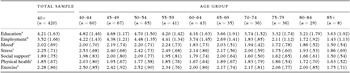
Because SMCs begin to increase during middle age (Ponds et al., Reference Ponds, Van Boxtel and Jolles2000), participants aged 40 years and above were sampled. Participants were recruited via snowball sampling through the researcher's social networks and advertising through local community groups. After excluding persons that were less than 40 years old, the sample comprised 421 participants (72.00% female). The majority of participants were of Pākehā/New Zealand European (79.60%) descent, with the remainder Māori (5.70%), Pasifika (1.90%), Asian (1.20%), and other ethnicities (10.90%). Three people did not answer this question. Participants aged 40–49 years comprised 30.20% of the sample, while 25.10% were aged 50–59 years, 18.70% aged 60–69 years, 17.20% aged 70–79 years, and 8.80% aged 80 years or above. The majority of the sample (72.50%) was tertiary educated and 39.40% worked or studied for at least 40 hours per week. Table 1 displays the sample characteristics broken down by age group.
Descriptive statistics of sample by age group

a1 = High School attendance, 2 = School Certificate or NCEA level 1, 3 = University entrance, Bursary, or NCEA level 3, 4 = Tertiary Certificate or diploma, 5 = Bachelor's degree, 6 = Postgraduate education.
bNumber of hours spent working or studying per week: 1 = not applicable, 2 = less than 20 hours, 3 = 20–29 hours, 4 = 30–39 hours, 5 = 40–49 hours, 6 = 50–59 hours, 7 = 60 hours or more.
c1 = excellent, 2 = good, 3 = fair, 4 = poor/bad.
Measures
Participants completed a 51-item survey containing three sections. The first concerned demographic characteristics: participants were asked to indicate their age, gender, education level, hours spent working or studying per week, whether they had ever sought professional help for their memory difficulties, and any neurological history. They were also asked to rate their mood and stress levels over the last six months, and their levels of social support, physical health, and physical exercise in relation to others their age on a 4-point scale (1 = excellent, 2 = good, 3 = fair, 4 = poor/bad). See Table 1 for these descriptive statistics by age group.
The second section assessed spontaneously reported SMCs. Participants were asked to describe the memory difficulties they experienced in daily life, and then to indicate how distressing these were by rating “how much of a problem” each difficulty was for them on a 7-point Likert scale (1 = not at all a problem, 4 = sometimes a problem, 7 = one of my biggest problems). Given that Apolinario et al. (Reference Apolinario2013) found participants spontaneously reported a maximum of six SMCs, participants here were able to list and rate up to seven different difficulties. Seven was chosen as the number most likely to allow adequate opportunity to report difficulties while minimizing encouragement of spurious responses.
The third section comprised questionnaire assessment of SMCs. Participants were provided examples of potential memory difficulties and asked to again indicate their associated distress by rating “how much of a problem” each of these were for them in everyday life on a 7-point scale as above. Items were based on those from the following previous scales used to assess SMCs:
-
• Everyday Memory Measure (Sunderland et al., Reference Sunderland, Harris and Baddeley1983) – 35 items.
-
• Cognitive Failures Questionnaire (Broadbent et al., Reference Broadbent, Cooper, FitzGerald and Parkes1982) – 25 items.
-
• Prospective and Retrospective Memory Questionnaire (Smith et al., Reference Smith, Del Sala, Logie and Maylor2000) – 16 items.
-
• Memory Complaint Questionnaire (Crook et al., Reference Crook, Feher and Larrabee1992) – six items.
-
• Metamemory Questionnaire – Ability Subscale (MMQ-A; Troyer and Rich, Reference Troyer and Rich2002) – 20 items.
-
• Memory Functioning Questionnaire (Gilewski et al., Reference Gilewski, Zelinski and Schaie1990) – 28 items.
-
• Subjective Memory Complaints Questionnaire (SMCQ; Youn et al., Reference Youn2009) – 14 items.
-
• Subjective Memory Questionnaire (Squire et al., Reference Squire, Wetzel and Slater1979) – 18 items.
-
• Classification instrument for spontaneously reported cognitive complaints developed by Apolinario et al. (Reference Apolinario2013) – 47 items.
These measures were those found during a literature review to be both freely available and either used in other studies as well (i.e. not an idiosyncratic set of questions particular to a single study); or were developed on the basis of existing questionnaires or qualitative reports from research participants (i.e. not just anecdotal evidence from researchers). Items from these existing questionnaires were compiled and categorized into conceptually similar categories, from which a single example was used in the current questionnaire. For example “How often do you misplace something you use daily, like your keys or glasses?” and “How often do you misplace something that you put away a few days ago?” from the MMQ-A (Troyer and Rich, Reference Troyer and Rich2002), and “Do you have difficulty in remembering where you placed objects?” from the SMCQ (Youn et al., Reference Youn2009) were collapsed together to form the item “Trouble remembering where you have put things (e.g. keys, glasses).” Categories that referred to cognitive complaints other than memory (e.g. “Do you fail to see what you want in a supermarket even though it's there?,” “Do you lose your temper and regret it?”) or non-specific categories (e.g. “Do you think that you have a memory problem?”) were excluded from the current questionnaire. This process resulted in 24 items compiled from an original total of 145 examples from nine questionnaires.
Procedure
The majority of participants completed the survey by following a link on the Massey University psychology research webpage, where they were first presented with the information sheet outlining the research. Before proceeding to the survey proper participants needed to indicate their consent. The survey took 5–10 minutes to complete. In order to also include potential participants who did not have Internet access, hard copies of the survey were also distributed at meetings of various community groups (such as senior citizens’ clubs), which yielded data for 42 participants.
Data analysis
Qualitative responses to the second section of the survey were analyzed via content analysis, as outlined by Krippendorff (Reference Krippendorff2013). This approach was selected because each response (SMC) was relatively brief, and an aim was to identify the frequency of occurrence of various themes in the data. Content analysis is suited to the quantification of qualitative data via methods such as frequency counts, even for very small units of analysis (e.g. words or phrases), and provides an overview of themes in the data which can be validated by different individuals (Krippendorff, Reference Krippendorff2013; Wilkinson, Reference Wilkinson2000). Memory difficulties reported by participants were analyzed both inductively and deductively. Given that the researcher had some knowledge of existing categories of memory difficulties due to the use of previous SMC questionnaires in constructing the survey, interpretation of the themes in this data was deductive in that it reflected knowledge of existing categories to some extent. However, the data were analyzed by identifying and coding themes and content that repeated in the data, thus reflecting an inductive process also. Reports of memory difficulties were separated into semantic units for each type of memory difficulty referred to, so that each unit could be represented by a single code (Krippendorff, Reference Krippendorff2013). The number of units bearing each coding category was computed, with the most commonly occurring categories being considered most important. One other rater also coded all qualitative data, and inter-rater reliability data are also reported in the Results section.
Quantitative analyses of the data comprised frequency counts and comparisons of means. Frequency counts resulted from content analysis of qualitative data as outlined above, and indicate the prevalence of SMCs according to the coding criteria developed. Paired samples t-tests were used to compare the mean distress ratings given to SMCs elicited under the two assessment methods, because assessment method was a within-subjects variable. Given the conventional parameters of α = 0.05 and β = 0.8, a G*Power analysis showed that the sample size of at least 351 would be necessary in order to detect a small effect (d = 0.2). Significance values were adjusted for multiple comparisons using the Bonferroni correction. Quantitative data analyses were completed using the SPSS software package (v. 20).
Results
Preliminary analyses
Due to the variability in demographic and other characteristics of the sample, independent sample t-tests were performed on the four main dependent variables (frequency of endorsement and mean distress ratings for SMCs as assessed by both open-ended and questionnaire methods) in order to check for any differences between participants who differed on the basis of age, ethnicity, and method of survey administration.
Analyses revealed that participants of Pākehā/New Zealand European descent did not differ significantly from participants of other ethnicities on either the number of SMCs reported spontaneously (p = 0.746) or on the questionnaire (p = 0.634), or the distress ratings assigned to SMCs reported spontaneously (p = 0.112) or on the questionnaire (p = 0.523). Similarly, there were no significant differences between participants who completed the survey online and those who completed hard copies, either on distress ratings assigned to spontaneous reports (p = 0.291) or questionnaire items (p = 0.401), or in the number of questionnaire items endorsed (p = 0.117). However, participants who completed the survey online (M = 2.85, SD = 1.45) did spontaneously report significantly more SMCs (t(46.207) = 2.97, p = 0.005) than those who completed hard copies of the survey (M = 2.31, SD = 0.93).
Middle-aged adults (age 40–64 years; M = 3.73, SD = 1.09) assigned significantly higher distress ratings to their spontaneously reported SMCs (t(378) = 2.82, p = 0.005) than older adults (aged 65 years and above) did (M = 3.40, SD = 1.01). The same pattern was evident on the questionnaire items (t(419) = 2.78, p = 0.006), with middle-aged adults (M = 3.22, SD = 0.80) rating the items they endorsed as more distressing than older adults did (M = 3.00, SD = 0.71). Middle-aged adults (M = 14.84, SD = 5.63) also endorsed a significantly greater number (t(419) = 3.49, p = 0.001) of questionnaire items than older adults (M = 12.82, SD = 5.67), however there was no significant difference in the number of SMCs reported spontaneously between the groups (p = 0.155).
Differences between the ten age groups (listed in Table 1) on psychosocial variables (mood, stress, social support, physical health, and exercise) were analyzed using one-way analyses of variance. Levene's test was significant for mood and stress (p < 0.001 for both), so Welch's statistic is reported for these variables. There was a significant difference between age groups for mood (F(9,106.27) = 3.26, p = 0.002), stress (F(9,98.21) = 7.08, p < 0.001), social support (F(9.406) = 2.74, p = 0.004), and exercise (F(9,409) = 2.92, p = 0.002), but not for physical health (p = 0.241). Post hoc Games–Howell procedures were used to analyze pairwise differences (due to the violation of homogeneity of variance assumptions in some cases and unequal group sizes in all cases), and showed no significant pairwise differences for mood or exercise. Participants aged 50–54 years (M = 2.09, SD = 0.77) and 70–74 (M = 1.60, SD = 0.50) differed significantly on social support ratings (p = 0.007, d = 0.76), as did stress ratings for those aged 40–44 years (M = 2.53, SD = 0.68) from ages 70–74 years (M = 2.00, SD = 0.59, p = 0.004, d = 0.84), 75–79 years (M = 1.75, SD = 0.60, p < 0.001, d = 1.22), and 80–84 years (M = 1.93, SD = 0.53, p = 0.001, d = 0.99), those aged 45–49 years (M = 2.40, SD = 0.68) from ages 75–79 years (p < 0.001, d = 1.01) and 80–84 years (p = 0.016, d = 0.77), those aged 50–54 years (M = 2.42, SD = 0.73) from ages 75–79 years (p < 0.001, d = 1.00) and 80–84 years (p = 0.018, d = 0.77), and those aged 55–59 years (M = 2.49, SD = 0.68) from ages 70–74 years (p = 0.035, d = 0.78), 75–79 years (p < 0.001, d = 1.16), and 80–84 years (p = 0.009, d = 0.92).
Despite the presence of some significant differences on the basis of demographic and psychosocial variables, all participants were included in subsequent analyses in order to remain consistent with the aims of the study – i.e. to investigate what types of memory complaints individuals report (regardless of the potential cause) and how these differ according to assessment method.
Spontaneously reported memory difficulties
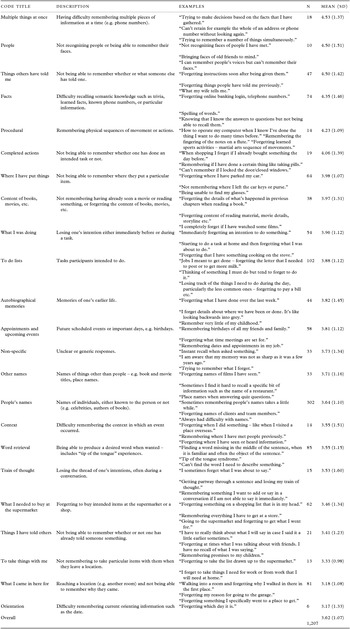
Memory difficulties reported by participants were coded into 23 categories, of which 22 described specific content. Table 2 shows the code descriptions, examples of each code, and descriptive statistics for the spontaneously reported SMCs. In some instances two or more codes can appear to reflect similar difficulties (e.g. “What I was doing” and “What I came in here for” both involve the loss of an intention during its execution), but participants often discussed them in specific terms and they were therefore coded separately.
Coding scheme and descriptive statistics for participants’ spontaneously reported memory difficulties

Following initial category formation and coding, a second rater independently coded the qualitative data (n = 1,306) according to the definitions provided in Table 2. Agreement was defined as concordance of both raters on the category each semantic unit was assigned to. Initial inter-rater agreement was 93.19%, with Cohen's Κ = 0.93. Discussion of units where raters disagreed on the coding category resulted in changes to the ratings for all remaining units (n = 89), with final inter-rater agreement being 100%.
Forgetting names of other people was almost three times more common than any other type of memory difficulty, yet was only moderately distressing in relation to other difficulties. Trouble remembering multiple pieces of information simultaneously, not recognizing people's faces, and forgetting things others have said to a person were the most distressing difficulties overall, while forgetting the current day or date, the reason for entering a room, and not remembering to take needed items when leaving were the least distressing.
Questionnaire assessment of memory difficulties
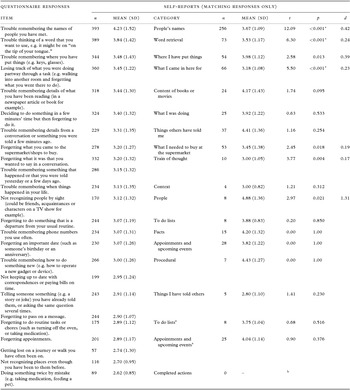
Descriptive statistics of the distress ratings for questionnaire items are given in Table 3. Means were calculated by taking the average of all ratings for the item between 2 and 7 (ratings of 1 were excluded from calculations as they represented a response of “not at all a problem”). Similar to the spontaneously reported SMCs, remembering other people's names was the most frequently endorsed difficulty on the questionnaire. However, forgetting people's names was also rated as the most distressing difficulty overall, unlike the moderate distress associated with this category under spontaneous reports. Other relatively distressing difficulties were word retrieval and trouble remembering where items were. The least distressing difficulties were completing an action twice by mistake, not recognizing known places, and getting lost in known places.
Comparisons of distress ratings for questionnaire items and matching spontaneously reported categories of SMCs

aCategory repeated due to encompassing more than one questionnaire item.
bNo t-test computed due to elimination of matching responses once strict coding applied to category.
*Significant at corrected α < 0.05.
Note: Five specific categories (other names, autobiographical memories, orientation, multiple things at once, and to take things with me) did not match any questionnaire item and are not included in this table.
Comparison of assessment methods
As above, descriptive and inferential statistics presented here exclude any spontaneously reported complaints or examples endorsed with a distress rating of 1 (i.e. “not at all a problem”), in order to reflect only those memory difficulties that cause some level of distress.
Paired sample t-tests revealed that participants reported significantly fewer complaints (t(379) = 45.09, p < 0.001, d = 2.96) under spontaneous report (M = 2.81, SD = 1.42) than questionnaire methods (M = 14.69, SD = 5.49), but that they assigned significantly higher distress ratings (t(379) = 9.42, p < 0.001, d = 0.45) to their spontaneously reported difficulties (M = 3.62, SD = 1.07) than to the questionnaire items (M = 3.20, SD = 0.77) overall.
In order to assess potential differences between distress ratings for individual memory difficulties across the two assessment methods, a further “strict coding” method was applied to qualitative data, so that questionnaire items were matched with (where appropriate) corresponding codes from the spontaneously reported SMCs, and then compared to those responses from each spontaneously reported category that qualitatively matched the nature of the questionnaire item. For example, the questionnaire item “Forgetting an important date (such as someone's birthday or anniversary)” was matched to the spontaneous report category “Appointments and upcoming events,” and compared to only the responses in that category which did actually refer to forgetting an important date (i.e. excluding responses that did not refer to dates but still fell within the “Appointments and upcoming events” category, such as “what time my daughter's hockey game is this week”). This resulted in fewer spontaneous reports of particular SMCs than were originally present in each category under the “loose coding” method from Table 2. Strict coding matches, along with corresponding descriptive statistics, and results of paired sample t-tests for each item-category pair are displayed in Table 3.
Correspondence between spontaneously reported SMCs and questionnaire items was moderate, but revealed many instances of either redundancy or lack of comprehensiveness in the questionnaire items. Areas of potential redundancy in questionnaire assessment were demonstrated by five questionnaire items (“Trouble remembering something that happened or that you were told yesterday or a few days ago,” “Not keeping up to date with correspondences or paying bills on time,” “Forgetting to pass on a message,” “Getting lost on a journey or walk you have often been on,” and “Not recognizing places even though you have been to them before”) which did not match any category of spontaneously reported memory difficulty, and by two categories (“Appointments” and “To do lists”) which matched two questionnaire items each. Five spontaneous report categories (“Multiple things at once,” “Autobiographical memories,” “Other names,” “To take things with me,” and “Orientation”) did not match any questionnaire items, and consequently may represent areas that are overlooked by traditional questionnaire assessment.
Even in those categories which did correspond to a particular questionnaire item, often the questionnaire item was much more specific and only directly matched a subset of the responses in that category (e.g. “Trouble remembering details from a conversation or something you were told a few minutes ago” in the category “Things others have told me”). Table 3 shows three pairs of categories and questionnaire items in which the distress ratings were significantly different across the two assessment methods after applying the Holm–Bonferroni correction for multiple comparisons (Holm, Reference Holm1979). These pairs included those where correspondence between category and item was high (e.g. “People's names” category and “Trouble remembering the names of people you have met” item). In all three cases participants reported greater distress when the difficulty was assessed via a questionnaire item than when the same difficulty was spontaneously reported.
Discussion
SMCs and their associated distress were assessed by both spontaneous report and questionnaire methods in a sample of adults aged 40 years and above. Consistent with expectations, participants spontaneously reported fewer SMCs overall than they endorsed on a questionnaire. Similarly, individual SMCs tended to be endorsed more often on the questionnaire than they were spontaneously reported. Apolinario et al. (Reference Apolinario2013) suggest that this difference is explained by the effect of cueing on responses, whereby people tend to report those SMCs which are most salient when they are questioned openly about memory difficulties, but providing examples of potential SMCs in a questionnaire also acts as a reminder of other SMCs that they have experienced but were not sufficiently distressing to warrant a spontaneous report.
Existing methods of SMC assessment use either structured questionnaires or simple open-ended question assessment, but little is known about the variation in responses these different methods might elicit (Abdulrab and Heun, Reference Abdulrab and Heun2008; Apolinario et al., Reference Apolinario2013). Here, a number of differences between spontaneous report and questionnaire assessment were found. First, the kinds of SMCs that participants reported spontaneously were much more varied than those SMCs they endorsed on a questionnaire. Even when questionnaire items corresponded to categories of spontaneously reported SMCs, the specific examples of SMCs given on a questionnaire often only represented a small subset of spontaneously reported SMCs. Second, participants also reported five SMCs that were not captured by the questionnaire – including the single most distressing spontaneously reported SMC (remembering multiple things at once). Thus questionnaire assessment did not capture the full range of SMCs that participants reported, and in some cases failed to assess SMCs that were the most distressing.
Conversely, other questionnaire items such as “Forgetting to pass on a message,” “Not recognizing places even though you have been to them before,” and “Not keeping up to date with correspondences or paying bills on time” were not reflected in participants’ spontaneous reports, and likely demonstrate areas which could be omitted from future assessment in the interests of retaining focus on SMCs which people find most distressing.
The degree of distress reported for each kind of SMC also varied between assessment methods, and did not necessarily mirror the frequency with which each SMC was endorsed. Participants rated their spontaneously reported SMCs as more distressing overall than those they endorsed on the questionnaire. Given that the SMCs participants report spontaneously are likely to be those which are most salient to them, understandably these also tend to be those which are most distressing. SMCs endorsed on a questionnaire are instead more likely to represent difficulties that do occur but are not as distressing – and therefore not as salient for participants, and require cueing in order for them to be reported (see also Apolinario et al., Reference Apolinario2013).
In contrast to these overall trends, comparisons of individual SMCs across assessment methods revealed the opposite pattern – in all significant cases, distress ratings were higher for questionnaire items than for their corresponding categories of spontaneously reported SMCs. One explanation for this pattern is context effects. While participants tend to endorse a large number of the SMCs mentioned in the questionnaire, they do so to a small degree and hence give a large number of low distress ratings, making for a low average distress rating across all questionnaire items. When asked to spontaneously report their SMCs, they tend to only report those difficulties that are most distressing, and therefore give relatively high distress ratings. Hence, the overall distress ratings are on average higher for spontaneously reported difficulties than questionnaire examples. However, for those SMCs which are both spontaneously reported by a participant and included on the questionnaire, their distress rating is likely to be higher when it occurs in a questionnaire context and is surrounded by a number of relatively minor difficulties, causing participants to interpret a given distressing SMC as relatively more distressing than when it was spontaneously reported and in the context of other similarly distressing SMCs.
Alternatively, differences in distress ratings might reflect semantic differences between the specific questionnaire item and the broader coded category. However, this is less likely due to the stricter coding scheme used for comparative analyses, whereby only spontaneously reported SMCs that directly matched the questionnaire item were included in analysis, thus excluding other responses which also fell under the same coding category but did not necessarily match the questionnaire item.
Another potential explanation is the order in which the survey was presented – the questionnaire was always presented after the spontaneous report section, and so consistent increases in distress ratings across time may explain the differences between assessment methods. This fixed sequence was necessary in order to prevent potential cueing effects during the spontaneous report section.
Spontaneously reported SMCs which were most distressing for this sample – “Multiple things at once,” “Things others have told me,” “People,” “Facts,” and “Procedural” – initially appear to have little in common. However, when considered in context of the least distressing difficulties – “Orientation,” “What I came in here for,” “To take things with me,” “Things I have told others,” and “What I needed to buy at the supermarket” – one explanation relates to the consequences of each memory difficulty and the availability of corrective strategies. Previous research has found that those SMCs which have the greatest functional impact cause the greatest distress (Newson and Kemps, Reference Newson and Kemps2006), and that perceived severity of the consequences of SMCs influences how distressing those SMCs were (Hurt et al., Reference Hurt, Burns, Brown and Barrowclough2010). Consistent with these explanations, here the least distressing difficulties tended to be ones which could be relatively easily rectified – for example by looking up today's date (“Orientation”) or retracing one's steps (“What I came in here for”), and indeed participants often mentioned these strategies in their responses. The consequences of these least distressing difficulties are also relatively minor – e.g. re-visiting the supermarket for an item, or asking someone else whether you have already told them something. In contrast, the consequences of the most distressing difficulties can be conceived of as more significant for occupational and/or social functioning. For example, not recognizing someone you know or forgetting what someone else has told you can be socially embarrassing and damaging to relationships, and trouble remembering multiple things simultaneously could influence someone's ability to perform at a necessary level at work or home. Furthermore, compensatory strategies for these kinds of difficulties are relatively more difficult to implement and indeed were rarely mentioned by participants.
How the functional impact of various SMCs influences the subjective distress they cause can also be considered in terms of age-related differences that were found during preliminary analyses. Middle-aged adults rated the SMCs they reported (under both assessment methods) as more distressing than older adults did, and adults aged 40–59 years also tended to rate themselves as more stressed than adults aged 70 years and above did. One explanation consistent with all of these results is that the daily demands of these age groups differ and consequently so does the functional impact of their SMCs (see also Apolinario et al., Reference Apolinario2013). Middle-aged adults are more stressed and therefore SMCs are likely to impact on their occupational functioning to a greater extent than it would for older adults whose lifestyle may not be as stressful and therefore they are more able to cope with the impact of SMCs. On the other hand, middle-aged adults may experience greater stress in part because of the greater amount of distress their SMCs cause them.
Implications
This study was the first to directly compare two methods of SMC assessment using a comprehensive questionnaire. Results support the use of open-ended questioning methods over that of structured questionnaires, with implications for SMC assessment being that spontaneous, uncued reports of SMCs have merit as a basis for clinical investigation. Instead of relying on prescriptive questionnaires (which can overemphasize SMCs that are less distressing), clinicians can gather more meaningful information by paying attention to a person's spontaneously reported complaints. This method of assessment has three main advantages: first, it retains focus on those SMCs that have the greatest subjective impact for an individual. Second, unprompted reporting of SMCs has also been shown to have greater value in predicting objective memory impairment than questionnaire assessment (Mattos et al., Reference Mattos, Lino, Rizo, Alfano, Araújo and Raggio2003), and therefore may hold further value in the assessment of cognitive disorders. Third, by attending to and validating subjectively distressing memory complaints, clinicians may be able to encourage their disclosure (and consequent treatment) even though SMCs are not often the reason for seeking medical attention (Begum et al., Reference Begum, Morgan, Chiu, Tylee and Stewart2012).
Despite the advantages of open-ended assessment of SMCs, questionnaires remain the most comprehensive method for assessing the presence or absence of particular complaints. This can be particularly useful for those complaints that may indicate a need for further investigation (Amariglio et al., Reference Amariglio, Townsend, Grodstein, Sperling and Rentz2011), however questionnaire methods might be best used only after eliciting spontaneously reported SMCs, in order to prevent any cueing effects and retain focus on the most subjectively distressing complaints. Appending a questionnaire to open-ended assessment of SMCs may not always be necessary either, as qualitative data gathered here suggested that participants still tended to report those SMCs that were most distressing to them, even when not cued by particular examples of SMCs (as on a questionnaire).
Abdulrab and Heun (Reference Abdulrab and Heun2008) have suggested that different methods of SMC assessment might be one factor that underlies differing results concerning the relationship between SMCs and objective memory impairment. Implications from the current study support this conclusion, finding evidence that different methods do elicit both different rates of endorsement of various types of SMCs, as well as different ratings of subjective distress associated with these SMCs. Thus, implications for further research are to be mindful of how SMCs are assessed, and to take this into account when drawing conclusions about links between subjective and objective memory functioning.
This study also highlights the considerable impact that SMCs have for middle-aged adults (as does previous work by Mattos et al., Reference Mattos, Lino, Rizo, Alfano, Araújo and Raggio2003). While other research has found SMCs to be more prevalent among older adults (e.g. Gino et al., Reference Ginó2010), the current results suggest that the distress associated with SMCs is at least as great (if not greater) for middle-aged adults. The authors note anecdotal evidence from their clinical work that suggests SMCs might have particular significance for middle-aged adults because they can impact their social and occupational functioning. Consequently, clinicians may be able to help alleviate SMC-related distress in middle-aged adults through discussion of lifestyle habits that may contribute to their distress, and/or simple psycho-education about how memory and other cognitive functions change with aging.
Future research
Given the implications that using questionnaires as a first-line method of assessment may not be most meaningful or helpful to those with SMCs, the next steps are to develop and validate methods of assessing SMCs which retain the detail and comprehensiveness provided by existing questionnaires, while still retaining emphasis on participant's spontaneous reports. For example, gathering non-prompted information about a person's most distressing SMCs and then prompting them for further detail and information about the impact of such SMCs on daily life might better assess SMCs in detail while remaining centered on those which individuals report as most distressing.
A further step is to explore which kinds of SMCs might be of greatest predictive value in targeting and pre-empting cognitive disorders. With such information, spontaneously reported SMCs can be used to predict future prognoses and help individuals access appropriate services, without cueing certain SMCs and risking spurious or inflated reporting of the most concerning SMCs. Evidence for age-related differences in the types of SMCs reported (Ginó et al., Reference Ginó2010) and an association between particular SMCs and cognitive impairment (Amariglio et al., Reference Amariglio, Townsend, Grodstein, Sperling and Rentz2011) has already been documented and could also be informative in this regard.
Finally, investigation into exactly how conclusions about the relationship between SMCs and objective memory impairment might differ on the basis of SMC assessment methods would be warranted. Given that reports do differ across assessment methods, future work incorporating a measure of objective memory performance would be helpful in delineating the impact of assessment methods on conclusions drawn about SMCs and objective memory. Indeed Mattos et al. (Reference Mattos, Lino, Rizo, Alfano, Araújo and Raggio2003) have conducted preliminary work in this area, and found evidence that spontaneous reports of SMCs were more predictive of objective memory performance than SMCs as assessed by a questionnaire.
Limitations
The construction of the questionnaire items in this study present some potential limitations to the results. Not using the items from existing questionnaires in their original form means that any comparisons between these results and those of other studies might in part be due to differences in the wording of particular items. Comparisons between spontaneously reported categories of SMCs and corresponding questionnaire items were also limited by the reduced sample sizes of various categories, resulting in only three pairs demonstrating a significant difference. It is likely that with greater sample sizes for spontaneously reported SMC categories other pairs might also have reached significance and provided further evidence of greater distress ratings on questionnaire items than spontaneously reported categories.
The scale used for distress ratings may also have been interpreted differently in the two methods of assessment, despite being ostensibly identical. The influence of context effects on the distress ratings of particular SMCs suggests that participants could have interpreted the scale differently, and in turn this could detract from the meaning of any comparisons of distress ratings. Perhaps comparisons between distress ratings for spontaneously reported SMCs might be more accurately compared to endorsement rates (frequencies) of questionnaire items rather than their distress ratings. In addition, differential interpretation of the instruction to rate “how much of a problem” each SMC was could have led to rating how much of a memory problem or how much of a life problem they were.
Certain assumptions were also made during the research that, if incorrect, could also detract from or invalidate any conclusions drawn. First, separating spontaneous reports of SMCs into individual semantic units and assigning the distress rating to each of these units assumes that the participant would have assigned each SMC unit that rating, rather than it referring to one SMC in particular. Second, the coding categories constructed are open to interpretation and may have been different depending on the focus of the research. For example, perhaps domain of impact (e.g. social, occupational) may have been a more meaningful conceptualization of spontaneously reported SMC categories.
Summary
This study is one of the first to directly compare how reports of SMCs differ as a result of two different methods of assessment – spontaneous reports and a questionnaire. Results suggested that questionnaire assessment potentially overlooks a number of SMCs that can cause considerable distress for middle-aged and older adults. Furthermore, questionnaires can contain items that are of little concern according to spontaneous reports of SMCs. While people may report fewer SMCs spontaneously than they will endorse on a questionnaire, those they do report tend to be those which cause most distress. Accordingly, targeting spontaneously reported SMCs for intervention is an appropriate way to alleviate distress. Questionnaires are better used to ascertain the presence of specific complaints, and require careful consideration of which SMCs should comprise their items.
Conflict of interest
This research was funded in part by a grant from the HOPE-Selwyn Foundation for Research on Ageing. The Foundation played no role in designing or conducting the research.
Description of authors’ roles
B. Burmester designed the study, collected and analyzed the data, and wrote the paper. J. Leathem also designed the study and assisted with writing the paper. P. Merrick reviewed the paper.
Acknowledgments
The authors gratefully acknowledge Jessica Reedy for her work coding the qualitative data.