In 1981, on the eve of the general strike that convulsed the Bombay cotton textile industry, millowners, managers and workers alike acknowledged that the jobber was a thing of the past. The jobber system, they agreed, had been dismantled decades previously. For some, it was a practice of ‘British times’, before independence, when at last Indian industry, like its society, had the opportunity to enter the modern world.Footnote 1 In 1979, an official historian of the industry observed, ‘Today the jobber in a cotton mill is a pale shadow of his former self’.Footnote 2 Similarly, van Wersch reported in his study of the 1982 strike, ‘In former days the jobber could hardly have been included in the ranks of the workers but the distinctions have been watered down to such a degree that they scarcely rank above the workers’.Footnote 3 Thirty years earlier, the Secretary to the Government of India's Ministry of Labour pronounced definitively that the days of jobber power and ‘corruption’ were ‘gone’. ‘The jobber, mukkadam and the sirdar’, declared Shri Shamaldharee Lall, ‘have been put in their right place’.Footnote 4 In the mid-1920s, S. M. Rutnagur quoted labour leaders on ‘the waning influence of the mill jobbers and Naikins over the male and female workers’.Footnote 5 At the same time, A. R. Burnett-Hurst reported that ‘employers state that in recent years the jobber has lost much of the influence which they formerly had over their subordinates’.Footnote 6 Nearly two decades earlier, in 1909, Vinayak Talcherkar, a mill manager with twenty years of experience in the industry behind him, explained growing rates of absenteeism by the decline of the jobber. He looked back to a time when ‘the operatives were more under the control of the headmen, and regular attendance was easily ensured’. The workers, he lamented, ‘have no leaders now. No jobber would in these times venture to guarantee similar attendance once the workers have their full earnings in their hands’.Footnote 7 So, it would seem, the jobber appeared to have been declining since at least the 1880s.
How should this evidence of the receding significance of the jobber be interpreted? Obviously, the jobber's position in the managerial hierarchy, his relationship with the workers and the nature of his power did not endure unchanged through the late nineteenth and early twentieth centuries. Certainly, millowners, managers and even workers perceived at times that the jobber's authority was weaker compared with what they could recall from an unspecified period in the past. For every generation, the golden age of the jobber lay some twenty or thirty years before. The strongest inference that may be drawn from this periodic, almost cyclical, observation of the jobber's decline is that it reflected a continuing anxiety among millowners and managers about the fragility of work discipline and about their own capacity to maintain order; and correspondingly, a nostalgic longing for an older and better age when workers obeyed and order prevailed.
Yet, in public discourse in the late nineteenth and early twentieth centuries, the jobber was often represented as a figure of awesome power. Later scholars have often reiterated the contemporary view that jobbers exercised overwhelming power over the workers. Until recently, the recruitment and control of labour has remained perhaps the most important organising principle of enquiry in the history of the working classes.Footnote 8 Indeed, few aspects of Indian labour history have yielded quite such widespread consensus among historians as the jobber system. Scholarly expositions, like contemporary accounts before them, have often treated ‘the jobber system’ as if it was as timeless as the indigenous culture in which it was supposedly embedded. The jobber system appeared to operate in the same way throughout its history. Colonial observers such as later scholars often took it for granted that the jobber would gradually wither away with the relentless advance of modernity. It is not surprising, therefore, that the decline of the jobber system in the mid-twentieth century has scarcely been problematised and, indeed, has largely been neglected both by contemporaries and by later historians. If the jobber system was assumed to be an integral part of traditional culture and an archaic survival within modern industry, its decline could scarcely warrant explanation.
This essay focuses upon the decline of the jobber system in the Bombay cotton textile industry. The first half of the twentieth century marks a watershed in the history of the jobber's position in Bombay. In the early twentieth century, the jobber system appeared, for the most part, to be firmly in place. Neither the millowners nor the state expressed any immediate urgency for its change. By the 1950s, it had been largely dismantled. The slow death of the jobber system was the outcome of processes that had been working upon it over a very long period and whose decisive effects were manifested in the 1930s. The jobber system was blown apart by relatively minor, if recurrent, detonations that burnt their way through a long fuse.
The investigation of this process of decline might provide a more fruitful line of approach to seemingly intractable problems about the nature and purposes of the jobber system. Although historians and social scientists have focused their attention upon the jobber system, contradictory explanations of the functions it served and, therefore, also of its origins, not only have remained unresolved but have also been insufficiently addressed. There are broadly four kinds of explanation on offer for the origins and functions of the jobber system: to mobilize scarce labour in the early stages of industrialisationFootnote 9; to offer cultural mediation between migrant workers and an often strange and hostile environment, as well as between them and the managersFootnote 10; to supply a rough-and-ready managerial and supervisory service when nothing better was available, albeit while requiring the industry to pay the price in indiscipline and inefficiency,Footnote 11 or in a variant of this argument, to provide ‘the essential needs of labour’, such as work, credit and housing, a function that ‘ideally should have been performed by the employers’Footnote 12; and finally, in an orientalist rendering, as an expression of a traditional, archaic, and even pre-capitalist culture with ‘a strong emphasis on religion, community, kinship, language and other primordial loyalties’.Footnote 13 Yet, if the primary purpose of the jobber had been to maintain an adequate supply of labour, it is far from clear why employers retained him once the flow of workers became more abundant. Similarly, explanations that emphasize the jobber's role as a cultural interpreter and mediator between managers and men cannot easily be reconciled with its persistence after the initial problems of adjustment were overcome.Footnote 14 Nor do these accounts shed light on whether the managerial emphasis on the jobber's functions changed as recruitment became easier or workers appeared less alien and exotic. No attempts have been made to reconcile the notion that the jobber provided cheap supervisory and managerial skills with the suggestion that he may have thwarted the emergence of an efficient and productive labour force. Indeed, historians who have suggested that the jobber system may have fostered inefficiency have found it difficult to explain the propensity of capitalists to defend it, despite its tendency to undermine their interests, against official pressures for reform. Conversely, if the jobber was dysfunctional to capitalist interests, especially after the early years of industrial development, it has been difficult to explain satisfactorily not only why it survived as long as it did but also why the employers embarked upon reform and eventually dismantled it, when in fact they did. Because the jobber system has often been represented as a system of functions, it has proved especially difficult to identify the relationship between them, to assess the relative importance of each, to establish its origins or to track how it changed over time.
The investigation of the decline of jobber in the Bombay cotton mills may help to find a way out of this impasse. At one level, to focus upon the decline of the jobber system might offer a means of introducing to the discussion of its operations a greater sensitivity to the vicissitudes of change. On the other level, explanations for the demise of the jobber system ought to be consistent with explanations for its rise. To this extent, the investigation of its decline should serve as a control upon hypotheses on offer for its origins and its operations. Closer scrutiny of the process by which the jobber system was undermined reveals the points at which it was inherently weak. It serves thereby to qualify the assumption, too readily made, that the power of the jobber was absolute and monolithic. As a result, it lays bare the constraints that the jobber's intermediary position between employers and workers placed upon the exercise of power. Indeed, by examining the causes of its decline, and, in particular, the reasons that persuaded the employers to initiate reforms, we might be able to identify what they valued most about their method of labour recruitment and labour control, and, therefore, also the purposes, which they felt it served in its heyday.
That scholars have scarcely identified the decline of the jobber as a problem for investigation is symptomatic of the extent to which our understanding of his role has been dominated by the colonial discourse. In examining the decline of the jobber, therefore, this essay also attends to the terms in which he was cast by contemporary observers, officials and employers. To a large extent, the scholarly consensus about the jobber has derived from the representation of the institution in a narrow range of sources and, especially, in official reports that drew upon each other for sociological sustenance. This essay first delineates some of the leading themes in the discourse about the jobber. It then proceeds to offer an alternative explanation for the rationale of the jobber system. It then builds upon, and seeks to demonstrate, the argument that the greatest value of the jobber to the employers lays not in the recruitment of labour or its cultural adaptation but in his role as an agent of discipline. In this role, however, the jobber's power rested on the maintenance of fragile balances, so that his apparent strengths concealed important and deep-seated weaknesses. Finally, the essay analyses the particular and changing historical circumstances in which the jobber's vulnerability as an agent of discipline and control was forced upon the attention of the millowners and, especially, the state. As a result, the growing appreciation of the fundamental weaknesses of the jobber system in exerting control over labour, and ensuring its abundance, its cheapness and its docility, altered the terms in which he was understood and represented, and accelerated the decline of the jobber system.
Colonial Discourse and Managerial Theories
The significance attached by historians to the role of the jobber in the formation of the labour force, perhaps, the very ubiquity of his existence, as well as the ambiguities and confusions about his functions, owed something to the assumptions of colonial discourse. Significantly, the interpretative consensus among historians about the nature and role of the jobber has often replicated, elaborated and unwittingly re-affirmed the colonial discourse. In India, perhaps elsewhere, colonial discourse was primarily a discourse about labour.Footnote 15 Colonial representations of Indian society, and its customs, cultures and histories, were shaped largely by its own endeavour to gain closer control over labour, to cheapen its costs and to subordinate it more fully to the disciplines of capitalism. This colonial discourse found its premise in the traditional and timeless character of Indian society. The weight of Indian tradition, which impeded the mobilisation and deployment of Indian resources for imperial purposes, also appeared to constrain its progress towards enlightenment. In this discourse, Indian society was constituted by the immutable village community, the caste system, perceived as an integral aspect of religion and the defining moral code of India, and a stagnant agrarian economy, characterised by self-sufficient, small-holding cultivators who were often obdurately resistant to the rationality of the market.Footnote 16 In the light of these perceptions of Indian tradition, employers and colonial officials grew increasingly anxious, therefore, about their ability to prise labour out of the village community or to control and discipline it once they had set it free. Peasants masquerading as workers in the mines, plantations and factories would be almost as difficult to pin down to their ‘contracts’ and obligations as it was to recruit them in the first place. Workers who were essentially peasants, it was supposed, were inherently restless, aspired to casual and temporary employment and longed to return to their village homes at the first opportunity.Footnote 17 Their aversion to the rhythms and disciplines of the factory, it was said, ensured that they could not be organised easily for productive and efficient labour. But it also accounted, in this view, for their inability to combine and to negotiate responsibly and reasonably with their employers. Rather, they seemed susceptible to rumours, easily worked into a state of excitement by agitators and inherently liable to volatile and violent protest.Footnote 18 Colonial discourse thus represented labour in India as if it was sedentary and overly mobile; difficult to recruit and impossible to control; incapable of organisation, yet averse to work discipline; slothful in their approach to work; and eager to return to the countryside. The jobber lay at the heart of the contradictions of the colonial discourse. His role, uniquely, was to balance and reconcile the contradictory pressures generated by the mobilisation and deployment of labour and to overcome the constraints under which it was placed by ancient Indian tradition. It was taken for granted in this discourse that the problems of labour recruitment and control in these conditions required specially devised methods and institutions, suitably adapted to the peculiarities of Indian culture. In this way, colonial discourse came increasingly to represent the jobber as a traditional institution not only within the labour market but also as an integral feature of workers’ culture. The institutionalisation of the jobber within colonial discourse also served to homogenise his role and his power.
In the colonial imagination, the role of the jobber was intimately linked to the assumption that workers were primarily ‘agriculturists at heart’.Footnote 19 The conventional trope in these narratives of labour force formation, retailed by official reports as well as social commentators, began with the moment ‘when a worker arrives for the first time in a city’.Footnote 20 Thus, they imagined that the jobber facilitated a whole process of migration that began in the ‘village’, even in centres where workers had long since been hired at the mill gates or from among the urban population. Thus, the census report for Bengal described in 1921 how ‘a sirdar, whose home is in one of these districts, brings down to a factory a gang recruited from among the poorer of his co-villagers, maintains some sort of control over them while they are employed and generally looks after them till he takes or sends them home’. As a result, it was possible to find that ‘in one factory a large body of labourers often comes from a very closely circumscribed area, often a few adjoining villages only, in some up-country district’.Footnote 21 Similarly, as late as the early 1930s, R. N. Gilchrist, the Labour Officer for Bengal, observed that as the migrant worker ‘sets out from his village to find work’, the sirdar ‘may oblige him with his fare and a little money to buy food on the way’. Once he arrives in the city, ‘the sirdar may advance him a little more money, for a job may not be immediately available, and he may also direct him to live in certain quarters and to buy his rice at a certain shop’. Inevitably, the worker ‘gradually finds out that the sirdar owns the house’ as well as ‘the shop where he buys his rice’.Footnote 22
Having recruited workers, the jobber also supervised, trained and disciplined them. As the Whitley Commission observed in 1931, in this way, the jobber ‘combines in one person a formidable series of functions’, of which perhaps the most important was ‘the power to engage and dismiss a worker’.Footnote 23 However, the full extent of his power derived from the fact that ‘many jobbers follow the worker even further than the factory gate; they may even finance him when he is in debt and he may even be dependent on them for his housing’.Footnote 24 In Bengal, where officials and employers often made stronger claims for the complete domination of the jobbers than in Bombay, it was their influence beyond the mill gates that made them ‘the real masters of men’. Thus, the Government of Bengal noted that the sirdars ‘employ [workers] and dismiss them, and, in many cases, they house them and can unhouse them. They may own or control the shops which supply the men with food’. In addition, they extracted from the worker a ‘lump or recurring sum’ to ‘retain his job’.Footnote 25 Similarly, from Bombay in the early twentieth century, S. M. Edwardes reported that to maintain an adequate supply of workers, the jobber ‘is bound to have a following of men and boys who usually live in the same neighbourhood and often the same chawl as himself. He spends his evenings with them, acts as their adviser in family matters and not infrequently advances money to them. A good many jobbers play a leading part in the maintenance of gymnasia (talim), of which there are seven or eight in the mill district’.Footnote 26 Nearly two decades later, A. R. Burnett-Hurst described the relationship between jobbers and workers in similar terms, sometimes in identical language.Footnote 27 In setting out the various ways in which workers could fall into ‘the clutches’ of jobbers, he added darkly that, once under their sway, they ‘keep him in permanent bondage’.Footnote 28 In the twentieth century, colonial officials sometimes likened the jobber, even, for instance, in the metropolitan setting of Bombay's cotton mills, to village headmen.Footnote 29
The colonial discourse exaggerated the extent of the jobbers’ domination as well as the arbitrary manner in which they wielded their authority. It is likely that considerations of skill and efficiency, the competition of rivals and the challenge of alternative sources of patronage and power in the workplace and beyond would have narrowed their freedom of action. As contemporaries enumerated what they perceived as the crucial functions of the jobber, they laid particular emphasis upon his role in the recruitment of a labour force inherently reluctant to abandon the field for the factory, in helping workers learn about and adjust to the novel demands of the factory and the city and in acting as an intermediary who could bridge the vast cultural differences between workers and their employers and managers, especially of course when the latter were Europeans.Footnote 30 These were, of course, the themes that dominated the work of later scholars. The wider the spheres of control that they envisaged for the jobber, the more fully that he appeared, in this view, to be an indigenous institution, rooted in Indian traditional or pre-industrial culture and marginal, perhaps dysfunctional, to capitalist interests.
This notion, often simply taken for granted, that the jobber was an indigenous and culturally specific institution, modern industry's traditional inheritance, shaped the way in which contemporaries understood his role. When the Bombay millowners defended the jobber against his critics in the early twentieth century, or joined in the clamour of complaint, they grounded their claims on the vital economic functions he had once served or the cultural needs of the workers that had necessitated and defined his presence.Footnote 31 In either case, he appeared to have fulfilled his functions best at some unspecified time in the past. Colonial discourse thus increasingly portrayed the jobber as a pre-industrial survival.Footnote 32 If the jobber was merely a residue left behind by progress and modernity, it would be reasonable to conclude that his actions would be marginal in determining outcomes in the present. Yet, the notion that the jobber system was archaic was combined in this discourse with the characterisation of his seeming omnipotence.Footnote 33
At one level, the assumption that the jobber was embedded in and an expression of indigenous culture nurtured the tendency of employers as well as officials to exaggerate his power. Millowners as well as officials and observers came to believe that the managers and workers were separated by a cultural chasm that could not be bridged.Footnote 34 European owners and managers were often supposed to be especially ‘ignorant of the ways and habits of the workers’, but this was a characterisation that they sometimes took pains to dispute. According to Shiva Rao, for instance, ‘the gulf is so wide, that even after many years of life in India, they know very little about them [the workers]’.Footnote 35 Yet, it was by no means European managers alone who encountered and failed to bridge this social and cultural divide. As a result, managers were said to find it ‘more convenient . . . to deal with a handful of jobbers . . . than to establish direct contact with the workers’.Footnote 36 It was the assumption that the peculiarities of Indian society rendered their presence essential that made millowners and managers feel especially helpless in the face of the jobbers’ apparently formidable power. Not only did managers appreciate that the jobbers’ ‘good will’ was crucial to ‘the smooth working of the factory’ but they also readily recognised that if they were even inadvertently ‘to alienate the sympathies of the jobber, the work of the factory as a whole can and will be made extremely difficult’ for them.Footnote 37 In turn, this appeared to only confirm their exaggerated sense of the jobber's power as well as, at times, their assumption that his role was indispensable. When millowners defended their methods of labour recruitment and management against public criticism, they sometimes presented themselves as the prisoners of their jobbers. They were compelled, they appeared to argue, to operate within the constraints imposed upon them by the peculiarities of Indian custom. But it should not be supposed that the millowners simply accepted this as their fate. When the Millowners’ Association, without the unanimous support of their members, moved hesitantly against the jobber in the 1930s, they argued that their objective was to retrieve control of their mills. This project, they sometimes suggested, required the support of state intervention.
Mill managers, however, had always disclosed a certain ambiguity towards the question of jobber dominance. In particular, they showed a measure of discomfort with the image created by the millowners and social observers, and to which they had themselves sometimes contributed, of their dependence upon the jobber. Indeed, this discomfort was manifested in the rhetoric that, managers, especially the Europeans among them, developed and that ran counter to the representation of jobber omnipotence in the workplace. Thus, in Bombay, Lancashire men were said to maintain ‘friendly relations’ with their Indian assistants as well as the workers. According to S. M. Rutnagur, in one of the earliest official histories of the industry, ‘the courtesy and kindly treatment’ that the European staff offered to the workers was highly appreciated by them and reflected in the ‘good feelings’ that characterised labour relations, even during strikes.Footnote 38 In Bombay, it was said, European managers and assistants ‘scarcely resorted to any rough treatment of the millhands, nor did they interfere with their peculiar ways and customs’ and work-people were ‘free from the vulgar reproofs and beating to which they were accustomed at the hands of their own people’, that is, of course, from the jobbers.Footnote 39 In fact, it was claimed, workers ‘put up meekly with the threats and abuses of the jobber’. It was supposedly left to him to administer ‘corporal punishment’ to which workers would ‘submit’ more readily. Indeed, according to Rutnagur, they ‘did not mind being useful to him [the jobbers] by massaging his body and limbs in a corner of the factory and giving him other relief when he was indisposed’.Footnote 40 By claiming that they enjoyed ‘friendly relations’ with the workforce, the managers in effect boasted that they had bridged the gulf that was believed to set the working classes apart. It was by its nature a personal and individual claim: it applied to some or particular managers. It suggested, moreover, that in establishing rare direct contact with the workers, the managers had begun to acquire special knowledge of ‘their peculiar ways and customs’. Moreover, it set the manager above and beyond the ‘dealings’, often murky, sometimes violent—although he was in practice usually immersed in them—which characterised the relationship between jobbers and workers.
This managerial propensity to claim familiarity, and direct contact across the chasm of culture and class, was fortified by two motifs in the discourse of factory management in India: the emphasis placed on pragmatism and the importance of reputations. The mill manager saw himself, and indeed was valorised, as primarily a practical man who ‘had a great distrust of books and knowledge acquired from books, and was firmly convinced that mill technique could be learned only inside a mill’.Footnote 41 Owners and managers recognised the significance of improvisation in Indian industry. It was axiomatic that profits and progress would have to be, indeed, it seemed as if it could only be, generated from adverse conditions. Their chances of success often turned upon their ability to manipulate machines, raw materials and recalcitrant labour to yield high levels of production and efficiency.Footnote 42 Skills and knowledge of the trade were imagined as inherent to and embodied in the person. They were learnt on the job or passed down the generations in the trade. Thus, the managers, in this narrative, drew upon intuition and experience. They held on to their secrets tenaciously and often took them to their grave. “‘Secrets’ became”, as Mehta observed, “the hallmark of mill technique and practice”.Footnote 43 It was precisely for these qualities of pragmatism, improvisation and intuition that managers and weaving masters, jobbers and workers acquired their reputations. Indian industry was built on legends. Employers often sought out managers and their assistants, jobbers and weavers or sizers, who acquired a reputation for achieving record levels of production, high quality of output or dexterity and skill, and attempted to lure them away from their rivals with the promise of higher wages.Footnote 44 At the same time, and for similar reasons, millowners and managing agents devised elaborate systems of espionage by which they induced selected jobbers in their own mills to inform them about the methods and activities of the department heads or encouraged weaving and spinning masters to watch and report on their managers.Footnote 45 Ironically, employers apprehensive about the consequences of having abstracted themselves from the workplace responded by creating a managerial culture in which they fostered competition and division among their subordinate staff and established complex patterns of espionage and countersupervision in an attempt to limit the power of their own managers and jobbers. Conversely, the emphasis placed upon pragmatism and the significance of reputations—and the narratives of heroism and ingenuity by which they were fashioned—made it imperative that managers, especially European managers, demonstrate their ability to establish ‘direct contact’ with the workers. Indeed, by professing familiarity with the workers, they were often attempting to stake a claim to their place within the managerial structure of the mill, indeed their own indispensability, sometimes against the power and influence of the jobbers.
The insistence in managerial discourse upon their pragmatism and practical ‘know-how’ was intimately bound up with the manager's claims of intimate knowledge of and direct access to the workers. Both these strands arose from, and lent themselves to, a language of paternalism. Certainly, they were combined and expressed within its terms. Moreover, these themes ran in contradiction and in parallel to the elaboration of the jobber's power and the social and cultural divide, which was said to make the jobber indispensable. This contradiction in the managerial discourse also reflected their unease about the jobber's power and the readiness of the millowners to deploy it to balance and circumscribe their authority.Footnote 46 The language of paternalism was, in a sense, facilitated by the fact that this discourse, even as it declared the ability of the managers to establish direct contact with the worker, had already positioned them above the fractious and troubled relationship, and the often seemingly corrupt and violent exchanges, between the jobbers and the workers. It was precisely where the social and cultural divide appeared most imposing—on the railways and in the cantonment town of Kanpur, in the tea plantations of Assam, in the coal mines of Bihar and in the jute industry of Bengal, predominantly managed and owned by Europeans—that the need to claim and insist upon the individual owner's or manager's ability to transcend it was the greatest. It was here that the language of paternalism gained widest currency. Thus, in her elegy to the boxwallahs, based upon their memoirs, Zoe Yolland described her grandfather, Alfred Butterworth, weaving master of the Cawnpore Woollen Mills, and in particular, his approach to managing Indian labour, in characteristic terms.Footnote 47 ‘His forte’, she wrote, as, indeed, he might have recalled himself, ‘was in his dealings with the labour force. Very strict, very fair, he came to be almost a father figure to the men’. As their father, he made his many gifts generously available to them. He was, for instance, ‘something of an amateur physician and workers often came to see him when they needed medicine’. On ‘one occasion’, when an old man cut off the tip of his finger on a chainsaw, as Zoe Yolland described it,
Alfred Butterworth called for a bowl of warm water and . . . stuck the top joint back on, bandaging it with tiny splints, but not attempting to stitch it. The finger healed and rejoined, even though it was left slightly crooked. Alfred's reputation was made.
Alfred's reputation was not limited to his sense of justice or his magical skills in radical surgery. Thus,
It was Alfred's habit to carry a short stout swagger-cane under his arm, rather like a sergeant-major. Sometimes he would use it for correction when for instance, workers broke the rules by bathing or washing their clothes in the water channels in the mill compound . . . The punishment . . . was either a fine or a summons back to the Palm in the evening for a sharp cut from Alfred's swagger-cane. Invariably, the culprits chose remedial treatment at the Palms, which they took in very genial part.
It was something of a commonplace for managers, both European and Indian, to represent themselves in these self-regarding terms. Colonial officials, capitalists and managing agents sometimes characterised the culture and style of management in similar vein.
This rhetoric of pragmatism and resistance to technical training did not arise simply from an aversion to science and modernity. Neither did it signify the supposedly ‘mercantilist’ attitude of the owners and managers, as it has sometimes been suggested. Least of all, perhaps, did it reflect the ‘pre-capitalist’ culture within which Indian industry is believed to have developed.Footnote 48 Rather, it was integral to and a product of the colonial discourse about labour, which, in turn, determined prevailing assumptions and theories in the industry about how it might best be managed. This self-representation of the managers, and the language of paternalism in which it was expressed, ran counter to the dominant motifs in colonial discourse, to which it had contributed and from which it emerged. It was driven by their attempt to identify, and assert the legitimacy of, their own position within the workplace and industry. For this reason, its defining themes were shaped by its assertion of special skills: their practical ‘know-how’, born of long experience, which enabled them to transcend the social and cultural divide and secure the trust and loyalty of the workers through a combination of rectitude, judiciousness and moral principle. They were firm and fair, rigorous and disciplined, demanding and just. As a result, they claimed, workers sought their advice and invited their arbitration in their disputes, with each other, with their jobbers and even with their wives and family. Accordingly, in the manager's view, workers accepted their authority, even magnified it, and bent before their cane with pleasure. Managers liked to believe that workers sometimes looked up to them as ‘their father-figure’ or, indeed, as both their parents, their ma-baap. Some even imagined that they ‘look up to him [the manager] as a sort of God’.Footnote 49 If they approximated to divinity as the workers’ ma-baap, some entered their pantheon of gods. So this was how the managers liked to see themselves. What is more surprising, however, is that historians, despite their methodological prescription to read the sources ‘against the grain’ and for its omissions, have sometimes interpreted it literally.Footnote 50 This self-representation of the managers contradicted, but it could not transcend, their own tendency to exaggerate the power of the jobber. The paternalism of the managers, if indeed the workers accepted it, could be expected to circumscribe the authority of the jobber. If managers commanded sufficient trust among the workers to intervene so intimately in their daily lives, it is implausible that they would have regarded the intermediary role of the jobbers to be indispensable. The notion that the workers looked up to the managers with devotion and followed them with loyalty was incompatible with the latter's claim that they were excluded from the workplace by the power of the jobbers. The deification of the manager and the omnipotence of the jobber could scarcely sit easily with each other.
There was a certain degree of circularity to the attempts by contemporaries to make sense of the jobber system. Officials and employers often regarded the jobber's power with trepidation. The millowners sometimes appeared apprehensive that its assertion might undermine labour discipline and, more widely, even the social order, yet they defended the institution as essential to their needs. Liable to exaggerate the power of the jobber, millowners and mill managers often viewed with apprehension the extent to which they had been locked out of their own system of labour control, but, at the same time, constructed heroic narratives about their own hard-won familiarity with the workforce.
Jobbers, they argued, were especially useful for extracting labour from the grip of traditional society and keeping it at work precisely because they operated by methods that were somehow specific to workers’ culture. Yet, as labour flowed more easily into industry, and doubts surfaced about the purpose and effectiveness of the institution, employers defended the jobber system as a cultural necessity. The jobbers’ value to the millowners now appeared to lie precisely in the fact that they had ‘all sorts of dealings’ with the workers and were therefore better able to manage them.Footnote 51 If the jobber had once seemed indispensable for practical reasons, for recruiting labour and facilitating its adaptation, cultural factors and the peculiarities of Indian society, now seemed to make them indispensable for its management and control.
From at least the late nineteenth century, it is possible to detect an unease among the millowners about the apparent influence that the jobber wielded. This unease was expressed largely in two forms. While the millowners, and indeed officials as well as social observers, were liable to exaggerate the extent of the jobber's power, they remained doubtful about whether it was sufficient to their needs. In addition, they remained apprehensive that the jobber would deploy his power in ways that would undermine their interests. As the millowners’ anxiety that the jobber's influence would be wielded against them deepened, so they began to believe more readily that his powers were formidable. As their anxieties about the jobber's role increased, they became increasingly wary about breaching his authority, largely because they had come to believe in his omnipotence. Already in the late nineteenth and early twentieth centuries, the millowners had begun to express their concern about the extent of power that the jobbers had appropriated.Footnote 52 In the 1920s and 1930s, their doubts proliferated, as the industry encountered both tighter markets and increasingly fierce working class resistance.
While the millowners and officials had been apprehensive of the jobber's power since the late nineteenth century, they also recognised the reciprocal obligations that constrained it and the weaknesses that arose from his position as an intermediary between the millowners and the workers whom he recruited. In the early twentieth century, Edwardes observed that strikes occurred ‘often at the instigation of the jobber’ and tended to be ‘limited to the department of which he is in charge’. His vulnerability to the pressures exerted by his followers meant that he ‘assumes a role of sympathy for his employers which is designed to favour the interests of his men’. Indeed, ‘to espouse the cause of his followers openly would mean his undoing’ but ‘on the other hand an unpopular jobber may find his men desert him’ if the opportunity arose, finding thereby ‘an easy method of ridding themselves of his influence and of the money they owe to him’. It was precisely this ‘insecurity of position’ that made the jobber ‘a man of many wiles’.Footnote 53 Similarly, in Burnett-Hurst's account, it was a recurrent theme that in his journey from village to mill, the migrant worker would encounter numerous patrons, not simply the jobber, seeking to help, exploit and control.Footnote 54 Thus, on his arrival in the city, the worker ‘stays with relations, village friends or caste fellows, boards with a private family who take in one or two lodgers, or joins a khanavali (boarding house)’. To find work, he might seek the help of ‘a relation, friend or jobber acquaintance’. Or, if he had no connections with a jobber, he might be forced to bribe, not the jobber alone, but timekeepers and clerks above him.Footnote 55 Until he had established himself in regular employment, he would have to run up rent arrears with his landlord or accumulate a debt with moneylenders, grain dealers and jobbers, all of who would lend eagerly ‘on terms that soon enslave the man to his benefactor’. Of course, the jobber might have an interest in the khanavalFootnote 56, act on behalf of the landlord or introduce the worker to the moneylender. The most powerful patrons might seek to consolidate their interests and widen their ambit of control of the markets for housing, credit as well as labour. However, the proliferation and rivalry of patrons was always liable to increase the options before the workers and afford them a measure of protection at the very point at which the benefactor appeared to enslave them. The power of the jobber could thus be fragmented and contained by the competition between the various bosses of the neighbourhood, precisely when it appeared to some observers to be monolithic and homogeneous.Footnote 57
Contemporary observers, the millowners among them, recognised that such reciprocal obligations could both constrain the power of the jobber and lead him, often by stealth, ‘to favour the interests of his men’, over those of his employer or the industry. The millowners, like many contemporaries, would have remained sceptical about the claim that the jobber served the long-term interests of the industry. Some of these flowed from the practice of ‘dasturi’ or the commission that jobbers charged the workers whom they hired. This was an old practice, which went back to the origins of the industry. Not surprisingly, it was often deemed in colonial discourse to be a customary social practice, specific to Indian culture.Footnote 58 In 1931, the Whitley Commission noted that while employers and managers sometimes subscribed to ‘the belief that the system is in some way natural to the country’, it preferred to take the view that it amounted to ‘actual extortion’ and found it ‘impossible to regard it as other than a vicious practice’, liable only to get worse as the supply of labour increased.Footnote 59 As a customary practice, it evinced a certain tolerance and gained some immunity from the impulse to reform, but, in official discourse, it remained indistinguishable from a bribe. It attracted official interest from the earliest days of the industry.Footnote 60 For many, it symbolised the parasitism and tyranny of the jobber system, and indeed, appeared to represent its essence. The concerns that it raised in the official mind did not drive them to act against it, but they were never quite laid to rest and, indeed, they were revived and invigorated in the 1920s.Footnote 61 The practice of dasturi thus provided a moral foundation to public criticism, indeed invective against, the jobber. Not least significant to officials was the concern that jobber tyranny was an avoidable cause of working class discontent. As industrial conflict intensified, it was a short step for officials to conclude that the jobber was an impediment to more harmonious social relations.
The millowners treated this brisk conclusion with caution. As they faced mounting resistance from their workers and increasingly fierce competition in shrinking markets after the First World War, however, the millowners and their managers recognised the dangers inherent in alienating their right, and obligation, to manage labour. At the same time, tariff boards and other commissions of enquiry into the condition of the industry and its labour force pressed upon the millowners the need to raise their levels of efficiency. To raise efficiency, the millowners would have to intervene more closely in the daily affairs of the workplace. If the millowners and managers had indeed been locked out of the organisation and deployment of labour, it was clear that they would sooner or later have to reassert their authority and control. Millowners and mill managers themselves often harboured the suspicion that dasturi created an incentive for the jobber to accelerate the rate of labour turnover. Factory inspectors had commented on its effect in heightening instability already before the First World War. By the early 1930s, employers began to express the view that ‘there is a close connection between bribery and turnover’ and the Whitley Commission concluded that ‘the jobber is responsible for much of the apparent restlessness of the operative and his movements from factory to factory’.Footnote 62
As their markets slumped, working class militancy intensified and official pressures for rationalisation grew, the Millowners’ Association focused increasingly in the 1930s upon the issues of dasturi and the jobber's tyranny and began to acknowledge the need for streamlining their methods for the recruitment and deployment of casual labour.Footnote 63 In 1933, one mill manager was led to explain, ‘If the jobber is left to engage the badlis [substitute workers hired daily to replace absentees] from day to day, it is to his advantage to have each day as many fresh men as possible. By doing so, he is able to distribute his patronage as widely as possible and thereby reap a rich harvest of graft’.Footnote 64 In fact, it is doubtful whether jobbers would have attempted to hire ‘as many fresh men as possible’ every day. The effect of fostering a rapid turnover of casual labour would, for most jobbers, have been the dwindling of badli workers in their connection. A jobber might, in this way, have maximised his takings from dasturi in the short run, but it is also likely that he would have placed at risk his ability to command an adequate supply of reliable workers to recruit when he needed them, and thus, in the long run, have jeopardised his own position in the workplace. Nonetheless, there was a growing readiness to acknowledge in the industry that the practice of dasturi might subvert the stability of the labour force and undermine efficiency and discipline in the mill, for which they ostensibly relied upon the jobber. Contemporaries were only too aware, and the millowners were increasingly willing to acknowledge, that the jobber might have helped to foster what Morris later described as ‘the ramshackle discipline’ in the cotton mills.Footnote 65 Indeed, employers had long recognised that the jobber's ‘wiles’ could easily be turned against them. Jobbers might not ‘appear openly as spokesmen on behalf of [their] men’, as one official had observed in 1909, but he often acted to ‘instigate’ a strike.Footnote 66 As working class resistance grew more entrenched and strikes occurred more frequently and on a larger scale, employers complained more readily that the jobber was ‘getting impudent’ and was often ‘the main cause of strikes by instigating and spreading dissatisfaction amongst the labourers behind the curtain for its own self-interests’.Footnote 67
Representations of the jobber, and more widely, the work relations that he engendered and in which he played a part, were, in colonial discourse, rooted in fixed assumptions about Indian culture and traditional society. They also set the terms in which later historians represented the jobber. The colonial discourse about labour shaped a particular public understanding not only about how labour should be disciplined and controlled but also about how the social order might be maintained. As the topography of this discourse was mapped, so it came to influence and define the ways in which employers, who had indeed contributed to its development, constructed the jobber. Indeed, in some measure, the representations of the jobber in this discourse enabled the millowners to justify his position as indispensable for the recruitment of labour and, sometimes subsequently, to exaggerate his power. However, in the 1920s and 1930s, slow, almost imperceptible, shifts in emphasis began to manifest themselves in this discourse. Its internal tensions and contradictions became more readily apparent. Differences appeared more clearly between officials, millowners and mill managers. Anxieties about the power that the jobber had appropriated and growing doubts about his ability to deploy it in their long-term interests began in the 1920s and 1930s to alter the terms in which the millowners perceived him. This shift was not caused by changes in the means of production, technology or the labour process. They stemmed rather from two important developments in the political context of industrial relations: first, deepening contradictions between the colonial state, concerned to defend beleaguered imperial interests, and Indian capitalists, among their most favoured collaborators; and second, the growing scale and militancy of workers’ politics in Bombay. In the wake of mounting political tensions and antagonisms, the terms in which the jobber was understood began to be modified and, partly as a consequence, the millowners began to countenance the possibility of reforming their system of recruitment and control. It would be tempting to distinguish too clearly between discursive practice and workers’ resistance in characterising changes in the representation of the jobber by officials and employers. Yet, it was in large measure the intensification of industrial conflict and workers’ resistance that exposed the limitations of the jobber's power, modified the millowners’ understanding of his utility and leached into official discourse a growing apprehension that his presence and his activities aggravated the discontents of the working classes and threatened the social order.
The Nature of Jobber Power: Reciprocity and Dominance
As contemporary observers, employers and civil servants, policemen and journalists, social reformers and philanthropists, described and enumerated the jobber's functions, so they came to represent him as an archetype, abstracted from the historical context in which he operated. By enumerating the jobber's functions, they also served to portray him as a figure of overwhelming dominance. This propensity to inflate the power of the jobber was sometimes the consequence of deeper, more general anxieties about labour discipline and the social order and sometimes the result of fond colonial assumptions about the nature of Indian society.Footnote 68 In practice, the jobber was scarcely omnipotent. Against this pervasive picture of formidable and seemingly absolute control, we need to set another: of the reciprocity embedded in the power relations around the jobber system. To fulfil the roles required of them by their employers, jobbers had to remain responsive to the needs and expectations of the workers. Their failure to satisfy these expectations or to hold together the workers in their connection could swiftly undermine their position. Far from constituting a monolithic agency of social control, the jobber's position both within the workplace and the neighbourhood revealed crucial and inherent weaknesses.
Although jobbers were often represented as an archetype, they were, in fact, a rather motley, indeed heterogeneous, group. Their power and influence varied with the labour process in the cotton textile industry.Footnote 69 Jobbers in the more skilled processes commanded greater influence than those who supervised the relatively manual tasks, the preparatory processes, for instance, in the mixing and blow rooms or auxiliary functions, such as lap feeding or doffing. The millowners conventionally saw the head jobber as the pivot of their system of labour control. He was highly paid, which set him apart from the workforce, and his position carried considerable influence and prestige. His authority rested upon the connections of the jobbers below him. To a large extent, it was determined by the power and influence that he wielded in the neighbourhood. Some head jobbers acquired considerable prominence, building up extensive spheres of influence and a wide range of interests.Footnote 70 Trade unionists sometimes sought to build their organisations around them, but they were also aware that head jobbers, as powerful agents in the owner's apparatus of control, could form a major obstacle to industrial action.Footnote 71 In November 1928, in the immediate aftermath of the general strike, the workers of the Kohinoor Mill voted to exclude a head jobber from their mill committee. However, the leadership of the Girni Kamgar Union, then at the height of its influence in the mill districts, strove to persuade its militant workers to bring a measure of pragmatism to its proceedings.Footnote 72 That the Girni Kamgar Union adopted this stance of pragmatism, surprising as it might have seemed in 1928, demonstrated the importance of the head jobber and the indispensable need to cultivate him, whether from the street corner or from the managing agent's distant office. Conversely, it also suggested that head jobbers could neither hold themselves entirely aloof from workers’ politics nor afford to remain isolated, especially when workers organised and coordinated action on this scale. The relationship between jobbers and workers was marked not only by reciprocity but also by tension, conflict and antagonism.
Beneath the level of the head jobber were to be found an array of lesser jobbers. Their nomenclature, their numbers and, most crucially, their tasks varied with each process and their roles were by no means replicated in every mill. Broadly, their primary role, especially for line jobbers, was to drive workers, and incidentally therefore also to ensure a supply of labour sufficient to the tasks assigned. The nature of their relationship with the workers whom they supervised varied with the labour process, the level of skill and, in particular, the mode of wage payment. Jobbers whose earnings depended on the output of their team were a little less insulated from the pressures exerted by the workers than those whose wages were fixed on the basis of time.Footnote 73
The reciprocity of power and the mix of mutual dependence and conflict that characterised the jobber system were particularly exemplified in the relationship between line jobbers and workers in the weaving shed. The role of the line jobber was to ensure the supply of raw materials, to prepare, maintain and repair the machinery, and to arrange for carrying away the finished cloth. Since the line jobber co-ordinated the entire process of weaving, his efficiency could affect the earnings of the weavers. Conversely, since he was paid according to the production of his team, he could find himself paying a price for the failings of the weavers. As a result, the line jobber sometimes shared the interests of the weavers whom he supervised, especially when employers altered piece rates, materials, machine settings or the composition of output. But the fact that line jobbers and their team were paid according to their output also infused tension in their relationship. It was in the line jobber's interest to keep looms working as continuously as possible, to prevent ‘loitering’, and thus to maintain discipline. Indeed, as the millowners declared with confidence, ‘ordinarily the jobber himself would see that the weaver does not waste his time’.Footnote 74
Moreover, jobbers were responsible for minor repairs to the machinery. Yet, to keep the looms running, the line jobber often sought to minimize interruptions for repairs. However, looms that broke down could result in damaged cloth, and thus could cost piece-rated workers dearly, both in fines levied and in time lost. Dissatisfaction with the jobber's mechanical skill, as much as his ability to procure the best yarn, and the most lucrative orders for his workmen, provoked conflict within jobber gangs.Footnote 75 Conversely, if cloth was damaged by defective or inadequately maintained machinery, the jobber might attempt to recover lost wages by levying fines and perhaps taking a cut in them.Footnote 76 The payment and calculation of wages was a common cause of dispute, often fuelled by indignation that the jobbers were trying to exploit them twice over by supplying poorer materials and then fining them for the resulting damage.Footnote 77 Such conflicts sometimes resulted in strikes; more often they were resolved within the jobber gang or the weaving shed. Their incidence suggests that power within the jobber system did not flow in a single direction. The relationship between jobbers and workers was often fractious, especially in the weaving shed. In what was potentially the most powerful domain of his power, the weaving shed, the jobber was placed in practice under the very real constraints of reciprocity.
In addition, the influence of the jobber was constrained by the fact that he operated within a larger managerial hierarchy in the textile industry. In the cotton mills, authority was diffused and lodged at various levels among the managerial and supervisory ranks and within the workforce. As a result, there were competing locations of power and alternative sources of patronage to which workers could turn and which narrowed the jobber's freedom of manoeuvre. Mill managers and carding, spinning and weaving masters impinged upon what the colonial discourse imagined to be the jobber's realm and served to check his authority.Footnote 78 Timekeepers, who maintained the attendance musters, and departmental clerks, who weighed the output and calculated wages, developed overlapping networks of power and influence in the mill.Footnote 79 Relatively skilled workers attempted to wrest a measure of control over their own labour from their supervisors and built up dependencies and hierarchies with their own helpers. Power was diffused in the workplace; it was not concentrated in the jobbers’ hands.Footnote 80 Power relations within the mill were marked by tensions and conflicts, contestation and resistance. The interplay between these various locations of power served to constrain the jobber's influence.
The jobber's power was also constrained by the place he occupied within the moral economy of the neighbourhood. To discharge his tasks at the workplace, the jobber had to establish himself within the social organisation of the neighbourhood.Footnote 81 If the jobber's influence in the mills was derived in part from his position within the neighbourhood, he was also constrained by it. His power and influence depended upon the commercial and social ties that he established with the workforce. He had to remain responsive to their needs and expectations. His failure to serve them could result in their desertion, and thus open the way to his displacement in key areas by neighbourhood rivals, and even risk his dismissal from the mill. Moreover, while his power within the mill rested upon his connections outside, it was when his patronage was extended to the wider organisation of credit, housing and leisure that it was exposed to greater competition. Landlords, grain dealers, moneylenders and dadas could choose between jobbers. The wider the terrain upon which he operated, the greater was the competition to which he was subjected, not only from rival jobbers but also from other bosses of the neighbourhood.
It was precisely because his position at the workplace depended upon his influence outside that the jobber was forced to extend as far as possible the ambit of his activities and interests, thereby unavoidably weakening his own lines of defence. If his control was less compact, he was subject to greater competition, which only complicated the task of discharging his obligations to his clients and his followers. For most workers, their adherence to a jobber depended in part upon his ability to obtain for them the optimal conditions of employment as well as to secure their access to credit and housing in the neighbourhood. Within the constraints imposed by the scarcity of and competition for jobs, housing and credit, and the difficulty of establishing alternative networks of patronage for themselves, workers’ action could narrow the jobbers’ freedom of manoeuvre. In these ways, the power of the jobbers was limited by their own position within the labour process and the ‘moral economy’ of the neighbourhood, and, in these spheres, by the rivalry of other jobbers and patrons. Necessarily, the social relationships into which jobbers were drawn both within the workplace and the neighbourhood left them vulnerable to the demands of their employers and patrons as well as to the pressures that workers exerted upon them.
The apparent vulnerability of the jobber's position informed the ambivalence with which the millowners regarded him. It was also reflected in the contradictions that riddled the colonial discourse about the jobber. Even as social commentators, colonial officials and employers repeatedly recounted the jobber's functions, the weightage and priority that the millowners gave to each remained occluded. It was far from clear which of these functions they valued most or which of these most clearly defined their reasons for defending his position. The ambivalence of the millowners towards the jobber only served to obscure their intentions further. Insofar as they felt that the jobber had cut them out of the management of their mills, they recognised that time might come when they would have to call upon the assistance of the state to help them recover managerial control. The millowners had little to gain, therefore, by stepping forward too freely as the jobber's champion. If the jobber was characterised in public discourse as an archaic survival or a product of indigenous culture, the millowners could scarcely be seen to defend him too vociferously. Yet, defend him they did.Footnote 82 For all their ambivalence, the millowners showed a deep reluctance to rid themselves of the jobber. The millowners valued the jobber primarily as an agent of discipline and control and as a bulwark against strikes. Their defence of the jobber turned on his effectiveness and his limitations in fulfilling this role. Increasingly, in the early twentieth century, these limitations were exposed and with them grew deeper the millowners’ ambivalence about the jobber. As they began to contemplate measures to check his powers and narrow his freedom of action, they began to reveal what they most wanted to preserve in the jobber system and that which they considered dispensable.
Crises and Adjustments in the Supervision of Labour, 1870–1914
In the twentieth century, every crisis, every attempt at reorganisation and every major adjustment in production, technology and markets appeared to exacerbate the tensions inherent in the jobber system and expose it weaknesses. Changes in the policies and business strategies of the employers, shifts in government policies and variations in the pattern of state intervention and trade fluctuations irretrievably altered the terms on which the jobber system functioned. Already before the First World War, there had been powerful indications that, in moments of crisis, the weaknesses of the jobber's position could be ruthlessly exposed and his ability to fulfil his intermediary role between labour and capital severely circumscribed. Thus, for instance, in 1897, when workers fled Bombay, as much from the outbreak of bubonic plague as the draconian, panic-driven measures adopted by the colonial state to control its spread, the city experienced an acute shortage of labour. Observers reported ‘open bidding for labour at the street-corner’ and the disruption of ‘the tie hitherto binding the employer and the employed’.Footnote 83 In this acute competition for labour, and the extreme mobility and volatility that it induced, the jobber was momentarily swept aside.
Similarly, the inherent weaknesses built into the jobber's position were even more clearly manifested during the acute wage competition of 1904–1908. Of course, wage competition and labour mobility between mills had characterised the industry since at least the 1870s. In the first decade of the twentieth century, following the introduction of electric lighting, the competition for labour intensified. As their markets showed signs of recovery, after the depression that occurred at the turn of the century, mills began to introduce electric lighting. It enabled them to escape the constraints of daylight, to take advantage of a more buoyant market by working longer hours and to reduce their overheads by running their machinery for fifteen hours each day. Some mills extended their working hours speculatively at first; others sought competitively to match them. Not all mills adopted electric lighting immediately, but this only made the situation worse. By 1907, only sixty of eighty-five mills had introduced electric lighting. The introduction of electricity swiftly generated intense competition and conflict in the labour market.
Lengthening the working day exacerbated differences between workers as well as between mills. If workers who were paid according to production gained more from this fitful, even speculative, extension of the working day, those who worked for fixed wages were exploited more intensively. As wage disparities increased dramatically, mills found it extremely difficult to hold on to their workers, and jobbers strove, sometimes despairingly, to maintain the unity and coherence of their team. Mills that worked the usual daylight hours ‘found in some cases that their best workers were leaving in order to take advantage of the longer working day in other mills’.Footnote 84 Jobbers now came under increasing pressure to secure better terms for their workers. As mills sought out the best workers, so the latter gained a greater freedom of movement between jobbers, who, in turn, became increasingly vulnerable to the competition of their rivals. In trying to secure the best terms for their workers, jobbers could not simply act to contain discontent. They sometimes found themselves acquiescing in strikes or even leading them. Indeed, wage competition and glaring disparities in working conditions not only quickened labour mobility but also provoked industrial action. Already, by mid-1905, the police commissioner had informed the Millowners’ Association that the situation was beyond his control.Footnote 85
The Millowners’ Association warned its members that unless they adopted some collective restraint, they were likely to create conditions that would ‘disorganise the labour market and lead to further strikes and riots’.Footnote 86 N. N. Wadia, one of the city's leading millowners, lamented that in the turbulence of this period ‘one mill was pitted against another’.Footnote 87 In 1906, the Bombay Millowners’ Association (BMOA) resolved to restrict its members to a twelve-hour day. But it remained ‘powerless to enforce its resolution’.Footnote 88 Millowners who had invested in electric lighting were reluctant to lose the advantage they had gained; workers who were established in the well-lit mills and were being paid by production were unwilling to surrender their extra earnings on overtime. It was not until 1908, when a downturn in trade provided substance to their fears of overproduction, that the millowners agreed to limit the working day. This fragile truce was driven as much by the conviction that it was better to regulate their own affairs than to invite legislative intervention as by the perennial concern to contain and avert strikes.
Two additional changes in the social relations of the workplace in the first decades of the twentieth century further circumscribed the jobber's power. First, the depression that attended the turn of the century, and that most immediately affected the export trade in yarn, encouraged the millowners to expand their weaving capacity. Over the next two decades, the number of composite mills increased rapidly.Footnote 89 The integration of weaving into the production process began to alter the basis of the jobber's power.
The rapid expansion of weaving boosted the status and skill of weavers. Their jobs were highly prized by other workers and valued by managers. Now weavers sought to appropriate greater control over their own labour, and, in the process, acted to alter the basis of the jobber's power. Weavers effectively restricted entry into their department. Dalits, for instance, were excluded. On the other hand, hereditary weaving castes entrenched themselves in these jobs; others claimed to be ‘julahas’ in order to secure them. Weavers continued to appropriate a growing degree of control over their own labour. They secured the right to nominate their own badlis or substitutes when they were absent, and thus drove a wedge into the most prized domain of the jobber's power. Weavers registered some of the highest rates of absenteeism in the industry.Footnote 90 Millowners often complained that they appeared to ‘have a lien on their post’.Footnote 91 Certainly, by the 1930s, weavers had acquired and wielded considerable bargaining power. Muslim weavers in the Jacob Circle area were so well-entrenched that they refused to work on the night shift.Footnote 92 Their average earnings were reputed to exceed those of other weavers.Footnote 93 Since good weavers were always in demand, they could afford to take greater risks in negotiating with jobbers as well as their employers. Not surprisingly, it was within the weaving shed that the power of the jobber was most vulnerable to, and most severely qualified by, the demands of his men. Significantly, weavers provided the thrust behind the industrial action witnessed in Bombay in the 1920s and 1930s. For instance, weaving accounted for the highest proportion of strikes that occurred within or were largely limited to a single department.Footnote 94
Further adjustments to the jobber's position followed upon legislation to restrict the employment of children in the cotton mills. The use of child labour had acquired a special importance in the jobber system. Child labour could be deployed with flexibility that was crucial to the maintenance of the jobber's influence. Children could be used at short notice to provide replacements for absentees or to fill vacancies created by dismissals. Moreover, they were believed to be more easily controlled. The notion that children might help their parents in the mills softened, in public discourse, the brutality and exploitation that child labour entailed. This exploitation could be measured in ‘the unhealthy, stunted and puny appearance of a great number of children whom I have seen at work’.Footnote 95 It was also manifested in the marked absence of older workers from the mills, which, in turn, suggested ‘that the operative becomes unable to stand the strain of work under present conditions at a comparatively early age’.Footnote 96 If adult millworkers aged ‘so rapidly’ that they could not work, they were rendered quickly and increasingly dependent on the earnings of their children.Footnote 97 In any case, parents and ‘guardians’, employed intermittently and at low wages, often needed the supplementary earnings that the children might bring.Footnote 98 For the most part, whole families migrated to the city in the late nineteenth century only when they were destitute and their rural base could not support them at all. Workers who had migrated to the city with their children were often employed in low-paid jobs and were wholly dependent on their urban incomes for their subsistence. Such family units were necessarily also the most in need of the supplementary earnings of their children. For the parents, the presence of their children at the mill provided the convenience of immediate supervision.Footnote 99 If they were old enough, they could be set to work, whether performing ‘small’ and unwaged tasks, to help their parents or, more formally, as employees. For the mill managers and jobbers, it offered the convenience of an auxiliary source of cheap labour that, if small in size, afforded considerable flexibility in their use and provided replacements ready at hand.
In the late nineteenth century, the cold draught of competition quickened Lancashire's humanitarian concerns about the conditions of work in India. At the same time, and with the encouragement of metropolitan capitalists, the colonial state contemplated the introduction of factory legislation.Footnote 100 In the late nineteenth and early twentieth centuries, the full-time employment of women and children was now increasingly hedged around by restrictions.Footnote 101 By placing women and children in a special category of protected labour, and thus raising the costs of employing them, this legislation helped to push them out of the labour force. The statutory restriction of their hours of work in 1881 led to ‘the absolute dismissal of some hundreds of children for whom the Act was passed’.Footnote 102 Similarly, legislation restricted the expansion of women's employment. The proportion of women employed in the cotton mills, which had been increasing in the 1870s, declined in the 1880s and maintained this downward trend over the following decades. By 1890, the Indian Factory Commission was able to declare that it had been ‘proved to demonstration that no person will be entertained in the Bombay, Ahmedabad or Cawnpore factories in which motive power is used, whose hours of work are restricted to any period between full time and half time work’.Footnote 103 In the early twentieth century, employers and officials found that ‘children willing to work full-time are a most valuable addition to the labour force of any textile mill’. For they were believed to ‘possess that nimbleness of fingers which is essential for piecing, and are also of a height which enables them to work at the spinning frame without undue fatigue’.Footnote 104 Once factory legislation placed conditions upon the employment of children, however, their labour and their special attributes, began to appear less unique and somewhat more dispensable.
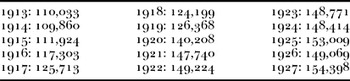
Needless to say, the employment of child labour did not cease immediately, nor were the restrictions particularly stringent. It would be folly to underestimate the extent to which the law was evaded.Footnote 105 The factory inspectorate was understaffed and lacked the power, sometimes the competence, to enforce the law systematically.Footnote 106 Moreover, it is likely that workers and parents, employers and officials colluded in the practice of child labour and that there was significant underreporting of the number of children employed. After the Factory Act of 1881 was placed on the statute book, officials acknowledged that ‘the law is evaded, and children under 12 are, to their great injury, employed as full timers’.Footnote 107 The skill of the certifying surgeons, it was said, was often ‘baffled’ by the determination of children to work and their parents to register them as employable.Footnote 108 This skill, however, did not extend much further than counting the teeth of the children to ascertain their age. By 1890, the Factory Commissioners ‘unhesitatingly’ concluded that ‘as a practical test, it has proved to be a failure’.Footnote 109 In the early twentieth century, children continued to be employed as full-timers, not through any misapprehension, ‘but in pure disregard of the law’.Footnote 110 Even after legislation had restricted the employment of children to half-time in 1891, they were often kept at the mill for the entire day.Footnote 111 Instead of employing children in two half-time shifts, their day was divided into two or more work periods with long intervals of rest between. During these periods of rest, they were required to remain in the mill compound. As a result, they were available for deployment by the jobber at a moment's notice. Since production schedules and labour needs changed in the course of a single shift or a working day, the presence of children afforded the jobbers and mill managers considerable flexibility. In 1922, it was reported that there were 2,268 children working in the Bombay mills.Footnote 112 Thus, until at least the First World War, child labour continued to play an important role in the jobber system.
To gain ready access to child labour, some mills established schools on their premises that ‘half-timers’ could attend during the interval between shifts. It was found in some cases that the so-called school has been used solely for the purpose of retaining the children at the mill during the whole working day, in order that this additional supply of labour might be utilised either as a regular measure or temporarily when occasion demanded.Footnote 113
In this sense, children provided not only a cheap but also a captive source of casual labour. These mill schools sometimes had a fictive existence. In 1882, Meade King reported that he saw ‘two children sitting on a form in the lodge and was told that was the school. It is needless to say’, he added, ‘that the school master was abroad that session’.Footnote 114 The Factory Labour Commission reported in 1908 that the ‘schools’ were in many cases held in unsuitable buildings; frequently no building at all was provided; the children who were supposed to be under instruction were often unable to read or write even the simplest words; no arrangements were made to secure their attendance, though half-timers are in general not allowed to leave the mill compound, and the teachers were, as a rule, hopelessly incompetent.Footnote 115
The restrictions that the factory acts placed upon the employment of children gradually cut down the jobber's options. Child labour was increasingly replaced by adult males. This substitution of child and female labour suggests that the wages for adult males were sufficiently low to obviate the need to hire potentially cheaper women workers, whose hours and working conditions would also be restricted.Footnote 116 However, adult badli labour was considerably less amenable to control. To win and retain their loyalty, the jobber had to exert himself within the social and political arenas of the neighbourhood. Far from providing a captive source of cheap and easily disciplined labour, the jobber had to distribute employment between them, taking care to ensure that each worker was given sufficient work to induce them to return. While jobbers might once have sought to control the labour of children through the clientage of their parents, they now had to act more vigorously and sometimes compete with each other to maintain a supply of adult badlis. Moreover, as millowners sought to increase productivity, under the impact of depression, and to extract more from the workforce, jobbers had to recruit badlis with a higher level of skill and experience. What was required was not only a pool of casual labour ready at hand, to prevent wages rising and to maintain factory discipline, but also, increasingly, a pool of casual labour that was experienced in the industry and skilled and efficient at the work demanded of them. Badlis, in particular, and workers, in general, gained more leverage, and exerted greater pressure, upon their jobber patrons.
Jobbers in the Post-War Boom
By 1914, it was already apparent that the jobber system was not monolithic and it was far from invulnerable. Indeed, it was readily placed under strain. Relatively small shifts in economic conditions, employer policies, the legal framework or the social relations of the workplace disturbed the equilibrium upon which the jobber's power depended, threatened to undermine the basis of his influence and limit his freedom of manoeuvre. During the First World War and its immediate aftermath, the cotton textile industry in Bombay experienced a period of ‘unprecedented and unparalleled prosperity’.Footnote 117 The boom that the cotton mills experienced between 1916 and 1922, characterised by high wage demands, labour mobility and proliferating strikes, once again greatly increased the demands upon the jobber. To a large extent, the wage pressure was stimulated by the inflation and scarcities generated by the war economy and the growing awareness among workers that rising profits had not been reflected in wage increases. At the same time, the workforce expanded rapidly. Between 1914 and 1922, the average number of workers employed daily increased by 40% and continued to rise more slowly until 1927. The rapid expansion and diversification of the labour force, in a period marked by conflict and turbulence, unsettled the jobber system and more generally the social relations of the workplace (Table 1).Footnote 118
Average Number of Hands Employed Daily, 1913–1922

The immediate response of the millowners to the growing wage demands was to resist them. But they were also concerned to avoid strikes and, especially, to keep their machines running at a time of buoyant demand and spiralling profits. As a result, some millowners conceded wage increases. As soon as some mills increased wages, they unleashed a spate of wage demands and a deepening sense of grievance across the industry. It was rapidly becoming clear that ‘the uncorrelated raising of wages in one factory is almost invariably seized upon as a grievance in other factories of the same class’.Footnote 119 By 1917, millowners reluctantly acknowledged that they would have to take combined action to avert strikes, the collapse of work discipline and a repetition of the wage competition of 1904–1908. In August 1917, the Millowners’ Association recommended wage increases in the form of a ‘dearness allowance’ calculated as a percentage of the basic rate. However, spiralling wage demands, growing unrest and strikes continued. Between 1917 and 1920, there were said to be 189 strikes in the industry.Footnote 120 In addition, general strikes, coordinated on an unprecedented scale, wracked the industry in 1919 and again in 1920.
The general strikes forced up the ‘dearness allowance’. However, the nature of these concessions deepened the problem. Increases granted as percentages on the prevailing rates only served to accentuate the wage differentials between occupations and the disparities between mills. Moreover, each mill defined the basic rate on which the increase would be calculated according to its own lights. In the case of some mills, the percentage increase was based on the pre-war year; in others ‘it might apply to any year between 1913 and 1918 when the first increase of 15% as a dearness allowance was granted’.Footnote 121 The effect of increases granted in this way was, of course, to exacerbate wage competition, which, in turn, opened jobbers to the bidding of workers. In addition, the momentum of strikes in 1917–1920 only served to accentuate the competition between jobbers and to heighten the tensions within jobber ‘gangs’. Indeed, the general strike of 1919 was set in motion when workers in the Century Mill demanded that their jobbers secure for them the payment, granted to the workers of the neighbouring Textile Mill, of one day's pay for the two days of enforced armistice holidays.Footnote 122 By 1922, the Industrial Disputes Committee, reviewing the events of the previous half-decade, urged the employers to standardize their wages, for otherwise it would be forced upon them ‘by pressure from amongst the men at a greater sacrifice of industrial peace’.Footnote 123 The standardisation of wages, as the ensuing decades amply demonstrated, was more easily prescribed than effected.Footnote 124
The rapid expansion and diversification of the workforce in this period had major consequences for the jobber's role as an agent of labour discipline and control. It brought into the workforce new groups, particularly North Indian migrants and dalit and other lower caste workers from the Deccan, who were rather weakly placed in the social economy of labour in Bombay, both in terms of skill and status and in relation to the social organisation of the neighbourhood. As a result, they had to depend more than most workers on their jobbers and other neighbourhood patrons. Their entry into the city's labour force not only intensified the rivalry between jobbers within the workplace but also extended the range of competition that the jobbers encountered in the neighbourhood. The increased vulnerability of the jobber in the neighbourhood played back upon his position and influence in the workplace. The deepening of jobber rivalry and the emergence of alternative sources of patronage in the neighbourhood widened the options before workers, enabled them to drive harder bargains with their jobbers and supervisors and, in some cases, to appropriate a greater measure of control over their own labour.
The two most important ‘streams’ of migration in this period were those from Uttar Pradesh and Punjab and from the Deccan, especially from famine tracts of Ahmednagar and Nasik.Footnote 125 The UP immigrants were quickly set apart from the rest of the working classes. They spoke Hindi, little understood and poorly spoken in the mill districts of Bombay in the 1920s. They were described as Pardeshis, literally foreigners. They were deemed to be strong but lazy, stupid but loyal. They were derisively called ‘Bhayyas’ and subject to racism.Footnote 126 Employers sometimes valued them for their physical strength and their loyalty; workers feared that the newcomers would take their jobs and break their strikes. In the 1920s, as newcomers to the city, not as yet firmly entrenched within the labour market, they found themselves in relatively low-paid, unskilled occupations, where work was more irregular and more unpredictable. Their distance from their villages made it harder for them to draw upon their rural base than the migrants from Ratnagiri or even Satara, and it added to the insecurity for their position in Bombay. As a result, they were forced to rely upon their kinship, village and communal connections in the city, and use them more intensively, to find work, housing and credit, as well as support in times of sickness and unemployment. It is likely that this lent a certain coherence and strength to their social organisation based upon kinship, however fictive, caste, however loosely defined, and village, however generously remembered. Immigrant workers from Uttar Pradesh thus relied more heavily upon their jobbers who, because of the loyalty they could command, were potentially powerful rivals.
Similarly, dalits, especially Mahars, were strongly represented among the migrant streams from Ahmednagar and Nasik. They were probably among the worst affected by the war-time famines and the influenza epidemic. Between 1911 and 1921, the number of Marathas in Bombay increased three-fold, whereas the number of Mahars and Dheds increased by more than a factor of five.Footnote 127 At the same time, the number of Mahars enumerated in Ahmednagar halved. ‘There appears to be a gradual drifting into Bombay’, L. S. Sedgwick concluded in 1921, ‘of the great Mahar caste of all the Marathi speaking districts and especially the Deccan’.Footnote 128 Mahars and Dheds, and indeed most dalits, were often excluded from the chawls of the ‘touchable castes’, and thus forced to live together.Footnote 129 Similarly, they found it difficult to break out of their ‘hereditary’ occupations, or what were deemed to be their modern urban equivalents, or more significantly, to break into the higher paid and better skilled trades. They, too, came to depend upon the strength of their own internal organisation.Footnote 130
The jobbers’ gangs were not insulated from the social diversification of the workforce. It would be misleading to assume that the cotton millworkers, Marathas and Mahars, North Indians and Muslims, worked exclusively with jobbers of their own kind. In any case, categories of social identity, as I have shown elsewhere, remained rather loosely defined and flexibly deployed. In the workplace as well as the neighbourhood, jobbers acted in a context that was more complex and diffuse than a static picture of cellular social organisation in the city might suggest.Footnote 131 Caste clusters developed around trades, occupations and, even, particular departments of cotton mills.Footnote 132 Certain caste and linguistic groups were commonly found in particular occupations, but they rarely worked in them exclusively or asserted monopolistic control over them. Through the influence they exerted upon their own jobbers, particular social groups could entrench themselves within the industry. Again, by operating through the jobber system, these groups perpetuated their own position and tried to exclude other. In these ways, the caste, communal and linguistic differences were, in some measure, reproduced within the labour process.
As jobbers were exposed to the rivalry of others, they also became more vulnerable to the demands of the workers in their connection. Similarly, employers, trade union organizers and the workers themselves played upon sectional differences within the jobber's team. Of course, employers had always been aware of the advantages of diversifying the social and ethnic composition of their workforce. Indeed, one of the principal benefits of the jobber system had been that its operations enabled the millowners to diversify the labour force and manipulate its differences. Competition between jobbers was a useful instrument for holding down wages and an often effective means of breaking strikes. Wherever the rivalry between jobbers coincided with lines of caste and communal difference, it enabled millowners to displace whole sections of their workforce. For employers, however, such a strategy was charged with risk. In the long run, playing upon cultural difference could disturb the coherence of the workforce, undermine discipline and, indeed, destroy the jobber system. By the early 1920s, it was apparent that significant changes had occurred in the jobber's position. As the boom collapsed, jobbers found themselves squeezed between the demands of the millowners and the resistance of the workers.
Workers’ Militancy, the Rise of Trade Unions and the Jobbers in the 1920s
Although the jobber system was often characterised as an archaic survival, it did not simply wither away with the advent of modernity. The wage competition of 1904–1908, like its re-enactment between 1917 and 1922, subtle shifts in the deployment of casual labour or the assertion and development of skill differentials had demonstrated how easily the equilibrium upon which the jobber's power depended could be upset. Between 1917 and 1922, it became particularly clear that industrial action on an extensive scale, or even a period of sustained political and social volatility, could constitute a grave threat to the jobber's position. Jobbers, it seemed, were neither able to reconcile workers to the demands of their employers nor able to consistently secure for them what they regarded as better and fairer terms. Both the millowners as well as the workers demanded and expected more from their jobbers. The wage demands, the mobility and competition for labour and the increasing frequency of strikes, now coordinated across the whole industry, deepened the millowners’ anxieties about their methods of managing and disciplining labour. As jobbers were squeezed by the contradictory pressures of their employers and their clients, and inevitably, were found wanting by both, so doubts began to surface about the efficacy of their role. Certainly, the weaknesses of the jobber system were exposed more fully before the public gaze. It is not intended to suggest that the jobbers’ position was irrevocably undermined by the post-war crisis. Millowners and managers continued to value their system of labour discipline. At the end of the decade, the jobber still remained a figure of some significance. Nonetheless, the limitation of the jobber system was more fully exposed by the political action of the working classes than it had been threatened by technological change or economic pressures alone.
As their bulwark against workers’ resistance began to crack, the millowners’ attitude towards the jobber began to change. Increasingly, they began to complain about his inefficiency and his unreliability. The millowners represented him more often as an expression of indigenous culture. They claimed more often to be powerless in his hands and helpless in relation to the resilience of workers’ customs. They complained yet more vociferously about the extent to which they had been cut out of the management of their own mills. They acknowledged more readily that the day might eventually come when the jobber system would have to be reformed, even if they were for the moment rendered powerless by the resilience of workers’ customs. In public discourse, the jobber system was presented as part of the cultural inheritance of Indian industry. Its economic inefficiency and exploitative character appeared to derive from its cultural baggage. Yet, in practice, the weaknesses of the jobber system manifested themselves as primarily and essentially political weaknesses.
But, if the weaknesses of the jobber system had become apparent by 1918, it was far from clear that it had outlived its use. Thus, jobbers and head jobbers played a prominent role in the general strike of 1919 on every side of the dispute, when, in fact, it might have reasonably been expected that its momentum would sweep them away. The strike began in the Century Mills. Four head jobbers had been ‘singled out for special treatment’ and, together with the clerical staff, had been granted an additional month's wages as a bonus. The workers received nothing. In December 1918, most mills in Bombay had been closed down by the millowners for two days to celebrate the Armistice and the workers had been paid their wages as if they had worked. In addition, the workers of the neighbouring Textile Mill had been paid an additional day's wage. The Century Mill workers were aggrieved that they had not received the extra day's wage like their fellow workers in the Textile Mill. They had in any case for some days past subscribed to ‘a rumour that they were all to receive a substantial bonus in honour of the Armistice and to compensate them for the ever-increasing cost of living at a time when the millowners had reaped unprecedented profits’. Their sense of grievance was ‘aggravated’ when they heard that the head jobbers had been paid a bonus. The millowners had ‘warned’ the head jobbers ‘to say nothing’ about their bonus to the workers. Accordingly, when they were ‘taxed by the hands’, they simply ‘denied having received preferential treatment’. But the workers were able to confirm that their head jobbers have misinformed them. The head jobbers now ‘promptly attempted to engage fresh hands’. Not surprisingly, ‘this added fuel to the fire’. The workers went out on strike. Over the next three days, the workers of various other mills joined them, and by January 1919, the strike became ‘general’.Footnote 133
If jobbers were present at the start of the strike, they figured prominently throughout its course as strike leaders and strikebreakers as well as mediators. It should not be supposed that jobbers simply appeared in this strike as the workers’ antagonists or that this was only and habitual function. Some played an active role in the conduct of the strike and represented the workers’ grievances to the politicians, the police commissioner and officials who attempted to intervene in the dispute. Thus, on 12 January, ‘a number of jobbers from different mills’ approached the police commissioner with a view to initiating a process of settlement.Footnote 134 A few days later, more than 200 jobbers and head jobbers participated in a meeting in Parel ‘to discuss what measures should be taken to solve the present situation’. However, this did not mean that the strikers had readily accepted the jobbers’ authority to speak on their behalf. Indeed, at the Parel meeting, the audience challenged their claim to speak for the workers and ‘wanted to know who were these jobbers and head jobbers to voice the demands of the mill-hands’.Footnote 135
Two days later, the head jobber of the Maneckjee Petit Mills, one of the last mills to join the strike, presided over a meeting to consider how to open negotiations with the millowners.Footnote 136 Some 300 ‘head jobbers and leaders of workmen’ assembled by the Kamgar Hitvardhak Sabha, a largely conciliatory union, met the Commissioner of Police and ‘acted as spokesmen’ for the strikers.Footnote 137 From their ranks, a deputation of ‘more than a hundred jobbers’ were taken to the Secretariat by the Commissioner of Police to meet the Governor and they put their grievances and demands before him. This meeting initiated the process that finally culminated in the settlement of the strike. But the negotiations scarcely proceeded smoothly. Along the way, the workers rejected many of their putative spokesmen and repeatedly threw over the deals that had been struck for them. At a late stage, when it seemed as if the dispute had been resolved, and the workers appeared to have begun slowly to return to the mills, the strike resumed over the question of whether wages would be paid for the duration of the dispute. Nonetheless, from the beginning to the end of the strike, jobbers had made their presence felt. Colonial officials, as well as millowners, workers as well as the publicists who had tried to organize them appeared to recognize the jobber's pivotal role in the conduct and the settlement of the strike.
During the 1920s, as trade unions struggled to form, jobbers often played a significant role in them. The Kamgar Hitvardhak Sabha was said to have important connections with jobbers. Bhatvadekar, a sizing jobber in the Premier Mill, and the mercurial Mayekar, then a clerk at the Jacob Sassoon Mill, were the moving spirits behind the founding of the Girni Kamgar Mahamandal, which was formed in an effort to consolidate the organisation forged during the 1924 general strike.Footnote 138 The Bombay Textile Labour Union, formed in the aftermath of the general strike of 1925, was also built around, and closely involved, jobbers.Footnote 139
Conversely, the jobbers remained crucial to the millowners as a bulwark against industrial action. Thus, even observers like S. M. Rutnagur who, in the mid-1920s, had noted ‘the waning influence of the mill jobbers’, recognised that ‘even at the present time there are millowners who can depend upon the loyalty of the jobbers’.Footnote 140 In the late 1920s, the Bombay Textile Labour Union described how, in moments of industrial action, jobbers were to be ‘seen running about from locality to locality in the city to find out labour to break the strike. . . . In times of strikes, they play the role of strike breakers by dividing the ranks of the workers’.Footnote 141 In the 1920s and for the next decade, neither employers nor trade unions could overlook the jobber in their political calculations. In one sense, the jobber became integral to the terrain over which the struggles between capital and labour were fought. Workers as well as millowners fought, sometimes directly, sometimes remotely, over the re-definition of the jobber's power and authority. Increasingly, the jobber was swept up into the conflicts between capital and labour, and eventually undermined by them.
In the 1920s, workers began to combine and take co-coordinated strike action more frequently across the industry as a whole. The general strike of 1919 was only the first of eight general strikes that occurred in Bombay over the next ten years. All of them were bitterly fought over extended periods and they affected other industries in Bombay as well as workers in other industrial centres. Moreover, during the decade, the eighty cotton mills in Bombay witnessed about 1,000 strikes. This figure excludes the numerous stoppages that lasted a few hours, affected only a handful of workers, were resolved relatively quickly or were localised to a jobber's team or a department, and that, as a result, therefore, either passed unreported or escaped the notice of the police, the press and the Labour Office.
Industrial action in this turbulent decade occurred on at least two levels: at the level of the mill and that of the industry as whole. Since the late nineteenth century, commentators had observed that mill workers had resisted the initiatives of their employers or effected strikes to seek redress for their grievances at the level of the jobber's gang, the department or the individual mill. Often, these disputes were settled within the jobber's team or by the arbitration of the head jobber or of the higher supervisory grades. They might result in a re-shuffling of the jobber's gang, as some workers were dismissed and new hands hired in their place. Occasionally, they could end with the jobber walking out of the mill with his workers. Faced with the threat of combination or industrial action, the jobber could continue to manoeuvre to isolate and exclude trade unions from the workplace or help to identify ‘trouble-makers’ and replace them. It was at this level that the jobber was particularly effective in managing the workers’ discontents, in pre-empting strikes, or if they occurred, in breaking them. It was precisely for this reason that millowners valued their system of labour control and defended the institution.
Of course, industrial action had by no means been confined exclusively to the department or even to the individual mill before 1919. Strikes had sometimes been co-ordinate across a group of mills when policies of the managing agent had affected them in the same way. In 1908, workers effected widespread action across the industry in protest against Tilak's imprisonment for sedition. After 1918, however, they organised and initiated wider scale industrial action with greater frequency. The wider scale of labour organisation and industrial action immeasurably complicated the jobber's task. In one sense, the growth of working class militancy reflected simply the inability of the jobber system to contain it, and in the long term, its effect was to undermine this instrument of labour control. As workers organised beyond the mill or went on strike across the industry as a whole, the jobber appeared far less effective at disciplining his team or controlling affairs in the individual department or mill.
The development of trade unions, however tenuous and evanescent they may have been, brought a new set of pressures to bear upon the jobber. The emergence of trade unions has sometimes been interpreted as the outcome of a struggle between modern forms of labour organisation and the persistence of traditional jobber networks. In fact, trade unions had operated with varying degrees of permanence since at least the 1880s, and jobbers had played a significant role in their formation and initiatives. There had always been agents in the mill districts of Bombay who performed various legal and social services for the workers, and who often, with the influence thus gained, stepped forward as their representative in industrial disputes. The elaboration of a legislative and administrative framework governing work, trade unions and the conduct of industrial disputes pulled these agents into the structure of industrial relations. Jobbers could not ignore these political agents and publicists and the organisations they created. To supply the legal and social needs of his team of workers, beyond the immediate tasks of fulfilling their requirements in the workplace, the jobber had to establish connections with this army of pleaders and publicists. These agents, in turn, sought out clients and followers in the mills largely with the assistance of the jobbers. Many trade unions thus formed on the basis of jobber connections and few could afford to ignore them altogether.
For most trade unions—especially those that were built around jobber networks, such as the Kamgar Hitvardhak Sabha, the Girni Kamgar Sangh, the Bombay Textile Labour Union and the Girni Kamgar Mahamandal, the initial aim was to be accepted by the employers as the workers’ representative. They calculated that once they had the ear of the employer, they could secure favours and concessions for their followers, and thus attract more workers to their union. With greater membership and widespread support among the workers, they could develop their status as accredited spokesmen for labour by making wider political alliances, gaining access to new constituencies and extending their influence both within the state and within public political arenas. Such calculations were, however, predicated on the assumption that employers might be willing to countenance the intervention of agencies outside their mill to mediate between their workers and themselves. This assumption was rarely borne out in practice. Most employers brooked no interference. On the contrary, they declared brusquely that their workers had no need for trade unions. They were, they asserted, accessible to their workers. Their employees could always approach them with their grievances and expect to have them treated with fairness and justice. By securing a firm alliance with their jobbers, managers could exclude ‘outsiders’ from their mills. The utility of the jobber to the millowners lay, in large part, in the immunity that he could offer his employers from the meddling of ‘outsiders’.
By establishing close connections with trade unions, jobbers risked managerial disfavour, and could therefore jeopardize their own position. On the other hand, jobbers had to remain responsive to the needs and demands of the workers. It is not surprising, therefore, that as working class resistance intensified, the jobber was under considerable pressure to participate in the labour movement. If trade unions lacked significant support among the workers in his team, the department or the mill, the jobber could act with impunity to undermine them. Once they acquired a following, however informally they were associated, jobbers had to tread warily. The reciprocity that marked the jobber's relationship with the workers acted as a restraint upon him, and when the groundswell of militancy was strong, he was sometimes swiftly marginalised. The maintenance of the jobber's position depended upon striking the right balance between the imperatives of management and workers.
The relationship between jobbers and trade unions was necessarily often marked by suspicion and distrust on both sides, tense negotiation and, sometimes, unbridled antagonism. Whatever the extent of their dependence upon jobber networks, trade unions necessarily acquired a life of their own. They could neither function overtly in the jobber's interests nor simply do his bidding. Their strength lay in the fact that they could act at the level of the whole industry and in wider political arenas. As trade unions developed, they became an alternative source of patronage for workers, through the provision of services and the orchestration of their grievances at levels beyond the jobber's capacity to handle effectively.
The jobber's position was further weakened in the late 1920s by the ‘hold’ that, as observers frequently noted, the communists had begun to exercise over the Bombay working class, in general, and the textile workers, in particular. By the end of the 1920s, the communist-led Girni Kamgar Union had emerged as the most powerful union in Bombay. The communists were overtly confrontational in their approach. They did not seek the favour of the employers or attempt to establish themselves within the formal arenas of politics. Indeed, employers and officials rarely allowed them to entertain these options. Instead, the communists strove to give the militancy of the working classes its head. They sought to intervene energetically in the daily disputes of the workplace. They assiduously took up grievances, however minor, and sought to demonstrate their ability to secure favourable settlements. By intervening relentlessly at the level of the individual department or mill, they attempted to generate sufficient momentum and support for widespread industrial action. By building up a following across the industry, and establishing their reputation as champions of the workers’ cause, they hoped to make it impossible for the employers to isolate them within the particular mill. In addition, excluded from the workplace by the employer, the communists often paid close attention to developing connections in the neighbourhood. They sought to establish linkages with the residents of the chawls, neighbourhood bosses and dadas as well as moneylenders and grain dealers.
This strategy of confrontation was charged with risk, even if it was necessitated by the repression to which the communists were subjected. Jobbers and managers could, for instance, isolate them by dismissing workers who supported the Girni Kamgar Union. On the other hand, it forced jobbers to take sides and reduced their options both within the workplace and the neighbourhood. As the jobbers were subjected to greater pressure by their rivals and their clients in the neighbourhood, they were rendered more vulnerable in the workplace. When the Girni Kamgar Union had developed sufficient strength across the industry, it could more effectively protect its members, jobbers included, from the victimisation of employers. As Sir Manmohandas Ramji complained in 1929, the dismissal of a single worker often immediately brought the representatives of the Girni Kamgar Union to its gates and resulted in a strike on the following morning.Footnote 142 For some jobbers, this immunity offered by the union tipped the balance towards supporting its actions. They could, thereby, honour their clients, protect their commercial interests and defend their standing in the neighbourhood. In 1928 and 1929, some jobbers even served on the union's mill and chawl committees. During its moments of strength, the union could use its jobber connections to find work for members who had been victimised. At such times—and they were few—it made eminently good sense even for the most pragmatic jobber to establish and maintain strong connections with such trade unions. But it also suggests that the defeat of the strike could severely compromise the jobber's position at the workplace and often render it indefensible. Indeed, jobbers who supported the Girni Kamgar Union were often replaced after the 1929 strike. Similarly, the repression of the Girni Kamgar Union could destroy its organisational links disproportionately to any loss of support among the workers.
The emergence of trade unions and the development of industrial action on a wider scale was not simply the consequence of modernisation. The absence and weakness of trade unions has often been attributed to the early stages of industrialisation or the prevalence of a pre-capitalist culture. In fact, institutional changes in the politics of the industry encouraged organisation beyond the individual mill, and sometimes provoked and necessitated industrial action on a wider scale. Of course, once they formed, trade unions, and especially the communists who led the Girni Kamgar Union, pulled the daily social relations of the workplace and the discrete arrangements for labour control into wider, public arenas. The increasing intervention of the BMOA and the state pulled in the same direction and, indeed, helped to create the arenas within which trade unions developed. It was in part the growing tendency of the Millowners’ Association to formulate policies and take initiatives for the industry as a whole that encouraged workers to organize and act at matching levels. The general strikes that occurred in the 1920s were closely related to wage policies formulated by the Millowners’ Association for the industry as a whole: the wage increases in the form of dearness allowances in 1919 and 1920, which finally brought those general strikes to an end; the withdrawal of the annual bonus in 1923; and the uniform wage cut for the whole industry in 1925. Similarly, in 1928, it was the Millowners’ Association that formulated the rationalisation scheme discussed before the Fawcett Committee during the negotiations that followed the general strike.
Similarly, the colonial state and its agencies intervened increasingly in matters that bore upon the management of labour in the mills. In particular, it began to legislate for the conduct and settlement of industrial disputes. Accordingly, the Government of Bombay instituted a Labour Office largely to collect information, statistics and intelligence on all matters relating to workers. In 1920, it appointed a committee to investigate the causes of industrial disputes and to report on possible remedies for them.Footnote 143 As officials saw only too clearly, the formation of responsible trade unions might provide the antidote to what they perceived as a volatile and turbulent labour force. ‘Responsible trade unions’ could also help to prevent strikes, to channel the workers’ grievances or to effect the speedy settlement of disputes. It was partly to foster the development of ‘healthy’ trade unions that the Government of Bombay introduced legislation in 1926 to require the registration of trade unions. The immediate consequence of this act was not so much to expose the hidden sources of labour organisation but to stimulate the proliferation of trade unions as publicists who entertained even the smallest hope of developing a labour constituency rushed to form and register trade unions.
Following the general strike of 1928, the state adopted a more aggressive posture towards ‘confrontational’ trade unions, and in particular against the communists in Bombay. The Meerut Conspiracy Case, primarily directed against the communist leaders of the Girni Kamgar Union, was appropriately dubbed a strikebreaking prosecution. The state intervened in the general strike of 1929 as well as in other industrial disputes in a manner that could only strike courage into the heart of the most timid capitalist.Footnote 144 Thus, during the 1929 strike, the police assisted blacklegs, placed strikers’ meetings under surveillance and closely watched over the conduct of strike pickets. During the year, the Government of Bombay introduced legislation to restrict picketing, an ordinance to deport suspected communists and a trade disputes act to define lawful strikes more closely. In this way, the state further narrowed the terms on which trade unions could function. The Trade Disputes Act required trade unions, if they were to serve as legitimate negotiating agents for the workers, not only to register under the 1926 Act but also to secure recognition from the employers as the representative of the workers.
Increasingly, in the 1920s, the scale of industrial action exposed the weaknesses of the jobber system as a mechanism for maintaining labour discipline and as a bulwark against strikes. At the level of the individual mill, the jobber remained a fairly effective instrument of labour control. The jobber could still act effectively on the shop floor to undermine workers’ organisation, neutralize industrial action and break strikes—that is, so long as the strike was not too extensive or the workers too determined. It was for precisely the utility of the jobber at this level that the millowners continued to defend his position despite mounting scepticism about his ability to mediate between the growing and conflicting demands of both employers and workers. Necessarily, the vulnerability of the jobber in the face of widespread action began to raise doubts among the millowners about his efficacy within the single mill. Significantly, it was only after the state had intervened decisively in both the conduct and the settlement of industrial disputes and begun to act repressively against the political outriders of the labour movement that the Millowners’ Association, and more reluctantly, its individual members, began to relent on the question of the jobber. If the state was to bring the weight of the law, and the potency of its armed might, into the sphere of industrial relations, the millowners gradually and reluctantly showed a grudging willingness to contemplate the reform of the jobber system.
The millowners had particularly valued the jobber for his ability to manage discontent, thwart combination and break strikes. In fulfilling these disciplinary functions within the mill, it was also necessary that he should ensure that an adequate supply of labour, of the right kind, was maintained. As labour organised and co-coordinated strikes across the industry as a whole, jobbers could neither easily detach workers in their mill from the sweep of the larger movement nor necessarily ensure discipline in their team and department. The millowners were beginning to observe the declining efficacy of the informal mechanisms of labour discipline and control based upon the jobber. The increasing willingness of the state to intervene, both on the street and through legislation, to govern the conduct of industrial disputes, held out the promise, however faint, that formal structures could be created to narrow the space for industrial action. Of course, it should not be supposed that the millowners could see clearly or far into the future, or that when they did, they shared the same vision. Nor is it intended to suggest that the colonial state was simply and uniformly concerned to repress workers’ combinations. In fact, the colonial state sought to regulate industrial disputes more closely in part to stimulate the formation of ‘healthy and responsible’ trade unions. The millowners saw only too clearly that the consequences of state intervention could be double-edged, and sometimes viewed the prospect with apprehension. Yet, the fact remained that significant changes at the level of the state and within the wider political and legal context of industrial relations could facilitate, or indeed, call forth adjustments in methods of managing labour in the workplace.
Rationalisation and the Reform of the Jobber System
From the late 1920s, the reform of the jobber system, and the removal of the evils that it fostered, came to be incorporated into the capacious, infinitely elastic definition of rationalisation in public discourse.Footnote 145 In the rationalisation scheme that the Millowners’ Association presented to the Fawcett Committee, as it sat in arbitration over the 1928 general strike, the millowners revealed the lines along which they, or at any rate the association's committee, were thinking about the future of the jobber. This scheme was hastily assembled in the context of the general strike. It amounted in effect to a statement of the terms on which the millowners were prepared to settle the dispute. In the negotiations before the Fawcett Committee, it was also intended to provide cover and legitimacy for the piecemeal initiatives that individual millowners had been taking since the mid-1920s. The scheme was not implemented as a whole or even systematically in part. The BMOA could not have realistically expected to impose it on its members. In this sense, the millowners’ scheme was largely hypothetical. At the time, it could also have been interpreted as a signpost for the new directions in which the millowners might take the industry in the future. Significantly, before the Fawcett Committee, the millowners disclosed for the first time a willingness to breach their system of labour control. In practice, individual millowners moved with greater caution against the jobber than the scheme suggested. Indeed, the blueprints for reform that were initially sketched in the late 1920s had by no means been comprehensively, even substantially, implemented by 1940. To the extent that they moved against the jobber, they proceeded selectively.
Jobbers had often been lumped together and homogenised in public discourse. The millowners themselves did not always differentiate too closely between their varied ranks and functions. ‘In many cases’, said Fred Stones, one of the representatives of the Millowners’ Association, speaking generally, at the outset of the discussion of its ‘efficiency scheme’ before the Fawcett Committee,
Jobbers are being reduced. You will find that an attempt has been made to reduce jobbers both in numbers and pay. In the old days the jobber was responsible for obtaining labour. It grew into a very vicious system and has been objected to by all sections of labour leaders. The jobber has undoubtedly been guilty of getting Dasturi and we are trying to break this system to our utmost capacity.Footnote 146
Later, Stones was seemingly more specific about how and where precisely he wished to break the system. ‘Our policy’, he declared to the Fawcett Committee in the midst of a discussion about the winding department, referring to the Millowners’ Association as a whole, ‘is that we want to do away as much as possible with the head jobber. He is the man who creates a good deal of trouble’.Footnote 147 Yet, if the millowners had intended to do away with the head jobber, their plan outlined before the Fawcett Committee did not suggest any determination on their part.
While the millowner's efficiency scheme, devised for the Fawcett Committee, did not envisage an indiscriminate attack upon the jobber, it is far more significant that it contemplated reform at all. In drawing up its scheme, the Millowners’ Association was only too aware that it had never been able to impose its will on its members, especially in matters that affected the organisation and deployment of labour. Its ability to influence the individual millowner's policies towards the jobber was as limited, as the latter's position was vital to each mill's system of labour control. Thus, in their written statement submitted to the Fawcett Committee, the Millowners’ Association made clear, ‘In view of the wide variations of work, wages and designation of head jobbers, it has been decided not to include them in the present scheme of standardization. The number and pay of head jobbers are indicated in the list as a guidance to members only’.Footnote 148 The variations in the wages, conditions of work and designation of most occupations in the industry were greater than those for the head jobber. Nonetheless, this mantra was repeated religiously throughout the negotiations. S. D. Saklatwala, introducing the rationalisation scheme, informed the Fawcett Committee that they were merely seeking to establish guidelines for future action. Referring to head jobbers, Saklatwala said, ‘Our members pointed out that in many cases they are very old jobbers’. Their longevity was a mark of their loyalty and good service. Their members were ‘convinced that they [jobbers] are being paid more [i.e. more than they deserved], but they cannot reduce their old men. That is why they were left untouched’. Accordingly, the Millowners’ Association's scheme for the standardisation of wages was meant for ‘their guidance, if later on they have to employ other jobbers in place of the old jobbers’.Footnote 149 In the blow room, for instance, ‘the number and pay of head jobbers are indicated in their list as a guidance to members only’.Footnote 150 At a later stage in the negotiations, Fred Stones, also representing the millowners, when pressed on the question of how many jobbers would be retrenched, drew back, ‘As a matter of fact, this is only a recommendation. It may or may not be carried out by the mills. They may like to retain their old servants’.Footnote 151 Policy directives from Churchgate Street were always likely to break against the more delicate arrangements of labour management in Parel and Byculla. For this reason, the Millowners’ Association took care not to present its schemes as a set of reforms or policy initiatives and resolutely held to the position that they should be understood simply as guidelines and recommendations. It left the members as much freedom as possible in dealing with their jobbers. The Fawcett Committee took these incantations to reveal the natural order of things. Its report simply explained, ‘Head jobbers have been expressly kept out of the purview of the standardization scheme’.Footnote 152 The guidelines and recommendations of the Millowners’ Association were to some extent prepared and rehearsed for the political theatre in which the audience was an intermittently credulous state and labour was turned away at its doors.
Far from undermining the head jobber, the measures described by the millowners sometimes suggested that they were, if anything, seeking to protect, perhaps even to strengthen, his position. The millowners’ scheme effected a distinction between the head jobber and the ordinary jobber. In department after department, the rationalisation scheme left the head jobber largely untouched. Head jobbers in the blow room were excluded from the scheme.Footnote 153 There was ‘a minor increase’ in their workload in the card room;Footnote 154 they fell outside the ambit of the scheme in the drawing and speed frames in the spinning department;Footnote 155 and were excluded once again in ring spinning.Footnote 156 In the weaving departments, the most dynamic sector of the industry, they proposed little retrenchment in general,Footnote 157 and certainly head jobbers were to be left untouched.Footnote 158
Not all jobbers got off lightly, however. The millowners’ blueprints for rationalisation appeared to widen the gap between head jobbers and the serried ranks of lesser jobbers. While the scheme appeared to envisage a small increase for head jobbers in the blow room, listed only as a direction for its members, the assistant jobbers’ wages were to be reduced.Footnote 159 Similarly, while head jobbers who supervised the drawing and speed frames were excluded from the efficiency scheme and their wages were increased, the rates for assistant jobbers were cut and their workloads were increased ‘to what we consider reasonable’.Footnote 160 The millowners sought to explain this increased wage differential between head jobbers and assistant jobbers as merely natural: as a result of ‘the wide range of wages paid’ to jobbers in each mill, the wages of assistant jobbers may have been ‘unduly high and unduly low in the case of head jobbers’.Footnote 161 Similarly, the wages of doffer jobbers, whose role was almost exclusively supervisory, suffered ‘a small reduction’, according to N. M. Joshi, representing the Joint Mill Strike Committee.Footnote 162 In the drawing department, preparatory to weaving, the average wage of head jobbers was reduced ‘a little bit’, but that of the assistant jobbers was cut from an average of Rs. 2-7-11 in 1926 to Rs. 1-15-4. ‘The idea’, Fred Stones explained, ‘is to discontinue the assistant jobber’.Footnote 163
In ring spinning, the average wage recommended for the head jobber was raised, even if the post was once again excluded from the standardisation scheme. But in the case of line jobbers, the millowners declared that they envisaged ‘a definite reduction in wages and an increase in the amount of work to be done’.Footnote 164 The millowners were in no doubt that line jobbers could ‘look after more machines and also that the wages they received were out of proportion to the work turned out’.Footnote 165 The fact that the line jobber in both spinning and weaving supervised a single team of workers gave him considerable power over them. When, as in the weaving shed, they were paid on the basis of output, like the workers they supervised, they sometimes shared common interests in wage disputes. If they joined together, they could effect a potent, indeed for the managers, a menacing, combination. In any case, the relationship between the line jobber and the weavers, in particular, grew increasingly fractious. As the jobber's authority was increasingly challenged and sometimes undermined, he could no longer fulfil his disciplinary role to the satisfaction of the managers and the millowners. These circumstances were sufficient to encourage the millowners to assert a measure of direct control. ‘I think the other side will agree with me’, Fred Stones opined, ‘when I say that the wings of the line jobbers should be clipped’.Footnote 166
Line jobbers both in the ring spinning and the weaving departments were, perhaps, among the most immediately affected by the rationalisation scheme. The shift towards the production of finer cloth and higher counts of yarn was expected to reduce labour needs both for spinning and for weaving. Inferior cotton and coarser counts of yarn led to more breakages, and therefore resulted in more interruptions than the use of finer qualities.Footnote 167 Rationalisation that entailed a shift to the production of finer cloth and higher counts would, the calculation seemed to run, necessarily reduce the work demanded of weavers and line jobbers. Consequently, the millowners felt that ‘the wages they received were out of proportion to the work turned out’. The Sassoon group had already begun to run its mills without line jobbers, as they shifted to finer counts of yarn and varieties of cloth. The chief function of the line jobber, said Mr. Stones, was ‘only to drive men’, and for this they now used the spinning and weaving masters.Footnote 168 However, the adoption of higher count spinning or the weaving of finer varieties or increased speed settings without corresponding improvements in the material supplied caused many more breakages, leading to the serious detriment of wages.Footnote 169 The millowners’ scheme placed the line jobber, even in weaving, under notice. Indeed, the millowners expected that their reforms would result in the retrenchment of at least 500 line jobbers.Footnote 170
Similarly, jobbers in those parts of the labour process that were deemed marginal to the industry's fortunes, such as some preparatory processes, would have felt the worst impact of the scheme. The jobbers in the mixing room or earlier preparatory processes, where much of the work consisted of shifting bales of cotton from the godowns into the mixing room, were to find their wages reduced.Footnote 171 In the reeling department, where most of the workers were women, the millowners’ scheme entertained the ambition ‘to eliminate head jobbers and substitute overseers in their places’. The millowners wanted to go further and put an end to direct recruitment in the reeling department, reduce the number of workers hired and introduce contract work. The decline of the handloom industry and the loss of the Chinese markets for yarn meant that ‘there is a tremendous reduction in the amount of reeling in Bombay’. With the more extensive development of weaving, mills used their own yarn to a larger extent. Although yarn continued to be reeled for the dyers, weaving departments largely took their yarn unreeled. In any case, the millowners envisaged that greater mechanisation in reeling machines would also reduce their need for labour.Footnote 172
Similarly in drum winding, the millowners’ scheme recommended the abolition of the head jobber as well as assistant jobbers. ‘They are superfluous’, Fred Stones declared before the Fawcett Committee. Drum winding was used especially for coloured yarn; increasingly, however, mills ran their winders for grey and coloured yarns together. It was envisaged, in any case, that the old drums would be replaced by vertical spindle machines on which the yarn could be fed directly on to the bobbin rotating the spindles. Women predominated in winding, and it was thought they would continue to replace men in this department. ‘We try to have as few men as possible in that department’, claimed Fred Stones. A few mills continued to retain jobbers, but the millowners wanted to replace them with naikins or female supervisors. For the ‘very little work’ undertaken by the head jobber ‘can be done by the naiken just as well’.Footnote 173 When the representatives of the strike committee cast doubt upon an arrangement that would increase the naikin's workload, Fred Stones assured the Fawcett Committee that ‘you can do without a jobber’ because ‘the winding master can look after the whole thing’.Footnote 174 In any case, the aim was to feminize the labour force in the winding department. It seemed appropriate to them to recommend the replacement of jobbers with naikins because ‘we prefer women winders to be looked after by women’.Footnote 175 There was, however, a more important reason for replacing men in this department, which the millowners may have embraced more enthusiastically than this concern for the conditions and convenience of women workers. As women, winders who did a relatively ‘skilled job’ were paid less than the coolies who simply carried baskets of pirns to the weft machine and coloured or grey bobbins to the warping machine, because, as Stones explained, ‘the one is a man and the other is a woman’.Footnote 176 A similar line of reasoning has enabled the millowners to fix the wage structure so that reelers were paid less than doffers, often young boys and adolescents, and acknowledged to rank among the least ‘skilled’ millworkers. As Fred Stones explained, when asked about the wages for reeling, ‘It is female labour. It is also spasmodic work. . . . It is very casual work’.Footnote 177 Many of the initiatives, formalised in the scheme that the millowners presented to the Fawcett Committee, had already been taking place gradually over the course of at least the previous decade.
The rationalisation scheme drafted by the Millowners’ Association expressed two themes in their consideration of the jobber's future. First, it appeared to shore up the position of the head jobber, increase his authority within the workplace and separate his interests from the rest of the workforce. If the millowners had to concede important areas of control at the level of the jobber, they would balance the resulting changes by pulling in the reins of power more tightly at a higher and more centralised level. Ostensibly, the effect of these measures was not to dismember the jobber system but to make it more effective as an instrument of control and to release it, as far as possible, from the push of militant forces below. In a sense, the head jobber was to be turned into higher grade supervisory manager and his position secured from the general consequences of rationalisation. Perhaps, this rendered the ‘efficiency scheme’ more acceptable to their members, who at the level of the individual mill, had come to depend upon the jobber and his wider social connections for labour discipline and control. But if the head jobber were to be drawn into the managerial hierarchy, then his role, and especially his relationship with the workers, characterised by reciprocity and interdependence, would be fundamentally and irrevocably transformed. Indeed, the head jobber might remain the head jobber, but not as his employer had known him.
The second theme in the association's discussion of the jobber developed out of an older concern among millowners about the extent to which their system of labour recruitment and discipline had served to cut them out of the structure of authority and control in their mills. Of course, it had not: jobbers had scarcely usurped the managerial hierarchy and displaced the owners. In any case, the millowners may have been willing to compromise their own right to manage their mills if the jobbers and other supervisors in the managerial hierarchy had been able to maintain effective control over the labour force. But the jobbers’ ability to discipline and control labour was now being severely called into question. In this light, it had appeared preferable to some millowners to recover such control of the labour force and their management of the mills as they feared, or claimed, they had lost. This strategy was underpinned by the assumption that the jobber's most valued function was to serve as an agent of labour discipline and as a bulwark against industrial action and workers’ combination. The jobbers’ interests were so closely tied up with those of the workers that it was always possible that a sufficiently powerful labour movement would sweep the bulwark up in its embrace. The millowners’ initiative against the jobbers derived, in part, from the political threat implicit in a labour movement that gathered up their support. It was this anxiety that Stones expressed when he observed that the head jobbers could create ‘a good deal of trouble’. To replace the jobber would require an alternative disciplinary mechanism, perhaps capable of operating on a wider scale than the individual mill or even the industry as a whole, to counter the growth of an effective labour movement.
As the millowners knew only too well, the implementation of an ‘efficiency scheme’ would open up differences between them and their employees. The introduction of fresh lines of output, new machinery and different raw material necessarily generated disputes about rates and conditions, wages and workloads. To reconcile workers to changed conditions had been one of the conventional functions of the head jobbers and their assistants. Although the efficiency scheme presented to the Fawcett Committee had been hastily assembled in the context of the general strike, the millowners claimed that it had been ‘evolved . . . from technical experience’. It was only to be expected, therefore, that ‘mistakes may occur’. For this reason, they wished to ‘lay special stress on the fact that if strikes are to be prevented . . . we must have a permanent sitting committee to meet Labour on all these points so that adjustments could take place’. Such a committee would have to operate at the level of ‘the whole industry and not each particular mill’.Footnote 178 Its proceedings would ideally be governed by ‘a definite programme’, supposedly based on what Fred Stones described as the Lancashire model, which spelled out precisely ‘how strikes can occur and strikes cannot occur until a very definite process has been gone through’. The stakes, as the millowners saw it, were high. Indeed, ‘the essence of the whole standardization scheme would go by the board’ unless ‘this means of preventing strikes and adjusting disputes between a mill and its operatives’ was instituted. For this reason, the spokesmen for the Millowners’ Association appeared to be relieved that ‘the Trade Disputes Bill looks like finally going on to the statute book’.Footnote 179
The efficiency scheme had been drawn up by those millowners who dominated the managing committee of the Millowners’ Association. They were particularly concerned to persuade their fellow members to subscribe to what was inevitably their own construct of the collective interests of the millowners. Before the Fawcett Committee, they appeared to look forward to a time when a system of collective bargaining was instituted in Bombay, just ‘as in Lancashire’. Yet, they embraced this vision with apprehension. Stones and Saklatwala, above all, would have been only too aware of the obstacles strewn across their path. The representatives of the Millowners’ Association was only too aware that they had repeatedly failed to persuade their members to accept their advice and implement their decisions. They could not impose their wishes upon their members. It was possible, of course, that the workings of a permanent industry-wide committee to negotiate differences with labour could serve to develop some sense of their collective interests among the millowners in the long run. But it was far from clear who would represent labour. For the millowners, it was axiomatic that most trade union leaders were ‘outsiders’ who manipulated and misled the workers and who had no real grasp of the workings of the industry. Trade unions, which, in their view, could be relied upon to act ‘responsibly’, rarely commanded significant support among the workers. But those that claimed an extensive following, such as the Girni Kamgar Union in 1928, were, in their view, neither ‘responsible’ nor could, by virtue of being ‘outsiders’, be deemed to be ‘representative’ of their workers. It was precisely in these terms and in this language, to which notions of ‘responsible’ and ‘representative’ unions proved crucial, that the trade disputes legislation, which developed in the 1930s, attempted to define the circumstances in which a strike could take place. As solidarities forged across the whole industry rendered jobbers less effective in preventing or breaking strikes, the millowners began to admit that they would have to rely upon state intervention and legal regulation to thwart and undermine working-class action.
The trade disputes bill introduced in September 1928 provided for the appointment of a court of inquiry to investigate the nature of disputes and conciliation boards to settle them. It enunciated the principle that workers in public utility services would be have no right to strike until enough time was allowed to investigate their grievances and negotiate a settlement. Furthermore, it also specified the conditions in which a strike could be declared illegal—for instance, if its objective was other than the furtherance of a trade dispute. The millowners could see merit in some of these proposals. In others, they could perceive the potential for their elaboration in a more favourable direction. Strikes led by the communists could thus be declared illegal, if, for instance, revolutionary rhetoric was used to mobilise workers. The provisions against lightning strikes might one day be extended to a range of industries wider than the public utility services, and perhaps eventually include cotton textiles. Accordingly, the Millowners’ Association welcomed the Trade Disputes Bill with caution. They would have preferred the bill to control picketing, which ‘is intimidation, pure and simple’,Footnote 180 rather than to focus attention upon conciliation. Indeed, the millowners were reluctant to admit external intervention in the management of their mills, and especially in matters related to labour control and discipline. If they were seeking, as some millowners had begun to claim, to claw back their power to control labour from the jobbers, they would not ordinarily have chosen to surrender it to the state. Faced with mounting industrial action, the millowners responded with the brisk assertion that their workers had no real grievances, and that in any case, they themselves were always accessible to their workers and willing to listen to their grievances and to entertain their more reasonable demands. The millowners did not regard the prospect of Labour Officers or courts of inquiry and conciliation boards with any more relish than the meddling of ‘outsiders’ and trade unionists. However, the general strikes of the 1920s had demonstrated how swiftly industry-wide action could upset the mechanisms of labour control that operated at the level of the individual mill. The millowners were forced to acknowledge, therefore, that procedures for the conciliation of trade disputes might serve a necessary purpose. In fact, they might even act to contain them. Thus, in declaring the millowners’ support for the bill, the chairman of the association, J. B. Petit, expressed the hope that its provisions would be employed only if, and after, ‘all direct negotiations’ had failed.Footnote 181 In other words, the legislation might be useful, but only if it was applied on their terms.
Clearly, the millowners’ blueprint for rationalisation cast a shadow of uncertainty over the jobber's future, and more immediately, over his employment. Rationalisation carried overtly the threat of unemployment. Most workers in Bombay shared in the common experience of irregular and insecure employment, which was arbitrarily obtained and just as easily lost. By the late 1920s, it seemed that jobbers were being exposed more systematically to the same uncertainties. Jobbers and workers found that, step by painful step, their material interests, social experience and political perceptions were tending gradually and unevenly to converge. The Fawcett Committee recognised that the fear of unemployment is named as the ‘chief reason’ for the general strike of 1928.Footnote 182 The acute and widespread fear of unemployment may help to explain the extraordinary solidarity of the general strike. Significantly, jobbers participated in the general strike of 1928 more fully than ever before. Certainly, they were unable throughout its course to systematically recruit workers, whether in the city or in major districts of migration, to break the strike. Their organisational ability and their influence within the material structure of the neighbourhood—especially their command of credit—was a major factor in enabling workers to stay out on strike for six months in 1928 and to repeat the feat in the following year. To sustain these strikes, workers had to persuade and cajole, manipulate and coerce to their side, the sundry patrons and power brokers of the neighbourhood. In the aftermath of the strike, the millowners attempted to dismiss jobbers and workers alike who participated in the strikes of 1928 and 1929, and who had resisted their attempts to cut wages and alter work practices.Footnote 183 Some jobbers simply lost their place in the turbulence of those years. But many were the victims of the determination of some millowners to turn over their labour force. These attempts by the millowners to replace their workers was undertaken ruthlessly and without any hint of the sentiments expressed by their representatives for their ‘old servants’. It sometimes took the form of attempts to introduce new social groups into the workforce and following an old practice to diversify its social composition. For instance, it was initiated, at the level of individual mills, by the introduction of dalits into the weaving sheds with the active assistance from the Millowners’ Association, who, in turn, sought to strike deals with caste leaders.Footnote 184 By attempting to systematically replace the strikers of 1928, including jobbers known to be sympathetic to the Girni Kamgar Union, the millowners showed that they would not look with equanimity upon the prospect of their agents of labour discipline becoming the spearheads of labour resistance. Nor could they be complacent about the contradictions thrown up by attempts to reform the jobber system and in which the jobber himself was caught: the system of labour control was breaking down, especially at a political and general level across the industry; but within the workplace and the mill it still had its uses. This contradiction was only sharpened by the economic crisis of the early 1930s.
Jobber Reform: The Regulation of Casual Labour and Industrial Disputes
The Millowners’ Association's efficiency scheme in 1928 had already signalled their doubts about the effectiveness of the jobber system. In the early 1930s, as the industry lurched from crisis to crisis, the jobber's position was jeopardised further. The fragile balances on which the jobber's power rested had often been easily disturbed by fairly modest changes in workers’ politics, market conditions and business strategies. In the early 1930s, unemployment increased considerably in the textile industry. In 1931, the BMOA reported that ‘the retrenchment of superfluous labour and the introduction of the efficiency system in a few mills’ had resulted in the loss of ‘probably between three thousand and four thousand’ jobs, largely, it was said, in the spinning department.Footnote 185 The gradual shift towards higher counts of yarn and finer varieties of cloth further reduced the labour needs of the industry. As demand contracted, some mills adopted short-time or closed down temporarily, and a few went into liquidation. By 1934, conservative estimates suggested that between 40,000 and 60,000 cotton mill workers had been thrown out of work.Footnote 186 Far from strengthening the jobber's position, rising unemployment intensified the competition to which he was subjected. Not only did the number of jobbers seeking to enter the industry increase but also were able to recruit readily from the growing pooled of skilled and experienced unemployed workers. New jobbers could now seek to displace those who were entrenched in the mills. As the millowners shifted the burden of the industry's crisis upon the labour force, the jobbers’ task of reconciling the workers to the demands of the managers proved increasingly onerous.
The jobber's task was rendered even more difficult by the millowners’ response to the depression. Their immediate reaction to the slump was to retrench and ride the crisis. Then, in anticipation of the first sign of revival, some millowners rushed to take full advantage of the market and plunged headlong into a crisis of overproduction.Footnote 187 As the workforce was retrenched and expanded intermittently, and wage cuts effected, labour resistance grew more fierce. The diverse production conditions in the industry, whether in terms of raw materials, the composition of output, markets, machinery and business strategies, undermined any attempts to generate a sustained and coordinated response from the millowners to the depression. Discrete, expedient and short-term measures, taken by individual mills as they altered their composition of output or improvised with their machinery, often served to deepen the crisis and exacerbate the differences between mills, especially in relation to the disparities of wages and working conditions. These disparities sharpened the rivalry between jobbers, subjected them to the growing clamour of demands from their workers and constrained them in their ability to obtain the best terms from the employers. In 1933, these variations in conditions were exacerbated by sporadic and individual attempts to cut wages. Wage cutting in the early 1930s appeared to be almost as competitive as the sporadic wage increases conceded between 1917 and 1919. Necessarily, their effect was similar: to undermine the coherence of the jobber's network and to sharpen the workers’ quest for the best terms available in a tightening labour market.
Necessarily, as they attempted to cut wages and increase workloads, the millowners expected to rely on their jobbers to contain the threat and break the resistance of workers. But the jobber's influence within and outside the workplace had continued to weaken. Across the industry as a whole, it was not only that the jobber now frequently appeared ineffective in the face of workers’ resistance and combination across the industry as a whole, but also even at the workplace, it was becoming harder for the jobber to hold together a team and to drive it in the face of economic fluctuations and the short-term expediencies of employer policies.
Having first voiced the possibility of breaching the jobber system in the late 1920s, it was not until the mid-1930s that the Millowners’ Association began to tread the path of reform. They were encouraged at first by the fact that the labour movement appeared to be in retreat after the general strike of 1929. But if the millowners expected their jobbers in the context of depression and falling employment, to control and discipline labour more effectively, their hopes were slowly disappointed. The Civil Disobedience Movement between 1930 and 1932 attracted significant support from the mill workers and led to some disruption in the industry. As mills competed with each other to cut wages in the latter half of 1933, strikes occurred with increasing frequency, and then culminated in a general strike that lasted for three months in 1934. What strengthened the millowners’ nerve, however, was the apparent willingness of the state to intervene to contain or repress strikes and hostile trade unions. It is not intended to suggest that the millowners and the state planned a coordinated attack upon the jobber. However, the direction of the state's initiatives created conditions conducive for the millowners to attempt the closer regulation of the jobber's operations.
The orchestration of the supply of labour had long been regarded as the jobber's most important, indeed original, function. Jobbers were required after all to expand and contract the supply of labour according to the changing needs of the mill: to find additional workers as market conditions or productions schedules changed or to lay them off at similarly short notice and yet retain them within the pool of workers upon whom he could draw. To recruit his pool of workers, jobbers relied, as one mill manager observed on ‘personal acquaintance, introduction through one or other source, past obligations, [and] friendship’. From at least the early twentieth century onwards, a variety of agents within the industry impinged upon the hiring of workers: from workers in the jobbers’ team to spinning and weaving masters and mill clerks, many of whom were known to take a cut in the dasturi that workers were charged. By the 1930s, the existence of a pool of skilled and experienced labours, seeking work, as well as the growing pressure to increase productivity, raised expectations of the quality of badli labour. Notions of ‘skill’, ‘efficiency’ and ‘experience’ now vitiated the criteria by which jobbers recruited their own team and served to qualify their dominance.
Ordinarily, since the jobber was often called upon to provide additional workers at short notice, he tried to maintain connections with more badlis than he could employ on any single day and to rotate employment among them. As unemployment rose, most badlis obtained only a few days’ work in any one mill per month and many worked in several mills. Thus, in the early 1930s, mill managers received an increasing number of complaints that arrangements for pay-day did not suit those badlis who had to collect their wages from several mills on the same day.Footnote 188 As badlis moved between mills, they established connections with several jobbers, and thus loosened their dependence on any single patron.
In any event, by 1930, the managerial hierarchy had already begun to impinge substantially upon the recruitment of labour. Even the daily hiring of labour at the mill gates was no longer left exclusively to the jobber. In 1930, the Labour Office described how, despite rules in some mills that explicitly forbade them, badlis habitually entered the mill, as soon as the gates were opened each morning, in the hope of being hired. As soon as the departmental heads and mill managers knew how many additional workers they would need for the day, they selected them from amongst the badlis on the shop floor, and turned out the rest.Footnote 189 Of course, the jobber continued to exert a decisive influence on the selection of badlis. But at least by the 1930s, recruitment had been thrown open to many influences and the jobber was forced to accommodate a wider range of interests, both in the workplace and outside.
From the mid-1930s, the Millowners’ Association began to adopt measures, urged upon them by various public inquiries into the industry and its labour relations, to regulate the jobber's role, and especially the recruitment of casual labour. That it initiated these measures at all reflected its own growing doubts about the effectiveness of the jobber as an agent of labour discipline and control. As their faith in their disciplinary instrument declined, so the jobber was perceived more readily to act in his own interests and to the detriment of the industry as a whole. It was in the early 1930s, for instance, that the notion took firmer hold that the practice of dasturi might provide jobbers with an incentive to accelerate the turnover of labour. But the reforming intentions of the Millowners’ Association were not enough to deliver fundamental changes in managerial practice. Most mills demonstrated a marked resistance to change. They were reluctant to identify their own interests with the Millowners’ Association's construction of what was best for the industry as a whole. These conflicting interests between the level of the individual mill and the whole industry weakened centralised initiatives for reform, especially in relation to the jobber system.
In 1935, the Millowners’ Association appointed for the first time a Labour Officer for the industry, Mr C. A. Dalal,Footnote 190 and within the year, introduced measures to regulate jobbers and the recruitment of casual workers. The association now began to maintain a register of all jobbers employed in the industry. Service record cards were maintained for each jobber ‘with a view to give all mills an opportunity of examining the credentials of any Jobber from outside their own workforce’.Footnote 191 In this way, mill managers could scrutinise their jobber's antecedents before they were hired. It made the task of finding the ‘right kind of jobber’ easier. Jobbers with undesirable trade union or political connections could be excluded. Since the accumulation of such knowledge across the industry was co-ordinated by the BMOA, the experiences of individual mills could effectively be pooled. When workers left a mill or were dismissed, they were supposed to be issued with service certificates. Mills ‘for which efficient members were not available among the mill's own regular employees’ might wish to recruit better workers who had been retrenched elsewhere. With the introduction of service certificates, they could hire new workers with at least a reduced risk of employing undesirables and irreconcilables, who had been dismissed by another mill for their incompetence, or more seriously, for truculence or militancy. Significantly, by pooling information about job seekers across the industry, and making it readily available to each mill, the BMOA hoped to reduce ‘to some extent, the dependence of managers on their head jobbers or jobbers for the supply of labour’.Footnote 192
Alongside the introduction of service record cards for jobbers, the Millowners’ Association instituted a ‘badli control scheme’. Badlis were now to be registered, like the jobbers, and issued with a card. Registered badlis who turned up at the mill gates regularly were to be given preference for permanent employment. The number of badlis was to be regulated more closely according to the demand for labour. No new badli cards were to be issued as long as there were cardholders waiting for casual work. Severe disciplinary conditions were imposed upon badli workers. Regular attendance as a badli worker was an important consideration for promotion to permanent status. However, cardholders who did not turn up regularly in the hope of finding work were liable to have their registration cancelled. Badlis who were not hired on a particular day had to obtain the signature of the head of department before leaving so that their attendance could be checked, while those who were employed were instructed that they ‘must not roam about in the departments but must wait in the place allotted’. In return, badlis who found that a new man had been engaged ahead of them were invited to complain immediately. In practice, the machinery for redress functioned less efficiently than the enforcement of discipline.Footnote 193
The objective of the ‘badli control scheme’ was to create a system of probation for those who entered the workforce. As temporary workers they could learn their tasks and adapt to the demands of work discipline. Having proven themselves, they could then graduate to permanent status. Perhaps, this element of probation explains at least in part why such emphasis was laid upon discipline and attendance. In practice, millowners probably valued it, especially for its effect in regulating the labour market. The badli control scheme helped to mark off the mill badlis more clearly from the casual labour market in general. Badlis came to be tied more firmly to the industry. The costs of simply searching for alternative work in the city were increased. Its effect was, therefore, to hold a pool of casual labour within the industry and isolate it from the massed ranks of jobseekers in the city. In this way, the boundaries between the casual labour force of the industry and the labour market in general came to be formalised. The policies of the millowners and the state, which originated with the objective of breaking workers’ resistance, thus entrenched the distinction between the so-called ‘formal’ and the ‘informal’ sectors.
Although several badlis worked in more than one mill, the requirements of regular attendance made it advantageous to develop a special connection with one mill. Before the scheme was introduced, workers who found they were not hired sufficiently regularly by the jobber at one mill would ordinarily have sought employment at another or else turned, on a given day, to general labour in the city. It had, of course, always been in the workers’ interests to develop connections with a range of patrons, even if this was in practice difficult to establish. Under the new scheme, workers who were forced to seek employment in more than one mill or lacked the reserves to tolerate long periods of unemployment, found their chances of securing permanent status severely reduced. Badlis who moved from mill to mill, and patron to patron, or sought alternative employment, however temporarily, damaged their chances of promotion to permanent status and even of securing casual work in the industry. At the same time, the development of a pool of casual labour attached to a particular mill had important implications for the jobber. It brought the mill management more fully into what had often been treated as the jobber's most sacred preserve: the recruitment of casual labour. It restricted the scope of his influence outside the workplace by limiting his patronage within it. But within these limits, it also stabilised his power by restricting casual workers to his patronage. On the other hand, by attaching a pool of badli labour to the mill, it drove a wedge between the jobber and the casual workforce and enabled managers to replace their jobbers more easily without shuffling their entire workforce. While it reduced the jobbers’ bargaining power in relation to management, it also served, so long as badlis remained with a single mill and jobbers were not replaced, to increase the jobbers’ control over their team within the workplace, even if it then left them more vulnerable to rival patrons in the neighbourhood.
In the 1930s, employers and officials increasingly intervened in the jobbers’ sphere of influence. Sometimes, they did so as a matter of conscious policy and with reformist purpose; sometimes, they simply stumbled into it. With the institution of the badli control scheme, the regularisation of leave procedures adopted in the Millowners’ Association standing orders, the checks upon ‘bribery’ and the jobber's commission, and the regulation of fines under the Payment of Wages Act 1937, the jobber was subject to closer regulation. The series of measures adopted by the Millowners’ Association and the colonial state ensured that external agencies, government officials, mill managers and labour officers increasingly impinged upon the jobber's freedom of action, and thereby chipped away at the very basis of his control.Footnote 194
Although their power was cut back and their status reduced in the 1930s, the jobbers did not slip quietly through the trapdoor of history. Wherever the badli control scheme had not been introduced, as in Ahmedabad, the jobber retained a large measure of control over recruitment. Even in Bombay and Sholapur, where the scheme had been introduced, the jobber retained a significant presence in 1940.Footnote 195 Several individual mills ignored the schemes devised by the association and continued to depend upon the jobber. Certainly, the jobber's power to hire and fire had been diminished in theory, and to a large extent in practice.Footnote 196 Dismissals had to be authorised by the manager or by the head of department and could be subject to investigation. Workers could appeal to the mill officials or the Government Labour Officer, if they had grievances against their jobber. In practice, of course, workers lacked sufficient confidence in the state to find the Government Labour Officer accessible. They feared discrimination in the workplace as a consequence of approaching him, as they did when seeking the help of ‘outsiders’ in general and trade union leaders in particular. Mill supervisory staff often had close connections with jobbers and were inclined to support them against charges brought by the workers. Most ‘grievances’ that the Government Labour Officer had hoped would be brought to him continued as before to be settled within the jobber gang or in the neighbourhood, and were sometimes registered with trade unions. The jobber's wings may have been clipped, but the jobber withered only slowly.
If in the early 1930s, the millowners found cause for moderate satisfaction with the state of labour relations, the general strike of 1934 transformed their outlook upon the politics of the textile industry. Immediately, the millowners resumed their regrets about the lack of ‘a real and healthy trade union movement’.Footnote 197 ‘It is a tragedy’, lamented the chairman of the association, Homi Mody, in May 1934, ‘that the labour movement should periodically get under the control of a class of people whose avowed object is the destruction of Capitalism’.Footnote 198 In the shadow of the general strike, the Government of Bombay introduced the Bombay Trades Disputes Conciliation Act of 1934, with the avowed aim to extirpate communism from the trade union movement. ‘I wish to make it clear’, declared R. D. Bell, the Home Member, introducing the Bombay Trades Disputes Conciliation Act before the Legislative Assembly, ‘that it is an open effort on the part of Government to prevent communists and extremist labour leaders from interfering in the affairs of the textile industry of Bombay’.Footnote 199 The colonial state's resolve to extirpate ‘communists and extremist labour leaders’ from the industry also created the space for the millowners to move yet more decisively against the jobber system.
Not surprisingly, it was in relation to working-class action at an industry-wide level and to its predominantly communist leadership that the millowners sought and most appreciated the intervention of the state. They needed the intervention of the state to destroy the communist influence in the trade union movement. But the price they would have to pay was the greater meddling of the government in their affairs, and especially in the management of labour. Ostensibly, the purpose of, indeed justification for, this intervention was to restore healthy industrial relations. In the official view, however, this would be impossible so long as avoidable sources of labour discontent, including, for instance, the jobber system, were left untouched. To seek the help of the state to extirpate communism exposed the millowners to stronger demands to reform the jobber system. Certainly, the Millowners’ Association, if not the state, would have to take steps to fundamentally alter the jobber's role. Yet, in embarking upon a programme of reform, the association could not rely upon its members to accept or indeed adopt these reforms. Indeed, everything pointed to the contrary: that the association would not be able to secure their acquiescence, let alone their active co-operation.
The colonial state had its own reasons for extending the scope of trades disputes legislation. The 1934 Act set out to define more closely the conditions under which a strike could be deemed legitimate and the channels through which workers’ grievances could be represented to and negotiated with their employers. It placed greater emphasis upon the role of the Government Labour Officer in the conciliation of disputes. It was axiomatic in colonial discourse that Indian workers were incapable of forming stable and permanent organisations and participating responsibly in formal collective bargaining. Consequently, the Government of Bombay's Labour Officer was assigned the task of collecting the workers’ grievances and placing them before the employers. If he was unable to negotiate an agreement, he could refer their dispute to the Commissioner of Labour for conciliation. It was not the expressed intention of colonial officials to substitute trade unions with the Labour Officer. On the contrary, their avowed aim was to help workers create their ‘own’, ‘properly organised trade unions’, free from the meddling of ‘outsiders’, publicists and ideologues. Until this happened, however, they acknowledged that the Labour Officer could well have to enact the role of ‘healthy’ trade unions.Footnote 200 The act also required that for trade unions to represent the workers lawfully, they had to be recognised as bargaining agents by the employers. Four years later, in 1938, the provincial Congress ministry extended this legislation. Not only did a trade union have to be recognised by the employers, but also it had to be ‘representative’. This meant in practice that the union would have to count among its members at least a quarter of the workforce. Only briefly, and then under the exceptional circumstances of 1928–1929, had any trade union in Bombay been able to even approach a membership figure of these proportions.
The sustained hostility of employers to trade unions had ensured that workers could not lightly associate with them. Workers believed to have participated in trade union activities were liable to be dismissed. It was partly for this reason that workers had from the earliest days of the industry attempted to recruit publicists and pleaders to front their organisations, voice their grievances and negotiate their demands. The results had rarely been wholly satisfactory to them. Moreover, the ubiquity of victimisation and the repression of trade union activity had imparted a certain shape to the industrial action. Most crucially, it had often required workers to organize discretely and strike suddenly. If they achieved this, and effected a fairly complete strike, they maximised their chances of forcing their concerns upon the attention of the employer.
The trade disputes legislation of the 1930s laid down elaborate procedures that had to be followed to effect a lawful strike. Workers who intended to strike were required to give a month's notice, then enter into negotiation and submit to compulsory conciliation and arbitration procedures before they could strike legally. The 1938 Act in effect robbed the workers of such advantage as they may have gained from determining the timing of the strike. The longer it took to initiate a strike, the easier it was for the employer to threaten or dismiss those workers who were most closely associated with it and, indeed, if necessary, to replace them. Ordinarily, the millowners relied upon the intelligence provided by the jobbers and other supervisory cadres to pre-empt and break strikes, to dismiss irreconcilable workers and to hire more pliable, if equally efficient, replacements. To the extent that industrial relations legislation instituted mechanisms that helped the millowners to undermine workers’ combinations and the organisation of strikes, it helped to ease their anxieties about weakening the position of the jobber as their bulwark against industrial action. Yet, if they needed to act swiftly, in the face of workers’ resistance, to threaten and cajole workers into submission or to replace some and hold the rest together, they were, even under the conditions created by the new legislation, likely to return to their old methods and place their faith upon the jobber.
Although the millowners had been opposed to state intervention in matters of social policy, such as, factory conditions or the provision of maternity benefits, the BMOA welcomed the initiatives taken by the provincial government to regulate industrial disputes. Indeed, the millowners strove to prevent the extension of this political protection to their rivals in other textile centres or indeed to other industries. The work of the Government Labour Officer, they argued, ‘should not be rendered less effective’ so far as the textile industry of the city was concerned, ‘by diffusion of his labours over different classes of industrial establishments’.Footnote 201 By the late 1930s, the Millowners’ Association apparently preferred to deal with the Government Labour Officer, especially across the industry as a whole, than with the uncertain and shadowy alliances with the jobbers. At an industry-wide level, they calculated that it would be easier to control labour through the mediation of the state and within a legal and bureaucratic framework than through the jobbers, who were forced to remain responsive to the pressures exerted by the workforce. By requiring workers’ representative to operate through these legal procedures and bureaucratic institutions, the millowners could hoped that they would get the kind of trade unions, necessarily ‘healthy and genuine’, they wanted. For the millowners, the function of a genuine trade union was to reconcile the workers to their imperatives. In this managerial vision, trade unions would ideally be incorporated into the structure of personnel administration.
In 1938, four years after its own acceptance of the new legislation, the Millowners’ Association, hesitant as always to impose any uniformity upon its members or to intervene too strongly in their labour policies and practices—recommended that each mill should appoint labour officers to supervise the recruitment and administration of the workforce. The association's caution was justified. Their members implemented this advice rather reluctantly. Two years later, only twenty-six of sixty-eight working mills had appointed a Labour Officer, and as late as 1946, their numbers had increased only to thirty-four.Footnote 202 It is a testimony to the varieties of managerial practices within the industry that many mills were reluctant to dispense altogether with the old pillar of labour control, the jobber. His influence might appear to be weak, especially during general strikes, but in smaller, less dramatic disputes and in the daily social relations of work, he could still prevent and break strikes, while his rivals, seeking an entry into industry, could always be held up as a potent threat to his position. At this level, to uproot the jobber and the social connections upon which the discipline and control of labour had long rested entailed considerable political risks. Now the jobber's last redoubt remained the hopes and preferences of individual millowners.
The recruitment and discipline of labour were inextricably linked. To impinge on the jobber's power in one sphere could not leave any other unaffected. Changing economic and political conditions had not only weakened the jobber's position but also increased the demands that the millowners made upon him. As unemployment increased, and the demand for labour fluctuated, and changes in wage rates and working conditions had to be enforced upon labour, the millowners wanted jobbers to deliver more than they were able to promise. However, the millowners showed that they were more willing to assume command of recruitment than to disturb or undermine their system of labour control. In this respect, the millowners revealed, in its moment of decline, what they valued most about the jobber system: its efficacy as an instrument for the discipline and control of labour rather than simply as an agent of recruitment.
By the end of the 1930s, the millowners had themselves begun to undermine the position of the jobber. The sustained militancy of the workers, co-ordinated across the industry as a whole, had revealed the limitations of the jobber's power to discipline labour. As their old bulwark against industrial action appeared to crumble, the millowners showed a greater willingness to reform their system of labour recruitment and control. The closer regulation of casual hiring impinged severely on the jobber's domain. The millowners did not always receive with unalloyed enthusiasm the various acts of legislation, which since 1929 created and then extended the machinery for the conciliation and arbitration of disputes. But they swiftly recognised its potential for circumscribing the workers’ ability to organize and sustain strikes across the industry as a whole. It was after all during industrial action co-ordinated on this scale that the jobber appeared especially powerless. But if the legislative machinery for conciliation and arbitration now reinforced their defences against industry-wide strikes, the millowners still needed to address the problem of how they might most effectively resolve the everyday problems of labour control in the individual mills. At this level, they continued to rely upon the jobber at the end of the 1930s. Step by step, however, the jobber's functions were pulled into the structure of mill management. Labour Officers, appointed by a growing number of mills, supervised the management of labour relations on the shop floor. Following the introduction of the badli control scheme, managers, weaving and spinning masters and lesser supervisors now intervened more extensively in the hiring and firing of workers. The millowners had by no means abolished their jobber system by 1940. Individual mills still preferred to defend their existing arrangements for labour discipline and control by protecting the jobber from the reforming initiatives that emanated from the Millowners’ Association or the state. However, it could not have escaped their notice that the jobber's position had been substantially weakened during the course of the 1930s.
The War on the Shop floor
The outbreak of the Second Word War accentuated, and its conduct and immediate aftermath sustained, the mounting pressures on the jobber system and exposed its weaknesses more fully. These pressures upon the jobber emanated from three sources. First, the imperatives of the war economy facilitated the more intensive exploitation of labour. The jobber's traditional task, to reconcile workers to the demands of the millowners, became almost impossible to sustain. Indeed, it drew upon the full wrath of the workers upon the jobber. Second, the 1940s witnessed deepening tensions and bitter conflicts at the workplace. Attempts to enforce labour discipline under these conditions met with fierce, sometimes violent, resistance. The general strikes of 1940 and 1950, co-ordinated across the industry revealed the perennial weakness of jobbers, when called upon to operate at a supra-mill level. Conversely, strikes occurred with greater frequency in individual mills in the mid-1940s. These were often fractious disputes, often accompanied by violence directed at jobbers as well as supervisors and managers. To some extent, these disputes were fuelled by rivalries within the managerial hierarchy, as various ranks of managers intervened in the jobber's domain and as power balances shifted within the supervisory apparatus of the mills. Third, the decade was marked by political volatility. Apart from the increasing number of strikes between 1943 and 1947, the Quit India Movement, launched from Bombay, proved the most powerful of the Gandhian agitations and the most ruthlessly suppressed. In 1941 and 1944, the city was wracked by communal riots. When they recurred in 1946–1947, they raged with an unprecedented ferocity. The Royal Indian Naval Mutiny unfolded dramatically in the city in 1946 and attracted widespread support from the working classes. In anticipation of the 1946 elections, and even more extensively with the advent of universal suffrage, political parties strove to form trade unions and to compete for working class votes. The passage of the Bombay Industrial Relations Act in 1946 stimulated frenetic competition for members between various parties, but most acutely between the new Congress union, the Rashtriya Mill Mazdoor Sangh, and the communist Girni Kamgar Union. Jobbers, no less than dadas or neighbourhood power brokers of diverse sorts, necessarily became pivotal figures in the conduct of these rivalries, and especially in the competitive drive of various unions to expand their membership. Each of these sources of conflict and competition focused upon the jobber and made his intermediary position almost impossible to sustain.
The war rescued the Bombay mills from the slump into which they had entered since the early 1920s and to which they returned at the end of the 1930s, after a brief period of recovery in 1937–1938. The military demand was estimated to amount to about one quarter of the industry's output in 1940.Footnote 203 In addition, by disrupting international trade, the war created new opportunities both in the domestic market and in some third markets, deprived of Japanese and Lancashire imports. The Bombay mills quickly found that the attempt to supply military needs and to make the most of these new potential markets placed their productive capacity under severe strain. The Bombay millowners had, for the most part, been reluctant to invest in machinery during the slump of the 1920s and 1930s, and now found it difficult to increase output, let alone improve productivity.
Millowners and managers responded to the severe structural constraints that they faced in increasing production by driving their workers. In this objective, the jobber was their blunt instrument. Irrespective of the widely acknowledged weaknesses of the jobber system to prevent or break strikes when they were coordinated across the industry as a whole, millowners had continued to place their faith in their instrument of labour control at the level of the individual mill. Yet, it was precisely at the workplace that the pressure on the jobbers now mounted.
As the mills now sought to take advantage of the new market opportunities during the Second World War, they tried to set and meet high production targets on the basis of deteriorating machinery, scarce supplies and inferior and expensive raw materials. Machinery supplies could no longer be imported on a substantial scale. Old machinery had to be pressed into service more intensively and deployed with a mixture of improvisation, strategic running repairs and optimism. In other words, millowners and managers were forced to rely upon the skills and ingenuity of the jobbers and supervisors, at a time when their position was scarcely secure and their relationship with each other highly conflictual. Managers exerted considerable pressure on jobbers to repair and maintain machinery under increasingly adverse conditions. Shortages of equipment and deteriorating plant continued to plague the industry for most of the decade. Some mills reported in 1946 that they had to run their spindles at lower speeds in the hope of ensuring that they would last longer. The lack of bobbins and sometimes a shortage of cards forced mills to spin finer counts of yarn or else leave their frames idle while consequent interruptions in the supply of yarn to the looms reduced the output of cloth and created excess capacity.Footnote 204
In 1940, the price of raw cotton quickly soared. Necessarily, the quality of cotton mixings declined, and from 1943, they deteriorated steadily.Footnote 205 Dyestuffs and bleaching powder quickly became scarce. As the quality of materials declined, they required more skilful treatment, even manipulation, in the preparatory processes. Problems at these early stages of production were magnified, often in the form of broken threads on the ring frames or damaged cloth on the looms. Rising prices, such as the poor quality of materials, provided a further incentive for the millowners to manipulate cotton mixings, the quality of yarn and the varieties of cloth. Conflicts over damaged cloth, resulting in fines and lost earnings, or the slowing down of production because of supply failures, had been a recurrent theme in the history of the mills. Attempts to expand output or speed it up ordinarily intensified these conflicts. The manipulation of machine settings and speeds, deteriorating and poorly maintained machinery, sudden changes in the quality and character of cotton mixings or the quality of yarn, or the composition of output sometimes resulted in damaged cloth and a loss of earnings for line jobbers and weavers, and thus necessarily provoked bitter disputes between them.Footnote 206 In particular, it was reported in 1946, workers objected vociferously to ‘the constant infliction of fines’ by jobbers, supervisory staff and managers.Footnote 207
At the same time, new varieties of cloth called for adjustments in their methods, materials and machine settings. Workers had to adapt to new production schedules and new types of cloth. The Government of Bombay suspended the provisions of the Trade Disputes Act that required millowners to give adequate notice before changes were effected in the conditions of production and composition of output. Changes in the composition of output usually meant that the labour needs of a mill would vary from day to day, perhaps even in the course of a day. Workers might have to be laid off or hired in larger numbers at short notice. The jobber was now called upon to fulfil his original task of ensuring a regular supply of skilled and experienced labour in the face of fluctuating demand. Yet, his own influence in the neighbourhood and, as a consequence, also in the workplace had been pared down.
These daily conflicts of the workplace, which had always characterised the industry, were now engaged with increasing acrimony and they were played out in the context of declining real wages for the workers and rising profits for the mills.Footnote 208 Moreover, while the power and authority of the jobber had been diminishing, the millworkers had been increasingly assertive and had built up a considerable momentum of industrial action in the preceding two decades. Thus, in 1946, adjudicating on a dispute in Textile Mills, Justice Wassodew noted: ‘It seems that the workers with a growing consciousness of their rights . . . resented abusive language, personal violence and the like from their superior officers, including jobbers’.Footnote 209
Significantly, the general strike, which was launched in March 1940 by millworkers seeking a ‘dearness allowance to match the rising cost of living’,Footnote 210 had been characterised by a higher degree of violence against jobbers, head jobbers and mill supervisors than any of the previous eight general strikes since 1919. Of course, some jobbers, recognising the need to secure their own future within the supervisory structure of the mills, played an active part in taking blacklegs across the picket lines, often in closed vans and with police escorts, and, in some cases, especially in Bhoiwada and in the Kohinoor Mills, they were reported to have held workers in the mills overnight, so that they could keep the mill running on the following day. Similarly, the final stages of the strikes were marked by ‘stray assaults practised by the bullies’, sometimes used by the police as a euphemism for dadas, against strikebreakers, jobbers and mill supervisory or technical staff.Footnote 211 Rivalries and divisions between workers also developed ferocious antagonisms and could culminate in violence between jobbers and against them. But they also reflected the weakening of the jobber's position and the intensifying conflicts on the shop floor both within the managerial hierarchy and between jobbers and workers. That violence against jobbers and supervisors was given greater prominence in police and press reports in 1940 suggests a growing anxiety among millowners and officials about the jobber's failing grip, the breakdown of discipline in the mills, and indeed, more widely, the threat to the social order in the neighbourhoods of Girangaon.
Strikes and hartals in the mills continued in the early 1940s. The Quit India Movement led to the closure of numerous mills until the agitation was suppressed. The Gandhian satyagraha did not transcend the divisions between the mill workers that had been so clearly expressed during the general strike of 1940. Indeed, it opened up differences between the millowners, who were divided in their response to the nationalist agitation. Although the communist leaders of the Girni Kamgar Union stood aloof from the Quit India Campaign, workers participated in the satyagraha on a sufficient scale to pose an awkward challenge to the Left. Once the Quit India Movement was quickly repressed, with the communist leadership encouraged by the People's War to adopt a conciliatory stance, the frequency of strikes in the mills declined. Managers, supervisors and jobbers found it easier once more to thwart industrial action at the level of the workplace. On the other hand, workers found it more difficult to co-ordinate action across the industry. In addition to the quotidian sanctions of the workplace, any decision to strike would now first have to fulfil the conditions and comply with the procedures stipulated in the trade disputes legislation and it would inevitably encounter the repressive reactions of not only the millowners but also the state, now fortified by the Defence of India Rules.
From 1945, however, strikes became more frequent, and then in 1946 and 1947, their number rose steeply.Footnote 212 These strikes occurred at the level of the individual mills and departments. Some were driven by inflation; others were provoked by disputes over discipline and dismissals. The re-organisation of work, sometimes real, and sometimes anticipated, also provoked industrial conflict. At the end of the war, the millowners anticipated the introduction of standardisation and rationalisation schemes. In the late 1920s and 1930s, the introduction of rationalisation and standardisation schemes had been pressed upon them by the colonial state as an alternative to the introduction of tariffs. Faced with severe foreign and domestic competition in a period of declining demand, the millowners had been unwilling to carry the risk of investment in the re-organisation of their industry. They had proceeded cautiously, implementing changes in uneven and piecemeal fashion. In the 1920s and 1930s, rationalisation had amounted to little more than the reduction of wages, the retrenchment of labour and increased workloads.Footnote 213 Nonetheless, the introduction of rationalisation schemes inevitably had an effect on wage differentials and increased the variations in production conditions between mills. As a result, mills competed for labour and wage differentials provoked strikes. It had been apparent from the earliest days of the industry that the standardisation of wages would remove a significant and avoidable cause of labour unrest.Footnote 214 However, the Millowners’ Association had found it impossible to impose a standard wage list on its members in the 1930s. Individual mills not only did resist any meddling in their mechanisms of labour discipline and control but also were fully aware that a standard list might force them to raise their wages in particular occupations. In the slump of the 1930s, they remained averse to this outcome. In seeking to postpone the implementation of a standardisation scheme in the late 1930s, the Millowners’ Association had observed that it would be easier to secure the acceptance of its members in a period of buoyant demand, swelling profits and rising wages.Footnote 215 In the mid-1940s, the Millowners’ Association recognised that the drift towards a minimum wage for workers paid according to time, the effects of changes in piece rates as a result of conciliation proceedings and the adoption of a uniform scale for the payment of a dearness allowance had tended in the preceding few years to iron out some variations in earnings between mills.Footnote 216 It might now be easier to devise a standard list acceptable to their members.
At the same time, with the disruption of international trade and the destruction of Japan, the Bombay mills, in the aftermath of the Second World War, encountered less fierce foreign competition and experienced more favourable conditions both in their domestic and in their export markets. In a period in which they anticipated rising profits, the millowners regarded the task of a more comprehensive programme of ‘rationalisation’ with more enthusiasm. In the late 1920s and 1930s, the millowners had already recognised that rationalisation could enable them to reduce the status of the weavers and break the resistance of their most recalcitrant workers. During the Second World War, their productive capacity had severely limited their ability to make the most of expanding opportunities. ‘The first duty of the prudent millowner’, their chairman intoned at their annual general meeting in 1941, ‘is to ensure that provision is made for the renewal and renovation of productive equipment’.Footnote 217 On the eve of independence and in its aftermath, the millowners welcomed the Congress doctrine that industrial production was vital to the task of nation building and that strikes were a blow aimed at the Indian people as a whole. Simultaneously, in 1946, the Millowners’ Association decided to introduce a standardisation scheme, rather similar in structure to the one it had presented to the Textile Labour Inquiry Committee in 1939. Footnote 218 The Industrial Court's arbitration award, following the Girni Kamgar Union's rejection of the scheme, ensured that the standardised wage list was put into effect from 1 January 1947.Footnote 219
In anticipation of a standard wage list and changes in working conditions associated with ‘rationalisation’, millowners and managers reported that workers had begun to slow down production in 1946. In addition, rates of absenteeism rose steadily, reaching by 1946–1947 twice the level of 1937–1938.Footnote 220 By slowing down production, workers calculated that piece rates would have to be fixed at a low level of output. Once the standardised rates came into effect, the weaver, for instance, could expect to increase his earnings by working normally. Similarly, workers hoped that going slow would provide some defence against rationalisation schemes being pegged at levels that enabled the retrenchment of labour and demanded considerably increased workloads.Footnote 221 The attempt by workers to slow down production coincided with the efforts of the millowners to increase production to take full advantage of their buoyant markets. Managers, supervisors and jobbers now sought to extract higher levels of production. Workers were driven harder under the threat of disciplinary sanctions.Footnote 222 Inevitably, the tensions and conflicts that marked labour relations were not only focused upon but also heightened at, the point of production. They were concentrated upon the increasingly fractious relationship between jobbers and workers. By 1946–1947, millowners made demands on the jobbers that the latter could now barely deliver. Jobbers could no longer, under these conditions, reconcile workers to the demands of the mill management without alienating them and they had less space in which to represent, let alone, remedy the workers’ grievances. The Industrial Conditions Enquiry Committee observed that ‘the driving force of discipline and supervision’ could no longer contain the widespread ‘insubordination and indiscipline’ of the workers.Footnote 223 In other words, the jobber system was no longer able to maintain discipline at the point of production.
As the jobber's position weakened at the level of the individual mill by the mid-1940s, it was further compromised by the political volatility and, in particular, the deepening rivalries and antagonisms manifested in workers’ politics. Of course, there was nothing new or surprising about rivalries and factionalism that marked the politics of labour in Bombay. However, these rivalries quickened and expanded after the collapse of the general strike of 1934, and they intensified during the Congress ministry between 1937 and 1939. In the late 1930s, the city's Congress revived its efforts to establish a political base within the mill districts, largely under the direction of the S. K. Patil, and his ‘right-hand man’, Keshav dada Borkar, and formed the Rashtriya Girni Kamgar Sangh. At the same time, Ambedkar's Independent Labour Party and, with far more modest success, the Royists and the Congress Socialists and sundry other aspirants to lead labour, formed trade unions, attempted to recruit members and tried to draw workers away from their rivals. The recriminations that followed the 1940 general strike developed the differences between trade unions and their leaders into bitter conflicts and antagonisms.
In the 1940s, the apparent decline of the communists in the mill districts of Bombay provided an impetus to the conduct of these rivalries. In the 1920s and 1930s, the communist leadership of the Girni Kamgar Union had appealed to the working classes by its stance of unremitting opposition to the millowners and the state. In the 1940s, now waging the People's War, they adopted a resolutely conciliatory posture. In contrast, the Congress in Bombay, which had shown little sympathy for or interest in the concerns of the working classes, now appeared far more consistently hostile to the state than the communists did.Footnote 224 In the early 1940s, as the communists found their support among the working classes waning, the Congress sensed an opportunity to establish a firm presence in Girangaon.
In 1945, they had every reason to do so. Building a significant following in the mill districts might pay dividends, both in the elections that were imminent and in the longer run, as independence and universal suffrage beckoned. Seeking to capitalize on its gains during the 1940s, the Congress founded its own union of textile workers, the Rashtriya Mill Mazdoor Sangh (RMMS), in 1945. Immediately, the RMMS began to compete with the Girni Kamgar Union for members and subscriptions. In this task, the RMMS was sometimes blessed with the active support or, at least, with the benevolence and encouragement of some millowners and mill managers. To compete for working class support with other better established rivals in the mill districts, the RMMS and its protagonists had to enter into the political networks of the working class neighbourhoods—based upon jobbers and mill supervisors, landlords and grain dealers, dadas and moneylenders. In competing for alliances within the political networks of Girangaon, the Congress had a major, and increasingly significant, advantage in its proximity to power and its access to patronage. The city's Congress could almost immediately measure the efficacy of its strategies with some satisfaction. In the 1946 elections, M. Y. Nurie, the Congress candidate for the Bombay City and Suburban Districts Textile Unions very nearly defeated Dange, the doyen of the Girni Kamgar Union and once the dominant political leader in Girangaon.Footnote 225
Soon after accepting office in 1946, the Congress Government swiftly introduced and passed the Bombay Industrial Relations Act. Its immediate effect was to bring the ferocious and often violent rivalries between trade unions into the workplace. When the previous Congress Ministry had introduced the Bombay Trades Disputes Bill in 1938, it had hoped to undermine the communist Mill Mazdoor Union and to blunt its threat to the Textile Labour Association in Ahmedabad. In 1946, it was seeking to entrench the position of the RMMS in Bombay. Indeed, the new legislation in 1946 sought to establish a single union within the industry. The government explained that its aim, in introducing the act, was ‘to supply a very real impetus for the growth of sound organizations of industrial and other workers’ and ‘to ensure that . . . efficient production is not hampered by thoughtless and needless stoppages of work’.Footnote 226
By the provisions of the Trade Disputes Act of 1938, to be deemed ‘representative’, a trade union had to claim a quarter of the industry's workforce as its membership. With the exception of the Girni Kamgar Union in 1928–1929, no union had ever achieved this strength. The Bombay Industrial Relations Act of 1946 introduced a new category of ‘approved’ unions. These unions could secure ‘representative’ status by enrolling as their members only 15% of the workforce. To qualify, trade unions had to renounce the option to strike until all other means of resolution had been exhausted and they had to undertake not to initiate action, unless it was sanctioned by a majority vote by secret ballot. The implementation of this procedure would ensure that when workers began to organize a strike, their employers would have sufficient time to dismiss them or, alternatively, to break their organisation. In effect, this provision meant that trade unions would have to renounce strikes in return for ‘approved’ status. Conversely, the Registrar of Trade Unions could deny ‘approval’ if he was ‘satisfied that it is not being conducted bona fide in the interests of its members, but to their prejudice’.Footnote 227 Since the communists had long been characterised by the millowners, officials and propertied elites as acting against the workers’ ‘real’ interests, it was not unrealistic to expect that this discretionary power would be deployed against the red flag unions.
An ‘approved’ union was allowed access to the workplace. It could collect dues from workers on wage payment day. It could deploy conciliation procedures on behalf of the workers. It also acquired the exclusive right to negotiate on behalf of the workforce and to represent it in conciliation and arbitration proceedings.Footnote 228 While the 1938 legislation had established a Court of Industrial Arbitration, it had made the agreement of both parties to the dispute a pre-condition for the institution of arbitration proceedings. During the war, in 1941, however, the act had been amended to make arbitration compulsory. In effect, the 1946 Act defined yet more closely the limits within which trade unions could act by stipulating that only ‘approved’ unions would be allowed to represent the workers in arbitration proceedings. By requiring the single ‘approved’ and ‘registered’ industry to invoke the conciliation and arbitration procedures before embarking on a strike, extending the sanctions that the employers and state could command against strikers and tightening measures to exclude the Girni Kamgar Union from the industry, the new act considerably raised the impediments to the organisation of general strikes. No legislation could have been more specifically designed to undermine and destroy the Girni Kamgar Union, or indeed any seemingly recalcitrant union.
As soon as the Bombay Industrial Relations Act was passed, trades unions scrambled to recruit members, establish agents in various mill departments and claim ‘representative’ status. Fierce competition to enrol members led to considerable turmoil and violence in the mills in the late 1940s.Footnote 229 Strikes occurred often as a consequence of the attempt by rival groups of workers, dadas, trade unions and political parties to claim, or manoeuvred to develop, a following in the workplace.Footnote 230 The advent of independence, and with it the prospect of universal adult franchise, provided an incentive for political parties to create their own unions as means of gathering workers’ votes and mobilising support during elections. As unions proliferated, the competition for members and for a foothold in the industry and in Girangaon only intensified.
In 1949, the RMMS was officially granted representative status on the basis of the membership list it claimed. No ballot was held to establish the preferences of the workers. The fact that the RMMS could collect its dues at the pay desk was a convenience for the union. That it was allowed access to the workplace and to seek redress for the daily problems of the workers proved a major advantage. As Bhai Bhonsle, later the General Secretary of the RMMS, recalled,Footnote 231 workers ‘felt that all they have to do is give twelve rupees a year to these people and we have our problems solved; so what is the loss in doing this? Textile workers always know where their interests lie’.
The representative status of the RMMS was challenged almost immediately and was repeatedly called into question over the following decades. Certainly, the general strike of 1950, called by the Girni Kamgar Union and the socialist Mill Mazdoor Sabha and sustained for more than two months, cast grave doubt on the ‘representative’ character of the RMMS.
The daily social relations of the workplace in the late 1940s were marked by an apparently high incidence of violence. In addition, strikes that related directly to the jobber occurred more regularly. In some cases, workers demanded the dismissal of the jobber, head jobber or supervisory staff; in others, they demanded their reinstatement. In several cases, they merely protested against the treatment meted out by mill officials and jobbers. Underlying the proliferation of strikes was the millowners’ concern that their reforms had sufficiently weakened the jobber's position and that he could no longer maintain discipline at the level of the individual mill. Measures taken in the 1930s to check the jobber's power had limited his control over casual labour and weakened his position within the social organisation of the neighbourhood. It had also tended to create opportunities for managers, supervisors and departmental heads to intervene in the recruitment, supervision and control of the workers. Managers, spinning and weaving masters and timekeepers had sometimes attempted to enter into the social and commercial networks of the neighbourhood. They sought, acquired and profited from a stake in its patronage networks. As they were drawn into a wider and more competitive social nexus, they impinged more substantially upon the jobber's domain. While the tensions and conflicts of the workplace intensified, they were played out along a very wide front in the neighbourhoods. During the war, managerial demands upon the jobber increased both to drive workers harder and to reconcile them to falling real wages. By the mid-1940s, therefore, the jobbers found themselves beleaguered on every front. Their authority at the workplace as mill officials intervened more freely in their domain. Their influence with the workers declined as the patronage they once commanded was circumscribed, while tensions and conflict in the workplace deepened. Their place in the neighbourhood was subjected to severe competition both by political parties and by trade union organisations, on the one hand, and, as their influence within the workplace was undermined, by commercial and by social rivals in the neighbourhood.
Squeezed between managerial imperatives and workers’ resistance, jobbers were left with a narrowing freedom of manoeuvre. Like many others in a similarly intermediary position, their options were either to align themselves with the managers or to lead the resistance of the workers. By moving in the latter direction, they might hope to retain some influence with the workers in their connection, but it incurred an increased risk of dismissal. In addition, if they attempted to act as the workers’ champions, they would find themselves in competition with a wider array of political parties and trade union leaders, power brokers and neighbourhood bosses, even as their base within the workplace continued to weaken. On the other hand, if they aligned themselves with the mill management, they would quickly sacrifice their influence with the workers and lose such leverage as they commanded with the managers. Consequently, they were often either sucked into a lowly position within the managerial hierarchy or driven out of the mill. During the ferocious conflicts of the workplace that occurred in the late 1940s, jobbers either became the objects of attack by workers who sensed an opportunity to get even or, alternatively, became engaged in a bitter contest for precedence and influence with the serried ranks of supervisors, ‘masters’ and managers. Ten years earlier, while the millowners recognised that the jobber system was no longer an reliable instrument for preventing or breaking strikes co-ordinated across several mills, they valued its efficacy in maintaining discipline within the individual mill. By 1946, the jobber's position within the mill was beginning to appear untenable.
As the jobber's power declined, millowners saw less reason to defend their now apparently obsolete instrument of labour discipline. Indeed, during the volatile and panic-stricken years of the mid-1940s, it was far from clear that the jobber was capable of maintaining discipline at work. In fact, the jobber's presence in the workplace may have contributed to his collapse. On the other hand, as the millowners reclaimed their ‘right to manage’ from the jobbers, it seemed as if the serried ranks of mill officials could not adequately handle its complex demands either. Increasingly, however, policy and legislation protected the millowners’ position. The Bombay Industrial Relations Act now placed severe restrictions on the expression of workers’ militancy. Following the Industrial Court's ruling, the standardised wage list had been put into effect. Individual millowners were now less averse to rationalisation than they had been in the 1930s. As a result, the Millowners’ Association could hope that some limits would be placed on the range of differences in the production conditions of its member mills. The Congress Government could be relied upon to protect Indian industry in the domestic market, from foreign competition, if not from the increasingly subsidised handloom sector. The millowners found themselves, by the end of the decade, in a favourable political and economic climate for revamping their methods of labour recruitment and control.
In 1949, the Bombay government introduced a ‘decasualisation scheme’ to regulate more closely the hiring of casual labour. Ostensibly, the state's objectives in intervening the industry's labour relations was ‘to eliminate bribery, corruption and favouritism in the recruitment of textile workers’, to improve efficiency by ‘reducing labour turnover’, to minimize ‘the waiting period’ of unemployed textile workers between jobs and to establish a system of training for badlis to ensure ‘a steady supply of efficient workers’.
The ‘decasualisation scheme’ replaced the jobber's role in supplying badlis with an employment exchange and established rules by which it would operate. The scheme attempted to create a pool of casual labour that was attached to the industry and to ensure transparency in their hiring. In effect, it signalled the end of direct recruitment in the Bombay mills. In the 1930s, the millowners had argued that a central employment exchange would be impractical, largely because jobbers preferred to know the workers they hired. Now that a concerted attempt was being made to take recruitment out of the jobber's hands, the old arguments became redundant. In the textile industry's centenary volume, an anonymous writer declared triumphantly in 1951 that ‘crude and corrupt methods have now thoroughly been discredited’. However, the celebrations were premature. By the mid-1950s, it was reported that nearly three quarters of the casual workers in the mills had been hired through the employment exchange.Footnote 232 The employment exchanges could not offer the flexibility that the business methods of the industry had always demanded. The jobber's skill lay in expanding and contracting the supply of casual labour according to short-term fluctuations in demand. The employment exchanges simply could not cope with periodic labour shortages created, for instance, when workers returned to their villages either to help with the harvest or for the marriage season in April and May. Nor could they cope with the expansion of labour needs created, for instance, by either the re-opening of a mill or the adoption of an extra shift by one or more mills. In these circumstances, mills resorted to direct recruitment, inevitably subverting the order of seniority or even the occupational categories so crucial to the procedures of the employment exchange. In matters of recruitment, if not of discipline, the jobber's functions had to be periodically revived, even if they were no longer performed by him alone or by the methods he had traditionally adopted.