Building social capital by mobilising rural women in Assam
Social mobilisation provides a suitable framework for development, by catering the needs and aspiration of the poor and engineering them for social change for self reliance. A large number of self help groups (SHGs) in rural areas of Assam have been developed through social mobilisation processes. Social capital has created an enabling environment for socio economic development of the rural women in Assam. Female members of the SHGs have been closely involved in the economic, social, cultural and political processes of the society. For the first time in Assam, women in the State have come out in large numbers to form their own organisations, and hence, visible changes have been observed in the socio economic status of rural women by organised participation in developmental processes through SHGs.
Coverage under the projects for rearing of Chara-Chemballi ducks
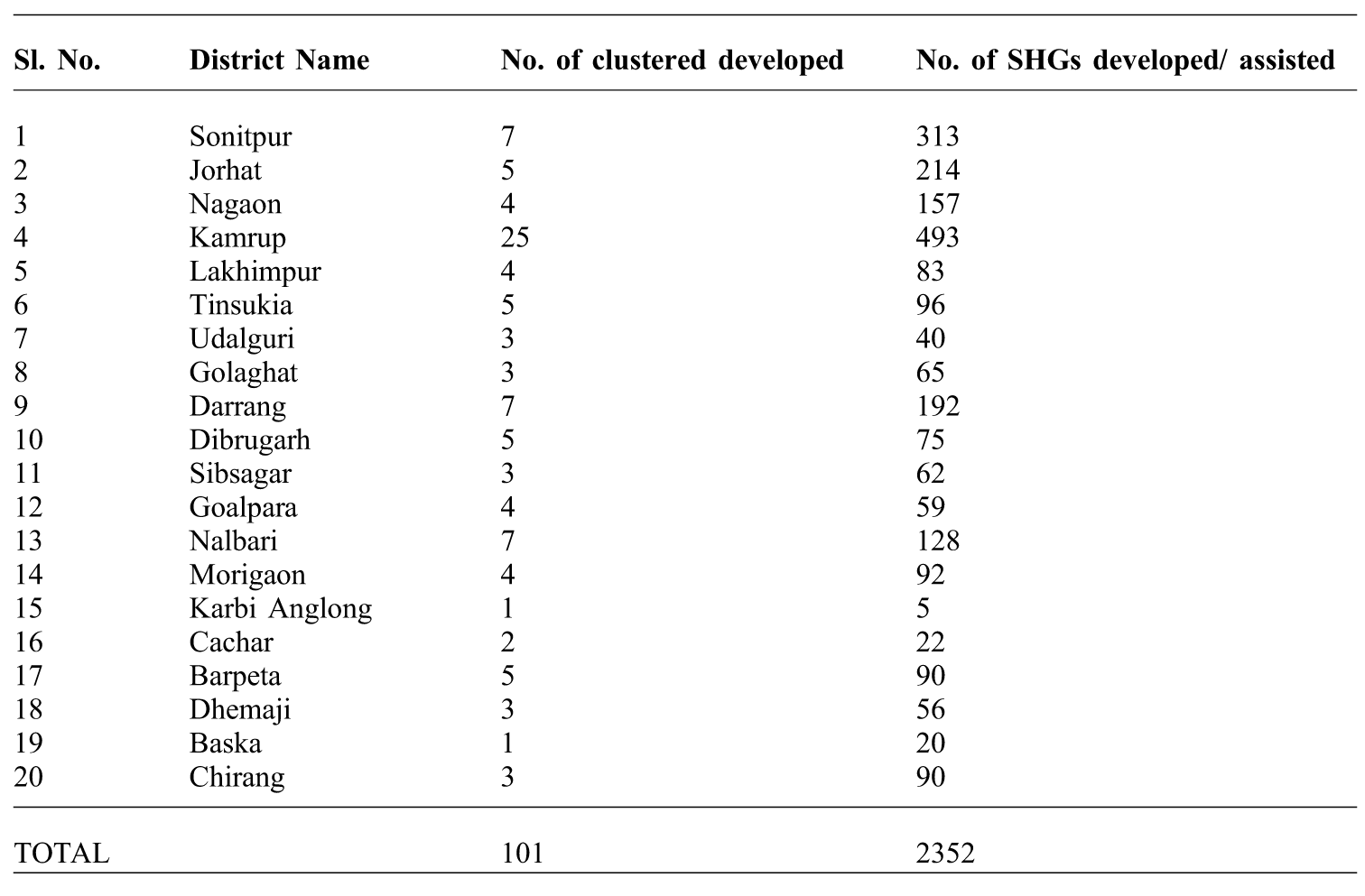
A total of 2352 SHGs covering 24055 families have been assisted under different projects implemented by SIRD for rearing Kerala Chara-Chemballi. To date, 101 groups in 20 districts of Assam have been covered under these projects (Anon, 2007-2008) (Table 1).
District distribution of SHGs for projects involved with rearing Chara-Chemballi Ducks.

Sociological background
Rearing ducks under backyard conditions is a traditional income generating activity for the rural households of Assam. The climatic and natural topography are congenial for rearing the animals, and their meat is popular locally. Studies (Mahanta et al., Reference MAHANTA, SAPKOTA, MILI and CHAKRABORTY2001; Islam et al., Reference ISLAM, MAHANTA, BARUA and ZAMAN2002) revealed that Pati ducks constitute the majority (85.6%) of the duck population in the state of Assam. However, these Pati ducks have low egg production, with an average of 80-90 per duck per year (Islam et al., Reference ISLAM, MAHANTA, BARUA and ZAMAN2002). In comparison the average egg production of Chara-Chemballi ducks is much higher (Jalaludeen et al., Reference JALALUDEEN, PEETHAMBARAN, JOSESH and MANMOHAN2004). Therefore there is a shift in preference for rearing the Chara-Chemballi ducks over local Pati ducks among rural people in Assam.
Performance and highlights of the project
SIRD has established links with the Centre for Advance Studies in Poultry Science at Kerala Agricultural University for supplying ducklings and hatching eggs. During the initial stage of the project, Chara-Chemballi ducklings were brought from Kerala, however once the hatcheries had been established, the hatching eggs were supplied by Kerala instead of ducklings. Twenty units (1 setter + 1 hatcher = 1 unit) of hatcheries have been set up under this project. The eggs hatched from these hatcheries were supplied directly to the members of the SHGs selected under the projects.
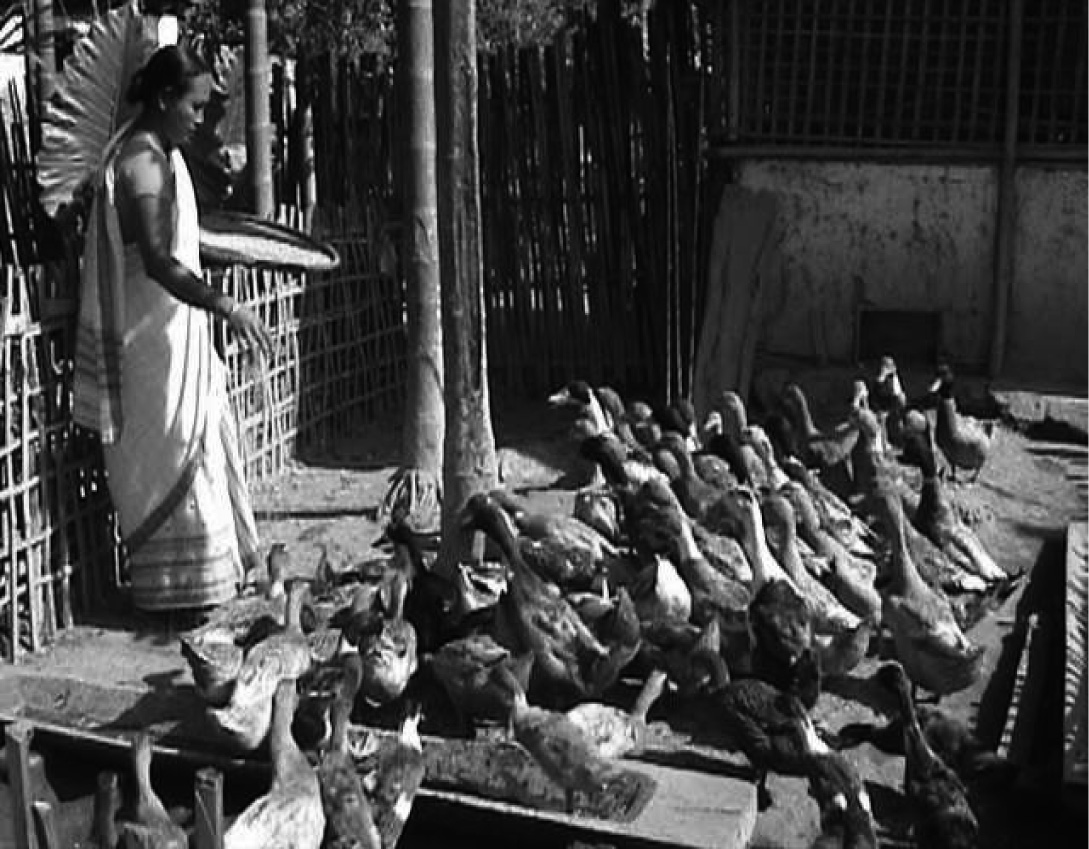
Initially the selected SHGs received 200 ducklings and 100 kg commercial duck feed in two phases (Figure 1).
Flock management of Chara-Chemballi ducks in rural household in Assam.
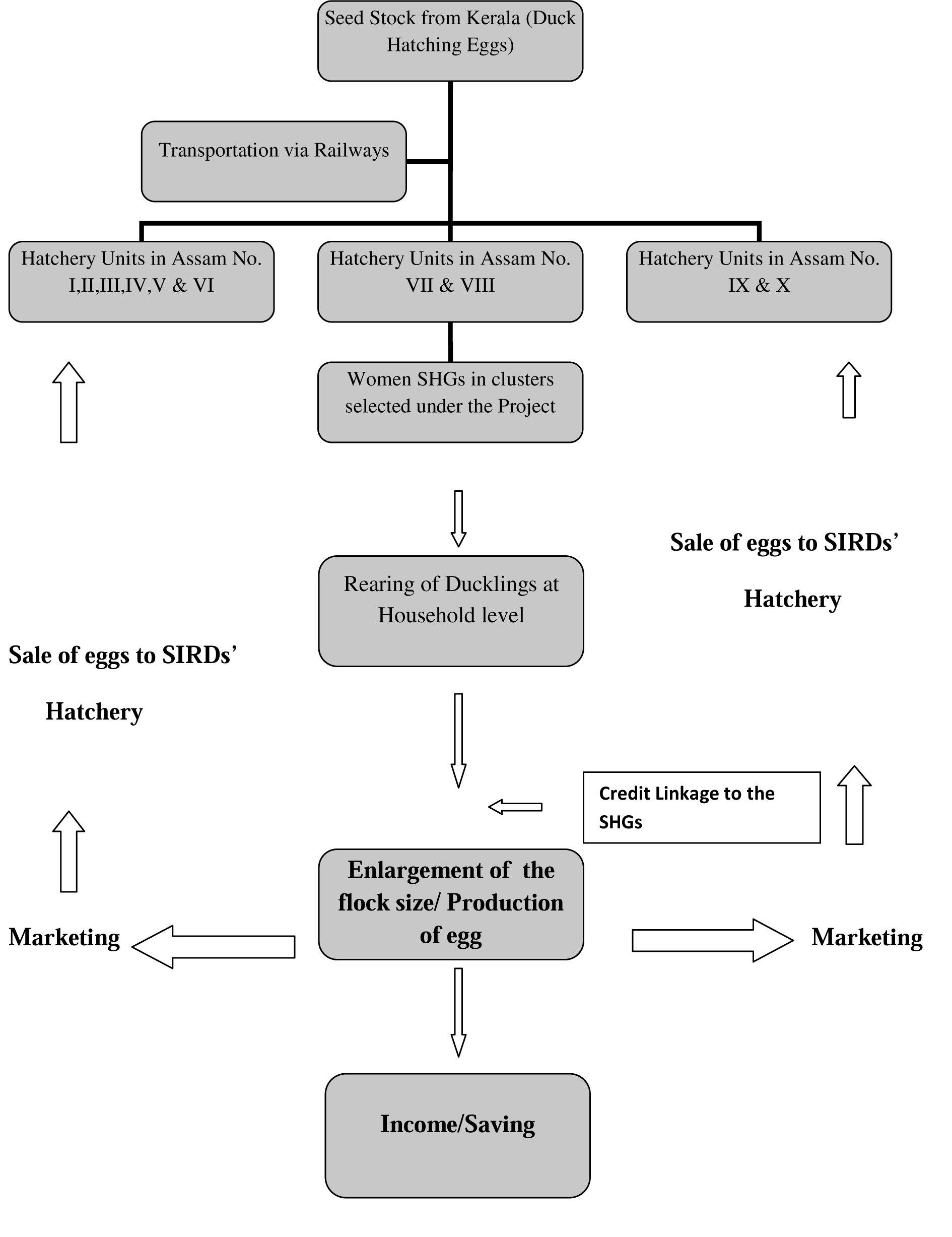
After receiving initial support, the SHGs were linked with banks to provide loans of Rs. 30,000.00 per SHG with Rs. 15,000.00 as a subsidy, as per the provision of the project. The SHGs were supplied with a minimum of 300 ducklings against the bank loan. Buy-back for fertile eggs was initiated in certain regions. Rs. 4.50 per egg was paid to the rural farmers and Rs. 0.50 per egg for the egg collector (Figure 2).
Organisational chart showing the steps in implementation of the projects for rearing of Chara-Chemballi cucks in Assam.
Impact of the project
The members of the SHGs have been maintaining the Chara-Chemballi ducklings in flocks ranging from 15-35. The average annual income of a farmer from these flocks of was calculated to be Rs. 15000/- with a range of Rs. 10000/- to Rs. 20000/- from selling the eggs and unwanted male ducks for meat purposes. Thus rearing of Chara-Chemballi ducks has become a remunerative enterprise for the women SHGs. The women spend these earning on health care, education of their children and their own requirements, besides regular savings.
The income found from this project was much higher than those reported in the findings of Ravindran (Reference RAVINDRAN1983), Rithamber et al. (Reference REDDY and RAO1986), Reddy (Reference REDDY1987), Islam et al. (Reference ISLAM, MAHANTA, BARUA and ZAMAN2002) and Zaman et al. (Reference ZAMAN, GOSWAMI, AZIZ, NAHARDEKA, ROY and MAHANTA2005). Selling Chara-Chemballi ducklings hatched through indigenous methods has become a lucrative business. It can be better understood in the words of Mrs Barnali Baruah of Lozora village, Deomornoi in Darrang District, who said ‘We have started propagating the duck flock by natural incubation. Last month we sold 100 male ducks at Rs. 100/- per duck. We have been supplying growing ducks of 15-20 days of age at the rate of Rs. 70 /- per pair to other village people. I feel proud to have opened an RD account in the Bank. The income from the production of ducks allows me to send my elder son to tuition, and he is now reading in class IX. I was working as a maid, but as income is flowing from the duck flock I have stopped working as a servant’. This is a classic example of the socio-economic changes that are taking place with the introduction of the Chara-Chemballi ducks in the villages of Assam.
nutritional security
Assam is dependent on other states for eggs. Studies have revealed that, after the introduction of Chara-Chemballi ducks, additional egg production from Chara-Chemballi ducks per day accounted for 1.39 lakhs (from 17360 families), (Anon, 2005-2006), which was an increase of 10% in total egg production. Besides selling the additional eggs, families are benefitting from better nutrition by eating more eggs, which is especially important as a protein and other nutrient supply for the women and children. Therefore there has been a reduction in the gap between production and demand of eggs in Assam after implementation of the project for rearing of Chara-Chemballi ducks.
means of self employment and gender equity
Income through rearing Chara-Chemballi ducks has brought gender equity to women involved in the project, especially for those who have always previously been dependent on men and never had their own income, some of whom are now entrepreneurs in their own right. The activity of rearing of Chara-Chemballi ducks under the project has become a source of regular income for around 23000 rural households. As the women are now significantly contributing to the household income, they have been able to take part in the decision making processes of the household.
social improvements
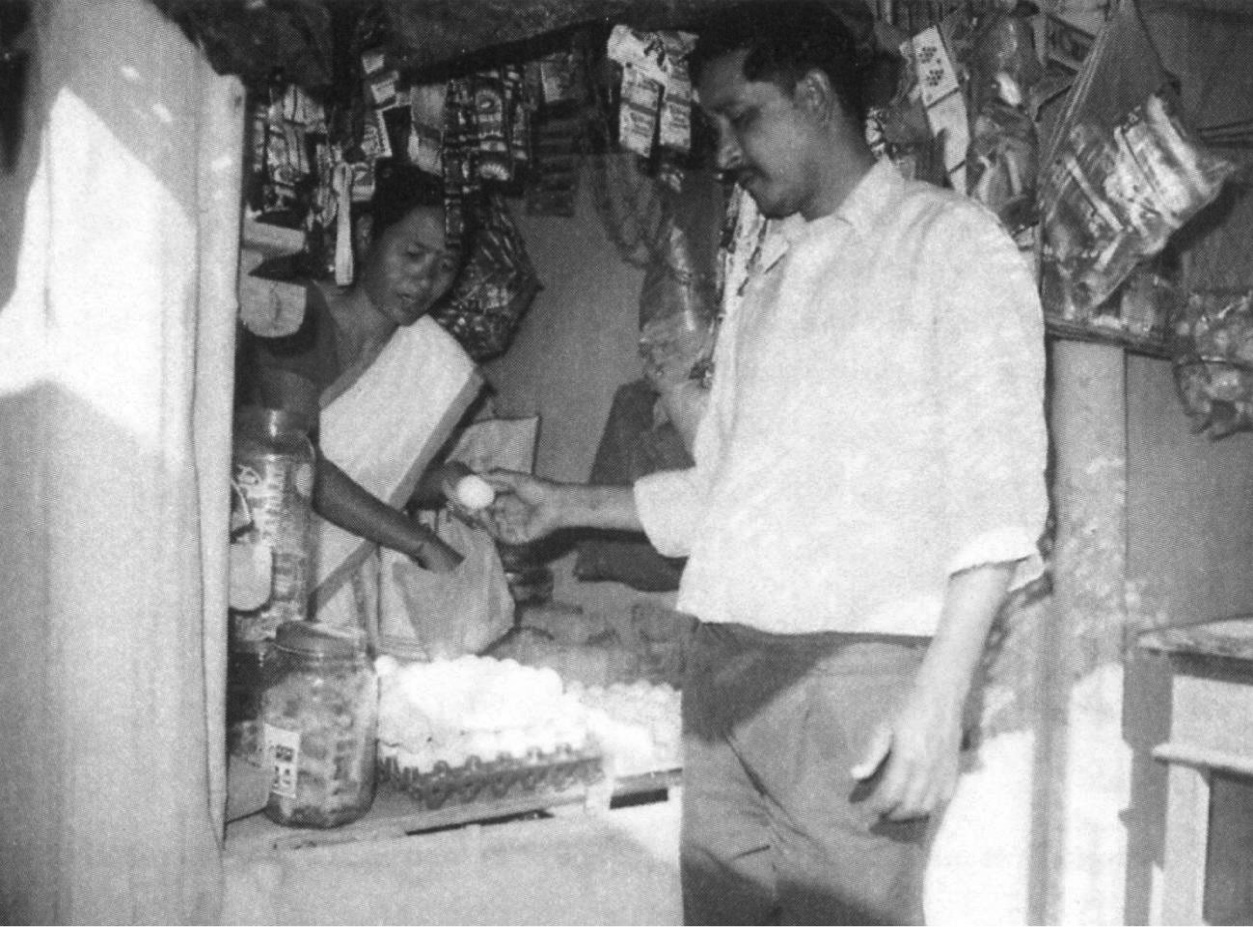
Enhanced income has solved indebtedness as many households have paid off old loans taken from local money lenders. Many families have got back their cultivable land that was previously held on mortgage. Many of them have started other activities, including opening grocery shops, tailoring businesses and other livestock farming out of the income from selling of Chara-Chemballi ducks and eggs (Figure 3).
A beneficiary under the projects of rearing of Chara-Chemballi ducks is now a proud owner of a grocery shop.
Mrs. Riju Deka of Gumoria village in the Kamrup District of Assam has expressed her acknowledgement in the following statement; ‘Our village was very poor. Now the women are organised in self help groups and are very busy generating income. We can make transaction with the banks now. Some of our members have purchased knitting machines or domestic animals like cows and goats. They have admitted their children to the English medium school. I have sent my eldest son to Guwahati to study B.B.A, and the other son has been admitted to a degree course. We are not facing any difficulty in funding their study.’
The red letter day
His Excellency Dr. A.P.J. Abdul Kalam, then President of India, village in the Kamrup district of Assam to learn about the transformation of their lives through rearing of Chara-Chemballi Ducks on 17th October, 2006 (Figure 4).
One of the women members of SHG, Mrs. Tulika Deka, explained her accomplishment in the following words; ‘Previously the financial condition of my family was very bad. We used gunny bags to keep put the cold. Now I can run the home comfortably. We are able to purchased blankets for everyone.’
Visit of His Excellency the then President of India Dr. A.P.J. Abdul Kalam to Gumoria Village of Kamrup District in Assam.

After his visit to the village, the then President of India referred the economic empowerment of the rural people through duck rearing in Gumoria at National Conferences ‘When I think of genetic research, I am reminded of my visit to Gumoria village in Assam where the SHGs’ members are developing duck rearing practices based on the inputs from agricultural specialists from Kerala and with the initiatives of the Assam government. This has resulted in improving the conditions in whole village by improving the duck productivity substantially.’
Income exceeded the investment
The study on 1600 SHGs from 2003 to 2005 revealed the total income of all the SHGs exceeded the project cost of Rs. 8.025 Crores (poultry component only), taking into consideration that the lowest average income of a member of the SHG is Rs. 500.00 per month. The lowest average income of 10 members of the SHG was Rs. 5000.00, with a monthly income of 1600 SHGs is Rs. 80.00 Lacs. The annual income of the 1600 SHGs is 9.60 Crores. In total, 1400 SHGs received credit support under the project of Rs. 416.50 Lacs. (Anon. 2005-2006).
Conclusions
It is difficult to draw any conclusions on a project related to livestock, but it is very clear from what we have observed in the field that social transformation is taking place gradually. The project has created power and confidence within the members, so that they can reduce poverty and change their situation. Whatever the intrastate cultural differences, the overall impact of the project is very much visible and encouraging, and has been a demand driven one with active and voluntary participation of the people involved.
The unique nature of the project is that the members of the SHGs are maintaining the Chara-Chemballi duck flock at household levels. The SHGs are expanding the activity with the help of a bank loan with government assisted subsidies, which the members are managing to repay. Lastly, the formation of SHGs among the women members of the villages has drastically transformed lives and relationships, as the quality of the life of the people is better. But there is a need for systematic and pragmatic approaches in defining the importance of sustainability of the ongoing activity.
Acknowledgements
The authors are thankful to Sri K. Kalita, Director, State Institute of Rural Development, Assam for providing necessary facilities in carrying out the study. The authors also express their thankfulness to Prof. A. Jalaludeen, Director, Centre for Advance Studied in Poultry Science, Kerala Agricultural University, Mannuthy, India for extending cooperation and help to carry out the study. The authors are also thankful to the villagers, Facilitators and NGO partners without which support it will not be possible to prepare this paper.