

INTRODUCTION
Recent excavations at the Early–Middle Formative site of Altica in the southern piedmont of the Teotihuacan Valley, Mexico, directed by Stoner (University of Arkansas) and Nichols (Dartmouth College) in 2014, provide evidence for early agriculture and plant use in a rural community conveniently situated to participate in a sphere of exchange involving the circulation of obsidian from the nearby Otumba source (Stoner and Nichols Reference Stoner and Nichols2019), ceramics from outside of the Basin of Mexico, and possibly some subsistence products. As the earliest settlement excavated in the northern Basin of Mexico and in the Teotihuacan Valley, Altica is relevant to understanding of the occupation of this area and adaptation to its semiarid environment. Macrobotanical remains, together with starch grains and phytoliths recovered from sediment samples and ground stone implements, were analyzed in order to develop a basic picture of plant use and as possible indicators of agricultural practices. Furthermore, plant remains recovered from excavated materials at Altica contribute to a clearer understanding of the early exploitation of subsistence resources that eventually led to the expansion of settled agricultural villages in the region prior to the emergence of clear status differentiation within and among communities.
Rosenswig (Reference Rosenswig2015) and Rosenswig et al. (Reference Rosenswig, Vanderwarker, Cullerton and Kennett2015) emphasize the long history of plant domestication in Mesoamerica during the Holocene and argue that domesticates were not consciously adopted in order to change established subsistence practices. Rather, domesticated plants were gradually added to existing foraging practices over many millennia. The Archaic period covered approximately 6,000–7,000 years (8000–2000/1000 cal b.c.; Rosenswig Reference Rosenswig2015), from the end of the Younger Dryas to the 2200 cal b.c. climate event (Booth et al. Reference Booth, Jackson, Forman, Kutzbach, Bettis, Krieg and Wright2005; González Quintero Reference González Quintero, Lorenzo and Mirambell1986; Wanner et al. Reference Wanner, Beer, Butikofer, Crowley, Cusbasch, Fluckiger, Goosse, Grosjean, Joos, Kaplan, Kuttel, Muller, Prentice, Solomina, Stocker, Wagner and Widmann2008). Rosenswig (Reference Rosenswig2015:117–118) describes this as a time of slow cultural changes with variable rates in diverse areas of Mesoamerica. The earliest archaeological evidence for domesticated plants in this region consists of both macrobotanical and microbotanical indicators that, from an archaeological perspective, provide at best a schematic view of the biological processes involved, the role of human intervention, and the dispersion and developing variability in these resources as they adapted to different habitats in Mesoamerica.
In the Basin of Mexico, a possible role for the 2200 cal b.c. climate event has received little attention. It is notable that the only mention of a significant dry period within this time frame is that of González Quintero (Reference González Quintero, Lorenzo and Mirambell1986) at Tlapacoya, at the edge of Lake Chalco, based on the abundance of xerophytic vegetation in the pollen spectra. Bradbury (Reference Bradbury1989) suggests higher water levels in the Basin lake system, with slightly drier conditions in the area of Tepexpan, between ca. 4000–2000 years BP; although the temporal resolution is broad, the implication of this information is a tendency towards favorable conditions reflected by lake levels.
As Rosenswig (Reference Rosenswig2015) emphasizes, the evidence for human adaptation and social change during the Archaic period, manifest in the origins and intensification of food production and adoption of sedentary lifestyles, is by no means sufficient to provide a clear picture of these processes. In fact, as this author suggests, the available evidence points to a “mosaic” of adaptive responses to multiple factors. Our general goal is to explore how Altica may fit into that mosaic.
EARLY PLANT DOMESTICATES IN HIGHLAND MESOAMERICA
To situate the botanical evidence within the broader context of economic developments in Formative-period Mesoamerica, we review some of the outstanding evidence for early plant use in the central Mexican highlands. In the brief summary that follows, the calibrated dates for early archaeological evidence of domesticates are those provided by the authors cited, unless otherwise indicated.
Remains of domesticated squash (Cucurbita spp.) were present in Mesoamerica by 8000 cal b.c. (Smith Reference Smith1997) and domesticated beans (Phaseolus spp.) as late as 300 cal b.c. The earliest archaeological evidence for Zea in Mesoamerica, likely teosinte, is reported from Santa Marta Cave in Ocozocoautla, Chiapas: 10500–8900 cal BP (Acosta Reference Acosta, Nichols and Pool2012). The earliest maize in Mesoamerica consists of starch grains and pollen from Xihuatoxtla Shelter in the Balsas River Valley, Guerrerro, dating to 6700 cal b.c. (Piperno et al. Reference Piperno, Ranere, Holst, Iriarte and Dickau2009). At San Andrés in the Grijalva River Delta, Tabasco, Pohl et al. (Reference Pohl, Piperno, Pope and Jones2007) reported maize phytoliths and pollen at 7300 cal BP, while Pope et al. (Reference Pope, Pohl, Jones, Lentz, Von Nagy, Vega and Quitmyer2001) report pollen of domesticated maize (>70μ) at approximately 6000 cal BP, with evidence of forest clearing by 6200 cal BP. These dates are consistent overall with the macroremains recovered from Guilá Naquitz and the Tehuacan Valley.
Beyond the broad geographical range covered by these and other finds, the length of time implied for maize to become a staple within a well-developed production system is considerable. Cobs from San Marcos and Coxcatlan caves in the Tehuacan Valley, originally placed by stratigraphic association at 5000 cal b.c., were dated by accelerator mass spectrometry (AMS) to 2700 cal b.c. (Long et al. Reference Long, Benz, Donahue, Jull and Toolin1989). Recent genetic studies provide new AMS dates on early maize from the Tehuacan Valley, including a cob from MacNeish's original collections from Coxcatlan Cave (3337–3021 cal b.c.; Ramos-Madrigal et al. Reference Ramos-Madrigal, Smith, Moreno-Mayar, Gopalakrishnan, Ross-Ibarra, Thomas, Gilbert and Wales2016), as well as samples obtained through new excavations in San Marcos Cave, the earliest of which dates to 2911–2705 cal b.c. (Vallebueno-Estrada et al. Reference Vallebueno-Estrada, Árévalo, Rougon-Cardoso, González, Cook, Montiel and Vielle-Calzada2016). These calibrations were carried out in OxCal v.4.3.2 using the IntCal 13 atmospheric curve (Bronk Ramsey Reference Bronk Ramsey2017; Reimer et al. Reference Reimer, Bard, Bayliss, Beck, Blackwell, Ramsey, Buck, Cheng, Edwards, Friedrich, Grootes, Guilderson, Haflidason, Hajdas, Hatté, Heaton, Hoffman, Hogg, Hughen, Kaiser, Kromer, Manning, Niu, Reimer, Richards, Scott, Southon, Staff, Turney and van der Plicht2013). Both of these examples are only partially domesticated, with close ties to teosinte (Z. mays ssp. parviglumis) and clarify some aspects of the evolutionary process insofar as the degree of domestication represented by these specimens and the timing of fully domesticated maize. There is no question that the aforementioned carbonized maize cobs recovered from Guilá Naquitz are the oldest macrobotanical specimens yet known, dating to 4300 cal b.c. (Benz Reference Benz2001), whereas those from Tehuacan are significantly younger. Specimens from both sites indicate what is still an ongoing evolutionary process during the Archaic, prior to the beginning of the Early Formative period.
Plant Remains and the Beginnings of Sedentary Life and Agriculture in the Basin of Mexico
In spite of the relatively limited botanical data recovered from archaeological excavations, the available evidence suggests that maize and other domesticates were slowly incorporated into the mixed subsistence base of foragers and remained relatively minor components of their diets. That is, until around 1000 cal b.c., when settled agricultural communities expanded and proliferated throughout Mesoamerica (Rosenswig Reference Rosenswig2015).
In Zohapilco, Niederberger (Reference Niederberger1979) suggests a sedentary occupation by the sixth millennium b.c. (Playa 1 phase, 6000–5500 cal b.c.) but it is only during the Zohapilco phase (3500–2200 cal b.c.), when the use of domesticated plants (Zea pollen and macroremains of chayote [Sechium] and squash [Cucurbita]) is reported (Niederberger Reference Niederberger1979:139–141). Recent studies at the preceramic occupation in San Gregorio Atlapulco, an islet in the former Xochimilco lake, however, provide new evidence from early communities in the Basin of Mexico (Acosta et al. Reference Acosta, McClung de Tapia, Pérez and Arroyo2017). At this site, the lakebed was occupied from at least 6500 cal b.c., based on the exploitation of lacustrine resources, mainly birds and amphibians, as well as wild plants. Towards 4200–3900 cal b.c., the appearance of maize is observed for the first time in the form of starch grains in grinding stones; its presence is scarce, however, and maize seems to have been of relatively little importance for this period (Acosta et al. Reference Acosta, McClung de Tapia, Pérez and Arroyo2017:414).
Plant remains from the Early–Middle Formative occupations at Zohapilco (Niederberger Reference Niederberger1976, Reference Niederberger1979), Coapexco (Tolstoy and Fish Reference Tolstoy and Fish1975; Tolstoy et al. Reference Tolstoy, Fish, Boksenbaum, Vaughn and Smith1977), and Terremote-Tlaltenco (McClung de Tapia et al. Reference McClung de Tapia, Serra Puche and Limón de Dyer1986; Serra Puche Reference Serra Puche1988) have been the primary sources of information concerning early subsistence activities and agriculture in the southern Basin of Mexico. At Torremote-Tlaltenco, considerable macrobotanical remains were recovered (McClung de Tapia et al. Reference McClung de Tapia, Serra Puche and Limón de Dyer1986). Other plant materials corresponding to this period include impressions of maize leaves reported from El Arbolillo (recovered by Valliant, cited in Tolstoy and Paradis Reference Tolstoy and Paradis1970), maize cob fragments from Ayotla (Tolstoy and Paradis Reference Tolstoy and Paradis1970) and non-domesticates recovered from bell-shaped pits at Loma Torremote in the Cuauhtitlan area (Reyna-Robles and González-Quintero Reference Reyna-Robles and González-Quintero1984; Sanders et al. Reference Sanders, Parsons and Santley1979). Based on the patterns of increased numbers and densities of sites detected during survey in the region, the expansion of settled agricultural communities into the northern Basin was hypothesized to have taken place around 1150 b.c. (Sanders Reference Sanders and Sabloff1981; Sanders et al. Reference Sanders, Parsons and Santley1979), although no sites corresponding to this period had yet been excavated.
The relevance of Altica within this scheme is straightforward. As the only excavated site with an Early Formative component in the northern Basin and the Teotihuacan Valley, in particular, its position in the developmental process of increasingly complex socioeconomic phenomena characteristic of the end of the Middle through the Late Formative periods (Nichols Reference Nichols2015) offers information regarding human adaptation to this seemingly less-than-ideal environment, the interplay between settlement location and access to specific resources, and the early development of inter- and intraregional networks that allowed for the provisioning of exotic goods, including ceramics and possibly other subsistence products, such as root crops.
ALTICA: GEOGRAPHY AND GEOMORPHOLOGY
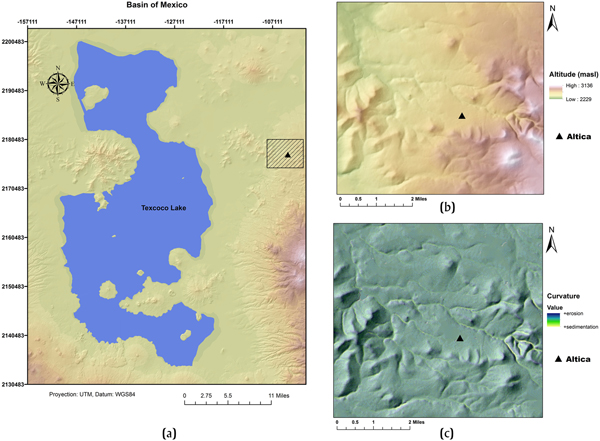
The archaeological site of Altica is located approximately 13.5 kilometers from the Sun Pyramid at Teotihuacan, within the municipality of Tepetlaoxtoc, State of Mexico (Figure 1a). It is situated at approximately 2530 m asl, in a zone of Pleistocene lava flows derived from surrounding cinder cones, heavily eroded to gentle, low-elevation geoforms (Hernández Javier Reference Hernández Javier2007). In particular, Altica is located on the Trinidad lava flow, comprised largely of andesite originating from the La Cuesta volcano (2800 m asl). The site occupies a relatively flat area that descends gently towards the northeast with a slope of zero to two percent. As a result, the immediate area effectively constitutes a small plain, subject to inundation. The broader surrounding region is largely piedmont, with slopes ranging from two to 12 percent, subject to hydric erosion. Intermittent drainages are located on either side of the site (Figures 1b and 1c), potentially contributing to inundation and erosion during the rainy season, but also providing a seasonal water source if storage facilities were in use. No evidence for pre-Hispanic use of jagueyes for water storage has been recovered; however, archaeological evidence from pits excavated into tepetate, the local bedrock (Stoner and Nichols Reference Stoner and Nichols2019), together with macro- and microbotanical evidence for organisms adapted to high humidity (aquatic plants, diatoms, and sponge spicules) indicates that water accumulated in storage pits in some sectors of the site over considerable time periods.
Map of the Basin of Mexico. (a) Digital elevation model (DEM), with reconstruction of Lake Texcoco and the Altica study area. (b) DEM of the Altica area. (c) Curvature analysis indicating the areas susceptible to erosion in dark tone and sedimentation in light color. Maps by Acosta-Ochoa.

Modern soils in the region are characterized as duric Haplic Phaeozems (INEGI 1999) with medium texture. An underlying hard layer, tepetate, comprised of insoluble silica within the upper 50 cm of the surface reduces permeability and contributes to site-specific inundation and consequent erosion (González-Arqueros et al. Reference González Arqueros, Mendoza-Cantú and Vázquez-Selem2017). Tepetate was detected at a depth of approximately 20 centimeters during excavation (Stoner and Nichols Reference Stoner and Nichols2019). Today the area is cultivated under a rainfall-dependent regime in which long, linear plots are delineated by bancales, ridges formed by magueys (Agave sp.) and other vegetation; however, there is no clear evidence for the incorporation of terracing or other more intensive practices during the pre-Hispanic past. While the elevation and soils characteristic of the area suggest forest vegetation, likely pine-oak forest, carbonized macrobotanical plant remains recovered from excavation at the site indicate that agricultural practices were established by the Formative-period inhabitants.
Stoner and Nichols (Reference Stoner and Nichols2019) propose Altica's position as a terminal node in the Formative exchange network in which small quantities of prestige goods imported from elsewhere were utilized, including imported ceramics from considerable distances (white wares, and others obtained from the southern Basin of Mexico). Altica was likely integrated into a system of settlements oriented towards the extraction of obsidian from the Otumba source to provision settlements in the southern Basin. Niederberger (Reference Niederberger, Clark and Pye2000) had proposed exchange networks between ranked societies in the Gulf Coast and the Basin of Mexico by 1250 b.c. and, as such, Altica was likely in the vanguard of the northward expansion of early sedentary villages into the northeast Basin of Mexico (Sanders Reference Sanders and Sabloff1981:164), comfortably positioned to exploit and partake in the distribution of obsidian from Otumba (Nichols Reference Nichols2015). Altica's earliest occupation dates to the Ayotla phase in the Basin of Mexico sequence based on radiocarbon dates, but the overwhelming majority of ceramics share the subsequent Manantial-phase style (Stoner and Nichols Reference Stoner and Nichols2019). Thus, Altica seems to straddle the transitional period in Mesoamerica proposed by other authors (Nichols Reference Nichols2015; Rosenswig Reference Rosenswig2015; Rosenswig et al. Reference Rosenswig, Vanderwarker, Cullerton and Kennett2015; Stoner et al. Reference Stoner, Nichols, Alex and Crider2015) marked by a wave of settlements expanding into new habitats in the Basin as the Middle Formative period was underway.
PALEOETHNOBOTANICAL ANALYSES: METHODS
Unfortunately, living surfaces were not recovered during the excavations, although a number of significant features were in evidence. Plant remains were largely recovered from features related to Burials 1–4, a hearth (Feature 6), and other concentrations of archaeological materials. These contexts provided plant materials discussed in the section Plants Recovered from Archaeological Deposits at Altica and summarized in Tables 1–4. A total of 98 sediment samples for the analysis of macrobotanical remains recovered during excavation were separated by flotation in the Laboratorio Universitario de Paleoetnobotánica y Paleoambiente (LPP), Instituto de Investigaciones Antropológicas (IIA), Universidad Nacional Autónoma de México (UNAM). Sixty-five unwashed lithic implements stored in the Arizona State University Teotihuacan Laboratory were sampled for microbotanical analysis, all of which were processed for starch grain analysis in the LaPE, IIA, UNAM. In addition, 10 of these implements were analyzed for phytoliths in the LPP.
Flotation Samples
Sediment samples of approximately one liter in volume were weighed prior to flotation, the basic technique used for the recovery of macrobotanical remains. A simple flotation technique for the recovery of macrobotanical remains, mainly seeds and fruits, from small samples was employed in the LPP, in which individual samples were emptied into a vat containing 10 L of water mixed with 60 mL of sodium silicate, to increase density and favor the flotation of carbonized materials. Following gentle agitation of the mixture, the light fraction was recovered in strainers with a screen aperture of <0.5 mm. Light and heavy fractions of all flotation samples were air-dried in the shade, after which the light fraction was passed through a graduated sieve series (4.76, 1.68, and 0.50 mm) to facilitate visual separation, weighing separately the material recovered in each screen of the series. A Zeiss Stemi 2000C stereoscopic microscope was employed for further separation and identification of the macrobotanical remains by family, genus and, when possible, species. The heavy fraction of each sample was similarly examined. Identification was facilitated by the LPP reference collection of archaeological plant remains in addition to published references. Once identified, the results were entered in the LPP database, organized by sample numbers assigned by the laboratory together with additional provenience information as well as contextual interpretations and other observations provided by the project directors.
Starch Grain Analysis
Starch is the main polysaccharide reserve of most plants and the main source of calories for humans (Gott et al. Reference Gott, Barton, Samuel, Torrence, Torrence and Barton2006). The potential of starch analysis for archaeological applications was recognized more than a century ago (Reichert Reference Reichert1913). It is only over the past two decades, however, that it has become established as a basic methodology in archaeology (Pearsall Reference Pearsall2015; Piperno Reference Piperno2006; Piperno and Holst Reference Piperno and Holst1998).
The processing of seeds and roots by means of lithic or ceramic artifacts allows the preservation of starch grains in the pores of such artifacts, even in conditions of high humidity or temperature (Lu Reference Lu, Torrence and Barton2006:81), and has the potential to offer evidence for the economic use of wild or domesticated plants. The extraction of sediments from the occupation floors of archaeological sites allows, in addition, the evaluation of possible areas of plant processing, as well as probable contamination of archaeological artifacts, thus contributing to a better understanding of the associated taphonomic processes (Williamson Reference Williamson, Torrence and Barton2006:89). Starch grains comprised of two polysaccharides, amylose and amylopectin, are semicrystalline and insoluble elements largely produced in the storage organs such as roots and tubers, fruits, or seeds. They are relatively resistant to degradation except when exposed to temperatures above 40°C, when the crystalline structure may be altered in a process known as gelatinization, in which the intermolecular bonds are broken down.
The protocol used for the extraction of archaeological starches in lithic artifacts from Altica is based on Barton et al. (Reference Barton, Torrence and Fullagar1998) and modified by Pagán (Reference Pagán2007) and involves the use of a heavy liquid, cesium chloride, to separate the starches (the specific weight of which is usually not greater than 1.8) by centrifugation from the rest of the sediment. The processed samples were mounted on a glass slide with a drop of glycerin and their characteristics were observed through polarized light and a differential interference contrast module with an Olympus BX52 microscope at 40× and 100×. Slides were visually scanned in parallel vertical lines, from the upper right to the lower right corner, then to the left of that line, upwards to the top of the slide, repeating the process until the entire slide was examined. Because of the small quantity of preserved starch, all grains were counted. The starch granules extracted from the archaeological samples were compared with the reference collection of the Laboratory of Prehistory and Evolution at the IIA, UNAM (Cruz-Palma Reference Cruz-Palma2012), evaluating the diagnostic elements that allow their identification at the genus level, such as the shape and size of the granule, the shape and position of the hilum, and the presence of lamellae (Pagán Reference Pagán2007).
Phytolith Analysis
Phytoliths are opaline particles formed in epidermal and other plant cells as silica is absorbed from the soil. As the plants continue to grow, silica adopts the form of the cells or intercellular spaces. When plants decay and are reintegrated into the soil, the mineral forms persist and may be well-preserved over considerable time periods, allowing their identification in the case of diagnostic forms (Pearsall Reference Pearsall2015; Piperno Reference Piperno2006).
Ten unwashed ground stone implements from burials and the hearth (Feature 6) were sampled for phytolith analyses. These were not subjected to traditional extraction techniques normally utilized in the LPP (e.g., Madella et al. Reference Madella, Powers-Jones and Jones1998), because of the small amount of adhered sediment recovered. Both dry and humid samples were recovered in some cases, depending upon the texture of the implement surface. In the case of dry samples, taken from more porous surfaces, the sediment was removed by softly scraping the surface of the stone implement with a dental pick. In implements with a more uniform, less porous surface, humid samples were “washed” by a gentle flow of distilled water slowly applied with a glass pipette and recovered in a glass vial. Samples were practically devoid of soil organic matter and therefore were very clean; no additional processing was necessary.
Five mg of sediment or two to three drops of suspended sediment were placed directly on a glass slide. Several drops of Canada balsam were added, which was then gently spread over the sediment, after which a cover slide was placed. Similar procedures are described by Pearsall (Reference Pearsall2015) and Tassara and Osterrieth (Reference Tassara, Osterrieth, Korstanje and Babot2008) for the preparation of samples from ground stone implements. Cover slides were then sealed with clear polish and allowed to air dry. Preparations were observed using an Olympus CH30 optical microscope under 10× and 40× magnification. Slides were scanned horizontally for phytoliths and other elements, from the upper left to right, then right to left, continually until a minimum count of 250 phytoliths was observed. In some cases, a greater number was obtained, given the concentration of elements on the slides; in others, this minimum was not obtained even after examining several slides. Phytoliths, diatoms, and other tissues were identified based on comparison to established morphological characteristics.
PLANTS RECOVERED FROM ARCHAEOLOGICAL DEPOSITS AT ALTICA.
Marcobotanical Remains
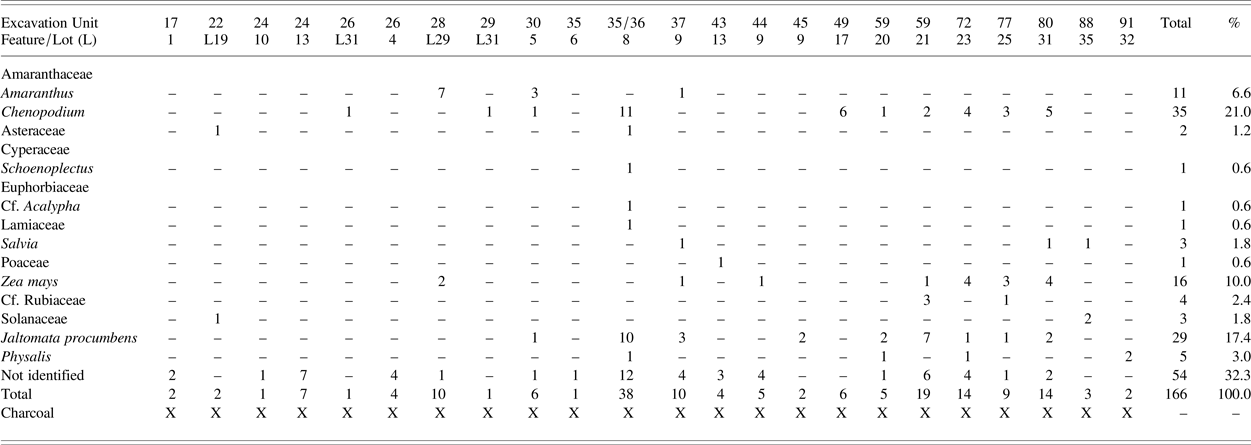
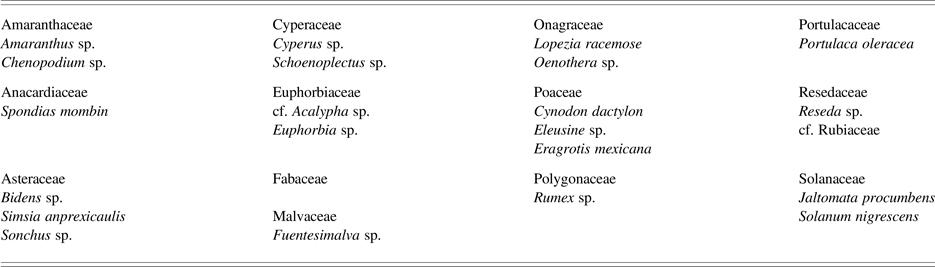
A total of 1,223 seeds and maize fragments were recovered from flotation. Carbonized macrobotanical remains were not particularly abundant, comprising 13.6 percent (166) of the total (Table 1), whereas uncarbonized specimens made up 86.4 percent (1,057; Table 2). Several taxa, however, are among those frequently reported from other excavations in the Teotihuacan Valley, as well as other sites in the Basin of Mexico. These include Zea mays (maize), Amaranthus sp. (amaranth), Chenopodium sp. (goosefoot), Salvia sp. (sage), Physalis sp. (tomatillo), and Jaltomata procumbens (jaltomata). With the exception of maize, an established cultigen, species of the other genera listed here are edible and known to be part of the traditional Mesoamerican diet (McClung de Tapia et al. Reference McClung de Tapia, Martínez-Yrizar, Ibarra-Morales and Adriano-Morán2014). The tender leaves of amaranth and chenopod species, particularly, are classified as quelites, a general category that refers to a broad range of nutritious edible greens that are essentially wild and often tolerated in disturbed habitats. Nevertheless, as they are also components of the local flora, archaeological specimens may not represent domesticated or even cultivated forms. When these materials are carbonized, certain morphological traits such as color and size cannot be effectively evaluated and, therefore, it cannot be stated with certainty that they are cultivated rather than wild, possibly gathered. As many of these taxa occur both carbonized as well as uncarbonized in the sediment samples subjected to flotation, their role as food plants and indicators of agricultural practices are difficult to establish. Other uncarbonized taxa that are definitely components of the local flora include the following families (Table 2): Euphorbiaceae (Acalypha sp. and Euphorbia sp.), Lamiaceae, Poaceae, Solanaceae, and cf. Rubiaceae (Castilla and Tejero Reference Castillo and Tejero1987). The Cyperaceae family is represented by Schoenoplectus sp. (sedge, formerly Scirpus) recovered from Feature 8, a dark circular feature in excavation units 35/36. While somewhat unexpected at Altica, as it is associated with bodies of fresh water and swamps, it may represent a seed accidently brought to the site with reeds used for roofing or woven petates (reed mats), or it may be related to semipermanent water storage facilities.
Counts and relative frequencies of carbonized macrobotanical remains recovered from excavation contexts at Altica, Teotihuacan Valley. Total carbonized specimens = 166 (13.6 percent).

Families and genera represented among uncarbonized macrobotanical remains recovered from excavation contexts. Total uncarbonized specimens = 1,057 (86.4 percent).

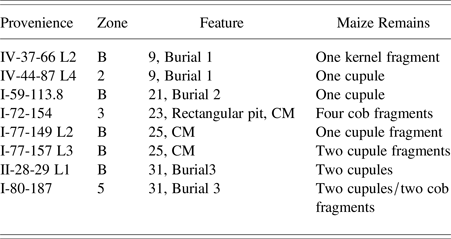
The presence of maize in diverse contexts, largely cupule fragments but also small cob and grain fragments, is an indicator of its importance. We emphasize maize in this paper because of its implications for agroecological adaptations and the fact that Altica has provided the earliest evidence as yet known for maize cultivation in the Teotihuacan Valley (Table 3).
Carbonized macrobotanical remains of maize recovered from excavation contexts at Altica, Teotihuacan Valley. Concentrations of material (CM) are primarily ceramic sherds, ground stone, and obsidian debitage.

Starch Grains
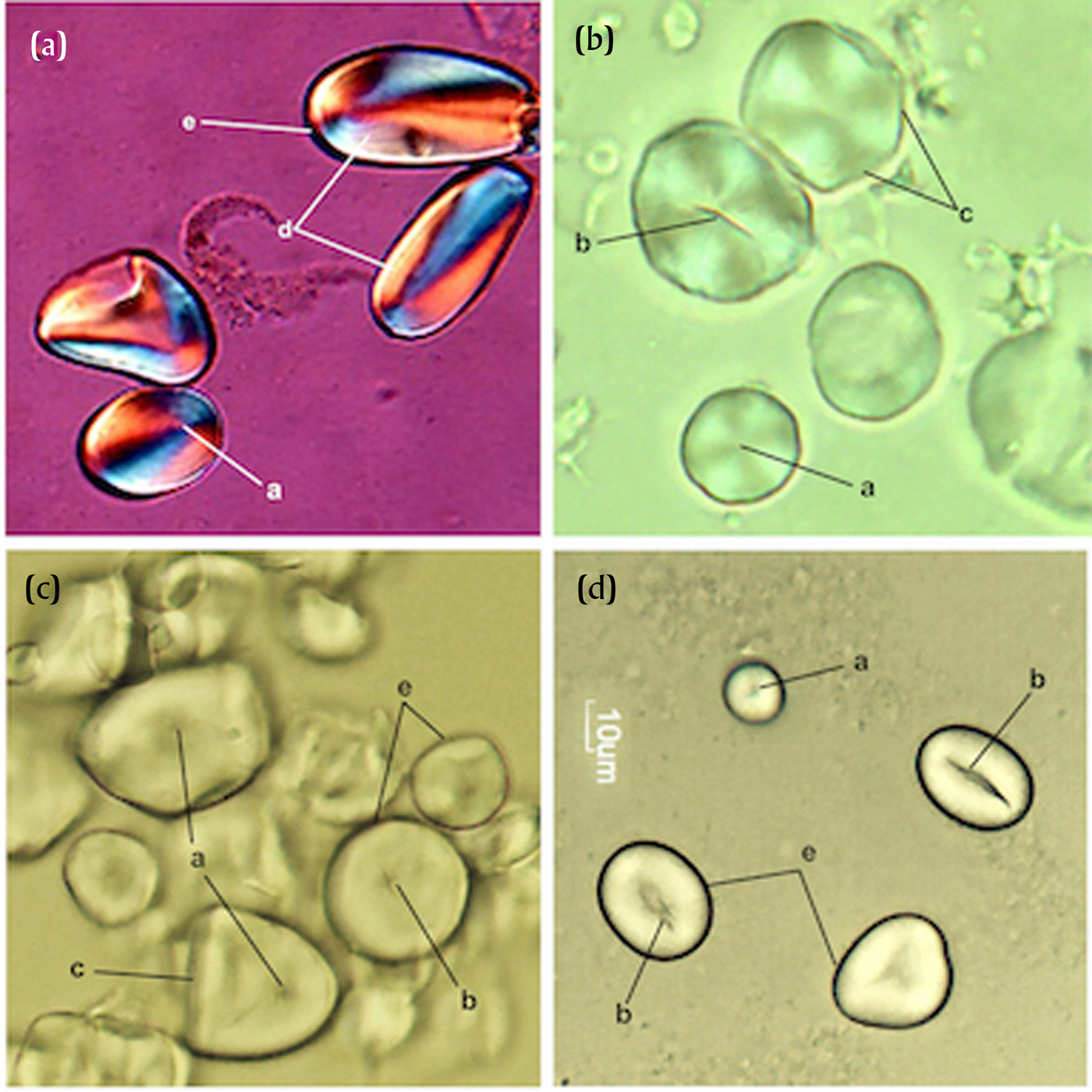
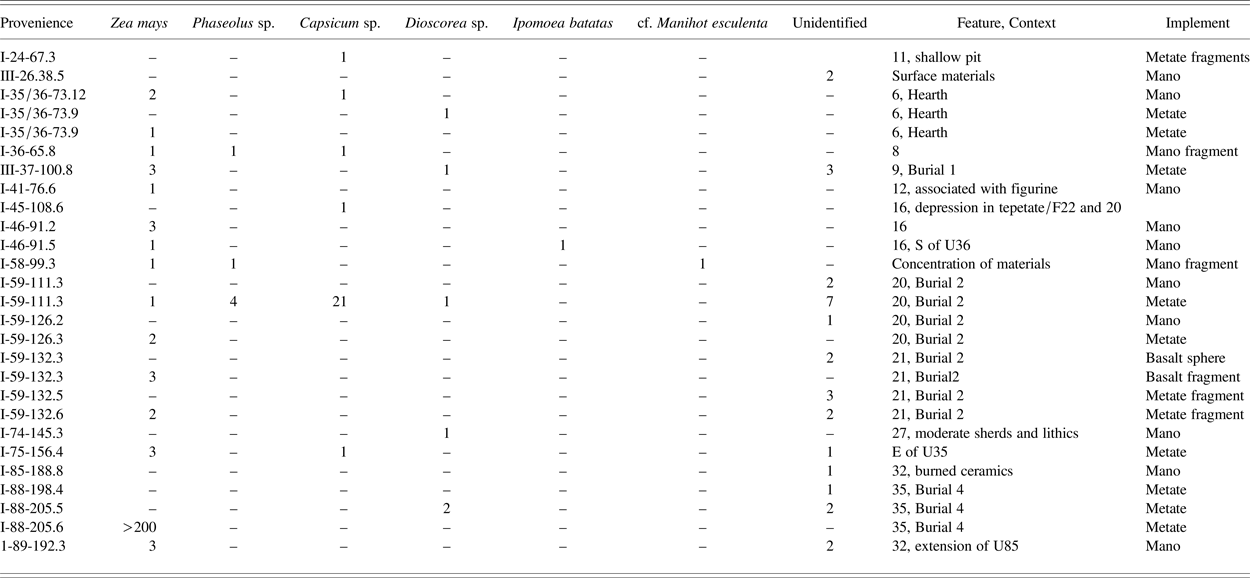
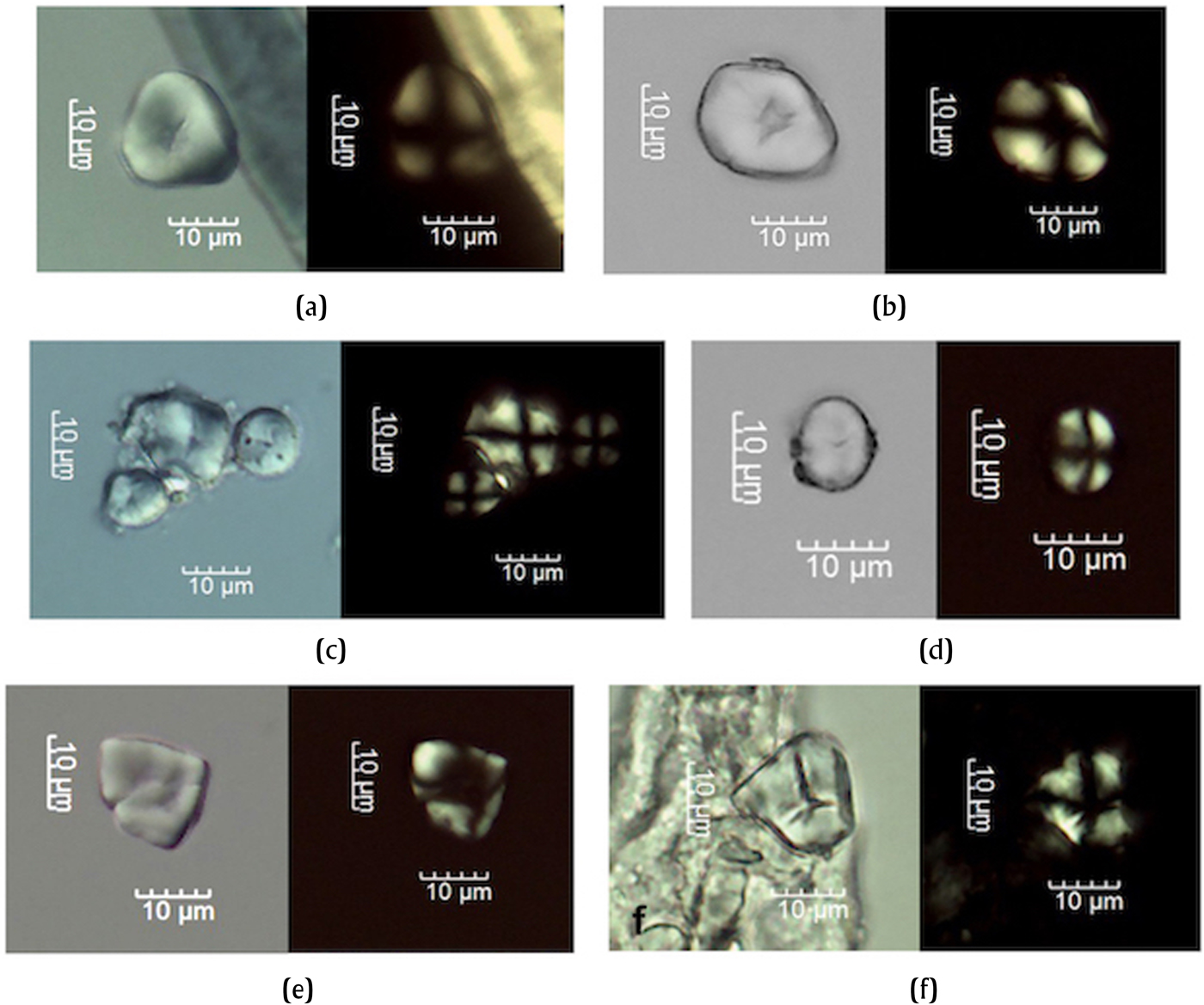
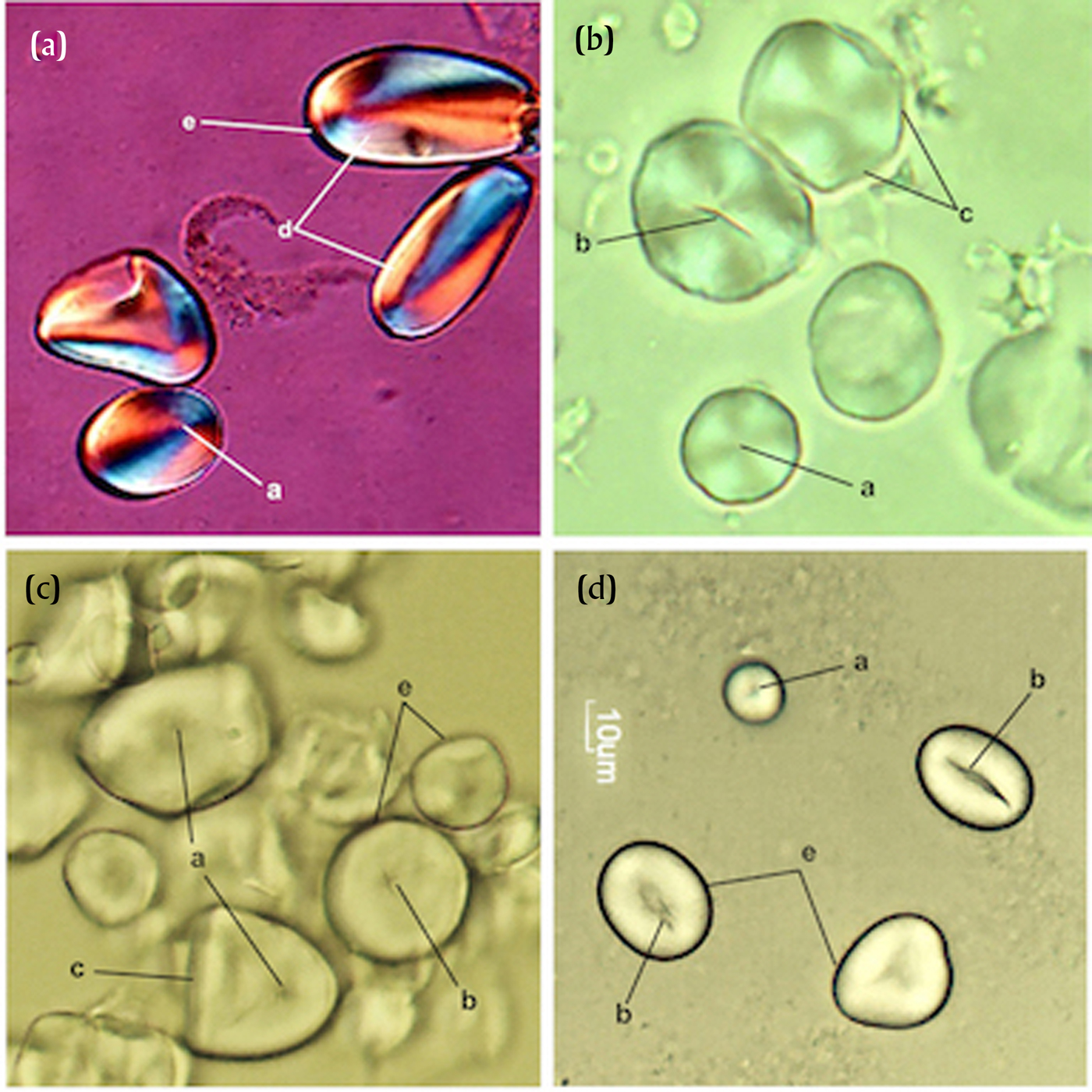
Sediment samples removed from the pores of 75 ground stone implements were examined; however, starch grains reported here were recovered from 27. A number of unidentified starch grains were poorly preserved as a result of thermic alteration and/or damage as a consequence of grinding. The results of this analysis are summarized in Table 4. Among the diagnostic starch grains recovered from the implements excavated at Altica are maize (Zea mays), bean (Phaseolus sp.), chili (Capsicum sp.), yam (Dioscorea sp.), sweet potato (Ipomoea batatas), and possibly manioc (cf. Manihot esculenta; Figure 2). Maize, beans, and chili are clearly established components of the range of important economic plants associated with the agroecosystems of pre-Hispanic settlements in the Teotihuacan Valley by the Middle Formative period (Manzanilla Reference Manzanilla, Monjarás-Ruiz, Rocha and Brambila1985).
Different examples of starch granules. (a) Yumí (Dioscorea cymosula). Image in polarized light with differential interference contrast. (b) Maize (Zea mays), (c) sweet potato (Ipomoea batatas), and (d) bean (Phaseolus vulgaris). Images in white light. Diagnostic features used to characterize the granules: (e) hilum, (f) fissure, (g) facets of pressure, (h) lamellae (laminate), and (i) edge. Images by Acosta-Ochoa.
Starch grain evidence recovered from ground stone implements excavated at Altica. Implements are curated in the ASU-Teotihuacan Research Laboratory in San Juan Teotihuacan, México.

Phytolith Remains
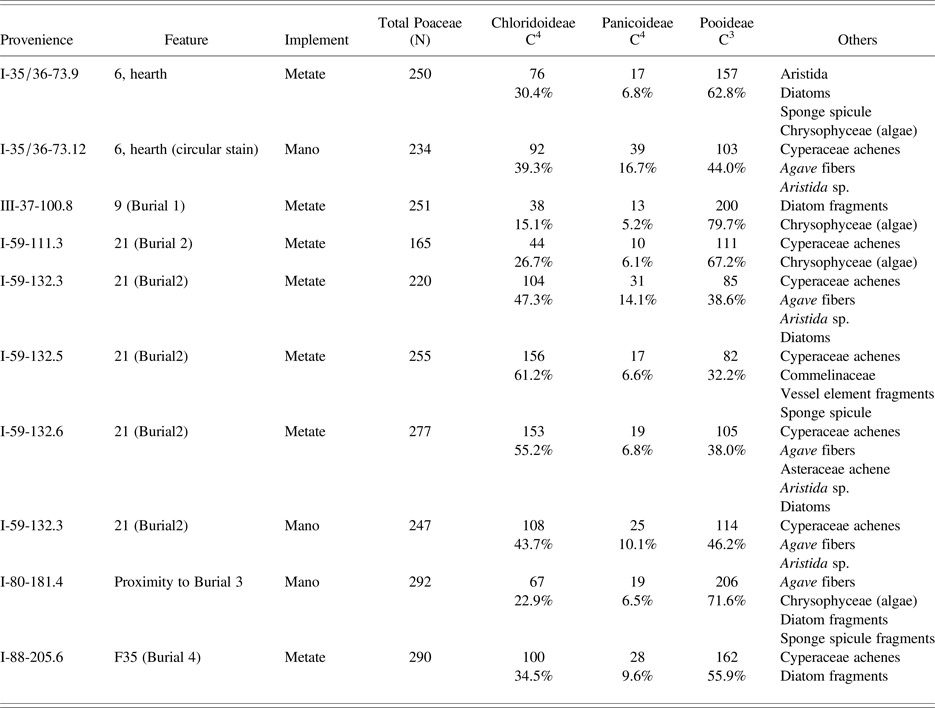
Ten implements were examined for the presence of phytoliths (Table 5) and mainly represent metates and manos recovered from burials. Neither diagnostic maize phytoliths nor evidence of other cultigens were observed in the samples studied to date. The presence of characteristic geometric cells produced in the roots of taxa of the Cyperaceae family was noted in the majority of the samples, together with occasional diatom fragments. These indicators of humid conditions are consistent with the macrobotanical evidence for Schoenoplectus cited previously. Agave fibers were also detected in the pores of the implements. While it is not clear how maguey was processed at Altica, it is possible the pieces of Agave hearts were ground to extract residual aguamiel.
Phytolith remains recovered from lithic implements excavated at Altica. Percentages of Chloridoideae, Panicoideae and Pooideae subfamilies are based on total Poaceae (N).

Phytoliths representing the grass subfamilies (Chloridoideae, Panicoideae, and Pooideae) characteristic of flora in the Teotihuacan Valley were predominant. Although panicoid grasses may represent C3 or C4 photosynthetic pathways (Watson et al. Reference Watson, Macfarlane and Dallwitz1992; Osborne et al. Reference Osborne, Salomaa, Kluyver, Visser, Kellogg, Morrone, Vorontsova, Derek Clayton and Simpson2014), the only species in this subfamily reported in the flora of the Teotihuacan Valley is Panicum obtusum (Castillo and Tejero Reference Castillo and Tejero1987), which is a C4 plant (Guissani et al. Reference Guissani, Cota-Sánchez, Zuloaga and Kellogg2001). Consequently, we consider Chloridoideae and Panicoideae subfamilies together when evaluating the relative proportions of C3 versus C4 grasses in the region. The grass phytoliths likely correspond to the sediment used as fill adhering to the implements as a result of deposition. A similar situation was described by Tassara and Osterrieth (Reference Tassara, Osterrieth, Korstanje and Babot2008), who report the presence of grass phytoliths from ground stone implements from Argentina. Grass phytoliths are not interpreted here as indicators of environmental characteristics of the area surrounding the site or as plants that were processed using the implements themselves. Rather, the differences among relative frequencies between C3 and C4 grasses, even among results from implements recovered from the same excavation units, may reflect variable infiltration of water at the site. At Altica, the filtration of water through the archaeological deposits undoubtedly propitiated the movement of phytoliths contained in the sediment, which settled into the pores of ground stone objects over time. The presence of microfossils including Cyperaceae, diatoms, sponge spicules, and algae is also consistent with this hypothesis.
Plant Remains Associated with a Hearth at Altica
A hearth designated as Feature 6 in Unit 35 and a notable circular stain in Feature 8 in 35/36 were unique in that they represent the only area that has distinctive evidence for in situ burning. Stoner and Nichols describe a semi-circular area delineated by five large, charred stones, with a considerable number of large, burned sherds. Carbonized macrobotanical remains from this feature include Chenopodium sp., Asteraceae, Schoenoplectus sp. Acalypha sp., and Jaltomata procumbens. While Chenopodium and Jaltomata are edible plants and are the most abundant taxa present in this context, they are not likely cultivated and their presence does not overwhelmingly suggest food preparation. The starch grains from two metate fragments and two manos associated with the hearth, however, considered together indicate the presence of maize, bean, chili and yam, providing viable evidence for food preparation, possibly associated with the hearth. The AMS radiocarbon date for Feature 6 is 1127–1004 cal b.c. (p = 0.95, ALTR 2), while Feature 8 has two determinations: 1141–1039 cal b.c. (p = 0.95, ALTR1) and 982–910 cal b.c. (p = 0.95, ALTR3). All dates reported here and in the following discussion on the burials have been calibrated at the 2-sigma range with OxCal using the IntCal13 calibration curve (Stoner and Nichols Reference Stoner and Nichols2019:Table 2).
Plants Remains Associated with Burials at Altica
Four burial pits were excavated at Altica and the AMS dates obtained from human bone and charcoal in sediments associated with the human osteological remains provide a framework within which to situate plant remains recovered from sediments and associated ground stone implements. Stoner and Nichols (Reference Stoner and Nichols2019; Nichols and Stoner Reference Nichols and Stoner2019) indicate that the fill of the respective burial pits was placed in a single event following interment of the individuals. Thus, it is assumed that the ground stone implements associated with the burials are no later than the dates obtained from the human remains themselves, or possibly slightly earlier, as suggested by charcoal remains recovered from the fill.
Burial 1 (Feature 9), a female of approximately 60 years of age, was accompanied by a metate, a mano, and a ceramic vessel. A maize kernel fragment and a cupule fragment were recovered from flotation of sediment from this context. Other carbonized macrobotanical remains associated with the fill of Burial 1 include Jaltomata procumbens and a single seed of Salvia sp. Uncarbonized seeds include Amaranthus sp., Lopezia racemosa, Eragrostis mexicana, and a single seed of Jaltomata procumbens, which are also components of the local flora. Starch recovered from the metate included maize and Dioscorea sp. as well as unidentified grains. Dioscorea sp., a genus which includes well-known edible and medicinal, yam varieties, has not been reported previously in the region and its specific uses at Altica are unknown. While a single species is reported as endemic to the Basin of Mexico, Dioscorea galeottiana (chipahuac or chipahuaxihuite; Calderón de Rzedowski and Rzedowski 2001), it has not been reported in the Teotihuacan Valley (Castillo and Tejero Reference Castillo and Tejero1987; Gamio Reference Gamio1922). A plate in the Badianus Manuscript (Emmart Reference Emmart1940) indicates that the roots of several Dioscorea species were recognized as having well-known medicinal applications, particularly in combination with other plants to make poultices. The works of Martínez (Reference Martínez1959, Reference Martínez1969) provide an important source of twentieth century analyses of traditional plants having medicinal or alimentary uses in Mexico. This author refers to D. mexicana (Martínez Reference Martínez1969), the original source of cortisone, and D. composita (barbasco; Martínez Reference Martínez1959), from which progesterone was originally synthesized (Hinke Reference Hinke2008). Yams, sweet potato, and manioc were potentially transportable, if carefully handled and transported over relatively short distances, and could have been obtained through interregional contacts. Root crops have not been recognized previously at pre-Hispanic sites in the Teotihuacan Valley and their presence at Altica points to the importance of including starch grain analysis as a fundamental technique, complementary to the analyses of macrobotanical remains and other microremains, such as pollen and phytoliths.
Diatom fragments and Chrysophyceae (algae), notable indicators of high soil humidity, were recovered together with grass phytoliths. Charcoal was scarce in the sediment. Bone collagen from this individual yielded an AMS determination of 1016–858 cal b.c. (p = 0.95, ALT37B) with additional AMS determinations on wood charcoal:1379–1196 cal b.c. (p = 0.95, ALTR15), 1258–1008 cal b.c. (p = 0.95, ALTR16), and 998–911 cal b.c. (p = 0.95, ALTR4).
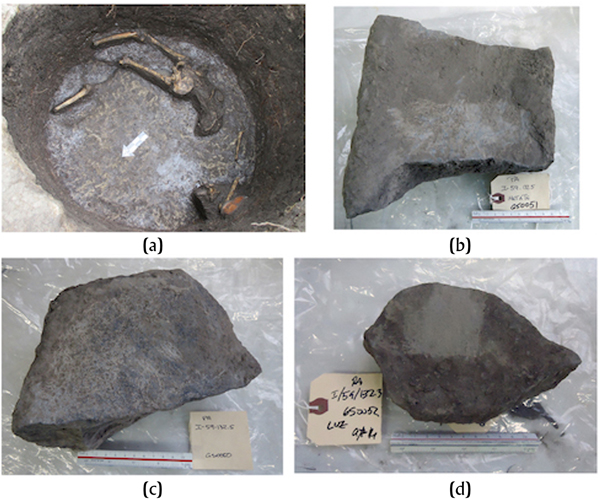
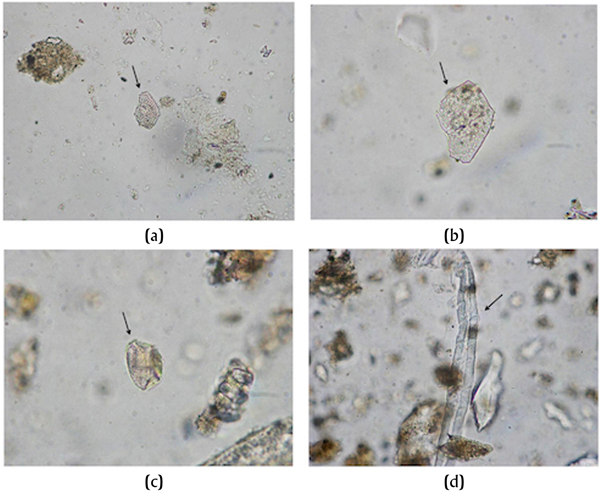
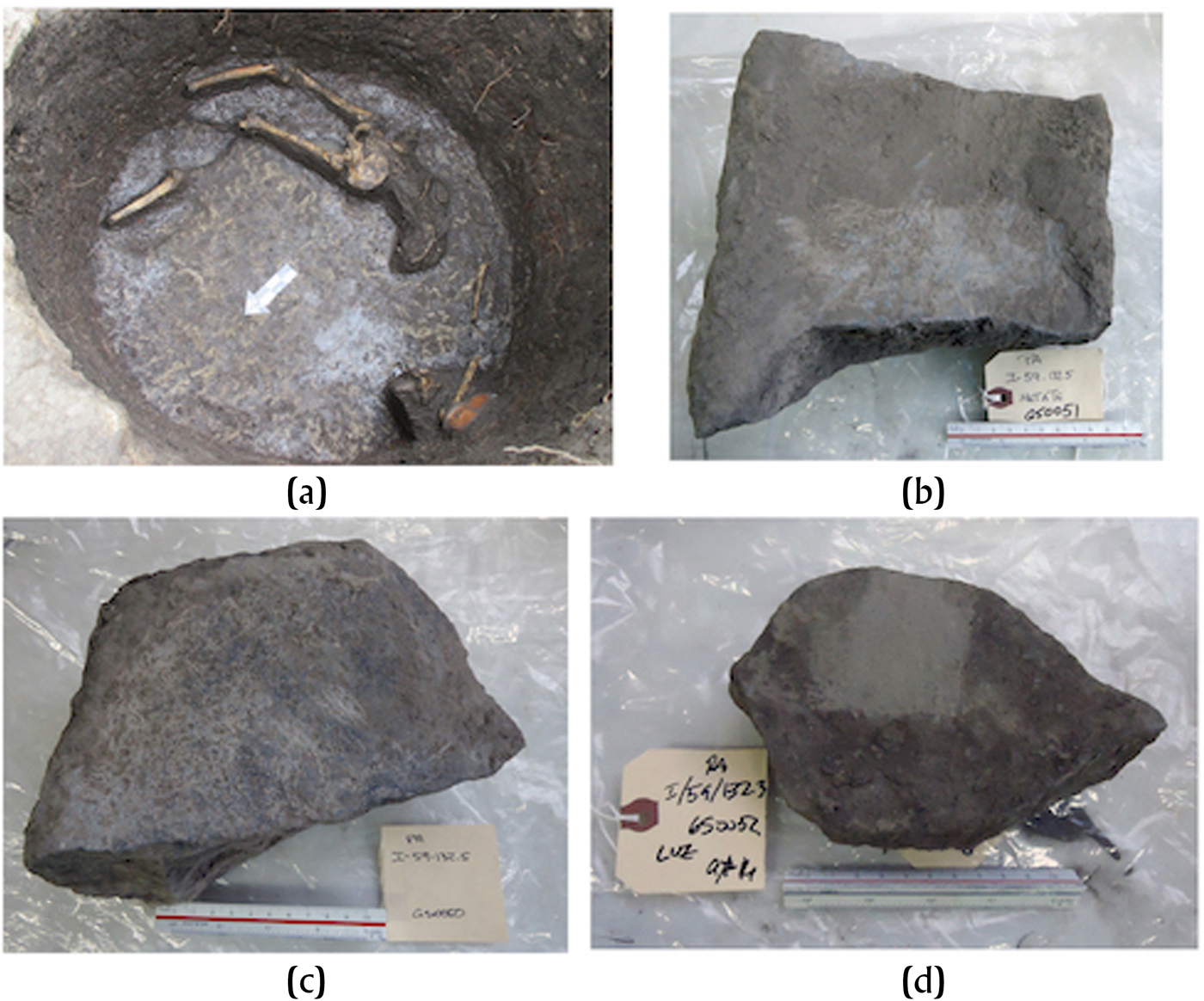
Macroremains, starch grains, and phytoliths have been recovered from several ground stone implements in Burial 2, Feature 21 (Figures 3–5). These objects, however, were not considered to be grave goods accompanying the interred individual, a young male with signs of trauma and partial dismemberment (Storey et al. Reference Storey, Buckley and Kennett2019), but rather part of the stone fill that covered the body. As the evidence suggests that the burial pit was filled in a single event following interment, it may be assumed again that the objects correspond to the approximate time period during which the individual died. AMS dating of bone collagen from the human osteological remains yielded a determination of 972–829 cal b.c. (p = 0.95, ALT132B), as well as additional determinations on wood charcoal: 1371–1130 cal b.c. (p = 0.95, ALTR5) and 1260–1112 cal b.c. (p = 0.95, ALTR6). Macrobotanical remains were recovered from several lots associated with the fill from Burial 2. Taxa include uncarbonized Amaranthus sp., carbonized as well as uncarbonized Chenopodium sp., and carbonized Jaltomata procumbens and Physalis sp. Charcoal fragments were abundant in all of the samples. Fragments of five metates were examined and maize starch grains were present in four. One of the metates, implement I-59-111.3, included starch from maize, beans, chili, and Dioscorea sp. Mano fragments analyzed from this burial contained only unidentified starch grains. In addition to abundant grass phytoliths, achenes of Cyperaceae, Agave fibers, diatom fragments, and phytoliths corresponding to Aristida sp. were identified as well in the pores of three metate fragments (Figure 5).
Burial 2 (Feature 21, Unit 59). (a) Burial pit. Photograph by Deborah L. Nichols. (b–d) Associated metates. Photographs by McClung de Tapia.
Burial 2 (Feature 21, Unit 59). (a–d) Zea mays and (e, f) unidentified starch grains. Left images with differential interference contrast and right images in cross-polarized light. Photographs by Cruz-Palma and Chaparro-Rueda.

Burial 2 (Feature 21, Unit 59). Phytoliths of (a) Cyperaceae (40×), (b) Cyperaceae (100×), (c) Commelinaceae (40×), and (d) fiber of Agave sp. (40×). Photographs by Adriano-Morán.

The individual in Burial 3 (Feature 23/31) was a middle-aged male accompanied by grave goods that included a tlacuache (opossum) effigy vessel, a severely eroded cylindrical vessel, and a jade bead. Tlacuaches are symbolically associated with maguey and pulque, and are featured in representations in pre-Hispanic codices (Hermann-Lejarazu Reference Hermann-Lejarazu2008:18–19, Plate 3) as well as myths among indigenous Mesoamerican groups (López-Austin Reference López-Austin2006). Two carbonized maize cob fragments and six cupule fragments were recovered by flotation of sediment samples from the fill. Carbonized and uncarbonized Chenopodium sp. and Jaltomata procumbens were also recovered in addition to a carbonized seed of Salvia sp. Small fragments of macroscopic charcoal were abundant. No starch grains were recovered from sediment adhering to a mano from the fill but not directly associated with the buried individual. Phytoliths from the same implement, however, included Agave fibers, diatom, sponge spicule fragments, and Chrysophyceae (algae). AMS determination of the osteological remains placed this individual at 1122–919 cal b.c. (p = 0.95, ALT187B). Additional conventional radiocarbon dating of wood charcoal include 1258–1088 cal b.c. (p = 0.95, ALTR7), 1124–996 cal b.c. (p = 0.95, ALTR10), and 1211–1052 cal b.c. (p = 0.95, ALTR11).
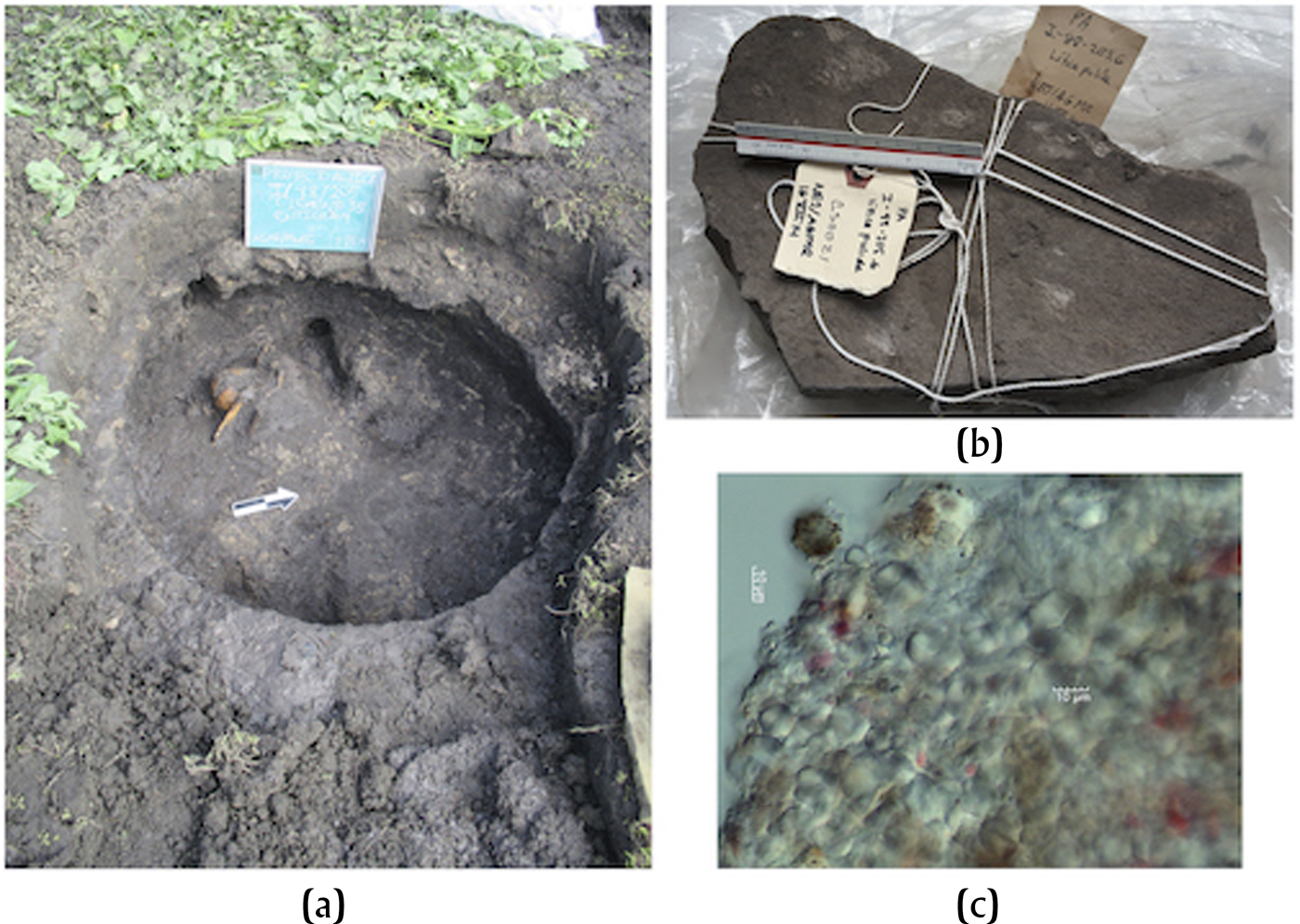
The ground stone implements recovered in the fill of Burial 4 (Feature 35) may not have been direct grave goods accompanying the female of approximately 40 years of age (Storey et al. Reference Storey, Buckley and Kennett2019). Uncarbonized macrobotanical specimens, while not abundant, represent components of the local flora. Few carbonized macrobotanical remains were preserved in sediment from this feature and include Chenopodium sp., Salvia sp., and Jaltomata procumbens, as well as relatively abundant macroscopic charcoal fragments (Table 1). Maize was not present. Maize starch grains, however, were recovered from two of the associated metates and were particularly abundant (>200 starch grains) in the implement designated as I-88-205.6 (Figure 6). Dioscorea sp. was also present in one implement recovered from this burial context. Grass phytoliths are predominant together with fragmentary remains of diatoms and Cyperaceae achenes (Table 5). AMS dating of human bone placed this individual at 1085–918 cal b.c. (p = 0.95, ALT205B). Additional AMS determinations from wood charcoal contained within the fill include 1011–909 cal b.c. (p = 0.95, ALTR12) and 1187–1004 cal b.c. (p = 0.95, ALTR 13).
Burial 4 (Feature 35, Unit 88). (a) Burial pit. Photograph by Deborah L. Nichols. (b) Associated metate. Photograph by McClung de Tapia. (c) Starch cluster with partially or fully gelatinized starch granules. Photograph by Cruz-Palma and Chaparro-Rueda.

An interesting aspect of these results is the consistency between the presence of maize starch in the stone implements associated with burial contexts, together with macrobotanical evidence in the case of Burials 1–3. This complements the conclusion reached by Storey et al. (Reference Storey, Buckley and Kennett2019) that the isotopic evidence on human remains points to a diet based largely on consumption of C4 plants, assumed to be predominantly maize. The absence of Opuntia spp. (nopal and prickly pear), a CAMS plant with an isotopic signature similar to values for C4 plants (McClung de Tapia and Martínez-Yrizar Reference McClung de Tapia and Martínez-Yrizar2017), among the macrobotanical remains from Altica also supports the evidence that maize provided the principal source of nutrition for these individuals. Furthermore, maize, Salvia sp. (chia and sage), and Physalis sp. (tomatillo) are present only among the carbonized macrobotanical remains, suggesting that they too may represent plants that were utilized rather than simply components of the flora adjacent to the site.
EARLY–MIDDLE FORMATIVE PERIOD SUBSISTENCE STRATEGIES AND THE EVOLUTION OF AGROECOLOGICAL SYSTEMS IN THE NORTHERN BASIN OF MEXICO
A number of questions arise from the analysis of plant remains from the excavation of Altica and from the ground stone implements recovered. The absence of maize phytoliths is surprising, considering the presence of maize, although in low counts, in the starch grain assemblage. The presence of starch grains indicating cultivated plants such as squash, beans, and chili while these same plants are neither represented by macrobotanical remains or phytoliths may seem unexpected as well. Four principal factors affect the presence of plant materials in the archaeological record: presence of well-preserved activity areas; natural conditions affecting the site; aspects of the production of diagnostic elements by specific plants; and traditional ways of consuming particular plants.
As mentioned previously, no living floors were excavated at Altica. Therefore, no food storage/preparation areas were available for study, and only the burials and possible hearth discussed earlier offered specific activity areas for consideration. Based on several decades of research in the Teotihuacan Valley, these apparent inconsistencies among different types of botanical evidence are partially due to the vicissitudes of preservation of archaeological plant materials at sites in areas such as this where several factors contribute to poor recovery.
The Teotihuacan region, like most of the northern Basin of Mexico, is characterized by a semiarid climate regime, with an average annual rainfall of 500 mm (McClung de Tapia Reference McClung de Tapia2015), in which approximately half of the year (November–April) is dry, followed by localized and often torrential showers between May and October. The rainfall pattern results in soils saturated by water and affected by hydric erosion during the wet period, followed by drying of clays that gradually fracture during the dry season. Soil cover is reduced by runoff, thus exposing underlying horizons, and the seeds of local plant taxa are dispersed and redeposited during this process. Carbonized seeds and other plant parts vary in their resistance to mechanical processes, microenvironmental conditions, and bioturbation when deposited in archaeological contexts.
Finally, for many plants, it is the seeds themselves that are frequently consumed, either alone (beans) or together with their respective fruits (e.g., chili or squash). Consequently, unless storage or food preparation areas are preserved, it is unlikely that such plant remains will be frequent in the archaeological record. Microbotanical remains such as starch and phytoliths, if predominant in seeds, will likely be consumed as well and would rarely be preserved outside of implements such as vessels or grinding stones. Phytoliths may be produced in seeds but are more frequent in leaves, stems, and root tissues. In the case of maize, for example, the kernels that are ground, so diagnostic forms of cob fragments or leaves, stems, and roots are unlikely to be preserved in the pores of ground stone tools.
While it is likely that the beginnings of milpa cultivation, an extensive system in which maize and other domesticates such as squash (Cucurbita spp.), beans (Phaseolus spp.), and chili (Capsicum spp.) are planted together, was established by this time in the Basin of Mexico, the evidence currently available from Altica is insufficient to support this hypothesis. Appropriate methodologies, if conceived at the start of research programs, have a better chance to explore these kinds of questions in future excavations in the Basin of Mexico. Whereas current, common use of the term milpa in central Mexico tends to suggest maize monoculture, traditionally milpas are a source of multiple products, both cultivated and otherwise (Linares-Mazari and Bye-Boettler Reference Linares-Mazari and Bye-Boettler2015; Zizumbo-Villareal et al. Reference Zizumbo-Villareal, Flores-Silva and Marín2012). In addition to domesticates, numerous useful wild taxa are present, most of which are well-adapted to disturbed soils, including edible and medicinal components of the local flora that are tolerated or even encouraged in the plots. Furthermore, the plants growing in milpas are often attractive to animals such as rabbits and deer, thereby facilitating the exploitation of these faunal resources as well (McClung de Tapia and Sugiyama Reference McClung de Tapia and Sugiyama2012). Paleoethnobotanical data from Teotihuacan and elsewhere suggest that foraging was never totally abandoned as a significant component of pre-Hispanic subsistence (McClung de Tapia and Martínez-Yrizar Reference McClung de Tapia and Martínez-Yrizar2017; McClung de Tapia et al. Reference McClung de Tapia, Martínez-Yrizar, Ibarra-Morales and Adriano-Morán2014) and this activity continues to provide complementary subsistence and medicinal resources for contemporary traditional populations in Mexico.
While the combination of plants recovered from Altica, however limited but including domesticates as well as wild opportunistic taxa, are consistent with a milpa-based agroecological system, productive but focused on numerous resources rather than the intensive cultivation of a single staple crop, the limited botanical remains are insufficient for consideration as indicators of intensive crop production beyond the presence of various domesticates. Furthermore, as the seeds of cultigens such as squash, chili, beans, squash, and greens such as quelites are in fact consumed, their remains are not likely to be preserved other than in food storage/preparation areas or, possibly, offerings. The hearth (Feature 6) is the only example of this type of context.
A dependence on the consumption of maize is suggested by the osteological remains recovered from the burials at Altica (Storey et al. Reference Storey, Buckley and Kennett2019). Radiocarbon dating of bone collagen of the four individuals in the burials discussed reflect occupation of the site during the transition from the Early to Middle Formative period that took place around 1000 cal b.c. (Nichols and Stoner Reference Nichols and Stoner2019; Rosenswig Reference Rosenswig2015;), and the ceramic evidence is consistent with this appraisal (Stoner and Nichols Reference Stoner and Nichols2019). This is a time when developed agricultural settlements with evidence of hierarchy and social differentiation were expanding in other sectors of the Basin of Mexico. Although stable carbon isotope values suggests that these individuals consumed a diet based largely on C4 plants, probably maize, the plant remains examined to date are insufficient to confirm an intensive exploitation of maize. Beyond the evidence of starch grains, other domesticated plants that would be expected in an established, maize-based, subsistence economy are not present. It is possible that the individuals represented in Burials 1, 3, and 4 were higher status members of the community, while the individual in Burial 2 is anomalous in other ways. In any case, these particular individuals may have had differential access to maize with respect to other inhabitants of the village and the evidence is again insufficient to elaborate on this hypothesis. The crude grinding implements recovered from Altica, however, do not project an image of well-developed intensive agricultural production and processing of cultigens over the long-term. Therefore, although there is no clear evidence at this time for milpa cultivation, neither is the evidence supportive of intensive maize cultivation.
On a different note, the apparent presence of starch grains representing root crops, generally associated with relatively humid environments to the south and east of the Basin of Mexico, suggests the acquisition of some subsistence products through established networks associated with the circulation of obsidian and ceramics. This represents the earliest evidence for the use of tubers in the northern Basin.
In conclusion, plant remains from Altica offer two new and significant elements to the study of plant remains from the Teotihuacan Valley and the northern Basin of Mexico: from a methodological standpoint, the introduction of starch grain analysis as a fundamental component of paleoethnobotanical analyses; and the presence of early evidence for the use of root crops, demonstrated through starch grain analysis. While it is not possible at this time to develop a model of agricultural practices and related productivity for the area of Altica based on the archaeological plant remains, hopefully further work in the region will contribute to a better understanding of how communities adapted to the environment and available resources in the Teotihuacan Valley during the transitional period between the Early and Middle Formative.
RESUMEN
Excavaciones recientes en el sitio de Altica, en al valle de Teotihuacan, México, cuya ocupación corresponde al periodo formativo temprano-medio, proporciona evidencias relevantes al uso de plantas y la agricultura por una población rural e el norte de la Cuenca de México. Aunque la domesticación de plantas en Mesoamérica tiene una larga historia que abarca aproximadamente 6,000–7,000 años durante el Holoceno, desde el final del Younger Dryas hasta el evento climático de 2200 cal A.C., dichos recursos fueron agregados gradualmente a las prácticas de alimentación existentes en Mesoamérica durante muchos milenios, con cambios culturales lentos a ritmos variables. En la cuenca de México, las comunidades agrícolas sedentarias estaban presentes en el sector sur de la región desde al menos 1200 aC. Sin embargo, la expansión inicial en el sector semiárido del norte de la cuenca parece haber tenido lugar al final del formativo temprano, durante la transición al formativo medio cuando las economías agrícolas basadas en el cultivo de maíz estaban firmemente establecidas, preparando el escenario para el aumento de la densidad de población y complejidad social correspondiente.
En este escenario, el sitio de Altica es de particular importancia pues actualmente es la única comunidad en el valle de Teotihuacán que abarcó este período de transición y que ha sobrevivido a los intensos cambios en el uso de la tierra de los últimos tres milenios. Las evidencias macro y microbotánica recuperada de contextos con dataciones de radiocarbono excavados en Altica proporciona evidencias para el cultivo de maíz complementado con la recolección de recursos silvestres. Los taxa recuperados en sedimentos indican la presencia de maíz así como varias plantas silvestres, comestibles en su mayoría pero también componentes de la flora circundante del sitio, lo cual sugiere la posibilidad de su incorporación en la dieta de los habitantes. También los fitolitos obtenidos de los implementos líticos representan plantas asociadas principalmente con la flora circundante aunque las fibras de Agave también pudieron haber representado el uso del maguey como alimento. Los gránulos de almidón presentes en el sedimento adherido a los implementos así como los poros de la piedra, indican el procesamiento de plantas domesticadas (maize, frijol, chile), así como tubérculos (ñame, yucca, etcétera), pocas veces conservados en sitios arqueológicos del centro de México. El conjunto de plantas procedentes de Altica sugieren un manejo productivo consistente con el concepto de milpa y posiblemente representan una economía de subsistencia en transición, antes de establecerse una dependencia intensiva de una gama más amplia de plantas cultivadas y domesticadas.
ACKNOWLEDGMENTS
The authors greatly appreciate the invitation by the project directors to collaborate with the Altica project. We thank Alberto Brito Ortíz for his assistance with the flotation and initial microscopic separation of the macrobotanical specimens from Altica, as well as diverse adjustments to the archaeological database to facilitate the incorporation of contextual information pertaining to the sediment samples. Thanks also to Lourdes González-Arqueros for helpful discussions concerning the geomorphological characteristics of Altica's landscape. Permission for the research was given by the Consejo de Arqueología, Instituto Nacional de Antropología y Historia (INAH), Centro del INAH Estado de México. Artifacts from the Altica excavations and survey are curated at the Arizona State University (ASU) Teotihuacan Research Laboratory in San Juan Teotihuacán, Mexico. Funding was provided by the National Geographic Society, the National Science Foundation (NSF) No. 1424132-Nichols (Dartmouth), Stoner NSF No. 1424184 (Arkansas), the Claire Garber Goodman Fund-Dartmouth, Rockefeller Center for the Social Sciences Urban Studies Grant-Dartmouth, Dickey Center for International Understanding-Dartmouth, Neukom Center for Computational Sciences-Dartmouth, and the William J. Bryant 1925 Professor of Anthropology-Dartmouth. Emily McClung de Tapia, Guillermo Acosta-Ochoa, and Diana Martínez-Yrizar received additional support from the Instituto de Investigaciones Antropológicas, Universidad Nacional Autónoma de México. Finally, we express our gratitude to the Editor of Ancient Mesoamerica and to Wesley Stoner, Deborah Nichols, and the reviewer for offering timely, constructive comments on earlier versions of this paper, although we accept full responsibility for its final form.