


Significant outcomes
-
∙ Patients who met criteria of repeated prior treatment failure for current mental disorder, underwent an 8-week intensive residential treatment programme based on principles from intensive short-term dynamic psychotherapy.
-
∙ Outcome variables were diagnostic status on Axis I and II, number of personality disorder criteria, number of comorbid Axis I disorders, use of psychotropic medications, visits with treatment providers, and occupational status.
-
∙ At follow-up 14 months after the end of treatment, 46.26% had recovered in terms of Axis I pathology, 63.79% had recovered in terms of Axis II pathology, 71.18% had returned to work, there was a 28.62% reduction in psychotropic medications, health care utilisation was reduced by 65.55%, and there were large improvements in disorder complexity and personality dysfunction.
Limitations
-
∙ The study had a relatively small sample size.
-
∙ There was no way of discerning the effectiveness of separate components of the treatment programme.
-
∙ There was no randomisation of patients to treatment and one or more control conditions, thus coincidental improvements cannot be completely ruled out.
Introduction
Despite the proven efficacy and effectiveness of psychiatric and psychotherapeutic treatments for mental disorders, a large proportion of patients remains who do not benefit from the treatments they are provided (Reference Lambert1,Reference Solbakken and Abbass2). Only about one half of treated patients in well-designed clinical trials can be expected to recover in terms of symptomatic levels. In standard short-term out-patient treatment in naturalistic settings on the other hand, the numbers appear to be even more sobering. For example, Hansen et al. (Reference Hansen, Lambert and Forman3) found symptom recovery rates of only 14.1% in a large sample of 6072 patients across various out-patient sites in the United States. In the same sample, a further 20.9% were reliably improved, whereas as much as 65.0% were unchanged or deteriorated during the treatment. Whole country data from the United Kingdom following the implementation of primarily Cognitive Behavioural Therapy under the Improving Access to Psychological Therapies (IAPT) scheme have repeatedly shown only about a 45% response rate to first-line treatments, whereas 55% did not respond or deteriorated. The prevalence of non-response to standard mental health treatment is disturbingly large.
Recently, there are encouraging findings emerging in the literature about the effectiveness of tailored treatment for patients with treatment-resistant psychological disorders. Studies are accruing which indicate that long-term treatment may be more effective for complex mental disorders than short-term treatment (Reference Leichsenring and Rabung4–Reference Bateman and Fonagy6). Moreover, evidence is accumulating that demonstrates the effect of systematic feedback to patients and therapists on reducing negative- and non-response to psychiatric treatment (Reference Lambert1,Reference Amble, Gude, Stubdal, Just Andersen and Wampold7).
There are also recent studies indicating that high-intensity and relatively short-term residential treatment may be highly effective for treatment-resistant populations. For example, Stålseth et al. (Reference Stålseth, Gude, Rønnestad and Monsen8) and Solbakken and Abbass (Reference Solbakken and Abbass2,Reference Solbakken and Abbass9,Reference Solbakken and Abbass10) have shown that intensive time-limited, residential treatments are effective in helping a large proportion of patients with known treatment-resistant depressive- and anxiety disorders. Stålseth et al. demonstrated that a tailored psychodynamic existential 12-week treatment programme for patients with treatment-resistant depression and comorbid Cluster C personality disorder was superior to residential treatment as usual (TAU) of identical length with matched controls. Effects on both symptoms and interpersonal problems were large and sustained a year after treatment. Solbakken and Abbass (Reference Solbakken and Abbass9,Reference Solbakken and Abbass10) have shown that an 8-week intensive short-term dynamic psychotherapy (ISTDP) residential treatment programme specially designed for patients with treatment-resistant depressive, anxiety and personality disorders yielded large effects on target complaints, psychiatric symptoms and interpersonal problems that were sustained 14 months after the termination of treatment. A large proportion of treated patients were classified as recovered on all of these measures at termination and follow-up. Furthermore, the treatment programme vastly outperformed TAU. Promising results have also been reported by Cornelissen and Verheul (Reference Cornelissen and Verheul11) and Cornelissen (Reference Cornelissen12) from a 24-week residential programme using ISTDP for treating patients with personality disorders, most of which had previous treatment but failed to benefit. Once again effects were large and sustained through follow-up.
Some central limitations of these studies on residential treatment for treatment-resistant disorders are their reliance on self-report measures, along with the use of mainly general indicators of psychopathology as outcome variables (e.g. general symptom severity, overall interpersonal functioning, and overall levels of target complaints). It is important to demonstrate whether or not the extensive changes reported by the patients themselves are also reflected in the evaluations of external observers. Moreover, diagnostic changes have not been explored, and specific improvement on the diagnostic categories targeted by the programmes should be verified. Similarly, even though all of these studies primarily include patients with Axis II comorbidity, none of them have assessed and reported changes in personality disorders and personality functioning occurring during and after treatment. Finally, improvements on other relevant outcome domains such as use of treatment services and medications, along with changes in employment status should be more extensively explored.
The present study addresses these issues and thus builds on existing research on the effectiveness of customised, intensive residential treatment for patients with treatment-resistant disorders. It reports changes in observer-based diagnostic status (including presence of Axis I and II disorders, the level of Axis I comorbidity, and overall Axis II severity), along with changes in medication use, health care utilisation, and employment status during and after the intensive time-limited residential treatment programme for patients with repeated non-response to psychiatric treatment as described in Solbakken and Abbass (Reference Solbakken and Abbass2,Reference Solbakken and Abbass10). The present study sample is comprised of all patients included in the previous two outcome studies from that programme.
Aims of the study
The aim of this study is to examine the effectiveness of an ISTDP, time-limited, residential treatment programme in a sample of 95 consecutively admitted patients with treatment-resistant anxiety and/or depressive disorders, and varying degrees of comorbidity on Axis I and II. Effectiveness will be determined through evaluation of diagnostic changes, changes in medication use, changes in health care use, and changes in employment status. The study longitudinally investigated developments in these factors at the beginning and the end of 8 weeks of residential treatment and then again ~60 weeks after the termination of treatment.
Materials and methods
Procedures
Patients were enlisted among referrals to the residential treatment facility of the Drammen District Psychiatric Center in Norway. Referrals came from local out-patient psychiatric clinics, psychiatric hospitals in the vicinity, and general practitioners in the area. Patients were screened for inclusion/exclusion criteria by an intake team. Eligible candidates had an evaluation session with a trained psychotherapist at the unit. Decisions regarding inclusion were made based on previous treatment history, diagnostic information, referral information, and response to intervention in the evaluation session. Eligible patients were then informed about the study and invited to participate.
Trained coordinators (psychologists) at the unit informed and included patients. Trained personnel did diagnostic evaluations according to the Diagnostic and Statistical Manual of Mental Disorders, fourth edition (13). The MINI Neuropsychiatric Interview (Reference Sheehan, Lecrubier and Sheehan14) was used to assess symptom disorders. The Structured Clinical Interview for the Diagnostic and Statistical Manual of Mental Disorders, Axis II, Fourth Edition (DSM-IV-R/SCID-II) was used to assess personality disorders (Reference First, Spitzer, Gibbon, Williams and Benjamin15).
Patients completed a core battery of questionnaires pre-treatment and in weeks 3 and 5. These forms were also completed at treatment termination, 6 months post-treatment, and 14 months post-treatment. One measure of overall level of target complaints was administered before every individual treatment session, at termination and twice after termination. Diagnostic assessments were completed pre-treatment, after termination, and at 14-month follow-up.
Treatment model
The ISTDP format described by Davanloo (Reference Davanloo16,Reference Davanloo17) and others (Reference Della Selva18,Reference Abbass and Bechard19) was used as a theoretical and technical basis for the programme. This treatment model has been extensively presented in articles and books. Two recent books may serve as manualised descriptions for the individual psychotherapeutic treatment provided; Co-Creating Change – Effective Dynamic Therapy Techniques (Reference Frederickson20) and Reaching through Resistance – Advanced Psychotherapy Techniques (Reference Abbass21). Adapted versions of the ISTDP model were used to develop and inform the structure, content and format of all components of the treatment.
ISTDP has been found clinically and cost-effective in a wide range of psychiatric samples (Reference Solbakken and Abbass10,Reference Abbass and Katzman22). Furthermore, two meta-analyses of ISTDP studies have found predominantly large effects across diverse treatment populations that persist in long-term follow-up (Reference Town and Driessen23,Reference Abbass, Town and Driessen24).
The ISTDP model conceptualises psychopathology as failed integration of affect, cognition, and behaviour (Reference Solbakken, Hansen, Havik and Monsen25–Reference Solbakken, Hansen and Monsen27), with particular emphasis on the mobilisation of warded off, repressed, or avoided affect related to pathogenic ruptures to the patient’s bonds with attachment figures throughout the course of development (Reference Solbakken and Abbass9). The model includes a specific emphasis on the phenomenon of treatment resistance and its significant role in treatment failure.
We believe that this model is one approach in the literature that clearly describes and operationalises how to evaluate and work productively with patients who are prone to treatment resistance. The model includes a number of considerations and interventions directed at dealing with those conscious and unconscious manoeuvres patients resort to that prevent genuine emotional closeness, minimise strong affect, and place the patient in passive, helpless, compliant, or defiant positions vis-à-vis the therapist. These defensive processes are thought to constitute the principal obstacles to therapeutic engagement and improvement, contributing to eventual treatment failure if not identified and dealt with (Reference Solbakken and Abbass9). This same process appears prominent in resistance to both psychotherapeutic and pharmacotherapeutic treatment (Reference Abbass28).
The treatment programme and its components
Details of the treatment programme are extensively described elsewhere and can be accessed there for interested readers (Reference Solbakken and Abbass2,Reference Solbakken and Abbass9,Reference Solbakken and Abbass10). A summary is presented here. The programme was organised so that treatment intensity could be increased radically as compared with standard care. Moreover, patients were treated in an in-patient unit to increase the time spent in the therapeutic setting and the likelihood of completing treatment. The programme combines individual psychotherapy, group psychotherapy, psychopharmacological treatment (if considered required by the ward psychiatrist), and a number of therapeutic group activities including body awareness training, structured psychoeducational lectures, physical exercise, psychosocial training, and milieu therapy. A pre-set, non-negotiable time limit of 8 weeks was provided.
Patients entered the programme in groups of five or six. They received either one (90 min) or two (45 min) individual ISTDP sessions per week, along with two group sessions (90 min) per week. There were two sessions of low-intensity physical exercise (walking) per week, as well as weekly body awareness training sessions and psychoeducational lectures dealing with treatment process according to ISTDP theory. Patients also took part in weekly art therapy groups centring on the experience and expression of feelings through guided production of creative and artistic displays.
Patients were also provided a primary contact among the unit staff, with whom they were encouraged to discuss their own personal development and significant problems experienced in the therapeutic process on a day-to-day basis. In addition, patients met with the ward psychiatrist if any issues arose with regard to medications; these consultations were aimed at optimising medication regimes, or reducing medication use if considered sensible by the psychiatrist.
Participants
The programme includes patients with treatment-resistant anxiety- and depressive disorders with and without comorbid symptom- and personality disorders. Due to the high prevalence of these disorders, it is reasonable to assume that this particular group represents the majority of non-responding or treatment-resistant referrals (Reference Solbakken and Abbass9,Reference Solbakken and Abbass10,Reference Johansson, Town and Abbass29).
Inclusion criteria
Adult patients (aged 18–70) were eligible if they
-
A) Satisfied criteria of need for hospitalisation for psychiatric treatment, including deficient general functioning and loss of function in multiple domains (e.g. inadequate self-care, severe breakdown in relational, occupational, and/or personal functioning).
-
B) Had known history of treatment-resistant disorder, that is, failure to respond with symptomatic relief and improved occupational or interpersonal functioning despite three or more prior attempts at treatment for the ongoing disorder. ‘Failure to respond’ was operationalised as subjective report of lacking improvement and continuing need/wish for treatment from the patient, along with recent referral from a treatment provider (psychologist/psychiatrist/general practitioner) that defined the patient as a non-responder to previous treatments. The previous treatment attempts could be either medication efforts or psychotherapeutic/psychosocial efforts, or most commonly a combination of both.
-
C) Had capacity for taking an ‘intrapsychic perspective’ on their problems in the evaluation session, that is, could regard problems as the result of personal difficulties in dealing with feelings, thoughts, and reactions to self/others.
All three inclusion criteria had to be fulfilled. Comorbid symptom- and personality disorders were permitted, as were psychotropic medications (with the exception of daily intake of sedatives).
Exclusion criteria
Patients were excluded if satisfying one or more of the following:
-
A) psychotic disorder (except short, reactive psychotic episodes);
-
B) bipolar disorder type I;
-
C) dissociative identity disorder;
-
D) addiction of such severity that detoxification was indicated (after which entering treatment was possible);
-
E) psychiatric disorders secondary to known medical conditions;
-
F) mental retardation;
-
G) insufficient command of the Norwegian language;
-
H) acute suicide risk, history of severe acting out, or other serious problems with impulse control.
Sample characteristics
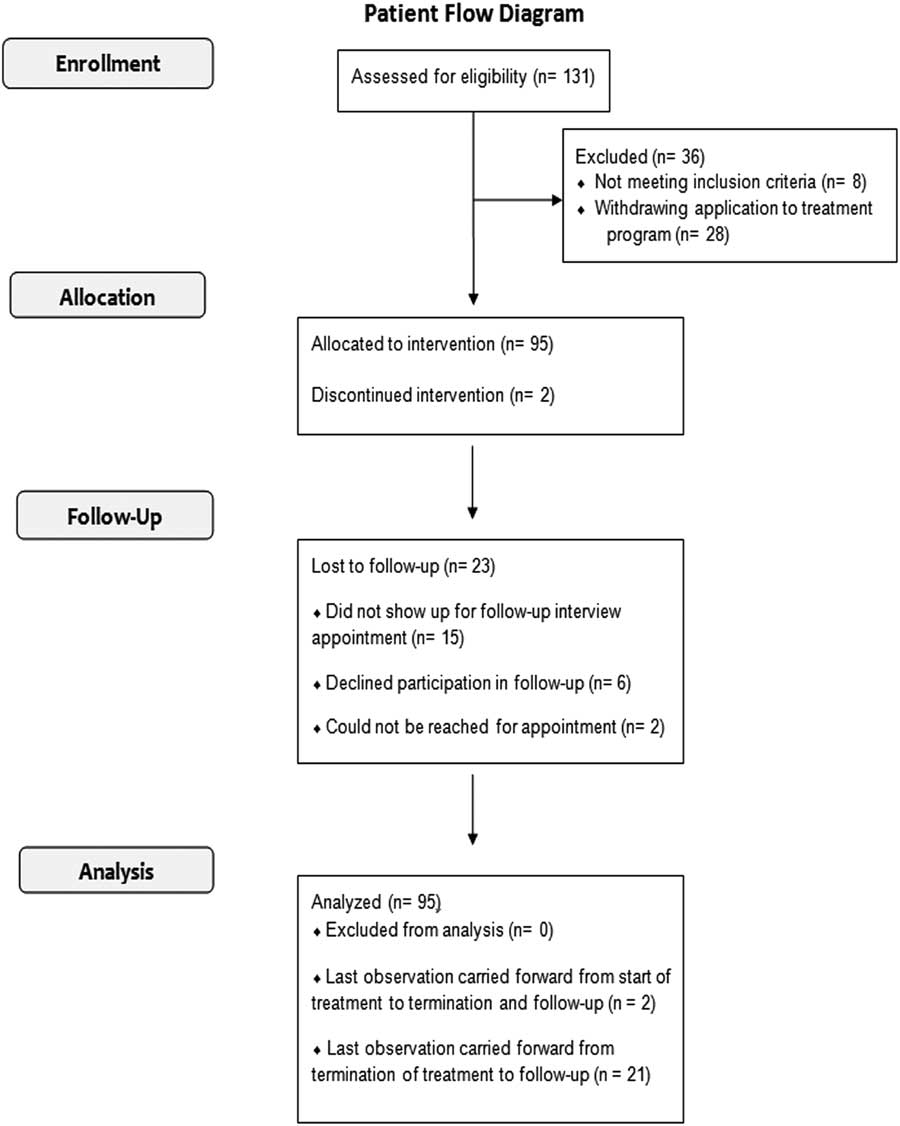
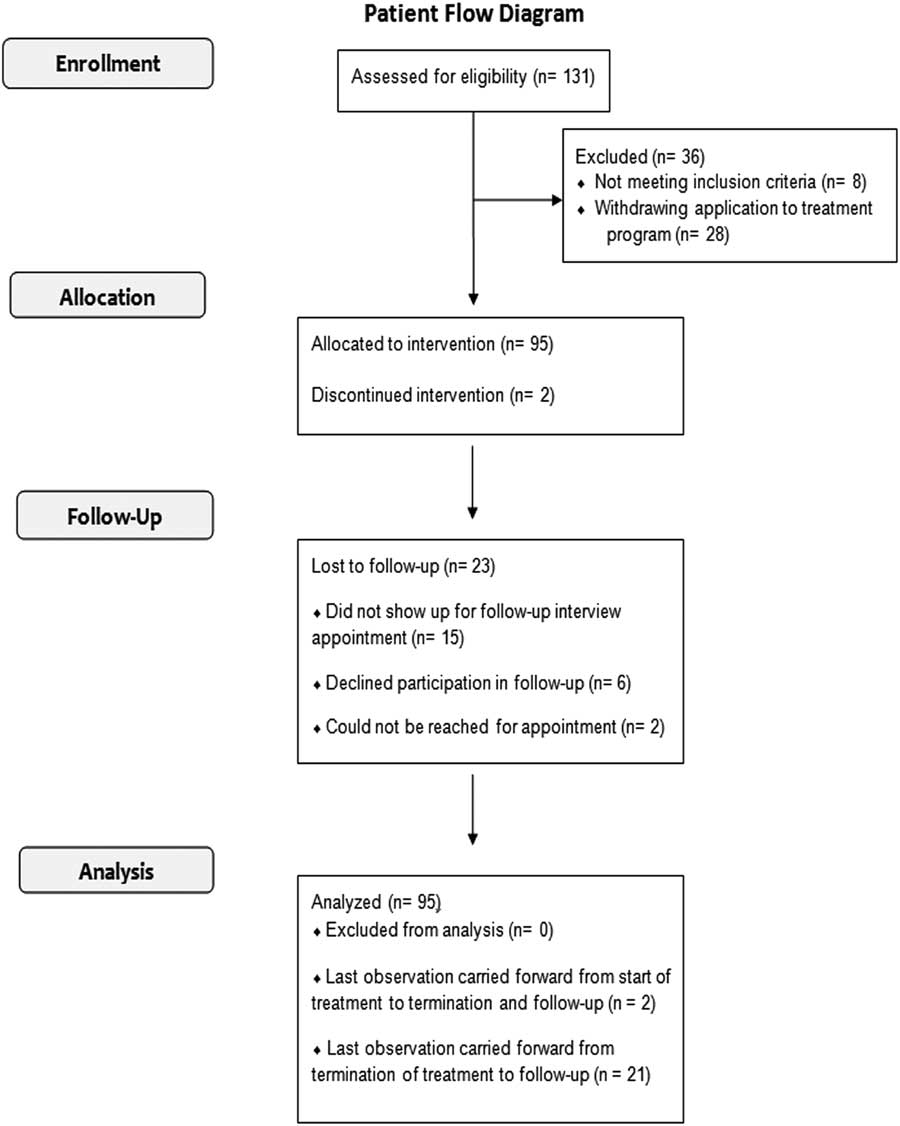
A total of 95 patients consecutively admitted to the unit comprised the treatment sample for the study. Figure 1 shows the flow of patients in the study. Mean age in the study sample was 39 years (SD: 10.4, range: 19–62), 60.0% were female. A total of 85.3% had diagnoses of affective disorders (recurrent major depressive episode: 55.8%, major depressive episode: 17.9%, dysthymia: 27.4%, bipolar disorder type II: 7.4%). Anxiety disorders were present in 75.8% (social phobia: 30.5%, agoraphobia: 27.4%, general anxiety disorder: 27.4%, panic disorder: 23.2%, post traumatic stress disorder (PTSD): 9.5%; specific phobia: 14.7%). A further 23.2% had substance-related disorders (alcohol dependency: 17.9%, drug abuse: 5.3%). Somatoform disorders were diagnosed in 24.2% (hypochondrias: 9.5%, body dysmorphic disorder: 9.5%, pain disorder: 5.3%). Finally, 5.3% had eating disorders (bulimia). Mean number of Axis I diagnosis for patients was 3.12 (SD: 1.75). A total of 61.1% had one or more personality disorders (Cluster C: 36.8%, Cluster B: 14.7%, Cluster A: 8.4%, not otherwise specified (NOS): 19.0%). All patients fulfilled criteria for affective disorder or anxiety disorder or both.
Diagram of patient flow through the project.
All participants reported three or more prior treatments for their current episode of psychological disorder. In the year prior to entering the programme, 78.9% had received psychotherapy (mean number of therapy sessions was 27), 73.7% had received psychopharmacological treatment (54.7% of the total sample used antidepressants; 21.1% used anxiolytics; 12.6% used antipsychotics; 9.5% used sleeping medications; 8.4% used mood stabilisers; 3.2% used pain medication), 37.9% had frequently consulted their general medical practitioner for their current psychiatric disorder (mean number of consultations was 10), 23.8% had received group psychotherapy (mean number of meetings was 18), 17.1% had been admitted to psychiatric hospital (mean number of hospitalisations in this subgroup was three), 5.3% had received services from community psychiatric teams (mean number of meetings was 14), and 4.2% had received psychomotor physical therapy (mean number of sessions was 11).
Ethics statement
The authors assert that all procedures contributing to this work comply with the ethical standards of the relevant national and institutional committees on human experimentation and with the Helsinki Declaration of 1975, as revised in 2008.
Therapists and training
Individual therapists
There were a total of nine therapists providing individual treatments in the study. All individual therapists are trained and certified psychologists. Therapists participated in a 3-year core training programme in ISTDP delivered by internationally recognised tutors before and partly during the time that data were collected. As therapists were under training for part of the study period, particular emphasis was placed on ensuring treatment adherence and fidelity through weekly peer supervision, along with internet-based case supervision of treatment video-recordings every 2–3 weeks by the second author for advanced training and to verify treatment adherence (Reference Abbass30,Reference Abbass, Arthey and Elliott31). All cases were reviewed in this process and the treatments delivered were classified by the authors as adequate in terms of therapist adherence and competence.
Group therapists
The group psychotherapists were highly experienced, trained, and certified in traditional psychodynamic group psychotherapy. They developed a specific synthesis of ISTDP principles and traditional group therapeutic principles adhered to in the group psychotherapy component of the programme. The group sessions thus integrate traditional group therapeutic principles (Reference Yalom32) with the ISTDP principles of pressure to feeling, systematic building of emotional tolerance, and methodical clarification and challenge to defenses.
The body awareness instructor/physiotherapist was highly experienced, specialised and certified in psychomotor physiotherapy. The therapist conducting art therapy was certified and highly experienced. In body awareness- and art therapy groups the therapists were assisted by qualified members of staff. The members of staff providing milieu therapy were trained and highly experienced in that format. Peer supervision for all therapists and members of staff took place every week. There were four resident psychiatrists administering medications during the study period, all highly experienced and certified clinical specialists.
The therapists delivering non-individual components attended several case-based workshops on ISTDP. They were supervised by the individual therapists in principles of ISTDP while delivering their treatments and had weekly meetings with each other for discussing how to implement ISTDP principles in the group therapy settings and ensure treatment adherence. Group and individual therapists had two meetings every week for coordinating treatment across modalities, discuss treatment adherence, and ensure that therapist actions were consistent with ISTDP principles.
Assessments
Observer-rated measures
Trained members of staff-assessed patients with observer-based measures before hospitalisation, at termination, and 14 months after termination. The MINI Neuropsychiatric Interview (Reference Sheehan, Lecrubier and Sheehan14) was used for assessing symptom disorders. The DSM-IV-R/SCID-II (Reference First, Spitzer, Gibbon, Williams and Benjamin15) was used for assessing personality disorders and severity of personality problems.
The MINI Neuropsychiatric Interview
The Mini International Neuropsychiatric Interview (Reference Sheehan, Lecrubier and Sheehan14) meets the need for a brief, reliable and valid structured diagnostic interview for psychiatric disorders. The MINI contains 120 questions and screens 16 Axis I and one Axis II DSM-IV-R disorders for 24 current and lifetime diagnoses. Using branching tree logic, the MINI has two to four screening questions per disorder. Additional symptom questions within each disorder section are asked if the screening questions are endorsed. Ratings derived from the MINI in the present study included the presence or absence of any disorder, presence or absence of specific disorders, and the disorder complexity as evidenced by Axis I comorbidity (total number of disorders). Inter-rater reliability estimates were calculated on the basis of a subset of ten interviews that were independently rated by the assessors. Cohen’s κ for the categorical variables ranged from 0.74 to 1.0, indicating substantial to perfect agreement. The intra-class correlation (ICC) coefficient for the continuous disorder complexity variable was 0.90 (ICC, 2.1; (Reference Shrout and Fleiss33)] indicating excellent agreement.
DSM-IV-R/SCID-II
The SCID-II (Reference First, Spitzer, Gibbon, Williams and Benjamin15) is a semi-structured interview developed for the assessment of DSM-IV-TR personality disorders. The interview includes the 11 DSM-IV personality disorders (including personality disorder NOS) and the appendix categories depressive personality disorder and passive-aggressive personality disorder. It carefully follows the language of the DSM-IV Axis II personality disorders criteria. Scoring is done by each trait being rated either as absent, subthreshold, present, or ‘inadequate information to code’. Traits considered present are then summarised and diagnoses are indicated when a required number of traits are present for any given disorder. The SCID-II was administered by trained interviewers. Ratings derived from the SCID-II included the presence or absence of any personality disorder, presence or absence of specific personality disorders, and the severity of personality problems as indicated by the total number of fulfilled Axis II criteria. Inter-rater reliability estimates were calculated on the basis of a subset of ten interviews that were independently rated by the assessors. Cohen’s κ for the categorical variables ranged from 0.62 to 1.0, indicating good to perfect agreement. The ICC coefficient for the continuous severity of personality problems variable was 0.87 (ICC, 2.1; (Reference Shrout and Fleiss33)) indicating excellent agreement.
Self-rated measures
A number of self-rated questionnaires were completed before the evaluation session, before treatment onset, and throughout the treatment- and follow-up phases, reflecting various aspects of patient history and functioning. Questionnaire domains analysed in the present study are as follows: (1) amount of treatment taken (operationalised as number of visits with treatment providers in the previous year), (2) occupational status (operationalised as presence or absence of occupational activity (including occupational training and studying) for 22.5 h or more per week on average), and (3) use of psychotropic medications (operationalised as regular use of specific classes of psychotropic medications and regular use of any psychotropic medication).
Statistical analyses
When analysing continuous outcome variables (number of Axis I disorders, number of Axis II criteria, number of meetings with treatment providers in the previous year) multilevel modelling was applied using linear mixed models in the SPSS/PASW, version 22.0. The multilevel models contained two levels of analysis representing repeated measurements over time nested within individuals. Assessments were treated as fixed occasions and placed at a constant distance across patients. Before the analyses, dependent variables were centred so that intercepts were estimated at the time value of zero, thus removing problems with interpretation of intercept values (Reference Singer and Willett34). A two-piece linear trajectory was best suited in the majority of individual cases for the analyses of number of Axis I disorders and overall number of Axis II criteria. The first piece represents the treatment phase; the second piece represents the follow-up phase. The analyses investigating change were done by computing a separate model for each phase that contained the fixed effect of the linear time variable (time), along with a random effect of the intercept. This procedure estimates the magnitude of change on each outcome variable and tests the significance of those changes. For the analyses of changes in the number of treatment provider visits, a one-piece linear model was computed as this variable only was assessed before treatment and at 14-month follow-up. The addition of random slopes did not improve overall fit to any significant degree for any of the models and hence were not included.
To further examine the magnitude of change in these outcomes, effect sizes (ES)-Cohen’s d were calculated by dividing estimated change scores by their corresponding standard deviations. In order not to underestimate error and inflate effects, estimated mean changes were divided by the pooled standard deviations of all relevant measurement points on the outcome variables. Cohen’s (Reference Cohen35) standards for evaluating the magnitude of ES were utilised, classifying small effects as d=0.2–0.5; medium effects as d=0.5–0.8; and large effects as d>0.8.
For dichotomous outcomes (presence of Axis I disorder, presence of Axis II disorder, occupational status, and use of psychotropic medications), we computed results in terms of the percentages of patients with a particular outcome present or absent at each assessment point. Differences between measurement points were then tested for statistical significance with McNemar χ2tests for longitudinal analysis of related dichotomous variables (Reference Adedokun and Burgess36). To avoid inflating estimates of change, we utilised a procedure for carrying forward the last known observation when only one observation existed within a piece in the multilevel models.
Results
Symptom disorder changes
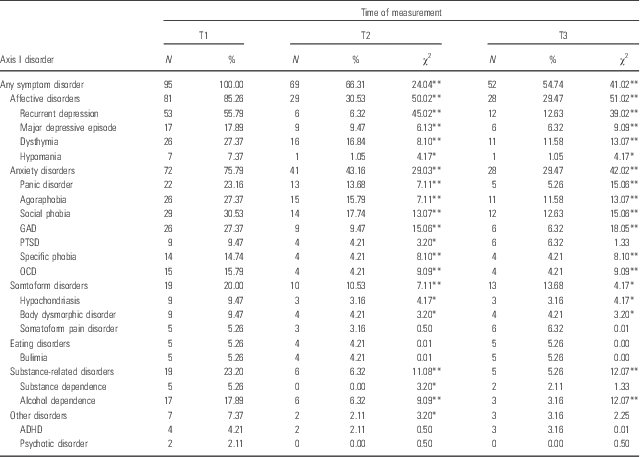
Changes in symptom disorder status from treatment onset to termination and 14-month follow-up are presented in Table 1. There was a highly significant reduction in the number of patients having any Axis I disorder from treatment onset to termination and follow-up. The reduction continued throughout the follow-up phase with significant reduction also taking place 14 months after termination (χ2=15.06, p=0.0001). There were substantial and significant improvements across all of the affective disorders during treatment. Improvements generally remained stable during the 14-month follow-up period with two exceptions: for dysthymia there was a further significant post-treatment improvement (χ2=3.20, p=0.036), whereas for recurrent depression there was a significant post-treatment deterioration as compared with results at the end of treatment, with six cases that were recovered at termination relapsing in the 14 months after treatment (χ2=4.17, p=0.020).
Number of patients satisfying criteria for symptom disorder at onset, termination, and 14-month follow-up
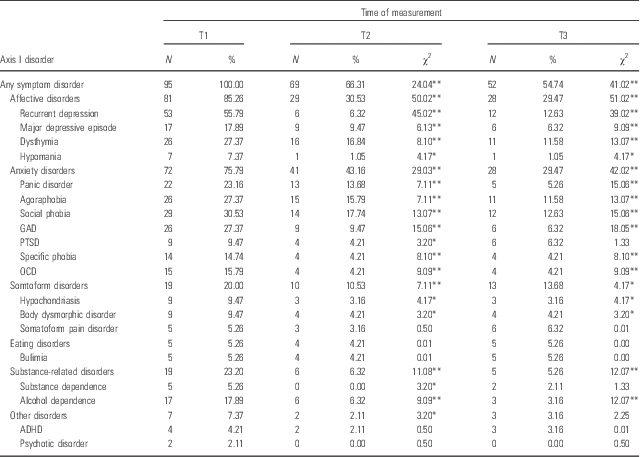
GAD, general anxiety disorder; N, number of patients; OCD, obsessive/compulsive disorder; ADHD, attention deficit hyperactivity disorder; T1, before treatment; T2, at the end of 8 weeks of treatment; T3, 14-month follow-up; χ2, χ2 from McNemar’s test comparing proportions across times of measurement (T2 and T3 compared with T1).
*p<0.05, **p<0.01.
Substantial improvements from termination through follow-up were also seen across all the anxiety disorders with one exception; PTSD, for which the absolute number of improved cases (from nine at the onset of treatment to three at termination and six at follow-up) was significant during treatment, but non-significant at the 14-month follow-up. There were also significant post-treatment improvements for anxiety disorders in general (χ2=11.08, p=0.0004) and for panic disorder in particular (χ2=6.13, p=0.007).
As for substance-related disorders in general, there were substantial improvements that were stable over the follow-up period. For alcohol-related disorders in particular, changes were very sizable and persistent. For drug-related disorders there was a significant reduction from the onset of treatment to termination with all patients recovering from their addictions. However, two of the five patients initially satisfying criteria for drug addiction relapsed in the 14 months after treatment. Thus, even though the number of patients with drug-related disorders was more than halved, the low number of patients with this disorder in the sample rendered the overall improvement at the time of 14-month follow-up non-significant.
There was a significant reduction of patients with somatoform disorders in general from onset to termination and 14-month follow-up. For particular somatoform disorders, there was a significant reduction in the number of patients with hypochondriasis and body dysmorphic disorder from onset to termination that persisted in the 14-month follow-up period. For patients with somatoform pain disorder, there was an absolute but non-significant reduction from five to three cases at termination, and then a non-significant increase to six cases with the disorder at the time of follow-up.
Similarly, for eating disorders, the treatment appears to have been ineffective, with the same five patients satisfying criteria for bulimia at the onset of treatment and 14 months after termination. The number of patients with attention deficit hyperactivity disorder (ADHD) was reduced from four to two and three at termination and follow-up, respectively, a change that was non-significant. Finally, the number of patients satisfying criteria for psychotic disorders dropped from two to zero from onset through termination and follow-up. This change even though potentially important, remained non-significant due to the relative infrequency of the disorder in the sample.
Personality disorder changes
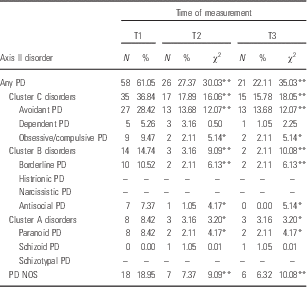
Changes in personality disorder status from treatment onset to termination and 14-month follow-up are presented in Table 2. The overall effectiveness in reducing the number of patients with personality disorders was impressive, with almost two-thirds of the patients with personality disorder at onset no longer having such disorder 14 months after treatment. Improvements in personality disorder status set in rapidly, and the main bulk of improvements took place during the 8 weeks of treatment. There was, however, a continuing reduction in number of personality disordered cases from termination to follow-up (from 26 to 21), which was statistically significant (χ2=3.20, p=0.036).
Number of patients satisfying criteria for personality disorder at onset, termination, and 14-month follow-up
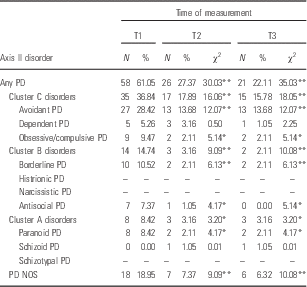
N, number of patients; T1, before treatment; T2, at the end of 8 weeks of treatment; T3, 14-month follow-up; PD, personality disorder. χ2, χ2 from McNemar’s test comparing proportions across times of measurement (T2 and T3 compared with T1).
*p<0.05, **p<0.01.
For Cluster C disorders, in general, improvements were substantial and significant across the 8 weeks of treatment. Changes were stable in the 14 months after termination. For both avoidant and obsessive/compulsive personality disorder (PD) improvements were significant and stable 14 months after treatment. For dependent PD, the number of cases dropped from five at the onset to three at termination and further to one at 14-month follow-up, a large reduction in terms of absolute numbers. This reduction, however, remained non-significant due to the relatively low number of cases with this PD in the sample.
Fur Cluster B disorders in general, and those specific disorder categories within that Cluster which were represented in the sample, improvements were substantial and significant, and remained stable through the follow-up phase.
For Cluster A disorders in general changes were significant and stable. As for specific Cluster A disorders in the sample, there was a significant reduction in number of patients with both Paranoid and Antisocial PD that persisted throughout the 14-month follow-up period. Interestingly, even though no patient was diagnosed with schizoid PD at the onset of treatment, one particular patient was found to satisfy criteria for this disorder at termination and follow-up. This was the only patient that deteriorated in terms of personality functioning during and after the treatment programme. Finally, for the PD NOS category improvements were substantial during treatment and remained stable from termination to follow-up.
Changes in disorder complexity and overall personality functioning
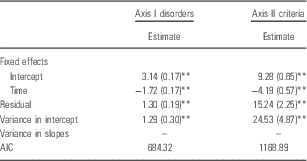
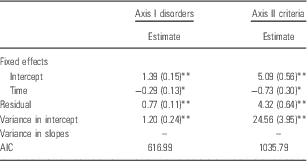
Changes in disorder complexity (as measured by the overall number of comorbid disorders on Axis I) and overall personality functioning (as measured by the overall number of personality disorder criteria satisfied) during treatment are presented in Table 3, changes in these parameters during the follow-up phase are presented in Table 4.
Results of multilevel growth curve analyses: estimates of intercepts and magnitudes of change in number of Axis I disorders and number of Axis II criteria from the onset of treatment to termination 8 weeks later
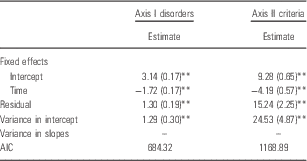
AIC, Akaike information criterion.
Standard errors are in parenthesis. Estimations were done by the method of restricted maximum likelihood.
*p<0.01, **p<0.05.
Results of multilevel growth curve analyses: estimates of intercepts and magnitudes of change in number of Axis I disorders and number of Axis II criteria during the 14-month follow-up phase
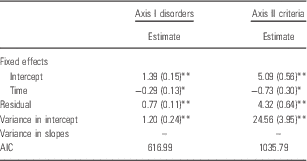
AIC, Akaike information criterion.
Standard errors are in parenthesis. Estimations were done by the method of restricted maximum likelihood.
*p<0.01, **p<0.05.
Disorder complexity was significantly reduced from an average of 3.14 Axis I disorders at onset to an average of 1.38 at termination. There was a continuing and significant improvement in the follow-up phase with the average number of disorders dropping further to 1.10 after 14 months.
Overall personality functioning also improved substantially and significantly during the 8 weeks of treatment, with the average number of Axis II criteria dropping from 9.28 at the beginning of treatment to 5.09 at termination. Once again there was a significant post-therapeutic change, with further reduction in the number of satisfied personality disorder criteria during the 14-month follow-up phase dropping to an average of 4.36.
Changes in medication use, occupational status, and health care utilisation
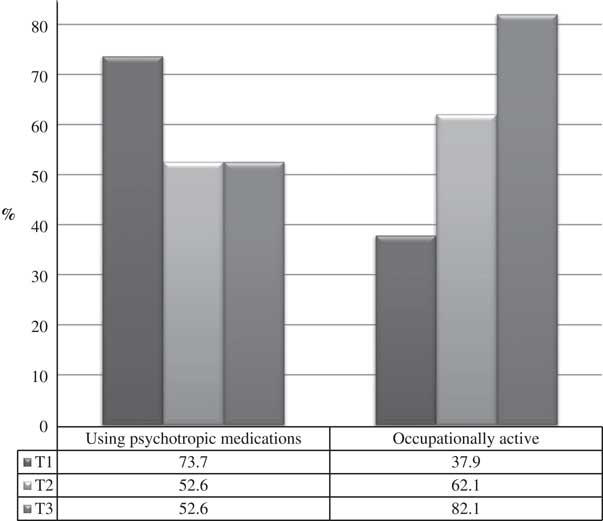
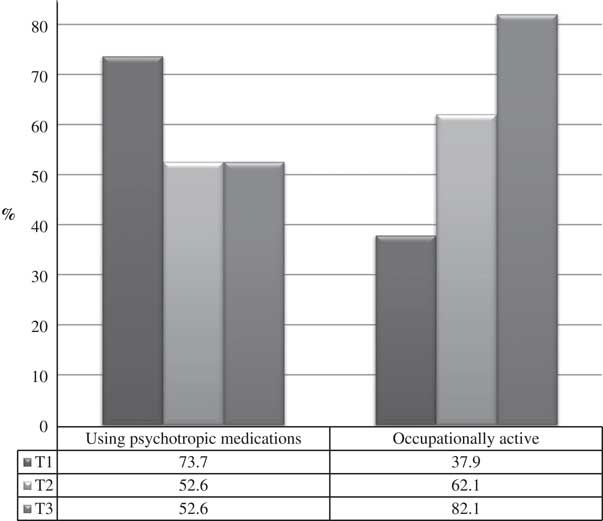
Changes in medication use (number of patients routinely using psychotropic medications) and occupational status (number of patients occupationally active for 22.5 h or more per week) are presented in Fig. 2. There was a significant reduction in the number of patients taking medications from onset to termination (χ2=18.05, p=0.0001), which remained stable 14 months later. As for occupational status, there was a significant increase in the number of patients being occupationally active from onset to termination (χ2=11.08, p=0.0004). In the year after treatment, a further significant increase in the number of occupationally active patients took place (z=27.03, p=0.0001), culminating with as much as 82.1% of patients reporting more than 22.5 h of work-related activity per week.
Changes in medication use (number of patients routinely using psychotropic medications) and occupational status (number of patients occupationally active for 22.5 h or more per week).
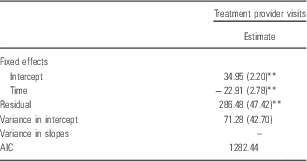
Changes in health care utilisation (as measured by number of reported treatment provider visits in the previous year) are presented in Table 5. There was a substantial and significant drop from an average of 34.95 visits in the year before partaking in the programme to an average of 12.04 in the year preceding the follow-up interviews. Thus, the number of treatment provider visits was effectively cut to about a third of the initial level.
Results of multilevel growth curve analyses: estimates of intercept and magnitude of change in number of treatment provider visits in the year before entering the programme compared with the year after finishing the programme
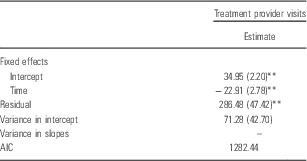
AIC, Akaike information criterion.
Standard errors are in parenthesis. Estimations were done by the method of restricted maximum likelihood.
*p<0.01, **p<0.05.
Summary of main findings and presentation of effect sizes
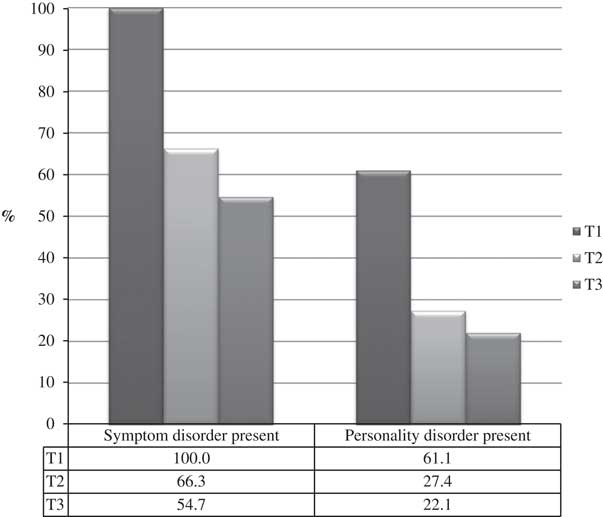
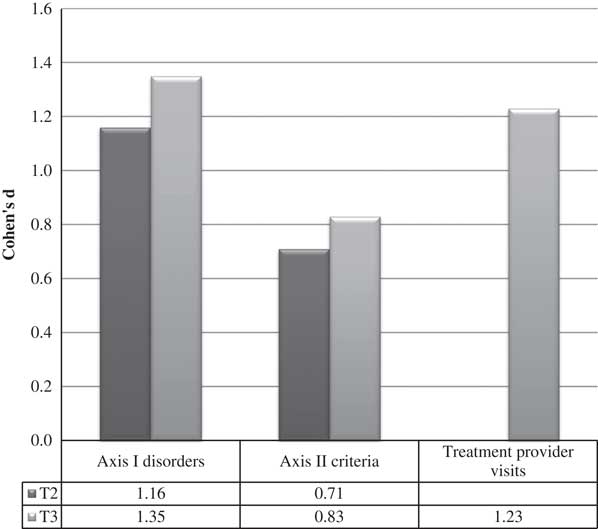
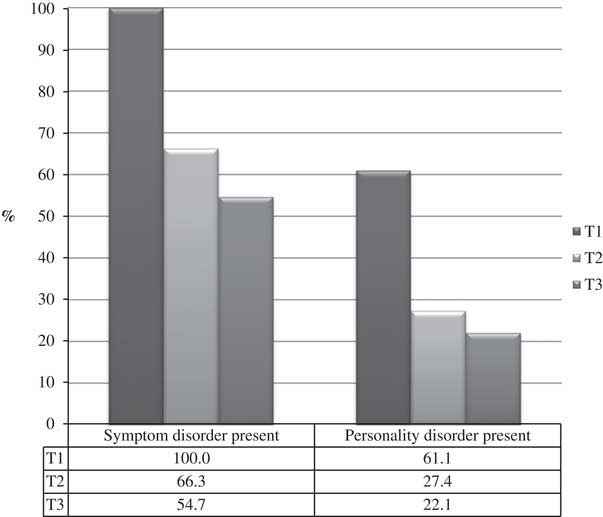
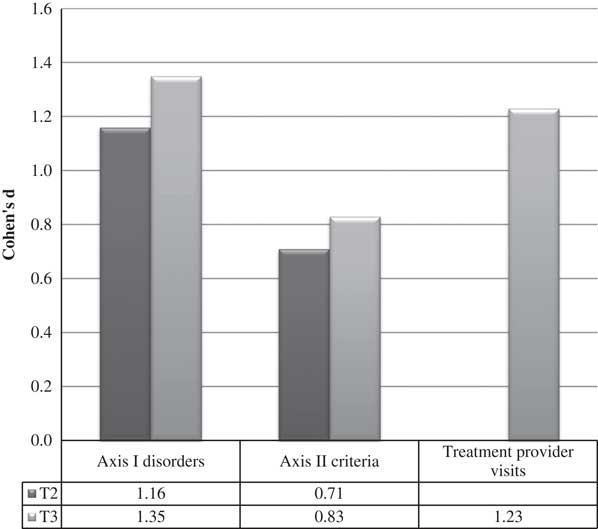
Figure 3 summarises the overall changes in overall diagnostic status on Axis I and II, whereas Fig. 4 reports the ES for the continuous outcome variables. As can be seen from Fig. 2, the number of patients with Axis I disorder was close to halved, whereas the number of patients with Axis II disorder was cut by close to two-thirds. ES were consistently large, with the exception of changes in overall number of personality disorder criteria, for which the ES was classifiable as medium at termination and large at the time of 14-month follow-up.
Changes in overall diagnostic status on Axis I and II.
Estimated effect sizes for disorder complexity, overall personality dysfunction, and treatment provider visits per year.
Discussion
The present study shows that a high-intensity and relatively short-term residential treatment appears to be very effective in helping patients with highly comorbid, treatment-resistant affective- and anxiety disorders, in terms not only of diagnostic improvements related to the Axis I pathology for which they were primarily referred, but also in terms of improving Axis II pathology to a substantial degree in a short amount of time. Treated patients experienced considerable reductions in overall psychopathological morbidity, disorder complexity, personality functioning, medication use, use of mental health care services, along with considerable improvements in occupational functioning. In terms of ES for disorder complexity, overall personality functioning, and use of mental health care services effects were generally large, accrued quickly, and persisted at least 14 months after termination of the treatment programme.
In terms of recovery rates (as defined by the number of patients no longer satisfying criteria of Axis I and II disorder after treatment), effects of the programme were also highly substantial, with 45.3% of the patients recovered in terms of Axis I pathology and 63.8% of the patients recovered in terms of Axis II pathology when assessed 14 months after termination of treatment. These are noteworthy rates for patients with history of non-response to psychiatric treatments. Based on these figures, it would seem that the ISTDP-based, time-limited, residential treatment programme is an approach that warrants consideration for patients who do not respond to standard treatment formats. This study thereby supports the conclusions drawn in two previous studies of the treatment programme (Reference Solbakken and Abbass2,Reference Solbakken and Abbass9) and extends our knowledge base by adding information on observer-based diagnostic changes, along with information on psychosocial changes and changes in use of psychotropic medications. In all assessment domains of the present study, results point in the same direction: high-intensity, residential treatment tailored to the needs of treatment-resistant patients appears both highly effective and efficacious.
Some of the present findings warrant a more detailed discussion. First of all, to our knowledge, this is the first study to demonstrate that high-intensity residential treatment produce marked changes at the level of observer-based diagnostic assessments. We believe this to be an important addition to the existing literature validating and consolidating findings from previous studies (Reference Solbakken and Abbass2,Reference Stålseth, Gude, Rønnestad and Monsen8,Reference Solbakken and Abbass9,Reference Cornelissen and Verheul11,Reference Cornelissen12).
It is of interest that almost half of the treated patients no longer satisfied criteria for any Axis I disorder 14 months after treatments despite documented resistance to previous treatment efforts and the high levels of comorbidity on both Axis I and II. This may indicate that specific tailoring of the treatment format to the needs of the resistant patient in combination with substantial increase in treatment intensity can be a fruitful path towards providing more effective psychiatric treatment for the relatively large number of patients who do not benefit adequately from standard treatment formats.
The treatment programme was very effective in alleviating those disorders that were prime targets of the intervention, that is, affective and anxiety disorders. Looking at the numbers, we see that ~65% of patients with affective disorders at the onset of treatment no longer had such disorders after 8 weeks of treatment, a change that was stable at 14-month follow-up. For patients with anxiety disorders ~45% were recovered at termination increasing to about 60% at 14-month follow-up. The programme appears to have been very effective for somatoform disorders and substance-related disorders as well, with ~75% of patients with substance-related disorders and about 30% of patients with somatoform disorders being recovered in terms of such disorder 14 months after treatment.
Effectiveness was uniformly high across discrete affective- and anxiety disorder categories with the exception of PTSD, where the effect did not persist after treatment (even though 33% of patients with PTSD at the onset of treatment no longer satisfied criteria for that disorder at 14-month follow-up). Despite the lack of a significant effect, we cannot decisively conclude that the treatment programme is not effective for PTSD, as the number of patients with this disorder in the sample was very restricted. The same reasoning applies to three of those five other discrete diagnostic categories that were studied for which no significant and persisting effect of treatment was found (substance dependence, ADHD, and psychotic disorders). These disorders were all so rare in the sample, that although there was a fairly large relative reduction in the numbers of patients having those disorders during and after treatment, it is close to impossible to have a statistically significant effect. For these disorders, we therefore conclude that further research is needed in order to evaluate the effectiveness of high-intensity residential treatment for these patient groups.
For two disorders, however, we believe we must conclude that the present programme was not effective: bulimia and somatoform pain disorder. For these two, there were no tendencies towards improvement in the sample. Rather numbers of cases with these disorders remained highly stable. Why these two disorders were not responsive to the treatment is not clear. It may be, at least for bulimia, that the treatments did not include sufficient focus on relevant behaviours. For pain disorder, the result is more puzzling, as ISTDP treatments usually focus systematically on reducing psychogenic pain conditions whenever such symptoms appear in-session. It may, however, be that such symptoms were relegated to the background, whereas affective- and anxiety-related symptoms were addressed more comprehensively, as these were the primary causes of referral to the programme.
The addition of observer-based data on personality disorders and personality dysfunction is an important aspect of the present study, as patients with treatment-resistant Axis I disorders commonly display personality problems that likely interfere with treatment efforts. It is notable that so many patients recovered from their personality disorders within the relatively short time frame during which treatment was provided. This gives credence to the notion that increased treatment intensity and residential treatment delivery may be highly valuable to personality disordered patients.
The effectiveness of the programme for personality disorders is not so surprising in as much as the treatment model extensively focusses on altering characterological aspects of the patients’ ways of dealing with affect when activated. However, it is striking that effects were so rapid to set in (within 8 weeks). This partly indicates that personality disorder problems may be more swiftly changeable than commonly thought. It raises questions about the overall stability of personality disorders as has been noted in a number of studies in recent years (Reference Morey and Hopwood37).
Moreover, it raises interesting questions about the interrelatedness of treatment-resistant Axis I pathology and comorbid personality disorders. Whether the resolution of resistant Axis I pathology clears the path for resolution of personality disorder problems, or resolution of said personality problems clears the path for reducing treatment-resistant symptom states, or if they are best addressed in concert, is an area worth investigating in the future. We note that the programme appears to be highly effective for all three PD Clusters, indicating that transdiagnostic treatment formats as the ISTDP-based model may be well suited also for PD treatment. This is of interest as many contemporary treatments for PDs appear to be designed for specific PDs rather than PDs in general (e.g. schema-focussed therapy, mentalisation-based therapy, dialectic behaviour therapy, etc.). On a related note, the findings of the present study and previous studies of this treatment programme indicate that a transdiagnostic treatment model is well suited for most Axis I and II disorders.
As far as we know, this is the first study to document substantial changes in the level of disorder complexity and overall personality functioning for patients with treatment-resistant disorders. As both of these factors are likely to impede upon the effectiveness of treatment (Reference Bohart and Wade38), it is interesting to see the extent to which they themselves are amenable to psychotherapeutic change. There were substantial changes in both of these domains during and after treatment, demonstrating that patients in the sample left treatment not only less complex in terms of any remaining core Axis I pathology, but also with considerably less personality problems overall. One may speculate that these changes in themselves are important for the future prognosis of these patients. For example, it may be that future treatment needs can be sufficiently resolved by standard formats of treatment if improvements in disorder complexity and personality functioning remain reasonably stable after treatment. Future research should address whether relapse in treatment-resistant patients tends to imply full blown relapse into prior functioning both regarding personality dysfunction and disorder complexity, or if rather relapses are more circumscribed following such treatment as found in the present study.
When it comes to changes in use of psychotropic medications, we found a reduction of ~30% in the proportion of patients using such medications from treatment onset to termination that remained stable through follow-up. This may indicate that psychotropic medications do not contribute to recovery in patients with treatment-resistant and complex disorders in a relatively large number of cases. Future research should address how medication reductions during treatment are related to outcome and maintenance of gains with these patients. It is our experience that these complex and resistant cases often are offered excessive amounts of medication that are often not tested and proven effective with this population.
In terms of both reductions in health care utilisation and increases in occupational activity effects were impressive. The number of visits with treatment providers was cut by about 65% when comparing the year before and the year after treatment. This reduction, we believe, can probably be taken as an indication of increased self-reliance. Paradoxically, we believe that it also is a sign of reduced passivity in dealing with one’s mental illness. It is our distinct impression that many of the patients arriving at the programme tended to passively wait for therapists to come up with solutions rather than an active working on one’s own behalf towards improvement. The reduction in the use of health care services also corresponds to significant reductions in costs associated with health care after treatment. Future research should specifically examine the overall cost-effectiveness of programmes as the one currently under study. Our findings, however, corroborate other studies of the ISTDP model indicating such treatment may relatively rapidly pay for itself by reducing later treatment costs (Reference Abbass and Katzman22).
The number of patients being occupationally active increased from onset of treatment to the time of 14-month follow-up by ~115%. Thus, at the final measurement point >80% of treated patients were occupationally active. This improvement has a number of implications. It corroborates the notion of reduced passivity and reliance on others in the patient sample. It demonstrates an increased level of general functioning that extends itself meaningfully into the everyday life of the patients. Finally, it implies substantial savings in social welfare expenses adding substantially to the cost-effectiveness of the treatment programme (Reference Abbass and Katzman22).
For a number of the outcome variables we found significant post-treatment improvements. Specifically, post-treatment gains were demonstrated for the proportion of patients having any Axis I disorder, dysthymic disorder, anxiety disorders in general, panic disorder, personality disorder, Axis I disorder complexity, overall personality dysfunction, and occupational activity. Such diverse converging effects are highly unlikely to be coincidental, especially over a short 8-week time frame. It also is in line with a meta-analysis of short-term psychodynamic psychotherapy studies that found a significant growth in personality measure gains in follow-up (Reference Town, Diener, Abbass, Leichsenring, Driessen and Rabung39).
The strengths of the study are as follows. Treatment was delivered in a naturalistic setting increasing the ecological validity of findings: the methods and setting of the study closely reflect real-world circumstances (Reference Solbakken and Abbass10). The sample size is relatively large. All patients had comprehensive evaluations and had confirmed treatment-resistant disorders before intervention. Drop-out rates were remarkably low. The study included observer-rated assessments of diagnoses on both Axis I and II unlike any previous study on treatment-resistant disordered populations. It used multiple outcome measures representing a number of central domains not previously examined with this population and type of treatment, along with an intention to treat paradigm increasing the reliability and validity of findings. Analyses of both continuous and dichotomous outcome variables were done by state of the art methodology.
Limitations
There was no randomisation of patients to the treatment and some other relevant condition. Chance improvements can therefore not be entirely ruled out. Still, the limited treatment effects experienced by the patients in previous treatments make coincidence less likely as the source of improvements. Moreover, in a previous study from the programme including a subset of the patients analysed here, time on a wait-list control condition had minimal impact on the patients’ problems (Reference Solbakken and Abbass10).
The design of the study makes it impossible to determine the extent to which separate components of the treatment programme are effective. Furthermore, we cannot determine their individual contributions to the overall outcome. It is thereby difficult to ascertain how much of the benefits were the result of the ISTDP therapy delivered versus other components or combinations. Furthermore, it is not possible discern the impact of other factors such as compassion, care, support, companionship with other patients, contact time with treatment providers, and so on.
The follow-up is relatively short. Even though 14 months constitutes a long follow-up phase in comparison with most studies in the literature (Reference Lambert1), it is still too brief to inform us thoroughly about the long-term effects of the treatment provided. As suggested by Solbakken and Abbass (Reference Solbakken and Abbass10) substantially longer follow-up is of special interest in the study of treatment-resistant disorders, as relapse rates for such disorders probably are higher than would otherwise be expected.
Another limitation is that there were no quantitative measures of adherence of various treatment modalities. Still, a number of procedures were undertaken to verify adherence and competence across different treatment components. These included case review (video-based) by the second author, regular meetings to discuss adherence and harmonise treatment across modalities, along with regular supervision.
Future studies in this domain should include randomised assignment of patients with treatment-resistant disorders to intensive residential treatment and TAU. Studies also need to compare the present treatment programme (and programmes like it) with other treatment models. Examining the relative effectiveness of intensive residential treatments and out-patient treatments for treatment refractory disorders would be important. Designs that help differentiate the effects of different components of the treatment programme would also be informative.
Conclusion
The residential treatment programme based on principles from ISTDP with an 8-week time-limit was effective in reducing Axis I and II pathology, personality dysfunction, use of mental health care services, use of psychotropic medications, and increasing occupational activity in patients with common treatment-resistant disorders. Gains were consistently sustained or further improved 14 months after the end of treatment. These results corroborate previous findings on the effectiveness of high-intensity, short-term residential treatment for treatment-resistant disorders (Reference Solbakken and Abbass2,Reference Stålseth, Gude, Rønnestad and Monsen8,Reference Solbakken and Abbass10,Reference Cornelissen and Verheul11,Reference Cornelissen12) and add to the existing literature by demonstrating effectiveness in terms of observer-based diagnostic characteristics and measures of health care utilisation and psychosocial functioning. The results are encouraging and provide hope for a relatively large group of patients who tend not to benefit adequately from standard formats of treatment for their incapacitating psychological problems.
Acknowledgements
The authors would like to thank staff and patients at Unit E of the Residential Facility at DPS Drammen, Vestre Viken Health Trust. The authors also thank all members of staff at the Residential Facility and DPS Drammen for their contributions.
Authors’ contributions: O.A.S. participated in the planning, design, implementation, data collection, data analyses, interpretation of data, as well as taking main lead in the drafting and later revision of the article. A.A. participated in the planning, design, implementation, supervision of study therapists, interpretation of data, and contributed to the drafting and later revision of the article. Both authors approved the final draft.
Financial Support
The study received no external grants or funding and was financed as an integral part of day-to-day running at the hospital unit where treatment was delivered.
Conflicts of Interest
The authors acknowledge bias in favour of the intensive short-term dynamic psychotherapy treatment model examined in this study as they are practitioners and teachers of.