Introduction
A growing body of evidence indicates that most of stresses in poultry production at the cellular level are associated with oxidative stress due to excess of free radical production or inadequate antioxidant protection (Surai, Reference SURAI2002; Surai and Fisinin, Reference SURAI and FISININ2012b; Reference SURAI and FISININ2015). The vitagene concept for combating stresses was developed in medical science by Calabrese et al. (Reference CALABRESE, GUAGLIANO, SAPIENZA, PANEBIANCO, CALAFATO, PULEO, PENNISI, MANCUSO, BUTTERFIELD and STELLA2007), and later applied to poultry production (Fisinin and Surai, Reference FISININ and SURAI2011; Reference FISININ and SURAI2011a; Surai and Fisinin, Reference SURAI and FISININ2012a; Reference SURAI and FISININ2012b; Reference SURAI and FISININ2016). In animals/birds, redox-signalling pathways use ROS as signalling molecules to activate genes responsible for the regulation of various functions including growth, differentiation, proliferation and apoptosis. Indeed the term vitagenes refers to a group of genes that are responsible for cell adaptation to stress by preserving cellular homeostasis in stress conditions. The vitagene family includes heat shock proteins, thioredoxins, sirtuins and superoxide dismutase (SOD; Surai, Reference SURAI2015a; Reference SURAI2015b). The vitagene in medical sciences was related to neurodegenerative disorders, neuroprotection), aging and longevity, dermatology, free radical-related diseases, osteoporosis and Alzheimer pathology (Cornelius et al., Reference CORNELIUS, PERROTTA, GRAZIANO, CALABRESE and CALABRESE2013; Dattilo et al., Reference DATTILO, MANCUSO, KOVERECH, DI MAURO, ONTARIO, PETRALIA, PETRALIA, MAIOLINO, SERRA, CALABRESE and CALABRESE2015; Surai and Fisinin, Reference SURAI and FISININ2016). It seems likely that, by upregulating the vitagenes and improving the adaptive ability of animals to stress, it is possible to decrease the negative consequences of the aforementioned types of stresses in poultry and farm animal production. The first part of this review characterised technological and environmental stresses in poultry production and the aim of this review is to consider nutritional and internal stresses with a special emphasis on oxidative stress. In the third part of the review the vitagene concept in relation to poultry production will be presented.
Nutritional stresses
mycotoxins
‘Silent killers’, ‘invisible thieves’, ‘unavoidable contaminants’, and ‘natural toxicants’ - all these names have been given to the fungal secondary metabolites, mycotoxins. In general mycotoxins are considered to be unavoidable contaminants in feeds and are a major problem all over the world. Mycotoxins are considered to be among the major feed-related stressors in poultry production (Surai and Dvorska, Reference SURAI and DVORSKA2005; Awad et al., Reference AWAD, GHAREEB, BÖHM and ZENTEK2013; Heussner and Bingle, Reference HEUSSNER and BINGLE2015; Schwartz-Zimmermann et al., Reference SCHWARTZ-ZIMMERMANN, FRUHMANN, DÄNICKE, WIESENBERGER, CAHA, WEBER and BERTHILLER2015). In fact, aflatoxins (AF), zearalenone, ochratoxin A (OTA), fumonisins, trichothecenes such as deoxynivalenol (DON) and T-2 toxin, are considered to be the most common mycotoxins that can significantly impact the health and performance of poultry species (Murugesan et al., Reference MURUGESAN, LEDOUX, NAEHRER, BERTHILLER, APPLEGATE, GRENIER, PHILLIPS and SCHATZMAYR2015). Indeed, these mycotoxins can severely affect the immune system and gut health leading to high economic losses to poultry producers.
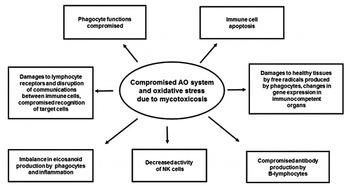
The immunosuppressive effects of mycotoxins (Surai and Dvorska, Reference SURAI and DVORSKA2005; Surai and Mezes, Reference SURAI and MEZES2005) are associated with their pro-oxidant and pro-apoptotic actions (Surai et al., Reference SURAI, MEZES, MELNICHUK and FOTINA2008; Reference SURAI, MEZES, FOTINA and DENEV2010) with negative effects on transcription factors, including Nrf2 (Limonciel et al., 2014; Katika et al., Reference KATIKA, HENDRIKSEN, VAN LOVEREN and PEIJNENBURG2015) and NF-kB (Kumar et al., Reference KUMAR, ALAM, CHAUDHARI, DWIVEDI, JAIN, ANSARI and DAS2013; Ramyaa et al., Reference RAMYAA, KRISHNASWAMY and PADMA2014, Figure 1 ). Antioxidant defence systems are under regulation by various transcription factors. In recent years, attention has focussed on a basic leucine zipper transcription factor, Nuclear factor-erythroid-2- (NF-E2-) related factor 2 (Nrf2) and nuclear factor-kappa B (NF-κB). Indeed, Nrf2 has a significant role in adaptive responses to oxidative stress, being involved in the induction of the expression of various antioxidant molecules to combat oxidative and electrophilic stress. This includes enzymes in the first line of antioxidant defence, namely SOD, GSH-Px and catalase, detoxification enzymes (HO-1, NQO1, and GST), GSH-related proteins (γ-GCS), NADPH-producing enzymes and others stress-response proteins contributing to preventing oxidative and inflammatory damages. Furthermore, NF-κB is an inducible transcription factor that regulates many cellular processes including immunity, inflammation, apoptosis, cell proliferation and differentiation. In many cases, NF-κB activation is associated with synthesis of pro-inflammatory cytokines (for review see Surai, Reference SURAI2015c). Therefore, inhibition of Nrf2 and activation of NF-kB by mycotoxins are considered to be fundamental mechanisms of their toxic effects.
Mycotoxins, oxidative stress and immunity (Surai and Mezes, Reference SURAI and MEZES2005; Surai, Reference SURAI2006).

It has been shown that AFB1 contamination in broilers diet could reduce the percentages of T-cell subsets and the expression level of cytokine mRNA in the small intestine affecting the immune function of the intestinal mucosa (Jiang et al., Reference JIANG, PENG, FANG, CUI, YU and CHEN2015). Furthermore, DON is shown to suppress the antibody response to infectious bronchitis vaccine and to Newcastle disease virus in broilers and laying hens and to decrease tumour necrosis factor alpha (TNF-α) in the plasma of broilers (Awad et al., Reference AWAD, GHAREEB, BÖHM and ZENTEK2013). Furthermore, the feeding of OTA+T-2 toxin diets decreased the relative weight of the spleen, thymus, and bursa of Fabricius and serum concentrations of total protein, albumin, and globulin, elevated the activities of serum γ-glutamyltransferase, asparate aminotransferase, and alanine aminotransferase and impaired chick immune function (Wang et al., Reference WANG, XUE, CHEN, MA, ZHANG, BI and CAO2009). On the one hand, the exposure to fusarium mycotoxins generally exacerbates infections with parasites, bacteria and viruses including coccidiosis, necrotic enteritis and aspergillosis in poultry (Antonissen et al., Reference ANTONISSEN, MARTEL, PASMANS, DUCATELLE, VERBRUGGHE, VANDENBROUCKE, LI, HAESEBROUCK, VAN IMMERSEEL and CROUBELS2014). In particular, it has been shown that DON can compromise several crucial intestinal functions leading to increases in the susceptibility to enteric infectious diseases, being a predisposing factor for other general diseases (Ghareeb et al., Reference GHAREEB, AWAD, BÖHM and ZEBELI2015).
It seems likely that gut health is severely affected by mycotoxin toxicity leading to detrimental consequences in poultry production. It is interesting to note that it was hypothesised that the intestinal mucosa of birds is subject to a higher oxidative stress than mammals (Maurice et al., Reference MAURICE, LIGHTSEY, KUO-TUNG and RHOADES1991) and antioxidant-pro-oxidant balance in the chicken gut is considered as an important determinant of the bird's health (Surai and Fisinin, Reference SURAI and FISININ2015). In fact, the oxidative stress caused by DON toxicity in the intestinal cells could lead to DNA and cell membrane alterations and consequently induces apoptosis, atrophy and massive death of the intestinal cells (Ghareeb et al., Reference GHAREEB, AWAD, BÖHM and ZEBELI2015). Similarly, T-2 toxin causes oxidative stress and disturbance in energy metabolism and gut microbiome with following impaired spleen function, inhibited protein and DNA biosynthesis and immunotoxicity (Wan et al., Reference WAN, WU, HE, TANG and WANG2015). Furthermore, T-2 toxin modifies feeding behaviour by interfering with central neuronal networks devoted to central energy balance (Gaigé et al., Reference GAIGÉ, DJELLOUL, TARDIVEL, AIRAULT, FÉLIX, JEAN, LEBRUN, TROADEC and DALLAPORTA2014). The direct toxic effects of fumonisin B1 on intestinal structure, including villus architecture and enzyme activities, have been reported by Lessard et al. (Reference LESSARD, BOUDRY, SÈVE, OSWALD and LALLÈS2009) and increases in the trans-cellular and para-cellular permeability of pig small intestine due to fumonisin B1 were reported (Lallès et al., Reference LALLÈS, LESSARD and BOUDRY2009). Similarly, zearalenone and its metabolites affected porcine intestinal cell viability, transepithelial resistance and cytokine synthesis with important implication for gut health (Liu et al., Reference LIU, GAO, MENG, ZHANG, BI and SHAN2014; Taranu et al., Reference TARANU, BRAICU, MARIN, PISTOL, MOTIU, BALACESCU, BERIDAN NEAGOE and BURLACU2014; Marin et al., Reference MARIN, MOTIU and TARANU2015).
Aflatoxins can have a direct or indirect effect, or both, on the functionality of the gastrointestinal tract in laying hens (Applegate et al., Reference APPLEGATE, SCHATZMAYR, PRICKEL, TROCHE and JIANG2009) and it seems likely that the detrimental effects of aflatoxins on the gut could be mediated via increased apoptosis. Indeed, in AFB1 affected broilers, a significant increase in the number of apoptotic cells and in the expression of Bax (an apoptosis promoter) and Caspase-3 mRNA was observed, while the expression of Bcl-2 (an apoptosis inhibitor) and the Bcl-2/Bax ratio were significantly decreased (Peng et al., Reference PENG, ZHANG, FANG, CUI, ZUO and DENG2014). Indeed, the cellular Bcl-2/Bax ratio is a key regulator of apoptosis; a high Bcl-2/Bax ratio makes cells resistant to apoptotic stimuli, while a low ratio induces cell death. It is interesting to note that OTA can also cause compositional and functional changes of gut microbiota. In particular, OTA treatment decreased the within-subject diversity of the gut microbiota associated with changes in functional genes of gut microbiota including signal transduction, carbohydrate transport, amino acid transport system, and mismatch repair (Guo et al., Reference GUO, HUANG, CHEN, QI, HE, CHENG, LUO, XIA and XU2014). It should be mentioned that AFB1 could also modify the gut microbiota in a dose-dependent manner (Wang et al., Reference WANG, TANG, GLENN and WANG2016). Therefore, mycotoxins are able to compromise several key functions of the gastrointestinal tract, including decreased surface area available for nutrient absorption, modulation of nutrient transporters, or loss of barrier function with intestinal inflammation (Grenier and Applegate, Reference GRENIER and APPLEGATE2013) and the consequences of microbiota changes in the gut due to mycotoxins await further investigation.
It has been shown that OTA, T-2 toxin and DON impose an oxidative stress and have a stimulating effect on lipid peroxidation (Surai, Reference SURAI2002; Reference SURAI2006; Surai et al., Reference SURAI, MEZES, MELNICHUK and FOTINA2008; Fisinin and Surai, Reference FISININ and SURAI2012a; Reference FISININ and SURAI2012b; Reference FISININ and SURAI2012c; Reference FISININ and SURAI2012d; Reference FISININ and SURAI2012e; Reference FISININ and SURAI2012f). Similarly, aflatoxins (Ma et al., Reference MA, LI, FAN, ZHAO, WEI, JI and ZHANG2015), fumonisins (Poersch et al., Reference POERSCH, TROMBETTA, BRAGA, BOEIRA, OLIVEIRA, DILKIN, MALLMANN, FIGHERA, ROYES, OLIVEIRA and FURIAN2014) and zearalenone (Lautert et al., Reference LAUTERT, FERREIRO, WOLKMER, PAIM, DA SILVA, JAQUES, LOPES and SANTURIO2014) can cause oxidative stress in poultry. In most cases, thiobarbituric acid reactive substances (TBARS) accumulation was used as a measurement of lipid peroxidation. Furthermore, ethane exhalation, EPR registered free radicals, hydroxyl radical formation, single-strand cleavage DNA, DNA adduct formation as well as LDH release were used to confirm pro-oxidant properties of mycotoxins. Various in vitro and in vivo systems have been used to assess oxidation status, including liver microsomes, phospholipid vesicles, primary cell cultures, whole organs and whole body. TBARS accumulation was substantially increased and at the same time vitamin E and GSH concentrations and activities of antioxidant enzymes significantly declined as a result of mycotoxicosis (Surai, Reference SURAI2006; Surai et al., Reference SURAI, MEZES, MELNICHUK and FOTINA2008; Reference SURAI, MEZES, FOTINA and DENEV2010).
A variety of physical, chemical, and biological methods have been developed for decontamination and/or detoxification of mycotoxins from contaminated foods and feeds. The most applied method for protecting poultry/animals against mycotoxicosis is the utilization of adsorbents mixed with the feed, which are supposed to bind the mycotoxins in the gastro-intestinal tract. The efficiency of mycotoxin binders, however, differs considerably depending mainly on the chemical structure of both the adsorbent and the toxin (Huwig et al., Reference HUWIG, FREIMUND, KÄPPELI and DUTLER2001). In fact, recent analysis indicated that mycotoxin binders are not able to solve all the problem of mycotoxins in poultry production (Fisinin and Surai, Reference FISININ and SURAI2012a; Reference FISININ and SURAI2012b; Reference FISININ and SURAI2012c; Reference FISININ and SURAI2012d; Reference FISININ and SURAI2012e; Reference FISININ and SURAI2012f). Indeed, it is impossible to bind 100% mycotoxins during a short period of time when feed is moving in the intestine. In most of cases, only about 30-50% mycotoxins are bound. In many cases, in vitro data on the efficacy of mycotoxin binders do not reflect the situation in the gut, and T-2 toxin is poorly absorbed by various adsorbents. There is a chance that unspecific binding ability of adsorbents could be associated with binding some nutrients, including vitamins and minerals making them unavailable for nutritional purposes. In our opinion, too much attention has been paid in recent years to mycotoxin binders and alternative ways of dealing with mycotoxin toxicity need to be also considered (Surai and Fisinin, Reference SURAI and FISININ2012a; Reference SURAI and FISININ2012b).
To conclude, mycotoxins impose oxidative stress, stimulate apoptosis and are involved in gene expression regulation. In particular, these changes are responsible for immunosuppressive action of mycotoxins. Indeed, damage to receptors on the surface of macrophages, neutrophils and lymphocytes can cause miscommunication between the cells leading to immunosuppression (Surai and Mezes, Reference SURAI and MEZES2005). Since oxidative stress and lipid peroxidation are important determinants in mycotoxin toxicity, a protective effect of antioxidants is expected (Galvano et al., Reference GALVANO, PIVA, RITIENI and GALVANO2001). Indeed, in several experiments with various animal species, including poultry, protective effects of antioxidants (vitamins E and C, selenium, ascorbic acid, carnitine, etc.) against the toxic effects of mycotoxins were observed (Surai and Dvorska, Reference SURAI and DVORSKA2005; Surai and Mezes, Reference SURAI and MEZES2005). Therefore, there is a need to develop a nutritional support strategy for the liver and gut, main sites of mycotoxin detoxification in animal/chicken body.
oxidised fat
A diet prone to oxidation is likely to cause oxidative stress and potentially induce an inflammatory response. Oxidised fatty acids are absorbed from the intestine mainly in the form of unsaturated keto compounds and initiate lipid peroxidation in the tissues (Mezes et al., Reference MEZES, SURAI, SALYI, SPEAKE, GAAL and MALDJIAN1997). Feeding oxidised fats has been clearly shown to have detrimental effects on poultry, including increased incidence of encephalomalacia (L'Estrange et al., Reference L'ESTRANGE, CARPENTER, LEA and PARR1966), increased peroxidation of cell membranes (Asghar et al., Reference ASGHAR, LIN, GRAR, BUCKLEY, BOOREN, CRACKEL and FLEGAL1989; Lin et al., Reference LIN, ASGHAR, GRAY, BUCKLEY, BOOREN, CRACKEL and FLEGAL1989), increased plasma TBARS (Sheehy et al., Reference SHEEHY, MORRISSEY and FLYNN1993; Reference SHEEHY, MORRISSEY and FLYNN1994), decreased plasma vitamin E (Tavárez et al., Reference TAVÁREZ, BOLER, BESS, ZHAO, YAN, DILGER, MCKEITH and KILLEFER2011) and reduced growth and/or feed efficiency (Nakamura et al., Reference NAKAMURA, TANAKA, HATTORI and WATANABE1972; Cabel and Waldroup, Reference CABEL and WALDROUP1989; Tavárez et al., Reference TAVÁREZ, BOLER, BESS, ZHAO, YAN, DILGER, MCKEITH and KILLEFER2011). The intake of oxidised oil caused a growth depression after two weeks of feeding, and the retention of fat, energy and alpha-tocopherol was lower. Furthermore, these affected animals showed significantly higher plasma concentrations of TBARS, and lower concentrations of tocopherols, lutein, beta-carotene, and retinol in plasma and tissues (Engberg et al., Reference ENGBERG, LAURIDSEN, JENSEN and JAKOBSEN1996). Indeed, chickens that consumed oxidised fat exhibited lower feed efficiency in the starter period and decreased gains during the starter and grower periods in comparison to birds fed the control diet (Wang et al., Reference WANG, BOTTJE, MAYNARD, DIBNER and SHERMER1997). Feeding oxidised oils decreased feed efficiency in laying hens (Yue et al., Reference YUE, WANG, QI, JI, LIU, WU, ZHANG and QI2011) and the authors suggested that oxidised oil might affect the performance of laying hens through the regulation of apolipoproteins and oestradiol.
It has been shown that dietary oxidised oils suppressed gene expression of lipogenic enzymes in rats (Eder et al., Reference EDER, SUELZLE, SKUFCA, BRANDSCH and HIRCHE2003). Oxidised oil in the chicken diet may increase the susceptibility of the gastrointestinal tract and other tissues to lipid and protein oxidation (Sheehy et al., Reference SHEEHY, MORRISSEY and FLYNN1994; Zhang et al., Reference ZHANG, XIAO, LEE and AHN2011). Oxidation of the dietary oil lowered lipid stability significantly in both raw and precooked chicken meats during chiller storage (Galvin et al., Reference GALVIN, MORRISSEY and BUCKLEY1997; Jensen et al., Reference JENSEN, ENGBERG, JAKOBSEN, SKIBSTED and BERTELSEN1997). Furthermore, chickens fed a high oxidised (HO) diet were characterised by decreased concentrations of PUFAs (18:2, 18:3, 20:4, 20:5, 22:5, and 22:6) on day 42 of age, due to increased PUFA oxidation under stress conditions (Lu et al., Reference LU, HARPER, ZHAO, CORL, LEROITH and DALLOUL2014) and natural antioxidants in the diet were protective. In fact, the HO diet caused hepatocellular necrosis by oxidative stress (Lu et al., Reference LU, HARPER, ZHAO, CORL, LEROITH and DALLOUL2014). Diets with HO oil reduced stearic, linoleic and linolenic acid content in chicken breast muscles compared to low-oxidised oil samples (Delles et al., Reference DELLES, XIONG, TRUE, AO and DAWSON2015). Indeed, feeding diets with HO oil not only increased the vulnerability of lipids and proteins to oxidation, but also reduced the activities of tissue antioxidant defence enzymes (SOD, GSH-Px and Catalase; Delles et al., Reference DELLES, XIONG, TRUE, AO and DAWSON2014). It has been shown that the presence of an antioxidant in the feed protects lipids from further oxidising, therefore increasing broiler performance and improving shelf life when using oxidised oil (Tavárez et al., Reference TAVÁREZ, BOLER, BESS, ZHAO, YAN, DILGER, MCKEITH and KILLEFER2011). Since stress caused by feeding oxidised oils to chickens depends on many factors related to experimental design, including diet composition, level of oil oxidation, bird age and sex and presence of dietary antioxidants, the outcome of such experiments is not always consistent. For example, no significant treatment differences were observed among oxidised oil supplemented birds for BW gain, feed intake, feed efficiency, or abdominal fat pad weight (Lopez-Ferrer et al., Reference LOPEZ-FERRER, BAUCELLS, BARROETA and GRASHORN1999; Billek, Reference BILLEK2000; Bou et al., Reference BOU, GRIMPA, GUARDIOLA, BARROETA and CODONY2006; Ehr et al., Reference EHR, KERR and PERSIA2015). Furthermore, hatching egg weight and egg production were not affected by dietary oxidised oil (Leeson et al., Reference LEESON, NAMKUNG, CASTON, DUROSOY and SCHLEGEL2008).
dietary toxicants
The physicochemical environment of the gastrointestinal tract depends on many factors with diet, bacterial metabolites and body secretion being major determinants (Sanderson, Reference SANDERSON1999). There is a delicate balance between the environment of the lumen and epithelial cell functionality and dietary factors are responsible for gene expression in the intestine and its adaptation. In this regard, oxidative stress could cause changes in this balance affecting absorption of nutrients (Surai and Fisinin, Reference SURAI and FISININ2015). Even if each of those lipid peroxidation promoters (e.g. oxidised polyunsaturated fatty acids, nitrites, nitrates, heavy metals and mycotoxin) are present at a very low concentration, their combination could be much more powerful. For example, heavy metal (lead, cadmium, mercury) concentrations in major feed sources are typically low; however, in combination with other pro-oxidants they potentially can be involved in generation of free radicals and cause oxidative stress in the gut (Pappas et al., Reference PAPPAS, ZOIDIS, FEGEROS, ZERVAS and SURAI2010; Surai and Fisinin, Reference SURAI and FISININ2015).
nutrient imbalances
Selenium is an essential trace element involved in regulation of many different metabolic pathways including antioxidant defences. There are at least 25 selenoproteins in human and animal/poultry bodies with tissue-specific Se-dependent expression (Pappas et al., Reference PAPPAS, ZOIDIS, SURAI and ZERVAS2008). Therefore, both Se deficiency and excess could cause oxidative stress in poultry (Surai, Reference SURAI2006). Recent data clarified this statement. For example, in a low-Se diet group, chicken oxidative stress occurred in the liver and gut (Yao et al., Reference YAO, DU, YAO, CHEN, ZHANG and XU2015). Se deficiency in chickens decreased the muscle expressions of 19 selenoproteins, 11 of which were antioxidative selenoproteins (Yao et al., Reference YAO, ZHAO, ZHAO, FAN, KHOSO, ZHANG, LIU and XU2014) and influenced the expressions of 24 selenoproteins and 10 cytokines in chicken erythrocytes (Luan et al., Reference LUAN, ZHAO, YAO, ZHAO, FAN, ZHAO, ZHANG and XU2015). Furthermore, the mRNA levels of 19 selenoprotein genes in the layer chicken liver were decreased by dietary Se deficiency (Liu et al., Reference LIU, FU, LIN, WANG and LI2014a). It seems likely that Se excess also causes an oxidative stress in chickens (Mezes et al., Reference MEZES, SURAI, SALYI, SPEAKE, GAAL and MALDJIAN1997; Surai, Reference SURAI2006; Xu et al., Reference XU, CAO, SUN, WANG, LI, XU and LI2014).
Zinc is required for the activity of over 300 enzymes and participates in many enzymatic and metabolic functions in the body, including antioxidant defences. Therefore, Zn deficiency causes oxidative stress and loss of appetite and reduced efficiency of feed utilisation with growth retardation, bone deformities and skeletal abnormalities, decreased egg production and hatchability and increased mortality (Sahin et al., Reference SAHIN, SAHIN, KUCUK, HAYIRLI and PRASAD2009). It is interesting to note that chicks are quite resistant to Zn excess, but high concentrations of supplemental Cu depressed chick weight gain (Persia et al., Reference PERSIA, BAKER and PARSONS1994) and feed efficiency associated with oxidative stress (MDA accumulation and SOD decrease; Cinar et al., Reference CINAR, YILDIRIM, YIGIT, YALCINKAYA, DURU, KISA and ATMACA2014). These authors demonstrated the protective effects of antioxidants (vitamins E and C) under such stress conditions. In general, imbalance of most of nutrients can cause oxidative stress, e.g. ascorbic acid, a well known antioxidant, in high doses in the chicken diet can cause oxidative stress (Berzina et al., Reference BERZINA, MARKOVS, DIZHBITE, APSITE, VASILYEVA, BASOVA, SMIRNOVA and ISAJEVS2013).
It should be mentioned that there is an opportunity to nutritionally modulate the vitagene network by using various natural antioxidants, including phytochemicals (Calabrese et al., Reference CALABRESE, CORNELIUS, DINKOVA-KOSTOVA, IAVICOLI, DI PAOLA, KOVERECH, CUZZOCREA, RIZZARELLI and CALABRESE2012), carnitine, (Calabrese et al., Reference CALABRESE, CORNELIUS, DINKOVA-KOSTOVA and CALABRESE2009; Surai, Reference SURAI2015c), betaine, vitamins E and D (Surai and Fisinin, Reference SURAI and FISININ2016). In fact, activation of the vitagene network is considered as a fundamental mechanism for improving animal/poultry resistance to various stresses (Surai and Fisinin, Reference SURAI and FISININ2016).
Internal/biological stresses
The biggest stress for commercial layers/breeders is peak egg production. At this time, major compounds of the egg yolk are synthesised in the liver which is working at maximal capacity and any stress can cause a drop in egg production which often is re-established after the stress is removed. Egg shell quality during a second part of egg laying is considered to be a problem, especially when layer age past 80 weeks of age (Safaa et al., Reference SAFAA, SERRANO, VALENCIA, FRIKHA, JIMÉNEZ-MORENO and MATEOS2008). Indeed, most losses are related to the poor shell quality of eggs produced at the end of the production cycle. For example, Grobas et al. (Reference GROBAS, MENDEZ, DE BLAS and MATEOS1999) found that the percentage of broken eggs from brown egg-laying hens on the farm increased from 0.43% at 22 wk to 1.81% at 74 wk of age.
Among various stress factors/conditions vaccinations have a special place. Vaccinations are necessary to give chickens protection against various diseases, but when a vaccine activates the immune system there are always negative consequences for productive parameters, since it is quite expensive for the body in terms of usage of nutrients and energy (Surai, Reference SURAI2006; Fisinin and Surai, Reference FISININ and SURAI2013a; Reference FISININ and SURAI2013b). It is generally assumed by immunologists that providing immunological defences to minimise such risks to the host is costly in terms of necessitating trade-offs with other nutrient-demanding processes such as growth, reproduction, and thermoregulation (Lochmiller and Deerenberg, Reference LOCHMILLER and DEERENBERG2000). It has been shown that lipopolysaccharide injections decreased feed intake and body weight gain (Lai et al., Reference LAI, NIEUWLAND, KEMP, AARNINK and PARMENTIER2011) and reduced ileal protein digestibility (Yang et al., Reference YANG, LI, FENG and YAO2011). It is appreciated that efficacy of vaccination is dependent on the immunocompetence of the birds, which could be compromised in stress conditions (Surai, Reference SURAI2002; Reference SURAI2006). It should be mentioned that environmental stresses (temperature, light, air quality, infective agents, and environmental contaminants; Dietert et al., Reference DIETERT, GOLEMBOSKI and AUSTIC1994), nutritional stressors (mycotoxins, nutrient deficiencies; Klassing, 1998; Surai, Reference SURAI2002; Surai and Dvorska, Reference SURAI and DVORSKA2005) and immunosuppressive diseases (bursal disease, infectious chicken anaemia and Marek's disease; Fussell, Reference FUSSELL1998; Hoerr, Reference HOERR2010) dramatically affect immune responses of poultry. In general, the relationship between stress and immunity is quite complex (Dhabhar, Reference DHABHAR2014) but details of the mechanisms is beyond the scope of this review. Indeed, the immune system is considered to be the most sensitive to various stresses (Dohms and Metz, Reference DOHMS and METZ1991; Surai and Dvorska, Reference SURAI and DVORSKA2005; Surai, Reference SURAI2006; Hoerr, Reference HOERR2010). In fact, stress-related dysfunction of the immune system weakens natural resistance to diseases (Antonissen et al., Reference ANTONISSEN, MARTEL, PASMANS, DUCATELLE, VERBRUGGHE, VANDENBROUCKE, LI, HAESEBROUCK, VAN IMMERSEEL and CROUBELS2014) and reduces efficacy of vaccinations (Ingrao et al., Reference INGRAO, RAUW, LAMBRECHT and VAN DEN BERG2013) leading to significant economic losses. Microbial and virus challenges are considered to be main internal stresses causing detrimental consequences for productive and reproductive parameters of birds (Fisinin and Surai, Reference FISININ and SURAI2013a; Reference FISININ and SURAI2013b).
Therefore, the published data clearly indicate that nutritional and internal stresses are responsible for decreased productive and reproductive performances of poultry. It seems likely that the vitagene concept could help understanding molecular mechanisms responsible for cell/organism adaptation to stresses and developing effective means of decreasing negative consequences of stresses.
Conclusions
In modern commercial poultry production there are four major types of stress: technological, environmental, nutritional and internal stresses. In the first review, the technological and environmental stresses were analysed. Further examination of nutritional stresses indicates that mycotoxins and oxidised fats in the diet cause detrimental consequences for chicken growth and development, decreasing productive and reproductive performance of breeders and commercial layers. It seems likely that oxidative stress is a driving force of the detrimental consequences of the nutritional stresses. Internal stresses, including peak egg production and vaccinations are important in poultry production. The vitagene network has been shown to be an important part of protective systems responsible for cell/organism adaptation to various stresses. There is a need for the development of an effective strategy to deal with the nutritional and internal stresses in poultry production and the vitagene concept could be an important element of such a strategy which will be considered in the next part of the review.