INTRODUCTION
Pests and diseases continue to impact on the productivity of crops and quality of crop products worldwide despite many years of research and development on improved methods for their control. It has been estimated that an average of 0·20–0·30 of crop yield is lost annually from the field (Oerke Reference Oerke2006), even in crops where pesticides and cultivars with improved genetic resistance to pests and diseases are used. The losses may be substantially greater in subsistence agriculture, where crop protection measures are often not applied. In the former scenario, the problem is that biotic agents of disease are moving targets that evolve in response to agricultural practices and environmental change. The emergence and spread of new pests and diseases, or more aggressive or pesticide-resistant biotypes are examples of such evolution. In the latter case, a number of factors are involved, both scientific and socio-economic. It may either be that solutions appropriate for low input systems are not available, or that the expertise and infrastructure to diagnose and control pest and disease problems are not in place. The key issues facing crop protection scientists in the 21st century are therefore twofold; first to devise pest and disease control systems that are sustainable and not compromised by the evolution of pest and pathogen strains able to overcome crop resistance or chemicals, and second to develop appropriate crop protection technologies, as well as mechanisms for their use, in lower-input farming systems. Given the projected need to produce 0·40 more food using less energy and inputs, while reducing greenhouse gas emissions and adapting to climate change (Beddington Reference Beddington2010; Godfray et al. Reference Godfray, Beddington, Crute, Haddad, Lawrence, Muir, Pretty, Robinson, Thomas and Toulmin2010), these challenges are now converging. Even in industrialized crops, there is increasing pressure to optimize inputs, reduce environmental impact but at the same time minimize the risk of widespread crop failure. The feasibility of substituting fossil fuels as sources of energy and chemical feedstocks with renewable biofuels from crops also depends on optimizing production without the need for regular application of fertilizers or pesticides. More effective, efficient and durable crop protection measures are therefore a priority.
A review of land management and increased agricultural productivity in the 21st century (Crute Reference Crute2003) outlined the profile of a truly sustainable technology:
• Based on the use of one or more renewable resources.
• Does not break down due to evolutionary change.
• Has a broad spectrum of applicability.
• Is affordable in the context of the local economy and crop value.
It also posed the question as to whether scientific advances could potentially deliver such a technology. This review revisits this question with particular emphasis on the control of pests and diseases.
PEST AND DISEASE DETECTION AND DIAGNOSIS
Disease diagnosis and pathogen detection are central to the ability to protect crops and natural plant communities from invasive biotic agents (Miller et al. Reference Miller, Beed and Harmon2009). Increasing globalization, travel and the international trade in plants and plant products will continue to pose a threat to plant health through inadvertent introduction of exotic pests and pathogens (Brasier Reference Brasier2008). Recent examples include the introduction of sudden oak death, caused by Phytophthora ramorum and related species, into Europe on horticultural stock (Brasier et al. Reference Brasier, Denman, Brown and Webber2004a, Reference Brasier, Denman, Rose, Kirk, Hughes, Griffin, Lane, Inman and Webberb) and invasive insect pests including Western Corn Rootworm (Diabrotica virgifera) (Gray et al. Reference Gray, Sappington, Miller, Moeser and Bohn2009) and the South American Tomato Moth (Tuta absoluta). In addition to detecting new invasive species, rapid and accurate diagnostic tests are required to monitor the emergence of novel variants of well-known pathogens, such as yellow rust (Milus et al. Reference Milus, Kristensen and Hovmøller2009), the Ug99 race of black stem rust (Singh et al. Reference Singh, Hodson, Huerta-Espino, Jin, Njau, Wanyera, Herrera-Foessel and Ward2008) that is now threatening Africa, the Middle East and South West Asia (http://www.wheatrust.cornell.edu/about/index.html, verified 8 October 2010), and more aggressive pathotypes of potato blight in the USA and Europe. Improved surveillance methods will be vital to safeguard food security in the face of such well-known threats, as well as previously minor, or unknown diseases emerging as a consequence of climate change or other environmental shifts, or due to new agricultural practices.
Molecular diagnostics
The advent of DNA-based methods promises great increases in the speed, sensitivity and accuracy of pest and pathogen detection and diagnosis. Polymerase chain reaction (PCR) and real-time PCR techniques have already expanded the options and are becoming more affordable and portable, enabling use beyond the laboratory (Boonham et al. Reference Boonham, Glover, Tomlinson and Mumford2008). It is expected that new alternative amplification chemistries based on isothermal or rolling circle amplification (Nallur et al. Reference Nallur, Luo, Fang, Cooley, Dave, Lambert, Kukanskis, Kingsmore, Lasken and Schweitzer2001), when combined with novel detection methods such as bioluminescence or magnetic microbeads may lead to less costly assay formats and easy-to-use biosensors. Detection of airborne inoculum, traditionally based on trapping of spores or other particles combined with microscopy, has now been adapted to PCR methods (West et al. Reference West, Atkins, Emberlin and Fitt2008), with the future prospect of developing biosensors able to identify pathogen inoculum, either through specific sequence amplification, or biochemical signatures present on spores or cells, or released during germination of propagules. There are considerable technical challenges in producing a sensor of sufficient specificity and sensitivity that can detect disease agents in real time without the need for downstream sample processing. Signal amplification from very small quantities of biological target material and transduction into an electrical readout that is proportional to the initial chemical concentration are two key issues. Advances in nanotechnology (Rosi & Mirkin Reference Rosi and Mirkin2005) and sensor design suggest that these challenges should be met in the near future. Already, electrochemical devices are available that exploit changes in electromagnetic waves (surface plasmon resonance) when biopolymers such as DNA or proteins adsorb to the sensor chip surface. Such devices can incorporate the specificity of antibody–antigen or nucleic acid molecular interactions. It is anticipated that advances in biosensor technology will increasingly impact on fields as diverse as health care, food science, agriculture and biosecurity (Nayak et al. Reference Nayak, Kotian, Marathe and Chakravortty2009; Ruiz-Garcia et al. Reference Ruiz-Garcia, Lunadei, Barreiro and Robla2009).
Biomarkers of disease
Rather than targeting biopolymers or other molecules associated with particular organisms, an alternative approach is to detect volatile signals and other biomarkers of disease or pest attack. The onset of infection or pest feeding is often accompanied by the release of volatile chemicals that may be used for non-invasive disease detection and diagnosis (Birkett & Pickett Reference Birkett and Pickett2006). While many of these volatiles are produced as general responses to damage, others may be diagnostic for particular host–pest interactions, especially if the technology allows detection of particular mixtures or ratios of chemicals. This approach has not yet been widely exploited, partly because of the requirement for sophisticated analytical equipment, such as high-resolution gas chromatography and mass spectrometry, but the development of miniaturized portable instrumentation could lead to more routine application.
Electronic nose devices based on chemical sensor arrays combined with artificial neural networks for pattern recognition are already widely used for safety and quality control in the food industry. These may also have the potential for detection of plant diseases, for instance, post-harvest pathogens in stored produce (De Lacy Costello et al. Reference De Lacy Costello, Ewen, Gunson, Ratcliffe and Spenser-Phillips2000). A commercially available electronic nose has also been adapted to analyse odour samples in oil palm plantations in south-east Asia for detection of the damaging basal stem rot disease (Ganoderma boninense). Using different odour parameters, the system was able to differentiate between healthy and infected trees with a high degree of accuracy (Markom et al. Reference Markom, Shakaff, Adom, Ahmad, Hidayat, Abdullah and Fikri2009). The application of this technology for specific purposes is likely to increase in the future, but there are currently limits in terms of its sensitivity and ability to discriminate specific volatiles at low levels in complex mixtures. Instead it might be possible to exploit the exquisite sensitivity of natural olfaction systems to create more powerful biosensors. Already, trained dogs or honeybees can be used to detect volatile signatures indicative of drugs or explosives, and with advances in understanding of the molecular basis of olfaction it might eventually be possible to bioengineer sensors based on the molecular mechanisms of odour detection and discrimination.
Identification of new diseases
Procedures for identifying novel, previously unknown, disease agents have progressed more slowly, but are likely to be revolutionized by the exponential increase in gene and genome sequence data becoming available. Diagnostic microarrays and direct nucleic acid sequencing both offer potential as generic methods for the detection and identification of unknown plant pathogens and pests (Boonham et al. Reference Boonham, Glover, Tomlinson and Mumford2008). Already, metagenomic analysis of large quantities of cDNA sequence in virus-infected plants has been used not only to detect a novel virus but also reconstruct the whole genome sequence of the virus (Adams et al. Reference Adams, Glover, Monger, Mumford, Jackeviciene, Samuitiene and Boonham2009). Deep sequencing using generic primer sets offers for the first time a diagnostic tool that requires no previous knowledge of either a specific host or pathogen. Given the advances in next-generation sequencing technologies, it can be anticipated that within the next decade such approaches will become routine. The establishment of regional databases of DNA sequences of standard marker genes of pests and pathogens will ensure that any unknown or novel variants are rapidly detected.
While the possibilities appear boundless, one bottleneck in these approaches will occur in data handling, analysis and associated informatics. Another may be the application of such technologies in the poorer, agriculture-based economies where they are often most needed. The problems associated with transfer of conventional pest management techniques to small-holder farmers are well documented (Smith et al. Reference Smith, Waage, Woodhall, Bishop and Spence2008), and exploitation of novel technologies will require investment in improved infrastructure and more effective networks (Miller et al. Reference Miller, Beed and Harmon2009). It is vital that this issue is addressed, not only to enhance the productivity of subsistence agriculture but also to pre-empt problems of emerging invasive pests and diseases. Experience in medical and veterinary epidemiology has shown that novel disease agents often arise in animal reservoirs in the developing world, and it is probable that such disease ‘hot spots’ will also occur in countries where agriculture is expanding into previously undisturbed ecosystems.
Remote sensing
The possibility of detecting pests, diseases and weeds by optical sensors, mounted on remote platforms such as aircraft or satellites, has attracted increasing interest in recent years. The ideal scenario, assuming that technical obstacles can be overcome, is an automated imaging system of high resolution that can discriminate between different disease and crop stress symptoms, can be updated in real time and linked to a global positioning system (GPS) directing precision application of an effective chemical exactly where it is needed, rather than over an entire field or farm. This ambitious goal has been described as Precision Pest Management (West et al. Reference West, Bravo, Oberti, Lemaire, Moshou and Mccartney2003).
How realistic is this goal? At present, the resolution of satellite systems is a pixel size of 10–1000 m2, as opposed to less than 1 mm2 for a tractor-mounted sensor operating in field (West et al. Reference West, Bravo, Oberti, Moshou, Ramon, McCartney, Oerke, Gerhards, Menz and Sikora2010). Satellite systems are also prone to interference by cloud cover and other climatic factors, and are currently expensive. At present, their main value may be in detection of pests and diseases that occur in discrete patches (foci) and that cause clear visual symptoms, such as changes in pigmentation or localized death of plants. These methods also have potential in scouting for disease or pest damage over large areas which are difficult to survey, such as forests. Unmanned aircraft, or drones, might also be used to survey crops for stress, disease and pest outbreaks. For more accurate, in-field detection, devices mounted on vehicles directed by GPS currently have advantages, both in terms of optical discrimination and precision of spray application. These platforms can include sensors gathering information on local meteorological conditions, together with cameras detecting crop growth stage, canopy condition, stress and disease symptoms, weeds and pests, maturity and senescence, and by integrating all these data, likely harvest date and yield. Current limits on computing power may restrict the ability of these systems to monitor and integrate real-time data, but, given the continuing advances in computer technology and miniaturization, this technology is expected to play an increasing role in remote sensing and disease detection and monitoring in the next 30–40 years.
Information networks
Alongside technical innovation in detecting and monitoring disease, developments in systems for capturing and communicating information are predicted. It was originally assumed that mobile phone technology and access to the worldwide web would be restricted to advanced economies with well-educated citizens. This vision has been superseded by much more rapid extension of electronic information systems into less developed and remote regions, with consequent implications for their utility and application. It should now be possible, within a short time frame, to establish global information networks integrating information on, for instance, disease and pest outbreaks that will facilitate a more rapid and co-ordinated response.
PLANT DEFENCE, SIGNALLING PATHWAYS AND PLANT IMMUNITY
A major advance in plant biology that will potentially lead to improved or entirely novel approaches to crop protection is elucidation of the molecular basis of plant innate immunity (Jones & Dangl Reference Jones and Dangl2006). There are two key elements of this surveillance system: (1) trans-membrane pattern recognition receptors (PRRs; Altenbach & Robatzek Reference Altenbach and Robatzek2007) that sense conserved molecules (known as microbial or pathogen-associated molecular patterns (MAMPs or PAMPs); Nurnberger & Kemmerling Reference Nurnberger and Kemmerling2009) shared by many classes of microbes, and (2) polymorphic nucleotide-binding, leucine-rich repeat (NB-LRR) proteins, and a limited number of other protein types, that recognize species-specific pathogen effectors from diverse kingdoms including bacteria (Alfano & Collmer Reference Alfano and Collmer2004), fungi (De Wit et al. Reference De Wit, Mehrabi, Van Den Burg and Stergiopoulos2009), Oomycetes (Kamoun Reference Kamoun2006) and nematodes (Jones et al. Reference Jones, Kumar, Pylypenko, Thirugnanasambandam, Castelli, Chapman, Cock, Grenier, Lilley, Phillips and Blok2009). Evidence for diversifying selection in both pathogen effectors and the corresponding host recognition genes supports the concept of an ongoing evolutionary ‘arms race’ between the host and pathogen (Stahl & Bishop Reference Stahl and Bishop2000), which in practical terms explains the breakdown of initially effective major gene resistance in crops when deployed on a large scale, but also raises hopes that plant resistance (R) genes could be identified that interact with effectors essential for the fitness and survival of the pathogen, and hence should prove more durable. Microbial effectors can also be used as molecular tools to identify their plant targets as well as corresponding pathways in host resistance (Alfano Reference Alfano2009). Only through field and non-field trialling can researchers and commercial plant breeders test the potential effectiveness of each R gene in a specific plant genetic background (Hammond-Kosack & Parker Reference Hammond-Kosack and Parker2003).
The plant surveillance system is coupled to a diverse repertoire of active defence responses, including an oxidative burst, cell wall modification, antimicrobial inhibitors and the hypersensitive response, a form of programmed cell death, via a network of signalling pathways. Mutational analysis of the plant genetic model Arabidopsis has identified many of the key players in defence signal transduction, as well as the transcriptional regulators of plant defence responses (Van Verk et al. Reference Van Verk, Gatz and Linthorst2009). Three main pathways have been defined, based on the signal molecules salicylic acid (SA), jasmonic acid (JA) and ethylene (ET; Glazebrook Reference Glazebrook2005). Significantly, each can act both as an endogenous plant signal, and also as a volatile molecule, for example ET, or via analogues such as the methyl derivatives of salicylate and jasmonate. In different types of plant–pathogen interaction, one or more of these master cellular signalling pathways tend to predominate. Different plant genotypes within a species often differ in how rapidly these defences are activated and sometimes they are only triggered in specific plant organs (e.g. leaves, roots, stems or fruit) or when the plants are of a particular age (young seedlings, at flowering, or when approaching maturity).
Induced plant resistance
It has been known for many years that plants can be ‘immunized’ against pathogens by prior exposure to a necrosis-inducing agent (Lucas Reference Lucas1999). Key features of this systemic acquired resistance (SAR) are that it is long-lasting, expressed in tissues distant from the inducing treatment and acts against diverse pathogens. The development of SAR is associated with expression of genes encoding pathogenesis-related proteins and involves SA signalling and the NPR1 protein as a major regulator (Hammerschmidt Reference Hammerschmidt2009). A second form of induced systemic resistance (ISR) can be elicited by the interaction of plant roots with non-pathogenic rhizosphere-colonizing bacteria (Verhagen et al. Reference Verhagen, Glazebrook, Zhu, Chang, Van Loon and Pieterse2004). Unlike SAR, rhizobacteria-ISR does not involve SA or PR proteins and instead operates via the JA and ET signalling pathways. A diverse range of bacterial species and molecular products from bacteria have been shown to elicit ISR (De Vleesschauwer & Höfte Reference De Vleesschauwer and Höfte2009).
Both SAR and ISR trigger a physiological state in which the induced plant is somehow sensitized to respond more rapidly and strongly than non-induced plants to a biotic threat, or abiotic stress (Goellner & Conrath Reference Goellner and Conrath2008). This state has been described as ‘primed’ and the sensitizing process as ‘priming’ (Conrath Reference Conrath2009). The enhanced induction of defence responses suggests that priming might involve improved perception of the pathogen signal and/or amplification of the associated signalling pathway. The molecular mechanism(s) responsible for priming are not yet clear, although accumulation or post-translational modification of signalling proteins has been suggested, and recent studies have identified specific sets of priming responsive genes, and enhanced expression of some transcription factors (Van Der Ent et al. Reference Van Der Ent, Van Hulten, Pozo, Czechowski, Udvardi, Pieterse and Ton2009). Some research has also suggested that volatile signals from induced plants might also prime resistance in neighbouring plants of the same species (Yi et al. Reference Yi, Heil, Adame-Alvarez, Ballhorn and Ryu2009).
The discovery of induced resistance pathways in plants opened the possibility of either chemically activating one more of these pathways, or genetically manipulating a pathway, for instance, by over-expression of a regulatory protein such as NPR1. Conservation of many of the molecular components of defence signalling between distantly related plants, such as dicotyledons and monocotyledons, gives grounds for optimism for such approaches. Both have been attempted as novel strategies for pest and disease control, with varying degrees of success.
Over-expression of the NPR1 gene in Arabidopsis induced the SAR response and potentiated resistance to diseases caused by an Oomycete, a powdery mildew fungus and a bacterium (Friedrich et al. Reference Friedrich, Lawton, Dietrich, Willits, Cade and Ryals2001). The increased resistance correlated with increased NPR1 protein levels, and rapid induction of SAR-associated genes. Furthermore, the plants were more responsive to the defence activator benzothiadiazole, raising the prospect that a combination of transgenic and chemical approaches might be a more effective disease control strategy than either approach alone. Subsequently, expression of the Arabidopsis NPR1 gene (AtNPR1), or native homologues of NPR1, in crops, has been shown to boost defence against diverse pathogens. Examples include transgenic wheat expressing the AtNPR1 gene that exhibits enhanced resistance to Fusarium head blight, a disease for which sources of natural genetic resistance are scarce (Makandar et al. Reference Makandar, Essig, Schapaugh, Trick and Shah2006), and constitutive over-expression of an apple NPR1 homologue in two apple cultivars (Malnoy et al. Reference Malnoy, Jin, Borejsza-Wysocka, He and Aldwinckle2007). Transformed lines had significantly enhanced resistance to the bacterial disease fire blight, as well as two fungal pathogens, apple scab and a rust fungus. Constitutive expression of AtNPR1 in transgenic rice was shown to improve resistance to fungal and bacterial pathogens, but increased susceptibility to rice yellow mottle virus, as well as sensitivity to salt and drought stress (Quilis et al. Reference Quilis, Peñas, Messeguer, Brugidou and San Segundo2008). These authors concluded that NPR1 has both positive and negative regulatory roles in defence against biotic and abiotic stresses. An encouraging conclusion from all these studies is that it is indeed possible to manipulate plant defence pathways by transgenic means but, given the complexity of the signalling networks involved, there are trade-offs and consequences that are currently difficult to predict. One major challenge to be addressed in exploitation of induced plant resistance is how to ‘tune’ these defences to deal with the diversity of biological threats and stresses encountered in natural environments, rather than in simplified experimental systems. The SA, JA and ET signalling pathways have been considered potentially antagonistic, but there is an emerging view that synergy can also occur between different parts of the defence network (Tsuda et al. Reference Tsuda, Sato, Stoddard, Glazebrook and Katagiri2009). If this can be harnessed in a predictable way the goal of broad-spectrum resistance to diverse pests and pathogens might be achievable.
Plant defence activators
The identification of SA as an essential endogenous signal in SAR led to the synthesis of chemical mimics able to induce SAR (Goellner & Conrath Reference Goellner and Conrath2008). One of these, benzothiodiazole (BTH; Gorlach et al. Reference Gorlach, Volrath, Knauf-Beiter, Hengy, Beckhove, Kogel, Oostendorp, Staub, Ward, Kessmann and Ryals1996) was subsequently commercialized as the first plant defence activator in Europe (Bion®) and the USA (Actigard® and Boost®). Other commercially available defence activators include: Probenazole (Oryzemate), active against rice blast and bacterial leaf blight of rice; Harpin (N-Hibit® and Messenger®), a natural bacterial protein; and the soluble vitamin K analogue Menadione sodium bisulphite. The non-protein amino acid DL-β-aminobutyric acid has also shown promise as a plant defence priming agent (Cohen Reference Cohen2002), but as far as is known, has not yet been formulated as a commercial product.
To date, plant defence activators have not secured a major share of the crop protection market, for several reasons. Their performance is often variable, and may not provide the same level of disease control as, for instance, a conventional fungicide. These chemicals need to be applied ahead of any pest or pathogen attack, and hence behave as protectant compounds lacking the flexibility of a curative fungicide. Defence activators act through the physiology of the plant and can therefore have side effects on crop growth and development. Biosynthetic investment in induced defence can alter resource allocation, with negative effects on biomass, shoot and flower development and seed production (Heil et al. Reference Heil, Hilpert, Kaiser and Linsenmair2000). These limitations have so far constrained market penetration and practical use of this class of agrochemicals. Defence priming may, however, incur less fitness costs and has been shown to actually increase fitness when disease is present (Van Hulten et al. Reference Van Hulten, Pelser, Van Loon, Pieterse and Ton2006). The goal now is to discover molecules that activate defence in a specific and targeted manner, and only in the presence of a biological threat.
There are several appealing aspects of utilizing natural plant defence systems for disease and pest control. Firstly, they may require fewer inputs than current management based on pesticides. Secondly, they may be less prone to the development of pest or pathogen resistance to conventional chemicals used in crop protection. The broad spectrum nature of the induced resistance is also an attractive feature providing additional options for their use in integrated disease and pest control programmes (Oostendorp et al. Reference Oostendorp, Kunz, Dietrich and Staub2001). Defence activators can be of significant value in the management of diseases in niche markets, or for pathogens that are hard to control by other means, such as vascular wilts (Borges et al. Reference Borges, Borges-Pérez and Fernandez-Falcon2004; Tezcan & Akbudak Reference Tezcan and Akbudak2009). They also have considerable potential as partners in an integrated control programme. It is possible, for instance, that synergies exist between priming agents and plant breeding for resistance, by selecting crop genotypes more responsive to chemical induction. There is also the future prospect of delivering chemicals modulating plant resistance via biological agents, such as improved or engineered rhizosphere microbial colonists. Such delivery systems might lend themselves to low-cost seed or propagation material treatments, removing the need for expensive spray regimes. The success of such approaches will depend on improved knowledge of microbial ecology and population dynamics in the spermosphere and rhizosphere, as much as on the role of specific signal molecules.
As knowledge of plant defence signalling improves, and the regulation of natural defence networks is progressively unravelled, the opportunities for targeted intervention will increase.
ACCESSING AND EXPLOITING GENETIC DIVERSITY
Mendelian genetics applied to crops has had a major impact on crop improvement, including breeding for disease and pest resistance. Traditional genetic approaches, however, are labour intensive and time consuming. The advent of molecular genetics provided new opportunities for mapping and tracking genes of agronomic interest, leading to more efficient marker-assisted selection. Whole genome sequencing, starting with Arabidopsis and rice as models for dicotyledons and monocotyledons, respectively, and followed by a rapidly increasing number of crop plant genomes, has led to a quantum leap in understanding of plant genetic diversity, as well as methods for accessing this enormous resource. For many crop plant species, for example, tomato, barley, maize, wheat and various Brassica species, either the entire genome or the gene-rich parts of the genome are now emerging. As bioinformatic tools for analysing the exponential increase in genome data improve, the practical utility of such data will also be enhanced. This will extend the options for breeding pest and disease resistance.
The presence of conserved motifs in plant resistance (R genes), such as the nucleotide-binding site leucine-rich repeat (NBS-LRR) domains, has facilitated the identification of gene families, and resistance gene analogues in other plants. The Arabidopsis genome has around 150 NBS-LRR encoding genes and rice c. 400 (McHale et al. Reference Mchale, Tan, Koehl and Michelmore2006). Studies of genome structure have shown that many putative R genes are clustered, and have undergone duplication and evolution due to diversifying selection. Functional analysis of all these candidate genes is a demanding task, but improvements in plant transformation protocols, and high-throughput gene attenuation methods, such as RNA interference (RNAi) and virus-induced gene silencing (VIGS), should accelerate the identification of novel genes of practical utility (Scofield & Nelson Reference Scofield and Nelson2009).
The gene for gene model of host–pathogen interactions has served as a paradigm for understanding effector-triggered plant immunity (Nurnberger & Kemmerling Reference Nurnberger and Kemmerling2009), and has also provided an explanation for the lack of durability of many plant R genes. Small changes in, or loss of, pathogen effectors, avoid recognition by the host plant. This has driven the ‘boom and bust’ cycle typified by sequential introduction of highly effective R genes that fail once deployed on a large scale. One way to potentially break this cycle is to identify a range of novel R genes, and combine (pyramid) them in a single crop genotype. Alternatively, different R genes can be introduced into an isogenic background and the crop is then deployed as a series of multilines or mixtures. Several variations of this strategy, based on different spatial or temporal models, can be used, but they all aim to confront the pathogen with a dynamic genetic puzzle based on diversity of R genes, while conserving the uniformity of the crop in terms of agronomic traits such as maturation date, yield and quality. The feasibility of this approach will depend on genetic modification (GM) technology (rather than extended cycles of crossing and inbreeding) to create the necessary resistance diversity, and modify it over time in response to any shifts in the virulence of the pathogen population. The durability of this strategy depends on the evolutionary constraints to development of matching virulence in the pathogen population. Mutation or loss of pathogen effectors can incur fitness costs preventing such variants from prevailing in the pathogen population. Experimental studies have shown that even single virulences can affect relative fitness by comparison with avirulent genotypes on susceptible hosts lacking the corresponding R gene (Huang et al. Reference Huang, Li, Evans, Rouxel, Fitt and Balesdent2006, Reference Huang, Balesdent, Li, Evans, Rouxell and Fitt2010).
Genetic diversification
Existing strategies for diversification of host resistance, such as crop variety mixtures, have to date not been widely adopted in food crops where product quality and uniformity are strong market drivers, but are likely to be more acceptable in alternative, low-input systems such as biofuel and bioenergy crops. Similar approaches can obviously be extended to less intensive farming systems in developing countries where intercropping and mixing of crop genotypes are commonplace.
In the longer term, a more fundamental understanding of plant pest and pathogen recognition, such as structural analysis of NBS-LRR proteins and their molecular interactions with cognate pathogen effectors, as well as their plant targets modulating resistance should, ultimately, create opportunities to engineer novel specificities that may prove more durable once deployed in the field. It has already been demonstrated that one can alter the specificity of pathogen recognition by domain swaps in the LRR region, and in the future this might be extended to manipulation of the recognition domain to interact with alternative and novel pathogen targets, such as conserved molecules vital for host invasion. Linked to this concept is the wider question of ‘non-host’ resistance, and whether this is solely controlled by PAMP-triggered immunity (PTI), or combinations of other mechanisms such as structural or chemical characteristics of the non-host plant. Further exploration of the relationship between PTI and effector-triggered immunity (ETI), and other potential components of plant defence, should not only clarify this question but also provide opportunities to apply new genetic strategies to exploit natural plant defence.
GM approaches to crop resistance
To date, improvements to plant resistance to pests and pathogens by transgenic approaches have found limited commercial application (Collinge et al. Reference Collinge, Lund and Thordal-Christensen2008), with the notable exceptions of Bt endotoxins for insect control, and pathogen-derived plant resistance to viruses. The latter has had considerable impact in some crops, such as papaya resistant to ringspot virus, and could be more widely utilized in Europe, for instance in top fruit crops, sugar beet and potatoes, if legislation allowed. There are other potential targets for GM, especially currently intractable problems such as nematodes and some root diseases. First-generation experimental GM approaches relied to a large extent on constitutive expression of potentially antimicrobial or other bioactive proteins inhibiting pest feeding or colonization, and in most cases proved to be only partially effective in comparison with potent pesticides. This, combined with public opposition and restrictive legislation in some countries, limited market take-up. It has now been suggested that the regulatory framework for GM crops should take an account of differences between cisgenic plants, in which the genes have originated from within the usual gene pool, and transgenics, where genes have been introduced from unrelated species (Nielson Reference Nielson2003; Schouten et al. Reference Schouten, Krens and Jacobsen2006). The debate is ongoing, and will only be resolved by further refinement of GM technology on the one hand, and demonstration of ‘public-good’ outcomes, such as more effective and durable uses in crop protection that can make a measurable contribution to food security. The development of inducible, tissue-specific promoters, coupled to cassettes of defence genes acting by different mechanisms, or recognizing different pathogen variants, or species, especially using DNA sequences derived from within the gene pool of the crop itself, should lead to wider application and routine use of GM alongside crop improvement and protection methods based on other approaches.
Understanding susceptibility
To date, plant breeding for pest and disease control has been dominated by the identification of genes conferring resistance, but there is now growing interest in exploring factors involved in the converse side of the interaction – susceptibility. Several of these are already well known to plant breeders as genetically recessive R genes, such as mlo providing race non-specific resistance to powdery mildew in barley, and several genes conferring resistance to potyviruses and bymoviruses. It is now known that such genes either encode negative regulators of resistance, or some susceptibility factor required by the pathogen for successful colonization of the host plant (Pavan et al. Reference Pavan, Jacobsen, Visser and Bai2010). In the case of the virus examples above, the genes encode proteins (eIF4E and eIF4G) that are essential components of the translation initiation complex required for virus replication. Key mutations in these proteins interfere with binding of the viral effector Vpg to the initiation complex and hence translation of viral RNA does not occur (Robaglia & Caranta Reference Robaglia and Caranta2006); a crucial step in the establishment of compatibility between the virus and the host is lost. Identification of the genes encoding these susceptibility factors has already provided more efficient ways of selecting resistance to such viruses, by identifying closely linked or within-gene diagnostic markers for use by breeders (Perovic et al. Reference Perovic, Forster, Devaux, Hariri, Guilleroux, Kanyuka, Lyons, Weyen, Feuerhelm, Kastirr, Sourdille, Röder and Ordon2009). Furthermore, novel methods for detecting DNA polymorphisms, such as high-resolution melting analysis, can be used to rapidly screen germplasm collections for superior alleles of these genes, thereby extending the genetic diversity available to breeders (Hofinger et al. Reference Hofinger, Jing, Hammond-Kosack and Kanyuka2009).
Costs and benefits of durable resistance
Experience with selecting improved resistance to pests and diseases in crops where there has been an emphasis on maximizing yield potential has suggested that introduction of particular R genes, or quantitative genetic resistance, may incur a yield penalty (Brown Reference Brown2002). For instance, the widely used Lr34 gene conferring durable resistance to leaf rust in wheat has measurable effects on grain yield (c. 5% reduction) when grown in the absence of disease. However, while Lr34 does not provide complete protection against rust, in the presence of disease, cultivars possessing the gene consistently outperform those lacking it (Singh & HuertaEspino Reference Singh and Huertaespino1997). On balance, therefore, the benefits of this resistance outweigh the costs in any disease prone area.
To date, it has proved difficult to combine high levels of resistance to multiple pathogens in the newer high-yielding varieties. For example in wheat, this has frequently been seen when breeding for resistance to diseases such as eyespot (Oculimacula spp.), Fusarium ear blight and Septoria leaf blotch (Mycosphaerella graminicola), with yields typically only c. 0·90 of those achieved with the best susceptible varieties. Septoria has increased in importance in Europe over the past 40 years, partly associated with the introduction of more productive semi-dwarf wheat varieties. Wheat cultivars with improved resistance to the disease have been introduced, but most have been unsuccessful in the market, due predominantly to measurable reductions in yield. Detailed analysis of traits associated with resistance to Septoria has shown that some are correlated with crop architecture and stature, enabling disease escape, while others are due to the presence of particular Septoria tritici blotch (Stb) resistance genes (Arraiano et al. Reference Arraiano, Balaam, Fenwick, Chapman, Feuerhelm, Howell, Smith, Widdowson and Brown2009). Genetic studies that combine trait analysis with genome-wide mapping using molecular markers can identify quantitative trait loci associated with disease resistance and other agronomic properties, including yield, and these have now demonstrated not only the existence of previously unknown Stb genes in commercial wheat germplasm but also the possibility of uncoupling such resistance from yield depression. The prospects for combining the high yields of current elite cultivars with improved, more durable, disease resistance appear encouraging.
Traditional breeding methods have exploited the natural diversity of resistance in crop species and their progenitors. Today such diversity can be identified, accessed and introduced into breeding programmes more quickly using either conventional hybridization or GM approaches (Tester & Langridge Reference Tester and Langridge2010). Furthermore, progress no longer relies on having detailed genetic knowledge of the crop concerned as even poorly characterized species are tractable using the new molecular methods. The increasing pipeline of crop plant genome sequences provides abundant raw material for analysis, while more efficient phenotyping methods coupled with marker-assisted selection accelerates the breeding cycle. The genetic ancestry of crops can now be reconstructed from sequencing and mapping of their ancestors, and this will provide further insights into the evolution and diversification of genes controlling pathogen recognition and response. The options for molecular breeding appear to be boundless, although at present only a limited number of traits (typically <50) can be handled in each breeding cycle. In the face of continuing pest and pathogen evolution, the challenge of durability of resistance will remain, and requires further investment and innovation to ensure that the discoveries are translated into practical use.
Conservation of genetic resources
Alongside advances in the detection and characterization of genetic diversity is the need to capture and conserve the natural variation within the crop, as well as wild relatives. Modern crops have a relatively narrow genetic base that does not reflect the full extent of allelic variation in the wider gene pool. While there is increasing investment in gene banks and germplasm collections, more research is needed to identify and secure key genotypes representative of the variation within the species. Hence, there is now a focus on producing Diversity Fixed Foundation Sets, based on core collections and representing structured sampling within the relevant gene pool (Pink et al. Reference Pink, Bailey, McClement, Hand, Mathas, Buchanan-Wollaston, Astley, King and Teakle2008). Recent studies of modern commercial cultivars of well-characterized crops such as wheat, using the techniques of association genetics and pedigree analysis, have revealed novel sources of resistance to important diseases within the existing gene pool, indicating that introgression of genes from wild relatives or less well-adapted genotypes might be unnecessary (Bhullar et al. Reference Bhullar, Street, Mackay, Yahiaoui and Keller2009). To date, this more systematic approach has mainly concerned a few major crop species of worldwide distribution. It is hoped that with an increasing emphasis on utilizing regionally adapted crops or crop genotypes, the extent of genetic conservation will over the next few years widen and encompass all the crops relevant to global food security.
PATHOGEN TARGETS FOR INTERVENTION
One of the more surprising aspects of modern crop protection is that the vast majority of chemicals used to control pests, diseases and weeds were discovered by the same basic process – empirical screening of diverse chemistries against target organisms. The sophistication of the methods used has greatly increased in terms of identifying sources and selecting leads, but the core approach remains similar. To date, there are very few examples of chemistry that has been developed from identification of a specific process or target protein involved in host invasion or disease.
A crucial question for crop protection over the next 10–20 years is whether the rapidly improving understanding of the molecular basis of pathogenicity and plant defence will, within the foreseeable future, translate into novel approaches for the discovery and development of new chemistries designed to manipulate specific molecular targets, either in regulation of host resistance, or disabling the disease-causing processes of pathogens. The idea of biochemical design for crop protection is not new, but has so far lagged behind progress in medical science where identification of drug targets via molecular approaches is a major field of research (Dixon & Stockwell Reference Dixon and Stockwell2009). We may now be entering a new era where the prospect of ‘crop pharmacology’ based on signal molecules and their receptors could become a reality (as anticipated by Crute Reference Crute2003). The raw material for this step change is the exponential increase in genomic, transcriptomic, proteomic and metabolomic information populating the databases, and improving tools to manage, mine and interpret this information.
The impact of genomics
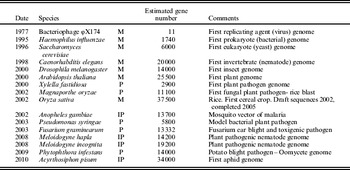
The first genome of a replicating agent, the bacteriophage φX174 was published more than 30 years ago (Table 1), but the technical challenges of sequencing genomes of much larger cellular organisms were not solved until the 1990s. The first complete genome sequence for a cellular plant pathogen was funded and delivered by a Brazilian consortium and published in 2000, from the specialized bacterial pathogen of citrus Xylella fastidiosa (Table 1), which in some regions is also a threat to grape, almond, citrus, peach, alfalfa and coffee crops. Advanced genomic technologies will therefore not be restricted to well-supported labs in the USA, Europe and Japan, but will become more pervasive and impact more widely due to participation of an enlarged global team. The major emerging economies, such as China, India and Brazil are already playing a leading role in genome projects as well as biotechnological approaches to agriculture, and this will undoubtedly exert an increasing influence in the coming decades.
The genomic timeline. Key model species (M) and representative plant pathogens (P) and invertebrate pests (IP)

At the start of 2010, according to the Comprehensive Phytopathogen Genomics Resource database (http://cpgr.plantbiology.msu.edu, verified 11 October 2010), completed genomes are available for 32 bacteria, seven fungi and more than 600 viruses and viroids. Draft genomes can be accessed for many more species, including two nematodes and six Oomycetes (Stramenopiles), among them the causal agents of potato blight (Haas et al. Reference Haas, Kamoun, Zody, Jiang, Handsaker, Cano, Grabherr, Kodira, Raffaele, Torto-Alalibo, Bozkurt, Ah-Fong, Alvarado, Anderson, Armstrong, Avrova, Baxter, Beynon, Boevink, Bollmann, Bos, Bulone, Cai, Cakir, Carrington, Chawner, Conti, Costanzo, Ewan, Fahlgren, Fischbach, Fugelstad, Gilroy, Gnerre, Green, Grenville-Briggs, Griffith, Grünwald, Horn, Horner, Hu, Huitema, Jeong, Jones, Jones, Jones, Karlsson, Kunjeti, Lamour, Liu, Ma, MacLean, Chibucos, McDonald, McWalters, Meijer, Morgan, Morris, Munro, O'Neill, Ospina-Giraldo, Pinzón, Pritchard, Ramsahoye, Ren, Restrepo, Roy, Sadanandom, Savidor, Schornack, Schwartz, Schumann, Schwessinger, Seyer, Sharpe, Silvar, Song, Studholme, Sykes, Thines, van de Vondervoort, Phuntumart, Wawra, Weide, Win, Young, Zhou, Fry, Meyers, van West, Ristaino, Govers, Birch, Whisson, Judelson and Nusbaum2009) and sudden oak death. The list is short when considered in terms of the large number of plant pathogenic agents, but already includes species with contrasting lifestyles, infection strategies and host–pathogen relations. Comparative genomics provides insights into the genetic blueprints of biotrophic pathogens (that establish extended relationships with living host cells) v. necrotrophic pathogens (that kill host cells and exploit their contents), and those that have a lifestyle somewhere between these two extremes, as well as differences in host range, catabolic and biosynthetic capabilities (such as secondary metabolites and toxins) and genes and gene complements already known to play a role in pathogenicity. The power and resolution of this approach increase with each new species sequenced, additional strains of already sequenced species, as well as advances in bioinformatic tools and higher-throughput methods for testing gene function. The Pathogen–Host Interaction database (www.phi-base.org, verified 11 October 2010; Winnenburg et al. Reference Winnenburg, Urban, Beacham, Baldwin, Holland, Lindeberg, Hansen, Rawlings, Hammond-Kosack and Kohler2008) now includes details of more than 1000 genes from almost 100 pathogens and 75 host species implicated in plant–pathogen interactions based on functional evidence such as single gene knockouts or attenuation. The scope of the data is constantly expanding, for instance, to include pathogens of humans and animals, and genes encoding fungicide targets. Such comparisons will aid the identification of conserved pathways involved in disease causation, as well as those that are shared with non-pathogenic species. The genomes of most pathogens are far smaller than the host plant, typically 30–40 Mb. Thus, with the recent arrival of many faster and cheaper second-generation sequencing technologies, it is anticipated that within the next decade, the availability of tens of thousands of pathogen genomes will become available for these comparative studies. Ultimately these resources can be expected to integrate with proteomic, transcriptomic and metabolomic information to provide a more holistic view of the core processes involved in pathogenesis, from first contact with the host, to evasion or suppression of defence, tissue colonization, symptom causation, reproduction and dispersal.
In addition, where it is possible to link genomic sequence information to the existing genetic maps for each organism, new insights into pathogen genome evolution are revealed that further inform the bioinformatic searches. For example, study of the genomes of four related Fusarium species has revealed that pathogen genes specifically expressed during plant infection are often preferentially located in only small regions of the chromosomes, and it is here that the greatest sequence variation between different strains is also observed (Cuomo et al. Reference Cuomo, Geuldener, Xu, Trail, Turgeon, Di Pietro, Walton, Ma, Baker, Rep, Adam, Antoniw, Baldwin, Calvo, Chang, Decaprio, Galr, Gnerre, Goswami, Hammond-Kosack, Harris, Hilburn, Kennel, Kroken, Magnuson, Mannhaupt, Mauceli, Mewes, Mitterbauer, Muehlbauer, Munsterkotter, Nelson, O'Donnell, Ouellet, Qi, Quesneville, Roncero, Seong, Tetko, Urban, Waalwijk, Ward, Yao, Birren and Kistler2007). More recently, a comparative genomes/genetic study of cereal and non-cereal infecting Fusarium species has revealed that entire chromosomes have evolved which contain all the genes required to cause disease in individual plant species (Ma et al. Reference Ma, Van Der Does, Borkovich, Coleman, Daboussi, Di Pietro, Dufresne, Freitag, Grabherr, Henrissat, Houterman, Kang, Shim, Woloshuk, Xie, Xu, Antoniw, Baker, Bluhm, Breakspear, Brown, Butchko, Chapman, Coulson, Coutinho, Danchin, Diener, Gale, Gardiner, Goff, Hammond-Kosack, Hilburn, Hua-Van, Jonkers, Kazan, Kodira, Koehrsen, Kumar, Lee, Li, Manners, Miranda-Saavedra, Mukherjee, Park, Park, Park, Proctor, Regev, Ruiz-Roldan, Sain, Sakthikumar, Sykes, Schwartz, Turgeon, Wapinski, Yoder, Young, Zeng, Zhou, Galagan, Cuomo, Kistlerh and Rep2010).
Invertebrate genomes
To date, relatively few completed genome sequences are available for invertebrate pests of plants, but they include the flour beetle Tribolium castaneum, an important post-harvest pest (Tribolium Genome Sequencing Consortium 2008), the aphid Arcyrthosiphon pisum (The International Aphid Genomics Consortium 2010) and two plant parasitic nematodes (Table 1). The latter illustrate the value of comparative genomics, as they are both root-knot nematode species in the same Genus (Meloidogyne), but with contrasting life cycles and host ranges (Bird et al. Reference Bird, Williamson, Abad, Mccarter, Danchin, Castagnone-Sereno and Opperman2009). There are striking and unexpected differences in genome size and organization. M. hapla has a compact genome of 54 Mb and an estimated gene content of 14 200, making it the smallest metazoan genome characterized to date. The genome of M. incognita is considerably larger (86 Mb), with an estimated 19 200 protein encoding genes. The difference appears to be due to duplicated genome segment pairs that represent highly polymorphic alleles or perhaps an interspecies hybridization. This level of genetic diversity may be maintained by the asexual, parthenogenetic mode of reproduction of M. incognita, in contrast to the sexual M. hapla. Analysis of these genomes show that both contain suites of plant cell wall-degrading enzymes that are not generally found in other metazoans, and may have been acquired from micro-organisms by horizontal gene transfer. As well as providing insights into the evolutionary history of these damaging plant pests, such analysis should eventually identify the genes and pathways involved in plant parasitism and suggest novel approaches to intervention.
Prospects for molecular intervention
The currently available major classes of commercial insecticides affect a relatively narrow range of molecular targets, including acetylcholinesterase (carbamates and organophosphates), sodium channels (pyrethroids and DDT) and nicotinic acetylcholine receptors (neonicotinoids). Heavy reliance on a few modes of action increases the risk of resistance development, as well as cross-resistance affecting all compounds within a particular class; this has already become a major problem for sustainable use of most of these chemistries (Fenton et al. Reference Fenton, Margaritopoulos, Malloch and Foster2010). For some agricultural pests, chemical control now relies heavily on neonicotinoids that to date have proved relatively resilient to resistance development (Nauen & Denholm Reference Nauen and Denholm2005). This scenario is now changing, with resistance reported in several pest species including whiteflies and aphids (Puinean et al. Reference Puinean, Foster, Oliphant, Denholm, Field, Millar, Williamson and Bass2010). The availability of an increasing number of insect genomes will aid the identification of novel insecticide targets (Grimmelikhuijzen et al. Reference Grimmelikhuijzen, Cazzamali, Williamson and Hauser2007). These include proteins in olfactory signalling cascades, neuropeptides and G protein-coupled receptors (GPCRs). In humans, GPCRs are well-established pharmacological targets accounting for more than 0·30 of all prescribed medications. Insects have 50–80 neurohormone GPCRs that, together with their ligands, play key roles in development, reproduction and homeostasis. Characterization of specific insect GPCRs will aid development of high-throughput screens to identify high-affinity agonists or antagonists. There are difficulties in using insect neuropeptides themselves as control agents, due to their pharmacokinetics and short half-life, but the discovery of small, non-peptide molecules that act as mimics for neuropeptides may provide a way round this obstacle (Scherkenbeck & Zdobinsky Reference Scherkenbeck and Zdobinsky2009). The specificity of new synthetic insect GPCR ligands is predicted to ensure that they have little impact on non-target species and hence should have improved environmental safety.
Detecting chemical cues (chemosensation) is central to insect behaviour such as locating host plants or animals, or finding a mate. Many insect pests communicate with others of the same species through pheromones, molecules produced by one individual that elicit a response by others in the vicinity. Examples include attractants such as sex pheromones and repellents such as alarm pheromones that warn neighbours of the presence of a predator. Insect control strategies based on chemosensing are already in wide practical use, such as repellents, antifeedants, pheromone traps and disruption of mating. Advances in understanding of insect chemosensing promises to extend the range and specificity of both natural and synthetic chemicals able to modify or interfere with insect behaviour (Van der Goes van Naters & Carlson Reference Van Der Goes and Carlson2006). The molecular basis of insect olfaction is being unravelled, aided by access to complete genome sequences. Likely key players in insect olfaction include Odorant receptors and Odorant-binding proteins (OBPs). A family of around 60 Or genes, encoding seven transmembrane domain proteins that are individually expressed in small subsets of olfactory receptor neurones, was identified in the Drosophila genome using computational and molecular approaches. Functional confirmation of a role for these proteins in chemosensing soon followed (Carlson Reference Carlson2001). Conserved motifs in Drosophila Or genes have been used to identify orthologues in other insects including mosquito disease vectors and crop pests. OBPs are small soluble proteins found especially in the lymph of insect sensilla, and are believed to play a role in olfactory transduction by transporting odorants to their membrane-bound receptors. Around 50 OBP genes have been identified in Drosophila, and bioinformatic analyses have again enabled the identification of related gene families in other species such as mosquitoes (Zhou et al. Reference Zhou, He, Pickett and Field2008). Genomic studies of insect chemosensory gene families suggest that they have evolved through gene duplication and progressive sequence divergence (Sanchez-Gracia et al. Reference Sanchez-Gracia, Vieira and Rozas2009). This is of practical as well as fundamental significance as such divergence will enhance the prospects for identifying or designing more specific attractants or repellents for trapping or controlling insect pests.
Further possibilities are likely to emerge from identification of genes involved in the interaction of natural enemies of insects with their host or prey species. Complete genomes from some parasitic wasps (Nasonia spp.) are now available with the primary goal of finding and manipulating the determinants of host location and preference. Ultimately this might lead to more specific and efficient biocontrol of major agricultural pests.
Fungicide targets
Comparative genomic approaches are also likely to identify novel targets for intervention in the growth, development and disease-causing processes of plant pathogens. The currently available classes of site-specific fungicides affect relatively few processes crucial for growth, such as energy production (strobilurins and complex II inhibitors), amino acid biosynthesis (anilino-pyrimidines), cytoskeletal assembly (methyl-benzimidazoles) and sterol biosynthesis (azoles and other sterol biosynthesis inhibitors). Identification of conserved gene networks regulating pathogenicity and, for instance, signalling pathways involved in host perception, penetration and colonization, should provide opportunities to identify completely new classes of fungicides targeting pathogenesis rather than core metabolic processes. There is also the prospect of developing inhibitors preventing other harmful activities associated with fungal infection, such as the synthesis of toxins, including potent mycotoxins that can contaminate plant produce.
Comparative sequencing of genes encoding known fungicide targets can detect polymorphisms responsible for the insensitivity of certain groups of fungi and hence provide insights into the spectrum of activity of existing fungicide classes. For instance, natural resistance to strobilurins occurs in some Basidiomycetes, and the same amino acid substitutions found in their cytochrome b target protein also account for the evolution of resistance to these compounds in other fungi, including several economically important plant pathogens (Gisi et al. Reference Gisi, Sierotzki, Cook and McCaffery2002). Resistance to azole fungicides is often due to combinations of mutations in the gene (CYP51) encoding the 14 α-de-methylase enzyme target (Cools et al. Reference Cools, Fraaije, Kim and Lucas2006, Reference Cools, Parker, Kelly, Lucas, Fraaije and Kelly2010), rather than a single mutation of major effect, and modelling the predicted conformational changes in the fungicide binding site may suggest ways in which existing chemicals might be modified to counter resistance development. Bioinformatic analyses have shown that CYP51 can occur singly, or as two or three copies in different Ascomycete fungi, and such gene duplication might be linked to differences in the sensitivity of different species to these fungicides. Alternatively the proteins may have diverged to perform separate functions unrelated to sterol biosynthesis. Again, understanding the genetic and mechanistic basis of differential sensitivity to pesticides should inform both biochemical design of new actives, as well as management of resistance to existing classes of chemicals.
Genomic bioprospecting
While estimates vary, it is widely accepted that only a small proportion of the species contributing to global biodiversity are known to science. This is particularly so for micro-organisms in soil and some marine habitats, such as the deep oceans. There is increasing interest in sequencing of such ecosystems to estimate diversity and function (Dinsdale et al. Reference Dinsdale, Edwards, Hall, Angly, Breitbart, Brulc, Furlan, Desnues, Haynes, Li, McDaniel, Moran, Nelson, Nilsson, Olson, Paul, Rodiguez Brito, Ruan, Swan, Stevens, Valentine, Thurber, Wegley, White and Rohwer2008), and identify novel genes and biosynthetic pathways producing previously undiscovered bioactive products. This approach has already yielded dividends in industrial biotechnology, where, for instance, bioprospecting in extreme habitats such as deep ocean vents led to the discovery of new classes of thermostable enzymes. Whole ecosystem sequencing is expected to identify novel peptides and biosynthetic clusters to supply a new pipeline of ‘nature-derived chemistries’ that can be screened for diverse applications, including antimicrobial activity. Hence, genomics will not only identify new targets for intervention but also contribute to the natural chemical diversity available for screening (Tan et al. Reference Tan, Gyllenhaal and Soejarto2006) and potential exploitation in pest and disease control.
The known unknowns
The excitement generated by advances in knowledge of the complete gene inventory of pests and pathogens should be tempered by the fact that for most sequenced genomes a large proportion, at least one-third, of the putative genes so far identified are of unknown function; for some pathogens that are unable to grow in the absence of the host plant this rises to over 0.80. Establishing the true role of such genes in the life of the cell represents a major challenge, and will require further advances in high-throughput gene function assays (such as RNAi, VIGS and homologous recombination) to define potential roles. The utility and potential application of these functional genomic tools is, however, progressively improving (Scofield & Nelson Reference Scofield and Nelson2009; Belles Reference Belles2010). Once an accurate functional gene inventory has been completed, key information on the regulation of genes and pathways, metabolic pools, kinetics and feedback loops still has to be acquired and assembled. This then needs to be assigned to cellular compartments, trafficking systems and mechanistic links between them to begin to realize the vision of a predictive electronic cell. Opinions are divided on how far in the future this ambitious goal might be achieved. However, incremental progress towards the goal is itself of potential value. For example, understanding the role and regulation of a subset of genes, such as those encoding effectors involved in suppression of host defence, or biosynthesis of toxins, is likely to aid the development of resistant host genotypes, or inform predictions of microbial (especially fungal) toxins entering the food chain. Data integration platforms such as Ondex (www.ondex.org, verified 11 October 2010) are being developed to link and visualize graphically diverse biological data sets. Genome-scale metabolic reconstructions are already available for a range of species (Oberhardt et al. Reference Oberhardt, Palsson and Papin2009), including yeast (Herrgård et al. Reference Herrgård, Swainston, Dobson, Dunn, Arga, Arvas, Blüthgen, Borger, Costenoble, Heinemann, Hucka, Le Novère, Li, Liebermeister, Mo, Oliveira, Petranovic, Pettifer, Simeonidis, Smallbone, Spasić, Weichart, Brent, Broomhead, Westerhoff, Kirdar, Penttilä, Klipp, Palsson, Sauer, Oliver, Mendes, Nielsen and Kell2008) and other fungi of industrial importance (Andersen et al. Reference Andersen, Nielsen and Nielsen2008), and within the next few years should also extend to some pests and pathogens.
While genome sequencing and associated transcriptomic, proteomic and metabolomic analyses will undoubtedly identify candidate genes and pathways for biochemical design of new pesticides (or bioactive compounds delivered via the host plant), several obstacles remain. The main virtue of empirical screening of candidate molecules for crop protection is that this method detects compounds that show consistent activity in planta. Biochemical design based on potential targets such as receptors, regulatory proteins or key enzymes in biosynthetic pathways still has to solve the problems of formulation and application to the plant, and uptake and delivery to the molecular target. This is more challenging in plant rather than animal hosts, as penetration of the external cuticle, translocation, systemicity and stability in the plant may all affect eventual biological activity. The goal of a highly effective and durable ‘magic bullet’ for crops remains elusive.
ECOLOGICAL APPROACHES TO PEST AND DISEASE CONTROL
There is mounting pressure to reduce chemical inputs and the carbon footprint of intensive agriculture. Added to this, there are large regions of subsistence agriculture in which the economics of production do not allow expensive inputs of fertilizer or other agrochemicals. The two main approaches to reduce reliance on crop protection chemicals are either to plant pest- and disease-resistant crop genotypes (protection provided in the seed), or to exploit the natural mechanisms that restrict pest and pathogen populations in ecosystems. The latter approach is often described as biological control, but under this heading are several different ways of preventing (or more usually reducing) damage by pests and diseases. These range from methods based on the introduction of natural enemies or antagonists (classical biocontrol) to measures designed to increase the activity and impact of other biological agents in the crop environment that interact with pest species (often described as conservation biocontrol, although this usually refers to control of invertebrate pests rather than microbial pathogens).
Biocontrol agents (BCAs) act against pests and pathogens in diverse ways, such as by predation, parasitism, antibiosis and competition for nutrients or other resources. A diverse range of biopesticides derived from naturally occurring insects, mites, nematodes and micro-organisms have been marketed, with varying degrees of success. Products based on Bacillus thuringiensis insecticidal toxins account for by far the largest proportion of the current market for biologicals, with most other products used in smaller niche markets such as high-value ornamentals grown in protected cultivation, where conditions can be managed to favour the BCA. Use of predatory insects and mites to control glasshouse pests such as aphids and whiteflies has successfully replaced or reduced the use of insecticides in many horticultural crops. The Manual of Biocontrol Agents (Copping Reference Copping2009), a worldwide compendium of products derived from natural sources, lists 149 products based on micro-organisms, 74 semiochemicals, and 140 macro-organisms (mainly insects and mites) available for use. One salutary statistic, however, is that c. 0·70 of biopesticide business ventures over the period from 1972 to 2002 failed (Barker et al. Reference Barker, Bokanga, Lenne, Otim-Nape and Spence2006). There are a number of factors contributing to the lack of success of many biologicals in commercial crop protection, but the most important is their variable performance and often lower efficacy than conventional pesticides that can kill or inhibit a high percentage of the pest or pathogen population. This applies especially to use in field crops, where environmental factors including interactions with other organisms on the crop or in soil may limit the multiplication or survival of the BCA. The dynamics of predator–prey interactions themselves militate against complete efficacy as predator populations usually lag behind multiplication of the prey and hence significant damage to the crop can occur before control is exerted. There are also additional challenges in producing and formulating BCAs on a large scale, and ensuring sufficient shelf-life to transport and store the products until they are applied. Hence, the current emphasis on formulations based on persistent structures such as bacterial endospores, insect eggs, or stable by-products such as the Bt toxins.
What are the prospects for pest and disease control using introduced BCA in the future? Overall, it is unlikely that biopesticides will replace chemical pesticides (Copping & Menn Reference Copping and Menn2000), especially in large field-scale agricultural production systems. There will be continued progress, however in the discovery and utilization of biological agents in other situations, such as protected cultivation of horticultural crops, and smaller-scale, low-input cropping systems. The latter may feature local production of the BCA by, for instance, small fermentation plants using cheap available feedstocks (e.g. Siddiqui et al. Reference Siddiqui, Atkins and Kerry2009). It is predicted that the number and quality of natural control agents available will continue to increase, especially if current regulatory constraints, such as the cost of registering biological products, were eased. There is certainly scope for diversification and integration of BCAs with other approaches to pest and disease management. It should also be noted that the distinction between biological and chemical approaches to crop protection will continue to narrow as more chemicals based on natural bioactive products are discovered and developed.
Behaviour-modifying chemicals
Rather than aiming to kill or inhibit a pest or pathogen, an alternative approach is to interfere with their behaviour or infection process so that the plant is not attacked. Many organisms, including insects, nematodes and fungi, locate their host plants by detecting and responding to chemical cues emitted by the plant. These cues may be non-specific, such as sugars or amino acids in root exudates, or characteristic of a particular plant group or even species, and therefore mediate a specific host–pest interaction. Furthermore, when plants are subject to attack by pests, they emit other volatile signals that may act as hormones triggering defence responses in other parts of the plant, or even neighbouring plants, or serve as attractants sensed by natural enemies of the pest (Pare & Tumlinson Reference Pare and Tumlinson1999). Herbivore-induced plant volatiles act as semiochemicals that can repel pests, attract other organisms that parasitize or predate the pest, and may serve as signals alerting other plants of impending attack (Khan et al. Reference Khan, James, Midega and Pickett2008b; Yi et al. Reference Yi, Heil, Adame-Alvarez, Ballhorn and Ryu2009). Added to this, highly specific signal molecules are used by many organisms, especially insects, to attract mates, or to warn of the presence of natural enemies. Understanding this complex signal landscape has already provided a range of opportunities for intervention in plant–pest interactions, either by interfering with host location and attack, or by triggering host responses that boost the natural defences of the plant itself.
Pheromones
The identification of insect pheromones, along with methods for their chemical synthesis, has led to various applications in pest management. Sex pheromones are commonly used as lures to attract insects into traps containing pesticides. This strategy avoids field-scale application of an insecticide that might be harmful to non-target species, such as pollinators or natural enemies of the pest. Alternatively, pheromone traps can be used to warn of the presence of a particular pest species in the crop. Orange wheat blossom midge (OWBM) is a potentially very damaging pest that lays its eggs in the florets of wheat ears, where the larvae hatch and feed on the developing grain. Outbreaks of the pest are sporadic, and vary in severity from season to season. The most effective insecticides for control of OWBM are toxic to non-target species, and so prophylactic sprays are discouraged. The sex pheromone produced by female midges was characterized and synthesized (Hooper et al. Reference Hooper, Dufour, Willaert, Pouvreau and Pickett2007), and deployed in traps placed in wheat crops just prior to ear emergence. Evaluation in field trials showed that the traps were highly attractive to male midges, and also specific, trapping very few non-target species (Bruce et al. Reference Bruce, Hooper, Ireland, Jones, Martin, Smart, Oakley and Wadhams2007). The traps provide a reliable indication of the peak period of midge activity, as well as the level of infestation of the crop, and can therefore be used as part of a decision support system in which the timing and number of midges trapped act as a threshold for pesticide application.
Other types of pheromones repel rather than attract insects. When aphids are subject to attack by predators or other natural enemies such as parasitoids, they emit an alarm pheromone that causes neighbouring aphids to disperse. The chemical signal in this case has been identified as the sesquiterpenoid (E)-β-farnesene (Eβf). Interestingly, the same chemical has been found in volatile mixtures released by crops such as maize when attacked by herbivorous insects such as caterpillars (Schnee et al. Reference Schnee, Köllner, Held, Turlings, Gershenzon and Degenhardt2006). In this case, Eβf acts as a signal attracting natural enemies of the maize herbivore. Manipulation of such semiochemicals either to repel pests or recruit predators and parasitoids is possible to provide new approaches to crop protection. One option may be to select crop genotypes that naturally produce repellent compounds, while another is to plant companion crops that are known to produce volatile repellents diverting pests away from the main crop. A further option is to engineer plants that are normally unable to synthesize a particular signal molecule so that they now produce it. In cases where chemical precursors of the semiochemical are already present, this may be a relatively simple task requiring transfer of one or a few biosynthetic genes. Expression of a gene from a species of mint encoding a sesquiterpene synthase enzyme producing Eβf in transgenic Arabidopsis plants led to the production and emission of significant amounts of Eβf by the transformants (Beale et al. Reference Beale, Birkett, Bruce, Chamberlain, Field, Huttly, Martin, Parker, Phillips, Pickett, Prosser, Shewry, Smart, Wadhams, Woodcock and Zhang2006). These plants had potent effects on aphid behaviour (repellence and dispersal) and also retained higher numbers of an aphid parasitoid. This work is now being extended from a model plant species to engineer an important crop species (wheat) to produce an aphid alarm pheromone, ultimately under control of an inducible promoter that is only switched on once aphid feeding commences.
Managing the ‘signal landscape’ of crop production systems
The realization that plant natural products can also serve as signals modifying pest behaviour, as well as influencing other trophic levels (predators and natural enemies) in the crop ecosystem, has implications for managing both crops and associated plant species to reduce the impact of pests in the field. It impinges directly on plant breeding, through, for instance, selection of genotypes able to produce particular blends of volatiles that reduce the attractiveness of the plant to herbivores, or via genetic manipulation (as described above). It can also increase the effectiveness of conservation biocontrol by natural enemies. Roots of maize plants attacked by western corn rootworm emit several volatile organic compounds, including (E)-β-caryophyllene, that attract soil-dwelling entomopathogenic nematodes to infect the pest. However, genetic improvement of maize in North America appears to have eliminated this trait from many modern varieties. Restoration of the ability to synthesize (E)-β-caryophyllene by transformation with another plant synthase enzyme led to less root damage and reduced beetle pest populations by more than half (Degenhardt et al. Reference Degenhardt, Hiltpold, Kollner, Frey, Gierl, Gershenzon, Hibbard, Ellersieck and Turlings2009).
Similar approaches may also be of potential value in disrupting the location and selection of host plants by pests. It is now understood that host plant recognition is often based on detection of blends of volatile chemical cues rather than a single ‘signature’ chemical. A recent study on host recognition by the black bean aphid (Webster et al. Reference Webster, Bruce, Pickett and Hardie2010) showed that this insect responded positively to a mixture of volatile signals from the bean host, but when exposed to individual components of the mixture responded negatively. This demonstrates that the same volatile compounds can function both as host or non-host cues, depending on the overall signal background and context. The complexity of such interactions may, at first sight, suggest that predictive intervention might be difficult. However, as knowledge increases, the prospects for more ecologically sound strategies to control invertebrate pests will improve.
Behavioural manipulation of insect pests and their natural enemies has already found practical application in so-called push–pull systems (Cook et al. Reference Cook, Khan and Pickett2007), in which use of carefully selected companion crops can reduce pest damage by comparison with a crop monoculture. The scientific basis of push–pull is to exploit repellent or non-host chemistry (push) along with attractant chemistry (pull) to divert pests out of the crop. One well-characterized example is management of stem-borer pests of cereal crops in sub-Saharan Africa (Hassanali et al. Reference Hassanali, Herren, Khan, Pickett and Woodcock2008). Initially, alternative grass species present in the maize crop ecosystem were trialled for their relative attractiveness to the pest. Two species, molasses grass (Melinis minutiflora) and napier grass (Pennisetum purpureum) were selected on the basis of their repellent or attractant properties for the stem-borer. When maize was grown with molasses grass as an intercrop, and napier grass as a surrounding trap crop, damage to maize by stem borer was dramatically reduced. An additional benefit of this system was that the napier grass provided a valuable forage for dairy cattle, hence improving productivity for small-holder farmers. In a further refinement, responding to farmer's preference to have a legume incorporated into the system, silverleaf (Desmodium uncinatum) was found to be effective not only in repelling the stem-borer but also in controlling the highly damaging parasitic weed Striga. Hence, two major constraints on maize crop production could be simultaneously managed. Dissemination of the system was achieved by farmer field days and demonstration of the productivity benefits, with good take-up across many districts (Khan et al. Reference Khan, Amudavi, Midega, Wanyama and Pickett2008a). Alongside practical extension of the system, detailed analyses were done to identify the active chemical components responsible for attraction and repellency, as well as control of Striga. In the latter case a C-glycosylflavone compound present in Desmodium root exudates was shown to interfere with development of germinating Striga seedlings. Importantly, the biosynthetic pathway for this class of compound is already mostly present in edible legumes and cereals, providing opportunities for practical exploitation in other crops (Hooper et al. Reference Hooper, Hassanali, Chamberlain, Khan and Pickett2009). Issues remain, however, over the long-term sustainability of the push–pull system, as new threats to individual components of the system can emerge. Recently a stunt disease of Napier grass caused by two phytoplasma species has been spreading in East Africa (Arocha et al. Reference Arocha, Zerfy, Abebe, Proud, Hanson, Wilson, Jones and Lucas2009), along with a fungal smut infection that also seriously impacts on the productivity of this forage crop. Management of these pathogens through improved screening of propagation material, or identification of stunt- and smut-resistant grass genotypes, will be essential to ensure that integrated control of the maize pests can be sustained.
The push–pull example demonstrates that detailed understanding of the chemical ecology of pests and their hosts, along with other components of the crop ecosystem, can be used to manage major pests without inputs of pesticides or the introduction of BCAs. However, such systems will themselves be subject to evolutionary change, albeit more slowly than the rapid breakdown of major gene resistance or development of pesticide resistance experienced in more intensive production systems. It is hoped that progressive advances in understanding the ecological factors regulating populations and activities of other natural control agents, such as pathogenic microbes infecting insects (Roy et al. Reference Roy, Brodie, Chandler, Goettel, Pell, Wajnberg and Vega2010) or nematodes, will lead to more effective utilization of conservation biocontrol in agriculture. The importance and role of biodiversity in crop ecosystems continues to be an active debate, with some evidence suggesting that conservation of a range of prey species can affect predator fitness and hence their potential to regulate populations of agricultural pests (Harwood et al. Reference Harwood, Phillips, Lello, Sunderland, Glen, Bruford, Harper and Symondson2009). Overall, there is a need for a more holistic, ecological approach to exploit fully herbivore-induced plant volatiles for biological control (D'Allesandro et al. Reference D'Allesandro, Hiltpold, Von Merey, Turlings, Mason, Gillespie and Vincent2009) and also to optimize the activity of diverse natural agents restricting pests and diseases in crops.
THE INTRACTABLE THREATS TO CROPS
Despite the best efforts of crop protection scientists, a large number of pests and diseases remain hard to control. A significant proportion of these ‘intractable threats’ are agents that are soil-borne and attack the root systems of plants.
Why are these pests and diseases so hard to manage? Part of the problem is the difficulty of delivering bioactive compounds with specific activity to the root and soil environment. Many soil-acting compounds are broad spectrum biocides that have collateral effects on beneficial organisms. These compounds are now being phased out or banned in many countries. There are very few phloem-mobile pesticides that move from shoot to root to inhibit root-colonizing pathogens. Added to this, selection of crop genotypes that resist infection by root attacking pests and pathogens has proved difficult. There may be biological reasons why roots are more prone to infection than aerial parts of plants. The soil is a buffered environment containing a huge number and diversity of biotic agents, many of them potentially pathogenic. As roots grow through soil they present a series of sites for potential invasion, such as root hairs and points of emergence of lateral roots. Root tissues are non-photosynthetic, and hence may have a lower capacity for rapid defence responses, such as the generation of reactive oxygen species and related toxic and defence signalling molecules. Roots have evolved to form relationships with beneficial micro-organisms such as N-fixing bacteria and mycorrhizal fungi, but nonetheless retain the ability to mount an innate immune response to microbe-associated molecular patterns (Millet et al. Reference Millet, Danna, Clay, Songnuan, Simon, Werck-Reichhart and Ausubel2010). Whatever the reasons, many diseases caused by soil-borne organisms remain difficult to manage by the conventional crop protection methods of chemicals or plant breeding.
Root parasites, such as cyst and root-knot nematodes, are among the most damaging and problematical soil-borne pathogens of crops. While a number of major genes for resistance to nematodes have been characterized in crops such as potato, soybean, sugar beet and their wild relatives (Fuller et al. Reference Fuller, Lilley and Urwin2008), relatively little success has been achieved in breeding commercial cultivars with sufficient levels of natural resistance to control these agents in the field. In potato, the H1 gene has been widely used to prevent losses caused by the cyst nematode Globodera, Globodera rostochiensis, but in the UK this has led to selection of the related species G. pallida, which is not controlled by this gene. In practice, potato cyst nematode remains an intractable problem. Hence, there has been considerable interest in biotechnological solutions and in particular transgenic approaches to engineering resistance (Atkinson et al. Reference Atkinson, Urwin and Mcpherson2003). Several options have been investigated, including expression of proteinase inhibitors, lectins, recombinant antibodies, and, more recently, RNAi (Fuller et al. Reference Fuller, Lilley and Urwin2008). Promising progress has been made with expression of cysteine proteinase inhibitors (cystatins) that slow nematode development and reduce their reproduction on roots. Refinements to this technology include use of root-specific promoters, targeted expression at penetration sites, or in the specialized feeding cells that the nematodes establish during infection. When combined with crop genotypes that have some degree of natural resistance, commercially useful levels of control can be achieved. This has led to field trials of nematode-resistant transgenic potatoes that are ongoing at the time of writing. The RNAi approach has already proved a powerful strategy for engineering resistance to RNA viruses, and also shows promise for insect and nematode control. In this approach, host-delivered RNAi is aimed at silencing essential house-keeping genes in the pest, or genes that are required for successful interaction with, or parasitism of, the plant (Rosso et al. Reference Rosso, Jones and Abad2009). Rapid progress in this area has created an expectation that RNAi will find wide future application in engineering useful traits in plants, but further evaluation is needed in crops rather than model species, and also to identify any potential hazards associated with the persistence of small RNAs in ecosystems (Auer & Frederick Reference Auer and Frederick2009).
Disease suppression
A contrasting approach to more effective management of root pathogens is to harness the potential of natural mechanisms of suppression. It has often been observed that soils initially conducive to the development of disease in crops can, over time, become less conducive or even antagonistic to particular pathogens. Examples include take-all decline, in which root infection by the fungus Gaeumannomyces graminis first builds up in cereal monocultures but becomes less severe within a few seasons, and cyst nematodes of sugar beet and cereals, in which initially high-nematode populations at some sites subsequently fall below the economic damage threshold. It is also known that amendment of soils with various organic supplements can reduce the severity of soil-borne diseases, such as root rots caused by Phytophthora species. While the specific mechanism(s) of suppression are often not clearly defined, it is likely that it involves the activity of antagonistic soil microorganisms. In the case of take-all disease (Freeman & Ward Reference Freeman and Ward2004), the decline has been associated with changes in rhizosphere microbial populations, including competing root-colonizing fungi such as Phialophora species, and antibiotic-producing bacteria (Weller et al. Reference Weller, Landa, Mavrodi, Schroeder, De La Fuente, Bloui Bankhead, Allende Molar, Bonsall, Mavrodi and Thomashow2007), while nematode suppression has been linked to the presence of nematode-destroying fungi, some of which have since been developed as potential BCAs.
These natural constraints on soil-borne disease agents can be successfully exploited in particular situations, but can the level and reliability of such control be improved? Until recently, identification of the components of the soil and rhizosphere microbial populations responsible for suppression was based on sampling soil or roots and culturing candidate antagonists. This approach has several limitations, including the fact that a large proportion of soil microorganisms cannot be cultured by present methods, and also the possibility that suppression is due to particular combinations of microbes rather than one or a few specific antagonists. Methods are now becoming available to allow a more holistic, population-based analysis (Borneman & Ole Becker Reference Borneman and Ole Becker2007). Second-generation DNA sequencing can be used to provide an overall analysis of the microbial community in suppressive v. conducive soils, while array-based methods utilizing labelled rRNA probes are also being developed. Oligonucleotide fingerprinting of rRNA genes has been successfully used to identify the most abundant micro-organisms associated with nematode control, and to confirm that an egg and cyst parasitic fungus is the key component in the suppression of sugar beet cyst nematode in California (Borneman & Ole Becker Reference Borneman and Ole Becker2007).
Soil has often been regarded as a ‘black box’ in terms of the composition and activity of the microbial community, but a worldwide effort is now under way to sequence the ‘terragenome’ and hence gain new insights into the biodiversity of this vital habitat. Over the next decade there will be an exponential increase in knowledge of microbial populations in contrasting soil types and different agricultural systems. But there is still a long way to go to understand the myriad interactions between different components of the soil microflora, and the specific factors regulating soil populations, including pathogens. While we can expect good progress in identifying natural antagonists operating in the soil environment, devising more reliable ways to exploit them in disease control is likely to take much longer.
Given the difficulties of actively managing biological antagonism in field soils, a key goal for more effective control of root pathogens is to manage crop protection via the seed. This will consist of improved genetic resistance, either by better selection of natural resistance, or transgenes, combined with antagonists delivered as seed treatments. It may be possible, as already suggested above, to use root-colonizing bacteria to deliver plant defence activating signal molecules, as well as compounds targeting the pathogen itself. This possibility might be enhanced by engineering plants to recruit and retain beneficial rhizosphere microorganisms through modification of root exudates influencing mechanisms, such as quorum sensing, that regulate population size (Ryan et al. Reference Ryan, Dessaux, Thomashow and Weller2009).
There are many obstacles still to be overcome in developing BCAs that are able to spread from the seed to a developing root system, and to establish a population sufficient to protect vulnerable root sites from infection. Improved insights into the dynamics of microorganisms in the root zone will assist in this task. It should also be possible to screen crop germplasm in more effective and novel ways to identify traits reducing root disease. It has recently been discovered, for example, that current commercial wheat genotypes differ in their capacity to build up take-all inoculum in the soil. This observation might be of immediately practical use in devising sequences or rotations of different wheat varieties to reduce the risk of severe take-all, and represents an important step towards creating an integrated system for managing the disease.
CONCLUSIONS
A recent report on global food security (Royal Society 2009) placed a strong emphasis on advanced technological solutions for boosting crop productivity, as well as appropriate low-input systems for resource poor subsistence farmers. Unprecedented advances in molecular science, genomics and bioinformatics can be expected, with an appropriate funding framework that places more emphasis on practical outcomes, to provide better diagnostic tools and to accelerate crop improvement and breeding for more durable pest- and disease-resistant genotypes. These benefits will extend to the rapidly emerging agricultural economies of countries such as China and Brazil, but obstacles to effective application will need to be addressed in less developed countries, and especially Africa.
One important insight is that the reservoir of natural genetic diversity in crop gene pools has not yet been fully explored or exhausted. The tools now exist to mine this diversity in new ways and to construct crop genotypes with new combinations of resistance mechanisms. The hope is that this will more effectively counter pathogen evolution whereby individual R genes are defeated by virulent pathotypes. GM technology is a potentially powerful tool that could extend the options available to breeders, and accelerate the breeding process. While there has been a gradual shift in public opinion and political perception in Europe about the acceptability of GM crops (culminating in registration of a transgenic potato for industrial starch production), the debate continues to influence policy elsewhere with, for example, the decision of the Indian government to ban a GM vegetable variety (Bt engineered aubergine). There is therefore a continuing risk that GM solutions will not be universally available in the quest for global food security. This is regrettable as, contrary to the public perception, transgenic crops can have environmental and health benefits, for example, through reduction in use of herbicides and pesticides (Fedoroff et al. Reference Fedoroff, Battisti, Beachy, Cooper, Fischhoff, Hodges, Knauf, Lobell, Mazur, Molden, Reynolds, Ronald, Rosegrant, Sanchez, Vonshak and Zhu2010), and could easily be incorporated into integrated pest management systems (Kos et al. Reference Kos, Van Loon, Dick and Vet2009).
A second important advance is burgeoning information on the chemical ecology of pests and pathogens, their host plants, natural enemies and other components of the crop system. This has already delivered practical, low-input, systems for pest and disease management for small-holder farmers. The challenge remains to scale up these approaches for application to industrial crops. As knowledge increases it should be possible to extend biological solutions to pest and disease problems, and to reduce reliance on chemical interventions. The quest for novel methods of insect control should not, however, neglect approaches based on crop genetics, such as the identification of genes involved in defence responses to initial attack or pest feeding (Botha et al. Reference Botha, Swanevelder and Lapitan2010).
It is likely that agrochemical solutions for pests and diseases will be required for the foreseeable future, either as treatments for genetically intractable problems, or to limit losses in seasons where high disease pressure might compromise other control options. The virtue of pesticides is their specificity, efficacy and flexibility of use, and this will continue, provided the threat of pest and pathogen resistance can be countered. It is essential that current trends in pesticide regulation, driven by emotion and political expediency, rather than experimentally validated measures of risk, are not allowed to further reduce the portfolio of chemicals available for future use. The discovery pipeline for novel agrochemicals may not be sufficiently robust to compensate for the likely losses. Similar concerns apply to the use of agricultural biotechnology where there is a need for a more forward-looking regulatory framework based on scientific risk (Fedoroff et al. Reference Fedoroff, Battisti, Beachy, Cooper, Fischhoff, Hodges, Knauf, Lobell, Mazur, Molden, Reynolds, Ronald, Rosegrant, Sanchez, Vonshak and Zhu2010).
One often overlooked aspect of crop protection is its contribution to resource use efficiency. The environmental footprint of pesticides is small by comparison with other inputs, such as fertilizers (Berry et al. Reference Berry, Kindred and Paveley2008), and effective pest and disease control can ensure optimal use of nutrient inputs, with a reduced risk of diffuse pollution due to leaching and runoff to water courses. Future assessments of the costs and benefits of particular crop production systems need to take more account of these factors.
Another neglected area is reduction of post-harvest losses. It is difficult to obtain reliable estimates for many commodities, especially locally produced and used tropical crops, but the few available statistics suggest that between 15 and 50% of production can be lost (FAO 2009). Reducing the waste between harvest and the consumer would have an immediate impact on food availability and quality. There are also related public health issues, due to contamination of the food chain with mycotoxins such as aflatoxins. Part of the solution is better handling and hygiene during harvest and storage, but there may be genetic and biotechnological contributions as well, for instance in delaying ripening, extending shelf-life, or otherwise reducing the vulnerability of plant produce to invasion by pests and pathogens. Interventions using more effective chemicals, or even semiochemicals aimed at diverting pests, may be limited by the high density of host material within crop stores, coupled with the strong selection pressure in such environments for the development of pesticide resistance. In subsistence agriculture the concerns may be very different, and simply relate to storing grain, fruits and vegetables in better ways to minimize the risk of post-harvest spoilage.
Sustainable control of pests and diseases has been regularly compromised by the continuing process of microbial and invertebrate evolution. The large population sizes, rapid reproductive cycles and genetic diversity of these organisms ensure that they will continue to adapt and pose a threat to crop productivity. However, science is providing more rapid and sensitive options for monitoring changes in pest and pathogen populations, as well as surveillance methods for identifying emerging threats. Improved epidemiological models will provide more accurate predictions of the invasion and persistence of pathogens as well as new insights into the likely effectiveness of different strategies for disease eradication (Parnell et al. Reference Parnell, Gottwald, Van Den Bosch and Gilligan2009) or control (Gilligan & Van Den Bosch Reference Gilligan and Van Den Bosch2008). Such models will assume greater importance in the context of global climate change and potential impacts on the incidence of pests and diseases. Novel systems for collecting, conveying and integrating information on disease incidence and risk will support more rapid strategies for intervention, and buy time for breeders, agrochemical companies and biotechnologists to devise alternative solutions. Molecular diagnostics for mutations reducing sensitivity to pesticides have already made an important contribution in monitoring pest and pathogen populations for the incidence of genotypes potentially compromising control. However, the ability of current scientific analyses to predict the next development in pest evolution remains very limited, and is unlikely to change in the near future.
To date, plant protection scientists have tended to focus on single solutions to specific problems, such as chemical or genetic interventions aimed at controlling a particular pest or disease. This approach has brought some success, but needs to change to deal with diverse aspects of crop health and constraints to productivity. A more holistic systems analysis integrating all the components of crop performance is required. Understanding the trade-offs between optimizing yield, pest and disease resistance, and management of the crop ecosystem will be vital to achieve sustainable methods for control.
While the prospects for continuing scientific and technological advances in all areas of the life sciences related to crop protection are good, and should contribute substantially to the ‘Sustainable Intensification’ of production recommended by the Royal Society, there are two important caveats (Baulcombe Reference Baulcombe2010). The first is the current shortage of scientists able to effectively bridge the gap between fundamental discovery in the laboratory and practical application in the field. The second is the need to internationalize training through collaboration with developing countries, so that the latest advances can be linked to practical outcomes in regions where the need is greatest. Both of these challenges need to be met if the unprecedented advances in biological sciences are to lead to a second green revolution.
I would like to thank Kim Hammond-Kosack, Lin Field, Jon West and other colleagues at Rothamsted for providing unpublished information and ideas that have contributed to the content of this review. Louise Plumer helped to compile the bibliography. Rothamsted Research is an Institute of the Biotechnology and Biological Sciences Research Council (BBSRC).