Introduction
Diapause is a genetically programmed physiological state of arrested metabolic activity that allows an insect to survive in predictable adverse conditions (Yocum et al., Reference Yocum, Rinehart and Larson2011; Dhillon and Hasan, Reference Dhillon and Hasan2017). A number of factors (such as photoperiod, temperature, humidity and availability and quality of food) regulate diapause induction, maintenance and termination (Dhillon et al., Reference Dhillon, Hasan, Tanwar and Bhadauriya2017). Diapause has been investigated for the past century, because of its key role in controlling insect ecology, phenology and physiology (Mousseau and Dingle, Reference Mousseau and Dingle1991). Diapause is a result of environmental cues, individual physiology, behaviour, genotype and parental diapause history (Henrich and Denlinger, Reference Henrich and Denlinger1982; Mousseau and Roff, Reference Mousseau and Roff1989; Hodek, Reference Hodek2012). It may be obligatory as well as facultative (Hodek, Reference Hodek2012).
Zygogramma bicolorata Pallister (Coleoptera: Chrysomelidae) is an effective biocontrol agent of Parthenium hysterophorus L. (Asteraceae) (Dhileepan et al., Reference Dhileepan, Setter and McFadyen2000; Sushilkumar, Reference Sushilkumar2005; Hasan and Ansari, Reference Hasan and Ansari2015; Hasan and Ansari, Reference Hasan and Ansari2016a, Reference Hasan and Ansarib; Hasan and Ansari, Reference Hasan and Ansari2017). It was imported into India from Mexico in 1983 and field releases were made in 1984 (Jayanth, Reference Jayanth1987). Further, biocontrol programmes were initiated in 1989 in Jammu and Kashmir, India and large-scale releases made in 1992 (Gupta et al., Reference Gupta, Bali and Khan2002; Reference Gupta, Bali, Monobrullah and Bhagat2006). Since then, the beetle has dispersed over an area of more than 9000 km2 (Gupta, Reference Gupta2008), considerably reducing flower production in parthenium, decreasing stand density and enabling local vegetation that the weed had suppressed to grow again (Gupta, Reference Gupta2008).
The beetle is a multivoltine species and generations cannot be differentiated under field conditions (Gautam et al., Reference Gautam, Samyal and Khan2005; Hasan, Reference Hasan2015). Adults feed and oviposit on parthenium leaves and flower buds, while newly hatched larvae feed voraciously on the terminal buds and peripheral leaves, causing mass defoliation and seed reduction. Zygogramma bicolorata has been reported to undergo facultative diapause, which is triggered by a number of abiotic and biotic factors (such as photoperiod, temperature, moisture, host plant availability, diapause history and various biological factors) (Gautam et al., Reference Gautam, Samyal and Khan2005; Sushilkumar, Reference Sushilkumar2005; Dhileepan, Reference Dhileepan2007; Gupta, Reference Gupta2008). As diapausing Z. bicolorata stay inside the soil, photoperiod may have some effect on diapause initiation but none in diapause development and termination (Sushilkumar and Ray, Reference Sushilkumar and Ray2010). Temperature and moisture may be the prime factors in diapause aversion in Z. bicolorata. Environmental factors affecting diapause in insects have received considerable attention (Dhileepan, Reference Dhileepan2007; Hodek, Reference Hodek2012). When conditions are unfavourable, adults of Z. bicolorata burrow into the soil and construct a diapausing chamber of approximately 1 to 6 cm beneath the surface (Gupta et al., Reference Gupta, Bali and Khan2002).
Burrowing behaviour as an indicator of diapause was originally used and tested for Z. bicolorata by Jayanth and Bali (Reference Jayanth and Bali1993b) and in Leptinotarsa decemlineata Say by Bech (Reference Bech1968), de Wilde (Reference de Wilde and Woolhouse1969), and de Wilde and Hsiao (Reference de Wilde, Hsiao, Lashcomb and Casagrande1981). Adults of Z. bicolorata enter diapause after digging deep into the soil and resume their activity late in the season when parthenium germinates and starts flowering (Jayanth and Bali, Reference Jayanth and Bali1993b). Previous studies reveal that even though Z. bicolorata defoliation has a visible effect on parthenium under field conditions, the timing of maintenance and termination of diapause are important in successful adoption of this beetle to new areas (Jayanth and Bali, Reference Jayanth and Bali1993b; Gupta et al., Reference Gupta, Gupta, Bali and Srivastava2010). However, non-diapausing adults are capable of breeding during winter. Usually this insect remains active between March and October and diapause incidence occurs with the approach of winter, especially from mid-November to late February (Gupta, Reference Gupta2008). Termination of diapause takes place with the onset of the monsoon rains coinciding with weed infestation (Sushilkumar and Ray, Reference Sushilkumar and Ray2010). Since diapause occurs throughout the breeding season, some diapausing adults are left behind at each location, and reproduce and defoliate weeds during the following year (Jayanth and Bali, Reference Jayanth and Bali1993a). Defoliation by Z. bicolorata has a visible effect on parthenium under field conditions; thus, timing of diapause induction, maintenance and termination may determine successful establishment of this beetle in new areas.
In many insects (including Z. bicolorata) the phenomenon of diapause has advantages and disadvantages. Diapause is advantageous, because the insect can exploit the seasonal resources and adapt to harsh winters and dry seasons. The ability of this beetle to synchronize its period of activity to the availability of its host plant is likely to play a major role in its establishment and effectiveness as a biological control agent (Gupta et al., Reference Gupta, Bali, Monobrullah and Bhagat2006). If diapause in Z. bicolorata could be averted or broken early, the biocontrol of the weed would improve. Therefore, the aim of the present study was to determine: (1) the induction and termination of diapause in response to abiotic (temperature and moisture) and biotic factors (age and reproductive status); and (2) the effect of diapause on adult longevity and female fecundity. The information generated from this work would help in understanding the diapause phenomenon in this species that could be used in mass rearing of the beetles for effective and timely control of parthenium.
Materials and methods
Insect rearing and experimental setup
Studies on diapause in Z. bicolorata were carried out under both field and laboratory conditions. An extensive survey was carried out with regular visits made to the field at the Department of Plant Protection, Faculty of Agricultural Sciences, Aligarh Muslim University (AMU), Aligarh, India between May 2010 and December 2011. Experiments were carried out in cages measuring 30 × 20 × 5 cm. Sterilized soil (sandy loam) was filled in thermo-coal boxes having six columns each of 8 cm. The cage was covered on the open side with a white muslin cloth tied with rubber bands. Adequate water was sprinkled to moisten the soil. Moisture was controlled using a tensiometer (Dharmesh Enterprises Pvt. Ltd.). Adults were collected from the field at weekly intervals and then introduced into these cages with fresh excised leaves of parthenium as food. Fresh leaves were supplied every 24 h. These cages were subjected to different temperatures in Biochemical Oxygen Demand (BOD) incubators (Caltan, Narang Scientific Work, Pvt. Ltd.) at 60–70% RH and 14L: 10D for a specified period, as mentioned separately for each treatment. Burrowing by the adults into the soil was used as a behavioural indicator for the occurrence of diapause. Diapausing adults were maintained in the laboratory in oven-dried soil without food at 27 °C, 60–70% RH and 14L: 10D and used in various experiments whenever required. Data on field temperature, humidity, and rainfall were obtained from the meteorological department of AMU, Aligarh, India.
Initiation of diapause in field-collected adults under laboratory conditions
To predict diapause initiation in field-collected adults under laboratory conditions, 250 newly emerged adults (as indicated by their soft elytra) were randomly collected (handpicked) from the experimental field at fortnightly intervals from 1 May to 30 December 2010. They were fed on parthenium for one week in the laboratory and then released into five diapausing cages (30 × 20 × 5 cm) in a batch of 50 adults. Each cage was considered a replicate. In diapause cages, adults were monitored without food and were counted as being in diapause when they burrowed into the soil.
Effect of continuous laboratory rearing on diapause
Newly emerged adults (with soft elytra) were collected from the field in May 2011 and cultured in the laboratory at 27 °C, 60–70% RH and photoperiod of 14L: 10D. Fresh excised leaves (whole leaves in their actual size) of parthenium were provided to the insects every 24 h. The laboratory rearing of beetles continued up to seven generations (F1-F7, and one generation was completed within 23 to 30 days). All eggs laid by each female from every generation were reared under laboratory conditions as described above, and the rearing continued until the emergence of adults from pupae. From this laboratory rearing culture, 50 individual 20-day-old adults from each generation were tested for induction of diapause. The diapause induction procedure was carried out as described above. There were five diapause cages with a cohort of 50 individual adults in each cage, which were arranged in a complete randomized design (CRD). The experiment was replicated five times.
Abiotic factors
Effect of soil moisture on initiation of diapause
To study the role of moisture in burrowing (induction of diapause), laboratory-reared adults (~300 individuals) were released in 10 diapausing cages (30 × 20 × 5 cm) (30 adults in each cage). Soil (600 gm in each column of cage) in a set of five cages was oven dried for 24 h at 45 °C (designated as Cage-A); however, in the remaining set of five cages, the soil was moistened (designated as Cage-B). Soil moisture (80% RH) was monitored with the help of a tensiometer (Dharmesh Enterprises Pvt. Ltd.). These diapausing cages were then placed in a BOD calibrated at 27 °C, 60–70% RH and 14L: 10D. The proportion of adults that went into diapause was recorded. Each diapausing cage was considered a replicate, with five replicates for both groups.
In another experiment 300 adults were handpicked from the field every month from May 2010 to December 2010 on a regular basis. They were allowed to diapause in moist and oven-dried soil as mentioned above. Both treatment groups consisted of five cages with 30 individuals in each, and each cage was considered a replicate. The proportion of adults that went into diapause was recorded for each sampling date per month of sampling.
Effect of soil moisture on termination of diapause
The role of soil moisture in the termination of diapause was also carried out in the laboratory. One-month-old, laboratory-maintained diapaused adults (~250 individuals) were released in five diapausing cages (50 adults in each cage). Water (~50 ml) was then sprinkled into the cage after an interval of three days until all test adults emerged from diapause. Cages were kept in the laboratory and this practice carried out each month from May to December 2010. A tensiometer was used to monitor the soil moisture (80% RH). The proportion of adults emerged from diapause in their respective months was noted. A parallel control experiment was also carried out with oven-dried soil using the same number of diapaused adults and replications at respective months.
Laboratory-manipulated experiments with soil moisture
From the above experiments, the highest percentage of initiation and termination of diapause occurred in May 2011 and November 2011, respectively. Consequently, the laboratory-manipulated experiment was done in the months of May 2011 and November 2011 to guarantee the action of soil moisture in regulating diapause in Z. bicolorata. In this experiment, one-month-old, laboratory-maintained diapaused adults (~240 individuals) were removed from their diapausing cages and then released into another eight diapausing cages with moist and dry soil (four cages per treatments with 30 adults in each cage) provided with parthenium leaves as food in uncontrolled laboratory conditions, and observations made on the percentage of resumed activity by diapausing adults of Z. bicolorata.
Effect of temperature on initiation of diapause
Field-collected adults (~210 individuals) were released in 21 diapausing cages (10 adults in each cage) and then the cages placed in BOD incubators maintained at moderate, i.e. 15, 27 and 35 °C; extremely low, i.e. 5° and 10 °C; and extremely high, i.e. 40° and 45 °C temperatures with 60–70% RH under a light: dark photoperiod of 14: 10 (light 14 h: dark 10 h). There were three replications per treatment and each cage was considered a replicate. Observations were made on induction of diapause at each treatment. This experiment was conducted in the month of September 2011 in uncontrolled laboratory conditions, because in this month half of the adults of Z. bicolorata remain active and the rest undergo diapause.
Effects of temperature on termination of diapause
One-month-old, laboratory-maintained diapaused adults (~210 individuals) were removed from their cages and released in 21 diapausing cages (10 adults in each cage) and the cages placed in BOD incubators maintained at extremely low (5° and 10 °C), moderate (15°, 27° and 35 °C) and extremely high (40° and 45 °C) temperatures under 60–70% RH and 14L: 10D photoperiod. There were three replications per treatment and each cage was considered a replicate. Observations were made on termination of diapause at each treatment. In all temperature regimes, observations were carried out after moistening the soil to terminate the diapause. Observations were made for one week at the different temperature regimes described above, at 8-h intervals, to establish the time period required for diapause termination.
Laboratory-manipulated experiments with temperature in the absence of soil moisture
The experiment was conducted in the same way as mentioned above, but without soil moisture. Diapausing adults were removed from their cages and released in Petri dishes (9.0 × 2.0 cm) and exposed to low, medium and high temperatures with 60–70% RH and 14L: 10D photoperiod, to examine the termination of diapause when the soil was not moistened. Continuous exposure of diapaused adults was made for about one week at each temperature treatment. At high temperatures, diapausing adults were exposed 2 h every day and returned to 27 °C, which procedure continued for about a week. The number of individuals used and replications per treatment were the same as described above.
Biotic factors
Age of adults
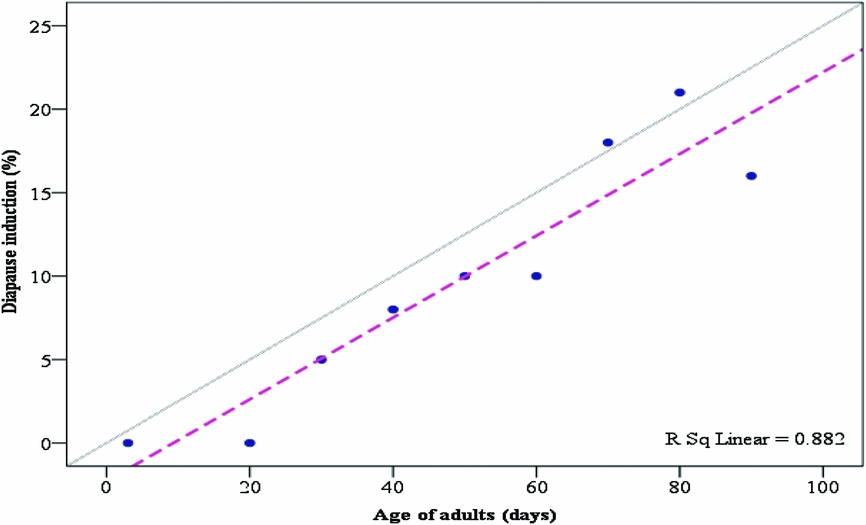
Studies were also carried out to examine the correlation between age of Z. bicolorata adults and percent induction of diapause. Twenty (20) adults from each age group (i.e. 20, 30, 40, 50, 60, 70, 80 and 90 days old) were released into 36 different diapausing cages and provided with necessary diapause inducing conditions, i.e. 27 °C; 60–70% RH and 14L: 10D in a BOD incubator. Observations were made on percentage of diapause induction in relation to age of adults of Z. bicolorata
Mating in adults
Similarly, mated and unmated adults (10 days old) were released into eight diapausing cages (30 × 20 × 5 cm) at the rate of 20 adults per cage, to determine whether mating had an influence on inducing diapause. There were four cages per treatment and each cage was considered a replicate.
Effect of diapause on longevity and fecundity of Z. bicolorata
Longevity of adults: Longevity of adults (males and females) during pre-diapause, diapause and post-diapause was also recorded in the population that emerged from the laboratory during July 2011. Freshly emerged adults were separated and identified based on morphological characteristics of last abdominal sternite (McClay, Reference McClay1980). They were provided with fresh excised leaves of parthenium every 24 h. In cages where diapausing adults had burrowed, water (~50 ml) was sprinkled once a week until emergence. The duration of pre-diapause, diapause and post-diapause was recorded. The experiment was replicated five times for each treatment group, and each replication consisted of 20 adults at 27 °C, 60–70% RH and 14L: 10D in a BOD incubator.
Fecundity of females: Fecundity of mated females before and after diapause was noted, to examine whether there was any effect of diapause on female fecundity. Eight-day-old mated females (~100 individuals) that had never oviposited, were used in this experiment. They were provided with fresh excised leaves of parthenium for feeding and oviposition. Daily observations were made on the number of eggs laid until they burrowed in the soil to diapause. Similar observations on oviposition were made in the post-diapause period until the death of female adults. The experiment was replicated five times with 20 individuals in each replication.
Statistical analyses
All proportional binomial data were subjected to logistic regression analysis (Pearson-χ2) prior to further analysis. One way analysis of variance (ANOVA) was used to analyse the data of all experiments related to temperature treatment and laboratory-manipulated experiments. The role of soil moisture in induction and termination of diapause was analysed using the two-way ANOVA between months and soil status (moist and dried soil), as factors. The paired sample t-test was used to compare the independent samples of the fecundity in pre-diapause and post-diapause duration. However, the Student's t-test was computed to compare the proportion of diapause in mated and unmated treatments. A linear regression analysis was used to establish the relation between adult age and percent diapause induction. Means were separated using Tukey's HSD post hoc test. Statistical analyses and graphs were done using the language program R 2.10.1, unless stated otherwise (R Development Core Team, 2010).
Results
Initiation of diapause in field-collected adults under laboratory conditions
Adults collected from 1 May to 15 June failed to enter diapause. Results (Fig. 1) show the statistically significant differences (Logistic regression-χ2 = 5.016; df = 16; P<0.001) in mean percent of diapause with time. Adults of Z. bicolorata went into diapause from July to December. The number of adults entering diapause significantly increased with time (F = 1436.85; df = 16, 104; P<0.001) and slightly decreased on 15 October. However, the peak period of diapause (~70%) was noted in the 2nd week of December 2010.
Diapause in Zygogramma bicolorata adults collected at fortnightly intervals from experimental field. Means ± SE followed by different letters are statistically different according to Tukey's HSD (P<0.001).

Effect of continuous laboratory rearing on diapause
The values of logistic regression of cumulative proportional data of diapause induction showed a significant difference among the generations (F1 to F7) (χ2 = 3.403; df = 6; P<0.001). The percentage of diapaused adults significantly increased with every generation (F = 897.78; df = 6, 24; P<0.001). In the F1 generation, only 4% adults burrowed into the soil, which increased to 16% in the F2 generation and peaked at 90% in the F7 generation (Fig. 2).
Diapause in Zygogramma bicolorata in different generations when bred in the laboratory. Means ± SE followed by different letters are statistically different according to Tukey's HSD (P<0.001).

Abiotic factors
Effect of soil moisture on initiation of diapause
A significantly greater proportion of individuals (72% adults) went into diapause in cage-A, where the soil was moistened, and no adult went into diapause in cage-B, where the soil was oven dried (Pearson-χ2 = 28.12; Continuity correction = 25.08; df = 9; P<0.001) (Fig. 3).
Effects of soil moisture on percent diapause induction in Zygogramma bicolorata adults. Means ± SE followed by different letters are statistically different according to Tukey's HSD (P<0.001).

Results (Table 1) showed that a significantly higher percentage (90.5%) of adults collected in November, underwent diapause when they were given moist soil in the laboratory (soil status × months, i.e. F = 455.4; df = 7; P<0.00) compared to those that were collected in the other months. In contrast, the adults collected during May failed to diapause even after being provided with moist soil. Only 2% of the beetles collected in June underwent diapause when provided with moist soil, whereas no diapause occurred in dried soil (t = 2.31; df = 8; P<0.05).
Role of soil moisture in the induction of diapause in Zygogramma bicolorata

Within column means followed by different letters are significantly different according to Tukey's HSD, (P<0.001).
†t-test cannot be computed because the standard deviations of both groups are 0.
Effect of soil moisture on termination of diapause
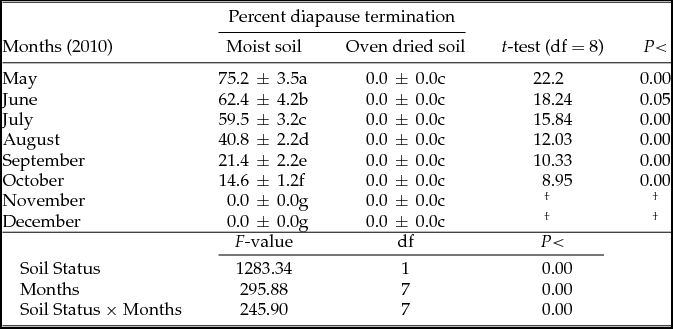
The number of adults that emerged from diapause in respect to soil moisture was significantly higher in the month of May, compared to other months of the year in 2010. No diapaused adult resumed activity when subjected to dried soil (soil status × months, i.e. F = 245.90; df = 7; P < 0.00). However, in moist soil, 75% of adults emerged from diapause in the month of May followed by 62% in June and then decreased to 15% in October, while none of the tested adults emerged from diapause in November and December, even in moist soil (Table 2).
Role of soil moisture in the termination of diapause in Zygogramma bicolorata

Within column means followed by different letters are significantly different according to Tukey's HSD, (P<0.001).
†t-test cannot be computed because the standard deviations of both groups are 0.
Laboratory-manipulated experiments with soil moisture
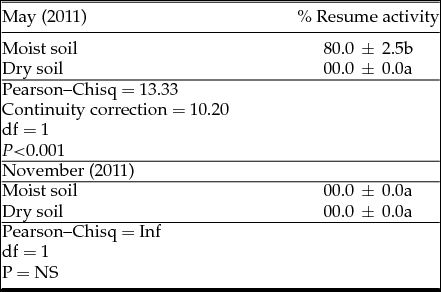
When adults were removed from their diapause cages and then released on moist soil they burrowed again in November 2011. In the absence of soil moisture, the adults did not consume parthenium leaves when offered (Table 3). The comparison of data showed that there was no significant difference between treatments with moist and dry soil in November 2011 (Pearson-χ2 = Inf.; df = 1; P = NS). However, 80% of adults emerged from diapause when the soil was moisturized, as indicated by their feeding on provided parthenium leaves; while no adult resumed activity in response to dry soil in May, 2011 (Pearson-χ2 = 13.33; Continuity correction = 10.20; df = 1; P<0.001) (Table 3).
Laboratory manipulating experiment with moisture during May (2011) and November (2011), Aligarh region, UP, India

Within column means followed by different letters are significantly different (Tukey's HSD, P<0.001).
Effect of temperature on initiation of diapause
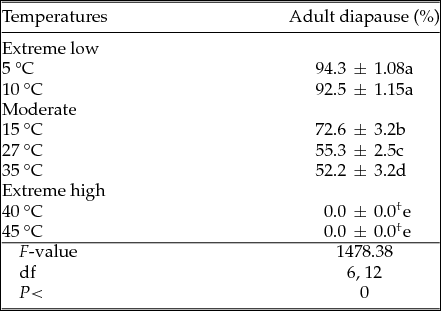
A significant variation (F = 1478.38; df = 6.12; P<0.00) in initiation of diapause was observed when field-collected adults were released in diapause cages at constant temperatures. At moderate temperatures, i.e. 15°, 27° and 35 °C, beetles went into diapause at the rate of 72.6, 55.3 and 52.2%, respectively. When adults were exposed to extremely low temperatures, i.e. 5° and 10 °C, 94.3 and 92.5% diapause was observed, respectively. However, adults failed to survive at extremely high temperatures, i.e. 40° and 45 °C (Table 4).
Role of constant temperatures in initiation of diapause in Zygogramma bicolorata adults

Within column means followed by different letters are significantly different (Tukey's HSD, P<0.001).
†100% mortality of Z. bicolorata adults
Effects of temperature on termination of diapause
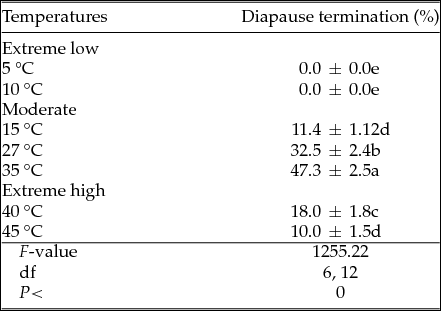
Emergence was observed when one-month-old diapaused adults were exposed to moderate and extremely high temperatures, i.e. 15°, 27°, 35°, 40° and 45 °C, with a significant difference across the different temperature regimes (F = 1255.22; df = 6.12; P<0.00) (Table 5). The exposure of diapaused adults continuously for one week at different temperatures revealed that the highest percentage of diapause terminated was at 35 °C (47%), followed by 40 °C (18%) and 45° C (10%), for an exposure of 10 and 8 h, respectively (Table 5). About three to four days were required for the termination of diapause when soil was moistened after high temperature treatment.
Role of different temperature regimes in the termination of diapause in Zygogramma bicolorata adults

Within column means followed by different letters are significantly different (Tukey's HSD, P<0.001).
Laboratory-manipulated experiments with temperature in the absence of soil moisture
When diapaused adults were removed from the soil and directly exposed to constant temperatures, a significant difference was detected in the termination of diapause (F = 1028.43; df = 6, 12; P<0.00). Only 22% of diapaused adults resumed their activity at 35 °C within a week. Results demonstrated that 18.4 and 12.5% of diapaused adults resumed their activity in 6 and 5 days when exposed to temperatures of 40° and 45 °C for 2 h every day, respectively (Table 6). However, at extremely low temperatures, i.e. 5° and 10 °C, adults failed to resume their activity.
Laboratory manipulating experiment with temperature regimes without soil moisture in the termination of diapause in Zygogramma bicolorata adults

Within column means followed by different letters are significantly different (Tukey's HSD, P<0.001).
Biotic factors
Age of adults
Results showed that percentage of diapause induction is age dependent, but after a particular age (85 days), the tendency of diapause induction decreased (y = 0.245x – 2.285; R2 = 0.882; P<0.001). The proportion of diapause significantly increased (F = 572.33; df = 8, 24; P<0.001) from day 30 (5%) to day 80 (21%), and declined in old age (Fig. 4). Freshly emerged three-day-old adults were incapable of burrowing into soil for diapause and none of them went into diapause within the period of four weeks of emergence.
Percent diapause induction in relation to age of adults of Zygogramma bicolorata (y = 0.245x – 2.285; R2 = 0.882).

Mating in adults
Results (Fig. 5) showed that mated and unmated adults did not significantly differ in terms of diapause induction (Student's t-test = 2.41; df = 1; P = NS).
Diapause of Zygogramma bicolorata in relation to mating status of adults. Means ± SE followed by different letters are statistically different according to Tukey's HSD (P<0.001).

Effect of diapause on longevity and fecundity of Z. bicolorata
Longevity of adults: Results (Fig. 6) revealed that adults (females/males) spent their maximum time in diapause followed by pre-diapause and post-diapause, respectively. A significant difference was observed in the longevity of adults during pre-diapause, diapause and post-diapause (F = 632.35; df = 2, 8; P<0.001*♀♀ and F = 582.74; df = 2, 8; P<0.001*♂♂).
Longevity of male and female Zygogramma bicolorata in pre-diapause, diapause and post-diapause period. Means ± SE followed by different letters are statistically different according to Tukey's HSD (P<0.001).

Fecundity of females: Diapause significantly increased the fecundity of females as compared to the fecundity in pre-diapaused conditions (Paired sample t-test = -8.419; df = 9; P<0.001) (Fig. 7). These females laid 1256.34 ± 180 eggs/♀/generation, in 30 to 35 days, before entering diapause. After emergence from diapause they again laid 1856.45 ± 245 eggs/♀/generation, in 50 to 80 days.
Fecundity of Zygogramma bicolorata in pre-diapause and post-diapause periods. Means ± SE followed by different letters are statistically different according to Tukey's HSD (P<0.001).

Discussion
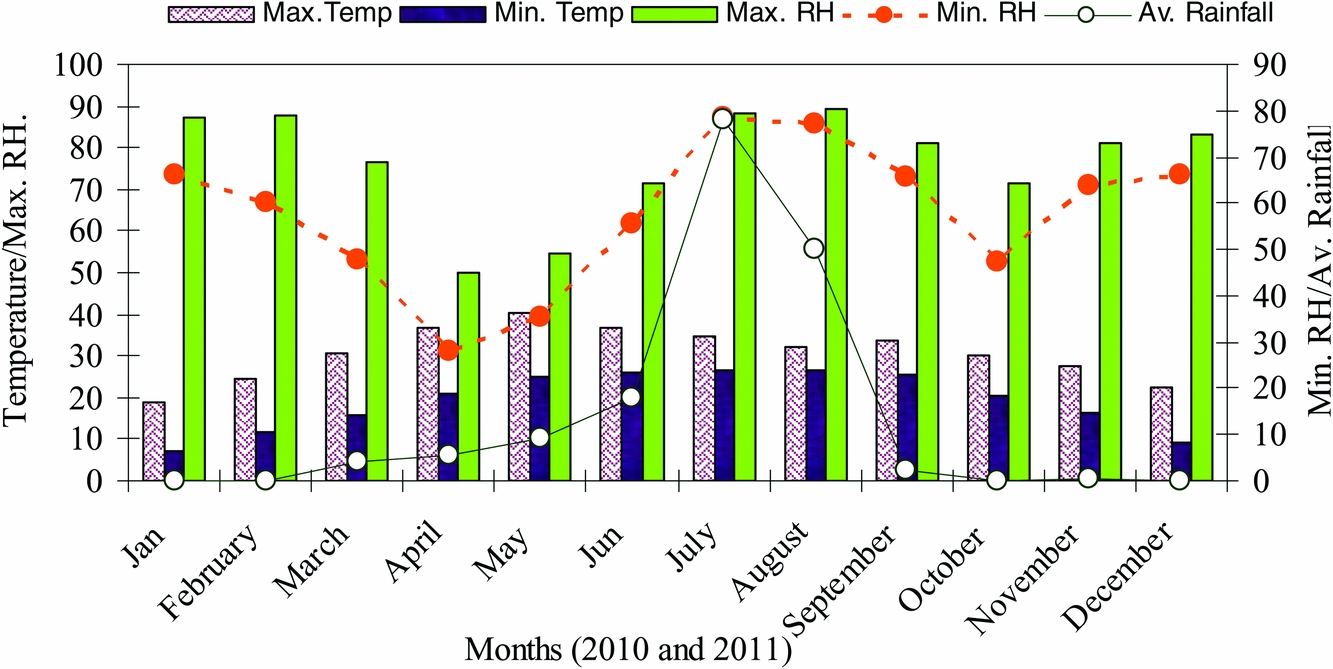
Results of the present study demonstrate that environmental and biological factors have a significant effect on the diapause behaviour of Z. bicolorata. However, diapause itself is not a well-defined state, but a dynamic succession of developmental, behavioural and physiological events (Andrewartha, Reference Andrewartha1952; Tauber et al., Reference Tauber, Tauber and Masaki1985). All adults of Z. bicolorata do not enter diapause (Gautam et al., Reference Gautam, Samyal and Khan2005; Gupta et al., Reference Gupta, Gupta, Bali and Srivastava2010). Our results show that none of the adults collected from the field during the month of May and June entered diapause, perhaps because the population during this period consisted mainly of adults that had emerged from diapause. Gautam et al. (Reference Gautam, Samyal and Khan2005) previously reported that adults of Z. bicolorata are capable of entering diapause over an extended period of time between July and December. Jayanth and Bali (Reference Jayanth and Bali1993b) recorded similar data in Bangalore region, India. Our findings reveal that the incidence of diapause initiation in Z. bicolorata increases from generation to generation; thus, in the F1 generation few adults undergo diapause and the highest percentage of diapaused adults is observed in the F7 generation. These observations are similar to the findings of Sushilkumar (Reference Sushilkumar2005) who reported that adults of F1 are too young to enter diapause. In the present study, a slightly lower percentage of diapause occurred in laboratory-reared adults compared with field-collected adults, likely because of the partial masking of the environmental cues in the laboratory. In the laboratory, 60% of the reared adults from the F6 generation entered diapause, which coincided with when the field-collected adults (62%) entered diapause out of the total adults collected during November 2010. From these results two possible explanations can be drawn: (1) prevailing abiotic conditions (Fig. 8) favour Z. bicolorata to enter diapause; and (2) until November several Z. bicolorata generations have been completed (at least F6) and allow Z. bicolorata to enter diapause in terms of generation effect.
Climate diagram for Aligarh region, UP, India, for the period 2010 to 2011 showing mean monthly maximum and minimum temperature, maximum and minimum relative humidity and average rainfall.

The adults entered diapause once during their lifetime (Jayanth and Bali, Reference Jayanth and Bali1993b). However, in another related insect—the Colorado potato beetle, Leptinotarsa decemlineata (Say)—pupae or new adults were the most vulnerable for diapause with a critical photoperiod of 15 h at 25 °C (de Kort, Reference de Kort1990). It is unclear what triggers diapause behaviour in Z. bicolorata, especially when food is abundantly available—and weather conditions remained favourable during July to October (Fig. 8). Field temperature data collected over two years (2010 and 2011) showed that the monthly mean maximum and minimum temperatures during this period ranged between 26.75 and 31.25 °C, and 15.67 and 20.25° C, respectively (Fig. 8).
In Z. bicolorata the percentage of diapause initiation in field-collected adults increased from July to mid-December in Aligarh region, India. It may be because of a decrease in temperature and senescing of host-plant foliage, as reported in L. decemlineata (Hare, Reference Hare1990). The reduction in diapause percentage observed during the end of September could be because of the presence of a number of non-diapausing adults from previous generations and the dryness of the soil (rainfall during September was 0.4 mm with an average R.H. of 69.5%, Fig. 8). These results corroborate the earlier findings of Jayanth and Bali (Reference Jayanth and Bali1993b). Gupta et al. (Reference Gupta, Gupta, Bali and Srivastava2010) observed that the percentage of diapause induction in adults of Z. bicolorata increased from August to December and the light period decreased from 13.16 to 9.87 h, which negatively affected the diapause behaviour of Z. bicolorata in Jammu region, India.
The beetles have been causing severe defoliation of parthenium grown near moist areas like streams and canals (Jayanth and Bali, Reference Jayanth and Bali1993a,Reference Jayanth and Balib). Therefore, it was necessary to know whether soil moisture played a role in inducing and/or terminating diapause in Z. bicolorata. Present findings show that soil moisture plays an important role in initiation and termination of diapause. It provides an ideal physical condition for successful burrowing and emergence from diapause chambers. Moreover, unseasonal rains (0.53 mm) during November (Fig. 8) may also have played a role in inducing diapause in Z. bicolorata. We found that adults of Z. bicolorata were unable to penetrate dry soil even after several attempts to enter diapause. Out of the field-collected adults in November, 90% burrowed within 5 h when provided with moist soil in the laboratory. Jayanth and Bali (Reference Jayanth and Bali1993b) also found that the proportion of adults terminating diapause was high in moist areas, resulting in more defoliation of parthenium. Physio-chemical properties of soil (such as structure, texture and water holding capacity), also played an important role in induction and termination of diapause in Z. bicolorata. Information on such aspects in the target species is lacking; however it is fully understood in L. decemlineata. Canal soil with high organic matter (>75%) was most suitable for diapause. Lighter and loamy soil rich in organic substances with better aeration and no excessive water was most suitable for L. decemlineata (Kuusik et al., Reference Kuusik, Hiiesaar, Metspalu and Hermann2001; Hiiesaar et al., Reference Hiiesaar, Metspalu, Jõudu and Jõger2006).
Duration of diapause and ability to produce eggs are important life-history traits for establishment of any introduced biocontrol agent in a new environment. Present findings show that diapause prolonged the longevity and increased the fecundity of female beetles, as compared to the pre-diapause duration. In the present study, the experiment was conducted at a temperature range of 15 to 45 °C; and continuous exposure to 35 °C induced higher emergence within the week. Thus, researchers can terminate adult diapause at any time in the laboratory to carry out releases in areas where the weed thrives during the off-season, since beetles do not breed under natural conditions during this period. Insects that have been induced to emerge prematurely need to be investigated before use as biological control agents of parthenium. At extremely low temperatures (0° and 5 °C), 100% adults went into diapause; however, when the temperature increased from 15° to 35 °C, the percentage of diapause induction decreased and no adult went into diapause at 40 and 45 °C. This inverse relationship between temperature and diapause can be used in future studies to measure the tendency of diapause in individuals of Z. bicolorata. The present study also helped to identify a diapausing and non-diapausing strain through laboratory selection. Moreover, low temperatures can also be used to preserve diapausing adults of Z. bicolorata for a long time without having a negative effect on biological parameters, such as longevity and fecundity. The present findings are of great utility in the biological suppression of parthenium, as the information will enhance the effectiveness of this beetle through the manipulation of diapause.
Acknowledgements
Financial assistance to the first author from UGC, New Delhi, India during this research programme is gratefully acknowledged. We are thankful to Prof. Athar Ali Khan, Department of Statistics and Operation Research, AMU, Aligarh, India for his statistical suggestions and graphical presentation in this manuscript. We also express our sincere gratitude to the editor and two anonymous reviewers whose constructive comments helped us to improve an earlier draft of this paper.