Rotator cuff tears are a common cause of shoulder pain and dysfunction. Rotator cuff tear incidence increases with age, and 54 percent of asymptomatic individuals had a full or partial thickness rotator cuff tear (Reference Sher, Uribe, Posada, Murphy and Zlatkin1). There has been growing interest in the most effective treatment and management strategy for rotator cuff tears, owing to an aging population, emphasis on prolonged healthy living, and advancement in radiologic diagnostics. This has led to the development of novel or improved treatment methods including open surgery, mini-open surgery, acromioplasty, therapy using platelet-rich fibrin matrix, and physiotherapy.
However, the clinical evidence for the most appropriate therapeutic management among various competing interventions of high grade partial or small to medium rotator cuff tears in the middle-aged and elderly patients is still lacking. There are several systematic reviews (SRs) relating to rotator cuff tear treatment, but the key question was the timing of range of motion after surgical repair (Reference Kluczynski, Isenburg, Marzo and Bisson2) or evaluation of the platelet-rich plasma (PRP) during arthroscopic rotator cuff repair (Reference Saltzman, Jain and Campbell3). In addition, several included studies was small and heterogeneities of the meta-analysis was over 90 percent; therefore, conclusions of the review were very limited (4).
When well-designed RCTs are unavailable, a network meta-analysis that simultaneously compares multiple is required for sound decision making.
Therefore, this study aimed to compare the effects of therapeutic management of patients with rotator cuff tears through a SR on rotator cuff tear treatment with Bayesian network meta-analyses for indirect comparison between the treatments.
MATERIALS AND METHODS
Study Selection and Identifications
We searched for relevant randomly assigned clinical trial studies on therapeutic management of rotator cuff tears by searching electronic databases including Ovid-Medline, Ovid-Embase, Cochrane central, AMED, CINAHL, PubMed, KoreaMed, Korean Medical database, academic journal database, and Korea Education and Research Information Service related to rotator cuff tear treatments from their inception through June 12, 2017 (5). Details of the information resources searched and electronic search strategies for MEDLINE and EMBASE, including any limits used, are reported in the online Supplementary Table 2. We included the articles according to certain selection criteria: (i) mean patient age over 50 years, (ii) a high grade partial tear or small- to medium-sized full thickness tear in over half of the patients, (iii) extractable data for at least one measure of functional improvement, that is, pain, reported at 12 months following intervention, and (iv) inclusion of any conservative and surgical rotator cuff tear treatment modalities.
On the basis of treatment recommendations from the latest clinical practice guidelines (5), we identified conservative treatment including medication, physiotherapy, injection, and surgical treatments, including open rotator cuff surgery, mini-open rotator cuff surgery, arthroscopic rotator cuff surgery, and acromioplasty, as comparators. The difference in the patient age across trials might act as an effective modifier and cause bias in the analysis (Reference Jansen, Fleurence and Devine6), However, we confirm that the mean patient age was over 50. The prevalence of shoulder disorders was highest among subjects in their 50s in Korea (Reference Joo, Lee and Shin7).
Our primary outcome was functional improvement and secondary outcomes were pain and tendon integrity at the 1-year follow-up. Articles were excluded if they were any of the following: (i) studies that included from the patient with a nonrotator cuff tear such as calcific tendinitis, Bankart lesion, SLAP lesion, dislocation or fracture of shoulder, and re-tear (ii) studies where over half of the patients were indicated for trauma, (iii) studies in which conservative or surgical treatment for rotator cuff tear was not performed, (iv) studies that did not report any of the outcomes, (v) preclinical or nonhuman studies, (vi) gray literature.
Data Extraction and Quality Assessment
Two independent reviewers extracted the data using a predetermined extraction form regarding the authors, publication year, country of origin, study setting and design, funding sources, number of patients, mean age, sex ratio, therapeutic management protocol, statistical analysis, outcome measures, follow-up loss, and length of follow-up. The outcome measures included changes in functional improvement, pain, or tendon integrity, from the data at baseline to that from the 1-year follow-up.
The quality of the literature was assessed independently by using the Cochrane risk of bias (RoB) tool. The RoB tool includes: random sequence generation, allocation concealment, blinding of participants and personnel, blinding of outcome assessment, incomplete outcome data, selective reporting, and other biases were answered as “yes,” “no,” or “unclear” regarding the RoB. The data were reviewed for consistency between the two extractors, and any disagreements were resolved by discussion.
Statistical Analysis
Considering the variability in rotator cuff tear treatment protocol and the total number of included studies, the Bayesian network meta-analyses with hierarchical random-effects (pooled estimate assumption) were used (Reference Lu and Ades8). As the prior distributions, we considered the normal distributions for the outcome of the reference treatment and the effect size of the other treatments for the reference treatment. Also we used the normal and inverse gamma distributions for the mean and variance of the effect size, which are the hyper parameters, respectively. For tendon integrity, we used the proportion of integrity of tendon or re-tear. We used the data analyzed in the allocated group according to the intention-to-treat principle bypassing the follow-up loss.
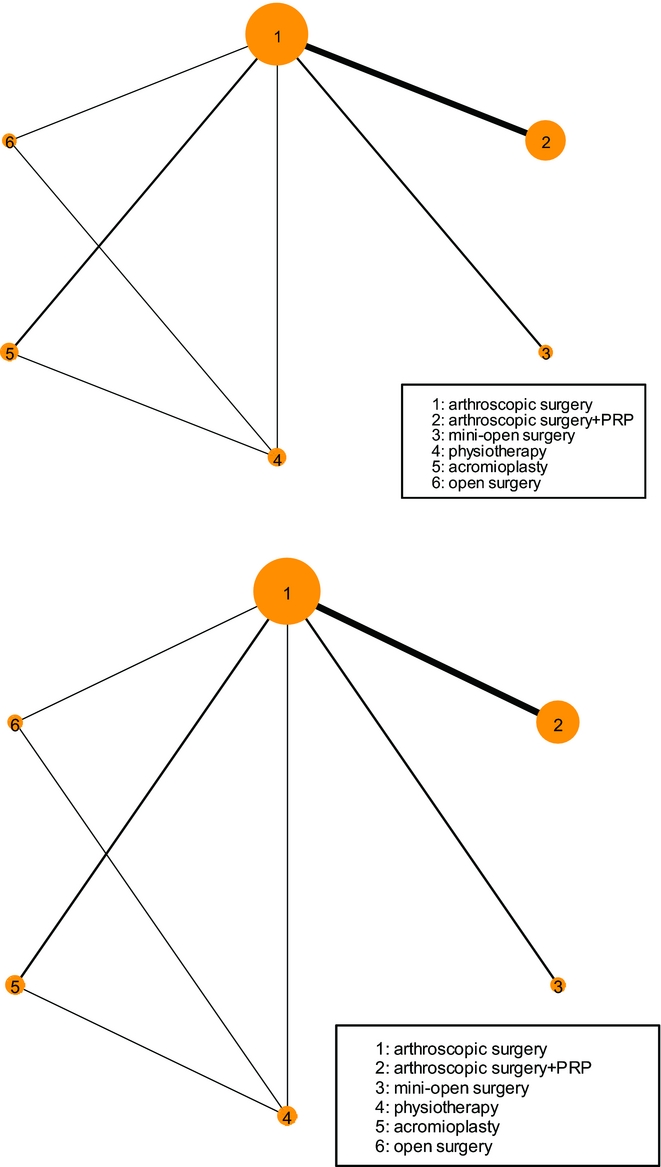
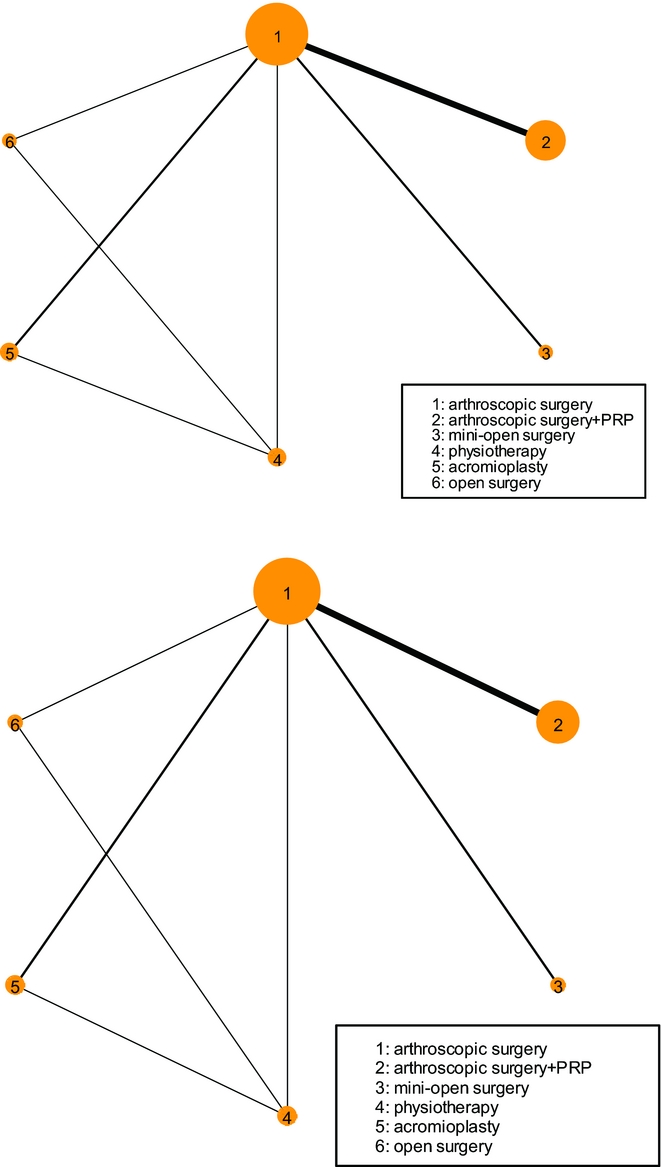
For functional improvement and pain, the changes in mean value between baseline and 1 year after treatment with 95 percent credible interval (CrI) were analyzed as a point estimate and the corresponding measures of uncertainty. When mean changes were not reported, we calculated the mean changes by using reported parameters (mean and standard deviation reported at baseline and after treatment) and we determine statistical significance with a 95 percent CrI as in a previous study (Reference Lu and Ades8). We confirmed the heterogeneity based on the median of the posterior variance between studies. Network meta-analysis is justifiable assuming consistency between different sources of evidence. We confirmed network consistency using inconsistency factor because there was closed loop among the treatments modalities. The inconsistency factor method is used to calculate posterior probability, where the variance of the inconsistency factor is greater than the inter-study variance. A greater probability indicates greater susceptibility to inconsistency. We also calculated the probability ranking to determine the best competing intervention and the surface under the cumulative ranking curve (SUCRA) to determine the numerical summary of the rank distribution. SUCRA ranges from 0 to 1, where 1 indicates best treatment with no uncertainty and 0 indicates worst treatment with no uncertainty (Reference Jansen, Fleurence and Devine6;Reference Salanti, Ades and Ioannidis9). We present network geometry to clarify structure of the individual articles in the network meta-analysis. Circles (nodes) in the figure represent the individual treatments; the size of the nodes corresponds to the number of subjects receiving the treatment; all the lines represent direct comparisons; and the thickness of the lines represents the number of clinical trials. In addition, we present contribution plots to identify the most influential comparisons for each network estimate and for the entire network. The columns in the plot inform the observed direct comparison using weighted squares along with the respective percentage; the rows represent all possible pairwise comparison corresponds to the mixed evidence or indirect evidence alone.
We used WinBUGS (version 1.4, MRC Biostatistics Unit, Cambridge, UK) and R version 3.1.3 with “R2WinBUGS” package for linked R, WinBUGS and STATA for contribution plot (Reference Chaimani, Higgins, Mavridis, Spyridonos and Salanti10). This study was approved by the IRB of the NECA (NECAIRB14-021-2) and Seoul National University Bundang Hospital (B-1403/244-117).
RESULTS
Study Characteristics
The literature search revealed 4,864 articles, of which 4,822 studies were excluded (Supplementary Figure 1). Fifteen RCTs enrolling 1,522 patients were finally included (Supplementary Table 3) and Supplementary Table 4 summarizes the characteristics of these studies. The mean patient age was over 50. Twelve of the included studies enrolled patients with the supraspinatus tear and three studies did report any of the muscle implicated. A total of six treatment methods were included (Figure 1). Alternative treatments such as medication or injection (conservative treatment) were not included in this analysis. Arthroscopic rotator cuff surgery was the most frequently evaluated in twelve studies. In cases of physiotherapy and rehabilitation after surgery, great variation was seen in starting time, education tool, and setting. Six among the fifteen studies included had loss of participants at follow-up, and four studies included patients who did not receive an allocated intervention. In this study, there are 10 inconsistency degree of freedom (Reference Dias, Welton, Caldwell and Ades11).
Network of treatment comparisons for (A) shoulder functional improvement and (B) pain.
Risk of publication bias is summarized in Supplementary Figure 2. Twenty-five percent of the studies did not report the methods for random sequence generation and due to loss to follow-up, 43.8 percent of the articles assessed incomplete outcome data and had “high” RoB. Regarding selective reporting bias, 31.3 percent of articles did not report the list of primary or secondary end points. For other bias, statistical adjustment for other biases was not reported in over 31.3 percent of the included articles, which reported baseline characteristic differences as statistically significant between treatment and control groups.
Network Meta-Analysis of Functional Improvement
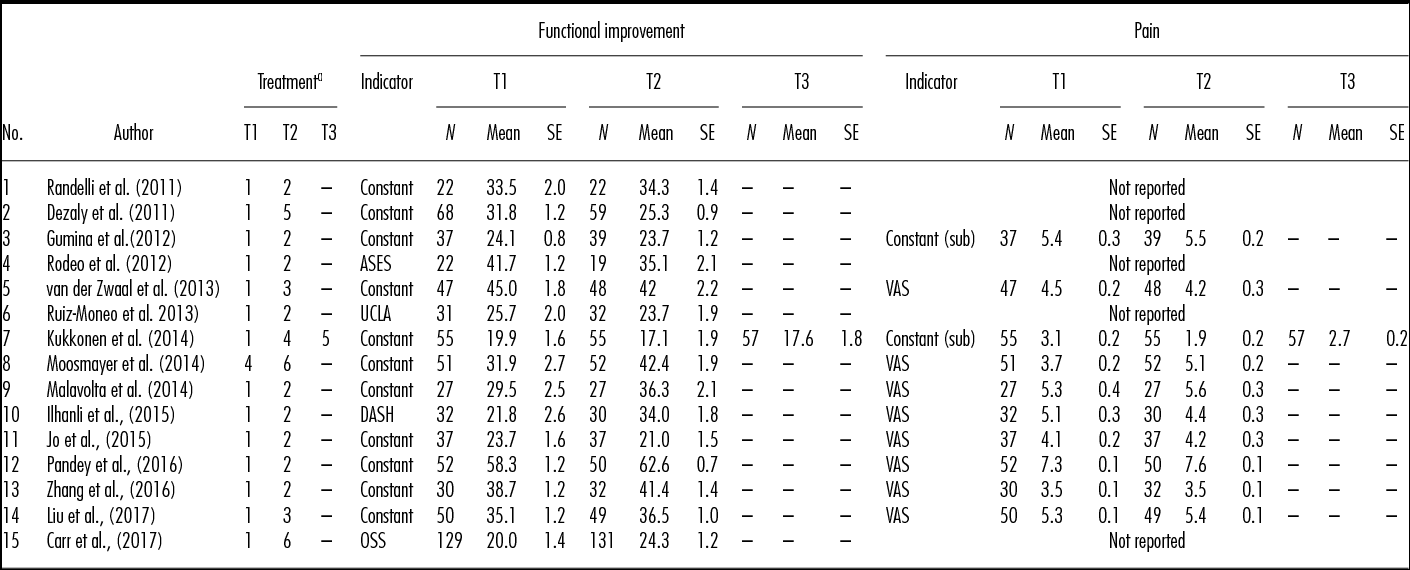
Eleven studies among fifteen studies reporting functional improvement used constant scores, whereas one study used ASES, one used OSS, one used DASH, and one used UCLA (Table 1; Figure 1). Regarding UCLA score and DASH score, we used the delta method to convert to 100 score scale to standardize with Constant or ASES (Reference Casella and Berger12).
Functional Improvement and Pain of Rotator Cuff Tear Treatment

a 1: Arthroscopic surgery + physiotherapy; 2: arthroscopic surgery + PRP + physiotherapy; 3: mini-open surgery + physiotherapy; 4: physiotherapy; 5: acromioplasty + physiotherapy; 6: open surgery + physiotherapy.PRP, platelet-rich plasma; VAS, visual analog scale.
Regarding functional improvement, closed loops were formulated with arthroscopic rotator cuff repair with physiotherapy, the acromioplasty with physiotherapy, physiotherapy only, and with arthroscopic rotator cuff repair with physiotherapy, open surgery with physiotherapy, and physical therapy only; open loops with arthroscopic rotator cuff surgery with physiotherapy were formulated between with arthroscopic rotator cuff surgery PRP with physiotherapy and mini-open surgery with physiotherapy (Figure 1).
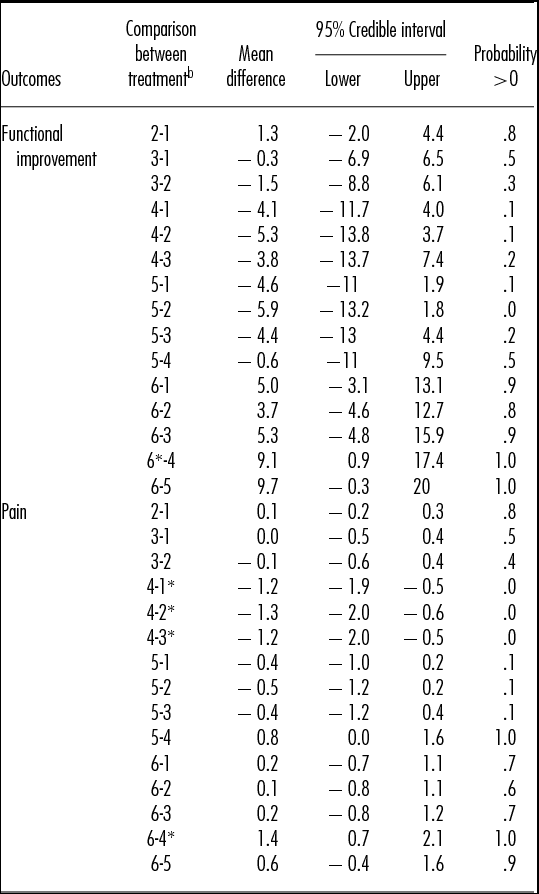
Patients who received physiotherapy after open surgery showed statistically significant functional improvements compared with patients who received physiotherapy only (mean differences, 9.1 [CrI, 0.9–17.4]) (Table 2). There was no significant difference in the functional improvement between the other treatments (Table 2). The posterior probability of the variance of inconsistency factor is greater than the variance between studies was 0.15, so there was no evidence for inconsistency.
Comparison of Outcomes between Rotator Cuff Tear Treatment of Random Effect Bayesian Network Meta-analysis

a 1: Arthroscopic surgery + physiotherapy; 2: arthroscopic surgery + PRP + physiotherapy; 3: mini-open surgery + physiotherapy; 4: physiotherapy; 5: acromioplasty + physiotherapy; 6: open surgery + physiotherapy.
* Statistically significant
Regarding functional improvement, open surgery with physiotherapy had an absolute advantage over the others with the largest SUCRA value of 0.9 and ranking probability value of 0.8 (Supplementary Table 5). The most informative direct evidence in the network is Arthroscopic surgery with physiotherapy versus open surgery with physiotherapy with an overall contribution of 17.9 percent to the network estimates (Supplementary Figure 2A).
Network Meta-Analysis of Pain
In terms of pain, ten studies were analyzed (Table 1; Figure 1). Among these studies, two studies reported pain as a sub score of the constant scores, and eight studies reported pain using the visual analog scale (VAS) scale. To obtain a constant sub score, we used the delta method to convert a score out of 10, to adjust for the VAS scale. Among arthroscopic rotator cuff surgery, acromioplasty, and physiotherapy alone, closed loop was formulated and among other treatment methods, open loops were formulated (Figure 1). In this analysis, open surgery with physiotherapy, arthroscopic rotator cuff surgery with physiotherapy, mini open with physiotherapy, PRP therapy with physiotherapy showed decreases in pain 1 year after treatment compared with physiotherapy alone (absolute value of mean difference 1.2 to 1.4; Table 2).
The posterior probabilities that the variance of inconsistency factor is greater than the variance between studies were 0.19, so there was no evidence for inconsistency. The SUCRA results for pain, open surgery with physiotherapy had an absolute advantage over the others with a largest SUCRA value of 0.8 and ranking probability value 0.5 and followed by arthroscopic surgery with PRP therapy and physiotherapy with a SUCRA value of 0.8 and ranking probability value 0.2 (Supplementary Table 5). The most informative direct evidence in the network is arthroscopic surgery with physiotherapy vs. physiotherapy alone with an overall contribution of 19.1 percent to the network estimates (Supplementary Figure 2B).
Tendon Integrity as a Structural Outcome
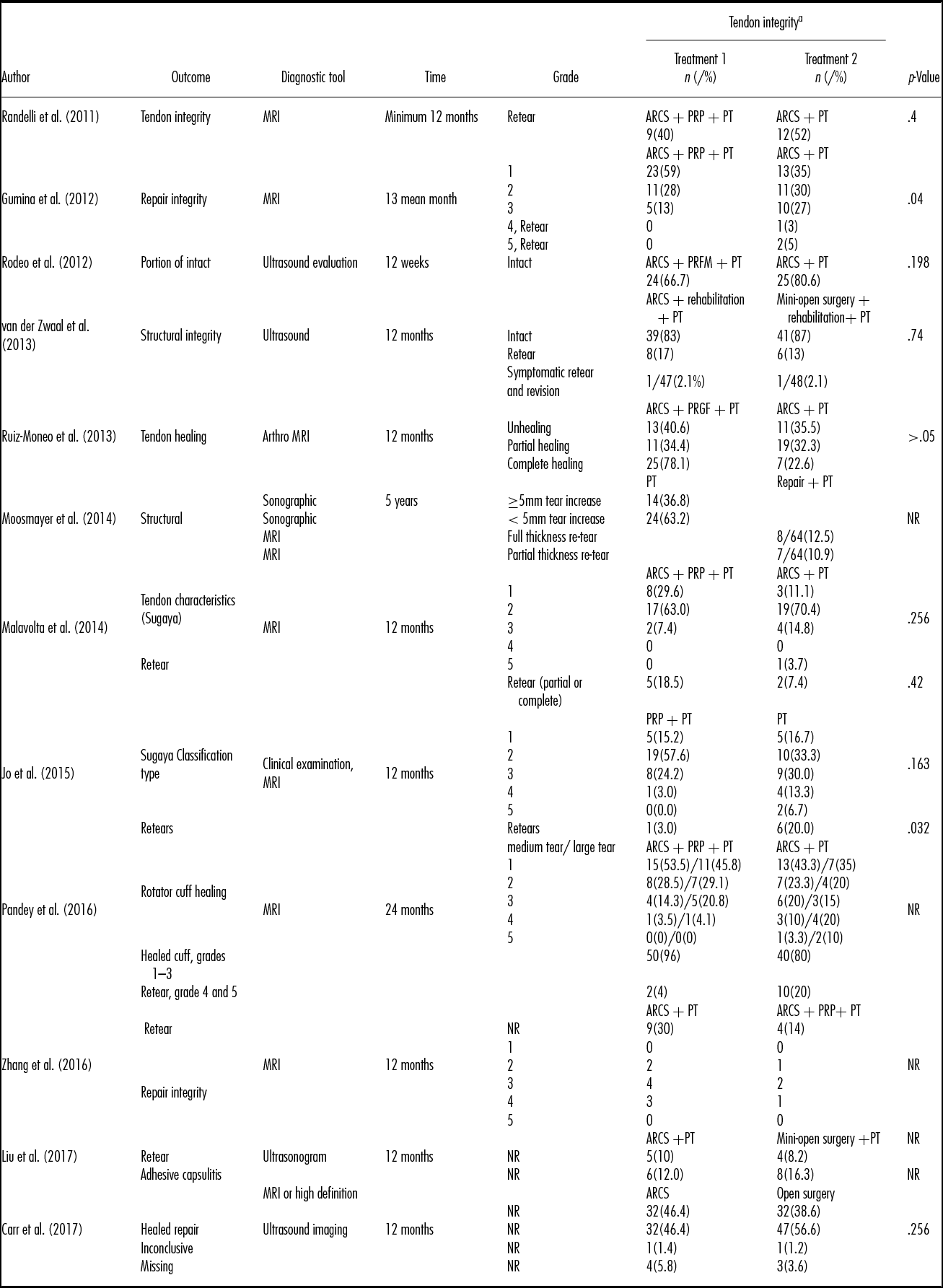
The structural outcome was reported with respect to various factors, including surgery integrity, portion of intact tendon, portion of healing tendon, and measurement of tear using MRI or sonographic evaluation (Table 3). Among three studies reporting statistically significant differences, two studies compared arthroscopic surgery with platelet-leukocyte membranes or plasma rich in growth factor and conventional arthroscopic surgery. Arthroscopic surgery with platelet-leukocyte membranes or plasma rich in growth factor reported favorable benefit.
Summary of Tendon Integrity

a ARCS, arthroscopic rotator cuff surgery; PT, physiotherapy; PRP, platelet-rich plasma; PRGF, plasma-rich in growth factor; PRFM, platelet-rich fibrin matrix.
DISCUSSION
The present study compared variable treatment for rotator cuff tears using network meta-analysis to support the decision making of clinicians. There were no statistical differences among the surgical treatment methods in terms of functional improvement. For the comparison of surgical treatment and conservative treatment, patients who have undergone open surgery and physiotherapy showed significant functional improvement compared with patients who received physiotherapy alone, with a mean difference of 9.1 points. In terms of pain, both arthroscopic rotator cuff surgery combined physiotherapy with or without PRP therapy, open surgery combined with physiotherapy, and mini-open rotator cuff surgery combined with physiotherapy showed better pain relief than acromioplasty and physiotherapy alone, although the differences were small and might not be of clinical significance. Regarding tendon integrity, arthroscopic surgery with the platelet-leukocyte membrane or plasma rich in growth factor was more beneficial compared with conventional arthroscopic surgery, but was not consistent with functional outcomes and pain.
Our major results indicated that none of the surgical treatment modalities included in this study for rotator cuff tear showed superiority of functional improvement one year after treatment. Recent SR of surgical outcome of massive rotator cuff tears, arthroscopic and open repair produced similar outcomes even though open surgery is more invasive (Reference Sevivas, Ferreira and Andrade13). However, open surgery combined with physiotherapy showed significant functional improvement compared with physiotherapy alone. Our result is similar to that of the previous SR (Reference Seida, LeBlanc and Schouten14). In this SR, one study showed statistically significant differences in a function that favored operative repair.
In general, the evidence was too limited to make conclusions regarding comparative effectiveness (Reference Seida, LeBlanc and Schouten14). Surgical intervention was not standardized and the authors concluded that the statistical differences were small and not clinically important. In addition, acromioplasty was applied widely but not standardized according to the surgical technique. Our authors tried to extract information regarding acromioplasty; it showed a heterogeneous performance in the included articles. Well-designed research on effects of acromioplasty is required and we should be careful about predicting its effect.
In this study, we applied intention-to-treat analysis of the results to allow noncompliance and deviations from policy by clinicians (Reference Hollis and Campbell15). There were noncompliance in one patient who chose not to undergo surgery even though tendon surgery was decided as the management strategy by his/her physician and twelve patients who discontinued the suggested physiotherapy after tendon surgery. Moosmayer et al. (Reference Moosmayer, Lund and Seljom16) reported a post hoc as-treated analysis, no statistically significant difference was noted in terms of functional improvement between the patients who were allocated rotator cuff repair primarily and those who underwent repair crossover from physiotherapy. Kokkonen et al. (Reference Kukkonen, Joukainen, Lehtinen, Mattila, Tuominen, Kauko and Aärimaa17). reported that crossovers of four patients allocated to physiotherapy and a patient allocated to acromioplasty underwent rotator cuff surgery, did not affect the final outcomes. van der Zwaal et al. (Reference van der Zwaal, Thomassen and Nieuwenhuijse18) reported that three patient did not undergo the allocated treatment strategy. The reasons of incomplete use in the analysis of RCTs reported failure to start intervention, noncompliance, false inclusions, and missing response (Reference Hollis and Campbell15). It becomes difficult to design the study when a placebo cannot be applied.
Comparison between surgical treatment and physiotherapy alone for pain showed that physiotherapy alone reduced pain less than surgical treatment did. Our result is similar to that of Frederik et al., there were no significant differences between the conservative treatment group and surgery treatment group in terms of functional outcome (Reference Frederik, Lambers and van19). However, for pain control, the surgery group showed a significantly lower pain level at the 12-month follow-up, with a mean difference of 1.0 (Reference Frederik, Lambers and van19). Although there was a statistically significant difference in pain, it is not clear whether it was related to clinical effectiveness (Reference Emshoff, Bertram and Emshoff20).
In addition, it is difficult to compare various conservative treatments including medication and injection because of the lack of relevant RCTs and the heterogeneity of treatment protocols, outcome evaluation scale and diagnostic imaging methods. Further studies are needed to compare various conservative and surgical treatments. Especially for older patients, surgical treatment could be limited based on the patient's physical and social status (Reference Frederik, Lambers and van19). There seems to be no definitive recommendations about surgical and conservative treatment, and, because of this, the American Academy of Orthopaedic Surgeons created the guideline using the RAND/UCLA Appropriateness Method and recommended that symptom severity, tear size, and retraction, are identifiable factors that negatively affect outcome, and response of previous treatment to determine the appropriate treatment should be considered (21).
There were limitations to this study. First, the short-term outcomes at one year reported in the analysis still offers only limited evidence for the relative superiority of these treatments. Second, surgical and conservative treatment for rotator cuff tears do not have a standardized treatment protocol, which may hamper the comparability of therapies; hence, further research is required to develop protocols for conservative treatment in the future. Third, we only compared physiotherapy alone with surgical treatments. Although we used a network of meta-analyses to compare a variety of treatments for rotator cuff tears, most previous studies were observational in nature. As such, comprehensive comparisons between rotator cuff tear treatments cannot be performed at present. Thus, large head-to-head trials including different types of conservative treatment should provide definitive evidence for treatment efficacy in the future.
In conclusion, some surgical treatments were associated with significant improvement in function and pain, but evidence regarding their comparative effectiveness is still lacking. To create a basis for safe and effective treatment decisions in the future, high-quality RCTs and economic evaluation of treatment methods need to be conducted.
SUPPLEMENTARY MATERIAL
Supplementary Table 1: https://doi.org/10.1017/S0266462317004500
Supplementary Table 2: https://doi.org/10.1017/S0266462317004500
Supplementary Figure 1: https://doi.org/10.1017/S0266462317004500
Supplementary Table 3: https://doi.org/10.1017/S0266462317004500
Supplementary Table 4: https://doi.org/10.1017/S0266462317004500
Supplementary Figure 2: https://doi.org/10.1017/S0266462317004500
Supplementary Table 5: https://doi.org/10.1017/S0266462317004500
Supplementary Figure 2a and 2b https://doi.org/10.1017/S0266462317004500
CONFLICTS OF INTEREST
The authors have nothing to disclose.