Pulmonary hypertension is a common complication of CHD, especially those with left to right shunt.Reference D’Alto and Mahadevan 1 It is one of the major causes of morbidity and mortality in patients with complicated CHD.Reference D’Alto, Romeo and Argiento 2
Current diagnostic methods include echocardiography, biomarkers, and right heart catheterisation. Catheterisation is the gold standard for diagnosis of pulmonary hypertension, but being an invasive technique with increased risk of complications limits it use especially in follow-up and repeated evaluation.Reference Galie‘, Hoeper and Humbert 3 Moreover, echocardiography is operator dependent with a variable rate of diagnostic accuracy in case of pulmonary hypertension.Reference Janda, Shahidi and Gin 4 Therefore, the need for an easy non-invasive method for diagnosis, prognosis, and follow-up of pulmonary hypertension is of great interest. A growing number of biomarkers have been evolved for the diagnosis and evaluation of pulmonary hypertension.Reference Foris, Kovacs, Tscherner, Olschewski and Olschewski 5
Nitric oxide is synthesised in the endothelium and is believed to have a strong vasodilator effect.Reference Böger 6 Asymmetric dimethyl-L-arginine, an analogue of L-arginine, is a naturally occurring product of metabolism found in human circulation that reduces nitric oxide by inhibiting nitric oxide synthase.Reference Fang, Huang, Tang, Hu, Shen, Tang and Zhou 7 Reduction of nitric oxide levels plays an important role in the pathogenesis of pulmonary hypertension.
Some studies investigated the diagnostic and prognostic roles of increased asymmetric dimethyl-L-arginine levels in pulmonary hypertension due to CHD in adultsReference Fang, Huang, Tang, Hu, Shen, Tang and Zhou 7 – Reference Gorenflo, Zheng, Werle, Fiehn and Ulmer 10 , but none of them was done exclusively in paediatrics. The aim of this work was to evaluate the plasma levels of Asymmetric dimethyl-L-arginine in children with pulmonary hypertension-associated CHD before and after treatment and to study the diagnostic and prognostic value of Asymmetric dimethyl-L-arginine in such children.
Materials and methods
This was a prospective study that was conducted on 60 children with CHD. Patients were selected from those admitted to Pediatric Cardiology Unit, Tanta University Hospital, during the period from August 2016 to August 2017. They were 30 boys and 30 girls, and their ages ranged from 1 month to 4 years. A total of thirty healthy children matched for age and sex served as the control group. They were 15 boys and 15 girls, and their ages ranged from 1 month to 4 years. The study was approved by the Ethics Committee of Faculty of Medicine, Tanta University. Written informed consent was obtained from all patients’ parents or guardians.
The patients were classified into two groups:
∙ Group 1 comprised 30 children with CHD and no pulmonary hypertension, with a mean pulmonary artery pressure<25 mmHg.
∙ Group 2 comprised 30 children with pulmonary hypertension-associated CHD, with a mean pulmonary artery pressure≥25 mmHg.
The inclusion criterion was infants and children with acyanotic –left-to-right shunts – CHD with or without pulmonary hypertension.
Exclusion criteria were patients with diabetes mellitus, heart failure, systemic hypertension, hypercholesterolaemia, sepsis, or renal failure.
All children included in the study were subjected to the following:
∙ Complete history taking and compete clinical examinations, including heart rate, respiratory rate, and complete cardiac examination.
∙ Plain X-ray chest and heart (postero-anterior view): cardiothoracic ratio was measured for assessment of cardiomegaly.
∙ Echocardiographic assessment was performed using Vivid 7 ultrasound machine (GE Medical System, Horten, Norway) with 3.5 and 4S MHz multi-frequency transducers. Doppler and echocardiographic evaluation was performed before and after treatment. Left ventricle diastolic function was evaluated through the E/A ratio, where E wave is the peak early filling velocity and A wave is the peak late filling velocity of the ventricle. Left ventricular systolic function was evaluated through left ventricular Ejection Fraction. Right ventricular systolic and diastolic functions were also evaluated in the form of right ventricular outlet fraction shortening and tricuspid valve E/A ratio, respectively. Left dimensions in the form of end systolic dimension and end diastolic dimension were also measured. Right ventricular diameter was best measured at end diastole of the right ventricle in an apical 4-chamber view.
∙ A diagnostic cardiac catheter was used to confirm the diagnosis of CHD and to evaluate pulmonary vascular resistance, mean pulmonary artery pressure, and vasoreactivity of the pulmonary hypertension.
∙ Plasma Asymmetric Dimethyl-L-Arginine analysis was performed using commercially available enzyme-linked immunosorbent assay kits. Two blood samples were taken from patients: one before treatment and one 6 months after treatment with Sildenafil.
Pulmonary hypertension was further divided according to the mean pulmonary pressure into mild, moderate, and severe. Pulmonary hypertension was considered mild if mean pulmonary artery pressure ranged between 26 and 35 mmHg, moderate if mean pulmonary artery pressure ranged between 36 and 45 mmHg, and severe if mean pulmonary artery pressure was more than 45 mmHg. All investigations were performed before and 6 months after treatment. Patients were followed up for 6 months for mortality, response to treatment, complications, and re-admission at hospital.
The primary outcome was to investigate the plasma levels of asymmetric dimethyl-L-arginine in children with pulmonary hypertension-associated CHD and to correlate its levels with different clinical, haemodynamic, and echocardiographic variables. The secondary outcome was to evaluate the diagnostic and prognostic value of asymmetric dimethyl-L-arginine level in children with pulmonary hypertension-associated CHD .
Statistical analysis
A sample size of 25 children with pulmonary hypertension and CHD was required to achieve a power of 80% with alpha=0.05. All statistical analyses were performed using SPSS software version 17 (SPSS Inc., Chicago, Illinois, United States of America). Continuous variables were expressed in mean and standard deviation. Categorical variables were expressed in number and percentage. One-way ANOVA test was used to compare mean between the three groups, whereas paired t test was used to compare mean within the same group before and after treatment. Pearson’s correlation was used to assess the association between Asymmetric dimethyl-L-arginine levels and different variables. Receiver operating characteristics curve was used to assess the diagnostic and prognostic value of Asymmetric dimethyl-L-arginine in children with pulmonary hypertension-associated CHD at different cut-off points. p Values <0.05 were considered statistically significant.
Results
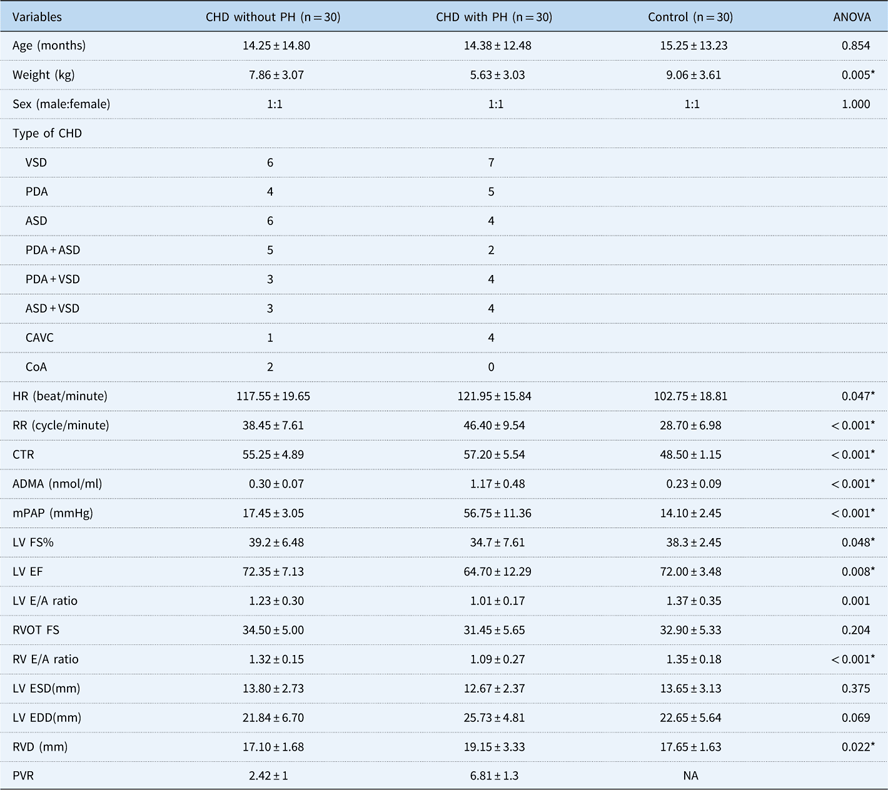
Table 1 shows that there was no significant difference between the three groups as regards age, sex, and type of CHD. However, the weight in the pulmonary hypertension group is significantly lower than that of the CHD-only group and control group. Moreover, heart rate, respiratory rate, cardiothoracic ratio, Asymmetric dimethyl-L-arginine levels, mean pulmonary artery pressure, and right ventricular diameter were significantly higher in the pulmonary hypertension group compared with the other two groups. Left ventricular fraction shortening, left ventricular ejection fraction, mitral valve E/A ratio, and tricuspid valve E/A ratio were significantly lower in the pulmonary hypertension group than in the other two groups. Pulmonary vascular resistance was significantly higher in the pulmonary hypertension group than in children with CHD and no pulmonary hypertension.
Characteristics, clinical, haemodynamic, and echocardiographic data of the included children.
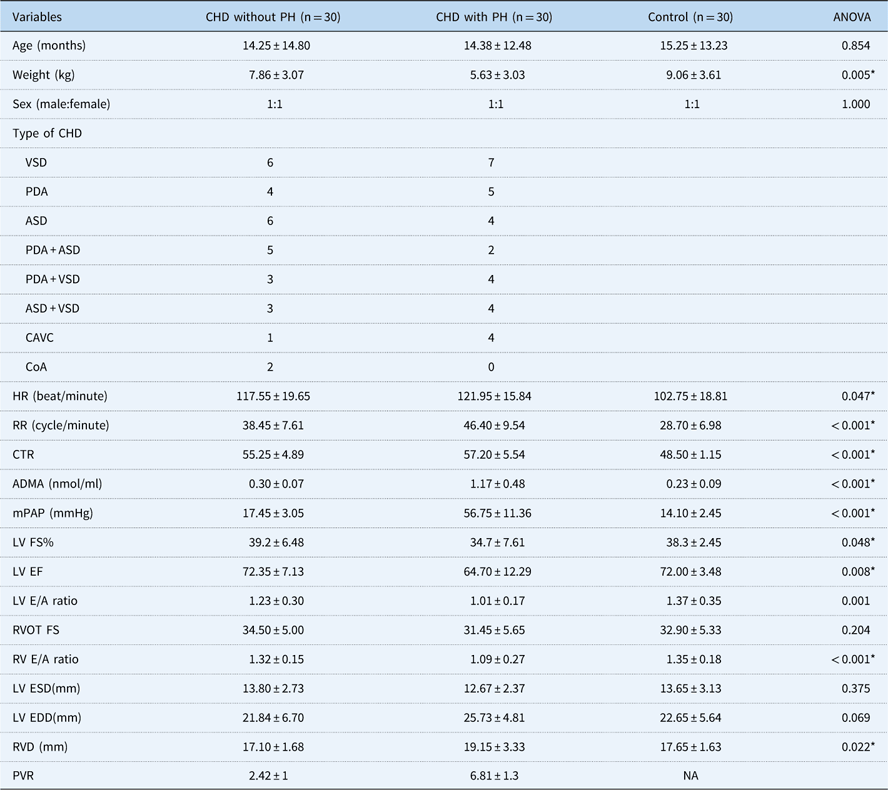
ADMA=asymmetric dimethyl-L-arginine; ASD=atrial septal defect; CAVC: common atrioventricular canal; CoA=coarctation of the aorta; CTR=cardiothoracic ratio; E/A ratio=ratio of the early (E) to late (A) ventricular filling velocities; EDD=end diastolic diameter; EF=ejection fraction; ESD=end systolic diameter; FS=fraction shortening; HR=heart rate; LV=left ventricle; mPAP=mean pulmonary artery pressure; PDA=patent ductus arteriosus; PH=pulmonary hypertension; PVR=pulmonary vascular resistance; RR=respiratory rate; RVD=right ventricular diameter; RVOT FS=right ventricular outlet fraction shortening; VSD=ventricular septal defect
*means significant
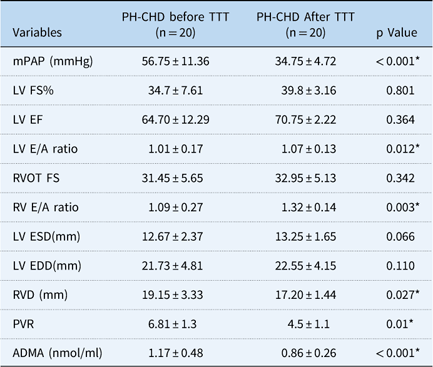
Table 2 showed that there was significant improvement of many haemodynamic and echocardiographic parameters in children with pulmonary hypertension after treatment with sildenafil for 6 months. There was a significant reduction of mean pulmonary artery pressure, pulmonary vascular resistance, right ventricular diameter, and asymmetric dimethyl-L-arginine levels after treatment. At the same time, there was a significant increase of left ventricular fraction shortening, left ventricular ejection fraction, mitral valve E/A ratio, and tricuspid valve E/A ratio after treatment with sildenafil.
Asymmetric dimethyl-L-arginine (ADMA) level and haemodynamic and echocardiographic data in children with pulmonary hypertension (PH)-CHD before and after treatment.
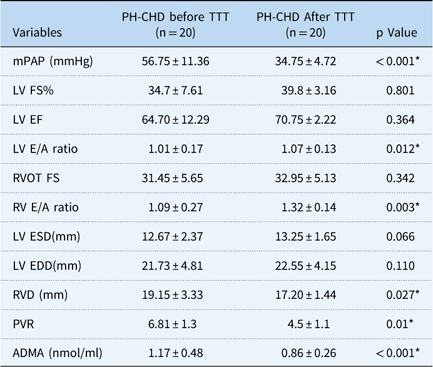
E/A ratio=ratio of the early (E) to late (A) ventricular filling velocities; EDD=end diastolic diameter; EF=ejection fraction; ESD=end systolic diameter; FS=fraction shortening; LV=left ventricle; mPAP=mean pulmonary artery pressure; PVR=pulmonary vascular resistance; RVOT FS=right ventricular outlet fraction shortening; RVD=right ventricular diameter
*means significant
There was a significant difference between plasma Asymmetric dimethyl-L-arginine levels in different grades of pulmonary hypertension, with highest plasma Asymmetric dimethyl-L-arginine levels in patients with severe pulmonary hypertension and lowest plasma Asymmetric dimethyl-L-arginine level in patients with mild pulmonary hypertension (Table 3).
Asymmetric dimethyl-L-arginine (ADMA) levels in different grades of pulmonary hypertension (PH) in PH-CHD children.

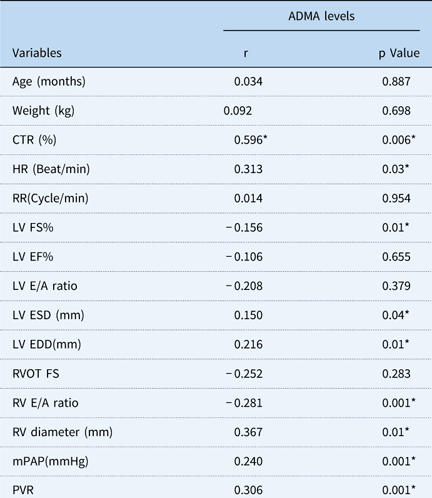
There was a significant positive correlation between plasma Asymmetric dimethyl-L-arginine levels and cardiothoracic ratio, heart rate, left ventricular end systolic diameter, left ventricular end diastolic diameter, right ventricular diameter, mean pulmonary artery pressure, and pulmonary vascular resistance. In addition, there was a significant negative correlation between plasma Asymmetric dimethyl-L-arginine level and left ventricular fraction shortening, left ventricular ejection fraction, mitral valve E/A ratio, and tricuspid valve E/A ratio (Table 4).
Correlation between asymmetric dimethyl-L-arginine (ADMA) levels and different variables in pulmonary hypertension-CHD patients.
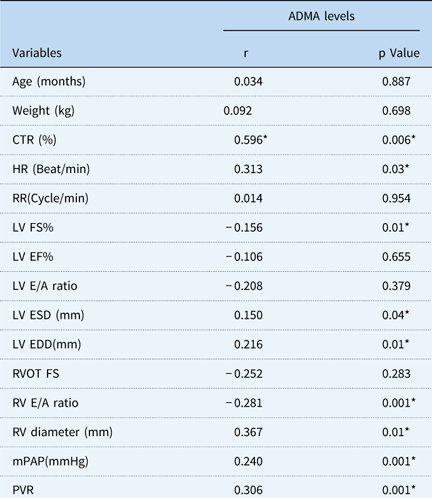
CTR=cardiothoracic ratio; E/A ratio=ratio of the early (E) to late (A) ventricular filling velocities; EDD=end diastolic diameter; EF=ejection fraction; ESD=end systolic diameter; FS=fraction shortening; HR=heart rate; LV=left ventricle; mPAP=mean pulmonary artery pressure; PVR=pulmonary vascular resistance; RR=respiratory rate; RVD=right ventricular diameter; RVOT FS=right ventricular outlet fraction shortening
*means significant
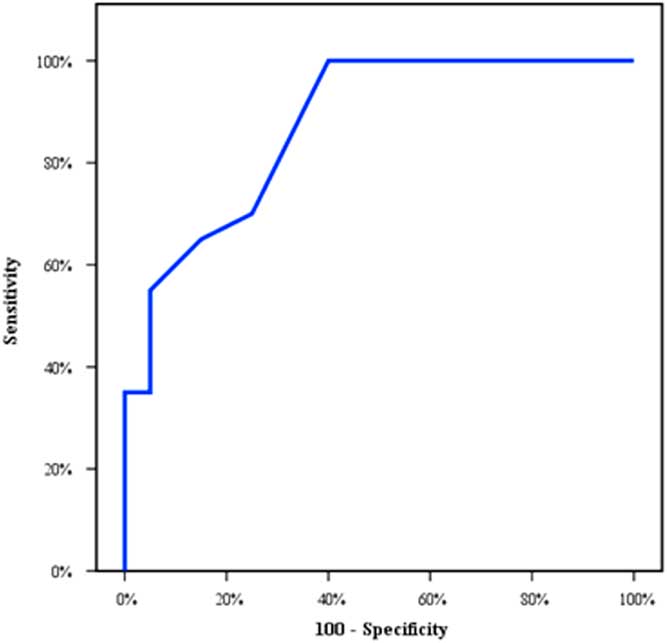
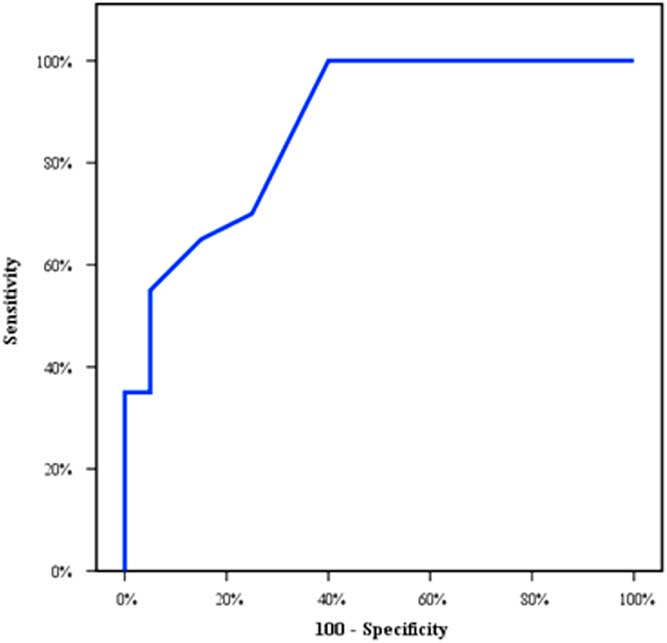
At a cut-off value of 0.85 nmol/ml, the sensitivity of Asymmetric dimethyl-L-arginine as a diagnostic biomarker in pulmonary hypertension patients was 83%, the specificity was 80%, and the accuracy was 82%. The area under the curve was 0.84 (Fig 1).
Receiver operating characteristic curve of the diagnostic value of asymmetric dimethyl-L-arginine to diagnose pulmonary hypertension in children with CHD showed a sensitivity of 83% and a specificity of 80% at a cut-off point above 0.85 nmol/ml.
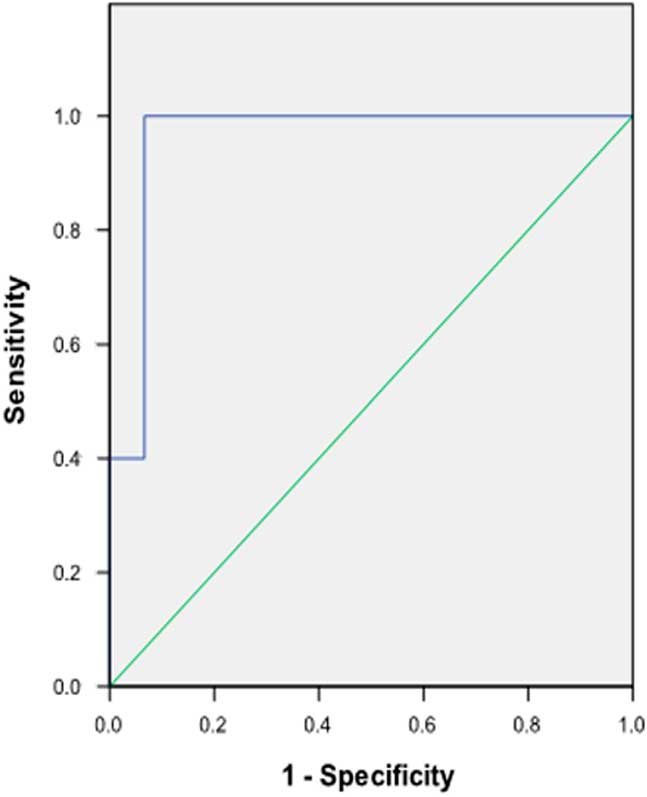
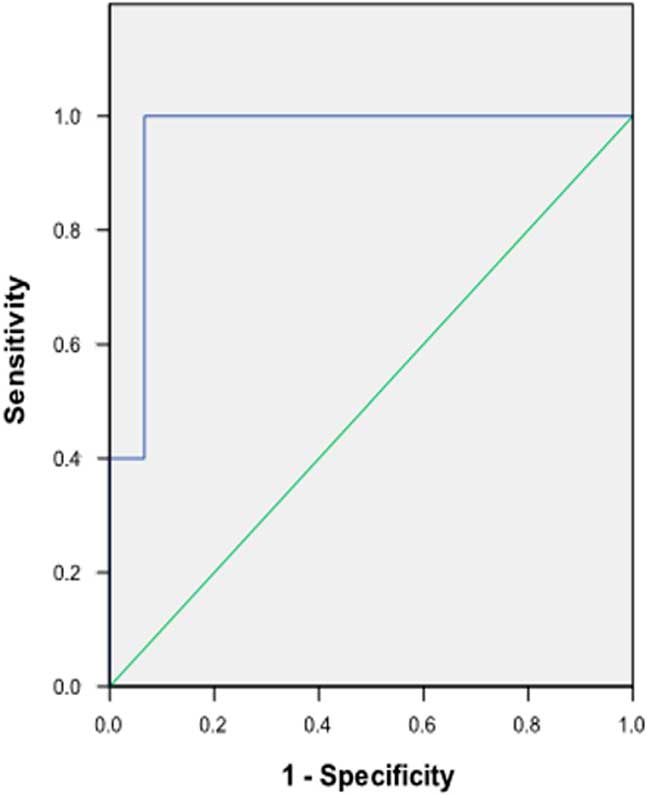
At a cut-off point more than 1.3 nmol/ml, the sensitivity of Asymmetric dimethyl-L-arginine level to predict bad prognosis in children with pulmonary hypertension-associated CHD was 100%, the specificity was 94%, and the accuracy was 96%. The area under the curve was 0.94 (Fig 2).
Receiver operating characteristic curve of the prognostic value of asymmetric dimethyl-L-arginine level to predict adverse outcome in children with pulmonary hypertension-associated CHD showed a sensitivity of 100% and a specificity of 94% at a cut-off point above 1.3 nmol/ml.
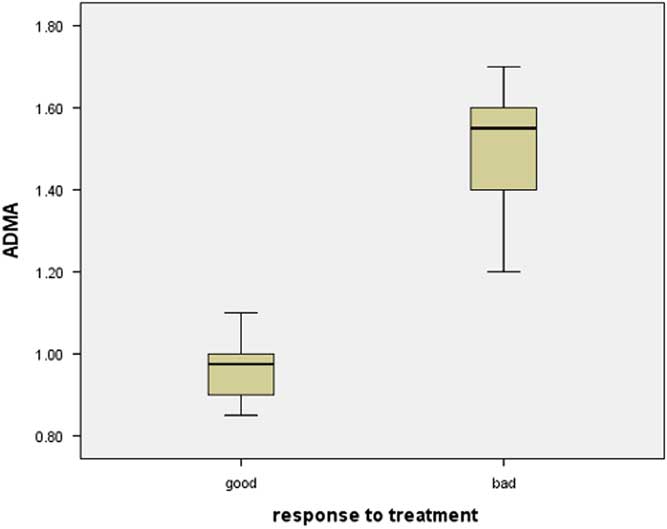
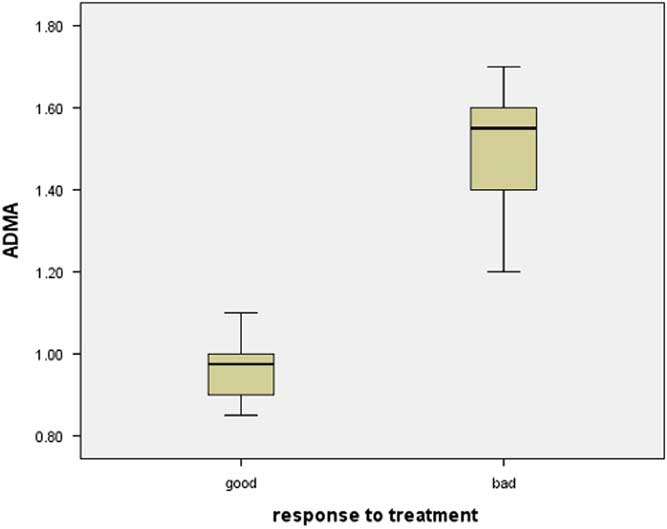
The mean plasma Asymmetric dimethyl-L-arginine levels in patients with pulmonary hypertension-associated CHD who responded to sildenafil treatment was 0.96±0.08 nmol/ml, whereas the mean plasma Asymmetric dimethyl-L-arginine levels in patients with pulmonary hypertension-associated CHD with unsatisfactory response to sildenafil treatment was 1.5±0.18 nmol/ml, with a significant increase in plasma levels of Asymmetric dimethyl-L-arginine in patients with pulmonary hypertension-associated CHD who did not respond to sildenafil treatment compared with those with good treatment response (p<0.05) (Fig 3).
Asymmetric dimethyl-L-arginine levels in pulmonary hypertension-associated CHD children with good and poor response to sildenafil treatment.
Discussion
Pulmonary hypertension is a common complication of CHD. Diagnosis of pulmonary hypertension and following up the pulmonary pressure in children with CHD is a principle requirement. The golden method for diagnosis of pulmonary hypertension is still the right heart catheterisation, which is limited by its invasiveness.Reference Galie, Hoeper and Humbert 11 Echocardiography is a non-invasive method for pulmonary hypertension diagnosis, but it is limited by being operator dependent.Reference Fisher, Forfia and Chamera 12 Thus, the search for an easy, rapid, accurate, and non-invasive method for pulmonary hypertension diagnosis and follow-up is considered vital. In our study, we investigated the plasma levels of asymmetric dimethyl-L-arginine in children with pulmonary hypertension-associated CHD before and after treatment and evaluated the possible diagnostic and prognostic value of asymmetric dimethyl-L-arginine in such children.
Our study showed that plasma levels of asymmetric dimethyl-L-arginine were significantly elevated in patients with pulmonary hypertension-associated CHD compared with those without pulmonary hypertension, as well as with the control group, and that increase was positively correlated with increased severity of pulmonary hypertension. Asymmetric dimethyl-L-arginine usually inhibits the production of the endogenous nitric oxide, which has a powerful pulmonary vasodilator effect and an anti-proliferative effect. Moreover, elevated asymmetric dimethyl-L-arginine levels thought to cause endothelial dysfunction and endothelium is known to play an important role in the maintenance of vascular tone. Therefore, asymmetric dimethyl-L-arginine is thought to be involved in the pathogenesis of pulmonary hypertension, and this explains its elevated level in children with pulmonary hypertension. This agreed with the results of previous studies.Reference Fang, Huang, Tang, Hu, Shen, Tang and Zhou 7 – Reference Galie, Hoeper and Humbert 11
We have found that plasma asymmetric dimethyl-L-arginine levels were significantly reduced after treatment with sildenafil for 6 months. The reduced asymmetric dimethyl-L-arginine levels were accompanied by significant reduction in pulmonary pressure. This was in accordance with the results of other investigators.Reference Fang, Huang, Tang, Hu, Shen, Tang and Zhou 7 , Reference Pengfei, Yiyuan, Zhenfei, Xinqun, Xiangqian and Shenghua 9 The pulmonary vasodilating effect of nitric oxide is mediated through cyclic guanosine monophosphate, which is degraded by phosphodiesterases, especially phosphodiesterase type 5; these phosphodiesterases are inhibited by sildenafil, which promotes nitric oxide-mediated vasodilatation that leads to decreased pulmonary pressure and consequently decreased level of asymmetric dimethyl-L-arginine.Reference Galie, Ghofrani and Torbiciki 13 Moreover, our study showed that asymmetric dimethyl-L-arginine levels were significantly higher in children with pulmonary hypertension-associated CHD with poor prognosis and weak response to sildenafil treatment compared with those with better prognosis who responded well to sildenafil treatment. This comes in agreement with the results of other investigators.Reference Fang, Huang, Tang, Hu, Shen, Tang and Zhou 7 , Reference Pengfei, Yiyuan, Zhenfei, Xinqun, Xiangqian and Shenghua 9 , Reference Kielstein, Bode-Böger and Hesse 14 Hence, plasma asymmetric dimethyl-L-arginine levels can be used to predict response to treatment with sildenafil in children with pulmonary hypertension-associated CHD.
Our study showed that there was a significant positive correlation between asymmetric dimethyl-L-arginine levels and both mean pulmonary artery pressure and pulmonary vascular resistance. This comes in agreement with results of other investigators.Reference Fang, Huang, Tang, Hu, Shen, Tang and Zhou 7 , Reference Pengfei, Yiyuan, Zhenfei, Xinqun, Xiangqian and Shenghua 9 Moreover, there was a significant positive correlation between asymmetric dimethyl-L-arginine levels and right ventricular diameter. This is in agreement with the study by Sanli et al.Reference Sanli, Oguz and Olgunturk 8 As higher asymmetric dimethyl-L-arginine levels were found with higher pulmonary pressure, and pulmonary vascular resistance that were reflected on increased the right ventricular diameter. Therefore, plasma asymmetric dimethyl-L-arginine level can be of potential importance in following up cases with pulmonary hypertension-associated CHD.
Our study revealed that there was a significant negative correlation between asymmetric dimethyl-L-arginine levels and right ventricle E/A ratio. Increased pulmonary pressure decreases the right ventricular diastolic function, which is represented by right ventricular E/A ratio in echocardiographic examination.
Interestingly, our result suggested that asymmetric dimethyl-L-arginine level can be used as a prognostic biomarker for predicting poor prognosis and poor response to sildenfail treatment in children with pulmonary hypertension-associated CHD, showing a sensitivity of 100% and a specificity of 94% at a cut-off point more than 1.3 nmol/ml. However, the diagnostic value of asymmetric dimethyl-L-arginine for the presence of pulmonary hypertension among children with CHD showed a sensitivity of 85%, a specificity of 80%, and an accuracy of 82% at a cut-off point more than 0.85 nmol/ml. In contrast, Pengfei et al.Reference Pengfei, Yiyuan, Zhenfei, Xinqun, Xiangqian and Shenghua 9 showed higher sensitivity of asymmetric dimethyl-L-arginine to diagnose pulmonary hypertension (92%) but similar specificity of 82.7%. This difference can be due to the younger age group of our patient and different cut-off point of their receiver operating characteristic curve analysis.
There are several limitations to the study. First, the number of patients in our study was relatively small, but the study was sufficiently powered to get dependable results. Second, it is a single-centre study. Third, no patients with Eisenmenger’s syndrome were included in our study.
Conclusion
Plasma asymmetric dimethyl-L-arginine level has a good diagnostic and prognostic value as a biomarker in children with pulmonary hypertension-associated CHD and can be used for following up patients with pulmonary hypertension and predicting response to treatment.
Acknowledgements
The authors thank the staff and doctors of Paediatric Cardiology Unit, Tanta University Hospital for their assistance and support with this research.
Financial Support
This research received no specific grant from any funding agency or from commercial or not-for-profit sectors.
Conflicts of Interest
All authors declare no conflict of interest.
Ethical Standards
The authors assert that all procedures contributing to this work comply with the ethical standards of the relevant national guidelines on human experimentation and with the Helsinki Declaration of 1975, as revised in 2008, and has been approved by the institutional committees of Faculty of medicine, Tanta University.