Introduction
Following the establishment of the Intergovernmental Panel on Climate Change (IPCC) in 1988, the threat posed by climate change to cultural heritage and the historic environment has received growing attention (e.g. Erlandson Reference Erlandson2008; Blankholm Reference Blankholm2009; Phillips Reference Phillips2015; Hollesen et al. Reference Hollesen2018; Sesana et al. Reference Sesana2021). As described in detail by Hambrecht and Rockman (Reference Hambrecht and Rockman2017), many major international organisations with responsibilities for cultural heritage have recognised the threat posed by climate change. Most recently, the Climate Change Heritage Working Group of the International Council on Monuments and Sites (ICOMOS) has published the report, The future of our pasts (International Council on Monuments and Sites 2019), which outlines the need for and opportunities of climate-heritage action, leading to the International Council on Monuments and Sites (2020) to declare a climate emergency in relation to archaeological and heritage resources. Yet, while there is a general consensus that various climate change processes threaten extensive damage and loss to cultural heritage sites around the world, it has also become clear that the phenomenon is impacting on such a wide global scale, and within so many different contexts, that it is too great a problem for any single organisation or discipline to tackle alone (Hambrecht & Rockman Reference Hambrecht and Rockman2017).
In many cases, climate-related impacts serve as catalysts for existing vulnerabilities that might relate to physical, social or economic conditions. This complicates the detection, quantification and management of the risks posed by climate change, and heritage managers may consequently underestimate, or even overlook, its potential impact. Furthermore, when confronted with the consequences of a rapidly changing climate, in the majority of cases, it is difficult to reduce the exposure of sites and structures to the climate variables in play.
Much of the work conducted within the heritage sector is shaped by a commitment to preserve sites, material culture and knowledge about the past for the benefit of future generations (Holtorf Reference Holtorf and Smith2014). In Europe, for example, the Valletta Convention (Council of Europe 1992) established a policy of in situ preservation as the most ethical and practical way of preserving archaeological remains. Policies such as this, however, imply that the archaeological record can be protected with no, or only minor, degradation or loss. In the face of accelerated climate change, the wider principle of conserving and preserving as much as possible seems increasingly unsustainable. McGovern (Reference McGovern2018: 166) has argued that “this generation of archaeologists face ‘burning libraries’ across the globe, and all subsequent generations will judge us on our response to this threat”. At the same time, however, it has also been suggested that we should embrace change (Holtorf Reference Holtorf2018), and that “loss and change are part of life, and part of the currency that gives our heritage value” (Fluck & Wiggins Reference Fluck and Wiggins2017: 167). These very different perspectives underline the complexity of the situation, and highlight the fact that archaeologists and heritage managers around the world are looking into a future filled with important yet difficult decisions.
The threat of climate change to archaeological sites
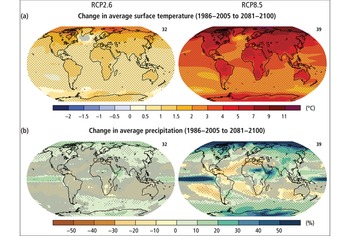
The Intergovernmental Panel on Climate Change (2014, Reference Pörtner2019) predicts major changes in the global climate by 2100 (Figure 1). The changes can be summarised as follows: increasing temperatures affecting high latitudes more than tropical and subtropical regions; changes in total precipitation and precipitation patterns; and an increase in the frequency and severity of extreme weather events, such as storms, heavy precipitation and heatwaves. Additionally, it is predicted that, by 2100, the global mean sea level will increase by between 0.29 and 1.10m (Intergovernmental Panel on Climate Change Reference Pörtner2019).
Change in average surface temperature (a) and average precipitation (b), based on multi-model mean projections for 2081–2100, relative to 1986–2005. The predictions are made for two different carbon emission scenarios—RCP2.6 (left) and RCP8.5 (right)—and thus their magnitude is directly linked to the amount of greenhouse gases being released into the atmosphere (source: Intergovernmental Panel on Climate Change 2014).

These predicted changes influence a range of processes that have the potential to cause significant damage to archaeological sites, structures and artefacts (Adams Reference Adams, Petzet and Ziesemer2008; Berenfeld Reference Berenfeld2008; Heilen et al. Reference Heilen, Altschul and Lüth2018). In 2016, the US National Parks Service produced a detailed matrix of climate impacts on various types of cultural heritage, including archaeology (Rockman et al. Reference Rockman2016). In 2019, this matrix approach was adopted and expanded by the Climate Change Heritage Working Group of the International Council on Monuments and Sites for use on a global scale (International Council on Monuments and Sites Reference Pörtner2019). Most recently, Sesana and colleagues (Reference Sesana2021) have produced an overview of climate change impacts on cultural heritage, including archaeological sites and landscapes, based on a detailed literature review. These matrices and overviews recognise short-lived events, such as hurricanes, extreme precipitation and heatwaves, and long-term trends, such as melting glaciers, sea-level rise and desertification. In some cases, these threats are still largely theoretical, meaning that that their direct effects on archaeological resources have not yet been quantified. As the full range of potential impacts of climate change on archaeology is so wide, the articles in this special section focus on some of the most relevant and well-documented examples causing damage to archaeological resources in specific types of global environments and landscapes.
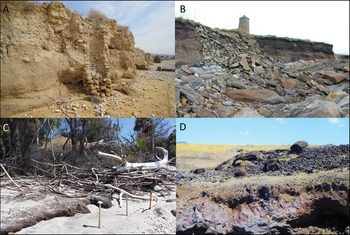
Of all the impacts on archaeology resulting from climate change, coastal erosion has received the most attention (e.g. Erlandson Reference Erlandson2008; Dawson et al. Reference Dawson2020). While sea levels have naturally varied dramatically in the past, anthropogenic climate change is causing higher sea levels and more frequent and intense storms, leading to increased erosion of coastlines around the world (Zhang et al. Reference Zhang, Douglas and Leatherman2004). Not only does this have devastating consequences for coast-adjacent populations, but it is also highly destructive to the many archaeological sites and structures located in such environments (Adams Reference Adams, Petzet and Ziesemer2008). From Iran to Scotland, Florida to Rapa Nui and beyond, sites are currently being eroded at an increasing rate (e.g. Markham et al. Reference Markham, Osipova, Samuels and Caldas2016; O'Rourke Reference O'Rourke2017; Pourkerman et al. Reference Pourkerman2018; Dawson et al. Reference Dawson2020; Li et al. Reference Li2022; Vousdoukas et al. Reference Vousdoukas2022) (Figure 2), often before scientists can record them and assess their value (Rick & Sandweiss Reference Rick and Sandweiss2020). As well as coastal sites, underwater cultural heritage sites are also susceptible to erosion through wave action. In this special section, Gregory and colleagues (Reference Gregory2022) provide an overview of the literature and projects specifically related to understanding how sea-level rise and more intense storms impact both coastal and underwater archaeology.
Examples of archaeological sites impacted by coastal erosion: A) the base of Siraf's old city walls on the Persian Gulf of Iran (photograph by M. Pourkerman); B) St Monans, Scotland (photograph by T. Dawson); C) a beach in South Carolina, USA (photograph by T. Dawson); and D) Ahu Akahanga, Rapa Nui (photograph by J. Downes).

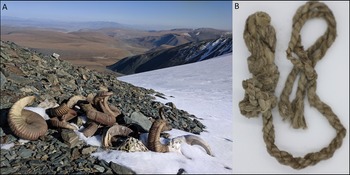
As described by Hollesen and colleagues (Reference Hollesen2018), increasing temperatures are causing wide-ranging alterations to the Arctic environment, with the effects already observable at some of the region's many archaeological sites. The thawing of permafrost, for example, is exposing previously frozen archaeological layers to a variety of threats, including accelerated erosion, wet/dry and freeze/thaw cycles and increased microbial degradation (Matthiesen et al. Reference Matthiesen2013; Hollesen et al. Reference Hollesen, Matthiesen and Elberling2017). As with the Arctic, mountainous regions are also among the ecosystems most sensitive to climate change and are experiencing the effects at a faster rate than most other areas (Intergovernmental Panel on Climate Change 2014). For thousands of years, alpine ice patches and other glacial structures have provided favourable conditions for the preservation of archaeological materials. In recent decades, however, many of these ice patches have been shrinking and, in some cases, disappearing entirely due to higher temperatures and unstable weather patterns (Ødegård et al. Reference Ødegård2017). The melting of this ice has led to some notable discoveries, such as the ice mummies known as Ötzi (Spindler Reference Spindler1994) and Kwädąy Dän Ts’ìnchi (Beattie et al. Reference Beattie2000), as well as artefact assemblages—for example, those found in Norway (Callanan Reference Callanan2015), Yukon (Hare et al. Reference Hare, Thomas, Topper and Gotthardt2012) and Mongolia (Taylor et al. Reference Taylor2019 (Figure 3)—that have broadened our understanding of mountainous cultural landscapes. Only if these objects and materials are recovered shortly after exposure can they be stabilised, preserved and retain their scientific potential for analysis. Without swift intervention, much of this material culture quickly degrades and loses its potential to contribute to our understanding of the past.
A) Argali sheep remains emerge from a melting glacier at Tsengel Khairkha, western Mongolia, a site that has yielded evidence of high-altitude hunting over more than three millennia; B) an animal-hair (horse or camel) rope artefact from an ice patch near Tsengel Khairkhan, radiocarbon dated to the fifth to sixth century AD (photographs by W. Taylor and P. Bittner).

Rising temperatures are also affecting many other global environments. As explored by Gregory and colleagues (Reference Gregory2022) and Matthiesen and colleagues (Reference Matthiesen, Brunning, Carmichael and Hollesen2022) in this special section, the rates of chemical and biological reactions increase with temperature. Thereby, even small changes in soil or sea temperature may significantly increase the degradation and corrosion rates of archaeological materials (Björdal & Gregory Reference Björdal and Gregory2012; Macleod Reference Macleod, Dillmann, Watkinson, Angelini and Adriaens2013; Hollesen & Matthiesen Reference Hollesen and Matthiesen2015). Rising temperatures may also indirectly lead to changes in flora and fauna, and introduce invasive species that can cause damage to archaeological materials (Borges et al. Reference Borges, Merckelbach, Sampaio and Cragg2014; Matthiesen et al. Reference Matthiesen2020).
As well as rising temperatures, precipitation patterns are expected to change around the world over the next century (Figure 1). In many areas, however, it is still highly uncertain whether there will be more, less or unchanged amounts of rainfall. The timing and annual distribution of precipitation is also expected to change, with longer dry spells and more intense episodes of rainfall (Intergovernmental Panel on Climate Change Reference Hollesen and Matthiesen2014). The consequences of such changes may depend on context. In many areas, a combination of more extreme rainfall and ongoing human landscape modifications is leading to floods, landslides and erosion that cause damage to archaeological structures and artefacts (e.g. Carmichael et al. Reference Carmichael2017; Ogiso Reference Ogiso2017; Liu et al. Reference Liu2019). As Matthiesen and colleagues (Reference Matthiesen, Brunning, Carmichael and Hollesen2022) demonstrate, however, the most important climate change threat to archaeological resources in wetlands is a lack, rather than a surfeit, of water. Heat and drought may cause evaporation and the lowering of water tables, thus drying out archaeological materials and exposing them to oxygen, increasing microbial degradation (Matthiesen et al. Reference Matthiesen, Brunning, Carmichael and Hollesen2022).
The examples highlighted in this special section demonstrate the complexity of dealing with climate change and the many, albeit hard-to-model, impacts that may have direct and indirect, as well as immediate and long-term, effects on archaeology.
Responding to the impacts of climate change
In recent years, initiatives aimed at monitoring and responding to the impacts of climate change on sites and monuments have been developed, predominantly in Europe and North America (Hambrecht & Rockman Reference Hambrecht and Rockman2017). As discussed by Fatorić and Seekamp (Reference Fatorić and Seekamp2017b), however, there remains a widespread lack of planning for adaptation to climate change. In this special section, Daly and colleagues (Reference Daly2022) present the results of the first study of the integration of cultural sites into the climate change adaptation plans of low- and middle-income countries. Their study uses a combination of a literature review and an expert-developed questionnaire sent out to 52 low- and middle-income countries that had named climate change ‘focal points’ on their International Council on Monuments and Sites national committees. On the positive side, the study demonstrates that local adaptation plans are underway in countries such as Nigeria, Colombia and Iran. Based on a low response rate to the questionnaire (23 per cent), however, and the reasons provided for this, the results also point to a worrying disconnect between climate change policymakers and the cultural heritage sector worldwide, as a result of a lack of knowledge, co-ordination, recognition and funding.
With climate change threatening an uncalculated number of archaeological sites, totalling perhaps millions globally (Heilen et al. Reference Heilen, Altschul and Lüth2018; Dawson et al. Reference Dawson2020), it seems reasonable to question whether current management practices and mechanisms will be able to respond to a situation that is so demanding. There are no easy solutions and time is limited. Thus, if we are to respond meaningfully, there is an urgent need to develop new methods and strategies that can tackle the problem head on. As suggested in this special section, and in other recent articles (e.g. Heilen et al. Reference Heilen, Altschul and Lüth2018; Hollesen et al. Reference Hollesen2018), the first step is to determine where these impacts will occur and which types of sites will be the most affected. Several methods have been suggested in recent years. Daly (Reference Daly2014), for example, presents a six-step vulnerability framework for site-based assessment, exemplified using two World Heritage Sites in Ireland, while Forino and colleagues (Reference Forino, MacKee and von Meding2016) have introduced the cultural heritage risk index (CHRI), applying it to a cultural heritage site in Newcastle, Australia. Although such site-by-site investigations are extremely useful for establishing baseline data, they are time-consuming and less suitable for assessing larger regions with hundreds or thousands of sites. Several recent studies have experimented with approaches for regional risk assessment using remote sensing and modelling (e.g. Agapiou et al. Reference Agapiou2015; Fenger-Nielsen et al. Reference Fenger-Nielsen2020). While the results look promising, researchers still face a number of gaps in their knowledge, as well as limitations concerning data availability and image resolution that currently constrain the precision of threat estimates and make it difficult to pinpoint individual sites at risk (Fenger-Nielsen et al. Reference Fenger-Nielsen2020).
As described by both Gregory and colleagues (Reference Gregory2022) and Matthiesen and colleagues (Reference Matthiesen, Brunning, Carmichael and Hollesen2022) in this special section, predicting the impact of climate change requires reliable climate change models and a detailed understanding of processes both above and below ground, as well as in coastal and marine environments. Furthermore, as these articles exemplify, it is important to recognise that climate change not only exacerbates and multiplies existing vulnerabilities and threats, but also introduces new risks. Thus, the vulnerability of archaeological sites can only be understood when the interactions between climate change and other factors, such as landscape modification, urbanisation and water management, are also considered.
Even if archaeologists and planners in years to come are equipped with tools efficient enough to pin-point the most vulnerable sites, they will still be faced with difficult decisions: which sites should be saved, and which sites should be allowed to decay? As Heilen and colleagues (Reference Heilen, Altschul and Lüth2018: 268) emphasise “[t]o prioritise effectively, stakeholders and managers need to accept that the loss of some resources is inevitable and that not all resources are equivalent in their importance or in how they should be treated”. Although not directly concerned with the impacts of climate change, McManamon and colleagues (Reference McManamon2016) and Doelle and colleagues (Reference Doelle2016) propose ‘significance modelling’ as a valuable tool to prioritise between large numbers of archaeological resources at a regional scale. Such methods, however, are based on site-specific information, such as site size, the types and quantities of artefacts, and the presence or absence of certain features; this modelling is also most effective in locations where the archaeological record is already well known and well documented. In many cases, however, large areas of land have not been fully surveyed, such as in the Arctic (Hollesen et al. Reference Hollesen2018), and even in surveyed areas, many archaeological resources have not been investigated in detail. As a result, in many regions, managers and stakeholders will need to rely on limited and imperfect information in order to make decisions (Heilen et al. Reference Heilen, Altschul and Lüth2018). Moreover, significance is subjective and will change over time. We are preserving sites for generations of people to come, and so need to evaluate what will be significant to them, rather than to us. The question is, how do we approach the inevitably subjective process of defining what is significant? Without a doubt, local stakeholders have an important role to play in the process; however, there is a risk that almost all stakeholders will want their local heritage preserved, making it even more difficult to prioritise.
As well as deciding which sites are the most valuable, it is important to decide how they should be managed. As described by Gregory and Matthiesen (Reference Gregory and Matthiesen2012), there are three main options: passive preservation—that is, leave sites as they are as long as the degradation is minimal; active preservation—that is, influencing the environmental conditions to protect archaeological deposits from, for example, erosion and microbial degradation; and, finally, if the first two options are not possible, archaeological investigation. Implementation of the first two options is meaningless if their efficacy is not checked periodically through regular site visits and monitoring. Although monitoring will help to provide a stronger knowledge base for protection, we currently lack a full understanding of which parameters have the greatest effect on preservation conditions and therefore of how to set threshold values for when intervention is required (Martens Reference Martens2016). Furthermore, site visits and monitoring come with high costs, especially in those parts of the world that are less accessible, such as the Arctic, mountainous regions and underwater. In these areas, we also face important ethical questions regarding the large carbon footprint from the intensive use of resources required to reach these challenging locations.
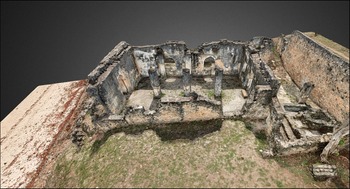
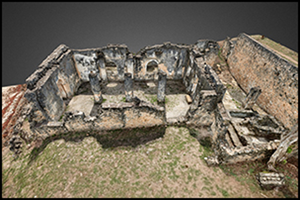
In many parts of the world, developer-led archaeology has become the main source of funding for the excavation of sites threatened with destruction. In relation to climate change, however, where natural processes are causing the damage, no designated funds or programmes for archaeological mitigation currently exist. Considering that excavations are very expensive and time-consuming, and that existing mechanisms, including rescue excavations, are already regularly stretched beyond capacity in most parts of the world, it may be difficult to investigate even some of the most valuable sites. Thus we need to consider what information is needed from these archaeological resources, what measures are necessary to obtain that information, and how long the window of opportunity for investigation will remain open (Heilen et al. Reference Heilen, Altschul and Lüth2018). In some cases, there may be alternatives to excavation. The use of digital technology is increasingly important for accurately documenting archaeological sites that are at risk (e.g. Dawson & Levy Reference Dawson and Levy2016; Galeazzi Reference Galeazzi2016; Katz & Tokovinine Reference Katz and Tokovinine2017). Scotland's Coastal Heritage at Risk Project (SCHARP), for example, has worked closely with local communities to find appropriate ways to preserve components of threatened sites. Its activities have included documentation projects, oral histories, filmmaking and laser scanning to build 3D interactive models (Dawson Reference Dawson, Harvey and Perry2015). Most recently, Google has worked with the International Council on Monuments and Sites, as well as CyArk, a non-profit organisation, to collect data and to create the platform Heritage on the Edge (https://artsandculture.google.com/project/heritage-on-the-edge), where the risks of climate change are explored from the perspective of five diverse World Heritage Sites (Figure 4).
3D model of the Malindi Mosque, Kilwa Kisiwani, Tanzania. Sea-level rise and loss of mangroves, which act as a buffer to the sea, have resulted in the site experiencing loss of the seaward side of the monument (collected by CyArk and distributed by Open Heritage 3D: https://artsandculture.google.com/project/heritage-on-the-edge).

Archaeology as a climate action asset
While the impacts of climate change on archaeological resources are becoming ever clearer, the value of cultural heritage as an asset in the response to climate change is still not widely recognised (Hudson et al. Reference Hudson, Aoyama, Hoover and Uchiyama2012). The Paris Agreement emphasises the need to stress urgency in response to climate change, and cultural heritage has the potential to play a central role in this exercise (International Council on Monuments and Sites Reference Pörtner2019). First, iconic places of ‘outstanding value’, such as World Heritage and other well-known sites, can be used to stress to a global audience the urgency of climate action. As shown by Colette (Reference Colette2007: 52–63), the prominence of World Heritage Sites is an important asset for raising public awareness and concern, and therefore for building support for the preventive and precautionary measures necessary to adapt to climate change. This approach is further exemplified by the National Landmarks at Risk publication (Holz et al. Reference Holtz, Markham, Cell and Ekwurzel2014), which was aimed at the US population at a time of great climate scepticism.
In this special section, Matthiesen and colleagues (Reference Matthiesen, Brunning, Carmichael and Hollesen2022) suggest an additional role for wetland archaeology in providing illustrative examples of the long-term storage of organic material and evidencing what happens to sequestered carbon over prolonged periods. The balance between protection and destruction of wetlands is often decided by economic and political factors. Here, archaeology may help push the balance towards protection by showing the value of wetland sites and by visualising for the wider public the somewhat abstract phenomenon of carbon storage. As described by Gregory and colleagues (Reference Gregory2022), the same is true of near-coastal underwater sites that are often protected by seagrasses. Not only does this vegetation stabilise the seabed overlying buried sites, but it also helps to sequester carbon over extended periods (Krause-Jensen et al. Reference Krause-Jensen2019). These are just two examples of how aspects of cultural heritage and archaeology could be brought into climate adaptation and mitigation strategies. Other examples range from archaeological contributions to land management to consultations with the public about which heritage sites are most important to them. Furthermore, as described by Fatorić and Egberts (Reference Fatorić and Egberts2020), cultural heritage has the potential to be a valuable source of knowledge and scientific information that can help policymakers and politicians to achieve climate change actions—that is, climate change adaptation and mitigation—by enhancing community identity, cohesion and a sense of place.
To date, the involvement of archaeologists and cultural heritage managers in the work of the Intergovernmental Panel on Climate Change remains relatively limited. Most recently, Kohler and Rockman (Reference Kohler and Rockman2020) have proposed several ways in which archaeology can have a greater impact within the Intergovernmental Panel on Climate Change and its work. They specifically emphasise that citizen-science projects related to archaeological sites at risk from climate change could be of interest to the Intergovernmental Panel on Climate Change because of the capacity of such work to support adaptation through conversations and actions enabled by connections to place, environment and community. As described by the International Council on Monuments and Sites (2019), community engagement and participation can invert traditional, top-down institutional capacity-building models and improve climate governance by placing communities at the heart of their own decision-making processes.
Conclusions
Although this special section can only touch upon some of the many potential effects of climate change on archaeological resources around the world, it seeks to demonstrate the scale and complexity of the situation with which we are confronted. Climate change is accelerating, amplifying existing risks and creating new ones, the consequences of which could be devastating for the global archaeological record. If decisions about whether and how to take action are to be based on an explicit and rational basis, it is essential to know where and when such potential impacts will occur and the types of archaeological resources that will be affected. It is important to recognise, however, the massive challenge of predicting how varied types of archaeological resources preserved in very different and often poorly understood environmental conditions will respond to uncertain types and levels of climate change. Nonetheless, it is a challenge that archaeologists must accept and one which can only be addressed by working collaboratively with scientists from a broad range of disciplines. Significance assessment is an important part of site risk management that can help to direct limited resources to the most valuable sites. In the parts of the world where archaeological resources have not been properly investigated, however, heritage managers will need to rely on limited and imperfect information when prioritising action. Whenever possible, such decisions should be made in close consultation with the people and stakeholders living closest to the archaeological sites that are endangered.
Archaeologists and heritage managers around the world currently face a shared crisis of global proportions. As demonstrated in this special section and in recent review articles (e.g. Fatorić & Seekamp Reference Fatorić and Seekamp2017a; Sesana et al. Reference Sesana2021), current research is geographically uneven, focused predominantly on Europe and North America. Consequently, when viewed from a global perspective, we still know very little about this emerging crisis. Increased knowledge-sharing at an international level is one way of addressing this geographical imbalance. Archaeology, however, needs more interdisciplinary and cross-border research, in which researchers, practitioners and local and Indigenous communities work together to address climate change as a persistent problem, and identify and implement adaptation actions that are place-based and sustainable. Although it is fundamental to address and deal with climate change as a global problem, the fate of the global archaeological record depends largely on national and local action. Thus, the cultural heritage sector in each country also needs to realise that climate change is an urgent problem that has now to be faced.
Even though climate change will cause extensive damage to archaeological resources around the world, it provides opportunities to integrate meaningfully the conservation of natural and cultural heritage and to engage in new collaborations with other research disciplines. It can also provide an opportunity for cross-sector policy engagement on adaptation planning, which can, in turn, lead to the identification of synergies, opportunities and the creation of new ways for stakeholders to work together. The preservation of archaeological and cultural heritage resources is truly cross-disciplinary, involving the social sciences, the humanities, the natural sciences and public policy. Yet, it is often difficult to attract funding for cross-disciplinary research projects. This must change if society as a whole is to respond in a serious and efficient manner to the threat of climate change to our shared human heritage. Thus, a key step in the coming years will be to create awareness of the situation and to show policymakers, funding organisations, other scientists, and the public at large what is at stake and the crucial role that archaeology has to play in relation to global climate change.
Acknowledgements
Thanks to the authors involved in this special section for their contributions. Many thanks to colleagues in the International Council on Monuments and Sites Climate Change Heritage Working Group for inspiring and motivating us to produce this special section. Finally, thanks to Majid Pourkerman, Tom Dawson, Jane Downes, William Taylor, Peter Bittner and William Megarry for providing photographs for this article.
Funding statement
This research received no specific grant from any funding agency or from commercial and not-for-profit sectors.