Introduction
When assessing a patient for possible dementia, a number of psychiatric conditions need to be considered. Depression, in particular, can impair cognition and, when severe, give the appearance of neurodegenerative disease (Kiloh, Reference Kiloh1961; Alexopoulos, Reference Alexopoulos, Oxman and Emery2003; Burns and Jolley, Reference Burns, Jolley, Bhugra and Malhi2015). Other disorders, such as psychosis, mania, and conversion disorder, can sometimes have a similar effect (Bulbena and Berrios, Reference Bulbena and Berrios1986; Sachdev and Kiloh, Reference Sachdev, Kiloh, Oxman and Emery1994; Sachdev and Reutens, Reference Sachdev, Reutens, Oxman and Emery2003; Peritogiannis et al., Reference Peritogiannis, Zafiris, Pappas and Mavreas2008). Unlike neurodegenerative disease, however, the resulting impairments are reversible when the psychiatric condition resolves or is successfully treated. This general phenomenon is known as ‘pseudodementia’ – psychiatric conditions that masquerade as an irreversible neurocognitive disorder (Kiloh, Reference Kiloh1961; Berrios, Reference Berrios1985; Burns and Jolley, Reference Burns, Jolley, Bhugra and Malhi2015). It is encountered relatively regularly in clinical practice. One population-based study found depressive pseudodementia in 0.6% of people aged over 65 years (Copeland et al., Reference Copeland, Davidson, Dewey, Gilmore, Larkin, McWilliam, Saunders, Scott, Sharma and Sullivan1992). Higher percentages may be found in patients who specifically present to a clinician for evaluation of cognitive decline, with between 0.9% and 4.5% ultimately being diagnosed with depression as the cause of their cognitive impairment (Clarfield, Reference Clarfield1988, Reference Clarfield2003). Higher rates still of over 10% may be found in patients under the age 65 who present with cognitive decline (Smith and Kiloh, Reference Smith and Kiloh1981).
While pseudodementia has been subject to much research historically (Berrios, Reference Berrios1985; Snowdon, Reference Snowdon2011), interest in it has declined over recent years. Much of the impetus for this has been the view that a large proportion of patients with pseudodementia subsequently develop frank dementia (Sáez-Fonseca et al., Reference Sáez-Fonseca, Lee and Walker2007). One early study, for example, found that 91% of patients developed irreversible dementia at a later follow-up (Kral, Reference Kral1983). As a result, some have gone so far as to suggest that pseudodementia be renamed ‘predementia’ (Reifler, Reference Reifler2000) and that it be considered an intermediate stage in the development of permanent dementia (Mahendra, Reference Mahendra1985; Emery and Oxman, Reference Emery, Oxman, Oxman and Emery2003). Such views appear plausible given other research which has shown that depression, independent of pseudodementia, is a risk factor for dementia (da Silva et al., Reference da Silva, Gonçalves-Pereira, Xavier and Mukaetova-Ladinska2013; Diniz et al., Reference Diniz, Butters, Albert, Dew and Reynolds2013) and that cognitive deficits associated with depression persist after depression remits (Bora et al., Reference Bora, Harrison, Yücel and Pantelis2012). Nevertheless, the actual empirical support for the pessimistic claims about pseudodementia is unclear. Other longitudinal studies have found that comparatively few patients develop dementia (Pearlson et al., Reference Pearlson, Rabins, Kim, Speedie, Moberg, Burns and Bascom1989; Sachdev et al., Reference Sachdev, Smith, Angus-Lepan and Rodriguez1990) and there has been little attempt to reconcile the contrasting findings. In addition, there has been limited consideration of patients with non-depressive causes of pseudodementia (Sachdev and Kiloh, Reference Sachdev, Kiloh, Oxman and Emery1994; Sachdev and Reutens, Reference Sachdev, Reutens, Oxman and Emery2003).
Despite the considerable theoretical and clinical importance of clarifying the condition's prognosis, the longitudinal outcomes of people with pseudodementia remain uncertain. There has also been no attempt, as far as we are aware, to systematically review existing research on this topic. We conducted a systematic review of research that examined the longitudinal outcomes of people with pseudodementia. We searched a large number of databases using a wide variety of search terms for pseudodementia and for psychiatric disorders implicated in pseudodementia. We were interested in the proportion of patients with pseudodementia who received a diagnosis of irreversible dementia or showed evidence of further cognitive or functional decline at a later follow-up. We were also interested in the proportion who clinically improved at follow-up and in the effectiveness of clinical interventions.
Methods
The protocol for this systematic review was registered at PROSPERO (registration number CRD42018087319).
Eligibility criteria
The review focused on primary research that conducted a follow-up assessment of patients diagnosed with pseudodementia (defined as dementia due to a psychiatric disturbance and which was reversible when the psychiatric condition resolved). As we were interested in the proportion of patients who developed dementia, only group studies with a follow-up were included; case studies and case series with fewer than five participants were not included. There were no other restrictions on study design; designs could include clinical trials, observational studies, or any other design that had a longitudinal follow-up of a group of patients. Studies that only focused on psychiatric symptoms that impair cognition but which do not specifically mimic dementia or psychiatric symptoms arising in the context of neurodegenerative disease – both of which do not constitute pseudodementia – were excluded. There were no restrictions on language, time period, or clinical context.
Search strategy
The search identified studies through bibliographic databases including: Medline (1946-present); PreMedline; PubMed; EMBASE (1974-present); Scopus, Web of Science (1900-current); PsychInfo (1806-present); CINAHL (1981-present); PsycEXTRA (1908-present); and the Cochrane libraries: Cochrane database of systematic reviews (2005–October 2016), Cochrane central register of controlled trials (August 2016), Cochrane Methodology register (3rd-Quarter 2012).
The search strategy used only terms for population and study design to maximise the likelihood of identifying relevant studies. The population was people diagnosed with pseudodementia. This was identified using the search terms: pseudodementia OR pseudo-dementia OR reversible dementia OR (dementia AND depression) OR (dementia AND mania) OR (dementia AND bipolar) OR (dementia AND psychosis) OR (dementia AND apathy) OR (dementia AND conversion) OR (dementia AND malingering) OR (dementia AND factitious) OR (dementia AND Ganser) OR pseudopseudodementia OR pseudo-pseudodementia. Study design was any type involving longitudinal follow-up and was identified using the following terms: longitudinal OR follow-up OR followed up OR reassess* OR reexamin* OR outcome OR long-term OR prospective OR retrospective. Searches were conducted on 22 January 2018. In addition to bibliographic database searches, the reference lists of papers included in the review and previous reviews were checked for relevant papers. Papers that cited included studies were also examined.
Study selection
Search results were first assessed for inclusion by title and abstract by a reviewer (MHC). All articles deemed potentially relevant were obtained in full. Full-text articles were then evaluated for inclusion by two reviewers (MHC & LQ). Any disagreements were resolved through discussion.
Data extraction
Relevant data – including participant details, duration of follow-up, measures, and outcomes – were extracted independently from publications by the two reviewers using a standardised form. Primary outcomes were assessment of dementia and psychiatric status and measures of cognition, function, and neuropsychiatric symptoms.
Quality assessment
Study quality and risk of bias were assessed independently by the two reviewers using the Effective Public Health Practice Project Quality Assessment Tool for Quantitative Studies (Effective Public Health Practice Project, 2007; Armijo-Olivo et al., Reference Armijo-Olivo, Stiles, Hagen, Biondo and Cummings2012). This scale rates studies on selection bias, study design, confounders, blinding, data collection methods, and withdrawals and dropouts to provide a single global rating (weak, moderate, strong). Disagreements were resolved through discussion.
Data synthesis
Although a quantitative synthesis of findings in a meta-analysis was originally intended, this was not possible due to the small sample sizes and poor quality of the studies. As a result, only a descriptive synthesis is provided.
Results
Search results
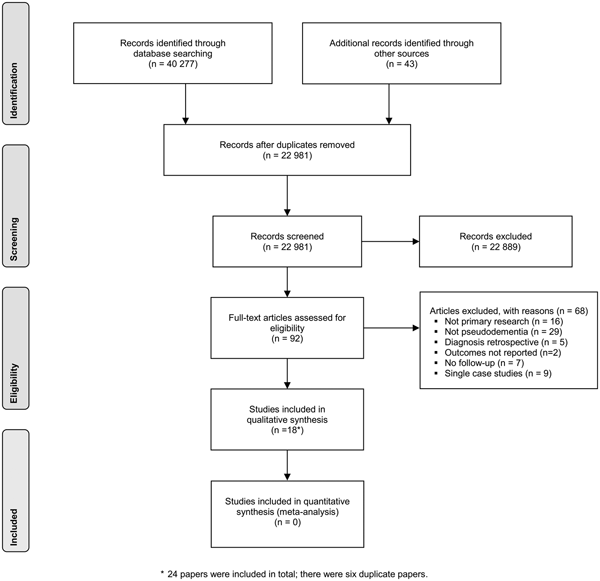
The search identified 40 320 references, of which 22 981 were unique. Of these, 91 were considered to be potentially relevant and obtained in full. In turn, 24 papers – reporting 18 distinct studies – were found eligible for inclusion (there were six duplicate papers; two studies were each reported in two papers; Reding et al., Reference Reding, Haycox, Wigforss, Brush and Blass1984, Reference Reding, Haycox and Blass1985; Liberini et al., Reference Liberini, Faglia, Salvi and Grant1993a, Reference Liberini, Faglia, Salvi and Grant1993b; a further two studies were each reported in three papers; Kral, Reference Kral1982, Reference Kral1983; Kral and Emery, Reference Kral and Emery1989; McNeil, Reference McNeil1996, Reference McNeil1999, Reference McNeil2001). Initial interrater agreement for study inclusion was 97.8%, with the two minor disagreements resolved through discussion. A flow diagram in PRISMA format is shown in Fig. 1.
PRISMA flow chart representing the study selection process.

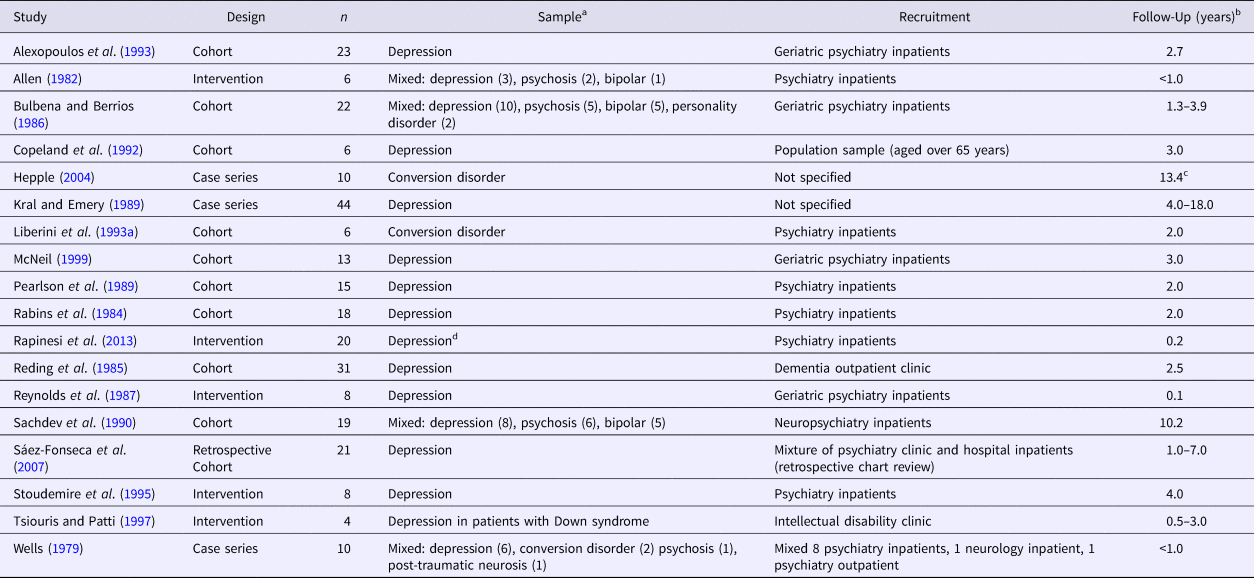
As shown in Table 1, the 18 included studies consisted of nine cohort studies, one retrospective cohort study based on a review of medical records, five intervention studies, and three case series. Twelve studies focused only on depressive pseudodementia, two focused only on pseudodementia due to conversion disorder, and four focused on pseudodementia due to a variety of underlying diagnoses (see Table 1). Of these last four studies, all included patients with depression and psychosis; three studies included patients with bipolar disorder; one study included two patients with a personality disorder (Bulbena and Berrios, Reference Bulbena and Berrios1986); and one study included two patients with conversion disorder and one patient with post-traumatic neurosis (Wells, Reference Wells1979).
Studies that reported longitudinal outcomes of patients with pseudodementia

a For studies with mixed samples, the number of patients with each condition is reported in brackets.
b Overall follow-up time reported across all psychiatric diagnoses.
c This case series reported the duration of time since the onset of patients’ symptoms; the actually clinical follow-up was unclear from the description.
d All 20 patients in this study were diagnosed with a major depressive episode. Of these, two had psychotic symptoms associated with their depressive episode and eight had a pre-existing diagnosis of bipolar disorder.
Five papers were excluded because the studies focused on patients whose diagnosis was uncertain at baseline – the samples included both patients with organic dementia and patients with pseudodementia – and pseudodementia status was only determined retrospectively based on a benign outcome at a later follow-up (Grunhaus et al., Reference Grunhaus, Dilsaver, Greden and Carroll1983; Moreno and Martin, Reference Moreno and Martin1985; Jones et al., Reference Jones, Tranel, Benton and Paulsen1992; Koskinen, Reference Koskinen1992; Sancesario et al., Reference Sancesario, Liguori, Nuccetelli, Martorana, Sancesario and Bernardini2014). As no further follow-up was conducted after the diagnosis was made, it was not possible to infer the longitudinal outcomes of patients with pseudodementia from this design. Seven papers were excluded because they focused only on patients with depression or with mixed organic dementia and depression, but not pseudodementia; three of these papers referred to pseudodementia, though they did not directly study patients with the condition (Reifler et al., Reference Reifler, Larson and Hanley1982; Andersen et al., Reference Andersen, Vestergaard, Riis and Ingeman-Nielsen1996; Helmchen and Linden, Reference Helmchen and Linden2008). Two papers were excluded because, even though they followed up patients with pseudodementia, they did not report clinical data (one study only reported data relating to electroencephalographic recordings, the other cerebrospinal fluid biomarkers; Brenner et al., Reference Brenner, Reynolds and Ulrich1989; Liguori et al., Reference Liguori, Pierantozzi, Chiaravalloti, Sancesario, Mercuri and Sancesario2016).
Quality assessment
Of the 18 studies, 14 were rated as poor quality (Wells, Reference Wells1979; Allen, Reference Allen1982; Rabins et al., Reference Rabins, Merchant and Nestadt1984; Reding et al., Reference Reding, Haycox and Blass1985; Bulbena and Berrios, Reference Bulbena and Berrios1986; Reynolds et al., Reference Reynolds, Perel, Kupfer, Zimmer, Stack and Hoch1987; Kral and Emery, Reference Kral and Emery1989; Copeland et al., Reference Copeland, Davidson, Dewey, Gilmore, Larkin, McWilliam, Saunders, Scott, Sharma and Sullivan1992; Liberini et al., Reference Liberini, Faglia, Salvi and Grant1993a; Stoudemire et al., Reference Stoudemire, Hill, Morris and Dalton1995; Tsiouris and Patti, Reference Tsiouris and Patti1997; Hepple, Reference Hepple2004; Sáez-Fonseca et al., Reference Sáez-Fonseca, Lee and Walker2007; Rapinesi et al., Reference Rapinesi, Serata, Del Casale, Kotzalidis, Mazzarini, Fensore, Carbonetti, Scatena, Capezzuto, Moscati, Brugnoli, Tatarelli and Girardi2013). There were a variety of reasons for this, including lack of information on diagnostic criteria, possible recruitment bias, limited screening for organic conditions or other confounders at baseline, incomplete follow-up, and lack of blinding at the follow-up assessment. Two studies were rated as moderate quality (Pearlson et al., Reference Pearlson, Rabins, Kim, Speedie, Moberg, Burns and Bascom1989; Alexopoulos et al., Reference Alexopoulos, Meyers, Young, Mattis and Kakuma1993). These studies specified diagnostic criteria and confirmed reversibility of dementia at baseline, though were limited by lack of blinding at the follow-up assessment or did not report examiners’ blinding status. Two studies were rated as strong quality (Sachdev et al., Reference Sachdev, Smith, Angus-Lepan and Rodriguez1990; McNeil, Reference McNeil1999). These studies thoroughly screened participants and confirmed reversibility of dementia at baseline; followed up participants with a comprehensive battery of tests; and ensured that examiners were blinded at assessments. Initial interrater agreement for global ratings was 94%, with the one minor disagreement resolved through discussion.
Participants
The total number of patients across studies was 284. This included 238 (84%) patients with depressive pseudodementia, 18 (6%) with conversion disorder, 14 (5%) with psychosis, 11 (4%) with bipolar disorder, 2 (1%) with personality disorders, and 1 (<1%) with post-traumatic neurosis. As shown in Table 1, patients were predominantly recruited from psychiatry hospitals. Of the 18 studies, 11 recruited patients from psychiatry, psychogeriatric, or neuropsychiatry inpatients; two recruited patients from a mixture of psychiatry clinics and inpatients; one recruited patients from a dementia outpatient clinic; one recruited patients from an intellectual disability clinic; one recruited patients from a population sample; and two recruited patients from unspecified sources (these latter two studies comprised a series of cases informally gathered by individual psychiatrists over the course of their career; Kral and Emery, Reference Kral and Emery1989; Hepple, Reference Hepple2004).
Demographic data were not consistently reported. Four studies did not report the mean age of participants (Wells, Reference Wells1979; Rabins et al., Reference Rabins, Merchant and Nestadt1984; Reding et al., Reference Reding, Haycox and Blass1985; Copeland et al., Reference Copeland, Davidson, Dewey, Gilmore, Larkin, McWilliam, Saunders, Scott, Sharma and Sullivan1992) and a further three did not report the standard deviation or a measure of distribution (Kral and Emery, Reference Kral and Emery1989; Hepple, Reference Hepple2004; Sáez-Fonseca et al., Reference Sáez-Fonseca, Lee and Walker2007). Six studies did not report the sex of participants (Wells, Reference Wells1979; Reding et al., Reference Reding, Haycox and Blass1985; Kral and Emery, Reference Kral and Emery1989; Copeland et al., Reference Copeland, Davidson, Dewey, Gilmore, Larkin, McWilliam, Saunders, Scott, Sharma and Sullivan1992; Alexopoulos et al., Reference Alexopoulos, Meyers, Young, Mattis and Kakuma1993; Stoudemire et al., Reference Stoudemire, Hill, Morris and Dalton1995). Of the studies where data were available (n = 219 for age; n = 166 for sex), the mean age was 70.8 (s.d. = 7.8) and included 44 (27%) males and 122 (73%) females. Seven studies reported measures of baseline cognitive impairment, with mean Mini-Mental State Examination (MMSE) scores ranging from 12.4 to 23.7 (Reynolds et al., Reference Reynolds, Perel, Kupfer, Zimmer, Stack and Hoch1987; Pearlson et al., Reference Pearlson, Rabins, Kim, Speedie, Moberg, Burns and Bascom1989; Alexopoulos et al., Reference Alexopoulos, Meyers, Young, Mattis and Kakuma1993; McNeil, Reference McNeil1999; Sáez-Fonseca et al., Reference Sáez-Fonseca, Lee and Walker2007; Rapinesi et al., Reference Rapinesi, Serata, Del Casale, Kotzalidis, Mazzarini, Fensore, Carbonetti, Scatena, Capezzuto, Moscati, Brugnoli, Tatarelli and Girardi2013).
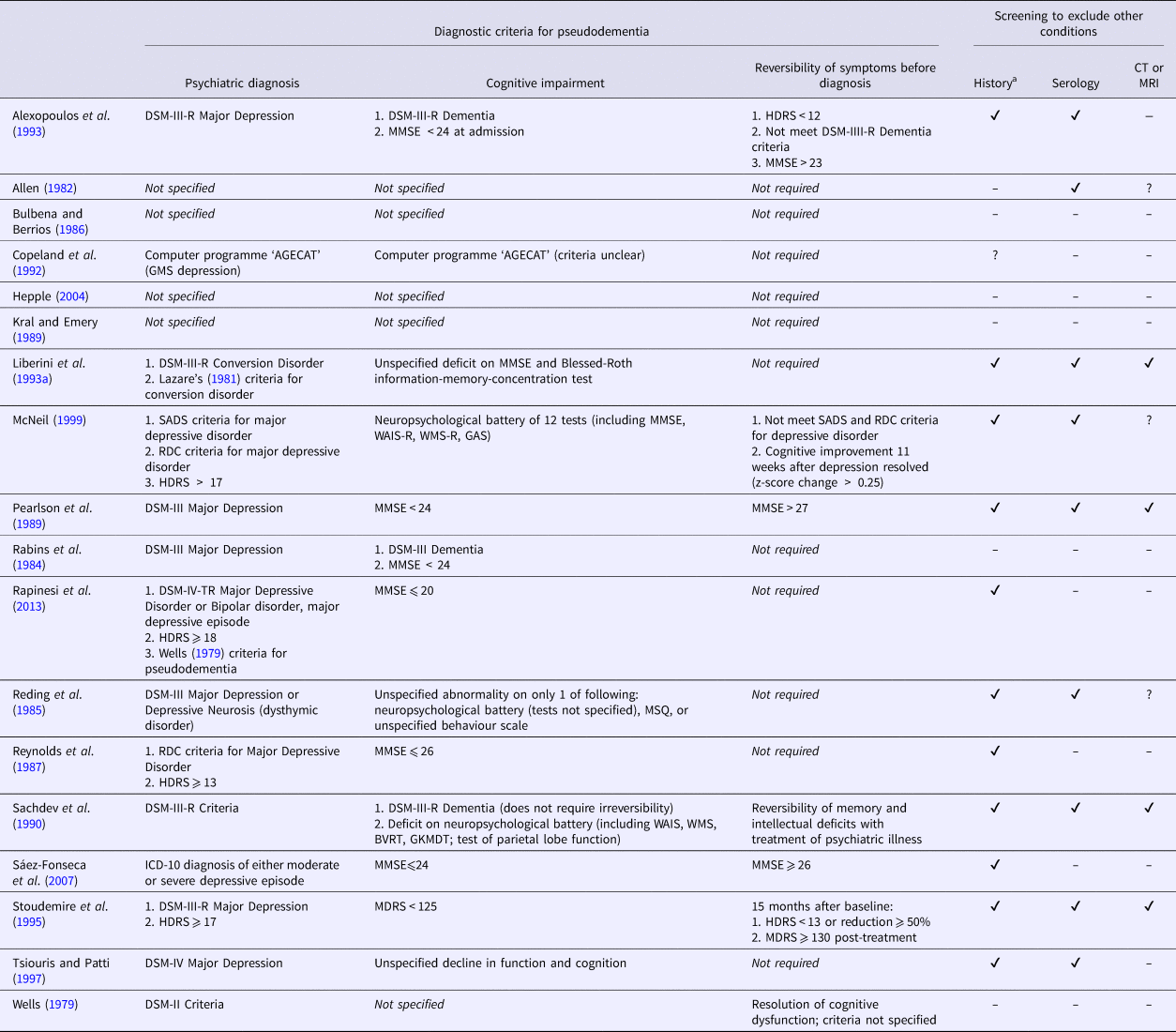
Criteria used to diagnose pseudodementia and screening tests used to exclude other conditions are shown in Table 2. Diagnostic criteria were reported in 13 papers, but not in the remaining five (Allen, Reference Allen1982; Bulbena and Berrios, Reference Bulbena and Berrios1986; Kral and Emery, Reference Kral and Emery1989; Copeland et al., Reference Copeland, Davidson, Dewey, Gilmore, Larkin, McWilliam, Saunders, Scott, Sharma and Sullivan1992; Hepple, Reference Hepple2004). Nine studies reported using serological tests to exclude other reversible causes of dementia in their sample. Four studies reported using neuroimaging to exclude structural changes typical of organic dementia. Only seven studies reported that they confirmed that patients’ cognitive impairment was reversible before offering a diagnosis of pseudodementia.
Diagnostic criteria for pseudodementia and screening tests to exclude other conditions used in different studies

✔, required by study; ?, unclear if completed by all participants; –, not required or specified by study.
a History is defined here by explicit exclusion criteria based on pre-existing or comorbid conditions.
BVRT, Benton Visual Retention Test; GKMDT, Graham Kendall Memory for Designs Test; DSM, Diagnostic and Statistical Manual of Mental Disorders (versions II-IV; R, revised; TR, text revised); GAS, Global Assessment Scale; GMS, Geriatric Mental State; HDRS, Hamilton Depression Rating Scale; ICD, International Classification of Disease; MDRS, Mattis Dementia Rating Scale; MMSE, Mini-Mental State Examination; MSQ, Mental Status Questionnaire; RDC, Research Diagnostic Criteria; SADS, Schedule for Affective Disorders and Schizophrenia; WAIS(-R), Wechsler Adult Intelligence Scale (-Revised); WMS(-R)-, Wechsler Memory Scale(-Revised).
Outcomes
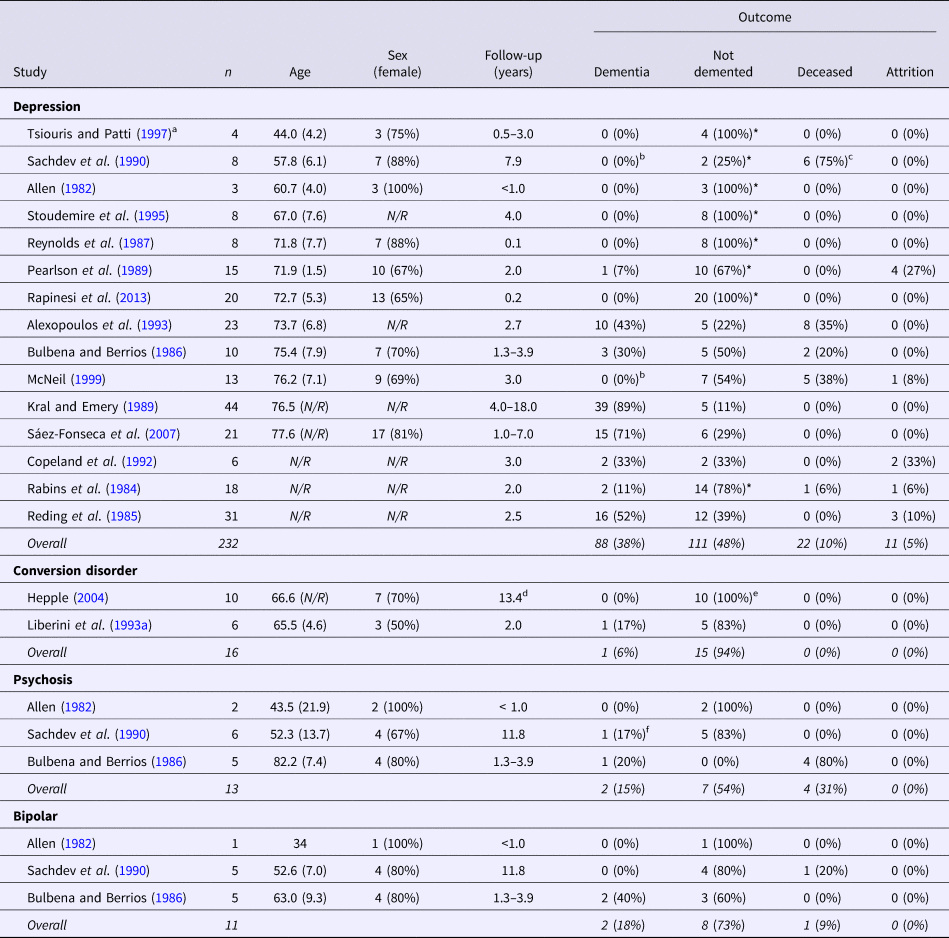
Follow-up time varied from several months to several years (see Table 3). Of the 284 participants, 93 (33%) progressed to dementia, 150 (53%) were not demented, 28 (10%) died, and 13 (5%) were lost to follow-up (see Table 3). Of those without dementia at follow-up, 89 (59%) were reported to have clearly improved, though with outcomes ranging from complete resolution of symptoms to merely improved cognition and functioning in the context of ongoing mild to moderate impairments; for the remaining 61 (41%), the degree to which they remained stable or improved was not specified.
Longitudinal outcomes according to underlying diagnosis

Note. Studies listed in order of mean age. Data from Wells (Reference Wells1979; n = 10) are not included in this table because outcomes were not reported separately by diagnosis. N/R, not reported.
*Significant clinical improvements documented at follow-up.
a These four patients also had Down syndrome.
b Dementia could not be excluded in one patient in these studies.
c No evidence of dementia from autopsy and/or clinical history prior to death.
d This case series reported the duration of time since the onset of patients’ symptoms; the actually clinical follow-up was unclear from the description.
e Two patients also deceased from unrelated causes.
f Patient also deceased from Huntington disease.
Of the 232 patients with depressive pseudodementia and who had data available, 88 (38%) progressed to dementia, 111 (48%) were not demented, 22 (10%) died, and 11 (5%) were lost to follow-up (Table 3; Wells, Reference Wells1979, reported six patients with depressive pseudodementia but did not report the outcomes of these patients separately from patients with other causes of pseudodementia). Increasing rates of dementia were apparent the longer the duration of follow-up. Of the 11 studies with more than 1 year of follow-up, 45% developed dementia, 38% were not demented, 11% died, and 6% were lost to follow-up. Of the eight studies with more than 2 years of follow-up, 53% developed dementia, 30% were not demented, 12% died, and 4% were lost to follow-up. Nevertheless, large variation in results was apparent across studies. Of the four studies with more than 3 years of follow-up, two studies found that no patients developed dementia (Sachdev et al., Reference Sachdev, Smith, Angus-Lepan and Rodriguez1990; Stoudemire et al., Reference Stoudemire, Hill, Morris and Dalton1995), whereas two found that 70% or more developed dementia (Alexopoulos et al., Reference Alexopoulos, Meyers, Young, Mattis and Kakuma1993; Sáez-Fonseca et al., Reference Sáez-Fonseca, Lee and Walker2007). These discrepancies corresponded to differences in age of the samples – the two studies that found no progression had samples with mean ages of less than 68, while the two studies with high rates of progression had samples with mean ages of more than 76.
Variability in study outcomes appeared to be independent of study quality. Restricting analysis to only studies of moderate or strong quality, similar heterogeneity was found, with two studies reporting no dementia at follow-up in patients with depressive pseudodementia (Sachdev et al., Reference Sachdev, Smith, Angus-Lepan and Rodriguez1990; McNeil, Reference McNeil1999), one reporting dementia in 7% (Pearlson et al., Reference Pearlson, Rabins, Kim, Speedie, Moberg, Burns and Bascom1989), and one reporting dementia in 43% (Alexopoulos et al., Reference Alexopoulos, Meyers, Young, Mattis and Kakuma1993). Restricting analysis to only studies rated as strong quality, none of 21 (0%) patients developed dementia at follow-up (Sachdev et al., Reference Sachdev, Smith, Angus-Lepan and Rodriguez1990; McNeil, Reference McNeil1999), though in each study, the possibility of dementia could not be excluded in one patient.
Across studies, age at baseline appeared to be related to the variation in outcomes. Of the studies on depressive pseudodementia, mean age was available for 12 studies and there appeared to be a clear divergence in outcome according to this (see Table 3). Seven studies had a mean age of less than 73; these studies found that only 1 of 66 (2%) patients developed dementia at follow-up (see Table 3). By contrast, five studies had a mean age of more than 73; these studies found that 67 of 111 (60%) developed dementia at follow-up. Restricting analysis to only studies that followed patients for 1 year or more revealed similar results: only 1 of 31 (3%) participants aged less than 73 developed dementia, while 67 of 111 (60%) of participants aged more than 73 developed dementia. Three studies reported post hoc analyses of age as a predictor of outcome: one study (Reding et al., Reference Reding, Haycox and Blass1985) found that patients who developed dementia were significantly older than those who did not; two studies did not find statistically significant differences, albeit with limitations in statistical power (Bulbena and Berrios, Reference Bulbena and Berrios1986; Alexopoulos et al., Reference Alexopoulos, Meyers, Young, Mattis and Kakuma1993). Further analysis of outcomes according to age or cognitive ability at baseline was not possible due to the lack of more fine-grained data on individual participants.
Interventions
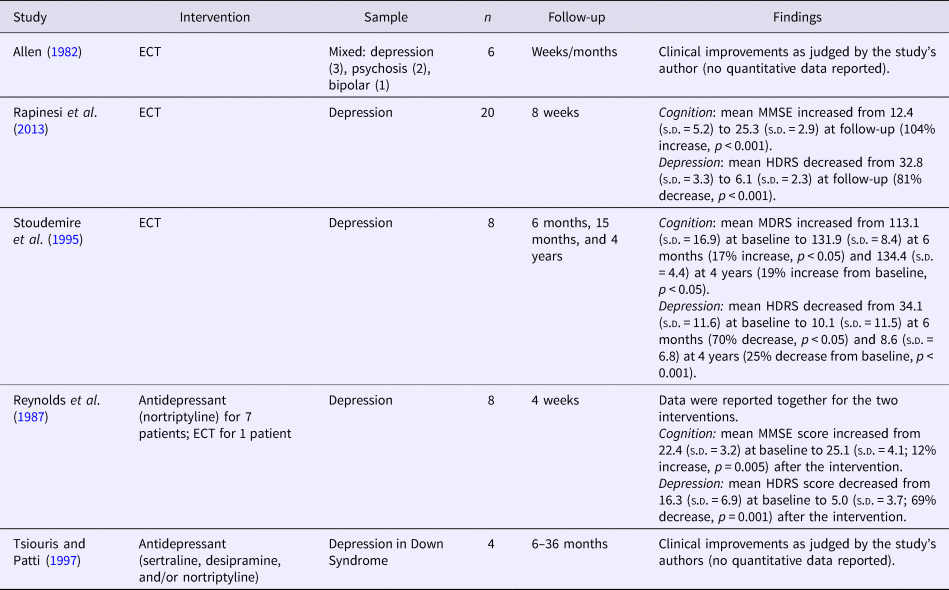
Five studies focused on the effectiveness of interventions in pseudodementia (see Table 4). Three studies examined electroconvulsive therapy (ECT) specifically (Allen, Reference Allen1982; Stoudemire et al., Reference Stoudemire, Hill, Morris and Dalton1995; Rapinesi et al., Reference Rapinesi, Serata, Del Casale, Kotzalidis, Mazzarini, Fensore, Carbonetti, Scatena, Capezzuto, Moscati, Brugnoli, Tatarelli and Girardi2013). These studies included a total of 34 participants: 31 patients with depression, two with psychosis, and one with bipolar disorder. All studies found that patients had better mood and cognition after a course of ECT than at baseline. One study of 20 patients with depressive pseudodementia reported significant improvements in mean MMSE and Hamilton Depression Rating Scale (HDRS) at an 8-week follow-up (Rapinesi et al., Reference Rapinesi, Serata, Del Casale, Kotzalidis, Mazzarini, Fensore, Carbonetti, Scatena, Capezzuto, Moscati, Brugnoli, Tatarelli and Girardi2013). Another study followed up eight patients with depressive pseudodementia 4 years later and noted improvements were still present compared with baseline (Stoudemire et al., Reference Stoudemire, Hill, Morris and Dalton1995). The third study did not report quantitative data, though noted that all patients showed significant clinical improvements (Allen, Reference Allen1982).
Intervention studies on pseudodementia
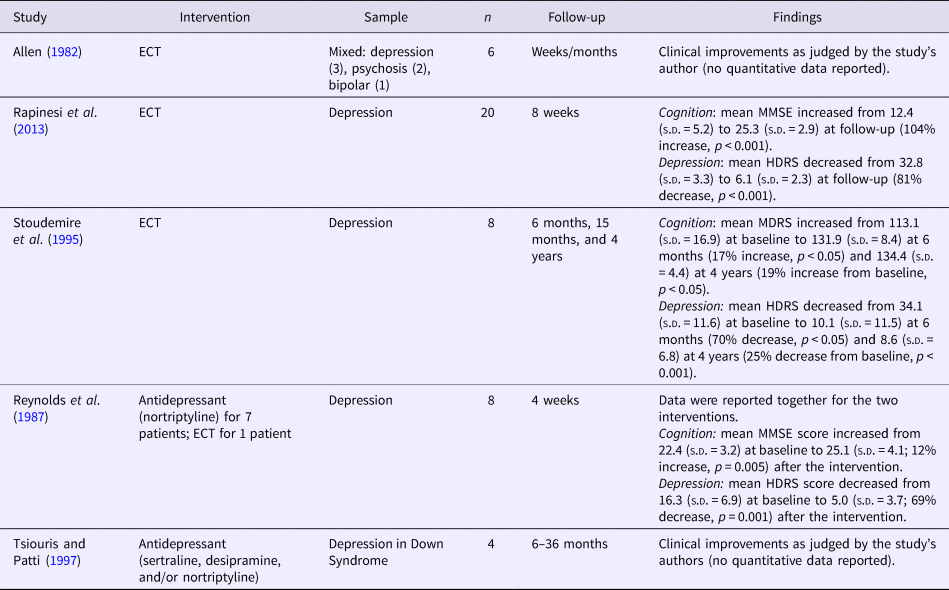
ECT, electroconvulsive therapy; HDRS, Hamilton Depression Rating Scale; MDRS, Mattis Dementia Rating Scale; MMSE, Mini-Mental State Examination.
Two studies examined the effectiveness of antidepressant medications on depressive pseudodementia. One study examined the effectiveness of the antidepressant nortriptyline on seven patients and ECT on one (Reynolds et al., Reference Reynolds, Perel, Kupfer, Zimmer, Stack and Hoch1987). This study found that these patients as a group had a better mood and cognition after the intervention compared with baseline (the study did not report the results of the two interventions separately). A second study examined the effectiveness of different antidepressants – sertraline, desipramine, and/or nortriptyline – on a sample of patients with Down Syndrome that included four with pseudodementia (Tsiouris and Patti, Reference Tsiouris and Patti1997). All four patients were reported to improve in cognition and mood (quantitative data were not reported). All intervention studies were limited by their small sample size, lack of a control group, and lack of blinding.
In addition to these five intervention studies, three observational studies reported data on interventions. One study that followed 22 patients with a variety of diagnoses noted that all six patients who received ECT and 15 of the 16 patients who received pharmacological interventions (antidepressant and/or antipsychotic medication) responded to treatment, though did not define what was taken as evidence of a response (Bulbena and Berrios, Reference Bulbena and Berrios1986). A second study that followed 18 patients with depressive pseudodementia who received either tricyclic antidepressants or ECT found that all patients showed improved mood and 15 of 18 (83%) showed cognitive improvements (Rabins, Reference Rabins1983), though likewise did not define treatment response and lacked a control group. A third study that followed 28 patients with depressive pseudodementia noted that six patients received inpatient psychiatric treatment (either ECT or antidepressants), 17 received antidepressant medication as an outpatient, and three received psychotherapy without medication (Reding et al., Reference Reding, Haycox and Blass1985). The study observed, at the 2.5 year follow-up, three of the six patients (50%) who received inpatient treatment had improved, 7 of the 17 (41%) of the patients who received outpatient antidepressant medication had improved, and two of the three (67%) patients who had received psychotherapy had improved; the remaining patients were reported to have developed irreversible dementia.
Discussion
The systematic review identified longitudinal studies of pseudodementia arising from six different psychiatric conditions. The vast majority of research focused on depressive pseudodementia. For these patients, a significant proportion (38%) developed irreversible dementia across studies. By contrast, more patients – around half – no longer met the criteria for dementia, albeit with many still impaired by their psychiatric disorder. Altogether, these findings indicate that while depressive pseudodementia may confer a greater risk of developing organic dementia, pseudodementia does not inevitably progress to it, as some authors have proposed (Kral and Emery, Reference Kral and Emery1989; Reifler, Reference Reifler2000; Emery and Oxman, Reference Emery, Oxman, Oxman and Emery2003). Instead, pseudodementia may have benign outcomes, though also appears to pose a significant burden in its own right, independent of neurodegenerative disease. Of note, however, five studies reported possible benefits of ECT and antidepressants in this population (Allen, Reference Allen1982; Bulbena and Berrios, Reference Bulbena and Berrios1986; Stoudemire et al., Reference Stoudemire, Hill, Morris and Dalton1995; Rapinesi et al., Reference Rapinesi, Serata, Del Casale, Kotzalidis, Mazzarini, Fensore, Carbonetti, Scatena, Capezzuto, Moscati, Brugnoli, Tatarelli and Girardi2013). While these latter findings were limited by the poor quality of the studies, they highlight the promise of producing clinical improvements in patients with pseudodementia using standard psychiatric interventions.
A major issue across studies was the considerable heterogeneity in findings. Of the 16 studies focused on depressive pseudodementia, nine studies found that fewer than 10% of their sample developed dementia (Wells, Reference Wells1979; Allen, Reference Allen1982; Reynolds et al., Reference Reynolds, Perel, Kupfer, Zimmer, Stack and Hoch1987; Pearlson et al., Reference Pearlson, Rabins, Kim, Speedie, Moberg, Burns and Bascom1989; Sachdev et al., Reference Sachdev, Smith, Angus-Lepan and Rodriguez1990; Stoudemire et al., Reference Stoudemire, Hill, Morris and Dalton1995; Tsiouris and Patti, Reference Tsiouris and Patti1997; McNeil, Reference McNeil1999; Rapinesi et al., Reference Rapinesi, Serata, Del Casale, Kotzalidis, Mazzarini, Fensore, Carbonetti, Scatena, Capezzuto, Moscati, Brugnoli, Tatarelli and Girardi2013), whereas six studies found that more than 30% did (Rabins et al., Reference Rabins, Merchant and Nestadt1984; Reding et al., Reference Reding, Haycox and Blass1985; Kral and Emery, Reference Kral and Emery1989; Copeland et al., Reference Copeland, Davidson, Dewey, Gilmore, Larkin, McWilliam, Saunders, Scott, Sharma and Sullivan1992; Alexopoulos et al., Reference Alexopoulos, Meyers, Young, Mattis and Kakuma1993; Sáez-Fonseca et al., Reference Sáez-Fonseca, Lee and Walker2007). This variability was largely independent of the duration of follow-up. A related, further issue was the attrition of patients – approximately 15% of the samples overall were either deceased or lost to follow-up. These participants likely faced a more adverse clinical course than those who returned for evaluation at follow-up. As rates of attrition themselves varied considerably across studies, the impact this had on the results overall remains unclear.
One source of heterogeneity in study outcomes was the age of participants. Across studies, a younger mean age of the sample corresponded to better outcomes with a sharp divergence at the age of 73. Whereas only 2% of patients developed irreversible dementia in studies with a mean age of less than 73, 60% developed irreversible dementia in studies with a mean age over 73. This divergence may reflect, in part, higher base rates of dementia with older age, particularly in those with depression. Another factor may be the difficulty in reliably distinguishing pseudodementia from comorbid neurodegenerative disease and depression in older patients. This is likely to be particularly significant because the majority of studies that reported a high rate of progression to irreversible dementia did not specify how they screened patients and none required patients to have neuroimaging scans (Reding et al., Reference Reding, Haycox and Blass1985; Kral and Emery, Reference Kral and Emery1989; Alexopoulos et al., Reference Alexopoulos, Meyers, Young, Mattis and Kakuma1993; Sáez-Fonseca et al., Reference Sáez-Fonseca, Lee and Walker2007), which could help to exclude neurodegenerative disease. As a result, it is possible that a proportion of older patients could have been misdiagnosed or had pre-existing organic pathology. Consistent with this possibility, one study which found that a high proportion of patients developed dementia noted that over half of these patients had evidence of cerebrovascular disease, extrapyramidal, or spinocerebellar degenerative disorders at baseline (Reding et al., Reference Reding, Haycox and Blass1985). By contrast, one study with patients over 76 years of age that involved a rigorous neuropsychological assessment and required evidence of reversibility of cognitive deficits at baseline found that none of these patients were diagnosed with irreversible dementia at a 3 year follow-up (McNeil, Reference McNeil1999). Given the proposal of different subtypes of depression (Parker, Reference Parker2005), a further possible explanation for the divergence according to age is that there are different subtypes of depressive pseudodementia that predominate in different age groups.
The second source of heterogeneity in the findings is the poor quality of many studies. A number of papers, for example, did not report basic demographic data, specify the criteria they used to diagnose pseudodementia or, as already noted, conduct a rigorous screen to exclude patients with organic dementia. The absence of these features makes it difficult to rule out the possibility of potential confounders and to have confidence that patients in the early stages of a neurodegenerative disease were not included in the studies. In addition, all studies involved relatively small sample sizes and low statistical power, which likely contributed to the variability identified. A further limitation was the wide range of publication years of the included studies, which could be associated with variation in diagnostic criteria, the ability to assess biological markers of dementia, and treatment options for depression. Altogether, these issues make it difficult to draw strong conclusions from the available data. Given that the design limitations, if anything, could be seen to bias toward negative outcomes by including patients with pre-existing neurological pathology, these issues would seem to particularly undermine some of the pessimistic claims about pseudodementia on the basis of existing evidence. Indeed, the two highest quality studies found that none of their patients with depressive pseudodementia had definite irreversible dementia at follow-up.
The outcomes for patients with pseudodementia due to other psychiatric conditions were less clear due to the small number of studies and cases identified. For each of the conditions of conversion disorder, bipolar disorder, and psychosis, only two or three studies and fewer than 20 cases were identified. Based on available data, pseudodementia resulting from conversion disorder appeared to be relatively stable, with only one patient (6%) progressing to dementia (this patient was also significantly older than other patients in the cohort; Liberini et al., Reference Liberini, Faglia, Salvi and Grant1993a). In the case of pseudodementia resulting from psychosis and bipolar disorder, patients appeared to have a similar or slightly higher rate of irreversible dementia as what one might expect in the general population with similar risk factors (other research has shown that psychosis independent of pseudodementia is a risk factor for dementia; Almeida et al., Reference Almeida, Ford, Hankey, Yeap, Golledge and Flicker2018). The absence of strict screening and the fact that most patients had comorbid depression in one of these studies (Bulbena and Berrios, Reference Bulbena and Berrios1986) also suggests the possibility of confounds and other pre-existing pathology influencing the findings.
Overall, the findings suggest that while pseudodementia may be associated with greater risk of neurodegenerative disease, pseudodementia does not inevitably progress to it. Instead, many patients improve to varying degrees, while others remain affected by their psychiatric condition, independent of organic dementia. The findings also suggest that patients diagnosed with pseudodementia at a younger age have better outcomes, perhaps as a result of the difficulty discriminating pseudodementia from comorbid dementia and depression in older patients. Given the burden of the condition in its own right, the potential for reversibility, and the reported benefits of interventions, the findings support the clinical utility of the construct and the importance of identifying the condition early in its course. In addition, the significant limitations in existing research and the lack of current investigative tools at the time the research was conducted indicate a clear need for further studies with a rigorous screening of participants and larger sample sizes, perhaps through the use of clinical registries. Future research could be enriched with the use of modern neuroimaging techniques, including positron emission tomography with amyloid and tau ligands; genetic testing, such as of APOE and C9orf72 (Bieniek et al., Reference Bieniek, van Blitterswijk, Baker, Petrucelli, Rademakers and Dickson2014); and investigations of other biomarkers of neurodegenerative disease. Such research may help clarify diagnoses, offer prognostic advice to patients and their families, and guide management, as well as inform more fundamental issues of nosology.
Acknowledgements
This research was supported by the National Health and Medical Research Council (NHMRC) through its funding of the Dementia Centre for Research Collaboration.
Conflict of interest
In the last 3 years, Henry Brodaty has been a consultant and advisory board member for Nutricia. Michael Connors and Lena Quinto have no conflicts of interest to declare.