




No CrossRef data available.
Article contents
- Abstract
- A REVIEW OF SOLUTIONS TO THE CREDIBILITY PROBLEM IN MONETARY POLICY
- A MODEL OF CHECKS AND BALANCES, CENTRAL BANK INDEPENDENCE, AND INFLATION
- WHY ARE INDEPENDENT CENTRAL BANKS CREATED?
- TESTING THE HYPOTHESES
- CONCLUSION
- APPENDIX 1: SUMMARY STATISTICS AND THE CHECKS AND POLITICAL POLARIZATION MEASURES
- APPENDIX 2: DERIVATION OF EXPECTED INFLATION UNDER CHECKS AND BALANCES
- APPENDIX 3: DERIVATION OF EXPECTED INFLATION UNDER CHECKS AND BALANCES WITH AN INDEPENDENT CENTRAL BANK
- References
The Limits of Delegation: Veto Players, Central Bank Independence, and the Credibility of Monetary Policy
Published online by Cambridge University Press: 27 August 2003
Article contents
- Abstract
- A REVIEW OF SOLUTIONS TO THE CREDIBILITY PROBLEM IN MONETARY POLICY
- A MODEL OF CHECKS AND BALANCES, CENTRAL BANK INDEPENDENCE, AND INFLATION
- WHY ARE INDEPENDENT CENTRAL BANKS CREATED?
- TESTING THE HYPOTHESES
- CONCLUSION
- APPENDIX 1: SUMMARY STATISTICS AND THE CHECKS AND POLITICAL POLARIZATION MEASURES
- APPENDIX 2: DERIVATION OF EXPECTED INFLATION UNDER CHECKS AND BALANCES
- APPENDIX 3: DERIVATION OF EXPECTED INFLATION UNDER CHECKS AND BALANCES WITH AN INDEPENDENT CENTRAL BANK
- References
Abstract
Governments unable to make credible promises hinder economic development and effective policymaking. Scholars have focused considerable attention on checks and balances and the delegation of authority to independent agencies as institutional solutions to this problem. The political conditions under which these institutions enhance credibility, rather than policy stability, are still unclear, however. We show that checks—multiple veto players—enhance credibility, depending on the extent of uncertainty about the location of the status quo, on how agenda control is allocated among the veto players, and on whether veto players have delegated policymaking authority to independent agencies. In the context of monetary policy and independent central banks, we find evidence supporting the following predictions: Delegation is more likely to enhance credibility and political replacements of central bank governors are less likely in the presence of multiple political veto players; this effect increases with the polarization of veto players.We have benefited from the generous advice of many people, including Alberto Alesina, Tim Besley, Georgios Chortareas, Roberta Gatti, Simon Hug, Stephan Haggard, Witold Henisz, Aart Kraay, Francesca Recanatini, and Mary Shirley, and from comments of seminar participants at DELTA (Paris), George Mason, and Oxford. Three anonymous referees and the editor were especially helpful. This paper's findings, interpretations, and conclusions are entirely those of the authors and do not necessarily represent the views of The World Bank, its executive directors, or the countries they represent.
Information
- Type
- ARTICLES
- Information
- Copyright
- © 2003 by the American Political Science Association
Two circumstances significantly circumscribe the ability of politicians to pursue their private or political objectives: when their promises are not credible and when they must implement their decisions through bureaucratic agents who do not share their preferences. When governments are unable to make credible commitments (e.g., to follow a set of rules tomorrow that they announce today), they cannot stimulate economic growth (and tax collections) by, for example, promising a stable tax and regulatory environment for firms. Scholars have argued that political systems characterized by checks and balances mitigate this credibility problem, but less is known about one of the questions motivating this paper: Under what conditions do checks and balances enhance credibility?
The literature on delegation presents the reverse situation. Scholars have analyzed how politicians face a trade-off between the risks of delegating to unsympathetic bureaucratic agents who could subvert their intentions and the benefits of delegating in order to maximize the contribution of experts to policymaking. They have not considered, however, the political conditions under which delegation improves government credibility, the question examined in this paper.
Taking as our point of departure the credibility of government promises regarding monetary policy, the analysis below contributes to three lines of scholarly inquiry. The first is the literature on veto players. Veto players are the actors—individual politicians or political parties—who can block proposals to move away from current, or status quo policies. In this paper we also use the term “veto point” to refer to a political institution, the holder of which has the power to block a proposed change in policy. Scholars in this area, particularly Tsebelis (1995, 2002), offer the most thorough analysis of the effects of political checks and balances, emphasizing, for example, that the effects of additional veto players on policy outcomes depend on whether their preferences diverge from those of existing veto players. The concern in the veto player literature, however, is not policy credibility but policy stability, an important distinction that is explored below. In the analysis that follows, we show that policy credibility varies with the number and polarization of preferences of veto players, but the underlying logic is different. For example, we find that where there is greater uncertainty about which status quo will prevail in the future, additional veto players have less effect on credibility.
We also contribute to a large literature on the role of delegation in policymaking. In much of this literature, the focus is on politicians who need expert agencies to make policy but who must confront the challenge of controlling agency shirking (see, e.g., Bawn 1997, Epstein and O'Halloran 1999, Lupia and McCubbins 2000, and McCubbins, Noll, and Weingast 1987). Our results suggest that politicians might also delegate to increase policy credibility but that delegation has this effect only in the presence of multiple veto players with polarized preferences.
Finally, this paper contributes to a large literature on the role of central banks as sources of credibility in monetary policy. Beginning with Rogoff (1985), scholars have argued that central bank independence can cement the credibility of government policy commitments. With few exceptions, they abstract from the interaction of politicians and central banks and assume that, once delegated, the policy authority of agencies (central banks) can never be revoked. We relax this assumption in order to ask: What are the political and institutional preconditions necessary for delegation to an independent agency to increase policy credibility?
Monetary policy is an especially convenient target of investigation because the policy attribute we care about, but cannot directly measure—credibility—maps directly onto a policy outcome that we can measure, inflation. To establish an appropriate benchmark for the effects of delegation, we therefore first develop a model of inflation outcomes under a government with two veto players. We then compare outcomes under this model to those under a second model, in which monetary policy has been delegated to an independent central bank. The detailed empirical tests in the second half of the paper strongly support our predictions. These tests use new data both on political institutions and on political polarization and show that multiple veto players can increase credibility (reduce inflation), that legal central bank independence is more likely to reduce inflation in the presence of multiple political veto players, and that all of these effects strengthen when political veto players are more polarized.
A REVIEW OF SOLUTIONS TO THE CREDIBILITY PROBLEM IN MONETARY POLICY
Multiple veto players or checks and balances (we use the terms interchangeably) are the institutional arrangement that has received the greatest attention as a solution to the problem of credible commitment, at least since classic theorists of representative government like Madison and Montesquieu. North and Weingast (1989) argue that constitutional changes increasing the British Parliament's role as a constraint on the monarch following the Glorious Revolution of 1688 encouraged lenders to reduce the risk premium on loans to the British crown. Stasavage (2003) shows that the preferences of the members of Parliament, and the pattern of coalition formation within Parliament, played an equally important role in establishing credibility of debt repayment in the United Kingdom.
These arguments invoke some of the same concepts that are common in the application of veto player analysis to the issue of policy stability, pioneered by Tsebelis (1995). The underlying issues—policy stability and policy credibility—are nevertheless quite distinct. Policy stability is high when the set of policies that politicians prefer to the status quo is small; policy is unstable when this set is large. Credible commitment introduces an explicit dynamic element, however, in which policy choices today influence the payoffs to policy options tomorrow. More to the point, policies can be stable but not credible. Politicians might prefer a particular policy today to all other alternatives, making the policy fully stable, as Tsebelis (1995) defines stability. Stability provides no guarantee, however, that once citizens have relied on the policy in their contractual, investment, or other decisions, the same politicians tomorrow will not take advantage of their reliance and reverse the policy. This is a pervasive problem and is at the core of the model below of monetary policymaking.
The question of credible commitment (or “time consistency”) has been central to discussions of monetary policy since Kydland and Prescott (1977) and Barro and Gordon (1983a). These articles have influenced research into government commitment problems in many other policy areas. In the model presented by Barro and Gordon (1983a) governments prefer lower inflation and higher national income. The government is a unitary actor that would be better off if it could commit to a low rate of inflation. Before the government actually sets monetary policy, however, private actors must form inflation expectations and write contracts governing the future sale of goods and services. Once these contracts are signed, governments have an incentive to boost output by pursuing a high inflation policy. In equilibrium, agents anticipate this behavior by the government and build an “inflation bias” into their wage contracts. Inflation is therefore higher when governments are less credible.
Barro and Gordon (1983b) argued that reputation could mitigate this problem. However, the reputational outcome is but one of multiple possible equilibria in their infinitely repeated game. Moreover, for many governments heavy discounting of the future eliminates reputational equilibria. Rogoff (1985) then offered the delegation of monetary policy to an independent central bank as a solution to the time-consistency problem in monetary policy. The central banker would place a greater weight than society at large on stabilizing prices relative to stabilizing output and, so, would be less tempted than politicians to make surprise increases in the money supply to secure temporary boosts to income. Knowing this, private actors reduce the inflation premium that they build into their long-term contracts.
Most subsequent research investigating different aspects of the Rogoff solution has retained his assumption, that delegation of monetary policy authority to the central bank is irrevocable. However, substantial evidence from the study of American politics suggests that partisan identification of political actors affects the decisions of nominally independent bureaucratic agencies.1
See, for example, Weingast and Moran 1983.
Lohmann (1998) and Moser (1999) also relax the irreversibility assumption in their analyses of central bank independence. As we do, they argue that multiple veto players in government make it more difficult to reverse a decision to delegate, giving independent central banks greater scope to reduce the inflation bias. In our theoretical and empirical analysis we consider several questions not addressed by their contributions. Under what conditions do multiple veto players, by themselves, mitigate the credibility problem that increases expected inflation? How do changes in agenda control, political polarization, and the level of uncertainty affect the impact of multiple veto players on the expectations of private actors? Given multiple veto players, the assignment of agenda-setting authority, and political polarization, what additional influence does an independent central bank have on expected inflation?
A MODEL OF CHECKS AND BALANCES, CENTRAL BANK INDEPENDENCE, AND INFLATION
The model of the time consistency problem in monetary policy that anchors this paper follows Barro and Gordon 1983a. In the traditional model, in which “the government” is a single veto player, the government minimizes

where

where πe is the expected inflation, the price increases that are programmed by the private sector in their contracts prior to the realization of the supply shock (a shock to output given by εt) and the policy decisions of the government. The variable y* is the desired output (with y* > 0 and the trend, or “natural” rate, of output normalized to zero). The parameter bG characterizes the government's preferences regarding the trade-off between inflation and output. Private actors first form expectations about future inflation, then write contracts that effectively set prices in the economy. A random supply shock to the economy occurs, and, finally, government sets actual inflation (πt).
Private actors know that their long-term contractual decisions—and particularly the inflation expectations built into those decisions—will affect government inflation policies subsequently. They know, in particular, that the government will solve for the inflation outcome that minimizes its losses, or, from the minimization of (1),

After taking expectations, solving for expected inflation, and substituting the expression for expected inflation back into (3a), the problem yields the following well-known solution for inflation (suppressing time subscripts here and throughout):

The inflation bias—the amount of extra inflation generated by the inability of the government to commit credibly to its announced inflation policy—is bGy*.
Discretionary Monetary Policy Under Checks and Balances
Delegation to a central bank is traditionally analyzed within the context of the single-veto player model outlined above, where the central bank has no informational or other advantages over the government. Given this, there is no obvious reason why a single veto player would not always override any central bank decision that diverged from the veto player's preferred outcome in any period.2
Governments may refrain from overriding central bank decisions because such action may have adverse reputational effects. However, as Keefer and Stasavage (2002) argue, it is not clear why governments that could build a reputation would need a central bank, since they could also build a reputation even if they retained discretionary control of policy. In any case, if reputational concerns rather than institutions are the important force protecting central bank decisions from override, our empirical results should reject the hypotheses we derive below.

There are two veto players, v1 and v2. Figure 1 shows their preferences relative to each other, with v1 preferring a lower rate of inflation. Some status quo rate of inflation sq is located between the preferred rates of the two veto players. It is well understood, at least since Shepsle and Weingast (1981), that one must specify how the veto players make decisions—that is, what are the agenda-setting powers of each? We assume throughout the paper that there is one player with agenda-setting authority—the ability to make a take-it-or-leave-it offer to the other player. For example, in some countries, the executive branch can propose a candidate for central bank governor to the legislature, which must vote the choice up or down.3
While different bargaining assumptions are possible, this seems among the most plausible and substantially increases tractability.
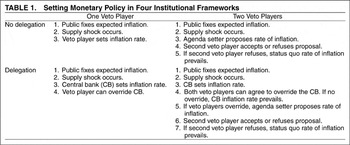
In the absence of a central bank, policy does not shift from sq since there is no policy that v2 could propose that both veto players prefer to sq. The presence of a “conservative” central banker, cb, who prefers a lower rate of inflation than either veto player can therefore reduce inflation. Policy is made as follows: (i) The central bank chooses an inflation rate; (ii) v2 can propose to override the central bank's inflation rate; and (iii) v1 can either accept the override proposal, in which case it is implemented, or v1 can reject it, in which case the central bank's rate is maintained. Given this series of moves and the alignment of preferences in Figure 1, the lowest rate of inflation that the central bank can propose without fear of override is the policy preferred by v1, which is lower than the status quo.
What if v1 or v2 were the only veto player? Then policy would always be at their preferred outcome, with or without the central bank; any attempt by the central bank to propose a different inflation rate would be immediately overridden by the single veto player. Clearly, then, the presence of a central bank can change policy outcomes only in the presence of multiple veto players.
This model begs two basic questions that are key to analyzing delegation and credibility. The first is where the status quo rate of inflation originates. In this simple illustration the status quo is exogenous and given. Consistent with standard models of monetary policy, the default outcome we employ in the models below—the inflation that prevails in the absence of government action in the second period—is the set of price increases programmed by the private sector into its contracts in the first period.4
Walsh (1998, 205–18) presents a detailed model that further supports using private-sector actions as the default outcome. His model includes a money demand equation and a more fully defined economic structure, showing clearly that actual inflation depends on both the rate of money growth chosen by policymakers and the expected rate of inflation in private sector contracts.
Our model therefore goes beyond Moser (1999), who assumes that the two veto players must always make a decision, avoiding the introduction of a status quo entirely. Our approach has the advantage of greater realism and of a closer connection to relevant literature. For example, it is widely accepted, since Romer and Rosenthal (1979), that the decisions veto players make are influenced by the outcome that would prevail should they make no decision.
The simple model depicted in Figure 1 also provides no reason for v1 to delegate to a conservative central banker in the first place. This paradox emerges because the model assumes away economic shocks. Again, a simple example confirms this point. Delegation would occur if, in some previous unspecified period of play, v1 controlled both veto points. Veto player v1 would then have a choice: to retain future control of monetary policy or to delegate to a conservative central banker. Veto player v1 would then confront one of three scenarios in the future. This veto player could retain control of both veto points, in which case the presence of a central bank would make no difference, and his/her preferred inflation outcome would prevail. Or v1 could retain control of one veto point, but again, the presence of a central bank would make no difference, since v1 could veto any attempt to shift policy away from his/her preferred outcome. Finally, v1 could lose control of all veto points. In this case, policy would shift to the outcome preferred by v2, regardless of whether there was a conservative central bank. None of the three cases provides a justification for delegation.
The possibility of unpredictable economic shocks can, however, motivate the inflation-averse veto player to delegate authority. These shocks are fundamental to the analysis of political decision making in many policy areas, including Rogoff's (1985) analysis of monetary policy. To see how they would motivate v1 to delegate, one can imagine an example in which v1 prefers a 2% rate of inflation and, given that v1 controls all veto points, simply decides to set inflation at that rate. Then, v1 loses control of one veto point to a policymaker who prefers a 4% rate of inflation. Inflation does not change, however, since v1 can still block all attempts to move away from the 2% rate. Finally, however, a shock occurs, such as an increase in oil prices that leads simultaneously to higher inflation and slower economic growth. At that point, both veto players prefer a higher inflation rate, say 4% for v1 and 6% for v2, that they believe would best allow them to minimize the impact of the oil price shock on economic growth.
It is straightforward to see that in this situation v1 could have done better by delegating to a conservative central bank. Assume that v1 is indifferent between inflation at 2% and inflation at 6%—both are two percentage points away from her preferred, postshock rate of 4%. Following the shock, and absent a central bank, v2 therefore proposes a rate just less than 6%, which v1 would accept. What if v1 had previously delegated authority to a conservative central bank? The conservative central bank would have responded to the shock by setting inflation at 4%, v1's new preferred rate. Delegation in the presence of economic shocks therefore yields inflation outcomes closer to the preferred outcome of v1.
This heuristic example demonstrates the importance of integrating two elements into a convincing model of delegation: the emergence of the status quo from the interaction of the private sector and government actors and the presence of economic shocks. The formal models we develop here do precisely this. We first analyze policy outcomes with multiple veto players in the absence of delegation.6
There are a number of reasons why multiple political actors might have an influence on monetary policy in the absence of checks and balances. In a parliamentary system, for example, the minister of finance has nominal control of monetary policy, but monetary policy decisions may well be debated in cabinet or among members of the governing coalition. In presidential systems, legislatures may exercise veto power over the borrowing authority of government.

Given the decision-making rules and the default outcome, the policy game with two veto players is otherwise the same as in the Barro–Gordon model: Private-sector actors establish their inflation expectations and then write contracts that fix prices; a supply shock ε occurs, distributed uniformly over the range [−c, c]; and two political actors decide what inflation policy to pursue after observing expected inflation and the shock. Now there are two political actors, A and N (the agenda setter and the non-agenda setter), who seek to minimize their respective loss functions:

which is just equivalent to (1) after substituting in (2).
The more inflation-averse a veto player is, the lower is bi. In analyzing when an additional veto player will make a difference to policy outcomes, Tsebelis (2002) emphasizes the importance of taking into account the orientation of veto player preferences with respect to the status quo outcome, the outcome that prevails if veto players are unable to make a decision. Where additional veto players have policy preferences identical to those of some current veto players, their presence does not change policy outcomes. The preferred outcomes of the two veto players diverge here because they have different preferences regarding the trade-off between income and inflation, bA, bN > 0 and bA/bN. We examine the cases where the agenda setter is both more and less inflation-averse than the non-agenda setter (bA < bN and bN < bA, respectively).
Since private actors write their contracts anticipating the actions of government, we proceed as usual by backward induction to establish what rate of price increase (expected inflation or status quo inflation) will be built into the private sector's contracts. In the last period, the political actors observe the price increases written into private-sector contracts and the supply shock. If they do nothing, the price increases, which are (once again) the default or status quo outcome confronting the veto players, will constitute final inflation. If the private sector were sure that the government would not act, then it would set expected inflation, or default inflation, equal to zero. However, the private sector does not observe the random supply shock and, therefore, cannot know for sure what decision the veto players will make upon observing the private sector's contracts.
Altogether there are four possible situations that the two veto players might confront, depending on the orientation of the status quo to the preferred inflation outcomes of the veto players. Assuming for now that the agenda setter is more inflation-averse (bA < bN), the agenda setter's preferred inflation outcome must always be less than that of the non-agenda setter's.7
When bN < bA, the ordering is πSQ > πA > πN, πA > πSQ > πN, and πA > πN > πSQ.
Case I: πSQ < πA < πN
If the supply shock is large and negative, both veto players seek to stimulate output with an expansionary monetary policy; both therefore prefer a rate of inflation that is higher than the status quo rate established in private-sector contracts. The non-agenda setter prefers the agenda setter's most preferred inflation policy to the default outcome. Therefore, the agenda setter makes an all-or-nothing proposal of his/her most preferred outcome and the non-agenda setter accepts it. Final inflation is therefore πA.
Case II: πA < πSQ < πN
In Case II, the supply shock leaves the output short of what the non-agenda setter prefers. His/her preferred policy is therefore a stimulative monetary policy leading to higher inflation than given by the status quo or default outcome. The agenda setter, on the other hand, believes that the output after the supply shock is high enough that some output can be sacrificed to attack inflation more aggressively; he/she prefers a lower inflation outcome than the status quo. Therefore, no inflation outcome is preferred by both the agenda setter and the non-agenda setter to the status quo outcome. The status quo therefore prevails.
Case III: πA < πN < πSQ < 2πN-πA
If the supply shock is large and positive, both players prefer to sacrifice some output and pursue a more restrictive monetary policy that reduces inflation below the status quo inflation outcome. If, as in Case III, status quo inflation outcome is closer to the non-agenda setter's preferred inflation outcome than is the agenda setter's preferred outcome (that is, if πSQ < 2πN-πA), the agenda setter must split the difference and propose an inflation policy that lies between her preferred outcome and the outcome most preferred by the non-agenda setter. Specifically, the agenda setter successfully proposes inflation outcome π such that πN-π = πSQ-πN, or 2πN-πSQ = π.8
In principle, the agenda setter should propose an inflation policy π such that LN(π) = LN(πSQ). The expression for π resulting from this quadratic equation, however, renders subsequent analysis intractable. Nevertheless, since the equation is entirely quadratic, we also know that symmetric deviations up or down from the most preferred π result in symmetric changes to the loss function.
Case IV: πA < πN < 2πN-πA < πSQ
Under Case IV the supply shock is sufficiently large and positive that the preferred inflation outcomes of both veto players are far to the left of (much lower than) the status quo inflation outcome and the non-agenda setter prefers even the agenda setter's preferred inflation outcome to the status quo. The agenda setter therefore proposes π = πA and the non-agenda setter accepts.
The four cases describe the possible government actions in the second period of the game conditional on the decisions of the private sector in the first period. Since the supply shock affects which case will emerge, and since the private sector does not observe the supply shock prior to writing its contracts, the private sector must therefore take into account the possibility that any of the cases can occur. Private actors must therefore assess, for any inflation rate that they factor into their contracts, the probability of each of the four cases emerging. They calculate expected inflation as the solution to (5), where the qi's are the probabilities that the government will choose each of the four different inflation outcomes after the shock is realized:

The solution to (5) is complex, since the preferred inflation rates and the q probabilities are all themselves a function of expected inflation. Appendix 2 derives the solution for expected inflation when the agenda setter is less inflation-tolerant than the non-agenda setter, or bA < bN (Eq. [A.12]), and when the agenda setter is more inflation-tolerant (Eq. [A.13]). Although the solution is highly nonlinear and closed-form solutions do not exist, numerical simulations using plausible parameter values allow us to make three propositions.
First, the larger is the variance of the supply shock, and therefore the greater the uncertainty surrounding the default or status quo outcome, the less influential is the non-agenda setter in setting policy. Veto players matter less in a more uncertain environment. This is intuitively clear, since the larger is a shock, the more likely the non-agenda setter will prefer the agenda setter's preferred inflation outcome to the status quo.
Second, the addition of a second, non-agenda-setting veto player increases policy credibility, with the effect rising in the magnitude of the preference differences between the two veto players. Of course, if the two veto players have identical preferences (b1 = b2), the second veto player has no influence at all on outcomes. Multiple veto players therefore can increase policy credibility as well as policy stability.
Third, policy credibility is sensitive to the decision making rules. If the agenda setter is the veto player who has the least incentive to renege on policy commitments (in this case, is most inflation-averse), the addition of a second veto player has little effect on credibility. In the reverse situation, multiple veto players have a significant effect on policy credibility.
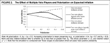
The numerical simulations generating the second and third propositions, which are most relevant to the delegation case, are illustrated in Figure 2. Differences in preferred outcomes of the two veto players are modeled as mean-preserving polarization of the preferences, where “mean-preserving” is defined as an increase in |bN-bA| holding (bN-bA)/2 constant. The addition of a second veto player always reduces expected inflation provided that the interests of the two veto players are divergent; as the third result predicts, this effect is much stronger when the non-agenda setter is less inflation tolerant than the agenda setter. This two-veto player outcome is the benchmark against which to compare the effect of an independent central bank subsequently.

The Introduction of an Independent Central Bank
The key attribute of an independent central bank is that it, rather than the private sector, sets the default rate of inflation that political veto players must accept if they choose not to override it. After the private sector has acted and the supply shock has occurred, the central bank determines an inflation policy and it is this inflation policy that prevails if the two veto players do not act. The two veto players determine whether to accept the central bank's policy. If they overturn it and then do nothing, then the private sector's contractual price increases become final inflation. Consequently, the policy that prevails should they revoke the central bank's independence is precisely the policy derived earlier when there is no central bank. This policy is labeled πCH, the inflation policy under checks and balances. The central bank has an effect on policy, therefore, to the extent that it can change the default or status quo rate of inflation relative to what would prevail in its absence.
The central banker's loss function and preferred inflation policy are, respectively,

and

Three assumptions make the analysis more compelling. First, the central bank is assumed to be more inflation-averse than either of the political actors (bCB < bA,bN). Second, for simplicity, the central banker always prefers any inflation outcome lower than the inflation that would prevail were he/she to be overridden, πCH. Third, to avoid trivial cases, the most inflation-averse veto player prefers the outcome under checks and balances to the most preferred outcome of the central banker. The third assumption means that central banker's preferred inflation outcome, π*, is such that πA − π*≥ πCH-πA when bA < bN and πN − π*≥ πCH-πN when bN < bA.9
This simplification, without loss of generality, simply eliminates the case where the central banker just chooses his/her own preferred inflation outcome.
Since πCH, the inflation policy that the two veto players can agree on if they override the central bank, is a key constraint on central bank decision making, the same four cases that affect the calculation of πCH also influence the policy choice of the central bank. Private actors therefore set expected price increases, establishing expected inflation, using Eq. (8), for bA < bN, following the same logic as for Eq. (5).

In the earlier section, the inflation rate contracted by the private sector was labeled πSQ, to denote that it constituted the status quo outcome. Since this is no longer the case in the presence of a central bank, Eq. (8) labels the private sector's inflation rate πeCB, to denote that it is the expected inflation calculated by private actors in the presence of a central bank.
The key difference in Eq. (8) is that the inflation policy that prevails under each of the four cases is simply the override-proof policy chosen by the central bank after having observed the shock. For example, consider a supply shock such that Case I is realized, πeCB < πA < πN. If the central bank were overridden, the agenda setter would propose and the other veto player would accept the agenda setter's preferred inflation outcome, or πCH = πA. Knowing this, the central banker can do no better than to propose the agenda setter's preferred inflation outcome, π = 2πA-πCH = πA. In Case II, the inflation outcome in the event of an override of the central bank's proposal is the default outcome, or πCH = πeCB, so that the central bank proposes π = 2πA − πeCB, the inflation outcome that is no further from the agenda setter's preferred outcome than the default outcome.
If the non-agenda setter is less tolerant of inflation, bN < bA, the central bank then sets policy such that the non-agenda setter has no incentive to agree to reverse the central bank. The cases remain the same as before, but the override-proof policy is now the one that leaves the non-agenda setter just indifferent between the central bank's policy and the pursuit of an override. The derivation of expected inflation in this case is given in Appendix 3. The solutions for expected inflation in both cases (the agenda setter less and more tolerant of inflation) are derived in Appendix 3 and given by Eqs. (A.14) and (A.15).
As before, there is no simple closed-form expression for expected inflation with an independent central bank, but numerical simulations can be used to generate three relevant propositions. First, delegation of monetary policy to a more conservative central banker always lowers expected inflation when there are multiple veto players. Second, the central banker is able to pursue a lower inflation policy as polarization of the political actors increases. Third, just as the addition of a second veto player makes the most difference when the agenda setter is more tolerant of inflation, so too does the addition of an independent central bank.
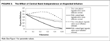
The numerical simulations illustrated in Figure 3 yield each of these predictions. In each case, an independent central bank achieves lower inflation than two veto players alone, and the difference in inflation outcomes grows as polarization between the two veto players grows, but the biggest impact of an independent central bank occurs when the agenda setter is more inflation-tolerant. The latter claim can be verified by comparing the distances between the top and the bottom lines and between the two middle lines in Figure 3.

WHY ARE INDEPENDENT CENTRAL BANKS CREATED?
Unlike the central banking literature, our model specifies the conditions under which politicians might override decisions made by a central bank. We give less attention to another issue: Why do politicians delegate to an agency that might be more inflation-averse than they are? However, the analysis above is consistent with substantial research, beginning with Rogoff 1985, that shows that even an inflation-tolerant political actor might prefer to delegate authority to a conservative central banker in the presence of unpredictable economic shocks.10
Figures 1 and 2 track expected inflation, not the preferences of the veto players. One cannot infer from Figures 1 and 2, therefore, that the more inflation-tolerant agenda setter would always block the introduction of an independent central bank. On the contrary, the fact that expected inflation is higher when the more inflation-tolerant veto player controls the agenda provides a rationale for that agenda setter to support the introduction of a conservative central bank.
As a factual matter, moreover, many governments inherit central bank legislation approved by earlier governments, frequently earlier governments controlled by inflation-averse political parties that established a central bank fearing a future in which more inflation-tolerant parties might take office. For example, Boylan (1998) has shown that the current strong independence of the Chilean central bank was introduced during the Pinochet era. The United States Federal Reserve Act was passed in an extraordinary session of Congress in 1913, when the Democrats were in control of both houses and the presidency (Laughlin 1914; Leake 1917).11
Debate over the Federal Reserve Act was focused almost exclusively on banking regulation rather than on the inflation-fighting characteristics of an independent central bank, however.
TESTING THE HYPOTHESES
The model underlines the importance of taking political institutions and preferences into account when examining the impact of administrative arrangements such as central bank independence. Three predictions that emerge from the foregoing analysis are tested below.
- The presence of a legally independent central bank should have a more negative effect on inflation in the presence of multiple veto players.
- The presence of a legally independent central bank has a more negative effect on inflation when different veto players have more divergent preferences over inflation.
- Political interference, such as replacement of central bank governors, is less likely when multiple veto players are present and when veto players have divergent preferences over inflation.
Prediction 1 has been tested previously by Moser (1999), in a sample restricted to OECD countries, and by Keefer and Stasavage (2002), in a paper using only one proxy for checks and balances.12
Lohmann (1998) conducts time-series tests using German data, which also support Prediction 1.
This prediction does, however, involve “out of equilibrium” behavior—in our model central bank governors are never replaced, because they avoid choosing a rate of inflation that would be overridden by both political veto players. In practice this might happen if the outside opportunities of the central bank governor are adversely influenced by a weak central bank stance against inflation.
Data
Following standard practice, in our tests of hypotheses 1 and 2 we use average levels of inflation as our dependent variable and, more specifically, the log of average inflation.14
This is based on consumer price index data from the IMF, International Financial Statistics. An alternative dependent variable used by Cukierman, Webb, and Neyapti (1992) is π/(1 + π).
Following the initial study by Cukierman, Webb, and Neyapti (1992), we divide the three periods as follows, 1960–71, 1972–79, 1980–89.
Our measure of legal central bank independence (CBI) was developed by Cukierman, Webb, and Neyapti (1992), based on 16 characteristics of central bank statutes such as the term of office for the governor, provisions for his or her replacement, limits on central bank lending to government, and procedures for resolution of conflicts between central bank and government.16
We use Cukierman, Webb, and Neyapti's (1992) weighted index, which they call I_VAW.
These authors have also collected data on replacement of central bank governors. Cukierman, Webb, and Neyapti (1992) argue that high turnover of central bank governors is indicative of low independence, and they show that the rate of turnover is positively and significantly correlated with inflation in a sample including both developed and developing countries.17
These data have recently been updated and corrected by Sturm and de Haan (2001).
In a few cases governor turnover could not be coded because a country did not experience a change of government during the period. This results in the exclusion of only four potential observations from our Table 3 regressions.
With respect to checks and balances in government, one would ideally like to have separate measures on the number of political actors who exercise veto power over monetary policy, their inflation preferences, and their respective agenda-setting power. These variables are not available in the cross-country setting that we seek to examine, so we instead employ two recently recently developed measures of checks and balances.19
Our results are also robust to the use of executive constraints, a variable from the Polity IV database. Unlike the two measures that are reported here, this is a subjective measure of the extent to which there are “checks” on the executive.
All of the results we report are robust to using a version of political constraints that excludes the judiciary as a veto player. Details on the construction of this index can be found in Henisz 1997.
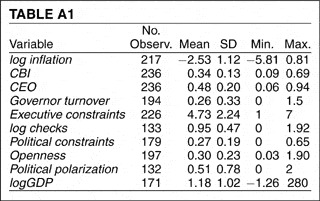
A second measure of checks and balances, developed by Keefer (2002), also has the advantage of being based on objective criteria and of capturing the existence of coalition governments or divided control of two chambers in a bicameral system. In addition, unlike political constraints, the checks variable is explicitly incremented when a party in the government has an economic policy orientation closer to that of the main opposition party than to that of the party of the executive. More generally, checks is based on a formula that first counts the number of veto players, based on whether the executive and legislative chamber(s) are controlled by different parties in presidential systems and on the number of parties in the government coalition for parliamentary systems (as described in greater detail in Beck et al. 2001). The index is then modified to take account of the fact that certain electoral rules (closed list vs. open list) affect the cohesiveness of governing coalitions. The variable is constructed based on variables in a new database of political institutions assembled by Beck et al. (2001) and is available for the last two decades of our sample (1972–89). Since the effects of checks and balances hypothesized in the model are likely to be strongest at lower levels of checks than at higher levels, we use a log version of checks, log checks, in our regressions.21
Otherwise this variable would give as much weight to a change from one to two veto players as to a change from four to five; since our model speaks to the first case and is silent about the second, the log formulation is more appropriate.
The measures developed by Keefer (2002) and Henisz (2000) capture the number of veto players as well as can be done in a cross-country setting that includes both OECD and developing countries. Both of these indicators rise with the number of veto points (depending upon the number of legislative chambers) and fall when the veto points are occupied by the same political party (depending on whether majorities are multiparty coalitions).
There is no measure available that precisely assesses the policy distance between veto players. However, to test Prediction 2 we use a reasonable substitute, the political polarization variable from the Database of Political Institutions (Beck et al. 2001). The database reports the economic orientation of the four largest parties and the executive in each country, based on whether the data sources indicated parties as having an economic orientation that was left, center, or right. Pairwise comparisons of economic orientation are made; the difference in economic orientation between the pair of veto players exhibiting the largest difference in orientation is the political polarization measure. Given the way it is constructed, the political polarization measure is a reasonable proxy for the degree to which the preferences of veto players diverge. In addition, however, since it takes a value of zero for systems with only one veto player, it is simultaneously a proxy for the number of veto players in a country.
We use one additional control variable, openness, measured as imports of goods and services divided by GDP (International Financial Statistics). This follows Romer (1993), who argues that as imports increase as a share of total consumption, policymakers have less of an ex post incentive to inflate. We also follow Cukierman, Webb, and Neyapti (1992) and include decade dummy variables to control for unobserved characteristics specific to each time period.
Testing Predictions 1 and 2: Checks and Balances, Polarization, and Central Bank Independence
In order to examine whether legal CBI has a stronger negative impact on inflation in countries with multiple veto players, and in cases where veto players are more polarized, we use a model with interaction terms that allows the marginal effect of CBI on inflation to vary across political systems. The general form of Regressions 2 and 3 in Table 2 is shown in Eq. (9), where pol. inst. represents our alternative proxies for the number of veto players in government and the degree of polarization between veto players.


The interaction term is predicted to have a negative coefficient. The net effect of CBI, given by β1 + β3 * (pol. inst.), should be to reduce inflation only at high levels of checks and balances (or at high levels of polarization).
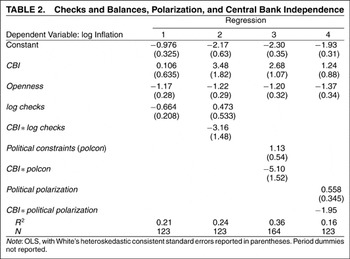
Regression 1 in Table 2 suggests that, although there is some theoretical ambiguity about the effects of multiple veto players on inflation, in practice the introduction of multiple political veto players may be to reduce inflation: The coefficient on log checks is negative and significant. As in previous research, legal CBI has no significant impact on inflation when it enters linearly in a sample including both OECD and developing countries, and openness is significantly and negatively correlated with inflation. The variable political constraints is similarly significant, economically and statistically, when substituted for log checks in the Regression 1 specification.
Regression 2 suggests that the effect of CBI on inflation is conditional on the presence of checks and balances in government. Consistent with Prediction 1, the interaction term CBI *log checks is negative, and an increase in CBI is estimated to have a negative effect on inflation only at high levels of checks and balances. Regression 3 produces very similar results. The interaction term CBI * polcon is negative and statistically significant.
In Regression 4 we extend the inquiry to consider whether the effect of CBI is influenced by both the number of veto players and their degree of polarization. The variable political polarization captures exactly this effect, since it is zero when there is only one veto player, while in systems with more than one veto player political polarization can take on a positive value ranging from zero to two as veto player preferences over economic policy diverge.
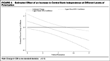
The coefficient on the interaction term CBI * political polarization in Regression 4 is negative and statistically significant, supporting Prediction 2. This result in Regression 4 is also robust to the linear inclusion of log checks to the regression. Figure 4 plots the estimated effect of an increase in CBI, together with its standard error, and different levels of political polarization. The model predicts that an increase in CBI will have a negative impact on inflation only at relatively high levels of polarization (political polarization > 0.6). This corresponds roughly to the mean value of political polarization for the group of countries in which political polarization is not equal to zero. This result is consistent with the predictions of our theoretical model, as it suggests that multiple veto players with divergent preferences must be present for CBI to have a significant impact.

The results in Regressions 2 and 3 bear on an unresolved puzzle in empirical work on CBI. A number of papers have found a statistically significant relationship between legal measures of CBI and inflation in advanced industrialized economies.22
See, for example, Alesina and Summers 1993, Cukierman, Webb, and Neyapti 1992, and Grilli, Masciandro, and Tabellini 1991.
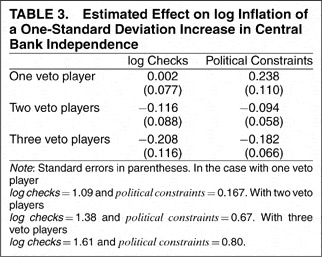
Table 3 reports the estimated effect of a one π standard deviation increase in CBI (0.13) at different levels of each of our proxies for checks and balances used in Regressions 2 and 3. It also reports the conditional standard errors of these effects, which depend on the variance of both the linear and the interactive CBI terms, as well as their covariance. To facilitate comparison, we have chosen values for each of the two variables that would reflect a political system with one, two, or three veto players. Table 3 provides additional evidence that in each case an independent central bank reduces inflation only where multiple veto players are present, as the theory predicts.

Cases of Conflict from the Bundesbank and the Fed
Qualitative evidence emerging from specific instances of confrontation between central bankers and political decision makers provides further support for the analysis here. For example, during the Gürzenich Affair of 1955–56, the German Bundesbank was able to insist on a course of action strongly opposed by Chancellor Konrad Adenauer precisely because members of his cabinet, Ludwig Erhard and Fritz Schäffer, supported the central bank. As Berger and de Haan (1999) document, although they were not formal veto players, these two were highly influential within the Christian Democratic Party and, more to the point, represented different interests. Adenauer sought a looser money supply to satisfy the demands of major industrial interests who were important contributors to the party; the two cabinet members were able to rely on broader public support for the autonomy of the Bundesbank. Two elements of this story are especially important. First, the two cabinet ministers were de facto veto players. Although public opposition to restricting the authority of the Bundesbank eventually emerged, internal cabinet opposition to Adenauer's actions seems to have been key to representing public opinion against the interests of industrialists. Only if they had de facto veto power could these two ministers have accomplished this. Second, although it is inaccurate to speak of the “agenda-setting” authority of Adenauer versus his cabinet ministers, there is little doubt that his bargaining power was greater than that of his two ministers, given his status in the party and as Chancellor. Despite this—but as the model predicts—the Bundesbank was able to get nearly everything it wanted in the conflict with the support of these two ministers.
Wooley (1984, 144–47) documents several instances of conflict among the U.S. Federal Reserve, Congress, and the President. In 1975, at the trough of a two-year-old recession, Federal Reserve policy was markedly more conservative than either the Republican President Ford or the Democratic Congress desired. At the outset of the 1975 Ninety-Fourth Congress, several committee chairmen were replaced and the more liberal Henry Reuss took over the House Banking Committee, assuming a position of agenda control. He immediately introduced legislation requiring the Fed to expand the money supply at a rate of 6% per year. Within days, however, he agreed to replace this proposal with a substantially weaker one, calling only for the Fed to increase the money supply in the first half of 1975 and to maintain long-run growth in the money supply consistent with long-run potential output growth. This bill was passed and signed by the President. Since the bill had no binding effect (Wooley [147] describes it as “toothless and compromised”), one is left to ask why stronger legislation did not succeed. The analysis here suggests that the move toward a less inflation-averse agenda setter had little effect on policy because other, more conservative veto players remained the same (e.g., the Republican president). These veto players were constrained by concerns about the inflation outcome that would have prevailed should they have overturned Fed policy. Knowing this, the Fed was able to pursue a more aggressive policy than the veto players preferred.
Testing Prediction 3: Checks and Balances, Polarization, and Political Influence on Central Banks
If our primary thesis is correct, then in addition to influencing observed policy outcomes, checks and balances and polarization should also have an impact on the degree to which a central bank is subject to political influence. We examine this issue by proxying for political influence with a variable collected by Cukierman and Webb (1995), which measures the frequency with which central bank governors are replaced in the six months following elections. As argued above, while even this variable is likely to be an imperfect proxy for political influence, it is a better proxy than measures that focus on the overall rate of turnover for central bank governors. We test two alternative versions of the hypothesis.
First, to the extent that the decision to replace a central bank governor must be agreed to by more than one veto player, then we should expect more infrequent turnover of central bank governors in countries with multiple veto players in government, in particular, in countries where there is evidence that there are multiple veto players with divergent preferences. This might be the case, for example, in a country with a coalition government where all coalition members might have a say in any decision to replace the central bank governor. Because our variable governor turnover is a direct measure of the frequency of policy change, this is a straightforward prediction.23
In contrast, in our Table 1 regressions the dependent variable, inflation, is not a direct measure of the frequency of policy change, and as a result, predictions about the effect of checks and balances on inflation depend on other intervening variables.
We also test a second version of Prediction 3. Logically it should be the case that the replacement of governors will become more difficult when a central bank's statutes offer tenure guarantees and when there are multiple political veto players with different preferences over economic policy. The most relevant tenure guarantees would involve a long term of office and provisions making it difficult for the central bank governor to be replaced in the case of a conflict over policy. In countries where decisions over replacing the central bank governor would normally be made by a single veto player, then legal guarantees of tenure can have the effect of increasing the number of veto players whose accord is necessary to replace the central bank governor. So, for example, in the absence of tenure guarantees, the executive alone might be able to dismiss the central bank governor, but once such guarantees are in place, both the executive and the legislature would need to agree to pass a law removing the tenure guarantees before the governor could be removed from office. In contrast, in countries where there is only one veto player, it may be as easy to alter legal restrictions on dismissal as it would be to remove a central bank governor in a country without such restrictions. Given that we lack accurate data on the number of veto players that would normally be able to block an attempt to remove the central bank governor, in what follows we test both variants of Prediction 3.
Equation (10) is the specification of a test of this hypothesis (recalling that CEO measures legal protection of the tenure of the central bank governor and governor turnover measures the frequency with which central bank governors are replaced following changes in government).24
CEO is itself composed of four subindexes that measure legal length of tenure for the central bank governor, restrictions on dismissal of central bank governors in cases of policy conflict, provisions regarding appointment of governors, and restrictions on governors holding other positions simultaneously. A large number of missing observations in the individual subindexes made it impossible to use them individually. However, given that the subindexes regarding length of tenure and restrictions on dismissal are the most closely suited to testing Prediction 3, we also repeated Regressions 1–6 from Table 3 using an index equal to the average of these two variables. The results were similar to those reported here, in particular, for Regressions 1–3.

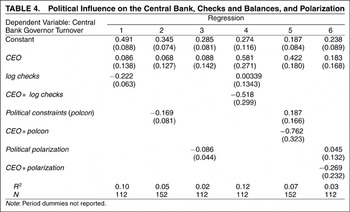
Table 4 reports the estimates from six versions of (10). We begin in Regressions 1–3 by asking only whether governor turnover following elections is less frequent in countries with multiple veto players in government. These regressions therefore test the first variant of Prediction 3, that checks and balances in government should directly reduce the rate of governor turnover. The coefficients on both proxies for the number of veto players are negative and significant, as is the coefficient on political polarization. Political interference with central banks is less frequent in countries with multiple veto players having divergent preferences.

In Regressions 4–6 we consider the second variant of Prediction 3: Tenure guarantees should be more effective in reducing governor turnover in countries where there are multiple veto players in government and where veto players are polarized. That is, we expect the interaction term pol. inst. * CEO to be negative. In each of the three regressions the interaction term has the expected negative sign and is statistically significant for log checks and political constraints. An increase in tenure protections CEO reduces governor turnover only in the presence of multiple veto players (or polarized veto players in the case of political polarization). However, the conditional standard error of this effect is quite sizable in all regressions—even at very high levels of checks and balances, it is impossible to reject the hypothesis that the effect is zero. We therefore find strong evidence to support the conclusion that the presence of multiple polarized veto players reduces political influence on central banks and significant, but weaker evidence that multiple veto players increase the effectiveness of legal protections for central bank governors.
Robustness
A number of possible concerns could be raised about our core empirical results. These include the possibilities that they are driven by serial correlation, by the endogeneity of legal CBI to inflation or lagged inflation, by the effect of omitted variables, or by outliers. The evidence presented in this section indicates that these do not provide plausible alternative explanations of our empirical findings.
Results of Lagrange multiplier tests suggest that serial correlation of the error terms might have led to inconsistent estimates of standard errors in the tests in Table 1. However, the results in Table 1 are robust to controls for serial correlation (that is, the inclusion of log inflation, lagged one period). At the same time, it is possible that CBI is endogenous to inflation. Empirically, in our sample we find little evidence that central bank independence is endogenous to lagged inflation; nor is CBI endogenous to contemporary inflation.
A potential omitted variable in our regressions is income per capita. A country's level of income might simultaneously influence both inflation and the efficacy of an independent central bank. However, when entered into our Table 1 regressions, the log of real GDP per capita is never significant and leaves the estimates of the interaction terms nearly unchanged. Given that our checks and balances measures are highly correlated with levels of per capita GDP, we also consider whether the significance of our interaction terms CBI * checks simply reflects the previous finding that legal CBI has a more negative effect on inflation in wealthy countries. To assess this possibility, we compare the explanatory power of the specifications in Table 1 with a specification that substitutes logGDP and logGDP * CBI for the respective checks variables and checks * CBI variables. Using J tests first proposed by Davidson and MacKinnon (1981), we rejected the GDP specification in favor of the original specifications in Table 1, Regressions 2–4. In Regression 5 we rejected the political polarization specification in favor of the GDP specification.25
These tests involve estimating the two alternative specifications and then reestimating each specification, adding as an independent variable the predicted value of log inflation from the alternative model. The t statistic on the fitted values can be interpreted as a test of the null that the alternative specification would not add explanatory power to the existing model.
Our results are also robust to two other variables omitted in Table 1, and to the exclusion of influential outliers.26
Outliers were identified using dfbeta statistics for the coefficients on our political variables, as well as calculation of Cook's distance for individual observations. No countries were repeated outliers across the different regressions in Tables 1 and 3.
Following Romer 1993 and Franseze 1999, we added the interaction term CBI * openness to the Table 1 specifications and found that it was never significant. More importantly, the CBI * checks interaction terms generally retain their significance.
First, the correlation between three measures of political instability and the checks variable (all from the Database of Political Indicators) is slightly positive (7%) in two cases and negative (−17%) in a third case. Second, our regression results are robust to the inclusion of instability.
CONCLUSION
Multiple veto players and delegation to independent agencies have attracted great attention as institutional mechanisms through which governments can enhance the credibility of their commitments. This paper advances our understanding of the role of veto players and delegation in several ways and tests these advances in the context of independent central banks in a broad set of countries.
We rigorously identify theoretically and empirically the conditions under which additional veto players can mitigate the problem of credible commitment. Our analysis goes beyond the problem of policy stability that is the focus of much of the current veto player literature. In addition, the analysis shows that the impact of veto players depends on the certainty with which players can anticipate future status quo or default outcomes. Multiple veto players have more limited effects in more volatile policy environments characterized by exogenous shocks.
With respect to the literature on delegation, the argument here highlights an additional effect of delegation not typically discussed. Delegation enhances credible commitment, and does so the more divergent are the interests of the competing veto players and, especially, the closer are the interests of the non-agenda setter to those of the agency to which authority has been delegated.
The evidence for many of these points is direct, and unlike much of the empirical evidence in this area, it derives from diverse institutional settings in the developed and developing world. Central banks are associated with lower inflation (that is, greater credibility of government monetary policy) in the presence of checks and balances, and the turnover of central bank governors is reduced when governors have tenure protections supported by political checks and balances. We find as well, and consistent with the theory, that the impact of checks and balances on inflation (credibility) is greater in more polarized societies.
These results suggest that policy reformers face frustration if, in the absence of appropriate political institutions, they grant policymaking authority to formally independent agencies. It is undeniable that these institutions, such as courts and central banks, can sometimes achieve a high level of prestige and respect such that citizens are willing to turn out governments that abridge their independence. However, at least in the case of central banks, the evidence suggests that prestige alone is insufficient to guarantee independence. Political institutions, instead, are crucial to the sustainability and effectiveness of decision making by independent agencies.
APPENDIX 1: SUMMARY STATISTICS AND THE CHECKS AND POLITICAL POLARIZATION MEASURES

APPENDIX 2: DERIVATION OF EXPECTED INFLATION UNDER CHECKS AND BALANCES
Private actors solve for expected inflation using Eq. (5), rewritten here as

where the qi's are the probabilities of each of the four decision-making outcomes and sum to one, and the
are the expected values of the range of economic shocks over which these four possible outcomes can occur.
The probability q1, describes the likelihood that the shock will be such that πe < πA < πN. That is,

or

Similarly, q2 is the probability that πA < πe < πN, or

q3 is pr [lfloor ]πN < πe < 2πN-πA[rfloor ], or

and q4 is pr [lfloor ]πN < 2πN-πA < πe[rfloor ], or

Set K = [(1 + bA)(1 + bN)]/[(1 + bA)2bN + (1 + bN)bA]. In order to fix the value of inflation that they expect, the private actors solve for the qi's and εi's in terms of the parameters and expected inflation. They then substitute the resulting terms into Eq. (5) and solve for expected inflation in terms of desired output and the preference parameters bi. To carry out this exercise, assume that ε is distributed uniformly over the range [−c, c]. Given this uniform distribution, (A.1) can be rewritten

The average value of the shock over this range,
, is therefore

Proceeding in a parallel fashion with the remaining probabilities,


Substituting these expressions into Eq. (5) and manipulating gives the following:

If bA > bN, a similar analysis can be performed. In this case, though, the probabilities q attached to the inflation outcomes in Eq. (5) are reversed:

and

Substituting these, and the corresponding values for
, into Eq. (5) and solving yields the following expression for expected inflation when the executive is more inflation-tolerant than the legislature:

APPENDIX 3: DERIVATION OF EXPECTED INFLATION UNDER CHECKS AND BALANCES WITH AN INDEPENDENT CENTRAL BANK
Rewriting Eq. (8), for bA < bN, expected inflation is given by

If the veto players override the central bank's proposal after the shock is revealed and the private actors have set expected inflation, the political actors make their determination of a new inflation policy exactly as if there were no central bank. The probabilities qi and the expected shocks
are calculated over the same limits as in the corresponding case in Appendix 2 (bA < bN), with no central bank.
As in Appendix 2, substituting the expressions for the probabilities and expected shocks into Eq. (13) and manipulating, we obtain the following expression for expected inflation under CBI and checks and balances:

Since the central bank conditions its policy choice on the preferences of the most inflation-averse political decision maker, the case where bA > bN changes the payoffs that generated (A.14). In particular, the central bank does not propose policies such that the agenda setter is just indifferent between the proposal and what would prevail if the central bank decision were overridden and the checks and balances outcome (πCH) prevailed, π = 2πA-πCH. Instead, the central bank proposes π = 2πN-πCH, such that the non-agenda setter is just indifferent. Expected inflation is therefore the solution to

The probabilities qi and the expected shocks
are calculated over the same limits as in the corresponding case (bA > bN) in Appendix 2. Solving, we get the following solution:

References
Alesina Alberto
Lawrence Summers
1993
Central bank independence and macroeconomic performance: Some comparative evidence
Journal of Money, Credit and Banking
25
May
151-62Google Scholar
Barro Robert
David Gordon
1983
A Positive Theory of Monetary Policy in a Natural Rate Model
Journal of Political Economy
91
August
589
610Google Scholar
Barro Robert
David Gordon
1983
Rules, Discretion and Reputation in a Model of Monetary Policy
Journal of Monetary Economics
12
July
101-20Google Scholar
Bawn Kathleen
1997
Choosing strategies to control the bureaucracy: statutory constraints, oversight and the committee system
Journal of Law, Economics and Organization
13
April
101-26Google Scholar
Beck Thorsten
George Clarke
Alberto Groff
Philip Keefer
Patrick Walsh
2001
New Tools in Comparative Political Economy: The Database of Political Institutions
World Bank Economic Review
15
1
165-76Google Scholar
Berger Helge
Haan Jakob de
1999
A State within the State? An Event Study on the Bundesbank
Scottish Journal of Political Economy
46
February
17
39Google Scholar
Boylan Delia M.
1998
Preemptive Strike: Central Bank Reform in Chile's Transition from Authoritarian Rule
Comparative Politics
30
4
443-62Google Scholar
Cukierman Alex
Steven Webb
1995
Political Influence on the Central Bank: International Evidence
World Bank Economic Review
9
September
397
423Google Scholar
Cukierman Alex
Steven Webb
Bilin Neyapti
1992
Measuring the Independence of Central Banks and Its Effect on Policy Outcomes
World Bank Economic Review
6
September
353-98Google Scholar
Davidson Russell
MacKinnon James G.
1981
Several Tests for Model Specification in the Presence of Alternative Hypotheses
Econometrica
49
May
781-93Google Scholar
Epstein David
Sharyn O'Halloran
1999
Delegating Powers: A Transaction Cost Politics Approach to Policy Making Under Separate Powers
New York
Cambridge University Press
Franzese Robert J. Jr
1999
Partially Independent Central Banks, Politically Responsive Governments, and Inflation
American Journal of Political Science
43
3
681
706Google Scholar
Grilli Vittorio
Donato Masciandro
Guido Tabellini
1991
Political and Monetary Institutions and Public Financial Policies in the Industrial Countries
Economic Policy
6
October
342-92Google Scholar
Henisz Witold
2000
The Institutional Environment for Economic Growth
Economics and Politics
12
March
1
31Google Scholar
Jensen Henrik
1997
The Credibility of Optimal Monetary Delegation
American Economic Review
87
December
911-20Google Scholar
Keefer Philip
2002
Politics and the Determinants of Banking Crises: The Effects of Political Checks and Balances
Banking, Financial Integration, and International Crises
Leonardo Hernandez
Klaus Schmidt-Hebbel
Santiago
Central Bank of Chile
85–112
Keefer Philip
David Stasavage
2002
Checks and Balances, Private Information and the Credibility of Monetary Commitments
International Organization
56
Autumn
751-74Google Scholar
Kydland Finn
Edward Prescott
1977
Rules Rather than Discretion: the Inconsistency of Optimal Plans
Journal of Political Economy
85
June
473-91Google Scholar
Laughlin J. Laurence.
1914
The Banking and Currency Act of 1913: I
Journal of Political Economy
22
4
293
318Google Scholar
Leake James Miller.
1917
Four Years of Congress
American Political Science Review
11
2
252-83Google Scholar
Lohmann Susanne
1992
Optimal Commitment in Monetary Policy: Credibility versus Flexibility
American Economic Review
82
March
273-86Google Scholar
Lohmann Susanne
1998
Federalism and Central Bank Independence: The Politics of German Monetary Policy, 1957–1992
World Politics
50
April
401-46Google Scholar
Lupia Arthur
McCubbins Mathew D.
2000
Representation or Abdication? How Citizens Use Institutions to Help Delegation Succeed
European Journal of Political Research
37
3
291
307Google Scholar
McCubbins Mathew
Roger Noll
Barry Weingast
1987
Administrative Procedures as Instruments of Political Control
Journal of Law, Economics and Organization
3
Fall
243-77Google Scholar
Moser Peter
1999
Checks and Balances, and the Supply of Central Bank Independence
European Economic Review
43
August
1569-93Google Scholar
North Douglass
Barry Weingast
1989
Constitutions and Commitment: The Evolution of Institutions Governing Public Choice in Seventeenth-Century England
Journal of Economic History
49
December
803-32Google Scholar
Rogoff Kenneth
1985
The Optimal Degree of Commitment to an Intermediate Monetary Target
Quarterly Journal of Economics
100
November
1169
1990Google Scholar
Romer David
1993
Openness and Inflation: Theory and Evidence
Quarterly Journal of Economics
108
November
869
903Google Scholar
Romer Thomas
Howard Rosenthal
1979
Bureaucrats versus Voters: On the Political Economy of Resource Allocation by Direct Democracy
Quarterly Journal of Economics
93
November
563-87Google Scholar
Shepsle Kenneth
Barry Weingast
1981
Structure-Induced Equilibrium and Legislative Choice
Public Choice
36
3
503-19Google Scholar
Stasavage David
2003
Public Debt and the Birth of the Democratic State: France and Great Britain 1688–1789
New York
Cambridge University Press
Sturm Jan-Egbert
Haan Jakob de
2001
Inflation in Developing Cantries: Does Central Bank Independence Matter? New Evidence Based on a New Data Set
Ifo Studien
47
4
389
403Google Scholar
Tsebelis George
1995
Decision Making in Political Systems: Veto Players in Presidentialism, Parliamentarism, Multicameralism and Multipartyism
British Journal of Political Science
25
3
289
325Google Scholar
Tsebelis George
2002
Veto Players: How Political Institutions Work
Princeton, NJ
Princeton University Press
Walsh Carl E.
1998
Monetary Theory and Policy
Cambridge, MA
MIT Press
Weingast Barry
Mark Moran
1983
Bureaucratic Discretion or Congressional Control? Regulatory Policymaking by the Federal Trade Commission
Journal of Political Economy
91
October
765
800Google Scholar
Wooley John T.
1984
Monetary Politics: The Federal Reserve and the Politics of Monetary Policy
New York
Cambridge University Press

Setting Monetary Policy in Four Institutional Frameworks
Checks and Balances, Polarization, and Central Bank Independence
Estimated Effect on log Inflation of a One-Standard Deviation Increase in Central Bank Independence
Political Influence on the Central Bank, Checks and Balances, and Polarization
 You have Access
- 363
- Cited by
Comments
No Comments have been published for this article.