Ultra High Temperature (UHT) milk is one of the most important global dairy products with a shelf-life of several months to one year. However, in some cases spoilage of this product occurs before expiry date. Many studies indicated that presence of both plasmin (endogenous protease of the milk) and heat-resistance bacterial proteases are the major reasons for this issue (Datta and Deeth, Reference Datta and Deeth2003; Marchand et al., Reference Marchand, Coudijzer, Heyndrickx, Dewettinck and De Block2008; Richards et al., Reference Richards, De Kock, Duodu and Buys2014; Zhang et al., Reference Zhang, Bijl and Hettinga2018). Comparative studies also indicated that bacterial proteases have greater activity than endogenous ones in milk (Richards et al., Reference Richards, De Kock, Duodu and Buys2014; Zhang et al., Reference Zhang, Bijl and Hettinga2018). The prolonged refrigerated storage of raw milk, either in farms or processing plants, changes the microbiota towards numerous genera of psychrotrophic bacteria with the ability to synthesize heat-resistant hydrolytic enzymes (Martins et al., Reference Martins M, de Araújo, Mantovani, Moraes and Vanetti2005; Dufour et al., Reference Dufour, Nicodème, Perrin, Driou, Brusseaux, Humbert, Gaillard and Annie2008; Marchand et al., Reference Marchand, Vandriesche, Coorevits, Coudijzer, Jonghe, Dewettinck, De Vos, Devreese, Heyndrickx and De Block2009; Baur et al., Reference Baur, Krewinkel, Kranz, von Neubeck, Wenning, Schereret, Stoeckel, Hinrichs, Stressler and Fischer2015; von Neubeck et al., Reference von Neubeck, Baur, Krewinkel, Stoeckel, Kranz, Stressler, Fischer, Hinrichs, Scherer and Wenning2015; Yuan et al., Reference Yuan, Sadiq, Liu, Flint, Chen, Yang, Gu, Zhang and He2017; Zhang et al., Reference Zhang, Li, Palmer, Teh, Leow and Flint2020). The Pseudomonas genus is predominant in this respect, and a relationship between the numbers of Pseudomonas bacteria in the raw milk and the effect on the UHT product quality has recently been shown (Zhang et al., Reference Zhang, Li, Palmer, Teh, Leow and Flint2020).
This genus is recognized as one of the most diverse bacterial genera with the highest number of species (Mulet et al., Reference Mulet, Lalucat and García-Valdés2010; Garrido-Sanz et al., Reference Garrido-Sanz, Meier-Kolthoff, Göker, Martín, Rivilla and Redondo-Nieto2016). Due to their ability to grow at low temperatures, they outgrow other bacteria in milk and thus, Pseudomonas spp. account for more than 50% of the total bacterial population in milk (Fricker et al., Reference Fricker, Skånseng, Rudi, Stessl and Ehling-Schulz2011; von Neubeck et al., Reference von Neubeck, Baur, Krewinkel, Stoeckel, Kranz, Stressler, Fischer, Hinrichs, Scherer and Wenning2015; Meng et al., Reference Meng, Zhang, Liu, Zhao, Wang and Zheng2017). Producing heat-resistant extracellular proteases during growth is very common for Pseudomonas spp. The fact that current industrial heat treatment is not severe enough to deactivate them illustrates their importance in the dairy industry (Baur et al., Reference Baur, Krewinkel, Kranz, von Neubeck, Wenning, Schereret, Stoeckel, Hinrichs, Stressler and Fischer2015; Andreani et al., Reference Andreani, Carraro, Fasolato, Balzan, Lucchini, Novelli and Cardazzo2016; Glück et al., Reference Glück, Rentschler, Krewinkel, Merz, von Neubeck, Wenning, Scherer, Stoeckel, Hinrichs and Stressler2016).
Most of these classes of proteases are alkaline metalloproteases, called AprX, with apparent molecular mass of 45–50 kDa. By hydrolysis of casein during storage, deteriorations in age gelation, sedimentation and bitterness can result in long life milk (Datta and Deeth, Reference Datta and Deeth2003; Baglinière et al., Reference Baglinière, Matéos, Tanguy, Jardin, Briard-Bion, Rousseau, Robert, Beaucher, Gaillard and Amiel2013; Baur et al., Reference Baur, Krewinkel, Kranz, von Neubeck, Wenning, Schereret, Stoeckel, Hinrichs, Stressler and Fischer2015; Matéos et al., Reference Matéos, Guyard-Nicodème, Baglinière, Jardin, Gaucheron, Dary, Humbert and Gaillard2015; Andreani et al., Reference Andreani, Carraro, Fasolato, Balzan, Lucchini, Novelli and Cardazzo2016; Glück et al., Reference Glück, Rentschler, Krewinkel, Merz, von Neubeck, Wenning, Scherer, Stoeckel, Hinrichs and Stressler2016; Zhang et al., Reference Zhang, Bijl and Hettinga2018; Colantuono et al., Reference Colantuono, D'Incecco, Fortina, Rosi, Ricci and Pellegrino2020). Since the spoilage ability of Pseudomonas spp. varies depending on the strain, knowledge is needed about which strains are present in raw milk and their ability to produce heat-resistant proteases. Therefore, the objective of the present study was to isolate and identify Pseudomonas spp. with the highest proteolytic activity from Iranian raw cow's milk and investigate the impact of their heat-resistant enzymes on stability of sterilized milk during storage.
Materials and methods
Isolation of proteolytic psychrotrophic bacteria from raw cow's milk
Bacterial strains were isolated from raw milk samples (n = 100; 50 ml each) collected randomly from different dairy farms and vendors distributed in Khuzestan province, south-west Iran. Samples were collected aseptically in sterile bottles, shipped on ice to the laboratory and analyzed on the same day based on psychrotrophs isolation procedures. Each sample was diluted decimally with sterile saline solution and plated on plate count agar (PCA, Merck, Germany) supplemented with skim milk powder at a final concentration of 1% (w/v). The presence of a clear zone around the colonies due to hydrolysis of the caseins after incubation for 10 d at 7 °C was indicative of proteolysis. Proteolytic colonies (3–6 per plate) with distinguishable morphologies were picked up randomly and purified on PCA + 1% skim milk by two times (Andreani et al., Reference Andreani, Carraro, Fasolato, Balzan, Lucchini, Novelli and Cardazzo2016; Meng et al., Reference Meng, Zhang, Liu, Zhao, Wang and Zheng2017).
Phenotypic characterization of the genus Pseudomonas
Pure cultures of each strain were primarily identified based on common physiological and biochemical tests used to differentiate genus Pseudomonas. Gram staining, the oxidase and catalase tests, and the oxidative/fermentative metabolism (OF test) were used for the preliminary biochemical characterization (Caldera et al., Reference Caldera, Franzetti, Van Coillie, De Vos, Stragier, De Block and Heyndrickx2016). The suspected Pseudomonas isolates were grown in Tryptic Soy Broth (TSB, Merck, Germany) at 25 °C under aerobic conditions for 24 h and stored at −80 °C in 25% (v/v) glycerol for long-term conservation.
Detection of the aprX gene
Presumptive Pseudomonas colonies were individually grown overnight in 5 ml of TSB at 25 °C. DNA was extracted using the usual boiling method for 5 min and the extracted DNA was analyzed using agarose gel electrophoresis. The presence of the aprX gene, encoding for a known alkaline heat-resistant metalloprotease, was investigated using an aprX-PCR test, as detailed in the online Supplementary Materials and Methods (Duong et al., Reference Duong, Bonnet, Geli, Lazdunski, Murgier and Filloux2001; Marchand et al., Reference Marchand, Vandriesche, Coorevits, Coudijzer, Jonghe, Dewettinck, De Vos, Devreese, Heyndrickx and De Block2009).
Assessment of proteolytic activity
The proteolytic activity of all presumptive Pseudomonas isolates was examined by agar diffusion assay, as described by Lim et al. (Reference Lim, Foo, Loh, Mohamad and Abdullah2019), with some modifications. An aliquot of 10 μl of the bacterial suspension containing approximately 105 CFU/ml was spotted on PCA + 1% skim milk followed by incubation at 7 °C for 10 d. In order to obtain definitive results in semi-quantitative evaluation of the proteolytic activity and select the strains with the highest proteolytic activity, the diameters of the clear zones were measured in three independent replicates. Accordingly, the isolates were divided into four categories, including very strong (≥15 mm), strong (15 > d ≥ 10 mm) moderate (10 > d ≥ 5) and weak (<5 mm). Eventually, five isolates with the highest proteolytic activity were selected for molecular identification and performing further experiments.
Molecular identification
In order to confirm the allocation of the isolates to the genus Pseudomonas, 16S rRNA gene was amplified, using universal primers (McCabe et al., Reference McCabe, Zhang, Huang, Wagar and McCabe1999). The obtained PCR products were sequenced with 16S forward primer using a 310 automatic DNA Sequencer (Applied Biosystems, Foster City, CA, USA). The partial sequences of the 16S rRNA gene were BLASTed against the 16S rRNA GeneBank (NCBI) database. Since the analysis of 16S rRNA does not differentiate adequately to permit resolution of Pseudomonas intrageneric relationships, rpoD and gyrB genes were also amplified and sequenced (Yamamoto and Harayama, Reference Yamamoto and Harayama1998; Mulet et al., Reference Mulet, Bennasar, Lalucat and García-Valdé2009). Putative identifications of the Pseudomonas isolates were obtained through a combination of BLAST against the NCBI database for rpoD and gyrB genes. Details of the molecular identification are provided in online Supplementary File.
Multilocus sequence analysis (MLSA)
To accomplish the MLSA, partial sequences from the 16S rRNA, rpoD and gyrB genes of the representative Pseudomonas isolates and the type strains of the closest relatives were placed in the alignments. Reference sequences of type strains were downloaded from the PseudoMLSA database or directly from NCBI database (http://www.ncbi.nlm.nih.gov). All accession numbers of genes sequences used in this study are indicated in online Supplementary Table S2.
Alignments for each gene were carried out separately using ClustalW, and the longest common fragments were included in the analysis. This process resulted in the following sequence lengths: 16S rRNA – 660 bp, rpoD −756 bp and gyrB – 724–726 bp. Then, sequences were concatenated in the order of 16S rRNA-rpoD-gyrB, and realigned. This process created a 2212 bp long sequence, which was used for phylogenetic analysis by the MEGA 7.0 software. Based on the Bayesian information criterion, the optimal phylogenetic parameter of choice was Tamura-Nei (TN93) with Gamma distribution of rates among sites. Maximum-likelihood method was done based on the nucleotide substitution model with complete elimination of gaps or missing data, which resulted in a 1983 bp sequence in the final construct. Boot-strap analysis of 1000 replicates was performed to evaluate the phylogenetic tree topology.
Casein zymography
After the identification of the Pseudomonas isolates, in order to determine the production of the heat-resistant protease by Pseudomonas strains, casein zymography was performed based on Dufour et al. (Reference Dufour, Nicodème, Perrin, Driou, Brusseaux, Humbert, Gaillard and Annie2008) and Marchand et al. (Reference Marchand, Vandriesche, Coorevits, Coudijzer, Jonghe, Dewettinck, De Vos, Devreese, Heyndrickx and De Block2009), as detailed in the online Supplementary Materials and Methods. Proteolytic activity was appeared as clear bands on a blue background after distaining by solution containing 10% acetic acid and 40% methanol (Merck, Germany).
Milk treatment
To evaluate the effects of residual enzyme activity on the stability of sterilized milk during storage time, representative Pseudomonas strains were inoculated into UHT milk samples separately. Commercial UHT milk (with 3.76% protein and 1.5% fat content) were collected from Pegah dairy industry, located in Khuzestan province, Iran. To keep a low starting degree of proteolysis, we requested batches that were not older than one week after manufacture. Milk treatments were performed in triplicate, as described by Marchand et al. (Reference Marchand, Vandriesche, Coorevits, Coudijzer, Jonghe, Dewettinck, De Vos, Devreese, Heyndrickx and De Block2009). Milk samples were divided into six portions in glass bottles. The first bottle to the fifth one were inoculated with 104 CFU/ml of the strains followed by incubation at 7 °C for 72 h and the sixth one, without inoculation, was considered as control milk. All six milk samples were heated to sterilize at 95 °C for 8.45 min, followed by immediate cooling in ice-water bath (Marchand et al., Reference Marchand, Coudijzer, Heyndrickx, Dewettinck and De Block2008). Sterilized milk samples were stored in a dark place at 20 ± 2 °C for a period of 60 d.
Physico-chemical characterization of sterilized milk during storage
The analysis of sterilized milk samples was performed in triplicate after 1, 20, 40 and 60 d of storage. In order to confirm the absence of bacterial contamination, viable counts of each milk sample were determined on PCA before each analysis. The pH range of all sterilized milk samples during the storage was of 6.62 to 6.84. The stability of milk samples was determined by measuring the progress in protein hydrolysis using O-phthaldialdehyde/N-acetyl-L-cysteine (OPA/NAC) fluorometric assay, non-protein nitrogen content (NPN), non-casein nitrogen contents (NCN), and SDS-PAGE (Morales et al., Reference Morales, Romero and Jiménez-Pérez1995; IDF, 2001; Lochmann et al., Reference Lochmann, Stadlhofer, Weyermann and Zimmer2004; Devi et al., Reference Devi, Buckow, Singh, Hemar and Kasapis2015). Details of the methods are described in online Supplementary File.
Statistical analysis
Results were analyzed using the Repeated Measure ANOVA and One-Way ANOVA (SPSS 20, SPSS Inc., Chicago, IL). The significance levels are expressed at a 95% confidence level (P ≤ 0.05) throughout.
Results and discussion
Characterization of the proteolytic activity of Pseudomonas isolates
A total of 387 psychrotrophic proteolytic colonies were isolated from 100 cold raw milk samples and subjected to further characterization. Phenotypic characteristics showed that the majority of isolates (n = 220, 56.84%) belonged to the genus Pseudomonas. Sixty three out of 220 Pseudomonas isolates (28.63%) produced fluorescent pigments and the other pigment producers (n = 3, 1.36%) exhibited orange pigment on TSA at 7 °C. The detailed phenotypic characteristics of the Pseudomonas isolates are represented in online Supplementary Table S3.
Pseudomonas spp. are known as major active producers of AprX (Marchand et al., Reference Marchand, Vandriesche, Coorevits, Coudijzer, Jonghe, Dewettinck, De Vos, Devreese, Heyndrickx and De Block2009; Baglinière et al., Reference Baglinière, Matéos, Tanguy, Jardin, Briard-Bion, Rousseau, Robert, Beaucher, Gaillard and Amiel2013; Meng et al., Reference Meng, Zhang, Liu, Zhao, Wang and Zheng2017). Therefore, all the presumptive Pseudomonas isolates were subjected to the specific amplification of the aprX gene using the primer set SM2F/SM3R, (with an amplification product of approximately 800 bp). In total, 146 out of 220 Pseudomonas strains (66.36%) rendered an amplicon of the expected size, but for the other 74 isolates (33.64%), which showed proteolytic activity on plates, no amplification was detected. AprX producing Pseudomonas isolates were classified based on their proteolytic activity by agar diffusion assay. A larger clear hydrolysis zone indicated the occurrence of higher proteolytic activity (Lim et al., Reference Lim, Foo, Loh, Mohamad and Abdullah2019). After cultivation at 7 °C for 10 d, 5 out of 146 Pseudomonas isolates (3.42%) showed very strong proteolytic activity, while 62 (42.46%), 55 (37.67%) and 24 (16.43%) exhibited strong, moderate and weak proteolytic activity, respectively. The five isolates with the highest proteolytic activity (14b, 32a, 44b, 59c and 69f) were selected and indicated as representative Pseudomonas isolates for molecular identification and further analysis. These isolates belonged to five separate samples.
Molecular identification of representative Pseudomonas isolates with the highest proteolytic activity
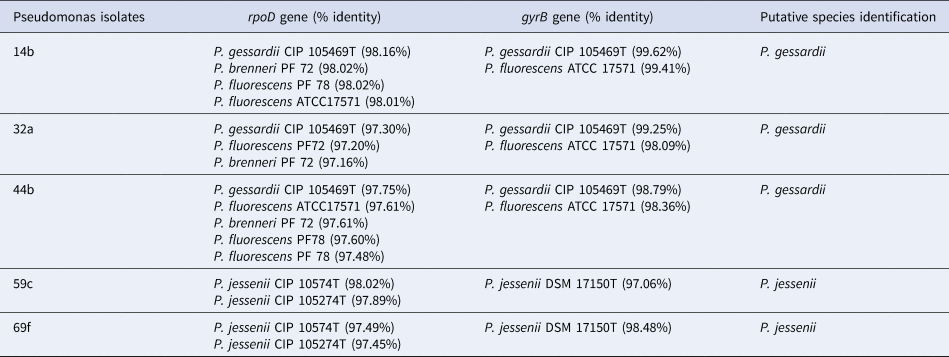
Identification based on universal 16S rRNA gene sequences confirmed five representative Pseudomonas isolates with the highest proteolytic activity their assignment at the Pseudomonas genus level. In the prevalent bacterial classification system, 16S rRNA gene is a fundamental tool. However, it is widely accepted that differentiation of closely related bacterial species cannot be fulfilled based on this gene. As a consequence, in recent years taxonomic studies have used other gene sequences; such as rpoD, gyrB, atpD, rpoB and recA; as molecular markers (Yamamoto and Harayama, Reference Yamamoto and Harayama1998; Tayeb et al., Reference Tayeb, Ageron, Grimont and Grimont2005; Mulet et al., Reference Mulet, Lalucat and García-Valdés2010; Gomila et al., Reference Gomila, Peña, Mulet, Lalucat and García-Valdés2015). Therefore, in the present study, the putative species allocation was performed based on the phylogenetic clustering of the rpoD and gyrB gene sequences data. According to the results, among the five representative Pseudomonas isolates, three isolates were assigned as P. gessardii (14b, 32a and 44b) and the other two were assigned as P. jessenii (59c and 69f). In Table 1, identifications are given for each isolate based on comparative analysis of the sequences of the rpoD and gyrB genes. Isolates that clustered at more than 97% similarity level with a type strain were referred to as this species. The nucleotide sequences determined in this study have been deposited in GenBank (NCBI) and accession numbers are indicated in online Supplementary Table S4.
Percentage identity values obtained by BLASTing rpoD and gyrB gene sequences of the Pseudomonas isolates with the most proteolytic activity

Phylogenetic analysis based on MLSA
It has been shown that the multilocus sequence analysis (MLSA) based on the analysis of several housekeeping gene sequences is a reliable approach for identification of Pseudomonas strains as well as the assessment of the phylogenetic relationships among Pseudomonas species (Mulet et al., Reference Mulet, Gomila, Scotta, Sánchez, Lalucat and García-Valdés2012). Analysis of three concatenated genes (16S rRNA, gyrB and rpoD) has been shown to be trustworthy for phylogenetic analysis of the genus Pseudomonas (Mulet et al., Reference Mulet, Lalucat and García-Valdés2010). Therefore, in this study, the sequences of the genes 16S rRNA, rpoD and gyrB were concatenated to form a single sequence of 2216 bp and compared against a concatenate of orthologous genes of the genus Pseudomonas. A concatenate of the same genes of Cellvibrio japonicus (strain Ueda107) was used as an outgroup.
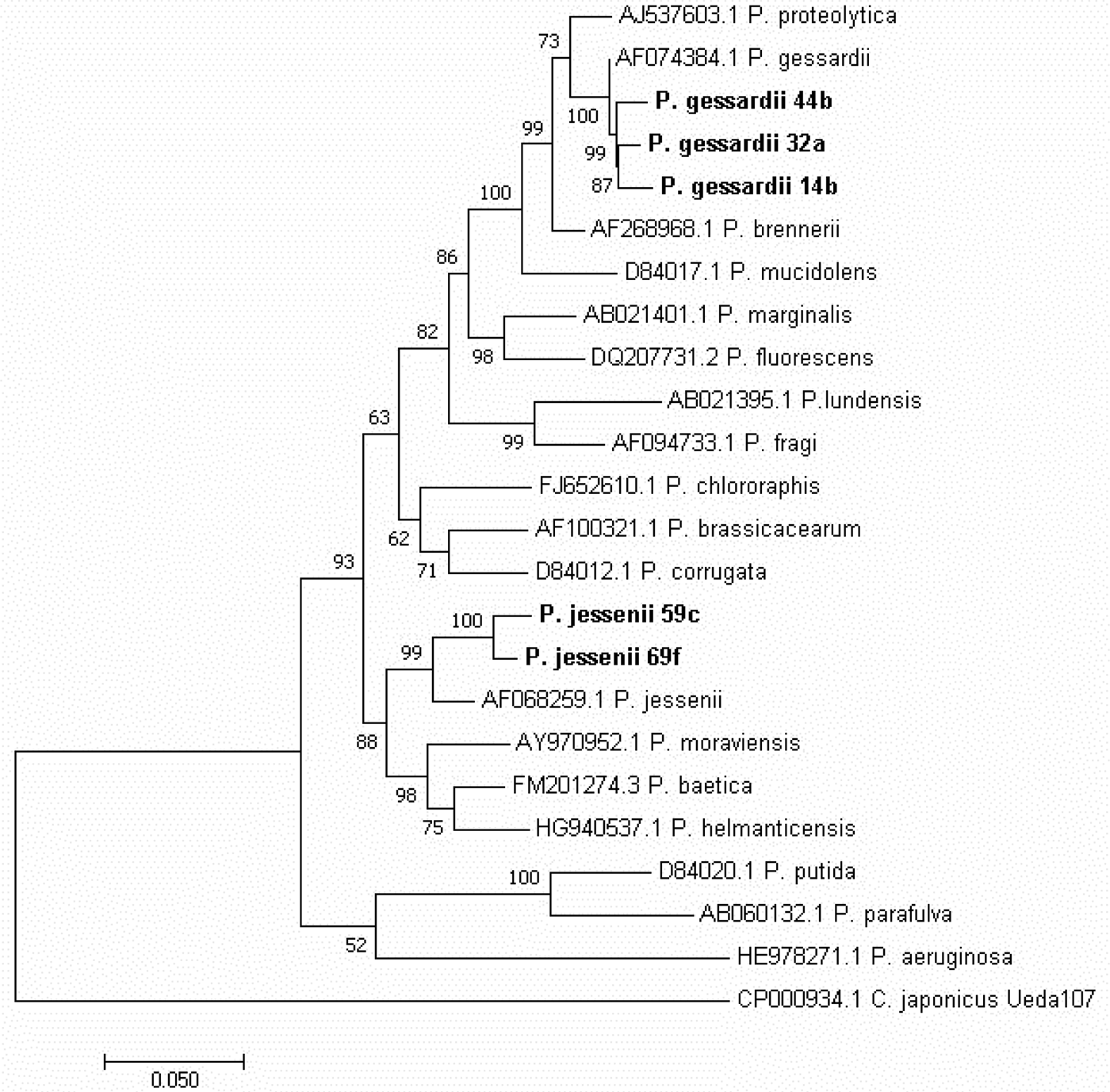
As shown in Fig. 1, after aligning the sequences and constructing the phylogenetic tree, the three P. gessardii isolates and the two P. jessenii isolates were located in the same phylogenetic branch as the corresponding species type strain with a similarity higher than 97%. Since a threshold of 97% similarity in the MLSA study has been defined for species discrimination in the genus Pseudomonas (Mulet et al., Reference Mulet, Lalucat and García-Valdés2010, Reference Mulet, Gomila, Scotta, Sánchez, Lalucat and García-Valdés2012), species assignations of our target strains were considered correct.
Maximum-likelihood phylogenetic tree based on the concatenated sequences of the genes 16S-rpoD-gyrB, showing the evolutionary relationship among Pseudomonas strains identified in this study (bold) and selected members of the Pseudomonas genus. Boot-strap analysis of 1000 replicates was performed to evaluate the phylogenetic tree topology. C. japonicus (strain Ueda107) was used as an outgroup.

Evaluation of physico-chemical properties of UHT milk during storage
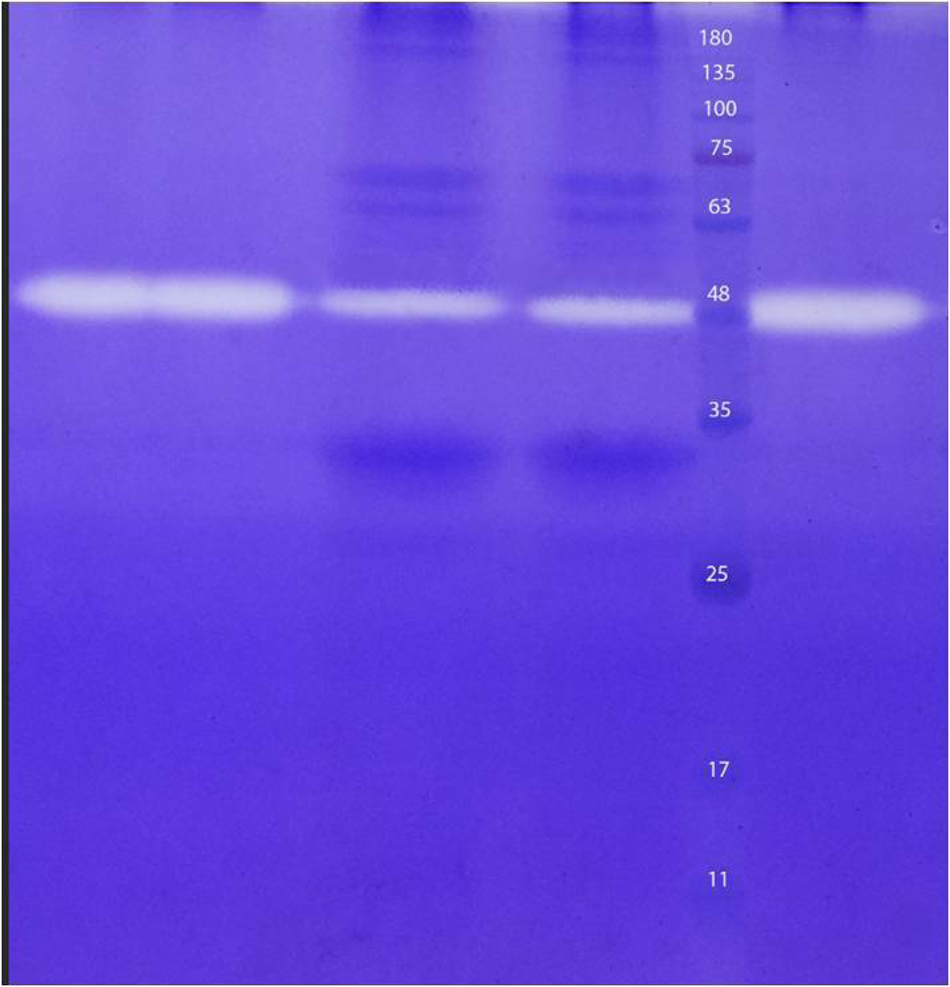
The heat-resistance proteolytic activities of proteases from target strains were evaluated by casein zymography, using sodium caseinate as substrate. After 3 d of incubation in UHT milk at 7 °C, casein zymography revealed that our target strains produced one protease of a similar molecular weight (approximately 48 kDa), but the intensity of the protease patterns on zymogram varied between the strains. This might be indicative of a variable expression and/or activity of the proteases among the strains. As shown in Fig. 2, after heat-treatment of 95 °C for 8.45 min, the proteases from the target Pseudomonas strains showed residual activity by the appearance of a clear band of the same molecular weight. The presence of a heat-resistance extracellular peptidase with a molecular weight of 45 to 50 kDa, produced by Pseudomonas spp are often designated in literature as AprX (Dufour et al., Reference Dufour, Nicodème, Perrin, Driou, Brusseaux, Humbert, Gaillard and Annie2008; Marchand et al., Reference Marchand, Vandriesche, Coorevits, Coudijzer, Jonghe, Dewettinck, De Vos, Devreese, Heyndrickx and De Block2009; Matéos et al., Reference Matéos, Guyard-Nicodème, Baglinière, Jardin, Gaucheron, Dary, Humbert and Gaillard2015).
Detection of heat-resistant proteases of the target strains by SDS-PAGE casein zymography. Milk samples were heated at 95 °C for 8 min and 45 s after 72 h of bacterial growth in UHT milk at 7 °C. Lanes are: 1, P. jessenii 59c; 2, P. gessardii 44b; 3, P. gessardii 32a; 4, P. gessardii 14b; 5, Molecular mass marker; 6, P. jessenii 69f.

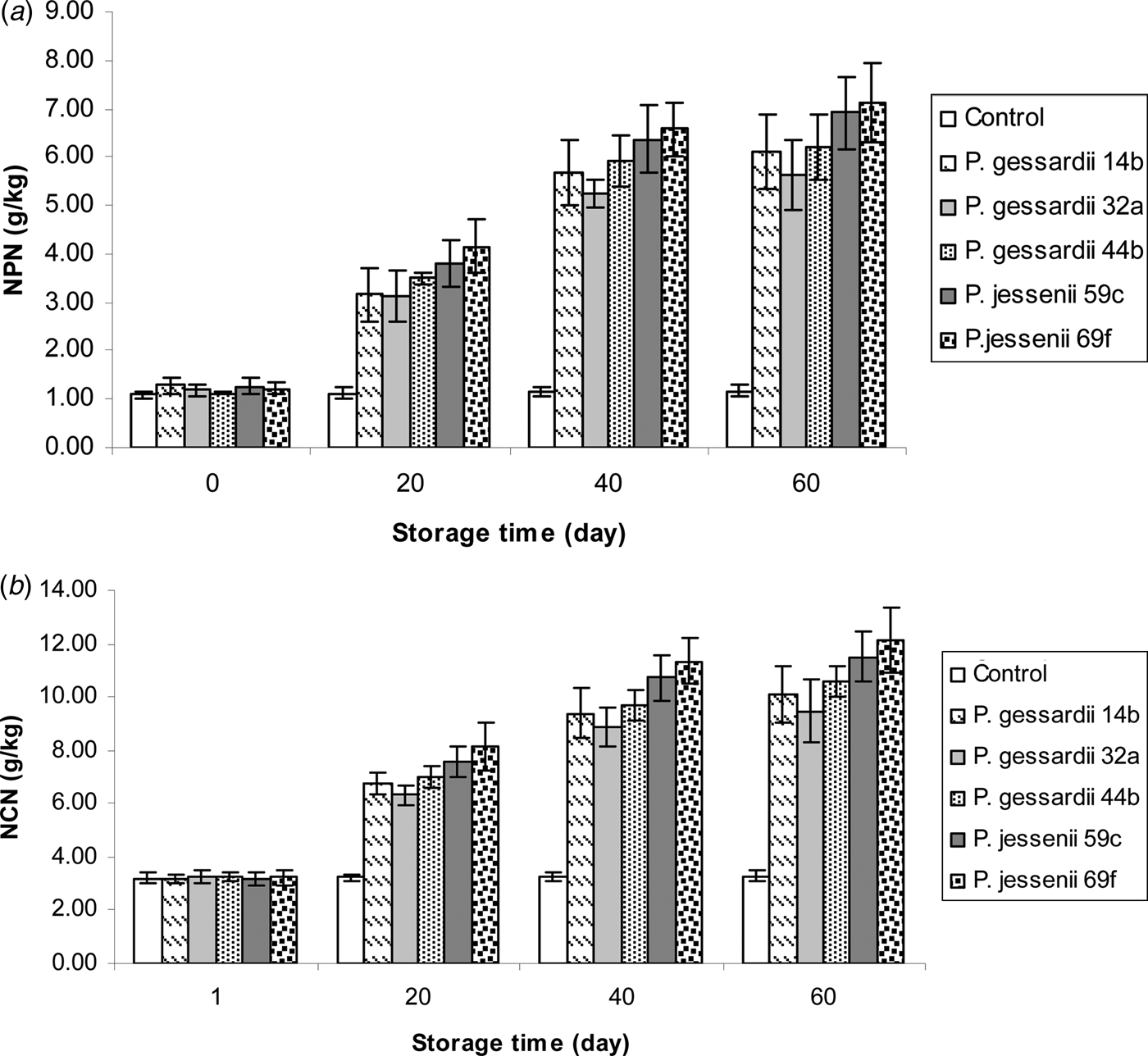
In order to evaluate the effect of the enzyme on the stability of sterilized milk during storage time, target strains were inoculated into UHT milk separately. Milk samples were incubated at 7 °C for 72 h and then heated to sterilize at 95 °C for 8 min and 45 s. Sterilized milk samples were stored in a dark place at 20 ± 2 °C for a period of 60 d and the stability of milk samples was analyzed by evaluating the proteolysis on specific days. The NPN content for the control milk was 1.1 ± 0.08 g/kg just after heat treatment (Fig. 3a), and showed no significant increase (1.27 ± 0.37 g/kg) after 60 d of storage (P > 0.05). For the sterilized milk samples containing AprX, NPN contents increased significantly during the 60 d of storage (P < 0.05). However, there were no significant differences between the NPN contents of all the treated samples at the end of the storage time (P > 0.05).
Changes in non-protein nitrogen (a) and non-casein nitrogen (b) contents of UHT milk samples containing AprX enzyme of the target strains during 60 d of storage at room temperature.

The increase in values can be attributed to the presence of small molecules containing nitrogen, such as small peptides, creatine, urea and free amino acids (Gaucher et al., Reference Gaucher, Tanguy, Fauquant, Jardin, Rousseau, Robert, Madec and Gaucheron2011). The highest values corresponded to milk samples containing AprX produced from P. jessenii 59c and P. jessenii 69f, with the initial NPN contents of 1.26 ± 0.18 and 1.22 ± 0.14 g/kg, which increased to 6.92 ± 0.75 and 7.13 ± 0.82 g/kg after 60 d of storage, respectively.
As shown in Fig. 3b, the NCN content for the control sterilized milk was 3.21 ± 0.21 g/kg just after heat treatment and showed very slight change until the end of storage time (3.49 ± 0.52 g/kg). Significant increases in the NCN contents of sterilized milk samples containing AprX during 60 d of storage (P < 0.05) indicated the casein micelles degradation. Similar to NPN results, at the end of the storage time, no significant differences were observed between the NCN contents of all the treated samples (P > 0.05). The highest NCN values corresponded to milk samples containing AprX produced from P. jessenii 59c and P. jessenii 69f, with the ultimate NCN contents of 11.51 ± 1.19 and 12.13 ± 1.12 g/kg, respectively. Similar results for NPN and NCN contents were obtained with the strains of P. fluorescens in previous studies (Gaucher et al., Reference Gaucher, Tanguy, Fauquant, Jardin, Rousseau, Robert, Madec and Gaucheron2011; Baglinière et al., Reference Baglinière, Tanguy, Jardin, Matéos, Briard, Rousseau, Robert, Beaucher, Humbert and Dary2012, Reference Baglinière, Matéos, Tanguy, Jardin, Briard-Bion, Rousseau, Robert, Beaucher, Gaillard and Amiel2013).
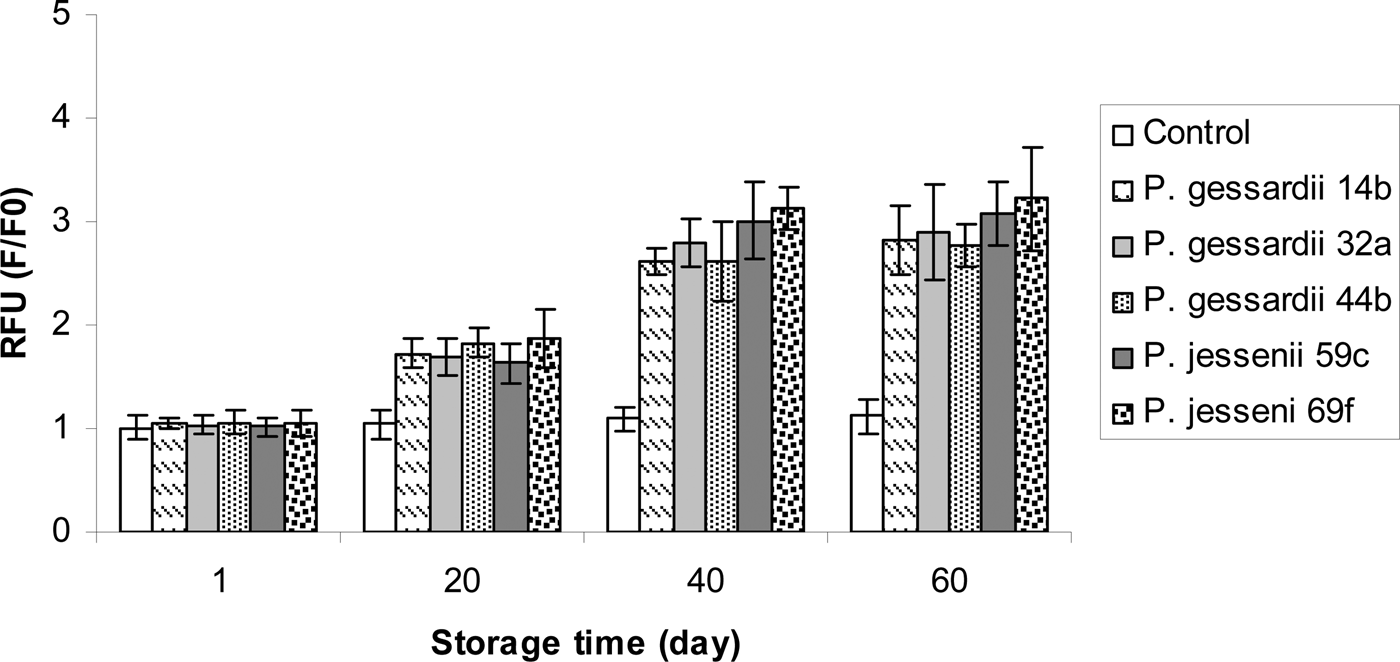
The degree to which a protein has been hydrolyzed is a reflection of the number of peptide bonds cleaved. The percent ratio of the number of peptide bonds broken to the total numbers of peptide bonds present is defined as the degree of proteolysis (Rutherfurd, Reference Rutherfurd2010). As shown in Fig. 4, a continuous increase in degree of proteolysis in sterilized milk samples containing AprX was observed. During the first 40 d of storage, proteolysis increased significantly in all sterilized milk samples that containing AprX, but thereafter, the intensity of proteolysis enhancement was remarkably reduced. On the other hand, no significant change was determined for control milk during the storage time (P > 0.05). Furthermore, there was no significant difference in the degree of proteolysis between treated samples at the end of the storage time (P > 0.05). P. jessenii 69f and P. jessenii 59c showed higher degree of proteolysis during the storage time compared to the other three Pseudomonas isolates, which were in agreement with the results for NPN and NCN contents.
Changes in the degree of proteolysis of UHT milk samples containing AprX enzyme of the target strains during 60 d of storage at room temperature as determined by RFU (F/F0).

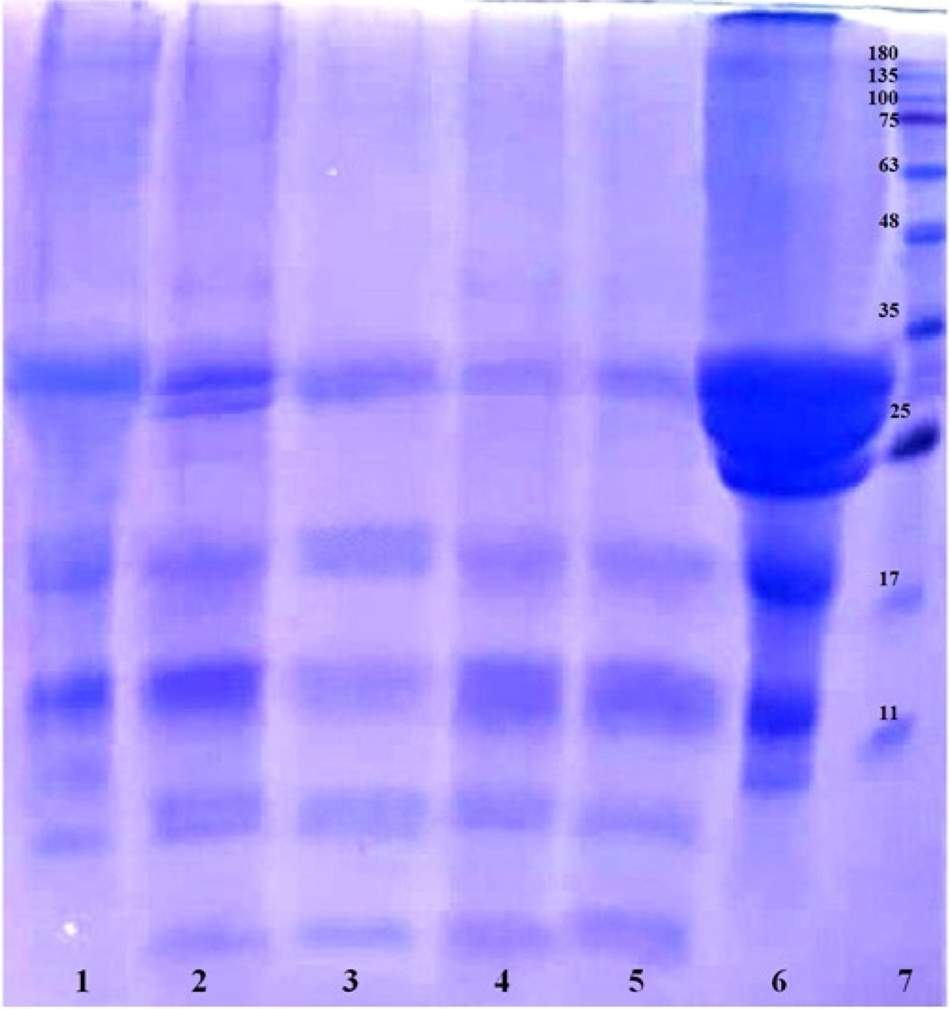
Hydrolysis of milk proteins was also followed by SDS-PAGE analysis during the storage time and as expected, degradation of milk proteins was observed in all UHT milk samples, except for control milk (Fig. 5).
SDS-PAGE of UHT milk samples containing AprX enzyme of the target strains after 60 d of storage at room temperature. Lanes are: 1, P. gessardii 14b; 2, P. gessardii 32a; 3, P. gessardii 44b; 4, P. jessenii 59c; 5, P. jessenii 69f; 6, Control UHT milk; 7, Molecular mass marker.

The correlation between duration of storage and destabilization of the sterilized milk samples as a result of AprX activity was evaluated visually and appeared as formation of white sediment at the bottom of the bottles at the end of the storage time, without any destabilization in control milk. This phenomenon occurred in different times for each strain and became tighter by the time. The protein sediment induced by AprX from P. jessenii 69f and 59c was observed 7–10 d earlier (31st to 35th day of storage) than the P. gessardii strains (38th to 42nd day of storage). At the end of the storage time (day 60), the thickness of the sediments in bottles corresponding to P.gessardii 14b, 32a and 44b were higher than those corresponding to P. jessenii 59c and 69f. Nevertheless, sedimentation was more distinguishable in bottles of P. jessenii 59c and 69f as revealed by the upper liquid phase becoming less opaque (online Supplementary Fig. S1). Baglinière et al. (Reference Baglinière, Matéos, Tanguy, Jardin, Briard-Bion, Rousseau, Robert, Beaucher, Gaillard and Amiel2013) explained the destabilization of UHT milk by AprX peptidase over 90 d storage time. AprX was added to a final concentration of 0.2 mg/ml to UHT-treated milk and microfiltered raw milk. A visual destabilization was observed after 8 d of storage and a sharp increase in non-casein nitrogen from about 3 to 18 g/kg was observed in the first 30 d of storage (Baglinière et al., Reference Baglinière, Matéos, Tanguy, Jardin, Briard-Bion, Rousseau, Robert, Beaucher, Gaillard and Amiel2013).
In conclusion, based on our results, among the 146 Pseudomonas isolates that encoded the aprX gene, two P. jessenii and three P. gessardii isolates showed the highest levels of proteolytic activity. The role of various species of Pseudomonas in producing heat-resistant proteases and deterioration of UHT milk has been reported. However, to the best of our knowledge, there is little information in the literature about P. jessenii and P. gessardii and their highly proteolytic activities, which are due to the secretion of heat-resistant proteases, AprX. The residual activity of AprX destabilized sterilized milk samples during the storage period because of a significant enhancement in the degree of proteolysis over the time. Therefore, this study revealed that P. jessenii and P. gessardii can play a remarkable role in deterioration of Iranian commercial long-life milk.
Supplementary material
The supplementary material for this article can be found at https://doi.org/10.1017/S0022029920000709.
Acknowledgements
This study was supported by the research grants provided by Shahid Chamran University of Ahvaz. The authors would like to thank Mrs. P. Esfahani for her kind assistance.