Introduction
The low-level scholastic achievement has been associated with the risk of developing schizophrenia spectrum disorders (MacCabe et al., Reference MacCabe, Lambe, Cnattingius, Torrang, Bjork, Sham and Hultman2008). Subjects who developed schizophrenia were more likely to have had impairments in childhood educational scores (Rannikko et al., Reference Rannikko, Murray, Juola, Salo, Haapea, Miettunen and Jaaskelainen2015). The link between education level and schizophrenia suggests that impairment in intellectual ability may exist from early in life, before the onset of illness. A pre-illness onset of impaired intellectual ability implies that the impairment seen among schizophrenia patients is not a consequence of the pathological process of the disease. This places abnormal neurodevelopment as a critical component in the pathogenesis of schizophrenia (Kobayashi et al., Reference Kobayashi, Isohanni, Jaaskelainen, Miettunen, Veijola, Haapea and Murray2014) while also suggesting a genetic etiology (Dickinson et al., Reference Dickinson, Zaidman, Giangrande, Eisenberg, Gregory and Berman2020). In this scenario, cognitive deficits could contribute to poor school performance. Investigating neurocognitive performance in relation to educational achievement at illness onset is thus important as it may shed light on the origins of cognitive deficits and on the variability of outcomes in psychotic disorders.
Several studies have found that higher education was associated with better clinical, cognitive and functional measures in the first episode of psychosis (FEP) patients (Amoretti et al., Reference Amoretti, Bernardo, Bonnin, Bioque, Cabrera, Mezquida and Torrent2016; de la Serna et al., Reference de la Serna, Andres-Perpina, Puig, Baeza, Bombin, Bartres-Faz and Castro-Fornieles2013). A similar association between better cognitive performance in higher education was found in later stages of illness (Holthausen et al., Reference Holthausen, Wiersma, Sitskoorn, Hijman, Dingemans, Schene and van den Bosch2002). Specifically, schizophrenia patients who completed more years of education showed better scores on verbal memory tests than those with lower education achievements (Ward, Kraal, Flowers & Ellingrod, Reference Ward, Kraal, Flowers and Ellingrod2017). In this vein, Kanchanatawan et al. (Reference Kanchanatawan, Sriswasdi, Thika, Stoyanov, Sirivichayakul, Carvalho and Maes2018) suggested that education, framed within the construct of cognitive reserve (CR), could be a protective factor in the development of psychosis and has, as well, a beneficial effect on outcomes. Regretfully, long-term studies examining the impact of baseline education on outcomes are scarce (Fusar-Poli, McGorry & Kane, Reference Fusar-Poli, McGorry and Kane2017).
In this respect, education has been suggested as a proxy for measuring CR (Malek-Ahmadi et al., Reference Malek-Ahmadi, Lu, Chan, Perez, Chen and Mufson2017). CR, as defined by Stern (Reference Stern2012), assumes that people develop a reserve of thinking abilities during their lives and that this protects them against losses that can occur through ageing and disease. It is applicable to almost any situation where brain function is disrupted such as cognitive changes associated with schizophrenia, dementia, depression, and traumatic brain injury (Stern, Reference Stern2009). Opdebeeck, Martyr and Clare (Reference Opdebeeck, Martyr and Clare2016) studied several methods in order to obtain reliable indicators for CR. Their results showed that education was the proxy more commonly used. In view of the foregoing, long-term research in FEP patients, assuming years of education achieved as a method to quantify CR, could provide evidence on the theory of CR.
The aims of the present study were as follows: (1) to explore the relationship between educational achievement and neurocognitive performance at illness onset in a large sample of FEP patients and (2) to analyse clinical, functional and cognitive outcomes of three education subgroups (low, medium and high) after an average time window of 10 years. Based on CR theory, we hypothesized that FEP patients with higher education would show cognitive performance within normal limits at baseline, and more favourable outcomes in the long term.
Materials and methods
Participants
The study sample comes from a large epidemiological, 3-year longitudinal intervention program on first-episode psychosis (PAFIP) at the University Hospital Marques de Valdecilla (Santander, Spain). A more detailed description of PAFIP has been previously given (Crespo-Facorro et al., Reference Crespo-Facorro, Perez-Iglesias, Ramirez-Bonilla, Martinez-Garcia, Llorca and Luis Vazquez-Barquero2006; Pelayo-Teran et al., Reference Pelayo-Teran, Perez-Iglesias, Ramirez-Bonilla, Gonzalez-Blanch, Martinez-Garcia, Pardo-Garcia and Crespo-Facorro2008).
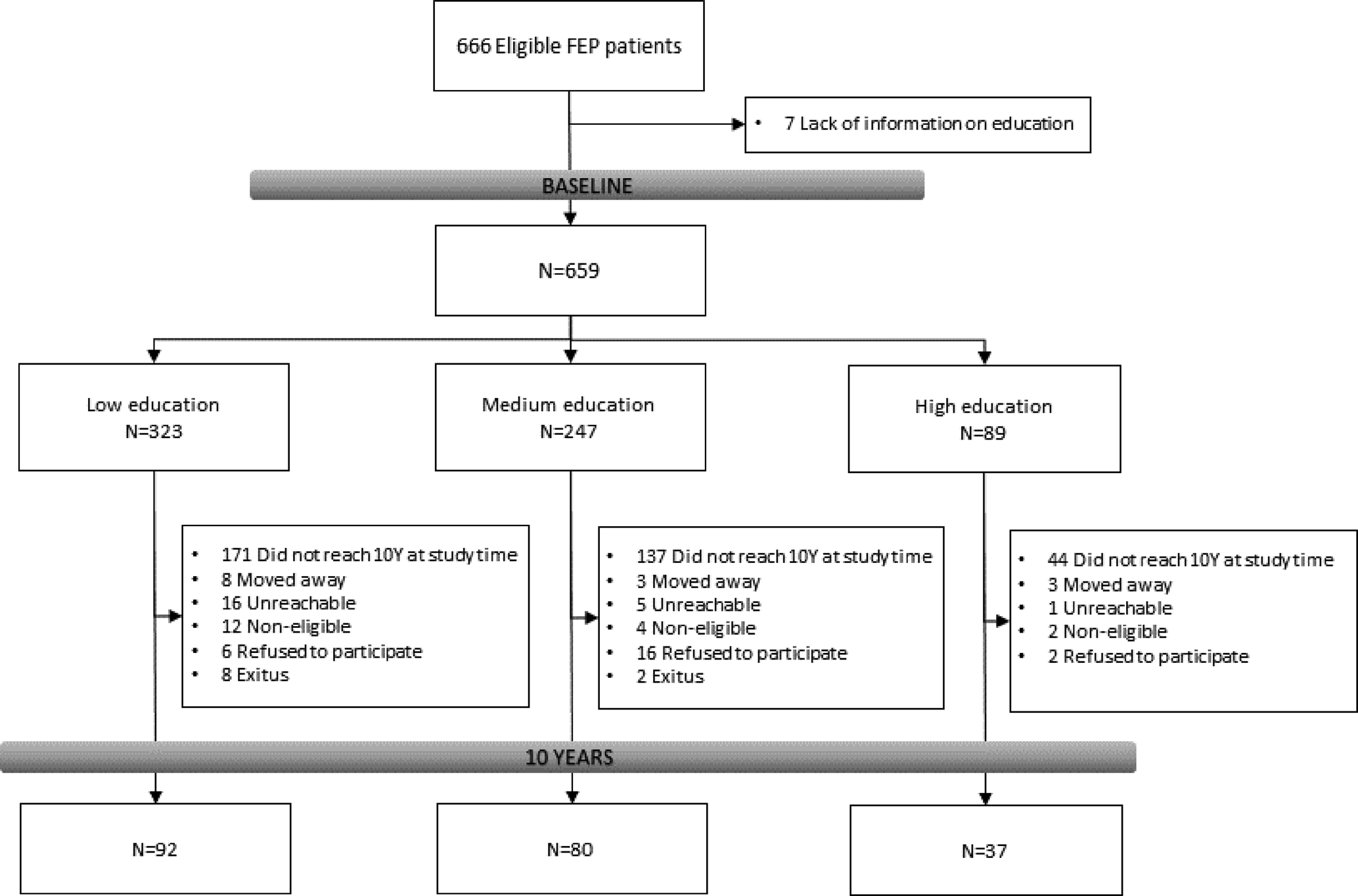
Educational achievement was explored in 659 FEP patients enrolled in PAFIP between February 2001 and December 2018. Patients were categorized according to their years of education, and their attendance in primary (low), secondary (medium) or university studies (high) as defined by the Spanish educational system. The three groups were compared on premorbid, clinical and neuropsychological available variables. A second analysis of the same educational achievement variables was conducted on a subgroup of patients (n = 209) who completed a 10-year follow-up reassessment (see Ayesa-Arriola et al., Reference Ayesa-Arriola, Ortiz-Garcia de la Foz, Martinez-Garcia, Setien-Suero, Ramirez, Suarez-Pinilla and Crespo-Facorro2021). See flowchart in Fig. 1.
Flow chart.

The study was approved by the Ethical Review Committee (CEIm de Cantabria) CEIC (Comité de Ética de Investigación Clínica).Written informed consent was obtained from all subjects after a complete description of the study.
The patients met the following criteria: (1) 15–60 years of age; (2) lived within the catchment area; (3) were experiencing a first episode of psychosis; (4) had no prior treatment with antipsychotic medication or, if previously treated, a total life-time of antipsychotic treatment of <6 weeks and (5) met the Diagnostic and Statistical Manual of Mental Disorders, fourth edition (DSM-IV) criteria for brief psychotic disorder, schizophreniform disorder, schizophrenia or not otherwise specified (NOS) psychosis. Patients varied in whether they received aripiprazole (N = 214; 32.5%), risperidone (N = 196; 29.7%), olanzapine (N = 56; 8.5%), quetiapine (N = 70; 10.6%), ziprasidone (N = 66; 10.0%) and haloperidol (N = 57; 8.6%), being the chlorpromazine equivalent initial dose of 205.6 ± 78.7 mg. The diagnoses, conducted by an experienced psychiatrist within six months from the baseline visit, were confirmed through the use of the Structured Clinical Interview for DSM-IV (First, Spitzer, Gibbon & William, Reference First, Spitzer, Gibbon and William2001). The diagnoses included in descending prevalence, schizophrenia (N = 335; 51.0%), brief psychotic disorder (N = 78; 11.9%), psychosis disorder NOS (N = 56; 8.5%), schizophreniform disorder (N = 177; 26.9%), schizoaffective disorder (N = 8; 1.2%) and delusional disorder (N = 3; 0.5%).
Measures
Definition of premorbid education subgroups
The education in Spain is divided into three levels: primary education, which includes three cycles of two years each for students primarily between 6 and 12 years of age; secondary education, which includes four school years for students primarily between 12 and 16 years of age, after which students choose to take baccalaureate or vocational training; and higher education, which includes university and higher levels of vocational training. Thus, according to the Spanish educational system, education is stratified into three levels: low (primary), medium (secondary) and high (university) studies.
Participants were asked to report their highest level of education, even if not completed. This strategy was chosen as subjects with psychotic disorders are less likely to complete their education because of the emergence of psychotic symptoms (Frissen et al., Reference Frissen, Lieverse, Marcelis, Drukker, Delespaul and Investigators2015).
Premorbid and sociodemographic information
Premorbid and sociodemographic information was collected from patients, relatives and from medical record at admission. These variables included sex, age, age of psychosis onset [defined as the age when the emergence of the first continuous (present most of the time) psychotic symptom occurred], duration of untreated illness [DUI, defined as the time from the first nonspecific symptom related to psychosis (i.e. with no return to the previous level of functioning) to antipsychotic treatment onset], and duration of untreated psychosis [DUP, defined as the time from the first continuous (present most of the time) psychotic symptom to initiation of adequate antipsychotic drug treatment]. Premorbid social adjustment was measured by the Premorbid Adjustment Scale (PAS) with ratings from 0 (indicating the ‘healthiest’) to 6 (denoting the ‘least healthy’) (Cannon-Spoor, Potkin & Wyatt, Reference Cannon-Spoor, Potkin and Wyatt1982).
The FEP patients were screened for the following sociodemographic characteristics: sex, age, years of education, ethnicity (‘caucasian’ v. ‘others’), living area (‘urban’ v. ‘rural,’ in which urban is defined as a settlement of at least 10 000 inhabitants), living status (‘living with family’ v. ‘other’), socioeconomic status derived from the parents' occupation (‘low-qualification worker’ v. ‘other’) relationship status (‘married/cohabiting’ v. ‘single/divorced/separate or widowed’), occupational status (‘studying’ v. ‘others’).
Clinical and functional assessment
Clinical symptoms of psychosis were assessed by means of the Scale for the Assessment of Negative symptoms (SANSs) (Andreasen, Reference Andreasen1983) and the Scale for the Assessment of Positive symptoms (SAPSs) (Andreasen, Reference Andreasen1984). The SANS and SAPS scores were used in generating dimensions of positive (scores for hallucinations and delusions), disorganized (scores for formal thought disorder, bizarre behaviour and inappropriate affect) and negative (scores for alogia, affective fattening, apathy and anhedonia) symptoms (Grube, Bilder & Goldman, Reference Grube, Bilder and Goldman1998). General psychopathology was assessed with the Brief Psychiatric Rating Scale (BPRS) (Flemenbaum & Zimmermann, Reference Flemenbaum and Zimmermann1973), and depressive symptoms were assessed using the Calgary Depression Scale for Schizophrenia (CDSS) (Addington, Addington & Maticka-Tyndale, Reference Addington, Addington and Maticka-Tyndale1993). Functional assessment was conducted with the Disability Assessment Scale (DAS) Spanish version (Mañá, Ivorra & Girón, Reference Mañá, Ivorra and Girón1998). The Clinical Global Impressions were administered to track changes in symptoms over time.
Neuropsychological assessment
Trained neuropsychologists carried out the neuropsychological assessments. In order to maximize cooperation, assessments occurred when the patients' clinical status permitted, which resulted in assessments occurring an average of 10.5 weeks after admission. A detailed description has been reported elsewhere (Gonzalez-Blanch et al., Reference Gonzalez-Blanch, Crespo-Facorro, Alvarez-Jimenez, Rodriguez-Sanchez, Pelayo-Teran, Perez-Iglesias and Vazquez-Barquero2007). The following cognitive domains, which have consistently been shown to be impaired in schizophrenia (Nuechterlein et al., Reference Nuechterlein, Barch, Gold, Goldberg, Green and Heaton2004), were tested: (1) verbal memory: the Rey Auditory Verbal Learning test (Rey, Reference Rey1964) (list recall score); (2) visual memory: Rey Complex Figure (Osterrieth, Reference Osterrieth1944) (delayed recall); (3) working memory: Wechsler Adult Intelligence Scale (WAIS-III) digits forward and backward subtests (Wechsler, 1997) (standard total score); (4) executive function: Trail Making test (Reitan & Wolfson, Reference Reitan and Wolfson1985) (trail, B-A score); (5) processing speed: WAIS-III digit symbol subtest (Wechsler, 1997) (standard total score); (6) motor dexterity: Grooved Pegboard test (Lezak, Reference Lezak1995) (time to complete with dominant hand); (7) attention: Continuous Performance test (CPT) (Cegalis, Reference Cegalis1991) (correct responses). The WAIS-III vocabulary subtest (Wechsler, 1997) was used to estimate premorbid intelligence quotient (IQ).
In order to calculate the Z-scores for each cognitive domain, direct scores obtained in a group of 221 healthy volunteers, which had carried out the same neuropsychological battery, were used (Ayesa-Arriola et al., Reference Ayesa-Arriola, Setien-Suero, Neergaard, Belzunces, Contreras, van Haren and Crespo-Facorro2018). Prior to standardization, raw cognitive scores were reversed when appropriate so they were all in the same direction (i.e. the higher the score, the better the performance). In addition, in line with previous methodology (Reichenberg et al., Reference Reichenberg, Harvey, Bowie, Mojtabai, Rabinowitz, Heaton and Bromet2009), a measure of global cognitive functioning (GCF) was calculated as T-scores (M = 50, s.d. = 10) derived from the healthy comparison sample. T-scores were converted to deficit scores that reflected the presence and severity of cognitive deficit on each cognitive domain. Deficit scores were then averaged to create the GCF measure.
Data availability
The data that support the findings of this study are available on request from the corresponding author R.A.A. The data are not publicly available due to the presence of information that could compromise research participant privacy/consent.
Statistical analysis
Statistical analyses were performed with SPSS, version 19.0. Univariate analyses of variance (ANOVA) and chi-square (χ2) were used to compare three groups (i.e. low, medium and high education in patients) on baseline sociodemographic, clinical and neuropsychological variables. When ANOVA was significant, pairwise comparisons were performed.
In order to address longitudinal comparisons, repeated measures ANOVA, adjusted for the covariates of sex, age and premorbid IQ were used to investigate the main effects of the education group. Post hoc multiple comparisons (pairwise t test) were corrected by Bonferroni. All statistical tests were two-tailed, and significance was determined at the 0.05 level.
Results
A total of 659 FEP patients were classified into three levels: low education (N = 323, 49% of cases), medium education (N = 247, 37.48% of cases) and high education (N = 89, 13.5% of cases). In the low-education group, 152 subjects met the time criteria to participate in PAFIP-10 reassessment, however, 92 agreed to participate, resulting in a retention rate of 60.5%. In the medium-education group, 110 subjects met the criteria and 80 agreed to participate, resulting in a retention rate of 72.7%. In the higher-education group, 45 subjects met the time criteria and 37 agreed to participate, resulting in a retention rate of 82.2%. Significant differences in attrition were found between low- and high-education groups (p = 0.022).
Baseline clinical and neuropsychological information in terms of baseline education achievement
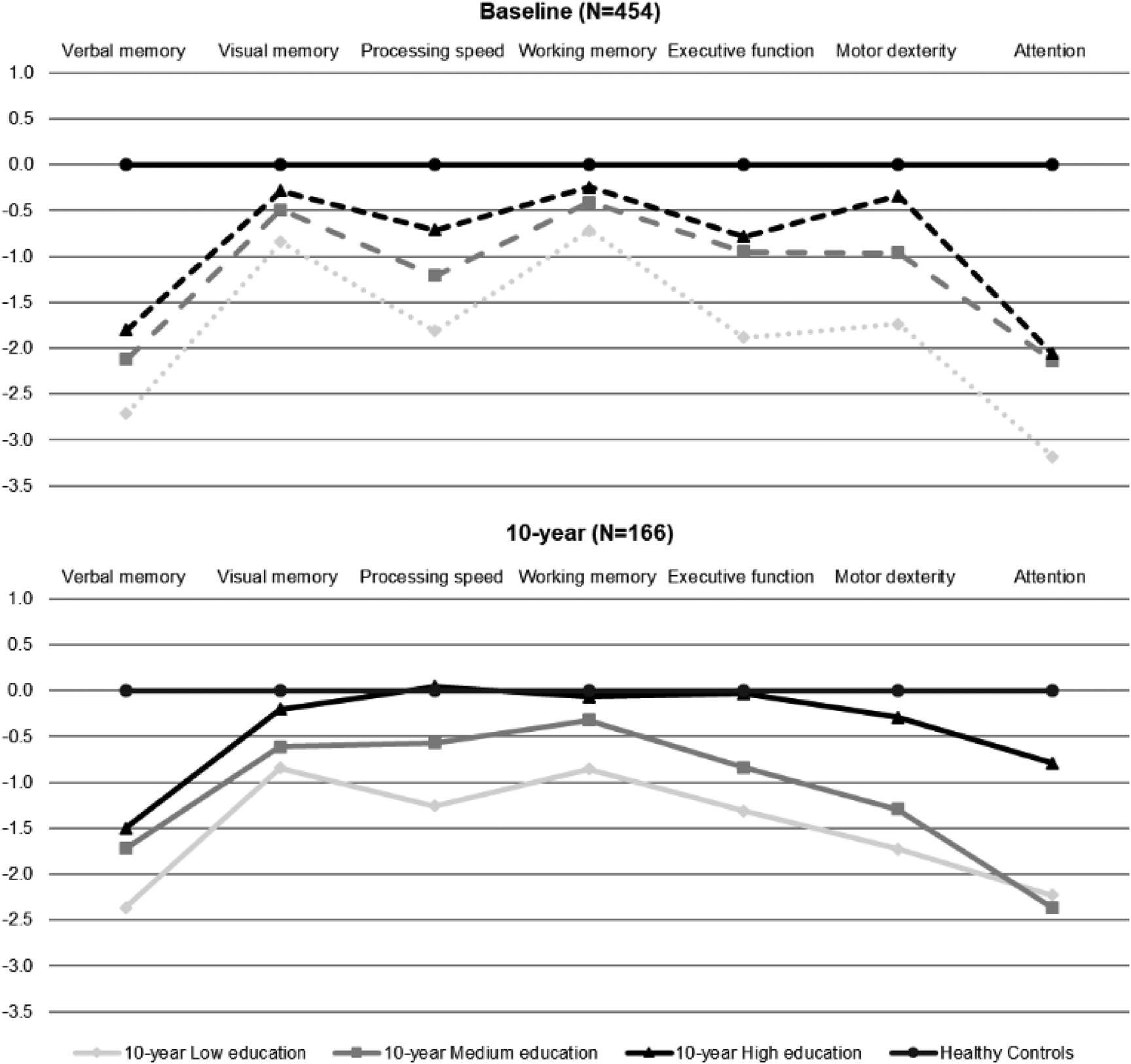
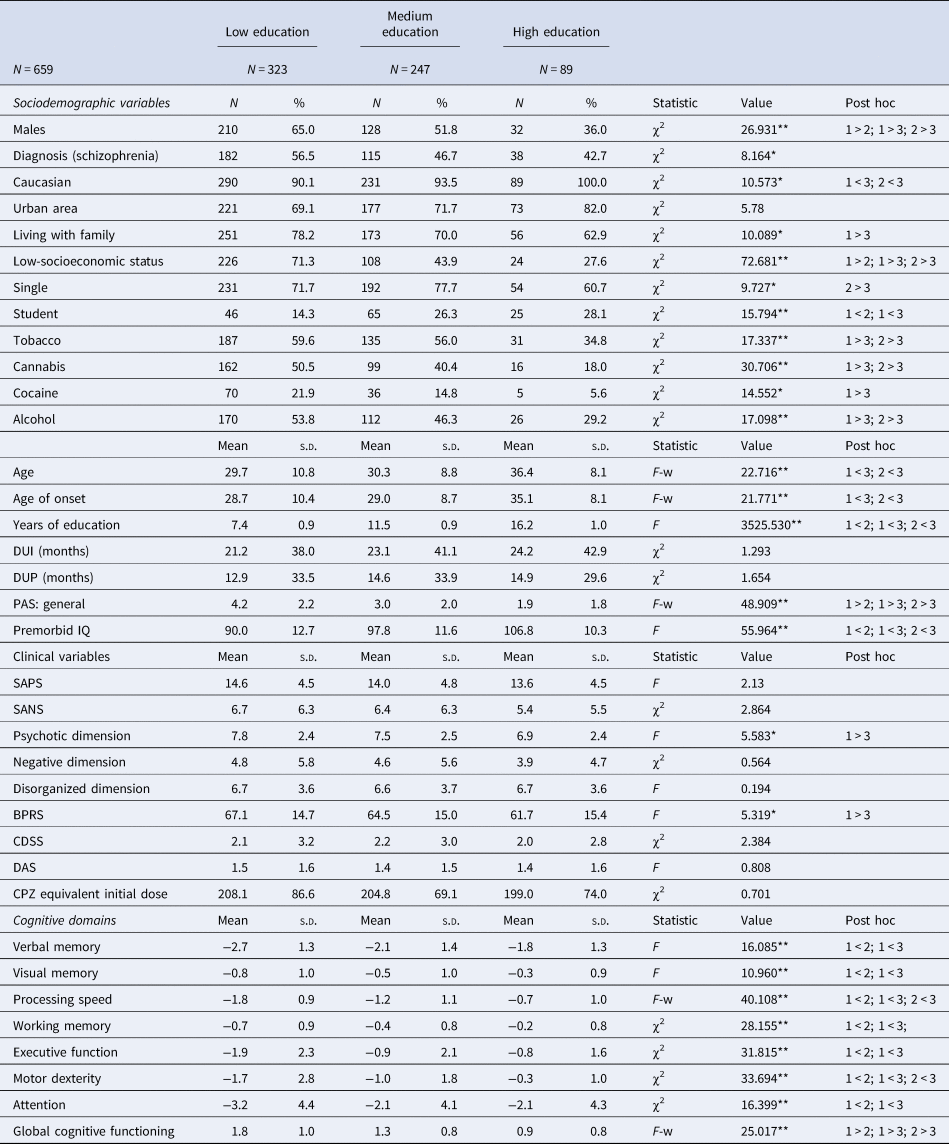
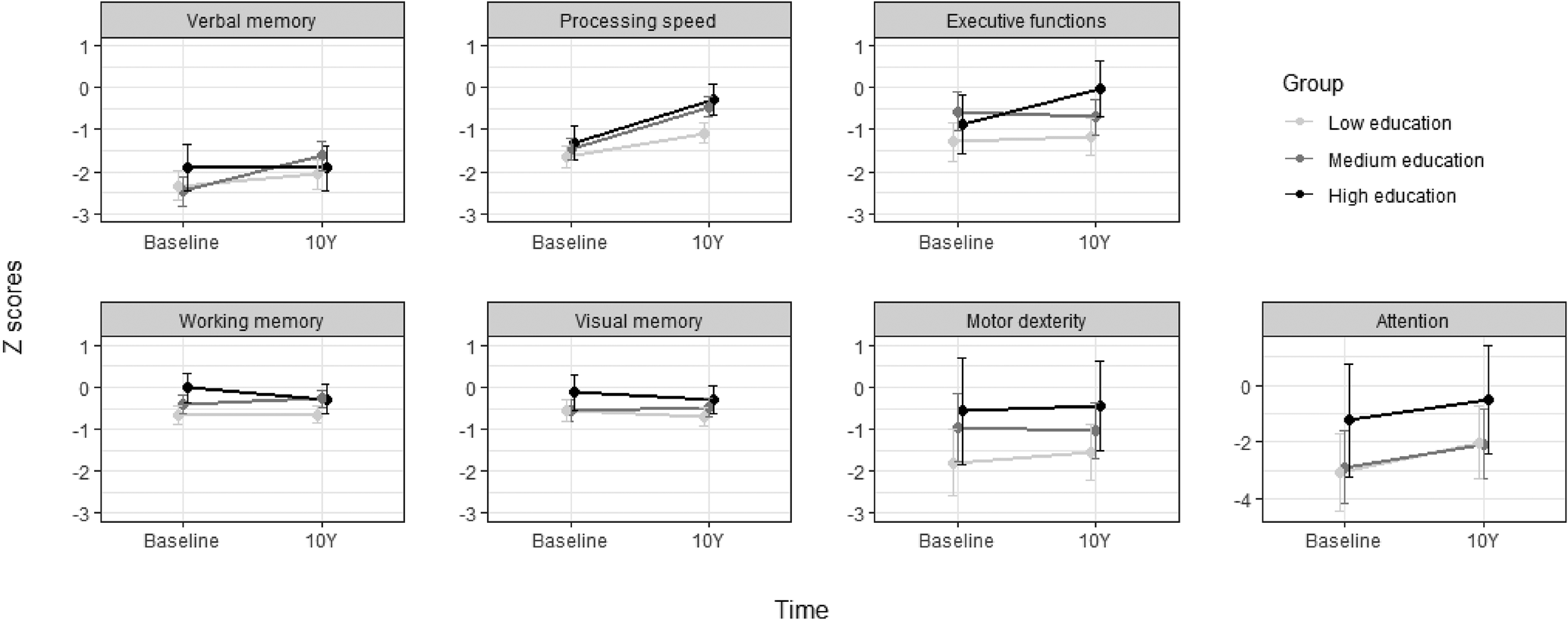
As presented in Table 1, the high-education group significantly consisted of women (63%), individuals of high-socioeconomic status that lived independently, and those that showed later age at illness onset, better premorbid adjustment, higher premorbid IQ (mean = 106), less frequent consumption of both legal and illegal substances and less severe psychotic symptoms. The low-education patients presented more severe symptoms (psychotic dimension and BPRS) than those in the high-education group. Concerning cognitive domains, the high-education group showed better performance than the low- and medium-education groups in all domains. In addition, high-education patients significantly outperformed those in the medium-education group in processing speed and motor dexterity domains and in their GCF (all p < 0.01) (see Fig. 2).
Baseline and 10-year neuropsychological profiles of education subgroups.

Baseline sociodemographic, neuropsychological and clinical comparisons between FEP patients from the three education subgroup

DUI, duration of untreated illness; DUP, duration of untreated psychosis; PAS, Premorbid Adjustment Scale; IQ, intelligence quotient; SAPS, Scale for the Assessment of Positive Symptoms; SANS, Scale for the Assessment of Negative Symptoms; BPRS, Brief Psychiatric Rating Scale; CDSS, Calgary Depression Scale for Schizophrenia; DAS, Disability Assessment Scale; CPZ, Chlorpromazine.
*Group differences significant at p < 0.05.
**Group differences significant at p < 0.01.
Follow-up clinical and neuropsychological information in terms of baseline education achievement
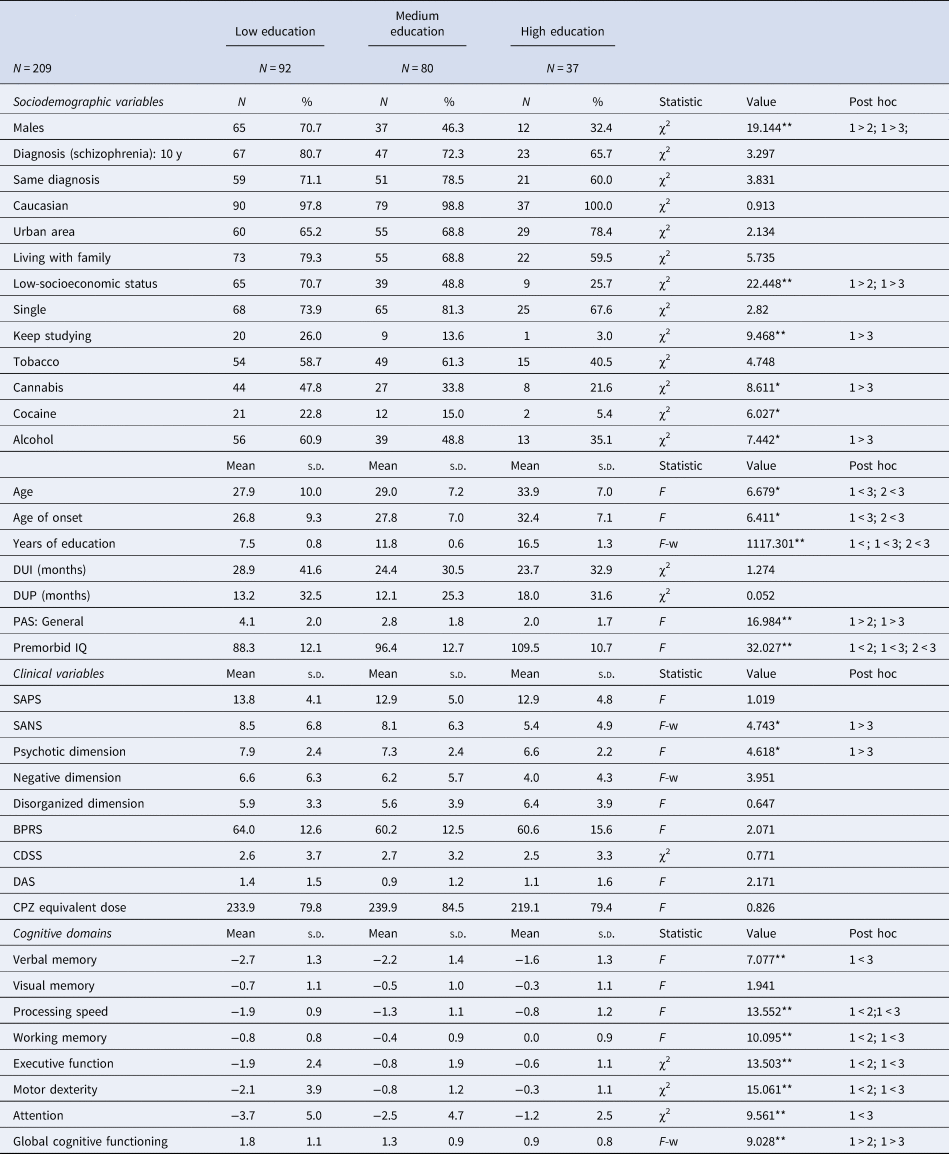
Information about long-term follow-up was available for 209 patients (see Table 2). The percentages of patients in the PAFIP-10 cohort for each education level were as follows: 44% (N = 92) for the low-education group, 38.3% (N = 80) for the medium-education group and 17.7% (N = 37) for the high-education group. Out of these 209 patients, a subgroup of 147 subjects completed a 10-year follow-up clinical reassessment and 137 subjects completed the follow-up neurocognitive reassessment. The groups were again evaluated.
Sociodemographic, neuropsychological and clinical comparisons between patients from the three education subgroup who completed 10-year follow-up

DUI, duration of untreated illness; DUP, duration of untreated psychosis; PAS, Premorbid Adjustment Scale; IQ, intelligence quotient; SAPS, Scale for the Assessment of Positive Symptoms; SANS, Scale for the Assessment of Negative Symptoms; BPRS, Brief Psychiatric Rating Scale; CDSS, Calgary Depression Scale for Schizophrenia; DAS, Disability Assessment Scale; CPZ, Chlorpromazine.
*Group differences significant at p < 0.05.
**Group differences significant at p < 0.01.
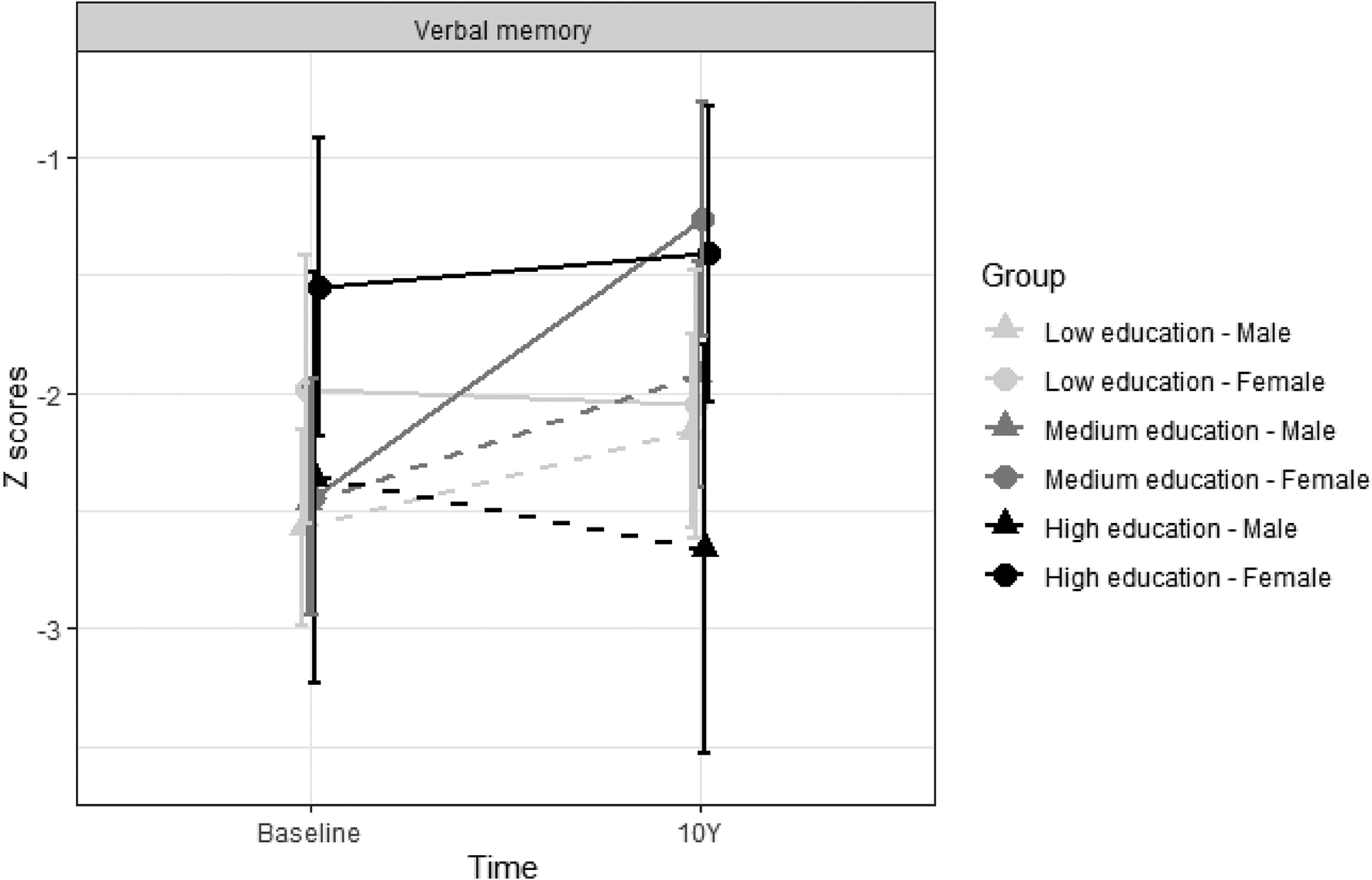
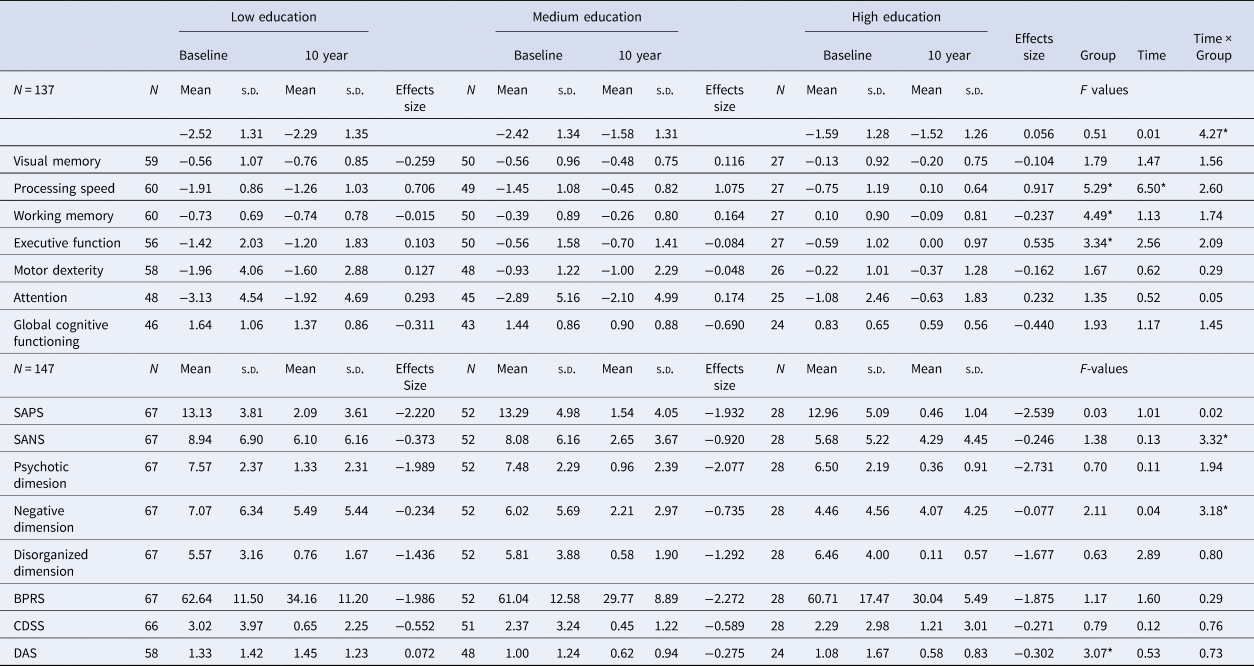
As observed in Table 3, repeated measures ANOVAs confirmed significant between-group effects for processing speed (F 1,130 = 5.29; p = 0.006), working memory (F 1,131 = 4.49; p = 0.013) and executive functions (F 1,127 = 3.34; p = 0.039). Significant within-group effects were observed for processing speed (F 1,130 = 6.5; p = 0.012). Group-by-time effects were found for verbal memory (F 1,131 = 4.27; p = 0.016). Post hoc analyses of verbal memory revealed a significant increase in scores over time (0.84 s.d.) in the medium-education group that improved significantly well compared with the low and high groups (p < 0.001). This increase was specifically significant for females (men, p = 0.038; women, p ≤ 0.001). Post hoc analyses of processing speed revealed that over time the scores increased significantly less in the low-education group (0.56 s.d.) than in the medium (1.02 s.d.) and high (1.03 s.d.) groups (p = 0.001 and p = 0.003, respectively). Post hoc analyses of executive functions revealed an increase in scores over time (0.84 s.d.) in the high-education group (p = 0.041). In sum, 10 years later, patients in the medium- and high-education groups showed a global neurocognitive performance similar to healthy controls, exhibiting significant improvements in processing speed and executive function domains (see Figs 3 and 4).
Repeated measures: ANOVA of cognitive domains.

Repeated measures: ANOVA of verbal memory for education groups in male and female FEP patients.

Repeated measures ANOVAs for cognitive domains and clinical variables

SAPS, Scale for the Assessment of Positive Symptoms; SANS, Scale for the Assessment of Negative Symptoms; BPRS, Brief Psychiatric Rating Scale; CDSS, Calgary Depression Scale for Schizophrenia; DAS, Disability Assessment Scale.
Using sex, age and premorbid IQ as covariates, and Bonferroni adjusted.
*Group differences significant at p < 0.05.
**Group differences significant at p < 0.01.
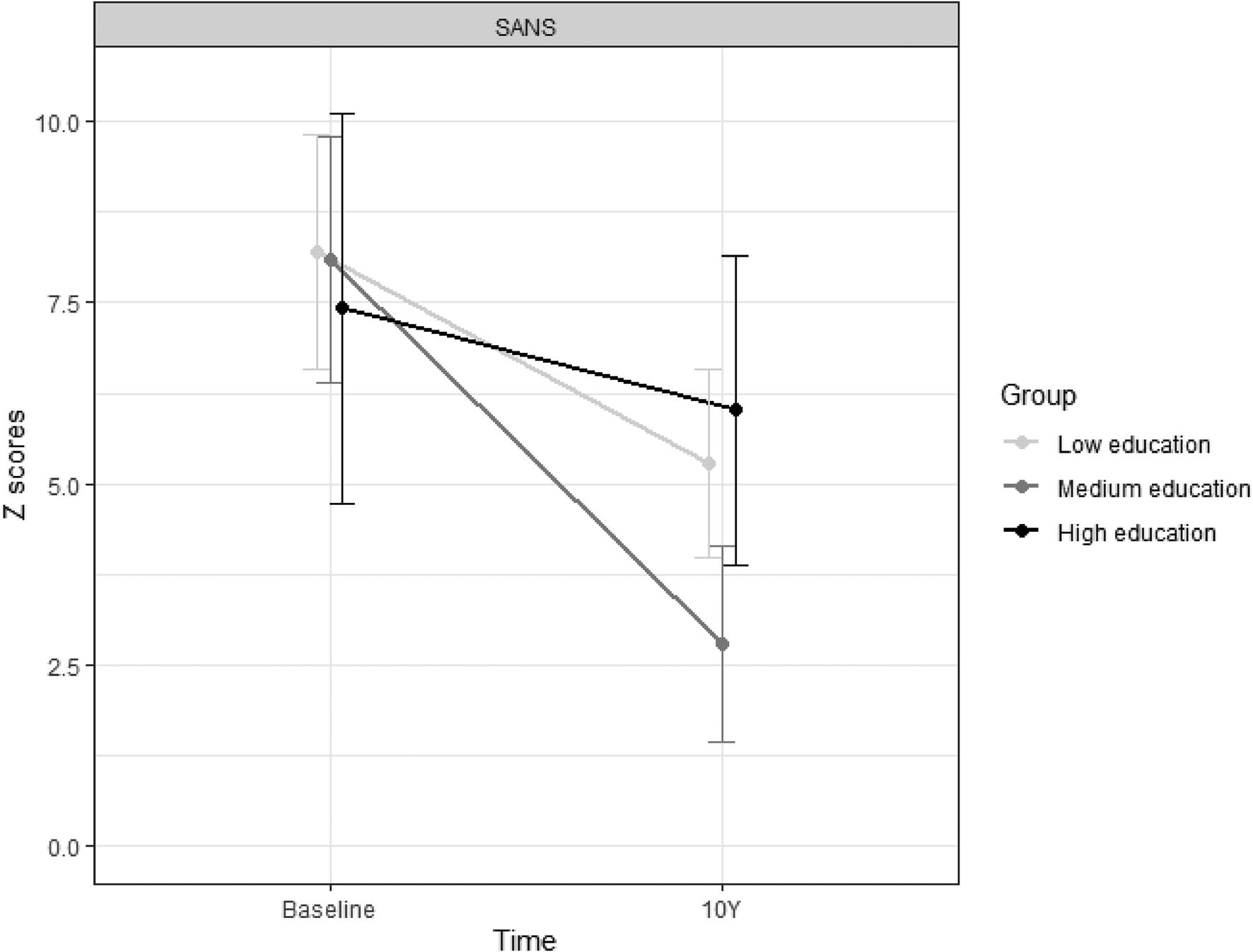
In terms of clinical and functional variables, group-by-time effects were found for SANS (F 1,141 = 3.32; p = 0.039) and negative dimension (F 1,141 = 3.18; p = 0.044). Post hoc analyses revealed significant improvements in negative symptoms in the medium-education group with regard to low and high groups (p < 0.001) (see Fig. 5).
Repeated measures: ANOVA of negative symptoms.

Concerning the disproportion between subjects in the three education groups, additional analyses were conducted to detect differences at follow-up. Using the median value (10 years of education) as a cutoff, two groups, low and high education, were compared. At a 10-year follow-up, the two groups consisted of 100 low education and 109 high education FEP patients who significantly differed in all but a premorbid adjustment in adulthood, DUP, DUI, BPRS, symptoms in psychotic dimension and the visual memory cognitive domain. All of the differences showed disadvantages for those FEP patients who presented at a low-education level, who were more frequently young men with low premorbid IQ and low-socioeconomic status, were living with family, and more frequently consuming cannabis, alcohol and/or cocaine at illness onset. In repeated measures ANOVA, group-by-time significant differences were found in the processing speed domain (F 1,131 = 4.13; p = 0.044), showing that patients in the high-education group made more significant improvements. All of these comparisons can be consulted in online Supplementary Tables S1 and S2.
Discussion
The present study explored the relationship between education achievement at illness onset, and baseline and long-term clinical and neurocognitive outcomes among FEP patients. As hypothesized, higher education was associated with better global baseline neurocognitive performance, remarkable in processing speed and motor dexterity domains, and improvements in memory and processing speed at follow-up. Interestingly, the medium-education group, particularly females, showed significant improvements in verbal memory and better outcomes for negative symptoms than the patients in the low- and high-education groups. At an average period of 10 years after the FEP, the patients in both medium- and high-education groups presented a GCF similar to that of healthy controls.
A remarkable finding of this study is that higher education was reached by only 13.5% of FEP patients (8% male and 19% female). The percentage of our FEP patients who completed just primary education was similar to the general population, according to the Spanish National Institute for Statistics (Estadística, Reference Estadística2020) for the year 2019. However, medium and higher education were not completed by FEP patients in the same percentages as those of their peers, for either males or females. Further exploration of the data showed that 20 (8 females, 12 males), 9 (4 females, 5 males) and 1 (female) FEP patients went back to school in the low-, medium- and high-education groups, respectively. Furthermore, 17 (18.5%) patients passed low- to medium-education level and 8 (10%) medium- to high-education level. In total, 33% (one in three) continued their education in the following years after an FEP. Considering that Spain is one of the countries with the highest rates of academic failure and attrition within the European Union (Rodriguez, Tinajero and Paramo, Reference Rodriguez, Tinajero and Paramo2017), those are very encouraging findings for FEP programs.
In this study, we aimed to take into account the nuances of cognitive deficits in lieu of educational achievements. It is not contentious to note that the cognitive deficits that have been consistently reported (Addington, Brooks & Addington, Reference Addington, Brooks and Addington2003; Bilder et al., Reference Bilder, Goldman, Robinson, Reiter, Bell, Bates and Lieberman2000) lead to global cognitive deficits. Interestingly, gradient facilitation in processing speed, motor dexterity and GCF was seen on the effect of education. This, together with the significant improvement in verbal memory in the medium-education group, positions FEP patients from the medium- and high-education groups within a similar range of cognitive performance to that of healthy controls. These results support the deficit and nondeficit theory of schizophrenia (Carpenter, Heinrichs & Wagman, Reference Carpenter, Heinrichs and Wagman1988). Certain individuals with schizophrenia, in this case, those with medium and higher education, presented in general good baseline conditions and more favourable outcomes. On the contrary, those in the low-education group could be considered as deficit schizophrenia, characterized by features such as low GCF and negative symptoms. Although the current study did not provide data in this regard, the results are suggestive of a neurodevelopmental basis to schizophrenia. For instance, Rowland et al. (Reference Rowland, Spieker, Francis, Barker, Carpenter and Buchanan2009) found alterations, best explained to have occurred during development, in the integrity of frontal and parietal regions in deficit-schizophrenia patients who would explain their specific cognitive impairments. In addition, and in line with the findings of younger age at illness onset among low-education individuals, Dickinson et al. (Reference Dickinson, Zaidman, Giangrande, Eisenberg, Gregory and Berman2020) identified a subgroup of schizophrenia patients that showed preadolescent impairment associated with reduced educational attainment polygenic scores. Their results suggest that early-life cognitive abnormalities are a consequence of a distinct genetic aetiology. Meanwhile, the longitudinal birth cohort study by Mollon, David, Zammit, Lewis and Reichenberg, (Reference Mollon, David, Zammit, Lewis and Reichenberg2018) confirmed that abnormalities in verbal learning and motor development, among individuals who later developed psychotic disorders, affected verbal and non-verbal abilities throughout the first two decades of life and led to increased dysfunction. Finally, Bilder et al. (Reference Bilder, Goldman, Robinson, Reiter, Bell, Bates and Lieberman2000) found deficits across most cognitive domains detectable at the time of the first episode, showing memory deficits among even those patients with less severe generalized deficits, and executive and attention deficits among the more severely disabled patients. In sum, cognitive deficits, specifically in verbal memory, are a core feature of psychotic disorders that provide a window into understanding developmental risk for psychosis and lifespan perspectives (Sheffield, Karcher & Barch, Reference Sheffield, Karcher and Barch2018).
The three education groups differed in some sociodemographic aspects such as sex, family socioeconomic status, substances use, and as previously mentioned, age at illness onset. In terms of clinical variables, only slight differences in psychotic dimension and BPRS were observed between low- and high-education groups. This is an important finding that does not support the contention that those individuals who by the time of their FEP had achieved higher education were also those who presented milder symptoms. The heterogeneity of psychosis spectrum disorders impedes the identification of patients by stratification methods based on symptoms severity (Martinuzzi et al., Reference Martinuzzi, Barbosa, Daoudlarian, Bel Haj Ali, Gilet and Fillatre2019). As a brief note about substances uses, our results showed higher use of tobacco, alcohol and cannabis in the low-education group. This confirms previous literature in the field that has found that low-academic achievement and disengagement are related to greater substance use suggesting that academic failure may promote substance use as a coping mechanism (Bergen, Martin, Roeger & Allison, Reference Bergen, Martin, Roeger and Allison2005).
After an average period of 10 years, the patients in the low-education group showed moderate and stable (confirmed at both baseline and 10-year reassessment) deficits in processing speed, executive functions and motor dexterity; and severe deficits in verbal memory and attention. In general, more years of education have been linked to better initial performance in each cognitive domain while a higher level of education has been linked to a higher tendency towards better outcomes (Alley, Suthers & Crimmins, Reference Alley, Suthers and Crimmins2007). Interestingly, each group has its specific features in cognitive function. The FEP patients in the medium-education group showed a severe and stable deficit in attention, and moderate deficits in verbal memory and motor dexterity. However, it should be noted that there was significant improvement (from severe to moderate deficit) in verbal memory, particularly among females, and in processing speed (from moderate deficit to normal range) in this group. In the case of the FEP patients in the high-education group, they showed cognitive performance within the normal limits in all but verbal memory. A possible explanation for these intriguing results could be the known ceiling effects of the measures, which are commonly used that do not allow for greater sensitivity among FEP patients with higher levels of education (Tucker-Drob, Johnson & Jones, Reference Tucker-Drob, Johnson and Jones2009). Hoff, Svetina, Shields, Stewart and DeLisi, (Reference Hoff, Svetina, Shields, Stewart and DeLisi2005) found similarity among FEP patients in neurocognitive deficits between illness onset and 10-year follow-up. Previous studies in our group, conducted at a similar follow-up period as Hoff and co-authors, support the argument that while cognitive functions are stable, their inter-variations point towards subgroup characterization (Rodriguez-Sanchez et al., Reference Rodriguez-Sanchez, Setien-Suero, Suarez-Pinilla, Mayoral Van Son, Vazquez-Bourgon and Gil Lopez2020). On the other hand, the percentage of females who achieve medium and higher education was significantly higher than in males and more females than males in the low-education group continued studying in some point between baseline and 10-year follow-up. This could be explained in terms of later age at illness onset in females (Ayesa-Arriola et al., Reference Ayesa-Arriola, de la Foz, Setien-Suero, Ramirez-Bonilla, Suarez-Pinilla, Son and Crespo-Facorro2020). Early compared to later onset often arises in a context of good socioemotional functioning and the presence of a beneficial coping style (Kohler et al., Reference Kohler, van Os, de Graaf, Vollebergh, Verhey and Krabbendam2007). These conditions suggest, as well, that differences in aetiology, the availability of opportunities and achievements in professional and personal life brought on by longer exposure to educational, occupational and leisure activities, may result in more efficient cognitive networks and CR (Scarmeas & Stern, Reference Scarmeas and Stern2003). The obtained results may strengthen the knowledge about education's contribution to CR (Kanchanatawan et al., Reference Kanchanatawan, Sriswasdi, Thika, Stoyanov, Sirivichayakul, Carvalho and Maes2018). Previously Amoretti et al. (Reference Amoretti, Bernardo, Bonnin, Bioque, Cabrera, Mezquida and Torrent2016) found that CR could prevent functional and cognitive decline in FEP patients at two-year follow-up. Future studies are needed that explore sub-group variation in terms of the association between CR and FEP at illness onset and long-term outcomes.
Strengths and limitations
Studies that take education achievements as their principal focus in schizophrenia are scarce. This is particularly true of studies that not only consist of a large sample (N = 659) of FEP patients, but also provide long-term information (average period of 10 years). There are, however, several limitations. First, the observed differences in attrition, significantly lower in the high-education group, seem be related to social factors (gender, family background), premorbid IQ and to previous educational achievements. This last relationship is somewhat circular. Second, cognitive performance could reflect other social learning experiences that provide the skills, knowledge, and interest to pursue intellectual challenges across the life span (Costa & Faria, Reference Costa and Faria2018). In accordance with Sousa, Teixeira and Paul (Reference Sousa, Teixeira and Paul2020), and with the exception of verbal memory tasks, findings suggest that education-related benefits are partially explained by frequent participation in intellectual activities. Therefore, formal education and cognition could be affected by other factors in the field of informal education that are difficult to balance. Third, stability in cognitive performance observed in some tests (e.g. working memory and visual memory) could be explained by their ceiling effects, and thus the inability to distinguish patients from controls among the upper levels of performance. Fourth, it is neither possible to confirm nor disconfirm the deficit schizophrenia theory or the presence of neurodevelopmental alterations that lead to difficulties in educational attainment, but the higher percentages of schizophrenia diagnosis in the low-education group and of brief psychotic disorder in high education patients could be due to diversity in underlying pathways. It is possible that, in certain FEP patients, neurodevelopmental cognitive alterations may lead to difficulties that make it not possible to reach higher education. Yet, it is also possible that social maladjustment contributes to school drop-outs at an early age (Goulding, Chien & Compton, Reference Goulding, Chien and Compton2010).
Conclusion
Our results purport that education level is related to a delay in illness onset and a better illness course for those individuals who develop psychotic disorders. A challenge is thus to identify those individuals at risk for psychosis and the consideration of educational achievements together with other known risk factors such as male sex, cannabis use and poor social functioning deserve attention whiting preventive programs. Meanwhile, the question of the role of CR in FEP patients is an ongoing debate.
Supplementary material
The supplementary material for this article can be found at https://doi.org/10.1017/S0033291721001112.
Data
The data that support the findings of this study are available on request from the corresponding author, RAA.
Acknowledgements
The authors wish to thank the PAFIP research team and all patients and family members who participated in the study.
Financial support
Dr Rosa Ayesa-Arriola is funded by a Miguel Servet contract from the Carlos III Health Institute (CP18/00003), carried out on Fundación Instituto de Investigación Marqués de Valdecilla. No pharmaceutical company has financially supported the study.
Conflict of interest
The authors have no conflict of interest to declare.