Social Anxiety Disorder (Social Phobia)
Social Phobia (SP) is characterised by an excessive and persistent fear of negative evaluation by others in the context of social interactions (e.g., meeting unfamiliar people), social performances (e.g., giving a speech), and being observed (e.g., eating in public; American Psychiatric Association [APA], 2013). Such situations almost invariably provoke cognitive, affective, behavioural, and physiological symptoms of anxiety, and are avoided or endured with intense fear. A diagnosis of SP is warranted when anxiety symptoms and avoidance cause significant distress in daily life and interfere with one's social or occupational functioning (APA, 2013). The current Diagnostic and Statistical Manual of Mental Disorders (DSM-5; APA, 2013) recognises a subtype of SP for performance situations only. This pertains to individuals for whom the fear is exclusive to speaking or performing in public, and there is no fear or avoidance of non-performance social situations.
Social anxiety is conceptualised to exist on a continuum between shyness at the low range and avoidant personality disorder at the high range (Rapee, Reference Rapee, Heimerg, Liebowitz, Hope and Schneier1995; Rapee & Spence, Reference Rapee and Spence2004), with severity of symptoms, distress, and life interference differentiating between these conditions (Crum & Pratt, Reference Crum and Pratt2001). As such, social anxiety can be experienced by individuals with and without a diagnosis of SP (Turner, Beidel, Dancu, & Stanley, Reference Turner, Beidel, Dancu and Stanley1989); however, both SP and subclinical social anxiety are associated with impaired daily functioning (Crum & Pratt, Reference Crum and Pratt2001). In the current research, SP will refer to the diagnostic category, as specified by DSM-5 (APA, 2013), and social anxiety will refer to non-clinical levels of distress and anxiety associated with social evaluative situations.
Estimates of the prevalence of SP vary internationally, with 12-month prevalence rates maintained at approximately 7% for the United States (Kessler, Chiu, Demler, & Walters, Reference Kessler, Chiu, Demler and Walters2005; Kessler, Petukhova, Sampson, Zaslavsky, & Wittchen, Reference Kessler, Petukhova, Sampson, Zaslavsky and Wittchen2012; Ruscio et al., Reference Ruscio, Brown, Chiu, Sareen, Stein and Kessler2008) and 2% in Europe (Wittchen & Jacobi, Reference Wittchen and Jacobi2005). In Australia, SP is the fourth most common psychological disorder, with a lifetime prevalence of 10.6% (Australian Bureau of Statistics, 2007).
Epidemiological studies have consistently indicated high rates of comorbidity among individuals with SP. Over three quarters (78.1%) of individuals with SP have been found to meet criteria for at least one other psychological disorder; 53.4% of which include comorbid anxiety and affective disorders (Lampe, Slade, Issakidis, & Andrews, Reference Lampe, Slade, Issakidis and Andrews2003). A review of epidemiological research reported higher prevalence rates of SP among females, with the female-to-male ratio reported to be approximately 3:2 (Furmark, Reference Furmark2002). By comparison, equal or higher proportions of males with SP are seen in clinical samples, possibly due to a greater impact of social anxiety on the functioning of males in many societies, leading to higher rates of treatment-seeking in males (Rapee, Reference Rapee, Heimerg, Liebowitz, Hope and Schneier1995)
SP typically has an early onset, with 75% of individuals reporting an age at onset between 8 and 15 years (Kessler et al., Reference Kessler, Chiu, Demler and Walters2005). Onset is theorised to either develop gradually or more markedly following a stressful or humiliating experience (e.g., being bullied; Rapee & Spence, Reference Rapee and Spence2004). Onset in adulthood is relatively rare (Grant et al., Reference Grant, Hasin, Blanco, Stinson, Chou, Goldstein and Huang2005) and is more likely to occur after a stressful or humiliating event or after changes to social roles (e.g., receiving a job promotion).
SP is associated with a number of functional consequences for the individual, as well as wider societal costs. Patel, Knapp, Henderson, and Baldwin (Reference Patel, Knapp, Henderson and Baldwin2002) reported SP to be associated with higher rates of school dropout, unemployment and workplace productivity, as well as lower socioeconomic status. Individuals with SP report decreased satisfaction with romantic relationships, friends, and family life (Wittchen, Feutsch, Sonntag, Muller, & Liebowitz, Reference Wittchen, Feutsch, Sonntag, Muller and Liebowitz2000) and indeed, SP has been shown to be associated with being single, unmarried, or divorced, not having children (Fehm, Pelissolo, Furmark, & Wittchen, Reference Fehm, Pelissolo, Furmark and Wittchen2005) and less social support overall (Furmark, Reference Furmark2002).
Self-Imagery in Cognitive Models of Social Phobia
In line with early cognitive theories of anxiety, a number of contemporary cognitive models of SP (Clark & Wells, Reference Clark, Wells, Heimberg, Liebowitz, Hope and Schneier1995; Hofmann, Reference Hofmann2007; Rapee & Heimberg, Reference Rapee and Heimberg1997) have been developed as theoretical frameworks to understand the key maintaining processes involved in the disorder. These models provide an account of how SP may develop from, and be maintained by, maladaptive cognitive processes such as biased processing of social information, and unhelpful beliefs including distorted representations of how one is perceived by others. Indeed, the Clark and Wells (Reference Clark, Wells, Heimberg, Liebowitz, Hope and Schneier1995), Rapee and Heimberg (Reference Rapee and Heimberg1997), and Hofmann (Reference Hofmann2007) models are theoretically similar in that they all posit that negative self-imagery is a key maintaining factor of the disorder.
Clark & Wells (Reference Clark, Wells, Heimberg, Liebowitz, Hope and Schneier1995)
Clark and Wells’ (Reference Clark, Wells, Heimberg, Liebowitz, Hope and Schneier1995) model focuses on the cognitive biases that cause individuals with SP to feel under threat in anticipation of social encounters and during such encounters. The model suggests that individuals with SP are more likely to hold excessively high standards for social performance, which provoke anxiety due to their unattainable nature (Clark & Wells, Reference Clark, Wells, Heimberg, Liebowitz, Hope and Schneier1995). In addition to these perceived high standards, socially phobic individuals are hypothesised to hold an unflattering impression of themselves as a social object, thus feel they will fall short of social expectations. Clark and Wells (Reference Clark, Wells, Heimberg, Liebowitz, Hope and Schneier1995) suggest that self-images tend to be negative, distorted, and seen from an observer's perspective, resembling unflattering caricatures of the self that the individual believes are accurate representations of how they appear to others (Clark & Wells, Reference Clark, Wells, Heimberg, Liebowitz, Hope and Schneier1995). They posit that socially phobic individuals tend to focus excessive attention on interoceptive cues that confirm their negative self-impression, and engage in safety behaviours to endure the social interaction. The effect of these behaviours is such that the individual is less likely to notice signs of being accepted by others that could potentially disconfirm their beliefs and reduce levels of distorted self-images. In this way, negative self-imagery in conjunction with self-focussed attention, is hypothesised to reinforce individuals’ negative assumptions about themselves, thereby maintaining the cycle of SP.
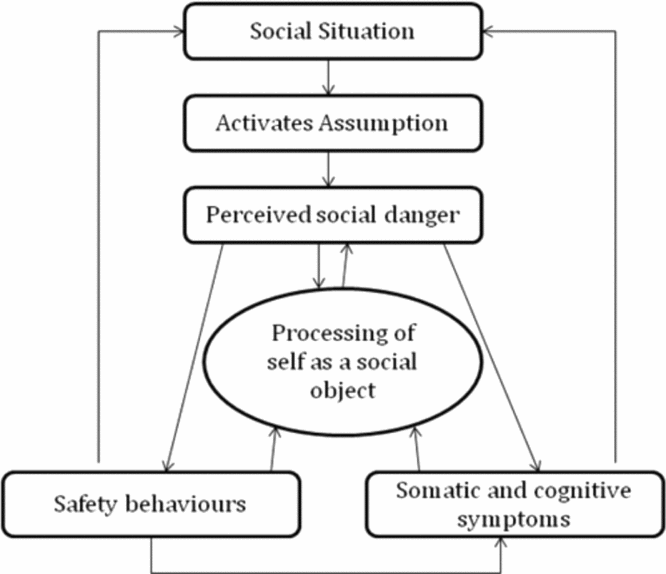
As illustrated in Figure 1, Clark and Wells’ (Reference Clark, Wells, Heimberg, Liebowitz, Hope and Schneier1995) model posits that for socially phobic individuals, upon entering a social situation, maladaptive assumptions are triggered, including unhelpful beliefs around low self-worth and others’ evaluation. This perception of the social situation as threatening prompts a shift in attention toward detailed monitoring of the self. Somatic and cognitive symptoms of anxiety that are detected are used to construct a negative mental representation of the self, and interpreted as confirmation that this is an accurate representation of how they are seen by the audience.
Clark's (Reference Clark, Crozier and Alden2001) cognitive model of social phobia (adapted from Clark & Wells, Reference Clark, Wells, Heimberg, Liebowitz, Hope and Schneier1995). Printed with permission from the publisher: Guilford Press.

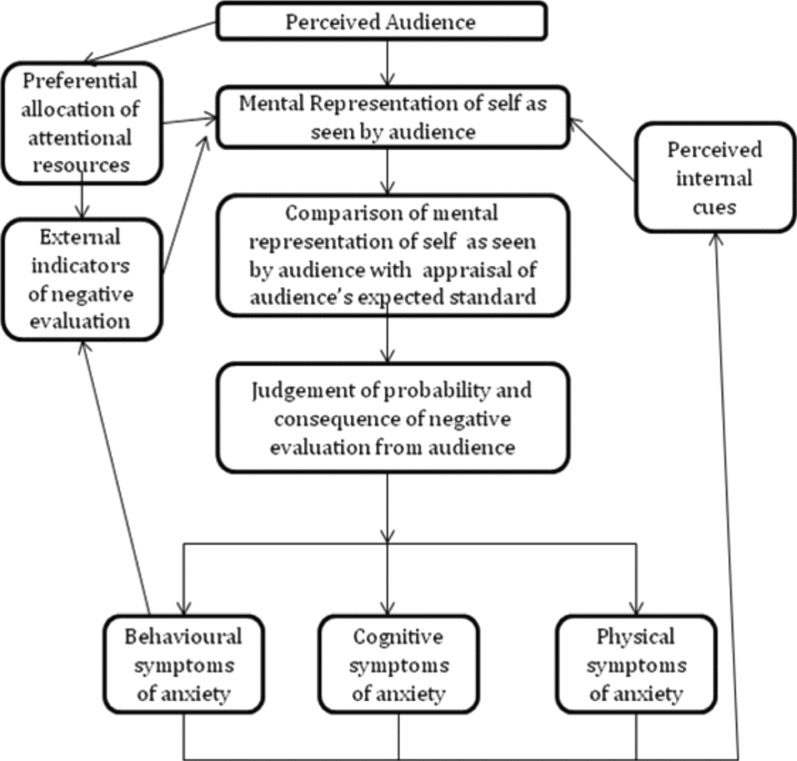
Rapee and Heimberg's (Reference Rapee and Heimberg1997) cognitive-behavioural model of social phobia. Printed with permission from the publisher: Elsevier.
In addition, Clark and Wells (Reference Clark, Wells, Heimberg, Liebowitz, Hope and Schneier1995) suggest that individuals with SP engage in safety behaviours that provide a sense of security against the perceived threat of social situations. These behaviours are used in an attempt to reduce potential negative evaluation and can either involve overt behaviours (e.g., avoidance) or internal mental processes (e.g., rehearsing conversation topics; Clark, Reference Clark, Crozier and Alden2001; Clark & Wells, Reference Clark, Wells, Heimberg, Liebowitz, Hope and Schneier1995). These safety behaviours contribute to the maintenance of the disorder in a number of ways: the individual may attribute social successes to the safety behaviour rather than inferring that the situation was safe; the behaviour may produce further anxiety symptoms (e.g., crossing arms to hide sweating causing more sweating); the attention employed to engage in the behaviour may limit capacity to process objective information from the social environment; and the behaviours can produce the feared outcome (e.g., averting eye-contact to avoid seeing others’ apparent judgmental expressions, thereby appearing unengaged and causing negative judgement; Clark, Reference Clark, Crozier and Alden2001; Clark & Wells, Reference Clark, Wells, Heimberg, Liebowitz, Hope and Schneier1995).
Clark and Wells (Reference Clark, Wells, Heimberg, Liebowitz, Hope and Schneier1995) also suggest that individuals with SP engage in both anticipatory and post-event rumination around a social event. Anticipatory rumination is thought to focus on past failures and potential negative scenarios in the upcoming social situation. As a result, the individual enters the social situation in a state of heightened anxiety that predisposes them to (1) direct attention inward to the self, (2) predict that they will perform poorly, and (3) engage in cognitive biases including negative self-imagery. These processes serve to prevent the individual from processing signs of acceptance from others during the social event, so that they instead selectively perceive those cues as confirming their negative expectations. After the event, individuals are hypothesised to engage in an extensive review of their performance and interactions. Due to the self-focused attention on anxiety symptoms during the event, negative aspects are recalled more readily. Consequently, post-event rumination tends to predominantly feature thoughts of perceived failure and negative images of themselves that were experienced during the event itself. Memories of past social failures are also recalled, which further consolidate the image of the self as socially inept. In this way, socially phobic individuals may remember social interactions increasingly harshly over time in a process that strengthens their distorted self-perceptions. Clark and Wells (Reference Clark, Wells, Heimberg, Liebowitz, Hope and Schneier1995) suggest that the more negatively the individual appraises their social performance, the more frequently they tend to engage in post-event rumination.
Rapee & Heimberg (Reference Rapee and Heimberg1997)
Rapee and Heimberg (Reference Rapee and Heimberg1997) similarly focus on the cognitive processes maintaining SP. They hypothesise that socially anxious individuals attach significance to being positively evaluated by others, and perceive social situations as a threat due to the assumption that any evaluation will be negative. Like Clark and Wells (Reference Clark, Wells, Heimberg, Liebowitz, Hope and Schneier1995), Rapee and Heimberg (Reference Rapee and Heimberg1997) recognise mental representations of the self as seen by an audience as a central factor in their model. The theory hypothesises that socially anxious individuals form an impression of themselves viewed from an observer's perspective, based on particular memories, internal sensations, and audience feedback. Attention is preferentially allocated to monitoring the self for information that confirms the self-representation, as well as monitoring the environment for signs of perceived threat.
Rapee and Heimberg (Reference Rapee and Heimberg1997) posit that social anxiety stems from the discrepancy between the individual's self-representation and what they think the audience expects of them. When comparing their negative representation of themselves to the high standards perceived to be required for the social situation, individuals with SP believe they are inadequate to meet the requirements and will be judged negatively as a result. The appraisal that negative evaluation will be both probable and costly leads to heightened physical, cognitive and behavioural symptoms of anxiety. These symptoms and any external indictors of threat are reintegrated into the mental representation of the self, resulting in maintenance of the social anxiety cycle (Rapee & Heimberg, Reference Rapee and Heimberg1997).
Hofmann (Reference Hofmann2007)
Hofmann's (Reference Hofmann2007) model of SP similarly argues that high perceived social standards and heightened self-focused attention lead to negative self-perceptions. This representation of the self increases apprehension about social mishap, as the individual appraises their social skills as inadequate for the social task. Such beliefs motivate the use of safety behaviours, avoidance, as well as rumination after the social event, which further sustain social anxiety. Hofmann argues that the combination of these cognitive appraisals and attentional processes act to maintain anxiety by further reinforcing the negative perception of the self as socially unskilled and inept (Hofmann, Reference Hofmann2007).
This theory is consistent with Clark and Wells’ (Reference Clark, Wells, Heimberg, Liebowitz, Hope and Schneier1995) model, which posits that individuals with SP hold a negative representation of the self as social object, which triggers anxiety symptoms when under the perceived threat of a social situation. Hofmann's (Reference Hofmann2007) model also aligns with Rapee and Heimberg's (Reference Rapee and Heimberg1997) notion of a mental representation of the self as seen by the audience, which heightens anxiety when the individual appraises their ability as faling short of perceived audience standards. As in both previous models, these cognitive factors result in the experience of further social apprehension, leading the individual to engage in avoidance or safety behaviours to cope with the anxiety. Overestimation of the probability and cost of potential social mishap lead to more post-event rumination, similar to that described in both models posited by Clark and Wells (Reference Clark, Wells, Heimberg, Liebowitz, Hope and Schneier1995) and Rapee and Heimberg (Reference Rapee and Heimberg1997). In combination, these processes are hypothesised to play a role in maintaining social anxiety (Hofmann, Reference Hofmann2007).
Empirical Evidence for Self-Imagery in Social Anxiety
The three main cognitive models of SP each emphasise the importance of self-imagery as a maintaining factor in the cycle of social anxiety. This aspect of the theoretical frameworks has received increasing attention in recent research. The following section outlines the evidence to date for the role of self-imagery in social anxiety, from early qualitative data to more recent experimental research and preliminary treatment studies investigating the effects of imagery rescripting interventions for SP.
Early Qualitative Studies
In the first qualitative study investigating the nature of spontaneously occurring images in SP, Hackmann, Surawy, and Clark (Reference Hackmann, Surawy and Clark1998) interviewed individuals with SP and non-clinical control participants about the frequency and characteristics of their mental images. They found that in comparison to controls, SP participants were more likely to experience self-imagery when anxious in social situations, and that their images tended to be negative in valence and seen from an observer's perspective. Hackmann, Surawy, and Clark (Reference Hackmann, Surawy and Clark1998) also reported that the content of SP individuals’ self-images tended to reflect idiosyncratic fears about the anxiety symptoms that made them feel the most self-conscious. When asked to reflect on the level of distortion of their images, SP and control participants alike rated their images as at least partially distorted (Hackmann, Surawy, & Clark, Reference Hackmann, Surawy and Clark1998). These findings provided support for the characteristics of self-imagery proposed by Clark and Wells’ (Reference Clark, Wells, Heimberg, Liebowitz, Hope and Schneier1995); indeed, individuals with SP reported more frequent self-images that were negative, distorted, and from an observer's perspective, relative to controls. However, given the inherent inaccuracy of such self-images for individuals with SP, the subjective distortion rating employed in the study was limited in determining the true extent of imagery distortion. To more accurately assess this aspect of self-imagery, specific aspects of participants’ self-images required comparison to ratings made by an objective rater to elicit levels of discrepancy between subjective and objective ratings.
Further to this, Hackmann, Clark, and McManus (Reference Hackmann, Clark and McManus2000) interviewed 22 individuals with SP and found that self-images in SP tended to include multiple modalities; while self-images were most often a visual experience, they were likely to additionally involve bodily sensations and sounds. This study described a procedure for a semi-structured interview used to elicit details about self-images that has since been employed in numerous studies in the area. An interesting finding from this study was that self-images were commonly linked to a traumatic social memory that lay at the root of the image. More specifically, the self-image appeared to correspond to the abstracted essence of rejection, criticism, or humiliation from the memory, and a temporal relationship was noted between these events and the onset or exacerbation of social anxiety (Hackmann, Clark, & McManus, Reference Hackmann, Clark and McManus2000). It should be noted that the interviewers in this study were not blind to participants’ diagnostic status or to the hypotheses of the research, so it is possible that demand characteristics may have influenced participants’ responses. Findings from this important study nevertheless invite the question of whether verbal feedback and traditional cognitive challenging are suitable or sufficient to modify the visual imagery thought to be key in maintaining in SP, given the similarities to ‘trauma’ and related symptoms of those memories in terms of cognitive and affective arousal. Taken together, the data emerging from early qualitative research has prompted a number of empirical studies exploring the impact of self-imagery on symptoms and processes in social anxiety.
Quantitative Research
Consistent with hypotheses from the cognitive models of SP and findings from prior qualitative studies, further research has demonstrated that individuals with SP are more likely than non-clinical controls to take an observer's perspective when imagining social situations, whereas both groups tended to view non-social situations from a first-person perspective (Wells, Clark, & Ahmad, Reference Wells, Clark and Ahmad1998; Wells & Papageorgiou, Reference Wells and Papageorgiou1999). Spurr and Stopa (Reference Spurr and Stopa2003) provided evidence of perspective being linked to more negative outcomes during a socially evaluative task. In this study, high and low socially anxious participants were asked to give two speeches in counterbalanced order, one while visualising themselves from a third-person perspective and the other from a first-person perspective, where they observed their surroundings from their own viewpoint. Results indicated that use of the observer perspective produced more frequent negative thoughts and poorer self-evaluation of speech performance in both high and low socially anxious participants (Spurr & Stopa, Reference Spurr and Stopa2003).
Aside from perspective, emotional valence is another image dimension that has received attention in experimental research. Vassilopoulos (Reference Vassilopoulos2005) reported a study that experimentally manipulated the valence of self-images in a sample of high and low socially anxious participants. Participants were instructed to hold in mind either a negative or positive self-image while delivering an impromptu speech, a social evaluation paradigm used commonly in self-imagery studies. High anxiety participants in the negative imagery condition rated their performance as poorer and perceived more physical symptoms of anxiety, compared to high anxiety participants in the positive imagery condition (Vassilopoulos, Reference Vassilopoulos2005). No differences were observed between imagery conditions for low anxiety participants. A potential limitation of this study was that an observer's perspective was specified in the instructions to participants for the negative image condition but not specified for the positive condition, and hence the relative contribution of valence could not be disentangles with that of perspective.
Findings from the existing literature largely converge in support of the deleterious effect of negative self-images in both high and low socially anxious participants. For example, Hulme, Hirsch, and Stopa (Reference Stopa, Brown and Hirsch2012) found that irrespective of anxiety group, participants who held a negative self-image in mind reported lower levels of explicit self-esteem after a task that simulated social exclusion, compared with those who imagined a positive self-image. Makkar and Grisham (Reference Makkar and Grisham2011) instructed participants to similarly hold in mind either a negative or control self-image during a brief speech. Findings showed that holding a negative self-image in mind resulted in greater levels of self-reported anxiety, negative thoughts, poorer performance appraisal, and self-focused attention. This latter relationship is consistent with the theoretical links between maintaining factors of cognitive models; Hofmann (Reference Hofmann2007) discusses the role of heightened self-focused attention on social anxiety, and Rapee and Heimberg's model (1997) similarly speaks to the preferential allocation of attentional resources. Further to this, participants were followed up 24 hours later to assess the degree to which they had engaged in post-event rumination about the speech. Again, in comparison to participants who had held in mind a control self-image, those who had imagined a negative self-image reported experiencing more negative rumination since the speech, as predicted by Hofman's (Reference Hofmann2007) model. Interestingly, prior to the measurement of post-event rumination, participants were led to believe they were about to deliver another speech, which likely heightened their state anxiety and potentially interfered with the recall of their rumination levels. The control self-image employed was also potentially problematic in that participants were instructed to recall a past speech experience in which they had felt relaxed, which likely translated to a positive memory more than a neutral one. Nevertheless, consistent with the results reported by Hulme, Hirsh, and Stopa (Reference Stopa, Brown and Hirsch2012), the detrimental effect of negative self-imagery were observed in high and low socially anxious participants alike (Makkar and Grisham, Reference Makkar and Grisham2011). It should be noted, however, that failure to detect an interaction effect may have been due to limited sample sizes in both studies.
Evidence of the role of self-imagery in maintaining other key factors proposed by cognitive models of social anxiety has also come to light. Specifically, negative self-imagery has been linked with greater use of safety behaviours (Hirsch, Meynen, & Clark, Reference Hirsch, Meynen and Clark2004), in line with models proposed by Hofmann (Reference Hofmann2007) and Clark and Wells (Reference Clark, Wells, Heimberg, Liebowitz, Hope and Schneier1995). Negative self-imagery has also been shown to be associated with faster retrieval of negative memories and poorer predicted performance (Stopa & Jenkins, Reference Stopa and Jenkins2007), which may contribute to the social apprehension posited by Hofmann (Reference Hofmann2007), where perceived lack of social skills is related to an anticipated, that is, expected, social mishap.
To date, few experimental studies have investigated the role of self-imagery in samples of clinically diagnosed adults with SP. Coles, Turk, Heimberg, and Fresco (Reference Coles, Turk, Heimberg and Fresco2001) reported that SP individuals and non-anxious controls differed in the perspective they took, depending on the level of anxiety associated with the social situation. While both groups were found to take a first-person perspective for low tomedium anxiety memories, SP participants recalled high anxiety social situations more from an observer's perspective in comparison to controls (Coles, Turk, Heimberg, & Fresco, Reference Coles, Turk, Heimberg and Fresco2001). Furthermore, as anxiety level for situations increased, SP participants were observed to make increasingly internal, stable, and global attributions for their performance, while control participants showed the opposite attributional pattern. This is consistent with Clark and Well's (Reference Clark, Wells, Heimberg, Liebowitz, Hope and Schneier1995) ideas about how individuals with SP process interactions with cognitive biases that perpetuate their anxiety when feeling under threat in social situations. That is, socially phobic people show a tendency to interpret perceived social mishaps as caused by attributes characteristic of themselves that cannot be changed.
Hirsh, Mathews, Clark, Williams, and Morrison (Reference Hirsch, Mathews, Clark, Williams and Morrison2003) provided further evidence on the detrimental effects of negative self-imagery by introducing a socially evaluative task in their study. In a within-subject design, SP participants engaged in two conversations with a stranger, holding either a negative or a control self-image in mind. Participants reported higher levels of anxiety and poorer subject performance ratings in the negative self-image condition (Hirsh et al., Reference Hirsch, Mathews, Clark, Williams and Morrison2003). Additionally, an objective assessor rated participants’ performance as poorer in the negative condition, indicating that the effect of negative self-images is observable to others. Due to the actual performance deficits induced, this evidence suggests that negative self-imagery can create a self-fulfilling prophecy where the individual acts in a way that elicits negative feedback from others that confirms their self-beliefs. However, as the study did not include control participants, the specificity of these effects (compared to non-clinical controls) could not be determined.
It is interesting to note that existing research suggests that SP individuals not only experience heightened anxiety in response to negative stimuli, but that positive stimuli in social interactions elicit a similar response. Alden, Taylor, Mellings, and Laposa (Reference Alden, Taylor, Mellings and Laposa2008) reported that SP individuals tended to interpret positive social interactions in a threat-maintaining manner compared to non-clinical control participants, and that these negative interpretations were associated with negative social predictions following a positive interaction with a conversation partner. Research has also demonstrated that SP individuals report similar levels of negative affect during socially successful and unsuccessful interactions (Wallace & Alden, Reference Wallace and Alden1997) and tend to discount their own social competence to the same extent in a social conversation with a confederate engaging in positive social feedback, as one where negative feedback was displayed (Alden & Wallace, Reference Alden and Wallace1995). That is, relative to ratings from an objective observer, SP individuals appraised their social performance with a negative bias regardless of whether they were receiving positive or negative cues from a social partner. These findings suggest that SP individuals maintain their negative self-appraisals in a way that appears impervious to external stimuli. Further to this, Wallace and Alden (Reference Wallace and Alden1995) suggested that following positive social feedback, socially anxious individuals perceive an increase in audience expectations for subsequent interactions, thus might feel more anxiety resultantly. This is in keeping with Rapee and Heimberg's (1997) model, which posits that anxiety arises following a perceived discrepancy between one's mental representation of the self and the appraisal of the audience's expected standard. While there is evidence in the literature for the unhelpful effects of external positive stimuli, little is known about the impact of internal positive stimuli during a social situation, for example, that of positive self-imagery.
Results from existing studies support hypotheses of cognitive models of SP, however, further research is warranted to improve our understanding of key maintaining factors and processes underlying the disorder to continue development of comprehensive theoretical models and effective treatments.
Preliminary Treatment Studies
Currently, the most widely used treatment for SP is group Cognitive Behavioural Therapy (gCBT; Heimberg & Becker, Reference Heimberg and Becker2002), which includes cognitive restructuring, behavioural experiments, and graded exposure techniques (Beck, Emery, & Greenberg, Reference Beck, Emery and Greenberg1985). Despite being the gold standard, modest results have been demonstrated for gCBT, with one study showing 58% of participants significantly improved after the 12-week gCBT program (Heimberg et al., Reference Heimberg, Liebowitz, Hope, Schneier, Holt, Welkowitz and Klein1998), and another finding that 51.7% of participants no longer met criteria for SP after gCBT (Fehm et al., Reference Fehm, Pelissolo, Furmark and Wittchen2005). It is clear that there is room to improve on existing interventions, in particular for more resistant or chronic cases of SP.
More recent research by Rapee, Gaston, and Abbott (Reference Rapee, Gaston and Abbott2009) compared a traditional CBT package (similar to that used by Clark et al., Reference Clark, Elhers, Hackmann, McManus, Fennell, Grey and Wild2006) to an enhanced CBT package that included further use of hypothesis testing, elimination of safety and avoidance behaviours, in addition to cognitive restructuring and in vivo exposure elements. The enhanced program also involved evidence gathering and restructuring techniques targeting broader core beliefs and life scripts, which allowed for the possibility of addressing deeper and more long-standing issues underlying the social anxiety that may not be facilitated by traditional CBT for SP. The enhanced program showed statistically and clinically significant benefits over the traditional CBT program.
Treatments for SP have more recently focused on addressing early social memories related to the origins of the disorder rather than working at the level of symptom alleviation. As such, these treatments are based on the finding from Hackmann, Clark, and McManus’ (Reference Hackmann, Clark and McManus2000) qualitative research that a traumatic social memory lies at the root of negative self-images. Thus, more recent directions in SP treatment research have focused on investigating interventions for modifying self-imagery. For example, Stopa, Brown, and Hirsch (Reference Stopa, Brown and Hirsch2012) tested the impact of imagery training or rescripting on anxiety, performance and self-concept, finding that positive self-imagery training produced better performance ratings in a conversation task. A small number of studies have begun to explore the effect of imagery rescripting on social anxiety. Imagery rescripting for SP was first conducted by Wild, Hackmann, and Clark (Reference Wild, Hackmann and Clark2007), based on the therapeutic procedure designed by Arntz and Weertman (Reference Arntz and Weertman1999), in which early traumatic experiences are revisited with an adult perspective. In the three-stage rescripting procedure, the individual first relives the adverse memory from the child's perspective, then as their current adult self watching the child, and finally as the child with the adult self present to help the child intervene in order to produce a different outcome.
Wild, Hackmann, and Clark (Reference Wild, Hackmann and Clark2007, Reference Wild, Hackmann and Clark2008) included an additional cognitive restructuring component to the original procedure, interweaving the restructured thoughts into the third stage of the rescripting process. In a pilot study of this novel intervention for SP, Wild et al. (Reference Wild, Hackmann and Clark2007) conducted one rescripting session with 14 individuals with SP, who reported reductions in beliefs and distress associated with the image within the session, and decreased levels of social anxiety at 1-week follow-up. This study was pioneering in showing the potential benefits of imagery rescripting for SP, prompting further research, including comparison conditions and groups. Extending from this, a second within-subject study was conducted where 11 individuals with SP attended a control session of non-directive counselling, then a rescripting session 1 week later. While no change was observed after the control session, significant reductions in negative beliefs, distress and vividness associated with the image, self-reported social anxiety symptoms, and fears of negative evaluation were demonstrated immediately after the rescripting session and at 1-week follow-up, suggesting that imagery rescripting may be a promising intervention in the treatment of SP. While this study was seminal in the area, it was limited by its unbalanced within-subject methodology, where activating and discussing the imagery in the control condition 1 week prior to the intervention could have enhanced its effects.
Following from this, a between-subject study was conducted by Nilsson, Lundh, and Viborg (Reference Nilsson, Lundh and Viborg2012), who randomised 14 SP individuals to either an imagery rescripting or control condition. The between-subject design employed was a methodological improvement to prior studies in reducing contamination of effects across conditions. Again, significant improvements were demonstrated for memory and image distress, fears of negative evaluation and social interaction, at 1-week follow-up (Nilsson et al., Reference Nilsson, Lundh and Viborg2012). Findings add support for the potential efficacy of imagery rescripting in treating SP; however, the control condition was problematic in this study as it involved a reading task rather than an alternative treatment providing equal levels of therapeutic attention. As in previous studies, limitations of small sample sizes and short follow-up periods were also present in this study.
To address some of these shortcomings, Lee and Kwon (Reference Lee and Kwon2013) conducted a randomised control trial involving 23 individuals with SP. Twenty-three participants were randomly allocated to either the imagery rescripting group, who undertook three sessions of imagery interviewing, cognitive restructuring, and imagery rescripting, or the control condition, involving three sessions of non-directive imagery interviewing. This attention-placebo comparison design enabled potential findings to be attributed to the rescripting treatment, rather than non-specific therapy factors. Additionally, a longer follow-up period of 3 months was conducted, providing further insight into the lasting effects of imagery rescripting. In comparison to the control group, the treatment group showed significant reductions in fears of negative evaluation and social anxiety symptoms, as well as ameliorated beliefs and distress associated with the image and memory, at post-treatment and follow-up. These outcomes add to the growing evidence for imagery rescripting as a method for modifying the problematic self-representations thought to perpetuate SP.
More recently, a pilot study investigated the efficacy of an imagery-enhanced CBT treatment for SP in a group context (McEvoy & Saulsman, Reference McEvoy and Saulsman2014). In this study, a manualised program involving 12 weekly sessions of group CBT for SP, with additional components targeting negative self-imagery, was trialled on 19 participants meeting criteria for SP. Treatment outcomes from the imagery-enhanced program were found to compare favourably to a comparison treatment identical in clinical contact and length, in terms of improvements in self-reported performance ratings and social interaction anxiety at mid- and post-treatment, and at 1-month follow-up (McEvoy & Saulsman, Reference McEvoy and Saulsman2014).
All five preliminary treatment studies to date have found a significant reduction in social anxiety following an imagery intervention, with effect sizes ranging from medium to large (Lee & Kwon, Reference Lee and Kwon2013; McEvoy & Saulsman, Reference McEvoy and Saulsman2014; Nilsson et al., Reference Nilsson, Lundh and Viborg2012; Wild et al., Reference Wild, Hackmann and Clark2007, Reference Wild, Hackmann and Clark2008). As an alternative or a supplement to traditional cognitive and behavioural techniques, imagery rescripting may be additionally beneficial as it enables access to self-defining memories in a way that may not be possible through the verbal modality of cognitive restructuring or the present experiential focus of exposure. By reprocessing an original imagery that may lie at the heart of the social anxiety, the memory is updated with new information in a way that changes its meaning and prominence. It is possible that this may result in a reappraisal of the self, which in turn is expressed in the promotion of a new, more helpful self-imagery that begins to weaken the cycle of social anxiety.
Limitations of Past Research
Despite the pivotal role of self-imagery in the maintenance of social anxiety, there is currently a paucity of studies in this area. While findings from existing research have begun to shed light on the nature and role of self-imagery, methodological shortcomings have at times compromised the interpretation of results. A number of studies were limited by sampling issues such as small sample sizes that may have been insufficient to detect the desired effect, particularly interaction effects for studies with multiple groups and conditions. Most studies in the area have also employed social anxiety analogue samples rather than participants with diagnosed SP. Cognitive measures such as the Fear of Negative Evaluation Scale (FNE; Watson & Friend, Reference Watson and Friend1969) have been used to categorise participants into groups, rather than a diagnostic or symptom measure that assesses fear and avoidance of social situations. Use of the FNE in this context is potentially problematic as high scores are also obtained from other Axis I samples, such as participants with unipolar depression.
Categorisation using standardised interview schedules for DSM-5 SP criteria would be more appropriate to directly examine results for clinical populations of participants with a primary diagnosis of SP, such as the Anxiety and Related Disorders Interview Schedule for DSM-5 (ADIS-5; Brown & Barlow, Reference Brown and Barlow2014).
Multiple studies also tended to include a control condition that involved a positive rather than a true neutral image. This was problematic in assessing the impact of valence of self-imagery on social anxiety to determine whether emotional imagery (i.e., negative or positive), or negative imagery specifically, impacts people with SP negatively. Few studies to date have allowed for direct comparison of three conditions (negative, positive, and neutral self-imagery) in their designs. In addition, the majority of studies did not assess many of the key factors thought to maintain social anxiety, such as post-event rumination and attentional processes. Consequently, the effect of negative self-imagery on these other maintaining factors in the cognitive model awaits investigation.
With regard to the existing treatment research, most studies to date are preliminary uncontrolled trials without appropriate comparison interventions or non-intervention groups. Studies have also been limited by small sample sizes and lack of follow-up periods, with the longest being 3 months. As such, the longevity of rescripting effects remains unclear. As in the experimental studies, findings from the existing treatment studies were also limited in terms of examining how modification of negative self-imagery affects other key maintaining factors.
Summary and Implications
As proposed in theoretical models, negative self-images have been found to be more likely to be experienced from an observer's perspective and to be negatively valenced. Findings from experimental studies to date showed a similar pattern of data for both socially anxious and non-anxious participants, where negative self-imagery had a detrimental effect on anxiety, self-rated and observer-rated performance appraisals, and negative thoughts. Results have demonstrated that negative self-imagery adversely impacts individuals irrespective of whether participants suffer from social anxiety. Although the effects are predictably greater for socially anxious people, data from studies including both a control group and several imagery conditions have generally reported no significant interactions for the majority of dependent variables assessed, indicating that socially anxious and control participants alike experienced greater anxiety, rated their own performance more poorly, received poorer performance appraisals from an objective rater, and had more negative thoughts in the negative self-image condition. These effects were not necessarily stronger for socially anxious participants than controls, though the expected interactions may require larger sample sizes (Ng, Abbott, & Hunt, Reference Ng, Abbott and Hunt2013).
While empirical research has demonstrated the deleterious impact of negative self-imagery, the precise mechanisms underlying self-imagery are yet to be clearly established. Moreover, the relationships between self-imagery and other important maintaining factors in models of social anxiety are currently unclear. In the current literature, the more informative of the experimental studies included a control group to enable comparison with socially anxious participants, as well as multiple conditions comparing different types of self-imagery during a social or performance task. More studies of this nature enabling the examination of any differential effects of negative self-imagery compared with positive/neutral self-imagery for socially anxious and non-anxious participants are needed to determine the relative strength of effects across groups. To date, the different effects of negative, positive, and neutral self-imagery for individuals with SP and non-clinical controls remain unclear. It is important that these mechanisms be better understood for further rescripting intervention research to be productive and fruitful.
Key recommendations for future research:
• Selection of participants meeting diagnostic criteria for SP as assessed by standardised interview schedules for DSM-5 SP, rather than analogue samples;
• Comparison between SP and non-clinical control groups of participants;
• Inclusion of multiple self-imagery conditions (negative, positive, and neutral self-imagery) in order to determine effects of emotional valence;
• Inclusion of a control condition that involves a true neutral self-image that is still in a social context;
• Sufficient sample sizes to detect desired effects, particularly interaction effects for studies with multiple groups and imagery conditions;
• Assessment of the effects of self-imagery on the key affective, cognitive, and attentional maintaining factors proposed by current cognitive models of SP.
Key considerations for imagery rescripting interventions:
• Further understanding of the effects of different types of self-imagery on symptoms and processes in social anxiety is required in order to guide future research on treatments targeting self-imagery;
• Subsequent controlled trials of appropriate imagery rescripting protocols with comparison interventions or non-intervention groups, sufficient sample sizes, and multiple longer-term follow-up periods (e.g., at 3-months, 6-months, 1-year, 3-years) examining how modification of negative self-imagery affects other key maintaining factors;
• Further research on relative efficacy of individual imagery rescripting interventions compared with imagery rescripting interventions in a group context;
• Helpful resources for imagery rescripting interventions specific to SP include:
Hackmann, A., Clark, D.M., & McManus, F. (Reference Hackmann, Clark and McManus2000). Recurrent images and early memories in social phobia. Behaviour Research and Therapy, 38(6), 601–610.
Nilsson, J., Lundh, L., & Viborg, G. (Reference Hulme, Hirsch and Stopa2012). Imagery rescripting of early memories in social anxiety disorder: An experimental study. Behaviour Research and Therapy, 50, 387–392.
Wild, J., & Clark, D.M. (Reference Wild and Clark2011). Imagery rescripting of early traumatic memories in social phobia. Cognitive and Behavioural Practice, 18, 433–443.
Wild, J., Hackmann, A., & Clark, D.M. (Reference Wild, Hackmann and Clark2007). When the present visits the past: Updating traumatic memories in social phobia. Journal of Behavior Therapy and Experimental Psychiatry, 38(4), 386–401.
Wild, J., Hackmann, A., & Clark, D.M. (2008). Rescripting early memories linked to negative images in social phobia: A pilot study. Behavior Therapy, 39(1), 47.