Introduction
Laryngeal cancer is one of the most common cancers of head and neck, and in 2007 it accounted for one fourth of the approximately 45 000 head and neck cancers diagnosed in the USA.Reference Jemal, Siegel, Ward, Murray, Xu and Thun1 More than 95 per cent of these cancers are squamous cell carcinomas histologically, and 60–65 per cent of them arise from the glottis followed by the supraglottis, whereas only 2 per cent arise from the subglottis.Reference Ferlay, Bray, Pisani and Parkin2
Patients with glottis cancer mostly present with hoarseness and are therefore identified in the early stages (T1 or T2).Reference Hoffman, Porter, Karnell, Cooper, Weber and Langer3 Additionally, glottic tumours have sparse lymphatic drainage and rarely metastasise in the early course of the disease. Early-stage laryngeal cancers have good cure rates with radiotherapy and larynx preservation surgical procedures. Because all the evidence consists of non-randomised studies, the treatment of choice remains a controversial issue.Reference Pfister, Laurie, Weinstein, Mendenhall and Adelstein4 The reported cure rates using radiotherapy for early-stage laryngeal cancers (T1 and T2) range from 75–95 per cent.Reference Mendenhall, Parsons, Million and Fletcher5
There are multiple factors that contribute to the prognosis of laryngeal cancers such as tumour site, age, gender, histological grade, anterior commissure involvement, histology, addictions, performance status, haemoglobin level and duration of primary treatment.Reference van der Voet, Keus, Hart, Hilgers and Bartelink6 All patients are at highest risk of recurrence in the first two to three years of their follow up. After this, the chances of recurrence are low, and any lesion represents a new primary cancer.Reference Slavicek7
The rationale for this review was to find the predictors of treatment failure in early laryngeal carcinomas (T1 or T2) treated with hypo-fractionated radical radiotherapy in a high-volume, third-world cancer hospital.
Materials and methods
The head and neck oncology department at Shaukat Khanum Memorial Cancer Hospital, Lahore, Pakistan, maintains a prospective database of all cancer patients. A total of 249 patients with early-stage laryngeal cancers were treated from January 2002 to December 2014 at the Department of Head and Neck Oncology.
We excluded seven patients who had histopathology other than squamous cell carcinoma. All cancer patients were assessed with a comprehensive head and neck examination including flexible direct laryngoscopy and imaging (computerised tomography (CT) scans and chest X-rays). Tumour staging was done according to the American Joint Commission on Cancer manual (6th edition). Electronic records were used to extract data variables including demographic data, primary tumour classification (histology, tumour node metastasis, classification, stage and histological grade) and primary treatment-related factors (treatment regimen, start and end of treatment, type of surgery, treatment of neck, radiotherapy doses, duration of treatment, interruptions, follow up and outcomes).
All patients were treated with conventional radiotherapy simulated in a supine position and immobilised in a thermoplastic shell with two lateral beams at 2.75 Gy per fraction (total dose 55 Gy in 20 fractions) from Monday to Friday. The radiation field was bounded by the upper border of hyoid bone superiorly, the lower border of cricoid cartilage inferiorly, and the posterior limit was defined by vertebral bodies, but keeping the cord off the radiation field.
Assessment of response
Radiation response was assessed at six weeks after radiotherapy by performing a complete head and neck examination and fiberoptic nasopharyngoscopy. All patients were followed up in the clinic every three months in the first year, every four months in the second year and every six months thereafter. Any patient with the suspicion of recurrence was restaged using a CT scan and biopsy.
Statistical analysis
The data were analysed using SPSS® statistical software (version 20). Survival rates were calculated using Kaplan–Meier curves. Overall survival was defined as the time between first presentation in the head and neck clinic and death due to any cause or last follow-up examination. Disease specific survival was defined as the time between first presentation in the head and neck clinic and death due to disease only or last follow-up examination. Locoregional control was defined as the time interval from the treatment start date until the locoregional failure date, date of death if the patient died from non-cancerous causes but without relapse or date last seen at follow up if alive and relapse free.
Results
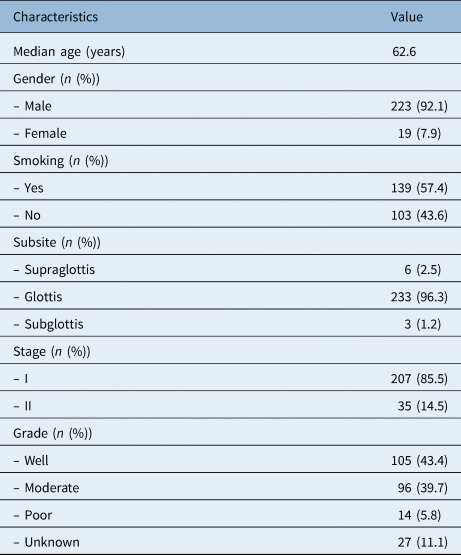
Table 1 shows the characteristics of the study population. The majority of our patients were male (92.1 per cent). The glottis was the most common cancer subsite (96.3 per cent), and 85.5 per cent of patients had stage I disease. All stage I patients received an average of 55 Gy of radiotherapy, whereas all stage II patients received 65 Gy of radiotherapy except for two patients who received chemoradiotherapy (Table 2).
Characteristics of patients

Treatment characteristics

Median follow up of our patients was 4.5 years. Locoregional or distant failure was seen in 15 per cent (31 of 207) of stage I patients and 26 per cent (9 of 35) of stage II patients (Table 3). Of all the local failures, 26 patients underwent salvage total laryngectomy, and 8 patients refused surgery. At the last follow up, 14 patients who underwent laryngectomy were alive without disease, 4 were alive with disease and 8 had died. The incidence of second primary malignancy was only 2.5 per cent (6 of 242), and two patients developed distant metastasis.
Pattern of recurrence according to stage

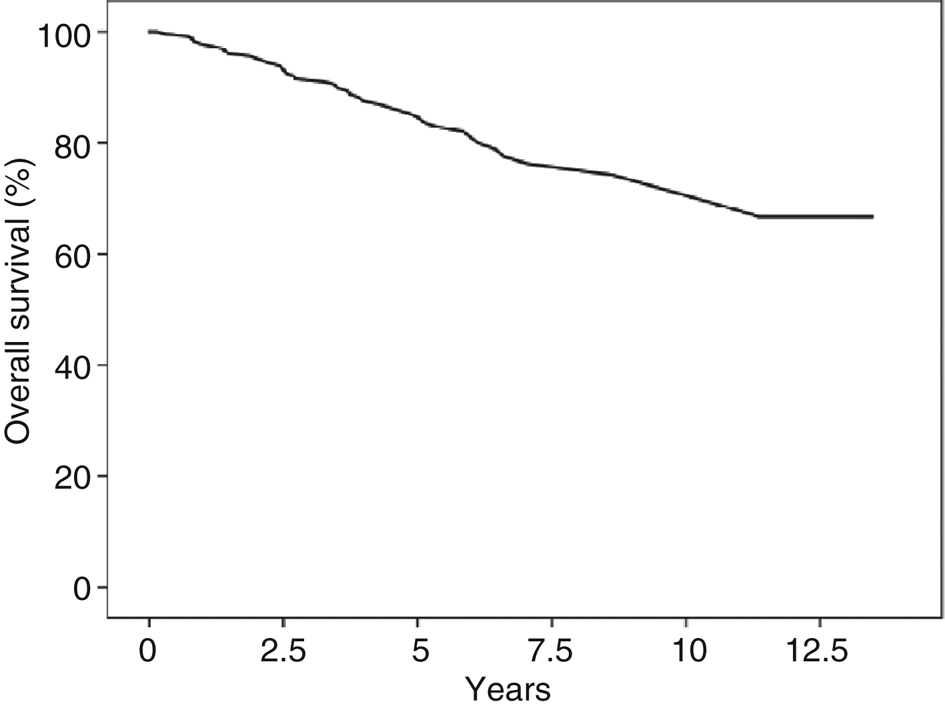
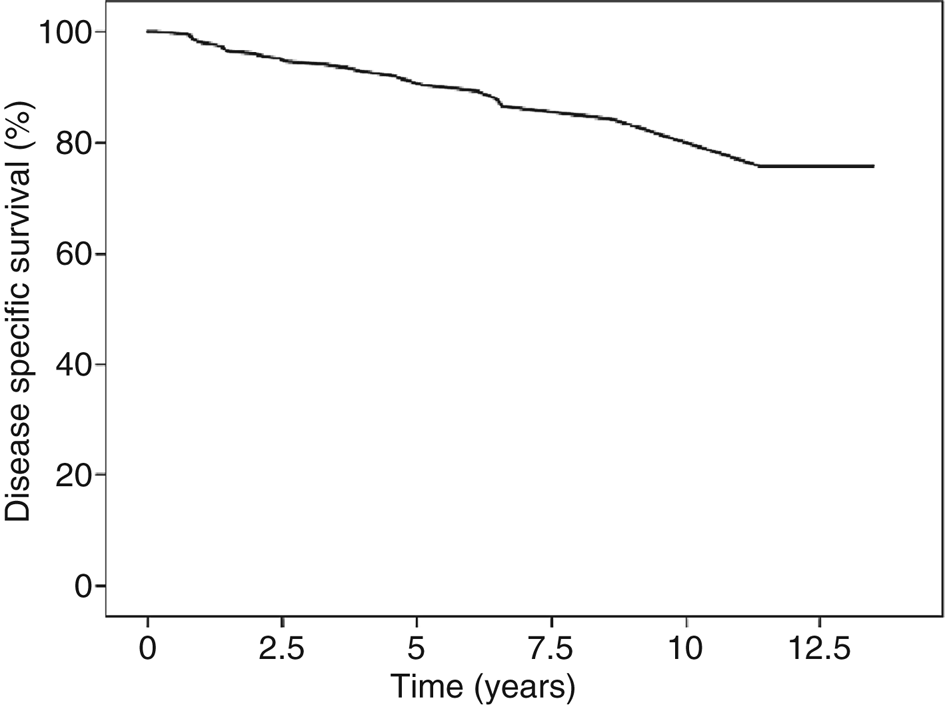
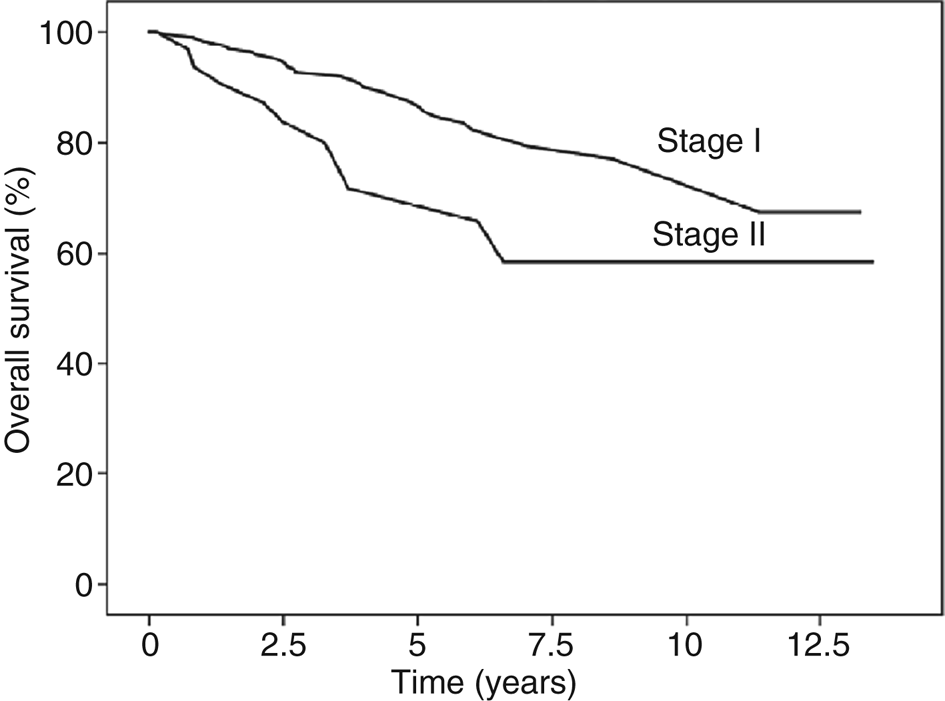
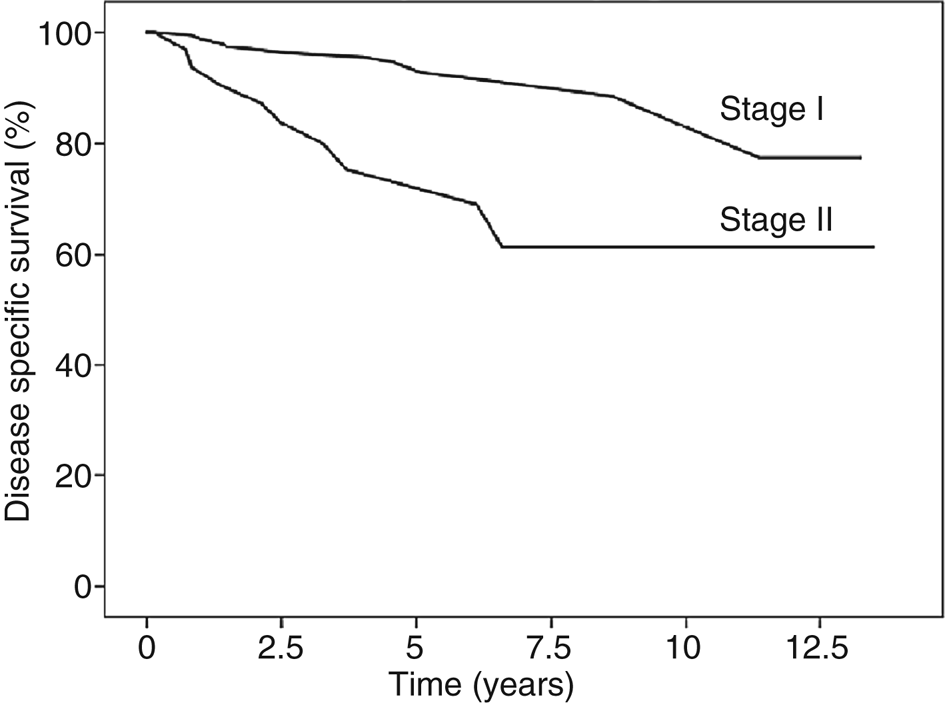
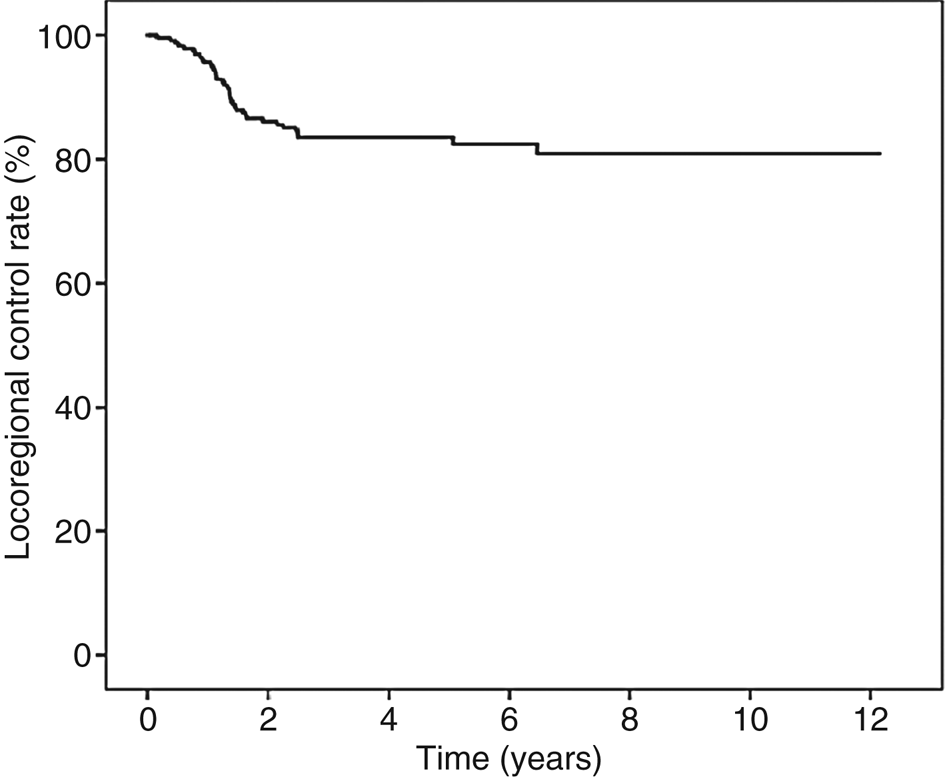
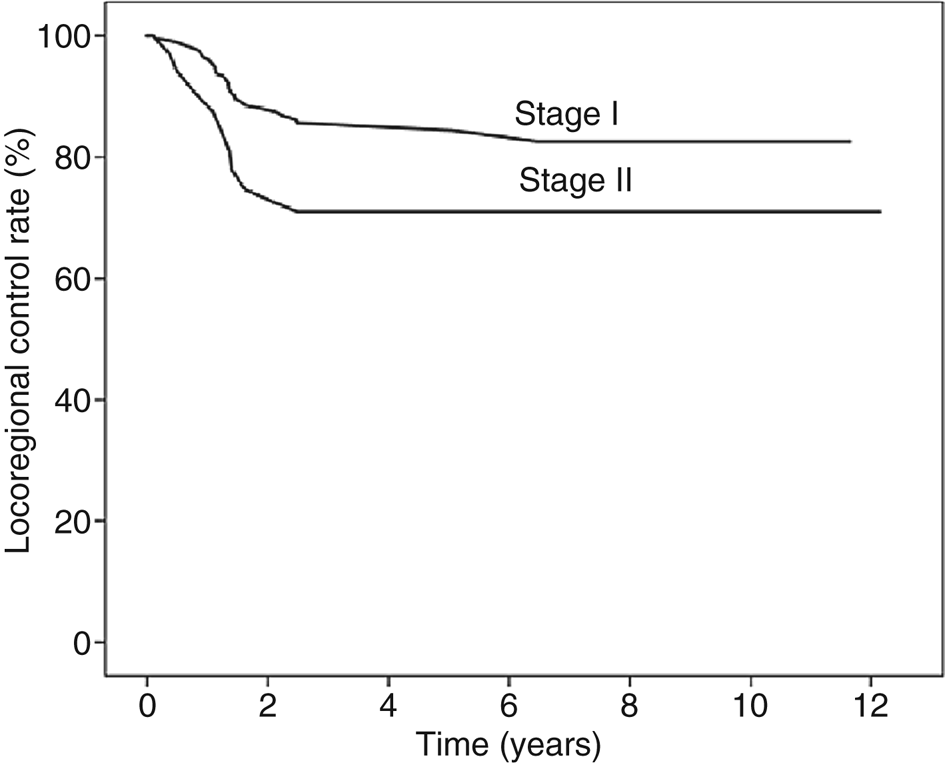
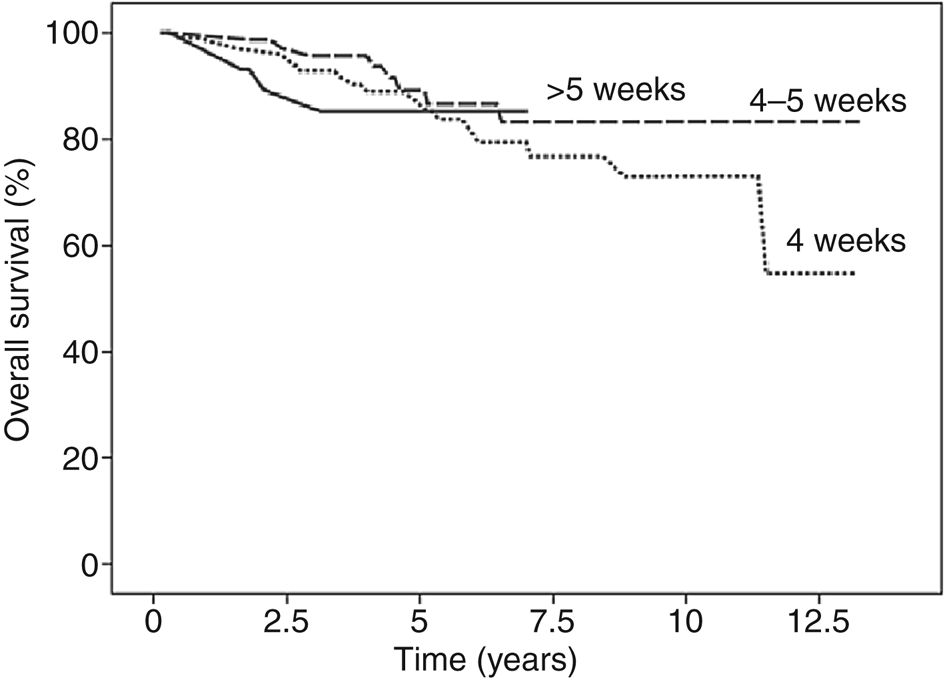
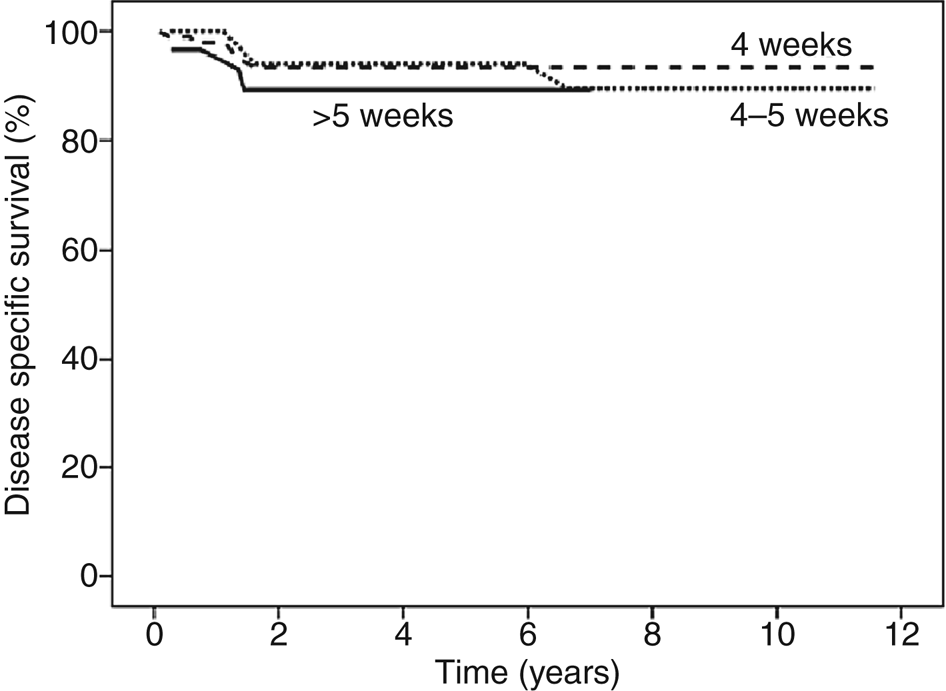
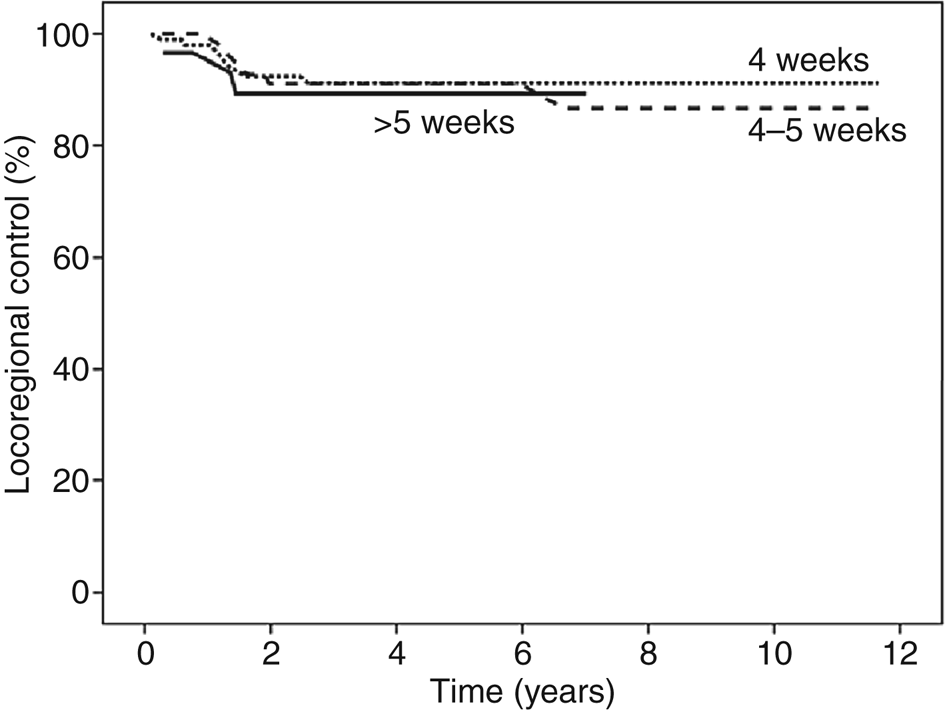
The 5-year overall survival and disease specific survival rates were 84 per cent and 91 per cent, respectively (Figures 1 and 2). Patients with stage I and II disease had overall survival rates of 87 per cent and 67 per cent, while their disease specific survival rates were 93 per cent and 71 per cent, respectively (Figures 3 and 4). The overall locoregional control at 5 years was 84 per cent, while locoregional control for stage I and II disease was 84 per cent and 71 per cent, respectively (Figures 5 and 6). We also looked at the impact of duration of treatment on overall survival, disease specific survival and locoregional control. It was seen that this variable had no impact on survival (Figures 7, 8 and 9). At the time of analysis, 81.4 per cent of patients were alive, and disease related deaths were seen in 9.5 per cent of cases. Deaths due to reasons other than the tumour were reported in 7 per cent of patients, and 2 per cent of patients were alive with disease.
Overall survival.

Disease specific survival.

Overall survival by stage.

Disease specific survival by stage.

Rate of locoregional control.

Rate of locoregional control according to stage.

Impact of treatment duration on overall survival.

Impact of treatment duration on disease specific survival.

Impact of treatment duration on locoregional control.

Discussion
Laryngeal cancers have been treated both by surgery and by radiotherapy with equivalent results. The choice of treatment depends on institutional practice, availability of surgical expertise and selection of the treatment modality by the patient undergoing surgery. The primary aim of treatment is to preserve the organ and its function of speech and swallowing. The current series study is a retrospective review of stage I and II laryngeal cancer patients treated at a single institution. At our institution, primary radiotherapy is the main stay of treatment for early-stage laryngeal cancers.
Smoking contributed as a risk factor in only 57 per cent of our patients compared to the published literature where it was 82 per cent. The possible explanation is a high prevalence of smoking among females in the western population.Reference Franchin, Minatel, Gobitti, Talamini, Vaccher and Sartor8 During follow-up, only 6 patients (2.5 per cent) developed second primary malignancy as compared to 22.2 per cent reported by Franchin et al., and this high incidence is probably related to the higher incidence of smoking in that series. A similar pattern has also been shown in other studies.Reference Fujita, Rudoltz, Canady, Patel, Machtay and Pittard9
The prognosis is reported to be better in stage I cancers than stage II cancers. In this study, overall survival at 5 years was 87 per cent and 67 per cent for stage I and II, respectively. Frata et al. and Cellai et al.Reference Frata, Cellai, Magrini, Bonetti, Vitali and Tonoli10,Reference Cellai, Frata, Magrini, Paiar, Barca and Fondelli11 reported much lower survival in 1087 patients treated with radiotherapy (77 per cent and 59 per cent, respectively). Locoregional control in our study was 84 per cent and 71 per cent for stage I and stage II, respectively, which is comparable to other published literature.Reference Khan, Koyfman, Hunter, Reddy and Saxton12
During treatment, interruption or delay negatively impacted survival. This impact is reinforced by the need for additional fractions of radiation. We did not enforce additional fractions of radiation in cases of treatment delay. In our study, we found that duration of treatment had no significant difference on overall survival, disease specific survival and locoregional control. Johannes et al.Reference Johansen, Grau and Overgaard13 reported a drop of 5 years local control from 95 per cent to 79 per cent when the treatment duration was prolonged by 40 days, whereas, in our report, the local control remained around 90 per cent for all 3 groups (1: treatment duration less than 4 weeks; 2: treatment duration of 4–5 weeks; and 3: treatment duration more than 5 weeks). Similarly, in a study by Rudoltz et al.,Reference Rudoltz, Benammar and Mohiuddin14 the overall survival and disease specific survival went down from 100 per cent to 80 per cent after a delay of more than 5 weeks, which was contrary to our findings of 87 per cent irrespective of duration of treatment.
Salvage rates after radical radiotherapy were satisfactory because we were able to salvage just above 50 per cent of patients. The majority of our patients use an electrolarynx for their voice, and they find it very helpful in routine communication. These results necessitate regular follow up as surgical salvage is a reasonable and effective option.
• This study was one of the largest series studies from a resource-limited, high-volume cancer centre in a third-world country
• This study uses comprehensive records from an updated database
• Treatment duration was not shown to have an impact on survival outcome
For early laryngeal cancers, besides radical radiotherapy, transoral laser resection and open partial laryngectomy are other acceptable options.Reference Hartl, De Mones, Hans, Janot and Brasnu15,Reference Mendenhall, Werning, Hinerman, Amdur and Villaret16 With any of these options, the probability of cure and retainment of voice is comparable to radical radiotherapy. The drawback of radiotherapy is the long duration of treatment.Reference Mendenhall, Werning, Hinerman, Amdur and Villaret16 Transoral laser surgery is best suited for patients with small lesions, specifically those limited to the middle third of one vocal fold.
We acknowledge certain limitations of our study. Since it is a retrospective review, it is therefore susceptible to deficiencies in data collection. For a similar reason, we were not able to assess patients’ voices and record after radiotherapy complications. The strength of the study is, however, the completeness of the study population, as our department prospectively maintains a head and neck database; therefore, no patient was excluded because of an inability to retrieve their medical records.
Conclusion
In summary, radiotherapy is a suitable treatment modality for patients with early-stage laryngeal cancer. In fact, radiotherapy achieved an overall locoregional control rate of 84 per cent. Furthermore, treatment duration had no negative impact on survival. Patients who fail radiotherapy may still undergo salvage laryngectomy.
Acknowledgements
Thanks are extended to Dr Arif Jamshed and Dr Raza Hussain for all the guidance and unconditional support.
Competing interests
None declared