Introduction
Tree-of-heaven [Ailanthus altissima (Mill.) Swingle], a tree native to Asia, was first introduced to the United States in 1784 (Fryer Reference Fryer2010). Ailanthus altissima is known to invade a wide range of sites, including conservation lands in Europe and the United States (Burch and Zedaker Reference Burch and Zedaker2003; Constán-Nava et al. Reference Constán-Nava, Bonet, Pastor and Lledó2010; Knapp and Canham Reference Knapp and Canham2000; Meloche and Murphy Reference Meloche and Murphy2006). It is a dioecious, shade-intolerant plant, and prolific seeding of female trees promotes effective colonization of open and disturbed sites (Miller Reference Miller, Burns and Honkala1990; Radtke et al. Reference Radtke, Ambraß, Zerbe, Tonon, Fontana and Ammer2013). Once established, dense stands of stems may develop via sprouting from the shallow root system (Kowarik Reference Kowarik1995). First-year seedlings may grow 1 to 2 m, while sprouts may grow 3 to 4 m in a year (Burch and Zedaker Reference Burch and Zedaker2003). In addition to its rapid growth, A. altissima produces a variety of allelochemicals that limit neighboring plant growth (Gómez-Aparicio and Canham Reference Gómez-Aparicio and Canham2008; Heisey Reference Heisey1990). This functional trait appears to be especially significant, as competition from surrounding plants most limits population growth (Crandall and Knight Reference Crandall and Knight2018).
Land managers tasked with controlling A. altissima may develop control strategies based upon the plant’s ability to reproduce from seed, vegetative fragments, and as clonal root suckers (Khapugin Reference Khapugin2019; Kowarik and Säumel Reference Kowarik and Säumel2008). For example, targeting fecund female trees has been suggested as a containment strategy to prevent new establishment of seedlings in recently logged sites (Rebbeck et al. Reference Rebbeck, Hutchinson, Iverson, Yaussy and Fox2017). Given that wind dispersal diminishes rapidly over 100 m (Landenberger et al. Reference Landenberger, Kota and McGraw2007), this strategy may work well in upland sites. In riparian forests, however, long-distance water dispersal and viability of seeds even after submergence may override local control efforts (Kaproth and McGraw Reference Kaproth and McGraw2008; Kowarik and Säumel Reference Kowarik and Säumel2008). To prevent spread in open sites, managers may need to target all reproductive modes and, with seed viability of up to 6 yr (Rebbeck and Joliff Reference Rebbeck and Jolliff2018), will likely need to plan multiple site visits. Beneath closed canopies, and depending on disturbance frequencies, managers may focus on the “ramet bank” consisting of clonal shoots (Kowarik Reference Kowarik1995). The assumption of low viability of the seedbank and seedlings in this situation should be carefully evaluated, however, as seedlings survived in a suppressed growth stage for as long as 7 yr in low-light forest understory (Knüsel et al. Reference Knüsel, De Boni, Conedera, Schleppi, Thormann, Frehner and Wunder2017).
Not surprisingly, practitioners in Europe and North America have tested a variety of methods to control A. altissima. Mechanical control, including repeated cutting, has consistently led to high levels of stump and root sprouting; chemical control is regarded as the most effective, widely available treatment (Badalamenti et al. Reference Badalamenti, Barone and La Mantia2015; Bowker and Stringer Reference Bowker and Stringer2011; Burch and Zedaker Reference Burch and Zedaker2003; Constán-Nava et al. Reference Constán-Nava, Bonet, Pastor and Lledó2010; DiTomaso and Kyser Reference DiTomaso and Kyser2007; Lewis and McCarthy Reference Lewis and McCarthy2008; Ließ and Drescher Reference Ließ and Drescher2008; Rebbeck et al. Reference Rebbeck, Hutchinson and Iverson2019). Glyphosate, imazapyr, picloram, triclopyr, and 2,4-D have all yielded high levels of control compared with mechanical methods. Mycoherbicidal treatments may be available in the future, as Verticillium albo-atrum (now classified as V. nonalfalfae; Snyder et al. Reference Snyder, Kasson, Salom, Davis, Griffin and Kok2013) was shown to be highly effective in killing trees (Schall and Davis Reference Schall and Davis2009).
In this case study, we evaluated the results of a project designed to control A. altissima in the Buffalo National River (BNR), a unit of the National Park Service. We initially found A. altissima growing in a fire-managed glade community, but additional searching led to further observations of the plant in field edges and riparian forests. While A. altissima was apparently spreading in open and disturbed sites, relatively localized populations in intact forest offered opportunities for early action to prevent subsequent invasions. Our management goal for A. altissima was to prevent it from becoming a canopy dominant following disturbance. Early settlers were known to have brought A. altissima to Arkansas (Bragg Reference Bragg2012), and the species was discussed as a nuisance tree in Arkansas as early as 1882 (Harvey Reference Harvey1883). Within BNR, A. altissima is associated with several successional and riparian vegetation types (Hop et al. Reference Hop, Pyne, Foti, Lubinski, White and Dieck2012). The goal of this project was to evaluate the benefit of long-term, repeated treatments for reducing or eradicating local A. altissima populations. Studies such as this trade off the experimental rigor of more controlled, replicated studies for the added realism of on-the-ground projects. Developing effective treatments to reduce invasive plants without initiating secondary infestations, while improving habitat for native species, continues to be an important management goal for national parks such as BNR and other protected areas (Abella Reference Abella2014).
Materials and Methods
Study Site
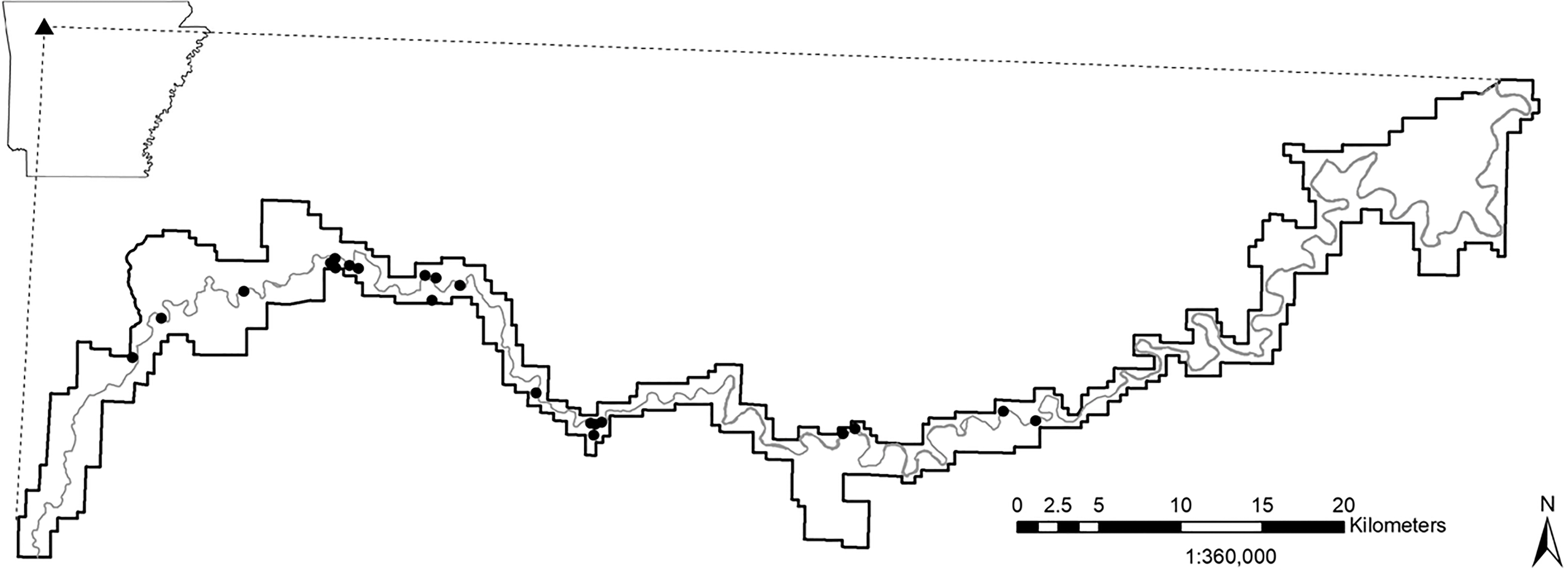
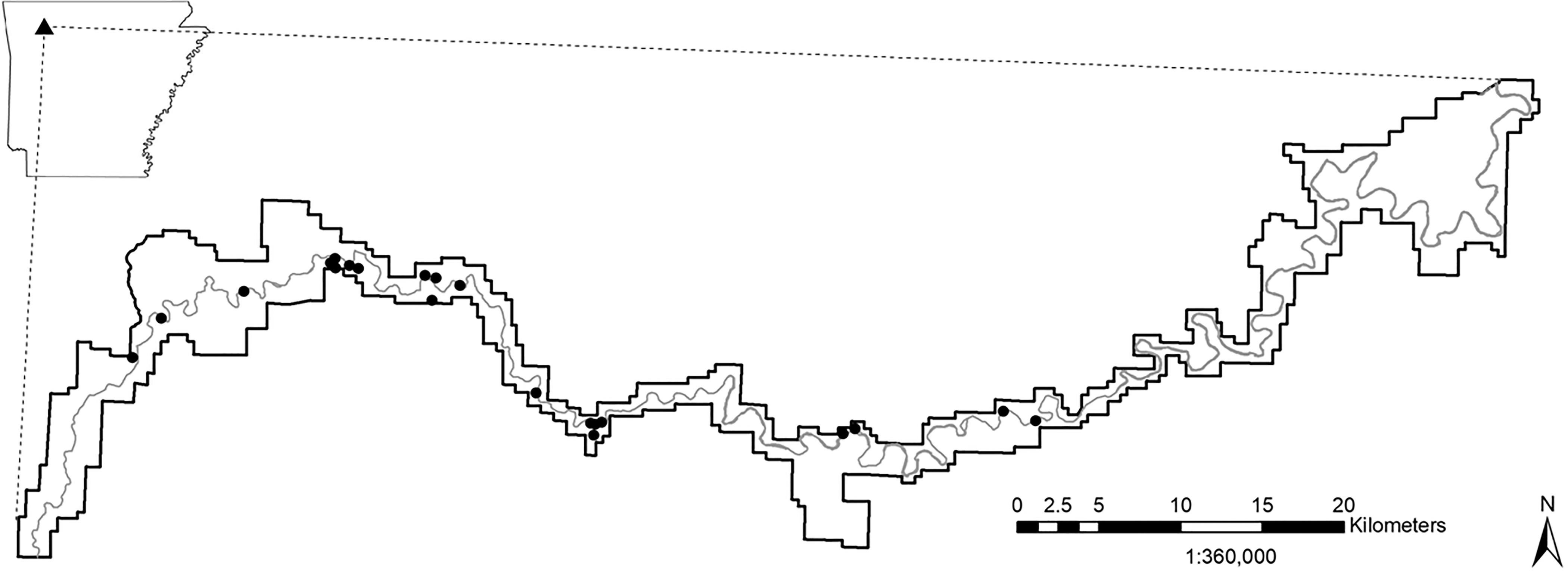
We conducted this study in BNR, located in the Ozarks region of northwestern Arkansas (Figure 1). Encompassing 38,741 hectares (95,730 acres), BNR comprises a relatively narrow land corridor along the river (Mott and Luraas Reference Mott and Luraas2004). Vegetation in the park consists of the following types: oak (Quercus spp.) and hardwood upland forests (64.1%); conifer forests (eastern red-cedar [Juniperus virginiana L.] or shortleaf pine [Pinus echinata Mill.)] (11.2%); riparian forests, shrublands, or gravel bars (6.4%); fields (5.1%); successional forests (4.8%); and glades (0.2%) (Hop et al. Reference Hop, Pyne, Foti, Lubinski, White and Dieck2012). While the entirety of the Buffalo River is designated as wild and scenic, 26 km (16 mi) of headwaters are located within the Ozark National Forest, with the remaining 217 km (161 mi) included in BNR (Mott and Luraass Reference Mott and Luraas2004). The river originates in the Boston Mountains physiographic region, an area with high sandstone formations, but quickly stretches out into the karsts of Springfield Plateau before flowing into the White River (Panfil and Jacobson Reference Panfil and Jacobson2001).
Location of project areas in Buffalo National River, Arkansas.
Project Areas
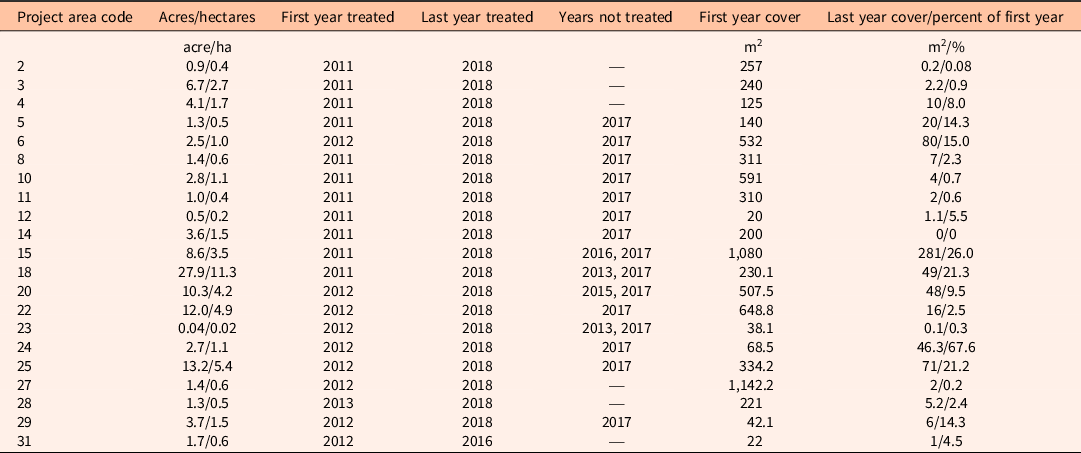
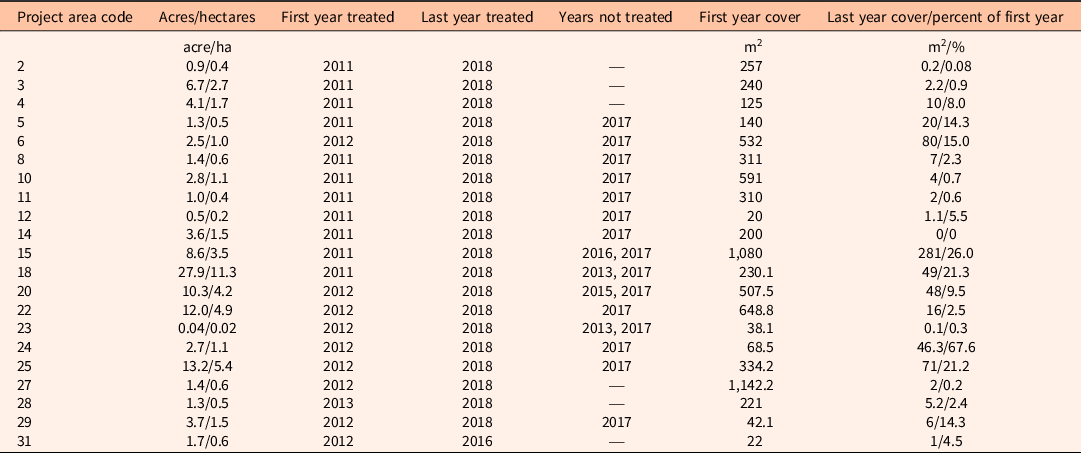
Project areas (PAs) served as the experimental unit for this case study. Through reconnaissance and consultation with park managers, we identified a number of A. altissima populations at BNR and established 32 PAs stretching over approximately 163 km (101 river miles). After initial reconnaissance, we mapped the perimeter of each PA using a GPS unit. For this study, we narrowed our analysis to the 21 PAs in which we treated A. altissima for 5 or more years (Figure 1; Table 1). Each PA encompassed all known A. altissima stems in a single vicinity that could be treated as part of a single effort. In this respect, PAs matched the concept of “area surveyed” (NAISMA 2018). The PAs in this study totaled 42.9 ha and averaged 2.1 ha (range: 0.02 ha to 11.3 ha).
Project area size and treatment history for Ailanthus altissima long-term control efforts in Buffalo National River.
Plant Treatment
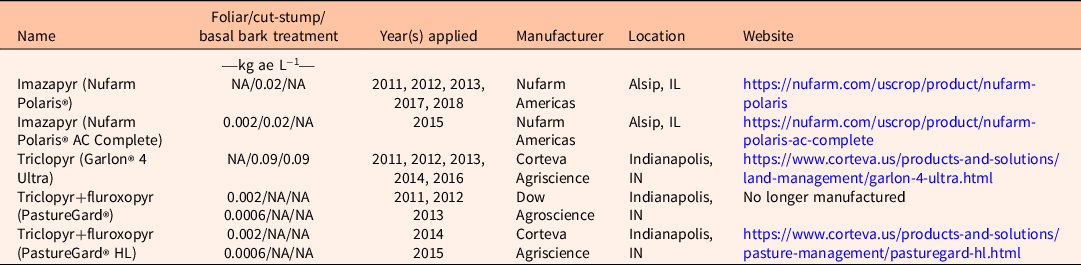
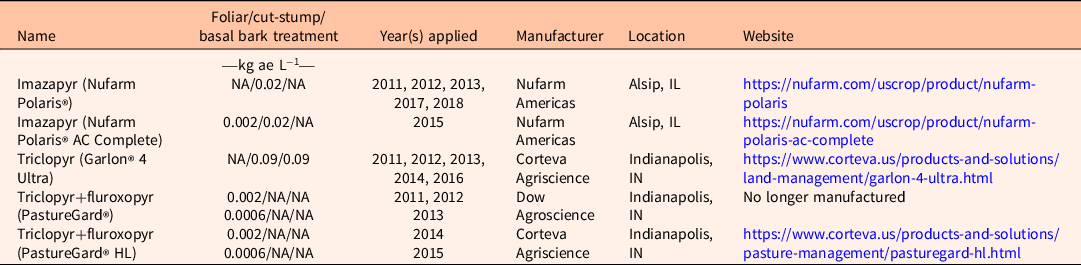
Typical of many projects using seasonal staff, more than 30 different people contributed to control efforts in the field. Crews worked together to systematically sweep a PA in its entirety, as assessed by the crews, during each treatment event. Distances between workers as they moved through a PA were generally 30 m or less. These staff targeted all life stages of A. altissima with herbicide during September to October of the respective year. The methods used to control the species ranged from felling large-diameter stems with chainsaws and then applying herbicide (i.e., cut-stump application) during early project stages to cut-stump treatments using hand tools or, occasionally, foliar treatments of stems. We preferred cut-stump treatments over foliar treatments due to the lower amount of chemical carried when hiking and because removal prevented confusion in distinguishing dead from live stems if treatments occurred during leaf-off condition. While most trees were removed during the initial year of treatment, we did find some larger stems that had been overlooked during the initial treatment—a common issue, known as overlooking error, in vegetation studies (Morrison Reference Morrison2016). The diameters of the largest trees encountered ranged from approximately 50 to 65 cm diameter at breast height. Foliar treatments tended to be used mostly when resprouting was prolific, but stems remained below approximately 1.2 m. In a few instances, newly established seedlings in moist soil were hand pulled. Herbicides used during the course of the study are shown in Table 2.
List of herbicides used to control Ailanthus altissima during the 8-yr study (2011–2018) at Buffalo National River.
The number of years over which A. altissima stems were treated in a PA varied and included 5 (n = 1), 6 (n = 1), 7 (n = 8), and 8 yr (n = 11) (Table 1). Treatments began at 11 areas in 2011, 9 areas in 2012, and 1 area in 2013. We treated stems in PAs over the defined period with a few exceptions, most in 2017, when 76% of PAs were not treated due to an operational focus on the initial cutting of a new treatment cohort (Table 1). Treatments were also not performed in two PAs in 2013 and one PA in 2015, 2016, and 2018. In total, the data set consisted of 136 unique PA by year combinations.
Data Collection
During field operations, workers used point mapping (Young et al. Reference Young, Bell, Gross, Morrison and Haack-Gaynor2017) to visually estimate the areal cover of treated A. altissima plants in metric increments. In this method, observers collect points using a GPS receiver to represent a subarea of treated plants within a PA. Observers self-determined the granularity of data collection for each subarea within the range of the cover class scale: 0.1, 1, 5, 10, 20, 50, or 100 m2. (The 20 m2 option was only available in 2011, 2012, and 2013 due to efforts to streamline the graphical user interface). Observers collected the point data before, during, or after treatment of the subarea. The cover estimates for all points within a PA were then summed, and PAs (rather than the individual points) served as the unit of analysis. Although the perimeter of the actual plant locations was not mapped, the cover still reflects the abundance of plants found in the “infested area” (minimum mapping unit per NAISMA mapping standards is usually 0.04 ha; NAISMA 2018). Field workers used Trimble Juno SB or 3B GPS units with CyberTracker software (currently v. 3.389; Cape Town, South Africa, http://www.cybertracker.org) to record location and cover estimates. If no plants were found, we documented the absence of plants in our records for use in analyses.
Analysis
Cover data were summarized based on calendar year and treatment year (i.e., the initial treatments from 11 PAs in 2011, 9 PAs in in 2012, and 1 PA in 2013 all represented Year 1 conditions). Cover data were also relativized as a percentage of the Year 1 cover and summarized. We then calculated the percentage of A. altissima cover in a PA (= infested area/area surveyed per NAISMA [2018]). Precipitation data were obtained from the National Weather Service from a station in Harrison, AR (National Weather Service 2019).
A repeated-measures ANOVA was performed on a treatment year basis to evaluate trend over time. Graphical inspection of the data revealed a lack of normality, so a logarithmic transformation [log10(x +1)] was applied. The last-measured and next-measured method of imputation (i.e., taking the average of the previous observed value and subsequent value; Johnson and Soma Reference Johnson, Soma, Gitzen, Millspaugh, Cooper and Licht2012) was used to replace values for years in which we did not visit the PA (see Table 1). Such values that occurred at the end of the data record were replaced with the last-measured value. PAs with two consecutive years without visits were removed from the analysis, reducing the sample size from 21 to 18 PAs. (Imputed values were not included in descriptive summaries of the data set or in Figures 2 and 3.) Mauchly’s test was used to evaluate the assumption of sphericity (Norusis Reference Norusis2008), which was not met (χ2= 54.7, df = 27, P = 0.002). Because the Greenhouse-Geisser epsilon was 0.51, the Greenhouse-Geisser correction was used (Norusis Reference Norusis2008). Analyses were conducted with SPSS v. 20.0 (released 2011; IBM, Armonk, NY). SPSS performs individual tests of goodness of fit for trend functions of varying order. These tests were conducted on the mean cover values for each year, and statistical significance was based on fitting functions to the entire data record. To determine the most parsimonious trend function, a partial F-test was used to evaluate whether additional coefficients were significant given the coefficients that were already in the model (Kutner et al. Reference Kutner, Nachtsheim, Neter and Li2005). Binomial tests (Daniel Reference Daniel1990) were used to evaluate whether skipping years of treatment resulted in significant differences in the change (overall increase or decline) of cover. The hypothesis was that an equal number of plots would increase or decrease in cover regardless of the previous year’s treatment.
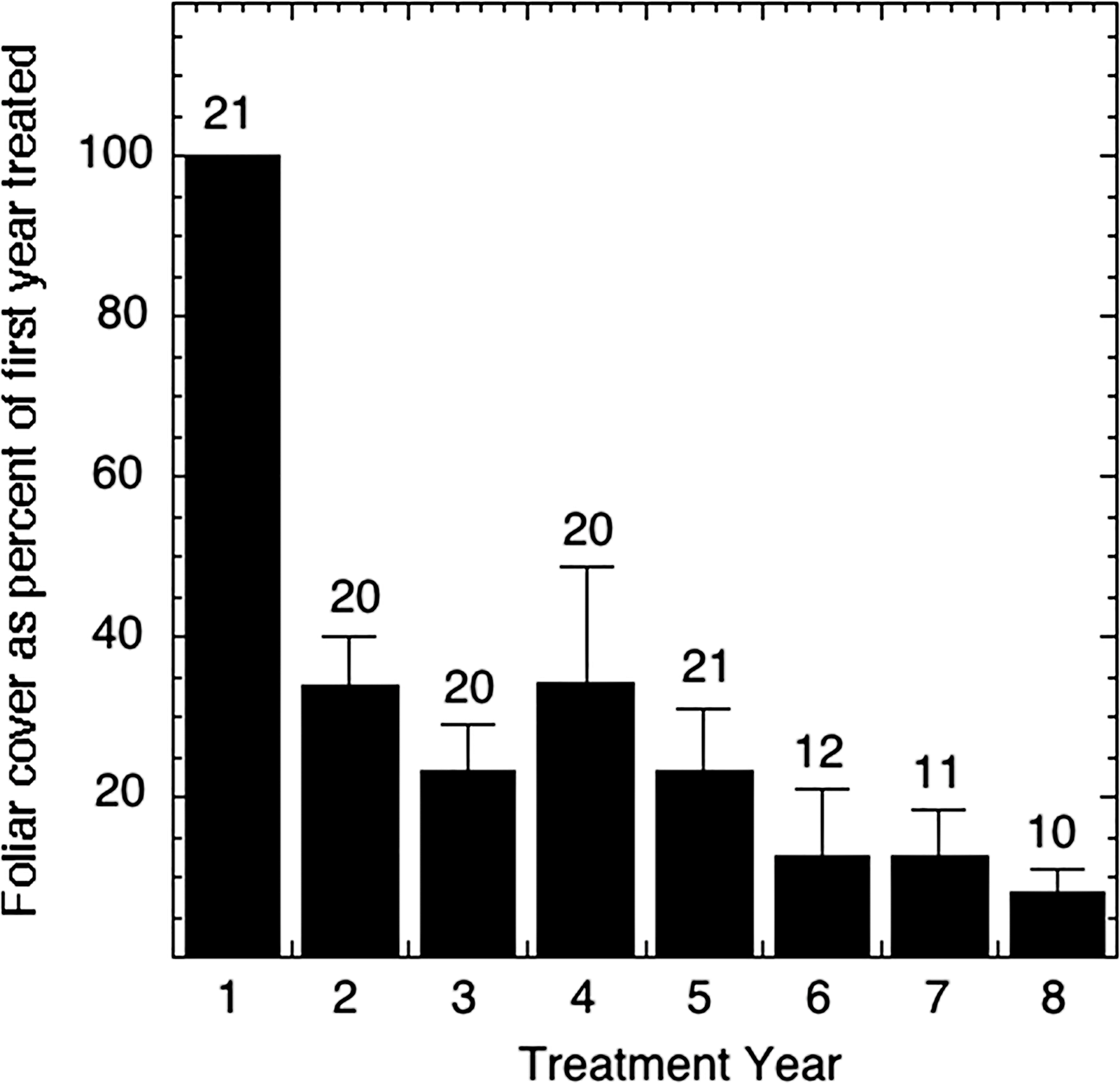
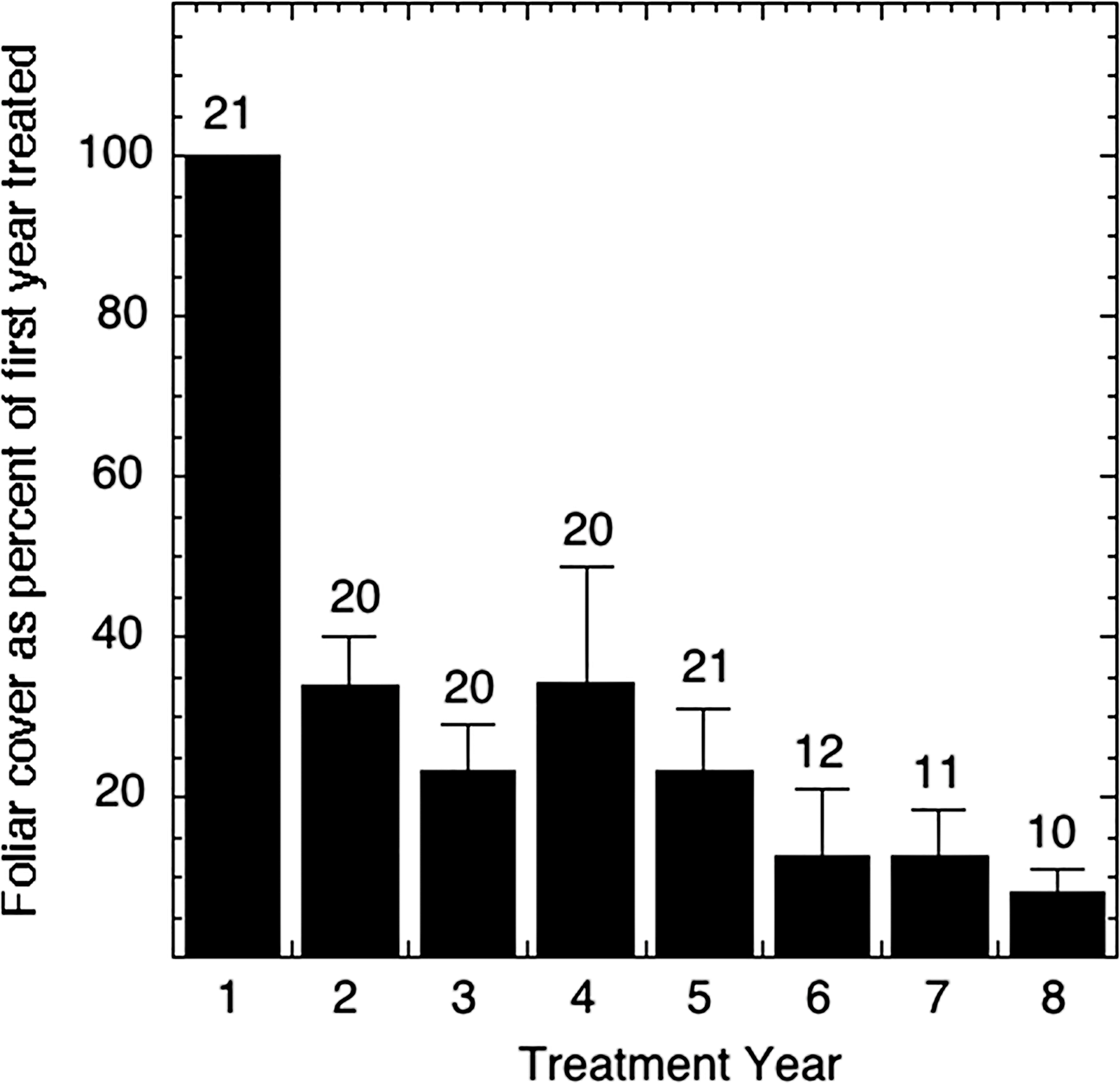
Ailanthus altissima foliar cover by treatment year as a percentage (mean ± SE) of the first year treated. Numbers above the bars indicate the number of project areas included in each treatment year.
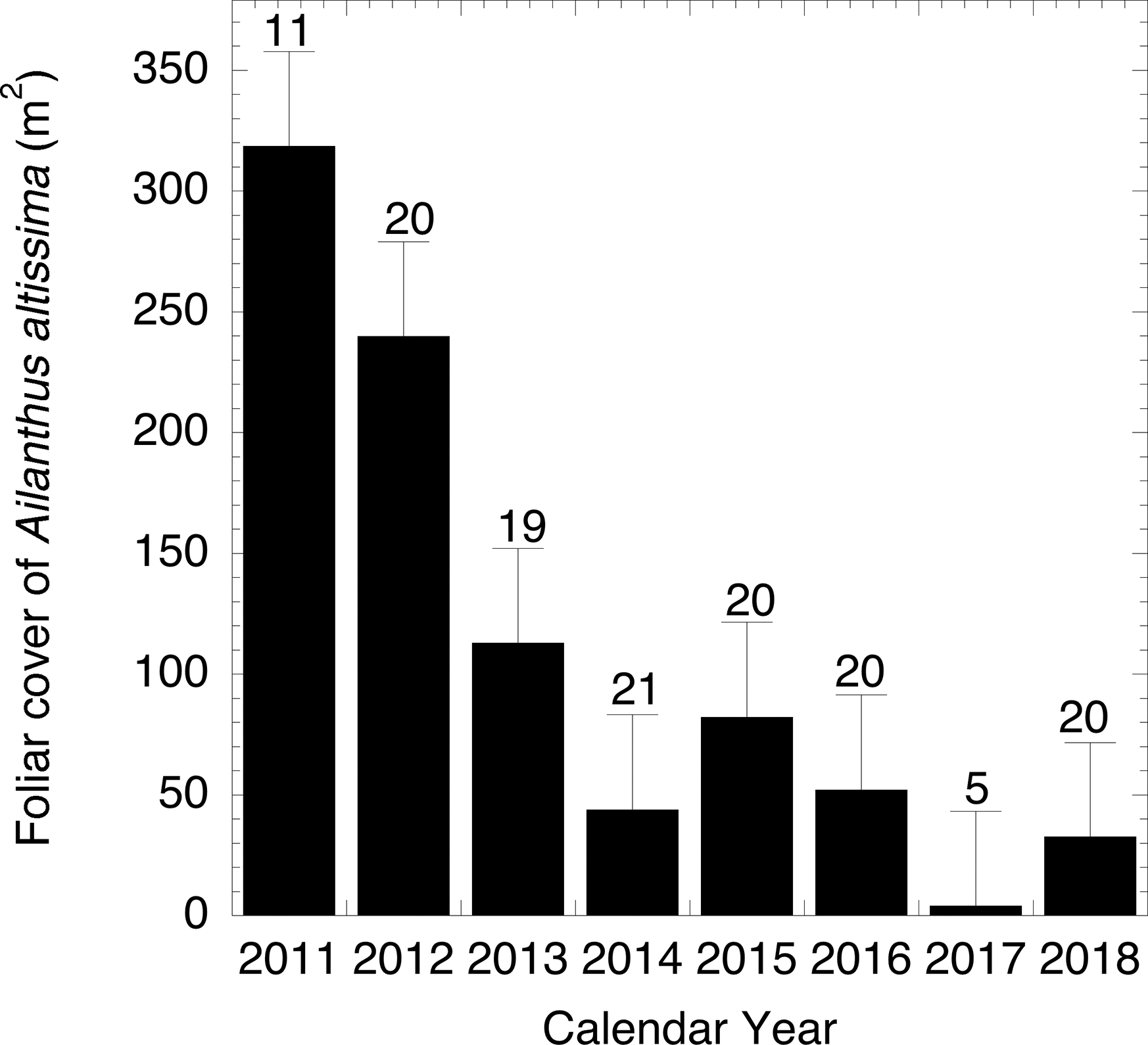
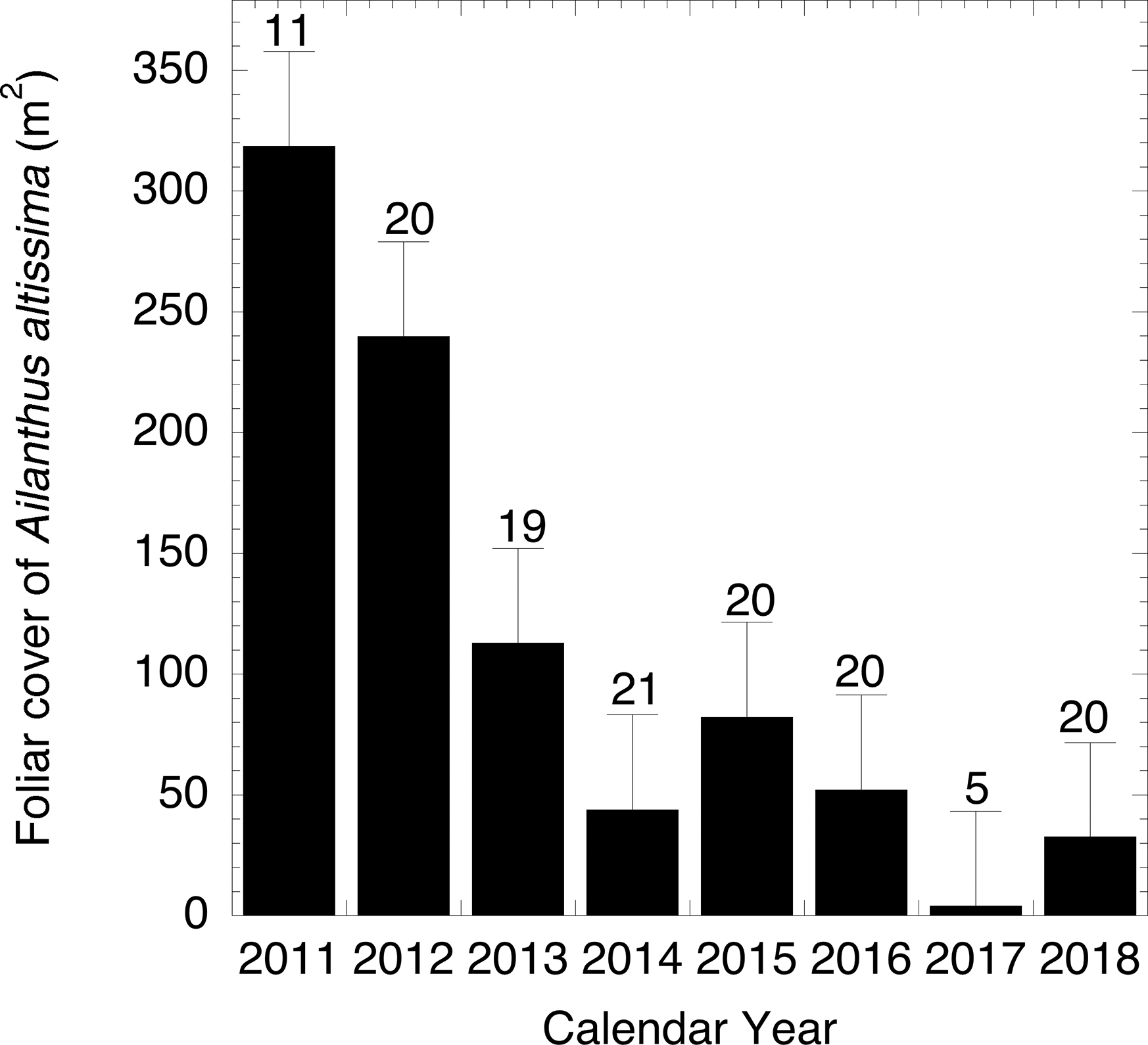
Sum of Ailanthus altissima foliar cover for each project area (mean ± SE) by calendar year. Numbers above the bars indicate the number of project areas included in each calendar year.
Results and Discussion
Before treatment, the cover of A. altissima in PAs averaged 4.1% (0.2% to 19.0%) of the total PA. The cover of A. altissima initially encountered in PAs varied with respect to the initial management effort required but became much lower and more similar over time. For example, initial removal, including large stems, from the site with the highest initial cover of A. altissima (PA27, 1,142.2 m2, total PA area of 0.6 ha) required approximately 128 person-hours, while removal from the PA with the lowest initial cover (PA12, 20 m2, total PA area of 0.2 ha) required only 8 person-hours. In 2018, each of these PAs required less than 1 person-hour to re-treat. Over the course of the study, we treated a cumulative total of 14,816.2 m2 of A. altissima during 136 visits to PAs.
The greatest decrease in plant cover, an average of 66% (range 13% to 98%), occurred with the removal of the large trees during Year 1 (Figure 2). Thereafter, the percentage reduction leveled off, with a complete absence of plants observed in only a few PAs. The second through eighth years of treatment showed mean reductions of 66%, 77%, 66%, 77%, 87%, 89%, and 93%, respectively, compared with Year 1. Absolute foliar coverage averaged 336.2 m2 in the first year, but only 34.2 m2 in the final year for the subset of plots treated for 8 yr. Constán-Nava et al. (Reference Constán-Nava, Bonet, Pastor and Lledó2010), over a 5-yr period, observed a 90% reduction in biomass production in uniformly aged stands of A. altissima each year after applying glyphosate to cut stumps.
The repeated-measures analysis confirmed a significant effect of time (and presumably repeated treatments) on A. altissima abundance; F(7, 119) = 16.53, P < 0.001. Over the entire data record, a linear trend function was significant (P < 0.001), as was a quadratic trend function (P = 0.001), the latter of which reflected the steep decline following the first year of treatment combined with continued persistence at low levels throughout the data record. A partial F-test revealed a quadratic function fit significantly better than a linear function; F(1, 15) = 24.65, P < 0.001.
Several factors may explain the lack of even greater reductions in A. altissima cover following treatment. In the current study, with few stump sprouts after treatment (personal observation), seedlings and root sprouts at some distance from stumps accounted for some replacement encountered in years following initial treatment. With crews generally consisting of applicators with low levels of experience, varying levels of fatigue and motivation, and vegetation varying in density and accessibility, overlooking and application errors certainly also impacted treatment effectiveness. We know from field observations that in some cases even large trees were overlooked during early treatment. While we cannot disentangle regeneration following treatment from application errors, we note that 8 of 11 PAs supported less than 1% of Year 1 cover by the sixth year of treatment. At best, A. altissima may have been eradicated from a single site, PA14, in 2018. This finding is likely to be a false negative, however, as no plants were observed in single-year surveys in three other PAs (PA23 and PA29 in 2016, PA28 in 2017), but were then found during subsequent years.
While the trend by treatment year was generally downward (Figure 2), we evaluated foliar cover by calendar year to look for any annual patterns (Figure 3). Between 2014 and 2015, foliar cover increased across 14 of 20 PAs, the majority of which (86%) consisted of less than 30 m of foliar cover in 2014. While the strength of this pattern may be an artifact of low initial abundance, precipitation in 2015 was 42% above normal (National Weather Service 2019) and likely contributed to this increase. Constán-Nava et al. (Reference Constán-Nava, Bonet, Pastor and Lledó2010) found a link between precipitation and a spike in A. altissima biomass. The occurrence of A. altissima in its native Chinese range is positively correlated with precipitation (Albright et al. Reference Albright, Chen, Chen and Guo2010). Even with continued treatments, optimal environmental conditions or conditions reducing treatment efficacy may lead to short-term increases in A. altissima regeneration or growth. Inclusion of the 2015 observations captured the range of variability observed in the study; however, the spike in A. altissima abundance may have obscured the stronger decrease that we anticipated during treatment Years 4 and 5 (Figure 2). To this point, 2015 observations accounted for 10%, 38%, and 58% of the observations during treatment Years 3, 4, and 5, respectively.
Gaps in the data record (i.e., years not treated) provide some insight into the likely future of these areas if treatments are discontinued. Comparing changes in foliar cover for intervals when PAs were visited annually, 70% of the time declines were observed compared with the previous year and 30% of the time increases were observed (P < 0.001; binomial test, n = 94; based on a hypothesized 50% probability of increase or decrease). In contrast, when treatments were not conducted in one or more years, declines were observed only 33% of the time, and increases were observed 67% of the time (P = 0.12; binomial test; n = 18). Although the percentages in the two comparisons were very similar, the second statistical test was not significant, due to a much smaller sample size and low statistical power. The more conservative inference for managers, however, is to expect that A. altissima will reestablish in sites where the plant is only partially controlled.
Working at the scale of local populations, we demonstrated a high level of reduction of A. altissima in BNR with repeated chemical treatment using a strategy to prevent recruitment into the canopy. The patchy distribution of the plant on the landscape described in this study as well as by others (Polgar Reference Polgar2008, Rebbeck et al. Reference Rebbeck, Kloss, Bowden, Coon, Hutchinson, Iverson and Guess2015) supports such self-limitation to areas of fallen and windthrown trees in the absence of fire or logging (Iverson et al. Reference Iverson, Rebbeck, Peters, Hutchinson and Fox2019; Rebbeck et al. Reference Rebbeck, Hutchinson, Iverson, Yaussy and Fox2017, Reference Rebbeck, Hutchinson and Iverson2019). These results suggest that we can mitigate future risks of A. altissima spread within these forests through actions taken now. While our data showed a plateau in reduction after the second year of treatment, above-normal precipitation in 2015 and applicator mistakes rather than regeneration may have extended this plateau. While we are hopeful that future efforts may accelerate the rate of reduction, this data set provides an important point of comparison for subsequent control projects. In any case, the uncertainty shown here under normal field conditions suggests that managers should plan repeated A. altissima treatments.
Based on the results of this study, we continue to evaluate our control strategy. Trees were initially felled to reduce risks associated with standing dead stems in the BNR. Given that most of our first-year costs involved felling of mature trees, we are now evaluating less costly methods, such as stem injection and hack-and-squirt, to lower those costs. This requires that we also reassess worker and public safety. Re-treatment at a more or less frequent rate than the annual treatments employed in this study may also optimize the rate of control per cost. Future studies at this scale should evaluate the incidence of secondary infestation and ecosystem recovery (Pearson and Ortega Reference Pearson, Ortega and Kingely2009; Pearson et al. Reference Pearson, Ortega, Runyon and Butler2016; Skurski et al. Reference Skurski, Maxwell and Rew2013). Fortunately, we did not observe secondary infestations in this study. Communities in which A. altissima is removed appear to resemble uninvaded sites (Harris et al. Reference Harris, Cannon, Smith and Muth2013), and native herbaceous plants colonize the treated areas (Burch and Zedaker Reference Burch and Zedaker2003). Studies such as this one fill a need for long-term data on invasive plant control effectiveness (Kettenring and Adams Reference Kettenring and Adams2011) that lead to increasingly evidence-based approaches to operational-scale control efforts.
Acknowledgments
The National Park Service (NPS) provided funding for this work. We thank Chad Gross and Jennifer Haack-Gaynor for assistance with data management. We acknowledge the leadership and support of Mike DeBacker and Carmen Thomson, NPS I&M coordinators; the NPS Inventory and Monitoring Division within the Washington Natural Resource Directorate; and Buffalo National River (BNR). Chuck Bitting, Ray Benjamin, and Kyle Ellis with the BNR coordinated and assisted in completing field treatments associated with this project. Views, statements, findings, conclusions, recommendations, and data in this report are those of the author(s) and do not necessarily reflect views and policies of the NPS, U.S. Department of the Interior. Mention of trade names or commercial products does not constitute endorsement or recommendation for use by the NPS. This paper involves assessment of work that is part of the first and second authors’ responsibilities as NPS employees. Evaluation of these employees may in part be based on the success of the outcomes described in this study.