INTRODUCTION
The grey triggerfish, Balistes capriscus Gmelin, 1789, is an amphi-atlantic fish widely found in the eastern Atlantic from the British Isles to Angola, including the Mediterranean Sea (Harmelin-Vivien & Quero, Reference Harmelin-Vivien, Quero, Hureau, Karrer, Post and Saldanha1990) and the western Atlantic from the Gulf of Mexico to Argentina (Robins & Ray, Reference Robins and Ray1986). This fish represents an important member of reef fish assemblages and is commonly associated with coral reefs, wrecks, outcroppings, artificial structure and hard bottom areas (Frazer & Lindberg, Reference Frazer and Lindberg1994; Wilson et al., Reference Wilson, Nieland and Stanley1995; Stanley & Wilson, Reference Stanley and Wilson2003; Gledhill, Reference Gledhill2005; Lingo & Szedlmayer, Reference Lingo and Szedlmayer2006).
Over the last decade, the expansion of this fish has progressed in its northern range probably due to the global warming effects (Francour et al., Reference Francour, Boudouresque, Harmelin-Vivien, Harmelin and Quignard1994; Astraldi et al., Reference Astraldi, Bianchi, Gasparini and Morri1995; Garrabou et al., Reference Garrabou, Pérez, Chevaldonné, Bensoussan, Torrents, Lejeusne, Romano, Vacelet, Boury-Esnault, Harmelin-Vivien, Verlaque, Boudouresque, Zibrowius and Harmelin2003). Recently, a considerable increase of B. capriscus production occurred along the Tunisian coast and particularly in the Gulf of Gabès from 34 tons in 1990 to 187 tons in 2009 (FAO, 2011).
The increase of production, as well as the high commercial value of the grey triggerfish, due to its appreciation by local consumers, has led to an experimental study of the reproduction biology in order to allow a sustainable exploitation of this fish.
Previous studies on the reproductive biology have been focused on determining the spawning season and size at sexual maturity of B. capriscus. They have focused on certain distribution areas: western Atlantic (Dooley, Reference Dooley1972; Wilson et al., Reference Wilson, Nieland and Stanley1995; Ingram, Reference Ingram2001; Moore, Reference Moore2001; Bernardes, Reference Bernardes2002; MacKichan & Szedlmayer, Reference MacKichan and Szedlmayer2007), eastern Atlantic (Caverivière et al., Reference Caverivière, Kulbicki, Konan and Gerlotto1981; Manooch, Reference Manooch1984; Ofori-Danson, Reference Ofori-Danson1990) and north-eastern Mediterranean (İşmen et al., Reference İşmen, Türkoglu and Yigin2004). However, no study has been reported on the annual reproductive cycle and fecundity of B. capriscus collected from the south-eastern Mediterranean Sea.
The aim of this work is to provide further information on the reproductive biology. Some parameters such as sexual cycle, spawning period, hepatic and muscular energy reserve changes, as well as the length at the first sexual maturity were analysed to compare ours results with those available in the literature.
MATERIALS AND METHODS
A total of 751 specimens of B. capriscus were analysed between June 2005 and May 2010. The samples were collected from commercial catches at different Tunisian fishing ports: Chebba (34°14′N 11°06′E); Kerkennah (34°45′N 11°17′E); and Zarzis (33°41′N 11°48′E). The species were caught in this area using pelagic trawl nets. In the laboratory, the following data were recorded for all individuals: sex, total length (TL), fork length (FL) and standard length (SL) to the nearest mm; total weights (TW) and eviscerated fish weights (EW) to the nearest 0.1 g and the weights of gonads (GW) and livers (LW) were recorded to the nearest 0.01 g.
Sex-ratios (number of females/number of males) were calculated according to the size, month and season and were compared by applying the χ2 test.
The reproductive period was determined by analysing the monthly changes in the gonadosomatic index (GSI). The latter was given by the formula:
 $${\rm GSI} (\%)=({\rm weight\ of\ gonads}/{\rm weight\ of\ eviscerated\ body}) \times 100.$$
It was calculated for each fish and all values were averaged monthly. The monthly variations in the GSI indicate the evolution in gonad weight during the year and enable description of the various stages of the sexual cycle. Correlation between GSI and temperature was tested using the Spearman rank correlation coefficient (rs) (Zar, Reference Zar1999).
Seawater average temperature data were supplied by the National Institute of Meteorology in Tunisia.
Organs capable of accumulating and depleting resources for B. capriscus in the Gulf of Gabès were determined after analysing the monthly changes of the hepatosomatic index (HSI) and the condition coefficient (K). These parameters were calculated as follows:
 $${\rm HSI} = \lpar {\rm LW}/{\rm EW}\rpar \times 100\ \lpar \hbox{Fouda}\ et\ al.\comma \; 1993\rpar \semicolon \;$$
 $$K = \lpar {\rm EW}/{\rm FL}^3 \rpar \times 100\semicolon \;$$
where LW = liver weight (g); EW = eviscerated weight (g) and FL= fork length (cm).
Variations in the mean of these indices during the reproductive period were tested using one-way analysis of variance (ANOVA). The post-hoc Tukey's test was performed to determine the pair-wise differences.
In order to estimate the size at first sexual maturity (L 50), the proportion (Pi) of mature individuals by sex and size-class was calculated:
 $${\rm Pi} = \lpar M_{i}/I_{ei}\rpar \times 100\comma \;$$
where M i represents the number of mature individuals in the size I, and Iei is the number of examined individuals for the same size-class, i.
The obtained data were fitted to a logistical function using the software ‘FSAS’ (Saul et al., Reference Saul, Conrad and Michael1988). This function has the advantage of providing a precise estimation of the L 50 lengths that are often required by most software to analyse the fish stocks.
The equation used to determine the L 50 was:
 $$P = \displaystyle{1 \over {\left({1 + e^{ - r\left({L - L_{50} } \right)} } \right)}} \lpar {\rm Pauly}\comma \; 1980\rpar$$
where P: the proportion of mature individuals; L: the fork length corresponding to the proportion (P); r: constant and L 50: the mean size at first sexual maturity; it was taken as the size at which 50% of individuals were mature.
Fecundity was estimated as the total count of mature oocytes in both ovaries from 39 sampled females ranging from 23.2 to 36.1 cm FL fixed in formalin, caught between June and August. Absolute fecundity was determined by the counting–weighing method, the number of eggs in 0.01 g being counted (Kucheryavyi et al., Reference Kucheryavyi, Savvaitova, Pavlov, Gruzdeva, Kuzishchin and Stanford2007). It was determined according to the following formula:
 $$N = nW/w$$
where N and n are the total and partial number of eggs, respectively, and W and w the total and partial weight of eggs, respectively (Yamazaki et al., Reference Yamazaki, Konno and Goto2001). Absolute fecundity was recorded as the number of yoked oocytes in the ovaries of the sample. Relative fecundity (number of yoked oocytes per weight), was calculated for TW, EW and GW for each specimen.
Oocytes diameter was determined using a Leica stereomicroscope at magnification 2 × (every magnification had a calibrated millimetre scale). The relationship between absolute fecundity and FL, EW and GW was estimated.
RESULTS
Macroscopic observation on the gonads of Balistes capriscus, followed by a squatch for juveniles, was made to distinguish males from females. Furthermore, sexual dichromatism was observed. We can distinguish females from males by the skin colour at the upper side. The former have a white colour, while the latter shows a purplish to bluish reflection. This dichromatism is more pronounced and more accentuated during the reproduction period. No case of hermaphrodism was found and, consequently, B. capriscus is a gonochoric fish.
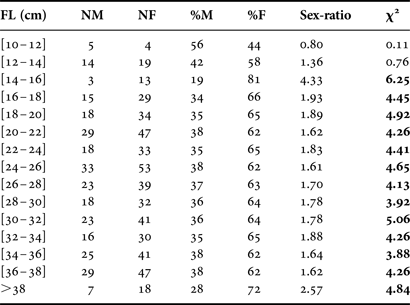
According to this study, 480 females and 276 males, out of 756 identified specimens, were found. An overall sex-ratio of (1:1.74) was significantly in favour of females (χ2, P < 0.05) (Table 1). When grouping individuals by size of 2 cm, we found that for small size-classes, the sex-ratio was balanced. However, beyond 14 cm, FL females were significantly higher and the sex-ratio showed variability with size (χ2 = 91.49, df = 14, α = 0.05).
Variation of the proportion of females, males and sex-ratio of Balistes capriscus in the Gulf of Gabès according to size (bold numbers indicate significant effects).

FL, fork length; NM, number of males; NF, number of females; %M, percentage of males; %F, percentage of females.
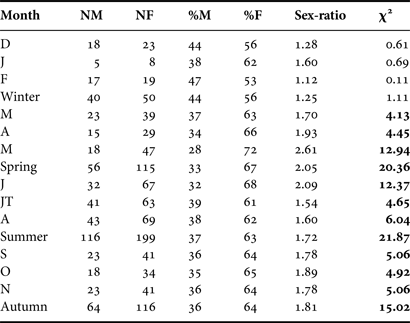
Seasonal variations in the sex-ratio of B. capriscus showed an apparent dominance of females compared to males (Table 2), but this difference was not significant from December to February (χ2, P > 0.05).
Monthly variation of the proportion of females, males and sex ratio of Balistes capriscus in the Gulf of Gabès. Bold numbers indicate significant effects.
FL, fork length; NM, number of males; NF, number of females; %M, percentage of males; %F, percentage of females.
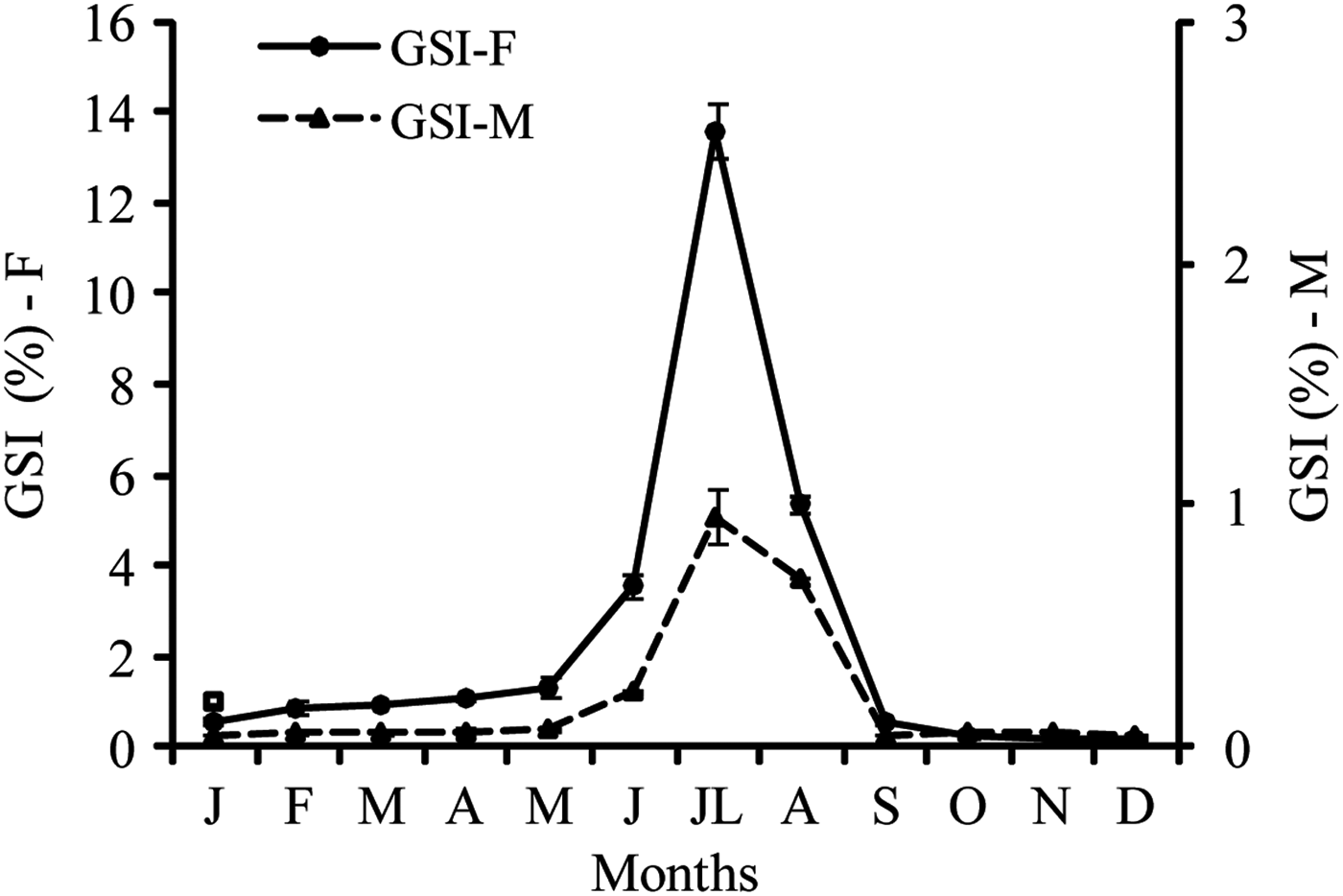
The curves of the GSI monthly values were unimodal for both males and females (Figure 1). Thus, the B. capriscus is reproduced once a year. The GSI increases with the progressive rise of the gonads in both sexes until reaching maturity. Then, the index declines sharply in the spawning period.
Monthly gonadosomatic index (GSI), mean values (±standard deviation) for both sexes of grey triggerfish Balistes capriscus in the Gulf of Gabès. GSI-F, female GSI; GSI-M, male GSI.
The high values of GSI were depicted between June and August showing a peak in July. The index values for July were significantly higher for females (F = 15,632; df (11,479); P < 0.001) and males (F = 2,056.36; df (11,275); P < 0.001).
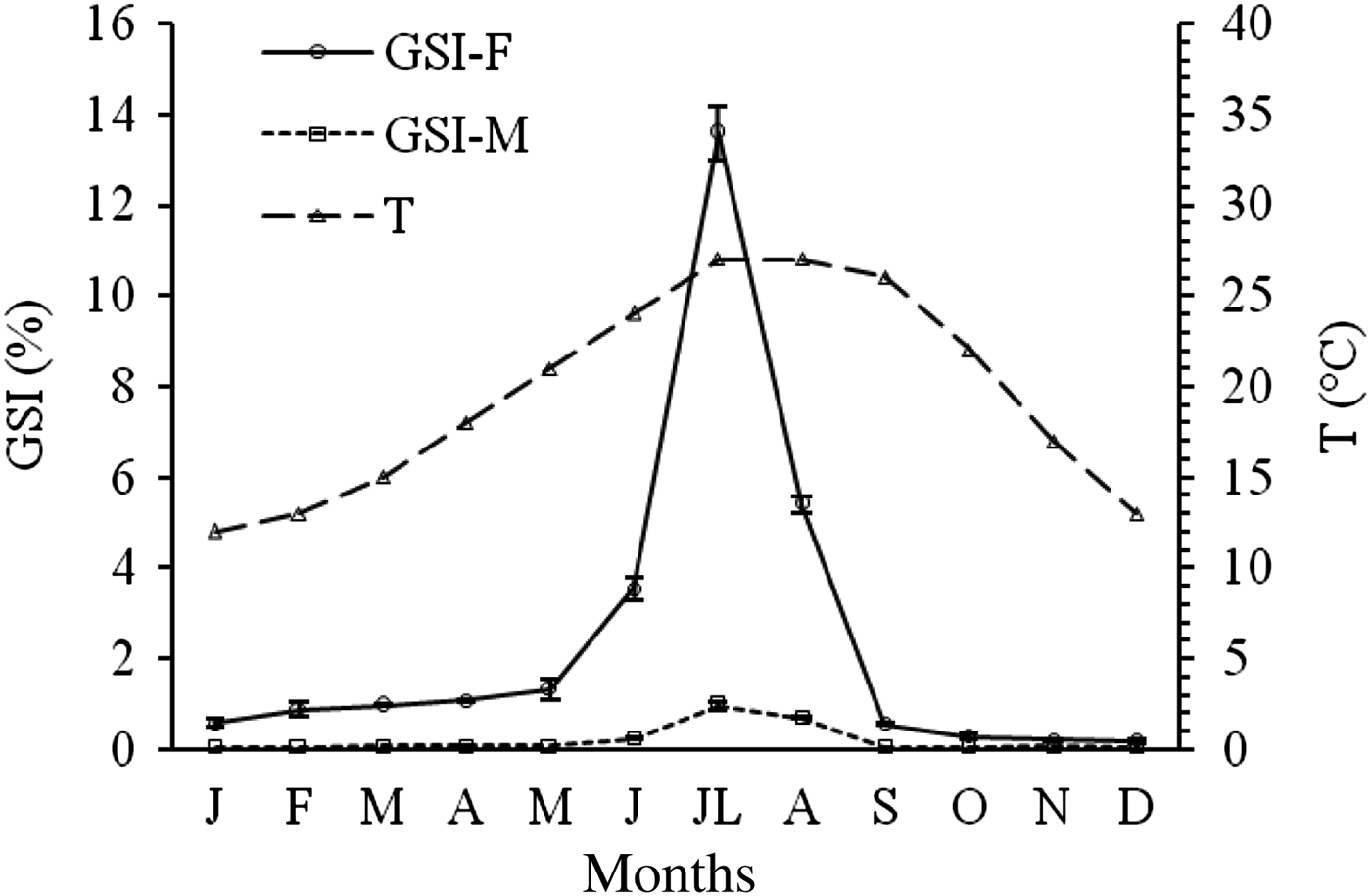
Significant correlations were obtained between the average GSI values of both sexes (females and males) and sea surface temperature (r s = 0.582; n = 12; P < 0.05 for females) (r s = 0.628; n = 12; P < 0.05 for males) (Figure 2). Based on these correlations, we note that the complete gonad maturity occurs at the highest sea surface temperature (27°C).
Monthly gonadosomatic index (GSI), mean values (±standard deviation) for both sexes of grey triggerfish Balistes capriscus and of the mean temperature of seawater (T°C) in the Gulf of Gabès (temperature data were supplied by the National Institute of Meteorology). GSI-F, female GSI; GSI-M, male GSI; T, mean temperature of seawater (°C).
The hepatosomatic index (HSI) of females (8.92 ± 2.01) and males (9.05 ± 1.75) was not significantly different (Mann–Whitney U-test, Z = −0.89, P > 0.05). HSI of both sexes showed a clear seasonal pattern, evidencing a significant variation across months (females: H Kruskal–Wallis = 161.13, P < 0.001; males: H Kruskal–Wallis = 162.37, P < 0.001).
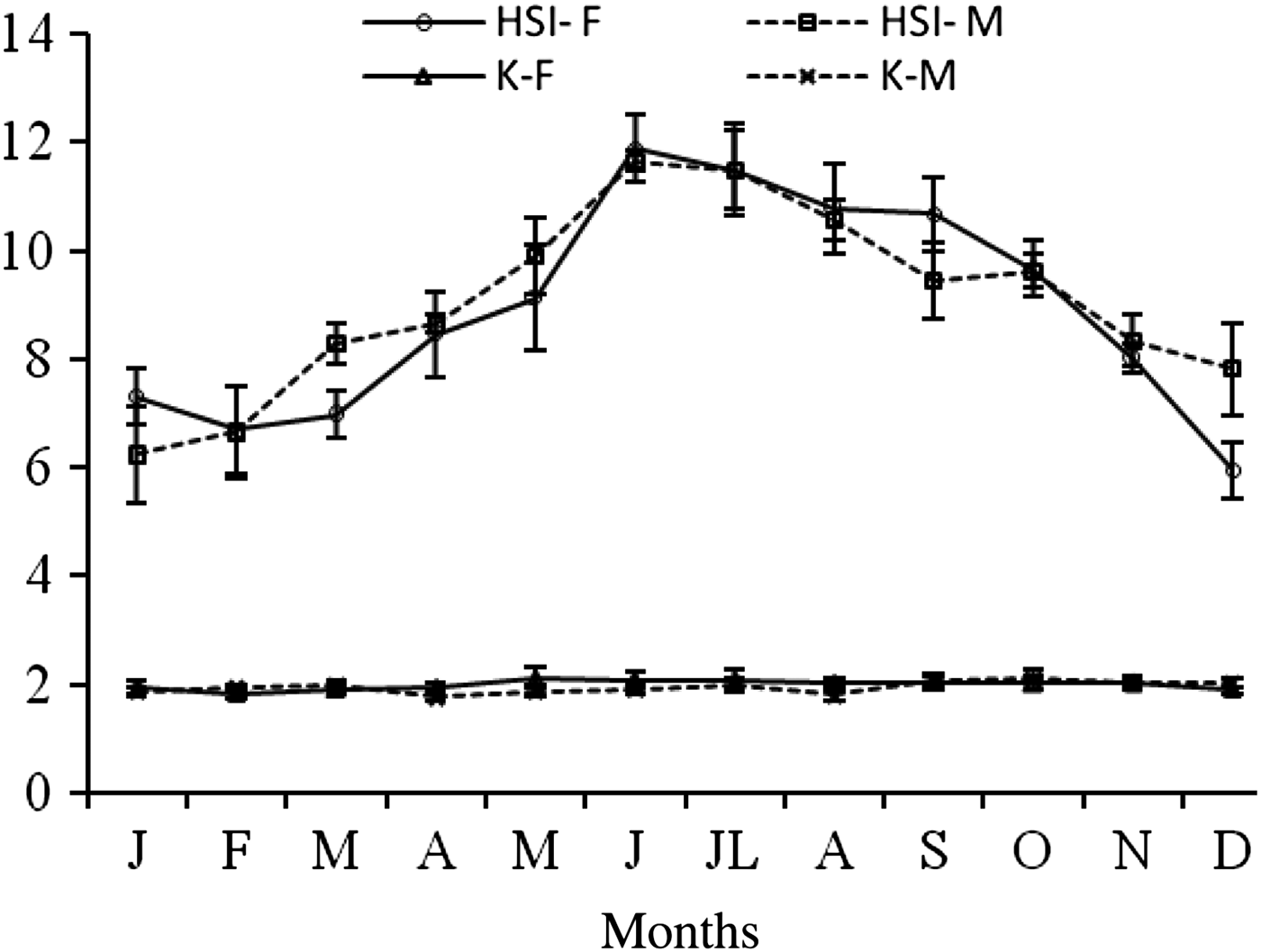
The HSI cyclic evolution for both sexes was slightly synchronous with that of GSI showing a peak in June (female HSI: 11.89 ± 0.62 and male HSI: 11.65 ± 0.18), while the condition factor K shows no fluctuation along the year (Figure 3).
Monthly hepatosomatic index (HIS) and condition factor, K, mean values (±standard deviation) for both sexes of grey triggerfish Balistes capriscus in the Gulf of Gabès. HSI-F, female HSI; HSI-M, male HSI; K-F, female condition factor; K-F, male condition factor.
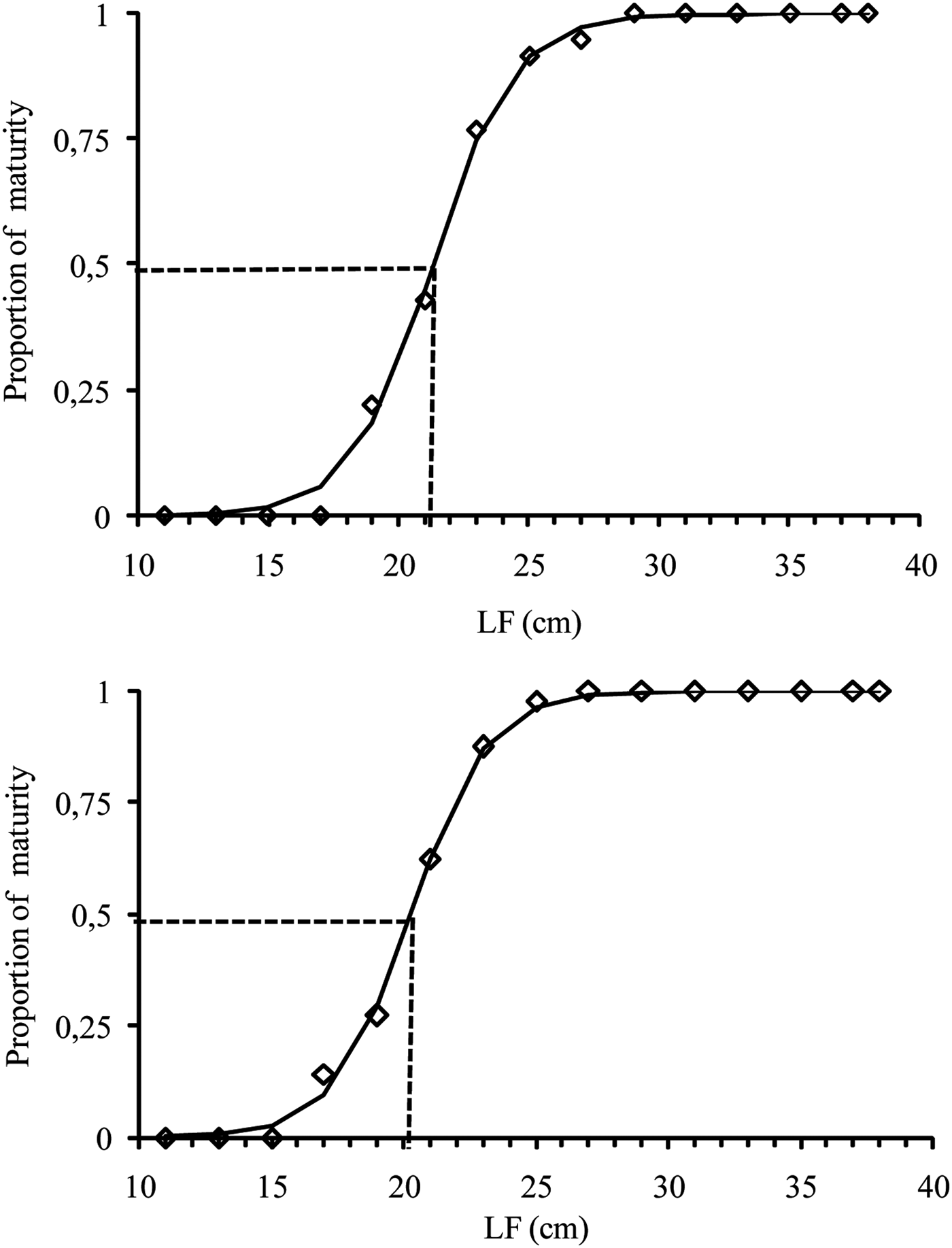
The changes in the proportion of the mature individuals showed that below 16 cm size, no individual whatever its sex was mature. The smallest females and males were mature at size 18.9 and 20.5 cm, respectively.
The logistic curves describing the relationship between the maturity proportion in each length interval and the fork length were estimated. The results obtained by the application of the logistical function showed that the size at first sexual maturity was 20.26 cm for females and 21.30 cm for males (Figure 4). The χ2 test did not show any significant differences between the theoretical proportions and the observed ones and this non-linear logistic regression model had an excellent fit (r 2 = 0.98).
Size at first sexual maturity of Balistes capriscus in the Gulf of Gabès
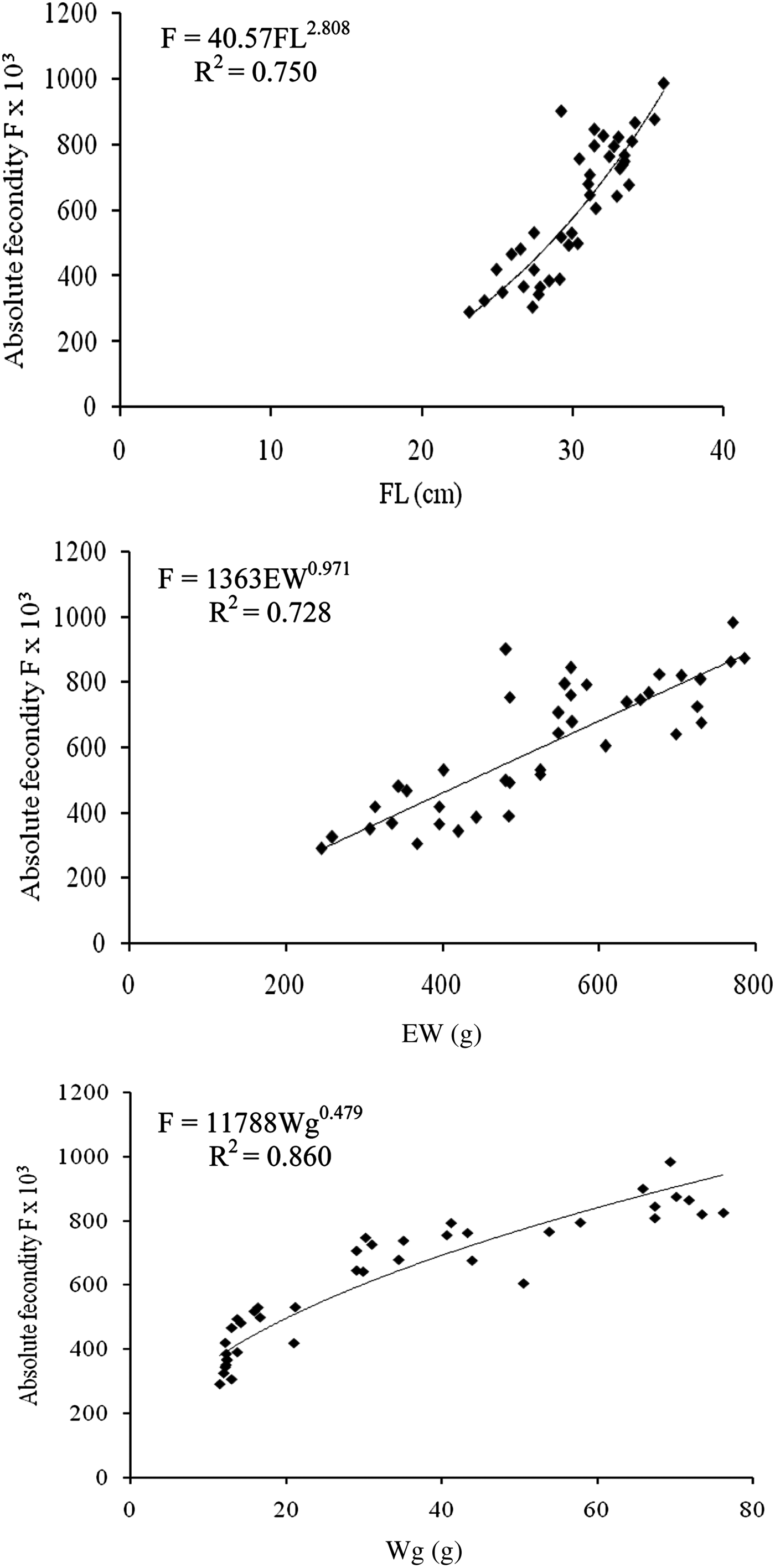
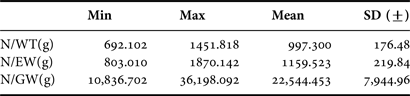
Absolute fecundity increased with size: a maximum value of 984,990 oocytes for a size of 36.1 cm and a minimum value of 290,120 oocytes for a size of 23.2 cm, with a mean value of 616,289.512 ± 196,914.792. Based on the latter, the estimated absolute fecundity is the annual fecundity. Fecundity (F) increased with TL, EW and GW. The relationships between absolute F and FL, EW and GW are described in Figure 5. Fecundity relative to TW, EW and GW is summarized in Table 3.
Relationship between absolute fecundity (F) and fork length (FL), eviscerated weight (EW) and gonad weight (GW) of Balistes capriscus in the Gulf of Gabès.
Fecundity relative to total weight, eviscerated weight and gonads weight of Balistes capriscus in the Gulf of Gabès.
Min, minimum; Max, maximum; SD, standard deviation; N, number of yoked oocytes; TW, total weight; EW, eviscerated weight; GW, gonad weight.
DISCUSSION
Sexual dichromatism concerning the colour of the upper side was already observed in B. capriscus, collected from off the Gulf of Gabès. This character has been described by several authors in other sites. Garnaud (Reference Garnaud1960) proved that during the period of reproduction, the male has more pronounced colour. Gerlotto & Stéquert (Reference Gerlotto and Stéquert1981) reported that B. capriscus has a sexual dichromatism in which males and females were different in skin colour at the sub-opercular region. Mackichan & Szedlmayer (Reference MacKichan and Szedlmayer2007) showed that the dominant males could be identified by coloration and behaviour.
The intensity and melanic colours are commonly regulated within few seconds through melonocyte-stimulating hormone, which induces the stimulation of melanin granule dispersion in the melanocytes (Metz et al., Reference Metz, Peters and Flik2006). Variation in melanic coloration can be genetically determined, and also be influenced by the environment, such as temperature and light (reviewed in Price et al., Reference Price, Weadick, Shim and Rodd2008). Furthermore, sexual dimorphism in the length and weight has also been observed for this species in the Gulf of Gabès. In fact, males were significantly larger than females. Similar results have been reported from other areas (Ingram, Reference Ingram2001; Moore, Reference Moore2001; MacKichan, Reference MacKichan2008).
In the Gulf of Gabès, the sex-ratio of B. capriscus is generally favourable to females. It is also the case in the north-eastern Gulf of Mexico (Mackichan & Szedlmayer, Reference MacKichan and Szedlmayer2007; Simmons & Szedlmayer, Reference Simmons and Szedlmayer2012). Only the populations of Alexandretta (southern Turkey) have a male-dominated ratio (İşmen et al., Reference İşmen, Türkoglu and Yigin2004). The imbalance of the sex can be attributed to longevity, a differential catchability of the sexes or a spatio-temporal segregation of the sexes (Morato et al., Reference Morato, Afonso, Lourindo, Nash and Santos2003). In the Gulf of Gabès, female dominance is probably related to a spatio-temporal distribution of the sexes.
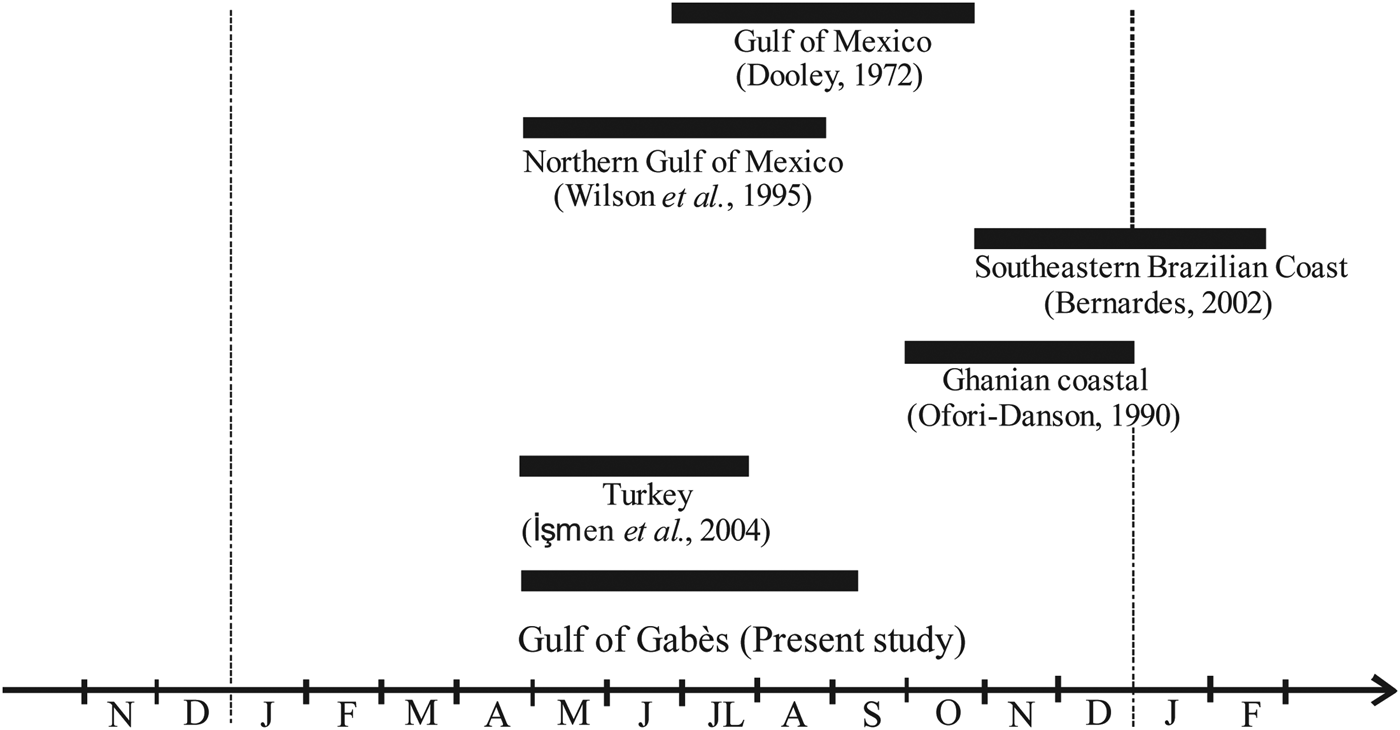
Around the world, the reproduction period of B. capriscus differs from one region to another, occuring mainly during the warmer months (July–mid-September) in the Gulf of Gabès, during November–December on the coast of Ghana (Ofori-Danson, Reference Ofori-Danson1990) and during June–July in the Gulf of Mexico (Wilson et al., Reference Wilson, Nieland and Stanley1995) (Figure 6). The water temperature probably plays a major role in oocytes emission.
Reproduction period of Balistes capriscus in different regions of the world.
In general, this period coincides with favourable environmental conditions for the survival and growth of larvae. In fact, low temperature may substantially decrease the chance of survival for fish larvae (Rombough, Reference Rombough, Wood and McDonald1997; Green & Fisher, Reference Green and Fisher2004). In the Gulf of Gabès, the reproduction period of B. capriscus begins in May, corresponding to the time when the water temperature increases and the zooplankton productivity is the highest in the Mediterranean (Estrada et al., Reference Estrada, Vives, Alcaraz and Margalef1985; Macpherson & Raventos, Reference Macpherson and Raventos2006) and particularly in the Gulf of Gabès (Drira, Reference Drira2009). Mediterranean subtidal plant communities (algae and seagrasses) begin to develop at this time (Ballesteros, Reference Ballesteros1991; Alcoverro et al., Reference Alcoverro, Romero, Duarte and López1997). This temporal coincidence allows the establishment of young triggerfish which find food resources in addition to the maintenance of rapid growth, development and protection within the subtidal seagrass and algae.
Like many fish species, the gonad index of B. capriscus is lower in males than females (Baylis, Reference Baylis1981). In fact, these index values for B. capriscus females in Tunisian coasts are higher than those found in the Gulf of Guinea (Stéquert & Gerlotto, Reference Stéquert and Gerlotto1979). These differences may be related to genetic potential variations and also to food resources availability. This suggests important fertility among individuals in the Gulf of Gabès.
Fish may store the energy required for spawning, in the liver or the muscles. However, the fluctuations of the HSI are relatively synchronous with those of the GSI for both females and males, but no clear relationship between K and spawning were found. This suggests that the required energy for spawning might be derived from B. capriscus liver accumulating lipid reserves to be spent during laying. However, the muscles do not intervene in supplying the energy for both sexes reproduction.
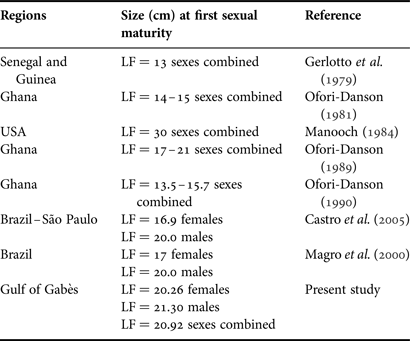
The size of the first maturity of B. capriscus varies from 13 to 30 cm according to location (Table 4). These differences are explained by the fact that the size of mature individuals depends on the biological factors and/or the ecological environment (Wague & M'Bodj, Reference Wague and M'bodj2002). Human activities such as overfishing (increased fishing effort) can also explain the differences in size (Jennings et al., Reference Jennings, Kaiser and Reynolds2001). Fish subjected to these pressures may have ecophysiological adaptations related to growth or reproduction, dwarfism or early sexual maturity, in order to ensure their survival (Stearns & Crandall, Reference Stearns, Crandall, Potts and Wootton1984; Olsen et al., Reference Olsen, Heino, Lilly, Morgan, Brattey, Ernande and Dieckmann2004).
Size (cm) at first sexual maturity of Balistes capriscus in different regions of the world.
In B. capriscus, females reach their first sexual maturity before males. Similar results have been observed in other species such as triggerfish Balistes vetula in Brazil (LF = 23.5 cm female, male 26.5 cm) (Aiken, Reference Aiken and Munro1983). This could be explained by the fact that the size of the first sexual maturity is not only linked to environmental factors but also to genetic ones (Wootton, Reference Wootton1998; Sampson & Al-Jufaily, Reference Sampson and Al-Jufaily1999).
The unimodal distribution of GSI suggests that eggs are laid in a single transmission (Garnaud, Reference Garnaud1960; Ofori-Danson, Reference Ofori-Danson1990; Mackichan & Szedlmayer, 2007). The comparison of B. capriscus eggs size, from the Gulf of Gabès, with those from the north-east Gulf of Mexico (Mackichan & Szedlmayer, 2007) does not show any significant difference.
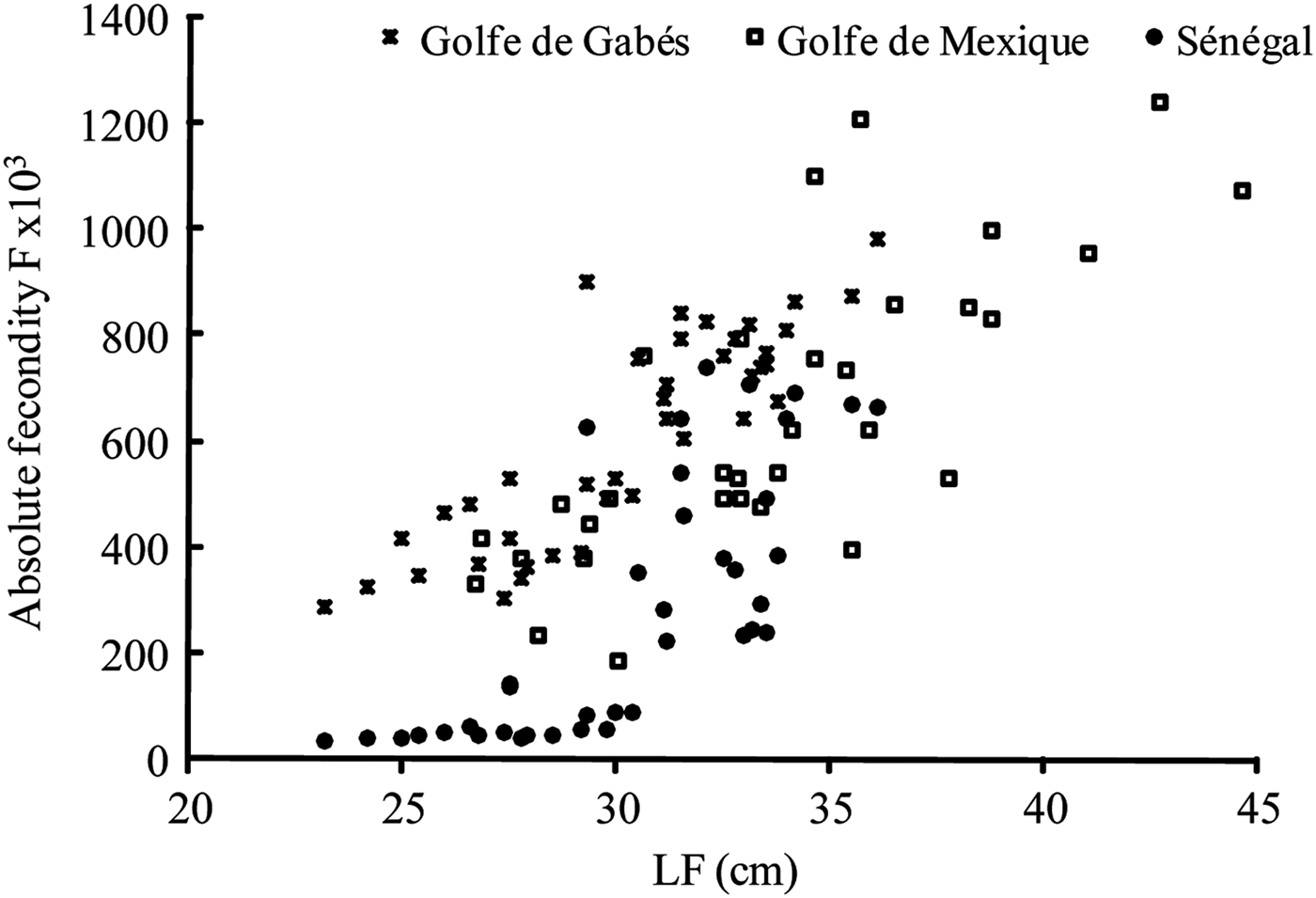
The comparison of the absolute fecundity of B. capriscus in the Gulf of Gabès (present study), Senegal (Caverivière et al., Reference Caverivière, Kulbicki, Konan and Gerlotto1981) and the Gulf of Mexico (Ingram, Reference Ingram2001) shows significant differences between the three locations (ANOVA, df(3,112)F = 27.6, P < 0.01) (Figure 7). Absolute fecundity was very similar between the Gulf of Gabès and the Gulf of Mexico. This could be likely explained by the similar climatic conditions in both ecosystems. Absolute fecundity is different and low in Senegal, which is probably related to the small size of B. capriscus at the first sexual maturity.
Comparison of the absolute fecundity of Balistes capriscus of the Gabès region with other regions of the world.