Children and adolescents with congenital heart disease (CHD) are at increased risk of neurodevelopmental delays and psychosocial concerns. Reference Ten Harkel and Takken1,Reference Bellinger and Newburger2 In addition, many patients with CHD have reduced exercise capacity and tend to be less physically active, placing them at higher risk for obesity, and other related health problems. Reference Bellinger and Newburger2,Reference Pinto, Marino and Wernovsky3 Promoting physical activity in patients with CHD has been recommended, given the well-known benefits of exercise on physical, cognitive, and mental health. Reference Di Liegro, Schiera, Proia and Di Liegro4 The American Heart Association, European Society of Cardiology, and American Academy of Pediatrics have advocated for cardiologists and paediatricians to encourage their patients to engage in more regular physical activity to improve their long-term health. Additionally, exercise and physical activity programmes in patients with CHD have been determined to be safe, with no adverse events reported with this type of intervention. Reference Jacobsen, Ginde, Mussatto, Neubauer, Earing and Danduran5-Reference Wittekind, Mays and Gerdes7
While the positive effects of promoting physical activity in patients with CHD are well-known, many health care providers report finding it difficult to counsel patients about physical activity promotion. Reference Longmuir and McCrindle8 Research has shown that patients with CHD typically do not achieve long-term sustained improvements in physical activity solely from advice offered in routine primary care consultations, but rather require self-directed exercise that is promoted with professional guidance and support. Reference Longmuir and McCrindle8
Structured cardiac rehabilitation programmes for adult patients with ischemic heart disease, heart failure, or post heart surgery are common and have demonstrated benefits, including mortality reduction, improved exercise tolerance, and enhanced psychosocial wellbeing. Reference Mampuya9 As a result, there has been growing interest in developing similar programmes for paediatric and adolescent CHD patients.
While cardiac rehabilitation programmes have demonstrated benefits for adults with acquired heart disease, the impact of cardiac rehabilitation and physical activity programmes on health-related quality of life in paediatric and adolescent patients with CHD remains unclear. The short follow-up period and heterogeneity of paediatric CHD cardiac rehabilitation programmes, including only a few that incorporated psychology consultation, may account for the variable results of cardiac rehabilitation programmes on psychosocial outcomes in this population. Further research is needed to determine the long-term impact of paediatric cardiac rehabilitation programmes, and whether incorporating multiple specialists within the programme has a positive impact on patient outcomes.
The aim of the current study was to evaluate outcomes for patients who participated in a 12-month multidisciplinary paediatric cardiac rehabilitation programme. Results will inform quality improvement efforts to optimise the structure of the programme in order to improve patient outcomes.
Materials and methods
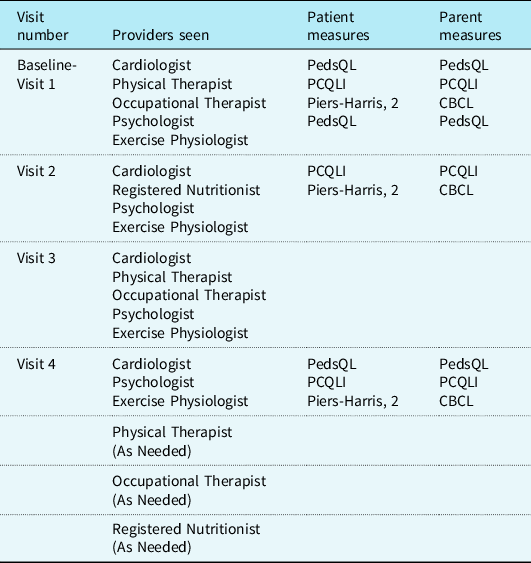
Participants in this study were patients with congenital heart disease between the ages of 7 and 24 years who were referred by their primary cardiologist to participate in “Steppin’ It Up,” a multidisciplinary cardiac rehabilitation programme at Children’s Wisconsin, a large tertiary children’s hospital. Patients were not eligible to participate if they were restricted from moderate-intensity physical activity based upon guidelines set forth by the American Heart Association Reference Van Hare, Ackerman and Evangelista10 or if they had a limiting non-cardiac medical or psychiatric disorder. “Steppin’ It Up” is a home-based year-long cardiac rehabilitation programme that includes four in-person visits occurring every 3 to 6 months. At each visit, patients and their parents are seen by multiple providers (see Table 1). As part of the intervention, each participant was provided with a Garmin VivoFit2© Activity Monitor, as well as an individualised physical activity prescription developed during consultation with an exercise physiologist experienced with CHD patients. Patients were offered to be paired with a mentor (college student majoring in exercise physiology) who would contact patients between the in-person visits to assess their progress with the physical activity recommendations.
Programme Structure

Following each participants’ enrolment in the programme, several assessments were completed to determine baseline functioning. Exercise capacity was assessed by having patients complete the Progressive Aerobic Cardiovascular Endurance Run, which is a 20-meter shuttle test run which has been shown to be a valid estimation of youth aerobic fitness. Reference Mahar, Guerieri, Hanna and Kemble11
Health-related quality of life was assessed using the general and cardiac modules of the Pediatric Quality of Life Inventory Reference Varni, Seid and Rode12 and the Pediatric Cardiology Quality of Life Inventory. Reference Marino, Shera and Wernovsky13 The Pediatric Quality of Life Inventory is an empirically-supported assessment that measures the health-related quality of life in children and adolescents with acute and chronic health conditions. Reference Varni, Seid and Rode12 This measure was chosen given its assessment of broad dimensions of health-related quality of life (i.e. emotional, social, physical, and school functioning), its relative brevity, and its strong psychometric properties. Scores range from 0 to 100, with higher scores indicating better quality of life. The Pediatric Cardiology Quality of Life Inventory also assesses health-related quality of life but was developed expressly for children and adolescents with both congenital and acquired heart disease. The Pediatric Cardiology Quality of Life Inventory consists of three subscales (total, disease impact subscale, and psychosocial impact subscale). Each subscale has a maximum of 50 points, with higher scores indicating better perceived health-related quality of life.
The Piers’ Harris Children’s Self-Concept Scale, Second Edition Reference Piers14 (Piers-Harris, 2) was used to assess the patient’s self-concept, which has been referred to as the fifth “cognitive-experiential” dimension of quality of life in prior research. Reference Zlatanović15 T scores are calculated (mean = 50, SD = 10). Higher scores reflect better self-concept.
The Child Behaviour Checklist Reference Achenbach and Rescorla16 was utilised to measure the behavioural competency and behavioural problems of patients as reported by parents/guardians, to provide a more comprehensive assessment of the patient’s functioning and quality of life. T scores are calculated (mean = 50, SD = 10) with higher scores reflecting more problems.
All of the measures have been validated with children and adolescents from approximately 7 to 18 years old, with some measures such as the Pediatric Quality of Life Inventory and Piers-Harris, two having been validated with even younger children. All of the measures have strong psychometric properties.
As a final measure, all patients and their parents/caregiver were given an opportunity to anonymously provide written feedback regarding their experiences with the programme. This feedback was included in the results as the “qualitative data” obtained during the programme.
Given that this intervention was designed and implemented as a quality improvement initiative, the content of sessions varied in order to ensure that each patient derived personal benefit by having sessions tailored to meet the needs and goals of each individual patient. For example, a session for one patient may focus more heavily upon motivational interviewing to help elicit a patient’s readiness to make changes to their physical activity or dietary choices, while a session for another patient may emphasise treatment planning for depressive symptoms that are impeding their ability to engage in the programme. This emphasis upon the intervention providing personal benefit to each individual patient is aligned with the spirit of quality improvement programmes, rather than the emphasis upon consistency and standardisation within interventions that is observed in research programmes to promote generalisability of results. While this type of quality improvement programme was deemed as most suitable for our patient population, this does lead to a limitation in generalisability of results given that the variability across sessions inhibits the ability of the intervention to be exactly replicated in other settings.
While the content of sessions varied among patients, psychology visits typically focussed upon enhancing positive behavioural change in patients in the areas of physical activity and nutrition, as well as helping address other mental health or psychosocial concerns that may be impacting their overall health and lifestyle goals. The programme was structured for patients to meet with a paediatric psychologist as part of all four in-person visits, with psychological assessments completed at visits one, three, and four. Similarly, patients also met with a cardiologist and an exercise physiologist at each of the four visits, with visits from other multidisciplinary members occurring at various time points. The cardiologists who met with patients as part of this programme were one of two cardiologists who had specialised expertise in cardiac rehabilitation. The programme was structured for the majority of contacts between providers and patients to occur within the context of the four face-to-face clinic visits, although some telephone contacts did occur between visits as needed to assist with mental health referrals and other related actions.
Study data were collected and managed using REDCap electronic data capture tools hosted at Children’s Wisconsin. Reference Harris, Taylor, Thielke, Payne, Gonzalez and Conde17,Reference Harris, Taylor and Minor18 Categorical data was reported as numbers and percentages, with continuous variables reported as means with standard deviations as appropriate. Differences in categorical variables were evaluated with Fisher’s exact test, while continuous variables were compared using paired Student t tests, with p < 0.05 considered significant. For data with multiple repeated measures, repeated measures analysis of variance was also performed to assess for significant change.
Results
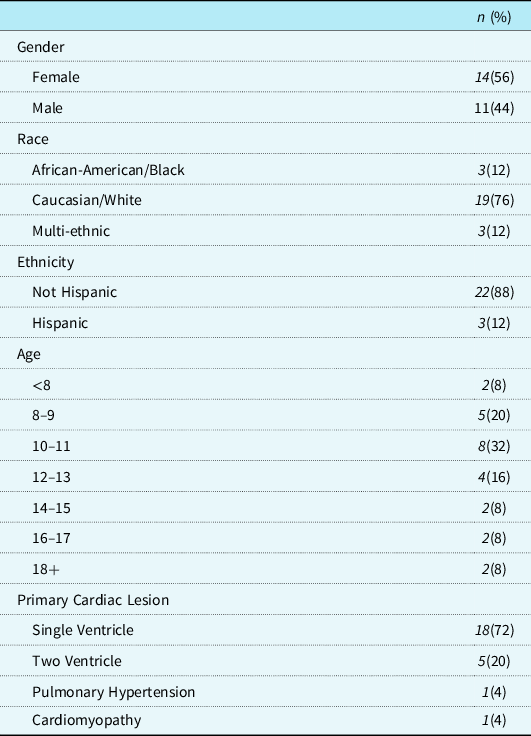
To date, 69 patients have enrolled in the programme: 25 patients have completed the programme, 20 patients have dropped out, and 24 patients are currently active. Data was gathered from the 25 participants who completed the programme within 12 months; however, the total number of patients who completed each survey varied. Participants were an average age of 11.72 years old (SD = 4.0), had a mean body mass index of 20.1 kg/m2 (SD = 5.8), and the majority had a diagnosis of a single ventricle heart defect (n = 18, 72%; see Table 2). Forty-four percent (n = 11) of participants had a mental health diagnosis; of these, 27% (n = 3) were diagnosed during the course of the cardiac rehabilitation programme. The most common psychiatric diagnosis was Attention-Deficit/Hyperactivity Disorder (55%, n = 6).
Participant Demographic Information

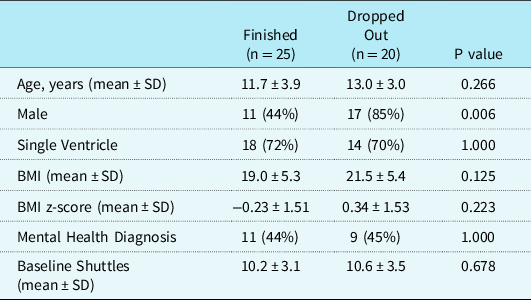
Participants who completed the programme did not differ from those who dropped out based on age, cardiac diagnosis, body mass index, baseline exercise capacity (i.e. number of shuttles on the Progressive Aerobic Cardiovascular Endurance Run test) or presence of a mental health diagnosis (Table 3). Those who did not complete the programme were more likely to be male (p = 0.006). Reasons for participant dropout varied and were not always known, but included lack of insurance coverage, patient declining health, and lack of time to attend appointments. Three families were diverted from the programme after the first visit as the patient had significant mental health issues that needed to be addressed prior to engaging in the programme.
Comparison of Participants that Completed vs. Dropped Out of Programme

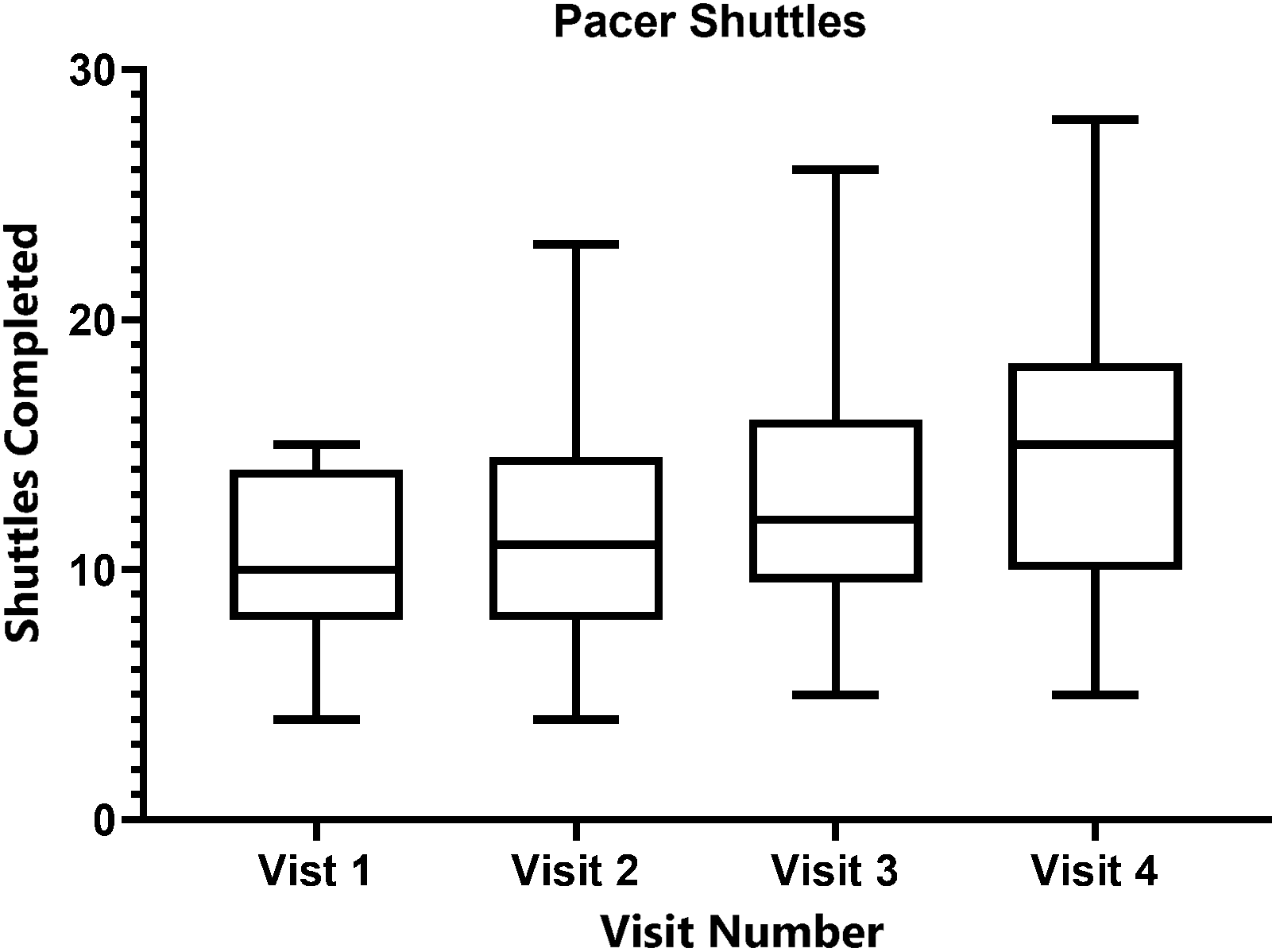
To examine the impact of the cardiac rehabilitation programme, changes in scores from the earliest to the latest clinic visit for which data was available (which ranged from 6 to 12 months apart) were assessed including changes in exercise capacity, patient functioning and general quality of life, patient cardiac-related quality of life, patient self-concept, and patient behavioural and emotional problems. Changes in exercise capacity from the baseline to the final session completed by patients, as assessed by the Progressive Aerobic Cardiovascular Endurance Run, indicated significant improvement, with an increase from 5 to 10 in the median shuttles completed (p < 0.0001). Repeated measures analysis of variance also confirmed a significant improvement from baseline to programme completion (F(2.3, 47.3) = 13.56, p < 0.0001) (Fig 1). Changes in exercise capacity did not vary based on whether the patient had a mental health diagnosis (p = 0.242). Despite this objective improvement in exercise capacity, the scores for patient physical functioning on the Pediatric Quality of Life Inventory (both parent and patient report) were not significantly different from baseline to the latest session of the programme.
Comparison of shuttles completed at each of four visits during the programme (F(2.3, 47.3) = 13.56, p < 0.0001).

The impact of the paediatric cardiac rehabilitation programme upon other aspects of functioning and overall quality of life were also examined (Table 4). Per patient report, there were no significant differences between scores obtained from the earliest and latest visits for total quality of life score or any of the subscales on the Pediatric Quality of Life Inventory. Conversely, parents reported significant improvement in patients’ emotional functioning (p = 0.0008), social functioning (p = 0.005), school functioning (p = 0.031), psychosocial functioning (p = 0.001), and total quality of life score (p = 0.001) on the Pediatric Quality of Life Inventory.
Psychological Self-Report Assessments

The impact of the paediatric cardiac rehabilitation programme upon cardiac-specific aspects of a patient’s quality of life was also evaluated. Per patient report on the Pediatric Quality of Life Inventory Cardiac Module, there was a significant effect of the intervention upon the treatment specific subscale related to medication (p = 0.048), with patients reporting fewer problems related to medications (e.g. forgetting to take medication, refusing to take medication) at the final session compared to baseline. Similarly, the impact of the intervention per parent report on the treatment specific subscale for medication approached significance (p = 0.054). Additionally, the changes in scores from the earliest to the latest session were significant on parent reported subscales related to cognitive functioning (p = 0.012) and communication (p = 0.008), suggesting improvements in these areas.
On the Pediatric Cardiology Quality of Life Inventory, a different trend was noticed with the cardiac rehabilitation programme demonstrating significant improvements in patient-reported, but not the parent-reported, cardiac related quality of life. Specifically, scores on the child-reported subscales of disease impact (p = 0.008), psychosocial impact (p = 0.027), and total impact (p = 0.008) were significant and suggested improvement in these areas, but there were no statistically significant differences on these subscales on the parent report of the Pediatric Cardiology Quality of Life Inventory from the first to last session.
Patients reported statistically significant improvement in the following subscales related to their self-concept from the first to last session of the programme: overall self-concept (p = 0.017), physical appearance and attributes (p = 0.004), and freedom from anxiety (p = 0.024). No statistically significant improvement was noted in intellectual and school status, happiness and satisfaction, popularity, or behavioural adjustment. In contrast, on the parent-reported Child Behaviour Checklist (a measure of behavioural adjustment), parents reported perceived improvement on internalising problems (p = 0.026) and total problems (p = 0.002). No statistically significant improvement was reported by parents with regard to externalising problems.
Qualitative responses gathered from parents and children who completed the programme highlighted additional benefits of the programme that were not captured in results of rating scales. Parents and children commented that one of the most positive aspects of the programme was having their child do the Progressive Aerobic Cardiovascular Endurance Run with other children who have CHD. Children reported that doing this test with other children with CHD made them feel “normal”, compared to when they did the Progressive Aerobic Cardiovascular Endurance Run in gym class with their healthy peers, in which they typically finished in last place. Parents who observed their child run in clinic noted that it was a relief to see that their child could safely engage in an activity that required physical exertion. Despite the positive association parents reported with being able to observe their child run the Progressive Aerobic Cardiovascular Endurance Run, it should be noted that it is unclear how parental presence may have impacted patients’ performance. Some research suggests that parental presence can increase pre-competitive anxiety in children and adolescent athletes, Reference Bois, Lalanne and Delforge19 but the impact of this potential increase in anxiety upon athletic performance remains mixed in the research literature. Reference Cervelló, Santos-Rosa, Jiménez, Nerea and García20
Discussion
In evaluating the impact of this paediatric cardiac rehabilitation programme, both parent and patient’s perceptions of patient outcomes from the earliest and latest completed session were examined. Parents reported a positive impact of the cardiac rehabilitation programme upon most domains of patient general quality of life. In contrast, patients did not report improvements in most general quality of life domains, but did report some improvements in cardiac-related quality of life with respect to decreased problems with aspects of treatment related to medications.
Parents also reported improvement in patients’ behavioural/emotional problems, while patients reported improvement in overall self-concept. In addition to these improvements in psychosocial health, patients also demonstrated improvements in objective measurements of exercise capacity following the cardiac rehabilitation programme. These results are consistent with prior studies of cardiac rehabilitation programmes, which showed improvements in physical and mental health outcomes. Reference Akamagwuna and Badaly21 While the impact of this cardiac rehabilitation programme upon decreasing obesity, sedentary behaviours, and the associated sequelae of these two concerns (e.g. hypertension and dyslipidemia) was not directly assessed during this study, research has indicated that cardiac rehabilitation programmes have shown long-term impact in reducing the risk factors for obesity and the above mentioned sequelae and comorbidities of obesity and sedentary behaviour. Reference Magalhāes, Ribeiro and Barreira22
The discrepancy between parent and patient report on most scales related to quality of life is not surprising, as this is consistent with previous research. Reference Uzark, Jones, Slusher, Limbers, Burwinkle and Varni23 It is hypothesised that children and adolescents may have difficulty perceiving changes in their quality of life due to poor self-awareness. Self-awareness develops throughout childhood and adolescence, and studies have indicated that there are developmental differences in self-awareness and stress appraisal, with most adolescents’ evaluation of their emotional status tending to be less accurate than an adult’s self-evaluation. Reference Zlotnik and Toglia24,Reference Rith-Najarian, McLaughlin, Sheridan and Nock25 In addition, it has been suggested that parent–child agreement on child quality of life may be influenced by factors such as the child’s health status, the domains assessed, and the parent’s own mental health and quality of life. Reference Cremeens, Eiser and Blades26
Although the discrepancy between parent and patient report may be expected, it may also have important implications related to the child’s participation in physical activity. For example, if the parent perceives that the child’s physical functioning is extremely poor or limited, the parent may discourage the child from participating in physical activity, even when the child may perceive that their physical functioning is fine, and wants to engage in physical activity. Alternatively, if the child endorses significant problems with emotional functioning, which interfere with motivation to be physically active, but the parent is unaware of these problems, the parent may become frustrated with the child, thinking that the child is unmotivated, when in fact, the child may be depressed. Reviewing any differences between parent and child responses regarding quality of life may be therapeutic and result in a more complete understanding of the factors that impact patient engagement in a cardiac rehabilitation programme, sustained physical activity, and subsequent patient outcomes.
It is interesting to note that there were objective improvements in patient’s exercise capacity, but neither parents nor patients perceived an overall improvement in physical functioning on the quality of life measures. It is possible that the quality of life measures used were not sensitive enough to detect subtle changes in exercise capacity. Alternatively, it has been shown that patients with CHD are poor at assessing their own exercise capacity, often overestimating their exercise capacity compared to objective measurements. Reference Mueller, Sarikouch and Beerbaum27 In contrast, parents may underestimate their child’s exercise capacity due to uncertainty related to activity restrictions for their children and anxiety about their child with CHD being physically active. Reference Longmuir, Brothers and de Ferranti28
The multidisciplinary team approach to the cardiac rehabilitation programme allowed for comprehensive assessment of factors that needed to be addressed in order to optimise patient physical and mental health outcomes. Incorporating psychology at every visit was important in identifying obstacles to behaviour change and assisting with goal setting. It was important to emphasise a family systems approach, as it has been well-established that in order for children to increase their activity level and make healthy choices regarding nutrition, parents need to be engaged in these behaviours as well. Reference Madsen, McCulloch and Crawford29,Reference Brown and Ogden30
Additionally, having a psychologist involved with the programme allowed for detection of mental health problems that had not been diagnosed previously or follow-up for those who needed mental health services. Although 44% of programme participants had a mental health diagnosis, only 20% were involved in active mental health treatment. In some circumstances, it was determined that due to the severity of the mental health issues that were identified, these needed to be addressed first, prior to the patient/family being able to engage with the cardiac rehabilitation programme. The majority of patients with mental health issues were diagnosed with Attention-Deficit/Hyperactivity Disorder, and it is possible that the symptoms associated with this disorder may have contributed to some of the patients having difficulty tracking their exercise and losing their activity tracker.
Lastly, although data was not directly gathered on the impact of psychiatric issues on the ability to make behavioural changes, it is probable that psychiatric concerns may have been a significant barrier for many of the patients in making successful changes as this is a well-documented finding in the research literature. Reference Blumenthal, Williams, Wallace, Williams and Needles31,Reference Ziegelstein, Fauerbach and Stevens32 Failure to recognise this may result in frustration for the patient, their family, and the cardiac provider. The incorporation of psychology in health and wellness programming may assist in overcoming earlier barriers to success.
There are a number of limitations to this study. The majority of patients in this study were single ventricle patients, and this broad grouping does not account for the great heterogeneity within this population. Additionally, given that single-ventricle patients tend to have a greater degree of functional impairment and severity of illness than some other types of patients with CHD, the results of this study may not generalise to the CHD population as a whole. This limited generalisability is exacerbated by the fact that patients were excluded from participating in this programme if they were medically restricted from engaging in moderate physical activity.
Generalisability of results was additionally limited by the finding that approximately one-third of patients who had initially enrolled in the programme dropped out before they completed it. Common reasons for not completing the programme included lack of time to attend clinic appointments (due to school or work) and variable costs related to insurance co-payment. Our data suggested male gender as the only significant difference between participants and those who dropped out of the programme. We were also limited by the variation in compliance by subjects and their parents in completing questionnaire forms. Additionally, many children lost their activity tracker or did not sign up for the online activity tracker group which would have allowed clinical staff to track participants’ steps; therefore the activity between sessions that was reported by patients/parents was based on self-report only.
Alternative programme structures are being explored, including the use of virtual visits via telehealth, appointment times that may be more convenient for families, and other means to more robustly monitor activity between sessions. Finally, although patients demonstrated improvements in physical and mental health outcomes, it is unknown whether participants sustain these improvements after the programme ends. Longitudinal follow-up is recommended.
A comprehensive multidisciplinary cardiac rehabilitation programme incorporates that psychology was associated with improvements in exercise capacity and variable improvements in patient and parent-reported measurements of health-related quality of life and psychosocial health in children, adolescents, and young adults with CHD. Further studies are needed to understand whether these improvements can be sustained following completion of the programme and ultimately impact long-term mental and physical health in this population.
Acknowledgements
The authors wish to thank the patients and families who participated in this cardiac rehabilitation programme, as well as the Marquette University student mentors who volunteered their time for this project.
Financial Support
This research received funding from the Wings of Angels Endowment and the “Skate with Heart” event sponsored by the Wisconsin Figure Skating Club.
Conflicts of Interest
None.
Ethical Standards
The authors assert that all procedures contributing to this work comply with the ethical standards of the relevant national guidelines on human experimentation (The Belmont Report) and with the Helsinki Declaration of 1975, as revised in 2008, and has been approved by the Children’s Wisconsin institutional committees as a quality improvement project that is exempt from review.