Introduction
Giardia duodenalis (syn. G. intestinalis, G. lamblia) is a non-invasive protozoan parasite that proliferates in the upper small intestine of vertebrate hosts including humans. The pathogen is recognized as an important contributor to diarrhoeal disease worldwide, with an estimated 280 million symptomatic infections every year (Einarsson et al., Reference Einarsson, Ma'ayeh and Svärd2016). In addition to G. duodenalis, the protozoan species Cryptosporidium spp. and Entamoeba histolytica are also major causes of morbidity and mortality in young children globally (Kotloff et al., Reference Kotloff, Nataro, Blackwelder, Nasrin, Farag, Panchalingam, Wu, Sow, Sur, Breiman, Faruque, Zaidi, Saha, Alonso, Tamboura, Sanogo, Onwuchekwa, Manna, Ramamurthy, Kanungo, Ochieng, Omore, Oundo, Hossain, Das, Ahmed, Qureshi, Quadri, Adegbola, Antonio, Hossain, Akinsola, Mandomando, Nhampossa, Acácio, Biswas, O'Reilly, Mintz, Berkeley, Muhsen, Sommerfelt, Robins-Browne and Levine2013; Levine et al., Reference Levine, Nasrin, Acácio, Bassat, Powell, Tennant, Sow, Sur, Zaidi, Faruque, Hossain, Alonso, Breiman, O'Reilly, Mintz, Omore, Ochieng, Oundo, Tamboura, Sanogo, Onwuchekwa, Manna, Ramamurthy, Kanungo, Ahmed, Qureshi, Quadri, Hossain, Das, Antonio, Saha, Mandomando, Blackwelder, Farag, Wu, Houpt, Verweiij, Sommerfelt, Nataro, Robins-Browne and Kotloff2020). In contrast, the pathogenic role of other enteric eukaryotic species such as Blastocystis sp. and D. fragilis remains controversial. Both microorganisms are commonly reported in apparently healthy individuals, but there is also clinical and epidemiological evidence linking the presence of Blastocystis sp. and D. fragilis with intra-intestinal (diarrhoea, irritable bowel syndrome) and extra-intestinal (urticaria) disorders (Rostami et al., Reference Rostami, Riahi, Haghighi, Saber, Armon and Seyyedtabaei2017; Bahrami et al., Reference Bahrami, Babaei, Badirzadeh, Riabi and Abdoli2020).
Giardiasis primarily affects young children in low-income countries with limited or no access to safe drinking water and sanitary facilities (Kotloff et al., Reference Kotloff, Nataro, Blackwelder, Nasrin, Farag, Panchalingam, Wu, Sow, Sur, Breiman, Faruque, Zaidi, Saha, Alonso, Tamboura, Sanogo, Onwuchekwa, Manna, Ramamurthy, Kanungo, Ochieng, Omore, Oundo, Hossain, Das, Ahmed, Qureshi, Quadri, Adegbola, Antonio, Hossain, Akinsola, Mandomando, Nhampossa, Acácio, Biswas, O'Reilly, Mintz, Berkeley, Muhsen, Sommerfelt, Robins-Browne and Levine2013; Platts-Mills et al., Reference Platts-Mills, Babji, Bodhidatta, Gratz, Haque, Havt, McCormick, McGrath, Olortegui, Samie, Shakoor, Mondal, Lima, Hariraju, Rayamajhi, Qureshi, Kabir, Yori, Mufamadi, Amour, Carreon, Richard, Lang, Bessong, Mduma, Ahmed, Lima, Mason, Zaidi, Bhutta, Kosek, Guerrant, Gottlieb, Miller, Kang and Houpt2015). In this vulnerable group of age, G. duodenalis infections have been linked with stunted growth and impaired cognitive development (Halliez and Buret, Reference Halliez and Buret2013; Yentur Doni et al., Reference Yentur Doni, Yildiz Zeyrek, Simsek, Gurses and Sahin2015b). Giardiasis also represents a public health concern in middle- and high-income countries (Fletcher et al., Reference Fletcher, Stark, Harkness and Ellis2012), where asymptomatic carriage of G. duodenalis is common (Reh et al., Reference Reh, Muadica, Köster, Balasegaram, Verlander, Chércoles and Carmena2019).
Transmission of giardiasis is via the fecal–oral route. Humans acquire the infection directly through direct contact with infected individuals or animals, or indirectly through accidental ingestion of food or water contaminated with the parasite's cysts. Indeed, G. duodenalis is an important cause of foodborne and waterborne outbreaks of gastrointestinal illness globally (Efstratiou et al., Reference Efstratiou, Ongerth and Karanis2017; Ryan et al., Reference Ryan, Hijjawi, Feng and Xiao2019). Giardia duodenalis is currently regarded as a complex of eight (A–H) lineages or assemblages that likely represent cryptic species (Ryan and Cacciò, Reference Ryan and Cacciò2018). These assemblages have marked differences in host specificity and range, virulence and even geographical distribution (Caccio et al., Reference Caccio, Lalle and Svard2018). Humans are primarily infected by assemblages A and B. Both assemblages also infect a broad range of other mammal species and have, therefore, zoonotic potential. Assemblages C and D occur mainly in canids, assemblage E in domestic and wild ungulates, assemblage F in cats, assemblage G in rodents, and assemblage H in marine pinnipeds. Human infections by assemblages C–F are sporadically reported, particularly in children and immunocompromised individuals (Caccio et al., Reference Caccio, Lalle and Svard2018).
Giardia duodenalis is a common enteric parasite in Turkey (Supplementary Table S1). The occurrence of the pathogen varies greatly depending on the population and geographical area under study. Infection rates ranging from 3 to 48% and from 1 to 15% have been reported in apparently healthy (Yentur Doni et al., Reference Yentur Doni, Gürses, Şimşek and Yıldız Zeyrek2015a; Goksen et al., Reference Goksen, Appak, Girginkardesler, Ecemis and Kasirga2016) and immunocompromised (Durak et al., Reference Durak, Dogan, Atambay, Ozgen and Ozen2013; Akkelle et al., Reference Akkelle, Tutar, Volkan, Sengul, Ozen, Celikel and Ertem2019) children, respectively. Giardia duodenalis has also been identified in 43% of children with growth retardation (Yentur Doni et al., Reference Yentur Doni, Yildiz Zeyrek, Simsek, Gurses and Sahin2015b), in 1‒23% of outpatients attended at clinical settings (Alver et al., Reference Alver, Oral and Tore2011; Selek et al., Reference Selek, Bektore, Karagoz, Baylan and Ozyurt2016), and in 5% of food handlers (Bayramoglu et al., Reference Bayramoglu, Pekmezci and Basari2013), among other populations (Supplementary Table S1). Most of these surveys were based on microscopic examination. Because of the limited diagnostic sensitivity of this method, reported figures in the above-mentioned surveys are likely an underestimation of the true infection rates.
Molecular studies aiming at investigating the molecular diversity of G. duodenalis in Turkey are scarce (Supplementary Table S2). Assemblage A has been more prevalently found than assemblage B (50‒80% vs 20‒30%) in children attending a hospital setting in Kocaeli Province (Tamer et al., Reference Tamer, Kasap and Er2015) and in individuals of all ages in Aydin Province (Ertuğ et al., Reference Ertuğ, Ertabaklar, Özlem Çalışkan, Malatyalı and Bozdoğan2016). Both assemblages were reported at similar proportions (~50%) in individuals admitted at hospital settings in Edirne (Çiçek and Şakru, Reference Çiçek and Şakru2015). Additionally, dogs and horses have been demonstrated to harbour infections by zoonotic sub-assemblage BIV and assemblage A, respectively (Gultekin et al., Reference Gultekin, Ural, Aysul, Ayan, Balikci and Akyildiz2017; Demircan et al., Reference Demircan, Onder, Duzlu, Yildirim, Okur, Ciloglu, Yetismis and Inci2019), whereas assemblages A and B were identified in river water samples in the Giresun and Samsun Provinces (Koloren et al., Reference Koloren, Seferoğlu and Karanis2016). In all these surveys, assignment of G. duodenalis assemblages/sub-assemblages was based on a single locus, usually the β-giardin gene. This study adopts, for the first time in Turkey, a multilocus sequence typing scheme to assess the molecular diversity of G. duodenalis in stool samples from individuals admitted to hospital settings in Ankara.
Methods
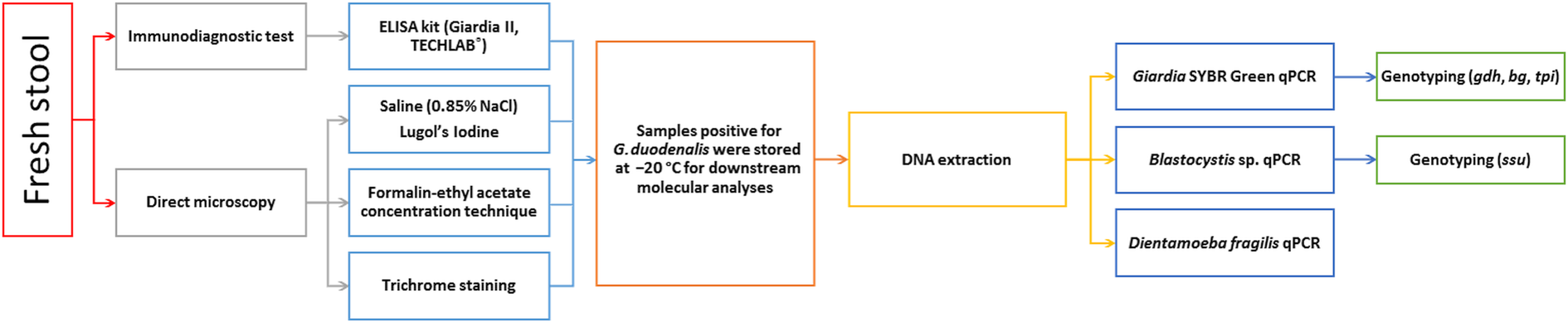
Individual stool samples from 4303 outpatients attended at the Gazi University Application and Research Health Research and Training Hospital (n = 4285) and the Ankara Education and Research Hospital of the Health Science University (n = 18) were collected during 2018 (n = 2363) and 2019 (n = 1940) in Ankara, Turkey. Of these, 2210 (51.4%) were male and 2093 (48.6%) were female. The age of the recruited participants ranged from <1 to 99 years with a median age of 34 years. Among them, 3065 (71.2%) were from patients suffering from gastrointestinal complaints (acute or chronic diarrhoea, abdominal pain, bloating, nausea), and 1238 (28.8%) from asymptomatic individuals for which G. duodenalis testing was requested for unknown reasons. All collected stool samples were independently screened for the presence of enteric parasites by microscopy examination. The flow chart summarizing the diagnostic and genotyping procedures used in this study is depicted in Fig. 1.
Flow diagram showing the flow of clinical samples, diagnostic and genotyping procedures followed in the present study.

Microscopy
Fresh stool samples were immediately examined microscopically by preparing saline and iodine wet mounts to test for the presence of enteric parasites. Saline and iodine wet mounts were prepared by mixing a small volume of stool with a drop of physiological saline or Lugol's iodine (diluted 1:5 with distilled water) on a glass microscope slide and placing a coverslip over the mixture (Garcia, Reference Garcia2017). Entire coverslips were examined systematically at 10× and 40× magnification under a light microscope (CX31, Olympus, Japan).
The formalin-ethyl acetate concentration technique was conducted in all stool samples as previously described (World Health Organization, 1991). Briefly, for each sample, 3 mL of ethyl acetate solution were added to 10 mL of filtered stool suspension and the tubes were vigorously shaken and centrifuged at 500 × g for 10 min. After centrifugation, the supernatant was discarded and the pellet was placed on a microscope slide, covered with a coverslip, and examined microscopically as described above. Additionally, trichrome-stained smears were prepared from fresh stool samples and examined using a 100× oil objective for all stool samples. At least 200‒300 oil immersion fields were screened (Garcia, Reference Garcia2017). Stool samples with a G. duodenalis-positive result by microscopy were kept at −20°C for further molecular analyses.
Immunodiagnostic tests for the detection of G. duodenalis
A commercially available ELISA kit (Giardia IITM, TECHLAB®, VA, USA) was used for the qualitative detection of G. duodenalis cyst antigen in all stool samples collected in compliance with the manufacturer's recommendations. This method was used to overcome the inherent diagnostic limitations of conventional microscopy and increase the likelihood of detecting this parasite species. This assay uses monoclonal and polyclonal antibodies directed against a cell-surface antigen of the parasite and has, according to the manufacturer, a diagnostic sensitivity and specificity of 100%. The kit does not cross-react with other protozoan (Chilomastix, Cryptosporidium, Endolimax, Entamoeba, Iodamoeba, Isospora), stramenopile (Blastocystis), nematode (Ascaris, Strongyloides, Trichuris) or trematode (Clonorchis) parasites, has been cleared by the US Food and Drug Administration for use with human fecal specimens, and has been successfully used in routine clinical laboratories (Youn et al., Reference Youn, Kabir, Haque and Petri2009). Stool samples with a G. duodenalis-positive result by ELISA were kept at −20°C for further molecular analyses.
DNA extraction and purification
Genomic DNA was isolated from all stool samples that tested positive for G. duodenalis by microscopy and/or ELISA methods. About 200 mg of each fecal specimen was processed using the QIAamp DNA Stool Mini Kit (Qiagen, Hilden, Germany) according to the manufacturer's instructions, except that samples mixed with InhibitEX buffer were incubated for 10 min at 95°C. Extracted and purified DNA samples (200 μL) were kept at −20°C until further molecular analysis. Taking advantage of this material, obtained genomic DNA samples were also used to test for the presence of Blastocystis sp. and D. fragilis by using molecular methods (see below).
Molecular detection of G. duodenalis
A real-time PCR (qPCR) protocol using SybrGreen reagents and targeting a 74-bp fragment of the β-giardin (bg) gene of G. duodenalis was used as a confirmatory method of the presence of the parasite (Guy et al., Reference Guy, Payment, Krull and Horgen2003). PCR mixtures (25 μL) contained 12.5 μL of Maxima SYBRGreen qPCR Master Mix (Thermo Fisher Scientific, Waltham, MA, USA), 0.3 μ m of the primer pair P434_F/P434_R (Supplementary Table S3) and 2 μL of template DNA. Positive (target DNA) and negative (sterile water) controls were included in each run. Amplification reaction was carried out in a Rotor-Gene 6000 real-time thermocycler (Rotor-Gene Q, Germantown, Qiagen, USA). Cycling parameters were 2 min at 50°C (for uracil DNA glycosylase pre-treatment) and 10 min at 95°C for initial denaturation followed by 45 cycles of 94°C for 15 s, 59°C for 40 s (annealing) and 72°C for 30 s, with a final extension step of 72°C for 5 min.
Molecular characterization of G. duodenalis
Giardia duodenalis isolates with a qPCR-positive result were re-assessed by sequence-based multi-locus genotyping of the genes encoding for the glutamate dehydrogenase (gdh), bg and triose phosphate isomerase (tpi) proteins of the parasite. A semi-nested PCR was used to amplify a ~432-bp fragment of the gdh gene (Read et al., Reference Read, Monis and Thompson2004). PCR reaction mixtures (25 μL) included 5 μL of template DNA and 0.5 μ m of the primer pairs GDHeF/GDHiR in the primary reaction and GDHiF/GDHiR in the secondary reaction (Supplementary Table S3). Both amplification protocols consisted of an initial denaturation step at 95°C for 3 min, followed by 35 cycles of 95°C for 30 s, 55°C for 30 s and 72°C for 1 min, with a final extension of 72°C for 7 min. A nested PCR was used to amplify a ~511 bp-fragment of the bg gene (Lalle et al., Reference Lalle, Pozio, Capelli, Bruschi, Crotti and Caccio2005). PCR reaction mixtures (25 μL) consisted of 3 μL of template DNA and 0.4 μ m of the primers sets G7_F/G759_R in the primary reaction and G99_F/G609_R in the secondary reaction (Supplementary Table S3). The primary PCR reaction was carried out with the following amplification conditions: one step of 95°C for 7 min, followed by 35 cycles of 95°C for 30 s, 65°C for 30 s and 72°C for 1 min with a final extension of 72°C for 7 min. The conditions for the secondary PCR were identical to the primary PCR except that the annealing temperature was 55°C. Finally, a nested PCR was used to amplify a ~530 bp-fragment of the tpi gene (Sulaiman et al., Reference Sulaiman, Fayer, Bern, Gilman, Trout, Schantz, Das, Lal and Xiao2003). PCR reaction mixtures (50 μL) included 2‒2.5 μL of template DNA and 0.2 μ m of the primer pairs AL3543/AL3546 in the primary reaction and AL3544/ AL3545 in the secondary reaction (Supplementary Table S3). Both amplification protocols consisted of an initial denaturation step at 94°C for 5 min, followed by 35 cycles of 94°C for 45 s, 50°C for 45 s and 72°C for 1 min, with a final extension of 72°C for 10 min.
The semi-nested and nested PCR protocols described above were conducted on a 2720 thermal cycler (Applied Biosystems). Reaction mixes always included 2.5 units of MyTAQ™ DNA polymerase (Bioline GmbH, Luckenwalde, Germany), and 5 × MyTAQ™ Reaction Buffer containing 5 mm dNTPs and 15 mm MgCl2. Laboratory-confirmed positive and negative DNA isolates for each parasitic species investigated were routinely used as controls and included in each round of PCR. PCR amplicons were visualized on 2% D5 agarose gels (Conda, Madrid, Spain) stained with Pronasafe nucleic acid staining solution (Conda).
Molecular detection of Blastocystis sp.
Identification of Blastocystis spp. was achieved by a qPCR protocol (Stensvold et al., Reference Stensvold, Ahmed, Andersen and Nielsen2012) targeting a partial fragment of the small subunit ribosomal RNA (ssu rRNA) gene of Blastocystis sp. in the sample subset for which DNA was available. Amplification reactions (25 μL) contained 12.5 μL of PCR Master Mix (Thermo Fisher Scientific), 0.5 μ m of the primer pair Blasto_FWD_F5/Blasto_R_F2, 0.3 μ m of probe (Supplementary Table S3) and 2 μL of template DNA. Positive (target DNA) and negative (sterile water) controls were included in each run. Amplification reaction was carried out in a Rotor-Gene 6000 real-time cycler (Rotor-Gene Q). Cycling parameters were 95°C for 3 min, and 40 cycles of denaturation at 95°C for 15 s followed by annealing and extension at 57°C for 1 min.
Molecular characterization of Blastocystis sp. isolates
Samples with a Blastocystis-positive result by qPCR were reassessed using a direct PCR targeting a partial fragment (~600 bp) of the ssu rRNA gene of the parasite for genotyping purposes (Scicluna et al., Reference Scicluna, Tawari and Clark2006). Amplification reactions (25 μL) included 5 μL of template DNA and 0.5 μ m of the pan-Blastocystis, barcode primer set RD5/BhRDr (Supplementary Table S3). Amplification conditions consisted of one step of 95°C for 3 min, followed by 30 cycles of 1 min each at 94, 59 and 72°C, with an additional 2 min final extension at 72°C. PCR and agarose gel electrophoresis reagents and equipment were as described above for G. duodenalis semi-nested and nested PCRs.
Molecular detection of Dientamoeba fragilis
Detection of D. fragilis was achieved by a qPCR protocol amplifying a 78-bp fragment of the ssu rRNA gene of the parasite (Stark et al., Reference Stark, Beebe, Marriott, Ellis and Harkness2006). Reaction mixes (25 μL) consisted of 12.5 μL PCR of Master Mix (Thermo Fisher Scientific), 0.5 μ m of the primer pair DF3/DF4, 0.3 μ m of probe (Supplementary Table S3) and 2 μL of template DNA. Positive (target DNA) and negative (sterile water) controls were included in each run. Equipment and cycling conditions were identical to those described above for the Blastocystis qPCR.
Data analysis
The χ 2 test was used to compare differences in the frequency of G. duodenalis among infected individuals according to sociodemographic variables, presence/absence of clinical manifestations and parasite's assemblages. A P value <0.05 was considered evidence of statistical significance. Odds ratios (OR) and 95% confidence intervals (CI) were calculated to assess the potential association between the occurrence of symptomatic infection and the G. duodenalis assemblage causing the infection. Statistical analyses were carried out using the OpenEpi free software (https://www.openepi.com).
Sequence analyses
Amplicons of the expected size obtained by direct, semi-nested and nested PCRs were directly sequenced in both directions using the internal primer set described above. DNA sequencing was conducted by capillary electrophoresis using the BigDye® Terminator chemistry (Applied Biosystems) on an ABI PRISM 3130 automated DNA sequencer. Raw sequencing data were viewed using the Chromas Lite version 2.1 sequence analysis program (https://technelysium.com.au/wp/chromas/). The BLAST tool (http://blast.ncbi.nlm.nih.gov/Blast.cgi) was used to compare nucleotide sequences with sequences retrieved from the NCBI GenBank database. Generated DNA consensus sequences were aligned to appropriate reference sequences using the MEGA 6 software to identify Giardia species and assemblages/sub-assemblages. Blastocystis sequences were submitted at the Blastocystis 18S database (http://pubmlst.org/blastocystis/) for sub-type confirmation and allele identification. The sequences obtained in this study have been deposited in GenBank under accession numbers MT166353-MT166390 (G. duodenalis) and MT160367-MT160370 (Blastocystis sp.).
Phylogenetic analysis
Giardia duodenalis nucleotide sequences obtained at the gdh locus in this study, representative sequences of human origin from African, Asian, European and South American countries as well as appropriate reference sequences to include relevant G. duodenalis assemblages retrieved from GenBank were aligned with the Clustal W algorithm using MEGA X (Kumar et al., Reference Kumar, Stecher, Li, Knyaz, Tamura and Battistuzzi2018). Only unambiguous (non-heterozygous) sequences were included in the analysis. Phylogenetic inference was carried out by the Neighbor-Joining (NJ) method as previously described (Saitou and Nei, Reference Saitou and Nei1987). Genetic distance was calculated with the Kimura parameter-2 model using MEGA X (Kumar et al., Reference Kumar, Stecher, Li, Knyaz, Tamura and Battistuzzi2018). The reliability of the tree was assessed by using the bootstrap method with 1000 pseudoreplicates; only values >50% were reported.
Results
Microscopy-based infection rates of enteric parasites
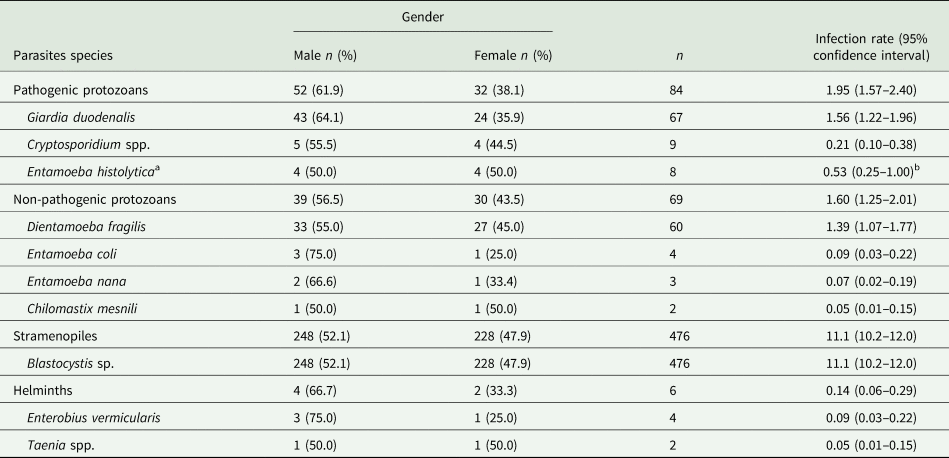
The diversity and frequency of enteric parasite and commensal species detected in this study by conventional microscopy are summarized in Table 1. Non-pathogenic and pathogenic protozoa were identified in 1.6% (69/4303) and 2.0% (84/4303) of the recruited patients, respectively. Stramenopiles (Blastocystis sp.) and helminths were detected in 11.1% and 0.14% of patients, respectively. Among pathogenic protozoa, G. duodenalis (1.6%; 67/4303) and Cryptosporidium spp. (0.2%; 9/4303) were the species found. Additionally, the occurrence of E. histolytica was investigated by ELISA in a subset (n = 1513) of patients and detected in 0.5% of them (Table 1). Males (2.0%, 43/2167) were significantly more infected than females (24/2069) by G. duodenalis (χ 2 = 4.4773, P = 0.034).
Microscopy-based occurrence rates of enteric parasite and commensal species in the patient cohort (n = 4303) investigated in the present study according to gender, Ankara, Turkey, 2018‒2019

a Infection rates determined in 1513 samples by a commercial ELISA (E. histolytica IITM, TECHLAB®, VA, USA) for the specific detection of E. histolytica coproantigens.
b Analysis conducted on 1513 samples only.
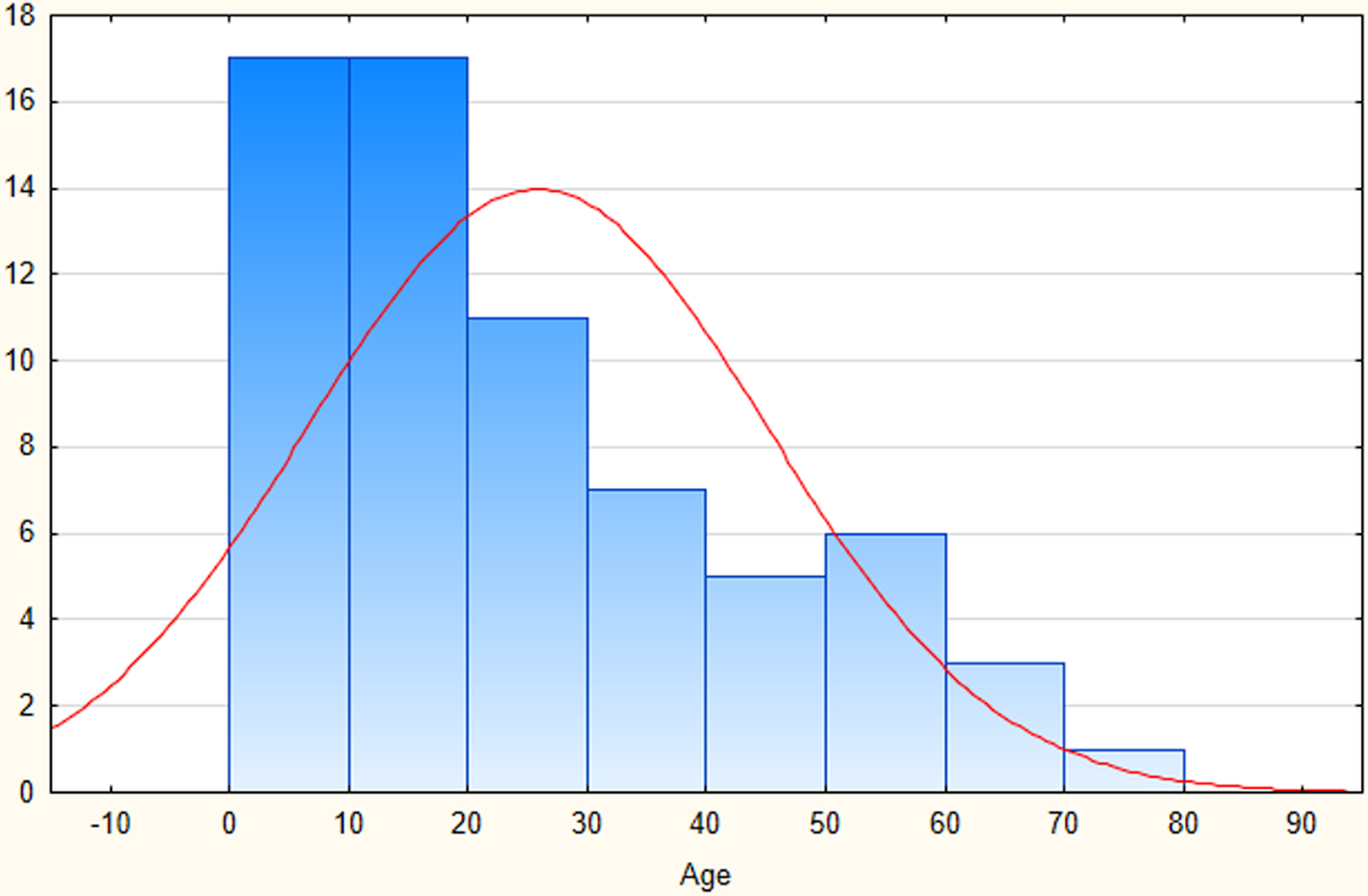
Out of the 67 G. duodenalis-positive cases identified by conventional microscopy, 61 tested also positive by ELISA. Negative results by both methods were produced for 4236 patients. No ELISA-positive but microscopy-negative results were obtained. Most cases (64.2%, 43/67) were detected in patients older than 13 years of age (Fig. 2).
Histogram showing the age distribution of the cases (n = 67) infected by Giardia duodenalis in the present study, Ankara, Turkey, 2018‒2019.

Molecular detection of enteric protist species
Genomic DNAs were obtained from stool samples of the 67 G. duodenalis-positive patients identified by conventional microscopy and/or ELISA. Sixty-four of them were confirmed by bg-qPCR. Generated cycle threshold (Ct) values ranged from 20.6 to 44.2 (median: 27.0). Five out of the six samples that were microscopy-positive but ELISA-negative were confirmed as positive by qPCR, all of them with Ct values >30.
Additionally, the presence of Blastocystis sp. and D. fragilis was investigated in this sub-sample set by using specific ssu-qPCR protocols. Blastocystis sp. was detected in 16.4% (11/67) of the samples. Generated Ct values ranged from 19.8 to 34.9 (median: 27.3). Dientamoeba fragilis was detected in 10.4% (7/67) of the samples. Generated Ct values ranged from 23.7 to 36.3 (median: 28.8). Blastocystis sp. and D. fragilis were previously detected in 23.9% (16/67) and 4.4% (3/67), respectively, of this sub-sample set by conventional microscopic examination.
Coinfections
Giardia duodenalis was found in coinfection with other enteric parasitic or commensal species in a total of 17 patients. The most frequent combination found was G. duodenalis + Blastocystis sp. (41.2%, 7/17), followed by G. duodenalis + Blastocystis sp. + D. fragilis (23.5%, 4/17) and G. duodenalis + D. fragilis (17.6, 3/17) (Supplementary Table S4).
Molecular characterization of G. duodenalis
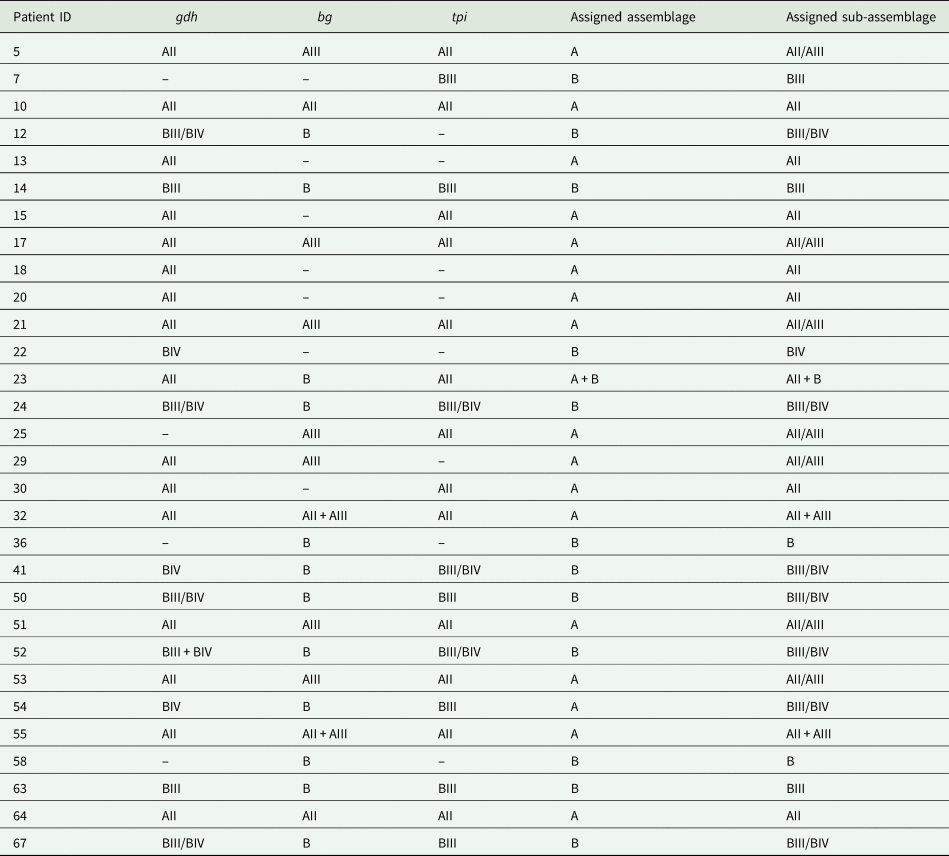
The molecular diversity of G. duodenalis was investigated using a multilocus genotyping (MLG) approach in the 64 samples confirmed by bg-qPCR. Successful PCR amplification and sequencing data were generated for 40.6% (26/64), 36.0% (23/64) and 34.4% (22/64) of the samples investigated at the gdh, bg and tpi loci, respectively. A total of 30 G. duodenalis-positive samples were genotyped at least at a single locus. These samples had qPCR Ct values ranging from 20.6 to 36.7 (median: 25.1). The remaining 34 uncharacterized samples had qPCR Ct values ranging from 22.7 to 44.2 (median: 30.9). MLG data at the three assessed loci were available for 28.1% (18/64) of the investigated samples (Table 2). Assemblage A (53.3%, 16/30) was more prevalent than assemblage B (43.3%, 13/30). A mixed A + B infection was identified in a single sample (3.3%, 1/30). No host-specific assemblages of canine (C, D), feline (F) or livestock (E) origin were detected. Subtyping analyses revealed the presence of AII (23.3%, 7/30), discordant AII/AIII (23.3%, 7/30) and mixed AII + AIII (6.7%, 2/30) sequences within assemblage A. Likewise, BIII (10.0%, 3/30), BIV (3.3%, 1/30) and discordant BIII/BIV (23.3%, 7/30) sequences were found within assemblage B. Two additional sequences (6.7%, 2/30) were assigned to the latter assemblage but sub-assemblage information was unknown. Sub-assemblage AII was confirmed in the only sample with A + B mixed infection (Table 2).
Multilocus genotyping results of the 30 G. duodenalis-positive samples successfully genotyped at least at one of the three loci investigated, Ankara, Turkey, 2018‒2019

bg, β-giardin; gdh, glutamate dehydrogenase; tpi, triose phosphate isomerase.
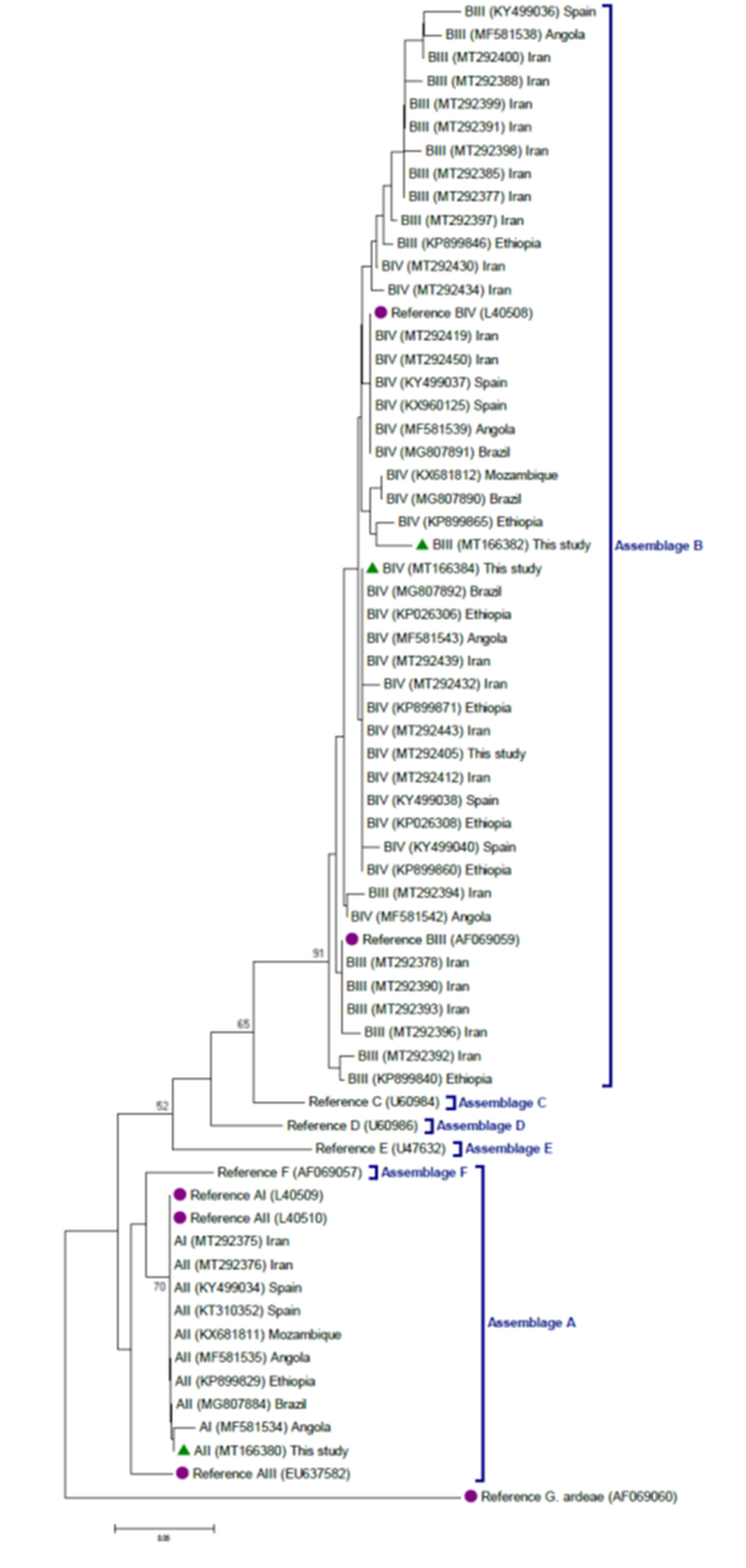
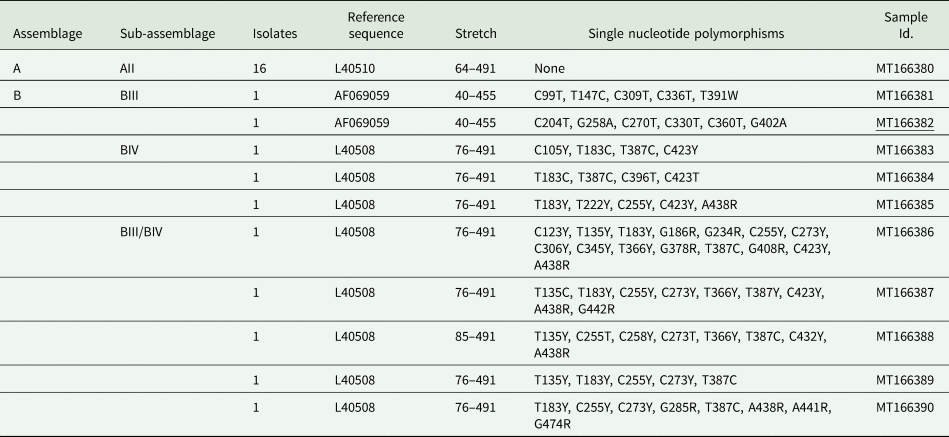
Table 3 summarizes the molecular data generated at the gdh locus. Out of the 26 gdh sequences, 16 were assigned to the sub-assemblage AII. All of them showed 100% identity with the reference sequence used (GenBank accession number L40510). BIII and BIV were identified in two sequences each. BIII and BIV sequences differed by four to six single nucleotide polymorphisms (SNPs) from their respective reference sequences. One of the reported BIII sequences corresponded to a novel genotype. Discordant BIII/BIV results were identified in an additional five sequences showing 5‒15 SNPs when compared to reference sequence L40508. Most of these SNPs corresponded to ambiguous (double peaks) positions, suggesting that they very likely represent true BIII + BIV mixed infections. None of the SNPs observed at the gdh locus induced changes in the protein amino acid chain. Phylogenetic analyses using the NJ method revealed that all sequences generated in the present study at the gdh locus grouped in well-defined clusters with appropriate reference sequences and previously published sequences retrieved from GenBank at the assemblage level (Fig. 3). However, a clear distinction between sub-assemblage BIII and BIV sequences was not supported by the analysis.
Phylogenetic relationships among Giardia duodenalis genotypes identified in this study. Human genetic variants from countries representing different epidemiological scenarios were included for comparative purposes. Analysis was inferred by a Neighbor-Joining method of a 416-bp region (positions 76–491 of GenBank: L40508) of the gdh gene. Bootstrap values lower than 50% are not shown. All nucleotide sequences include the GenBank accession number in parenthesis. Cyan filled circles represent reference sequences; filled dark green triangles represent sequences generated in the present study. Giardia ardeae was used as the outgroup.

Diversity, frequency and main molecular features of Giardia duodenalis sequences at the gdh locus generated in the present study

K: A/T; R: A/G; Y: C/T.
GenBank accession numbers are provided. Novel genotypes are shown underlined.
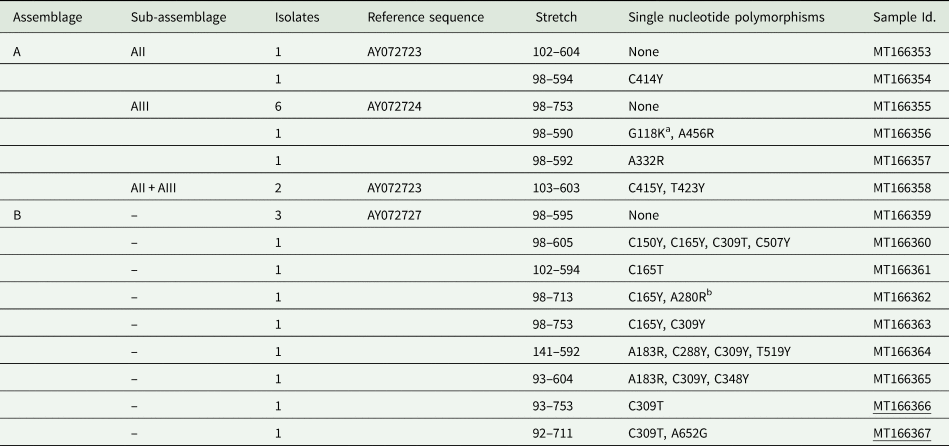
Table 4 summarizes the molecular data generated at the bg locus. Out of the 23 bg sequences, two were identified as sub-assemblage AII. Of them, one was identical to reference sequence AY072723 and the other differed from the latter by a single SNP. A total of eight sequences were assigned to AIII, six of them being identical to reference sequence AY072724 and the remaining two differing from the latter by 1‒2 SNPs. One of the detected SNPs corresponded to a polymorphic (double peak) position (G118 K) that may be associated with an amino acid change. A single sample was identified at this marker (but not at the gdh or the tpi loci) as a true AII + AIII mixed infection. Out of the 11 sequences identified as assemblage B, three showed 100% identity with reference sequence AY072727 and the remaining eight differed from the latter by 1‒4 SNPs. One of the SNPs detected (A280R) was potentially associated with a change in the protein amino acid chain.
Diversity, frequency and main molecular features of Giardia duodenalis sequences at the bg locus generated in the present study

K: A/T; R: A/G; Y: C/T.
a If T, pD40Y.
b If G, pT94A.
GenBank accession numbers are provided. Novel genotypes are shown underlined.
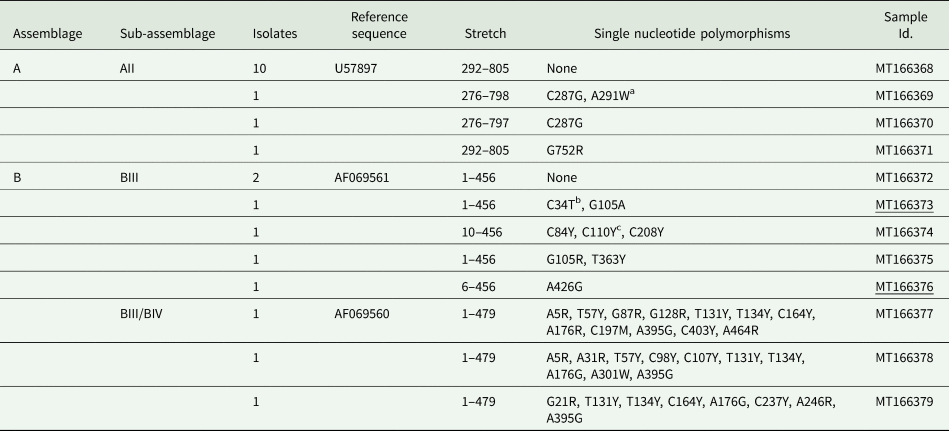
Table 5 summarizes the molecular data generated at the tpi locus. Little genetic diversity was observed within sub-assemblage AII, where out of the 13 tpi sequences, 10 were identical to reference sequence U57897 and the remaining three differed from the latter by 1‒2 SNPs. One of these ambiguous positions (A291W) may be involved in an amino acid replacement. A total of six sequences were identified as BIII, two of them showed 100% identity with reference sequence AF069561 and the remaining four differing from the latter by 1‒3 SNPs. One of the detected SNPs (C34T) was unmistakably linked to an amino acid change in the protein chain. The three sequences identified as BIII/BIV differed from reference sequence AF069560 by 8‒12 SNPs. As in the case of gdh, most of these SNPs were associated to double peaks at chromatogram inspection, suggesting that they likely represent true BIII + BIV mixed infections.
Diversity, frequency and main molecular features of Giardia duodenalis sequences at the tpi locus generated in the present study

K: A/T; R: A/G; Y: C/T.
a If T, pN2Y.
b pH12Y.
c If T, pT37I.
GenBank accession numbers are provided. Novel genotypes are shown underlined.
Distribution of G. duodenalis assemblages according to demographic and clinical variables
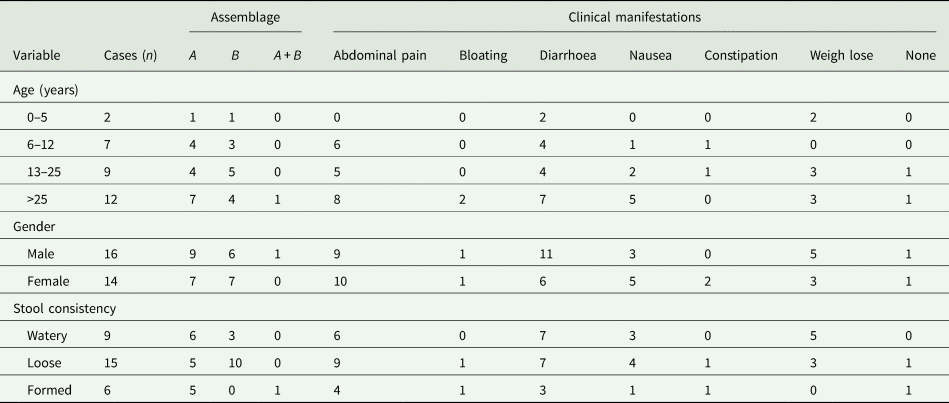
The distribution of G. duodenalis assemblages A and B according to sociodemographic (age, gender) and clinical (consistency of fecal material, occurrence of clinical manifestations) of the surveyed patient cohort is summarized in Table 6. Among the 30 PCR-positive samples, 6.7% (2/30), 23.3% (7/30), 30.0% (9/30), and 40.0% (12/30) were from the age groups of 0–5, 6–12 and 13–25, and >25 years, respectively. The male/female ratio was 1.14. Regarding stool consistency, loose samples were more frequently represented (50.0%, 15/30), followed by watery (30.0%, 9/30) and formed (20.0%). No statistically significant differences were observed in the distribution of G. duodenalis assemblages according to the age group (χ 2 = 0.77, P = 0.857), the gender (χ 2 = 0.29, P = 0.588) or the stool consistency (χ 2 = 5.22, P = 0.073) of the patients investigated. No obvious differences were observed in the distribution of G. duodenalis assemblages A and B according to the clinical manifestations of the investigated patients (Table 7).
Occurrence of Giardia duodenalis assemblages A and B according to sociodemographic (age, gender) and clinical (stool consistency, symptoms) variables of the 30 PCR-positive patients, Ankara, Turkey, 2018‒2019

Occurrence of clinical manifestation symptoms in the 30 PCR-positive patients according to the Giardia duodenalis assemblage (A or B), Ankara, Turkey, 2018‒2019

Molecular characterization of Blastocystis sp.
Out of the 11 isolates that tested positive for Blastocystis spp. by ssu-qPCR, 54.5% (6/11) were successfully amplified and sequenced at the ssu rDNA (barcode region) gene. Multiple sequence alignment analyses revealed the presence at equal proportions of three Blastocystis subtypes (STs) including ST1 (33.3%; 2/6), ST2 (33.3%; 2/6) and ST3 (33.3%; 2/6). Neither mixed infection involving different STs of the parasite nor infections caused by animal-specific ST10-ST17 were recorded. Allele 4 within ST1, alleles 9 and 12 within ST2, and allele 34 within ST3 were identified.
Discussion
In this microscopy-based epidemiological survey, the occurrence rates of enteric parasitic and commensal species have been identified at <0.1–11% in a large cohort of patients attended at two public hospitals in Ankara (Turkey) during a 24-month period. Among pathogenic protozoa G. duodenalis was the most prevalent (1.6%) species detected. This infection rate is identical to that reported in outpatients also in Ankara using the same methodology (Gulmez et al., Reference Gulmez, Saribas, Akyon and Erguven2013). Higher prevalences (8–14%) have been found in immunocompromised children and emergency outpatients in this very same metropolitan area (Kocak Tufan et al., Reference Kocak Tufan, Altun, Bulut, Kinikli and Demiroz2011; Maçin et al., Reference Maçin, Kaya, Çağdaş, Hizarcioglu-Gulsen, Saltik-Temizel, Tezcan, Demir, Ergüven and Akyön2016). In our study, males were more likely to be infected by G. duodenalis than females, suggesting that gender-related occupational exposure may play a role in the distribution of the parasite. Other pathogenic protozoa including Cryptosporidium spp. and E. histolytica were only sporadically found (<0.5%) in the surveyed clinical population.
The molecular characterization of microscopy-positive G. duodenalis at three independent (gdh, bg, tpi) loci is perhaps the most relevant contribution of this study. This is, to the best of our knowledge, the first study adopting an MLG scheme to investigate the genetic diversity of G. duodenalis in Turkey, as previous surveys conducted in the country were based in single genetic locus, mainly bg (Çiçek and Şakru, Reference Çiçek and Şakru2015; Tamer et al., Reference Tamer, Kasap and Er2015; Ertuğ et al., Reference Ertuğ, Ertabaklar, Özlem Çalışkan, Malatyalı and Bozdoğan2016). MLG schemes significantly improve sensitivity for molecular analyses of virulence types, zoonotic potential and source tracking for G. duodenalis assemblages and sub-assemblages (Ankarklev et al., Reference Ankarklev, Lebbad, Einarsson, Franzen, Ahola, Troell and Svärd2018). PCR amplification success rate at the gdh, bg and tpi loci were in the range of 34–40% and, as expected, were more frequent in samples with qPCR Ct values ⩽30. Comparatively, lower sensitivities of PCRs based in single-copy genes (as it is the case for the gdh, bg and tpi loci used in our MLG scheme) may explain, at least partially, this situation. Our sequence data revealed that assemblage A was more prevalent than assemblage B (53.3 vs 43.3%) in the clinical population investigated. Similar assemblage frequencies have been documented in neighbouring Iran (Hooshyar et al., Reference Hooshyar, Ghafarinasab, Arbabi, Delavari and Rasti2017; Kasaei et al., Reference Kasaei, Carmena, Jelowdar and Beiromvand2018; Rafiei et al., Reference Rafiei, Baghlaninezhad, Köster, Bailo, Hernández de Mingo, Carmena, Panabad and Beiromvand2020). These results are in sharp contrast with the European scenario, where assemblage B is the predominant assemblage reported in most countries (Feng and Xiao, Reference Feng and Xiao2011). The reason for the spatial differences observed in the distribution of G. duodenalis genotypes is unclear and should be investigated in further epidemiological studies.
A much higher sequence genetic diversity was observed in assemblage B than in assemblage A at the three genes investigated. These differences were particularly evident for gdh sequences, which are in line with previously published data (Caccio et al., Reference Caccio, Beck, Lalle, Marinculic and Pozio2008; Sprong et al., Reference Sprong, Cacciò and van der Giessen2009; de Lucio et al., Reference de Lucio, Amor-Aramendía, Bailo, Saugar, Anegagrie, Arroyo, López-Quintana, Zewdie, Ayehubizu, Yizengaw, Abera, Yimer, Mulu, Hailu, Herrador, Fuentes and Carmena2016). The elevated proportion of B sequences with mixed templates (ambiguous nucleotides corresponding to double peaks at chromatogram inspection) made the assignment of single isolates to specific assemblages/sub-assemblages a complex task. Indeed, an elevated proportion of inconsistent BIII/BIV results were obtained both at the gdh and tpi loci. Two mechanisms have been proposed to explain the occurrence of ambiguous nucleotidic position and inconsistent genotyping within G. duodenalis assemblages: (i) true intra-assemblage mixed infections (e.g. BIII + BIV) and (ii) genetic recombination leading to reduced levels of allelic sequence heterozygosity (ASH) (Morrison et al., Reference Morrison, McArthur, Gillin, Aley, Adam, Olsen, Best, Cande, Chen, Cipriano, Davids, Dawson, Elmendorf, Hehl, Holder, Huse, Kim, Lasek-Nesselquist, Manning, Nigam, Nixon, Palm, Passamaneck, Prabhu, Reich, Reiner, Samuelson, Svard and Sogin2007; Franzen et al., Reference Franzen, Jerlström-Hultqvis, Castro, Sherwood, Ankarklev, Reiner, Palm, Andersson, Andersson and Svärd2009). Binucleated diplomonads including G. duodenalis have been largely thought to replicate exclusively asexually. Under this circumstance, the two allelic gene copies at a given locus are expected to become increasingly divergent (elevated level of ASH) over time as a result of the independent accumulation of mutations (Sprong et al., Reference Sprong, Cacciò and van der Giessen2009). This is clearly not the case for assemblage A, for which a very low ASH level is known (Morrison et al., Reference Morrison, McArthur, Gillin, Aley, Adam, Olsen, Best, Cande, Chen, Cipriano, Davids, Dawson, Elmendorf, Hehl, Holder, Huse, Kim, Lasek-Nesselquist, Manning, Nigam, Nixon, Palm, Passamaneck, Prabhu, Reich, Reiner, Samuelson, Svard and Sogin2007). This finding is indicative of the presence of genetic homogenization mechanisms. Indeed, evidence of genetic recombination at the intra-assemblage level has been demonstrated in experimental (Ankarklev et al., Reference Ankarklev, Svärd and Lebbad2012) and population (Siripattanapipong et al., Reference Siripattanapipong, Leelayoova, Mungthin, Thompson, Boontanom, Saksirisampant and Tan-Ariya2011) studies. The exact contribution of each of the above-mentioned mechanisms in the genetic diversity of G. duodenalis assemblages remains largely unknown.
A recent MLG study conducted in Spanish clinical patients of all age groups with giardiasis revealed that children were more commonly infected by assemblage B than adults, whereas asymptomatic infection was more common in patients with assemblage A than in those with assemblage B (Wang et al., Reference Wang, Gonzalez-Moreno, Roellig, Oliver, Huguet, Guo, Feng and Xiao2019). Assemblage B has been previously associated with a higher likelihood of having clinical manifestations in a number of studies both in low- (Gelanew et al., Reference Gelanew, Lalle, Hailu, Pozio and Cacciò2007) and high-income (Breathnach et al., Reference Breathnach, McHugh and Butcher2010) countries, although the opposite has also been reported (Sahagún et al., Reference Sahagún, Clavel, Goñi, Seral, Llorente, Castillo, Capilla, Arias and Gómez-Lus2008). In the present study, assemblage distribution patterns were independent of the gender and age group of infected patients.
Regarding other enteric protists, the overall microscopy-based prevalence of D. fragilis was estimated at 1.4% (60/4303). However, a much higher rate of 10.4% was obtained by qPCR in a sample subset (n = 67) for which genomic DNA was available. In this specific subset, 4.4% of the samples were positive to D. fragilis by microscopy, meaning that qPCR was at least 2-fold more sensitive than conventional microscopy (10.4 vs 4.4%) in detecting the presence of the parasite. Similarly, D. fragilis has been previously identified by microscopy in 3.3% of children with diarrhoea in Ankara (Maçin et al., Reference Maçin, Kaya, Çağdaş, Hizarcioglu-Gulsen, Saltik-Temizel, Tezcan, Demir, Ergüven and Akyön2016), and by qPCR in 2–12% of patients with gastrointestinal symptoms in Izmir and Kayseri (Sivcan et al., Reference Sivcan, Charyyeva, Ceylan, Yürük, Erdoğan and Şahin2018; Aykur et al., Reference Aykur, Kurt, Erdogan, Avcı, Vardar, Aydemir, Girginkardeşler, Gündüz and Dagci2019). Taken together, these findings are in favour of implementing diagnostic algorithms based on PCR methods for the detection of enteric protists in clinical settings, as previously recommended (Verweij, Reference Verweij2014; Van Lieshout and Roestenberg, Reference Van Lieshout and Roestenberg2015).
Blastocystis sp. carriage was detected in 11.1% (476/4303) of the patients investigated by conventional microscopy, and in 16.4% (11/67) by qPCR in the subset of samples for which genomic DNA was available. This rate is well in the range of those (1–40%) previously reported by the same method and/or culture in different clinical populations (including splenectomized patients, patients with gastrointestinal symptoms and patients with irritable bowel disease) in the Ankara region (Supplementary Table S5). Remarkably, carriage rates as high as 86% have been reported when PCR was used as diagnostic assay (Malatyalı et al., Reference Malatyalı, Ertabaklar and Ertuğ2019). Previous molecular studies have revealed that ST1–4 account for 92.2% of the Blastocystis STs circulating in different Turkish human populations, with ST3 being the most prevalent (50.1%) one (Supplementary Table S6). This is the very same trend observed globally (Alfellani et al., Reference Alfellani, Stensvold, Vidal-Lapiedra, Onuoha, Fagbenro-Beyioku and Clark2013) and mirrored in the present study, where ST1–3 were found at equal proportions in the surveyed clinical population. Of note, highly likely zoonotically transmitted ST5–7, which were documented at low or very low frequencies in previous studies in the country (Dagci et al., Reference Dagci, Kurt, Demirel, Mandiracioglu, Aydemir, Saz, Bart and Van Gool2014; Adıyaman Korkmaz et al., Reference Adıyaman Korkmaz, Doğruman Al and Mumcuoğlu2015; Cakir et al., Reference Cakir, Cicek and Yildirim2019; Malatyalı et al., Reference Malatyalı, Ertabaklar and Ertuğ2019), were absent in ours. This fact suggests that the Blastocystis carriage reported here is likely the consequence of human-to-human transmission events.
The main strengths of this study are the high number of recruited patients participating and the number of samples analysed, and the implementation of an MLG scheme for assessing the molecular diversity within G. duodenalis, which allowed for a robust analysis of genotypes. However, the diagnostic approach adopted has some limitations including: (i) conventional microscopy was used as a screening test. The relatively low diagnostic sensitivity of this method, together with the fact that single stool samples were collected per patient, clearly indicate that prevalence rates of enteric pathogens/commensals reported here are an underestimation of the true ones, (ii) PCR-based methods for D. fragilis and Blastocystis sp. were conducted in a subset of samples only, so their associated results should be considered preliminary and in need of confirmation in further studies.
In conclusion, we provide here the first molecular characterization of G. duodenalis based on MLG conducted in Turkey to date. Our sequence data confirm assemblage A as the most prevalent genetic variant of the parasite present in clinical populations in Ankara. No associations between G. duodenalis assemblages/sub-assemblages and sociodemographic and clinical variables could be demonstrated. In addition, Blastocystis ST1–3 were identified in a subset of the samples analysed. Data presented here demonstrate the superior diagnostic sensitivity of PCR-based methods over conventional microscopy, particularly for the detection of less frequent enteric parasites.
Supplementary material
The supplementary material for this article can be found at https://doi.org/10.1017/S0031182020001821.
Acknowledgements
None.
Financial support
This research was partially funded by the Scientific Research Unit of Gazi University (Ankara, Turkey) under project number 01/2017–15, and by the Health Institute Carlos III (ISCIII), Ministry of Science, Innovation and Universities (Spain) under grant number PI16CIII/00024.
Conflict of interest
The authors declare there are no conflicts of interest.
Ethical standards
This study has been approved by the Ethics Committee of the Gazi University on 1 January 2020 under the reference number E.5388. Written informed consent was obtained from all patients recruited in this survey, or their parents or legal guardians.