In the debate over party organizations in the American Congress, one side (e.g., Aldrich and Rohde 1998, 2001) argues that the majority party can influence the outcome of legislative proceedings through agenda control or the ability to determine which proposals are considered. The other side (e.g., Krehbiel 1999, 2000) argues that agenda control conveys no power and that the majority party's apparent influence stems from the fact that it has more elected members (thus more votes) than the minority party. In this paper we use new analytic techniques and real-world data to answer two questions that are at the heart of this debate: First, to what extent can majority-party leaders use power over the agenda to influence the results of legislative action? Second, under what conditions is this influence observable?
The dispute over majority party influence embodies a fundamental question about the factors driving legislative outcomes in both the modern Congress and the legislatures in general. Simply put, do parties matter? That is, if we are trying to explain why a particular proposal was enacted, defeated, or never even brought up for debate, must we consider agenda-setting efforts of majority party leaders as a potential explanatory variable? Alternatively, are legislative outcomes fully explained by what individual legislators are willing to vote for, with party leaders having no influence beyond the votes they cast as members of the chamber?
Resolution of this debate is important because the two theories embody very different predictions about the relationship between legislators' preferences and legislative rules on the one hand and policy outcomes on the other. If agenda control conveys an advantage to the majority party, then changes in which party holds majority status will generally alter outcomes (which policy is enacted), even if the overall distribution of legislators' preferences in the chamber stays the same. Under this scenario, outcomes will also be sensitive to changes in the preferences held by majority-party legislators, changes in leaders' agenda power, and changes in the polarization of preferences between the majority and minority parties. If, on the other hand, control over the agenda is irrelevant—if parties “don't matter”—then changes in majority status, agenda power, or polarization will have no effect on legislative outcomes. Rather, outcomes will be sensitive to changes in the preferences of both majority and minority legislators. Thus, any attempt to explain legislative outcomes in the contemporary Congress requires a resolution of the debate over the role that party organizations and party leaders play in shaping these outcomes
Our contribution begins with a new technique for estimating the uncovered set, a concept that describes a fundamental constraint on legislative action: given the preferences of decision makers, reflecting personal taste and pressures ranging from constituent demands to progressive ambition, which outcomes can emerge from majority-rule decision making? In this paper, the uncovered set provides a baseline for assessing the potential for agenda setting, enabling us to move the debate over majority-party influence from a comparison of purely abstract models to a discussion framed in terms of actual preferences and feasible outcomes in real-world legislatures. We estimate uncovered sets for a number of U.S. House sessions and U.S. state legislatures, finding that the set of enactable outcomes in all these legislatures is relatively large and closer to majority-party legislators compared to those from the minority party. The degree to which enactable outcomes favor the majority party increases as a legislature becomes more polarized—as the difference in legislators' preferences across the majority and minority caucuses increases.
These results have two important implications. First, they confirm that observability concerns plague the measurement of party influence. Even if majority-party leaders make no attempt to shape the outcome of legislative proceedings, a comparison of outcomes with majority- and minority-party preferences will suggest that majority-party leaders have successfully manipulated the legislative process. Second, even after accounting for this effect, our results show that a critical necessary condition for majority-party influence is met in many real-world legislatures: majority-party leaders can make themselves and their caucus better off by selecting one of many enactable outcomes and implementing agendas that yield this outcome from floor proceedings.
THE UNCOVERED SET, PARTIES AND LEGISLATIVE OUTCOMES
The essence of formal modeling is to develop abstract representations of real-world situations and to use these models to predict real-world behavior and outcomes. Such models facilitate critical tests between competing theories. In the debate over party influence in the U.S. Congress, the technique of choice is spatial modeling, where preferences and outcomes are specified in terms of points in space.
How do preferences translate into outcomes in spatial voting games? In a one-dimension spatial model, the Median Voter Theorem (MVT) states that the expected outcome of majority-rule voting, given an open agenda and single peaked preferences, is the ideal point of the median voter (the core or Condorcet winner). Thus, if we know the median voter's ideal point, we can predict that it would be the outcome of any majority-rule voting in these games. Put another way, the median voter's ideal point is the only enactable outcome in the game. An outcome is enactable if there exists some admissible agenda such that (1) the outcome could be the ultimate result when sophisticated legislators vote through the agenda using majority rule and (2) the agenda itself could receive majority support when brought to the floor.
It is well known that the MVT does not generalize to cases where multiple dimensions are needed to describe preferences and outcomes, implying that outcomes in these games are sensitive to agendas, voting rules, and other constraints (Shepsle 1979, 1986). The so-called Chaos Theorems state that majority-rule decision making, unchecked by institutional constraints, can go “from anywhere to anywhere,” rendering the ultimate outcome indeterminate. However, further work showed that if voters or legislators in these settings consider the ultimate consequences of their actions, rather than choose myopically between alternatives presented at each decision point, majority-rule voting will yield an outcome in a relatively small area, the uncovered set (McKelvey 1986, Miller 1980).
Formally, let N be the set of n voters or legislators. Assume that n is odd and for any agent, i ∈ N, preferences are Euclidian and defined by an ideal point ρi. Let x,y be elements of the set X of all possible outcomes. A point x beats another point y by majority rule if it is closer than y to more than half of the ideal points. A point x is covered by y if y beats x and any point that beats y beats x. The uncovered set includes all points not covered by other points. In essence, the uncovered set generalizes the MVT to multidimensional spatial models. In a one-dimensional spatial model, the uncovered set is a single point—the median voter's ideal point. In a multidimensional game, the uncovered set is a relatively compact region within the space, unless ideal points satisfy stringent conditions in which a single core point exists and the uncovered is this core point.
The significance of the uncovered set lies in the potential to specify the set of possible majority-rule outcomes in these games and in the real-world situations these games intend to capture. If y covers x, y dominates x as an outcome of a majority-rule voting game (McKelvey, 1986–8): if y covers x, any outcome that ties y defeats or ties x and any outcome that defeats y also defeats x. Therefore, strategic legislators should eliminate covered points from the voting agenda. Instead of promoting outcomes that are bound to be defeated later in the game, sophisticated legislators should promote points in the uncovered set that may survive the voting process (Cox 1987, 419).1
For similar arguments, McKelvey 1986; Miller 1980; Ordeshook and Schwartz 1987; and Shepsle and Weingast 1984, 1994.
Moreover, regardless of what “status quo point” a voting process may begin at, supporters of outcomes in the uncovered set can secure these outcomes using relatively simple (two-step) agendas and, moreover, defend them against opponents who propose outcomes outside the uncovered set (Shepsle and Weingast
1984). Thus, if we know which outcomes are in the uncovered set, we know what is possible in a legislative setting—which outcomes might be the ultimate result of legislative action.
Although much effort has focused on characterizing the size, shape, and location of the uncovered set in spatial games, a general result has eluded scholars up to now.2
Previous analysis has identified four properties of the uncovered set: the uncovered set is never empty (McKelvey, 1986); if the core is nonempty, it coincides with the uncovered set (McKelvey 1986, Miller 1980); the uncovered set is a subset of the Pareto set (Miller 1980; Shepsle and Weingast 1984), and if r is the radius of the smallest ball Y that intersects all median hyperplanes, the uncovered set is contained within a ball of radius 4r centered on Y (McKelvey).
This paper utilizes a new grid-search computational method (Bianco, Jeliaskov, and Sened
2004a) for estimating the uncovered set for Euclidean preferences on a two-dimensional space. The approach follows McKelvey (
1986, 27), treating the policy space as a set of discrete potential outcomes. It starts with two-dimensional preference data and compares points across the grid to determine the uncovered set's precise location, shape, and size.
The grid-search technique also allows us to determine whether the uncovered set's theoretic attractiveness is matched by an ability to predict real-world outcomes. Predictive power is crucial to our analysis: if the uncovered set does not capture actual outcomes, its size or location provides no insight into party influence or its observability. Bianco et al. (2004b) reanalyze data from canonical majority-rule experiments, showing that the uncovered set is a very good predictor of experimental outcomes—depending on the experiment, over 90% (often 100%) of outcomes are in the uncovered set. Experiments using 5-player and 35-player groups (Bianco et al. 2004c) provide additional evidence of the uncovered set's predictive power. Bianco, Jeliaskov, and Sened (2004a) also show that, more often than not, the theoretically derived uncovered set is consistent with actual outcomes in the contemporary U.S. Congress.
The Uncovered Set and the Observability of Party Influence
The theory of conditional party government (Aldrich 1995; Aldrich and Rohde, 1998, 2001) states that majority-party influence stems from its leaders' control of the agenda, debate, and institutions. When parties are polarized (similar policy goals within each caucus, disagreement across caucuses), “the majority party acts as a structuring coalition, stacking the deck in its own favor—both on the floor and in committee—to create a kind of “legislative cartel” that dominates the legislative agenda (Cox and McCubbins, 1993, 270; see also 2003).” As a result, “…the greater the degree of satisfaction of the condition in conditional party government, the farther policy outcomes should be skewed from the center of the whole Congress toward the center of opinion in the majority party” (Aldrich and Rohde 10–11).
Some evidence supports conditional party government. Aldrich and Rohde (1998) find polarization in legislators' ideal points in the contemporary House. Aldrich and Battista (2000) explain this polarization in terms of electoral forces, finding a positive relationship between the effective number of parties in a state and various measures of legislative polarization. However, the key prediction of conditional party government—that outcomes will favor the majority party—has never been tested.
Krehbiel (1999, 2000) argues that outcomes favoring the majority party are a natural consequence of polarization, thus imply nothing about majority-party power: “Parties are said to be strong exactly when, viewed through a simple spatial model, they are superfluous (Krehbiel 1999, 35).” That is, when legislative parties are polarized, outcomes will lie closer to majority party ideal points because the party contains a majority of legislators, not because of anything party leaders do. This claim is derived from a unidimensional spatial model with two parties, where all legislators are party members. Thus, the median floor legislator is necessarily a majority party member. The MVT predicts that the outcome of this voting game will be the median voter's ideal point. Therefore, as the party medians diverge toward opposite ends of the dimension, the median voter—and expected outcomes—moves away from the center of the distribution and toward the majority party. However, this effect is the result of polarization coupled with majority rule; it does not require any actions by party leaders.
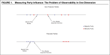
Figure 1 contains a nine-voter example of Krehbiel's argument. The figure contains two 1-dimensional spatial games where ideal points for the majority party are denoted by diamonds and for the minority party by squares. The top example depicts a situation where ideal points are not polarized. As the figure indicates, the expected outcome is the median voter's ideal point, located near the center of the plot. In the bottom example, ideal points are polarized with majority-party legislators on the left-hand side of the plot. The expected outcome is the median legislator's ideal point. However, with the change in the distribution of ideal points, the median legislator's ideal point, and, thus, the expected outcome, has shifted leftward. This shift, however, is driven by legislators' preferences, without any additional effect resulting from actions taken by party leaders.
Measuring Party Influence: The Problem of Observability in One Dimension
The concern about the observability of party influence is not a technical point. Conditional party government and Krehbiel's (1999) counterhypothesis are based on very different conceptions of the limits on majority-party action. The implicit assumption under conditional party government is that there is a wide range of enactable outcomes. The task for party leaders is to decide which of these outcomes are most acceptable to their caucus and to select procedures that generate this outcome. In contrast, in Krehbiel's model, there is only one enactable outcome—the median voter's ideal point. Thus, the majority party is fundamentally constrained by floor preferences. If majority-party leaders propose a nonmedian outcome or procedures that would lead to a nonmedian outcome, their proposal or agenda will not gain majority support.3
The only exception is whether majority party leaders have a large supply of side payments (or punishments), enough to force a majority to support a nonmedian outcome, either in an up-or-down vote or in votes to establish institutional constraints that lead to the enactment of such an outcome.
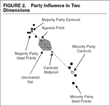
This debate provides an entry point for our analysis. Krehbiel's (1999) findings are based on a one-dimensional spatial model. The question is, does it generalize to more realistic two-dimensional situations? Our analysis begins with the premise that information on the size and location of the uncovered set in real-world legislatures offer a resolution to concerns about the observability of party influence—and a new scenario for the observable exercise of party influence. In particular, although the uncovered set is a single point in a one-dimensional game, it may well be larger in a more realistic multidimensional game. If so, the size of the uncovered set may create opportunities for agenda setting in multiple dimensions, even if it is offset toward the majority party as in a one-dimensional game. This scenario is shown in Figure 2.
Party Influence in Two Dimensions
Figure 2 gives a hypothetical configuration of ideal points and uncovered set in two dimensions for a nine-voter, polarized party legislature. The figure labels the majority and minority centroids (the average ideal point for each party), draws a dashed line between centroids, and labels the midpoint of this line. The dark region is a hypothetical uncovered set, one that is typical of the real-world data presented later. Note that the uncovered set is relatively large and offset toward the majority party. In fact, it is completely on the majority party side of the line linking the party centroids. This location implies that actual outcomes, located inside the uncovered set, will always favor majority party legislators to some extent regardless of what their leaders do—just as in Krehbiel's (1999) one-dimensional model. However, the larger size of the uncovered set creates a new opportunity for the exercise of majority-party power. Rather than allowing outcomes to be determined by unconstrained floor action, majority-party leaders can pick a point inside the uncovered set, presumably one that is close to ideal points in their caucus, and use procedural strategies that yield this outcome on the floor. One such outcome is labeled as “agenda point” in Figure 2—note that all majority-party legislators prefer this outcome to everything else in the uncovered set. Suppose that party leaders structured the legislative process to yield this outcome. If an observer considered these outcomes and knew where the uncovered set was located, he or she would conclude that the distribution of preferences conveyed a natural advantage to majority-party legislators—but that majority-party power was being exercised at the margin of this advantage.
In sum, in a one-dimensional spatial model of legislative action, it is hard to see how the majority party could influence outcomes at all. However, this result may not hold in more realistic spatial models or in the real-world legislatures they depict. Our aim here is to derive uncovered sets for a variety of real-world legislatures using two-dimensional preference data and to assess their size and location relative to the majority and minority parties, allowing a direct resolution of the party influence debate.
More specifically, our focus is on two measurements. The first is a comparison of the average distance between outcomes in the uncovered set and the ideal points of legislators in the majority and minority parties. For some legislature, let M be the set of legislators in the majority party (m in number), N be the set of minority party legislators (n in number) and U the set of outcomes in the uncovered set (u in number). Let Dij be the distance between legislator i's ideal point, ρi, and an outcome j in the uncovered set. Let Dm (Dn) denote the average distance between the ideal points of legislators in the majority (minority) party and outcomes in the uncovered set:
We express the difference in these measures as a percentage: 100·(Dn-Dm)/Dn. This measure varies from −100 to 100. If the uncovered set is equidistant from majority- and minority-party legislators, it will equal zero. If the uncovered set is closer to the majority party on average, as per Krehbiel (1999), the measure will be positive. For example, if the average distance between majority party legislators and uncovered set outcomes is half as large as the distance between these outcomes and minority party legislators, the measure will equal 50. Negative values imply that the uncovered set is closer to the minority party than to the majority party. Difference-of-means tests will be used to assess the statistical significance of the difference in average distance between the majority and minority parties.
Our second measurement focuses on the potential gains from agenda setting within the uncovered set. That is, to what extent can efforts to produce one particular uncovered set outcome improve on the situation where leaders are inactive and all uncovered set outcomes are equally possible? In general, it is not obvious which outcome will be the focus of party leaders' agenda-setting efforts. In real-world legislatures, this calculation is a complex process involving the preferences of caucus members; factional splits in the caucus; and the availability of side payments, threats, and strategic behavior on behalf of the relevant legislators. Our analysis approximates this calculation as follows. Rather than considering legislators' utilities or payoffs, we focus on distance: to what extent can agenda setting within the uncovered set bring outcomes closer to the ideal points of majority party legislators compared to the expected distance given no leadership action?4
Regardless of what legislators' utility functions look like, it seems safe to say that they prefer outcomes that are closer to their ideal points to those farther away.
We assess the potential for majority party agenda setting as follows. For a given legislature, let ρm=[sum ]i∈M ρi/m denote the center of gravity for the majority party ideal points, where ρi = (xi, yi) is a two-dimensional vector denoting legislator's i's ideal point. We interpret it as an approximation of the outcome that majority-party leaders and caucus members would like to enact if possible.5
This center of gravity of the majority party's ideal points represents the consensus in the majority party and is used to simplify calculation. Alternatives include the majority median on both dimensions or the majority party uncovered set. All of these measures yield similar results.
Let
Dmj be the distance between ρ
m and an outcome
j in the uncovered set. We calculate the average distance between ρ
m and all of the outcomes in the uncovered set and denote it by
C so that:
C=[sum ]
j∈
UDmj/(
u). This distance gives a baseline for how the majority caucus evaluates a situation where their leaders are inactive and all uncovered set outcomes are equally likely—on average, how far away are these outcomes from what caucus members would like to enact.
The next step is to determine how much party leaders can improve on this baseline. Let x ∈ U be the uncovered set outcome that is closest to ρm and denote the distance between x and ρm by Cx. Outcome x is the best that party leaders can do in terms of using agenda setting to satisfy their caucus—anything closer to ρm is outside the uncovered set and, therefore, unenactable.
Our analysis of the potential for agenda setting in a given legislature focuses on the difference between C and Cx. We scale both distances by expressing them as a percentage of the range of legislator ideal points on the x-axis to normalize the results across different legislatures and data sources. In addition, scaling provides insight into the substantive significance of the two distances and the differences between them.6
Whereas our focus here is on substantive significance, the agenda-setting results we present later are all statistically significant (difference of proportion tests) at the usual significance levels.
The theory of conditional party government would predict that a conditional party government is more likely insofar as
C is relatively large, indicating that the set of possible outcomes (the uncovered set) is relatively large and contains many outcomes that are far away from what members of the majority caucus would like to enact. Moreover, the theory would predict that conditional party government is more likely to exist insofar as
Cx is smaller than
C, implying that the potential gains from agenda setting are substantial.
UNCOVERED SETS AND CONDITIONAL PARTY GOVERNMENT
This section assesses the potential for conditional party government in contemporary legislatures by analyzing the size and location of uncovered sets for various sessions of the U.S. House of Representatives and state legislatures. Regarding our data, there is an ongoing and unresolved debate over the appropriate technique for recovering legislators' ideal points from observed behavior (votes).7
A partial list of relevant papers includes Cox and Poole 2002; McCarty, Poole, and Rosenthal 2001; Londregan 1999; Poole and Rosenthal 2001; Groseclose and Snyder 2001; and Clinton, Jackman, and Rivers 2004.
As our goal is to analyze majority party influence rather than to adjudicate among the various techniques—and because there is no consensus about which is best—we use several datasets, with the aim of showing that our results are robust to heterogeneous and diverse data sources:
8 A concern is that some of these estimates may be contaminated. Suppose party leaders are able to use side payments to force backbenchers to vote for leadership-sponsored proposals that they would otherwise oppose. Such behavior could exacerbate polarization of ideal points and shift the location of uncovered sets calculated from these ideal points. If so, an uncovered set offset toward the majority party would itself be evidence of conditional party government in action, and party influence would again be unobservable. With these concerns in mind, we replicated our analysis using data from Groseclose and Snyder (2000), who estimate two sets of ideal points for the U.S. House: one based on all votes and one based only on lopsided votes (where the winning side received more than 65% of votes cast). Lopsided votes are unlikely to have been the focus of leadership efforts (King and Zeckhauser 2003). Analysis of uncovered sets calculated from lopsided data yields results that are very similar to those presented here, suggesting that contamination is not an issue for our findings.
- Constant-space ideal points calculated using NOMINATE (Poole and Rosenthal, 1997) for the 81st, 86th, 91st, 96th, 101st, and 106th U.S. House of Representatives.
- Ideal points derived from a linear model for the same House sessions (Groseclose and Snyder 2000).
- Ideal points for the 106th House calculated with a Markov Chain Monte Carlo technique (Jackman, Clinton, and Rivers 2004).
- Ideal points for ten state legislatures from the late 1990's (Aldrich and Battista, 2002) calculated using NOMINATE.
Our analysis strategy is as follows. First, we present uncovered sets for the 106th U.S. House calculated from three different datasets. Although the distribution of ideal points and the size and location of the uncovered set vary across these plots, all show the same pattern: a substantial uncovered set that is closer to the majority-party legislators compared to those in the minority party. Our next step examines Krehbiel's (1999) conjecture about polarization and outcomes by comparing the average distance of uncovered sets to majority- and minority-party legislators. Then, we analyze the potential for agenda setting inside these uncovered sets.
The Observability of Majority-Party Power
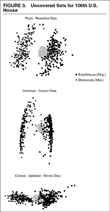
Our analysis provides strong support for the idea that when legislators are polarized by party, the uncovered set is closer to the majority party than to the minority party); thus the measurement of party influence is confounded by the majority party's natural advantage. Figure 3 gives three examples for the 106th U.S. House. The top plot in Figure 3 gives ideal points, and the uncovered set for the 106th House calculated using Poole–Rosenthal ideal points; the middle plot uses Groseclose–Snyder estimates; the bottom uses Jackman–Rivers scores. In all three plots, idea points for minority-party Democrats are denoted as diamonds and located on the left-hand side, whereas ideal points for majority-party Republicans are squares on the right-hand side. The shaded region is the uncovered set estimated using our grid-search procedure.
Uncovered Sets for 106th U.S. House
The plots show that the different ideal point estimation techniques yield different results, both in terms of the preferences ascribed to each legislator and in terms of the uncovered sets calculated from these ideal points. Such variation may be due to differences in the estimation techniques, or auxiliary assumptions such as the salience of each dimension or the exclusion of certain votes (Jackman, personal communication). Even so, the uncovered sets are similar in two important respects. First, they are not located in the center of the distributions of ideal points. Rather, they are shifted toward the cluster of majority-party ideal points. In addition, the plots reveal that the uncovered sets are fairly substantial in size, occupying about 10% of the Pareto Set. In other words, the intuition of the MVT, that only one outcome is enactable, does not hold in more realistic multidimensional spatial games. This finding is consistent with our hypothesis about the potential gains from agenda setting.
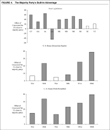
Figure 4 expands our analysis of the location of uncovered sets in real-world legislatures by reporting the relative position of the uncovered set in eleven U.S. state legislatures and six sessions of the U.S. House. As noted earlier, we have two sets of ideal points for five House sessions and three sets for one session. We omit the single data point from Jackman, Clinton, and Rivers, 2004 in this and subsequent figures; however, these data are consistent with those presented here.
The Majority Party's Built-in Advantage
The number reported for each legislature is the ratio of the average distance between majority-party legislators and uncovered set outcomes,Dm=[sum ]i ∈ M,j∈ UDij/(m·u), and the average distance between minority-party legislators and uncovered set outcomes, Dn=[sum ]i ∈ N,j∈ UDij/(n·u), expressed as a percentage 100·(Dn-Dm)/Dn. For clarity, we present plots for different venues (state legislatures vs. the U.S. House) and different methods of calculating ideal points (Heckman–Snyder vs. Poole–Rosenthal). Percentage difference bars that are statistically significant at .05 or better are in dark color; empty bars reflect lower significance levels.
As the figure shows, with one exception, all of the legislatures in our analysis have uncovered sets that are closer on average to majority-party legislators than to legislators in the minority party.9
The exception is the Louisiana state house, where the majority party has nearly 80% of the seats. The level of polarization in this legislature is also the lowest of all of the cases in our analysis. We conjecture that in one-party legislatures, the logic of cross-party competition breaks down and conditional party government involves a faction within the majority, or a cross-party coalition, a speculation consistent with Jenkins and Weidenmier's (1999) analysis of the early-1800s U.S. Congress.
Note that in both congressional plots, the offset of the uncovered set increases over time, suggesting that at least part of the apparent increase in party influence in the postwar House is due to the polarization of the party caucuses.
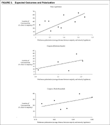
Figure 5 extends the analysis, showing that the position of the uncovered set relative to the majority and minority parties is influenced by polarization: as the average distance between majority- and minority-party legislators increases, the uncovered set moves relatively closer to the majority party.
Expected Outcomes and Polarization
These findings about the location of uncovered sets in real-world legislatures suggest that concerns over the observability of party influence are well founded. Regardless of whether preferences are specified using one dimension or two, when legislators are polarized by party, the set of feasible outcomes favors is closer to the majority party. Thus, an observer who considered actual outcomes relative to legislators' ideal points without examining the uncovered set would conclude that the location of these outcomes indicated a majority-party cartel at work, when in fact party leaders might be inactive or powerless. In this sense, our analysis provides a partial confirmation of Krehbiel's (1999) conjecture concerning the observability of party influence.
Agenda-Setting and Majority-Party Influence
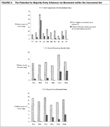
The fact that polarization gives the majority party a built-in advantage in terms of outcomes does not imply that conditional party government is impossible. As noted earlier, when the uncovered set contains many outcomes, majority party leaders can pick one and formulate an agenda that yields this outcome as the result of majority-rule voting. Earlier, we described distance measures that characterized this potential. Figure 6 reports these measures for the three datasets in our analysis—again, we separate results by estimation method and venue.
The Potential for Majority-Party Influence via Movement within the Uncovered Set
The results highlight the potential for agenda-setting: in all cases, the uncovered set outcome that is closest to the majority-party consensus is noticeably closer than the average uncovered set outcome. For example, in the case of the 106th House using the Groseclose–Snyder data, the average distance of uncovered set outcomes to the caucus center of gravity point, ρm, is about 25% of the x-axis range (note the uncovered set for this session is shown in Figure 3). However, by using an agenda strategy that yields the closest possible uncovered set outcome, majority party leaders can cut this distance in half: the distance between the majority center of gravity and this outcome is only 13% of the x-axis range. Additional analysis—omitted here, but available on request—shows that the difference in the two distances is higher given higher levels of polarization.
In substantive terms, these results show that in real-world legislatures, by choosing an appropriate agenda, party leaders can move legislative outcomes considerably closer to the preferences of their caucus compared to the expected results given leader inaction. Because these efforts involving movement within the uncovered set—that is, selecting one enactable outcome and devising an agenda that yields it—this potential for majority-party influence exists at the margin of whatever inherent advantages are conveyed to the majority by the location of the uncovered set.
The charts also show that the potential gains from agenda setting vary across legislatures. For example, among the state legislatures, some states (e.g., Maine) have uncovered sets that are close to the majority caucus to begin with (low C), whereas in others, the uncovered set lies farther away (e.g., Connecticut, where C is high). Similarly, in some states, agenda setting provides relatively substantial gains over the situation where leaders are inactive (e.g., Vermont; note the difference between C and Cx), whereas in other states the gains are more modest (e.g., South Carolina, where C and Cx are similar).
These results suggest that the value of conditional party government is not the same for all legislatures. Polarization may be a necessary condition for conditional party government to operate, but it is not sufficient. Depending on the distribution of legislators' preferences, both the level of disagreement between the parties and the level of agreement within the majority party, legislators in the majority caucus may decide that the range of outcomes that are possible given an inactive leadership are sufficiently good that the cost of empowering leaders outweighs the gains.
More generally, the data in Figure 6 only describe the potential gains from agenda setting. There is no assurance that the majority caucus will agree on which outcome to implement or that party leaders will respond to a caucus mandate by devising appropriate agenda strategies. What these results establish is that in a realistic model of the legislative process, the potential exists for the majority party to use its control over legislative procedures to make real improvements in legislative outcomes—improvements that occur at the margin of whatever advantages are conveyed to the majority party by polarization.
DISCUSSION
This paper aims at resolving the debate over majority party influence in contemporary American legislatures. Our use of new analytic techniques enabled us to begin with a better model of legislative proceedings—to abandon simple one-dimensional spatial models in favor of more realistic two-dimensional versions. Our conclusions are based on the analysis of real-world data rather than on arguments about the relative merits of different theoretic assumptions.
Our analysis confirms that when legislators' preferences are polarized, outcomes will generally be closer to the majority party's wishes, even if the majority party leadership does nothing to influence the process by which proposals are offered, amended, and voted on. Put another way, even in a multidimensional model of legislative proceedings, a single-minded focus on outcomes and preferences will tend to overstate the majority party leadership's influence over the legislative process.
However, our analysis also shows that at the margin of the majority party's natural advantage in a polarized legislature, agenda-setting remains an efficacious strategy. Previous analyses of conditional party government, which framed the legislative process in terms of a single policy dimension, assumed this possibility away, for in these settings, party leaders' only option is to accede to the preferences of the median floor legislator. Our work analyzes party influence using a two-dimensional framework, exploiting a new technique for determining enactable outcomes, or the uncovered set, given real-world preference data.
We find that for all of the legislatures analyzed here, the potential exists for majority party leaders to use agenda-setting strategies to move outcomes closer to the preferences of their caucus. The magnitude of these potential gains varies across legislatures but always exists to some degree.
The limits of our findings bear emphasis. As noted earlier, the potential for party influence varies across legislatures, most notably with the distribution of legislators' preferences, which in turn shape the size and location of the uncovered set. Moreover, our analysis has only considered the potential for party influence—we have not examined whether majority-party leaders actually implement, or try to implement, agenda setting strategies. Finally, our analysis says nothing about other mechanisms of majority-party influence, such as strategies involving committee jurisdictions or assignments.
Notwithstanding these caveats, this paper shows that conditional party government is more than a description of how real-world legislatures appear to operate. Rather, the theory's expectations of how the majority party shapes legislative proceedings, as well as its claims about the potential gains from these strategies, are consistent with over two generations of work on spatial models of legislative action and supported by empirical analysis. With this rationale in hand, the next step is to begin the systematic testing of hypotheses about majority-party influence.






Comments
No Comments have been published for this article.