Bladder cancer is the seventh most common cancer in the United Kingdom, affecting more than 10,000 people each year (3). The majority of diagnosed patients (75–85 percent) present with nonmuscle invasive disease, which is characterized by a probability of recurrence at 5 years of 31–78 percent (Reference Babjuk, Oosterlinck and Sylvester1). Flexible cystoscopy and voided urine cytology are currently the initial investigations of choice for patients with symptoms suggestive of bladder cancer. If flexible cystoscopy confirms a bladder tumor or urine cytology shows malignant cells in the absence of an upper urinary tract urothelial tumor, a rigid white light cystoscopy (WLC) under general or regional anesthesia is performed with transurethral resection of bladder tumor (TURBT) where applicable.
The ultimate goal in the management of nonmuscle invasive transitional cell carcinoma (TCC) of the bladder is the prevention of disease recurrence and progression. Early cancer detection is an essential prerequisite of successful therapy. Unfortunately, small papillary bladder tumors and flat urothelial tumors such as carcinoma in situ (CIS) can easily be overlooked during conventional WLC. Indeed, many of the recurrent tumors may be due to the persistence of residual tumor in the bladder after an incomplete TURBT. Moreover, progression to muscle invasive or metastatic TCC is more likely to occur in those with concomitant CIS (Reference Babjuk, Oosterlinck and Sylvester1). Nonmuscle invasive TCC of the bladder is one of the most expensive cancers to manage on a per patient basis, because of its high prevalence, high recurrence rate and the need for long-term cystoscopic surveillance. The total cost of treatment and 5-year follow-up of patients with nonmuscle invasive bladder cancer diagnosed during 2001–02 in the United Kingdom was over £35 million (Reference Sangar, Ragavan, Matanhelia, Watson and Blades13).
Photodynamic diagnosis (PDD) is a technique that has been proposed to enhance tumor detection and resection. The principle of PDD is based on the interaction between a photosensitizing agent with a high uptake by tumor cells and light with an appropriate wavelength, which is absorbed by the agent and re-emitted with a different wavelength (Reference Zaak, Karl and Knuchel18). We carried out a systematic review of the literature to assess the diagnostic performance of PDD compared with rigid WLC and its effects on patient outcomes.
METHODS
Search Strategy
Highly sensitive electronic searches, using both controlled vocabulary and free text terms, were undertaken. The search strategies were originally developed for a systematic review (Reference Mowatt, Zhu and Kilonzo12) with a wider scope than this review and were designed to include retrieval of studies that assessed selected biomarker tests as well as PDD. We searched Medline (1966 – March Wk 3 2008), Medline In-Process (1st April 2008), Embase (1980 – Wk 13 2008), Biosis (1985 – 27th March 2008), Science Citation Index (1970 – 1st April 2008), Health Management Information Consortium (March 2008), Cochrane Controlled Trials Register (The Cochrane Library, Issue 1 2008) as well as current research registers (National Research Register Archive (September 2007), Current Controlled Trials (March 2008), Clinical Trials (March 2008), and WHO International Clinical Trials Registry (March 2008). Additional databases searched included the Cochrane Database of Systematic Reviews (The Cochrane Library, Issue 1, 2008), Database of Abstracts of Reviews of Effectiveness (March 2008), HTA Database (March 2008), and Medion (March 2008). Searches were restricted to English language publications. Details of the full strategies used for each database are available from the authors. Reference lists of all included studies were scanned to identify additional potentially relevant studies.
Study Selection
We included studies that assessed the test performance or clinical effectiveness of PDD compared with WLC in people suspected of having bladder cancer or previously diagnosed with nonmuscle invasive bladder cancer and on follow-up cystoscopic examination. For test performance both randomized and observational (diagnostic cross-sectional or case-control) studies were included. However, case-control studies in which the controls were healthy volunteers were excluded. The reference standard was histopathological examination of biopsied tissue and studies had to report or allow the calculation of true and false positives and negatives. For assessment of clinical effectiveness, we included only randomized controlled trials (RCTs) and the outcomes considered were residual tumor at check cystoscopy, recurrence of bladder cancer over time after initial resection, and progression to muscle invasive disease.
Data Abstraction and Quality Assessment
One reviewer screened the titles (and abstracts if available) of all reports identified by the search strategy. Full-text copies of all studies deemed to be potentially relevant were obtained, and two reviewers independently assessed them for inclusion. One of three reviewers extracted details of study design, participants, index, comparator and reference standard tests and outcome data, and another checked the data extraction. Disagreements were resolved by consensus or arbitration by another reviewer.
Two reviewers independently assessed the quality of the included studies using a version of the quality assessment of diagnostic accuracy studies (QUADAS) tool adapted to make it more applicable for assessing reports of tests for bladder cancer. QUADAS is a quality assessment tool for use in systematic reviews of diagnostic studies (Reference Whiting, Rutjes, Reitsma, Bossuyt and Kleijnen17), but it is designed to be adapted to make it applicable to a specific review topic. Disagreements were resolved by consensus or arbitration by a third reviewer.
Quantitative Data Synthesis
For studies of test performance, separate summary receiver operating characteristic (SROC) curves were derived for patient and biopsy level analysis. These meta-analysis models were fitted using the hierarchical summary receiver operating characteristic (HSROC) model (Reference Macaskill10) in SAS 9.1. Summary sensitivity, specificity, positive and negative likelihood ratios, and diagnostic odds ratios (DORs) for each model were reported as point estimate and 95 percent confidence interval (CI). Due to the clustering of biopsies within patients, the intervals from the biopsy level analyses were expected to be an underestimate of the true uncertainty.
For studies reporting clinical effectiveness, dichotomous outcome data were combined as relative risk (RR). In the absence of statistical heterogeneity, which was explored using chi-squared tests, I2 statistics, and visual inspection, a fixed effect model was used. Where there was evidence of heterogeneity, data were analyzed using a random effects meta-analysis.
RESULTS
Trial Flow
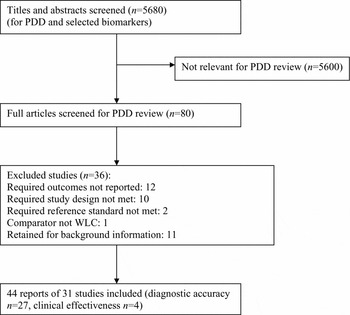
Figure 1 shows the flow of studies through the review. A list of the included diagnostic studies is shown in Supplementary Table 1, which can be viewed online at www.journals.cambridge.org/thc2011001, and a list of the included effectiveness studies is shown in Supplementary Table 2, which can be viewed online at www.journals.cambridge.org/thc2011001.
Flow of studies through review process. PDD, photodynamic diagnosis; WLC, white light cystoscopy.

Study Characteristics and Methodological Quality
The twenty-seven diagnostic studies, published in thirty-six reports enrolled 2,949 participants, with 2,807 contributing to the analysis. Across nineteen studies (2,327 participants) reporting this information, 41 percent of the patients (n = 946) were first time presenters with symptoms suspicious of bladder cancer while 59 percent (n = 1,381) had previously diagnosed bladder cancer. Further details of the diagnostic studies are shown in Supplementary Table 3, which can be viewed online at www.journals.cambridge.org/thc2011001.
In the four RCTs reporting effectiveness outcomes, published in eight reports, the groups were randomized to WLC or PDD, whereas in the other studies, the groups were randomized to WLC or WLC and PDD. In Babjuk and colleagues (Reference Babjuk, Soukup, Petrik, Jirsa and Dvoracek2), 33 percent (20/60) of the PDD group and 45 percent (28/62) of the WLC group were newly presenting with symptoms suspicious of bladder cancer, whereas 67 percent (40/60) of the PDD group and 55 percent (34/62) of the WLC group had previously diagnosed bladder cancer. The remaining studies did not report this information. All four studies used 5-aminolaevulinic acid (5-ALA) as the photosensitizing agent. The follow-up periods for the studies were 8 years, 5 years, 2 years, and 10 to 14 days. Kriegmair and colleagues (Reference Kriegmair, Zaak and Rothenberger8) only aimed to evaluate residual tumor after TURBT. Further details of the effectiveness studies are shown in Supplementary Table 4, which can be viewed online at www.journals.cambridge.org/thc2011001.
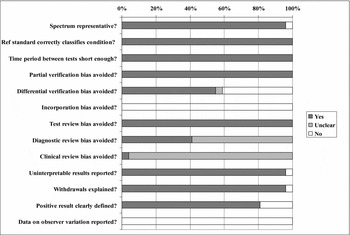
Figure 2 summarizes the results of the quality assessment for the diagnostic studies. In all studies, partial verification bias (all patients received a reference standard test) and test review bias (PDD and WLC were interpreted without knowledge of the results of the reference standard) were avoided. However, all studies were judged to suffer from incorporation bias, in that PDD was considered not to be independent of the reference standard test, as biopsies used in the reference standard test were obtained by means of the PDD procedure. In all four studies reporting effectiveness outcomes, it was unclear whether the sequence generation was really random or the treatment allocation was adequately concealed or whether outcomes assessors, care providers, or patients were blinded.
Summary of quality assessment of the diagnostic studies (n = 27).

Quantitative Data Synthesis
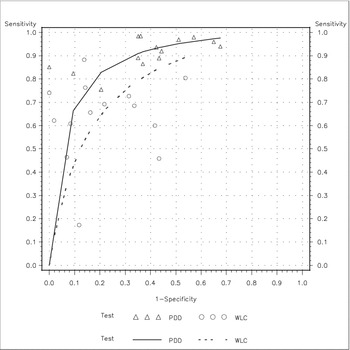
Diagnostic Performance. In the pooled estimates for patient level analysis, based on evidence from five studies, PDD had higher sensitivity than WLC (92 percent, 95 percent CI, 80–100 percent versus 71 percent, 95 percent CI, 49–93 percent) but lower specificity (57 percent, 95 percent CI, 36–79 percent versus 72 percent, 95 percent CI, 47–96 percent). In the pooled estimates for biopsy level analysis, based on evidence from 14 studies, PDD also had higher sensitivity than WLC (93 percent, 95 percent CI, 90–96 percent versus 65 percent, 95 percent CI, 55–74 percent) but lower specificity (60 percent, 95 percent CI, 49–71 percent versus 81 percent, 95 percent CI, 73–90 percent). Figure 3 shows the SROC plot for studies reporting biopsy-level analysis.
SROC plot for biopsy level analysis (n = 14 studies). SROC, summary receiver operating characteristic; PDD, photodynamic diagnosis; WLC, white light cystoscopy.

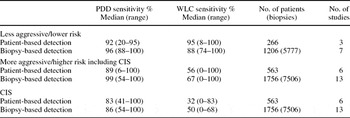
Across studies, the median sensitivity (range) of PDD compared with WLC for detecting lower risk, less aggressive tumors was broadly similar for patient level detection but higher for PDD for biopsy level detection (Table 1). However, for the detection of more aggressive, higher risk tumors, the median sensitivity of PDD for both patient and biopsy level detection was higher than WLC. The higher sensitivity of PDD was also reflected in the detection of CIS alone, both for patient and biopsy level detection (Table 1).
Sensitivity of PDD and WLC in Detecting Stage/Grade of Tumor

Notes. The number of biopsies is the overall total reported by the studies. Number of biopsies: In some studies, more biopsies were taken for PDD than WLC and in these cases the higher number used for PDD has been used in the table. In the less aggressive/lower risk category, Hendricksen and colleagues (Reference Hendricksen, Moonen, Heijden and Witjes4) reported 217 biopsies for PDD and 123 for WLC while Koenig and colleagues (Reference Koenig, McGovern and Larne7) reported 130 biopsies for PDD and 67 for WLC. Hendricksen and colleagues and Koenig and colleagues were also included in the more aggressive/higher risk category, as was Jichlinski and colleagues (Reference Jichlinski, Wagnieres and Forrer5), who reported 421 biopsies for PDD and 414 for WLC. The studies by Hendricksen and colleagues, Jichlinski and colleagues, and Koenig and colleagues were also among those reporting detection of CIS.
PDD, photodynamic diagnosis; WLC, white light cystoscopy; CIS, carcinoma in situ.
Type of Photosensitising Agent. Most studies (n = 18) used 5-ALA as the photosensitizing agent, whereas five used hexaminolaevulinate (HAL), two used hypericin and two used either 5-ALA or HAL. In patient-based detection of bladder cancer, across four studies using 5-ALA and three using HAL, the median (range) sensitivity and specificity for 5-ALA was 96 percent (64–100 percent) and 52 percent (33–67 percent), respectively, compared with 90 percent (53–96 percent) sensitivity and 81 percent (43–100 percent) specificity for HAL. In biopsy-based detection of bladder cancer, across fifteen studies using 5-ALA, the median (range) sensitivity and specificity for 5-ALA was 95 percent (87–98 percent) and 57 percent (32–67 percent), compared with 85 percent (76–94 percent) and 80 percent (58–100 percent) for HAL.
Clinical Effectiveness. All four studies, involving 544 patients, reported residual tumor rate (pTa and pT1). The timing of cystoscopy after TURBT ranged from 10–14 days to 10–15 weeks after the initial resection. Compared with WLC, the use of PDD was associated with statistically significantly fewer residual pTa and pT1 tumors (RR, 0.32; 95 percent CI, 0.15–0.70 and RR, 0.26; 95 percent CI, 0.12–0.57, respectively), with an overall RR of 0.37 (95 percent CI, 0.20–0.69). Two studies involving 313 patients reported recurrence-free survival at 12 and 24 months. In the pooled estimates, there was a statistically significant difference in favor of PDD at 24 months (RR, 1.37; 95 percent CI, 1.18–1.59) but not at 12 months (RR, 1.40; 95 percent CI, 0.96–2.03). The benefits of using PDD at TURBT in reducing tumor recurrence (pooled estimate RR, 0.64; 95 percent CI, 0.39–1.06) and progression (pooled estimate RR, 0.57; 95 percent CI, 0.22–1.46) in the longer term were less clear, with the effect estimates favoring PDD without reaching statistical significance.
DISCUSSION
Statement of Principal Findings
The pooled estimates for both patient and biopsy level analysis showed that PDD had higher sensitivity than WLC for detecting bladder cancer, but lower specificity. PDD also had a much higher sensitivity than WLC in the detection of more aggressive, higher risk tumors, including the detection of CIS alone. With regard to effectiveness outcomes, compared with WLC the use of PDD during TURBT resulted in a statistically and clinically significant reduction in residual pTa and pT1 tumors, longer recurrence-free survival of patients at 2 years after surgery, and a longer interval between TURBT and tumor recurrence. There was no clear evidence of a difference between PDD and WLC for the outcomes of tumor recurrence and progression in the longer term. These results should be interpreted with caution as they are based on only a small number of studies.
Adjuvant single-dose chemotherapy administered within the first 24 hours and ideally within the first 6 hours after TURBT is standard practice in the United Kingdom and much of Europe and was shown in a meta-analysis to reduce the relative risk of recurrence by 39 percent with a median follow-up of 3.4 years (Reference Sylvester, Oosterlinck and Van Der Meijden16). The administration of adjuvant intravesical therapy varied across the four RCTs, and this made it more difficult to assess what the true added value of PDD might be in reducing bladder tumor recurrence rates in routine practice. Although single-dose intravesical chemotherapy can chemoresect small residual papillary marker lesions (Reference Masters, Popert and Thompson11), it is known to be insufficient treatment for patients with intermediate and high-risk tumors including concomitant CIS, the types more likely to be detected by PDD (Reference Sylvester and Oosterlinck15).
Strengths and Limitations of the Study
In terms of strengths, a recently recommended HSROC model was used which takes account of the trade-off between true and false positives and models between study heterogeneity (Reference Leeflang, Deeks, Gatsonis and Bossuyt9). Pooled estimates of both patient and biopsy level detection were undertaken. However, biopsy level estimates were likely to be an underestimate of the true uncertainty due to clustering of biopsies within patients. For reports of clinical effectiveness, we focused on RCTs. In terms of limitations, non-English language studies were excluded. Based on screening English language titles or abstracts, our searches identified thirty-three non-English language studies relating to PDD, some of which may have otherwise met the inclusion criteria.
Implications for Practice and Research
Our results suggest that the appropriate point in the clinical pathway for PDD to be used is in conjunction with rigid WLC during the initial TURBT, and possibly also in conjunction with rigid WLC during surveillance monitoring of high risk patients. The advantages of higher sensitivity (fewer false-negative results, better detection of higher risk tumors) of PDD compared with WLC have to be weighed against the disadvantages of lower specificity (more false-positive results, leading to additional unnecessary biopsies, potentially additional unnecessary investigations, and the resulting anxiety caused to patients and their families). In terms of the photosensitizing agents used, HAL would result in fewer false positives than 5-ALA (based on data for both patient and biopsy-level analyses), although it is possible that other factors apart from the agent used may also have contributed to the specificity values reported.
The literature continues to develop with regard to PDD in conference abstracts. The study by Stenzl and colleagues (Reference Stenzl, Roessler and Fradet14) is noteworthy because it reports for the first time a HAL-based phase III multicenter RCT (PC B305) with clinical effectiveness outcomes. Of 766 patients randomized in twenty-eight European and US centers, the recurrence rate at 9 months was 36 percent after HAL-based TURBT and 46 percent after WLC-assisted TURBT (p = .029). Although full publication is awaited, the Food and Drug Administration in December 2009 approved HAL as an adjunct to WLC in the detection of nonmuscle invasive bladder cancer.
We are aware of one other systematic review of PDD in nonmuscle invasive bladder cancer, that by Kausch and colleagues (Reference Kausch, Sommerauer and Montorsi6). Although Kausch and colleagues considered studies published in English, French, or German, of twenty-one reports of seventeen trials included, only two were non-English language (both German). Their review presented a patient-based meta-analysis of additional detection rate of PDD compared with WLC and considered effectiveness outcomes such as residual tumor and recurrence-free survival but did not report diagnostic accuracy measures such as sensitivity and specificity. However, similar to our review, Kausch and colleagues (Reference Kausch, Sommerauer and Montorsi6) concluded that PDD detects more patients with bladder tumors, especially more with CIS, than WLC, and that more patients have a complete resection and a longer recurrence-free survival when diagnosed with PDD.
Further research is needed in the form of RCTs comparing PDD alone, with PDD or rigid WLC plus single-dose adjuvant chemotherapy at TURBT in patients presumed to have nonmuscle invasive bladder cancer. Study design should take into account participant risk factors, for example smoking and age, and allow outcomes to be reported based on risk categories at randomization. Clinical effectiveness outcomes should include residual tumor rates at first check cystoscopy, recurrence-free survival, tumor recurrence rates, time to first recurrence, and progression. Provision should be made for longer term (up to 10 years) follow-up.
SUPPLEMENTARY MATERIAL
Supplementary Table 1
Supplementary Table 2
Supplementary Table 3
Supplementary Table 4
CONTACT INFORMATION
Graham Mowatt, MBA (g.mowatt@abdn.ac.uk), Senior Research Fellow, Health Services Research Unit, University of Aberdeen, 3rd Floor, Health Sciences Building, Foresterhill, AB25 2ZD Aberdeen, United Kingdom
James N'Dow, MBChB, MD, FRCS (Ed), FRCS (Urol) (j.ndow@abdn.ac.uk), Professor of Urology, Academic Urology Unit, University of Aberdeen, 2nd Floor, Health Sciences Building, Foresterhill AB25 2ZD Aberdeen, United Kingdom; Consultant Urological Surgeon, Department of Surgery, Aberdeen Royal Infirmary, Foresterhill, Aberdeen, United Kingdom, AB25 2ZN
Luke Vale, PhD (l.vale@abdn.ac.uk), Professor of Health Technology Assessment, Health Services Research Unit/Health Economics Research Unit, University of Aberdeen, 3rd Floor, Health Sciences Building, Foresterhill, AB25 2ZD Aberdeen, United Kingdom
Ghulam Nabi, MBChB, MS, MD, MCh, FRCS (Urol) (g.nabi@dundee.ac.uk), Senior Clinical Lecturer in Surgical Uro-oncology, Centre for Academic Clinical Practice, University of Dundee; Consultant Urological Surgeon, Department of Urology, Ninewells Hospital, DD1 9SY Dundee, United Kingdom
Charles Boachie, MSc (c.boachie@abdn.ac.uk), Statistician, Jonathan A. Cook, PhD (j.a.cook@abdn.ac.uk), Statistician, Cynthia Fraser, MA (Hons) (c.fraser@abdn.ac.uk), Information Specialist, Health Services Research Unit, University of Aberdeen, 3rd Floor, Health Sciences Building, Foresterhill, AB25 2ZD Aberdeen, United Kingdom
T. R. Leyshon Griffiths, BSc, MBBS, MD, FRCSEd (Urol) (trlg1@leicester.ac.uk), Senior Lecturer and Honorary Consultant Urological Surgeon, Department of Cancer Studies and Molecular Medicine, University of Leicester, Clinical Sciences Unit; Senior Lecturer and Honorary Consultant Urological Surgeon, Department of Urology, University Hospitals of Leicester NHS Trust, Leicester General Hospital, Clinical Sciences Unit, Gwendolen Road, LE5 4PW Leicester, United Kingdom
CONFLICT OF INTEREST
G Mowatt, J N'Dow, L Vale, G Nabi, C Boachie, JA Cook, and C Fraser report their institutions have received funding from the UK National Institute for Health Research for this work. G Nabi's institution has received funding for lecture from GE Healthcare. TRL Griffiths has received payments for development of educational presentations and programmes and for manuscript preparation from GE Healthcare.