Infection following paediatric cardiopulmonary bypass surgery is an ongoing challenge with a prevalence of 8.7–38%. Reference Seguela, Joram and Romefort1,Reference Valera, Scolfaro and Cappello2 Post-operative sepsis after cardiac surgery is associated with adverse neurocognitive outcomes in early life. Reference Sidhu, Joffe and Doughty3 Mortality of children with healthcare-associated infection after cardiac surgery reached 24.4% in a large cohort study. Reference Alten, Rahman and Zaccagni4 In particular, neonates and infants who undergo cardiac surgery incur a significant risk of infectious morbidity and mortality compared to older children. Reference Alten, Rahman and Zaccagni4
Open chest, corticosteroid treatment, wound infection, and multiple invasive medical devices that bypass normal host defence mechanisms contribute to infectious morbidity. Reference Alten, Rahman and Zaccagni4,Reference Mastropietro, Barrett and Davalos5 This leads to the post-operative phenotype of a peripheral immunosuppression which may foster the occurrence of infection. Reference Tarnok and Schneider6–Reference Yamaguchi, Murakami and Fukahara9
On the other hand, the infant’s blood is exposed to the non-endothelialised surface of the extracorporeal circulation which triggers the activation of proinflammatory cytokines and leads to SIRS. Reference Millar, Fanning and McDonald10 Endotoxemia, ischaemia, reperfusion injury, and surgical trauma promote the inflammatory process following CPBP surgery. Reference Paparella, Yau and Young11 Signs and symptoms of post-operative infection and sepsis are similar to the non-specific post-operative inflammatory response. Therefore, clinicians are in a precarious situation to distinguish both entities.
Although laboratory turnaround times have improved, it still takes up to 48 hours to confirm infection by bacterial cultures. Early initiation of empiric antibiotic therapy, following the paradigm “hit hard and early” saves a life, if the infection is present. On the contrary, this policy contributes to the overuse of antibiotics which is clearly linked to alterations in the intestinal microbiota, overgrowth of opportunistic pathogens and the development of antimicrobial resistance. Reference Tacconelli, De Angelis and Cataldo12,Reference Bhalodi, van Engelen and Virk13 This is of concern, as infections by multidrug-resistant organisms and fungal infections are difficult to treat.
Inflammatory markers including white blood cells, neutrophils, platelets, CRP, and procalcitonin have been extensively studied after CPBP surgery in children. Reference Davidson, Tong and Hauck14–Reference Pérez, Rodríguez-Fanjul and García21 Attempts to identify a single available biomarker threshold to accurately predict the presence of infection has failed. Nevertheless, longitudinal observations and combinations of biomarkers, especially within a diagnostic algorithm seem helpful to withhold or stop antibiotics sooner. Reference McMaster, Park and Shann16,Reference Franz, Bauer and Schalk22
Diagnostic accuracy of commonly available biomarkers can be improved if two aspects are considered. First, neonates and infants physiologically bear an increased risk for severe infection in early life due to complex immunoregulatory processes. Reference Kollmann, Kampmann and Mazmanian23 Consequently, the immunological response to CPBP surgery differs from older children and post-operative infection occurs more frequently in neonates and infants. Reference Seguela, Joram and Romefort1,Reference Levy, Ovadia and Erez24 Therefore, analysis of biomarkers will be more robust, if referring to neonates and infants only. Second, time span after CPBP surgery influences biomarker kinetics, even in an uneventful post-operative course. Reference Boehne, Sasse and Karch25,Reference Boralessa, de Beer and Manchie26 Therefore, it seems important to distinguish biomarker kinetics of infections between the early and late post-operative periods.
The primary objective of this study was to assess the kinetics and predictive value of CRP for bacterial infection in neonates and infants in the early (post-operative day 0–4) and late (POD 5–28) period after CPBP surgery. Secondary objectives were to determine the type and timing of post-operative infection and the frequency of infection related to the risk adjustment for congenital heart surgery (RACHS-1) score. Reference Jenkins, Gauvreau and Newburger27
Materials and methods
Study design
We designed a retrospective cohort study at the multidisciplinary PICU of the University Children’s Hospital Tübingen, Germany, a tertiary paediatric centre performing about 180 CPBP surgeries annually. All infants who underwent CPBP surgery at the Department of Cardiac Surgery and Pediatric Cardiology between August 31, 2012 and October 28, 2015 were screened. Out of 582 cases, 266 were excluded because of age older than 1 year, 56 because heart surgery was performed without CPBP. Another 25 cases were excluded because of insufficient laboratory data or readmission within less than 1 week or infection prior to surgery. One-hundred and ninety-one patients accounting for 235 episodes of CPBP surgery were finally analysed (Supplement 1).
Operative management
Anaesthesia was induced IV, and maintained using a balanced anaesthesia technique with sevoflurane up to 1% minimum alveolar concentration and a continuous application of fentanyl (up to 0.5 μg/kg/minute) or sufentanil (1–1.4 μg/kg/hour). CPBP was performed using a Stöckert S5 roller pump (Stöckert, Munich, Germany). The priming solution consisted of a balanced crystalloid solution (Jonosteril®, Fresenius Kabi, Bad Homburg, Germany). Packed red blood cells were administered if the blood volume was too low. Biventricular repair surgery was performed on continuous moderate hypothermia, using a pH-stat blood gas management. Modified ultrafiltration was performed in all patients after CPBP.
Data collection and analysis of blood samples
Demographic, anthropometric, and perioperative data were retrieved from patient medical records of the hospital information system (i.s.h. med, SAP). Vital signs, PICU length of stay, and ventilated days were extracted from the clinical decision support and documentation system (IntelliSpace Critical Care and Anesthesia, Philips Healthcare). Microbiological findings and blood results including CRP were extracted from the hospital laboratory order communication system (LAURIS, nexus/Swisslab). Collection and analysis of blood samples were routinely performed according to the local protocol 6 hours after surgery and then daily within the first 5 days after surgery. Thereafter, blood was drawn if an infection was suspected. CRP was determined quantitatively by an immunoturbidimetric assay (ADVIA 1650, Siemens).
Definition of SIRS and infection
SIRS, infection, and sepsis were defined according to the International Consensus Conference on Pediatric Sepsis using age-appropriate references. Reference Goldstein, Giroir and Randolph28 Since almost all infectious diagnoses in the study setting were nosocomial infections (acquired >48hours after admission to the hospital), we used the definition for surveillance of nosocomial infections of the German public health institute which do correspond to the Centers for Disease Control and Prevention’s Infection Definitions and Criteria for pneumonia, urinary tract infection, wound infection, and other infectious diagnoses. 29,30
An infectious or inflammatory episode was defined as a rise in CRP of at least 2 mg/dl per day. Every episode was analysed until day 28 post-operatively and classified by a three-step process. First, each case was reviewed and classified as infected or non-infected according to the above-mentioned criteria. Cases were then discussed with a PICU physician if there was any difference between the infectious diagnosis in the medical record and the retrospective diagnosis according to the above-mentioned criteria. Third, doubtful cases were reviewed independently by a PICU consultant and a paediatric infectious disease specialist to finally determine the infectious status.
To determine the infectious status, both reviewers agreed to consider the following aspects in each doubtful episode: additional laboratory parameters apart from CRP, clinical signs of infection, for example, fever, overall clinical course in agreement with the course of a bacterial infection, microbiological results, radiological results, clinical features that could explain an inflammatory reaction. Differences were solved by discussion. Detailed information about the doubtful cases is provided in Supplement 4. Infectious and non-infectious episodes were divided into an “early group” until day 4 post-operatively and a “late group” from day 5 and beyond after CPBP surgery. We chose the cut-off for the “early and late group” between POD 4 and POD 5 because post-operative CRP peaks on POD 23 and is elevated until POD 5 as this reflects the inflammatory process within the “early” period and there is no verifiable inflammatory response from CPBP surgery after POD 5 in the “late” period. Reference McMaster, Park and Shann16,Reference Li, Wang and Li31
Statistical methods
Primary outcome measures were levels and kinetics of CRP in the first 28 days after CPBP surgery in infected and non-infected patients and its predictive value for infection. Secondary outcome measures were frequency of infection types, and occurrence of early or late infection in relation to RACHS-1 score. Data analysis was performed in consultation with the Department of Biometrics of the University of Tübingen and Microsoft® Excel, Version 16.12 and IBM® SPSS® Statistics Version 22 for Windows were used.
Categorical data were compared using the χ 2 test or Fisher’s exact test for small expected observations. The non-parametric Mann–Whitney U-Test or KruskalWallis Test was used for intergroup comparison of non-normally distributed, continuous variables and Student’s t-test for normally distributed continuous variables. A probability of p < 0.05 was defined as statistically significant.
Receiver operating characteristics were constructed and optimal cut-off points for each marker or combination of markers were chosen from the ROC curve. Cut-off points were used for the calculation of the positive and the negative predictive values. The study was approved by the local ethical review board at the University Hospital Tübingen (project No. (393/2016BO2) with a waiver of informed consent.
Results
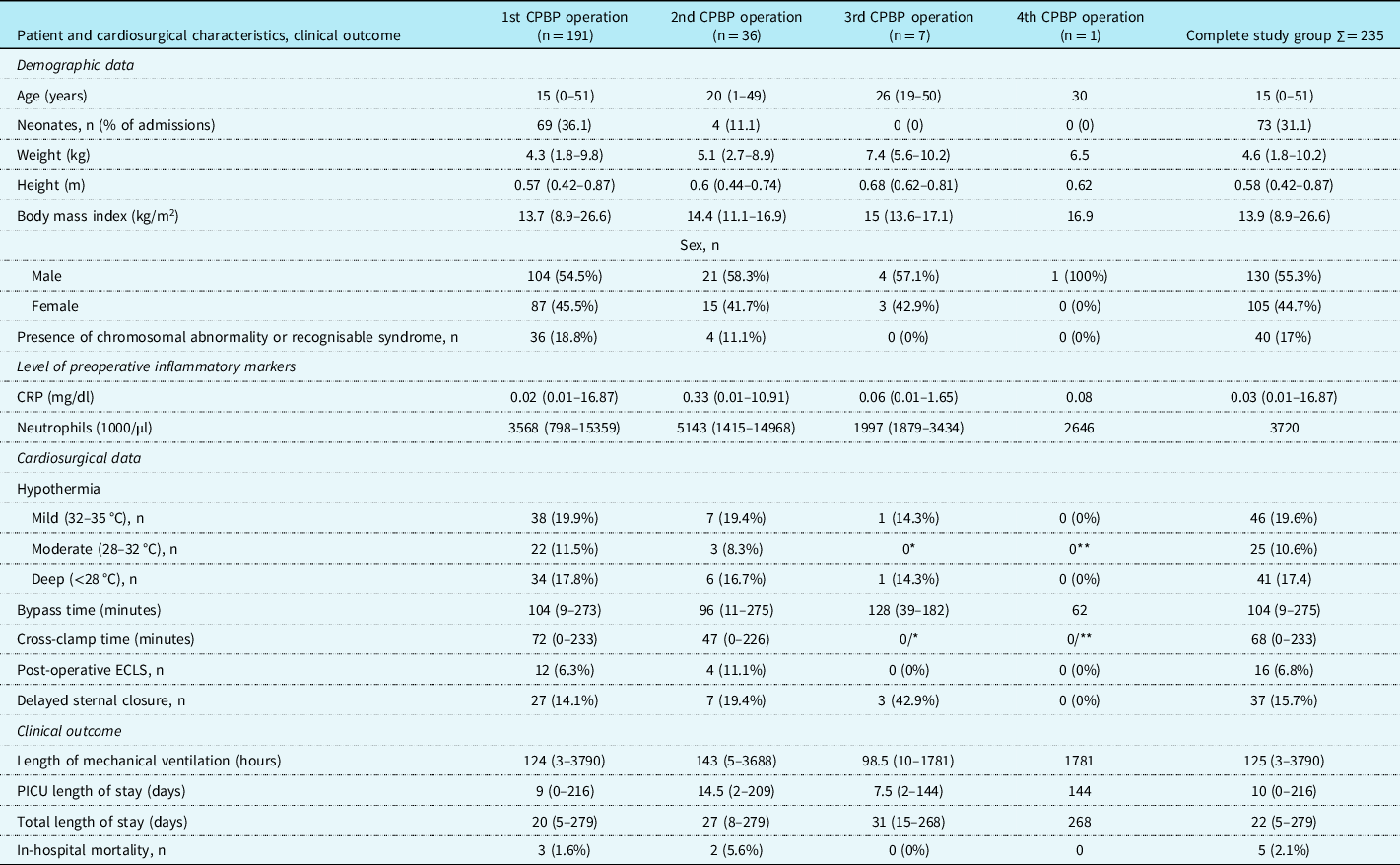
Two-hundred and thirty-five post-operative periods after CPBP surgery in 191 infants were analysed. The sex ratio was 1.2 (104 boys, 87 girls), median age at the time of the first operation was 15 weeks (25th percentile 2 weeks; and 75th percentile 21 weeks), and 36% neonates. Patients underwent CPBP with a median duration of 104 minutes (range 9–273) and a median aortic cross-clamping time of 72 minutes (range 0–233). Overall, 34 patients (17.8%) were operated on in deep hypothermia. Twelve patients (6.3%) required post-operative ECLS and in 27 patients (14.1%), sternal closure was delayed. Table 1 displays demographic data, patient characteristics, cardiosurgical and clinical outcomes of the population according to the time point of CPBP operation. Of note, the median length of post-operative ventilation was significantly higher with younger age. Neonates had a median ventilation time of 189 hours (IQR 124–400), infants 1–6 months 120 hours (IQR 74–298), and infants 6 months1 year 73 hours (IQR 29–170).
Demographic data, patient characteristics, cardiosurgical, and clinical outcome of the population according to the time point of cardiopulmonary bypass operation

Data are given as frequencies (n, percentages) or median (range).
CPBP = Cardiopulmonary Bypass; CRP = C-reactive protein; ECLS = Extracorporeal life support; PICU =Paediatric intensive care unit.
* Only three patients are with valid data (42,9%).
** No data.
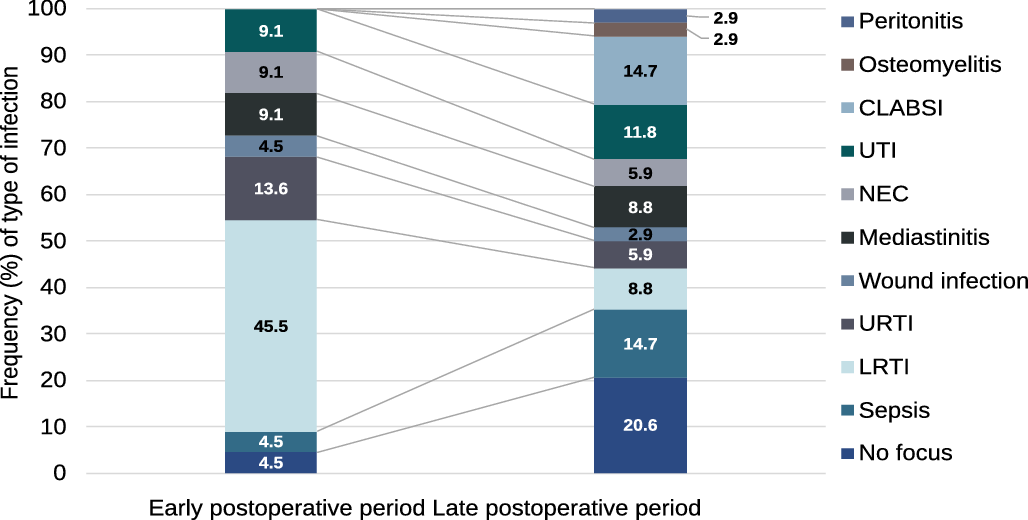
Within the 235 post-operative periods, 23% had to be reviewed by the independent reviewers to classify them as infectious or non-infectious. Finally, 56 infectious episodes were observed, 22 in the early and 34 in the late post-operative period. Whereas, almost half of all infections in the early post-operative period were lower respiratory tract infections (ventilator-associated pneumonia, tracheobronchitis, laryngotracheitis), these only accounted for 8.8% of all infections in the late post-operative period. No infectious focus, sepsis, and central line-associated bloodstream infections represented the most common types of infection in the late post-operative period. Microbiological confirmation rate of assumed infections was 64% in the early and 65% in the late post-operative period. Type of infection and frequency in both periods are shown in Figure 1.
Frequency of type of infection in the early and late period after cardiopulmonary bypass surgery. CLABSI = Central Line-Associated Bloodstream Infection; LRTI = Lower Respiratory Tract Infection; NEC = Necrotizing Enterocolitis; URTI = Upper Respiratory Tract Infection; UTI = Urinary Tract Infection.

Procedures in RACHS-1 score category 1 and 2 were almost as frequent as procedures in RACHS-1 score category 3 and 4, whereas RACHS-1 score category 5 and 6 procedures were only performed in 23 cases. Difference in ventilation time between the RACHS categories was highly significant with RACHS-1 category 1 or 2: 84 hours (IQR 36–170 hours), category 3 or 4: 152 hours (IQR 88–335 hours), category 5 or 6: 330 hours (IQR 174–1306 hours). The proportion of infectious episodes increased towards higher RACHS-1 scores (RACHS-1 1/2: 20%, RACHS-1 3/4: 32%, RACHS-1 5/6: 44%) and the presence of late infection was significantly associated with higher RACHS-1 scores (Supplement 2).
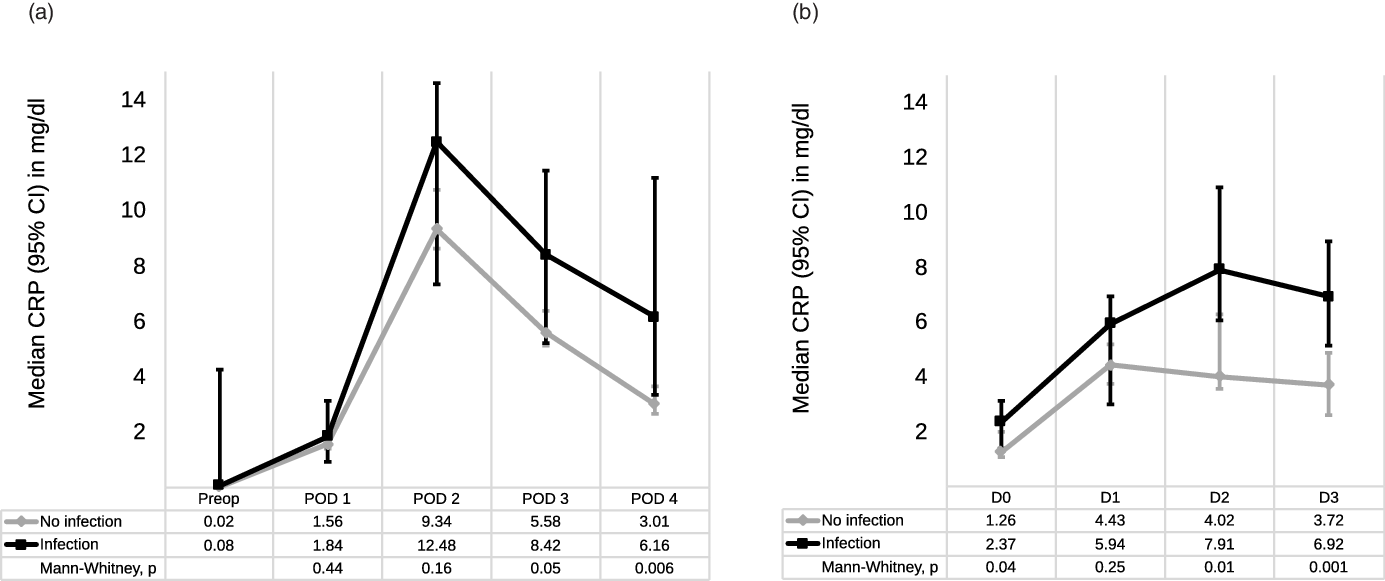
The time course of median CRP in patients with and without infection in the early post-operative period is displayed in Figure 2a. Preoperative CRP levels were the same between the non-infection and infection groups. CRP kinetics in the early post-operative period did not accurately differentiate between infected and non-infected patients on POD 1–3. Only on POD 4 median CRP trended with 6.2 mg/dl (95% CI 3.4–11.2) versus 3.0 mg/dl (95% CI 2.7–3.7) higher in the infection group compared to non-infected patients (p = 0.006) (Supplement 3).
Kinetics of CRP concentrations within the early (a) and late (b) post-operative period.
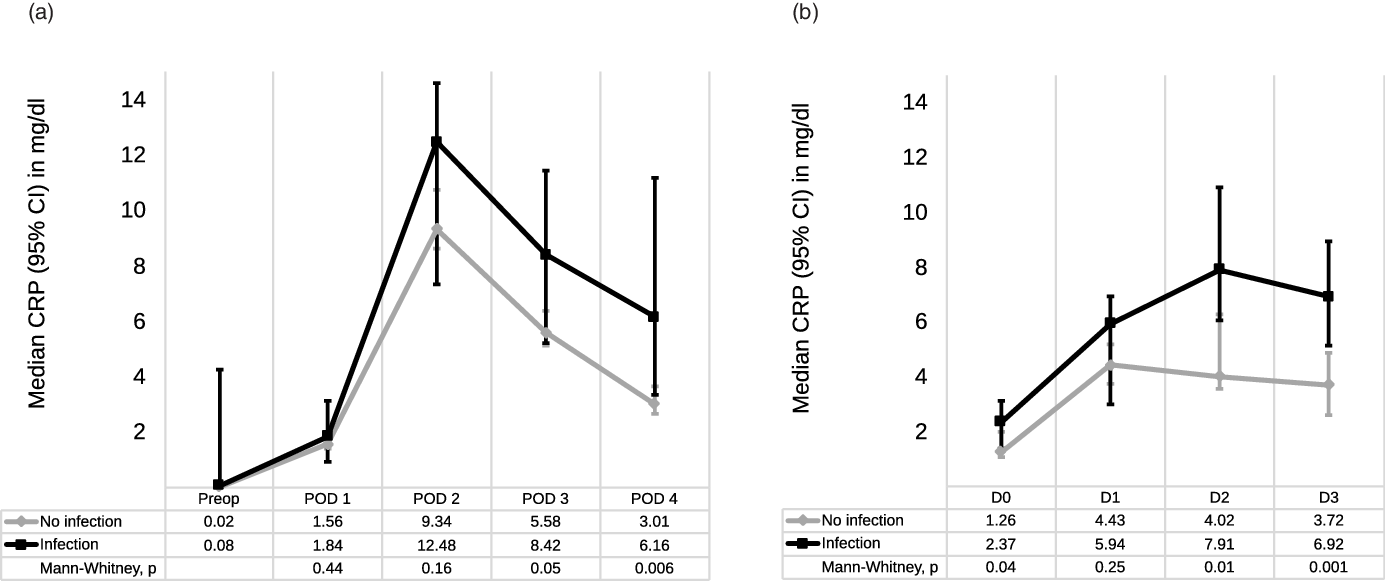
In the late post-operative course (POD 5 and beyond), analysis of all CRP peaks revealed different kinetics between patients with and without infection (Fig 2b). Whereas,infants suffering from infection displayed a consecutive rise in mean CRP for 2 days, infants without infection had stable or slightly decreasing mean values after the first rise in CRP. Furthermore, CRP was significantly higher in the infection group with a median of 7.9 mg/dl (95% CI 6.1–10.9) and 6.9 mg/dl (95% CI 5.1–9.0) on day 2 and 3 compared to the non-infection group 4.0 (95% CI 3.6–6.3) and 3.7 (95% CI 2.6–4.9) (Supplement 3).
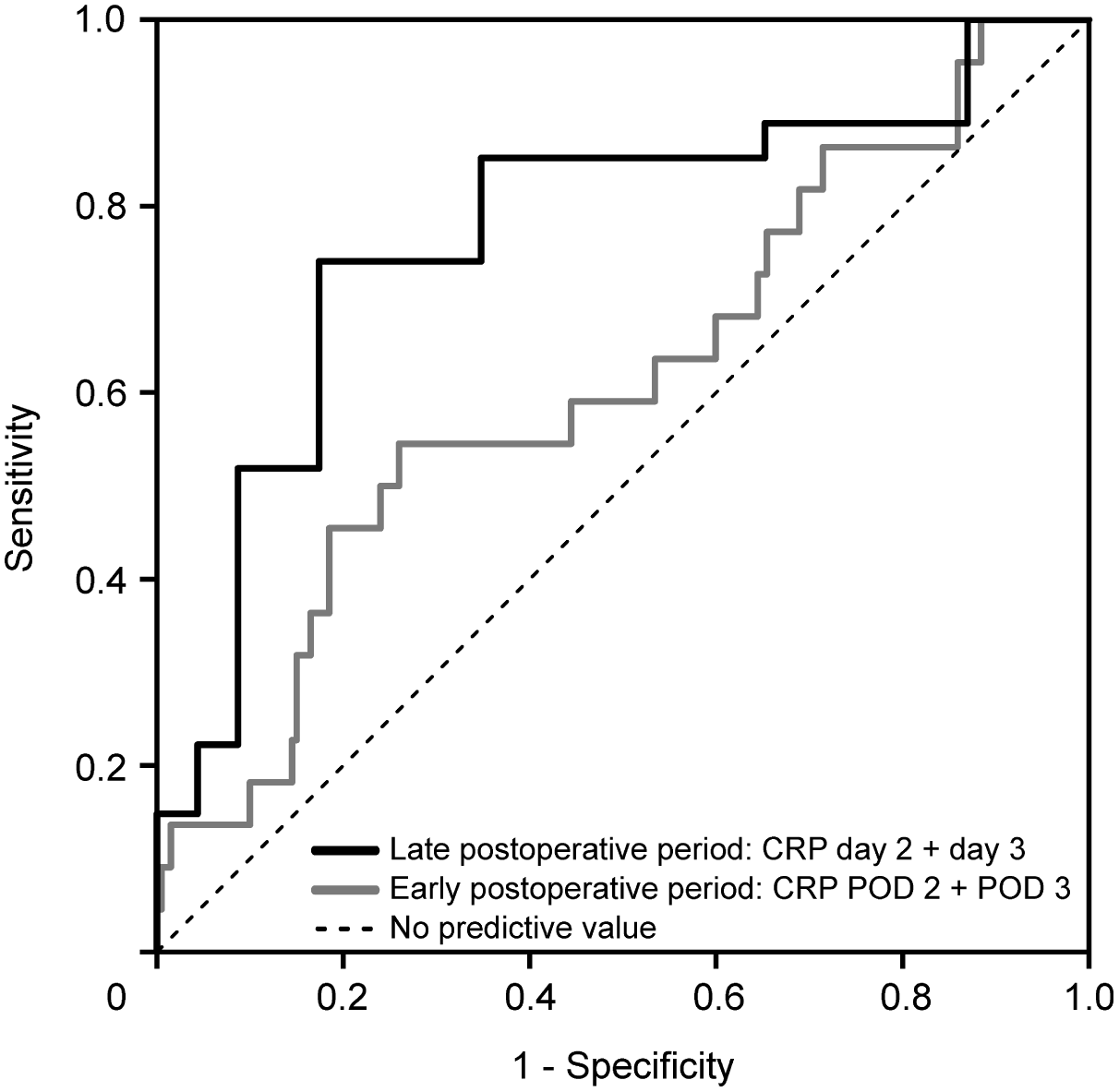
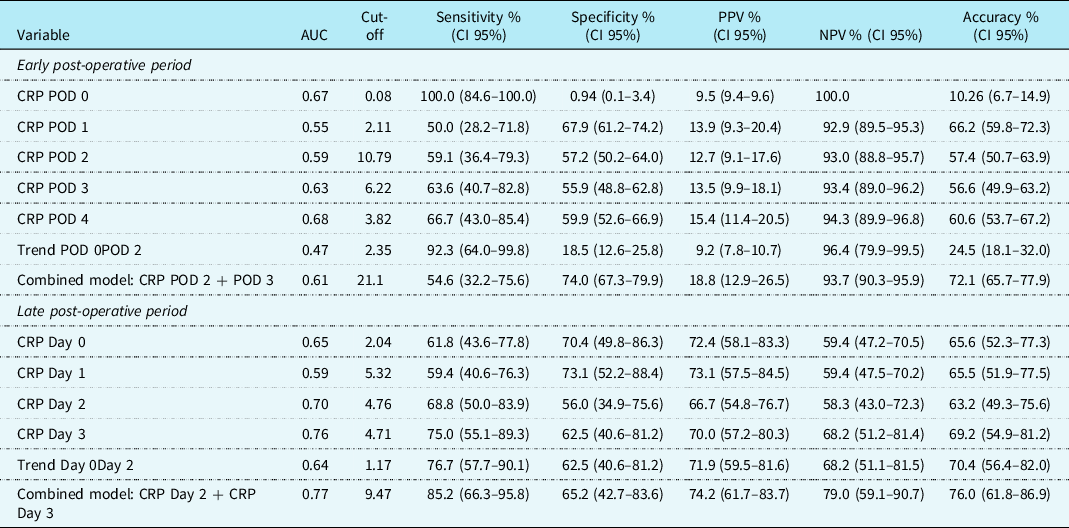
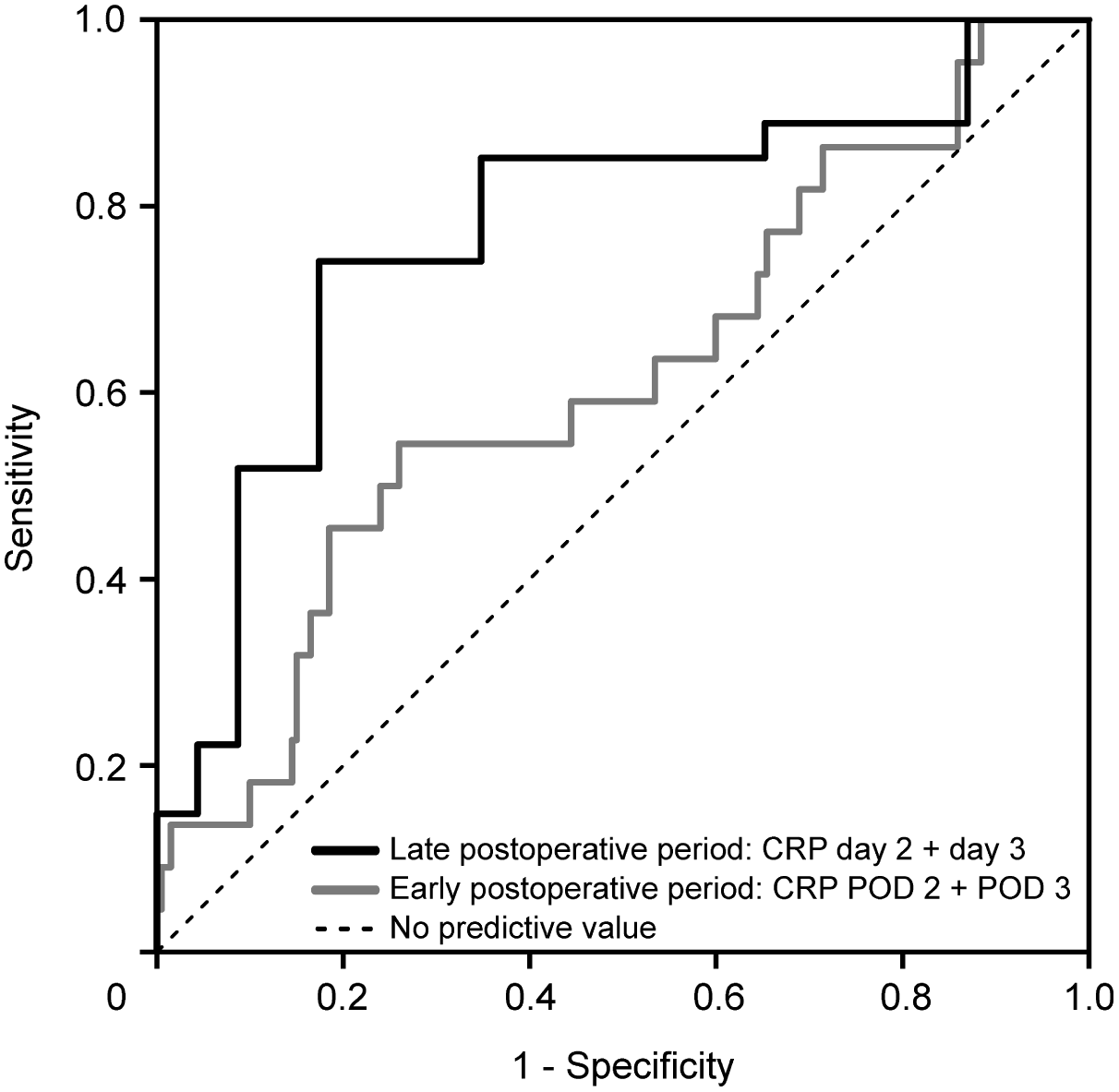
Predictive accuracy of CRP for infections in the early and late post-operative periods after CPBS is displayed in Table 2. In the early post-operative period, AUCs for CRP on POD 1 to day 4 demonstrated low sensitivity and specificity in detecting patients with infection. In particular, the PPV was below 20%, and the sharpness of the rise in CRP in the first 48 hours after CPBP surgery was not predictive for the diagnosis of infection (AUC 0.47, PPV 9.2%). On the contrary, CRP kinetics differentiated better between infection and non-infection in the late post-operative period. The highest AUCs for CRP were achieved on the second and third day after suspicion of infection with positive and negative predictive values reaching 70%. Due to the observation, that CRP in patients without infection only rose for 1 day, we calculated predictive accuracy for infection combining CRP values on days 2 and day 3 (Table 2). The ROC curve of the combined model (CRP Day2 + CRP Day3) is shown in Figure 3 with a sensitivity of 85.2% and specificity of 65.2% for a cut-off of 9.47 mg × days/dl in the late postoperative period. Additionally, the respective ROC curve for the early postoperative period is displayed within the same graph.
Receiver operating characteristiccurves for the sum of CRP on POD 2 + POD 3 in the early post-operative period and for the sum of CRP on day 2 and day 3 after suspicion of infection in the late post-operative period.
Predictive accuracy of C-reactive protein for infections in the early and late post-operative periods after cardiopulmonary bypass surgery
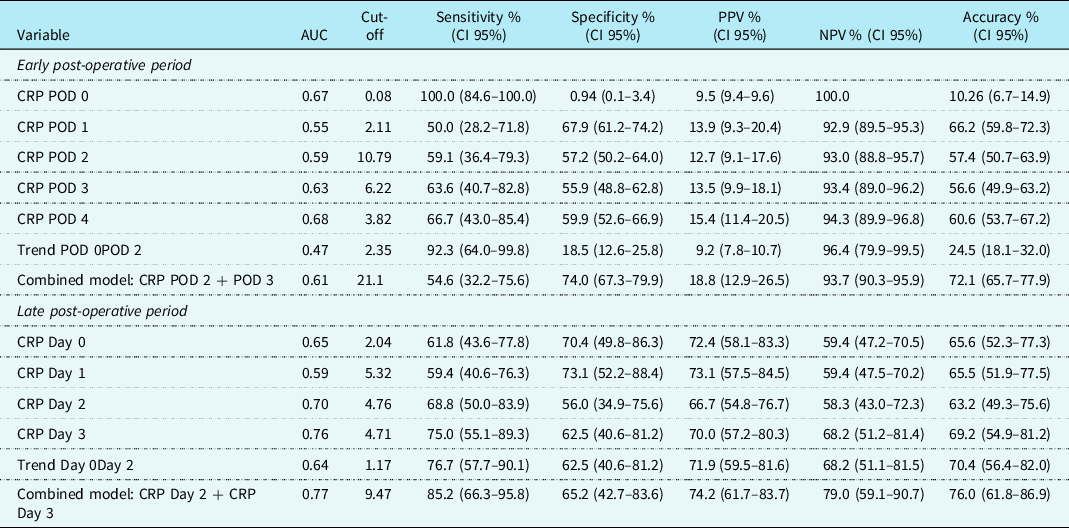
Sensitivity, specificity, positive and negative predictive values are expressed as percentages. Confidence intervals for sensitivity and specificity are “exact" ClopperPearson are confidence intervals. Confidence intervals for the predictive values are standard logit confidence intervals.
AUC = area under the curve; CI:confidence interval; CRP = C-reactive protein; NPV = negative predictie value; POD = post-operative day; PPV = positive predictive value.
Discussion
Type and risk of infection after CPBS
To the best of our knowledge, this is the first study that exclusively evaluates CRP kinetics as a discriminative biomarker in infants in the first 28 days after CPBS is differentiated by the early period with an inflammatory response from CPBP surgery versus the late period after inflammatory response. Furthermore, by characterising the incidence and type of bacterial infection in the early and late post-operative period of neonates and infants after CPBP surgery, we observed different patterns. Whereas, in the early post-operative period, lower respiratory tract infections clearly prevailed, nosocomial infections (e.g. CLABSI, sepsis, and UTI) and infections without a clear focus were most prevalent from POD 5 to 28. These results are in line with previous studies where HAI in cardiac PICUs primarily affected children <1 year. Reference Alten, Rahman and Zaccagni4 Incidence of LRTI, mainly VAP, is high in children after cardiac surgery. Reference Shaath, Jijeh and Faruqui32 Post-operative ventilation per se is a risk factor for VAP. In this study, young age and higher RACHS-1 category were clearly associated with longer ventilation time. Perioperative problems involving pulmonary perfusion may increase the risk of LRTIs. Median length of post-operative ventilation was 5.2 days, meaning that ventilator-associated events were rare in the late post-operative period since most children were no longer invasively ventilated at that time. The higher frequency of other nosocomial infections in the late post-operative period is consistent with results from two epidemiological analysis of HAI in cardiac PICUs, where LOS and higher surgical complexity score were found to be major risk factors for HAI. Reference Alten, Rahman and Zaccagni4,Reference Hasija, Makhija and Kiran33 In our population, infection in the late post-operative period was mainly nosocomial (e.g., CLABSI, sepsis, and UTI) and a higher RACHS-1 score was significantly associated with a higher risk of infectious complications.
Kinetics of CRP and predictive value
As in previous studies, we did not find a difference in CRP kinetics in the early post-operative period (POD 1–3) between infected and non-infected patients. The discriminative accuracy, in particular. the PPV of CRP within the first 4 days following paediatric cardiac surgery remained poor, as it reflects the inflammatory process due to surgery with CPBP rather than infection. Reference McMaster, Park and Shann16,Reference Arkader, Troster and Abellan34 Only later in the post-operative course, infected patients had significantly higher CRP values compared to non-infected patients. These findings show that CRP is not helpful to guide or exclude the diagnosis of early post-operative infection after CPBS in infants. In accordance with other studies, we feel that CRP should not be measured in the first 72 hours after CPBP surgery in neonates and infants. Reference D’Souza, Guhadasan and Jennings19,Reference Pérez, Rodríguez-Fanjul and García21 With respect to other studies that evaluated PCT after CPBP surgery in children, it seems that PCT performs better than CRP, in particular if consecutive values of POD 3 and POD 4 are considered. Reference McMaster, Park and Shann16,Reference Aryafar, Di Marzio and Guillard18,Reference Pérez, Rodríguez-Fanjul and García21
While we did not find a major diagnostic value of CRP in the early post-operative period, the situation in the late post-operative course from POD 5 to 28 was different. The evaluation of all episodes with a rise in CRP of at least 2 mg/dl per day in this period showed different kinetics between infected and non-infected patients. CRP values differed significantly from each other 2–3 days after suspicion of late infection (7–8 mg/dl versus 4 mg/dl). Notably, patients with infection had two consecutively rising CRP levels and those without infection mostly decreased after a single peak. As biomarkers are generally known to be time dependent, longitudinal analysis of biomarkers yields more precise estimates. Reference Kolamunnage-Dona and Williamson35 Therefore, we combined CRP levels on days 2 and 3. Consideration of these two values resulted in a fair AUC (cut-off at 9.47 mg/L). Sensitivity (85%, 95% CI 6696%) was even better than calculated in a recently published Cochrane Review for late-onset sepsis in neonates (62%, 95% CI 50–70%). Reference Brown, Meader and Cleminson36 In summary, we found a PPV of 74% and a NPV of 79% with an acceptable test accuracy of 76% in our study. Based on these findings, CRP kinetics in the late post-operative period after CPBS is of value as an adjunctive diagnostic test for neonates and infants in whom there is a clinical suspicion of infection. We propose, that in our patient population, the sum of CRP on days 2 and 3 after clinical suspicion of infection of > 9.47 mg/L warrants further microbiological diagnostics and removal of foreign bodies wherever possible. On the contrary, without clinical or microbiological evidence for infection after 48 hours and CRP Day 2 + CRP Day 3 of <9.47 mg/l, empiric antibiotic regimens should be stopped.
The strength of this study is our large cohort of patients <1 year of age undergoing CPBP surgery. Furthermore, we separately evaluated biomarkers in the late post-operative period, not directly influenced by CPBP-surgery anymore. However, this study is limited by its retrospective, single-centre design. Although we used predefined diagnostic criteria and performed a standardised decisional process by two independent reviewers, misclassification of SIRS, sepsis, and infection is possible. In particular, infection without a clear focus was subject to misclassification bias, since findings were mainly based on clinical presentation and inflammatory markers. Furthermore, CRP was sometimes not measured daily from POD 10 to 28. Consequently, we might have missed some episodes. Lastly, post-operative care (e.g., corticosteroids or antibiotics) might have influenced kinetics of CRP.
Conclusion
Neonates and infants after CPBS showed distinct patterns of infection in the early and late post-operative periods. Whereas, respiratory tract infections dominated in the early post-operative phase, other nosocomial infections (e.g., CLABSI, sepsis, and UTI) prevailed later on. A higher RACHS-1 score was significantly associated with a higher risk for infectious complications in the late post-operative period. Predictive accuracy of CRP depends on the time after surgery. CRP kinetics in the first 72 hours after CPBS is not useful to predict or exclude early post-operative infection. On the contrary, our study showed that CRP is a valuable adjunctive diagnostic test in neonates and infants in the late post-operative period.
Supplementary material
To view supplementary material for this article, please visit https://doi.org/10.1017/S1047951121003231.
Acknowledgements
The authors would like to thank Dr Gunnar Blumenstock for his constant and skilful assistance with data processing and statistical analysis. This publication would not have been possible without his support.
Financial support
This research did not receive any specific grant from funding agencies in the public, commercial, or not-for-profit sectors.
Conflicts of interest
None.
Ethical standards
The study was approved by the local ethical review board at the University Hospital Tuebingen (project No. (393/2016BO2) with a waiver of informed consent in view of the retrospective nature of the study and because all the procedures performed were part of the routine care.
Authors’ contributions
HR and FN are responsible for the conception and design of the study. HR drafted the article and performed the statistical analysis. DG has made substantial contributions to the acquisition of the data and statistical analysis. MH, CS. and SS were revising this manuscript critically for important intellectual content. All authors finally approved this version of the manuscript for submission. The authors agree to be accountable for all aspects of the work in ensuring that questions related to the accuracy or integrity of any part of the work are appropriately investigated and resolved.