INTRODUCTION
In the last 2 decades, the frequent occurrences of public health emergencies (PHE) causing serious public health damages have drawn worldwide attention to the PHE management systems and their capacity building. Many resources mobilized, and priorities have been focused on the PHE preparedness and response systems in order to promote disaster prevention and response efficacy. However, no matter of people’s efforts and preparation, there are still many disaster incidents that could not have been predicted with timely and effective responses. Sometimes, the effort made in response to a catastrophic disaster may end in vain regardless of numerous preparatory work or large quantities of resources stockpiled. The Ebola outbreak in West Africa resulted in 28 646 cases and 11 323 deaths.1 The worldwide spread of H1N1 avian flu virus in 2009 resulted in an international level pandemic declared by the World Health Organization (WHO).Reference Freedman, Mindlin and Morley2, Reference Gulland3 These demonstrate that, despite our huge efforts, there are still many unexpected factors. Therefore, it is always of greater importance to enhance emergency responders’ field coping-capacity to enable them to deal with a thorny and challenging emergency environment.
The individual capacity is regarded as the cornerstone of the whole emergency response capacity system.Reference Hu, Rao and Sun4 This is understandable because the emergency responders constitute the front line of a PHE response, and an effective emergency response mainly depends on their professional, prompt, and accurate actions. Due to the suddenness, uncertainty, and diversity of PHE, the emergency responders’ field coping-capacity (namely, the capacity of emergency responders to cope with emergency at the outbreak site) is crucial for a timely and appropriate disaster response. Furthermore, it can dictate the scale and future direction of the evolution of the crisis on many occasions.
In China, the Centers for Disease Control and Prevention (CDC) serves as the backbone of the PHE response system. During a PHE response, CDC professional workers who are public health workers are mainly required to take major responsibilities in disease control, as well as play a role in natural and man-made disaster rescue and restore working operations to prevent any secondary epidemic and public health crisis. Because public health response involves many different factors and many different venues, the global impact of it increasingly calls for international cooperation during the emergency response.Reference Gao, Jing and Cheng5 China has attached great importance to involving overseas responses to tackle major PHE events and has sent more than 20 000 emergency rescue personnel to 66 countries or regions in the most recent 50 years.6 The success of the emergency response and international cooperative actions are all but impossible without professional capacities that cover a range of skills to handle various types of emergency events.
Following the landmark events of the severe acute respiratory syndrome (SARS) outbreak, the Chinese government became fully aware of the importance of PHE response capacity building. More than 20 billion CNY have been invested to support more than 2000 projects in order to enhance the emergency response capacity, which included infrastructure investment, emergency information network building, and large scale emergency education and training programs.Reference Wang, Xiang and Xu7 However, whether these investments prepare public health professionals to adequately cope with PHE is still unclear. Previous studies have mainly focused on the emergency response capacity of CDC institutions. They have analyzed the situation regarding the establishment of facilities, organizational management, technology implementation, emergency material management, disease surveillance, and coordination of different regions or institutions.Reference Tan, Liang, Luo and Lu8, Reference Wu, Hu and Sun9 Few of them have taken the individual capacity for emergency response into consideration. As the major provider when dealing with PHE, how do individuals describe their field coping-capacity for PHE? What factors influence their capacity? What are the needs, challenges, and bottleneck problems? The answers to these essential questions will provide evidence and assistance in stipulating targeted intervention.
Heilongjiang is an agricultural province located in northeast China with the lowest level of gross domestic product in all provinces.10 The geographical and climatic environmental status, as well as the low population mobility, also resulted in several major outbreaks of emergency events in Heilongjiang. Between 2004 and 2012, there were 75 PHE events reported directly by the Internet in Heilongjiang, including 27 food poisonings, 19 environmental events (16 environmental pollution and 3 water pollution), 15 infectious disease events, 1 occupational poisoning, 3 unexplained poisonings, and one mass disease event unexplained.Reference Yan, Wang, An and Gao11 Constrained by economic difficulties, dissatisfied emergency response to these PHEs had affected more than 70 000 people and caused more than 2 000 000 RMB in economic losses.Reference Yan, Wang, An and Gao11 This made the local government fully realize the significance of PHE response capacity building.
In this study, we examined the degree to which the key capacities were needed during emergency response fieldwork as identified by the CDC professionals of Heilongjiang Province. We also evaluated their perceived overall field coping-capacity for PHE and identified important factors that affect it. Findings of this study may provide much needed evidence that will enable Heilongjiang and other underdeveloped regions in China to establish more tailored emergency capacity building programs in order to make those areas fully prepared for any formidable challenges waiting ahead.
METHODS
Study Population
A stratified cluster sampling method was used to choose the CDC institutions. All 13 municipalities in Heilongjiang Province were involved in the study. In each municipality, we randomly selected 2–4 counties considering their socioeconomic and demographic diversity. Then we asked for the local CDC administrators’ willingness to take part in this survey and for their further cooperation and support. Finally, a total of 40 CDC institutions were sampled (1 provincial, 10 municipal, 29 county). All of the professionals who were public health staffs in each CDC were identified as the participants for a questionnaire survey; non-professionals were excluded. The study protocol was reviewed and approved by the Research Ethics Committee of Harbin Medical University. All participants gave informed consent to take part in this study. Personal identifying information was not included. We sampled 1889 respondents. After the data cleaning process, 35 responders with incomplete or anomalous data were excluded, and a final sample of 1854 respondents was used.
Data Collection and Quality Control
The questionnaire collected the respondents’ demographic information, work information, ratings of their individual overall coping-capacity for PHE, and scores of key capacities that are needed during an emergency response. Face-to-face interviews were conducted by qualified investigators who were led by experienced professors and associate professors. The qualified investigators were composed of a group of graduate students from the Department of Social Medicine of Harbin Medical University who had undergone systematic and rigorous training for questionnaire survey and pilot study. Quality control was implemented by supervisors who were charged with conducting inspections during the whole survey process.
Instrument and Variable
The survey questionnaire developed by the researchers involved basic demographic information and work information, the degree to which those key capacities were needed during emergency response fieldwork, the participants’ self-evaluation of field-coping capacity, the experience on participation in PHE response, and the measures to improve the coping-capacity of PHE responders.
The dependent variable was the respondents’ self-rating of their overall field coping-capacity for PHE. The question was, “What do you think of your overall field coping-capacity for PHE?” The answers were grouped into 5 categories: 1 = Very poor; 2 = Poor; 3 = Average; 4 = Good; 5 = Very good. When conducting the logistic analysis, the ratings were further grouped into 2 categories: the first 3 categories were grouped as Poor and the latter 2 as Good.
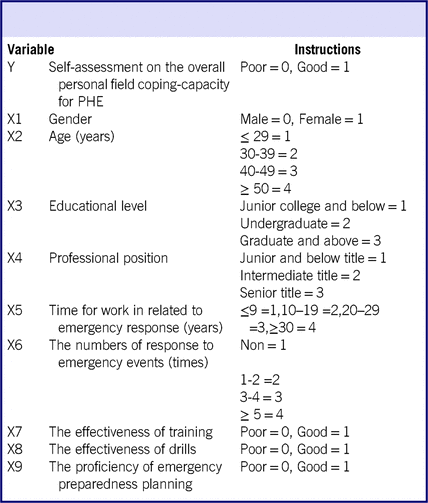
The independent variables included demographic information (gender, age, educational level) and work information (professional position, time for work related to emergency response, emergency response experience, the self-evaluation of proficiency in emergency preparedness planning, and the effectiveness of drills and training). Participants were asked how many times the emergency response worked they had participated in. Meanwhile, participants were asked to rate their own personal proficiency in emergency preparedness planning using the following question: “How proficient are you in emergency preparedness planning?” Additionally, all of the participants were also asked to rate the effectiveness of the training and drills using the following questions: “How do you rate the effectiveness of the training?” and “How do you rate the effectiveness of the training drills?” Responses of these 3 questions were rated on an ordinal scale from 1 to 5 (1 = Very poor; 2 = Poor; 3 = Average; 4 = Good; 5 = Very good). When conducting the logistic analysis, the ratings were further grouped into 2 categories: the first 3 categories were grouped as Poor and the latter 2 as Good. All of the variable assignments are shown in Table 1.
Variable Assignment Notes
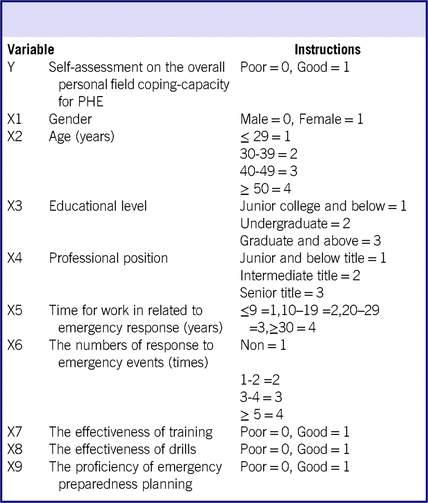
PHE = public health emergency.
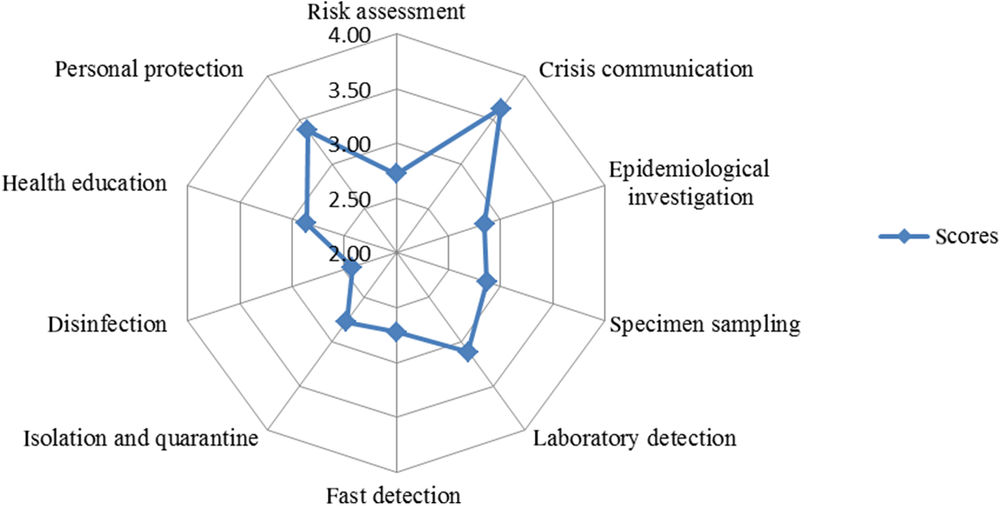
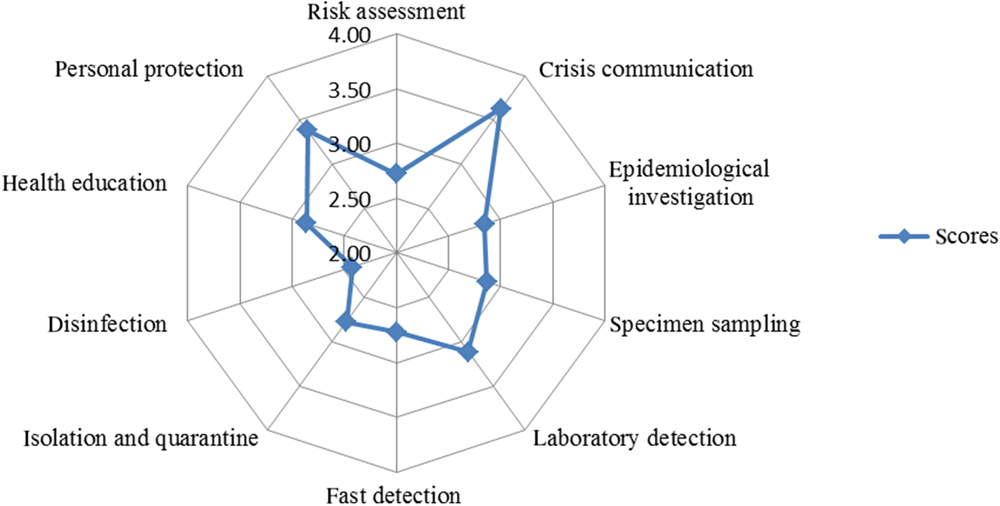
Based on the opinions of the consensus panels of experts from Chinese PHE management system in the stage of questionnaire development, 10 key individual capacities were highlighted that were regarded as the weakest links but also the most important and necessary capacities required during the process of on-site emergency response (see Figure 1).The respondents were asked to rate the degree to which these key capacities were needed during emergency response fieldwork. The question was, “For the 10 key capacities, how do you rate the degree to which each capacity is needed during emergency response fieldwork?” The answer was rated on an ordinal scale from 1 to 5 (1 for Least and 5 for Most).
Respondents’ Scores on the Degree of Need for the Key Capacities During Emergency Response Fieldwork.
For the measures that improve the coping-capacity for PHE, the respondents were asked to answer the question, “Of the following measures for capacity enhancement, which ones do you think are important?”
Statistical Analysis
A descriptive analysis was adopted to demonstrate participants’ basic characteristics and the degree that each key capacity was needed. Chi-square tests were performed to analyze the differences in coping-capacity across different levels of independent variables. A multivariate logistic regression was conducted to predict factors influencing individual field coping-capacity for PHE, using SPSS 22 (IBM Corp, Armonk, NY).
RESULTS
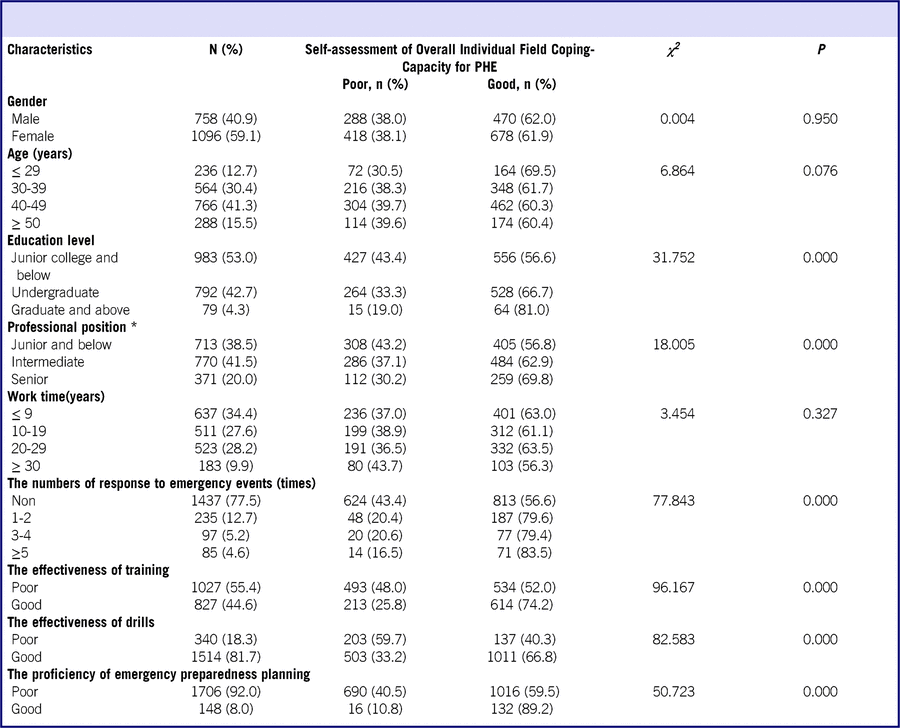
Self-assessment of Individual Field Coping-Capacity for PHE According to the Characteristics of the Respondents
Of the 1854 respondents, 40.9% were male and 59.1% were female. The respondents were predominantly ages 40–49 years. A large number of respondents (53%) reported having a junior college degree and below education level, and a small number (20%) had a senior professional position. Their years of working in emergency response were largely fewer than 9 years, and 22.5% had practical emergency response experience.
Of the population surveyed, 38.1% (706/1854) rated themselves in the self-assessment questionnaire as Poor in terms of their coping-capacity for PHE. Chi-square tests showed the rating on coping-capacity was associated with education, professional position, emergency response experience, proficiency in emergency preparedness planning, and effectiveness of training and drills (P < 0.05). The respondents who had a higher education level and a higher professional position were more likely to rate themselves as having Good coping-capacity. Those who had more emergency response experiences and exposure to effective training and drills, and those who were proficient in emergency preparedness planning, showed a higher percentage of giving the rating of Good coping-capacity than those who did not (see Table 2).
Self-assessment of Individual Field Coping-Capacity for PHE According to the Characteristics of Respondents
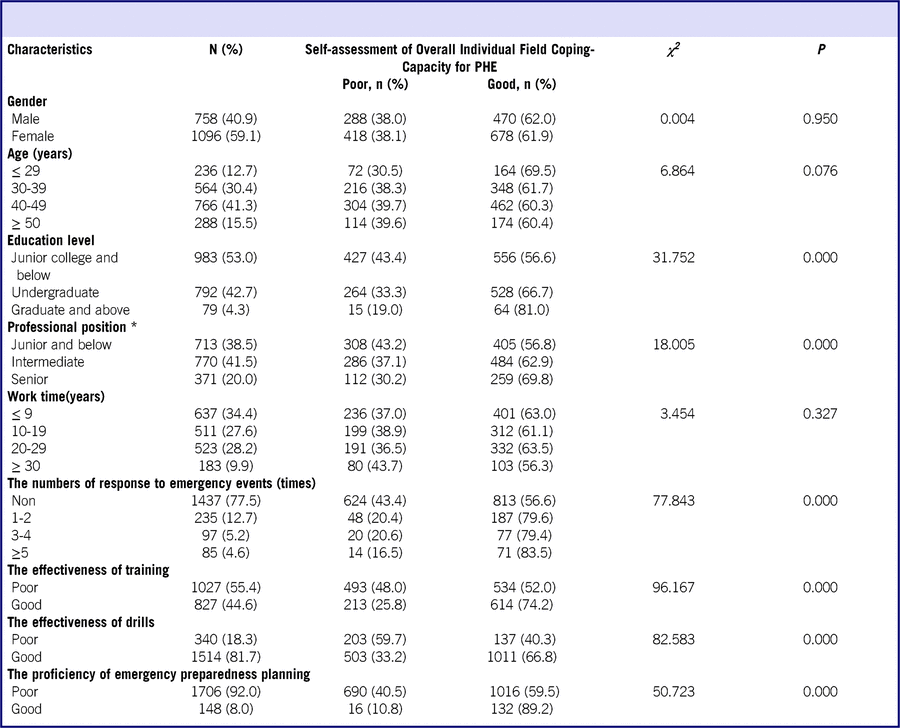
Note. *Rank, ability level, and achievement of professionals in China’s public health system. Junior and below title = public health physician or technician; Intermediate title = public health supervisor physician or technician; Senior title = public health assistant chief and chief physician or technician.
The Important Capacity Areas That Are Most Urgently Needed in Emergency Response Fieldwork as Identified by Respondents
The respondents were asked to rate the degree to which each key capacity was needed during emergency response fieldwork. Among them, the top 3 most urgently needed capacities that were identified by participants (with scores above 3.00) included crisis communication capacity, personal protection capacity, and laboratory detection capacity. Crisis communication capacity was regarded as the most important capacity area to be needed during emergency response fieldwork, with the score of 3.63 ± 1.26; the other 2 capacities were personal protection capacity and laboratory detection capacity, with the score of 3.38 ± 0.82 and 3.12 ± 0.96, respectively (see Figure 1).
Determinants Associated With the Individual Field Coping-Capacity for PHE
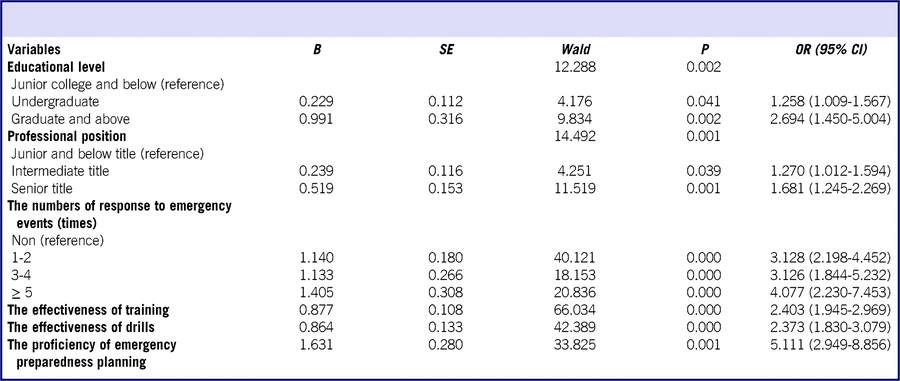
Logistic regression showed that 6 independent variables were significantly associated with the overall individual field coping-capacity for PHE. The one who gave the Good rating for proficiency in emergency preparedness planning (OR = 5.111), effectiveness of training (OR = 2.373), and effectiveness of drills (OR = 2.403) tended to have a relatively better self-rating. Meanwhile, the one with more practical emergency response experiences (OR ranging from 3.128 to 4.077), a higher education level (OR ranging from 1.258 to 2.694), and a higher professional title (OR ranging from 1.270 to 1.681) were more likely to provide a better rating on the self-assessment (see Table 3).
Determinants Affecting the Overall Individual Field Coping-Capacity for PHE
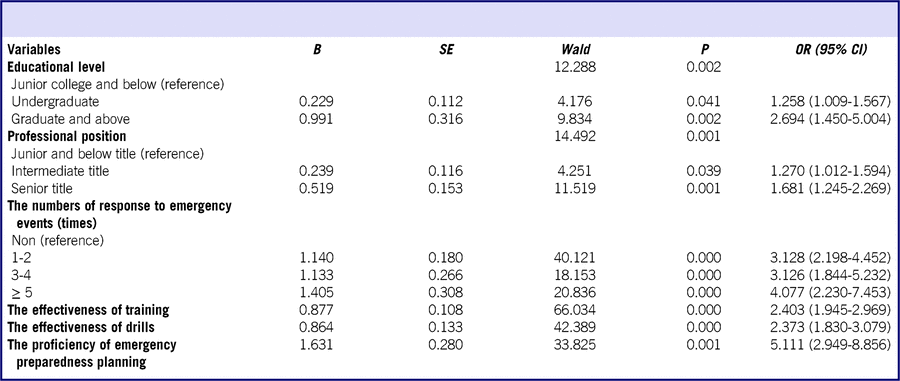
PHE = public health emergency.
Perceived Obstacles to Achieving Proficiency in Emergency Preparedness Planning
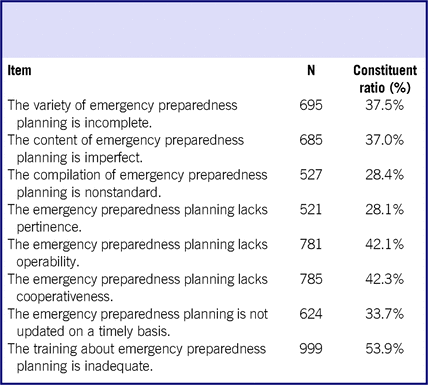
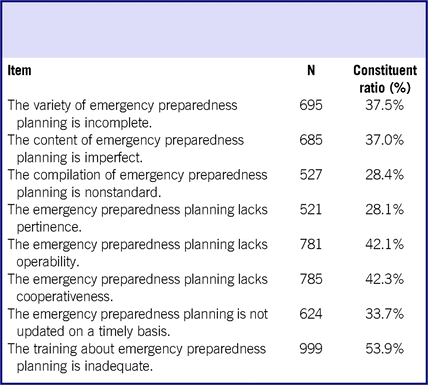
To ensure an effective PHE response, emergency personnel must master the exact workflow, work standards, and all of the matters that need attention. Emergency preparedness planning is a crucial tool to equip them with these capacities. In this study, 92.0% of respondents reported Poor for proficiency in emergency preparedness planning. Inadequate training about preparedness planning was mentioned most out of all of the obstacles that hindered to achieve this proficiency (53.9%). In addition, a lack of cooperativeness (42.3%) and lack of operability (42.1%) were mentioned relatively more, whereas the lack of pertinence was mentioned least (28.1%) (see Table 4).
Perceived Obstacles to Achieving Proficiency in Emergency Preparedness Planning
Assessment of Different Improvement Measures for Enhancing Individual’s Field Coping-Capacity for PHE
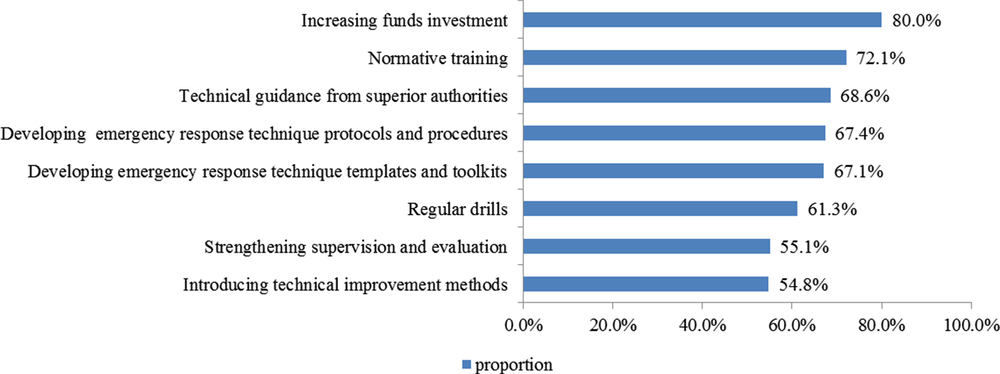
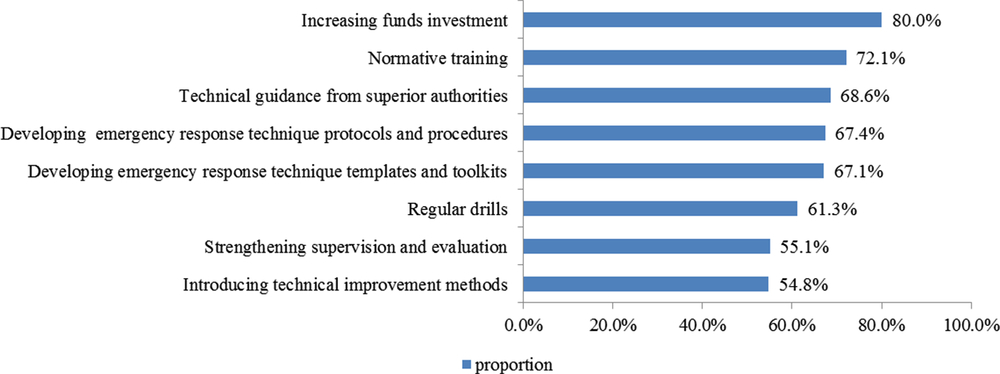
Increasing funds investment was regarded as the most important measure (80.0%), followed by normative training (72.1%), technical guidance from superior authorities (68.6%), developing emergency response technique protocols and procedures (67.4%), developing emergency response technique templates and toolkits (67.1%), and regular drills (61.3%). Besides, 55.1% of participants also mentioned the importance of strengthening supervision and evaluation, and 54.8% stressed on introducing technical improvement methods for facilitating individual capacity improvement (Figure 2).
The Proportion of Improvement Measures for Individual Field Coping-Capacity for PHE.
DISCUSSION
Within the current PHE response system in China, CDC professional workers serve as one of the most important forces of PHE response. The personnel’s field coping-capacity directly determines the scale and the final outcome of the impact brought about by PHE. To some extent, the occurrence of emergency is inevitable and cannot be accurately predicted. However, the impact and damage can be alleviated and decelerated through appropriate response process, which in turn relies on well-qualified emergency personnel.Reference Cioffi, Lichtveld and Tilson12 We have to strengthen the capacity during the peaceful time and make every effort to narrow the gaps identified before the next disaster attacks.
The Important Capacity Areas Most Urgently Needed During Emergency Response Fieldwork
The respondents reported the highest degree of need for their crisis communication capacity. The widespread impact and uncertainty of emergency usually lead to social panic among the population. Effective crisis communication serves as an important tool to deal with the public’s negative behavior and to minimize harm by offering them procedural advice and other necessary information, which is the first step in controlling the crisis and public panic from spreading and therefore is directly linked to the result of emergency response.Reference Lachlan, Spence and Eith13 As we have entered a new stage of All Media Era, sufficient skills in dealing with various social media became essential, under the spotlight of media cover of crisis outbreak, emergency responders are required to be a skillful communicator, good at using social media to play a positive role and eliminating negative consequence caused by the spreading of rumor and false information.
The second highest demanded skill areas detected by this study was personal protection capacity. Emergency personnel work on the front line during a PHE, and they are at great risk of infection through occupational exposure. Mastering personal protection capacity to ensure their own safety is the basis and precondition for performing their duty, and it is a critical requirement of effective disaster response.Reference Oh and Uhm14 Personal protective equipment (PPE) has been documented to prevent physical exposure to high risk factors.Reference Verbeek, Ijaz and Mischke15 However, suboptimal or inadequate usage of PPE is not uncommon.Reference Zellmer, Van Hoof and Safdar16, Reference John, Tomas and Cadnum17 The WHO and the US CDC have made modifications and supplements to the PPE guidelines many times during the Ebola epidemic, and 1 reason is that improper usage of PPE led to increased infection and mortality rate in health care workers.Reference MacIntyre, Chughtai and Seale18
In this study, laboratory detection capacity was identified as the third important capacity that is highly needed by emergency responders. In addition, laboratory detection has also been declared as one of the core capacities for public health response by International Health Regulations,19 and it has a critical function in all of the key processes of PHE response to identify, track, and limit public health threats.Reference Witt-Kushner, Astles and Ridderhof20 When emergency occurs, especially an infectious disease outbreak or poisoning and chemical pollution occurrence, obtaining accurate and prompt test results of various lethal biological and chemical factors that cause an epidemic or disaster becomes essential, which often plays an irreplaceable role in helping first responders and emergency managers map out best coping strategies. Despite that the Chinese government had invested a huge amount of money into different levels of CDCs, which was mainly used for buildings and equipment, insufficient money was devoted to the constant capacity building of laboratory staffs, which made them unable to keep abreast with the new technology innovations and their novel applications.Reference Xie21
The Contributory Factors to Field Coping-Capacity for PHE
This study showed that proficiency in emergency preparedness planning was highly related to the coping-capacity for PHE. Emergency preparedness planning is a guide scheme to make arrangements for responding to and recovering from emergencies; it involves responsibility, personnel, technology, equipment, supplies, actions, leadership, and coordination that response teams will need during an actual emergency response.Reference Yang and Zhu22, 23 In 2003, China had established the principle of “one emergency preparedness planning with three systems – the emergency management system, mechanism, and legislature”; during the construction of emergency preparedness system, the emergency preparedness planning became the focus from the state to local government. Despite some substantial progress, still many challenges existed. Our study found a considerably low rate (8.0%) of the respondents who reported Good in terms of the proficiency in emergency preparedness planning. In practice, the completion of text compilation usually was regarded as the end of emergency preparedness planning building work, whereas the more important affair of training and drills for planning to help personnel familiarize and grasp this planning was ignored. In addition, a very common phenomenon in China is that no matter how different each city or county’s situation might be, all emergency preparedness planning looks the same. Local CDCs failed to make more tailored planning according to the analysis on local risks, and vulnerabilities existed in their individual, organizational, and system levels. This result in deficiencies in the planning itself included lack of cooperativeness, operability, and pertinence that prevents CDC staff from better mastering the planning, which was similar to the findings from other studies.Reference Shan24 Thus, dynamic planning management mechanism, planning information sharing platform and periodic training and drills should be emphasized which are not only significant for enhancing professionals’ proficiency in planning, but also provide valuable opportunities to detect the problems within existing emergency planning and support its further improvement.Reference Randolph25
In addition, this study found that more emergency response experiences predicted higher self-evaluation on coping capacity. This is consistent with Slepski and Bernstein’s findings.Reference Slepski26, Reference Bernstein27 We found that 77.5% of respondents lacked direct practical emergency experience. In this case, frequent emergency training and drills will undoubtedly serve as important alternatives to update their skills. We found that the odds ratio of high ratings for the coping-capacity of those who perceived greater effectiveness of training and of drills was 2.403 times and 2.373 times higher than that of those who didn’t. In fact, qualified emergency training and drills play a positive role in the enhancement of basic knowledge and practical skills.Reference Oyemakinde, Nguku and Babirye28 It also served as a continuous process of updating knowledge and developing skills. In this study, 55.4% respondents believed the training effectiveness was poor. They pointed out that the unmet training content, inconsecutive training process, and insufficient qualified teacher were the main limiting factors. Many training activities in China’s CDCs are knowledge-oriented through lectures, courses, and workshops without regular teachers and textbooks.Reference Ning, Wu and Li29, Reference Dong and Song30; the skill-oriented training is scanty. In such a situation, emergency drills are a useful tool to identify and address emergency response personnel’s skills gap through the simulation of emergency situations they are likely to encounter in the field work. Although the insufficient fund and resource input limited the scope and frequency of action drills, the on-line, real-time emergency drills gain some good effect through the utilization of computer simulation technology. This could be the reason that more than 80% of our respondents believed the drills’ effectiveness was good.
The Measures that Improve Individual Field Coping-Capacity for PHE
Increasing investment in funding was regarded as the most important measure to develop capacity. In China, the funds of CDC institutions usually come from the government’s fixed budget. Moreover, a lot of the input is usually focused on hardware construction, such as equipment and housing areas, and human resources investment is relatively insufficient especially in the provinces that face economic challenges.Reference Oyemakinde, Nguku and Babirye28 Public health workers are provided with relatively low pay, poor benefits, and adverse working conditions compared with other health-related fields, which do not provide competitive incentive for qualified professionals.Reference Lin, Wu and Xu31 Consequently, increasing investment in funding for human resources and workforce development is imperative for the capacity building of PHE responders.
According to administration regulations, many training and drill actions were launched in CDC’s system. However, irregular programs, fragmented contents, monotonous subject, rigid forms, as well as the absence of evaluation mechanism and quality control scheme have all made training and drills become a mere formality instead of an efficient approach to improve work ability.Reference Ning, Wu and Shang32, Reference Liang, Ma, Qing and Hu33 Thus, formalized and regular training and drills should be an important part of performance appraisal in each level CDCs that inevitably relies on financial and technical support from the government. Simultaneously, the utilization of on-line training and drills methods, the establishment of evaluation result feedback mechanism about the training and drills also should be emphasized to increase the efficiency of training and drills.Reference Freedman, Simmons and Lloyd34
Although training and drills can equip emergency responders with basic knowledge and skills in a short time, it is difficult to master them all and to use them accurately in a real emergency. Thus, emergency response technique protocol and procedures, templates, and toolkits will be vital measures to help emergency personnel understand the purpose, requirements, procedures, and considerations of every emergency response skill.Reference Yuan35 These measures will also provide uniform standard and content for training and appraisal.
This study has several limitations. First, the data were collected through a self-evaluation questionnaire; therefore, a subjective bias may exist between real capacity and measured result. Second, due to time and resource restrictions, we surveyed the participants in one province only. As such, the findings may not be generalizable to other regions in China. Further studies are recommended to help develop a more comprehensive evaluation tool and to thoroughly analyze the mechanism of various factors that influence the field coping-capacity for PHE.
CONCLUSION
All systemic and organizational emergency response efforts will be ultimately tested through the individual field coping-capacity, which is mainly affected by proficiency in emergency preparedness planning, emergency response experience, training, and drills. Our respondents also identified their urgent need for enhancing crisis communication capacity, personal protection capacity, and laboratory detection capacity in emergency response fieldwork, which should be prioritized in future emergency capacity building in China. A variety of policy interventions that focus on emergency coping-capacities should be strengthened, including sufficient fund investment, a formalized emergency training and drills system, sound technical guidance and technical specifications, and all-around supervision and evaluation. Only by adopting a systematic as well as targeted capacity building to address those problems, the emergency personnel can achieve a more prominent capacity enhancement, which in turn will provide more robust support in the attainment of infrastructure construction by public health systems to ensure performance in all areas of emergency response.
Acknowledgments
The authors are very grateful to Ning Ning, Ding Ding, and Linghan Shan for providing the suggestion to draft the manuscript. We thank all of the participating organizations and participants.
Funding
This work was supported by Scientific Research of Ministry of Health of China (grant No. 201002028), the National High Technology Research and Development Program of China (grant No. 2006AA02Z460), the Major Scientific Research Project of Harbin Medical University, the University Nursing Program for Young Scholars with Creative Talents in Heilongjiang Province (grant No. UNPYSCT-2017050), and the National Natural Science Foundation of China (grant No. 71774046, 71573068).
Conflict of Interest Statement
The authors have no conflicts of interest to declare.
Author Contributions
MZ, BL, and LW were the first coauthors of this article; ZK, YH, and QW conceptualized and designed the study; MZ and LW analyzed the data; MZ and BL interpreted the data and drafted the article; QW and ZK provided substantial revisions; LG was responsible for data acquisition; and DA was responsible for linguistic modification.