Family provides the natural context for children's growth and adaptation (Carpendale & Lewis, Reference Carpendale and Lewis2004; Cowan & Cowan, Reference Cowan and Cowan2002; Minuchin, Reference Minuchin1985; Parke & Tinsley, Reference Parke, Tinsley and Osoffsky1987). Throughout human history and across cultural communities, family, which is the interface of familiarity and affiliation, has defined the most solid cultural institution that enhances survival, transmits values, facilitates adaptation, and supports children's cognitive and social–emotional development through participation in multiple daily relationships with parents and siblings and observation of the relations between close others (Asher & Gottman, Reference Asher and Gottman1981; Darling & Steinberg, Reference Darling and Steinberg1993; Feldman, Masalha, & Derdikman-Eiron, Reference Feldman, Masalha and Derdikman-Eiron2010; Schneider, Attili, Nadel, & Weissberg, Reference Schneider, Attili, Nadel and Weissberg1989). Extant research has shown that a cohesive, warm, and harmonious family process, which is characterized by cooperation among members, individual autonomy, and low intrusiveness and rigidity, predicts a host of positive child outcomes, including social competence, lower externalizing and internalizing symptoms, reduced physiological stress, and positive emotional expression and emotion regulation (Bai, Repetti, & Sperling, Reference Bai, Repetti and Sperling2016; Favez et al., Reference Favez, Lopes, Bernard, Frascarolo, Lavanchy Scaiola, Corboz-Warnery and Fivaz-Depeursinge2012; Jacobvitz, Hazen, Curran, & Hitchens, Reference Jacobvitz, Hazen, Curran and Hitchens2004; McHale, Reference McHale2007; Robles et al., Reference Robles, Carroll, Bai, Reynolds, Esquivel and Repetti2016). Thus, elucidating the mechanisms that may facilitate or impede the development of a cohesive family process, the system-level organizational construct that describes the family as a single functional unit, is of conceptual and clinical importance.
Theoretical models have generally viewed the family from a systems’ perspective and suggest that family functioning is best studied in relation to the various family subsystems as they organize into a coherent whole (Cowan & Cowan, Reference Cowan and Cowan2002; Cox & Paley, Reference Cox and Paley2003; Feldman, Reference Feldman2007). The family-level process includes three main subsystems: the mother–child, father–child, and mother–father subunits, which integrate into a higher order family process (Feldman, Reference Feldman2000; Minuchin, Reference Minuchin1985). Functioning of these subsystems contribute to children's well-being and social–emotional growth both independently and jointly (Cox & Paley, Reference Cox and Paley2003; Cuffe, McKeown, Addy, & Garrison, Reference Cuffe, McKeown, Addy and Garrison2005). In contrast, risk conditions affecting any individual in the family or the entire family context, such as parental psychopathology, child disability, or contextual risk, may alter not only the functioning of each family subsystem but also the family process as a whole in ways that require much further research (Cowan, Cowan, & Schulz, Reference Cowan, Cowan, Schulz, Hetherington and Blechman1996; Feldman, Reference Feldman2007; Keren, Dollberg, Koster, Danino, & Feldman, Reference Keren, Dollberg, Koster, Danino and Feldman2010; Masten & Monn, 2015; Walsh, Reference Walsh2003, Reference Walsh2006).
Theoretical models including psychoanalysis, attachment theory, and animal models of parental care have focused on the mother–infant bond as the cornerstone of offspring adaptation (Bowlby, Reference Bowlby1969; Denenberg, Reference Denenberg1964; Rosenblatt, Reference Rosenblatt1967; Winnicott, Reference Winnicott1965) and directed little attention to the family process in the context of a distinct and chronic parental psychopathology. Psychological disturbance in the parent and compromised parental well-being may cause disruptions to the family process (Dickstein et al., Reference Dickstein, Seifer, Hayden, Schiller, Sameroff, Keitner and Magee1998; Korja et al., Reference Korja, Piha, Otava, Lavanchy Scaiola, Ahlqvist-Björkroth and Junttila2015). Among the most prevalent risks impacting the parent's ability to provide optimal caregiving and construct a growth-promoting family environment is maternal depression, particularly depression occurring during the child's first years of life (Goodman & Gotlib, Reference Goodman and Gotlib2002). Studies have repeatedly shown that maternal depression bears long-term negative consequences for children's development and markedly increases susceptibility to psychopathology (Apter-Levy, Feldman, Vakart, Ebstein, & Feldman, Reference Apter-Levy, Feldman, Vakart, Ebstein and Feldman2013; Matijasevich et al., Reference Matijasevich, Murray, Cooper, Anselmi, Barros, Barros and Santos2015; Murray et al., Reference Murray, Arteche, Fearon, Halligan, Goodyer and Cooper2011; van der Waerden et al., Reference van der Waerden, Galéra, Larroque, Saurel-Cubizolles, Sutter-Dallay and Melchior2015). However, while research on maternal depression has focused on the mother–child relationship (Crockenberg & Leerkes, Reference Crockenberg and Leerkes2003; Murray, Pasco, & Cooper, Reference Murray, Pasco, Cooper, Milgrom and Gemmill2015; Teti, Kim, & Crosby, Reference Teti, Kim and Crosby2012), its negative effects are not limited to the mothering subunit and can impact other subsystems in the family, including the father–child relationship, the coparental bond, and the family as a whole (Goodman et al., Reference Goodman, Rouse, Connell, Broth, Hall and Heyward2011; Hayes, Goodman, & Carlson, Reference Hayes, Goodman and Carlson2013; Letourneau et al., Reference Letourneau, Dennis, Benzies, Duffett-Leger, Stewart, Tryphonopoulos and Watson2012). These subsystems have rarely been tested in the context of maternal depression, particularly when depression presents a chronic course throughout the child's first years of life.
Studies have shown that maternal depression, often indexed by increased depressive symptoms, not by clinical diagnosis, is associated with dysfunction in the family process, expressed as lower cohesion, warmth, and expressiveness and higher conflict, rigidity, and affectionless control as compared to healthy families (Cummings, Keller, & Davies, Reference Cummings, Keller and Davies2005; Feldman, Reference Feldman2007; Sagrestano, Paikoff, Holmbeck, & Fendrich, Reference Sagrestano, Paikoff, Holmbeck and Fendrich2003). Maternal depressive symptoms have been associated with family disorganization, indexed by role confusion between parent and child, disorganized activities, and disruptions to multiple aspects of family life, such as problem solving, communication, affective responsiveness, emotional involvement, and limit setting (Foster, Webster, et al., Reference Foster, Webster, Weissman, Pilowsky, Wickramaratne, Rush and King2008; Keren et al., Reference Keren, Dollberg, Koster, Danino and Feldman2010). A recent study showed that maternal depressive symptoms during pregnancy predicted lower family coordination at 18 months, expressed in lower participation, reduced organization, less affect sharing, and minimal synchronization during triadic mother–father–child interactions (Korja et al., Reference Korja, Piha, Otava, Lavanchy Scaiola, Ahlqvist-Björkroth and Junttila2015). Of the aforementioned studies, only two included women with Axis I depressive disorder. Foster, Webster, et al. (Reference Foster, Webster, Weissman, Pilowsky, Wickramaratne, Rush and King2008) used a checklist interview based on the Quick Inventory of Depressive Symptomatology (Rush et al., Reference Rush, Trivedi, Ibrahim, Carmody, Arnow, Klein and Keller2003) and found a negative relationship between the mother's lifetime depressive episodes and the amount of control parents exercised in the home (e.g., increased household rules). Sagrestano et al. (Reference Sagrestano, Paikoff, Holmbeck and Fendrich2003) used the Diagnostic Interview Scale (Robins & Marcus, Reference Robins and Marcus1987) and found that changes in family functioning correlated with changes in parents’ symptoms. For example, families showing an increase in parental depressive symptomatology also exhibited an increase in conflict and a decrease in positive parenting. Both studies assessed lifetime depression, and we are aware of no study that examined the effects of chronic maternal depression on family-level functioning and tested whether fathering can moderate these effects.
To address this gap, the current study utilized a well-selected community birth cohort of married/cohabitating families with no comorbid contextual risk who were followed from birth to 6 years. Maternal depression was assessed repeatedly across the first year, and clinical diagnosis of depression was determined when the infant was 9 months and again at 6 years. This led to the formation of two comparable cohorts at 6 years: families with mothers who were continuously depressed across the child's first 6 years and families where mothers reported low depressive symptoms across the same period and showed no Axis I disorder. At 6 years, mother–child, father–child, and triadic family interactions were videotaped and patterns of parent–child and family-level interactions were coded. The preschool period provides a unique window to assess paternal influences on family life. At this stage, fathers begin to spend more time with their children as compared to during infancy and toddlerhood (Pleck, Reference Pleck, Lopata and Pleck1983), and as children gain more autonomy and verbal competence, interactions with father become more playful, personal, and central for their social–emotional development (Berk, Reference Berk2012; Lamb, Reference Lamb and Lamb2010; McBride, & Mills, Reference McBride and Mills1993).
Two parental constructs were examined at the dyadic level: sensitivity and intrusiveness. Parental sensitivity and intrusiveness are the main parental styles assessed as predictors of secure versus insecure attachment (Ainsworth, Blehar, Waters, & Wall, Reference Ainsworth, Blehar, Waters and Wall1978; Sroufe, Reference Sroufe2005; van IJzendoorn & De Wolff, Reference van den Boom1997) and positive versus negative social outcomes, and are described as parental orientations exhibiting medium-level stability over lengthy periods (Feldman, Reference Feldman2010; Feldman, Bamberger, & Kanat-Maymon, Reference Feldman, Bamberger and Kanat-Maymon2013; Feldman & Masalha, Reference Feldman and Masalha2010). Although less researched than mothering, studies have shown that father sensitivity and intrusiveness carry similar positive versus negative effects on children's social–emotional development, peer relationships, behavior problems, stress reactivity, and emotion regulation (Brown, Mangelsdorf, & Neff, Reference Brown, Mangelsdorf and Neff2012; Feldman et al., Reference Feldman, Bamberger and Kanat-Maymon2013; Feldman & Klein, Reference Feldman and Klein2003; Feldman & Masalha, Reference Feldman and Masalha2010; Lamb, Reference Lamb and Lamb2010; van IJzendoorn & De Wolff, Reference van IJzendoorn and De Wolff1997). In addition, we measured children's social engagement with mother and father, defined as the degree of active involvement, social focus, and initiation of social bids (Marshal & Fox, Reference Marshal and Fox2006). Child social engagement depends on both biological/temperamental dispositions (Porges, Reference Porges2003) and parental facilitation of child social participation in dyadic and triadic exchanges (Feldman, Greenbaum, Mayes, & Erlich, Reference Feldman, Greenbaum, Mayes and Erlich1997; Gordon & Feldman, Reference Gordon and Feldman2008), and differentiates preschoolers at high versus low risk (Feldman & Eidelman, Reference Feldman and Eidelman2009; Feldman, Keren, Gross-Rozval, & Tyano, Reference Feldman, Keren, Gross-Rozval and Tyano2004; Hirschler-Guttenberg, Golan, Ostfeld-Etzion, & Feldman, Reference Hirschler-Guttenberg, Golan, Ostfeld-Etzion and Feldman2015). Similar to parent sensitivity and intrusiveness, child social involvement has shown individual stability from infancy to childhood (Feldman, Reference Feldman2010).
Family interactions were assessed along two family-level dimensions consistent with our prior research: family cohesion and family rigidity. Family cohesion describes a family style marked by warmth and positive affect; autonomy of family members; harmony and reciprocity between individuals as they negotiate a task; sense of creativity, cooperation, and involvement; constant visual contact; and a feeling of active agency. The “rigid” family style is characterized by a tense, angry, and withdrawn atmosphere; competition among family members for attention and influence; avoidance from the family process; didactic rather than creative exchange; and a sense of intrusion that affords little personal boundaries (Feldman, Reference Feldman2007; Feldman & Masalha, Reference Feldman and Masalha2010; Feldman, Masalha, & Nadam, Reference Feldman, Masalha and Nadam2001; Feldman, Weller, Sirota, & Eidelman, Reference Feldman, Weller, Sirota and Eidelman2003). Family cohesion and rigidity are impacted by risk conditions stemming from mother or child, show individual stability over time, and are associated with mother–child and father–child sensitivity and intrusiveness (Feldman, Reference Feldman2007; Feldman & Masalha, Reference Feldman and Masalha2010). Greater family cohesion has been associated with better parental work–family balance, marital satisfaction, child social competence with peers, symbolic competence, and improvement following intervention (Feldman et al., Reference Feldman, Masalha and Nadam2001, 2003; Feldman & Masalha, Reference Feldman and Masalha2010; Keren, Feldman, Namdari-Weinbaum, Spitzer, & Tyano, Reference Keren, Feldman, Namdari-Weinbaum, Spitzer and Tyano2005). The rigid family style has been linked with intrusiveness and lower child involvement during mother–child and father–child interaction and less affectionate contact in the marital, mothering, and fathering subsystems (Feldman et al., Reference Feldman, Weller, Sirota and Eidelman2003; Fivaz-Depeursinge & Corboz-Warnery, Reference Fivaz-Depeursinge and Corboz-Warnery1999). Furthermore, elevated maternal depressive symptoms at 4 months predicted lower family cohesion and higher rigidity, suggesting that these two constructs may be impacted by maternal depression (Feldman, Reference Feldman2007).
Due to the scarcity of prior research, to formulate our hypotheses we considered how maternal depression may shape the family process between parents and their preschool-aged children. One possibility is that families of depressed mothers may exhibit increased family-level risk. As father–child interactions show medium-level correlations with mother–child patterns and fathering depends to a greater extent on mothering than vice versa (Belsky, Youngblade, Rovine, & Volling, Reference Belsky, Youngblade, Rovine and Volling1991; Feldman et al., Reference Feldman, Bamberger and Kanat-Maymon2013; Feldman & Klein, Reference Feldman and Klein2003), the family process in cases of maternal depression would be marked by decreased cohesion and increased rigidity. Evidence for such mechanisms of comparability among mothering, fathering, and the family process were found in families of 4-month-old infants when mothers reported high depressive symptoms (Feldman, Reference Feldman2007). A second possibility is that the family process of depressed mothers may show family-level resilience, defined as positive outcome despite significant adversity (Cicchetti, Reference Cicchetti2013; Masten & Monn, Reference Masten and Monn2015; Patterson, Reference Patterson2002; Walsh, Reference Walsh2006). A resilient family successfully fulfills its adaptive functions, among the central of which is the protection of vulnerable members (Patterson, Reference Patterson2002). When mother suffers depression, father may become a source of resilience to protect mother and child, and fathering may show compensatory mechanisms. A recent study suggests that during triadic play, each parent displayed greater sensitivity than during dyadic parent–child interactions (Udry-Jørgensen, Tissot, Frascarolo, Despland, & Favez, Reference Udry-Jørgensen, Tissot, Frascarolo, Despland and Favez2015), suggesting that the family process elicits greater effort from both parents. Such increased investment may be crucial in the context of maternal depression (Crockenberg & Leerkes, Reference Crockenberg and Leerkes2003) and may lead to father-initiated compensatory mechanisms. A third possibility combines the compensatory and comparability pathways. It is possible that at the group level, partners of depressed mothers would display lower sensitivity, greater intrusiveness, and less facilitation of child social engagement, reflecting a complementary mechanism. However, on the individual level, among fathers who are able to develop sensitive fathering, a style built on investment and time spent with the child, such sensitivity may function as a compensatory buffer. Involved, sensitive fathering is among the critical protective factors, particularly when mothering is deficient (Lewin et al., Reference Lewin, Mitchell, Waters, Hodgkinson, Southammakosane and Gilmore2015; Mezulis, Hyde, & Clark, Reference Mezulis, Hyde and Clark2004), and thus, father sensitivity and low intrusiveness may moderate the negative effects of maternal depression on family life. Hence, our third possibility describes a moderating mechanism integrating the comparability and compensatory mechanisms. Very little research exists on father–child relationship when mothers are depressed to determine which mechanism is more plausible, and the few reported studies, conducted in infancy, suggest that partners of depressed mothers show less sensitivity (Goodman, Reference Goodman2008), supporting the comparability hypothesis.
Three hypotheses were examined. First, we sought to determine the effects of maternal depression on mother–child and father–child relational patterns. We expected that depressed mothers would show lower sensitivity and higher intrusiveness during mother–child interactions and children would display less social involvement. Consistent with the comparability mechanism, lower father sensitivity, higher intrusiveness, and low child social involvement with father would be observed in partners of depressed mothers. Second, we sought the effects of maternal depression on the family process. As a result of the first hypothesis, we expect lower cohesion and higher rigidity in families of depressed mothers. Third, we sought the moderating effect: father's compensatory role. A more involved father–child relationship, indexed by higher paternal sensitivity, lower intrusiveness, and greater child social engagement with father, would moderate the negative impact of maternal depression on the family process.
Method
Participants
Participants were recruited in five waves of data collection.
First wave of data collection: Birth
The initial cohort included 1,983 women who were consecutive admissions to two university hospitals and were recruited on the second postbirth day between January 2002 and March 2005. Research assistants visited the maternity wards of two tertiary care hospitals in a large metropolitan area and invited women who were physically healthy by their own account, delivered a healthy term singleton infant (excluding genetic disorders and infants requiring specialized medical care or NICU hospitalization), completed at least 12 years of education, and were cohabitating with the infant's father to participate in a study on maternal postpartum mood. Women completed demographic questionnaires and the Beck Depression Index (BDI; Beck, Ward, Mendelson, Mock, & Erbaugh, Reference Beck, Ward, Mendelson, Mock and Erbaugh1961) and the State–Trait Anxiety Inventory (Spielberger, Gorsuch, & Lushene, Reference Spielberger, Gorsuch and Lushene1970) questionnaires. Recruitments were conducted twice a week in each ward, and 39.8% of the women approached refused participation. Hospital records showed no systematic differences on demographic variables between participating and declining women or between women in the two hospitals. In all families, the mother was the primary caretaker for the child. Families were above the poverty line as indexed by income above poverty cutoff.
Second wave of data collection: 6 months
Of the 1,983 women recruited at birth, we wished to create two comparable cohorts: mothers reporting elevated depressive symptoms across the infant's first year, and mothers who reported low symptoms during the same period. We thus selected women in the high (BDI scores > 11) and low (BDI < 9) ends of the depressive symptoms continuum at birth to complete measures of anxiety and depression at 6 months (N = 900 approached, N = 680 responded; 75.5%). No differences related to demographic, medical, or mood factors at birth were found between responding or nonresponding mothers.
Third wave of data collection: 9 months questionnaires
From the 680 women who responded at 6 months, we again sent questionnaires to those at the high and low ends of the BDI scores at 9 months (N = 350 approached, N = 254 responded; 72.5%). Again, no differences related to demographic or medical factors or mothers’ mood at 6 months were found between those who did or did not respond.
Fourth wave of data collection: 9 months home visit
Of the 254 mothers who responded at 9 months, we contacted 210 mothers at the high and low ends of the depressive symptomatology who did not report high anxiety symptoms (State–Trait Anxiety Inventory > 43). Of those, 192 agreed to participate in the home visit (91.4%), with no differences in mood variables at 9 months between those who agreed and those who declined. These 192 mothers were assessed by a clinical psychologist using the Structured Clinical Interview for DSM-IV Axis I Disorders (SCID; First, Spitzer, Gibbon, & Williams, Reference First, Spitzer, Gibbon and Williams1997).
Fifth wave of data collection: 6 years home visit
Of the 192 families seen at 9 months, we contacted all families we were able to locate at 6 years. Of the families, 156 families (81.2%) including mothers, fathers, and children (child age 6.33 ± 1.25, mothers’ age 38.66 ± 4.4, fathers’ age 41.04 ± 4.74 years) were found and were willing to participate. Families were visited between February 2008 and January 2011, and attrition was mainly related to inability to locate families. There were no significant demographic or psychopathologic differences between those who dropped out and those who continued. At 6 years, mothers were again diagnosed by a clinical psychologist using the SCID-I (First et al., Reference First, Spitzer, Gibbon and Williams1997) and children were diagnosed using the Development and Well-Being Assessment (Goodman, Ford, Richards, Gatward, & Meltzer, Reference Goodman, Ford, Richards, Gatward and Meltzer2000). Seven mothers with comorbid disorders such as anxiety and eating disorders or subclinical depression were excluded from the sample. This led to two final cohorts: 46 mothers who reported high depressive symptoms at birth, 6, and 9 months and were diagnosed with Axis I depression at both 9 months and 6 years and reported being depressed throughout most of the child's first 6 years (depressed group); and 103 mothers reporting no elevated symptoms at any time point and free of psychiatric diagnosis at 9 months and 6 years (control group). At 6 years, 80% of the parents had college degrees, 91.4% were married, and 89% of the mothers were employed. Among children, 51% were males and were 35.5% first born. Two depressed mothers (4%) were treated by medication and four depressed mothers (8.6%) and 10 controls (9.7%) received psychotherapy, with no differences in any study outcomes. None of the fathers in the sample received a clinical diagnosis, and BDI scores of fathers did not exceed the clinical cutoff (M = 3.37, SD = 3.27). The study was approved by the institutional review board, and all participants signed an informed consent.
Procedure and measures
Families were visited at home in the afternoon or evening hours to enable father participation. Each visit lasted approximately 4 hr and included psychiatric diagnosis for mother and child, hormone collection, emotional paradigms, and sessions of parent–child and triadic interactions. Ten minutes of mother–child and father–child interactions were videotaped in a counterbalanced order, and the triadic interaction followed the two parent–child interactions. Instructions were “play with your child as you normally do” and identical preselected toys, preschool-age appropriate, were given to all families.
Maternal psychiatric diagnosis
Using the SCID-I (First et al., Reference First, Spitzer, Gibbon and Williams1997), 46 mothers (29.6%) were defined as chronically depressed. These mothers showed high depressive symptoms across the first year (BDI > 11 at birth, 6 month, and 9 months), diagnosed with major depressive disorder at both 9 months and 6 years, and reported being depressed throughout the child's first 6 years. The control group included 103 mothers (66%) who showed no elevated symptoms at any time point and did not receive other Axis I diagnosis. Seven mothers were excluded, due to anxiety (n = 3) or subclinical depression (n = 4).
Coding
Dyadic interaction
Interactions were coded with the Coding Interactive Behavior (CIB) manual (Feldman, Reference Feldman1998), a well-validated system with good psychometric properties that has been extensively used for children, including children at this age (Feldman, Reference Feldman, Mayes and Lewis2012). The CIB is a global rating system with 42 codes each rated on a scale from 1 to 5 that are aggregated into several composites. Coding was conducted by clinical psychologists blind to mother and child status. Reliability tested over 20% of interaction exceeded 85% on all codes (intraclass r = .94, range = .87–.99). Composites, codes included in each composite, and internal consistency for the current sample were as follows:
-
Parent sensitivity (mother α = 0.86, father α = 0.93) includes acknowledging, elaboration, gaze, vocalization, positive affect, range of affect, supportive presence, resourcefulness, affectionate touch, and praising.
-
Parent intrusiveness (mother α = 0.72, father α = 0.67) includes forcing, overriding, criticism, and parent-led interactions.
-
Child social engagement (mother α = 0.84, father α = 0.88) includes child gaze/joint attention, child positive affect, child affection to parent, alert, fatigue (revised), child vocalization, child initiation, competent use of the environment, and creative symbolic play.
-
Triadic family interactions were coded with the CIB family codes in line with previous studies (Feldman, Reference Feldman2007; Feldman et al., Reference Feldman, Masalha and Nadam2001, 2003). Codes address the family as a single unit and include 15 scales. Twelve scales described pairs of opposite family styles, and each opposite was coded separately on a scale from 1 to 5. These included avoidance–involvement, autonomy–intrusiveness, activity–passivity, cooperation–competition, creative play–didactic play, and parent-oriented interaction–infant-oriented interaction. Three additional codes addressed the family atmosphere: level of affect, mutual gaze, and symbolic play. Two constructs were identified on the basis of factor analysis (Feldman et al., Reference Feldman, Masalha and Nadam2001): cohesion and rigidity.
-
Family cohesion (α = 0.88) included the following codes: family cooperation, autonomy, avoidance (negative), creativity, positive affect, and mutual gaze. The cohesive style describes a warm, involved, fluid, and affectively expressive family atmosphere, which is conducive for child growth.
-
Family rigidity (α = 0.78) included the following codes: family intrusiveness, competition, parent-directed interaction, and didactic play. The rigid style describes an atmosphere of little freedom, parental continuous “teaching” or “on-task” persistence, and a sense of competition, interruption, and little harmony between family members. Reliability tested over 20% of interaction exceeded 85% on all codes (intraclass r = .93, range = .86–.99).
Results
The results are reported in three parts. In the first, group differences in mother–child, father–child (our first hypothesis) and family interaction patterns (our second hypothesis) between families of depressed and nondepressed mothers are examined. In the second, bivariate correlations between interaction patterns are presented. To test our third hypothesis, on the moderating role of fathering, the third part presents three regression models testing the moderating role of father relational patterns (father sensitivity, father intrusiveness, and child social engagement with father) on the associations between maternal depression and the family process.
Effects of maternal depression on parent–child and family-level patterns
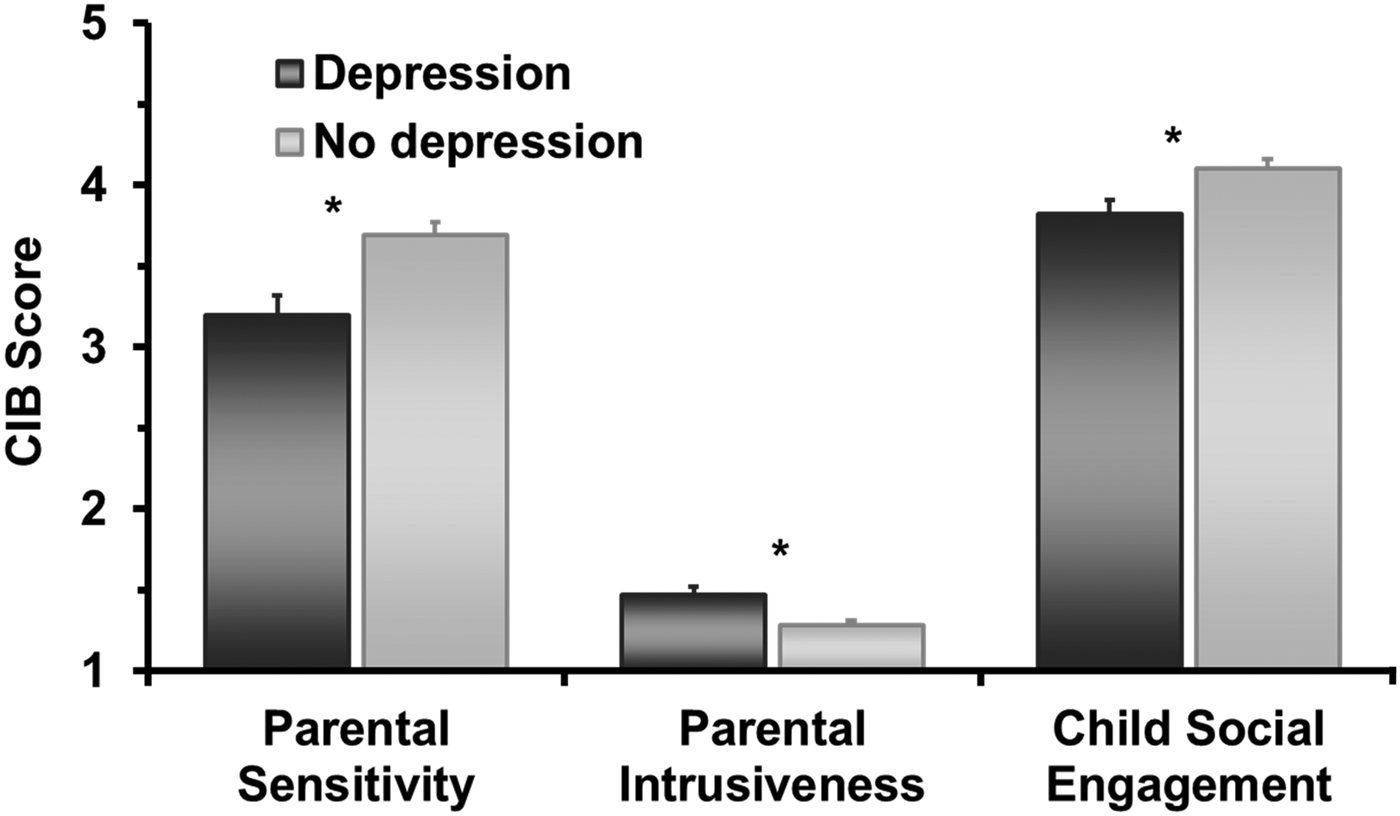
To examine the effect of maternal depression on dyadic factors (parent sensitivity, intrusiveness, and child social engagement with mother and father), a series of mixed design analyses of variance was used to test whether parent (father/mother within-family effects) moderates the effect of maternal depression (between-subjects effects) on dyadic factors. Main effects emerged for maternal depression on all dyadic factors. Among families of depressed mothers, parent sensitivity was lower, F (1, 115) = 12.28, p = .001, parent intrusiveness was higher, F (1, 115) = 9.11, p = .003, and child social engagement with parent was lower F (1, 115) = 6.44, p = .01, as compared to families of nondepressed mothers. Group differences in parent and child's behavior during dyadic interaction with mother and father appear in Figure 1. No main effect were found for parent (mother/father) for sensitivity, F (1, 115) = 0.94, p = .33, intrusiveness, F (1, 115) = 0.15, p = .70, and child social engagement, F (1, 115) = 0.65, p = .42. Moreover, no interaction effects (Parent × Maternal Depression) were found for sensitivity, F (1, 115) = 0.00, p = .95, intrusiveness, F (1, 115) = 1.70, p = .19, or child social engagement, F (1, 115) = 0.09, p = .76.
Mother–child and father–child relational patterns in families of depressed and nondepressed mothers.

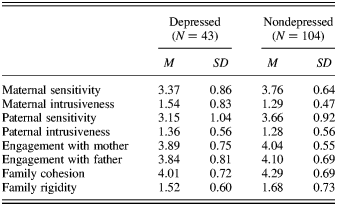
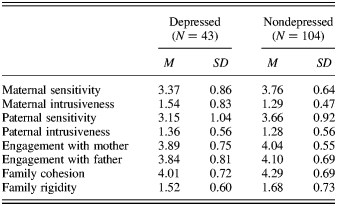
To examine the effect of maternal depression on family cohesion and rigidity, we conducted independent t tests with maternal depression as the independent measure. Results show that family cohesion was marginally lower when mothers were depressed, t (110) = 1.86, p = .066, and no differences were found in family rigidity, t (110) = 1.13, p = .026. Means and standard deviations are presented in Table 1.
Means and standard deviations for dyadic and family-level factors in families of depressed and nondepressed mothers
Concurrent and longitudinal associations among maternal, paternal, child, and family-level variables
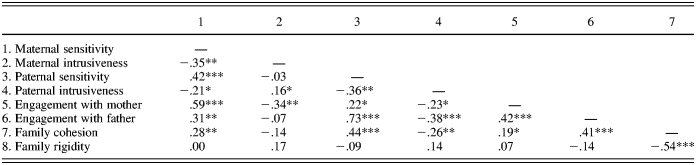
Pearson correlation coefficients, presented in Table 2, indicate that parental sensitivity (mother and father) was associated with lower parental intrusiveness (mother and father), greater child involvement, and higher family cohesion. Maternal and paternal intrusiveness correlated with lower child engagement with mother. Father, but not mother, intrusiveness correlated with lower child involvement with father and reduced family cohesion. Child involvement with both mother and father was associated with greater family cohesion. Finally, higher family cohesion was associated with lower family rigidity.
Correlations between dyadic interactions with mother and father and the family process
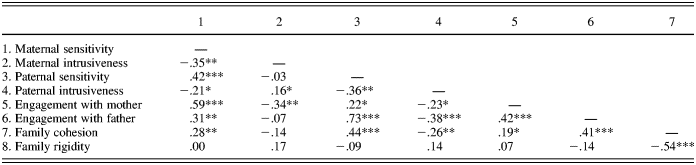
*p < .05. **p < .01. ***p < .001.
To examine longitudinal associations between mothering in infancy and fathering and family-level patterns in preschool, we examined correlations between mother sensitivity, mother intrusiveness, and child social engagement with mother at 9 months with father–child and family-level constructs at 6 years. Maternal sensitivity at 9 months was longitudinally related to father sensitivity (r = .29, p < .01) and to child social engagement with father (r = .31, p < .01) at 6 years. Mother intrusiveness and child engagement with mother at 9 months were unrelated to father–child or family interaction patterns at 6 years. Mother–child interaction patterns were unrelated to family cohesion or rigidity at 6 years.
Maternal depression and the family process: The moderating role of fathering
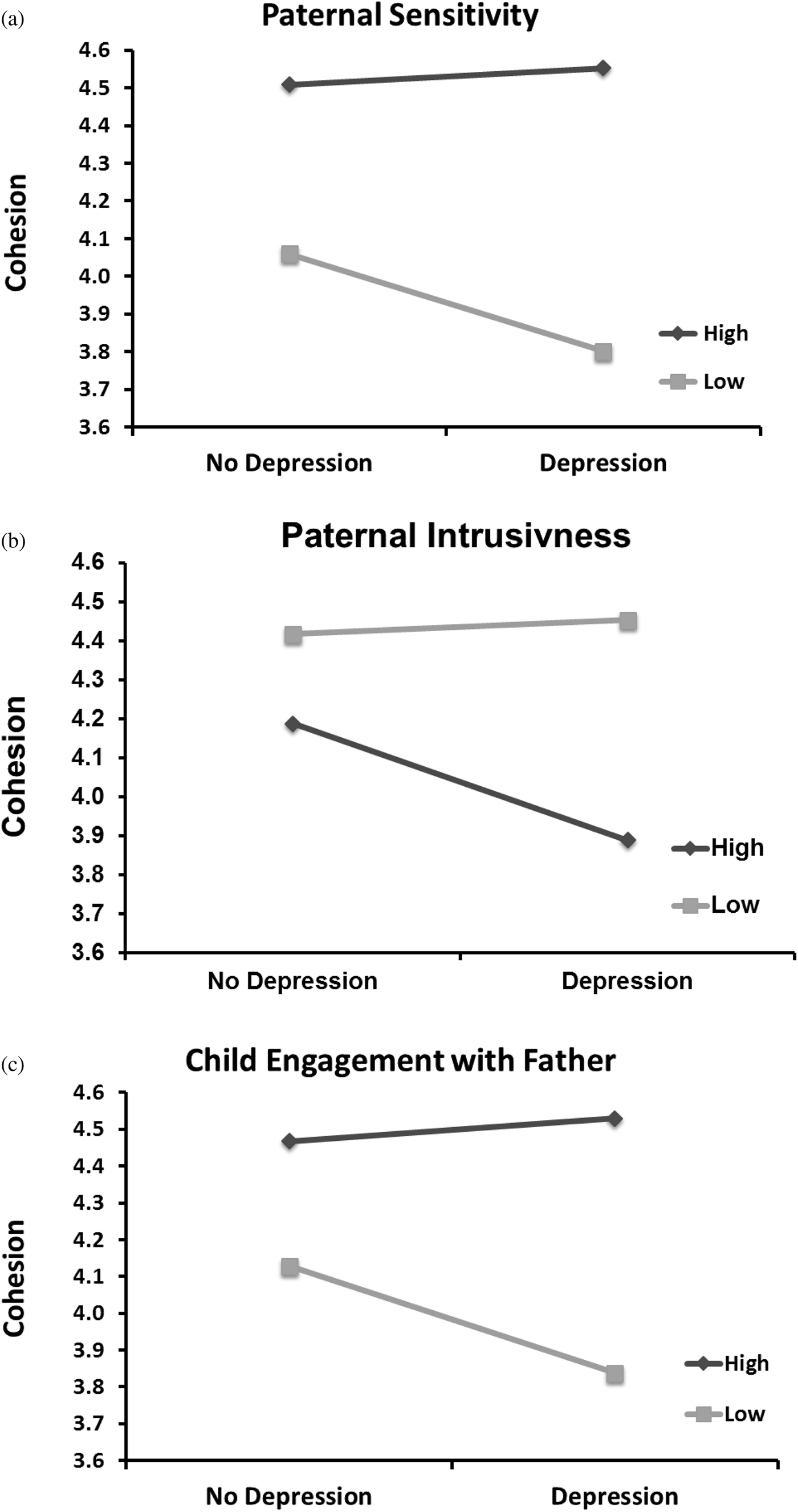
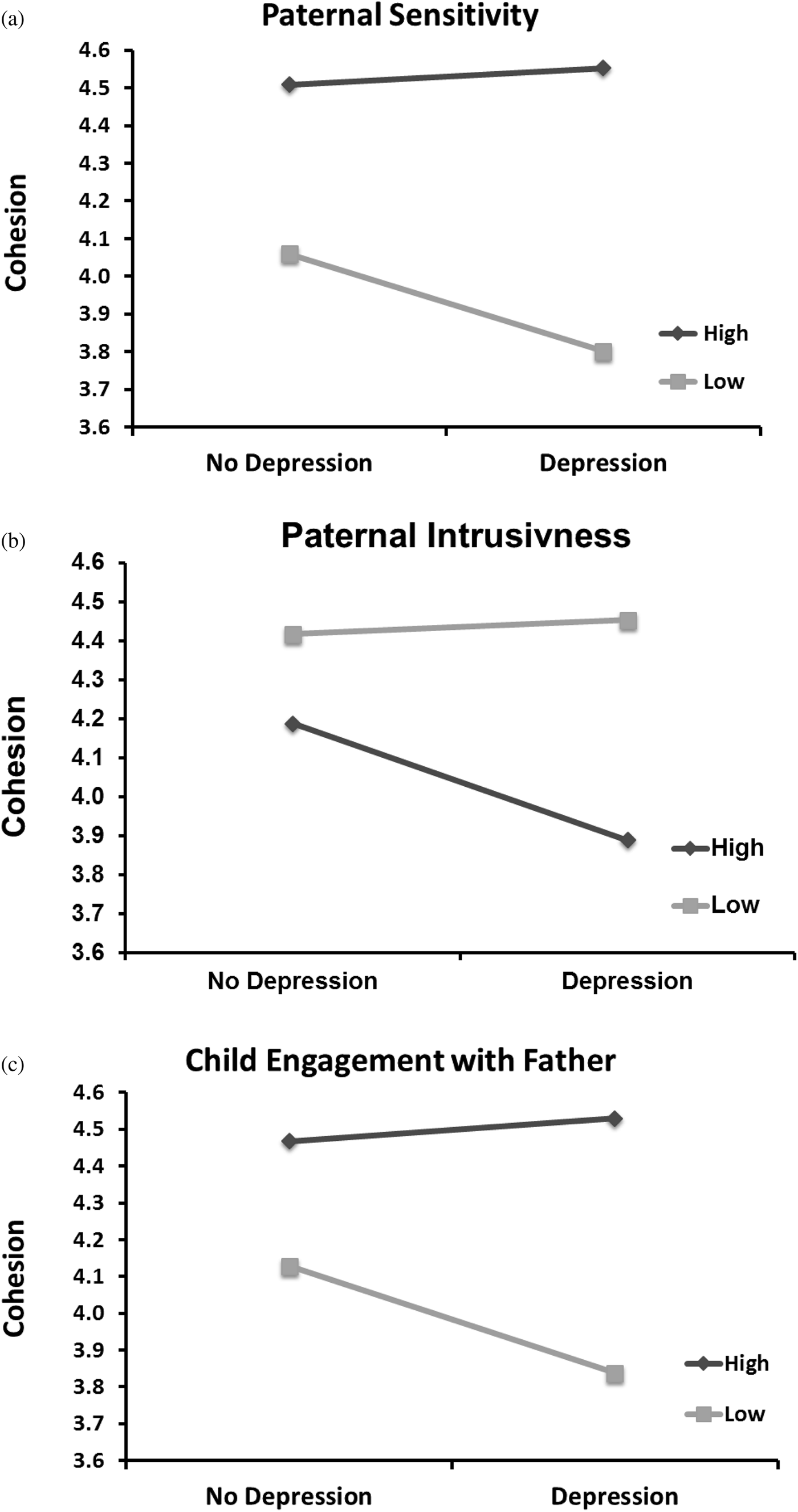
To examine the effect of maternal depression on family cohesion and rigidity, and whether this effect is moderated by fathering, we conducted a series of moderation analyses using hierarchical regression. In the first step of the analyses, we introduced the measures of maternal depression (0.5 = depression, –0.5 = no depression) and father interactive variables: father sensitivity, father intrusiveness, and child engagement with father, centered around the grand mean. In the second step, we added the interaction terms between maternal depression and each of these father variables. As hypothesized, each father interactive factor was found to moderate the effect of maternal depression on family cohesion (b = 0.25, SE = 0.13, t = 1.86, p = .06, for father sensitivity; b = –0.28, SE = 0.13, t = –2.01, p = .04, for father intrusiveness; and b = 0.29, SE = 0.12, t = 2.39, p = .02 for child social engagement with father). To probe these effects, we used Hayes' (Reference Hayes2013) PROCESS. As can be seen in Figure 2, in families where father sensitivity was high (1 SD above the sample mean), family cohesion was not affected by maternal depression (b = 0.07, SE = 0.21, t = 0.36, p = .78). However, when father sensitivity was low (1 SD below the sample mean), maternal depression negatively impacted the degree of family cohesion (b = –0.42, SE = 0.17, t = –2.40, p = .02). Similar findings emerged for child social involvement with father. When children showed high involvement with father, maternal depression did not significantly predict family cohesion (b = 0.11, SE = 0.20, t = 0.56, p = .58); however, when engagement was low, maternal depression was associated with decreased family cohesion (b = –0.49, SE = 0.17, t = –2.82, p = .01). The results for father intrusiveness mirrored these effects; when father intrusiveness was low (1 SD below the sample mean), family cohesion was not affected by maternal depression (b = 0.01, SE = 0.20, t = 0.06, p = .95). However, when father intrusiveness was high (1 SD above the sample mean), maternal depression had a negative impact on family cohesion (b = –0.50, SE = 0.18, t = –2.70, p = .01). We also examined interactions between maternal depression and parental and child relational variables, and these were not significant. A similar regression model predicting family rigidity was not significant.
The moderating role of fathering on the associations between maternal depression and family cohesion. *p < .05.
Discussion
Results of the current study are the first, to our knowledge, to describe the family process by using direct observations of mothering, fathering, and family patterns in cases where mothers present a clinical depressive profile across the child's first years of life. We found that chronic maternal depression impacted the various family subsystems in subtle ways. At the dyadic level, we found that at 6 years of child age depressed mothers, as well as their partners, were less sensitive and more intrusive and children's social participation was lower with both mother and father. At the triadic family level, we found that the family process was marginally less cohesive, implying decrease in the family's harmonious, collaborative, and autonomous style. These findings suggest that the effects of maternal depression extend beyond infancy and that one mechanism by which maternal depression shapes child adaptation is via its impact on the family. The family process carries important consequences for children's cognitive, social–emotional, and mental health outcomes (Favez et al., Reference Favez, Lopes, Bernard, Frascarolo, Lavanchy Scaiola, Corboz-Warnery and Fivaz-Depeursinge2012; Jacobvitz et al., Reference Jacobvitz, Hazen, Curran and Hitchens2004; McHale, Reference McHale2007), and its role in the cross-generational transfer of vulnerability from depressed mothers to their offspring requires much further research (Goodman & Gotlib, Reference Goodman and Gotlib1999).
Depressed mothers showed lower sensitivity and higher intrusiveness. Consistent with prior research (Lovejoy, Graczyk, Hare, & Neuman, Reference Lovejoy, Graczyk, Hare and Neuman2000), we found that the effects of depression on reduction in maternal sensitivity and increase in intrusiveness are not limited to the infancy period and can be observed throughout childhood (Apter-Levi et al., Reference Apter-Levy, Pratt, Vakart, Feldman, Zagoory-Sharon and Feldman2016; Pratt et al., Reference Pratt, Apter-Levi, Vakart, Feldman, Fishman, Feldman and Feldman2015). Several meta-analyses indicated that the associations between negative parental affect and negative parental behavior are not moderated by child age and persist throughout childhood and adolescence (Lovejoy et al., Reference Lovejoy, Graczyk, Hare and Neuman2000; Rueger, Katz, Risser, & Lovejoy, Reference Rueger, Katz, Risser and Lovejoy2011). Hence, children growing up in the context of clinical maternal depression from infancy may experience repeated cycles of negative, withdrawn, unpredictable, and insensitive mothering due to the recurrent nature of the disorder (Judd et al., Reference Judd, Akiskal, Maser, Zeller, Endicott, Coryell and Keller1998; Mueller et al., Reference Mueller, Leon, Keller, Solomon, Endicott, Coryell and Maser1999). Our findings also show that when mothers are depressed, fathers are also less sensitive and more intrusive. This is consistent with research indicating comparability between the mothering and fathering subsystems across infancy, childhood, and adolescence (Belsky et al., Reference Belsky, Youngblade, Rovine and Volling1991; Feldman et al., Reference Feldman, Bamberger and Kanat-Maymon2013; Feldman & Klein, Reference Feldman and Klein2003) and place children of depressed mothers at a double risk for compromised social–emotional growth. It is important to note that our sample included mothers with no comorbid risk; they were educated, above poverty level, lived within a coupled relationship, suffered no comorbid anxiety, and family members were physically healthy. Yet depression reduced sensitivity, increased intrusiveness, and decreased children's participation in social interaction in both the mothering and fathering subsystems. It is likely that when depression co-occurs with other major life stress, such as poverty, housing insecurity, single parenthood, or teenage mothering (some of these conditions involving no stable paternal presence), the risk for maladaptive child outcomes markedly increases.
The nature of the relationship between the various subsystems in the family is a matter of ongoing debate. The spillover hypothesis posits that emotions and behavior patterns in one subunit, particularly the marital subsystem, tend to leak into the parent–child relationship (Enger, Reference Enger, Hinde and Stevenson-Hinde1988; Erel & Burman, Reference Erel and Burman1995; Stroud, Durbin, Wilson, & Mendelsohn, Reference Stroud, Durbin, Wilson and Mendelsohn2011), pointing to mechanisms of comparability. Other models emphasize compensatory mechanisms and postulate that patterns in the various subsystems may be dissimilar. For example, fathers may provide better parenting under conditions of high marital distress (Enger, Reference Enger, Hinde and Stevenson-Hinde1988). Although most studies highlighted the impact of the marital relationship on the parent–child relationship and focused less on mother–father influences, studies have shown that the mother–child and father–child relationships are often mutually influencing (for reviews, see Cummings, Merrilees, & George, Reference Cummings, Merrilees, George and Lamb2010; Lamb, Reference Lamb and Lamb2010). In a longitudinal study of mothering and fathering from infancy to adolescence, medium-level correlations were found between mother–child and father–child interactions at each age, but mothering at one stage predicted fathering at the next stage and vice versa, pointing to ongoing bidirectional effects (Feldman et al., Reference Feldman, Bamberger and Kanat-Maymon2013). The current findings provide evidence for both comparability and compensatory mechanisms. At the level of the group, we found that for sensitivity and intrusiveness, the major parental styles that predict children's social adaptation (Ainsworth et al., Reference Ainsworth, Blehar, Waters and Wall1978; Sroufe, Reference Sroufe1996), there was a spillover effect: depressed mothers were less sensitive and more intrusive, and so were their partners. One pathway for this spillover is that fathers learn sensitive parenting from mothers and not vice versa, and when maternal care is deficient, sensitive fathering is harder to acquire (Feldman & Klein, Reference Feldman and Klein2003).
The longitudinal findings provide support for these propositions. As seen, mother sensitivity in infancy was longitudinally related to father sensitivity and child involvement with father at 6 years. While the stability of maternal sensitivity from infancy is well acknowledged (Feldman, Reference Feldman2010; Feldman et al., Reference Feldman, Bamberger and Kanat-Maymon2013; Sroufe, Reference Sroufe2005), this is the first study to report longitudinal associations between maternal sensitivity in infancy and father–child patterns in preschool in the context of maternal depression. We have previously shown that maternal sensitivity in infancy was lower in the depressed group (Feldman et al., Reference Feldman, Granat, Pariente, Kanety, Kuint and Gilboa-Schechtman2009), and the ongoing mutual influences between the mothering and fathering subunit may have shaped lower sensitivity in fathers at 6 years. Developing a sensitive style when coparenting with a chronically depressed mother may be a particularly difficult task for fathers, one that requires substantial effort and investment, and this may be the reason for its impact on family life. Early interventions to partners of depressed mothers that empower fathers, address their unique importance to child and family, and teach fathers how to parent sensitively at different ages should become a goal in cases of maternal depression.
Maternal depression has been shown to affect the family atmosphere (Korja et al., Reference Korja, Piha, Otava, Lavanchy Scaiola, Ahlqvist-Björkroth and Junttila2015), and we similarly found marginally lower family cohesion when mothers are depressed. However, our results indicate that this affect is moderated by the nature of the father–child relationship. In cases where fathering was less sensitive, more intrusive, and provided little opportunity for child active involvement, maternal depression negatively shaped the family atmosphere. However, when fathers were sensitive, nonintrusive, and engaged children socially, maternal depression no longer predicted low family cohesion. This highlights the potential for compensatory mechanisms when fathers rise to the challenge of coparenting with a chronically depressed mother, become invested in the father–child relationship despite little modeling from their wives, and form a sensitive, nonintrusive, and reciprocal relationship with the child that fosters child's social involvement and participation. It is of interest that such paternal moderation of maternal depression's effects on family life appeared for all aspects of the father–child relationship examined here: sensitivity, intrusiveness, and child social involvement. Although these patterns were interrelated, each describes a distinct aspect of parenting, and our findings suggest that each charts a unique pathway by which fathering can buffer the spillover from maternal depression to the family atmosphere. At 6 years of age, parental sensitivity, intrusiveness, and child social involvement were found to show individual stability with each parent (Feldman, Reference Feldman2010; Feldman et al., Reference Feldman, Bamberger and Kanat-Maymon2013; Feldman & Eidleman, 2009; Feldman & Masalha, Reference Feldman and Masalha2010; Sroufe, Reference Sroufe2005), suggesting that by the preschool stage children have internalized the distinct and stable relational style of each parent. Consistent with the formulations of attachment theory, the positive internalization of fathering over the entire first years of life seems to function as a resilience buffer in the context of chronic maternal depression highlighting the important role of fathers.
Increasing evidence underscores the importance of father involvement for children's physical, social, and emotional growth and for the mastery of self-regulatory skills and social competencies (Lamb & Lewis, Reference Lamb, Lewis and Lamb2010; Lewis & Lamb, Reference Lewis and Lamb2003; Tamis-LeMonda, Shannon, Cabrera, & Lamb, Reference Tamis-LeMonda, Shannon, Cabrera and Lamb2004). Father sensitivity has been repeatedly shown to predict secure attachment (Brown et al., Reference Brown, Mangelsdorf and Neff2012; van IJzendoorn & De Wolff, Reference van IJzendoorn and De Wolff1997), cognitive abilities (Mills-Koonce et al., Reference Mills-Koonce, Willoughby, Zvara, Barnett, Gustafsson and Cox2015), and prosocial behavior (Boyer & Nelson, Reference Boyer and Nelson2015; Newton, Laible, Carlo, Steele, & McGinley, Reference Newton, Laible, Carlo, Steele and McGinley2014), above and beyond the influence of mothering (Cabrera, Shannon, & Tamis-LeMonda, 2007; Stolz, Barber, & Olsen, Reference Stolz, Barber and Olsen2005). Studies often pinpoint the importance of parental sensitivity. During the first years of life, sensitivity marks the most critical component of the parental style that facilitates growth in children. It describes the parent's ability to read and accurately interpret their child's signals and respond in ways that are affectionate, well timed, and appropriately stimulating (Ainsworth, Bell, & Stayton, Reference Ainsworth, Bell, Stayton and Schaffer1971; van den Boom, Reference van den Boom1997). Sensitive parents are attuned to their child's needs and attend to those needs in a responsive and nonintrusive manner, and thus low parental intrusiveness may be part of the sensitive parenting constellation. Such sensitive parenting provides the foundation for the development of a warm, cohesive, and harmonious family process (Keren et al., Reference Keren, Dollberg, Koster, Danino and Feldman2010) as well as contributes to children's social–emotional and cognitive development across childhood, adolescence, and up to adult life (Bernier, Carlson, & Whipple, Reference Bernier, Carlson and Whipple2010; Feldman & Masalha, Reference Feldman and Masalha2010; Mesman, van IJzendoorn, & Bakermans-Kranenburg, Reference Mesman, van IJzendoorn and Bakermans-Kranenburg2012; Mills-Koonce et al., Reference Mills-Koonce, Willoughby, Zvara, Barnett, Gustafsson and Cox2015; Sroufe, Reference Sroufe2005; Sroufe, Egeland, Carlson, & Collins, Reference Sroufe, Egeland, Carlson and Collins2005). Child social involvement while shaped by children's temperamental dispositions (Marshal & Fox, Reference Marshal and Fox2006), requires sensitive parenting to build and maintain the child's positive affect and engagement in an age-appropriate step-by-step manner. Our findings indicate that the sensitive fathering constellation, marked by high sensitivity, low intrusiveness, and involved child participation, buffers the negative effects of chronic maternal depression on the family process and enables children to draw from the provisions embedded in a cohesive, positive, and harmonious family process despite the chronic course of the mother's disorder. Because rates of maternal depression appear to increase each decade (Halbreich & Karkun, Reference Halbreich and Karkun2006), interventions that can help fathers develop a sensitive style via concrete examples or video-feedback may be critical. Goodman, Lusby, Thompson, Newport, and Stowe (Reference Goodman, Lusby, Thompson, Newport and Stowe2014) examined compensatory and comparability mechanisms in relation to reported levels of father involvement in a sample of mothers diagnosed with depressive symptoms across the first years. The authors found both compensatory mechanisms in the first 6 months and comparability spillover mechanisms in the second 6 months of the infant's life. While child age and methodologies differ among the two studies and the family process was not tested, the two studies highlight the fact that fathering in the context of maternal depression shows mechanisms of both comparability and complementarity.
Several study limitations should be remembered in the interpretation of the findings. It is important to emphasize that the “effects” described here refer to statistical, not causal, effects. It is possible that unmeasured physiological, genetic, or contextual factors influenced the findings, and our results in no way imply causality. We included longitudinal assessments of the mother's depression to ascertain that all mothers suffered postpartum depression and children were growing up in the context of maternal depression from infancy to preschool but did not observe father–infant interactions in the first year of life, and this is an important study limitation. Furthermore, as our study was based on extreme-case design, we did not include a group of mothers who were only depressed at the postpartum period or those who were only depressed at 6 years for a full comparison. For this reason, we cannot ascertain whether the duration or the timing of maternal depression played a greater role in the present findings. Because we wanted to test the effects of maternal depression per se on children's development, we included mothers without contextual risk or comorbid anxiety disorders. This decision, however, reduced the number of participants and the ability to generalize to cases of comorbidity, and this is a study limitation. Our findings can therefore provide a first step, and further research is needed to address the family process in those of higher risk. Our focus was on traditional mother–father families, and we did not test other family constellations, such as extended family dwelling, multigenerational households, or childrearing within a two-parent gay or lesbian household.
Overall, our findings support the notion that maternal depression is a “family affair” (Letourneau et al., Reference Letourneau, Dennis, Benzies, Duffett-Leger, Stewart, Tryphonopoulos and Watson2012). The father–child relationship is embedded within a broader sociocultural context that constantly changes over time on the basis of societal beliefs and practices regarding the father's role in the family (Cabrera, Tamis-LeMonda, Bradley, Hofferth, & Lamb, Reference Cabrera, Tamis-LeMonda, Bradley, Hofferth and Lamb2000; Marsiglio, Amato, Day, & Lamb, Reference Marsiglio, Amato, Day and Lamb2000). We can only speculate that fathering may compensate for maternal depression only in cultures where fathers are involved, at least to some extent, in family life. As father involvement is constantly increasing in industrial societies, it is likely that their role as resilience buffers would enhance. Much further research is required to fully understand the intricate relationships between various subunits in the family as they cohere into a unified whole in health and under a host of high-risk conditions, address the father's unique contribution to defining the family process, and examine how interventions to enhance father involvement and sensitive parenting may ameliorate some of the negative effects of maternal depression on children development by contributing to fathering, mothering, and the family as a whole.