Implications
Behavioural and immune indicators showed that bulls can benefit from an extensive rearing system based on pasture, although animal performances were lower than in confinement when animals were finished up to 18 months. These differences were not detectable when the age at slaughter was reduced to 15 months. In addition, an early slaughter age reduced the degree of competition with human nutrition, as the system proportionally rely more on pasture. A possible negative impact of free ranging was observed on meat colour in terms of reduced lightness.
Introduction
Many beef cattle are kept in less-favoured areas. These areas are often characterized by being upland and with soils of low fertility. Therefore, most of these animals are finished in tie stalls, free stalls or feedlot. Pasture-based finishing of beef can potentially lower the cost of production and the concentration of manure, reduce the competition with humans in terms of food, increase animal welfare and be perceived by consumers as ethically sound (Napolitano et al., Reference Napolitano, Caporale, Carlucci and Monteleone2007 and Reference Napolitano, Pacelli, De Rosa, Braghieri and Girolami2005).
On one hand, natural pastures provide an environment where animals can express their own natural behaviour. Apart from wild ancestors, which for cattle are extinct, and few examples of feral populations (e.g. Hernandez et al., Reference Hernandez, Barral, Halffter and Colon1999), domestic herds kept in natural environments represent the main source of information about natural behaviour. Podolian cattle are considered the most direct descendants of the ancient wild bovine with a genetic relationship with similar breeds from the Balkans, Anatolia and the Middle East. They have been subjected to a lower selective pressure (artificial insemination has been rarely used) and a higher natural selection (animals kept in natural environments, where food search, avoidance of predators, maternal care, etc. were essential) as compared with other breeds (Napolitano et al., Reference Napolitano, Pacelli, De Rosa, Braghieri and Girolami2005). This breed is characterized by a high rusticity and is well adapted to live in arid environment with poor vegetation, as suggested by skin pigmentation, well-developed dewlap and sturdy hooves. The most common rearing system is based on pasture with either no- or nocturnal shelter. Most often, cows and calves are not supplemented, whereas young adults may receive concentrates in the finishing period.
On the other hand, herbage production from natural pastures located in less-favoured areas is characterized by being unevenly distributed throughout the year, which leads to greater reliance on conserved forages and concentrates. Therefore, optimizing the nutrient supply from forage is also a key component in the development of sustainable finishing systems. In addition, this beef production system is not well received by meat industry, which tends to discount the value of the product on the basis of increased incidence of dark cutting, reduced carcass yield and poor conformation.
Therefore, the aim of this study was to test the effect of rearing system (free ranging (FR) v. confined (C)) from two points of view: performance and behavioural adaptation.
Material and methods
Experimental design
The study was conducted in a farm located in Basilicata (southern Italy) at 338 m above sea level (40°45′2.16″N; 16°14′11.76″E). The mean annual rainfall in this area is below 600 mm.
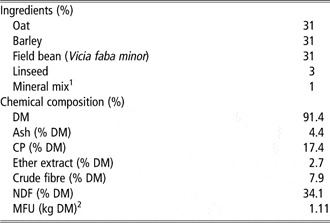
The first experiment was conducted from February to August 2007 on 12 Podolian young bulls. They were kept in a grazing area with their mothers until 10 months of age and then abruptly weaned and divided in two groups: C and FR. Animals were aged about 11 months at the start of the experiment (329.83 ± 9.95 and 339.83 ± 10.00 days, respectively). FR animals were allowed to graze on a natural fenced pasture similar to the previous grazing area (18 ha of grassland and 2 ha of shrub vegetation) until slaughter (18 months). They were supplemented with 2 and 4 kg/day per bull of flour that was dispensed in a covered area from February to mid-June and from mid-June to August, respectively. The ingredients and chemical composition of the flour are reported in Table 1. Group C was kept in a loose barn with a straw-bedded resting area and an uncovered exercise area with a total space allowance of 13.4 m2/bull. They received the same flour (6.0 and 7.5 kg/day per bull in spring and summer, respectively) and 2 kg/day per bull of straw.
Ingredients and chemical composition of flour offered to C and FR Podolian young bulls in both experiments (2007 and 2008)

C = confined; FR = free range; DM = dry matter; MFU = meat forage unit.
1Vitasol Spa, Brescia, Italy.
2INRA (1988).
The environmental parameters (temperature and relative humidity) recorded with a digital portable thermo-hygrometer (Model 1750-1/QM, Filotecnica, Salmoiraghi, Milan, Italy) are reported in Table 2.
Environmental parameters recorded at pasture and in the barn throughout the behavioural observations performed in experiment 1 (2007)

In order to verify whether a rearing system is less dependent on concentrates, and mainly based on pasture could be used, the experiment was replicated from February to June 2008 in the same field. The experiment conditions were similar to those used in the previous experiment, a part from the fact that the bulls were slaughtered at 15 months, before the dry season reduced herbage mass availability on pasture.
Average temperature and relative humidity in spring and summer 2008 were 12.27°C ± 0.98°C and 66.63% ± 2.45%, and 20.9°C ± 1.56°C and 57.12% ± 4.57%, respectively.
Similarly to the previous experiment, 12 male Podolian animals were divided in two groups, C and FR, aging approximately 10 months (303.40 ± 2.34 v. 300 ± 2.5 days, respectively). FR group received 3 kg/day per bull of flour supplementation from May to the end of June. The ingredients and the chemical composition of the flour were similar to those reported in the first experiment (Table 1). Group C received the same flour (5.0 and 7.0 kg/day per bull in spring and summer, respectively) and 2 kg/day per bull of straw. In both experiments water was always available to all the animals.
Data on pasture composition and herbage mass, as well as the performance of grazing and C animals, were recorded in both years. Behaviour measurements, immune responses and biochemical serum profile were monitored only during the first year.
Pasture composition and herbage mass
Grass availability (dry matter (DM)/ha) was measured from December 2006 to August 2007 and from December 2007 to June 2008 in experiments 1 and 2, respectively. Fifteen iron-fenced net boxes (1.5 × 1.5 m, 1 m height) were randomly placed on grazing area (Meijs et al., Reference Meijs, Walters and Keen1982; Martiniello et al., Reference Martiniello, Gesualdo, Sabia, Terzano, Pacelli and Berardo2007). Herbage was harvested at ground level from three 1 × 1 m areas placed into boxes. The total herbage mass was weighted and sub-sampled to evaluate DM and chemical composition (200 to 300 g) and to estimate the botanical composition (grass, legumes, composites and others).
The samples of herbage were dried in a forced-air oven at 60°C until reaching constant weight and ground with a 1-mm screen for subsequent chemical analysis. For herbage and flour, the DM content was determined by drying samples at 105°C until reaching constant weight. Ash content was determined in a muffle furnace at 550°C overnight. Crude protein (CP) was determined using the Kjeldahl method by multiplying the concentration of nitrogen (N) by a factor of 6.25 and ether extract with the Soxhlet method (Association of Official Analytical Chemists (AOAC), 1990). Neutral detergent fibre (NDF) was determined according to Van Soest et al. (Reference Van Soest, Robertson and Lewis1991).
Behavioural measurements
Two observers carried out both the familiarization procedure and the observations. The observers spent several days with the experimental animals in order to accustom the groups to their presence. The success of the habituation was measured in terms of the distance the animals kept from the observers. The familiarization procedure ended when the observer was able to move around at a distance of approximately 0.5 to 1.5 m. Behavioural observations were performed in nine sessions through continuous focal animal recording method (Martin and Bateson, Reference Martin and Bateson2007). The observers were balanced across groups and time of the day. Six-hour period of continuous observations were alternatively conducted from 0600 to 1200 h and from 1200 to 1800 h. In each session a different animal was chosen. Therefore, all the animals were included in the observations, whereas three animals for each group were sampled twice.
The duration (accuracy: 1 s) of the observed behaviours was recorded. The nine behavioural observations were divided into two seasons: spring (mid-February to mid-June; five recordings) and summer (mid-June to August; four recordings). The following parameters were recorded: posture (standing or lying) and activity such as grazing/feeding (biting or chewing the herbage, and, only for group FR, walking with muzzle close to the ground), walking, resting (opened or closed eyes, but no other overt activity), ruminating and alert, whereas all other behaviours (e.g. drinking, vocalization and self-grooming) were recorded as ‘other’. The proportion of time spent on each behaviour was calculated for each of the observation session. In addition, behaviours such as self-grooming, licking objects, vocalization, agonistic (pushing, butting or threatening co-specifics) and non-agonistic interactions (sniffing, horning or nuzzling co-specifics) were recorded as number of events.
The distance covered during the observation session was recorded by means of pedometer attached to the waist of the observer.
Ingestive behaviour was studied only for group FR. During the 6-h period, every hour, the number of bites and bite rate (number of bites per grazing minute) were recorded (using a mechanical counter) along with herbage height by means of a herb metre. Bite mass and botanical preferences were determined in hand-plucked samples (15 simulated plucks/h). Observers mimicked the bite size of tame animals by visual observation of the bites and clipping or hand plucking simulated bites from the vegetation. This technique allowed estimating intake rate (bite mass × bite rate) of FR animals (Gordon, Reference Gordon1995). Samples were sealed in polythene bags and taken to the laboratory in an icebox. Subsequently, they were weighted and botanical composition (grass, legumes, composites and others) was evaluated. Then, herbage samples were dried and analysed for chemical composition as previously described.
Immune responses and biochemical serum profile
At 3 months after grouping phytohemagglutinin (PHA; 1 mg, Sigma, Milan, Italy) dissolved in 1 ml of sterile saline solution was injected subcutaneously into the middle of 2-cm wide circles marked on shaved skin on the upper side of each shoulder. The skin-fold thickness (mm) was determined with a caliper before PHA injection and 24 h after. For each animal, a mean increase in skin-fold thickness (24-h thickness–pre-injection thickness) was calculated using the two measurements gathered from shoulders.
The animals were injected subcutaneously with 10 mg (5 mg per shoulder) of Keyhole Limpet Hemocyanin (KLH, Sigma, Milan, Italy) dissolved in 2 ml of sterile saline solution and emulsified in an equal volume of incomplete Freund's adjuvant a month after grouping. Another injection without adjuvant was repeated after 1 month. Antibody titre was evaluated at monthly intervals on serum collected by coccygeal venipuncture using vacutainer tubes. The concentrations of IgG anti-KLH in serum were determined by an ELISA test performed in 96-well, U-bottomed microtitre plates. In short, wells were coated with the antigen (0.5 mg of KLH/ml of phosphate buffered saline (PBS)) and incubated overnight at 4°C. PBS (pH 7.2) and 0.05% Tween 20 was used as washing buffer and 10% reconstituted milk was incubated to block non-specific binding. Then the serum (1 : 1600 dilution in PBS; 100 ml per well) was added and incubated at 37°C for 1 h. The extent of antibody binding was detected using a rabbit-anti-bovine IgG-horseradish peroxidase conjugate (Sigma Aldrich, Milan, Italy) diluted at 1 : 30 000 (100 ml per well). Optical density was measured at a wavelength of 450 nm using Rosys Anthos 2020 ELISA reader (Diessechem, Milan, Italy). The intra- and inter-assay CV was 5.66% and 4.92%, respectively. The assay was optimized in our laboratory for concentrations of coating antigen, serum and detector antibody.
For the determination of biochemical metabolites including glucose, cholesterol, total proteins, aspartate aminotransferase (AST), alanine aminotransferase (ALT), lactate dehydrogenase (LDH), creatine kinase (CK), triglyceride, phosphorus, chloride, calcium, urea and creatinine, required quantity of blood serum was taken. Standard commercial kits were used for analysis and procedures were adopted as recommended by the manufacturer of kits (PKL, Pokler, Italy, Geneva). After processing samples and standards provided with the kits, absorbance of the standard and the samples was determined and the concentrations of respective metabolites in samples were computed, using the formula: concentration of a metabolite = absorbance of sample divided by absorbance of standard and multiplied by standard concentration. Glucose concentrations were determined by the enzymatic kinetic colorimetric test (glucose oxidase-peroxidase antiperoxidase (GOD-PAP)). The standard had glucose concentration of 100 mg/dl. For cholesterol, enzymatic colorimetric test using diagnostic kit was applied. The concentration of cholesterol in the standard was 200 mg/dl. Total proteins content in the serum were measured by the Biuret method. AST and ALT activities in blood serum samples were determined by the International Federation of Clinical Chemistry and Laboratory Medicine (IFCC) colorimetric method. For triglycerides, the standard contained 200 mg/dl of triglycerides. LDH activity in serum samples was determined by the French Society of Clinical Biology/optical standard method (SFBC/OPT). For CK activity, the creatinine kinase N-acetylcysteine method was performed. Phosphorus concentration was determined by enzymatic kinetic colorimetric test. The standard had phosphorus concentration of 4 mg/dl. For chloride, the enzymatic colorimetric test (mercury thyocianate method) was used. The concentration of chloride in the standard was 100 mEq/l. Calcium content in the serum samples was determined by the enzymatic kinetic colorimetric test (Arsenazo III). The concentration of calcium in the standard was 10 mg/dl. Urea concentrations were determined by the enzymatic UV test glutamate dehydrogenase (Urease-GLDH), using a commercial kit. The standard had urea concentration of 50 mg/dl. For creatinine, an enzymatic colorimetric test was performed. Both in chromatic methods and in kinetics methods a UV spectrophotometer (Beckman Coulter Inc., DU800, Fullerton, CA, USA) was used.
Animal performance and post-slaughter measurements
Animals were individually weighted at monthly intervals in order to estimate the average daily gain (ADG, g/day) and body condition score (BCS) on a 9-point scale (Richards et al., Reference Richards, Spitzer and Warner1986). Animals from experiments 1 and 2 were slaughtered at 18 and 15 months of age, respectively. They were weighed on the morning of slaughter, after 12 h of fasting, to record full-body weight and transported to a commercial slaughter facility. Slaughter occurred according to industrial routines used in Italy and in accordance to the EU Directive 93/119/CE. One hour after slaughter, each carcass was weighed and dressing percentage was calculated.
Colour was measured using a colour-meter Minolta CR 200 (D65: illuminant; Konica Minolta Sensing Inc., Sakai-ku, Sakai, Osaka, Japan) on 1 cm thick steaks from Longissimus dorsi muscle, removed from the right half-carcass 24 h post mortem. Prior to the measurement, meat samples were allowed to bloom for 1 h at 3°C ± 1°C, stored in a plastic tray and over wrapped with a polyethylene film.
Statistical analyses
Data were analysed with statistical analysis software (Statistical Analysis Software (SAS), 1990). Behavioural data were analysed using the observation session as the experimental unit. These data were subjected to analysis of variance (ANOVA) with season (spring and summer), group (C and FR) and their interactions as factors.
Data on animal performance, cellular immune response and meat quality were subjected to ANOVA with one factor (group), whereas the antibody titre and blood metabolites were analysed using the PROC MIXED with time as repeated factor and group as non-repeated factor. Both analyses used the animal as the experimental unit.
Only for group FR, data on ingestive behaviour were subjected to ANOVA with one factor (season), whereas chemical and botanical composition of pasture and hand-plucked samples were analysed using ANOVA with season, source (pasture and hand plucking) and their interactions as factors. In addition, for this statistical model the animal was used as the experimental unit.
In addition, Pearson correlation coefficients between herbage height v. bite rate, bite mass and intake rate were computed.
Results and discussion
Pasture composition and herbage mass
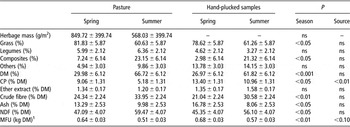
The main features of herbage collected in 2007 from different sources (pasture and hand-plucked samples) are reported in Table 3 in relation to the season. No significant interactions between the source and the season were observed.
Botanical and chemical composition (means ± s.e.) of pasture and hand-plucked samples in experiment 1 (2007)

DM = dry matter; MFU = meat forage unit.
1INRA (1988).
Biomass availability was much lower in summer than in spring, although differences were not significant due to the high variability of samples. Compared with botanical composition, season significantly affected percent Grasses, which were lower in summer (P < 0.05) and Composites (P < 0.05), which increased in summer. In agreement with Hessle et al. (Reference Hessle, Rutter and Wallin2008), in both pasture and hand-plucked samples chemical composition was affected by season. In particular, DM (P < 0.001), crude fibre (P < 0.01) and NDF (P < 0.05) increased during summer as compared with spring. Conversely, in summer CP (P < 0.05), ash (P < 0.05) percentages and meat forage unit (MFU) values (P < 0.01) were lower.
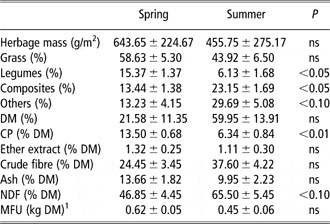
Measurements recorded during the second year are reported in Table 4. Herbage mass was lower in summer than in spring, although, as for the previous year, differences were not significant.
Botanical and chemical composition (means ± s.e.) of pasture in experiment 2 (2008)

DM = dry matter; MFU = meat forage unit.
1INRA (1988).
A predominance of the grass family was observed but with no significant seasonal differences, whereas legumes were significantly (P < 0.05) higher in spring than in summer, and composites (P < 0.05) and others (P < 0.10) were higher in summer than in spring.
As to chemical composition (Table 4), seasonal differences were significant (P < 0.01) only for CP percentage that was higher in spring as compared with summer, whereas NDF fraction tended to increase (P < 0.10) in summer, as already observed in the previous experiment. On the whole, pasture availability, in terms of herbage mass, composition and seasonal development, was similar to that observed in the previous experiment (2007).
Ingestive behaviour
No significant differences in botanical composition were detected between pasture and hand-plucked samples (Table 3). However, the diet selected by the animals, as assessed by hand plucking, was higher in CP percentages in comparison with pasture samples (12.17% ± 0.87% v. 7.11% ± 0.93%, respectively; P < 0.01) and tended to have higher MFU values (0.63 ± 0.02 v. 0.58 ± 0.02 MFU/kg DM; P < 0.10). This may be ascribed to the ‘foraging strategy’ of the animal (Gordon and Illius, Reference Gordon and Illius1992). According to this theory, grazing herbivores make a series of short-term decisions (e.g. about which plants or plant portions to select and how long to search) in order to ingest a diet adequate to satisfy their nutrient requirements for maintenance, growth and reproduction (Gordon, Reference Gordon1995; Dumont et al., Reference Dumont, Garel, Ginane, Decuq, Farruggia, Pradel, Rigolot and Petit2007). No significant effect of source was detected for the other chemical components.
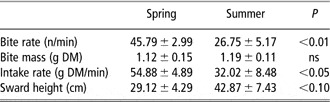
The ingestive behaviour of FR animals is depicted in Table 5. While foraging, an animal takes a series of bites varying in size from the herbage on offer. Combination of bite size and short-term rate of biting is defined as the short-term intake rate. These variables are related, as larger bite size need more time for its chewing and swallowing. Usually ruminants prefer plants with faster ingestion (De Rosa et al., Reference De Rosa, Fedele, Napolitano, Gubitosi, Bordi and Rubino1997). In this experiment, bite rate resulted higher (P < 0.01) in spring than in summer. Similarly, Lamoot et al. (Reference Lamoot, Meert and Hoffmann2005) reported that bite rate of cattle were higher in spring than in the other seasons, probably because in this period plant growth starts and provides the herbivores with more palatable and digestible forage. In this study crude fibre and NDF percentages were lower in spring. Therefore, seasonal changes in forage quality parameters were reflected in adaptations of ingestive behaviour. No significant differences between the seasons were observed for bite mass. Therefore, as a consequence of a higher bite rate during spring, intake rate was higher in spring than in summer (P < 0.05). Cattle usually exhibit very typical selectivity patterns preferentially selecting against reproductive grass patches (Wallis De Vries and Daleboudt, Reference Wallis De Vries and Daleboudt1994; Dumont et al., Reference Dumont, Garel, Ginane, Decuq, Farruggia, Pradel, Rigolot and Petit2007), especially as these become more mature (Ginane et al., Reference Ginane, Petit and D'hour2003).
Ingestive behaviour (means ± s.e.) expressed by free ranging Podolian young bulls during experiment 1 (2007)

DM = dry matter.
Herbage height tended (P < 0.10) to be higher in summer. In agreement with Gibb et al. (Reference Gibb, Huckle, Nuthall and Rook1997) and Burns and Sollenberger (Reference Burns and Sollenberger2002), this variable was negatively correlated with bite rate (r = −0.60; P < 0.001) and positively related to bite mass (r = 0.55; P < 0.01). In particular, in a Boval et al.'s (Reference Boval, Fanchone, Archimede and Gibb2007) experiment, bite mass increased by 9 mg per additional centimetre of extended tiller length. A lower biting rate would be a consequence of greater harvested leaf length or a higher bite mass requiring more time for prehension, manipulation and mastication (Cosgrove, Reference Cosgrove1997).
It has been suggested that bovids are morphologically constrained to graze on very short swards because of the lack of the upper incisors (Illius and Gordon, Reference Illius and Gordon1987). Nevertheless, they do prefer shorter herbage if less mature (Wallis De Vries and Daleboudt, Reference Wallis De Vries and Daleboudt1994; Ginane et al., Reference Ginane, Petit and D'hour2003). Accordingly, as already reported, in our experiment bulls showed higher intake rates in spring than in summer because of the lower DM content.
Maintenance and social behaviour
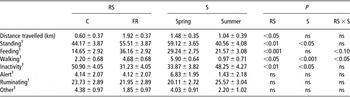
The activity budget observed in 2007 and expressed as percentage of time is reported in Table 6. FR animals walked longer distances in comparison with C animals (P < 0.05). This is closely related to the lower inactivity (P < 0.01) observed in FR bulls, which needed to walk in order to feed, as also suggested by the higher percentage time spent standing (P < 0.01) and feeding (P < 0.001). This latter activity included walking with muzzle close to the ground in the group FR that was precluded to the group C. In general, cattle allowed to graze are perceived as animals with higher welfare standards because they can express natural behaviours, such as grazing and exploration (Hemsworth et al., Reference Hemsworth, Barnett, Beveridge and Matthews1995). The distance covered by FR animals in this study was similar to that reported by Krohn et al. (Reference Krohn, Munksgaard and Jonasen1992) in dairy cows kept in extensive environment (1.7 km), whereas group C showed a walking distance similar to that covered by dairy cows (0.6 km) kept in loose housing systems (Kempkens and Boxberger, Reference Kempkens and Boxberger1987). Although no effects of season and group × season were observed on walked distance, the mean distance travelled was lower in summer as compared with spring. Accordingly, in response to high ambient temperature (Table 1) walking (P < 0.001) and standing (P < 0.05) were lower in summer, whereas inactivity was higher (P < 0.05). Dumont et al. (Reference Dumont, Garel, Ginane, Decuq, Farruggia, Pradel, Rigolot and Petit2007) observed that daily distance walked by cattle either increased or remained relatively constant over the grazing season for animals at a low stocking rate, which suggests that they kept on exploring the grazing area. However, these results are not necessarily in contrast with our results, as in this experiment the higher supplementation given to the grazing animals could have reduced the motivation to explore and ingest material of poor quality from pasture (Table 3). In fact, a significant interaction season × rearing system was observed for walking (P < 0.05). This result can be attributed to the fact that group FR walked more than group C in spring (8.42% ± 0.90% v. 3.39% ± 0.90%, respectively; P < 0.01), whereas no differences between groups were observed in summer (0.94% ± 1.02% v. 1.00% ± 1.02%, respectively). The same interaction only tended to be significant for feeding (P < 0.10), as differences between groups were much higher in spring (43.60% ± 3.90% v. 14.87% ± 3.90%, respectively; P < 0.001) than in summer (28.72% ± 4.36% v. 14.43% ± 4.36%, respectively; P < 0.05). Accordingly, it has been observed that both low availability of grass in summer (Ruckebusch and Bueno, Reference Ruckebusch and Bueno1978) and feeding supplements (Sarker and Holmes, Reference Sarker and Holmes1974) reduce grazing time.
Activity budget (means ± s.e.) of Podolian young bulls expressed over 6-h periods and recorded in nine sessions during experiment 1 (2007)

RS = rearing system; S = season; C = confined; FR = free range.
1Data expressed as percentage of time.
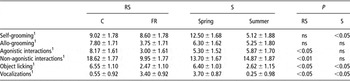
As to behavioural categories expressed as number of events (Table 7), group FR showed lower agonistic (P < 0.05) and non-agonistic (P < 0.01) interactions in comparison with group C, as a possible consequence of higher inter-animal distance and different priorities (i.e. more time needed to eat and lower spare time). A lower number of non-agonistic social interactions, such as sniffing and rubbing, have been also observed by Krohn (Reference Krohn1994) in extensively kept dairy cows as compared with animals in intensive systems. The mean number of agonistic events recorded in this study was much lower than that reported in previous experiments (Wierenga, Reference Wierenga1984; Miller and Wood-Gush, Reference Miller and Wood-Gush1991), possibly because the bulls were all part of one herd since their birth, consequently their social status was well established, whereas agonistic interactions prominently occur in occasion of establishing the social order in dynamic groups (Bouissou et al., Reference Bouissou, Boissy, Le Neindre and Veissier2001; Bouissou and Boissy, Reference Bouissou and Boissy2005).
Other activities (means ± s.e.) of Podolian young bulls observed over 6-h periods and recorded in nine sessions during experiment 1 (2007)

RS = rearing system; S = season; C = confined; FR = free range.
1Data expressed as number of events.
Self-grooming was higher in spring than in summer (P < 0.01). This comfort behaviour is closely related to hygiene and possibly associated to the higher rainfalls and body dirtiness usually observed in this season.
Object licking was higher in spring and in C animals as compared with summer and FR animals (P < 0.05). In agreement with Huber et al. (Reference Huber, Baumung, Wurzinger, Semambo, Mwai and Winckler2008), the lower object licking observed in group FR may be explained by the higher walking and feeding activities performed at pasture, whereas group C expressed more object licking while spending less time in walking and feeding. Abnormal oral behaviours are linked with the lack of opportunities to express explorative behaviours and to spend time feeding (Bergeron et al., Reference Bergeron, Badnell-Waters, Lambton and Mason2006). Accordingly, Redbo and Nordblad (Reference Redbo and Nordblad1997) showed that increasing dietary forage results in longer feeding duration along with reduced abnormal oral behaviour. Recently, Keyserlingk et al. (Reference Keyserlingk, Rushen, de Passillé and Weary2009) reviewed papers showing that cattle do prefer pasture even over a well-designed free-stall barn.
Vocalization were higher both in FR animals (P < 0.05) and in spring (P < 0.05). Vocal signals are used to keep contact with and locate other herd members, therefore they were more frequently expressed in FR conditions and in spring when animals moved more often (Watts and Stookey, Reference Watts and Stookey2000).
Immune responses
In vivo cellular immune response as recorded in experiment 1 was higher in the group FR than in the group C (4.51 ± 0.97 v. 1.07 ± 0.97 mm, respectively; P < 0.05). Similar results were obtained in different ruminant species such as sheep (Braghieri et al., Reference Braghieri, Pacelli, Verdone, Girolami and Napolitano2007) and buffaloes (De Rosa et al., Reference De Rosa, Napolitano, Saltalamacchia, Bilancione, Sabia, Grasso and Bordi2007) in which grazing animals showed higher skin thickening as compared with C animals.
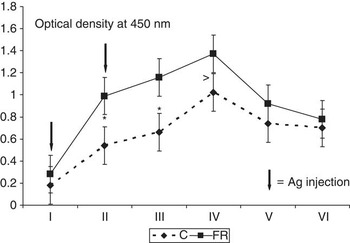
The antibody titres are presented in Figure 1. For this variable the interaction between time and group tended to be significant (P < 0.10). Group FR had a humoral immune response constantly higher than group C, with significant differences between groups observed 2 and 3 months after antigen injection (P < 0.05); differences only tended to be significant at 3 months (P < 0.10) and were not significant at 4 and 5 months. It is generally recognized that environmental or management stressors are associated to impair immunological functions in farm animals. Previous studies indicated that space allowance did not affect humoral immune response of beef cattle (Fisher et al., Reference Fisher, Crowe, O'Kiely and Enright1997a and Reference Fisher, Crowe, Prendiville and Enright1997b). However, in those studies animals were all kept indoor, whereas in our experiment indoor animals were compared with animals kept outdoor. Therefore, the housing system may have affected more markedly the immune status of the animals than a different space allocation within a single housing system (indoor). Accordingly, in an earlier study the housing system affected the immune function of calves with or without access to a fenced area (Cummins and Brunner, Reference Cummins and Brunner1991). In this study, the effects of housing system on immune functions indicated a differential success in coping of animals of different groups, thus providing a measurement for the potential higher disease susceptibility and lower welfare of animals kept indoor. Accordingly, some aspects of cattle health, such as lameness and mastitis, can be improved by free access to grazing areas (reviewed by Keyserlingk et al., Reference Keyserlingk, Rushen, de Passillé and Weary2009).
Antibody titres to keyhole limpet hemocyanin (KLH) of confined (C) and free range (FR) Podolian young bulls were evaluated before the first antigen administration and then at 30-day intervals using ELISA techniques. Group FR had a humoral immune response constantly higher than group C, with significant differences 2 and 3 months after antigen injection (P < 0.05), whereas differences only tended to be significant at 3 months (P < 0.10) and were not significant at 4 and 5 months.

Metabolic profile and weight gains
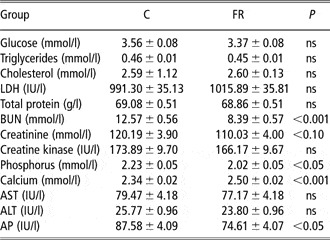
Haematological parameters as recorded in experiment 1 are presented in Table 8. Most blood metabolites levels were not affected by time and the interaction group × time. The rearing system did not change the energetic metabolism of Podolian young bulls in terms of glucose, triglycerides and cholesterol levels. Similar results were obtained by Marino et al. (Reference Marino, Braghieri, Albenzio, Caroprese, Girolami, Santillo and Sevi2009) in animals of the same breed and age.
Blood metabolites (means ± s.e.) of C and FR Podolian young bulls in experiment 1 (2007)

C = confined; FR = free range; LDH = lactate dehydrogenase; BUN = blood urea nitrogen; AST = aspartate aminotransferase; ALT = alanine aminotransferase; AP = alkaline phosphatase.
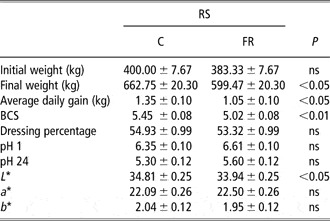
Blood total proteins were also unaffected by the rearing system, thus indicating an overall similar nutritional state of the animals from the two experimental groups (Doornenbal et al., Reference Doornenbal, Tong and Murray1988). However, serum urea-N levels were lower (P < 0.001) and creatinine tended to be lower (P < 0.10) in the group FR than in the group C. In addition, creatinine increased with time (P < 0.001). In young growing ruminants, these two metabolites are deemed to be important indicators of the protein nutritional state (Cabaraux et al., Reference Cabaraux, Dufrasne, Istasse and Hornick2005). In particular, the amount of creatinine released in the blood is related to the growth rate of the muscular tissue, as the precursor creatinine is mainly contained in the skeletal muscles (Doornenbal et al., Reference Doornenbal, Tong and Murray1988). In addition, urea-N levels can provide information about the quality of the pasture in terms of protein availability. In a previous study, Tucker and Hentges (Reference Tucker and Hentges1983) observed lower urea-N levels in beef cattle grazing on a pasture characterized by low protein contents. In our study the herbage ingested by FR animals from pasture had low protein (CP, 12.17% DM) and energetic contents (0.63 MFU/kg DM). Although these animals also received a feeding supplementation (2 and 4 kg/day per bull of flour in spring and summer, respectively), they were likely to be unable to fully express their growth potential, thus showing lower weight gains, slaughter weight and body condition scores as compared with C animals (Table 9).
Performance infra vitam and post-slaughter measurements (means ± s.e.) of Podolian young bulls in experiment 1 (2007)

RS = rearing system; C = confined; FR = free range; BCS = body condition score; L* = lightness; a* = redness; b* = yellowness.
The higher levels of alkaline phosphatase observed in group C (P < 0.05) also indicated a higher growth potential in C animals, as this enzyme is related to bone growth (Freedland and Szepesi, Reference Freedland and Szepesi1971).
Phosphorous concentration was higher in group C than in group FR (P < 0.05). Serum phosphorous level is only partly dependent on its dietary intake (Karn, Reference Karn2001), and the lower levels observed in FR animals may be attributed to their higher physical activity and thermoregulation needs. Although concentrations of serum calcium are more closely physiologically regulated than phosphorous, the higher levels observed in group FR as compared with group C (P < 0.01) can be due to the fact that concentrates are low in calcium, whereas forages are generally satisfactory sources of this element (Suttle, Reference Suttle2009).
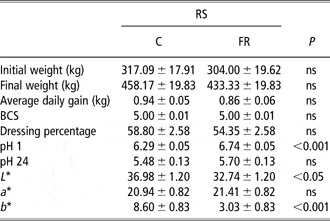
Animal performances recorded in the second experiment are illustrated in Table 10. Although both groups achieved lower performances compared with the previous experiment possibly because of the lower initial weight, the rearing system did not affect final weight, ADGs and BCSs. These results show that FR system can produce performances similar to those obtained in C conditions when the animals are slaughtered at an earlier age. The ratio (kilogram of concentrate fed to the animals × days of feedings supplementation)/total amount of meat in kilogram was much higher for 18-month-old bulls kept on pasture (0.96) than 15-month-old bulls kept in the same conditions (0.46). This result can be attributed both to the length of the finishing period (7 v. 5 months) and to the fact that younger bulls were slaughtered before the dry season pressed to increase the amount of supplement to be offered to the animals. Thus, this system was proportionally relying more on pasture as compared with 18-month-old bulls. Although we did not compare the two systems (15- v. 18-month-old bulls) from an economic point of view, the lower amount of concentrate fed to the animals suggests that FR 15-month-old bulls may be more profitable, in terms of feed and labour, than FR 18-month-old bulls.
Performance infra vitam and post-slaughter measurements (means ± s.e.) of Podolian young bulls in experiment 2 (2008)

RS = rearing system; C = confined; FR = free range; BCS = body condition score; L* = lightness; a* = redness; b* = yellowness.
Post-slaughter measurements
In both experiments no significant differences were detected between the two rearing systems for dressing percentage (Tables 9 and 10). pH values were not affected by rearing system in the first experiment (Table 9), thus indicating similar glycogenolysis post-slaughter in animals from both groups. In the second experiment, meat pH 1 h after slaughter was higher in group FR than group C group (P < 0.05), whereas no significant differences were observed between the two groups for ultimate pH (Table 10). The higher early post-mortem pH of FR bulls may be indicative of slower muscle metabolism immediately before and/or after slaughter. This may be indicative of lower stress (Terlouw et al., Reference Terlouw, Berne and Astruc2009; Bourguet et al., Reference Bourguet, Deiss, Gobert, Durand, Boissy and Terlouw2010), or of higher proportions of oxidative fibres in these animals (Gentry et al., Reference Gentry, McGlone, Miller and Blanton2004). The increased redness (a*) observed in muscles of outdoor raised cattle may be due to the increased proportions of oxidative muscle fibres induced by greater exercise (Vestergaard et al., Reference Vestergaard, Oksbjerg and Henckel2000). In addition, redness is negatively correlated with early post-mortem pH (Lindahl et al., Reference Lindahl, Henckel, Karlsson and Andersen2006).
In both experiments, FR significantly affected L* index (P < 0.05; Tables 9 and 10) with higher values in meat from group C. In the second experiment, the meat produced by FR animals had a b* value (P < 0.001; Table 10) lower than group C. These results are in agreement with Huuskonen et al. (Reference Huuskonen, Jansson, Honkavaara, Tuomisto, Kauppinen and Joki-Tokola2010) who found higher L* and b* values in meat from grass silage-finished bulls compared with meat from grazed-finished animals. Lindahl et al. (Reference Lindahl, Henckel, Karlsson and Andersen2006) found that low initial pH increased both the L* and b* values in pork meat. Yellowness (b*) value generally varies in the same direction of L* (Franck et al., Reference Franck, Figwer and Poirel2000). According to these authors, the higher L* and b* values could be explained by a less reductive environment that promotes oxygenation of myoglobin to MbO2 (Lindahl et al., Reference Lindahl, Lundstrom and Tornberg2001).
Conclusion
The activity budget of FR bulls was characterized by high locomotor and feeding activities. These results along with the immune indicators suggest that bulls can benefit from an extensive rearing system based on pasture. Pasture availability, in terms of herbage mass and composition, as well as its seasonal development, was similar in the 2 years. Blood parameters indicated that adequate feeding supplementation should be provided in summer when plant physiological stage adversely affects diet quality and rate of ingestion, thus inhibiting growth and performances of 18-month-old bulls. In the second experiment, when the animals were slaughtered at an earlier age (15 months), the FR system produced results similar to those obtained in confinement. However, in both experiments minor negative effects of FR were detected on meat lightness (L*). In addition the system based on FR 15-month-old bulls can be considered more sustainable in terms of resource sufficiency, as a lower amount of concentrate, per kilogram of meat was needed.
Although the number of animals per group was small and the nature of the production system was specific, the present results can serve as an indicative example for Mediterranean beef cattle production enterprises based on pasture utilization.
Acknowledgements
The authors thank G. Migliori and A. M. Riviezzi for their expert technical assistance. They also thank the two referees for improving the quality of the manuscript. This research was funded by the Italian Ministry of Agriculture (TECOPA) and Regione Marche (EQUIZOOBIO).