


Introduction
Clozapine is the only licensed medication for treatment-resistant schizophrenia (TRS), which affects approximately one-third of people with schizophrenia (Lally and Gaughran Reference Lally and Gaughran2019; Siskind et al. Reference Siskind, Orr, Sinha, Yu, Brijball, Warren, Maccabe, Smart and Kisely2022). Clozapine has unique efficacy in TRS and demonstrates superior efficacy compared to other antipsychotic medications in TRS. Clozapine is associated with improvements in psychotic symptoms (Samara et al. Reference Samara, Glarou, Pinioti, Nikolakopoulou, Siafis, Christodoulou, Leucht and Lappas2026; Siskind et al. Reference Siskind, Mccartney, Goldschlager and Kisely2016) lower all-cause discontinuation, reduced relapse rates (Wagner et al. Reference Wagner, Siafis, Fernando, Falkai, Honer, Röh, Siskind, Leucht and Hasan2021), decreased rehospitalisation (Land et al. Reference Land, Siskind, Mcardle, Kisely, Winckel and Hollingworth2017), reduced suicidality (Taipale et al. Reference Taipale, Tanskanen, Mehtälä, Vattulainen, Correll and Tiihonen2020), reduced aggression and substance use (Farooq and Taylor Reference Farooq and Taylor2011) and lower mortality rates compared to other antipsychotics (Wagner et al. Reference Wagner, Siafis, Fernando, Falkai, Honer, Röh, Siskind, Leucht and Hasan2021).
Despite clozapine’s effectiveness it remains consistently underutilised internationally (Bachmann et al. Reference Bachmann, Aagaard, Bernardo, Brandt, Cartabia, Clavenna, Coma Fusté, Furu, Garuoliené, Hoffmann, Hollingworth, Huybrechts, Kalverdijk, Kawakami, Kieler, Kinoshita, López, Machado‐Alba, Machado‐Duque, Mahesri, Nishtala, Piovani, Reutfors, Saastamoinen, Sato, Schuiling‐Veninga, Shyu, Siskind, Skurtveit, Verdoux, Wang, Zara Yahni, Zoëga and Taylor2017), with initiation frequently delayed by several years after patients meet criteria for TRS (Howes et al. Reference Howes, Vergunst, Gee, Mcguire, Kapur and Taylor2012; Wheeler et al. Reference Wheeler, Humberstone and Robinson2009). These delays are clinically significant, as later initiation is associated with reduced treatment response and poorer outcomes (Griffiths et al. Reference Griffiths, Millgate, Egerton and Maccabe2021; Nielsen et al. Reference Nielsen, Nielsen and Correll2012; Ucok et al. Reference Ucok, Yağcioğlu, Yildiz, Kaymak, Saka, Taşdelen, Danaci and Şenol2019). Understanding and addressing the factors that contribute to delayed clozapine use is therefore an important clinical priority.
The reasons for clozapine underutilisation are multifactorial. Systematic reviews have identified clinician-, patient- and health system-related barriers, with clinician confidence and experience consistently emerging as important determinants of prescribing behaviour (Agid et al. Reference Agid, Crespo-Facorro, De Bartolomeis, Fagiolini, Howes, SeppäLä and Correll2024; Farooq et al. Reference Farooq, Choudry, Cohen, Naeem and Ayub2019; Verdoux et al. Reference Verdoux, Quiles, Bachmann and Siskind2018). Concerns regarding adverse effects, mandatory blood monitoring, perceived patient reluctance and limited familiarity with clozapine have all been associated with delayed initiation (Daod et al. Reference Daod, Krivoy, Shoval, Zubedat, Lally, Vadas, Weizman, Reshef and Bloch2019; Flanagan et al. Reference Flanagan, Lally, Gee, Lyon and Every-Palmer2020; Gee et al. Reference Gee, Vergunst, Howes and Taylor2014, Nielsen et al. Reference Nielsen, Dahm, Lublin and Taylor2010; Okhuijsen-Pfeifer et al. Reference Okhuijsen-Pfeifer, Cohen, Bogers, De Vos, Huijsman, Kahn and Luykx2019; Verdoux et al. Reference Verdoux, Quiles, Bachmann and Siskind2018). Conversely, educational initiatives, dedicated clozapine services and greater clinical experience have been associated with increased prescribing (Agid et al. Reference Agid, Crespo-Facorro, De Bartolomeis, Fagiolini, Howes, SeppäLä and Correll2024; Farooq et al. Reference Farooq, Choudry, Cohen, Naeem and Ayub2019; Secchi et al. Reference Secchi, Whiskey, Nair, Shergill and Thomas2025).
A recent study from Ireland examining consultant psychiatrists’ attitudes towards clozapine found that although clinicians were generally confident managing clozapine treatment and adverse effects, many reported limited experience managing rechallenge following treatment discontinuation (Grant et al. Reference Grant, Mcmanus, Belay, Mahon, Murad, O.D. and Lally2024). Perceived patient concerns regarding effectiveness and tolerability were also identified as barriers. Consultants identified reduced blood monitoring frequency and access to specialised clozapine services as potential interventions to facilitate prescribing (Grant et al. Reference Grant, Mcmanus, Belay, Mahon, Murad, O.D. and Lally2024).
However, consultant attitudes develop over many years of clinical practice. Limited research has examined psychiatry trainees, whose prescribing knowledge, attitudes, and confidence are likely to influence future access to clozapine. Although psychiatrists’ attitudes are recognised as an important determinant of clozapine use, international research has predominantly focused on consultant psychiatrists and specialist prescribers, with relatively limited research examining trainee psychiatrists and future prescribers (Daod et al. Reference Daod, Krivoy, Shoval, Zubedat, Lally, Vadas, Weizman, Reshef and Bloch2019; Gee et al. Reference Gee, Vergunst, Howes and Taylor2014; Leung et al. Reference Leung, Cusimano, Gannon, Milgrom, Valcourt, Stoklosa, Kemp, Olsufka, Vickery, Nichols, Crouse, Paxos, Johnson and Palmer2019; Singh et al. Reference Singh, Hughes and Roerig2020). Studies from the United States of America (USA) and Canada have reported that trainees generally demonstrate good knowledge of clozapine indications but have limited prescribing experience and confidence and identified inadequate training, concerns regarding adverse effects and blood monitoring requirements as important barriers to clozapine use (Leung et al. Reference Leung, Cusimano, Gannon, Milgrom, Valcourt, Stoklosa, Kemp, Olsufka, Vickery, Nichols, Crouse, Paxos, Johnson and Palmer2019; Singh et al. Reference Singh, Hughes and Roerig2020). A national survey from Israel similarly found that psychiatry residents had lower familiarity with clozapine treatment and monitoring guidelines than specialist psychiatrists, although residents demonstrated greater adherence to guideline-recommended timing of clozapine initiation (Daod et al. Reference Daod, Krivoy, Shoval, Zubedat, Lally, Vadas, Weizman, Reshef and Bloch2019). Despite these findings, international study data remain limited, and no previous study has examined these issues among psychiatry trainees in Ireland.
There are approximately 500 trainees in psychiatry in Ireland, the majority of whom will progress to consultant psychiatrist roles. Understanding trainees’ knowledge, confidence, and perceived barriers is essential, as early prescribing experiences may influence future clinical practice and ultimately affect patient access to evidence-based clozapine use.
The aim of this study was to examine Irish trainee psychiatrists’ knowledge, clinical experience, confidence, and perceived barriers relating to clozapine prescribing to identify educational priorities that may facilitate earlier and more appropriate use of clozapine in clinical practice.
Methods
Participants
We conducted a national cross-sectional survey to examine trainee psychiatrists’ attitudes, knowledge, confidence, and experience regarding clozapine prescribing. Trainee psychiatrists (approximately 500 trainees) practising in Ireland were invited to participate via email distribution through the College of Psychiatrists of Ireland. The survey was available online through SurveyMonkey between 17th June 2024 and 6th January 2025. The survey was distributed on three occasions to maximise response rates. All psychiatry trainees registered with the College of Psychiatrists of Ireland (approximately 500 trainees) were eligible to participate. In Ireland, postgraduate psychiatry training comprises four years of Basic Specialist Training (BST) (including Foundation Year (year 1 of training)) and subsequently three to four years of Higher Specialist Training (HST) in a chosen subspecialty, culminating in eligibility for consultant appointment.
Doctors who were not enrolled in, or had not previously completed the National Psychiatry Training Programme were excluded. Trainees who were undertaking an academic research or other approved out-of-programme year between BST and HST remained eligible, as they had completed one stage of training.
Throughout training, trainees may have exposure to clozapine through supervised clinical experience. There is non-mandatory structured teaching on TRS and clozapine prescribing delivered by the College of Psychiatrists of Ireland to HST trainees in the form of a timetabled webinar. BST trainees have ongoing access to an e-module on TRS and clozapine prescribing.
To contextualise findings, the current College of Psychiatrists of Ireland training curriculum was reviewed. Psychiatry trainees in Ireland are required to demonstrate attainment of specified learning outcomes throughout training. Relevant learning outcomes for BSTs include explaining the risks and benefits of psychotropic medication, explaining medication mechanisms, dosing and interactions, managing psychotropic side effects and safely prescribing for individuals with TRS. HSTs are required to demonstrate competence in managing psychotropic side effects and prescribing for TRS. In addition, trainees undertaking HST in General Adult Psychiatry are required to demonstrate competence in the management of TRS. However, there is no specific learning outcome requiring trainees to demonstrate experience or competence in the initiation, monitoring or management of clozapine treatment.
Data collection
The study questionnaire was based on a previously developed novel survey tool assessing consultant psychiatrists’ attitudes about clozapine use in Ireland (Grant et al. Reference Grant, Mcmanus, Belay, Mahon, Murad, O.D. and Lally2024). This questionnaire assesses clinicians’ attitudes and experience with and perceived barriers to clozapine. Additional questionnaire items were selected from a review of the literature and relevant to clozapine use and prescribing by trainee psychiatrists (Daod et al. Reference Daod, Krivoy, Shoval, Zubedat, Lally, Vadas, Weizman, Reshef and Bloch2019; Gee et al. Reference Gee, Vergunst, Howes and Taylor2014; Ignjatovic Ristic et al. Reference Ignjatovic Ristic, Cohen and Ristic2021; Nielsen et al. Reference Nielsen, Dahm, Lublin and Taylor2010). Although the questionnaire was informed by previous surveys and literature, it had not undergone formal psychometric validation. The questionnaire contained 52 items using multiple-choice and Likert-scale responses across five sections: demographic and training background; clinical experience with clozapine; knowledge and attitudes towards clozapine; confidence in managing TRS and clozapine treatment; and perceived patient-, clinician- and system-level barriers and facilitators to clozapine initiation (Supplementary material 1).
Statistical analysis
Demographic characteristics and survey responses were summarised using frequencies, percentages, means and standard deviations where appropriate. Differences between BSTs and HSTs in relation to knowledge, attitudes, confidence and perceived barriers to clozapine use were assessed using chi-squared tests. Participants were not required to answer every survey item; therefore, denominators vary between analyses and are reported for individual items where applicable.
Likert-scale responses were analysed as ordinal categorical variables using chi-squared tests. Given the relatively small sample size and sparse counts in some response categories, subgroup analyses should be interpreted cautiously. No adjustment was made for multiple comparisons, and subgroup analyses should therefore be considered exploratory. A two-sided p value of <0.05 was considered statistically significant. Statistical analysis was performed using the Statistical Package for Social Sciences (SPSS) 26.0 for Windows (SPSS Inc., IBM, New York, USA).
Ethical approval for this study was granted by the Dublin North City Mental Health Services Research Ethics Committee (reference number 24/DNC/001).
Participation was voluntary, all responses were anonymous, and no identifiable participant data were collected.
Results
Not all participants completed every survey item, resulting in variable denominators across analyses.
Demographics
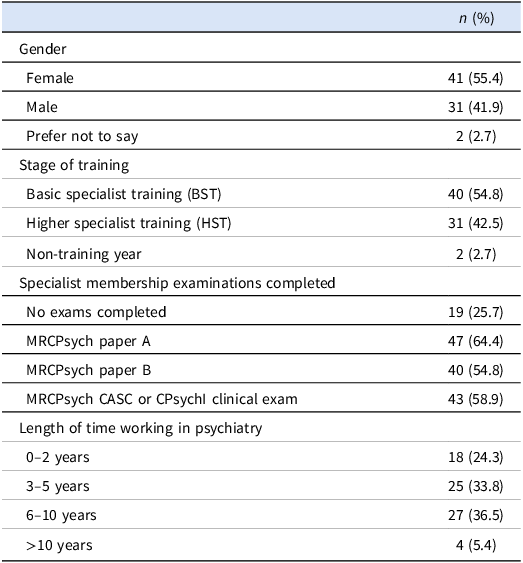
Fifteen percent (n = 74) of Irish trainee psychiatrists completed the survey. The demographic characteristics and training stage are presented in Table 1. Fifty five percent of participants were female (n = 41). Participants were broadly representative across training stages- 55% (n = 40) were BST (years 1–4 of clinical training), 42% (n = 31) were HST (years 5–7 of clinical training) and 3% (n = 2) were undertaking a non-training year between BST and HST while remaining part of the national training pathway.
Demographic characteristics of participants

Table 1. Long description
The table presents demographic characteristics and training stages of participants in a survey of trainee psychiatrists. It has 12 rows and 2 columns. The columns are labeled ‘n (%)’ and include various demographic and training stage categories. Row 1: Gender, Female, 41 (55.4 percent). Row 2: Gender, Male, 31 (41.9 percent). Row 3: Gender, Prefer not to say, 2 (2.7 percent). Row 4: Stage of training, Basic specialist training (BST), 40 (54.8 percent). Row 5: Stage of training, Higher specialist training (HST), 31 (42.5 percent). Row 6: Stage of training, Non-training year, 2 (2.7 percent). Row 7: Specialist membership examinations completed, No exams completed, 19 (25.7 percent). Row 8: Specialist membership examinations completed, MRCPsych paper A, 47 (64.4 percent). Row 9: Specialist membership examinations completed, MRCPsych paper B, 40 (54.8 percent). Row 10: Specialist membership examinations completed, MRCPsych CASC or CPsychI clinical exam, 43 (58.9 percent). Row 11: Length of time working in psychiatry, 0-2 years, 18 (24.3 percent). Row 12: Length of time working in psychiatry, 3-5 years, 25 (33.8 percent). Row 13: Length of time working in psychiatry, 6-10 years, 27 (36.5 percent). Row 14: Length of time working in psychiatry, More than 10 years, 4 (5.4 percent).
Clinical psychiatry experience of participants ranged from less than 1 year to 12 years, with 42% (n = 31) having 6 or more years of clinical experience in psychiatry. Fifty-eight percent (n = 43) had completed postgraduate membership exams (written and clinical) and the majority of respondents had completed at least one component of specialist membership examinations, reflecting representation across different stages of postgraduate psychiatric training. Twenty six percent (n = 19) had not completed any membership exams.
Experience with clozapine
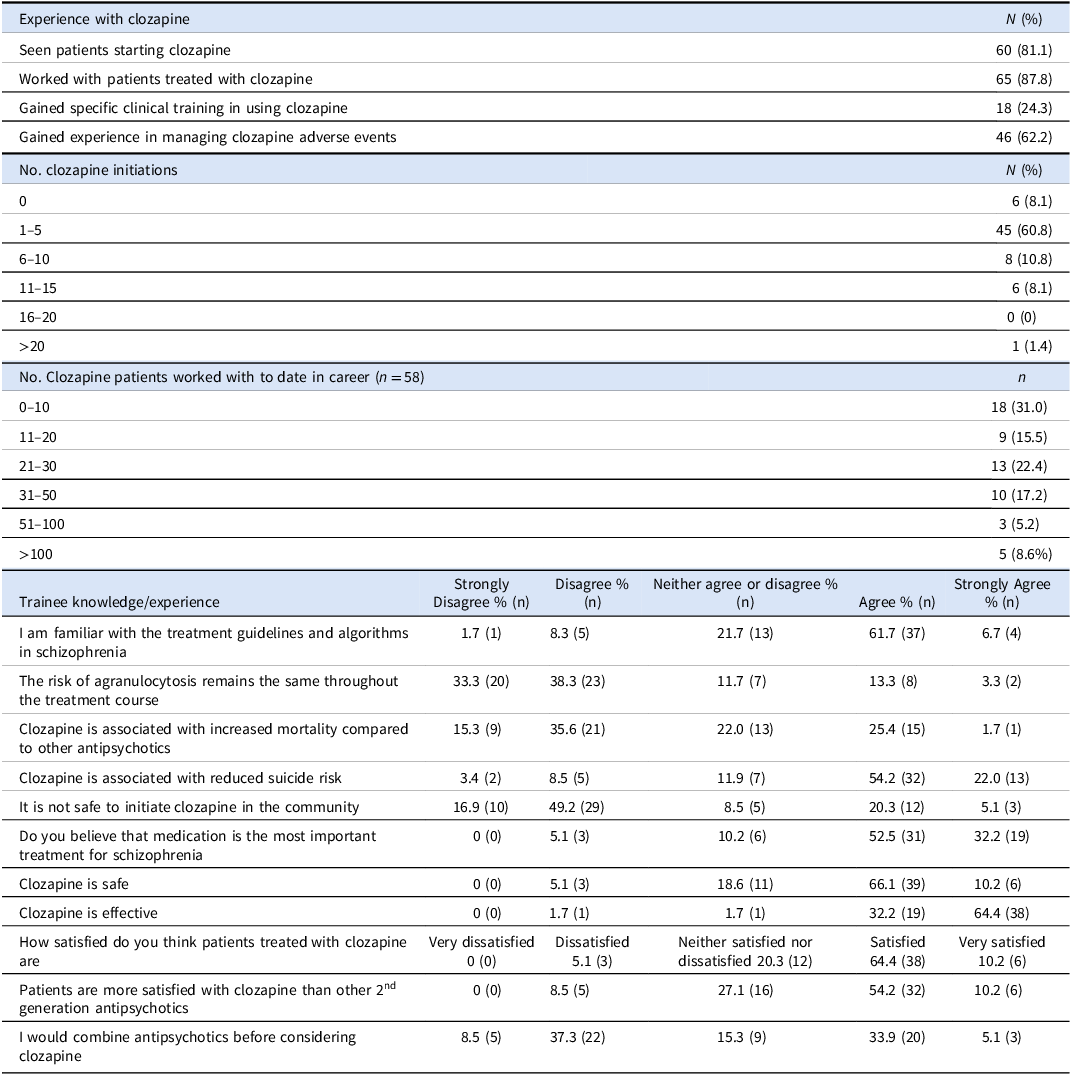
Clinical exposure to clozapine was high (Table 2). Eighty-one percent (n = 60) of respondents had seen patients starting clozapine, and 88% (n = 65) had worked with patients who were treated with clozapine. However, depth of experience was limited, with only 24% (n = 18) responding that they had gained specific clinical training in using clozapine, while 62% (n = 46) had gained clinical experience in managing clozapine adverse effects.
Trainee knowledge and experience with clozapine

Table 2. Long description
The table presents data on trainee knowledge and experience with clozapine. It has three main sections: Experience with clozapine, No. clozapine initiations, and No. Clozapine patients worked with to date in career. The first section lists the number and percentage of trainees who have seen patients starting clozapine, worked with patients treated with clozapine, gained specific clinical training in using clozapine, and gained experience in managing clozapine adverse events. The second section shows the number and percentage of trainees based on the number of clozapine initiations they have performed. The third section details the number of trainees based on the number of clozapine patients they have worked with to date in their career. The table also includes trainee knowledge/experience statements with corresponding percentages of agreement or disagreement.
Nine percent (n = 6) of respondents had never worked with a patient undergoing clozapine initiation. Among those who had observed or participated in clozapine initiation, 69% (n = 51) had been involved in 5 initiations or less. In contrast, experience prescribing clozapine appeared more extensive, with 55% (n = 32) reporting that they had treated between 10 and 50 patients on clozapine during their training.
Clozapine knowledge and attitudes
Overall, trainees demonstrated positive attitudes towards clozapine treatment (Table 2). All respondents identified TRS as an indication for clozapine (100%, n = 63) and almost all recognised clozapine as an effective treatment (97%, n = 57). Most trainees also agreed that clozapine was safe (76%, n = 45) and associated with reduced suicide risk (76%, n = 45).
Knowledge regarding indications for clozapine was generally good, although knowledge of practical prescribing parameters was more variable. Most respondents recognised that clozapine should be considered following an inadequate response to two antipsychotic trials (97%, n = 59), consistent with current treatment recommendations. The majority did not agree that antipsychotic polypharmacy should routinely precede consideration of clozapine (46%, n = 27). However, familiarity with broader schizophrenia treatment guidelines and algorithms was more variable, with 68% (n = 41) reporting confidence in this area.
Knowledge was less consistent regarding therapeutic plasma concentrations, maximum licensed daily dose and estimated incidence of agranulocytosis. Forty-nine percent (n = 28) recognised that the risk of agranulocytosis was 0.5–1.0%, and 72% (n = 43) reported that it is not constant throughout treatment (72%, n = 43). Most did not consider community initiation of clozapine to be inherently unsafe (66%, n = 39). Forty-six percent of respondents (26/56) stated that a therapeutic range for clozapine was from 0.35 to 0.5 mg/L, and 40% (n = 23) correctly identified 900 mg as the maximum licensed daily clozapine dose.
Attitudes towards clozapine remained largely favourable. Fifty-one percent (n = 30) either disagreed or strongly disagreed that clozapine is associated with increased mortality compared to other antipsychotics. Seventy-six percent (n = 45) either agreed or strongly agreed that clozapine is associated with reduced suicide risk. Similarly, most trainees perceived patients to be satisfied with clozapine treatment, with 75% (n = 44) rating patients as satisfied or very satisfied and 51% (n = 38) believing patients were more satisfied with clozapine than with other second-generation antipsychotics.
Confidence in managing clozapine
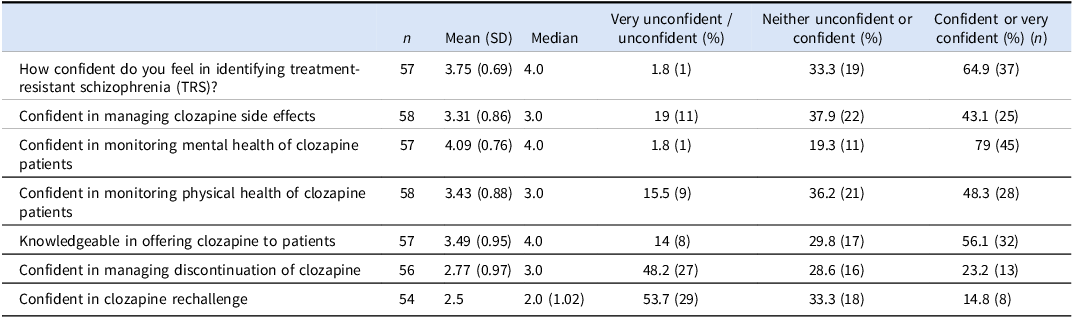
Trainee confidence across different aspects of TRS and clozapine management is presented in Table 3.
Trainee confidence in managing TRS and clozapine treatment. Likert scale [1 = very unconfident, 2 = unconfident, 3 = neither unconfident or confident, 4 = confident, 5 = very confident]

Table 3. Long description
A table comparing trainee confidence across different aspects of treatment-resistant schizophrenia (TRS) and clozapine management. The table has 8 rows and 6 columns. Column headers are: n, Mean (SD), Median, Very unconfident / unconfident (%), Neither unconfident or confident (%), Confident or very confident (%). Row labels are: How confident do you feel in identifying treatment-resistant schizophrenia (TRS)?; Confident in managing clozapine side effects; Confident in monitoring mental health of clozapine patients; Confident in monitoring physical health of clozapine patients; Knowledgeable in offering clozapine to patients; Confident in managing discontinuation of clozapine; Confident in clozapine rechallenge. Row 1: n = 57, Mean (SD) = 3.75 (0.69), Median = 4.0, Very unconfident / unconfident (%) = 1.8 (1), Neither unconfident or confident (%) = 33.3 (19), Confident or very confident (%) = 64.9 (37). Row 2: n = 58, Mean (SD) = 3.31 (0.86), Median = 3.0, Very unconfident / unconfident (%) = 19 (11), Neither unconfident or confident (%) = 37.9 (22), Confident or very confident (%) = 43.1 (25). Row 3: n = 57, Mean (SD) = 4.09 (0.76), Median = 4.0, Very unconfident / unconfident (%) = 1.8 (1), Neither unconfident or confident (%) = 19.3 (11), Confident or very confident (%) = 79 (45). Row 4: n = 58, Mean (SD) = 3.43 (0.88), Median = 3.0, Very unconfident / unconfident (%) = 15.5 (9), Neither unconfident or confident (%) = 36.2 (21), Confident or very confident (%) = 48.3 (28). Row 5: n = 57, Mean (SD) = 3.49 (0.95), Median = 4.0, Very unconfident / unconfident (%) = 14 (8), Neither unconfident or confident (%) = 29.8 (17), Confident or very confident (%) = 56.1 (32). Row 6: n = 56, Mean (SD) = 2.77 (0.97), Median = 3.0, Very unconfident / unconfident (%) = 48.2 (27), Neither unconfident or confident (%) = 28.6 (16), Confident or very confident (%) = 23.2 (13). Row 7: n = 54, Mean (SD) = 2.5 (1.02), Median = 2.0, Very unconfident / unconfident (%) = 53.7 (29), Neither unconfident or confident (%) = 33.3 (18), Confident or very confident (%) = 14.8 (8).
Confidence was highest in identifying TRS and monitoring patients’ mental health while receiving clozapine with 65% (n = 37) and 79% (n = 45) of trainees, respectively, reporting that they were confident or very confident. Approximately half of trainees reported confidence in monitoring the physical health of patients receiving clozapine (48%, n = 28) and in offering clozapine to patients (56%, n = 32), while 43% (n = 25) felt confident managing clozapine-related adverse effects. There were no significant differences between BST and HSTs in relation to confidence with physical health monitoring (BSTs: 51.4% (n = 18) vs HSTs: 35% (n = 7); x 21.565, p = 0.667), in offering clozapine to patients (BSTs: 41.2% (n = 14) vs HSTs: 75% (n = 15); x 2 = 7.732, p = 0.132), and in managing adverse effects (BSTs: 40% (n = 14) vs HSTs: 45% (n = 9); x 2 = 1.438, p = 0.697).
Trainees were less confident in managing more complex clinical scenarios, particularly clozapine discontinuation and rechallenge. Nearly half of trainees (48%, n = 27) reported being unconfident or very unconfident in managing clozapine discontinuation, with only 23% (n = 13) reporting confidence. Similarly, 54% (n = 29) reported being unconfident or very unconfident in managing clozapine rechallenge, and only 15% (n = 8) felt confident in this area.
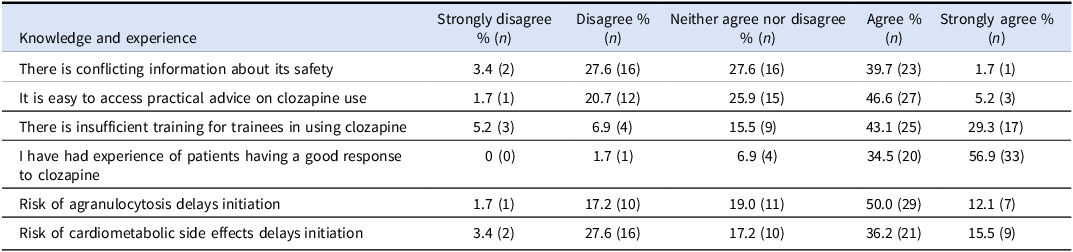
More than half of respondents (n = 32, 56%) reported confidence in offering clozapine to patients. The majority of trainees had observed patients experiencing a positive response to clozapine (91%, n = 53). Despite this clinical exposure, 72% (n = 42) of respondents felt that there was insufficient specific training on clozapine available during training, with only 52% (n = 30) agreeing that it was easy to seek practical advice on clozapine use.
Perceived barriers to clozapine initiation
Trainees’ perceptions of barriers to clozapine initiation are summarised in Table 4.
Trainee attitude to barriers to clozapine. [Likert scale 1 = very infrequently; 2 = infrequently; 3 = neither frequently nor infrequently; 4 = frequently; 5 = very frequently]

Table 4. Long description
The table presents trainees’ perceptions of barriers to clozapine initiation, with five rows and six columns. The columns are labeled as Strongly disagree percent (n), Disagree percent (n), Neither agree nor disagree percent (n), Agree percent (n), and Strongly agree percent (n). The rows are labeled as Knowledge and experience, There is conflicting information about its safety, It is easy to access practical advice on clozapine use, There is insufficient training for trainees in using clozapine, I have had experience of patients having a good response to clozapine, Risk of agranulocytosis delays initiation, and Risk of cardiometabolic side effects delays initiation. Each row contains percentages and corresponding counts for each level of agreement.
Patient-related barriers
The most common patient-related barrier was concerns regarding adherence to regular blood monitoring requirements (70%, n = 38). Perceived patient concerns regarding tolerability (46%, n = 25) and patient uncertainty about clozapine effectiveness (32%, n = 17) were less commonly recognised as potential contributors to delayed initiation.
Clinician-related barriers
Among clinician-related barriers, concerns regarding adverse effects (53%, n = 29) concerns regarding adherence to clozapine treatment (69%, n = 38) and delays associated with obtaining hospital admission for clozapine initiation (62%, n = 33) were commonly identified. The perceived risks of agranulocytosis (62%, n = 36) and cardiometabolic side effects (52%, n = 30) were identified as barriers.
Practice-related factors were additionally perceived to contribute to delayed initiation. The requirement for previous antipsychotic trials (54%, n = 29) and the use of antipsychotic polypharmacy prior to clozapine (54%, n = 29) were also perceived as factors that could delay initiation. Sixty three percent (n = 35) identified a reluctance to use clozapine in younger patients or in the first year of illness as a barrier.
Administrative and system barriers
Administrative barriers were perceived less consistently. Obtaining baseline blood investigations was identified as a barrier by 27% (n = 14) of trainees, while administrative processes associated with clozapine prescribing were identified by 28% (n = 15).
Comparison of BST and HST trainees
There were few differences between BST and HST trainees across measures of clozapine knowledge, attitudes, confidence, or perceived barriers.
Exploratory subgroup analyses identified two statistically significant differences. HSTs were more likely to identify lack of resources as a barrier to clozapine use compared with BSTs (55.6% vs 28.1%; χ 2 = 9.563, p = 0.048) and were more likely to perceive patients prescribed clozapine as being more satisfied with treatment than those receiving other second-generation antipsychotics (71.4% vs 57.0%; χ 2 = 8.569, p = 0.036). These findings should be interpreted cautiously given the number of comparisons performed, the modest sample size and the potential impact of sparse cell counts.
Discussion
This national survey is the first to examine Irish trainee psychiatrists’ knowledge, experience, confidence and perceived barriers relating to clozapine use. Overall, survey respondents demonstrated positive attitudes towards clozapine, recognised clozapine as an effective and safe treatment for TRS and perceived that patients receiving clozapine were generally satisfied with treatment. However, despite a majority having worked with patients treated with and initiating clozapine, trainees reported limited formal training and practical prescribing experience. Confidence was generally greatest for identifying TRS and monitoring mental state but was considerably lower for more complex aspects of treatment including physical health monitoring, adverse-effect management, treatment discontinuation and rechallenge. These findings suggest that respondents were generally familiar with clozapine and its role in TRS but reported less confidence in several practical aspects of clozapine management.
Clinical exposure and prescribing experience
Although most respondents had worked with clozapine-treated patients, direct experience of initiation was limited, with most involved in five or fewer clozapine initiations. This distinction is important, as exposure to patients established on clozapine does not necessarily provide the supervised clinical experience required to develop confidence in prescribing, initiating treatment and managing early complications. The wide variation in reported clinical experience suggests that opportunities to develop prescribing experience depend largely on individual clinical placements rather than a standardised national training pathway.
Current postgraduate psychiatry training requirements in Ireland include competencies relating to psychopharmacology, TRS and medication side-effect management. However, there is no explicit requirement for trainees to demonstrate competence in clozapine prescribing, monitoring or adverse-effect management. This may contribute to reliance on opportunistic clinical exposure to gain adequate clozapine exposure. The variability in reported experience may reflect differences in clinical placements and opportunities for supervised prescribing during training.
Comparison to other jurisdictions
Our findings are consistent with the limited international literature, which similarly reports that psychiatry trainees generally understand clozapine’s role in TRS but have limited prescribing experience and lower confidence in more complex management decisions (Daod et al. Reference Daod, Krivoy, Shoval, Zubedat, Lally, Vadas, Weizman, Reshef and Bloch2019; Leung et al. Reference Leung, Cusimano, Gannon, Milgrom, Valcourt, Stoklosa, Kemp, Olsufka, Vickery, Nichols, Crouse, Paxos, Johnson and Palmer2019; Singh et al. Reference Singh, Hughes and Roerig2020). Collectively, these studies suggest that exposure to clozapine during training is common, but limited supervised prescribing experience represents a common and potentially modifiable challenge in psychiatric training internationally rather than a problem unique to Ireland.
Knowledge and confidence in clozapine management
Knowledge regarding the indication for clozapine in TRS was generally good and was broadly consistent with findings from previous trainee surveys (Daod et al. Reference Daod, Krivoy, Shoval, Zubedat, Lally, Vadas, Weizman, Reshef and Bloch2019; Leung et al. Reference Leung, Cusimano, Gannon, Milgrom, Valcourt, Stoklosa, Kemp, Olsufka, Vickery, Nichols, Crouse, Paxos, Johnson and Palmer2019; Singh et al. Reference Singh, Hughes and Roerig2020). In contrast, knowledge relating to TDM, therapeutic plasma concentrations, maximum licensed dosing and agranulocytosis risk suggest more variable understanding of practical prescribing issues. However, this study assessed self-reported confidence rather than objective prescribing competence. Confidence may not necessarily reflect actual prescribing ability and should therefore be interpreted cautiously.
Of particular concern, confidence in monitoring the physical health of patients receiving clozapine and managing clozapine-related adverse effects was modest across both training grades and did not differ significantly between BSTs and HSTs. This finding was unexpected given that physical health monitoring forms a routine component of clozapine care and is an area in which trainees would be expected to gain substantial clinical exposure throughout training. Clozapine treatment requires ongoing assessment of metabolic, cardiovascular, haematological and gastrointestinal complications, as well as consideration of TDM and factors influencing clozapine exposure including smoking status, infection and pharmacokinetic interactions (Flanagan et al. Reference Flanagan, Lally, Gee, Lyon and Every-Palmer2020; Flanagan et al. Reference Flanagan, Gee, Belsey, Couchman and Lally2023; Lally et al. Reference Lally, Conaty, Bourke, Keating and O’donoghue2026). These findings suggest that routine clinical exposure alone may not be sufficient to develop confidence in these aspects of care.
The largest confidence gap related to more complex clinical scenarios, particularly treatment discontinuation and rechallenge. These situations frequently arise in clinical practice and often require nuanced risk–benefit judgements with significant implications for relapse, treatment continuity and long-term outcomes. Taken together, these findings suggest that respondents were generally familiar with the indication for clozapine in TRS, while knowledge relating to practical prescribing issues and confidence in management appeared more variable. This pattern is clinically important because decisions about treatment interruption, adverse effects and rechallenge often require individualised risk–benefit assessment and can have major implications for relapse and long-term outcomes. These findings highlight areas that may warrant greater emphasis during training such as clinical scenarios that trainees are likely to encounter, including missed monitoring, clozapine interruptions and discontinuation, TDM, adverse-effect management and rechallenge decisions.
Training implications
Most respondents felt that current opportunities for clozapine-specific training were insufficient. Although the study was not designed to evaluate educational programmes, the findings suggest that practical aspects of clozapine prescribing may warrant greater emphasis, particularly regarding TDM, adverse-effect management, treatment interruption and rechallenge.
The absence of significant differences between BSTs and HSTs across most confidence domains suggests that additional clinical experience alone may not fully address these perceived gaps. Structured educational approaches, including supervised prescribing opportunities, case-based teaching and dedicated clozapine training initiatives and clozapine clinic placements, may improve trainee confidence and preparedness (Freudenreich et al. Reference Freudenreich, Henderson, Sanders and Goff2013). However, further research is required to determine whether such interventions influence prescribing behaviour or patient access to clozapine.
Perceived barriers to clozapine initiation
The barriers identified by trainees were broadly consistent with previous studies of trainees and consultant psychiatrists (Daod et al. Reference Daod, Krivoy, Shoval, Zubedat, Lally, Vadas, Weizman, Reshef and Bloch2019; Grant et al. Reference Grant, Mcmanus, Belay, Mahon, Murad, O.D. and Lally2024; Nielsen et al. Reference Nielsen, Dahm, Lublin and Taylor2010; Singh et al. Reference Singh, Hughes and Roerig2020). Concerns about adherence to medication and blood monitoring, adverse effects, and delays associated with hospital admission were commonly identified. These concerns correspond closely with factors identified as the main reasons for clozapine discontinuation (McLaughlin et al. Reference Mclaughlin, Mcmanus, Conaty, Al-Harbi, Gaughran, Donoghue and Lally2026). Interestingly, while trainees anticipated adherence to be a major barrier before treatment initiation, most also believed that patients established on clozapine were satisfied with treatment and more satisfied than those receiving other second-generation antipsychotics. This apparent paradox likely reflects the difference between anticipated barriers before treatment and patients’ experiences following successful initiation. The findings reinforce the importance of balanced patient education and shared decision-making, rather than assuming that blood monitoring requirements or concerns about tolerability will necessarily lead patients to decline clozapine (Falzer and Garman, Reference Falzer and Garman2012; Nielsen et al. Reference Nielsen, Damkier, Lublin and Taylor2011).
Trainees’ generally positive views on community clozapine initiation are also clinically relevant and mirror findings from a recent survey of consultant psychiatrists in Ireland (Grant et al. Reference Grant, Mcmanus, Belay, Mahon, Murad, O.D. and Lally2024) and an earlier survey of trainee psychiatrists in USA (Leung et al. Reference Leung, Cusimano, Gannon, Milgrom, Valcourt, Stoklosa, Kemp, Olsufka, Vickery, Nichols, Crouse, Paxos, Johnson and Palmer2019). Most did not regard community initiation as inherently unsafe, yet many identified delays in obtaining hospital admission as a contributor to delayed treatment. These findings suggest that respondents recognise the limitations of relying exclusively on inpatient initiation. It is consistent with growing evidence that community initiation is a safe, effective and cost-efficient alternative to routine inpatient initiation (Butler et al. Reference Butler, Pillinger, Brown, Borgan, Bowen, Beck, Dambrosio, Donaldson, Jauhar, Kaar, Marques, Mccutcheon, Rogdaki, Gaughran, Maccabe, Ramsay, Taylor, Mccrone, Egerton and Howes2022; Gonzalez et al. Reference Gonzalez, Kodimela and Poynton2013) and merits closer attention including in early psychosis (Conaty et al. Reference Conaty, Thompson, Mcgorry, Gaughran, O’donoghue and Lally2026). These findings support further evaluation of appropriately resourced community clozapine initiation pathways as a potential approach to reducing treatment delays.
Compared with consultant psychiatrists previously surveyed in Ireland, trainees were less likely to identify patient scepticism regarding clozapine effectiveness as a barrier (32% compared with 69% among consultants) (Grant et al. Reference Grant, Mcmanus, Belay, Mahon, Murad, O.D. and Lally2024). This difference may reflect variation in clinical experience or patient populations, although further research would be required to explore this finding.
Strengths and limitations
This study has several strengths. It is the first national study examining Irish trainee psychiatrists’ perspectives on clozapine prescribing and provides important insight into the preparedness of future consultant psychiatrists responsible for managing TRS. The survey was distributed nationally to all Irish trainees through the College of Psychiatrists of Ireland and included trainees across a range of postgraduate training stages, allowing assessment of experience and confidence throughout psychiatric training. Given that Irish trainees rotate through a variety of clinical settings with differing levels of clozapine use, the study also provides a useful overview of variation in clinical exposure across the national training programme.
Several limitations should be considered. The main limitation is the low response rate, raising the possibility of selection bias. Trainees with a particular interest in clozapine or greater confidence in its use may have been more likely to respond, potentially overestimating knowledge and positive attitudes. Conversely, trainees with limited experience may have been less likely to participate. The findings should be interpreted as reflecting the views of responding trainees and may not be generalisable to all psychiatry trainees in Ireland. However, the findings are broadly consistent with previous international studies of psychiatry trainees (Daod et al. Reference Daod, Krivoy, Shoval, Zubedat, Lally, Vadas, Weizman, Reshef and Bloch2019; Leung et al. Reference Leung, Cusimano, Gannon, Milgrom, Valcourt, Stoklosa, Kemp, Olsufka, Vickery, Nichols, Crouse, Paxos, Johnson and Palmer2019; Singh et al. Reference Singh, Hughes and Roerig2020).
The questionnaire was adapted from previously published surveys but had not undergone formal psychometric validation, which may affect the reliability and interpretability of some measures. The study also relied on self-reported knowledge, confidence, and experience, which may not reflect actual prescribing competence. Further, the study assessed self-reported confidence rather than objective prescribing competence.
In addition, some subgroup analyses were based on relatively small numbers of respondents. No adjustment was made for multiple comparisons, and sparse cell counts may have reduced the robustness of certain statistical comparisons. As such, these findings should therefore be interpreted as exploratory. Finally, the cross-sectional design precludes assessment of how knowledge and confidence develop over training or whether structured educational interventions improve prescribing behaviour. Future longitudinal studies could examine whether structured clozapine education improves prescribing confidence and clinical practice.
Conclusion
The survey respondents demonstrated positive attitudes towards clozapine’s safety and clinical effectiveness and good knowledge about its indication for TRS, although practical prescribing knowledge was more variable. Despite frequent exposure to clozapine-treated patients, many trainees report limited formal training, relatively little experience initiating treatment and lower confidence managing complex aspects of prescribing, particularly discontinuation and rechallenge. Confidence in physical health monitoring and adverse-effect management was modest, despite these being core components of routine clozapine care, and similar confidence levels were reported across training grades. While clinical exposure to clozapine varies considerably across training settings, most trainees perceived existing clozapine training opportunities to be inadequate.
Given the study’s low response rate and reliance on self-reported measures, these findings should be interpreted cautiously and may not be generalisable to all psychiatry trainees in Ireland. Nevertheless, they suggest that practical aspects of clozapine prescribing, including initiation, TDM, adverse-effect management and rechallenge, may warrant greater emphasis within postgraduate training. Further research is needed to determine whether educational interventions improve prescribing confidence, clinical practice or access to clozapine.
Supplementary material
The supplementary material for this article can be found at https://doi.org/10.1017/ipm.2026.10254.
Author contributions
RM and JL developed the concept for this research. RM and JL completed the first draft. OC, PM, BH, BOD participated in substantive reviews of the manuscript. The authors read and approved the final manuscript.
Funding statement
JL and BOD are supported by the Health Research Board (grant no. APRO-2023-005). The views of the funding body have not influenced the content of the research.
Competing interests
The other authors declare none.
Ethical standards
The authors assert that all procedures contributing to this work comply with the ethical standards of the relevant national and institutional committee on human experimentation with the Helsinki Declaration of 1975, as revised in 2008.


 Open access

