Introduction
Good nutrition is essential for the growth and development of a child, as well as their lifelong well-being (UNICEF, 2019). When an individual’s diet is inappropriate, or if they fail to receive the required amounts of nutrients, this results in malnutrition. An excessive intake of nutrients results in overnutrition, and a deficiency leads to undernutrition (Shetty, Reference Shetty2006). To improve nourishment and end all types of malnutrition, various targets were set in 2015 in the Sustainable Development Goals (SDGs) (UNICEF, 2018). Controlling childhood diseases and reducing malnutrition among children under five years of age are among the SDG targets (Meshram et al., Reference Meshram, Balakrishna, Harikumar, Arlappa and Sreeramakrishna2018).
While overnutrition is becoming more prevalent in developed countries, undernutrition remains a major public health concern in developing countries (Tzioumis & Adair, Reference Tzioumis and Adair2014). The number of undernourished children continues to rise worldwide, and in 2018 nearly 200 million under-five children suffered from chronic or acute malnutrition (UNICEF, 2019). Of the world regions, South Asia has the highest number of undernourished people (255 million) (Grebmer, et al., Reference Grebmer, Bernstein, Wiemers, Acheampong, Hanano and Higgins2020), with 33.2% and 14.9% under-five children being stunted and wasted, respectively (UNICEF et al., 2020). Of the 107 countries included in the 2020 Global Hunger Index (GHI) report, India recorded the highest prevalence of wasting among under-five children (17.3%), and the prevalence of stunting was 34.7%. India ranks 94th in the GHI, far below its neighbouring countries of Pakistan (88th), Bangladesh (75th), Nepal (73rd) and Sri Lanka (64th) (Grebmer et al., Reference Grebmer, Bernstein, Wiemers, Acheampong, Hanano and Higgins2020).
People can suffer from nutritional deficiencies at all ages, but in India the prevalence of undernutrition among children less than 36 months is higher than among older children (Meshram et al., Reference Meshram, Balakrishna, Harikumar, Arlappa and Sreeramakrishna2018). The effect of undernutrition is more extreme among children aged 6–23 months because of the irreversible damage that can occur during this period (Mya et al., Reference Mya, Kyaw and Tun2018). Short-term consequences include excessive illness, premature death, developmental delays and financial burdens for sick children; while long-term consequences can be poor physical and mental health, which may hinder the improvement of the overall social system too (Mya et al., Reference Mya, Kyaw and Tun2019). Proper nutrition during early childhood is crucial (Chandwani et al., Reference Chandwani, Prajapati, Rana and Sonaliya2015), as it lays the foundation for good health throughout life, and at the national economic level ensures a good human workforce. The period from conception to 2 years of age is considered a ‘critical window’ for children’s good growth, health and behavioural and cognitive development (De Onis & Branca, Reference De Onis and Branca2016). Optimal nutrition throughout this period helps reduce morbidity and mortality (Reinbott, et al., Reference Reinbott, Kuchenbecker, Herrmann, Jordan, Muehlhoff, Kevanna and Krawinkel2015), decrease the risk of chronic disease in later life and promote good overall growth and development (Meshram et al., Reference Meshram, Balakrishna, Harikumar, Arlappa and Sreeramakrishna2018).
Poor infant and young child feeding (IYCF) practices are a major threat to India’s social and economic development (Rajesh & Bhavana, Reference Rajesh and Bavana2016). Appropriate IYCF practices during the early childhood period are crucial for the prevention of irreversible developmental problems among children (Dasgupta et al., Reference Dasgupta, Parthasarathi, Prabhakar, Biswas and Geethanjali2014). Studies of IYCF have focused on breastfeeding and complementary feeding (Rajesh & Bhavana, Reference Rajesh and Bavana2016) and the measurements of IYCF practices include: type, quality and the texture of food given; nutrient density, frequency of feeding and dietary diversified of a given food; and how the food is fed to a child (Srivastava & Sandhu, Reference Srivastava and Sandhu2006). In India, more than 90%, 75% and 60% of 6–23 months children do not meet the World Health Organization’s (WHO) IYCF guidelines for a Minimum Acceptable Diet (MAD), Minimum Dietary Diversity (MDD) and Minimum Meal Frequency (MMF), respectively (IIPS & ICF, 2017).
Over the last four decades, the Government of India has introduced various nutrition intervention programmes, and these are all still in operation. However, India still faces a major challenge with undernutrition (Black et al., Reference Black, Victora, Walker, Bhutta, Christian and De Onis2013). The factors associated with child undernutrition in India are well-documented at the household, child and maternal levels. These include unfavourable household socioeconomic condition (Rajesh & Bhavana, Reference Rajesh and Bavana2016); illiteracy among mothers, low birth weight and lack of dietary diversity (Meshram, et al., Reference Meshram, Balakrishna, Harikumar, Arlappa and Sreeramakrishna2018); receiving less than the minimum recommended children’s meals, multiple episodes of diarrhoea during the first 0–24 months of life (Mosites et al., Reference Mosites, Dawson-Hahn, Walson, Rowhani-Rahbar and Neuhouser2017); low maternal body mass index (BMI), unimproved sanitation and drinking water sources and low family wealth (Harding et al., Reference Harding, Aguayo and Webb2018); and inappropriate dietary intake or inefficient biological utilization, and various internal and external environmental factors (Yadav & Dubey, Reference Yadav and Dubey2017). Also, children’s place of residence, geographic location and climatic conditions can indirectly influence these factors (Agho, et al., Reference Agho, Akombi, Ferdous, Mbugua and Kamara2019).
Many studies have been carried out on child undernutrition in India at the state, district and regional levels, as well geographical location. However, studies among India’s ‘aspirational districts’ are few (Kumar et al., Reference Kumar, Jeeva, Sarkar, Sahoo and Srivastava2019). The Government of India launched the transformation of Aspirational District Programme (ADP) in January 2018 to address the issue of socioeconomic inequalities across India’s districts by improving the performance of districts in pockets of under-development. In India, there is a massive gap between the most advanced and least advanced regions, and this appears to be increasing with time, with disparities across states as well as within states. The ADP aims at inclusive development for all, with special reference to the under-developed areas of the nation, and is expected to improve the HDI rank of the country, as well as help achieve the SDGs. Under ADP a total of 124 districts out of the total 718 districts (the under-developed ones from 28 states) were identified based on a composite index comprising citizens’ economic status, health and nutrition, educational status and basic amenities. The ADP is a major step towards improving the existence of all people in India, and the future prospects of the Indian economy (Mehta et al., Reference Mehta, Bhide, Kumar and Shah2018). It aims to decrease inequalities by encouraging growth in the least evolved regions of the nation (Kapoor & Green, Reference Kapoor and Green2020). Accordingly, the programme covers five vast sectors, particularly education, health and nutrition, agriculture and water resources, monetary inclusion and skill development and basic infrastructure (NITI Aayog, Reference Aayog2018). Of these, the highest weight (30%) has been given to health and nutrition.
Child malnutrition, and providing an adequate diet to 6–23 months children by promoting IYCF practices, are among several important health and nutrition indicators. This study aimed to investigate the IYCF practices among the aspirational districts of India and assess their associations with undernutrition among children aged 6–23 months, as well as identify the common socioeconomic, maternal and individual characteristics associated with undernutrition in these children.
Methods
Data
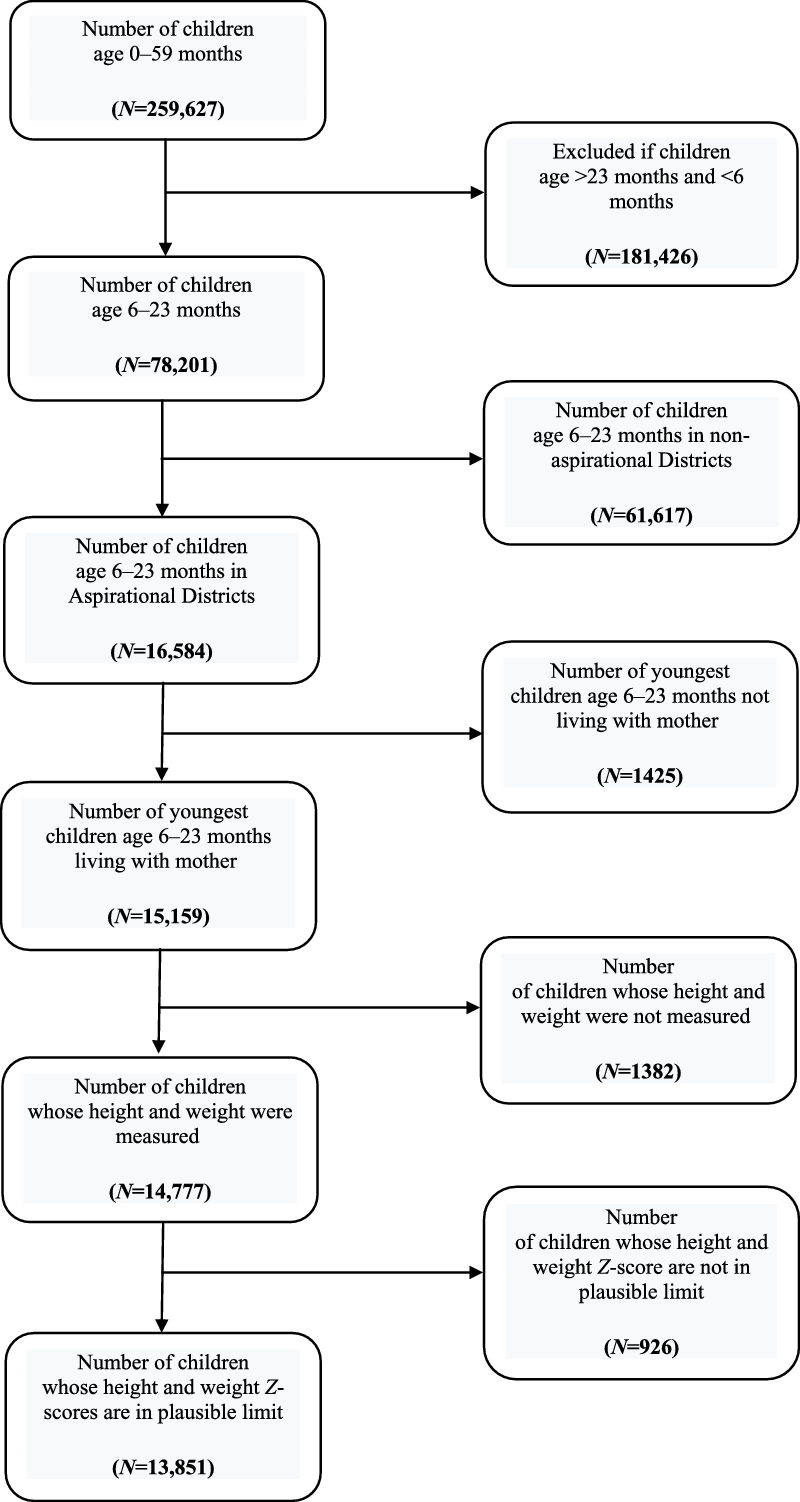
This study used data from the fourth round of the National Family Health Survey (NFHS-4), i.e. the India Demographic and Health Survey (DHS), conducted in 2015–16. This used the two-stage stratified sampling method for sample selection. The heights and weights of children aged 0–59 months, women aged 15–49 years and men aged 15–54 years were measured (IIPS & ICF, 2017). The survey collected data for 259,627 children aged 0–59 months. However, this study was based on a total of 13,851 children aged 6–23 months, which is representative for the 124 aspirational districts. Five of the 124 aspirational districts were newly formed at the time of NFHS-4 and separate data were not available for these in the survey. Therefore, to make the data representative for these five districts as well, data from the districts from which these five were carved out were used as a proxy for the newly formed districts.
The sample selection criteria were as follows: youngest children living with a mother whose height and weight were measured, and the measurements were within plausible limits, i.e. if height, weight or age information were not provided, or the value was not missing but was not possible, as the z-scores are sensitive to changes in age. A flow chart showing sample selection is presented in Figure 1.
Flow chart showing the selection of the study sample.

Dependent variables
Three anthropometric indicators, i.e. stunting (height-for-age), wasting (weight-for-height) and underweight (weight-for-age), were used to assess the undernutrition status of children aged 6–23 months (Agho et al., Reference Agho, Akombi, Ferdous, Mbugua and Kamara2019). Stunting and wasting are measures of chronic and acute nutritional deficiencies, respectively, and underweight refers to the composite measure of both acute and chronic statuses. In DHS surveys, these indicators are evaluated using WHO child growth standards, which are expressed in standard deviations (SD or Z-scores) from the mean of the standard population (WHO, 2019). For this study, child’s level of undernutrition was considered as the outcome variable. The levels had four ordinal categories: well-nourished (>–1SD), mildly undernourished (–2SD to –1SD), moderately undernourished (–3SD to –2SD) and severely undernourished (less than –3SD). For instance, for wasting, a child is said to be well-nourished if his/her weight-for-height Z-score is above –1SD from the median of the reference population of the WHO child growth standard. Similarly, if a child with a weight-for-height Z-score is in the interval –2SD to –1SD, –3SD to –2SD or less than –3SD, the child is classified as mildly, moderately or severely wasted, respectively (WHO, 2009).
Independent variables
The WHO and United Nations Children’s Fund (UNICEF) have built up a worldwide technique for assessing IYCF practices (Reinbott et al., Reference Reinbott, Kuchenbecker, Herrmann, Jordan, Muehlhoff, Kevanna and Krawinkel2015). In this study, five IYCF indicators were used as independent variables: continuing breastfeeding, appropriate breastfeeding, MDD, MMF and MAD. The WHO definitions were used, as follows:
Continuing breastfeeding: a child was ‘continuing breastfeeding’ if he/she was still breastfed.
Appropriate breastfeeding: a child was ‘appropriately breastfed’ if he/she received breast milk and solid, semi-solid or soft foods on the day before the interview (WHO, 2009).
Minimum dietary diversity (MDD): a child achieved minimum dietary diversity if he/she received food from four or more food of the following groups on the day before the interview: (i) infant formula, milk other than breast milk, cheese or yogurt or other milk products; (ii) grains or roots, including porridge or gruel and fortified baby food; (iii) vitamin A-rich fruit and vegetables; (iv) other fruit and vegetables; (v) eggs; (vi) meat, poultry, fish, shellfish or organ meats; (vii) beans, peas, lentils or nuts; and (viii) foods made with oil, fat, ghee or butter (WHO, 2009).
Minimum meal frequency (MMF): a child had the ‘minimum meal frequency’ if he/she received solid, semi-solid or soft foods (also including milk feeds for non-breast children) a minimum number of times on the day before the interview. For breastfeeding children, this was receiving solid or semi-solid food at least twice a day for infants aged 6–8 months and at least three times a day for children aged 9–23 months. For non-breastfeeding children this was receiving solid or semi-solid food or milk feeds at least four times a day (WHO, 2009).
Minimum acceptable diet (MAD): a child had a ‘minimum acceptable diet’ if he/she had both MDD and MMF, i.e. had MDD and MMF the day before the interview. For non-breastfed children, this was those who received other milk or milk products at least twice a day and had at least MDD and MMF during the previous day (WHO, 2009).
Child, mother and household characteristics were included as covariates. The child characteristics included age, sex (male and female), birth order (1, 2, 3 and 4+), perceived size at birth (average, smaller than average and larger than average) and having diarrhoea or fever in the 2 weeks preceding the survey. Maternal characteristics included age at child birth, educational level (no education/primary/secondary/higher) and nutritional status (healthy weight/thin/overweight, based on BMI). Household characteristics included place of residence (rural/urban) and social group (Scheduled Caste [SC], Scheduled Tribe [ST], Other Backward Caste [OBC] and non-SC/ST/OBC.
Statistical analysis
The descriptive characteristics of the respondents and their IYCF practices and prevalence and severity levels of undernutrition were described employing national sampling weights. The association of IYCF practices and the severity level of undernutrition were assessed using multinomial logistic regression analysis adjusting for child, maternal and household’s socioeconomic characteristics. Multicollinearity was tested for among the IYCF practice variables, as well as the covariates. One of two variables was considered if a high correlation was found between them. Furthermore, the ‘stepwise backward elimination method’ (Harrell, Reference Harrell2015) was used to retain all the significant factors from both IYCF practice indicators and covariates. After completing the backward elimination procedure, only factors that were significantly associated with any of the undernutrition levels were retained. Stata/SE software version 12.0 was used for all statistical analyses. The multinomial logistic regression model results are presented as adjusted odds ratios (AOR) with 95% confidence intervals to determine the factors associated with undernutrition among 6–23 months children in aspirational districts of India.
Results
Characteristics of sample
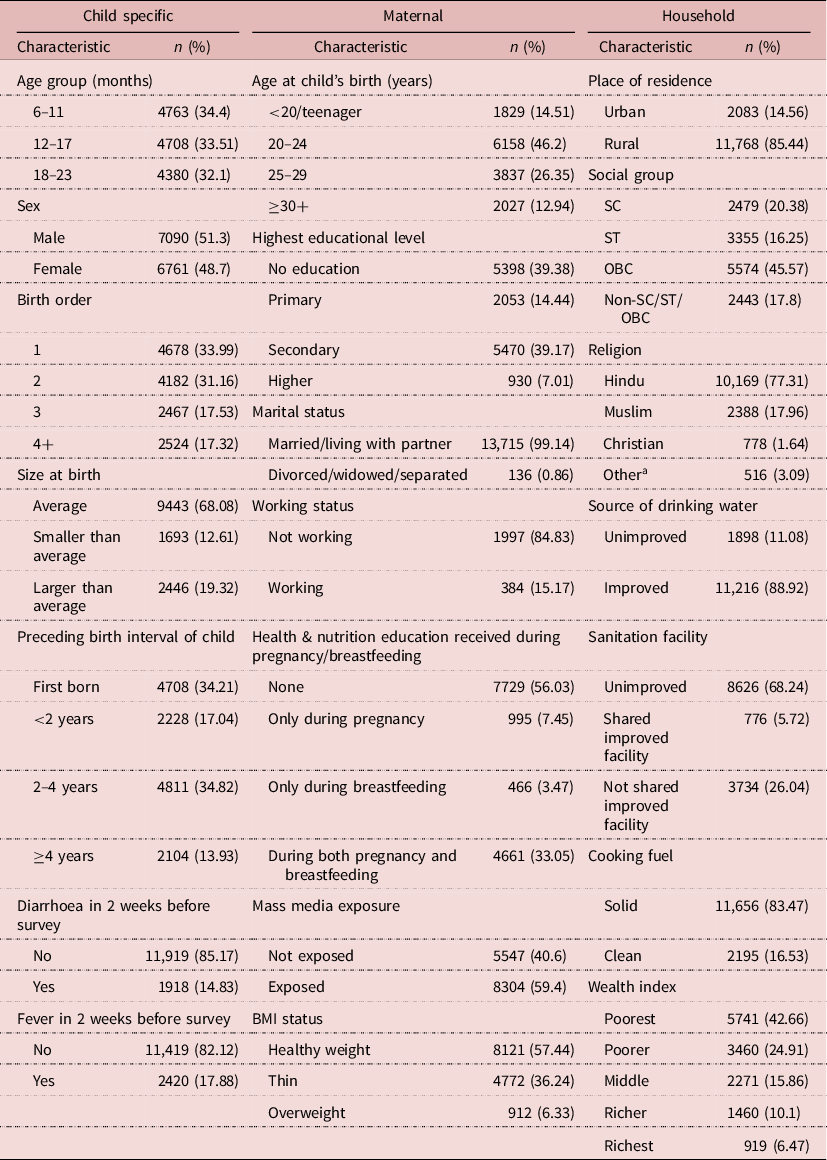
The study sample included 13,851 children aged 6–23 months. Their characteristics, and those of their mothers and households, are shown in Table 1. Children were segregated into the three age groups 6–11, 12–17 and 18–23 months, with shares of 34.40%, 33.51% and 32.1%, respectively; 51.3% were male and 48.7% were female. About 68% of the children were of average perceived birth size, and 34.8% were of 3 or higher birth order. Only 13.9% had a preceding birth interval of 4 years or more, and 34.2% were first-born children. The prevalences of fever and diarrhoea in the last 2 weeks preceding the survey were 14.8% and 17.9%, respectively.
Percentage distribution of children aged 6–23 months by selected individual, maternal and household covariates, 2015–16, N=13,851

a Other includes Sikh, Buddhist/Neo-Buddhist and Jain.
Source: authors’ estimation using NFHS 2015–16 data.
Nearly half (46.2%) of the mothers were aged 20–24 years at the time of their youngest child’s birth; 39.4% had no formal education, and only 7% had a higher educational level; nearly 15.2% were working mothers; 36.2% were thin (BMI<18.5 kg/m2); and about 59.4% had mass media exposure, i.e. to radio, newspapers or magazines and television.
The household characteristics indicated that 14.6% of the children were living in urban areas of India’s aspirational districts. About 36.6% were from marginalized communities, i.e. from SC or ST communities, and more than three-quarters (77.3%) were from Hindu households. Nearly 88.9% of households had access to improved drinking water facilities; 68.2% had an unimproved sanitation facility and 5.7% had an improved sanitation facility but shared this with other households. Less than two-fifths (16.5%) of the children were living in households using clean cooking fuel. More than two-fifths (42.7%) were from the poorest wealth quintile.
Prevalence of mild, moderate and severe undernutrition
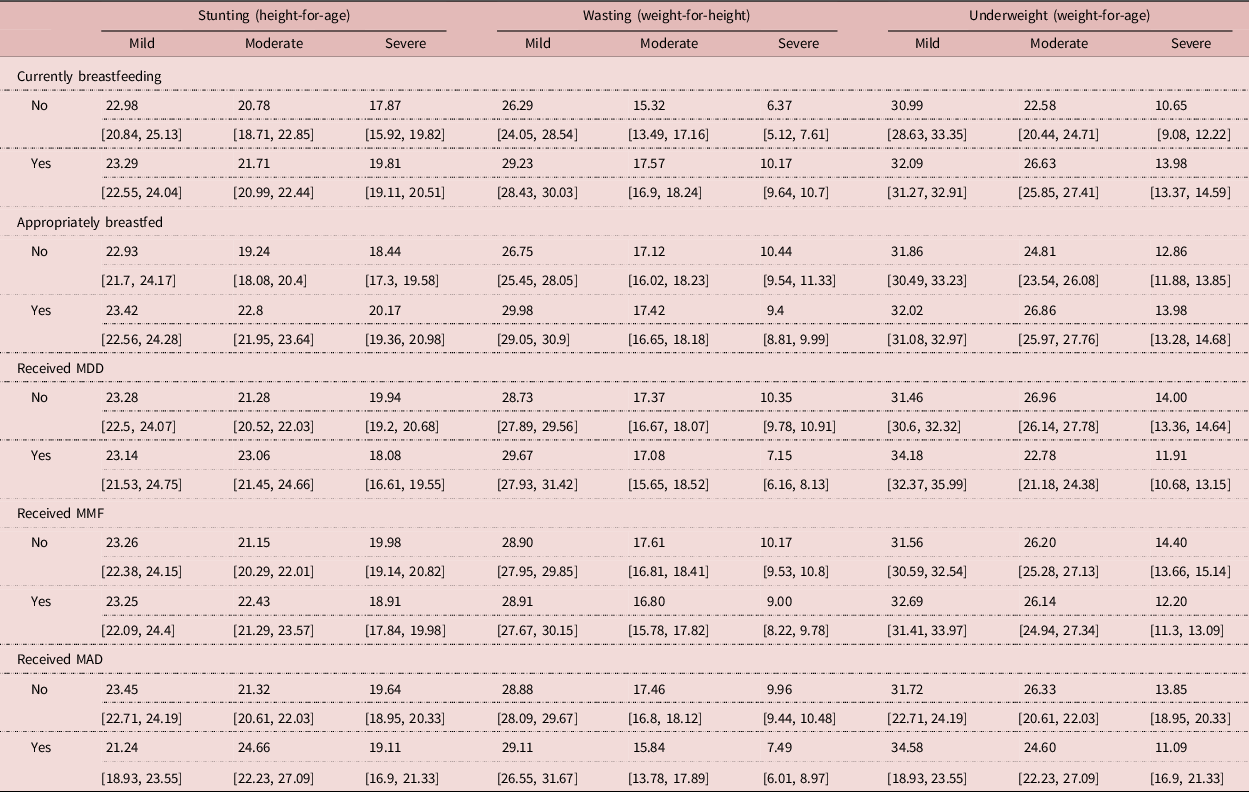
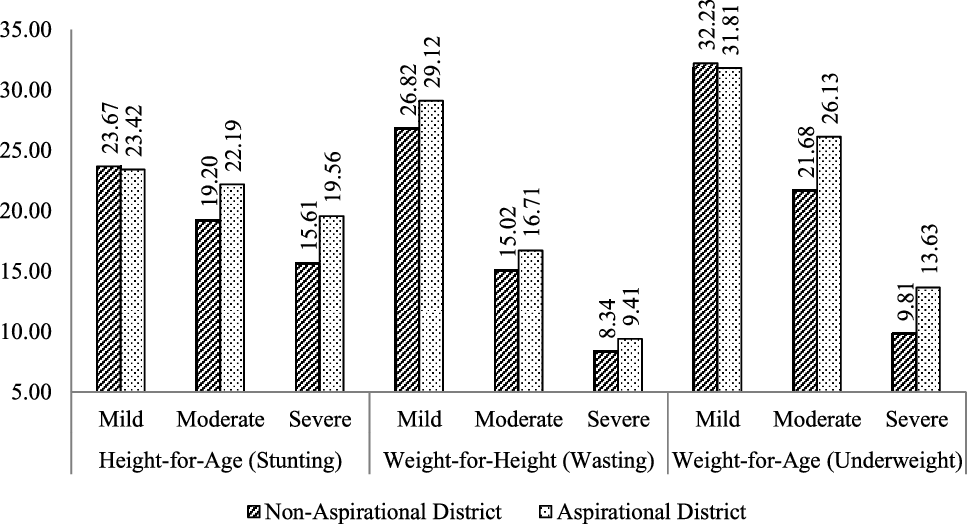
Table 2 shows the prevalences of different severities of stunting, wasting and underweight by IYCF practices among the sample children. The prevalences of all three forms of undernutrition were markedly higher among children in aspirational districts than non-aspirational districts (Figure 2), and the relative differences were significantly greater for moderate and severe levels of undernutrition. They were also higher among the children who were continuously and appropriately breastfed. Compared with children who had achieved MDD, MMF and MAD, the prevalences of wasting and underweight were higher among those who had not achieved MDD, MMF and MAD. However, for stunting, the prevalence was higher for children who had achieved these. Overall, the relative differences in the prevalences of stunting, wasting and underweight between children who had and those who had not achieved MDD, MMF and MAD were markedly greater the higher the severity level.
Prevalence of undernutrition among children aged 6–23 months in aspirational districts by IYCF practices, India, 2015–16

Figures in brackets are 95% confidence intervals.
Source: authors’ estimation using NFHS 2015–16 data.
Prevalence of undernutrition by severity among children aged 6–23 months in aspirational and non-aspirational districts of India, 2015–16.

Factor associated with stunting
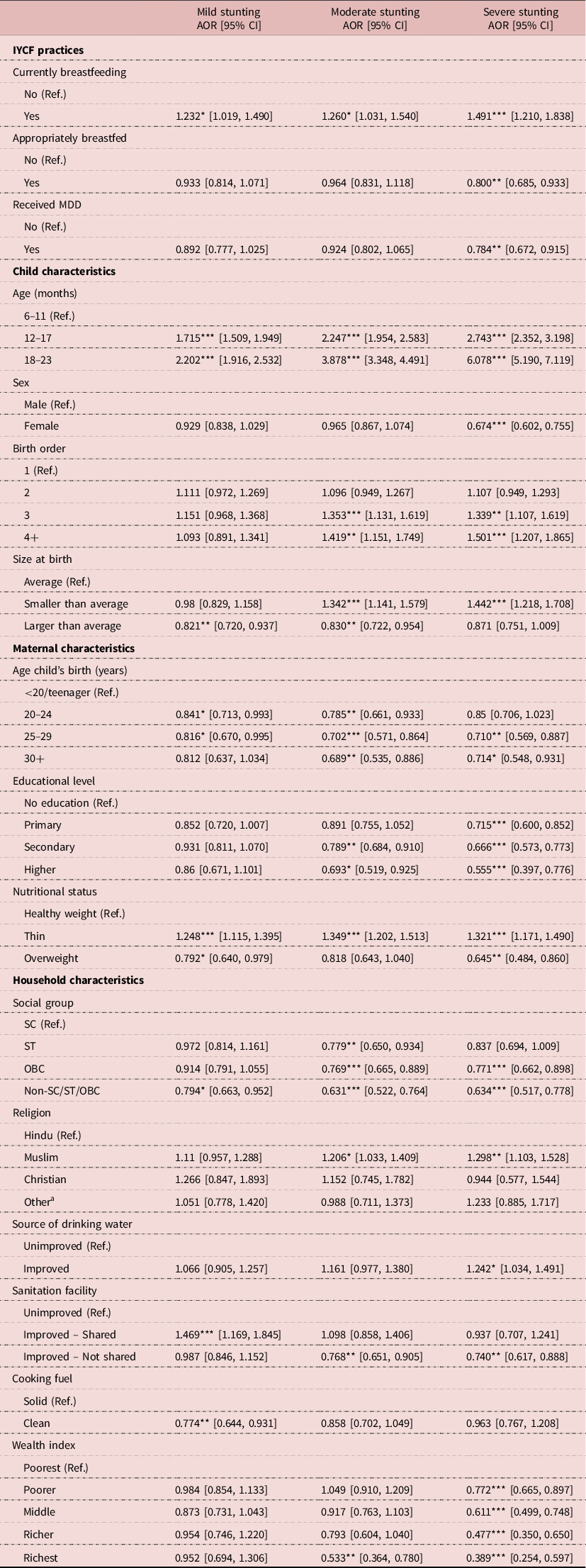
Table 3 summarizes the adjusted odds ratios (AORs) for the association between the predictor variables and mild, moderate and severe stunting. Children who continued breastfeeding were more likely to be mildly, moderately or severely stunted than those who were not. However, the odds of being severely stunted among the appropriately breastfed children were 20% lower than among those who were not appropriately breastfed (AOR=0.8; 95% CI: 0.685–0.933). Children who achieved MDD (at least four food groups) were significantly less likely to be severely stunted compared with children who did not achieve MDD (AOR=0.784; 95% CI: 0.672–0.915). However, none of the levels of stunting was associated with MMF or MAD.
Multinomial logistic regression analysis showing factors associated with mild, moderate and severe stunting among children aged 6–23 months in aspirational districts of India, 2015–16

Figures in brackets are 95% confidence intervals; *p<0.05; **p<0.01; ***p<0.001.
a Other includes Sikh, Buddhist/Neo-Buddhist and Jain.
Source: authors’ estimation using NFHS 2015–16 data.
Higher age groups and higher birth orders were both significantly associated with higher odds of moderate or severe stunting. Female children were 33% less likely to be stunted compared with their male counterparts (AOR=0.674; 95% CI: 0.602–0.755). Children who were smaller than average at birth had significantly higher odds of being moderately or severely stunted than children of normal or larger size at birth. Mother’s age and educational level were significantly positively associated with moderate and severe stunting in their children, i.e. with an increase in mother’s age or educational level, the odds of moderate or severe stunting among their children decreased. Children whose mothers were thin had higher odds of being stunted for all three severity levels. Children of the SC community were more likely to be moderately or severely stunted than children of other communities, followed by ST children. Children born in a household practising Islam had higher odds of being moderately (AOR=1.206; 95% CI: 1.033–1.409) or severely stunted (AOR=1.298; 95% CI: 1.103–1.528) compared with other religions. Children living in households with unimproved sanitation facilities had higher odds of being severely stunted. Children who belonged to the richest households were 47% (AOR=0.368, 95% CI: 0.33–0.41) less likely to be moderately stunted compared with children of the poorest households. The odds of being severely stunted decreased with a shift in wealth quintile from a lower to a higher one.
Factor associated with wasting
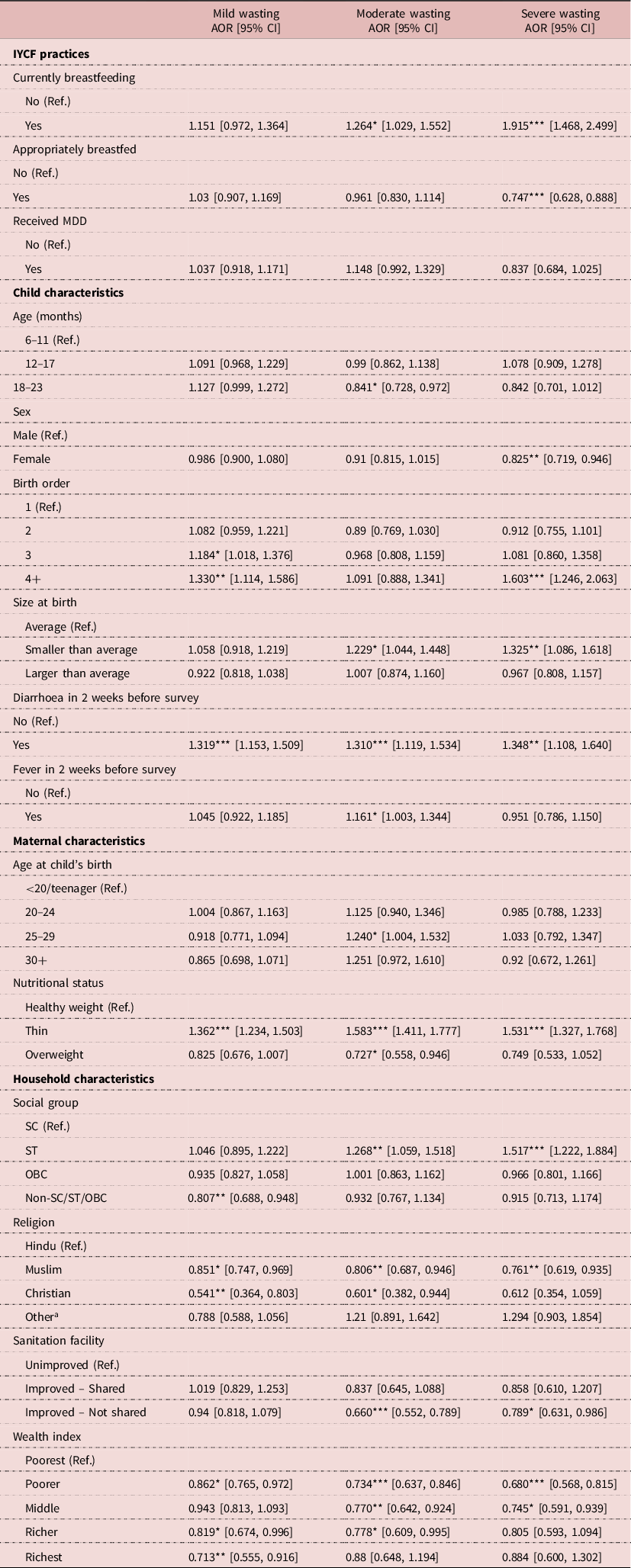
Table 4 indicates that children who were continuing breastfeeding had significantly higher odds of moderate or severe wasting than children who had discontinued breastfeeding. However, children who were appropriately breastfed were 25% less likely (AOR=0.747; 95% CI: 0.628–0.888) to be severely wasted compared with children who were not appropriately breastfed. No associations were established between wasting and other IYCF indicators, i.e. MDD, MMF and MAD. Children aged 18–23 months had lower odds (AOR=0.841; 95% CI: 0.728–0.972) of being moderately wasted compared with children aged 6–11 months. Female children were significantly less likely to be severely wasted compared with their male counterparts. Children with birth order 4 or higher and of smaller size at birth had significantly higher odds of severe wasting. Having diarrhoea in the last 2 weeks preceding the survey was associated with significantly higher odds of mild, moderate and severe wasting. However, having fever was statistically significantly associated with higher odds of moderate wasting only. Compared with children of well-nourished and overweight mothers, children of thin mothers were more likely to be moderately or severely wasted. Scheduled Tribe children had higher odds of being moderately or severely wasted than children of other social groups. Non-SC/ST/OBC children had lower odds of being mildly, moderately or severely wasted; however, no statistically significant association was established. Children living in households practising Hinduism were more likely to be moderately wasted compared with children of households practising other religions. Having improved sanitation facilities that was not shared with other households lowered the odds of moderate and severe wasting among the children by 34% (AOR=0.841; 95% CI: 0.728–0.972) and 21% (AOR=0.789; 95% CI: 0.631–0.986), respectively. Children from the poorest households were more susceptible to all the three severity levels of wasting than children of other wealth quintile households.
Multinomial logistic regression analysis showing factors associated with mild, moderate and severe wasting among children aged 6–23 months in aspirational districts of India, 2015–16

Figures in brackets are 95% confidence intervals; *p<0.05; **p<0.01; ***p<0.001.
a Other includes Sikh, Buddhist/Neo-Buddhist and Jain.
Source: authors’ estimation using NFHS 2015–16 data.
Factor associated with being underweight
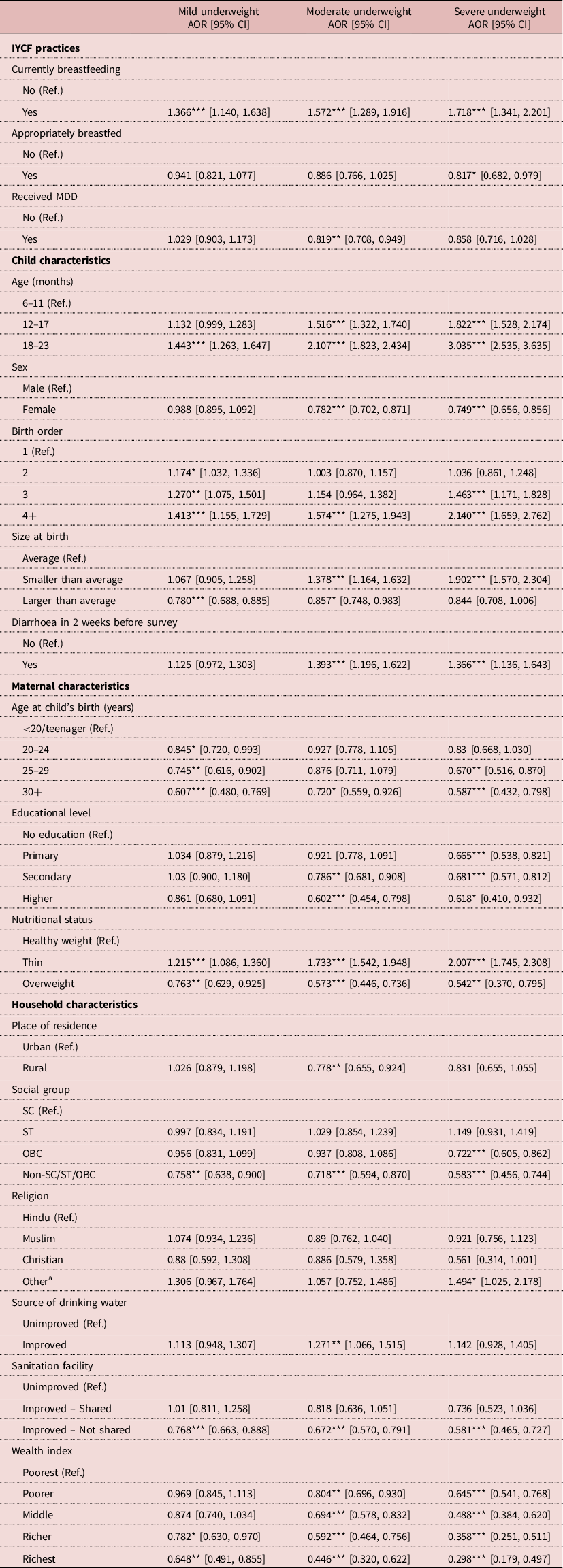
Table 5 indicates children who continued to be breastfed were more likely to be mildly, moderately or severely underweight compared with children who had discontinued breastfeeding. However, children who were appropriately breastfed were 18% less likely (AOR=0.817; 95% CI: 0.682–0.979) to be severely underweight compared with those who were not appropriately breastfed. Children who achieved the MDD were less likely to be moderately underweight (AOR=0.819, 95% CI: 0.708–0.949)
Multinomial logistic regression showing factors associated with mild, moderate and severe underweight among children aged 6–23 months in aspirational districts of India, 2015–16

Figures in brackets are 95% confidence intervals; *p<0.05; **p<0.01; ***p<0.001.
a Other includes Sikh, Buddhist/Neo-Buddhist and Jain.
Source: authors’ estimation using NFHS 2015–16 data.
Higher age group and male sex were significant predictors of moderate or severe underweight among the children aged 6–23 months. The odds of moderate and severe underweight among female children were 22% (AOR=0.782; 95% CI: 0.702–0.871) and 25% (AOR=0.749; 95% CI: 0.656–0.856), respectively, less than those of their male counterparts. Children born at higher birth order had significantly higher odds of being mildly or severely underweight than children of lower birth order. In the 2 weeks preceding the survey, children who had diarrhoea were 39% (AOR=1.393; 95% CI: 1.196–1.622) and 36% (AOR=1.366; 95% CI: 1.136–1.643) more likely to be moderately and severely underweight, respectively, compared with children who did not. The odds of mild, moderate and severe underweight were significantly higher among the children born to adolescents, and lower for the children born to women aged 30+ years. The higher the educational level of the mother, the lower the odds of their child being moderately or severely underweight. The odds of being severely underweight were 38% (AOR=0.618, 95% CI: 0.41–0.932) lower among children born to women with a higher educational level than among children born to women with no education.
Children residing in rural areas were statistically significantly less susceptible to moderate underweight (AOR=0.778, 95% CI: 0.655–0.924). Children belonging to non-SC/ST/OBC communities were significantly less likely to be underweight compared with children of other communities. Children living in households practising a religion other than Hinduism, Islam and Christianity had higher odds of being severely underweight. Children belonging to households with access to improved drinking water facilities had higher odds of being moderately underweight. The higher the wealth quintile, the lower the odds of being mildly, moderately or severely underweight. It is appalling that the odds of being severely underweight among the children living in the richest quintile households were 70% lower (AOR=0.298, 95% CI: 0.179–0.497) than for children living in the poorest quintile households.
Discussion
This study examined the prevalence of undernutrition among children aged 6–23 months in the aspirational districts of India, which are the poorest performing districts with relatively poor child nutritional status. In addition, it examined the factors associated with stunting, wasting and underweight by severity level, i.e. mild, moderate and severe, among these children, and by IYCF indicators at the child, maternal and household level.
According to UNICEF (2019), globally, 820,000 children’s lives could be saved each year by breastfeeding. The present study observed that, while the current breastfeeding status of children aged 6–23 months (children who continued breastfeeding) was significantly associated with higher odds of being undernourished (stunted, wasted or underweight), being ‘appropriately breastfed’ was significantly associated with lower odds of being severely undernourished. This may be because a child’s ‘current breastfeeding status’ does not capture any complementary feeding practices, whereas ‘appropriate breastfeeding’ does. Physiological and pathological factors, such as rapid growth, limited gastric capacity and frequent exposure to pathogens, significantly raise the nutritional requirements of children under the age of 2 years (Sanin et al., Reference Sanin, Islam, Mahfuz, Ahmed, Mondal, Haque and Ahmed2018). To meet these evolving nutritional requirements, infants and young children are recommended to continue breastfeeding as well as receive adequate and safe complementary foods for up to at least 2 years (Davalgi & Vidya, Reference Davalgi and Vidya2015).
The present study found that, in the aspirational districts of India, about a quarter (22.6%) of children 6–23 aged months who continued to be breastfed were not receiving any complementary food. It also found that children receiving the recommended MDD had significantly higher odds of severe stunting and moderate underweight. This finding is inconsistent with studies conducted in Sri Lanka (Perkins et al., Reference Perkins, Jayatissa and Subramanian2018) and Bangladesh (Zongrone et al., Reference Zongrone, Winskell and Menon2012), which found that none of the three anthropometric indicators was associated with achieving MDD among children aged 6–23 months, and that achieving MDD was associated with higher odds of being stunted among children aged 0–23 months.
The present study did not find any association between having a MMF and the nutritional status of children, and this is consistent with a cross-country analysis carried out in fourteen countries which suggested there was no relationship between MMF and stunting (Marriott et al., Reference Marriott, White, Hadden, Davies and Wallingford2012). In contrast, Aguayo et al. (Reference Aguayo, Nair, Badgaiyan and Krishna2016), in their study in India, found a significant association between MMF and stunting. Unlike Marriott et al., (Reference Marriott, White, Hadden, Davies and Wallingford2012), this study did not find any significant association between MAD and the three anthropometric indices. The possible reason for the differences (lower odds and higher odds) in the association of IYCF practices with the anthropometric indicators found in this study is that the NFHS survey collected information on the feeding practices based on a 24-hour recall period and assumed it to be the common dietary pattern of the case/child. However, food consumption patterns vary day by day; hence, they might not represent all children (Mya et al., Reference Mya, Kyaw and Tun2019).
This study observed that older children in the age group 6–23 months had higher odds of being undernourished than their younger counterparts. It was also notable that the odds of being moderately or severely stunted or underweight were markedly higher among the older children than their younger peers (see Tables 3 and 5). For instance, children aged 12–17 months and 18–23 months had 2.7- and 6.1-times higher odds of being severely stunted, respectively. This may result from the more frequent exposure of older children to their surroundings, which can increase the likelihood of catching infections and exposure to childhood diseases, either through the consumption of unsafe drinking water, contaminated foods or inadequate sanitation facilities (Akombi et al., Reference Akombi, Agho, Hall, Wali and Renzaho2017). Inadequate feeding practices may also be regarded as a significant reason for the differences in odds of being stunted or underweight between younger and older children. Another possible reason may be that, even though children were fed diversified foods, these might have met the nutritional requirements of younger children but not those of older children, because after 6 months, children grow rapidly and their nutritional requirements increase.
Female children had significantly lower odds of being severely undernourished (stunted, wasted or underweight) compared with their male counterparts. This finding has been corroborated by cross-sectional studies in Nigeria (Akombi et al., Reference Akombi, Agho, Hall, Wali and Renzaho2017), Iran (Kavosi et al., Reference Kavosi, Rostami, Kavosi, Nasihatkon, Moghadami and Heidari2014) and Indonesia (Ramli et al., Reference Ramli, Inder, Bowe, Jacobs and Dibley2009). However, this finding is inconsistent with the findings of some other studies, such as that conducted in Uttar Pradesh State, India, by Singh et al. (Reference Singh, Chaudhary, Joshi, Upadhyay, Singh and Katyal2016), and Bain et al. (Reference Bain, Kum Awah, Geraldine, Kindong, Sigal, Bernard and Tanjeko2013)’s review of sub-Saharan Africa, which suggested that undernutrition was more likely in female than male children.
Child’s birth order and perceived size at birth were also found to be significant predictors of the nutritional status of children aged 6–23 months. Birth order of 4 and above and smaller size at birth were significantly associated with higher odds of being moderately or severely undernourished (stunted, wasted and underweight). Having fever in the 2 weeks preceding the survey was only significantly associated with higher odds of moderate wasting. Meanwhile, having diarrhoea in the 2 weeks preceding the survey was significantly associated with higher odds of moderate and severe wasting, and underweight, but no association was observed for stunting. This finding may be attributed to the fact that diarrhoea reduces appetite, increases catabolism, impairs intestinal absorption and directs essential nutrients away from growth and towards an immune response, which leads to growth failure or weight loss among children (Black et al., Reference Black, Victora, Walker, Bhutta, Christian and De Onis2013).
Mother’s age at the child’s birth was a significant predictor for undernutrition among children aged 6–23 months. Children born to teenage mothers were at higher risk of being undernourished. The odds of being stunted were higher for children born to mothers in the lower age groups. A study in urban Bangladesh also found a significant association between mother’s age at a child’s birth and the child’s nutritional status (Ahsan et al., Reference Ahsan, Arifeen, Al-Mamun, Khan and Chakraborty2017). Mother’s educational level is a significant determinant of the nutritional status of children. The lower the educational level of the mother, the higher the odds of their child being undernourished. This can be attributed to the fact that, compared with mothers with no formal education and lower educational levels, mothers with higher educational levels may have a better understanding of nutrition, and may have a better chance of being exposed to nutrition-related education through mass media, books, leaflets and magazines (Yeshalem et al., Reference Yeshalem, Tafere and Abitew2017). This finding coincides with a study in the Philippines (Rohner et al., Reference Rohner, Woodruff, Aaron, Yakes, Lebanan, Rayco-Solon and Saniel2013).
Household characteristics play a vital role in determining a child’s nutritional status. In this study, the results indicated that severe undernutrition was higher among children in rural areas. However, the multinomial logistic regression analysis showed that those living in rural areas had lower odds of being moderately underweight than their urban counterparts. This result is contrary to the findings of a cross-sectional study carried out in Pakistan (Tariq et al., Reference Tariq, Sajjad, Zakar, Zakar and Fischer2018). Unlike other studies in Myanmar (Mya et al., Reference Mya, Kyaw and Tun2019) and in Pakistan (Tariq et al., Reference Tariq, Sajjad, Zakar, Zakar and Fischer2018), this study did not find any association between place of residence and stunting and underweight among children. While wasting and underweight were more prevalent among ST children, stunting was more prevalent among SC children. The odds of being moderately stunted were significantly higher for children of the SC community than other children, and the odds of being moderately or severely wasted were higher for children belonging to ST households. This finding is consistent with those of Meshram et al. (Reference Meshram, Balakrishna, Harikumar, Arlappa and Sreeramakrishna2018), i.e. that SC and ST children are more susceptible to undernutrition.
Children belonging to households practising the Islam religion had higher odds of being moderately or severely stunted. Meanwhile, children from Hindu households were more likely to be wasted than children of households practising religions other than Hinduism. This may be attributed to the diversity in feeding practices across religions. Furthermore, the sample size for households practising Christianity or other religions was far too small (Table 1) and may have been inadequate for representing the respective populations. Like a study in Ghana (Miah et al., Reference Miah, Apanga and Abdul-Haq2016), this study also found a significant association between religion and undernutrition among children. In India, the death of 19 in every 100,000 population has been attributed to unsafe water and poor sanitation and hygiene services (UNDP, 2020). Contrary to the findings of Victora et al. (Reference Victora, De Onis, Hallal, Blossner and Shrimpton2010), the findings of this study suggest a significant association between an improved sanitation facility and children’s nutritional outcome. Children living in households accessing improved sanitation facilities that were not shared with other households were significantly less likely to be moderately or severely undernourished (stunted, wasted and underweight). However, if a child was living in a household with improved sanitation facilities shared with other households, then the odds of being mildly stunted were 1.47 times higher than for a child living in a household with unimproved or no sanitation facility. The use of clean cooking fuel was significantly associated with lower odds of being mildly stunted among children aged 6–23 months. The odds of being severely undernourished were considerably higher among the children belonging to the poorest households.
The findings of the present study are consistent with those carried out in India (Meshram et al., Reference Meshram, Balakrishna, Harikumar, Arlappa and Sreeramakrishna2018), Bangladesh (Ahsan et al., Reference Ahsan, Arifeen, Al-Mamun, Khan and Chakraborty2017) and three disadvantaged districts in East African (Agho et al., Reference Agho, Akombi, Ferdous, Mbugua and Kamara2019). According to UNICEF (2019), about 80% of children aged 6–23 months from the poorest households are not fed the minimum recommended diverse diet for healthy growth and brain development; and the present findings also suggest that the achievement of MDD is also markedly lower (15.3%) among the children of the poorest households compared with those of other households, and this may be one of the possible reasons for higher odds of undernutrition among children in the poorest households.
Conclusions
The findings of this study indicate that children living in India’s aspirational districts are performing much more poorly than their non-aspirational counterparts in terms of anthropometric indicators. Male children, those of higher birth order and those who are smaller at birth are at high risk of being undernourished. Mothers of lower educational level and lower BMI, and teenage mothers, are at increased risk of having children aged 6–23 months with undernutrition. Hence, educating mothers about feeding practices and monitoring their children’s nutritional status are needed in India’s aspirational districts. SC and ST children, those of households practising Hinduism and the poorest households need to be monitored for better child nutritional outcomes. The study findings also stress the importance of improved sanitation facilities that are not shared with other households. The introduction of complementary food to infants is a must once a child completes their sixth month, with continued breastfeeding after 6 months not helping them meet their increased nutritional requirements at that stage of growth, but appropriate breastfeeding does. That is, children who are appropriately breastfed, i.e. breastfed as well as receiving complementary food, are significantly less likely to be undernourished compared with children who are not. Achieving MDD at the ages of 6–23 months lowers the odds of being undernourished. Hence, this study suggests that educating mothers about appropriate breastfeeding and MDD is needed to combat child undernutrition in the aspirational districts of India. This study recommends the introduction of nutritional education programmes for mothers with IYCF guidelines.
Acknowledgments
The authors are grateful to the Department of Humanities and Social Sciences, National Institute of Technology (NIT), Rourkela, for their support and encouragement, which helped improve this research paper.
Funding
This research received no specific grant from any funding agency, commercial entity or not-for-profit organization.
Conflicts of Interest
The authors have no conflicts of interest to declare.
Ethical Approval
The authors assert that all procedures contributing to this work comply with the ethical standards of the relevant national and institutional committees on human experimentation and with the Helsinki Declaration of 1975, as revised in 2008.