Antibiotics are used as prophylactic agents for several surgical and invasive diagnostic procedures to prevent infections.Reference Bowater, Stirling and Lilford 1 , Reference Gafter-Gvili, Fraser and Paul 2 There is growing concern that the rise in antibiotic resistance has diminished the effectiveness of antibiotic prophylaxis in preventing postoperative infections.Reference Smith and Coast 3 , Reference Teillant, Gandra, Barter, Morgan and Laxminarayan 4 A previous modeling study showed that a 30% reduction in the efficacy of antibiotic prophylaxis for 10 common surgical procedures and cancer chemotherapy in the United States could result in 120,000 additional infections and 6,300 additional infection-related deaths per year.Reference Teillant, Gandra, Barter, Morgan and Laxminarayan 4 As the pathogen source for surgical site infections (SSIs) could arise from the native flora of patient’s skin, mucous membranes, or internal organs,Reference Anderson, Podgorny and Berrios-Torres 5 increasing colonization of antibiotic-resistant bacteria in healthy individuals could reduce the effectiveness of antibiotic prophylaxis for various procedures.Reference Kirby and Santoni 6 Currently, however, no systematic data are available on trends in effectiveness of antibiotic prophylaxis for surgical procedures over time.Reference Kirby and Santoni 6
We conducted a systematic review of available literature to investigate trends in the efficacy of the established antibiotic prophylaxis regimens for 3 commonly performed surgical procedures—appendectomy, cesarean section, and colorectal surgery—and 1 invasive diagnostic procedure, transrectal prostate biopsy (TRPB). We systematically reviewed all randomized control trials (RCTs) that included the currently recommended prophylactic antibiotics for the above 4 procedures and analyzed the SSI rates following the 3 surgical procedures and infections following TRPB procedures over the last few decades.
Methods
We conducted the systematic review and meta-analysis according to the guidelines of the Preferred Reporting Items for Systematic Reviews and Meta-Analyses (PRISMA) group checklist (Supplementary material), to ensure the inclusion of all required information. A protocol of this review has not been registered previously.
Data sources and searches
We searched the PubMed and Cochrane databases for RCTs that measured the efficacy of antibiotic prophylaxis in preventing postoperative infections (SSIs following the 3 surgical procedures and a combination of urinary tract infections [UTIs] and sepsis following TRPB) for the 4 index procedures. For the 3 surgical procedures, SSIs include superficial, deep incisional, and organ-space infections. We included RCTs published through October 31, 2017, with no limit on the year of publication; 2 authors (A.T. and S.G.) independently screened titles and abstracts to identify relevant studies. We used the term for the “surgical procedure AND the recommended prophylactic antibiotics” AND the term “prophylaxis” for both the PubMed and Cochrane databases (Supplementary Table 1). For example, for colorectal surgery, we used the following terms: “colorectal surgery AND prophylaxis AND cefoxitin,” “colorectal surgery AND prophylaxis AND cefotetan,” and “colorectal surgery AND prophylaxis AND cefazolin AND metronidazole.” A list of search terms for each procedure is provided in Supplementary Table 1. Recommended antibiotic prophylactic agents for the index procedures were chosen based on published guidelines.Reference Bratzler, Dellinger and Olsen 7
In addition, Cochrane reviews on the efficacy of antibiotic prophylaxis for each procedure were reviewed, and data from relevant studies were extracted.Reference Andersen, Kallehave and Andersen 8 – Reference Nelson, Glenny and Song 10 No restriction on language was imposed, and we did not attempt to identify unpublished articles or contact study authors.
Study selection
Studies were considered eligible if they included recommended antibiotics for surgical prophylaxis and reported extractable data on the proportion of postoperative infections. Because our objective was to examine changes in the efficacy of prophylactic antibiotics over time, we extracted data from all study arms of RCTs that included the currently recommended prophylactic antibiotics for the 4 procedures. For example, in the case of placebo control RCTs, we extracted data only from the antibiotic study arm, and for RCTs comparing the efficacy of 2 different kinds of antibiotics, we extracted data only from the study arm that included the current recommended prophylactic antibiotics.
For cesarean section, we excluded RCTs in which antibiotics were administered post–umbilical cord clamping, as the efficacy of antibiotic prophylaxis post–cord clamping was found to be inferior compared with prophylaxis prior to skin incision.Reference Berríos-Torres, Umscheid and Bratzler 11 For appendectomy and colorectal surgery, the antibiotics recommended for prophylaxis include cefotetan, cefoxitin, or a combination of cefazolin with metronidazole. Given the similar spectrum of activity of these 3 agents, they are expected to demonstrate similar efficacy and thus are recommended by the published guidelines. For colorectal surgery, a combination of ceftriaxone plus metronidazole and ertapenem alone were also listed as conditionally recommended agents. However, we did not consider these regimens because they have broad-spectrum activity and routine use is discouraged due to concern that it may lead to an increase in resistant organisms. Cefazolin is the recommended prophylactic antibiotic for cesarean section, whereas fluoroquinolones are recommended for TRPB prophylaxis. Although trimethoprim-sulfamethoxazole is the recommended prophylactic agent for TRPB, we could find only 2 studies meeting our inclusion criteria, limiting us to examine long-term trends to this antibiotic and thus we excluded them. Studies in which prophylactic antibiotics were administered for more than 24 hours were excluded because current guidelines recommend that the duration of surgical prophylaxis is less than 24 hours.Reference Bratzler, Dellinger and Olsen 7 For colorectal surgery and TRPB, studies in which antibiotics were administered as part of bowel preparation were excluded, although studies with only mechanical bowel preparation were included. For colorectal surgery, elective and emergency surgeries were included. For appendectomy, only simple appendicitis cases were included because antibiotics are usually continued postsurgery for complicated appendicitis cases. We included all cesarean section procedure RCTs involving elective and nonelective cases and women in labor.
Data extraction and quality assessment
The primary outcome was the change in the proportion of postoperative infections over time associated with the recommended prophylactic antibiotic agents for the 4 procedures. The denominator of this proportion for each trial was the number of participants randomized minus participants whose outcomes were missing, and the numerator was the number of participants with postoperative infections. Also, 2 authors (A.T. and S.G.) independently extracted data from eligible studies, and any discrepancies were resolved by consensus. The definition of SSI varied among studies for the 3 surgical procedures. To overcome this inconsistency, we extracted information from each study on superficial and deep incisional wound infections, intra-abdominal abscess, peritonitis and sepsis related to surgery following colorectal surgery and appendectomy. For cesarean section, we extracted information from each study on superficial and deep incisional wound infections and endometritis. For TRPB, we extracted information on symptomatic UTIs and sepsis (Supplementary Material 2).
The methodological quality of included studies was assessed using the Cochrane Collaboration tool for assessing risk of bias,Reference Higgins, Altman and Gøtzsche 12 implemented by 2 reviewers (A.T. and S.G.). The quality of each study was judged by evaluating the following sources of bias: selection bias (random sequence generation, allocation concealment), attrition bias (incomplete data outcomes), detection bias (blinding of participants, blinding of outcome assessment), selective outcome reporting, and other bias. Bias assessments of studies identified from Cochrane reviews were extracted from reviews where available.
Data synthesis and analysis
For each index procedure, information including the antibiotic name, year of publication, year of actual study where available, country of study, author name, type of surgery (elective or nonelective), SSI reported, timing of antibiotic prophylaxis, follow up duration, number of infected patients, and total number of patients for eligible studies was recorded in a database. A separate database of excluded studies was maintained, along with reasons for exclusion. Data from included studies were imported into STATA version 14.2 software (StataCorp, College Station, TX) for analysis. We performed a random effects meta-analysis to estimate the overall proportion of postoperative infection using the metaprop command in Stata software.Reference Nyaga, Arbyn and Aerts 13 The pooled proportions were calculated using the approach of DerSimonian and Laird,Reference DerSimonian and Laird 14 with stabilized variance using the Freeman-Tukey double arcsine methodology, allowing us the inclusion of studies with 0% postoperative infection.Reference Nyaga, Arbyn and Aerts 13 The τ2 statistic was used to estimate the between-study variance of the random effects models.Reference Nyaga, Arbyn and Aerts 13 To investigate trends in the proportion of infections over time, we performed multilevel logistic regression models with random intercepts for each study, including year and study country as covariates for all 4 procedures.Reference Hamza, van Houwelingen and Stijnen 15
Additionally, for colorectal surgery, we performed a sensitivity analysis including type of surgery (elective versus emergency) and antibiotics in the multivariable model and subanalysis of RCTs that had (1) prophylactic antibiotic administration within 60 minutes or at the time of anesthesia induction, (2) had patient follow-up of at least 4 weeks, and (3) had SSIs that included surgical incision, organ-space infections, or sepsis related to surgery. To facilitate the interpretation of the model results, the probability of infection was plotted against the year of study publication.
Results
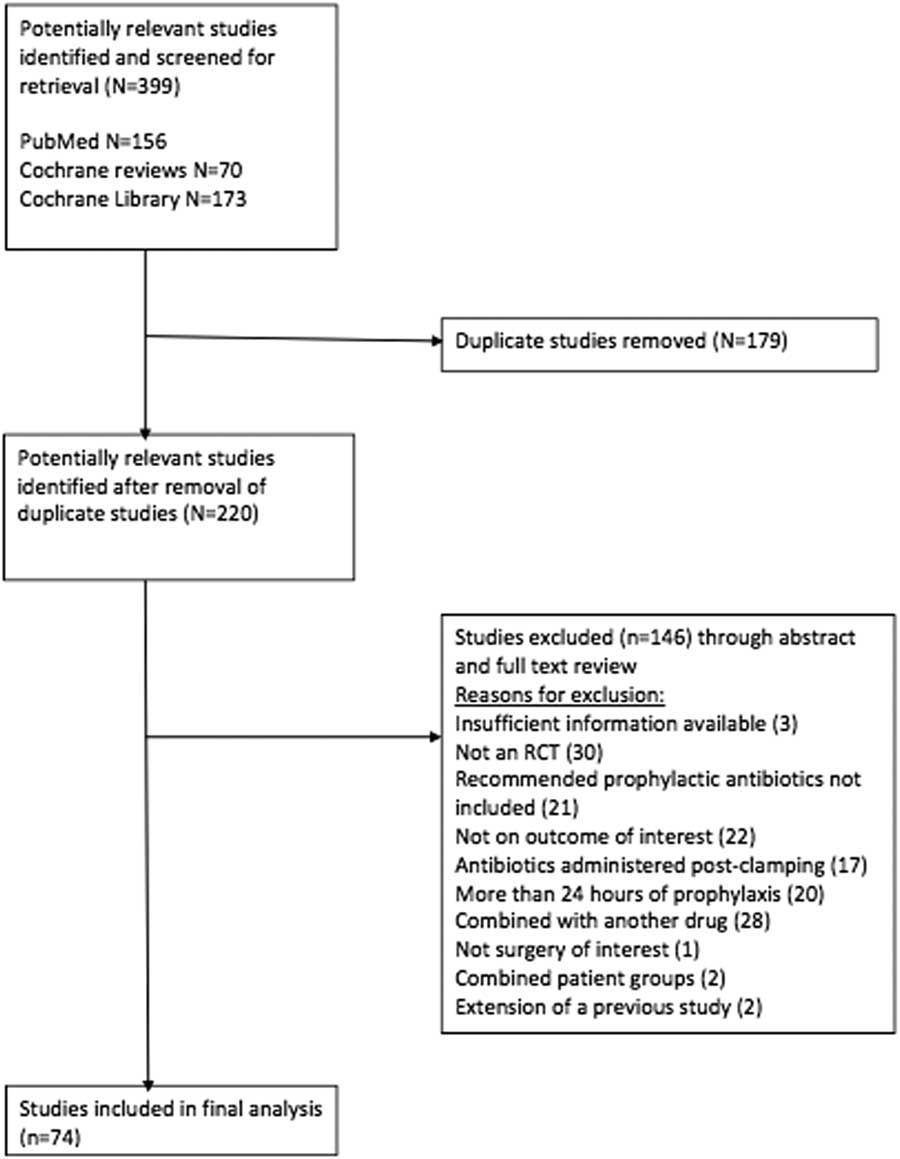
Our literature search of the PubMed and Cochrane databases using the search terms in Supplementary Table 1 yielded 399 studies. After removing duplicate studies and those not meeting the inclusion criteria, we included a total of 74 RCTs in the final analysis (Fig. 1). Of these 74 RCTs, 9 were for appendectomy, 11 were for cesarean section, 39 were related to colorectal surgery, and 15 were related to TRPB. Of the 74 RCTs, 20 were conducted in the United States. All included studies, individual characteristics, and quality assessments are presented in the supplementary material (appendectomyReference Bauer, Vennits and Holm 16 – Reference Kang, Kim and Jo 24 , cesarean sectionReference Fugere, Turgeon, Boucher, Verschelden and Lemay 25 – Reference Jyothirmayi, Halder, Yadav, Samuel, Kuruvilla and Jose 35 , colorectal surgeryReference Anders, Nordhausen, Zeuschner and Fabrizius 36 –74, and TRPB75–89).
Preferred Reporting Items for Systematic Reviews and Meta-Analyses (PRISMA) flow chart for study selection process.

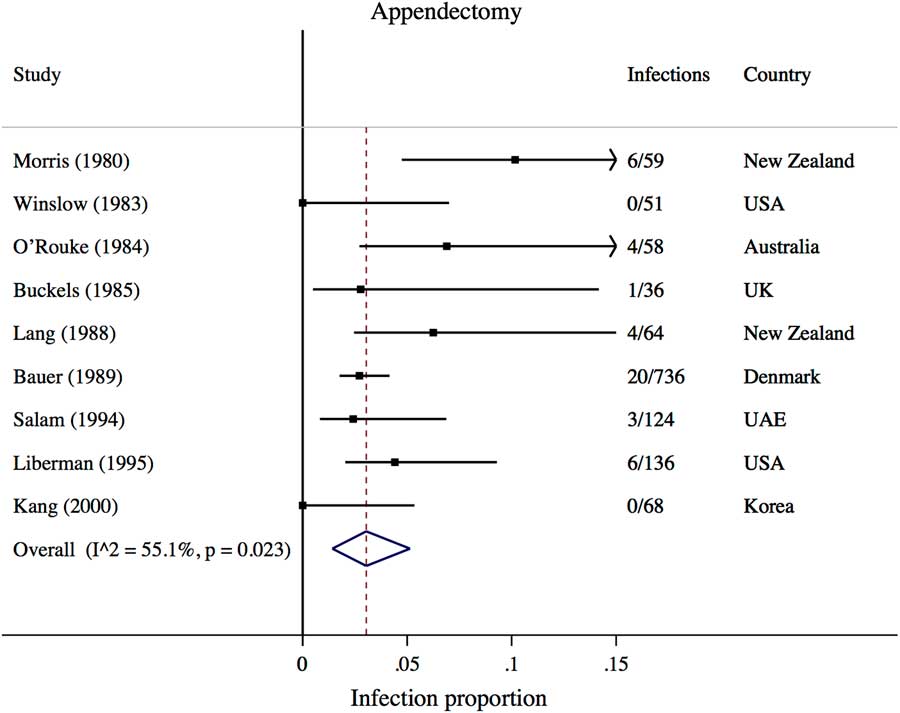
For appendectomy, there were 1,332 participants in 9 RCTs. Cefoxitin was the prophylactic antibiotic in 5 RCTs, cefotetan in 1 RCT, and cefazolin plus metronidazole in 1 RCT. Only 1 of the RCTs compared efficacy of cefoxitin versus cefotetan. The pooled proportion of wound infection following appendectomy using the recommended prophylactic antibiotics (cefoxitin, cefotetan, or cefazolin plus metronizadole) was 3% (95% CI, 1.4–5.1; τ2=0.011) (Fig. 2).
Forest plot of included studies for appendectomy with pooled proportion of wound infection with use of currently recommended prophylactic antibiotics (cefoxitin, cefotetan, or cefazolin plus metronizadole).

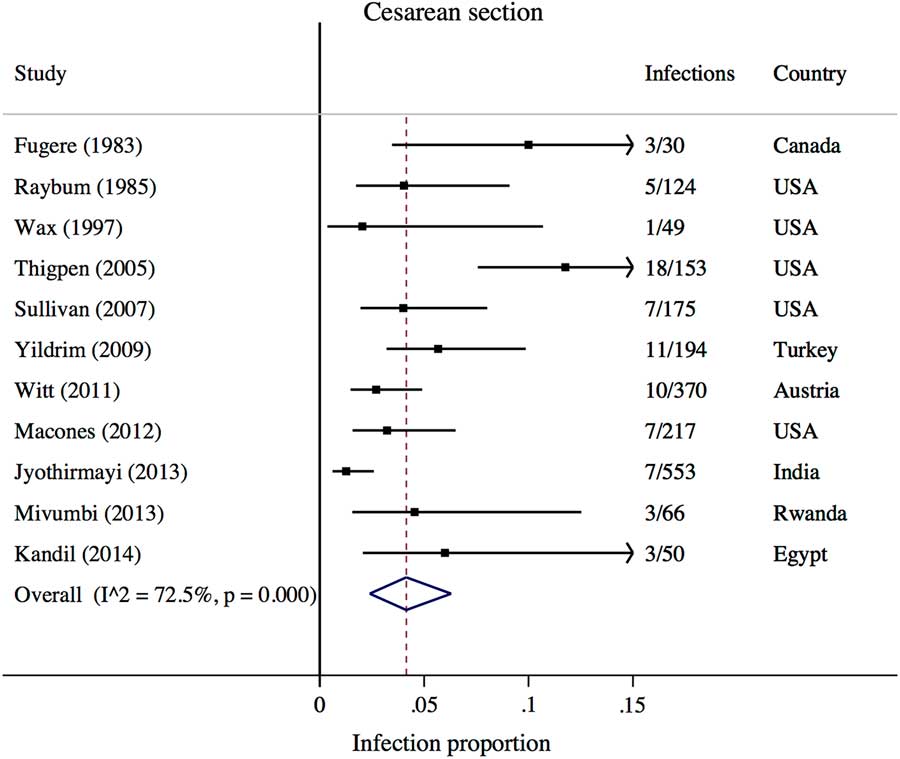
For cesarean section, there were 1,981 participants in 11 RCTs. Cefazolin was the prophylactic antibiotic for all included RCTs. The surgery was elective in 4 RCTs, both elective and nonelective (in active labor) in 4 RCTs, and nonelective in 3 RCTs. The pooled proportion of wound infection following cesarean section using the recommended prophylactic antibiotic (cefazolin) was 4.1% (95% CI, 2.4–6.3; τ2=0.016) (Fig. 3).
Forest plot of included studies for cesarean section with pooled proportion of wound infection with use of currently recommended prophylactic antibiotic (cefazolin).

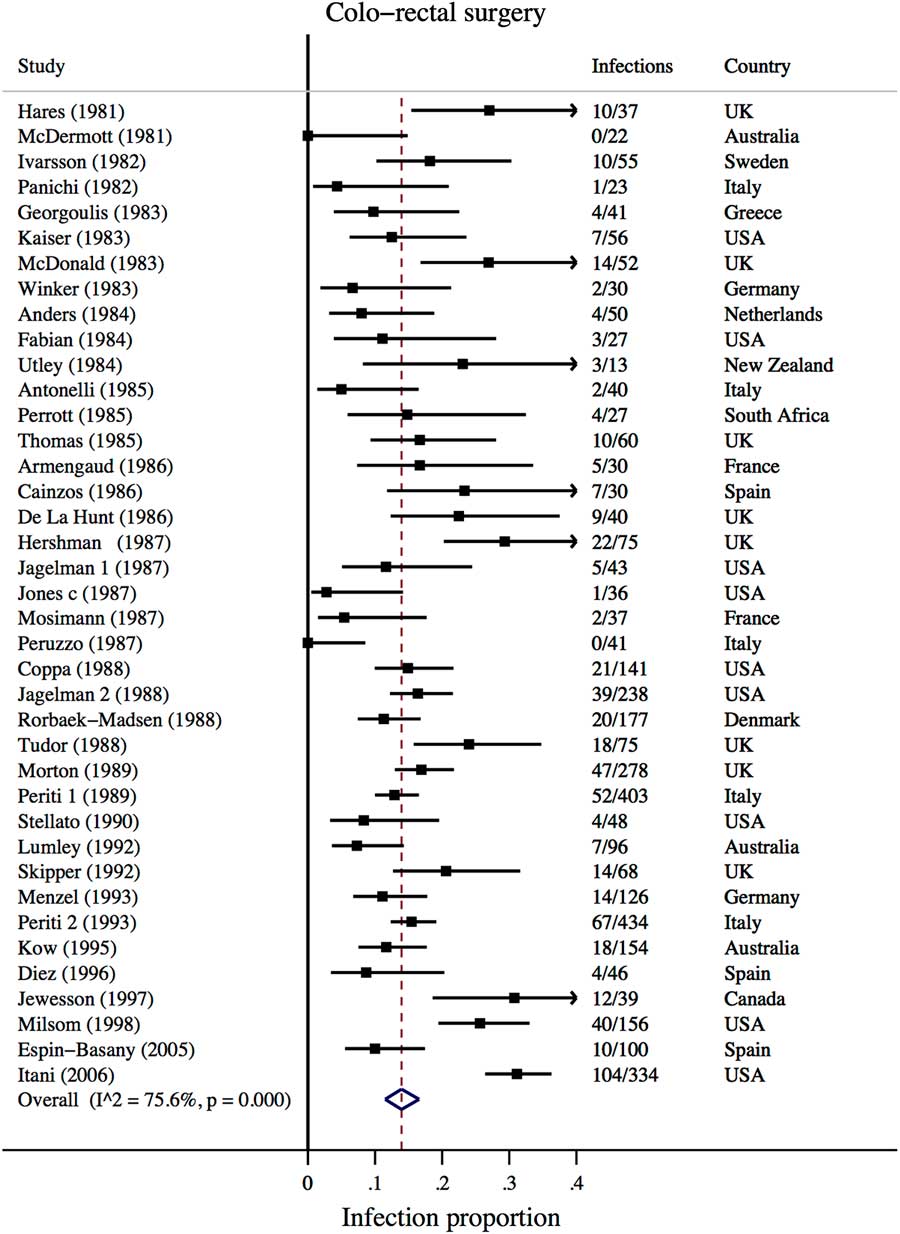
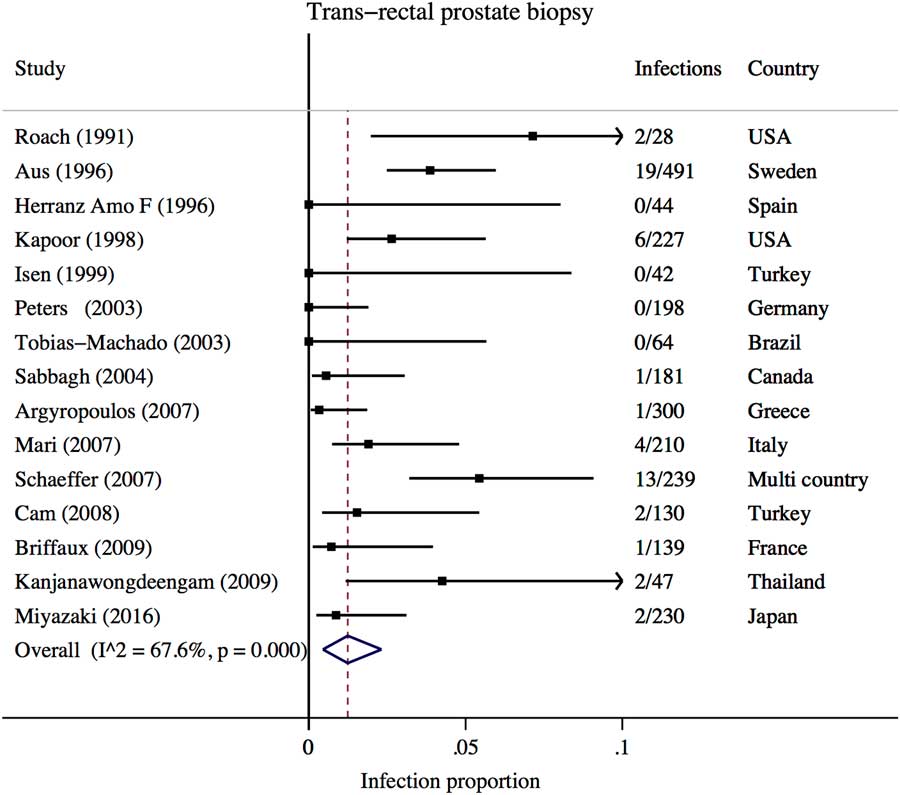
For colorectal surgery, there were 3,778 participants in 39 RCTs. Cefoxitin was the prophylactic drug in 27 RCTs, cefotetan was the prophylactic drug in 7 RCTs, and cefazolin plus metronidazole was the prophylactic drug in 3 RCTs; 2 RCTs compared the efficacy of cefoxitin versus cefotetan. Most of these studies were elective (32 of 39 RCTs). The pooled proportion of wound infection following colorectal surgery using the recommended prophylactic antibiotics (cefoxitin, cefotetan, or cefazolin plus metronizadole) was 14% (95% CI, 11.5–16.6; τ2=0.033) (Fig. 4). For TRBP, there were 2,570 participants in the 15 RCTs. Ciprofloxacin was the prophylactic antibiotic in 9 RCTs and levofloxacin was the prophylactic antibiotic in 2 RCTs. In 1 RCT, patients received either ciprofloxacin or levofloxacin. Ofloxacin, perfloxacin, and prulifloxacin were used as prophylactic antibiotics in 1 RCT each. The pooled proportion of infections (UTIs and sepsis) following TRPB using the recommended prophylactic antibiotics (fluoroquinolones) was 1.2% (95% CI=0.4–2.3; τ2=0.013) (Fig. 5).
Forest plot of included studies for colorectal surgery with pooled proportion of wound infection with use of currently recommended prophylactic antibiotics (cefoxitin, cefotetan, or cefazolin plus metronizadole).

Forest plot of included studies for transrectal prostate biopsy with pooled proportion of infections (UTIs and sepsis) with use of recommended prophylactic antibiotics (fluoroquinolones).

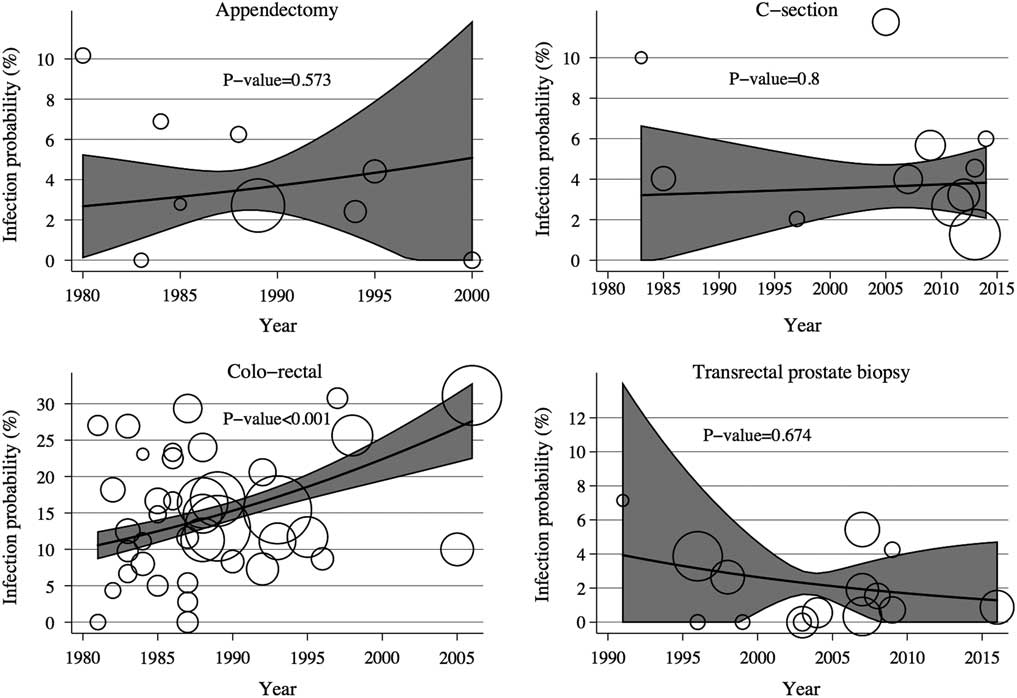
The postoperative infection trends over time following 4 procedures are presented in Fig 6. Because time was modeled as a continuous variable, the odds ratios presented here represent the variation in each calendar year after adjusting for country of the study. No statistically significant association was observed between the probability of infection and the year of study publication for appendectomy (adjusted odds ratio (aOR), 1.03; 95% CI, 0.92–1.16; P=.57), for cesarean section (aOR, 1.006; 95% CI, 0.96–1.05; P=.80), or for TRPB (aOR, 0.95; 95% CI, 0.77–1.19; P=.67) (Supplementary Tables 2–7). However, a significant increase was observed in the proportion of infections following colorectal surgery (aOR, 1.05; 95% CI, 1.03–1.07; P < .001).
Postoperative infection trends over time with use of currently recommended prophylactic antibiotics, following 4 surgical procedures according to multilevel logistic regression models with random intercepts. Note: Gray area indicates the 95% confidence interval for infection probability. Circles represent point estimates from each study, and the size of each circle is proportional to the number of patients included in the study.

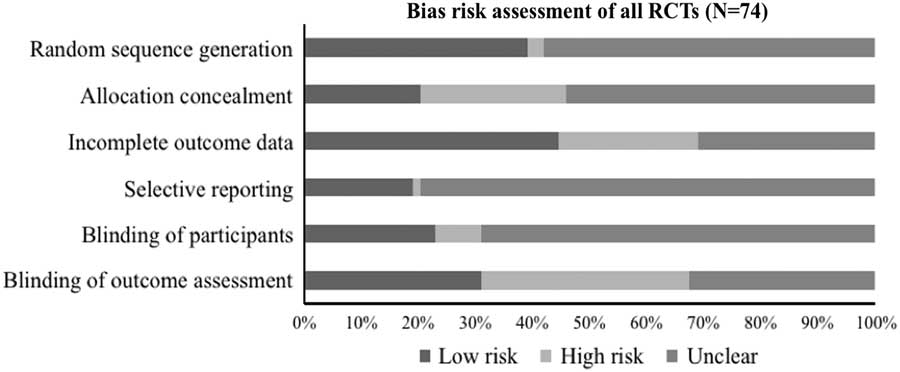
For colorectal surgery, the infection trends remained significant (aOR, 1.05; 95% CI, 1.02–1.07; P<.001) even after adjusting for the antibiotic (cefotetan, cefoxitin, or cefazolin plus metronidazole) and the type of surgery (elective, emergency, both, or not mentioned), even after excluding the most recent study,45 conducted between 2002 and 2005, which reported a high SSI rate with cefotetan (Supplementary Tables 4–6). In a subanalysis of 22 RCTsReference Antonelli, Borgani and Machella 37 , Reference Cainzos, Potel and Puente 39 ,42,43,45,47–49,52,53,55,56,61,62,65,67–70,73,74 in which prophylactic antibiotics were given within 60 minutes prior to incision or at the time of induction of anesthesia, and patients were followed at least for 4 weeks, and infections involving surgical incision, deep organ space, and sepsis related to surgery were included, the infection trends remained significant (aOR, 1.04; 95% CI, 1.01–1.07; P=.014) (Supplementary Table 8). The risk of bias across included studies for the various bias components, showing a mix of low, unclear, and high risk, is shown in Fig. 7.
Appraisal of quality of study methodology of all included randomized control trials (RCTs).

Discussion
We observed a significant increase in the proportion of SSIs among patients who received currently recommended antibiotic prophylaxis agents (cefotetan, cefoxitin, or cefazolin plus metronidazole) for colorectal surgery in 39 RCTs conducted between 1981 and 2006. However, we did not observe a statistically significant change in the proportion of postoperative infections among patients who received currently recommended antibiotic prophylaxis in RCTs for appendectomy, cesarean section, or TRPB. To our knowledge, there are no previous reports on temporal trends of the efficacy of currently recommended antibiotic prophylaxis agents for various surgical procedures. Among the 4 procedures, colorectal surgery had the highest (14%) and TRPB had the lowest (1.2%) pooled postoperative infection proportion.
Our findings for colorectal surgery are robust; the trends remained significant even after adjusting for the type of surgery and antibiotics used and after excluding the last RCT conducted in 2005, which showed high SSI rate (Supplementary Table 4). The results remained significant in a subanalysis of 22 RCTs that had prophylactic antibiotic administration within 60 minutes or at the time of anesthesia induction, had patient follow-up of at least 4 weeks, and included surgical incision and organ space infections. The main group of pathogens associated with SSIs following colorectal surgery include mixed aerobic and anaerobic bacteria including Enterobacteriaceae and Bacteroides spp, most of which originate from the patient’s own intestinal microbiota.90 The reduction in efficacy could be explained by the rise in intestinal colonization of antibiotic-resistant Enterobacteriaceae and Bacteroides spp. A recent meta-analysis reported a significant increase in the burden of extended-spectrum β-lactamase–producing Enterobacteriaceae (ESBL-PE) among healthy individuals worldwide, with an annual rate of ~5%.91 Similarly, reported increasing rates of cefoxitin- and cefotetan-resistant Bacteroides spp have been reported. In Europe, the cefoxitin-resistant Bacteroides fragilis group increased from 3.2% in 1988–1989 to 17.2% in 2008–2009.92 In United States between 1990 and 1996, cefotetan-resistance among Bacteroides spp increased annually by 5%.93
Our findings are also consistent with the results of an RCT that demonstrated superior efficacy of ertapenem over cefotetan (the currently recommended prophylaxis agent) in preventing SSIs following colorectal surgery. In this study, the proportion of SSIs in the ertapenem group was significantly lower (18% vs 31%; absolute difference = −13%; 95% CI, −19.5 to −6.5) compared with the cefotetan group.45 Ertapenem is a broad-spectrum antibiotic with activity against ESBL-PE that has superior activity against anaerobic bacteria including Bacteroides spp.94 In this RCT,45 the anaerobic bacteria and gram-negative bacilli isolated from SSIs were less resistant to ertapenem than cefotetan, indicating the superior efficacy of ertapenem.
For patients who underwent appendectomy due to simple appendicitis, we did not observe a significant change in the trend in the proportion of SSIs using the current recommended antibiotic prophylaxis agents (cefotetan, cefoxitin, or cefazolin plus metronidazole). Although the predominant pathogens associated with SSIs following appendectomy are similar to those following colorectal surgery, there has been no significant change in SSI trends. Some possible explanations include the small number of RCTs, the fact that it is a relatively clean procedure with less contamination of the operative area than with colorectal surgery, and the low postoperative SSI rate (3% for appendectomy vs 14% for colorectal surgery).
As with appendectomy, we did not observe a significant change in SSI trends following cesarean sections. The most common pathogens associated with SSIs following cesarean section include Staphylococcus aureus, E. coli, and coagulase negative staphylococci.95 Methicillin-resistant S. aureus (MRSA) and ESBL-PE are resistant to first-generation cephalosporins including cefazolin. However, the low SSI rate (pooled proportion of SSI=4.1%) following cesarean section could be a reason for not finding a significant change, as studies with large numbers of patients are required to observe a significant change in the trend.
Among patients who underwent TRPB included in 15 RCTs conducted between 1991 and 2016, we did not observe a significant change in trends in the proportion of postprocedural infections (UTIs and sepsis) using the current recommended antibiotic prophylaxis agents, fluoroquinolones. Esherichia coli is the most common pathogen associated with infections following TRPB. Although several recent studies, including a meta-analysis of 9 prospective cohort studies,96 reported an increased risk of infections following TRPB among patients colonized with fluoroquinolone-resistant Enterobacteriaceae, we did not observe a significant change in the proportion of infections over time in our study despite the increasing prevalence of ESBL-PE among healthy carriers worldwide.91 Possible explanation for this finding include very low infection rate following TRPB (pooled proportion of infections following TRPB=1.2%) and an insufficient number of RCTs.
This review has several limitations. First, heterogeneity among studies in terms of the nature of SSI surveillance, duration of surgery, case mix of patients, infection control practices, appropriate timing of antibiotics, dosage of antibiotics, and types of surgeries performed may have influenced the overall infection rates. However, we used random-effects models to estimate the pooled proportion of infections, and the rising trend of SSIs observed after colorectal surgery was robust in several sensitivity analyses. Second, we were unable to obtain information on the actual study years for several studies. Thus, we had to use publication years to examine temporal trends. Third, except for colorectal surgery, the analyses of the 3 other procedures had small numbers of RCTs and were potentially underpowered.
In conclusion, our analysis indicates that the efficacy of currently recommended prophylactic antibiotics has declined for colorectal surgery. We did not find a declining trend for simple appendectomy, cesarean section, and TRPB. However, the small number of RCTs and low infection rates for these procedures might have decreased the statistical power. Future studies assessing the efficacy of surgical prophylaxis could include non-RCTs for these 3 procedures. New studies are needed to determine how antibiotic prophylaxis recommendations should be modified in the context of declining efficacy for colorectal surgery.
Acknowledgments
Financial support
This work was supported by the Innovative Medicines Initiative Joint Undertaking (grant no. 115618) with in-kind financial contributions from the European Union’s Seventh Framework Programme and European Federation of Pharmaceutical Industries and Associations companies. The funders had no role in the study design; the collection, analysis, and interpretation of the data; the writing of the report; or the decision to submit the article for publication.
Conflicts of interest
All authors report no conflicts of interest relevant to this article.
Supplementary material
To view supplementary material for this article, please visit https://doi.org/10.1017/ice.2018.295