INTRODUCTION
Swordfish (Xiphias gladius) is one of the most commercially important species caught by the Moroccan artisanal longline fleet in the Strait of Gibraltar during its reproductive migration from the Atlantic to the Mediterranean Sea, from April to October of each year (Idrissi & Abid, Reference Idrissi and Abid2006). The average annual catch of this species, for this fishery, during the period 2007–2011 was around 1450 t, but has shown a sharp decline since 2012 and has not exceeded 400 t during the period 2012–2016. This important decrease in catch is due to the total ban of the driftnet fishery implemented by the Moroccan fishery department. Despite this remarkable decrease in catches, Morocco is still one of the biggest swordfish producers in the Mediterranean Sea after Italy (ICCAT, 2014).
The Strait of Gibraltar is known to be a mixing area between Mediterranean and North Atlantic swordfish stocks. The International Commission for the Conservation of Atlantic Tunas (ICCAT) has repeatedly recommended that studies should be conducted on the biology and genetics of the swordfish caught west of the current boundary separating the North Atlantic and Mediterranean stocks (05°W) with the goal of assessing the mixing rate in this area (ICCAT, 2014).
Little is known about the reproductive biology, especially the size at first maturity and spawning season, of swordfish exploited in the Strait of Gibraltar (El Hannach, Reference El Hannach1987; De la Serna et al., Reference De la Serna, Alot and Godoy1992a, Reference De la Serna, Alot and Mejutob). In the study area, and based on the gonadosomatic index analysis, swordfish become mature at between 20 and 40 kg (El Hannach, Reference El Hannach1987), but there have been no studies that estimate the size at first maturity. The maturity by size or age is one of the key inputs for age-based models used to assess the stock spawning biomass (SSB) of this species (ICCAT, 2014).
To this end, this study aims to update the patterns of the sex-ratio by size and estimate the size at first maturity for swordfish caught in this mixing area, based on the analysis of biological data and samples collected from the landings of this species in the port of Tangier during the main fishing season of the artisanal longline fleet for the years 2014, 2015 and 2016.
MATERIALS AND METHODS
Biological sampling
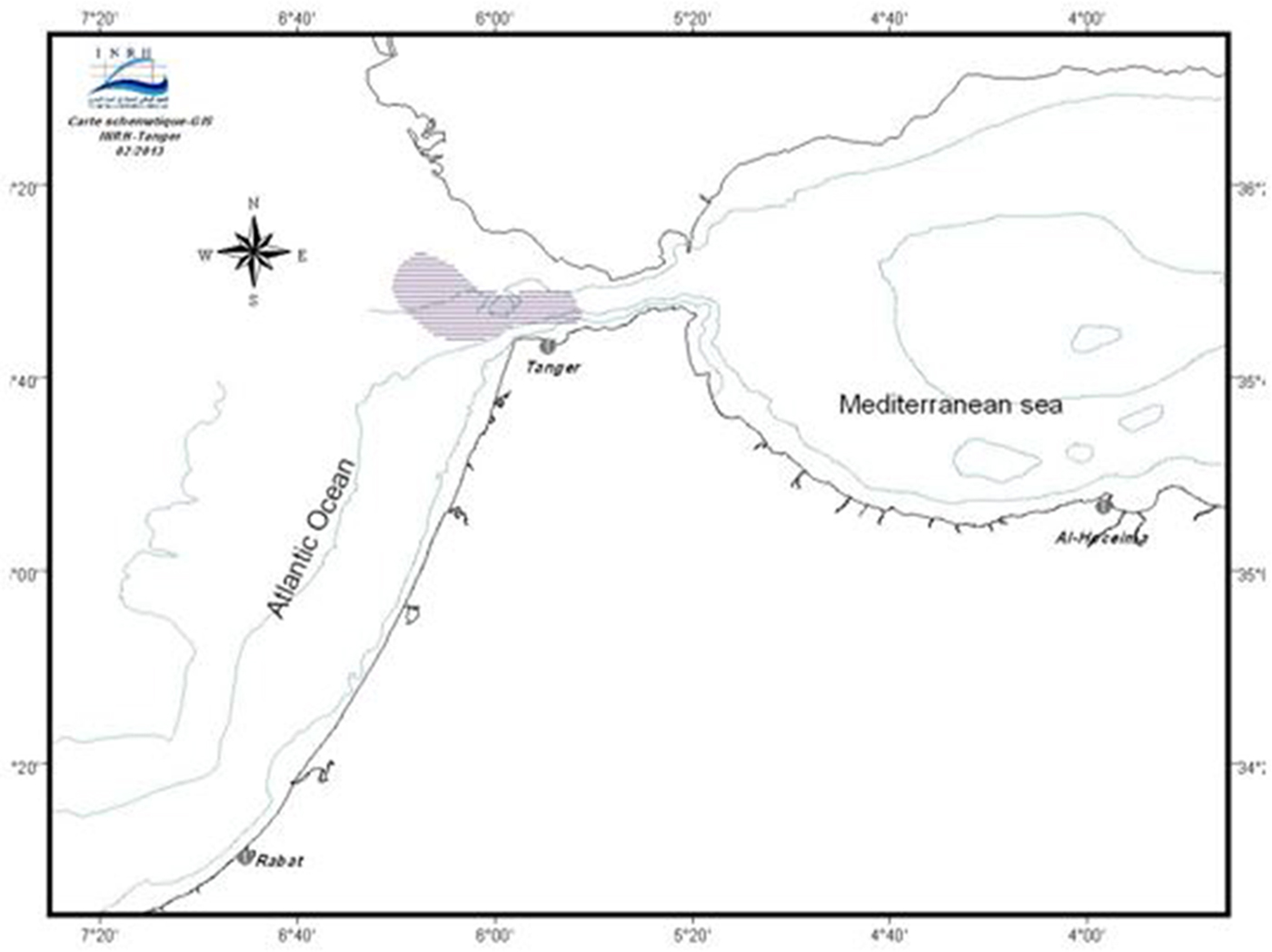
From April to September for the period 2014–2016, 998 swordfish (566 females and 432 males), were sampled from commercial landings of the Moroccan artisanal longline fleet operating in the Strait of Gibraltar (Figure 1). Data for July are missing as no fishing activity occurs during this month, due to the lack of resource availability in the study area. This fact could be attributed to the reproductive migration pattern of swordfish to spawning grounds, likely located in other areas, as has been described by previous authors (El Hannach, Reference El Hannach1987; Tserpes et al., Reference Tserpes, Peristeraki and Valavanis2008). Additionally, according to fishermen, the resource is not available in the fishing area close to the shore during the period from October to March, and thus it is not accessible to the artisanal fleet. For this reason, no biological data were collected and analysed for that period.
A map showing the study area. The shaded area indicates the fishing grounds of the Moroccan artisanal longline fleet targeting swordfish.

For each fish the following data were recorded: lower jaw-fork length (LJFL), eviscerated weight of fish (GW), sex and macroscopic maturity stage of gonads (West, Reference West1990). The gonads were weighed using an electronic balance of 0.01 g accuracy. The length of each fish was measured to the nearest centimetre, using a tape measure. For analytical purposes, all biological data were grouped by size classes of 10 cm.
Sex ratio
In this study, the sex ratio was defined as the proportion of female individuals in the total number of sampled fishes (Arocha & Lee, Reference Arocha and Lee1996; Mejuto & Cortes, Reference Mejuto and Cortes2003b), using the following formula:
 $${\rm Sex}\,{\rm ratio}\,{\rm (\% )} = \displaystyle{{{\rm Number}\,{\rm of}\,{\rm females}} \over {{\rm Number}\,{\rm of}\,{\rm females + Number}\,{\rm of}\,{\rm males}}}$$
The sex ratio by size was standardized using General Linear Modelling techniques (McCullagh & Nelder, Reference McCullagh and Nelder1989).
Gonadal index (GI)
In addition to visual inspection of gonads, the maturity status of swordfish specimens was also evaluated by calculating the gonadal index (GI) (Kume & Joseph, Reference Kume and Joseph1969), as follows:
 $${\rm GI =} \left( {\displaystyle{{W_{{\rm gonad}}} \over {{\rm LJF}{\rm L}^3}}} \right) \times 10^4$$
W gonad: gonad weight in grams, LJFL: lower jaw-fork length in cm.
Size at first sexual maturity (L50)
Based on previous studies regarding swordfish maturity, a female swordfish is considered mature or reproductively active when having a gonadosomatic index equal to or greater than 2.09 (Kume & Joseph, Reference Kume and Joseph1969; Arocha & Lee, Reference Arocha and Lee1996; Mejuto & Cortes, Reference Mejuto and Cortes2003b). A male swordfish is considered mature when being at stages 3, 4 or 5 (Poisson & Fauvel, Reference Poisson and Fauvel2009).
The size at first maturity (L50) is defined as the size at which 50% of individuals are mature. L50 was calculated for the sampled swordfish specimens using the linear form of a logistic curve describing the relationship between the fish length and proportion of mature fish at this length (ICCAT, 2006–2016):
 $${\rm Ln}\,\displaystyle{P \over {1 - P}} = a + b \times {\rm LJFL}$$
P: the observed proportion of mature fish, a and b are the linear regression parameters of the linear model, LJFL: Central value of each 5 cm bin size class (95–240 cm LJFL), L50 is the size of fish corresponding to P = 0.5, which means that L50 = −a/b.
The predicted proportion of mature fish was estimated using a logistic model (ICCAT, 2006–2016):
 $${ \percnt} \,{\rm Matures =} \displaystyle{{\rm 1} \over {{\rm 1 + exp}\,{\rm (} - b \times ({\rm LJFL} - {\rm L50}){\rm )}}}$$
LJFL: lower jaw-fork length in cm, L50: size at first sexual maturity in cm, b = slope of the linear regression line of the logistic model.
Histological analysis of gonads
Histological analysis is the most reliable method used for assessing the degree of maturity in large pelagic species. However, this method is very expensive and time consuming (West, Reference West1990). To confirm the macroscopic maturity stages determined by visual inspection of gonads, a subsample of 17 female gonads was taken immediately after evisceration of the fish for histological analysis. The gonad samples cover the period from April to August 2016 and a larger size range (82–180 cm LJFL), in order to analyse the evolution of maturity degree of gonads over time and size of fish. A section of female gonads of 2 cm thickness was taken from the central region of the gonads and fixed with Davidson's fluid. The samples were subsequently dehydrated in increasing concentrations of ethanol and then in xylene baths. After dehydration, sub-samples were taken and inserted in paraffin blocks and then frozen in order to be sectioned by microtome. Sections of 2 µm thickness were prepared from the paraffin blocks using a microtome. The sections were mounted on glass slides and stained with haematoxylin-eosin and dehydrated with absolute ethanol and xylene baths. This process consists of three dehydration operations using absolute ethanol, with each operation lasting 1 min, followed by two dehydration operations using xylene, each operation lasting 10 min. After drying, slides were observed under a microscope equipped with a stereoscopic camera. To determine maturity stages in females, the oocyte maturity scheme developed by Hunter et al. (Reference Hunter, Macewicz and Sibert1986) was used. According to the condition and atresia of oocytes, the authors considered 10 maturity stages for females (1–10). Stages 1 to 3, with oocytes that have never reached fully yolked condition, were considered immature, while stages 4 to 10, with oocytes having developed fully yolked oocytes, were considered to be mature.
RESULTS
Size frequency distribution
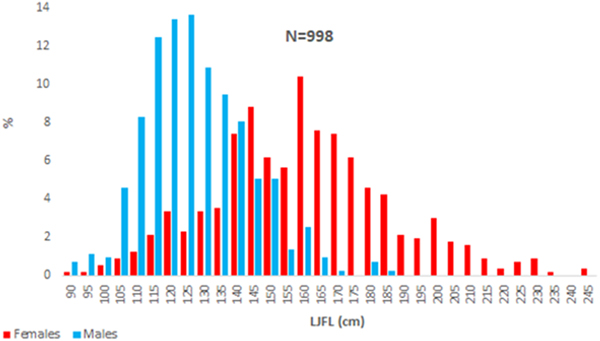
The length of swordfish sampled varied from 90 to 246 cm LJFL. Females had a larger average size (161 cm ± 27 LJFL) than males (129 cm ± 16 LJFL) (Figure 2).
Size frequencies distribution (%) by sex, of swordfish landed at the port of Tangier during the period 2014–2016.

Sex ratio
The overall sex ratio was slightly in favour of females which account for 56.7% of total catches.
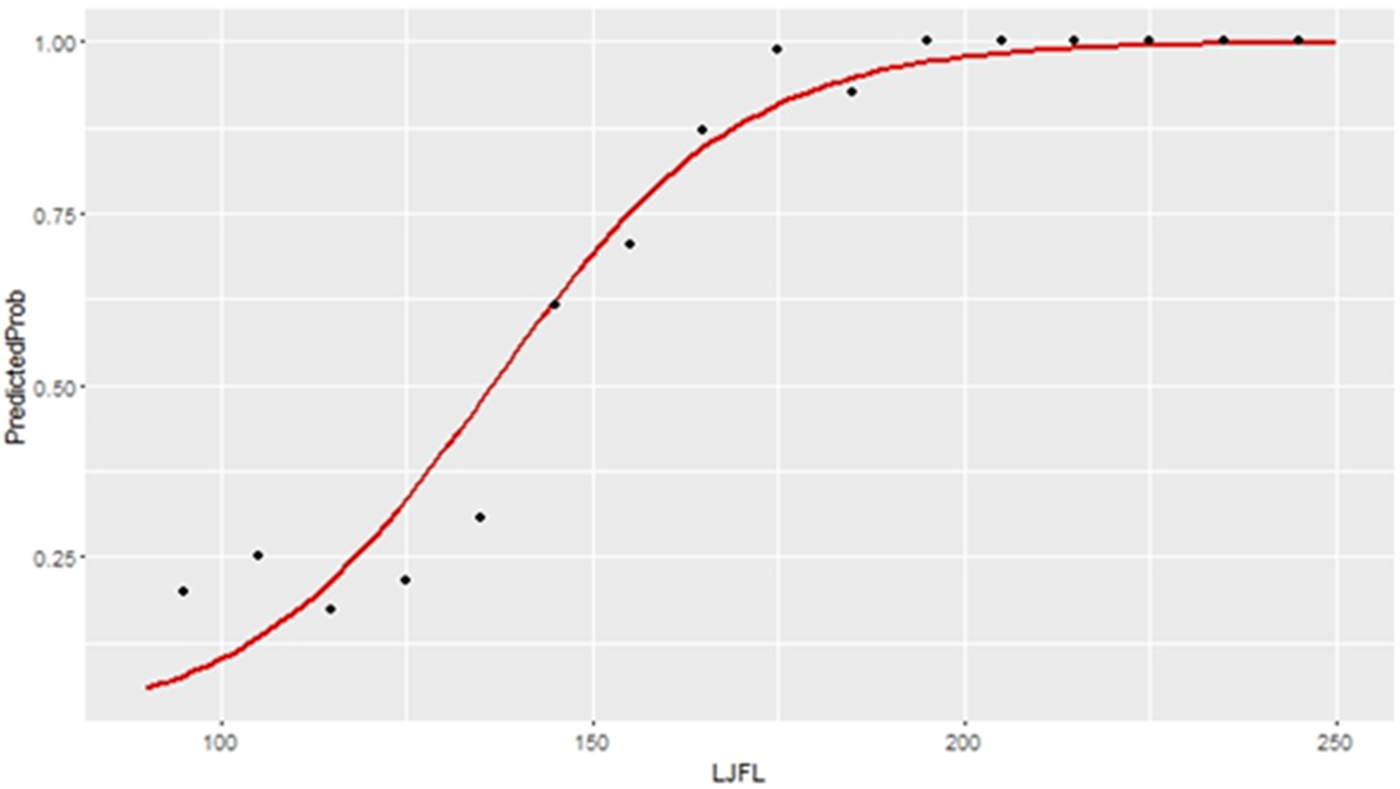
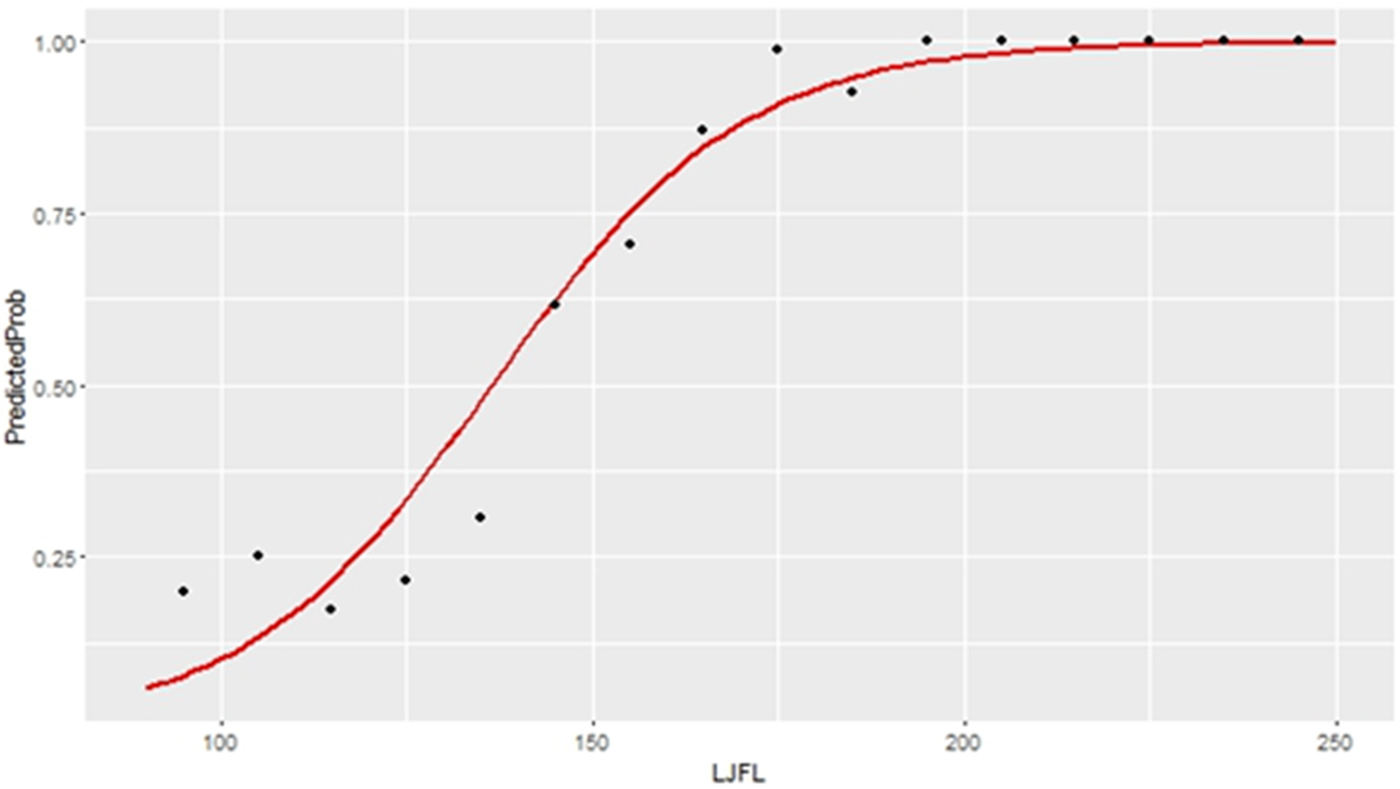
The sex ratio varies significantly with size (χ2 = 24.996, P < 0.0001). In fact, males were more numerous than females for sizes less than or equal to 130 cm LJFL. On the other hand, females were predominant in size classes larger than or equal to 140 cm. The proportion of both sexes tended to be equal for sizes between 135 and 140 cm LJFL (Figure 3).
Predicted proportion of female swordfish by size class (dots represent observed values).
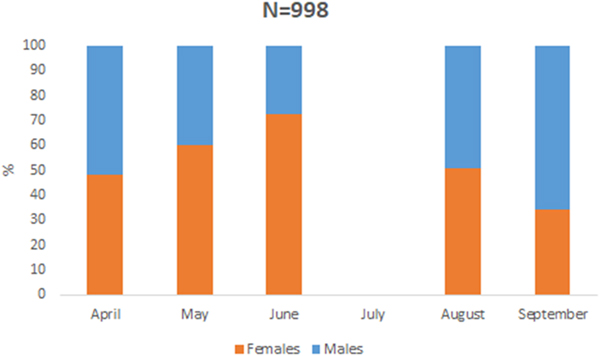
Significant differences between sex-ratio values were observed between months (χ2 = 9.488, P < 0.0001). It was noted that the percentage of females increased from April to reach a maximum of 73% in June. Males were more numerous during September (66% of specimens). In April and August, the percentage of both sexes tended to be equal (Figure 4).
Monthly variation in sex ratio for swordfish landed at the port of Tangier.

Variation of gonadal index by sex, size and month
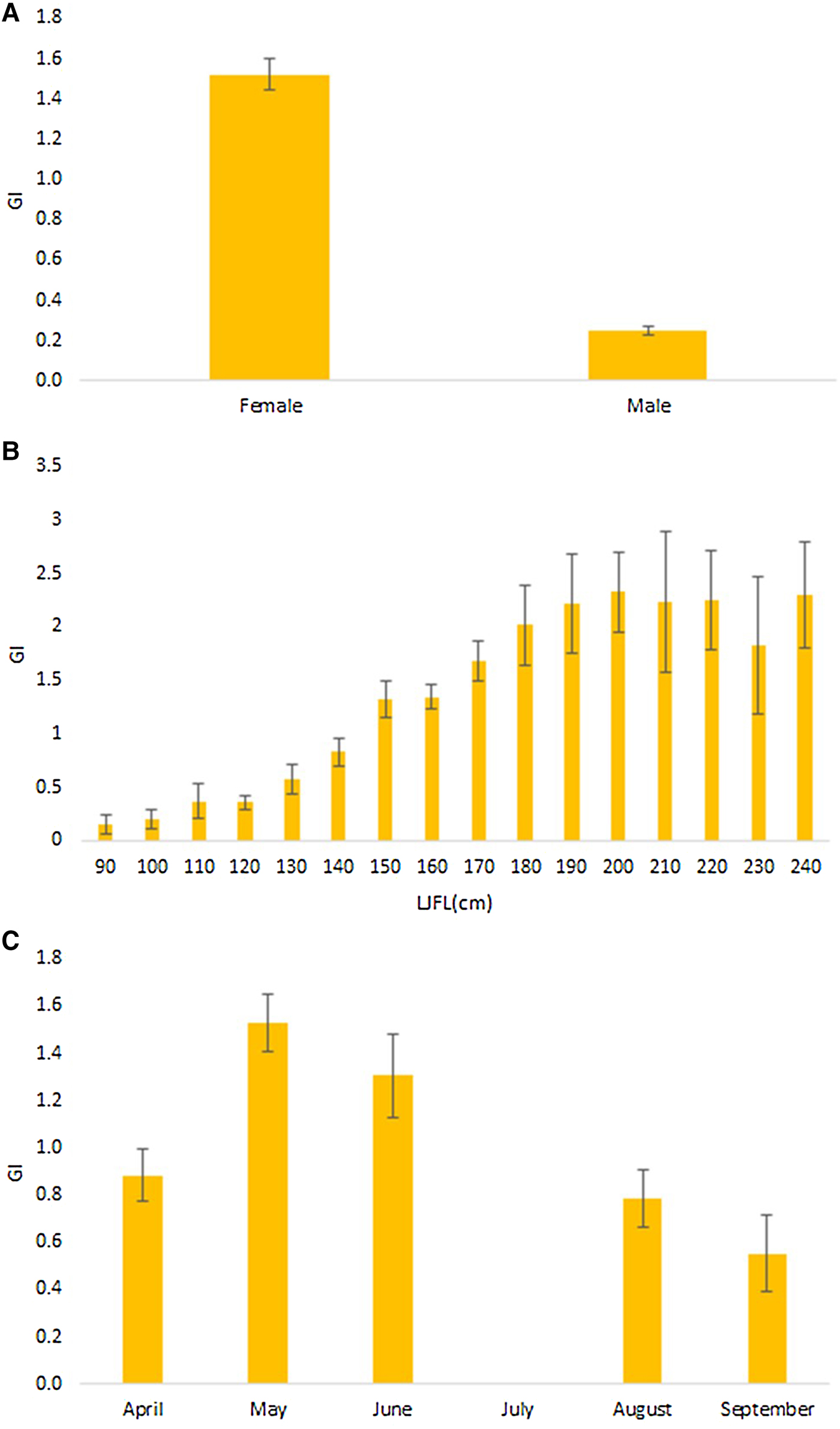
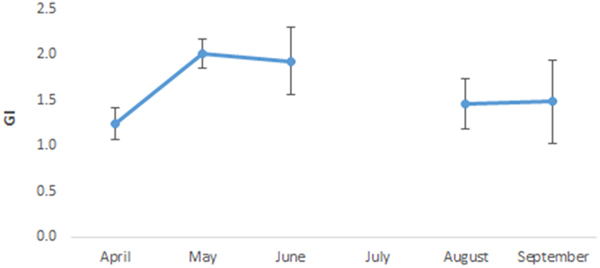
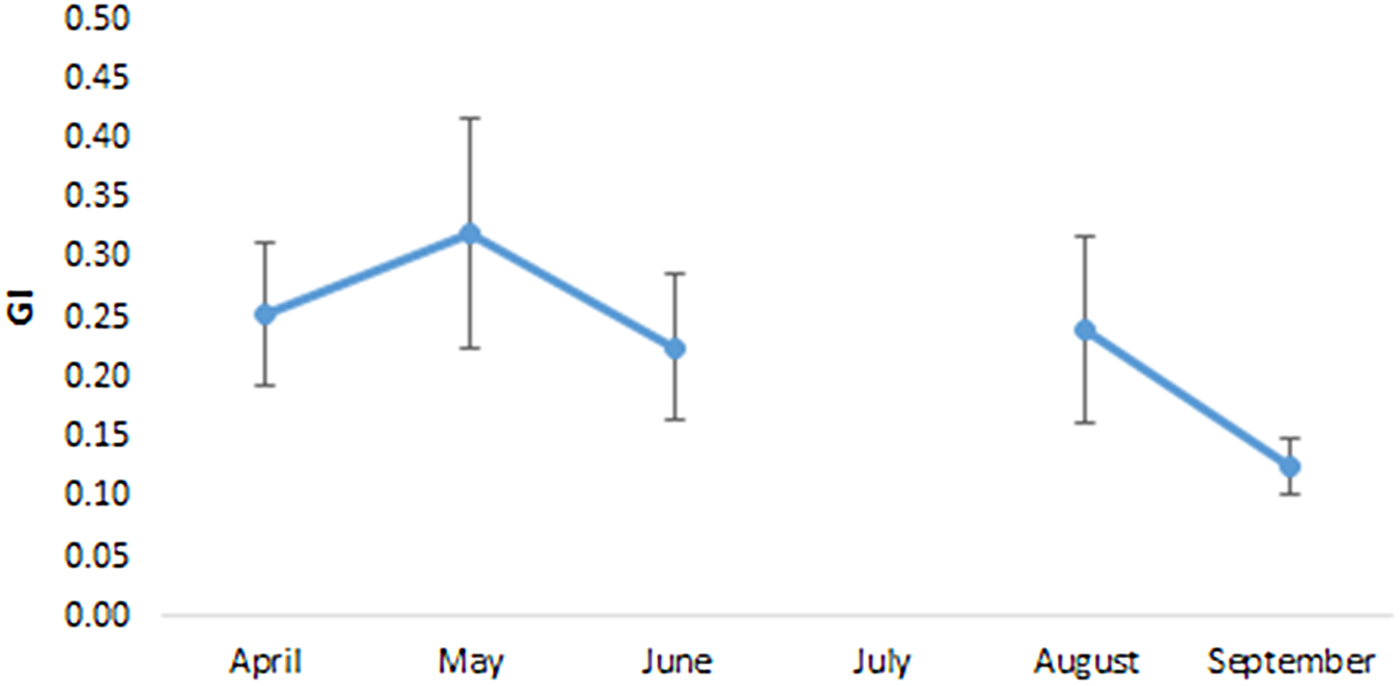
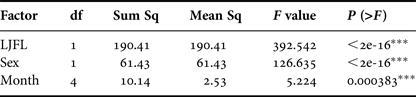
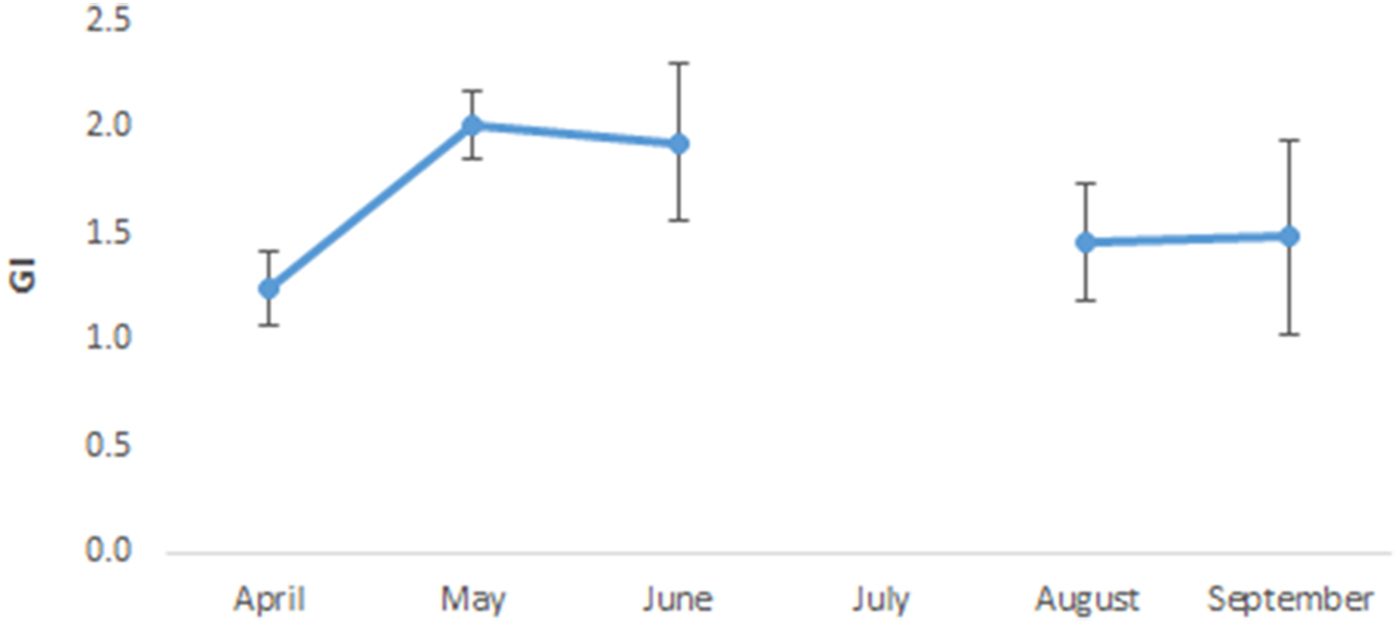
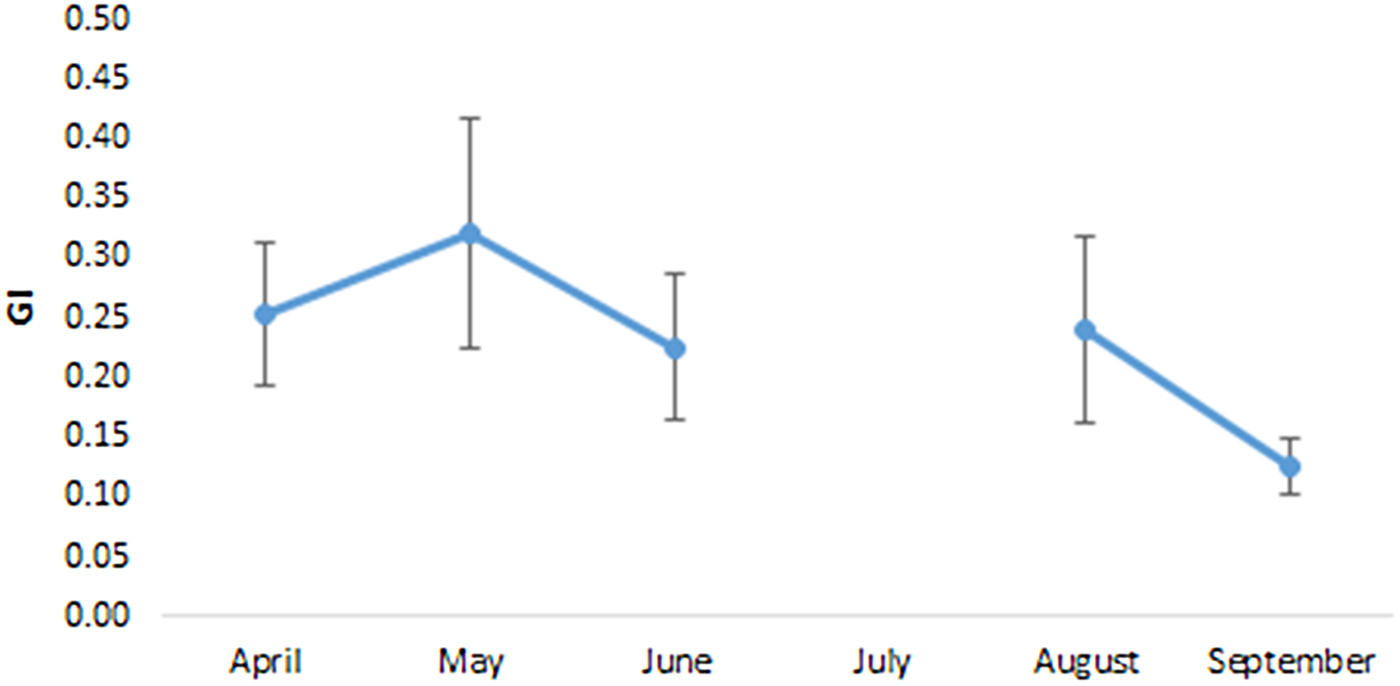
The GI of swordfish varied significantly by size, sex and month. This biological parameter was six times higher in females than in males. Generally, GI increases with fish size (Table 1) and (Figure 5). In females less than 160 cm, GI values did not vary significantly with month (F = 1.966, P = 0.101). However, for females larger than 160 cm, GI values showed significant monthly differences (F = 4.271, P = 0.00247) (Figure 6). Indeed, average GI increased from April to reach a maximum of 2.01 in May, then decreased by 27% during the period August–September (GI = 1.47). Regarding males, GI showed a similar trend to that observed in females, with a maximum value in May (GI = 0.32). However, it is important to highlight that the decrease in GI during the month of September was more pronounced in males, representing 61% of the maximum observed in May (Figure 7). The differences observed in GI in males less than 125 cm was statistically significant (F = 4.834, P = 0.00146). Nevertheless, for individuals larger than 125 cm LJFL, these differences were not statistically significant (F = 2.327, P = 0.0618). The maximum values of GI observed during the months of May and June for both sexes suggest higher maturity stages during that period.
Variation of the gonadal index according to sex (A), size (B) and month (C) in swordfish landed at the port of Tangier (vertical bars represent the 95% confidence interval).

Monthly variation of gonadal index (GI) in female swordfish larger than 160 cm LJFL (vertical bars represent the 95% confidence interval).
Monthly variation of gonadal index (GI) in male swordfish less than 125 cm LJFL (vertical bars represent the 95% confidence interval).
F test results, with GI as dependent variable and factors: LJFL, sex and month as independent variables.

***, P < 0.001.
Size at first sexual maturity (L50)
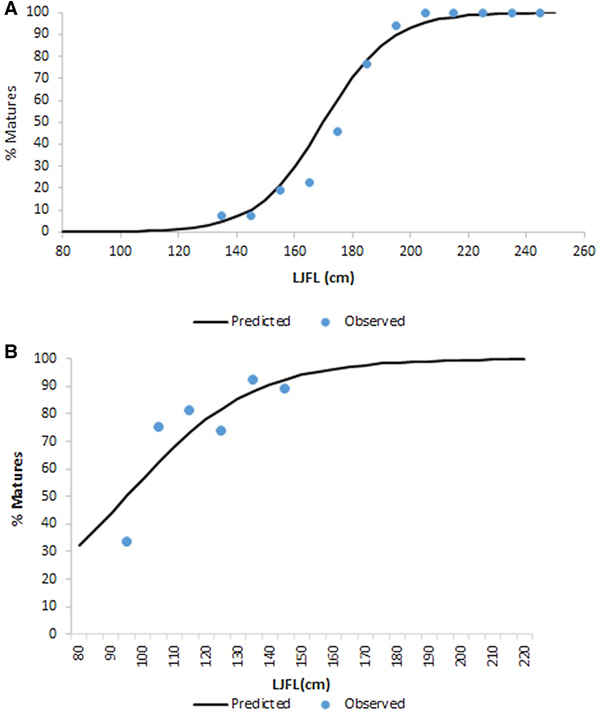
In females, size at first sexual maturity was estimated to be 170 cm (LJFL). At a size of 145 cm LJFL, 10% of females would be mature (Figure 8A). The smallest mature female in our sample measured 119 cm LJFL, and was captured in June 2014. Males reached their first sexual maturity at a considerably smaller size than females (95 cm LJFL) (Figure 8B). The smallest mature male was 93 cm LJFL, and was caught in June 2016.
Maturity ogive for female (A) and male (B) swordfish.

Monthly change in percentage of maturity stages based on visual inspection of gonads
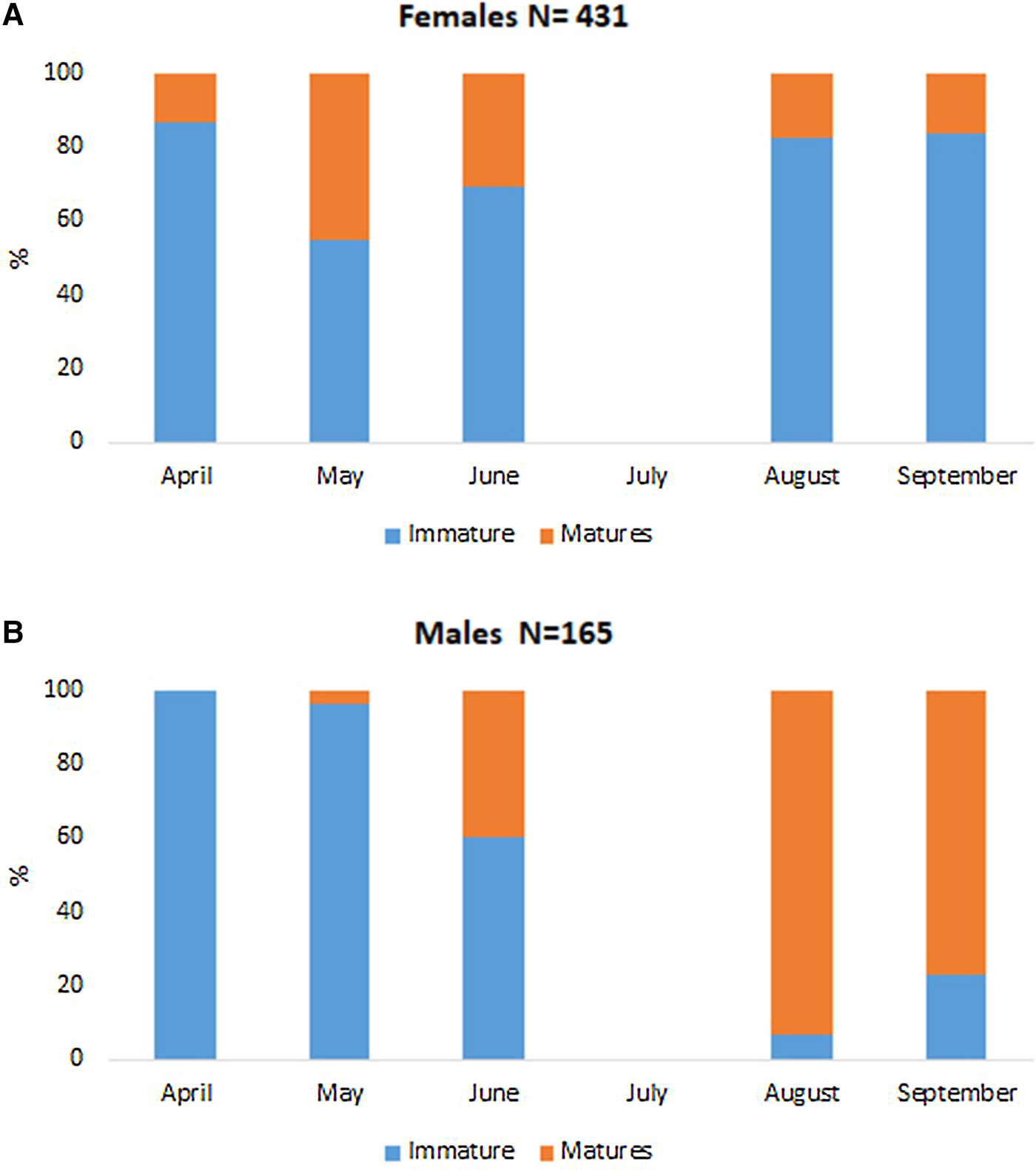
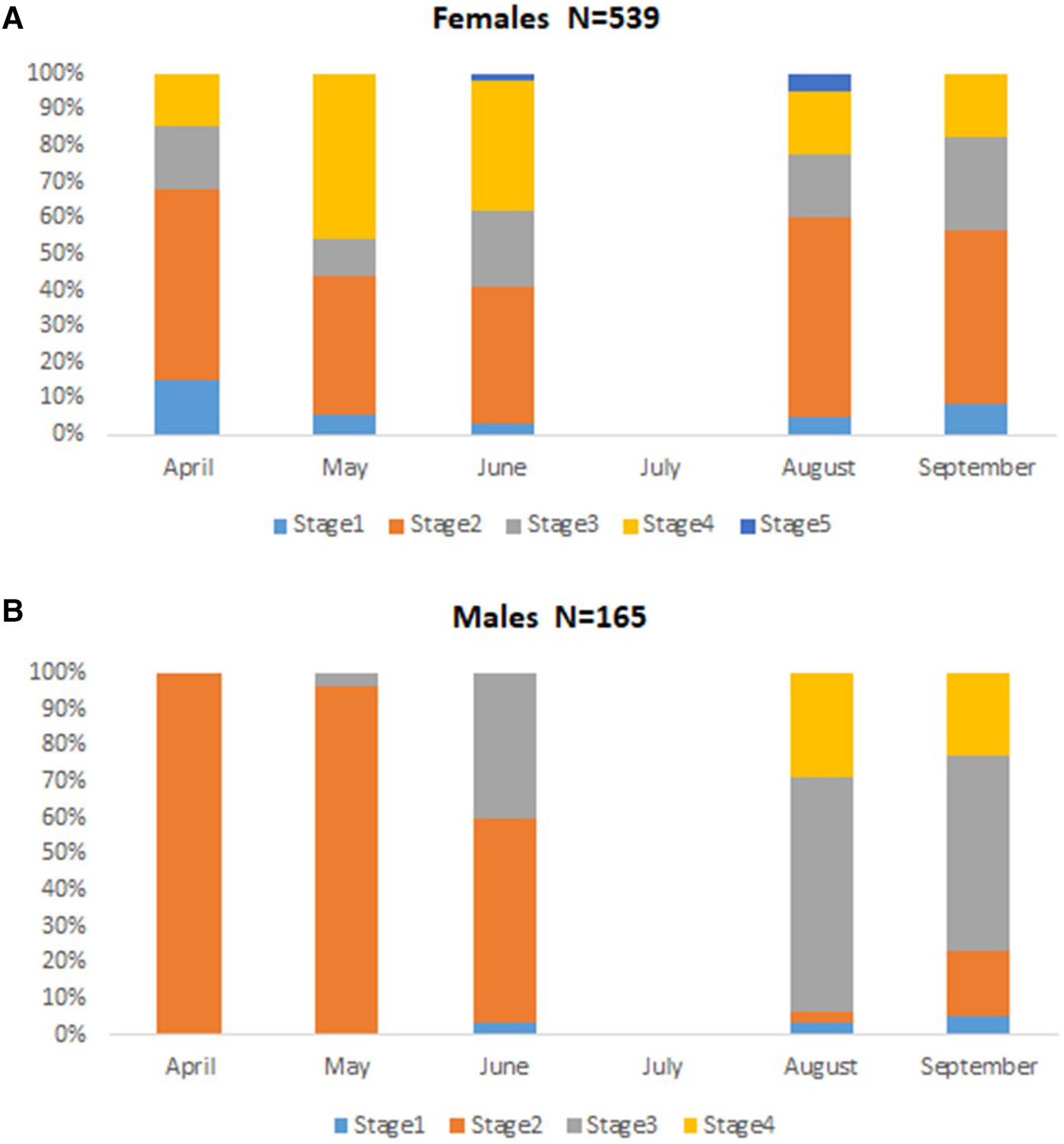
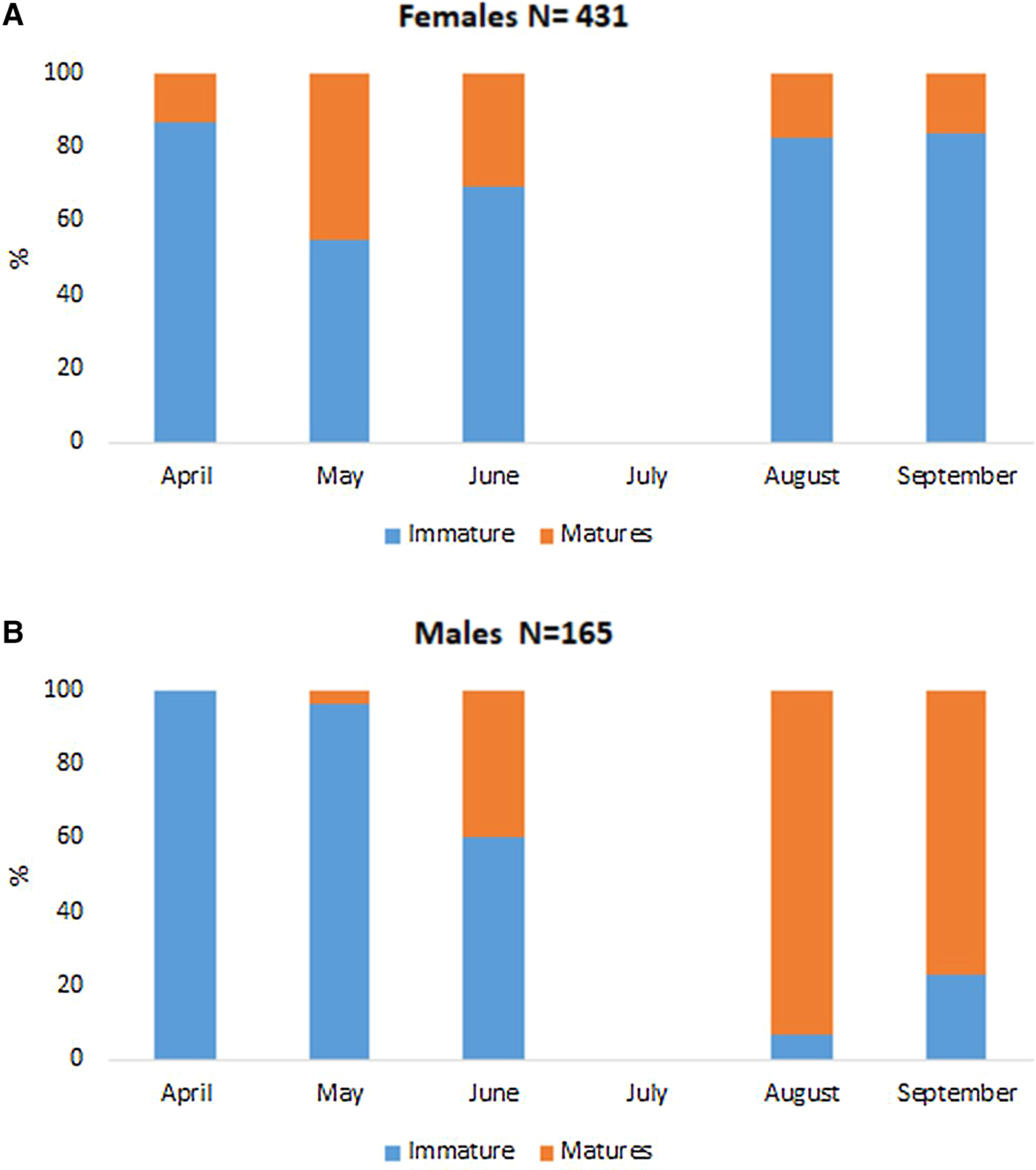
In females, mature individuals were found during the entire fishing season, from April to September (Figure 9A). For females larger than 160 cm, the percentage of mature fish did not exceed 21% by number during the month of April. However, this percentage peaked (63%) in May. During August and September, mature females represented on average 32% of the female catch. These monthly differences in the percentage of mature females are statistically significant (χ2 = 9.48, P = 0.00042). Statistically significant monthly differences were also observed in the percentage of mature individuals (χ2 = 9.48, P < 0.0001) (Figure 9B). A small proportion of mature males were observed in May (3.7%). However, the proportion of mature male individuals increased remarkably during the fishing season, reaching a peak of 93.5% in August. Present findings show that females were undergoing maturation one month earlier (April) in comparison to males. Analysis of the monthly variation in maturity stages showed that females reach their maximum sexual maturity (Stage 4) in May (45%). During the period August–September, the percentage of females at stage 4 was on average 17%. The presence of few females at stage 5 (post-spawning) during June and August indicates that recently spawned specimens cross the Strait of Gibraltar during or after the peak of the spawning period (Figure 10A). In contrast, males reach their maximum maturity (Stage 4) in August, with a percentage of 29.03% (Figure 10B).
Monthly variation in percentage of mature female (A), and mature male swordfish (B).
Monthly variation in percentage of maturity stages in female (A) and male (B) swordfish.

Determination of maturity stages based on histological analysis of gonads
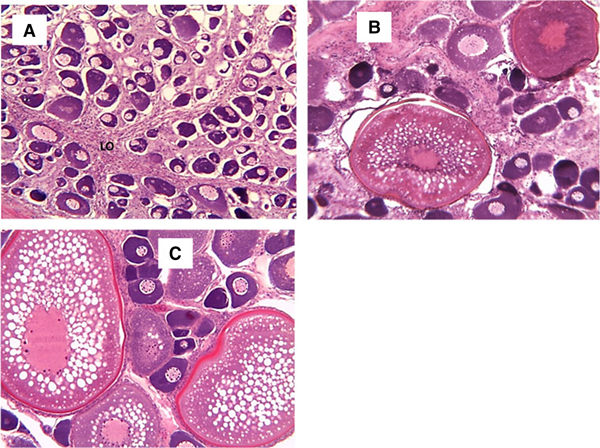
Histological analysis of sampled female gonads revealed that the oocytes were in three stages of sexual maturity: oocytes at the perinuclear stage (immature), partially vitelline oocytes (maturing) and yolked oocytes (mature). Oocytes in the hydrated stage or in the post ovulatory follicle phase were not found, indicating that sampled females were not about to spawn or had not already spawned. As a consequence, these females can be considered as prespawners (Figure 11). The results of the histological analysis confirmed the maturity stages detected by visual inspection of the gonads. Indeed, these results showed the presence of mature females during the period of April–June. In fact, 71% of females sampled during that period were mature (yolked oocytes). On the other hand, none of the 3 females whose sizes ranged between 145 and 158 cm sampled during the month of August was mature. The findings of this analysis were also consistent with our estimates of the size at first maturity of swordfish. All 10 females measuring between 143 and 170 cm were mature, while the 4 females whose sizes were between 110 and 126 cm were found to be immature (oocytes at the perinuclear stage).
Different stages of maturity in female swordfish caught in the Strait of Gibraltar. A: Perinuclear oocytes (immature); B: partially vitelline oocytes (maturing); C: completely vitelline oocytes (mature).

DISCUSSION
The overall sex ratio obtained in this study (56.7%) is slightly in favour of females. This percentage is comparable to that estimated by a previous study (50.4%) for swordfish caught in the same area during the same fishing season (De la Serna et al., Reference De la Serna, Alot and Mejuto1992b). The sex ratio observed in this study is also similar to those found by various other authors in the Mediterranean (De la Serna et al., Reference De la Serna, Alot and Mejuto1992b) (51.7%), (De Metrio, Reference De Metrio1995) (51.9%), (OrsiRelino et al., Reference OrsiRelino, Palandri, Garibaldi, Cima, Relini and Torchia1999) (56.5%) and (Aliçli et al., Reference Aliçli, Oray, Karakulak and Kahraman2012) (55.2%) and partly by Tserpes et al. (Reference Tserpes, Peristeraki and Somarakis2001), at least for sex ratios observed in the areas and months where the reproductive activity was not intense. In the Atlantic Ocean, females are more abundant than males in tropical and temperate waters, while in subtropical waters the proportions of both sexes are almost equal (Hoey, Reference Hoey1991; Arocha & Lee, Reference Arocha and Lee1993, Reference Arocha and Lee1996). In the Atlantic, it was found that an overall sex ratio in favour of males, combined with females with a high gonadosomatic index is characteristic of several swordfish spawning areas (Mejuto et al., Reference Mejuto, De la Serna and Garcia1998). The same was found for the Levantine basin in the eastern Mediterranean, where a swordfish spawning ground has been detected (Tserpes et al., Reference Tserpes, Peristeraki and Somarakis2001, Reference Tserpes, Peristeraki and Valavanis2008). Based on the findings of Mejuto et al. (Reference Mejuto, De la Serna and Garcia1998), the slightly higher ratio of females, indicates that the Strait of Gibraltar is not a spawning area for this species, but rather a transitional area where swordfish pass through to (presumably) spawn in the Mediterranean (Beardsley, Reference Beardsley1978; Rey, Reference Rey1988; Tserpes et al., Reference Tserpes, Peristeraki and Somarakis2001). This is further supported by the estimated monthly ratios of maturing individuals of both sexes, presenting high percentages of the maturity stages 3 and 4 during the spawning season but very low percentages of S5 (spawning individuals). Furthermore, the lack of resource availability in July may also indicate that the study area is a transitional zone in the swordfish reproductive migration (Tserpes et al., Reference Tserpes, Peristeraki and Valavanis2008).
In this study sample, females outnumbered males for sizes larger than 140 cm LJFL; they represented nearly 100% at sizes larger than or equal to 190 cm LJFL. This supports the results obtained previously by other authors (De la serna & Alot, Reference De la Serna and Alot1990; Srour et al., Reference Srour, Abid, De la Serna and De Urbina2004) for swordfish caught in the same area. A similar pattern has been observed in the Mediterranean where females are predominant at sizes above 135 cm LJFL (De Metrio, Reference De Metrio1995; De la Serna et al., Reference De la Serna, Ortiz De Urbina and Macias1996; OrsiRelino et al., Reference OrsiRelino, Palandri, Garibaldi, Cima, Relini and Torchia1999). In contrast, in the North-western Atlantic, females are more numerous than males at sizes greater than 175 cm LJFL and they account for almost 100% of catches at sizes of 225 cm LJFL (Suzuki & Miyabe, Reference Suzuki and Miyabe1991; Arocha & Lee, Reference Arocha and Lee1996). Variations in sex ratio by size class would be related to different growth parameters between sexes, as females grow faster and reach a larger asymptotic size than males (Berkeley & Houde, Reference Berkeley and Houde1983; Taylor & Murphy, Reference Taylor and Murphy1992; Tserpes & Tsimenides, Reference Tserpes and Tsimenides1995). They could also be attributed to the distinct migratory behaviour between males and females during the breeding and feeding periods, resulting in differential catchability in space and time (De la Serna et al., Reference De la Serna, Alot and Mejuto1992b; Mejuto et al., Reference Mejuto, De la Serna and Garcia1998). It should be noted that the presence of a high proportion of mature males in the catches in this study (90–130 cm LJFL) coincides with an important proportion of mature females over 160 cm LJFL with high gonadosomatic index values. A similar pattern was previously observed (De la Serna et al., Reference De la Serna, Alot and Mejuto1992b) in the study area, which could be related to sexual maturity before spawning.
The highest GI values recorded in May and the decline of the index from June to September for both males and females suggest that the spawning activity probably occurs from June to September in the Mediterranean Sea, as previously reported in the eastern Mediterranean (Tserpes et al., Reference Tserpes, Peristeraki and Somarakis2001). The remarkable decline in the GI indicates that the mature females and males are on the spawning ground. A similar pattern was found by De la Serna et al. (Reference De la Serna, Alot and Godoy1992a) for swordfish caught in the study area and by Macías et al. (Reference Macías, Hattour, De la Serna, Gómez-Vives and Godoy2005) for swordfish exploited in the western Mediterranean, although the peak of spawning activity (GI) seems to be displaced in time, due to variations in environmental and oceanographic conditions in the Strait of Gibraltar. Indeed, in the study area, the maximum development of female gonads was recorded in May, while De la Serna et al. (Reference De la Serna, Alot and Godoy1992a) and Macías et al. (Reference Macías, Hattour, De la Serna, Gómez-Vives and Godoy2005) found that the maximum spawning activity occurred in July. However, in the North-west Atlantic, swordfish spawn year-round (Beardsley, Reference Beardsley1978; Arocha & Lee, Reference Arocha and Lee1996). The main spawning areas of Atlantic swordfish are located in the Gulf of Mexico, south of the Sargasso Sea, in the Strait of Florida and along the south-eastern coast of the USA (Beardsley, Reference Beardsley1978; Rey, Reference Rey1988). New spawning areas have also been identified between 10°–15°N and 30°–40°W (Mejuto & Cortes, Reference Mejuto and Cortes2003a).
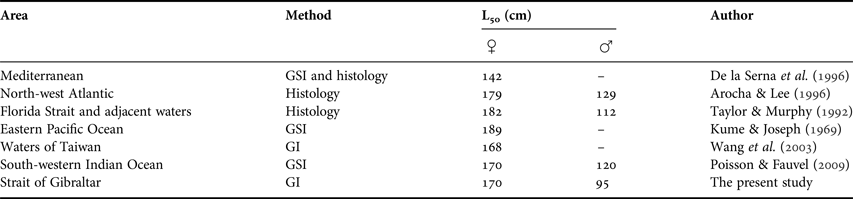
The size at first sexual maturity estimated for females in this study based on the gonadosomatic index (170 cm LJFL) is larger than that of Mediterranean swordfish (145 cm LJFL) (De la Serna et al., Reference De la Serna, Ortiz De Urbina and Macias1996), although it is smaller than the size at first maturity size for North Atlantic swordfish (179–182 cm LJFL) (Taylor & Murphy, Reference Taylor and Murphy1992; Arocha & Lee, Reference Arocha and Lee1996). However, the present estimated L50 is similar to those found recently for swordfish in the waters of Taiwan and the South-western Indian ocean, though there is no connectivity between the swordfish populations in the Strait of Gibraltar and the Pacific and the Indian stocks (Wang et al., Reference Wang, Sun and Yeh2003; Poisson & Fauvel, Reference Poisson and Fauvel2009) (Table 2). Two hypotheses could explain the differences in the size of first maturity in females: (1) our sample could be a mixture of Mediterranean and North Atlantic origin fish. Indeed, the smallest mature female observed in our study measured 119 cm LJFL. About 10% of females captured in the Strait of Gibraltar are thought to be mature at 145 cm LJFL, while no mature females less than 150 cm LJFL have been observed in the North-west Atlantic (Arocha & Lee, Reference Arocha and Lee1996; Mejuto & Cortes, Reference Mejuto and Cortes2003b); (2) female swordfish caught in the Strait have a larger size at first maturity than the Mediterranean swordfish, probably due to differences in environmental conditions between the two areas, including the temperature of the surface layers and their thermal structure (thermocline). For instance, in the Moroccan Atlantic coast, the mean sea surface temperature (SST) during the summer time ranges from 19 to 21°C, whereas in the Mediterranean coast, the SST is relatively higher and reaches between 19 and 25°C (INRH, 2014; Abdellaoui et al., Reference Abdellaoui, Berraho, Falcini, Santoleri, Sammartino, Pisano, Idrissi and Hilm2017). The mature females captured in the study area were about to enter the Mediterranean for spawning. This assumption is supported by the fact that to date, no swordfish spawning area has been reported in the North-east Atlantic between 35° and 45°N and 10° and 40°W (Cortes & Mejuto, Reference Cortes and Mejuto1988; Mejuto & Cortes, Reference Mejuto and Cortes2003a).
Size at first maturity of swordfish by sex in different fishing areas.

In the Strait of Gibraltar, 50% of male swordfish were estimated to be mature at a size of 95 cm LJFL; this result is comparable to that found previously in the Mediterranean (82–105 cm LJFL) (De Metrio et al., Reference De Metrio, Megalofonou, Tselas and Tsimenides1989). Our estimate of size at first maturity for males is lower than that estimated for the North Atlantic swordfish and in the South-western Indian Ocean (112–129 cm LJFL) (Taylor & Murphy, Reference Taylor and Murphy1992; Arocha & Lee, Reference Arocha and Lee1996; Poisson & Fauvel, Reference Poisson and Fauvel2009) (Table 2). The smallest mature male in our sample measured 93 cm LJFL, while in the North-west Atlantic, the smallest mature male was 105 cm LJFL (Arocha & Lee, Reference Arocha and Lee1996). These differences in the sizes at first sexual maturity probably reflect different degrees of mixing of the two stocks in the various sampling areas for the different studies. However, the observed differences in swordfish size at maturity between studies may also reflect variations in environmental conditions between the various study areas, or the different methods used and sampling periods considered (Mejuto & Cortés, Reference Mejuto and Cortés2014). The present findings are consistent with those of a recent study on the growth of swordfish caught in the Strait of Gibraltar. The latter showed that swordfish caught in the Strait of Gibraltar have a growth rate similar to that of Mediterranean swordfish (Abid et al., Reference Abid, Bakkali, Tserpes and Idrissi2013). This means that a high mixing rate between the Mediterranean and North Atlantic stocks occurs to the west of the boundary (5°W) limit established by ICCAT to separate the two stocks. However, more investigation of the spatiotemporal mixing activity of the two swordfish stocks in areas around the Gibraltar Strait should better explain the biological differences observed in adjacent areas.
ACKNOWLEDGEMENTS
This work wouldn't have been possible without the help of many people. I would like to thank especially all the staff of the regional delegation of the National Fishing Office (ONP) and the regional fisheries delegation (DPM) in Tangier for their valuable help. Special thanks should also go to Dr J.M. Ortiz de Urbina for his assistance in performing some statistical analysis. I am also grateful to Dr Paul de Bruyn from ICCAT secretariat for having revised the language of this manuscript.