


Introduction
Functional Neurological Symptoms (FNS) are manifestations of altered motor or sensory functions not caused by readily identifiable structural or pathophysiological changes in the nervous system (Carson et al., Reference Carson, Brown, David, Duncan, Edwards and Goldstein2012). The DSM-V refers to FNS as ‘Conversion Disorder’ (American Psychiatric Association, 2013) and the ICD-10 as ‘Somatoform Disorder’ (World Health Organization, 2016). In both nosologies FNS should not be better explained by other known diagnoses. FNS may present as movement disorders, including weakness and tremor. FNS may also affect sensory processing and include symptoms such as anaesthesia or visual deficits. Non-epileptic attack disorder (NEAD), is a paroxysmal FNS involving episodes of altered consciousness. Approximately one third of neurology out-patients present with FNS (Stone, Reference Stone2013). The long-term prognosis is variable but often poor, as FNS are associated with as much or more significant disability, distress, and unemployment as other ‘medically explained’ conditions presenting to neurologists (Carson et al., Reference Carson, Stone, Hibberd, Murray, Duncan and Coleman2011).
The existing categorization of FNS as a ‘Conversion Disorder’ reflects the ongoing assumption that psychological difficulties may contribute to their aetiology (American Psychiatric Association, 2013). Indeed, an interaction between pre-disposing, precipitating, and perpetuating factors linked to abnormal emotion processing has been proposed as mechanistic in FNS aetiology (Carson et al., Reference Carson, Brown, David, Duncan, Edwards and Goldstein2012). ‘Emotion processing’ describes the process by which ‘emotional disturbances are absorbed, and decline to the extent that other experiences and behaviours can proceed without disruption’ (p. 51; Rachman, Reference Rachman1980). According to this model, abnormal emotion processing occurs when emotional disturbances are not satisfactorily absorbed by an individual. Disrupted emotion processing may be evident through direct signs, including intrusive thoughts, irritability or inappropriate expressions of emotion. Rachman argues that there are also ‘indirect’ signs of unsatisfactory emotion processing, including fatigue, insomnia, and anorexia (Rachman, Reference Rachman1980). Abnormal emotion processing theoretically contributes to the symptomatology of multiple mental health difficulties and personality disorders, including anxiety and emotionally unstable (borderline) personality disorder (Kret and Ploeger, Reference Kret and Ploeger2015).
Emotion processing is a multi-faceted concept; consequently there are multiple instruments measuring different aspects of emotion processing, such as the Difficulties in Emotion Regulation Scale (Gratz and Roemer, Reference Gratz and Roemer2004) and the Toronto Alexithymia Scale (Bagby, Reference Bagby1994). The Emotional Processing Scale (EPS-38) (Baker et al., Reference Baker, Thomas, Thomas and Owens2007) was developed to create one unified, psychometrically sound measure of emotion processing (Baker et al., Reference Baker, Thomas, Thomas and Owens2007). It has been used to demonstrate improvements in emotion processing and sensitivity to changes in alexithymia as well as psychiatric symptom severity following Cognitive Behavioural Therapy (CBT) (Baker et al., Reference Baker, Owens, Thomas, Whittlesea, Abbey and Gower2012). The Emotional Processing Scale (EPS-25) (Baker et al., Reference Baker, Thomas, Thomas, Santonastaso and Corrigan2015) was later created as a shortened version of the EPS-38, with subscales measuring five key variants of abnormal emotion processing: namely suppression, signs of unprocessed emotion, unregulated emotion, avoidance, and impoverished emotional experience.
Several self-report and experimental studies have provided evidence of abnormal emotion processing in patients with FNS. This research has primarily focused on NEAD (Roberts and Reuber, Reference Roberts and Reuber2014). In a study by Novakova et al. (Reference Novakova, Howlett, Baker and Reuber2015), patients with NEAD exhibited greater impairments in emotion processing on the EPS-25 than healthy controls. Impairments in emotion processing correlated with more severe somatic symptoms, greater psychological distress, and a poorer illness understanding, supporting the validity of this measure of emotion processing in a patient group with paroxysmal FNS. Another study demonstrated that patients with NEAD have greater difficulty in describing and identifying their emotions as well as possessing more negative beliefs about emotions than healthy controls (Urbanek et al., Reference Urbanek, Harvey, McGowan and Agrawal2014). Abnormal attentional biases to emotional information and altered physiological markers of autonomic arousal are also evident in this population (Bakvis et al., Reference Bakvis, Roelofs, Kuyk, Edelbroek, Swinkels and Spinhoven2009). Likewise, disrupted emotion processing is evident in patients with functional motor symptoms. Using event-related fMRI, Aybek et al. (Reference Aybek, Nicholson, O'Daly, Zelaya, Kanaan and David2015) demonstrated an increased amygdala response amplitude to fearful imagery, suggesting altered emotion regulation. Furthermore, patients with such symptoms have greater difficulty in identifying and describing emotions than controls (Demartini et al., Reference Demartini, Petrochilos, Ricciardi, Price, Edwards and Joyce2014). Patients with functional motor symptoms also have lower interoceptive accuracy than healthy controls, elucidating a mechanism by which difficulties in emotion identification and processing could manifest (Ricciardi et al., Reference Ricciardi, Demartini, Crucianelli, Krahe, Edwards and Fotopoulou2015). Given the multiple forms of emotion processing impairments that have been identified in the FNS population, the administration of a single questionnaire in clinical or research settings may therefore be an efficient approach to capturing the range of emotional difficulties in this population.
The putative links between abnormal emotion processing and FNS suggest that patients could benefit from psychotherapeutic interventions aiming to improve emotion processing. Indeed, there is some evidence that Psychodynamic Interpersonal Therapy (PIT) can help patients with FNS; a brief course of PIT was effective in a randomized control trial of patients with ‘Multisomatoform Disorder’ which included at least one FNS (Sattel et al., Reference Sattel, Lahmann, Gundel, Guthrie, Kruse and Noll-Hussong2012). Brief Augmented Psychodynamic Interpersonal Therapy (BAPIT), is an augmented version of traditional PIT, with elements of somatic trauma therapy included. BAPIT was adapted specifically to address FNS (Howlett and Reuber, Reference Howlett and Reuber2009; Sattel et al., Reference Sattel, Lahmann, Gundel, Guthrie, Kruse and Noll-Hussong2012) and assumes that psychological difficulties result from interpersonal conflicts in early life. Deep-rooted and commonly occurring issues in this population, such as childhood trauma or neglect are addressed (Reuber et al., Reference Reuber, Howlett, Khan and Grunewald2007b). The therapeutic targets of BAPIT include deficits in emotion processing (including the naming, tolerance, and expression of emotions) thought to play a role in FNS aetiology. BAPIT has been associated with significant improvements in psychological distress, mental health, physical health, and healthcare utilization in patients with FNS (Reuber et al., Reference Reuber, Burness, Howlett, Brazier and Grunewald2007a). In patients with NEAD, BAPIT has also been associated with sustained improvements in seizure control and healthcare utilisation (Mayor et al., Reference Mayor, Howlett, Grunewald and Reuber2010). However, whilst BAPIT aims to improve emotion processing, it has not yet been examined whether the treatment-associated improvements in outcome measures are associated with similar improvements in emotion processing. What is more, the EPS-25 is a novel questionnaire, and it has not yet been demonstrated whether it is sensitive to therapy-associated changes in emotion processing in the FNS population.
The aim of the present study was therefore to explore whether BAPIT-associated changes in emotion processing can be picked up the EPS-25. We also aimed to see whether changes seen in health-related quality of life (HRQoL) and some measures of relevant clinical symptomology (psychological distress, illness understanding, and somatic symptoms) correlated with changes in the EPS-25 scores. Finally, we aimed to see whether EPS-25 change scores were sensitive to changes in the measures of clinical symptomology used in this study. Given the theorized causal links between abnormal emotion processing and FNS, we predicted that patients would experience therapy-associated improvements in emotion processing, HRQoL, and clinical symptomology. We also predicted that changes in EPS-25 scores would correlate with changes in measures of HRQoL and measures of clinical symptomology.
Methods
Regulatory approvals
This study was granted ethical approval by the Sheffield Local Research Ethics Committee (REC 09/H1308/2; 1 May 2009). Research governance approval was given by the research departments of the Sheffield Teaching Hospitals Foundation Trust and the Barnsley Hospital NHS Foundation Trust.
Participants
Patients with FNS were recruited consecutively from referrals to Neurology Psychotherapy Services at the Barnsley Hospital and the Royal Hallamshire Hospital between January 2010 and September 2012. The FNS diagnosis was formulated by consultant neurologists on the basis of all available clinical information. Neurologists were sufficiently certain about this diagnosis to recommend psychological treatment and withdraw treatment for alternative neurological diagnoses (e.g. anti-epileptic drugs). All patients provided written informed consent.
Treatment
BAPIT is based on an adapted version of PIT (Hobson, Reference Hobson1985), which assumes that dysfunctional interpersonal patterns originating from childhood are mechanistic in the development of abnormal emotion processing. We have described this approach in greater detail elsewhere (Howlett and Reuber, Reference Howlett and Reuber2009). BAPIT is intended to improve emotion processing, increase symptom control, change illness perceptions, and improve quality of life through increasing independence and encouraging self-care. In view of the heterogeneous pre-disposing, precipitating and perpetuating factors contributing to the aetiology of FNS, BAPIT is based on a personalized assessment of each patient and can also include elements traditionally associated with CBT such as goal-setting, exposure, and relaxation. If the patient has problems with hyper- or hypo-arousal (often occurring in the context of a trauma history), elements of somatic trauma therapy, designed to allow patients to control autonomic arousal, identify personal triggers and process traumatic memories, are incorporated (Rothschild, Reference Rothschild2000). Help from carers may be recruited if appropriate (Howlett and Reuber, Reference Howlett and Reuber2009).
In practice, therapists employ ‘here and now’ techniques to help the patient notice, tolerate and understand emotions arising in the session. The patient is encouraged to stay with emotions as they manifest, notice their location in the body, and describe what they feel as a way of linking the emotion to associated physical symptoms/sensations, e.g. ‘I wonder where you can feel that anger in your body right now?’ Linking hypotheses are used to connect current and other feelings both inside and outside the therapy room, e.g. ‘You say you're feeling angry and frustrated now. I wonder if that's a bit like you used to feel as a child when that teacher showed you up in front of the class?’
A single psychotherapist delivered therapy. Psychotherapy duration was tailored to the patients’ needs but was intended to be brief (with a notional maximum number of 20 sessions). The initial session lasted two hours. All remaining sessions lasted 50 minutes. Progress was reviewed after six to eight sessions. Further sessions were offered if the patient was considered to have engaged with therapy and if there was a therapeutic need for further sessions agreed upon by both the patient and the therapist. The end of therapy was agreed upon between the two parties when the 20-session limit was reached or when both parties agreed that therapy was complete (in four cases, the therapy was extended beyond 20 sessions because of individual patients’ particular needs and circumstances).
Design and procedure
This was a prospective, uncontrolled study with a within-subjects design. Study information was sent to patients along with their first psychotherapy assessment appointment letter. FNS diagnosis was re-explained at assessment. Patients were screened for factors suggesting they should be excluded from out-patient psychotherapy at this point (including risk of suicide, serious psychiatric conditions or current addictions). Patients were then given a range of symptom-appropriate self-help strategies, a relaxation CD, and self-help literature. Patients were telephoned to check whether their symptoms persisted and to arrange regular therapy sessions two months from assessment. Pre-intervention questionnaires were posted along with the appointment letter to those who agreed to further sessions. Patients were asked to return the questionnaire battery in a pre-paid envelope. Patients failing to do so were given an opportunity to complete the pre-intervention questionnaires immediately before the first therapy session. The first therapy session took place approximately three months after the initial assessment visit.
Immediately after discharge (either planned or following a failure to attend and contact), participants were sent a post-intervention self-report questionnaire battery to complete and return using a pre-paid envelope. To reduce attrition, participants were mailed another copy of the questionnaires if they had failed to return the initial post-intervention questionnaires. Pre- and post-intervention data were collected by an assistant who had not been involved in the administration of psychotherapy. Patients who did not complete and return the post-intervention questionnaire pack were classified as ‘study non-completers’ and excluded from the analysis.
Measures
Demographic, referral, and psychotherapy questionnaires
Demographic and clinical information was provided by patients, referring neurologists, and the psychotherapist. Information regarding the FNS diagnosis was provided by the neurologist. Personal information was provided by the participant. An ‘end of therapy summary’ including information about the number of sessions, reason for the end of therapy, and the issues tackled in therapy was provided by the psychotherapist.
The Emotional Processing Scale (EPS-25)
The EPS-25 is a standardized 25-item self-report scale measuring emotion processing styles and deficits. There are five subscales: suppression, signs of unprocessed emotions, unregulated emotion, avoidance, and impoverished emotional experience (Baker et al., Reference Baker, Thomas, Thomas, Gower, Santonastaso and Whittlesea2009). The EPS-25 has been used in patients with lower back pain (Esteves et al., Reference Esteves, Wheatley, Mayall and Abbey2013), Post-Traumatic Stress Disorder (Compare et al., Reference Compare, Del Forno, Callus, Giallauria, Vitelli, Buccelli and Vigorito2012), and patients with NEAD (Novakova et al., Reference Novakova, Howlett, Baker and Reuber2015) but not in a sample of patients with mixed FNS. Responses are given on a 0‒9 Likert scale. There are also three open-ended questions. Higher scores indicate greater difficulties with emotion processing. As per the administrator's manual, single missing items were replaced by the mean of the subscale (Baker et al., Reference Baker, Thomas, Thomas, Santonastaso and Corrigan2015).
The Short Form-36 (SF-36)
The SF-36 is a standardized 36-item self-report questionnaire that measures nine areas of health-related quality of life (HRQoL): physical functioning, role limitation ‒ physical, role limitation ‒ emotional, general health, mental health, bodily pain, vitality, health transition, and social functioning. Responses are given on scales ranging from three to ten options. Higher scores indicate a better HRQoL. Missing items were dealt with as recommended by the user manual (Ware et al., Reference Ware, Kosinski and Gandek2000). Remaining scores were recoded and standardized using norm-based scoring. Scores were combined into physical (PHS) and mental health (MHS) summary scales, as per the procedure detailed in the manual.
Clinical Outcome in Routine Evaluations (CORE-10)
The CORE-10 is a standardized ten-item self-report scale measuring global psychological distress, taken from the 34-item CORE-OM (outcome measure) (Connell and Barkham, Reference Connell and Barkham2007). It has been used in studies of patients with FNS (Reuber et al., Reference Reuber, Burness, Howlett, Brazier and Grunewald2007a). On a Likert scale (0‒4), higher responses indicate a higher level of psychological distress experienced over the last week. The CORE-10 is known to correlate strongly with the Beck Depression Inventory (Beck et al., Reference Beck, Erbaugh, Ward, Mock and Mendelsohn1961; Connell and Barkham, Reference Connell and Barkham2007).
Patient Health Questionnaires (PHQ-15)
The PHQ-15 is a standardized 15-item self-report questionnaire designed to measure common somatic symptoms, e.g. stomach pain or trouble sleeping (Kroenke et al., Reference Kroenke, Spitzer and Williams2002). Participants indicate how bothered they have been by a symptom over the past week, on a three-point Likert scale. Higher scores indicate that participants have been bothered more by a particular symptom. A pattern of missing items emerged, whereby items 4 and 11 were not responded to by 14 and eight participants, respectively. These items may not have been relevant to the participants and so were dropped from the analysis, replicating the procedure adopted in a previous paper (Novakova et al., Reference Novakova, Howlett, Baker and Reuber2015).
Brief Illness Perception Questionnaire (BIPQ)
The BIPQ is a standardized nine-item self-report scale measuring emotional and cognitive representations of illness (Broadbent et al., Reference Broadbent, Petrie, Main and Weinman2006). For eight items, participants respond on a 0‒10 Likert scale. The ninth item is an open-ended question. The items represent nine dimensions of illness perception including consequences, personal control, treatment control, timeline, illness concern, coherence, identity, emotional representation, and causation. Responses were scored and missing items were dealt with as per the scoring instructions.
Statistical analysis
Given that this was an exploratory study and that no previous studies using the EPS-25 have been undertaken in this patient group with this measure, no formal power calculation was undertaken. However, one similar prospective study using the EPS-38 (a longer and earlier version of the EPS-25) in patients with depression found an effect size of .74. On this basis a study involving a group of 44 (our sample size) should be able to detect an effect size of .99 with power set at 0.8 and a two-tailed alpha of .05. Data were analysed using SPSS version 22.0 (IBM Corporation, 2013). Prior to the use of inferential statistics, all scales scores were screened for normality. The EPS-25 and SF-36 scale scores were non-normally distributed. Therefore, all analyses of scale scores were bootstrapped using 95% confidence intervals based on 1000 samples to control for non-normality. The p value was set at p = .05 (two-tailed hypothesis). Otherwise, the inflated risk of Type 1 error associated with multiple comparisons was controlled for using the Holm‒Bonferroni method to correct p values when more than one comparison or correlation was being made.
Within-subjects t-tests and repeated measures ANOVAs with Bonferroni corrections were used to compare group mean and/or subscale scores on the EPS-25 and SF-36 self-report scales pre- versus post-intervention. The ANOVA model is robust to violations of normality when group sizes are equal, as is the case in the present study (Field, Reference Field2013). Change scores were calculated such that positive values corresponded to improvements in functioning across all scales. Pearson's product moment correlation coefficients were used to calculate the relationship between change scores on the EPS-25 and the other clinical variables. Partial correlation coefficients were used to explain the amount of variance shared between EPS-25 change scores and any significantly correlated clinical symptomology/HRQoL scores. To complement our analysis of the EPS-25 we included a reliable and clinically significant change (RCSC) analysis (Jacobson et al., Reference Jacobson, Roberts, Berns and McGlinchey1999). This method was used to categorize patients according to whether or not changes on the EPS-25 could be considered both statistically reliable and clinically meaningful. We then compared patients who made RCSC against those who did not on the study outcome measures.
Internal consistency of the Emotion Processing Scale-25
Responses on the EPS-25 were combined into total scores for pre- and post-intervention and assessed for internal consistency reliability. Internal consistency was excellent when administered both before (α = .96) and after (α = .97) intervention.
Results
Patient characteristics
One hundred and eighteen patients consented to the study. Of this group, 72 returned the pre- and 44 also the post-intervention questionnaire (Fig. 1). The final sample therefore consisted of 44 patients. 77.3% (34) were female and the mean age was 41.5 years (SD = 13.5). 63% of the sample were economically inactive (defined as unemployed, in receipt of disability benefits, or being retired due to ill-health or old age). Mean symptom duration was 5.4 years (SD = 10.8). The mean time between completion of the pre- and post-intervention questionnaires was 11.0 months (SD = 7.1).
Flowchart of patient attrition

Patients had different main FNS. To explore the justification of analysing patients with different FNS together, we divided the total group into two subgroups (NEAD and ‘other FNS’). We compared these two groups on key demographic and therapy variables. There were no differences between the two groups on the mean number of sessions they completed, the number who completed therapy, economic activity, gender, and age at the start of therapy (Supplementary Table 1). Mean pre-intervention total EPS-25 scores did not differ between these FNS groups; t (42) = .11, p = .91; 95% CI: [1.17, 1.49].
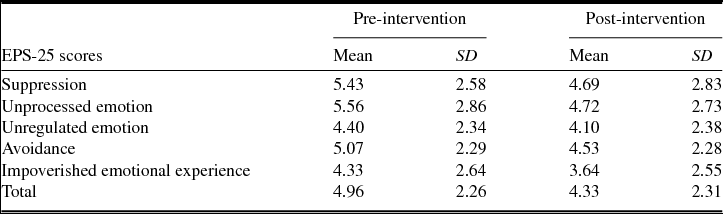
Pre- and post-intervention EPS-25 total and subscale scores

EPS-25, Emotional Processing Scale-25; n = 44.
The patient sample also included those who had completed therapy in the judgement of the therapist (n = 26) and those who had not (n = 17). Reasons for non-completion of therapy included therapy was not appropriate (n = 2), the patient was not progressing (n = 2), the patient improved after the initial session (n = 1), the patient dropped out (n = 9), and ‘other’ (n = 2). To explore the justification of including both patients who completed therapy and those who did not in the analysis, both groups of patients were compared on baseline emotion processing and clinical symptomology (Supplementary Table 2). There were no differences between the two groups on any of these measures.
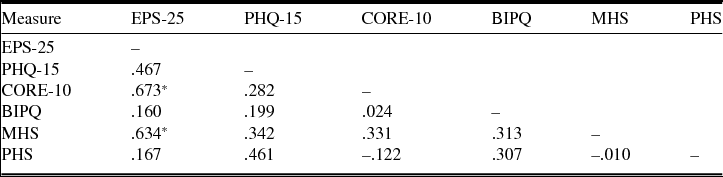
Bootstrapped Pearson's correlations (r values) between pre- and post-intervention questionnaire change scores

*Significant at adjusted p-value (p < .008) using the Holm‒Bonferroni correction. CORE-10, Core Outcome in Routine Evaluation-10; BIPQ, Brief Illness Perceptions Questionnaire; PHQ-15, Patient Health Questionnaire-15; MHS, SF-36 Mental Health Summary Scale; PHS, SF-36 Physical Health Summary Scale.
On the basis that the remaining 44 patients with FNS did not differ significantly on baseline measures of emotion processing and clinical symptomology, irrespective of FNS semiology or therapy completion, we analysed the group as a whole.
Treatment-associated changes in emotion processing
Patients’ pre-intervention EPS-25 scores indicated levels of emotion processing problems above normative healthy values for the UK, with the mean total EPS-25 scores of the FNS sample falling within the top 25th percentile of normative values, and well within pain and mental health norms (M = 4.96, SD = 2.26) (Baker et al., Reference Baker, Thomas, Thomas, Santonastaso and Corrigan2015). This indicates that emotion processing problems were common in this patient group before the intervention.
The EPS-25 total score and subscale scores were lower post-intervention (Table 1). A within-subjects t-test on pre-versus post-intervention mean EPS-25 scores confirmed the statistical significance of therapy-associated change; t (43) = 2.02, p = .049; 95% CI: [.04, 1.21]; d = .11. A two-way repeated measures ANOVA with time point (pre- and post-intervention) and EPS-25 subscale (suppression, unprocessed emotion, unregulated emotion, avoidance, and impoverished emotional experience) as the within-subjects factors showed that there was a significant main effect of time point; F (1,43) = 4.09, p = .049, η2p = .09, indicating that emotion processing improved significantly post-intervention. There was also a significant main effect of subscale; F (4,172) = 10.13, p < .001, η2p= .19, suggesting that the mean scores on each subscale differed from each other both pre- and post-intervention. There was no significant interaction between time point and subscale, indicating that the relationship between the mean subscale scores did not vary over time; F (4,172) = .92, p = .45, η2p= .02. Therefore, as measured by the EPS-25, emotion processing improved following BAPIT.
Treatment-associated changes in routine outcome measures
HRQoL improved following intervention. The post-intervention PHS score (M = 38.10, SD = 11.95) was greater than the pre-intervention PHS score (M = 36.24, SD = 11.45). Likewise, the post-intervention MHS score (M = 42.31, SD = 11.12) was greater than the pre-intervention MHS score (M = 40.10, SD = 10.11). A two-way repeated measures ANOVA conducted on the SF-36 summary scales (PHS and MHS) with time point (pre- and post-intervention) as the within-subjects factor showed a significant main effect of time point, indicating that SF-36 scores were significantly higher (better quality of life) for both the MHS and PHS scores post-intervention; F (1,38) = 5.94, p = .02, η2p = .14. There was no significant main effect of SF-36 summary scale; F (1,38) = 2.69, p = .11, η2p = .07. There was no significant interaction effect; F (1,38) = .02, p = .89, η2p= .00.
Post-intervention BIPQ scores (M = 48.83, SD = 15.79) were lower than pre-intervention scores (M = 55.51, SD = 11.84). This improvement in illness understanding was significant; t (32) = 2.95, p = .01, 95% CI:[2.57, 12.39] (critical p value = .016). While CORE-10 scores were also lower post-intervention (M = 17.05, SD = 10.43) than pre-intervention (M = 19.19, SD = 9.39), this reduction in psychological distress was not statistically significant; t (42) = 1.54, p = .13, 95% CI: [‒.69, 4.76] (critical p value = .05). Similarly, while PHQ-15 scores were lower post-intervention (M = 12.14, SD = 6.32) than pre-intervention (M = 14.05, SD = 5.35), reductions in the number and severity of somatic symptoms only approached significance following Holm‒Bonferroni correction; t (36) = 2.31, p = .03, 95% CI: .35, 3.43 (critical p value = .025).
Did treatment-associated changes on the EPS-25 correlate with changes in treatment outcome measures?
To assess whether improvements on the EPS-25 were associated with improvements in the measures of clinical symptomology and HRQoL of life used in this study, a series of correlational analyses were conducted on the scale change scores (Table 2). There were moderate to strong positive correlations between EPS-25 change scores, CORE-10 and MHS scale change scores. However, there were no significant correlations between EPS-25 change scores, PHQ-15 scores, BIPQ scores or PHS change scores. This suggests that improvements in emotion processing were associated with improvements in psychological distress and the mental health domain of the SF-36, but not with a better understanding of symptoms, fewer somatic symptoms or improved scores on the physical health domain of the SF-36. EPS-25 change scores did not significantly correlate with the number of sessions received, therefore improvements in emotion processing cannot be explained by contact time with the therapist; r = .02, n = 43, p = .88, 95% CI: [‒.18, .29].
Partial correlation coefficients were calculated to elucidate the relationship between the CORE-10/MHS total scores and the EPS-25 total score when either CORE-10 or MHS-specific variance was controlled for. After controlling for the MHS total difference score, the correlation between the EPS-25 total difference score and the CORE-10 total difference score was smaller, and the amount of shared variance decreased, but the correlation was still statistically significant (partial correlation = .57, r 2 = .32, p < .001, 95% CI: [.23, .83]). Similarly, when controlling for the change in MHS scores, the correlation between the EPS-25 total difference scores and the CORE-10 total difference score was reduced, and the amount of shared variance reduced, but the correlation remained significant (partial correlation = .56, r 2 = .31, p < .001, 95% CI: [.31, .84]). These results indicate that EPS-25 change scores accounted for 45% and 40% of variance in CORE-10 and MHS change scores, respectively.
In order to provide a more detailed picture of how patients’ emotion processing changed following therapy, we ran a RCSC analysis on EPS-25 scores (Jacobson et al., Reference Jacobson, Roberts, Berns and McGlinchey1999). 22.7% made a clinically significant improvement, 29.5% made an improvement which was not clinically significant, 20.5% did not change, 18% deteriorated, and 10% experienced a clinically significant deterioration. There were no significant differences on any of the outcome measures between patients who achieved a RCSC and those who did not.
Study non-completers
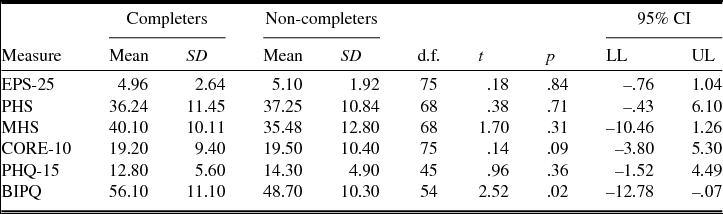
Seventy-four patients consented for the intervention but did not provide complete follow-up data (Fig. 1). Therefore, to examine whether attrition biased the results as far as possible, study completers were compared against study non-completers on a series of key variables. There were no associations between whether a patient completed the study and the demographic variables of gender, economic activity, and FNS type. However, study non-completers were younger (M = 34.2 years, SD = 11.6) than study completers (M = 41.4 years, SD = 13.5); t (75) = 2.48, p = .02, 95% CI: [-12.96, -1.87]. Study non-completers were also less likely to complete therapy (38.2% completed therapy, 61.8% did not complete therapy) in the judgement of the therapist; χ 2 (1) = 5.91, p = .02. However, the absence of clear differences between study completers and non-completers in terms of emotion processing and other baseline measures suggests that study completers were representative of the total consented sample on the available psychological parameters (Table 3).
Comparison of patients who completed the study and those who did not complete the study on baseline emotion processing and clinical symptomology measures

*Significant at adjusted p-value (p < .008) using the Holm‒Bonferroni correction. Completers, patients who completed the study; Non-completers, patients who did not complete the study; CI, bootstrapped confidence interval; LL, lower limit; UL, upper limit; EPS-25, Emotional Processing Scale-25 Total Score; CORE-10, Core Outcome in Routine Evaluation-10; BIPQ, Brief Illness Perceptions Questionnaire; PHQ-15, Patient Health Questionnaire-15; MHS, SF-36 Mental Health Summary Scale; PHS, SF-36 Physical Health Summary Scale.
Discussion
Abnormal emotion processing is an important target for psychotherapy in patients with FNS because it may contribute to FNS aetiology (Novakova et al., Reference Novakova, Howlett, Baker and Reuber2015), and appears to be related to a poorer quality of life and understanding of the disorder (Baker et al., Reference Baker, Thomas, Thomas and Owens2007). Therefore, the aim of this study was to investigate whether emotion processing improved in patients with FNS following a course of BAPIT. We also explored the extent to which changes in emotion processing correlated with treatment-associated changes in HRQoL and other measures of clinical symptomology.
As predicted, emotion processing improved post-intervention; the pre-intervention total mean EPS-25 score (4.96) fell within mental health norms (4.0–5.9), and was elevated above healthy norms (2.2–4.4). However, the post-intervention score (4.33) fell within healthy UK norms. In view of the chronicity and severity of FNS, this supports our interpretation that EPS-25 outcome data represent a clinically meaningful change for participants. This conclusion is also supported by the improved HRQoL and illness understanding following intervention. Although psychological distress and other somatic symptoms failed to improve significantly, change scores on the EPS-25 correlated positively with change scores on the CORE-10 and MHS sharing 45 and 40% of variance, respectively. This suggests that improvements captured by the EPS-25 are not simply of academic interest but clinically meaningful to patients.
To our knowledge this the first study to examine therapy-associated changes in emotion processing in patients with FNS. The significant improvement in HRQoL observed in our patient group is consistent with our previous observations in this patient population (Reuber et al., Reference Reuber, Burness, Howlett, Brazier and Grunewald2007a). However, this time we did not observe significant improvements in somatic symptoms or psychological distress. This discrepancy could be due to the smaller sample size in the present study reducing statistical power. Illness understanding was not measured in the previous study but we did observe a significant improvement in the present patient cohort. One earlier study in a much larger sample showed that having a poor illness understanding of FNS as measured by the Illness Beliefs Questionnaire (including a non-attribution of functional symptoms to psychological factors), is a strong predictor of poor patient outcome on a ‘Clinical Global Improvement Scale’ at 12-month follow-up (Sharpe et al., Reference Sharpe, Stone, Hibberd, Warlow, Duncan and Coleman2010).
The present pre-intervention EPS-25 scores support previous observations that many patients with FNS experience abnormal emotion processing. Group mean pre-intervention total EPS-25 scores fell within the top 25th percentile for UK normative values and well within the range for mental health patients (Baker et al., Reference Baker, Thomas, Thomas and Owens2007). When administered to patients with NEAD only, Novakova et al. observed similar abnormalities in emotion processing (Novakova et al., Reference Novakova, Howlett, Baker and Reuber2015). Here we extend this finding to include patients with other forms of FNS including functional motor and sensory symptoms.
The breadth of emotion processing styles assessed by the EPS-25 is a strength of this study. It could be argued that other forms of emotion processing measurement fail to reflect the multi-faceted nature of emotion perception, regulation, and expression (Baker et al., Reference Baker, Thomas, Thomas and Owens2007). Therefore, the EPS-25 is likely to be well-suited to detecting the heterogeneous abnormalities of emotion processing that other studies have found to be associated with FNS (Carson et al., Reference Carson, Brown, David, Duncan, Edwards and Goldstein2012). The fact that the EPS-25 was sensitive to changes scores in psychological distress and the mental health domain of the SF-36, corroborates the usefulness of this scale in clinical and research settings of patients with FNS.
Limitations
The high attrition rate is a regrettable limitation of this study. As is often the case with postal questionnaire methodologies, a significant proportion of data were lost by patients’ failure to return the follow-up questionnaires. Another limitation is the lack of control group or a pre-treatment monitoring period demonstrating a lack of spontaneous improvements in emotion processing. Although spontaneous clinical improvements may be considered unlikely in view of the chronicity of the functional disorders treated in this study (mean duration of 5.8 years, SD 10.8), these limitations introduce the possibility that any improvements in emotion processing, HRQoL, and clinical symptomology could simply reflect regression to the mean. Furthermore, mechanism or direction of therapeutic change cannot be inferred.
Although twice as many patients met the threshold of ‘reliable and clinically significant improvement’ on the EPS-25 as self-reported ‘reliable and clinically significant deterioration’, at first sight, the results of the RCSC analysis are not particularly encouraging. However, it is important to point out that the EPS-25 was not designed or intended to be used here as an outcome measure. As stated above, emotion processing deficits may be a core feature of FNS. Patients who habitually over-controlled their emotions may have become more aware of the emotional aspects of their disorder and distress through the process of psychotherapy, which may have led to an apparent deterioration of their total EPS-25 score. Interestingly (and in support of this interpretation), all four patients who reported reliable and clinically significant deteriorations on the EPS-25 also reported increases on the ‘unregulated’ subscale of the EPS-25 (there was no consistent pattern on the other subscales). These observations suggest that, given the wide range of emotion processing problems which the EPS-25 captures, it is likely to be important to look at change profiles rather than the total EPS-25 score to understand psychotherapy-associated changes at an individual patient level.
Although we only found an age difference between the patient groups completing and not completing BAPIT, the generalizability of our study findings is diminished by the fact that older patients were more likely to complete treatment than younger ones. This age disparity in therapy completion resonates with earlier studies noting a greater probability of older patients engaging in specialist psychotherapy for FNS (Howlett et al., Reference Howlett, Grunewald, Khan and Reuber2007). It is possible that older patients are better able to appreciate or tackle the relationship between emotions and functional symptoms. Alternatively, a younger presentation with FNS may be associated with greater levels of dysfunction and disability, creating additional barriers for the patient to complete treatment and return outcome data (Edlund et al., Reference Edlund, Wang, Berglund, Katz, Lin and Kessler2002)
In view of the lack of a control group and the relatively high attrition rates in this study, the influence of BAPIT on emotion processing requires further clarification. Furthermore, being practice-based evidence, the therapist's adherence to BAPIT is uncertain. However, therapy was delivered by a single, highly-trained therapist with extensive experience in this particular clinical field who has described her therapeutic approach in previous publications (S.H.) – a fact which should provide some assurance of uniformity of the intervention (Hobson, Reference Hobson1985; Howlett and Reuber, Reference Howlett and Reuber2009). The absence of treatment data generated by other therapists also limits the generalizability of the findings presented here.
The fact that not all patients who contributed follow-up data had completed therapy and that these patients were retained in the analysis should be considered a strength of this study. The inclusion of these patients in our analysis should mean that the findings of our study come closer to the sort of effects on emotion processing BAPIT might achieve in real-life rather than research settings.
We were also able to exclude some other biases. Patients with NEAD and those with other FNS were matched on key demographic variables irrespective of FNS semiology, minimizing the risks of bias associated with analysing a small and heterogeneous population as whole. Consecutive recruitment of participants from two sites further reduced risk of bias introduced by patient selection.
Conclusions
In this prospective, uncontrolled study of patients with FNS we provide preliminary evidence that emotion processing improves following a course of BAPIT, with simultaneous improvements in HRQoL and illness understanding. Improvements in emotion processing correlated with a reduction in psychological distress as well as improved scores on the mental health domain of the SF-36. We conclude that the EPS-25 shows promise as a tool for the investigation of emotion processing deficits in patients with FNS. We are not proposing that, in patients with FNS, the EPS-25 be used as an outcome measure – however, our study demonstrates that the EPS-25 is a measure sensitive to therapy-associated changes in emotion processing. Future research should aim to replicate these preliminary findings in controlled studies with larger sample sizes.
Acknowledgements
We would like to thank the patients for their participation in this study. We would also like to thank Roger Baker for giving us permission to use the EPS-25 and Roy Indrasenan for his administrative support during the study.
Ethical statement: The authors have abided by the Ethical Principles of Psychologists and Code of Conduct as set out by the APA.
Conflicts of interest: Ms Isobel Williams, Ms Stephanie Howlett, Dr Liat Levita, and Professor Markus Reuber have no conflicts of interest with respect to this publication.
Financial support: This work with supported by the Ryder Briggs Trust and Neuroscience Research Fund (grant number 004 (2013)).
Supplementary material
To view supplementary material for this article, please visit https://doi.org/10.1017/S1352465817000807





Comments
No Comments have been published for this article.