
Introduction
There are numerous instances of non-fatal trauma recorded in the skeletal remains of pre-contact Aboriginal Australians (e.g. Webb Reference Webb1991; Knuckey Reference Knuckey1992), but only one case has previously been documented that shows evidence of fatal injuries (McDonald et al. Reference McDonald, Donlon, Field, Fullagar, Coltrain, Mitchell and Rawson2007; Fullagar et al. Reference Fullagar, McDonald, Field, Donlon, Haslam, Robertson, Crowther, Nugent and Kirkwood2009). This single case, dated to about 1600 BC (3829–3594 cal BP; CAMS-120202), had a pattern of trauma that corresponds with ethnographic accounts of inter-tribal violence, providing a rare account from the Australian archaeological record of an individual killed during conflict. Following consultation, excavation and analysis, we can now report a second discovery of skeletal remains with fatal injuries from north-western New South Wales (NSW). Traditional Owners from the area refer to the individual as ‘Kaakutja’, a Baakantji word for ‘Older Brother’. His remains show a pattern of sharp-force trauma indicative of an edged metal weapon, yet radiocarbon dating of the skeletal remains and optical dating of the grave infill indicate that he lived during the pre-European-contact period. The nature of the trauma to Kaakutja's skeletal remains suggests that sharp-edged weapons from traditional Aboriginal culture could inflict injuries similar to those resulting from later, metal blades.
Archaeological context
The colonisation of Australia is generally considered to have occurred around 50000 years ago (Bowler et al. Reference Bowler, Johnston, Olley, Prescott, Roberts, Shawcross and Spooner2003; Allen & O'Connell Reference Allen and O'Connell2014; Clarkson et al. Reference Clarkson, Smith, Marwick, Fullagar, Wallis, Faulkner, Manne, Hayes, Roberts, Jacobs and Carah2015), with Aboriginal populations maintaining a hunter-gatherer lifestyle until forced to abandon it due to European pressures including violence, disease and dispossession. In the south-east of the continent, this had occurred by the mid to late nineteenth century.
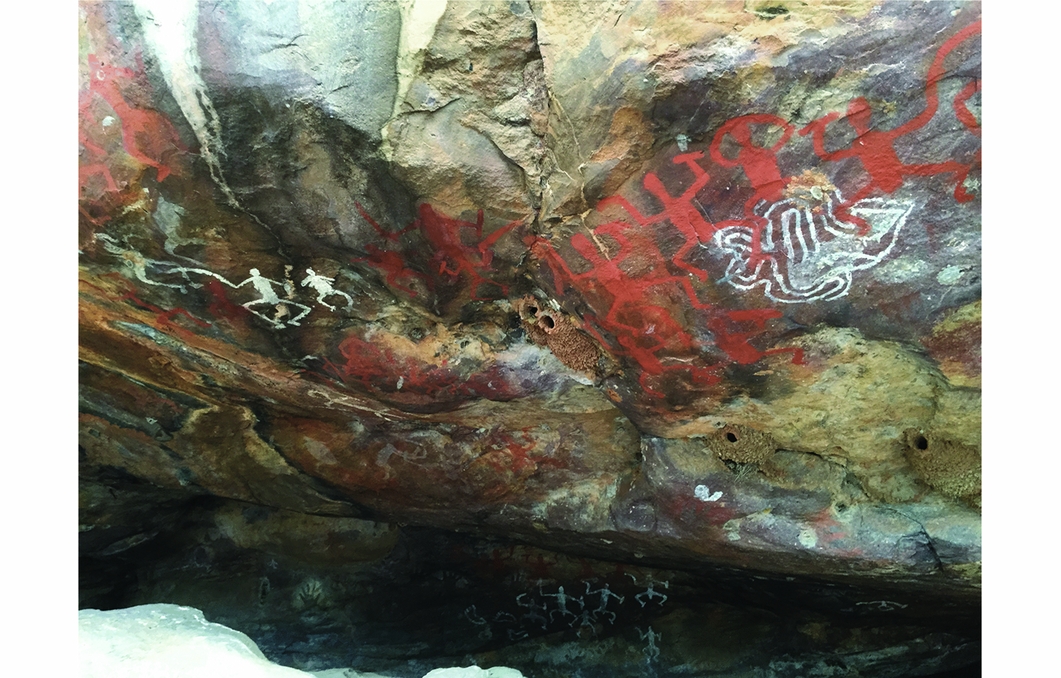
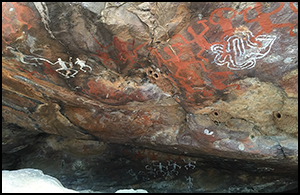
Evidence for inter-tribal conflict in the area is documented in rock art at the Gundabooka ranges, approximately 25km to the east of the site where Kaakutja was buried. Two distinct groups of people are distinguished using different orange and white ochre, and they are shown brandishing parrying shields, fighting clubs and boomerangs (Figure 1).
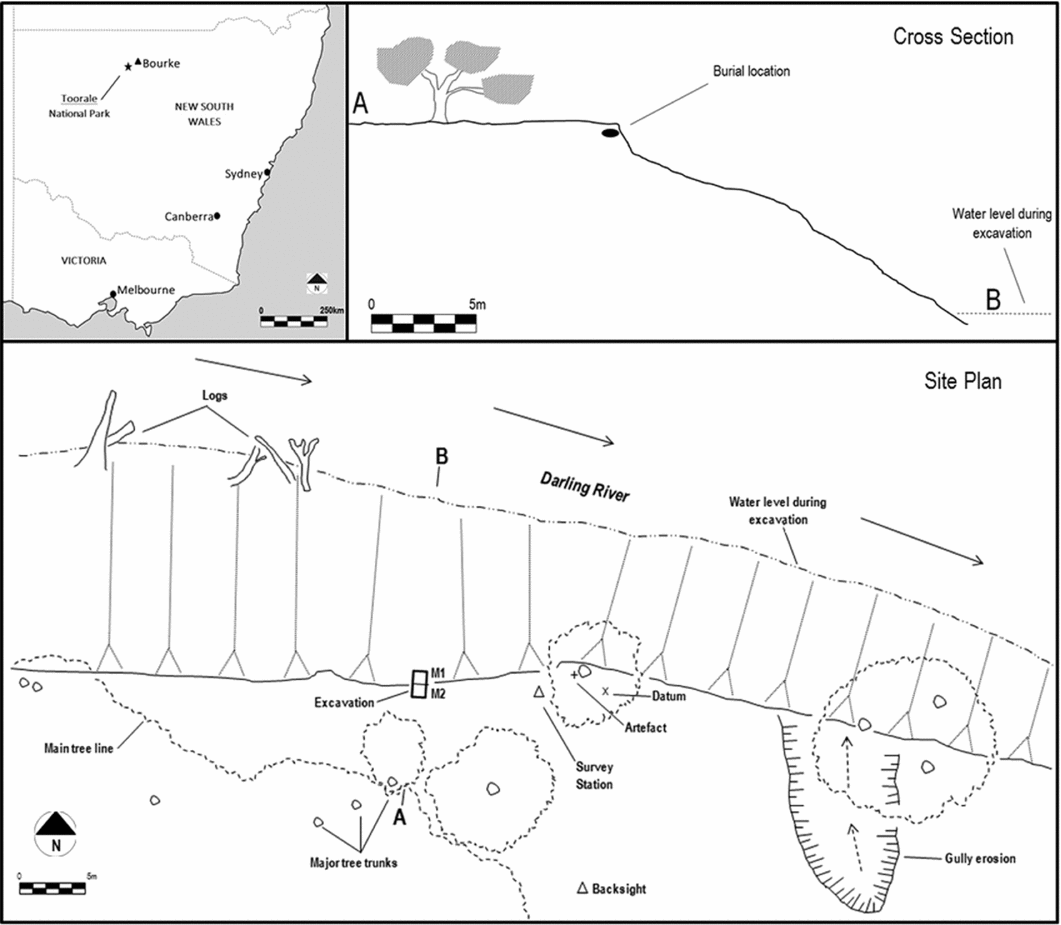
The location of Kaakutja's burial site.

Burial site
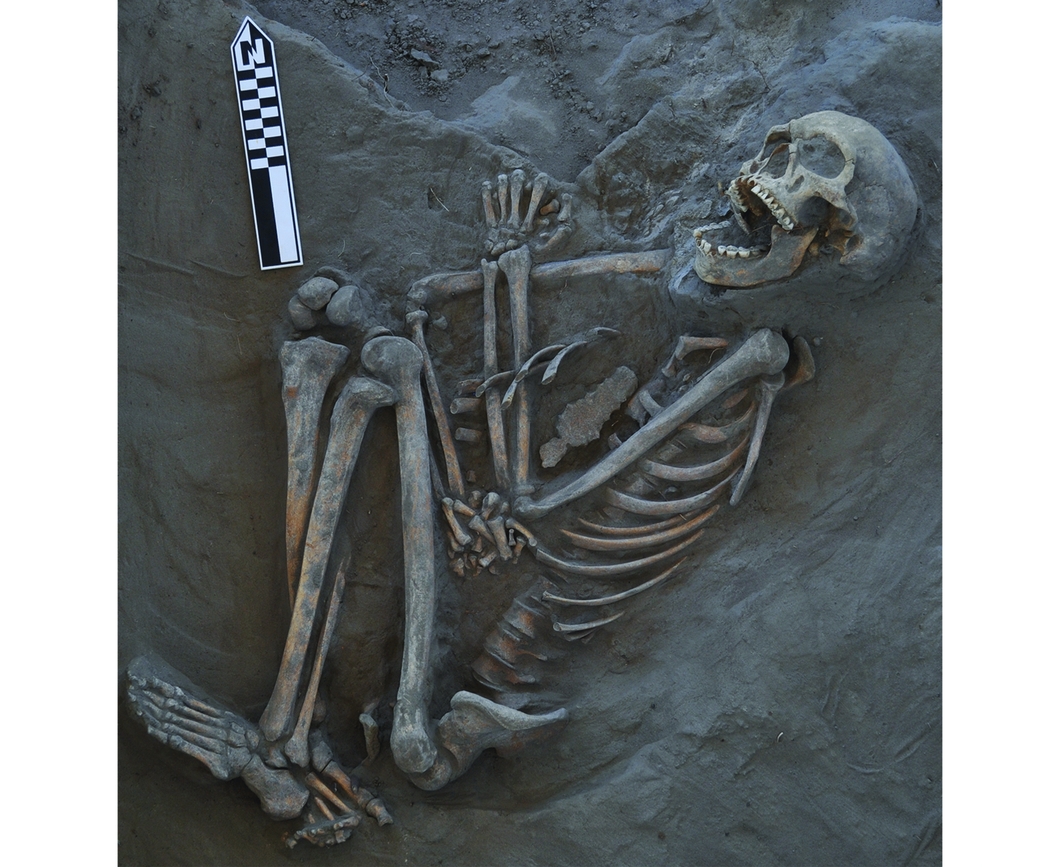
The burial was found during an archaeological survey in Toorale National Park. Straddling the junction of the Darling and Warrego Rivers, and around 50km south-west of Bourke, the park is a historic pastoral property in the country of the Kurnu Baakantji Aboriginal people (Figure 2). At the time of discovery, only the cranium was visible, protruding from the steep and actively eroding bank of the Darling River. Excavation revealed that the remains lay 565–700mm below the present surface of the river bank. The burial was exceptionally well preserved. Kaakutja was interred in a tightly flexed position, lying on the right-hand side with the spinal column oriented north-east to south-west, and facing upstream in a north-westerly direction (Figure 3). This positioning indicates that he had received a respectful interment by his people, and that his burial did not represent the clandestine disposal of a murder victim. The location of the burial in a sandy/silty levee adjacent to the river, close to visible areas of midden, heat retainer ovens, ashy deposit, charcoal and rare stone artefacts, is typical of traditional burials in this region. A nearby ethnohistoric account states that preferred burial places were “campsites isolated by floods adjacent to or on sandhills” (Dunbar Reference Dunbar1943: 146). The tightly flexed position is also typical: six of nine burials in one survey at Kinchega National Park were fully flexed on the side (Martin Reference Martin2007).
Rock art probably depicting inter-tribal conflict between different Aboriginal parties, located at Gundabooka National Park, 25km to the east of Kaakutja's burial site (image courtesy of Brooke Hendry).

The tightly flexed burial, located on the western edge of the Darling River at Toorale National Park.

Preservation of the bones was excellent, probably as a result of the calcareous soils in which they were buried. With the exception of two middle phalanges from the left and right foot, the entire skeleton was recovered. A number of teeth were lost post-mortem from both the mandible and maxilla, but these were recovered during the salvage excavation and from material eroding down the adjacent slope. The stomach contents were also recovered, including calcite stones or ‘gastroliths’ from the yabby (crayfish) and small bones, including a possum clavicle (Tiina Mann pers. comm.).
Leaves were found near the left side of the skull close to the lambdoidal suture and beneath the mastoid process, and a discrete, thin patch of gypseous material was located next to the mandible overlaying the proximal right humerus. The cranial vault had slightly shifted post-mortem, and it is possible that the gypsum material once coated Kaakutja's face or skull in the proximity of a major trauma and slid off the wound during tissue decomposition and slight bone movement. Beneath the cranium was a discrete lens of white, well-washed river sand within which were two incisors. A thin layer of grey sediment similar to that surrounding the site was recorded above the white sand, and between the sand and the cranium.
Anatomical description of Kaakutja
The morphology of the cranium and dental wear indicate that Kaakutja was Aboriginal. Cranial characteristics include the angular/gabled shape of the cranial vault, rectangular orbits, flaring zygomatic arches (phaenozygy) and mid facial prognathism, a dolichophelic cranial vault, and well-developed mental trigone (Larnach & Macintosh Reference Larnach and Macintosh1966; Donlon et al. Reference Donlon, McIntyre-Tamwoy and Thorne2002). The Phenice method's (1969) characteristics for sexing the pelvis, along with other morphological features of the pelvis and skull, strongly indicate that the individual was male. Kaakutja's left femur measured 447mm, and he is estimated as having been between 1.65 and 1.7m tall, using the stature formula on the femur for African males (Bass Reference Bass1991). Based on the pubic symphyses (Todd Reference Todd1921; Suchey & Katz Reference Suchey, Katz and Reichs1998), rates of epiphyseal closure and cranial suture closure, Kaakutja was 25–35 years old when he died. Dental eruption and the degree of occlusal wear support this age assessment (Brothwell Reference Brothwell1981; Molnar et al. Reference Molnar, McKee and Molnar1983; Richards & Miller Reference Richards and Miller1991), as does the absence of any arthritic change in the skeletal remains.
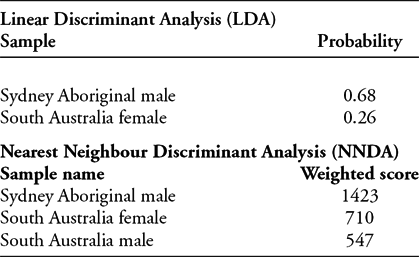
The assessment of population group was complemented by an analysis using the multivariate statistical program CRANID (Wright Reference Wright and Oxenham2008, Reference Wright2012), which uses 29 measurements from each of 3163 crania from around the world, divided into 74 geographically based samples. To assess probable ancestry, 29 measurements from the ‘unknown’ skull are compared to these samples. The CRANID results obtained for Kaakutja's cranium grouped most closely with the Sydney Aboriginal male crania (there are no osteometric datasets available for western NSW), supporting the morphological and archaeological assessment of ancestry (see Table 1).
CRANID results. Both analyses (Linear Discriminant and Nearest Neighbour) identified that the nearest morphological neighbour for Kaakutja was Sydney Aboriginal males.

Pattern of trauma
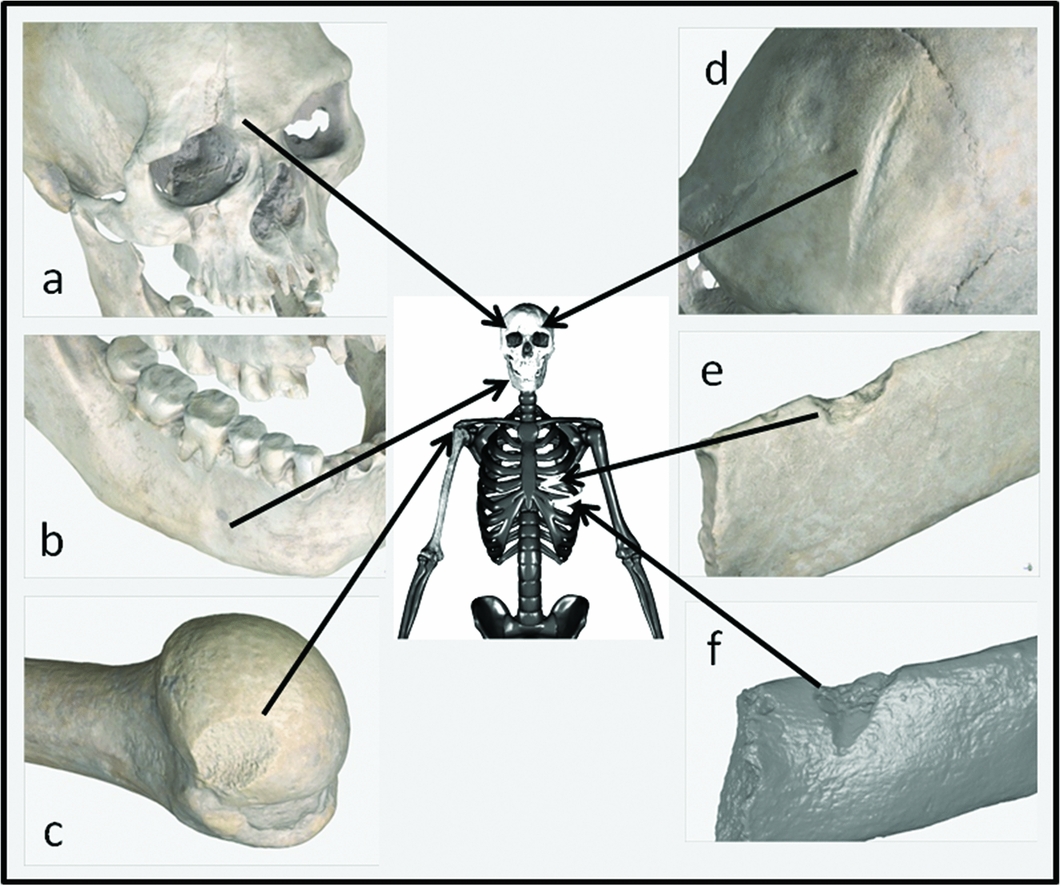
The trauma pattern exhibited on Kaakutja's skeleton is very different to any previously recorded in Australia. Depression and parrying fractures are by far the most common traumas found in Australian archaeological contexts (Sandison Reference Sandison1980; Webb Reference Webb1991; Knuckey Reference Knuckey1992; Pardoe 2014). Kaakutja had multiple skeletal traumas on the cranium, mandible and post crania (Figure 4). Some of these injuries included ante-mortem trauma to the cranium, but there was also distinct evidence of significant peri-mortem trauma identified in four separate regions of the skeleton, including the right-hand side of the frontal bone, maxilla, zygomatic and mandible, as well as the right humerus and five of the left ribs.
Pattern of trauma recorded on Kaakutja's skeleton.

Ante-mortem trauma
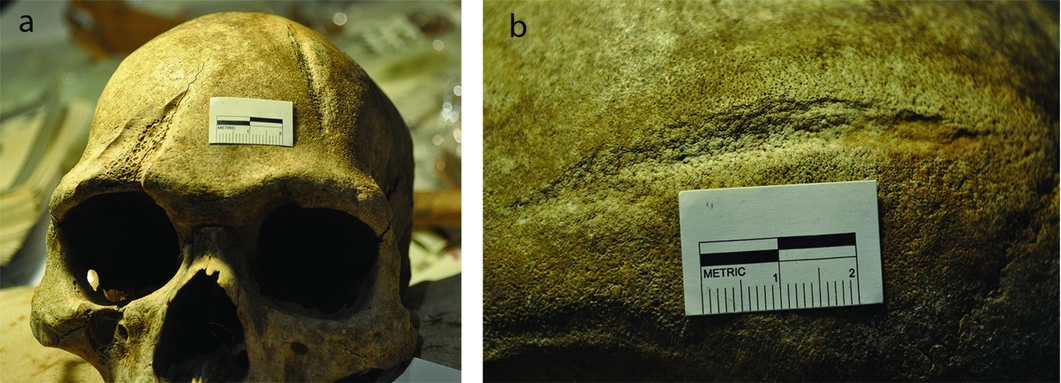
There were two apparent ante-mortem blows to the cranium. An ovoid depression fracture on the top of the frontal bone, just anterior to the coronal suture, displays evidence of extensive remodelling and an absence of woven bone, indicating that the injury was sustained a considerable time before death. This type of injury is particularly common in Australian skeletal biology (Webb Reference Webb1991; Pardoe 2014). The second ante-mortem blow to the cranium produced an elongated wound involving the superior portion of the frontal bone on the left-hand side. The site of this trauma is smooth, displaying signs of remodelling and healing. It is similar in appearance to either: i) a healed trauma from an edged weapon (Kanz & Grossschmidt Reference Kanz and Grossschmidt2006); or ii) an elongated depression fracture (Figure 5).
Trauma on the frontal bone (a), including elongated, partially healed trauma (b) similar to that observed in archaeologically recorded victims of edged weapon attack (Kanz & Grossschmidt Reference Kanz and Grossschmidt2006: fig. 4 A08).

Peri-mortem trauma
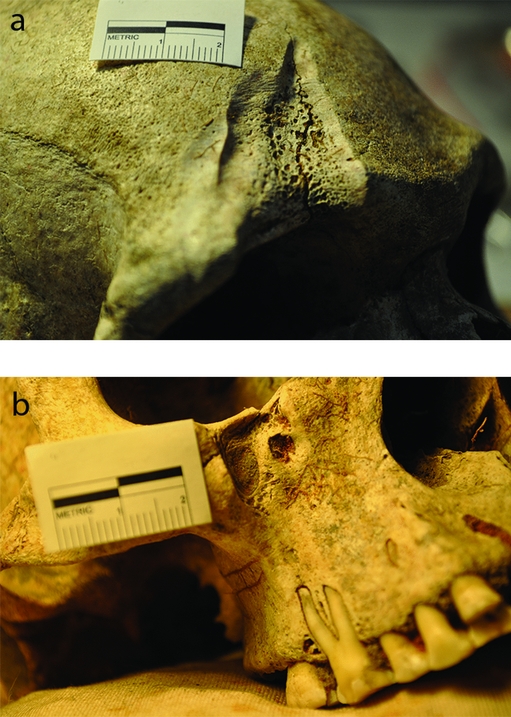
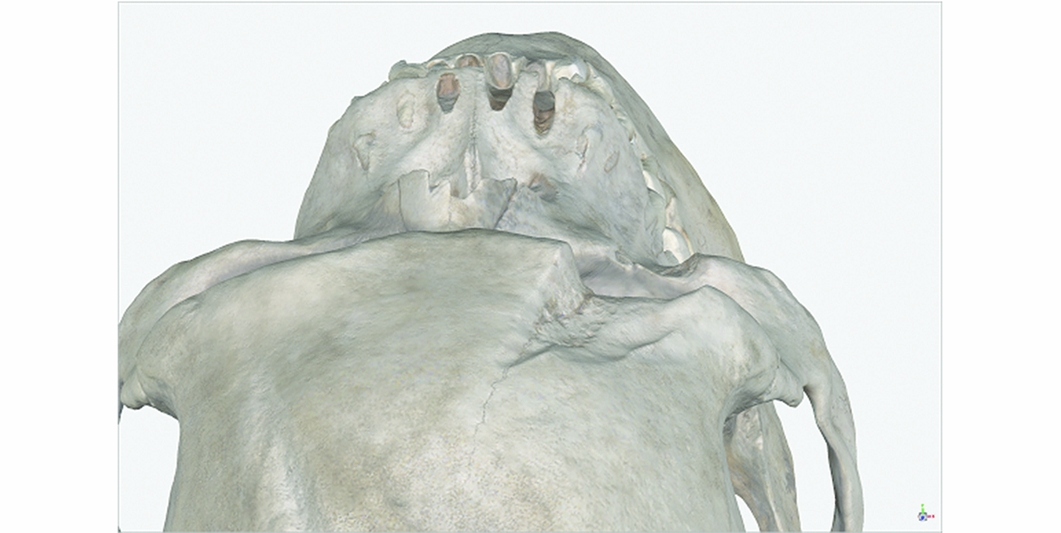
There is a significant peri-mortem injury to the right side of the cranium (Figure 6a). The wound extends from above the supraciliary ridge on the frontal bone, traverses the right orbit and penetrates the maxillary sinus (Figure 6b). There is further trauma to the maxilla and mandible; the lateral portions of the roots of both upper and lower first molars on the right-hand side are exposed where the alveolar bone has been ‘shaved’ off (Figure 6b). The trauma involving the facial and jaw bones is aligned and therefore likely to have been caused by the same impact (Figure 7). The wound is angled from the medial at the superior tip on the frontal bone, to the lateral edge of the mandible. It is 150mm long and 16mm at its widest section across the supraciliary ridge. There is an additional glancing cut-mark to the mandible, representative of a separate blow. This cut occurred across the mental eminence and was indicative of a sharp-edged weapon.
Frontal bone and maxilla trauma: a) flaking can be observed along the lateral edges of the wound on the frontal bone; b) note the partially exposed maxillary sinus and the exposed first molar roots where the alveolar bone has been removed by a traumatic blow affecting the frontal, zygomatic and maxilla on the right-hand side.

Superior view, showing the apparent alignment between the wound on the frontal bone and the maxilla.

The trauma to the orbital region has a relatively well-defined edge along the medial side, with parallel striations visible under bright light. The cut-mark wall has a slight undulating pattern that is not uniform. This is different to the pattern commonly seen as a result of steel-edged weapon trauma (Lewis Reference Lewis2008). The lateral side of the wound, opposite to the cut-mark wall, shows some flaking of the bone. There is one minor line of fracturing that extends above, within and below the trauma, across the right orbit. Computerised tomography did not show an extensive continuation of the fracture and there is no endocranial involvement. The linear fracture does not extend as far as the coronal suture. These observations are consistent with a blow from a relatively light, sharp-edged instrument (Alunni-Perret et al. Reference Alunni-Perret, Muller-Bolla, Laugier, Lupi-Pegurier, Bertran, Straccini, Bolla and Quatrehomme2005; Lewis Reference Lewis2008).
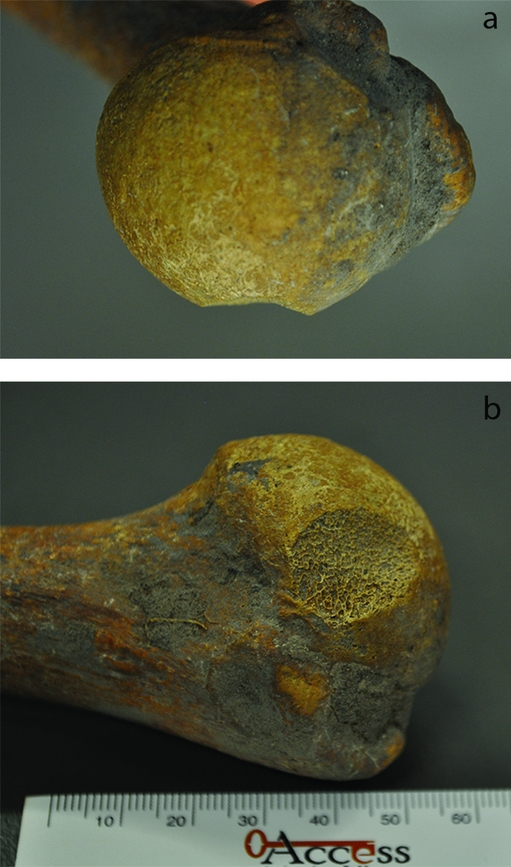
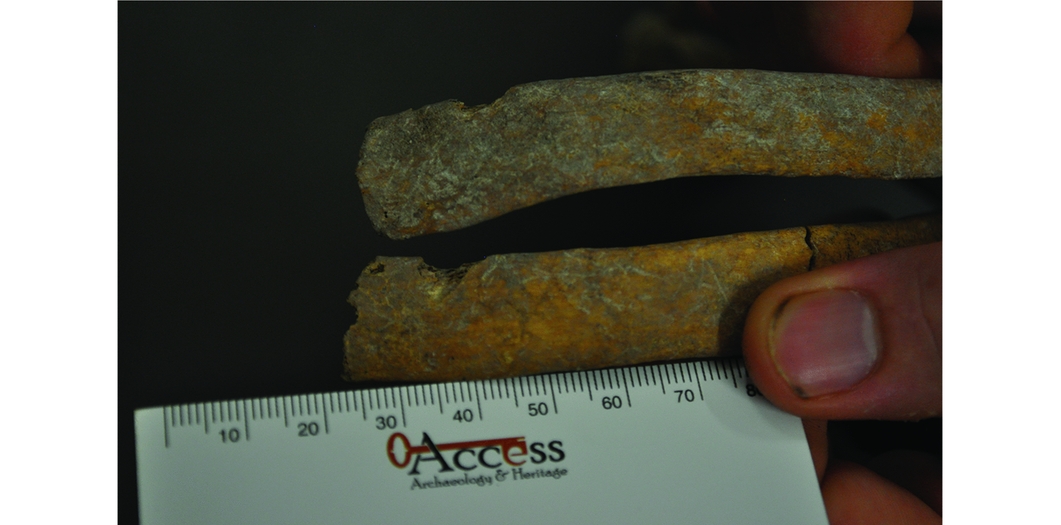
Trauma recorded in the post crania involved the right humerus and multiple ribs on the left-hand side. A trauma was observed on the posterior of the right humeral head (see Figure 8a & b). A circular segment of cortical bone had been entirely removed, exposing the trabeculae, in a wound with clearly defined sharp edges, measuring 14mm in diameter.This particular wound was located in a position on the humeral head that is normally shielded by the acromion process of the scapula when the arm is in anatomical position. There was, however, no associated trauma on the scapula, indicating that the wound could only have been created when the humerus was flexed; in other words, when the arm was extended forward. This might have occurred, for example, if Kaakutja had fallen on all fours and was struck from behind.The left ribs also exhibit a pattern of peri-mortem fracturing. Ribs 2–5 allexhibited some damage on the superior aspect and the sternal end, with 3–5 showing a crushed pattern that indicates a significant impact. The pattern of fracturing in the ribs is in alignment, which provides an indication of the direction of the impact—from the front in a downward strike. There was some post-mortem damage present, as demonstrated in a more recent breakage pattern that is visible within the crushed bone. The post-mortem damage that occurred when the very fragile ribs were lifted makes identification of the pattern of peri-mortem trauma complicated, as the injuries were clearest when the ribs were in situ. Figure 9 shows a pattern of post-mortem damage overlaying peri-mortem fracturing in ribs 4 and 5.
Trauma to head of the right humerus showing: a) superior view with trauma present at posterior; and b) posterior view of the proximal humerus.

The pattern of trauma in ribs 4 and 5, which is in alignment with further trauma in the superior ribs 2 and 3.

Age of the burial
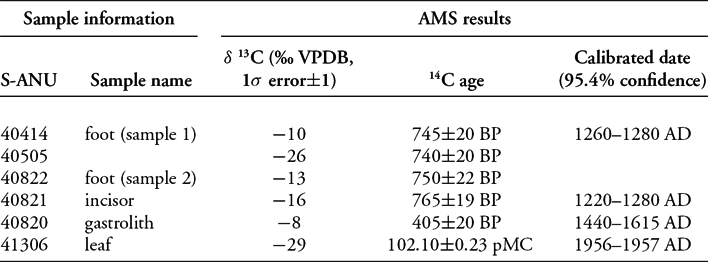
Two samples, a metatarsal bone from the left foot and one incisor, were extracted for radiocarbon dating (Table 2). A yabby gastrolith from the preserved stomach contents and a leaf compressed against the skull (possibly from the original burial ceremony) were also dated. Details of the process are provided in the online supplementary material (OSM). The human remains dated to AD 1260–1280 (95.4% confidence). The yabby gastrolith was a little later in date at AD 1440–1615 (95.4% confidence). The calibrated date for the leaf was AD 1956–1957, yet the delicate sample may have included non-plant material; the gastrolith date may also have been affected by contamination (see OSM for further details and discussion).
14C dates, calibrated against SHCal13 (Hogg et al. Reference Hogg, Hua, Blackwell, Niu, Buck, Guilderson, Heaton, Palmer, Reimer, Reimer, Turney and Zimmerman2013) or Bomb 13 SH 1_2 (Hua et al. Reference Hua, Barbetti and Rakowski2013) in OxCal v.4.2 (Bronk Ramsey Reference Bronk Ramsey2009). See Table S1 in online supplementary material for details of pre-treatment, quality assurance and IRMS results. δ 13C is measured by AMS and used to correct the radiocarbon measurement for fractionation. It is not equivalent to IRMS data.

Optical dating can be used to determine how long ago a sediment sample was last exposed to light (Olley et al. Reference Olley, Pietsch and Roberts2004). Two sediment samples were collected. The first was from within the cranial vault, which was filled with sediment that was highly likely to be grave infill and therefore exposed to sunlight at the time the grave was dug. The second was from the wall of the excavation pit, i.e. the fluvial sediment into which the grave was dug, and probably last exposed to sunlight when those sediments were deposited. Results indicate a minimum age of burial between AD 1305 and 1525. Details of the process and full results are provided in the OSM.
Discussion
The most comprehensively described example of fatal trauma in Australia prior to Kaakutja is that of ‘Narabeen Man’ from northern Sydney (McDonald et al. Reference McDonald, Donlon, Field, Fullagar, Coltrain, Mitchell and Rawson2007; Fullagar et al. Reference Fullagar, McDonald, Field, Donlon, Haslam, Robertson, Crowther, Nugent and Kirkwood2009), dated to about 1600 BC (3829–3594 cal BP; CAMS-120202). The pattern of trauma on the skeletal remains indicates that death resulted from multiple spear wounds, evidenced from stone points embedded in the skeleton and found within the body area, and also a cut-mark at the top of the skull (McDonald et al. Reference McDonald, Donlon, Field, Fullagar, Coltrain, Mitchell and Rawson2007). This is consistent with ethnographic accounts of inter-tribal violence.
The pattern of trauma on Kaakutja was very different to any previously described in the Australian archaeological record. Many of the wounds were inflicted by asharp-edged weapon. These include the strike that extended down the right side of the face, ‘shaving’ the alveolar bone at the maxillary and mandibular right first molars; the wound on the head of the humerus; and possibly the series of fractures and V-shaped compressions cut into the left second to fifth ribs. The trauma to the ribs is in clear alignment and, we argue, occurred at the same time as the other injuries, as there is no sign of healing to the bone. The compression to the bone does not appear to be post-mortem.
If the trauma observed in the frontal bone, maxilla and mandible are in alignment, as suggested by the 3D scans (Figure 7), then the main wound in the frontal is around 150mm long. This suggests that the blade of the weapon was at least this length and concordant with the possibility that a longer, sharp-edged instrument was used. Stone axes from this part of western NSW have a smaller blade length of 77±20mm (Dickson Reference Dickson1981). The typical length of the blade of a ‘Lil-lil’—a sharpened, edged club—is 127mm (Smyth Reference Smyth1878; Etheridge Reference Etheridge and Schmeltz1897). Boomerang blades can range from 381–457mm (Davidson Reference Davidson1936). On this basis, the boomerang is the most probable candidate for the main trauma.
We cannot say with certainty which injury caused the fatal blow. Multiple wounds probably led to significant blood loss and eventual death. Soft-tissue damage is often more severe than inferred from the osteological damage to ribs, and would have been untreatable (Lovell Reference Lovell1997). The earlier healed trauma in Kaakutja's frontal bone indicates that conflict was an aspect of his lifestyle. There is no evidence of woven bone in either of the peri-mortem wounds; the rounded edges of these defects (Mays Reference Mays2010) indicate a degree of healing that suggests they were inflicted some years before the final, fatal attack.
Experiments by Lewis (Reference Lewis2008) using a range of sword types illustrate how different steel-bladed weapons create different wounds; for example, a machete will create a very different class of wound to a broad sword. Of the weapons tested, the frontal wound observed in Kaakutja most closely resembles that produced by an African ‘Samburu’ sword. This can create an irregular pattern of modification to bone, including flaking, but is not heavy enough to cause extensive fracturing. (The CT scans show that the fractures on Kaakutja's skull do not extend any distance or appear in the internal surface of the cranium.)
The radiocarbon ages of bone and tooth and the optical dating from sediment within the cranium indicate, however, that Kaakutja lived between AD 1220 and AD 1280, some 500 years before British settlement of Australia, and closer to 600 years before the settlement frontier reached the area where he died; only a traditional, Aboriginal, sharp-edged weapon could have inflicted the trauma.
In a review of ethnographic records, Pardoe (2014) recounts occurrences from the Murray-Darling basin of inter- and intra-tribal conflict, during which spears and throwing boomerangs were commonly used. Instances of ‘trial by ordeal’ are also reported, whereby an accused party, armed only with a shield, would face a group of men armed with spears and throwing boomerangs. These trials often resulted in injuries to the right shoulder, and occasionally also in death (Pardoe 2014).
Traditional weapons typical to the area and capable of inflicting a sharp-force trauma include ground-edge stone axes; specialised wooden clubs, including the ‘Lil-lil’; and a range of fighting boomerangs (Stockdale Reference Stockdale1905). An ethnohistoric account from the Darling River close to where Kaakutja was buried describes boomerangs of “various shapes, from almost straight to a right-angled elbow [. . .] almost invariably made from mulga or gidgee wood” (Dunbar Reference Dunbar1943: 146), and includes a figure of a typical boomerang and one with a distinctive club-shaped end (Dunbar Reference Dunbar1943: 147, pl. P). This boomerang/club is very similar to a weapon from Sturts Meadows in Baakantji country and to the general category of ‘Lil-lil’, the fighting weapon associated with south-eastern Australia (Jones Reference Jones2004).
The major wound to the maxillary-facial region is, at around 150mm, longer than could be caused by an Aboriginal ground-stone axe. The trauma is also inconsistent with the heavier blow of an axe, which would create more extensive fracturing (Lynn & Fairgrieve Reference Lynn and Fairgrieve2009). Ethnographic accounts provide evidence that sharp-edged wooden objects, such as Lil-lils, were capable of creating significant trauma on bone. The weapons were “smoothed to a fine edge” (Etheridge Reference Etheridge and Schmeltz1897: 8), and Smyth (Reference Smyth1878: 314) commented that “the Lil-lil, forcibly and skilfully directed, will break a leg, fracture the ribs, or penetrate the skull”. R.H. Mathews, who collected ethnographic data from Kurnu Baakantji people at Toorale, describes clubs as being used for hand-to-hand fights or for throwing after game. He describes the returning boomerang, but adds, “there is another kind of boomerang used for hunting and fighting [. . .] considerably bigger and heavier [. . .] and has a more open curve. It reminds one of the blade of a sabre and its inner edge is sharp and dangerous. It is a very effective weapon when thrown amongst some animals or used in war, it bounces back in a straight line” (Mathews 2007 [1907]: 63–65).
The ability of such boomerangs/clubs to create the sort of trauma found on Kaakutja depends on the kind of wood available. In the Toorale area, woods mentioned by the ethnographer Dunbar (Reference Dunbar1943) include mulga (Acacia aneura) and gidgee (A. omalophylla), and other extremely hard acacias such as ironwood (A. estrophiolata) and mitji (A. oswaldii). The hardness of the available woods, their treatment using heat, and care in sharpening the edges would significantly increase the extent of the damage inflicted by such weapons.
Either the sharpened inner edge of the fighting boomerang described by Mathews (2007 [1907]) or the boomerang/club or flat club described by Dunbar (Reference Dunbar1943) and Teulon (Reference Teulon and Curr1886) could be the weapon that injured Kaakutja. The latter are still made by local Aboriginal artefact makers, as are the returning and hunting boomerangs and various versions of Poondee (punti), some versions of which are known by Baakantji as Thartu Pirra, literally translated as ‘head-stick’, thus clearly assigning to it a specific purpose.
Despite the extent and severity of the attack, there are no visible injuries to Kaakutja's forearms indicative of defensive wounds, as are often recorded in skeletal remains described in the context of inter-tribal conflict (Webb Reference Webb1991; Knuckey Reference Knuckey1992). One explanation may be that he was killed, perhaps while sleeping, during a surprise attack. A similar example is found in the archaeological record for northern Australia (Pardoe 2014), and supported by nineteenth-century ethnographic accounts including one stating that assailants “stole upon the sleepers and thrust a spear deeply into the abdomen” and as he awoke and ran “blows from bundies and waddies were showered upon him and another spear hurled into his side” (Anonymous 1865: 4).
An alternative explanation is that some wooden-edged weapons were designed to be thrown as projectiles and hook around a shield to strike the victim. An ethnohistoric account observed that: “One boomerang bore an axe-shaped bladed projection at one end, and it could not be so easily turned aside as the plain ones. The purpose of this projection was to catch at the edge of a shield or bunch of spears held by the man at whom it was thrown, while the other end struck him as it whipped round” (Dunbar Reference Dunbar1943: 148). If Kaakutja was attacked by such a weapon while defending himself with a shield, then evidence showing involvement of the forearms would not be expected.
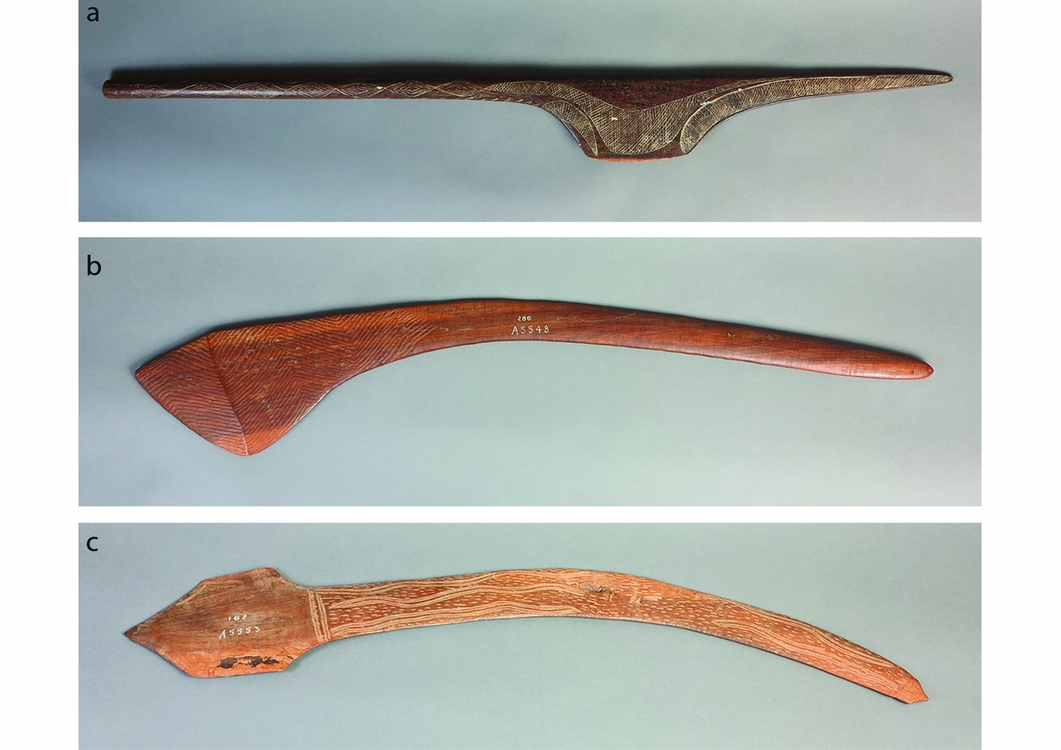
It would appear that sharpened wooden instruments, such as fighting boomerangs and ‘Lil-lils’ (Figure 10), may be the most plausible class of weaponry to have inflicted the damage observed. Experimental analyses using various traditional weapons on faunal skeletal remains and Synbone replica crania will be an important next step in determining more precisely what created the traumatic skeletal injuries suffered by Kaakutja.
Hardwood edged weapons from south-eastern Australia (courtesy South Australian Museum): a) A5846 – length 885mm and cutting edge 100mm, b) A5548 – length 775mm and cutting edge 135mm; and c) A5553 – length 678mm and cutting edge 75mm.

Conclusion
The skeletal remains found during a heritage management archaeological survey on Toorale National Park were of an Aboriginal man, 1.65–1.7m in height, who was between 25 and 35 years old when he died. Following discussion with the Traditional Owners from the area he was named as ‘Kaakutja’, a Baakantji word for ‘Older Brother’. The positioning of Kaakutka's remains indicated that he had received a respectful burial by his people. Radiocarbon and optical dating reveal that Kaakutja died around 700 years ago. The pattern of trauma on his skeletal remains, not previously documented in the Australian archaeological record, indicate that he was killed by a sharp-edged weapon. The nature and expression of trauma suggests that some edged weapons from traditional Aboriginal culture had the capacity to inflict injuries similar to those produced by edged metal weapons. It would appear that a wooden weapon like the ‘Lil-lil’, locally known as ‘Poondee’ and ‘Mung-a-buttaka’, may have been used to kill Kaakutja. Equally, a fighting or war boomerang, known as a ‘Wonna’, would fit within the dimensions of the major trauma to the skull of Kaakutja.
Controlled experimental analysis using various traditional Aboriginal weapons could provide valuable insight into the cause of Kaakutja's wounds. This would also inform interpretation of other instances of skeletal trauma in the Australian record and, indeed, the archaeological record of other hunter-gatherer societies who may have used sharp-edged wooden weapons in the past.
Acknowledgements
We are indebted to the Kurnu Baakantji Aboriginal people and the Toorale Joint Management Aboriginal Committee, and in particular the Chair of the committee, Mick Morris, for inviting us to undertake the rescue excavation and research on the remains of their ancestor. NSW National Parks and Wildlife provided extensive support towards this research project and generously funded the 3D scanning of Kaakutja's skeletal remains. In particular we thank Steve Millington, Andrew Wall, Chris Ghiradello and regional archaeologist Phil Purcell. Dr Tim Pietsch is thanked for help with the radionuclide analysis. Dr Tiina Manne from the University of Queensland assisted with the identification of vertebrate material found within Kaakutja's stomach. Philip Jones of the South Australian Museum provided invaluable advice on Aboriginal hardwood edged weapons and provided the images in Figure 11. Professor Peter Hiscock from the University of Sydney provided advice on stone axes from western NSW. Brooke Hendry, ANU, kindly provided the image of rock art from Gundabooka National Park. PRP Diagnostic Radiology, Dubbo, undertook CT scanning of the remains, and in particular we thank chief radiographer Luke Meredith. Chris Little from the School of Engineering, Griffith University, assisted with 3D image work and interpretation of the CT scans. The excavation and dating of Kaakutja's remains was funded by Griffith University Australian Research Council Grant DP140101405 ‘The origin of the First Australians’ and the NSW National Parks and Wildlife.
Supplementary material
To view supplementary material for this article, please visit http://dx.doi.org/10.15184/aqy.2016.173.