INTRODUCTION
Parasites can have a significant impact on the demography of their host populations and thus drive ecological and evolutionary processes (Mouritsen and Poulin, Reference Mouritsen and Poulin2005; Miura et al. Reference Miura, Kuris, Torchin, Hechinger and Chiba2006; Ostfeld et al. Reference Ostfeld, Keesing and Eviner2008). Avian haemosporidians are intracellular parasites from the genera Plasmodium, Fallisia, Haemoproteus, and Leucocytozoon that can have negative fitness effects on their hosts, such as high mortality in Hawaiian endemic birds (e.g. Atkinson et al. Reference Atkinson, Dusek, Woods and Iko2000; Yorinks and Atkinson, Reference Yorinks and Atkinson2000), lower reproductive output, lower body condition, and hypertrophy of internal organs in several passerine birds (e.g. Merino et al. Reference Merino, Moreno, Sanz and Arriero2000; Marzal et al. Reference Marzal, deLope, Navarro and Møller2005; Palinauskas et al. Reference Palinauskas, Valkiūnas, Bolshakov and Bensch2008). On the other hand, host life history (e.g. migration) can also affect the ecology and evolution of the parasites infecting those hosts (Ostfeld et al. Reference Ostfeld, Keesing and Eviner2008).
The blackcap (Sylvia atricapilla) is a migratory bird that is very abundant and widely distributed across Europe (Pérez-Tris et al. Reference Pérez-Tris, Bensch, Carbonell, Helbig and Tellería2004). Blackcap populations span the entire range from sedentary to partially and entirely migratory populations that differ in migration distance and orientation (Pérez-Tris et al. Reference Pérez-Tris, Bensch, Carbonell, Helbig and Tellería2004). It is a well-studied passerine bird across its geographical range (Pérez-Tris and Telleria, Reference Pérez-Tris and Tellería2002; Telleria and Pérez-Tris, Reference Tellería and Pérez-Tris2003; Bearhop et al. Reference Bearhop, Fiedler, Furness, Votier, Waldron, Newton, Bowen, Berthold and Farnsworth2005; Rolshausen et al. Reference Rolshausen, Segelbacher, Hobson and Schaefer2009, Reference Rolshausen, Hobson and Schaefer2010). Haemosporidian parasites infecting this bird have been well sampled across Western Europe (Pérez-Tris et al. Reference Pérez-Tris, Hellgren, Križanauskienė, Waldenström, Secondi, Bonneaud, Fjeldså, Hasselquist and Bensch2007), with some samples from Sweden and the Baltic Sea region (Križanauskienė et al. Reference Križanauskienė, Pérez-Tris, Palinauskas, Hellgren, Bensch and Valkiūnas2010), but are less studied in central and eastern European blackcap populations. It is common to find high prevalence rates (>70%) of Haemoproteus spp. in blackcaps across their distributional range (Pérez-Tris and Bensch, Reference Pérez-Tris and Bensch2005a, Reference Pérez-Tris and Benschb; Pérez-Tris et al. Reference Pérez-Tris, Hellgren, Križanauskienė, Waldenström, Secondi, Bonneaud, Fjeldså, Hasselquist and Bensch2007; Križanauskienė et al. Reference Križanauskienė, Pérez-Tris, Palinauskas, Hellgren, Bensch and Valkiūnas2010). However, these parasites seem to have no significant effect on the condition of this bird species other than a short-term weight loss (Valkiūnas et al. Reference Valkiūnas, Žičkus, Shapoval and Iezhova2006a). Haemoproteus parabelopolskyi, a parasite of blackcaps, is transmitted by the midge Culicoides impunctatus, which is considered to be an important vector of Haemoproteus species across Europe (Valkiūnas et al. Reference Valkiūnas, Liutkevičius and Iezhova2002; Valkiūnas and Iezhova, Reference Valkiūnas and Iezhova2004a, Reference Valkiūnas and Iezhovab).
During the last 4 years we studied blackcaps that breed sympatrically in southwestern Germany but, due to a migratory divide, overwinter in 2 distinct areas. A substantial part of the population winters in Mediterranean areas, namely the Iberian Peninsula and Northern Africa (southwest migration SW). Another part of the population winters in Great Britain (northwest migration NW). This migratory divide developed about 60 years ago (Berthold et al. Reference Berthold, Helbig, Mohr and Querner1992; Bearhop et al. Reference Bearhop, Fiedler, Furness, Votier, Waldron, Newton, Bowen, Berthold and Farnsworth2005). Blackcaps arriving from distinct winter quarters differ in their arrival times. Blackcaps wintering in Great Britain arrive on average 10 days earlier (Rolshausen et al. Reference Rolshausen, Hobson and Schaefer2010). Also they choose variable breeding habitats, where birds coming from the NW route preferentially settle in secondary forest (forest edges, clear cuts) and early successional habitats (thorny brushes) compared to the homogenous deciduous forest occupied by SW migrants (Stournaras, Reference Stournaras2009). As such, there is temporal and spatial variability as birds coming from Great Britain form mating pairs and occupy their territories first, enhancing assortative mating (Bearhop et al. Reference Bearhop, Fiedler, Furness, Votier, Waldron, Newton, Bowen, Berthold and Farnsworth2005; Rolshausen et al. Reference Rolshausen, Hobson and Schaefer2010). The change in migratory behaviour of this sympatric breeding population has already translated into morphological and genetic differences between blackcaps with different migratory orientation (Rolshausen et al. Reference Rolshausen, Segelbacher, Hobson and Schaefer2009).
Migratory behaviour is a plastic trait and it can rapidly change in response to selective pressures (Pulido and Berthold, Reference Pulido and Berthold2010). Changes in migratory behaviour can either expand or contract (when residency evolves in a previously migratory population) distributional ranges of both birds and their parasites. Thus, migratory birds may contribute to the movement of haemoproteids and other parasites between distant locations, which improves the chances that some parasite species expand their geographical ranges (Waldenström et al. Reference Waldeström, Bensch, Kiboi, Hasselquist and Ottosson2002; Ricklefs et al. Reference Ricklefs, Fallon, Latta, Swanson, Bermingham, Greenberg and Marra2005; Elfving et al. Reference Elfving, Olsen, Bergström, Waldenström, Lundkvist, Sjöstedt, Mejlon and Nilsson2010; but see Hellgren et al. Reference Hellgren, Pérez-Tris, Waldenström, Szöllosi, Križanauskienė, Hasselquist, Ottosson and Bensch2007). Areas where birds with different migratory strategies (e.g. long distance vs short distance, resident vs migratory populations) meet are known as migratory divides (e.g. Svensson et al. Reference Svensson, Ruegg, Sekercioglu and Sehgal2007). In those areas parasites have the opportunity to switch hosts to other bird species or to individuals of a population with a different migratory route. The separation in time and space due to a different migratory route or to a change in migratory behaviour of a host population breeding in sympatry can effectively isolate sections of both the bird host and the parasite's population (McCoy, Reference McCoy2003). Thus, these processes can facilitate the establishment of new ecological interactions and the evolution of reproductive isolation and eventually phenotypic divergence in sympatry. Recent changes in the migratory behaviour of blackcaps from the population we study in southwestern Germany may assist the diversification and expansion of haemosporidian parasites into areas that were previously not available to them, provided competent vectors are found in the new territories (Reullier et al. Reference Reullier, Pérez-Tris, Bensch and Secondi2006).
Here, we use a fragment of the mtDNA cytochrome b (cyt b) to analyse the molecular diversity, prevalence, and interaction patterns among haemosporidian parasite haplotypes infecting blackcaps in a migratory divide in Southern Germany. We hypothesize that the isolation provided by the bird host creates differences in the structure of the parasite community according to migratory route, which would be a first step in the divergence of parasite haplotypes. We tested whether there are parasite haplotypes unique to each of the 2 blackcap populations that have not been recorded elsewhere in Europe. We discuss the relevance of a migratory divide as a geographical region that can aid the study of the evolutionary ecology of haemosporidian parasites.
MATERIALS AND METHODS
Field methods
We captured blackcaps in southwestern Germany from 2006 to 2009 by using mist nets aided by tape recordings of their song as a decoy. We analysed haemosporidian parasites of 171 birds caught during spring and fall 2006 in Radolfzell (47º45′N 08º 59′E), 179 caught during spring and summer 2007 in Freiburg (48º00′N 07º51′E), 24 caught during spring 2008 in Freiburg, and 121 caught in Freiburg during fall 2009 (see Table S1, Online version only, for detailed sample sizes). Each individual bird was marked with a standard aluminum ring, sexed, and aged based on plumage and skull pneumatization characteristics (Shirihai et al. Reference Shirihai, Gargallo and Helbig2001). We took approximately 75 μl of blood from the brachial vein of each captured blackcap using heparinized capillary tubes and stored them at −20°C. Because the initial aim of our blackcap study was not focussed on haemosporidian parasites, collected blood was stored in a different way for the 2006 samples. Blood samples from 2006 were centrifuged and separated from plasma to use haematocrit value as an index of body condition, and then they were stored at −20°C. Samples from 2007–2009 were just stored at −20°C without centrifugation.
We conducted isotope analyses for the assignment of birds to different winter quarters (either SW or NW). Therefore, we collected 4 distal claw segments from each bird captured during spring from 2006 to 2008. To avoid keratin synthesized between departure from the wintering area and sampling we clipped a piece ⩽1 mm (Rolshausen et al. Reference Rolshausen, Hobson and Schaefer2010). Claws are reliably used to identify winter quarters as they display characteristic dietary and habitat isotope signatures (Bearhop et al. Reference Bearhop, Furness, Hilton, Votier and Waldron2003; Mazerolle and Hobson, Reference Mazerolle and Hobson2005). For birds captured late in the season (late summer and fall) assignment via isotope signatures is not possible anymore since specific signatures from wintering grounds are already lost; thus, for birds captured during fall 2009 we used wing (recorded to the nearest 0·5 mm) and bill (recorded to the nearest 0·1 mm) measurements (length and shape) to assign individuals as locally breeding birds or as potential birds caught in early fall migration. Birds were assigned to wintering locations through probability density functions (Rolshausen et al. Reference Rolshausen, Hobson and Schaefer2010) using either isotope signatures (samples from 2006–2008, see Rolshausen et al. Reference Rolshausen, Hobson and Schaefer2010) or morphology (samples from fall 2009; using Fiedler (Reference Fiedler2005) and our own morphological measurements) as reference data. From the 121 birds captured in 2009, 23 were considered long-distance migrants that do not breed in southern Germany. We retained these bird samples for the assessment of overall parasite diversity in blackcaps, but did not include them in the description of local parasite diversity.
Laboratory methods
DNA was extracted using the DNeasy Blood and Tissue® Kit (QIAGEN, Hilden). DNA quality was checked on a 1·2% agarose gel. We used parasite genus-specific primers in a nested PCR method (Waldenström et al. Reference Waldenström, Bensch, Hasselquist and Östman2004) to check for avian haemosporidian infection status and to amplify ∼ 540-bp of the mtDNA cytochrome b (cyt b) gene from parasites of the genera Plasmodium, Haemoproteus, and Leucocytozoon. For the first or outer PCR reaction we used a total volume of 10 μl per sample. Each reaction contained 1 μl of 10× Top Taq Buffer (QIAGEN, Hilden), 6·8 μl of double-distilled H2O, 0·2 μl of 400 μ m dNTPs, 0·5 μl from each 10 mm primer, 0·05 μl from Top Taq polymerase enzyme (QIAGEN, Hilden), and 1 μl of DNA template. The second or inner PCR reaction had a total volume of 20 μl per sample and each reactive was doubled compared to the first PCR; we used 2 μl from the first PCR as template for the inner reaction. Thermocycler profile for PCR I was (1) 3 min of initial denaturation at 95°C, (2) 20 cycles of 30 sec denaturation at 95°C, 30 sec annealing at 50°C, 45 sec elongation at 72°C, and (3) a 10 min final extension at 72°C. The second PCR had a similar thermal profile with a change in the annealing temperature to 57°C and 35 cycles instead of 20. We ran 5 μl from the second PCR in a 1·2% agarose gel to check for amplification. Positive samples were cleaned with the MinElute® Kit (QIAGEN, Hilden), placed in a 96-well plate and sent out to QIAGEN for sequencing both forward and reverse strands. Sequences were ∼ 480-bp long after editing; sequences were visualized and edited in BioEdit® (Hall, Reference Hall1999). Mixed infected samples were identified by double peaks in the electropherogram. We used TA cloning to separate parasite haplotypes found in mixed infected samples as suggested by Pérez-Tris and Bensch (Reference Pérez-Tris and Bensch2005a). We sequenced 12 colonies from each cloned sample. There are 2 main problems when using TA cloning, one is the creation of single mutations during PCR and the other is PCR jumping artifacts that generate chimeric sequences (Pérez-Tris and Bensch, Reference Pérez-Tris and Bensch2005a). We checked our cloned sequences against the original electropherograms in order to detect single mutations (16 clones detected; 11 clones had a single bp changed: T to C, and 5 clones had 2 bp changes: T to C and A to G), after this we aligned all our sequences in order to detect and eliminate chimeric sequences (9 clones detected); any sequence detected to have any of these two problems was eliminated from the analysis. After this, parasite haplotypes were checked against DNA sequences available in GenBank™ by using the BLAST algorithm from the NCBI database and also against parasite sequences available at the MalAvi database (Bensch et al. Reference Bensch, Hellgren and Pérez-Tris2009). New haplotype sequences were deposited in GenBank™ (Accession numbers GU784849 – GU784854).
Phylogenetic and statistical analyses
For phylogenetic analysis we used not only the haplotype sequences identified in our birds but also sequences from GenBank™ haplotypes (see Fig. 2 for Accession numbers) that have been previously identified infecting blackcaps (Pérez-Tris et al. Reference Pérez-Tris, Hellgren, Križanauskienė, Waldenström, Secondi, Bonneaud, Fjeldså, Hasselquist and Bensch2007; Križanauskienė et al. Reference Križanauskienė, Pérez-Tris, Palinauskas, Hellgren, Bensch and Valkiūnas2010), as well as some primate Plasmodium haplotypes to increase the resolution of the phylogenetic tree. Phylogenetic hypotheses were constructed using the program Mr. Bayes v3.1.2 (Huelsenbeck and Ronquist, Reference Huelsenbeck and Ronquist2001). We did 3 independent runs, with 4 chains in each run for a total of 3 million generations, sampling every 100 generations. The first 15 000 trees (50%) were discarded as the ‘burn-in’. In total, 15 000 trees from each run were used to build our majority-rule consensus tree. For the analyses, we used a GTR+I+Γ model of molecular evolution as suggested by jModelTest (Guindon and Gascuel, Reference Guindon and Gascuel2003; Posada, Reference Posada2008) with shape parameter α=0·45 and proportion of invariable sites Pinvar=0·34 as calculated from the data using Mr. Bayes v3.1.2. Sequence divergence between the different haplotypes was calculated with the use of a Jukes-Cantor model of substitution, with all substitutions weighted equally, implemented in the program MEGA 3.1 (Kumar et al. Reference Kumar, Tamura and Nei2004). There is no consensus on how to delimit haemosporidian species based on mtDNA cyt b (e.g. Perkins, Reference Perkins2000; Valkiūnas et al. Reference Valkiūnas, Križanauskienė, Iezhova, Hellgren and Bensch2007) unless specific mtDNA cyt b sequences are already attached to morphological species (e.g. Križanauskienė et al. Reference Križanauskienė, Pérez-Tris, Palinauskas, Hellgren, Bensch and Valkiūnas2010). Thus, we used haplotypes as our units of diversity and mentioned species name only for those haplotypes that have already been attached to morphological species. We defined a haplotype as a DNA sequence that differs by one or more base pairs from other DNA sequences obtained for the same molecular marker.
Prevalence values were compared among years, seasons, age classes, and sex by using logistic regression and X2 tests with Yates continuity correction. The adequacy of the logistic regression model was assessed by the Hosmer-Lemeshow and Omnibus tests. Analyses were performed in SPSS v. 16.0.1 (2007). Because there were overdispersion problems with the logistic regression model that compared prevalence values between blackcaps with different migratory direction, we decided to use an empirical scale parameter by implementing a quasibinomial distribution in the logistic regression model, this analysis was performed in R v. 2.10.1 (2009). Furthermore, we used logistic regression to test whether the probability of being infected with either H. parabelopolskyi haplotype SYAT01 or SYAT02 (the 2 most common haplotypes in our study) depended on spring arrival date. We used re-sampling methods and conducted Monte Carlo simulations in PopTools v. 3.1 (Hood, Reference Hood2009) to build a null hypothesis for the number of mixed infections. This null hypothesis allowed us to estimate if mixed infections are rarer or more common than expected by chance.
Few, either observational (e.g Schall and Bromwich, Reference Schall and Bromwich1994) or experimental (e.g. de Roode et al. Reference de Roode, Helinski, Anwar and Read2005; Vardo-Zalik and Schall, Reference Vardo-Zalik and Schall2009) studies on interactions (e.g. competition, facilitation) among haemosporidian species and/or strains are available. The best-studied system is that of the rodent malaria parasite Plasmodium chabaudi (e.g. de Roode et al. Reference de Roode, Read, Chan and Mackinnon2003, Reference de Roode, Culleton, Cheesman, Carter and Read2004; Råberg et al. Reference Råberg, de Roode, Bell, Stamou, Gray and Read2006). In blackcaps we found two very common haplotypes from H. parabelopolskyi (SYAT01 and SYAT02) and many rare ones. Based on theory (Richie, Reference Richie1988) and the results from the above-mentioned studies, we believe that ecological interactions among haplotypes infecting blackcaps are a common phenomenon. Thus, here we used our observational data and calculated an association index W=S T2N/∑σi2 that is approximately X2 distributed with degrees of freedom equal to the sample size (Schluter, Reference Schluter1984) in order to look for indications of interactions among the two most common (SYAT01 and SYAT02) and all the rare parasite haplotypes (data were clumped for these rare haplotypes) infecting blackcaps, as well as between the two most common haplotypes (SYAT01 and SYAT02). S T2 represents the variance in total species numbers (parasite haplotypes), σ i2 is the estimate of the variance for the occurrence of parasite species i across samples, and N is the number of sampled collections (blackcap individuals in this case, as each bird represents a population/infrapopulation of parasites). Schluter's association index W derives from the index V=S T2/∑σ i2, where V<1 (or >1) indicates that overall species covary negatively (or positively) in presence/absence data; thus W=VN (Schluter, Reference Schluter1984). We calculated the probability of observing the empirically calculated value of W with the use of a null distribution. We constructed the null distribution for the index between common vs rare parasites by re-sampling our data collected in 2009. These data sets were the only ones for which we cloned all suspected mixed infections; in other years we only cloned a representative sample due to logistical reasons, and thus some rare parasite haplotypes might have been missed. Using Monte Carlo simulations we recalculated the W index at every iteration for a total of 1500 iterations using the software PopTools v. 3.1 (Hood, Reference Hood2009). The same procedure was performed for the index between the 2 common H. parabelopolskyi haplotypes (SYAT01 and SYAT02), but in this case we used all available data. A value of P ⩽0·05 was considered significant. This type of analysis is useful to indicate what parasite species and/or haplotype interactions are worth exploring under an experimental setting.
RESULTS
Prevalence of blackcap haemoproteids
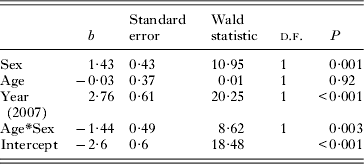
We detected an overall infection prevalence of 70·3% (348 out of 495) in blackcaps sampled from 2006 to 2009 using a PCR detection method. H. parabelopolskyi haplotypes SYAT01 (35·7%) and SYAT02 (20·8%) comprised most of the infections both in juveniles (SYAT01=71 [44·1%], SYAT02=45 [28%]) and adults (SYAT01=88 [26·3%], SYAT02= 39 [11·6%]); all other haplotypes had prevalence rates ⩽1·88%. The majority of infections were caused by Haemoproteus spp., only 4 individuals were infected by Plasmodium spp. and 17 by Leucocytozoon spp. Prevalence differed among years (Table 1; 2006: 89·7%, 2007: 53·25%, 2008:73·91%, and 2009: 84·2%); with year 2007 being significantly different from other years (Table 1). We found significant differences in prevalence between spring 2006 (71·6%) and spring 2007 (55·8%; X2=6·07, d.f.=1, P<0·02), and between fall 2006 (97·8%) and fall 2009 (84·16%; X2=4·63, d.f.=1, P<0·05). There were also significant differences in prevalence between spring (63·9%) and fall (87·7%; X2=27·5, d.f.=1, P<<0·001) for all years sampled during those seasons (i.e. spring 2006 plus spring 2007 vs fall 2006 plus fall 2009). A total of 19 haplotypes were found in 161 juvenile birds, and prevalence was 85·1% (137 infected). In a total of 334 adult birds we observed 16 haplotypes; prevalence in adult birds was 63·1% (211 infected). Prevalence did not differ between juvenile and adult birds (Table 1), but there was a significant interaction effect between age and sex that was driven by the lower infection rate in juvenile females (Table 1; adult females infected=87 [45·5%], juvenile females infected=27 [14·1%], adult males infected=100 [32·9%], juvenile males infected=110 [36·2%]). There was a significant difference in prevalence between males and females (Table 1). These results show that prevalence of haemosporidian parasites in blackcaps is dependent on their age and sex, and that there appear to be annual and seasonal fluctuations in prevalence.
Results of the logistic regression analysis relating prevalence of haemosporidian parasites to sex, age, and year, as well as interaction between sex and age of blackcaps

Blackcap migration route and haplotype diversity
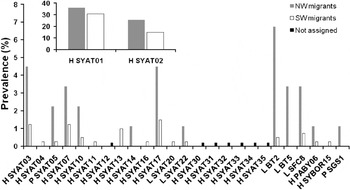
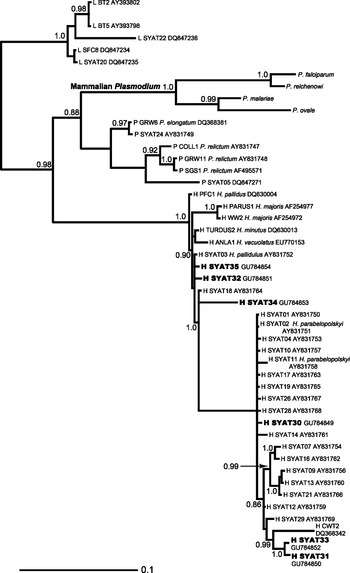
We observed 20 Haemoproteus, 2 Plasmodium, and 5 Leucocytozoon haplotypes (Fig. 1). From a total of 27 parasite haplotypes infecting blackcaps breeding in southern Germany 6 are newly identified haplotypes (SYAT30 – SYAT35, Fig. 2). All new haplotypes (SYAT30 – SYAT35) belong to the genus Haemoproteus (Fig. 2). SYAT35 and SYAT32 are most closely related to SYAT03 (0·4 and 0·8% genetic distance respectively), which represents the morphological species H. pallidulus. Haplotypes SYAT30 and SYAT34 are most closely related to SYAT01, SYAT02, and SYAT26, from them SYAT02 and SYAT01 have been attached to the morphological species H. parabelopolskyi. Haplotypes SYAT31 and SYAT33 are most closely related to SYAT01, SYAT02, SYAT26, and SYAT29, they belong to a well-supported clade that includes haplotype CWT2 (Fig. 2). The 6 new Haemoproteus haplotypes were found infecting 2 juvenile birds sampled during September 2009 in Freiburg, which were assigned, based on wing/bill morphology, to populations breeding in Central Europe. Unfortunately, morphological data did not have enough resolution to assign these two birds to either a SW or a NW migration route. All new haplotypes were found in mixed infections together with the common haplotype H. parabelopolskyi SYAT01 (Table S2, online version only).
Haemosporidian parasite prevalence of blackcaps (Sylvia atricapilla) in a migratory divide from southern Germany separated according to migratory direction. Haplotype names are preceded by a letter indicating the parasite genus to which each haplotype belongs: L, Leucocytozoon; P, Plasmodium; H, Haemoproteus. Some haplotypes detected during fall 2009 could not be assigned to a migratory route because bird morphological data were not able to discriminate between the two options (NW, northwest and SW, southwest).

Bayesian majority-rule consensus phylogram of haemosporidian parasite haplotypes infecting blackcaps (Sylvia atricapilla) in a migratory divide from southern Germany. We used 478-bp of the mtDNA cyt b gene. Support values on branches are Bayesian posterior probabilities. Haplotype names are preceded by a letter indicating the parasite genus to which each sequence belongs: L, Leucocytozoon; P, Plasmodium; H, Haemoproteus. GenBank™ Accession numbers for haplotypes used in this study are provided. The mammal Plasmodium sequences were included to provide a better resolution and visualization of the phylogeny. New parasite haplotypes are in bold face. Leucocytozoon haplotypes were used to root the phylogeny. Scale indicates percentage sequence divergence among haplotypes.

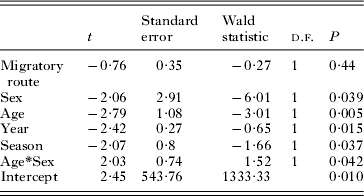
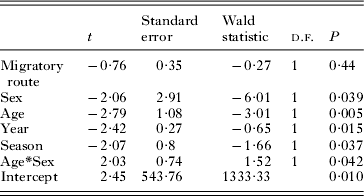
From our data set, 51 birds were assigned to a NW migration route based on isotope data (2006–2008). We identified a total of 11 haplotypes in NW migrating birds sampled from 2006 to 2008. If we consider another 38 birds (30·6%, sampled in 2009) that were assigned to a NW migration route based on wing/bill shape, then, we identified a total of 14 haplotypes infecting NW migrating birds (Fig. 1). H. parabelopolskyi SYAT01 (35·9%) and SYAT02 (25·8%) were the most common haplotypes. The overall prevalence of NW migrating birds for the 4 years was 78·6%, and there was significant variation in prevalence across years (Table 2; 2006:66·6%, 2007:57·14%, 2008:73·91%, and 2009:92·1%). SYAT14, LBT5, and Plasmodium relictum SGS1 haplotypes were recorded only in birds with a NW migration route in this study, and 6 haplotypes (SYAT04, SYAT11, SYAT13, SYAT16, SYAT20, and SYBOR15) were recorded only in birds with a SW migration route (Fig. 1). Birds with a SW migration route were infected with 17 haplotypes (Fig. 1) and had a total prevalence of 68·4%. There was no significant difference in prevalence between NW and SW migrating birds (Table 2).
Results of the logistic regression analysis with a quasibinomial distribution model for the prevalence of haemosporidian parasites according to blackcap migratory direction, controlling for sex, age, season and year, as well as interactions among the different explanatory variables
Haplotype interactions and mixed infections
The haemosporidian haplotype community in southern Germany is clearly dominated by H. parabelopolskyi haplotypes SYAT01 and SYAT02. Because of this, we calculated an association index between these two common and all the rare haplotypes in order to identify possible positive or negative interactions among them. Schluter´s association index was W=80·04 (X2=87·68, d.f.=111, P<0·05) and the corresponding V=0·72. According to our null model the probability of observing such an index value or lower is 96·1%. Hence, this analysis suggests that common haplotypes are negatively interacting with rare haplotypes. In the same way, haplotypes SYAT01 and SYAT02 are interacting negatively with each other, W=219·47 (X2=339·67, d.f.=424, P<<0·001; V=0·51). The probability of observing such an index value or lower is approaching 100%.
The date of the spring arrival of blackcap individuals did not have any effect on the probability of being infected with either of the two common parasite haplotypes (SYAT01 P=0·41, and SYAT02 P=0·36). We observed a total of 30 mixed infections in the 4 sampling years, involving from 2 to 6 haplotypes per bird, and SYAT01 was present in 26 of the mixed infected samples (Table S2, Online version only). According to our null model the number of mixed infected samples observed by year (see Table S2, Online version only) is significantly lower than expected at random (P<<0·001; mean=29·27±4·5 s.d., minimum=15, maximum=46).
DISCUSSION
Prevalence of blackcap haemosporidians
We identified a total of 27 haemosporidian parasite haplotypes from 3 genera (Plasmodium [2], Haemoproteus [20], and Leucocytozoon [5]) infecting blackcaps in a migratory divide of southern Germany. A total of 19 haplotypes were detected in juvenile birds, indicating that they are locally transmitted in the breeding area. Our findings are in agreement with other studies that have identified a high diversity of Haemoproteus haplotypes infecting blackcaps, as well as communities dominated by H. parabelopolskyi haplotypes SYAT01 and SYAT02 (Pérez-Tris et al. Reference Pérez-Tris, Hellgren, Križanauskienė, Waldenström, Secondi, Bonneaud, Fjeldså, Hasselquist and Bensch2007; Križanauskienė et al. Reference Križanauskienė, Pérez-Tris, Palinauskas, Hellgren, Bensch and Valkiūnas2010). The prevalence rate of 70·3% found in our study exceeds that reported for year-round sampling of earlier studies (53·5% Pérez-Tris et al. Reference Pérez-Tris, Hellgren, Križanauskienė, Waldenström, Secondi, Bonneaud, Fjeldså, Hasselquist and Bensch2007; 56% Križanauskienė et al. Reference Križanauskienė, Pérez-Tris, Palinauskas, Hellgren, Bensch and Valkiūnas2010); however, when we take into account only summer prevalence rates, then prevalence is higher in previous studies (87·5%, Pérez-Tris and Bensch, Reference Pérez-Tris and Bensch2005b). The two most prevalent parasite haplotypes were H. parabelopolskyi SYAT01 and SYAT02. Unlike previous studies we found that SYAT01 is more common (35·7%) than SYAT02 (20·8%). Pérez-Tris and Bensch (Reference Pérez-Tris and Bensch2005b) recorded a total of 24 haemosporidian haplotypes in a sample of 361 blackcaps from overwintering and from 6 breeding populations from Spain, Belgium, France, and Sweden. Križanauskienė et al. (Reference Križanauskienė, Pérez-Tris, Palinauskas, Hellgren, Bensch and Valkiūnas2010) recorded 25 haplotypes in a sample of 498 blackcaps, they used samples from 2 previous studies (Pérez-Tris and Bensch, Reference Pérez-Tris and Bensch2005b; Pérez-Tris et al. Reference Pérez-Tris, Hellgren, Križanauskienė, Waldenström, Secondi, Bonneaud, Fjeldså, Hasselquist and Bensch2007) and from 121 blackcaps sampled in Russia (Curonian Spit in the Baltic Sea). In this study, we detected a total of 27 haplotypes from 495 blackcaps sampled from their breeding range in southwestern Germany. Interestingly we found approximately the same number of haplotypes infecting blackcaps at a small geographical area compared to studies with widespread sampling across Europe (Pérez-Tris and Bensch, Reference Pérez-Tris and Bensch2005b; Pérez-Tris et al. Reference Pérez-Tris, Hellgren, Križanauskienė, Waldenström, Secondi, Bonneaud, Fjeldså, Hasselquist and Bensch2007; Križanauskienė et al. Reference Križanauskienė, Pérez-Tris, Palinauskas, Hellgren, Bensch and Valkiūnas2010). Furthermore, we detected 5 Leucocytozoon haplotypes, a parasite genus that was not examined in previous studies. Also 6 new Haemoproteus haplotypes were found, however they were only present in 2 blackcap individuals. Thus, if we remove from the count these haplotypes we have a total of 16 haplotypes identified in our study site, which is less than that reported in previous studies, but it is similar to the 14 haplotypes reported by Pérez-Tris and Bensch (Reference Pérez-Tris and Bensch2005b) in southern Spain during summer and to the 18 haplotypes for a year round sampling of the same population. Based on this information, it is clear that blackcaps are hosts to a highly diverse haemosporidian haplotype community across populations (Pérez-Tris et al. Reference Pérez-Tris, Hellgren, Križanauskienė, Waldenström, Secondi, Bonneaud, Fjeldså, Hasselquist and Bensch2007), and that the presence of rare haplotypes is a common observation in populations studied so far. Thus, a large increase in sample size across the blackcap range (in particular eastern Europe populations) would be needed to know if these rare haplotypes are restricted to the small geographical areas where they were found or if they are rare everywhere. Furthermore, a wider sampling of haemoproteids infecting other bird species across Europe is necessary in order to determine if rare parasites infecting blackcaps represent spill-over haplotypes that are more common in other bird species of the local community, or if they are unique to this migratory bird; in other words, haemosporidian studies at the community level are needed.
We detected no difference in prevalence between birds with different migratory direction (NW=78·6% and SW=68·4%), but a significant difference across years from 53·2% to 89·7%. Variability in prevalence between years is a common pattern in human and non-human malaria parasites (Bensch and Akesson, Reference Bensch and Åkesson2003; Vardo and Schall, Reference Vardo and Schall2007). Microhabitat variability can directly affect the prevalence rate in different sections of a population (Wood et al. Reference Wood, Cosgrove, Wilkin, Knowles, Day and Sheldon2007); for instance, closeness to water bodies can increase the prevalence rate for that section of the population due to availability of suitable habitat for vectors (e.g. Wood et al. Reference Wood, Cosgrove, Wilkin, Knowles, Day and Sheldon2007). Annual variability in prevalence can also be due to parasite's phenology, such that parasites go into a latent stage in internal organs during some part of the year and are no longer circulating in the peripheral blood of the host; thus, infections are difficult to detect with currently used methods once they are latent (Valkiūnas, Reference Valkiūnas2005). Additionally, differences in the storage method of blood have been shown to affect the detectability of parasites by PCR (Freed and Cann, Reference Freed and Cann2006). However, we think this is an unlikely effect because we did not use any kind of buffer to store samples; blood samples were directly frozen at −20°C at the end of each working day.
We detected differences in prevalence between spring (63·9%) and fall (87·7%). Higher prevalence in fall might be due to the higher susceptibility of juvenile birds born throughout the breeding season. We reported no overall difference in prevalence between juvenile and adult birds, which is in agreement with findings in Acrocephalus arundinaceus (Hasselquist et al. Reference Hasselquist, Östman, Waldenström and Bensch2007). By contrast, in a population of blue tits (Cyanistes caeruleus) breeding in nest boxes, adult birds had higher prevalence than juveniles (Wood et al. Reference Wood, Cosgrove, Wilkin, Knowles, Day and Sheldon2007). These contrasting results might be due to differential exposure (i.e. vector accessibility) between hole nesting and open nesting birds, and in the case of migratory birds (e.g. A. arundinaceus), the difference in infection rate might be explained by infections from parasites that are only acquired in wintering grounds (e.g. Africa), which are transported back to breeding grounds. We detected higher infection rates in males than in females, which is congruent with findings in blue tits (Wood et al. Reference Wood, Cosgrove, Wilkin, Knowles, Day and Sheldon2007). Higher infection numbers in males is not a general outcome, and other bird species do not differ in prevalence and intensity of infection between males and females (Hasselquist et al. Reference Hasselquist, Östman, Waldenström and Bensch2007; Wiersch et al. Reference Wiersch, Lubjuhn, Maier and Kampen2007).
Finally, it is important to consider 2 shortcomings in the estimation of haemosporidian parasite prevalence rates when using only PCR methods. First, it has been shown that both PCR and blood smears can fail to detect some infections, but false positives are particularly a major concern when using PCR methods (Valkiūnas et al. Reference Valkiūnas, Iezhova, Križanauskienė, Palinauskas, Sehgal and Bensch2008). This could potentially have biased our prevalence estimates, but this should not affect our inferences because both methods estimate similar prevalence rates (Valkiūnas et al. Reference Valkiūnas, Iezhova, Križanauskienė, Palinauskas, Sehgal and Bensch2008). Second, PCR techniques amplify very light infections of haemosporidian parasites from the peripheral blood despite the life stage of the parasite and whether or not the infection is viable (Valkiūnas et al. Reference Valkiūnas, Iezhova, Loiseau and Sehgal2009). This would suggest that some haemosporidian haplotypes detected in a vertebrate host do not complete development, and the only way to consider the infection viable is by identifying different developmental stages (e.g. mature gametocytes) of the parasite in blood films (Valkiūnas et al. Reference Valkiūnas, Iezhova, Loiseau and Sehgal2009). Thus, the best approach when possible is to use both PCR and microscopy, but the ultimate test of viability would be given by experimental infections.
Haplotype diversity and the migratory divide
Three haplotypes (Haemoproteus SYAT14, Leucocytozoon LBT5, and P. relictum SGS1) that were identified only in NW migrating birds, have been commonly recorded by other researchers in blackcaps migrating south and in other bird species as well (Pérez-Tris and Bensch, Reference Pérez-Tris and Bensch2005b; Pérez-Tris et al. Reference Pérez-Tris, Hellgren, Križanauskienė, Waldenström, Secondi, Bonneaud, Fjeldså, Hasselquist and Bensch2007). SYAT14 is transmitted only during summer in Spain with low prevalence (4·2–9·1%) and SGS1 is transmitted all year round across a larger geographical area with prevalence varying from 5·6 to 33·3% (Pérez-Tris and Bensch, Reference Pérez-Tris and Bensch2005b). Given their relative commonness, we propose that the fact that we did not record these parasite haplotypes in a relative large sample of SW migrating blackcaps indicate that these migrating birds are only exposed to a subset of the parasite community during migration and in their wintering grounds. Haplotypes SYAT04, SYAT11, SYAT13, SYAT16, SYAT20, and SYBOR15 were only found infecting SW migrating blackcaps. From these, SYAT04 and SYAT11 have been recorded only during summer at low prevalences (9·1%) in northern Spain; SYAT16 has been recorded only in summer at relatively low prevalence (4·2–9·1%), ranging from southern Spain to France (Pérez-Tris and Bensch, Reference Pérez-Tris and Bensch2005b). SYAT13 has higher prevalence (5·6–18·2%), is more widely distributed (southern Spain to Belgium) and is transmitted all year round (Pérez-Tris and Bensch, Reference Pérez-Tris and Bensch2005b). Hence, our data represent new geographical records for these haplotypes, expanding its previous range.
We identified 6 new Haemoproteus parasite haplotypes that belong to a diverse clade of Haemoproteus haplotypes (Pérez-Tris et al. Reference Pérez-Tris, Hellgren, Križanauskienė, Waldenström, Secondi, Bonneaud, Fjeldså, Hasselquist and Bensch2007, see Fig. 2), most of which belong to 2 newly described morphological species: H. parabelopolskyi (Valkiūnas et al. Reference Valkiūnas, Križanauskienė, Iezhova, Hellgren and Bensch2007) and H. pallidulus (Križanauskienė et al. Reference Križanauskienė, Pérez-Tris, Palinauskas, Hellgren, Bensch and Valkiūnas2010). Based on their phylogenetic relationships and genetic distances, the new haplotypes SYAT32 and SYAT35 most likely are genetic variants of the species H. pallidulus, whereas the other 4 haplotypes are likely genetic variants of H. parabelopolskyi.
Differentiation and formation of parasite host races can be a common process due to the complexity of parasite life cycles, where one individual host represents a whole isolated ecosystem for the parasite infrapopulation (McCoy et al. Reference McCoy, Boulinier, Tirard and Michalakis2003, Reference McCoy, Chapuis, Tirard, Boulinier, Michalakis, Le Bohec, Le Maho and Gauthier-Clerc2005); such is the case of the tick Ixodes uriae infecting seabirds, which is an ongoing differentiation process into distinct host races (McCoy et al. Reference McCoy, Boulinier, Tirard and Michalakis2001, Reference McCoy, Chapuis, Tirard, Boulinier, Michalakis, Le Bohec, Le Maho and Gauthier-Clerc2005). This diversification affects the evolution and epidemiology of the Lyme disease (Borrelia burgdorferi) that is transmitted by this tick species (McCoy et al. Reference McCoy, Boulinier, Tirard and Michalakis2001, Reference McCoy, Chapuis, Tirard, Boulinier, Michalakis, Le Bohec, Le Maho and Gauthier-Clerc2005). The fact that haemosporidians infecting blackcaps have been extensively sampled across Europe, suggests that the haemosporidian haplotype diversity of this passerine bird is well determined (Valkiūnas et al. Reference Valkiūnas, Bairlein, Iezhova and Dolnik2004; Pérez-Tris and Bensch, Reference Pérez-Tris and Bensch2005b; Pérez-Tris et al. Reference Pérez-Tris, Hellgren, Križanauskienė, Waldenström, Secondi, Bonneaud, Fjeldså, Hasselquist and Bensch2007; Valkiūnas et al. Reference Valkiūnas, Žičkus, Shapoval and Iezhova2006a; Valkiūnas et al. Reference Valkiūnas, Križanauskienė, Iezhova, Hellgren and Bensch2007; Križanauskienė et al. Reference Križanauskienė, Pérez-Tris, Palinauskas, Hellgren, Bensch and Valkiūnas2010), as such it is a good system to study the diversification of Haemosporida parasites. Here, we propose 2 mechanisms to explain how a migratory divide can have an effect on the evolutionary ecology of haemosporidians.
Firstly, we propose that segregation and ongoing differentiation of the vertebrate host due to the recent development of the migratory divide will lead to the effective isolation of parasite populations, which might eventually derive in new haemosporidian haplotypes. This idea agrees with the suggestion that Haemoproteus spp. haplotypes unique to blackcaps have diversified recently (Pérez-Tris et al. Reference Pérez-Tris, Hellgren, Križanauskienė, Waldenström, Secondi, Bonneaud, Fjeldså, Hasselquist and Bensch2007). To test this hypothesis further, it is necessary to have a large increase in sample size across the blackcap range to find out whether rare haplotypes detected in small geographical areas are generated locally or whether they are present elsewhere. In addition, it is necessary to study the haemosporidian avian communities in migratory divides to identify whether haplotypes are unique to blackcaps or whether they derive (spill over) from other bird species. Finally, the vector species transmitting blackcap haemoproteids in the breeding grounds should be studied. It is possible that the effective isolation of blackcap haemoproteids in the migratory divide is broken by having vectors feeding indiscriminately on birds from the two migratory routes despite microhabitat differences. On the other hand, it is also possible that vector composition is different between breeding microhabitats, which may aid in the effective isolation of the haemosporidian parasites.
Secondly, we argue that range expansion and host switching in wintering habitats provide opportunities for the diversification of new haplotypes. Blackcaps are exposed to different vector species and their parasites during migration and in their wintering grounds. Thus, a change in migratory direction exposes blackcaps and their parasites to new habitats and organisms. Being effectively isolated from their previous population, parasites may switch hosts and develop new ecological interactions, provided there are competent vectors in the new areas. One may think that because part of the blackcap breeding population that we study overwinters in Great Britain, there would be no vectors available to transmit parasites during winter months. However, vector species, such as Culicoides spp., transmitting haemosporidian parasites are very resilient to harsh environmental conditions and can be found year round, even in regions with severe winters as in Germany (e.g. Vorsprach et al. Reference Vorsprach, Meiser, Werner, Balczun and Schaub2009). Thus, unless proven otherwise, differences in vector species among wintering areas remain a plausible mechanism for the isolation and diversification of haemosporidians.
Ecological interactions and mixed infections
Richie (Reference Richie1988) described neutralism (e.g. Vardo-Zalik and Schall, Reference Vardo-Zalik and Schall2008, Reference Vardo-Zalik and Schall2009), interference or premunition (e.g. Vardo-Zalik and Schall, Reference Vardo-Zalik and Schall2008, Reference Vardo-Zalik and Schall2009), facilitation (e.g. Schall and Bromwich, Reference Schall and Bromwich1994), and competition (e.g. Perkins, Reference Perkins2000) as the 4 types of interactions among parasites. Our results suggest that common H. parabelopolskyi haplotypes (SYAT01 and SYAT02) are interacting negatively with each other and also with rare haplotypes, indicating that these haplotypes might be competing directly (using same host resources) or indirectly (cross immunity) for resources. Interactions can occur not only in the vertebrate host but also within the vectors; for example, if one parasite outcompetes another when they are found in the same bloodmeal (Paul et al. Reference Paul, Nu, Krettli and Brey2002).
The type of interactions occurring in the vertebrate and insect hosts between common and rare blackcap haemosporidian haplotypes could be teased apart by conducting experimental infections using quantitative PCR (e.g. Cheesman et al. Reference Cheesman, de Roode, Read and Carter2003) or by developing species-specific microsatellite markers (e.g. Schall and Vardo, Reference Schall and Vardo2007; Vardo-Zalik et al. Reference Vardo-Zalik, Ford and Schall2009). We propose that the genetic variants of the two common morphological species infecting blackcaps, H. pallidulus: haplotypes SYAT03 and SYAT18, and H. parabelopolskyi: haplotypes SYAT01, SYAT02, SYAT04, and SYAT11 are good candidates to perform experimental infections. If different parasite haplotypes have different mortality effects on the insect vector, then, we propose that this can generate some degree of isolation between haplotypes due to different transmission rates of each, which opens up the opportunity for divergence on the face of gene flow.
It is common to find blood samples with mixed infections by different parasite haplotypes and morphological species (Pérez-Tris and Bensch, Reference Pérez-Tris and Bensch2005a; Valkiūnas et al. Reference Valkiūnas, Bensch, Iezhova, Križanauskienė, Hellgren and Bolshakov2006b, Reference Valkiūnas, Iezhova, Križanauskienė, Palinauskas, Sehgal and Bensch2008; Vardo and Schall, Reference Vardo and Schall2007). From our samples, we were able to resolve many of the mixed infected samples by using TA cloning. We detected a total of 30 mixed infections, 26 of which included the common haplotype SYAT01. Mixed infections that included both SYAT01 and SYAT02 were detected in 16 samples; this is in agreement with the findings of Pérez-Tris et al. (Reference Pérez-Tris, Hellgren, Križanauskienė, Waldenström, Secondi, Bonneaud, Fjeldså, Hasselquist and Bensch2007), where they detected SYAT01 and SYAT02 as the most common (n=9) combination of haplotypes found in mixed infections. A significantly lower detection of mixed infections than expected at random supports the negative interaction patterns detected in the association analysis. In other words, if parasite haplotypes are interacting negatively, then mixed infections should be uncommon. On the other hand, when parasite haplotypes are found in mixed infections, the amount of parasite template may create competitive amplification effects during PCR, meaning that one of the haplotypes in a mixed infection will be preferentially amplified due to both template amount and primer bias (Pérez-Tris and Bensch, Reference Pérez-Tris and Bensch2005a; Szöllősi et al. Reference Szöllősi, Hellgren and Hasselquist2008). This might be the reason why we did not find any Plasmodium haplotype in mixed infections. Furthermore, the use of blood smears would certainly improve the detection of mixed infections because it has been shown that many samples that appear to be single infections using PCR are actually mixed infections under the microscope (Valkiūnas et al. Reference Valkiūnas, Bensch, Iezhova, Križanauskienė, Hellgren and Bolshakov2006b). Additionally, many other parasite species that are not detected using the highly specific PCR technique can be detected by the use of blood smears, such as Trypanosoma and microphilarid worms (Valkiūnas, Reference Valkiūnas2005). Thus, our interpretation of negative interactions based on the detected number of mixed infections must be regarded with caution until experimental evidence becomes available.
In summary, we have detected a high prevalence of Haemoproteus spp. in a population of blackcaps from southern Germany. Prevalence varied across years and seasons, and was higher in males than in females. Haplotype richness was similar to that reported in other blackcap populations from Western Europe. The 6 new haplotypes reported here were identified in mixed infections of 2 juvenile birds. We detected a negative association between the 2 common H. parabelopolskyi haplotypes (SYAT01 and SYAT02) and between these two common haplotypes and all the rare haplotypes, indicative of a competitive interaction. Detected mixed infections were commonly composed by haplotypes SYAT01 and SYAT02. With the exception of the new identified haplotypes, the blackcap haemosporidian community is similar to those identified in other blackcap populations across Europe. Our molecular data show no clear difference between the parasite communities infecting blackcaps with different migratory route, despite some temporal isolation between the 2 sympatric blackcap subpopulations. Furthermore, haplotypes that were unique according to migratory route have been recorded elsewhere in other blackcap populations. Thus, the isolation provided by the bird host seems insufficient to prompt parasite diversification either because the insect vector is maintaining parasite gene flow between blackcap subpopulations during the breeding season or because not enough time has elapsed since the establishment of the migratory divide. This last assertion might be plausible given the apparent slower mutation rate of haemosporidian parasites compared to their bird hosts (Ricklefs and Fallon, Reference Ricklefs and Fallon2002).
ACKNOWLEDGEMENTS
We thank Jana Bühler, Carlo Catoni, Marie Lucas, Marie Melchior, Kalliope Stournaras, Sebastian Vetter and Frederick Wehrle for assistance during field work. We thank two anonymous reviewers for their constructive comments.
FINANCIAL SUPPORT
This work was supported by the Deutsche Forschungsgemeinschaft (H.M.S., grant number 1008/6-1); the Alexander von Humboldt Foundation (D.S.-A., Post-doctoral grant); and by the wissenschaftliche Gesellschaft Freiburg (H.M.S. and G.S.).