Introduction
The chickpea pod borer Helicoverpa armigera (Hübner) (Lepidoptera: Noctuidae) is an economically important pest, infesting nearly 200 cultivated and wild plants all over the world (Pawar, Reference Pawar1998; Sujana et al., Reference Sujana, Sharma and Rao2008; Singh and Yadav, Reference Singh and Yadav2009) including crops of great economic value such as cotton, chickpea, pigeonpea, pea, sunflower, tobacco, groundnut, sorghum, pearl millet and tomato. The larvae extensively feed on nitrogen-rich plant parts such as pods, leaves and flowers, causing severe crop losses (Fitt, Reference Fitt1989). Chickpea serves as the major first-generation host for H. armigera after winter. The yield losses in chickpea range from 70 to 95% (Prakash et al., Reference Prakash, Ram and Tariq2007). If the infestation is high in the first generation, the population levels in subsequent generations could be considerably higher, resulting in rigorous crop losses in late-season crops. Chickpea is generally grown earlier and then harvested, which is followed by the cotton and tomato crops, and thus the application of insecticides becomes crucial to limit the survival and multiplication of H. armigera on the former crop to prevent high infestations on the latter crops (Ahmed et al., Reference Ahmed, Zia and Shah2004).
Pod borer management is often difficult because it is a polyphagous and highly movable pest, has an extensive fecundity and survival rate with more than one generation per year, can survive on alternate hosts and has developed resistance against several insecticides. Chemical control is an important and effective tool in an integrated management programme. However, the indiscriminate and ubiquitous use of insecticides has resulted in the development of resistance in H. armigera (McCaffery, Reference McCaffery1998; Bues et al., Reference Bues, Bouvier and Boudinhon2005; Pietrantonio et al., Reference Pietrantonio, Junek, Parker, Mott, Siders, Troxclair, Vargas-Camplis, Westbrook and Vassiliou2007; Ugurlu and Gurkan, Reference Ugurlu and Gurkan2007; Jacobson et al., Reference Jacobson, Foster, Krupke, Hutchison, Pittendrigh and Weinzierl2009). Therefore, there is a dire need for an efficient, timely and judicious use of insecticides. Previous studies revealed that the application of insecticides during a suitable stage of the insect and crop resulted in decreased H. armigera populations as well as an increase in yield (Zalucki et al., Reference Zalucki, Daglish, Firempong and Twine1986; Deling et al., Reference Deling, Gordh and Zalucki2000a, Reference Deling, Gordh and Zaluckib; Wang et al., Reference Wang, Gong, Li, Qiu and Wang2009; Vojoudi et al., Reference Vojoudi, Saber, Hejazi and Talaei-Hassanloui2011; Ahmad et al., Reference Ahmad, Ansari and Moraiet2013; Ahmad and Ansari, Reference Ahmad and Ansari2013).
Crop protection results from the combination of toxic and physiological effects in phytophagous insects resulting from ingestion of a toxicant. Besides the traditional exposure method to assess the fate of residual amounts of an applied insecticide, demography is an essential tool that provides long-term induced key changes on various life stages of particular insect species. Stark and Wennergren (Reference Stark and Wennergren1995), who compared the life table parameters of unexposed populations with those exposed to various concentrations of a pesticide, proposed the use of demography incorporated with toxicants. In this way, the overall effect that a toxicant might have on exposed individuals can be studied because it portraits the entire life history of an insect. The approach takes into account all biological parameters of a population that might be affected by a pesticide (Stark et al., Reference Stark, Banks and Acheampong2004, Reference Stark, Vargas and Banks2007; Ahmad et al., Reference Ahmad, Ansari and Moraiet2013). Stark and Banks (Reference Stark and Banks2003) also recommended that demographic toxicological studies are better for long-term studies than other approaches, because their outcomes provide an enhanced understanding and prediction of the total effect of an insecticide at the population level of a given species.
The successful application of insecticides in a sustainable management programme of H. armigera requires careful assessment of the efficiency of the available insecticidal compounds (Saber et al., Reference Saber, Parsaeyan, Vojoudi, Bagheri, Mehrvar and Kamita2013). Imidacloprid is a neonicotinoid that acts on the central nervous system of insects and has low mammalian toxicity. To the best of our knowledge, none of the studies have investigated the effects of sublethal doses of imidacloprid on the surviving populations of H. armigera through demographic methods.
Fewer studies have been published on the use of demography and analogous measures of population growth rate on the effect of a toxicant on insects (Stark and Wennergren, Reference Stark and Wennergren1995; Stark and Banks, Reference Stark and Banks2003; Rezaei et al., Reference Rezaei, Talebi, Naveh and Kavousi2007; Ahmad et al., Reference Ahmad, Ansari and Nazrussalam2012; Ahmad et al., Reference Ahmad, Ansari and Moraiet2013; Ahmad and Ansari, Reference Ahmad and Ansari2013). In the present study, we investigated the lethal and sublethal effects of imidacloprid on the survival and development, mortality, reproduction rates and generation time of H. armigera on chickpea, as the first step in the development of a pest management programme with least impact on the environment.
Materials and methods
Collection and rearing of larvae
Early and late instars of H. armigera were collected from an experimental chickpea field at the Faculty of Agricultural Sciences, Aligarh Muslim University, Aligarh, India in February 2012. The collected larvae were kept singly in a plastic container of 100 ml capacity to avoid cannibalism. Fresh and green pods of chickpea were given to the larvae and changed on a daily basis up to pupation. After emergence, the adults were kept in rearing glass jars measuring 20 × 10 cm. The top of the jar was covered with muslin cloth firmly fixed with a rubber band. The jars were maintained at 27 ± 2°C and 75 ± 5% relative humidity (r.h.). Fresh leaves and pods of chickpea were kept in the jars for oviposition. A piece of cotton wool soaked in a 5% honey solution was kept in the jars as food for adults and was changed daily. Eggs were collected daily and kept for hatching. After hatching, the young larvae were transferred to jars containing fresh chickpea leaves and pods. From the second instar onwards, larvae were transferred to 100 ml plastic jars singly to avoid cannibalism. The faecal matter and dry pods were removed daily and replaced with fresh pods up to pupation. The emerged adults were transferred to different jars. Helicoverpa armigera was reared up to the third generation to become pre-conditioned for the life table study.
Preparation of imidacloprid concentrations and acute toxicity test
Imidacloprid (17.8% soluble liquid) was obtained from Dhanuka Agritek Ltd (India). Four concentrations (10, 20, 30 and 40 mg/l) were prepared separately by slowly adding the desired amount of imidacloprid in 100 ml of distilled water and stirring it constantly for 15 min at room temperature. Distilled water was used as a control. Chickpea pods were dipped in the prepared concentrations for 2 min and then air-dried for 30 min at room temperature. Imidacloprid-impregnated pods were then kept in plastic jars (100 ml) and a single sixth-instar H. armigera was released in each jar and allowed to feed for 24 h. Similarly, treated batches of 20 larvae were regarded as one set of experiments and replicated 10 times. An untreated control, where the same number of larvae was used as in the imidacloprid treatment, in which pods of chickpea were dipped in distilled water for 2 min and air-dried at room temperature for 30 min, was also run in parallel and replicated 10 times. After 24 h, larvae were provided daily with fresh pods up to pupation. Dead and moribund larvae were counted after 48 h and rejected, and normal pupae were sorted and kept in separate jars for each treatment until their emergence.
Bioassay
The LC50, LC30, LC20 and LC10 doses of imidacloprid were calculated from the above data using SPSS. Chickpea pods were dipped in the above-mentioned sublethal doses. Then, 20 sixth-instar larvae were allowed to feed on the impregnated pods of chickpea for 24 h and then provided with fresh pods until pupation. The complete experiment was replicated 10 times.
Demographic study under the influence of imidacloprid
The adults that emerged from the above bioassay experiment were paired in a glass jar (25 × 25 cm) separately for each sublethal dose. Each jar contained a 5% honey solution soaked in cotton wool for feeding. From the surviving adults, 1000 eggs of the same age for each concentration were collected to make a batch of 100 eggs with 10 replicates, which were used to construct the life table following the method of Deevey (Reference Deevey1947) and Southwood (Reference Southwood1978).
Effect of imidacloprid on female fertility and life indices
A methodology was adopted as described in Ahmad et al. (Reference Ahmad, Ansari and Nazrussalam2012, Reference Ahmad, Ansari and Moraiet2013). Freshly emerged H. armigera adults obtained from the demographic experiment were paired and each pair was kept in a separate glass jar (25 × 25 cm). A batch of 10 pairs replicated 10 times for all exposed and unexposed experiments was used. A new male was released into the glass jars each time a male in a jar died. Thus, each female had a male accessible for mating during its entire lifetime. Observations on the basis of live or dead forms (cohort-100) were recorded daily on the parameter of age of the insect (X, in days), number of insects surviving at the beginning of each interval ‘X’ out of 100 (I x), number of insects dying during the age interval ‘X’ out of 100 (d x), life expectancy or mean life remaining of individual of age ‘X’ (e x) which was calculated by T x/L x, where T x is the total number of individuals of ‘X’ age unit and L x is the number of individuals surviving between age ‘X’ and (X+1) and can be calculated from the following equation:
 $$L _{ x } = I _{ x } + 1( X + 1)/2. $$
The life table was constructed by assuming that the survivorship rates are the same for both sexes, and sex cannot be determined at the egg stage, so a sex ratio 1:1 was considered at each batch of eggs to obtain the number of female births (m x). From these data, the following parameters were calculated: potential fecundity (pf) = Σm x; net reproductive or replacement rate (R o) = I xm x; intrinsic rate of increase (r m),  $$e^{( - r _{m})}.( I _{ x } m _{ x }) = 1 $$; finite rate of increase or population multiplication rate (λ) = antilog r m; mean length of generation (T c) = ΣI xm x/I xm x; corrected generation time (τ) = Log10(R o)/r m, and doubling time (DT) = log102/r m.
Effects on fecundity, egg hatching and adult longevity
Adult males and females emerging from the above bioassay experiment were taken and paired. A batch of 10 adults was considered as one set of experiments and replicated 10 times. The fecundity of each female was recorded daily until the death of the female. From each pair of adult moths, 100 eggs were taken randomly, and the number of hatched and unhatched eggs was recorded. The surviving time of adults was also recorded.
Effect on the developmental time of larvae and pupae
Of the freshly emerged H. armigera adults obtained from sixth instars that had ingested imidacloprid, ten pairs were selected and each pair was kept in a separate glass jar (20 × 25 cm). Freshly laid eggs were counted and kept in a batch of 10 and replicated 10 times for each concentration and control. The total duration of incubation was recorded for each concentration and control. After hatching, the developmental time of the first, second, third, fourth, fifth and sixth instars and pupae were ascertained for each concentration along with the control. The number of surviving individuals entering the next developmental stage was recorded for each sublethal dose and control. The first-day wet weight of pupae, the percentage of pupation and the emergence of adults were recorded.
Statistical analysis
Data obtained from all treatments were subjected to one-way analysis of variance using Minitab-11 for Windows. Transformed means were analysed across sample periods using repeated-measures analysis of the protected Fisher's least significant difference (Tukey's) test at P< 0.05. A non-overlap of 95% confidence limits was the criterion for significance of difference between both treated and untreated larvae for each parameter of fitness. All percentage data were analysed using generalized linear mixed model prior to further analysis by using the language program R developed by core Team ‘R 2.10.1’ (R Development Core Team (2010)), unless stated otherwise. Data on acute toxicity were processed using SPSS’ probit analysis.
Results
Acute toxicity
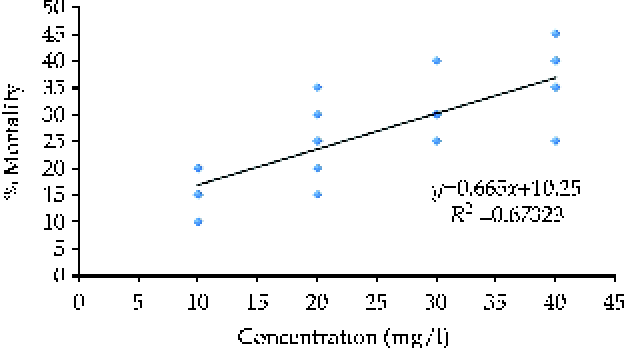
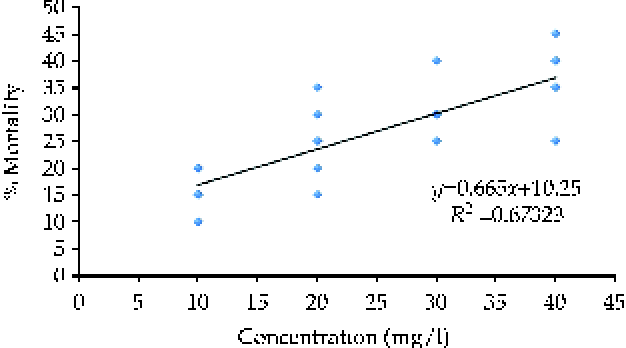
Larval mortality response was evaluated after 48 h of exposure to a range of imidacloprid concentrations from 10 to 40 mg/l. The data revealed a considerable variation in the responses of H. armigera larvae to the applied concentrations (Fig. 1). No larval mortality was recorded in the unexposed group. The LC50, LC30, LC20 and LC10 dose concentrations of imidacloprid were 88.60, 28.16, 14.08 and 5.38 mg/l, respectively (χ2= 10.79; df = 39; P< 0.05). Based on these concentration values, imidacloprid showed excellent activity against the next-generation survival of H. armigera larvae. The corrected mortality values were 51.15, 29.72, 19.0 and 10.09% for the doses of LC50, LC30, LC20 and LC10, respectively.
(colour online) Acute toxicity of imidacloprid on Helicoverpa armigera
Sublethal effects on age-specific parameters
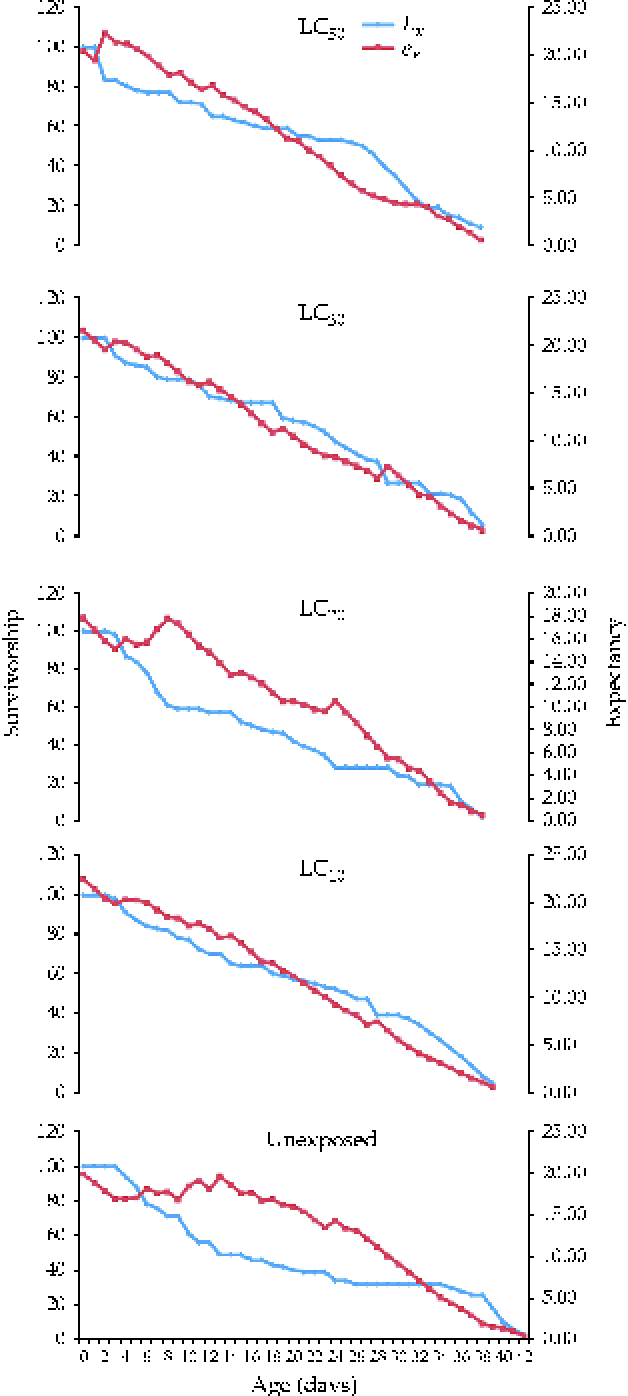
At sublethal doses, imidacloprid significantly (P< 0.05) affected the age-specific parameters of H. armigera at a constant temperature of 27 ± 1°C and a r.h. of 75 ± 5%. Survivorship (I x) was found to be highest with the commencement of age and gradually decreased with the progression of age in both the treated and non-treated groups. Maximum survivorship (42 days) was recorded in the H. armigera population treated with the LC50 dose when compared with other doses and the unexposed population (Fig. 2). Expectancy of life (e x) was found to be highest in younger age groups and decreased gradually with the advancement of age in both the exposed and unexposed individuals. Life expectancy was found to be least (0.5 days) on the last day at all the applied concentrations including the control; highest expectancy was calculated on the first day of the age when exposed to the LC10 dose of imidacloprid.
(colour online) Sublethal effects of imidacloprid on age-specific parameters of Helicoverpa armigera

Sublethal effects on life indices
The life indices of H. armigera varied significantly (P< 0.05) in both the exposed and unexposed individuals (Table 1). The net reproductive rate (R o) was greatly reduced to 26.5 females/female/generation in the population exposed to the highest sublethal dose (LC50) of imidacloprid, while it was 94.18 females/female/generation in the unexposed H. armigera (F= 159.20; df = 4, 49; P= 0.05). The smallest intrinsic rate of increase (r m) was recorded in insects exposed to the LC20 dose of imidacloprid (0.0355 females/female/day) and highest (0.0470) in the unexposed individuals (F= 14.96; df = 4, 49; P= 0.001). The finite rate of increase of H. armigera was recorded to be highest, i.e. 1.3 females/female/day in the unexposed insects, and a considerable lower birth rate (1.09) was observed in insects exposed to a concentration of 80.6 mg/l (F= 52.20; df = 4, 49; P= 0.05). The time to complete one generation (T c) was found to be 38.83 days in the unexposed individuals but was significantly reduced to 33.94 days in insects exposed to the highest sublethal dose of imidacloprid (F= 73.57; df = 4, 49; P= 0.003). However, T c did not differ significantly among the different treatments of imidacloprid. The corrected generation time (τ) was significantly (P< 0.05) reduced to 37.06 days in insects exposed to the sublethal dose of LC50, while it was 41.99 days in the unexposed population. It took a longer time (8.47 days) for H. armigera to double its population after exposure to 14.08 mg/l when compared with non-exposed individuals (6.40 days) (F= 5.15; df = 4, 49; P= 0.0001) (Table 1).
Sublethal effects of imidacloprid on life indices (±SE) of Helicoverpa armigera *

R o, net reproductive rate; r m, intrinsic rate of increase; λ, finite rate of increase or population multiplication rate; T c, mean length of generation; τ, corrected generation time; DT, doubling time.
* Mean values within a column followed by different letters are significantly different according to Tukey's honestly significant difference tests (P< 0.05).
Sublethal effects on the mortality of eggs and larvae
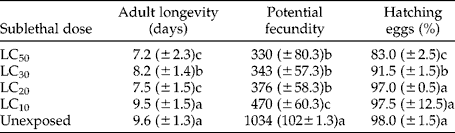
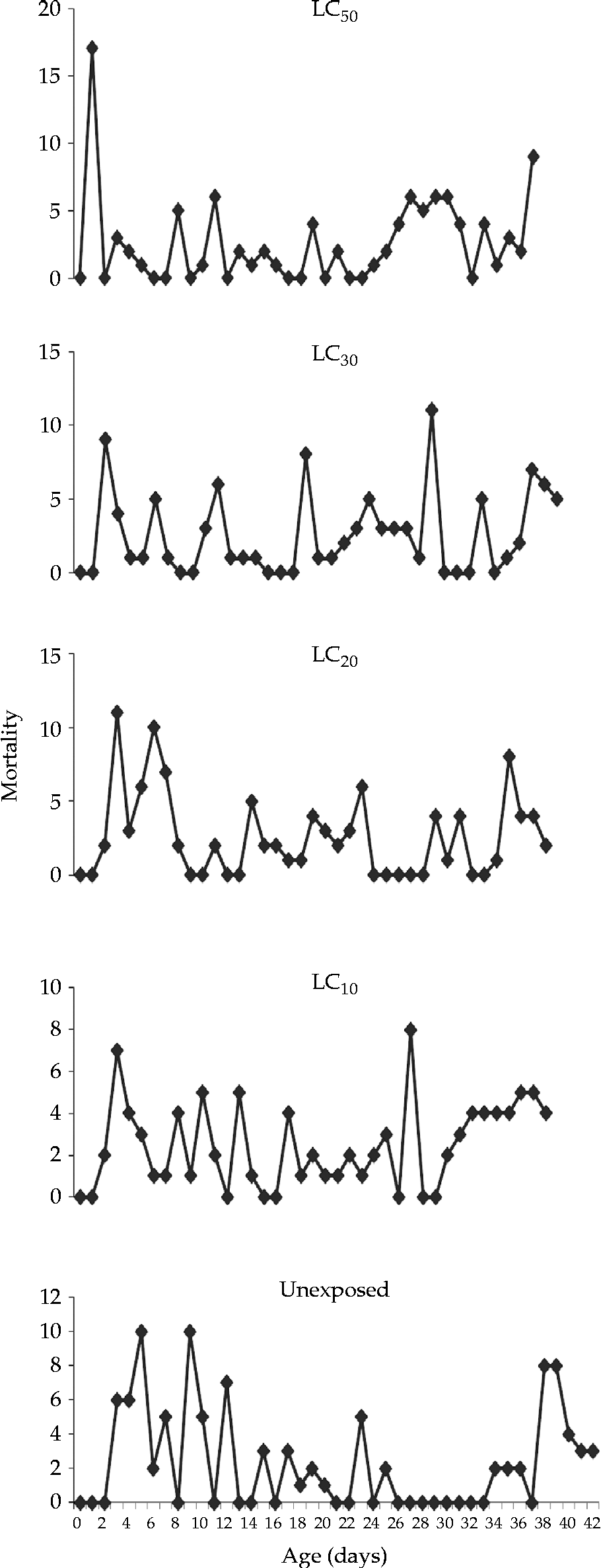
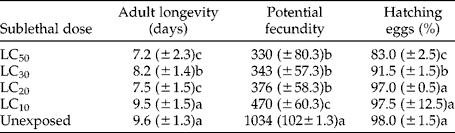
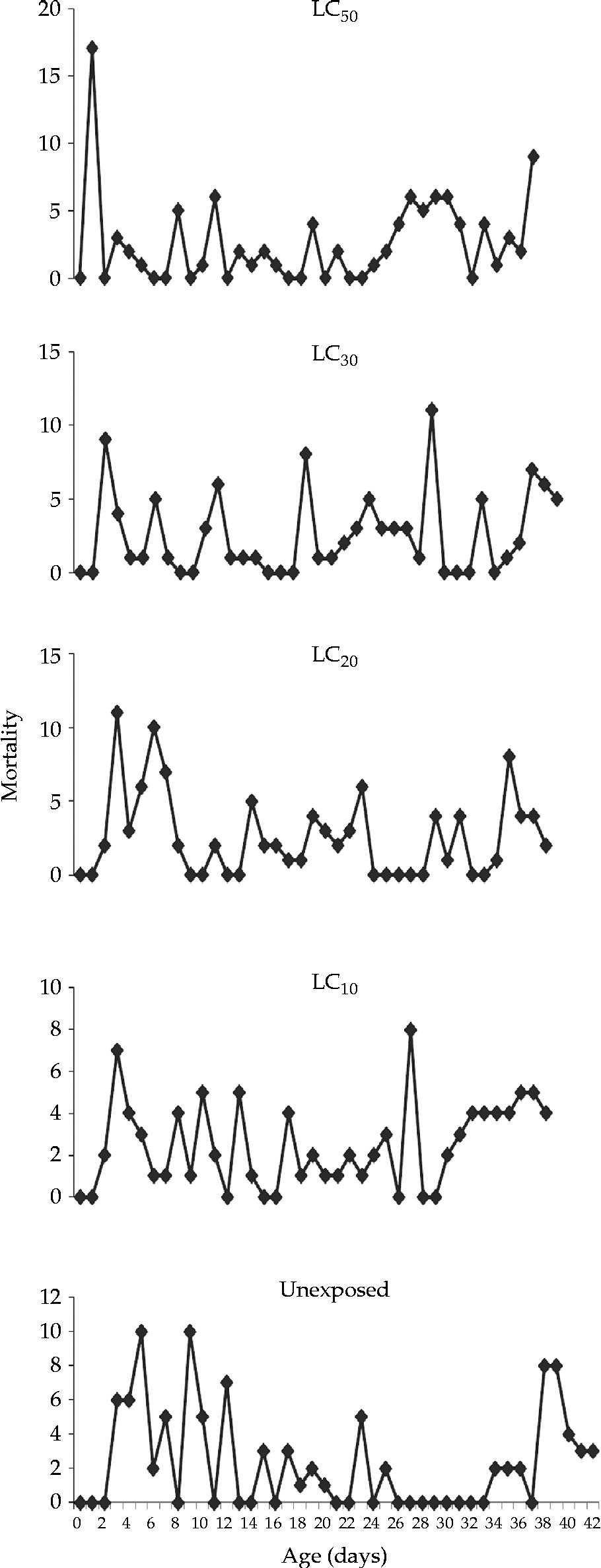
Hatching of eggs was significantly (χ2= 0.2325; df = 4; P= 0.001) affected after exposure to imidacloprid. The highest number (17%) of unhatched eggs was recorded in insects treated with the LC50 dose, whereas 98% of the eggs hatched in the unexposed group (Table 2). Larval mortality (d x) was found to be unrelated to the concentrations used. Mortality was found to be higher (F= 26.20; df = 4, 49; P= 0.05) in early instars than later instars and the control groups (Fig. 3). The LC50 and LC20 doses of imidacloprid caused extensive mortality in initial instars, while the LC30 and LC10 doses caused high mortality in the later instars.
Sublethal effects of imidacloprid on the adult longevity, fecundity and fertility (±SE) of Helicoverpa armigera *
* Mean values within a column followed by different letters are significantly different according to Tukey's honestly significant difference tests (P< 0.05).
Sublethal effects of imidacloprid on the mortality of Helicoverpa armigera
Sublethal effects on female fertility
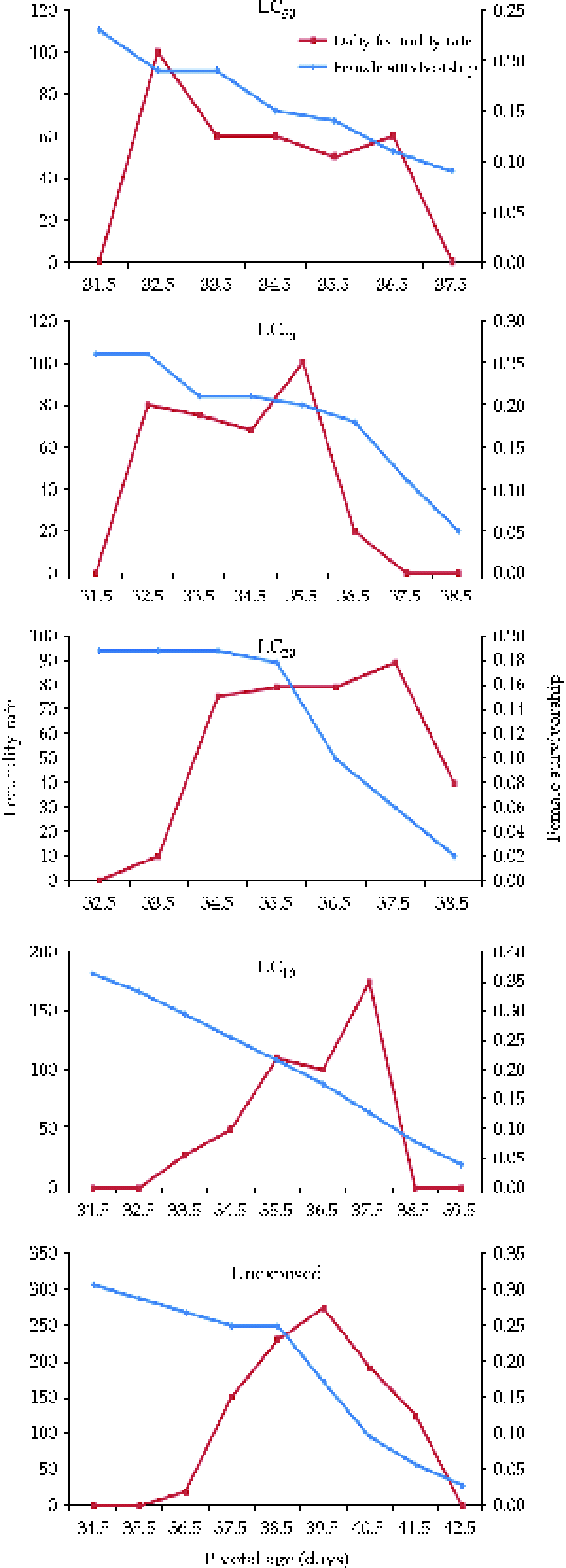
Females oviposited eggs during a definite period of the pivotal age. Imidacloprid significantly (P< 0.05) affected the fertility of H. armigera females in the first generation (Table 2). The pre-oviposition period was 1 day when the insects were treated with the LC50, LC30 and LC20 doses, while it was 2 days when treated with the LC10 dose and in the unexposed females. The peak egg-laying occurred on the 39.5th day of the pivotal age in the unexposed females, while it occurred on the 35.5th day when treated with the LC30, LC20 and LC10 doses and on the 32.5th day when exposed to the LC50 dose (Fig. 4). After reaching the peak, egg-laying decreased with the advancement of age in both the exposed and unexposed females. The post-oviposition period was 1 day in the unexposed females and 2 days in females exposed to the sublethal doses of LC30 and LC10. The potential fecundity (pf) of the F1 generation females was significantly reduced to 330 eggs/female/generation when treated with a concentration of 80.6 mg/l compared with that of the control females. The daily fecundity rate (m x) was found to be significantly (F= 63.72; df = 4, 49; P= 0.004) higher (286 offspring/day) in the non-exposed individuals compared with that in the treated ones (Fig. 4). Female survivorship decreased to 7 days when H. armigera populations were exposed to the highest concentration of imidacloprid compared with 9 days in the unexposed individuals.
(colour online) Sublethal effects of imidacloprid on the daily fecundity rate and female survivorship of Helicoverpa armigera
Sublethal effects on adults
The post-exposure effects of imidacloprid on larvae were also observed in the F1 adults. Their longevity decreased when exposed to the sublethal doses of imidacloprid. A maximum reduction was recorded when H. armigera populations were exposed to the highest dose of LC50 (F= 28.91; df = 4, 49; P= 0.012) compared with the unexposed individuals. The mean lifespan of the F1 adults differed significantly among the imidacloprid concentrations used (F= 76.11; df = 4, 49; P= 0.005). The fecundity of the exposed females was significantly reduced in a concentration-dependent manner and was least when exposed to the highest sublethal dose of LC50 when compared with the unexposed females (F= 48.11; df = 4, 49; P= 0.025). However, no significant difference was observed in the number of eggs hatched between the two concentrations (Table 2).
Sublethal effects on pupal development
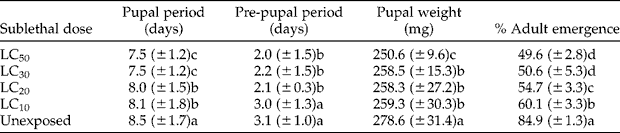
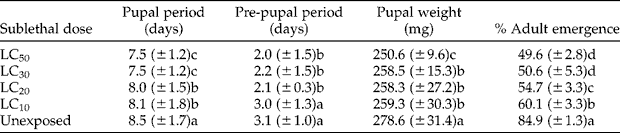
Sublethal effects were observed in the pupae of the surviving individuals when larvae were exposed to the sublethal doses of imidacloprid. It significantly reduced the emergence of adults and pupal survival (χ2= 0.3763; df = 4; P= 0.006) from 85 to 49.6% when exposed to the highest dose of 80.60 mg/l. The developmental time of pre-pupae and pupae significantly (P< 0.05) decreased and was least when exposed to the highest concentration of imidacloprid (Table 3). Similarly, larvae that were exposed to the sublethal concentrations of imidacloprid had lower pupal weight than the control larvae (F= 58.6; df = 4, 49; P= 0.006). The maximum reduction in pupal weight was observed with the LC50 dose (250.6 mg) compared with the unexposed individuals (278.6 mg). Pupal mortality was found to be significantly (F= 22.40; df = 4, 49; P= 0.003) higher when exposed to the highest dose of imidacloprid compared with lower concentrations and unexposed insects.
Sublethal effects of imidacloprid on the pupae (±SE) of Helicoverpa armigera *
* Mean values within a column followed by different letters are significantly different according to Tukey's honestly significant difference tests (P< 0.05).
Sublethal effects on stage-specific survival and larval development
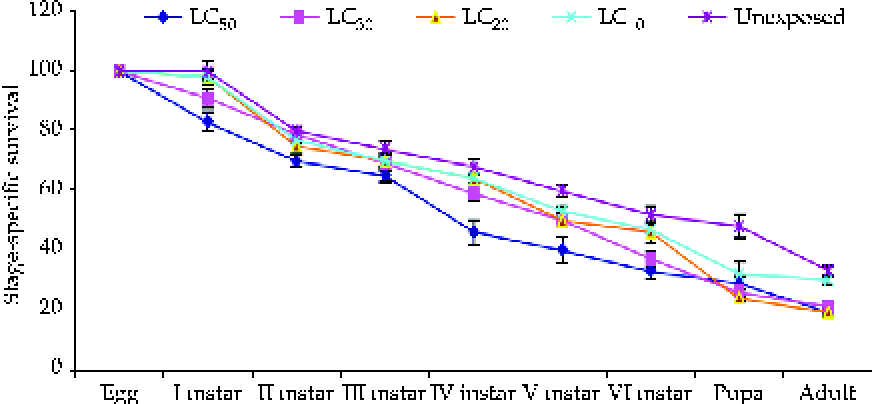
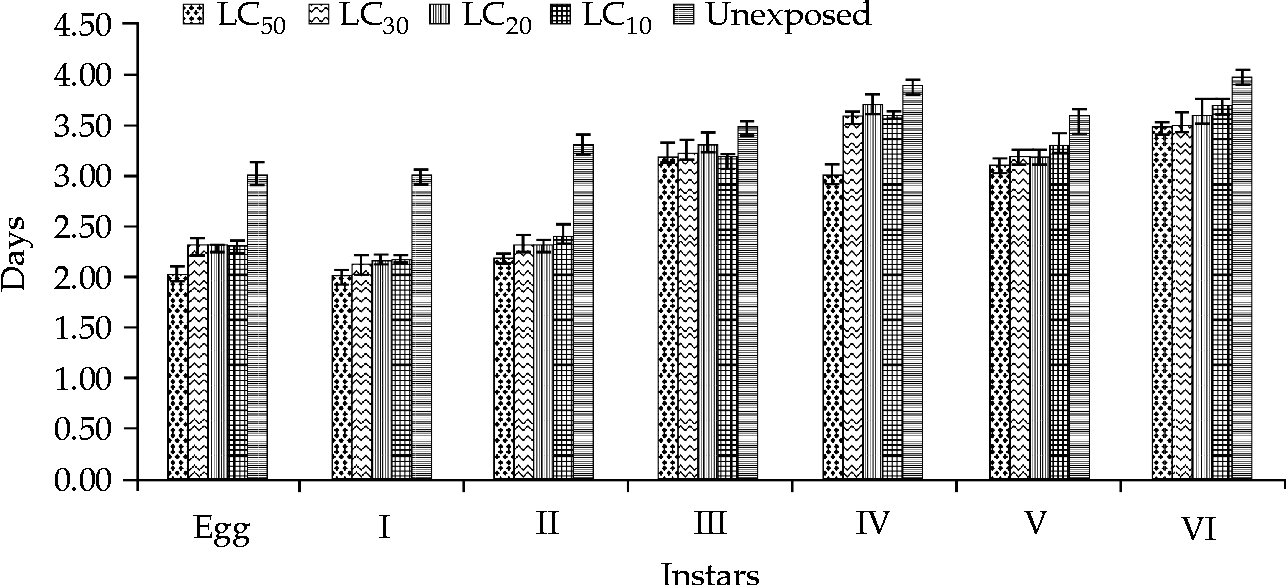
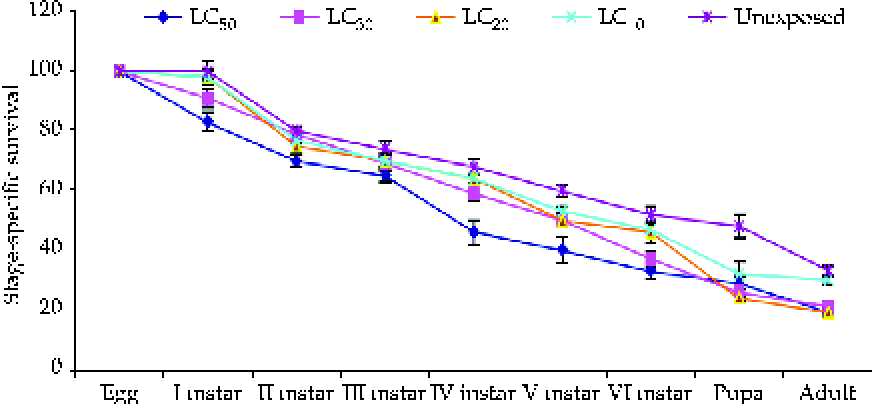
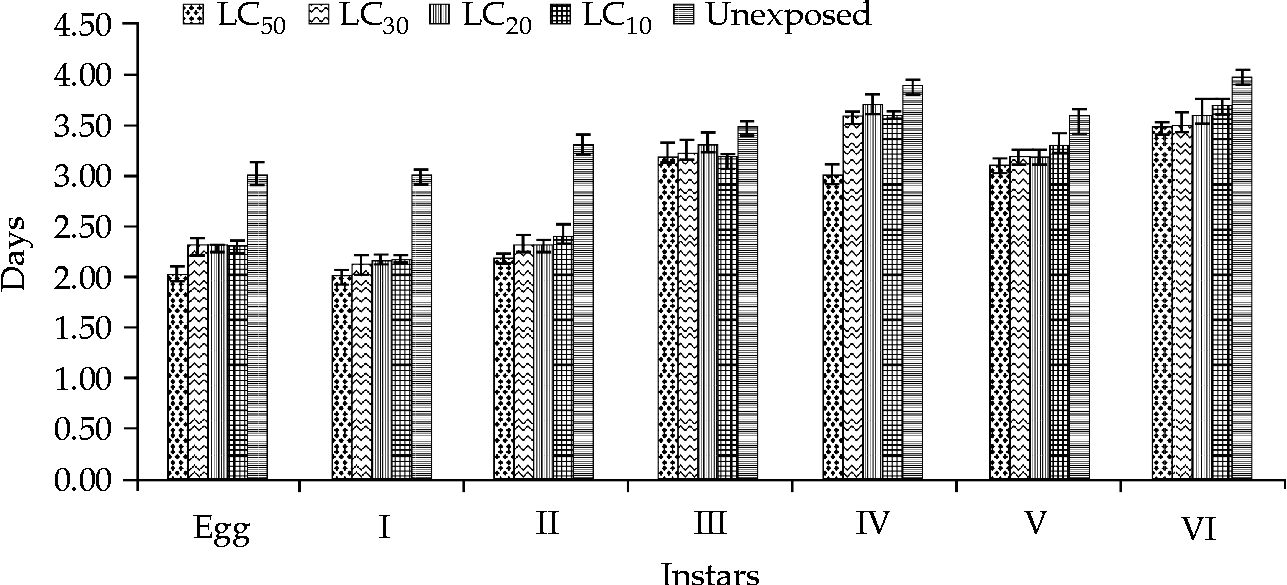
Survival trends at all the sublethal concentrations and in the untreated group at each life stage of the offspring were similar, and all groups showed a constant decline in survival by the end of the adult stage (Fig. 5). However, the survival trends of all the stages were most affected when the insects were treated with an 88.60 mg/l dose of imidacloprid when compared with the non-treated individuals and at other concentrations tested. Imidacloprid significantly (P< 0.05) affected the developmental time of H. armigera larvae in the first generation (Fig. 6). The entire developmental time was reduced to 17 days when the insects were exposed to the LC50 dose when compared with 21.3 days in the unexposed individuals (F= 209.7; df = 4, 49; P= 0.001). The incubation period was significantly (F= 54.66; df = 4, 49; P= 0.05) reduced to 2 days when exposed to a concentration of 80.68 mg/l, while it was 3 days in the unexposed individuals. The developmental time of the fourth instar was significantly shortened to 3.5 days when treated with the highest concentration of imidacloprid compared with the control (4 days). The survival of early instars was significantly lower when treated with the LC50 dose but highest in the untreated individuals (F= 86.6; df = 4, 49; P= 0.006).
(colour online) Sublethal effects of imidacloprid on the stage-specific survival of Helicoverpa armigera
Sublethal effects of imidacloprid on the developmental time of the larvae of Helicoverpa armigera
Discussion
Imidacloprid showed extreme toxicity against H. armigera larvae in the present study. The acute toxicity test of imidacloprid revealed that its LC50 value was fairly low (88.60 mg/l). According to Saber et al. (Reference Saber, Parsaeyan, Vojoudi, Bagheri, Mehrvar and Kamita2013), it has been found that the LC30 doses of methoxyfenozide and thiodicarb against H. armigera were 148 and 550 μg/ml, respectively, and when larvae were treated with the LC30 concentration, 32 and 20% of mortality was recorded. In the present experiment, the sub-lethal doses of imidacloprid caused a significant effect on fitness parameters of H. armigera. Our results revealed that the insecticide significantly affects the survival at the immature stages as well as the fecundity, reproduction and female survivorship of H. armigera. It shows sublethal effects on all the demographic parameters of the surviving generation of bollworms. The survivorship of H. armigera decreased when the larvae were treated with imidacloprid. A similar reduction in survivorship following an imidacloprid treatment was observed in the cabbage aphid Brevicoryne brassicae (L.) (Lashkari et al., Reference Lashkari, Sahragard and Ghadamyari2007), with cypermethrin on H. armigera (Ahmad and Ansari, Reference Ahmad and Ansari2013), imidacloprid on the diamondback moth Plutella xylostella (L.) (Ansari et al., Reference Ansari, Ahmad, Ali and Gulrez2008), spinosad on P. xylostella (Yin et al., Reference Yin, Wu, Li, Zhang and Xu2009), and neem and neem seed extracts on the cotton aphid Aphis gossypii Glover (Santos et al., Reference Santos, Costa, Torres and Boiça2004). Similarly, spinosad at sublethal concentrations can cause a decrease in survival, suppress weight gain of larvae and extend larval development (Wang et al., Reference Wang, Gong, Li, Qiu and Wang2009). Interestingly, the survivorship of P. xylostella increased in a concentration-dependent manner when exposed to different doses of the commercial neem product Neemarin® (Ahmad et al., Reference Ahmad, Ansari and Nazrussalam2012), while that of nymphs and adults of the pea aphid Acyrthosiphon pisum (Harris) exposed to another commercial neem product Margosan-O® decreased in a concentration-dependent manner (Stark and Wennergren, Reference Stark and Wennergren1995). The prolonged survivorship will expose the larvae to their natural enemies for a somewhat longer time, and hence natural enemies might be able to survive even when there is scarcity of prey/hosts.
In addition to the direct interference of imidacloprid on the survival of H. armigera, we also observed post-exposure effects on eggs, and on larval and pupal development. Imidacloprid at its sublethal doses reduced the hatching of eggs, and larval and pupal development, as indicated by the increase in pre-pupal and pupal periods, and also by a decline in pupal weight and adult emergence ratio. Ahmad et al. (Reference Ahmad, Ansari and Moraiet2013) observed similar trends on H. armigera after their exposure to the commercial neem product NeemAzal®, and Ahmad et al. (Reference Ahmad, Ansari and Nazrussalam2012) also reported similarly on P. xylostella after their exposure to Neemarin® at its sublethal doses. Contrary to these findings, sublethal concentrations of indoxacarb had no significant effect on egg hatching in P. xylostella (Mahmoudvand et al., Reference Mahmoudvand, Abbasipour, Garjan and Bandani2011). Mortality was high when H. armigera populations were treated with abamectin when compared with other treatments (Vojoudi et al., Reference Vojoudi, Saber, Hejazi and Talaei-Hassanloui2011). Similar concentration-dependent mortality trends were recorded by Ahmad et al. (Reference Ahmad, Ansari and Nazrussalam2012) on P. xylostella after their exposure to Neemarin®. In the present study, sublethal effects of imidacloprid on the pupal development and adult emergence of H. armigera were also observed, as it significantly reduced the emergence of adults, shortened adult longevity and reduced reproductive capacity and egg hatchability, as well as pupal survival in the first generation after exposure to the insecticide. Wang et al. (Reference Wang, Gong, Li, Qiu and Wang2009) reported similar results after the exposure of H. armigera to spinosad, and Ahmad et al. (Reference Ahmad, Ansari and Nazrussalam2012) reported similarly on P. xylostella when treated with Neemarin®.
Research on sublethal effects has been conducted with the aim of elucidating the toxic effects of insecticides on various life-history parameters that might influence the population dynamics of insects (Stark and Banks, Reference Stark and Banks2003; Stark et al., Reference Stark, Vargas and Banks2007; Ahmad et al., Reference Ahmad, Ansari and Moraiet2013; Saber et al., Reference Saber, Parsaeyan, Vojoudi, Bagheri, Mehrvar and Kamita2013). Insect pests can acquire tolerance towards insecticides in a short period and may build up resistance after a relatively longer period of contact by increasing the specific activities of their metabolic enzymes (Yin et al., Reference Yin, Wu, Li, Zhang and Xu2009). Insecticide hormoligosis is also known to occur in some insects and mites, which sometimes results in the resurgence of pests (Luckey, Reference Luckey1968). Fujiwara et al. (Reference Fujiwara, Takahashi, Yoshioka and Nakasuji2002) reported that the fecundity of P. xylostella females increased when the larvae were exposed to fenvalerate at the LC25 dose. Likewise, the resurgence of cotton aphids occurred after the application of sublethal doses of a synthetic pyrethroid (Nandihalli et al., Reference Nandihalli, Patil and Hugar1992). Also, Elzen (Reference Elzen2001) showed that spinosad caused enhanced fecundity in the insidious flower bug Orius insidiosus (Say). A possible explanation for the latter finding is that surviving individuals uphold high reproductive rates that permit them to compensate for the losses that a toxicant might have on population levels and act as reservoirs for future reproduction (Walthall and Stark, Reference Walthall and Stark1996). In our study, hormoligosis was not observed in H. armigera when treated with any sublethal dose of imidacloprid. The potential fecundity of the females was significantly reduced when compared with that of the unexposed ones. Yin et al. (Reference Yin, Wu, Li, Zhang and Xu2009) and Ahmad et al. (Reference Ahmad, Ansari and Nazrussalam2012) also noted reduced fecundity in P. xylostella after their exposure to sublethal doses of spinosad and Neemarin®, respectively.
The assessment of two or more populations by their net reproductive rates may be quite misleading until their generation times are the same. Two or more populations may have the same reproductive rates, but their intrinsic rate of increase may vary because of their different generation times (Birch, Reference Birch1948). For this reason, Stark et al. (Reference Stark, Vargas and Banks2007) proposed that the intrinsic rate of natural increase and the finite rate of increase, or the population multiplication rate, are the most extensively used measures in life table response experiments to study the effects that a toxicant might have on population levels, because the total effect on a population after exposure to a toxicant can be quantified by a single number. When the value of r m is zero, it suggests a stable population, and when the value of r m is positive, it indicates that the population is increasing exponentially, and when the r m value is negative, it means that the population is diminishing and heading towards extinction (Stark et al., Reference Stark, Vargas and Banks2007; Ahmad et al., Reference Ahmad, Ansari and Moraiet2013). It can be used as a guide of fitness and is a key indicator of population dynamics presenting an effective measure of the insect's life history (Dixon, Reference Dixon, Minks and Harrewijn1987). We found that the r m value of bollworms reduced considerably at all sublethal doses when compared with the untreated control group, corroborating the earlier results of Ahmad et al. (Reference Ahmad, Ansari and Nazrussalam2012) on P. xylostella after their exposure to different concentrations of Neemarin®, and Stark and Wennergren (Reference Stark and Wennergren1995) on A. pisum when treated with different concentrations of Margosan-O.
In our study, the survival of H. armigera at immature stages was high in the unexposed individuals when compared with the imidacloprid-treated ones. Similarly, Ahmad et al. (Reference Ahmad, Ansari and Nazrussalam2012) showed that the survival rate of the first-instar P. xylostella was much affected after ingesting Neemarin®-treated food. Likewise, spinosad at sublethal concentrations significantly extended the developmental time of surviving H. armigera larvae as well as reduced their larval wet weight. Other post-exposure effects included decreased pupation ratio and pupal weight, prolonged pre-pupal and pupal periods and decreased emergence ratio, fecundity and adult longevity (Wang et al., Reference Wang, Gong, Li, Qiu and Wang2009).
Sublethal effects such as reductions in the reproductive capacity, longevity and pupal weight of surviving individuals are likely to result in unconstructive impacts on insect population dynamics such as small population size, moribund larvae and pupae of the next generation, reduced fecundity of the surviving females, etc. (Stark and Banks, Reference Stark and Banks2003; Ahmad et al., Reference Ahmad, Ansari and Moraiet2013; Saber et al., Reference Saber, Parsaeyan, Vojoudi, Bagheri, Mehrvar and Kamita2013). The duration of the pupal stage and pupal weight of H. armigera exposed to the LC30 of methoxyfenozide has been found to be significantly affected (Saber et al., Reference Saber, Parsaeyan, Vojoudi, Bagheri, Mehrvar and Kamita2013). In our investigations, the larval duration, pupal weight and adult survivorship of bollworms were negatively affected by the sublethal doses of imidacloprid. From the practical point of view, the sublethal effects of imidacloprid are highly significant because a reduction in the number of offspring produced would probably assist in bringing down insect populations in the field. Furthermore, the combination of lethal and sublethal effects of insecticides will most probably result in the effects on the population dynamics of H. armigera.
The generation time of H. armigera was significantly reduced after their exposure to different doses of imidacloprid. In the same way, the generation time of A. pisum decreased with increasing concentrations of Margosan-O, and individuals exposed from birth were more affected than those when treated as adults (Stark and Wennergren, Reference Stark and Wennergren1995). In contrast, the time to complete one generation (T c) and the corrected generation time (τ) of P. xylostella were observed to be prolonged in a concentration-dependent manner when exposed to different concentrations of Neemarin® (Ahmad et al., Reference Ahmad, Ansari and Nazrussalam2012). The doubling time of populations may reflect on the increase in time that it takes for survivors to compensate for the loss of individuals (Ahmad et al., Reference Ahmad, Ansari and Nazrussalam2012). In our study, in comparison with the untreated control, the doubling time of H. armigera was prolonged when exposed to the LC20 dose of imidacloprid.
Conclusions
In conclusion, imidacloprid has a multitude of sublethal effects on the mortality of H. armigera at immature stages, and considerably affects the emergence of adults as well as significantly reduces the fecundity, reproductive, intrinsic and finite rates of increase. Toxic effects that include a reduction in the population size, survivorship, pupation ratio and potential fecundity of exposed females may affect the population densities of subsequent generations. Indirect impacts such as a reduction in the developmental time of larvae and pupae could alter pest incidence and synchrony with the crop, thus minimizing damage. To better understand the full impact of imidacloprid on pod borers, additional studies are warranted to monitor the sublethal impact on the field populations of H. armigera for efficient management of the pest, and to curtail the build-up of resistance.