Introduction
Coronavirus disease 2019 (Covid-19) is an ongoing viral pandemic that started in China in December 2019 and rapidly spread to the other countries of the world.Reference Ibekwe, Fasunla and Orimadegun1 The World Health Organization (WHO) highlighted the triad of fever, cough and shortness of breath in the definition of a suspected and probable case of Covid-19 in the early guidelines.2 At the same time as the Covid-19 pandemic, there was a rapid increase in self-reported olfactory dysfunction.Reference Hopkins, Surda and Kumar3 In February 2020, smell and taste dysfunction were identified as a symptom of Covid-19 in a survey of neurological manifestations of the disease.Reference Mao, Wang, Chen, He, Chang and Hong4 Further studies confirmed the association between Covid-19 and chemosensory dysfunction with a wide range of reported prevalence from 3.2 per cent up to 98 per cent for loss of smell.Reference von Bartheld, Hagen and Butowt5
By 9 May 2020, studies had provided sufficient evidence for the WHO to add loss of smell alongside other less common symptoms of Covid-19, and on 7 August, patients with sudden anosmia or ageusia without a known underlying cause were defined as a probable case of Covid-19.Reference Pang, Chee, Subramaniam and Ng6,7 Different factors were suggested to affect the prevalence of smell loss in various studies, including demographic factors (age, gender), the severity of the disease, and the methodology and design of the study. It seemed that smell loss was more prevalent among younger people, out-patient cases, females, Caucasians and whether the olfaction had been assessed objectively.Reference von Bartheld, Hagen and Butowt5,Reference Agyeman, Chin, Landersdorfer, Liew and Ofori-Asenso8–Reference Tong, Wong, Zhu, Fastenberg and Tham10 Smell loss was even shown to be related to the prognosis of Covid-19. Lower hospital and intensive care unit admission rates, lower rates of acute respiratory distress syndrome or a need for intubation are associated with the presence of olfactory loss.Reference Foster, Jauregui, Tajudeen, Bishehsari and Mahdavinia11,Reference Yan, Faraji, Prajapati, Ostrander and DeConde12
Loss of smell after a respiratory infection is not unique to Covid-19, and viruses such as adenovirus, rhinovirus, coronavirus and influenza are already known as aetiological factors.Reference Mullol, Alobid, Mariño-Sánchez, Izquierdo-Domínguez, Marin and Klimek13 Although olfactory dysfunction is often accompanied by other Covid-19 symptoms in many published reports, there is some evidence indicating that Covid-19 patients can present with chemosensory dysfunctions as their sole symptom of the disease.Reference Meng, Deng, Dai and Meng14 Although the prognosis of post-viral olfactory loss is not exactly clear and reported recovery rates vary in related studies, early reports, which are mostly from Europe, suggest a more favourable prognosis for olfactory loss encountered in confirmed Covid-19 cases compared with previously described post-viral olfactory loss.Reference Welge-Lüssen and Wolfensberger15,Reference Lv, Zhang, Zhu, Xiong, Xiang and Wang16 However, as was seen with prevalence rates, reported olfactory recovery rates vary between studies, and several factors have been reported to be associated with the prognosis of smell loss in Covid-19 cases.Reference Izquierdo-Domínguez, Rojas-Lechuga, Chiesa-Estomba, Calvo-Henríquez, Ninchritz-Becerra and Soriano-Reixach17–Reference Paderno, Mattavelli, Rampinelli, Grammatica, Raffetti and Tomasoni20
Healthy, young out-patients with subtle or no symptoms are not prioritised for real-time polymerase chain reaction in the diagnostic protocols in areas with limited resources.21 Because of the high incidence of olfactory dysfunction in Covid-19 cases, this study aimed to investigate the duration and recovery rate of olfactory loss encountered in cases with mild or no additional Covid-19 symptoms (with no Covid-19 confirmed tests) that occurred during the pandemic in order to indicate the factors that may influence the duration or recovery rate of olfactory dysfunction in these patients.
Materials and methods
Study population
An online survey by Bagheri et al.Reference Bagheri, Asghari, Farhadi, Shamshiri, Kabir and Kamrava22 was run from 12 March to 8 April 2020. Out of 19 473 participants with smell loss, 6654 responders registered their phone numbers so their symptoms could be followed. Participants were selected for inclusion in this study if they had reported the absence of other accompanying Covid-19 symptoms (including cough, fever, shortness of breath, sore throat, myalgia, nausea or vomiting, and diarrhoea) or rhinological symptoms (including runny nose, sneeze, nasal congestion, nasal thick discharge and a need to blow the nose).
Participants aged under 18 years, or those who had mentioned a history of previous olfactory problems, chemotherapy, chronic respiratory infections, nasal polyps, head trauma, neurodegenerative diseases, receipt of specified treatment for their recent smell loss (including glucocorticoids, hydroxychloroquine or any antiviral medications) or those who could not be reached by three calls on three separate days through the provided telephone numbers were excluded.
Measurements and study design
In this prospective observational study, all eligible participants were interviewed on the telephone about the severity of recent smell loss at the onset and at the time of the interview (self-assessed by an ordinal scale from one to five corresponding to normal sense of smell, mild loss of smell, moderate loss of smell, severe loss of smell or anosmia) and the duration of the smell loss (the days since loss of smell onset to being fully recovered).Reference Seok, Shim, Rhee and Kim23
Additional Covid-19 symptoms, presenting in one week prior until one week after the onset of loss of smell were self-graded as: no symptoms, mild symptoms, moderate symptoms and severe symptoms.Reference Campiglio and Priori24 Rhinological symptoms in the same time limits were self-assessed based on the rhinological subscale of Sino-Nasal Outcome Test-22 (a Likert scale of 1 to 5).Reference Jalessi, Farhadi, Kamrava, Amintehran, Asghari and Hemami25,Reference DeConde, Mace, Bodner, Hwang, Rudmik and Soler26 Any diagnosis of Covid-19 by real-time polymerase chain reaction or chest imaging in the participants or their family members living in the same house or any recent smell loss in the family members was also recorded. The participants were followed up via telephone twice at least three months apart if they did not report a return of olfaction to the baseline. The patients who did not want to be followed up (despite their first consent), had not answered the questions completely (because of not remembering), had received medication during the follow ups, who reported moderate or severe rhinological or Covid-19 symptoms, or who were hospitalised were excluded from the analysis. Complete recovery was defined as self-reported restoration of smell ability, whereas partial recovery was defined as improvement in olfactory ability.
Statistical analysis
The data were described as mean and standard deviation or frequency (per cent). Chi-square or Fisher's exact test was utilised for assessing the relationship between categorical data with time to recovery categories (in correspondence with first and third quartile of time to complete recovery). Subsequently, rapid and moderately recovered patients were merged and odds ratios for measuring the effect size were calculated. The significant variables were included in multiple logistic models to assess the multiple relationships. The receiver operating characteristic curve was used to classify patients as with and without complete recovery, considering the time passed from the onset of smell loss. Kaplan–Meier estimates were reported to show the rate of complete recovery from the onset of the smell loss. All analysis was performed using SPSS® (version 24) statistical software. A p-value less than 0.05 was considered significant.
Results
Study population demographic data and symptoms
Data of 243 participants were included in the final analysis after application of inclusion and exclusion criteria. The mean age of participants was 32.96 ± 9.47 years. The participants were from 16 different provinces of Iran, mainly from Gilan (n = 120, 49.4 per cent), Tehran (n = 63, 25.9 per cent), Alborz (n = 12, 4.9 per cent), Esfahan (n = 11, 4.5 per cent) and Mazandaran (n = 11, 4.5 per cent). These provinces were among the first provinces of the country to be affected by Covid-19.27 One-hundred and fifty-five (63.8 per cent) participants were female, and 54 (22.2 per cent) reported they were smokers. At the first follow up, 139 (57.2 per cent) participants had not recovered completely. Of this group, 130 (93.5 per cent) participants were reached in the second follow up.
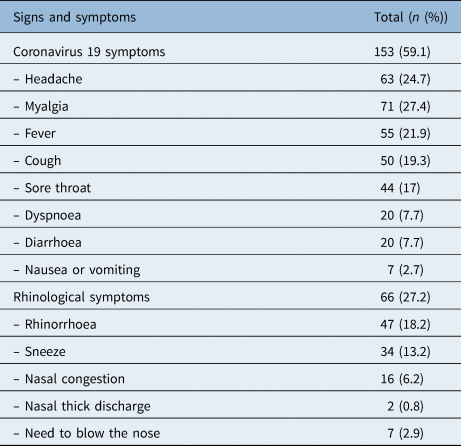
Of 243 participants, 215 (88.5 per cent) reported total anosmia at the onset of the olfactory impairment. None of the responders reported any Covid-19 or sinonasal signs and symptoms in the original online survey. However, at the interview, 175 responders (72 per cent) reported mild symptoms: 153 responders (59.1 per cent) reported at least one of the Covid-19 symptoms and 66 responders (27.2 per cent) reported at least one of the rhinological symptoms. Loss of smell (with or without taste dysfunction) was reported as the first symptom by 119 participants (49 per cent) and as the sole symptom by 68 participants (28 per cent). None of the participants had undergone real-time polymerase chain reaction testing or had been evaluated by a computed tomography scan of the chest. Ten participants (4.1 per cent) reported Covid-19 diagnosis, and 77 participants (31.8 per cent) reported new onset loss of smell in at least one family member living at the same house. Accompanying symptoms are presented in Table 1.
The distribution of existing symptoms of participants

Follow-up duration and final recovery rates
The mean total follow-up duration was 111.39 ± 59.34 days (median: 151, mode: 47, range: 26–203 days). The first interview was completed after a mean of 47.95 ± 12.44 days after the onset of smell loss (median: 46, mode: 40, range: 26–91 days).
At the first telephone interview, 104 patients (40.3 per cent) self-reported complete recovery. From the remaining 139 participants, 130 could be followed up with the second interview after a mean of 165.99 ± 9.34 days after the onset of their smell loss (median: 166, mode: 169, range: 142–203).
At the end of the study, those who had not completely recovered were followed for a mean of 149.38 ± 41.25 in ‘partial recovery’ (median: 164, mode: 166, range: 38–203) and 163.75 ± 10.81 in ‘no recovery’ groups (median: 161, mode: 154, range: 154–179). Finally, 239 participants (98.3 per cent) reported improvement: 173 (71.2 per cent) reported complete recovery and 66 (27.1 per cent) reported partial recovery. Mild, moderate and severe hyposmia was reported by 45 (18.5 per cent), 21 (8.6 per cent) and 4 (1.6 per cent) patients, respectively. No one reported anosmia at the last follow up.
Factors influencing complete recovery
The mean age of patients with and without complete recovery was 33.16 ± 10.24 and 32.48 ± 7.34 years, respectively (p = 0.614). Complete recovery was reported significantly more frequently in the patients with a family history of recent smell impairments (80.5 per cent (n = 62) vs 67.1 per cent (n = 110); p = 0.031) and less in those who reported fever as an accompanying symptom (58.3 per cent (n = 28) vs 74.6 per cent (n = 144); p = 0.026). Furthermore, the odds of complete recovery in patients without fever were 2.10 times higher in comparison with patients with fever (95 per cent confidence interval (CI): 1.08–4.07). There were no significant relationships between other symptoms and complete recovery. The rates of complete recovery were not significantly different between participants with rhinological symptoms, Covid-19 symptoms or those with isolated smell loss.
Duration of smell loss and predictive factors
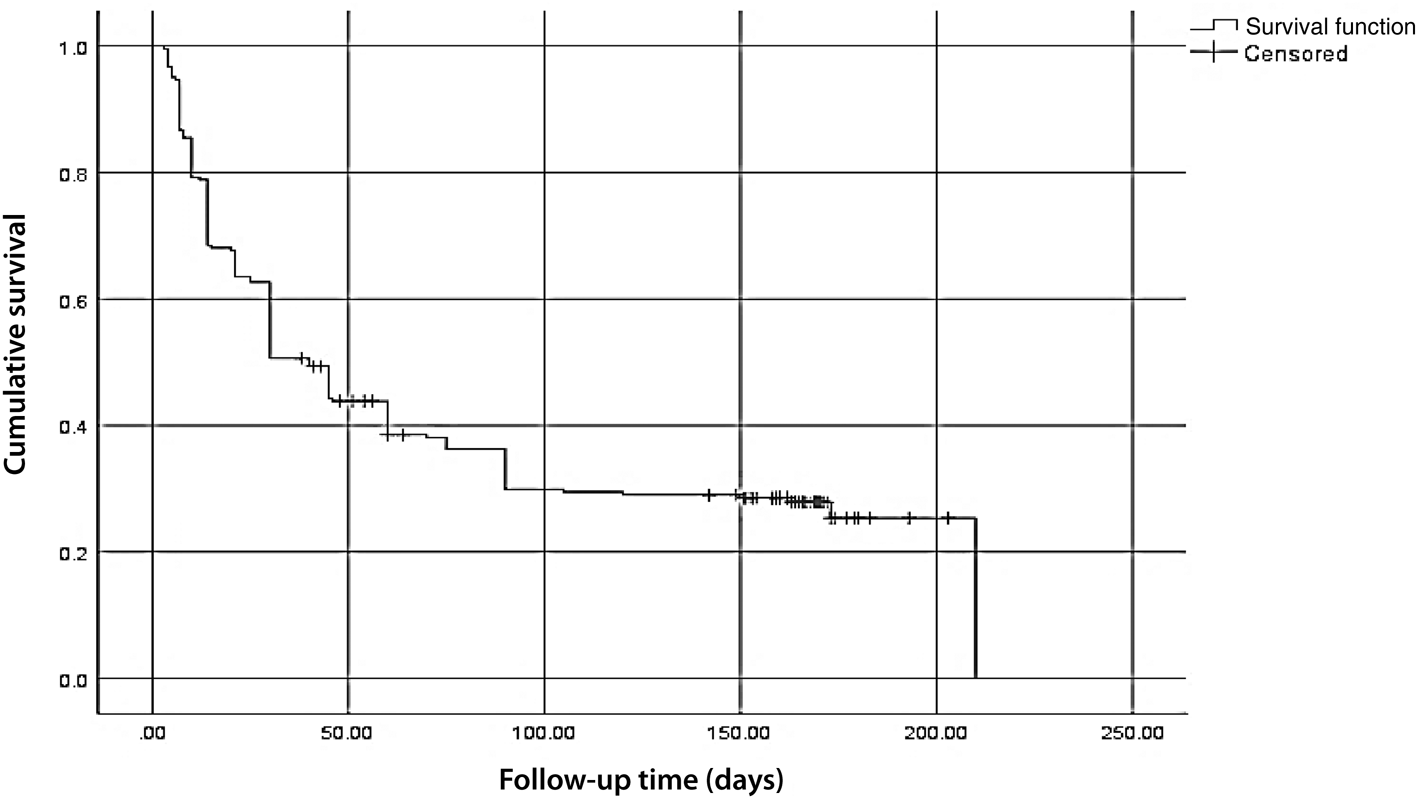
The smell loss was self-reported to last for a mean of 32.54 ± 31.48 days (median: 21, mode: 30, range: 3–210) until complete recovery. Complete recovery of smell loss within the mean follow up of 111 days in 234 responders who could be reached at the last follow up showed the rate of improvement to be 56.2, 70.1, 71.5 and 74.7 per cent at 50, 100, 150 and 200 days following onset of smell loss, respectively (Figure 1).
Kaplan–Meier estimates showing the rate of regaining complete recovery (percentage) during the follow-up time.

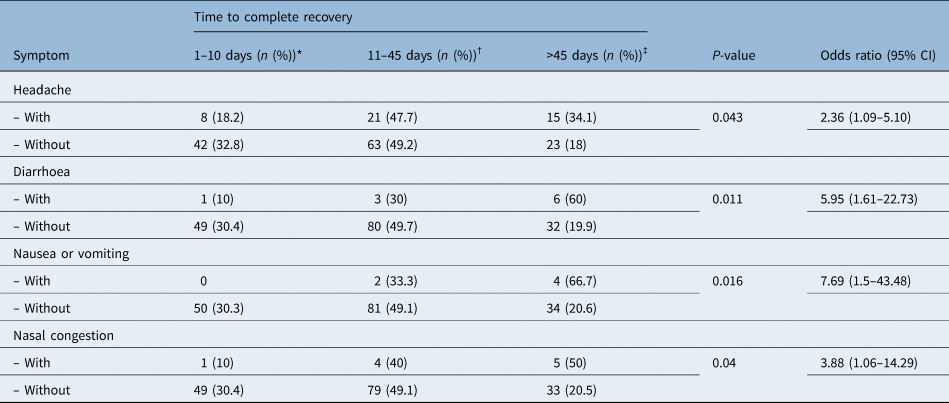
In order to evaluate the factors influencing the duration of the smell loss, completely recovered participants were divided into three groups based on the first and third quartile of the time to recovery: rapid recovery (1–10 days), moderate recovery (11–45 days) and delayed recovery (more than 45 days). Rapidly recovered participants were significantly younger compared with the delayed recovery participants (31.3 ± 8.69 vs 35.55 ± 9.43; p = 0.031). Patients with smell loss as the sole symptom reported early recovery significantly more frequently compared with those who had any Covid-19 or sinonasal symptoms (88.7 per cent (n = 47) vs 73.1 per cent (n = 87); p = 0.037).
Although the prevalence of nasal congestion, headache, nausea or vomiting, and diarrhoea increased significantly in those who had a longer recovery period (Table 2), there was a statistically significant relationship only between diarrhoea and delayed recovery in the multiple logistic models (odds ratio = 4.65; p = 0.031; Table 3). However, the percentage of the patients with at least one rhinological symptom who had a delayed recovery was significantly higher (41.7 per cent (n = 10) vs 18.9 per cent (n = 28); p = 0.020, odds ratio = 3.06, 95 per cent CI = 1.13–5.19).
The association between symptoms and time to recovery

Odds ratios show the odds of delayed complete recovery versus rapid or moderate complete recovery. *n = 50; †n = 84; ‡n = 38. CI = confidence interval
The multiple logistic models for assessing the association between mentioned symptoms with later recovery

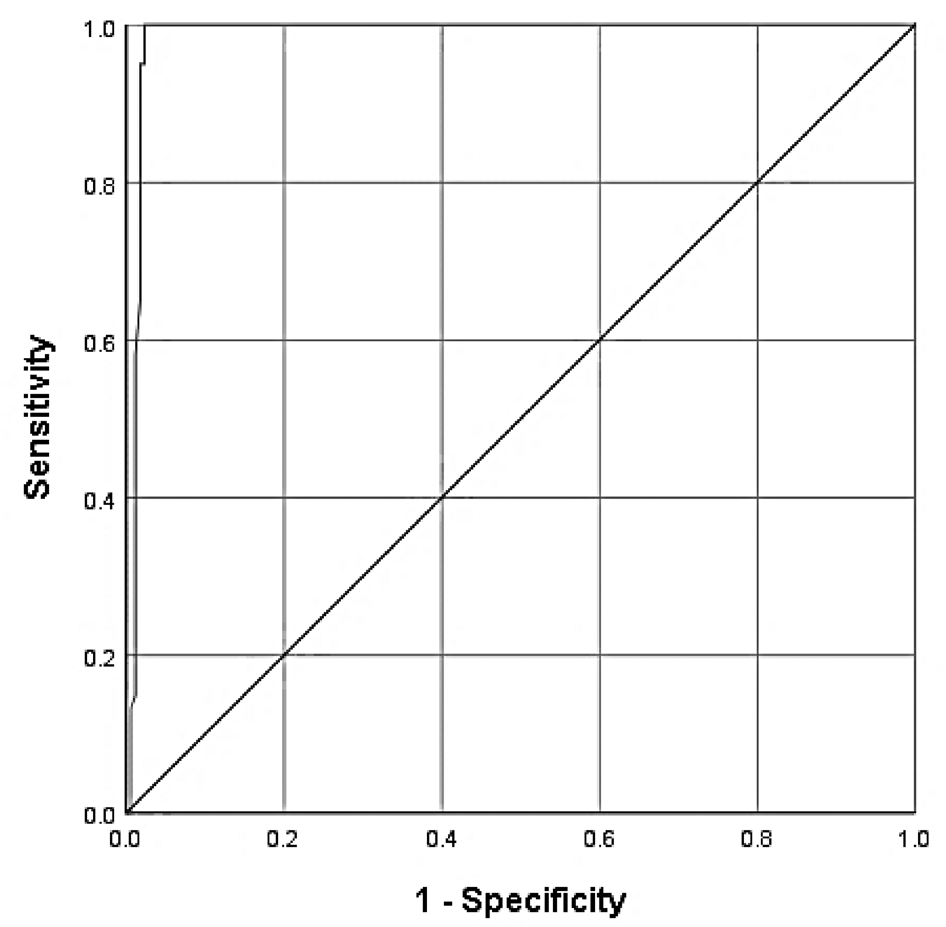
The receiver operating characteristic curve was used to classify the patients according to gaining complete recovery, considering the time passed from the onset of the smell loss. It showed that day 131 after the onset of olfactory dysfunction was the best cut-off for predicting that participants would not gain complete recovery (100 per cent sensitivity and 97.7 per cent specificity). The area under the receiver operating characteristic was 0.98 (95 per cent CI: 0.97–100; Figure 2).
The receiver operating characteristic curve to assess the efficacy of using the time passed from the onset of smell loss to predict the probability of not regaining complete recovery.

Discussion
This study was carried out on patients with sudden smell loss that happened during the Covid-19 pandemic and who reported mild Covid-19 or rhinological symptoms or no accompanying symptoms at all. Although 98.3 per cent of participants ultimately reported some improvement, the rate of complete recovery reported after at least 4 months of follow up was 71.2 per cent. Although no one reported anosmia, 1.6 per cent of respondents still complained of severe hyposmia, and 8.6 per cent reported moderate hyposmia at the end of the study.
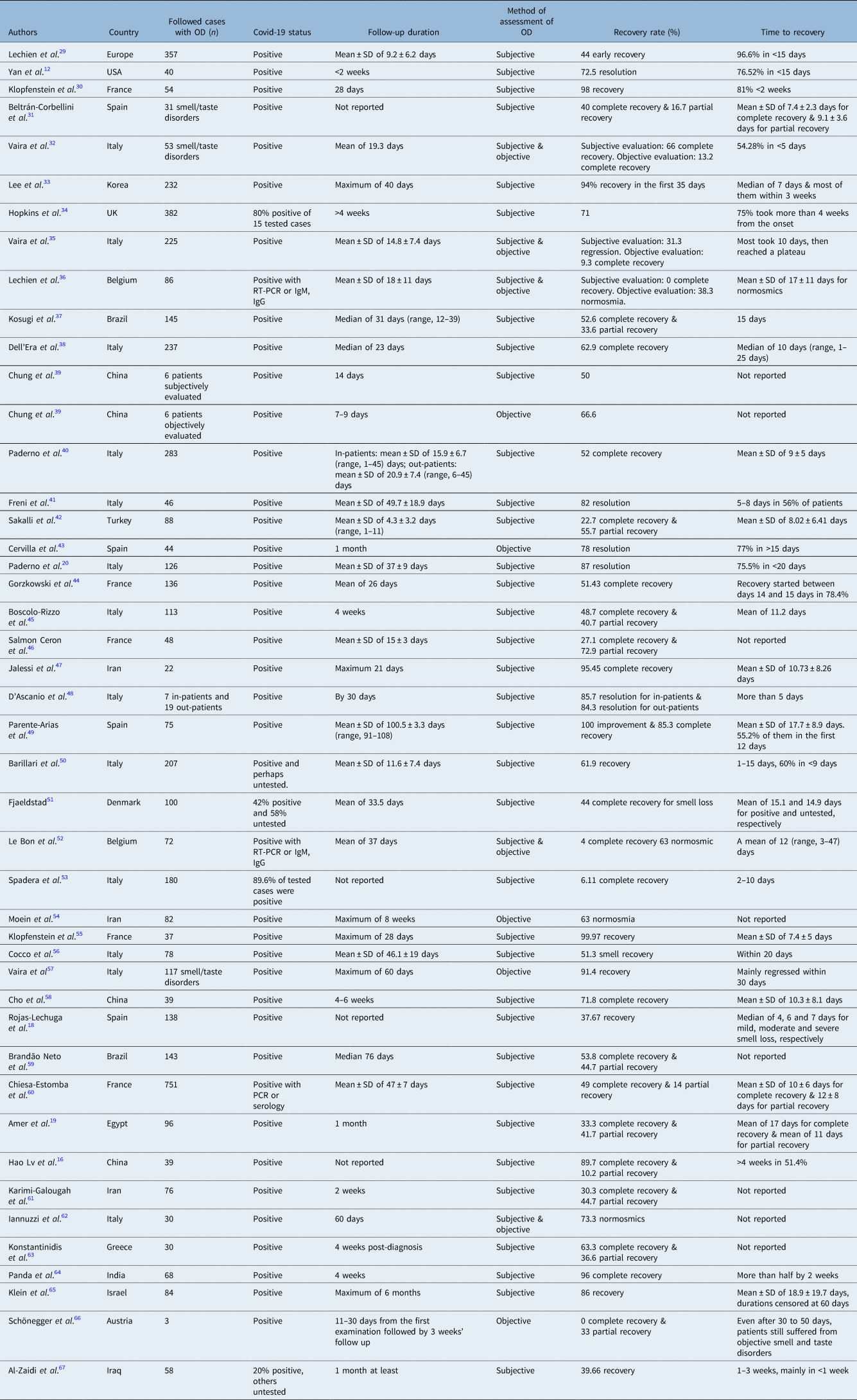
The reported chance of recovery in routinely encountered post-viral olfactory loss ranged from 32 to 67 per cent, and around 20 per cent of patients did not recover after 1 year of viral infection.Reference Hopkins, Surda and Kumar3,Reference Lee, Lee, Wee and Kim28 A review of articles published from 1 April to 31 October 2020 and focusing on the rate of recovery in confirmed cases of Covid-19 was carried out (Table 4).Reference Lechien, Chiesa-Estomba, De Siati, Horoi, Le Bon and Rodriguez29–Reference Al-Zaidi and Badr67 In the confirmed Covid-19 patients, the reported rates of complete recovery varied greatly (4 to 96 per cent for a 1-month follow up and 63 to 91.4 per cent for a 2-month follow up).Reference Lechien, Chiesa-Estomba, De Siati, Horoi, Le Bon and Rodriguez29,Reference Le Bon, Pisarski, Verbeke, Prunier, Cavelier and Thill52,Reference Vaira, Hopkins, Petrocelli, Lechien, Chiesa-Estomba and Salzano57,Reference Panda, Mohamed, Sikka, Kanodia, Sakthivel and Thakar64 The recovery rates for follow up of 3 and 6 months were reported to be 85.3 per cent and 86 per cent, respectively.Reference Parente-Arias, Barreira-Fernandez, Quintana-Sanjuas and Patiño-Castiñeira49,Reference Klein, Asseo, Karni, Benjamini, Nir-Paz and Muszkat65 It should be emphasised that because Covid-19 had not been confirmed by polymerase chain reaction in our patients, they were considered to be probable cases of Covid-19 according to WHO criteria. Their rate of complete recovery of smell loss was more similar to the rate of recovery of Covid-19 cases compared with other post-viral olfactory impairment. Interestingly, even patients who reported isolated smell loss self-reported a complete recovery rate of 77.9 per cent (in a mean follow-up time of 3.3 months which lasted for a mean of 26 ± 25.12 days), which is well above the reported rate of recovery for post-viral olfactory impairment. These patients even showed a faster recovery period compared with the others.
A review of the studies on olfactory dysfunction in Covid-19 which focused on smell loss recovery rate and duration

Covid-19 = coronavirus disease 2019; OD = olfactory dysfunction; SD = standard deviation; RT-PCR = real-time polymerase chain reaction; Ig = immunoglobulin
Various factors have been reported to influence the rate of recovery of smell loss in Covid-19 patients. The mean duration of olfactory impairment was reported to be 8 to 9 days in a pooled analysis of 20 studies.Reference von Bartheld, Hagen and Butowt5 In our study, the duration of smell loss was significantly shorter in those with lower age and those who reported no additional symptoms besides the smell loss. There is a controversy in the reported effect of age on the duration of smell loss in Covid-19. Although Levinson et al.Reference Levinson, Elbaz, Ben-Ami, Shasha, Levinson and Choshen68 reported a longer duration of smell loss in patients aged over 40 years, patients with severe loss of smell who recover later have been reported to be younger in 2 studies.Reference Izquierdo-Domínguez, Rojas-Lechuga, Chiesa-Estomba, Calvo-Henríquez, Ninchritz-Becerra and Soriano-Reixach17,Reference Rojas-Lechuga, Izquierdo-Domínguez, Chiesa-Estomba, Calvo-Henríquez, Villarreal and Cuesta-Chasco18 In a study by Fjaeldstad,Reference Fjaeldstad51 with a similar methodology and study population to this study (online survey for out-patients with a mean age of 39.4 years who were mainly without confirmation for Covid-19), there was no significant effect of age on the time of recovery or recovery rates. As transmembrane serine protease 2 expression is reported to increase with older age, this may explain the negative effect of older age on the recovery of the sense of smell in the patients.Reference Bilinska, Jakubowska, Von Bartheld and Butowt69
The duration of smell loss was significantly longer in the patients who reported nasal congestion or any rhinological symptoms. Nasal congestion has been shown to be associated with a slow resolution and lower recovery rate.Reference Paderno, Mattavelli, Rampinelli, Grammatica, Raffetti and Tomasoni20,Reference Gorzkowski, Bevilacqua, Charmillon, Jankowski, Gallet and Rumeau44 In the present study, nasal congestion did not affect the final complete recovery rates, but it slowed down the process of smell recovery. Only 10 per cent of the population with nasal congestion completely recovered within the first 10 days, and a report of rhinological symptoms increased the odds of the late recovery (complete recovery after 45 days) by 3 times. This may be a reflection of the conductive component effect (mucosal oedema) on the suggested mechanism of smell impairment.Reference Jalessi, Barati, Rohani, Amini, Ourang and Azad47,Reference Eliezer, Hautefort, Hamel, Verillaud, Herman and Houdart70,Reference Brann, Tsukahara, Weinreb, Lipovsek, Van den Berge and Gong71 However, an increased level of inflammation, induced by pre-existing rhinitis, may also be responsible.
Nasal goblet (secretory) cells and ciliated cells in the epithelium of respiratory and gastrointestinal systems have shown the highest angiotensin-converting enzyme 2 expression.Reference Sungnak, Huang, Bécavin, Berg, Queen and Litvinukova72 The exact mechanism of diarrhoea is still unclear, and any correlation between olfactory dysfunction and gastrointestinal symptoms has not been reported previously.Reference D'Amico, Baumgart, Danese and Peyrin-Biroulet73 However, diarrhoea has been shown to be correlated with more severe systemic inflammation in Covid-19 patients.Reference Uzzan, Soudan, Peoc'h, Weiss, Corcos and Treton74 It has also been considered as a risk factor for a more severe and poor prognosis course of the disease in several studies.Reference Guan, Ni, Hu, Liang, Ou and He75–Reference Lee, Huo and Huang77 At the last follow up, only 50 per cent (10 out of 20) of our participants with diarrhoea reported complete recovery, and the patients with diarrhoea had a 4.65 fold increased risk for delayed recovery.
The present study demonstrated that although improvement of smell loss may happen with longer follow up, the chance of complete recovery after 131 days from the onset of smell loss dramatically decreases (100 per cent sensitive and 97.7 per cent specific). Total recovery was shown to be significantly related to a short time from the onset of smell loss to the onset of recovery.Reference Gorzkowski, Bevilacqua, Charmillon, Jankowski, Gallet and Rumeau44 Vaira et al.Reference Vaira, Deiana, Fois, Pirina, Madeddu and De Vito32 also emphasised the role of time passed since the clinical onset in improvement or total recovery.
A lower complete recovery rate and a longer duration to complete recovery was shown in this study compared with some of the previous studies, perhaps because of the predominantly female population, cases with severe loss of smell at the beginning and the method of the patient selection. In the present study, the majority of the participants were anosmic (88.5 per cent), and the remaining 11.5 per cent were reported to be severely hyposmic. The severity of smell loss has been reported to play a role in the prognosis. Longer recovery duration has been reported for patients with severe loss of smell compared with patients with milder impairment.Reference Izquierdo-Domínguez, Rojas-Lechuga, Chiesa-Estomba, Calvo-Henríquez, Ninchritz-Becerra and Soriano-Reixach17,Reference Rojas-Lechuga, Izquierdo-Domínguez, Chiesa-Estomba, Calvo-Henríquez, Villarreal and Cuesta-Chasco18 Cases with severe smell loss in a study by Izquierdo-Domínguez et al. were younger, predominantly female and with a lower rate of pneumonia.Reference Izquierdo-Domínguez, Rojas-Lechuga, Chiesa-Estomba, Calvo-Henríquez, Ninchritz-Becerra and Soriano-Reixach17 Similarly, anosmia was found as a risk factor for later recovery.Reference Amer, El-Sherif, Abdel-Hamid and El-Zayat19,Reference Paderno, Mattavelli, Rampinelli, Grammatica, Raffetti and Tomasoni20 On the contrary, in a study by Paolo there was no significant difference in the time of resolution between hyposmic or anosmic patients.Reference Paolo78
• Various recovery rates have been reported for sudden unexplained anosmia encountered during the coronavirus disease 2019 (Covid-19) pandemic
• Smell loss can be the prominent or sole symptom of Covid-19, although other viruses can induce olfactory dysfunction
• After a mean of 5.5 months, the rate of improvement, complete recovery, and moderate or severe hyposmia were 98.3, 71.2 and 10 per cent, respectively
• Complete recovery was associated positively with recent smell loss in at least one family member living with the patient and negatively with fever
• Younger age and isolated smell loss were associated with a rapid recovery, and rhinological and gastrointestinal symptoms were associated with a slow recovery
• After 131 days from the smell loss onset, the chance of regaining complete recovery dramatically decreased
A study by Paderno et al. discussed that women self-report recovery after a longer duration than men.Reference Paderno, Mattavelli, Rampinelli, Grammatica, Raffetti and Tomasoni20 Around 64 per cent of the population in our study was female, which may explain why less than 30 per cent of completely recovered patients had a duration of fewer than 9 days. However, this study did not show any significant differences in the rate of recovery between the sexes.
Limitations
In this study, the included participants had subtle or no Covid-19 symptoms and had not been tested by real-time polymerase chain reaction test. Therefore, definite allocation of the smell loss to Covid-19 or routine post-viral olfactory impairment was impossible, which may be considered as a significant limitation. The smell loss was self-assessed by an ordinal scale that may have limited correlation with more objective measures.Reference Whitcroft and Hummel79,Reference Kamrava, Jalessi, GhalehBaghi, Amini, Alizadeh and Rafiei80 In addition, we were unable to confirm self-reported recovery rates with psychophysical testing because of low compliance of paucisymptomatic participants for in-person attendance in the hospital for the tests during the pandemic.
Although the online surveys facilitate collecting information with minimal burden on healthcare personnel, they are prone to some biases. The results of this study show that subtle symptoms may not be reported properly in an online survey. This limitation was overcome by reconfirmation through telephone interview; however, it was still prone to recall bias or over-reporting because of prompting by the interviewer. On the other hand, in this study, in 50 per cent of the cases, a range of 14–28 days had passed from the initial loss of smell to their participation. This data shows a significant number of our participants were still suffering from smell loss after at least two weeks, and that was the possible reason they found the online survey in their searches and were more willing to participate. In other words, some patients who had rapidly recovered may not have participated.
Conclusion
Because of the high number of patients with Covid-19, the considerable prevalence of anosmia among the affected population and the huge negative impact of anosmia on quality of life, it is important to inform patients about favourable prognosis. However, a dramatic decrease in the rate of complete recovery happens after four months from the onset of smell loss, which may necessitate considering any optional treatments to start before this deadline. Although our patients were not definite cases of Covid-19 by WHO criteria, patients with smell loss as the sole symptom recovered significantly faster, whereas patients with rhinological or gastrointestinal symptoms may have a longer recovery period.
Competing interests
None declared