The fate of the art collection of the Bremen Kunsthalle has become a sad symbol of Russian cultural restitution practices. After the end of the Second World War, Soviet soldiers found the world-class drawings once exhibited in that famous museum of the German Hanseatic City in a castle near Berlin and transported them to the Soviet Union as private trophies. Since the days of Gorbachev's perestroika, these art works have frequently attracted public attention and provoked fierce debates. The Bremen drawings undoubtedly have become the cause célèbre of the Russian–German restitution controversy. However, the history of the removal of the collection of the Bremen Kunsthalle was different from the fate of the majority of German cultural valuables hidden for more than half of a century in the Soviet special repositories. In contrast to the Schliemann Gold (the so-called Treasure of Priam) or Impressionist masterpieces from German private collections, the Bremen drawings were not confiscated and transported to the USSR by the official trophy brigades, but rather plundered by soldiers and officers from a military engineers unit. Obviously the Bremen collection was not the only private loot carried home by men of the victorious Red Army. However, the very fact that substantial parts of the Bremen collection later made their way to secret repositories of different Soviet state museums, and that some participants involved preferred public disclosure to traditional silence, transformed it into a high-profile case in the struggle for return of the so-called cultural trophies.
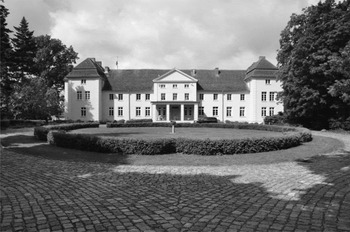
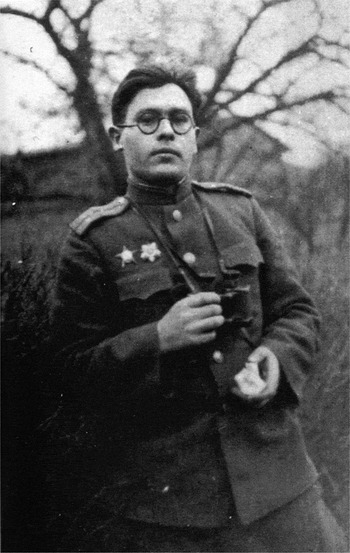
At the end of the Second World War, the collection of the Bremen Kunsthalle was evacuated to the countryside near Berlin. The industrial Northern Germany experienced heavy Anglo-American bombardments during that period. Faith in the safety of Berlin, the “invincible fortress of the Third Reich,” was widespread among many German officials. The collection—1715 drawings, 50 paintings and about 3000 prints belonging to the Kunsthalle—were sent to the castle of Karnzow (Figure 1) situated 60 miles north of Berlin in the town of Kyritz.Footnote 1 On 5 May 1945 the 38th Field Engineers Brigade of the Red Army occupied the town.Footnote 2 The castle was used to house the senior officers. On 30 July, when the brigade was ordered to leave the town, they discovered the cache of art works belonging to the Bremen Kunsthalle in the cellar of the castle. Soldiers and officers of the brigade looted the discovered treasures. Among them was a young architect turned engineering captain named Viktor Baldin (Figure 2), who returned to the Soviet Union with 362 drawings and two paintings from the Bremen collection in his luggage. His loot included works of Dürer, Rembrandt, Goya, and other old masters.
The Castle of Karnzow, 2010 (near Kyritz, 60 miles north of Berlin), where Viktor Baldin and his Red Army unit were billeted, and where they found the Bremen graphics collection, evacuated for safekeeping in the cellar. The castle was then owned by Wilhelm A. Graf Königsmark. Photo courtesy of Schloss Karnzow.

Captain Viktor Baldin (1918–1997) in his Red Army military uniform in 1944. Photo courtesy of Konstantin Akinsha, a copy presented by Viktor Baldin.

After the war, Baldin worked as a specialist in architectural restoration. He was not discreet enough and showed his trophies to some friends. Soon the Ministry of State Security became interested in the former captain. Facing serious troubles in 1947, Baldin “donated” the drawings looted in the castle of Karnzow to the Museum of Architecture in Moscow established by the famous Soviet architect Aleksei Shchusev.Footnote 3 At the same time, Baldin sent an account of what had happened in the vaults of the castle to Marshall Kliment Voroshilov, who then headed of the Council of Ministers, proposing that an attempt should be made to locate the other looted Bremen art works. The letter remained unanswered.Footnote 4
A turn of fate brought Baldin to the Museum of Architecture, and in 1963 he was appointed its director.Footnote 5 He thereafter started campaigning for the return of the drawings, which he had earlier deposited in the museum's special repository, to their rightful owners. Baldin wrote numerous letters to Soviet leaders from Leonid Brezhnev to Mikhail Gorbachev, proposing the return to Germany of the art works he had found in the castle of Karnzow. His efforts brought no result.Footnote 6
By 1989, Baldin, having never received any response to his appeals to Soviet leaders, decided to act at his own risk. That year he and his wife visited the Federal Republic of Germany for the first time on the invitation of their friend Dörte Ludwig Bonac, chairman of the German-Soviet Friendship Society. Baldin told the story of the drawings found in the cellar to his German hostess. Bonac informed Siegfried Salzmann, who was then the director of the Bremen Kunsthalle, about Baldin's revelations and arranged their meeting. Bremen officials, who initially received the news with distrust, were stunned by the story told to them by the former director of the Shchusev Museum. After the meeting, Salzmann triumphantly announced, “I assume that the next year this part of Bremen Collection will be returned.”Footnote 7 In an article in the New York Times entitled “Moscow Letting Long Lost Masterpieces Leave,” Carlyle C. Douglas reported:
Countries and people are not all that the new Soviet Union is ready to turn loose. Now comes word that hundreds of priceless drawings and watercolors that were thought to have disappeared forever from Germany during World War II have actually been kept safe in Moscow and will soon go back to the museum whence they came.Footnote 8
However, the hopes of Bremen officials were not realized.
In the spring of 1991, on the eve of the fall of the Soviet Union, Boris Yeltsin, then president of the Russian Federation, was preparing to pay his first state visit to the Federal Republic of Germany. It was rumored that he was planning to take with him the Baldin Collection to present to Germany as a gesture of goodwill. To what extent such intent was serious remains unclear. What is known is that on the eve of the presidential visit, the drawings once saved by Baldin were confiscated by KGB agents from the Shchusev Museum of Architecture on the request of Nikolai Gubenko, a former actor from Taganka Theatre in Moscow, who had become the last minister of culture of the Soviet Union. Gubenko, an ardent opponent of restitution, wanted to “save” the Baldin Collection from its possible return to Germany. The Baldin Collection was transferred to the State Hermitage in Leningrad (now St. Petersburg).Footnote 9
Inspired by Baldin's visit and willingness to cooperate, later in 1991, the Kunstverein in Bremen, the private institution responsible for the Kunsthalle, issued a documented catalog covering 1520 works of art—paintings, prints, and drawings known to have been lost as a result of World War II. On the basis of further research and remaining inventories, they had determined that “50 paintings, 1715 drawings and some 3000 prints were deposited in Count Königsmarck's castle (Schloss Karnzow).” Those evacuations had taken place on 14 May and 17 July 1943. Knowing for sure that many of the lost items were in the Soviet Union, they added captions in Russian as well as German, and a Foreword in English and Russian, providing statistics and calling attention abroad to the items not returned.Footnote 10
The collapse of the Soviet Union in December 1991 inspired more hopes that the art works from Bremen would soon return home. However, during the last year of the existence of the USSR, the attention initially attracted by the fate of the collection of the Bremen Kunsthalle faded to the background in light of revelations about hundreds of thousands of art works from German and European museums and private collections removed at the end of World War II to the Soviet Union and kept in secrecy in the special repositories of state museums and other cultural institutions.Footnote 11 Soon it became clear that German claims to the Russian Federation could not be limited to the drawings from the Baldin Collection, which constituted an exception from the rule. In contrast to the Schliemann treasure or masterpieces of French Impressionists from German private collections, the Bremen drawings had been looted by private individuals and not by the Soviet trophy brigades. In the moment when German federal policy on the restitution of cultural property was in formation, Bremen officials, who had already started a dialog with the Soviet and Russian officials, found themselves in an advanced position and hoped that they would be able to achieve a fast breakthrough. Developments supported such hopes.
In the spring of 1992, when hope was high in the air, Bremen specialists with their 1991 catalog in hand were given the opportunity to examine the Bremen drawings in the Hermitage Museum in St. Petersburg.Footnote 12 In addition to the Baldin Collection, they verified 128 drawings from the Kunsthalle, which the Hermitage had acquired earlier from different individuals after the end of World War II. They also identified one etching by Rembrandt, which would raise the total figure of “non-Baldin” works in the Hermitage to 129. All of the Hermitage holdings from Bremen were identified with their original Bremen inventory numbers in the updated Bremen catalog published in 1997.Footnote 13 Included is one additional painting in the Hermitage, The Park by Claude Monet, which had not been part of the Baldin Collection. Although identified as belonging to the Kunsthalle, it had been in Berlin during the war, where it was seized by a Soviet Trophy Brigade and apparently brought to the Soviet Union in 1945.Footnote 14 Confirming the figures published in Bremen, a 1993 article in the Russian newspaper Kommersant reported that the Hermitage held 128 drawings from Bremen purchased from different private persons.Footnote 15
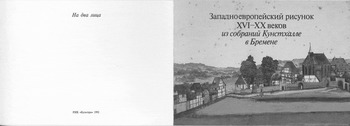
In November 1992 an exhibit of the Baldin Collection opened in the State Hermitage (Figure 3).Footnote 16 As the first public exhibition of Soviet “trophy art,” the show attracted major international attention. On 23 December 1992, ABC Evening News broadcast a special segment dedicated to the exhibition, which included an interview with Viktor Baldin and stressed the “promise from Russian President Boris Yeltsin to return the pictures to Germany in exchange for stolen Russian treasures.”Footnote 17 In March 1993 the exhibition was shown in Moscow.Footnote 18 An impressive catalog with color illustrations, listing 138 drawings, was published for the occasion by the Kultura publishing house, a commercial company headed by Mikhail Shvydkoi, under the umbrella of the Ministry of Culture of the Russian Federation.Footnote 19 The publisher donated copies of the catalog to President Boris Yeltsin, Prime Minister Viktor Chernomyrdin, and Minister of Foreign Affairs Andrei Kozyrev, among others.Footnote 20 In his introduction to the volume, Evgenii Sidorov, then minister of culture of the Russian Federation, wrote,
The time has come to openly show the world what had come into our collections as a result of the Second World War and to solve the problem of ownership of these works according to international law or by basis compensation and exchanges through bilateral or multilateral negotiations.Footnote 21
While his emphasis on “compensation” and “exchanges” was noticeable, he cautioned, however, that
there cannot be any precocious, hasty solutions. The process of restitution of cultural treasures requires tolerance and compromise on both sides. Those things that should not be infringed are the law and the sense of historical justice.Footnote 22
The president of the Bremen Senate also contributed introductory remarks that were published in the catalog:
The exhibition is a clear signal that new life has been breathed into German-Russian relationships…. The Treaty of Friendship between our countries provides for the return of such works to their rightful owners. The Free Hanseatic City of Bremen is interested in a cooperative solution in this regard.Footnote 23
The cover of an invitation to the opening of the first exhibition of ‘trophy’ art in Russia, “West European Drawings of XVI–XIX centuries from the collection of the Kunsthalle in Bremen” at the State Hermitage in St. Petersburg, 18 November 1992. The background image is a gouache by Albrecht Dürer, “View of the Johanniskirche in a village near Nuremberg,” 1492 (Baldin no. 135/19, inventory no. KL 5; pictured in the 1997 Bremen catalogue on page 51, no. 150). Image courtesy of the Kunsthalle, Bremen, with permission of the Ministry of Culture RF.

In the article published on the occasion of the release of the catalog and the forthcoming exhibition of the Baldin Collection in Moscow, the newspaper Kommersant announced that “According to information from reliable sources … , at the end of the year the exhibition will travel to Bremen and will remain there.”Footnote 24 The newspaper had good reason to hope that the collection would be returned to Germany. In contrast to the position of the German Federal Government, which demanded return of illegally removed cultural property, while refusing to discuss any compensation schemes, local Bremen officials tried to develop their own initiatives designed to accommodate the Russian side. In 1993 it looked like they were close to victory.
Indeed, official negotiations in Bremen in 1993 led to signing of the so-called Bremen Protocol. Wolfgang Eichwede, then the director of the Forschungstelle Osteuropa (Research Institute on East Europe) of Bremen University, initiated negotiations with a variety of Russian officials and such public figures as the art restorer and TV personality Savelii Iamshchikov. A Russian delegation including Iamshchikov, art professor and critic Aleksei Rostorguev, and Fedor Polenov, head of the Commission on Culture of the Supreme Council of the Russian Federation, visited Bremen and discussed different possibilities of compensation that could potentially satisfy the Russian side.Footnote 25 They worked out and signed a plan whereby the Kunsthalle was prepared to donate to the Russian side 10 works of art from the Baldin Collection, including a small painting by Francisco Goya, Portrait of Don Francisco de Borja, 10th Duke of Osuna (c. 1816), and to help finance restoration of churches in the city of Novgorod damaged during World War II. With such “compensation” Russia would the return of all drawings from the Bremen collection (not only the Baldin Collection).Footnote 26 Several weeks later in Moscow, Evgenii Sidorov, then still minister of culture, accepted the Bremen offer and agreed not only privately but also in a public announcement.Footnote 27 It seemed that Bremen had finally achieved victory and that the drawings soon would be exhibited in the Kunsthalle. However, the optimism of both the Bremen officials and their Russian counterparts proved to be premature.
A State Commission on Restitution had been established by the Government of the Russian Federation in June 1992 to deal with possible return of the cultural treasures remaining in Russia. Already in May 1993, not even a year later, activities of the State Commission came to a standstill because of the total disagreement of its members about the possible return of cultural trophies to their rightful owners. Ravik Smirnov, a member of the commission and the deputy head of the Council of Nationalities of the Supreme Soviet of the Russian FederationFootnote 28 on Cultural and Natural Heritage announced on behalf of the Supreme Soviet that “Russia, as Napoleon, has no intention to return anything to anyone.”Footnote 29 (The example of Napoleon was haunting Russian politicians, who were and remain completely unaware of the restitution of the Napoleonic loot after the Congress of Vienna.)Footnote 30 After such a demarche, Sidorov had no other option than to suspend the work of the commission. The minister bitterly complained to the press that his “hands were tied” and stressed that the Bremen Collection “sooner or later has to be returned.”Footnote 31
By the time of suspension, the commission was divided into three groups dealing with the most problematic trophy collections that attracted public attention: the Bremen collection group, the Koenigs collection group, and the Hungarian group. The Bremen group, headed by Fedor Polenov, head of the Commission on Culture of the Supreme Council of the Russian Federation, supported the policy of the Ministry of Culture. Art restorer and television personality Savelii Iamshchikov, who had become a member of the group, ardently defended the compensation deal with Bremen, which according to him was not an attempt “to fix the worn out roof or the lop-side fence” in exchange of return of works of Dürer, Rembrandt, and Veronese. The art restorer stated that the German side was ready to compensate for the restitution of the Baldin Collection by helping to finance the restoration of early frescoes in churches of Novgorod and Pskov and also to finance new acquisitions of Russian icons of the eighteenth–twentieth century [sic!] for the museum of Novgorod.Footnote 32
In June 1994 parliamentary hearings were held on a projected Federal Law, On the Legal Status and Protection of Displaced Cultural Valuables.Footnote 33 The hearings crystallized the antirestitution stand of the Russian parliament. A legal conception developed by the Institute of State and Law of the Russian Academy of Sciences held that “All cultural valuables removed to the USSR according to the orders of the Commander in Chief of the Soviet Military Administration in Germany are held on the territory of Russia on a legal basis. As a result of this former owners have no right to claim from Russia compensation for damages.”Footnote 34 This concept, pronounced for the first time, was destined to become the foundation stone of the law on displaced cultural valuables adopted three years later.
Everybody knew that the Bremen Collection was removed from the cellar of the castle of Karnzow and transported without any orders of the Soviet Military Administration. However, members of parliament demanded that the State Commission on Restitution must “stop giving away important collections (Bremen, Koenigs and Schliemann)” and had better start searching for the cultural valuables stolen during the war from Russian museums.
The participants of the hearings recommended “stopping any returns of cultural valuables to foreign states until the adoption of legislation on the legal basis of restitution.”Footnote 35 This recommendation was the first step toward the moratorium on the return of the cultural trophies enacted a year later in April 1995. The hearings became an important victory of the nationalist antirestitution forces. One of excited MPs even exclaimed, “Everything is ours, just like the Volga and the Kremlin.”Footnote 36
It remained unclear that the Baldin Collection was as Russian as the Volga; however, it became obvious that it would not be returned to Bremen very soon. The policy of compensation worked out by the Bremen officials led to its impressive defeat. In 1995 during the Spoils of War Conference in New York, a disillusioned Eichwede bitterly commented:
More than once, a positive conclusion was imminent, and there was no lack of dinner speeches and toasts in festive settings. In the Spring of 1993, after visits by mayors and ministers, a “protocol of intent” was signed that was generally seen as the model breakthrough. The Russian side announced its willingness to give back the drawings and paintings, and in return Bremen promised the gift of valuable drawings, as well as committing support for the restoration of Novgorod on an impressive scale. Included also was the initiation of a joint research project for the elucidation of Russian cultural losses incurred during World War II. German companies promised generous funding. Celebrated but not realized, the “Bremen Protocol” is still pending. Delays repeatedly followed signals of imminent restitution. Recently those signals have been decreasing. Two years ago, Moscow had hoped to set a precedent (restitution for mutual benefit). Today, it seems as though Moscow feared setting a precedent. Because of confusion within the Russian power structures, strident talk and failed pathos have gained unreasonable ground. Still there are no convincing alternatives to the “philosophy” of a network of interests such as the “Bremen Protocol” formulates, unless one decides to define one's self-esteem through “trophies.” However, Russia is too proud and too great for that!Footnote 37
Meanwhile, if the Bremen attempts to make a deal with Russian officials failed, a certain success was achieved in gathering art works belonging to the collection found by Soviet troops in the Castle of Karnzow and then scattered around the world. Baldin had not been aware that some other parts of the Bremen collection appropriated by his comrades in arms had made their way to museums in different parts of the Soviet Union. Vladimir Balabanov, another officer from the 38th Field Engineers Brigade, who picked up drawings of Dürer, Rembrandt, and Van Dyke in the cellar of the castle of Karnzow, settled in Samarkand after the war. In the 1960s he donated his loot to the local art museum. Museum officials notified the authorities in the Ministry of Culture of Uzbekistan, who promptly informed Moscow about the generous gift. On the order of the Ministry of Culture of the USSR, Balabanov's donation was seized and transported to Moscow, where it was deposited in the secret repository of the Pushkin Museum of Fine Arts. Presumably these are the 33 drawings and one woodcut that Bremen specialists identified in the Pushkin Museum. Another cache of 50 Bremen drawings was donated to the Museum in Novosibirsk in the end of the 1960s, just to be similarly seized by Moscow authorities. It too was sent to the Pushkin. Bremen specialists have since had a chance to verify the art works in both those groups, and they are now listed, together with their original Kunstverein inventory numbers, in the 1997 catalog published in Bremen.Footnote 38 The 1993 exhibition in Moscow, however, included only items from the Baldin Collection but not any of the other displaced Bremen art.
The Pushkin Museum also holds one painting from the Bremen Kunsthalle, Pierre August Renoir's Portrait of A Lady (Madame Choquet), which was presumably also taken to Moscow in 1945.Footnote 39 German specialists also identified one other Bremen painting in Moscow by Jan Steen, The Schoolmaster, now held in the Stolichnyi Bank. They also noted information from a reliable source that the Bremen painting Portrait of a Man by Frans Floris the Elder was seen in a private collection near Moscow.Footnote 40
In 1994 a young engineer from Ukraine, the son of a painter who had been one of Baldin's Red Army battalion in Karnzow, informed officials of the city of Bremen that he had in his possession a self-portrait by Hans von Marées from the collection of the Kunsthalle. The Ministry of Culture of Ukraine authorized the return of the painting to Germany because the Bremen institute was responsible for a return the same year of an important collection of 700 books from a Kyiv museum that had been found in a museum in Bavaria.Footnote 41 Three years later, in February 1997, four drawings were returned to Bremen from an anonymous source in Ukraine.Footnote 42
Some of the drawings taken to the Soviet Union from Karnzow had by that time even traveled across the Atlantic. In January 1995 the U.S. District Court for the Southern District of New York ordered the return to Bremen of three drawings from the collection of the Bremen Kunsthalle, which were being offered for sale. The drawings were in possession of a certain Yuly Saet, an immigrant from the Soviet Union. Among them was a picture of a bearded man attributed to Pellegrino Tibaldi, Bacchanalia by La Fage, and St. George and the Dragon by an unknown artist. After Saet tried to peddle the drawings to different dealers in New York, they were seized by the FBI.Footnote 43
Then in 1998, three drawings were returned by post from Moscow with no return address.Footnote 44 It had become obvious that there were (and still are) many additional drawings from Bremen in private hands.
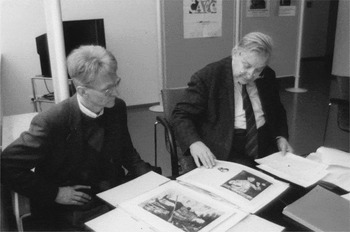
As one of the most spectacular finds, already in 1993, while official negotiations about the Baldin Collection were proceeding in Bremen and Moscow, an unexpected grassroots initiative helped the Bremen Kunsthalle find 101 works on paper, the fate of which had not been known since the spring of 1945. One of officers of the 38th Field Engineers Brigade, who like Baldin picked up some works belonging to Bremen in the cellar of the castle of Karnzow, contacted the author of this article and his colleague Grigorii Kozlov. The old man, who had personally harbored the looted drawings through the postwar years, wanted to return them to their legal owners. Among the watercolors, prints, and drawings, which the former officer had been saving under his bed, were works of Albrecht Dürer, Hans Baldung Grein, Peter Breughel the Younger, and Rembrandt, among others (Figure 4). At the end of March 1993, at his bequest, the author of this article and Grigorii Kozlov transferred those treasures to the German Embassy in Moscow. The former officer, who saved them for nearly a half of a century, wanted to retain his anonymity and refused any gestures of gratitude from the German sideFootnote 45
Wolfgang Eichwede (left) and Siegfried Salzmann (right), late director of the Kunsthalle Bremen, examine the “101” Bremen drawings for the first time in the German Embassy in Moscow, March 1993. Photo courtesy of Wolfgang Eichwede.

Even before the return of the drawings from New York in 1997, the Kunstverein Bremen issued an updated English-language version of their 1991 catalog of losses. With the return of the Marées painting, they could then identify 26 of the 27 of the paintings evacuated to Karnzow Castle that were still missing, plus two other missing ones that had disappeared from Berlin. While a few of the earlier 1520 drawings identified had been found, the number of lost drawings identified had risen to 1560. Although full records of the 3000 prints evacuated are still not available, they could list the number of prints by many well-known artists that had been among them. With the new edition they could more precisely document the 45 drawings and 55 prints in custody of the German Embassy. At the same time, they had more information about the 128 drawings and one Rembrandt etching in the Hermitage in St. Petersburg, along with the 33 drawings and one woodcut, as well as an additional 50 drawings, in the Pushkin Museum in Moscow.Footnote 46
While both Ukraine and the United States recognized ownership rights of Bremen, the Russian side not only refused to honor the Bremen Protocol but also prohibited the Germans from legally moving to Bremen the 101 drawings and prints from the Kunsthalle collection deposited in the German Embassy in Moscow. Nothing further happened until the end of the presidency of Boris Yeltsin, which coincided with the end of the twentieth century.
The beginning of the twenty-first century looked quite promising for the cause of the Bremen Kunsthalle. It seemed that Vladimir Putin, who became the president of Russian Federation in 2000, was ready to change the stagnating restitution policy, which came to a standstill during the turbulent years of Yeltsin rule. According to the correct observation of the Russian journalist Dmitrii Babich,
In 2000, with President Vladimir Putin in power, a certain “thaw” on the trophy art front was established. Trying to show goodwill toward Germany as Russia's best potential partner in a mostly hostile Europe, Putin made several steps, which would have been unthinkable under Yeltsin. The key to the problem was Putin's alliance with most of the parliament's factions, which developed into outright control after the elections of 2003 and 2007.Footnote 47
It seems that the Russian journalist overestimated Putin's eagerness to dictate his will for the return of German cultural valuables after the elections of 2007, but during his first term in office the Russian president liked to demonstrate certain “gestures of goodwill” to build up amicable relations with so needed a partner as the Federal Republic of Germany.
Already in 2000, 101 drawings and prints from Bremen, which had been stored for seven years in the German Embassy in Moscow, were finally returning home. However, this forestalled return came about only thanks to the discovery in Bremen of one of the Florentine mosaics from the decoration of the Amber Chamber that had disappeared from the Catherine Palace of Tsarskoe Selo during the war.
In 1997 the mosaic Allegory of the Sense of Touch and the Sense of Smell was offered for sale in Bremen by a lawyer, acting on behalf of an unidentified client. The client was Hans Achtermann, who inherited the panel from his father, who had been a soldier on the Eastern Front. How his father obtained the mosaic remains unknown. That part of the decoration of the Amber Room was immediately confiscated by police, which initialized legal proceedings.
Bremen officials seized the opportunity and started negotiations with the Russian side in 1999. While they informed the German Federal Government about the confidential negotiations, the federal government chose to remain “outside.” Wolfgang Eichwede remembers, “I wrote to the Russian minister of culture and asked him what we had to do to get back our drawings, especially those in the Embassy. In August I got the answer from the minister that we had to give them proof that we were owners of the drawings. We gave them papers and opened negotiations.”Footnote 48 The mosaic from the Amber Room became an important bargaining chip. In his interview with ARTnews, Eichwede tried to deny that the return of the Bremen drawings stored in the German Embassy in Moscow was in reality an exchange for the Amber Room mosaic. According to him, “It wasn't an exchange but two independent developments at the same time. It was two parallel actions.”Footnote 49 The agreement between the Ministry of Culture and the city of Bremen, however, specified that the panel would go back to Russia and that simultaneously the Russian side would give their permission for the drawings in the German Embassy to be returned to Germany legally. The idea to link the two developments, Eichwede admitted later, was a Russian initiative, while his denial of the proposed “exchange [that was] not an exchange” was “a pure tactical step to avoid confrontation with my own government, especially with the Foreign Office.”Footnote 50
Meanwhile, Achtermann had died, and the panel was purchased from his daughter to avoid long legal proceedings. The head of the Bremen Chamber of Commerce paid her attorney about $100,000.Footnote 51 Bremen officials had good reason to rejoice. After their unexpected clash with German Federal officials on the eve of return of the 101 drawings and a three-month long standstill, everything finally came through smoothly. Bremen reached agreement with the Russian side that 101 drawings could be returned before the mosaic panel from the Amber Room would be sent to Russia. The only remaining formality was the inspection of the drawings in the German Embassy in Moscow by the Russian side. Unexpectedly, however, representatives of the Ministry of Culture of the Russian Federation were not allowed to enter the Embassy. The Berlin government had stepped in—Bremen was accused of meddling in foreign policy, and the agreement between the city of Bremen and the Russian government, according to the federal authorities, had no official standing. In the height of negotiations between Bremen and Berlin, the Mayor of Bremen offered to fly to St. Petersburg with the mosaic in hand, while Putin (still minister-president) suggested his willingness independently to fly to Berlin with the 101 drawings as guarantee of the agreement, but the German Federal Government did not agree to that plan.Footnote 52
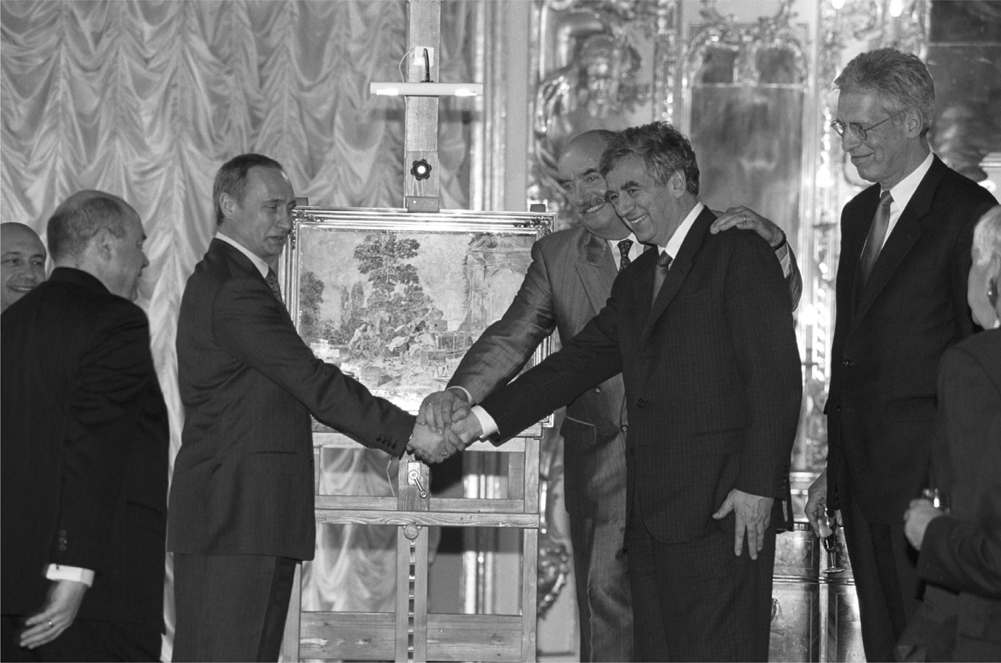
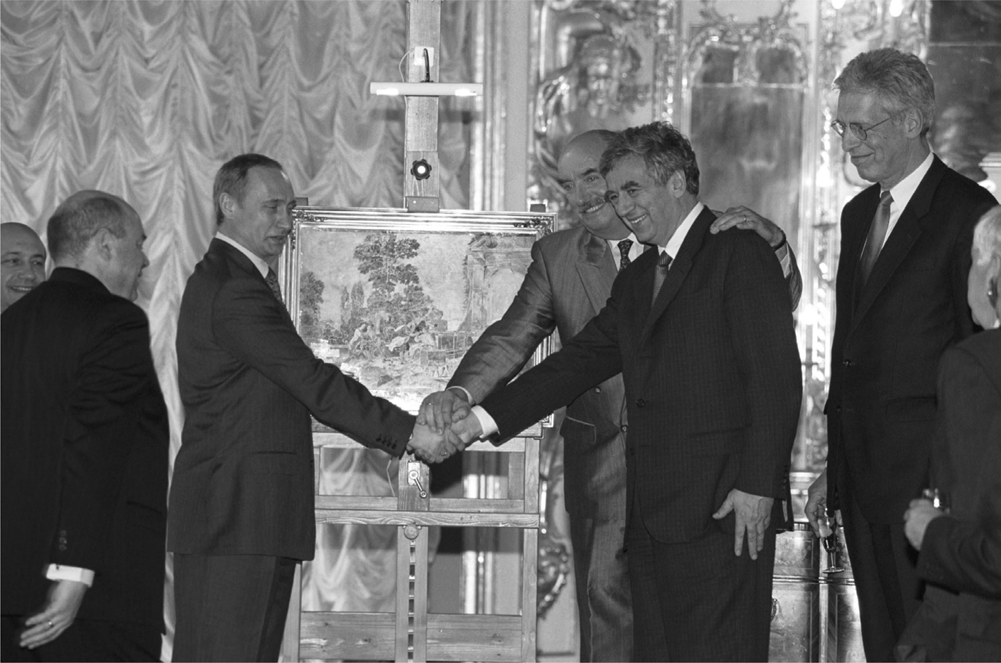
In January 2000 Gerhard Schroeder, as Federal chancellor, visited Bremen and finally achieved a compromise between Berlin and Bremen. The exchange of the 101 drawings for the mosaic was approved.Footnote 53 At the end April 2000, the ceremony organized in the Catherine Palace was attended by President Vladimir Putin and Michael Naumann, then German minister of culture (Figure 5).Footnote 54 Bremen achieved a double victory—over Moscow and over Berlin. Eichwede commented, “We have no possibility, and I don't know if we have the right, just to formulate our claims to Russia. We have to offer something, to develop and build up a cultural policy of small, possible steps, which are useful at the same time to Russia.”Footnote 55
Russian President Vladimir Putin (second to left) in front of the original mosaic, “Allegory of the Sense of Touch and Smell,” confiscated from the Amber Room during the German invasion, discovered in Germany and returned from Bremen, at the transfer ceremony in the Catherine Palace in Tsarskoe Selo, April 29, 2000. To the left, facing away is Mikhail Shvydkoi (Russian Minister of Culture). Shaking Putin's hand (continuing left to right) Ivan P. Sautov (director of the Tsarskoe Selo Palace Museum), Michael Naumann (Minister for Media and Culture of Germany), and Henning Scherf (Mayor of the city of Bremen). Photo courtesy of Kommersant.
At the moment when the Bremen officials were deciding what to do with the mosaic from the Amber Room that magically resurfaced in their city and how to deal with their counterparts in Berlin and Moscow, another drama connected to the Bremen Collection was developing in faraway New York.
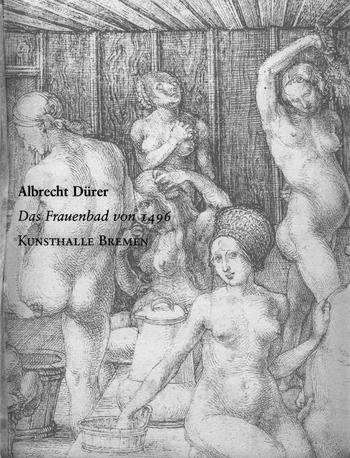
Earlier in the Soviet period, an additional group of drawings from Bremen had been confiscated by the KGB in Baku and was deposited in the Art Museum of Azerbaijan.Footnote 56 In 1993 fourteen drawings from the Bremen collection were exhibited for the first time in the State Museum of Fine Arts of Azerbaijan in Baku, including Albrecht Dürer's Women's Bathhouse and Seated Virgin with Child and Rembrandt's Woman Standing with Raised Hands. German officials demanded their return. Shortly after the exhibition, however, 12 of the 14 drawings were stolen. They resurfaced four years later in Tokyo, where Masatsugu Koga, a former Japanese wrestler, offered them for sale to the German Embassy. Koga contacted the Bremen Kunsthalle and agreed to meet its representatives in New York. There he was arrested. Six drawings were confiscated from him. The drawings had been taken to New York through Natavan Aleskerova, a former Azerbaijani state prosecutor married to a wrestler, who was arrested as well. U.S. Customs officials located all the Bremen drawings stolen from Baku, as well as other works on paper that belonged to the State Museum of Fine Arts of Azerbaijan. The U.S. Attorney's Office filed criminal charges against both Koga and Aleskerova in U.S. District Court of New York.Footnote 57 Aleskerova was found guilty and served 11 months in prison. The drawings looted from Bremen were returned to the Kunsthalle (Figure 6).Footnote 58
Cover of the Bremen exhibition catalogue for the Dürer drawing “Women's Bathhouse” (Frauenbad, 1496) returned from New York City, after its long odyssey from Karnzow Castle to Baku (Azerbaijan), before it was confiscated by U.S. Customs in New York. Image courtesy of the Kunsthalle Bremen.

Depicting the happy outcome of the case, Ralph Blumenthal wrote in the New York Times:
A Rembrandt and two rare Dürer ink drawings stashed in a castle in Nazi Germany, stolen by Soviet troops and handed over to the K.G.B. only to be stolen again from an Azerbaijani museum and offered for sale by a doomed Japanese ex-wrestler trying to raise $12 million for a kidney transplant… .
No, it's not a movie script, at least not yet. It's a criminal case from the files of the United States Customs Service, and today in New York, Treasury Secretary Paul H. O'Neill is to supply a happy ending: the return of the masterpieces, part of a trove of 12 works valued at about $15 million, to the Bremen Museum in Germany, which hid them during World War II. Some were recovered in 1997 from a Brooklyn apartment.
“Alfred Hitchcock himself could not have devised a better plot line for high drama and international intrigue,” said Charles Winwood, acting United States Customs Commissioner. “This case had everything.”Footnote 59
During the ceremony of return of the drawings to the German ambassador in New York, Treasury Secretary Paul O'Neill said,
The Treasury Department's diverse law enforcement responsibilities include combating the trafficking in stolen art and antiquities across the borders of the United States. When stolen treasures are smuggled into the U.S., we do all we can to return them to their rightful owners, and to bring any wrongdoers to justice. We take our responsibility very seriously, and today we are happy to celebrate a victory in that regard.Footnote 60
The dawn of the twenty-first century proved to be successful indeed—101 drawings from Moscow were back in the Kunsthalle, and drawings from Azerbaijan had come back via New York. In both cases, special exhibitions were staged in Bremen.Footnote 61 The situation looked quite positive for a serious undertaking—the return of the Baldin Collection. The forgotten “Bremen protocol” came back to life. The policy “of small, possible steps,” which had helped to return the drawings stored for seven years in the German Embassy in Moscow, had to be good enough to solve finally the problem of the Baldin drawings.
Negotiations about the future of the Baldin Collection started soon after the return of the 101 drawings in the spring of 2002 on two levels. Paralleling talks between the Hermitage and the Kunsthalle, Eichwede pursued discussion with the Ministry of Culture, all with total agreement between Bremen and Berlin. Although all of the negotiating sides tried to avoid publicity, ill-advisedly the German minister of culture jumped the gun and announced possible return already in October 2002. Then the story was repeated in Berlin in February 2003, by which time the Russian Ministry of Culture had even established the date of the transfer to Bremen as 29 March 2003. If the Russian public had been unprepared, the issue became widely known when a scandal was started by Nikolai Gubenko, the last minister of culture of the Soviet Union, who had earlier prevented the restitution of the Bremen drawings allegedly planned by Yeltsin 12 years earlier. In 2003 Gubenko was a member of the Russian Duma, elected on the list of the Communist Party, and the head of the Duma Committee on Culture and Tourism.
On 11 March 2003 Gubenko organized a press conference in the Cultural Fund of Russia where he announced that the Ministry of Culture was preparing the secret return of the Baldin Collection.Footnote 62 “In 1941 Germans came here not to collect cornflowers! It cost us 27 million lives!” Thus he opened his speech as the head of the Duma Committee on Culture.Footnote 63 According to Gubenko, Germany, feeling the weakness of Russia, was pressing the Russian government to return German cultural treasures “removed after the war as compensation” for wartime cultural losses. The Ministry of Culture made a secret deal to return the Baldin drawings to Bremen.Footnote 64
According to Gubenko, drawings of such important masters as “Rembrandt, Renoir, Degas, Watteau, Corot, etc.” are sold by such international auction houses as Christie's and Sotheby's with starting prices from 1.5 to 20 million dollars. Thus the total value of the Baldin Collection would 1,5 billion dollars.Footnote 65 It remained unclear on what foundation such a fantastic estimate was based. (It is likely that Gubenko's advisers, not well informed about the art trade, had mixed up prices for paintings and works on paper.) The head of the Committee on Culture stated that the collection could be returned to Germany only in exchange for equal compensation in cultural treasures or in monetary form—for example, the Federal Republic of Germany could sign off 1.5 billion dollars of Russian debt. Gubenko said that he already addressed different state boards including customs and would do everything in his force to stop the “gratuitous” return of the collection. One of the ideas he verbalized during the press conference was the intent to sue the Ministry of Culture in the Krasnopresnenskii District Court of Moscow on behalf of a simple Russian citizen “Ivan Ivanovich Ivanov.” According to the head of the Duma Committee, the Baldin Collection belonged to the Russian Federation under the Civil Code of the country, because even if the Bremen Kunsthalle initially owned this property for more than five years, it was in obvious legal ownership of a Russian institution. The drawings became its property simply because the statute of limitations had expired.Footnote 66
On 12 March 2003, the State Duma adopted an “Appeal to the President of the Russian Federation V. V. Putin about the urgent consideration of the question connected with exclusion of the “Baldin Collection,” kept in state custody in the State Hermitage from the Museum Fond of the Russian Federation.”Footnote 67 The appeal stated that the Baldin Collection allegedly was worth 1.5 billion U.S. dollars and that, according to the opinion of the MPs, the order of the Ministry of Culture of the Russian Federation No. 199 about the exclusion of the Baldin Collection from the Museum Fund, signed on 25 February 2003, was illegal.Footnote 68 The authors of the appeal called upon Putin to prevent the transfer of the collection in order to “give an opportunity for experts to research the problem thoroughly and with the aim of formulating proposals to the German side about an exchange of equal value.”Footnote 69 The grounds for the appeal was an inquiry about the return of the Baldin Collection to Germany sent by Gubenko to Mikhail Shvydkoi, the minister of culture. Shvydkoi replied that the collection soon would be returned to Bremen.Footnote 70
A few days after the hearings in the Duma, the Appeal was supported by Sergei Mironov, the speaker of the Council of the Federation, who stated that the Baldin Collection could be returned to Germany only on conditions that would be mutually beneficial. Mironov came forth with the idea that in return for the drawings, the German side should finance restoration of St. Petersburg for its 300 Years Jubilee, which was celebrated in 2003.Footnote 71
The appeal of the Duma to the president was followed by a loud campaign in the press. The Ministry of Culture in general and Mikhail Shvydkoi in particular were accused of all possible deadly sins. The nationalist newspaper Zavtra (Tomorrow) published an article about the decision of Shvydkoi to return the Baldin Collection with the telling title “The ‘Best German,’ No 2: Criminal Scandal Surrounds the Minister of Culture.”Footnote 72 One of the minister's accusers turned out to be the same Savelii Iamshchikov who during the early 1990s was one of champions of the return of the Baldin Collection. In his interview with the newspaper, Iamshchikov stated,
When Shvydkoi came to the Ministry of Culture all previous agreements were crossed out and unmotivated, practically gratuitous returns to Germany of art works started. The return of the Lübeck [i.e., Frankfurt on Oder] stained glass is a crime!Footnote 73 An unequal exchange is in progress! We received practically nothing from Germany… .What is going on? When will the robbery of Russia stop? … The situation with the Bremen Collection is scandalous because the minister is acting in secrecy, semi-underground. Nobody knows where the Bremen collection is now after it was removed from the Hermitage. Maybe it is in Shvydkoi's dacha? Or already in the Embassy of FRG?Footnote 74
Gubenko did not limit his efforts to stop the restitution of the Bremen drawings by the appeal to the president. He addressed the Office of the Prosecutor General demanding legal steps to prevent the return of the Baldin Collection. On 25 March Mikhail Shvydkoi, the minister of culture, was called to the Office of Prosecutor General and warned that the “gratuitous” return of the Baldin Collection to Germany was not acceptable.Footnote 75 During the press conference held on the same day, Vladimir Kolesnikov, the Deputy Prosecutor General, stressed that, according to the Federal Law on Export and Import of Cultural Valuables,Footnote 76 the collection could not be returned to Germany, because the German side allegedly failed to provide proof of ownership of the art works. He also claimed that the ministry had not organized an appropriate appraisal of the collection according to the Paragraph 18 of the aforementioned law. Kolesnikov stressed that if Minister of Culture Mikhail Shvydkoi violated the instructions of the Office of the Prosecutor General, he could face criminal charges.Footnote 77
The Ministry of Culture tried to explain its position. At his press conference on 13 March Mikhail Shvydkoi stated “that there are all necessary legal grounds for the return of the ‘Bremen Collection’ to Germany,”Footnote 78 and he tried to explain that the art works found by Baldin in the castle of Karnzow were not covered by the law on the displaced cultural valuables because they were removed from Germany illegally.
The growing scandal forced Vladimir Putin to intervene: on 14 March he called Gubenko and asked him to discuss with Shvydkoi the problem of the collection that provoked such public outcry.Footnote 79 It seems that the head of the Duma Committee on Culture was not ready for compromise. Instead Gubenko succeeded to fuel an impressive jingoist campaign that involved both mainstream politicians, who decided to jump on the nationalist bandwagon, and red-brown marginals who hurried to defend “Mother Russia.” While communists organized loud demonstrations in front of the building of the Ministry of Culture, screaming obscene insults addressed to Shvydkoi,Footnote 80 Valentina Matvienko, the representative of the president in the Northwestern Federal Region (and now mayor of St. Petersburg), stated that the return of the Baldin Collection is “an emotionally charged and sensitive issue: during the war our country suffered gigantic loses and destruction and a gigantic quantity of treasures was removed from it.”Footnote 81 She stood against the return of the collection.
Given the growing scandalous situation, Shvydkoi had no other choice but to resume negotiations with the Prosecutor General's Office. On 31 March the minister of culture had a meeting with Vladimir Ustinov, the Prosecutor General, about the problem of the Baldin Collection.Footnote 82 After the meeting Shvydkoi told the news agency ITAR-TASS that both the Ministry of Culture and the Office of the Prosecutor General had no discord on the issue that the return of the collection had to be compensated by the German side.Footnote 83 The proposed compensation for the return of the Baldin drawings had not been mentioned earlier, and the absence of such mention had given Gubenko a chance to initiate the scandal about the “robbery of Russia.” Already four days before the meeting of Shvydkoi and Ustinov, Wulf Herzogenrath, the director of the Bremen Kunsthalle, announced that in case of return of the Baldin Collection to Bremen, the Kunsthalle would be ready to present to Russia 19 drawings including works of Dürer and a painting by Goya.Footnote 84 According to Herzogenrath, this decision was reached at the meeting of the board of the Kunsthalle. The “compensation plan” announced by the director of the Bremen museum was immediately endorsed by his Russian counterpart.
The director of the Hermitage, Mikhail Piotrovskii, who had cautiously kept silent from the beginning of the scandal, gave an interview the next day after the Bremen announcement.Footnote 85 In his interview, he combined banal nationalistic rhetoric and clichés about Russia, which “owes nothing,” with a call to approve the Bremen deal. According to Piotrovskii, “the optimal variant could be return to Germany as a gesture of a part of paintings and drawings on condition that everything else would remain in Russia and will never again become the subject of further discussion.”Footnote 86 Of course such a return could take place only on the basis of compensation, as it was in the case of the family archive of the Prince of Liechtenstein returned “in exchange” for documents about the assassination of the Russian imperial family, purchased from an auction house in London.Footnote 87
In fact, “compensation” for the return of the Baldin Collection had been discussed with the Ministry of Culture before March 2003. It seems that the initial “Bremen Protocol” was taken off the shelf and dusted. No longer was there to have been mention of a fund for restoration in Pskov and Novgorod, as had been the case 10 years earlier, but instead of nine drawings and the Goya painting remaining in Russia, according to the 1993 agreement, the German “gift of appreciation” had now been raised to 19 drawings. As in the case with the 101 drawings, however, compensation was not mentioned in the initial announcements, because there should be as usual “two independent developments at the same time,” and the German government had not wanted it to appear as a “deal” or actual “exchange.”Footnote 88 If that was, as it appears to have been, the plan of both Bremen and the Ministry of Culture of the Russian Federation, they positively outsmarted themselves and gave Gubenko a perfect opportunity to use the battle cry about the “gratuitous return” of the Russian treasures.
In the meantime, Shvydkoi tried to disprove Gubenko's appraisal of the value of the collection. One of the statements of the head of the Duma Committee, which was found most dangerous, was the evaluation of the collection at 1.5 billion dollars. The ministry commissioned an appraisal of the Baldin Collection by the Moscow auction house Gelos.Footnote 89 The independent evaluation provided by the auction house was more precise than Gubenko's estimation. Problems arose, however, because works of the majority of artists represented in the collection were never sold on the Russian art market. So the experts of Gelos had to rely on available information about Western auction sales. The resulting estimate of the Moscow auction house proved to be much more modest than the one envisioned by the head of the Committee on Culture. The Gelos experts set the value of the Baldin Collection at $23,425,416 (U.S. dollars), approximately 64 times less than Gubenko believed. The 20 art works promised to Russia by the Kunsthalle were estimated at $6,061,740 (U.S. dollars), comprising nearly a quarter of the value of the whole collection.
However, neither the promises of Bremen nor the independent appraisal helped Shvydkoi. If the Ministry of Culture had no dispute with the Office of the Prosecutor General on the matter of compensation by the German side for the return of the collection, it had quite important disagreements on other issues. Such issues included the statute of limitations and proof that the drawings indeed belonged to the Bremen Kunsthalle. Commenting on the position of the Prosecutor General's Office, Shvydkoi said,
The Office of the Prosecutor General recognized that the collection was imported illegally and that it is not covered by the law on displaced cultural valuables. At the same time, the Office of the Prosecutor General says that because of the expiration of the statute of limitations, the collection became Russian property. What is our opinion about ourselves when agreeing that works were imported illegally, we treat them as our property?Footnote 90
Commenting on the problem of proofs of ownership of the Baldin drawings, the minister of culture noted:
The drawings are stamped, as registered in inventory books. But an inventory number is not a legal document. A legal document would be a record proving the purchase or donation, but Bremen has no documents proving how the drawings came to the possession of the Kunsthalle. All such documents were burned during the war. In this case the situation could be cleared only in court. Either Russian, or German. The judge has to decide who owns the collection on the basis of existing documents.Footnote 91
Shvydkoi wanted very much to demonstrate the unique status of the Baldin Collection. In trying to do so, he even sacrificed the truth about other Bremen drawings that had came into the possession of Russian museums:
In the first instance it is not correct to talk about the Bremen Collection: it is not only the Baldin collection, but also an impressive quantity of drawings, removed from Bremen during the war, which the Hermitage and the Pushkin Museum of Fine Arts bought during the 50s from private owners. According to the law regarding import and export, those objects that were obtained legally (for example, there is a document about their purchase) and were exhibited openly are to become the property of the new owner after 20 years. The works bought during the 1950s were successfully exhibited and today they are the legal property of the Russian Federation.Footnote 92
It is unlikely that the minister of culture did not know that the Pushkin Museum had not bought any drawings from Bremen but received them on orders of the Ministry of Culture of the USSR, that those drawings had earlier been deposited in different museums by Baldin's fellows in arms, and their legal status was no different at all from the status of the Baldin Collection. He also knew that they were never exhibited and had been kept registered in the so-called special inventory. Both the Ministry of Culture of the USSR and the administration of the Pushkin Museum were fully aware that the drawings were looted from the Bremen Kunsthalle.Footnote 93 The Hermitage bought the drawings from private persons, but even in that case, the sale did not make such a transaction legal: Soviet museums were buying private trophies after the Second World War, with the perfect knowledge that the art works offered for sale were looted. According to the existing practice, they simply offered the owners prices that were lower than the market prices established in the USSR.Footnote 94 It is also quite unlikely that the Hermitage experts were unable to read the stamp of the Kunsthalle that had been put on the backside of every drawing. But Shvydkoi desperately needed to show that there would be no further claims for the Bremen drawings.
Summarizing the positions of Shvydkoi and Gubenko, one Russian newspaper reduced them to five conflicting points. According to this simplified scheme, Gubenko believed that the following:
1. At the moment of discovery, the drawings were ownerless property. Baldin saved them.
2. The value of the collection was not 30 million U.S. dollars, but 1.5 billion.
3. Our country was damaged by the occupation and has right to compensation. At the same time, it practically did not receive back any of the looted cultural valuables.
4. The law “On Import and Export of Cultural Valuables” does not permit the return of the collection.
5. Never return anything without compensation.
The position of Shvydkoi was different:
1. The collection was imported illegally. Baldin was obliged to report to his commanders and leave it to them to decide what to do with the drawings. Nobody asked him to put them in a suitcase and take them to Russia; because he did so, his action should be considered as looting.
2. All these years Bremen has remained the legal owner of the drawings.
3. The value of the collection is 30 million U.S. dollars, which cannot save the budget of the country.
4. The Germans have been returning Russian cultural valuables without court proceedings.
5. The collection will not be returned without compensation—the German side will donate 20 art works from the collection, the value of which comprises approximately one quarter of the value of the whole collection.Footnote 95
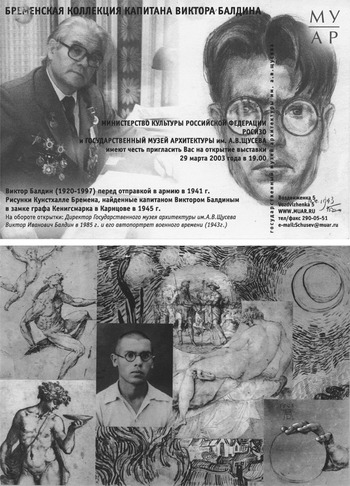
The more reasonable position of Shvydkoi, however, was doomed to fail. Gubenko succeeded in exploiting perfectly the Russian complex of humiliation after the loss of superpower status. The “robbery of Russia” had to be stopped. And it was. Instead of being exhibited in Bremen as it was agreed, the drawings from the Baldin Collection were shown in Moscow—this time in the Museum of Architecture, once headed by the former officer who had brought them home to Russia (Figure 7).
Invitation to the opening of the exhibition, the “Bremen Collection of Captain Viktor Baldin” at the Shchusev Museum of Architecture in Moscow, 29 March 2003. The top image portrays the former director of the Shchusev Museum, Viktor Baldin (1920–1997) with his military decorations (1985), and a self portrait from 1943. The bottom portion shows a picture of Baldin before he was sent to the army in 1941, with fragments of some of the drawings in the collection he brought home from the Karnzow castle owned by Count Königsmark in 1945. Image courtesy of the Bremen Kunstshalle with permission of the Shchusev Museum of Architecture.

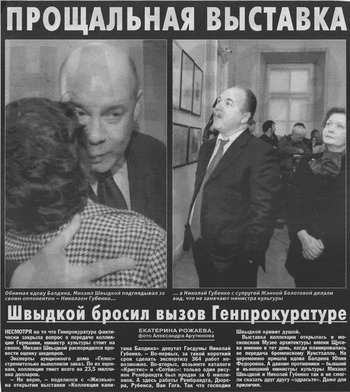
Olga Kabanova, a reporter for the newspaper Izvestiia, sadly named her review of the exhibition of the Baldin drawings “The Funeral Banquet of New Thinking.”Footnote 96 Describing the “very strange exhibition opening,” she paid attention to “the eyes of Mikhail Shvydkoi, the minister of culture, which had become dark with stress” and to the behavior of his adversary, Nikolai Gubenko, who behaved at the opening of the exhibition “with the firmness of a soldier, who found himself behind the enemy lines” (Figure 8).Footnote 97 The Izvestiia correspondent also witnessed a heated exchange between the head of the Duma Committee and Wolfgang Eichwede:
Already descending the steps and going to the exit, Gubenko met Professor Wolfgang Eichwede, one of the most recognized, competent, involved and sincere participants of the Russian-German restitution dialogue, and made a scene with loud accusations about the secret export of valuables.
At the opening of the abortive “Farewell Exhibition” of the Baldin Collection at the Shchusev Museum of Architecture in Moscow, 29 March 2003. Mikhail Shvydkoi (left), Russian Minister of Culture, with Baldin's widow Julia Federovna, and Nikolai Gubenko (right), Chair of the Committee on Culture of the Russian Duma, with his wife. Photos by Aleksandra Arutiunova from the St. Petersburg newspaper, Zhizn, no. 67 (31 March 2003), courtesy of Zhizn.

After the departure of the scandalous head of the Committee on Culture, the German professor expressed his excuses for the behavior of his Russian accuser to the journalist and tried to convince Olga Kabanova that Russia and Germany could cooperate in the search of art works disappeared during World War II, and that the Baldin Collection for sure would be returned to Bremen. “To be honest, I didn't trust in it,” she sadly commented. She also noticed another important thing that was omitted by other observers. Kabanova stressed that Gubenko's accusation of Shvydkoi about the secret deal and the preparation of the not less secret removal of the Baldin Collection to Bremen were, in the best case scenario, naïve: “It is clear to everyone, who is familiar with the problem of displaced cultural valuables, that such important acts as the transfer of the Bremen Collection cannot be the private initiative of the Minister of Culture.”Footnote 98
In March 2004 Mikhail Shvydkoi lost his position as minister of culture after the cabinet was forced to resign two months before the presidential elections.Footnote 99 He was reappointed as the head of the Federal Agency for Culture and Cinematography, but no longer had any influence on restitution policy. In December 2006 he was appointed the special representative of the president of the Russian Federation on Cultural Exchange.Footnote 100 As of 2010, he currently had offices both in the Presidential Administration and in the Ministry of Foreign Affairs.
Nikolai Gubenko was not reelected to the State Duma after 2003. In 2005 he was elected as a member of the Moscow City Duma.Footnote 101
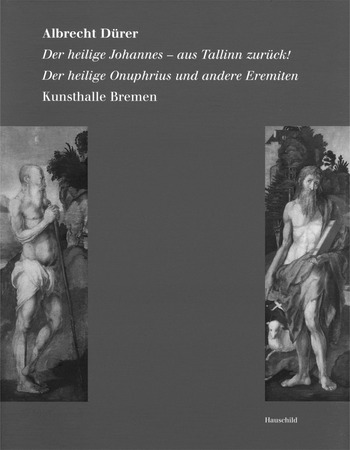
Symbolically offsetting the impasse over the Kunsthalle losses in Moscow, in 2003, independent Estonia, like Ukraine a decade earlier, showed itself even more independent of Moscow stringencies. In November 2003, the Estonian minister of culture and the German Ambassador signed a protocol for the return to Bremen of an important altar panel, John the Baptist, painted by Albrecht Dürer in 1505. German specialists had identified that panel in a film about the Grabar Institute in Moscow in 1992–93, but their 1997 Bremen catalog noted the painting had disappeared.Footnote 102 It was not until several years later that the Dürer painting was identified in Estonia. An unidentified “wooden painting” was seized at the Tallinn airport in 1993 from a Russian woman by the name of “Maria,” born in Vladimir Oblast (Russia) and bound for the United States. The painting was turned over to museum specialists for identification, and since 1994 had been held by the Estonian Art Museum in Tallinn.Footnote 103 The 2003 protocol referred to the 1993 Estonian-German treaty on cultural cooperation, a year after the often-mentioned Russian-Germany cultural pact of 1992.Footnote 104 Estonia showed itself to be acting the role befitting a new member of the European Union. At a ceremony in Bremen on 25 May 2004, German Chancellor Gerhard Schroeder was on hand to praise the “grand gesture,” and together with Estonian Prime Minister Juhan Parts ceremoniously rehung the painting in the Kunsthalle, where it had been received as a bequest in 1851 (Figure 9).Footnote 105
Cover of the catalogue for the exhibition “Albrecht Dürer, Der heilige Johannes returned from Tallinn! Der heilige Onuphrius und andere Eremiten Kunsthalle Bremen.” The altar panel Saint John the Baptist (1505), before seizure at the Tallinn Airport by Estonian Customs in 1993, had earlier been taken from Karnzow Castle to Moscow. To the left on the catalogue cover is the matching Dürer altar panel portraying Saint Onuphrius, held by the Kunsthalle, which was also exhibited. Image courtesy of the Kunsthalle Bremen. At a ceremony in Bremen in May 2004, Estonian Prime Minister Juhan Parts together with German Chancellor Gerhard Schroeder re-hung John the Baptist beside Saint Onuphrius in the Kunsthalle, where they both had been housed since their acquisition in 1851.

A 2006 meeting of Aleksandr Sokolov, the minister of culture of the Russian Federation, and his German counterpart Bernd Neumann, achieved no progress on the question of restitution of the Baldin Collection.Footnote 106 One year later the fate of the Baldin Collection again arrested Russian public attention. According to rumors circulated in Moscow, the return of the collection was to be agreed on 14 October during the meeting of President Vladimir Putin and Federal Chancellor Angela Merkel. The German side offered, in addition to 20 art works, two million euros for restoration of architectural monuments in Novgorod and Pskov.Footnote 107 News about the possible return provoked a new scandal. Gubenko stated publicly that the Germans promised Shvydkoi a bribe of 280 million U.S. dollars.Footnote 108 Savelii Iamshchikov declared that he was resigning from the expert group that took part in the negotiations and would accept the point of view of Irina Antonova (the director of the Pushkin Museum) and Nikolai Gubenko, that nothing should be returned.Footnote 109 According to Iamshchikov,
We gave the Germans an account of expenses for the restoration of monuments of Novgorod and Pskov, which was compiled by local restoration specialists. The sum of 30 million euros is lower by an order of magnitude than the sum of the notorious bribe (Iamshchikov meant the bribe of USD 280 million allegedly offered by the German side to Shvydkoi.)
And during the May meeting German officials offered us to sell a couple of Bremen drawings for 2 million euros and drink a glass of champagne for solving the problem in the interest of Germany. I refused to talk to those gentlemen, who mixed up 2007 with October of 1941.Footnote 110
Additional surreal aspects were added to the scandal by the comments of the “well-informed” experts who explained how the problem of looted art is solved in the United States. For example, the popular Russian magazine Profil' (Profile) published a comment of a participant in the negotiations who has a high position in the museum world, but wanted to remain anonymous:
The time came when Russia understood: one-sided concessions are playing against her interests and understood as a demonstration of weakness. Finally we paid attention to the position of the USA on displaced cultural valuables. It is simple: everything that was removed from Europe during World War II, just like objects removed from Vietnam and Iraq, is put under secrecy for 100 years. The topic is closed. That is the position of a self-confident state.Footnote 111
Unfortunately, the anonymous expert did not explain where he obtained such sensational information. Many Russian patriots who have come to hate the United States in their profession obviously suffer an inferiority complex of imagining the hated “self-confident state” that they want to see as their own.
The Baldin Collection remains in Russia. It is highly unlikely that it will be returned any time soon. The special approach of Bremen proved to be a mistake. Attempts to “appease” Russia gave no positive results. For the Russian state, the restitution of cultural property turned into a useful mechanism of political “gestures of goodwill,” which proved to be quite handy when the government needed to improve relations with Germany, or to lobby its economic interests in Hungary.
However, the never-ending story of the Baldin Collection has one additional angle. Undoubtedly in 1993, the decision about the return of the drawings was taken at the top and agreed upon with the German side. When Gubenko started the patriotic scandal, Minister of Culture Shvydkoi was sacrificed (and later rewarded) to cover the person who took the decision—President Putin himself. Gubenko, however, who was brave enough to try to scare the president with talk that the return of the Bremen drawings could rock the boat of Putin's popularity on the eve of elections proved to be, using Lenin's term, “the useful idiot.” His favorite rhetoric about the “humiliated country,” heroic Russia bleeding during the war with the Nazis, and his screams that “we don't owe anything to anyone” were skillfully hijacked by the Kremlin spin masters and turned into the new ideology of the Russia of Putin/Medvedev. The antirestitution stance of the red-brown opposition of the epoch of Yeltsin, which still believed that it played some political role during the early days of Putin, like the Bremen drawings, became the property of the state. Now it was not the opposition, but the Kremlin, that was talking about “the country raising from its knees.” Victory in World War II was recently turned into the holy cow of Russian ideology. The establishment of the Commission of the President of Russian Federation for the Fight against Falsification of History Aimed Against the Interests of Russia,Footnote 112 the longtime unwillingness of the country to recognize the responsibility of the government of the USSR for the Katyn massacre, the Ukrainian Holodomor (famine), and other crimes of the Stalin regime are more than superficially connected to the unwillingness to restitute cultural property looted at the end of World War II.
One Russian observer noticed a few years ago that the symbolic meaning of the Baldin Collection had became equal to the symbolic meaning of the Japanese Kurile Islands occupied by the USSR in 1945 and still claimed by Japan. Both the islands and the collection are symbols of passed glory, but not very useful cards to play in the twenty-first century.Footnote 113 Unfortunately, the hope of Eichwede that Russia is too proud and too great to define her self-esteem through trophies has proved to be an illusion.