Background and Objectives
Despite the availability of effective treatment of chronic diseases, American Institute of Medicine reports that there is still a gap between the real treatment success rate compared to the expected rate. A reason for this gap is the patient poor adherence or non-adherence to prescribed treatment which affects their health (1;2). Because challenges to treatment adherence are complex and varied, solutions to improve adherence must be multifactorial. Although the long-term use of pharmacotherapy is effective in managing chronic disease, their full benefits are often not realized because approximately 50 percent of patients do not take their medications based on their treatment plan (Reference Brown and Bussel3).
Chronic diseases are among the most common causes of mortality worldwide. According to the world health organization, chronic diseases, including diabetes and chronic respiratory diseases have contributed to 70 percent of deaths in the world of which 82 percent happened in the low- and middle-income countries. Multiple sclerosis (MS) is another chronic disease that affects patients' quality of life and result in disability. Therefore, the prevention and management of chronic diseases are critical component of patient health (4). Chronic disease management often requires a long term plan (Reference Viswanathan, Golin and Jones5). Individuals with chronic diseases must pursue various daily self-care practices throughout their lives (Reference Abbasi, Ahmadian and Baloochi6). Chronic diseases often require multidisciplinary management combining pharmacologic and non-pharmacologic strategies with patient's education (Reference Ross7).
MHealth technology due to its popularity, portability, accessibility, and some unique technical capabilities, can be widely applied in different health areas such as management of chronic diseases (Reference Akter and Ray8). This technology has introduced novel capabilities which cover various dimensions of chronic disease management including self-care, timely interventions, and communication with the health care providers (6;9). Viswanathan et al. in a systematic review (Reference Viswanathan, Golin and Jones5) on the effectiveness of mobile-health interventions in the management of chronic diseases revealed that mobile interventions had a positive effect on patient adherence to prescribed medications. Nevertheless, researchers believe that there are insufficient evidence confirming the widespread application of this technology, or its effect on long-term adherence to medication, and on other health-related outcomes. However, Schaffer (Reference Schaffer and Tian10) concluded that application of the mHealth technology had no effect on improving adherence to inhaled corticosteroids in patients with pulmonary disorders.
The acceptance rate for mHealth technology has been estimated 60 percent in developed countries with high-income and 20 percent in middle- and low-income countries (Reference Kay, Santos and Takane11). According to Berararrechea (Reference Beratarrechea, Lee and Willner12), the use of this novel technology is increasing in developing countries. However, patients' acceptance and willingness toward mHealth are necessary for its widespread use in healthcare plans.
Various studies have addressed the attitudes of patients with diabetes and cardiovascular diseases towards mHealth technology (Reference Hossain, Lim and Ng13–Reference Alenazi, Alradhi and Alghamdi16). To our knowledge, there is no study surveying the attitude and willingness of patients with chronic disease to use mHealth technology in Iran. Few studies conducted in this area have mostly focused on the contributing factors in the acceptance of the mHealth technology by physicians (Reference Ebrahimi, Mehdipour and Karimi17). In low resource setting resistance to follow the recommendation provided by mHealth technology is one of the barriers in using this technology (Reference Jindal, Gupta and Jha18). Therefore, the objective of this study was to survey the attitudes of patients with chronic disease toward mHealth technology and their willingness to use it.
Methods
Study Design and Setting
This descriptive-analytical study was conducted within a 2-year period (2016–2018) on three groups of patients with one of the following chronic diseases: asthma, diabetes, and MS. We studied attitudes of these three groups of patients who attended specialist care centers (nine specialized physicians' offices and two therapeutic clinics) in Kerman. The convenience sampling was used at the nine offices of asthma specialists and two specialized clinics providing care to patients with diabetes and MS.
The researchers coordinated with clinics managers and physicians and attended their offices and clinics. Having obtained verbal consent, the questionnaires were distributed among the patients admitted to the offices and clinics. Researchers introduced mobile health (mHealth) technology briefly, explained about the aims of the study to the patients and answered their further questions about mHealth.
Data Collection
Data collection was done using a self-administered questionnaire. This researcher-made questionnaire was developed based on previous relevant studies (16;19;20). The face validity of the questionnaire was confirmed by three experts (two medical informaticians and an expert in health information technology). The reliability of the questionnaire was tested on questionnaires filled out by 30 random participants using Cronbach's alpha (α = .84) in a statistical package for the social sciences (SPSS) version 22. The questionnaire included two sections: (1) demographic and personal information and (2) questions about attitudes of patients towards mHealth technology that could be answered by the 4-point Likert scale (completely agree, agree, disagree, and completely disagree options).
Data Analysis
To analyze the data, SPSS.22 was used. To calculate the frequency, we used descriptive statistics. In order to investigate and compare the demographic and personal data with the patient attitude towards application of the mHealth technology, the analytical χ 2 and Mann Whitney tests were used. To determine strengths of the observed differences Cramer's V test was used.
Ethics and Consent to Participate
Verbal consent was obtained from the participants and the research was approved by ethics committee of Kerman University of Medical Sciences (approval number: IR.KMU.REC.1398.059).
Results
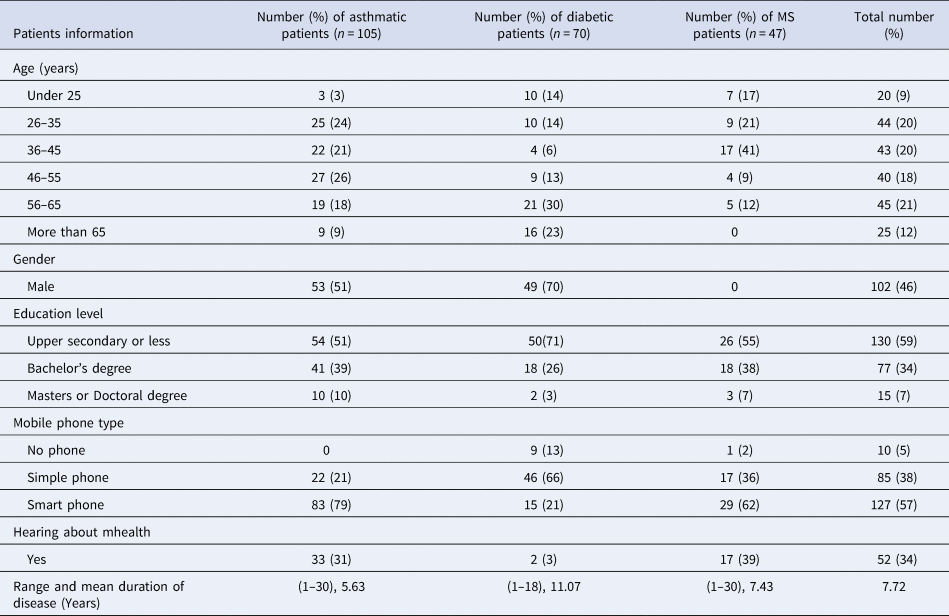
As shown in Table 1, in total, 222 patients (70 diabetics, 47 MSs, and 105 asthmatics) have participated in the study. Of the participated patients 54 percent (n = 120) were female. The participants had an average age of 46.3 years. More than 58 percent (n = 130) of the patients had no academic education. The mean duration of the diseases from diagnosis was 11, 7.4, and 5.6 years for diabetes, MS, and asthma patients, respectively. Almost, 57 percent (n = 127) of the participants have used a smartphone so far. Approximately, 75 percent (n = 169) of the patients had not ever heard of the mHealth technology.
Demographic information of the participants
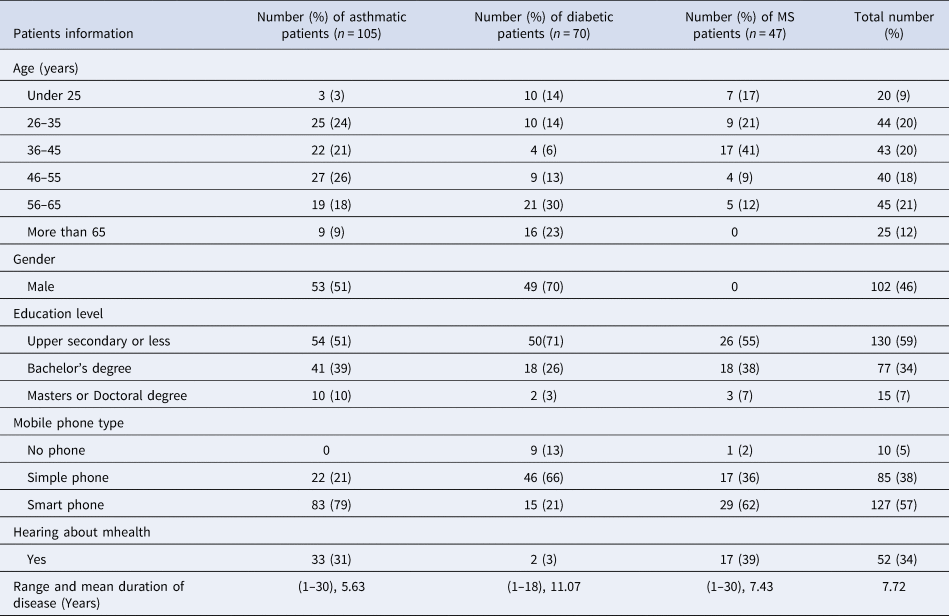
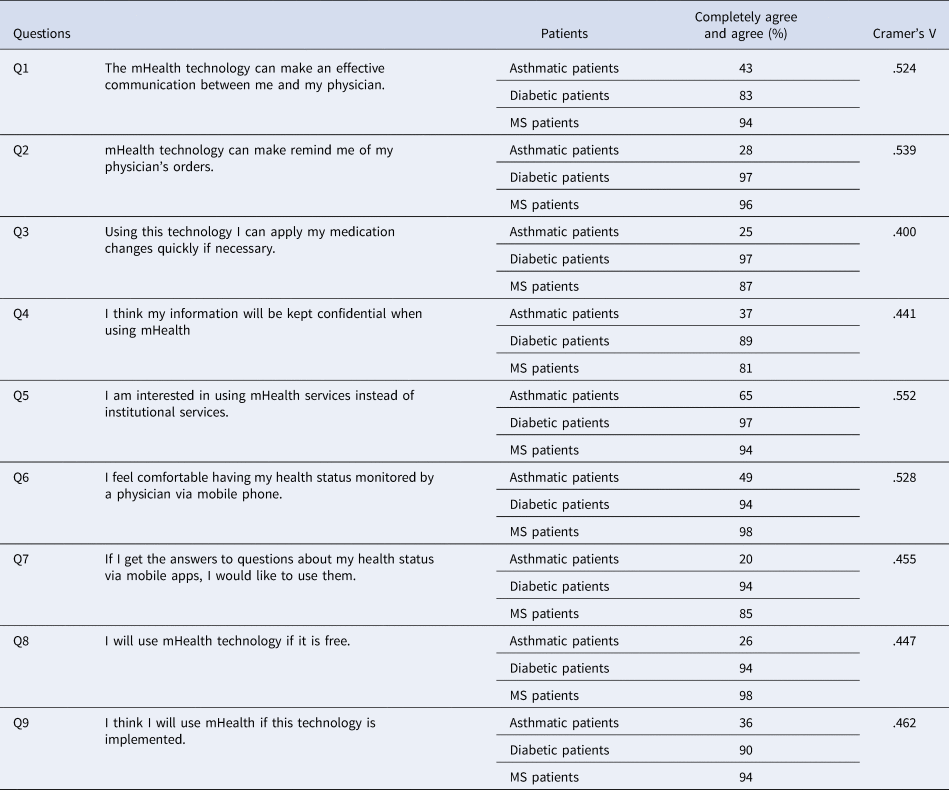
Table 2 shows that more than 93 percent of the patients with diabetics (n = 65) and MS (n = 44) and 65 percent (n = 68) of the asthmatic patients preferred using mHealth services rather than consulting a physician (p < .0001). Among the participants, 95 (n = 44), 94 (n = 65), and 26 percent (n = 26) of the MS, diabetics, and asthmatic patients, respectively would like to use this technology if the services were provided for free (p < .0001). The results demonstrated that attitudes of the diabetic and MS patients towards the mHealth were significantly different from that for the asthmatic patients.
The percent of patients agreed about using mHealth
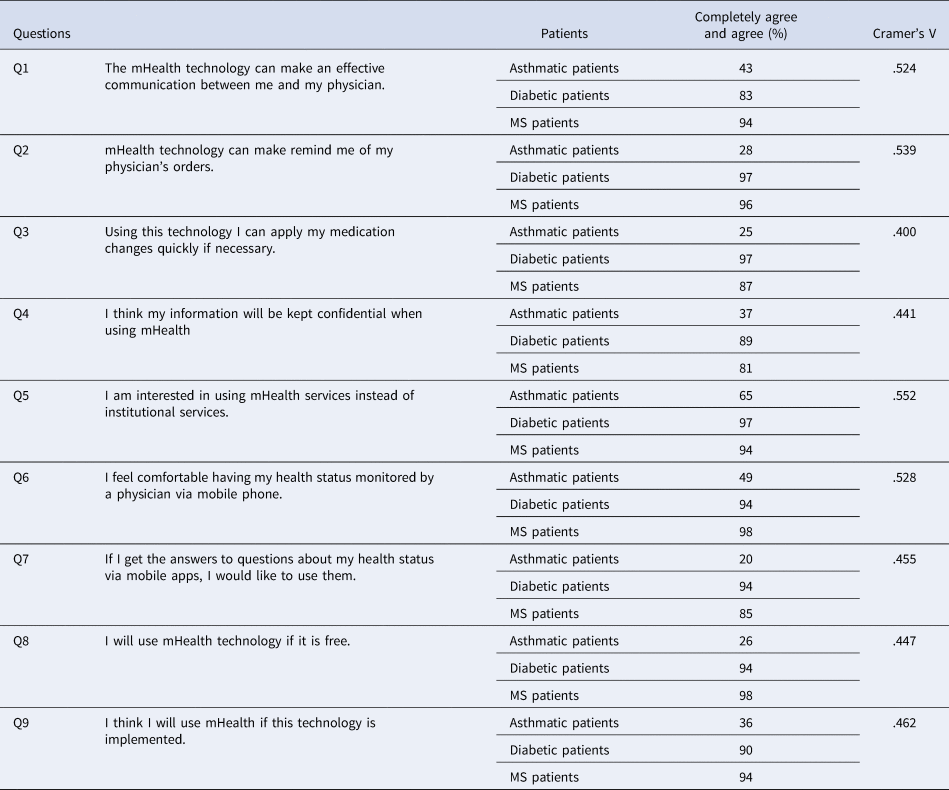
(1) The rest disagreed.
(2) All p-values were <.001.
More than 95 percent of the diabetic (n = 66) and MS (n = 44) patients believed that the mHealth technology was suitable to remind them the physician's prescriptions and orders, however, 73 percent (n = 76) of the patients with asthma did not agree that the mHealth is a suitable tool for this purpose (p < .0001). Almost, more than 60 percent (n = 64) of the patients with asthma believed that privacy of their information has been jeopardized by the mHealth technology, however, 80 percent of the patients with diabetes (n = 56) and MS (n = 37) believed quite contrarily (p < .0001).
The results revealed a significant difference in the diabetic and MS patient attitudes towards the mHealth compared to that for the patients with asthma. The Cramer's V test shows the patients with asthma were less interested in using mHealth compared to the patients with diabetes and MS. The results showed, there is a significant correlation between the type of disease, gender, education level, the type of the mobile phone, duration of disease, and the patients' willingness to use the mHealth technology (all of the p-values were <.001). This means that males, the older, patients with non-smart phones, patients with lower education level, and the diabetic and MS patients showed more positive attitudes towards the application of the mHealth technology.
Discussion
Core-Summary Findings
In summary, the results of this study showed that most patients felt more comfortable when using the mHealth and preferred applying the mHealth technology rather than consulting their physicians. Moreover, the attitudes of the diabetic and MS patients were rather more positive compared to the asthmatic patient toward mHealth. Unlike the diabetic and MS patients, the majority of the asthmatic patients stated that the application of the mHealth technology could not help them to communicate with the physician and also they believed that their information privacy may be most likely at risk. Most of the diabetic and MS patients were interested to use the technology to communicate with health care providers if they are available free of charge.
Comparisons with Existing Literature
This study demonstrated that the patients had positive attitudes towards mHealth technology. Despite this optimistic trend, most of the patients subjected their application of the technology to its being provided for free. Lee et al. (Reference Lee, Nguyen and Berg15) concluded that patients under coagulation therapy were interested in mHealth technology. Moreover, our participants were most concerned with challenges such as the complexity of the application of the technology on the elderly in particular.
Hossain in his study on public attitudes towards the mHealth technology (Reference Hossain, Lim and Ng13) came to this conclusion that although the majority of the people were informed of the applications of the technology, they were rarely accustomed to use this technology so that only 13 percent of the patients were agreed to pay for interventions provided through the mobile applications. In line with the results of our study and that of the others, the expenditure of the mHealth is supposed as one of the main barriers to its application (13;21). Consequently, although there are positive attitudes toward using mHealth technology which results in its acceptance, the expenses of this technology are a concern that should be dealt with before its application.
According to our results, unlike the asthmatic patients, patients with diabetes and MS believed that this technology can be used to remind them about the physician orders. The efficiency of the reminders in promoting chronic disease management has been proved in various studies (22;23). Thus, the application of such capabilities in the mHealth technology may help increase patients' tendency to use the technology.
In the present study, over half of the asthmatic patients pointed out the two challenges of the application of the mHealth technology, the first one was the lack of an effective relationship with the physician and the second unguaranteed privacy of the information. Less willingness of asthmatic patients in using mHealth technology may be due to a difference in the management of asthma. Patients with asthma may experience regular acute asthma attack which is a sudden worsening of asthma symptom. In this situation, patients have difficulty performing normal daily activities and require immediate medical help. These concerns have been noticed in other studies as well. Mohammadzadeh by systematically reviewing the pertinent studies (Reference Mohammadzadeh and Safdari24) concluded that rejection of the technology by the patients is mainly due to the decrease in the face to face relationship between the physician and the patient and the threats to the privacy of information. Therefore, considering different aspects of patient privacy as well as maintaining mutual communication between the patient and the physician is inevitable.
Our results confirm the significant correlation of the willingness to use mHealth technology with gender. Also, Khatun (Reference Khatun, Heywood and Hanifi25) demonstrated that the application of mHealth technologies might be influenced by gender. According to Khatun, women are less likely than men to use the mobile phone and mHealth services. Based on the results of a study, the level of literacy is a factor influencing the patients' willingness to use the technology as stated in Peek's study as well (Reference Peek, Wouters and Hoof26). A study in Iran by Rabiei also found that gender is the most important background variable affecting the ease of use of technology. He declares that males feel more comfortable to use technology comparing to females (Reference Rabiei, Ganji and Shamsi27). The results of Zhang's study (Reference Zhang, Guo and Lai28) also showed that m-health adoption is influenced by gender from the perspective of social psychology. Therefore, gender and level of literacy of the individuals using the mHealth technology seem noteworthy.
The willingness of the majority of both the MS and the diabetic patients in particular to use the mHealth technology may be due to their low dependency to the physicians. Movement limitation may be another reason for MS patients to prefer staying at home and communicate with their physician electronically. The diabetic patients also are provided with the possibility of checking their diabetes at home, while the routine tests for the asthmatic patients are only available through referring to the specialized clinics or consulting physicians. This may be one of the causes of the poor willingness of the patients to use the technology. It is recommended that mHealth technologies to be developed and implemented in a way that the patients could communicate with the health care providers.
Various studies have proved that mHealth technology minimizes unnecessary referral to physicians and saves patients' costs (24;29). Justifying the patients about the benefits of mHealth technology may increase their willingness to use the technology.
Lin in his model named “technology readiness and acceptance model” indicated that readiness constructs are contributing factors in accepting technology innovations (Reference Lin, Shih and Sher30). Chen determined the influential factors on predicting an individual app download and usage intentions and found that in addition to readiness, health consciousness has a positive effect on the perceived ease of use and usefulness of a mHealth application (Reference Chen and Lin31).
Due to the level of willingness of the individuals in the three groups to use the technology, the results of the study can help the policymakers, planners, specialists, and health researchers execute and implement this technology successfully for the patients. Also, deputies for health and treatment in the universities can take action to improve the management of chronic diseases based on the results of this study.
Limitations
The limitation of this study is that the attitude of patients in one city was studied. Moreover, there were very few patients in the MS group, therefore the results may not be generalizable. For a further generalization of our results, it is recommended to perform more studies on these diseases and other chronic diseases in other cities as well. Another limitation of this study is that the evaluation of the patient attitude was assessed with a limited number of the questions. To get a complete insight into the patient's willingness and attitude it is recommended to perform a qualitative study with in-depth interviews.
Conclusion
Our results revealed that the majority of the patients felt comfortable and preferred using mHealth technology rather than consulting the physicians. The study also showed remarkable differences in patients' attitudes toward mHealth technology. Although most of the patients with chronic diseases such as diabetes and MS were interested in using the technology to receive services, few of the asthmatic patients were willing to receive services as such.
Since this technology can help to promote and manage the health and treatment status of the patients, different groups of the patients should be informed about mHealth benefits in managing their diseases and their concerns about physician–patient relation, patient privacy, and costs of the mHealth technology should be resolved. The results of this study may be beneficial and helpful for the developers of the mHealth technology, patients with chronic diseases such as diabetes, MS, and asthma; and specialists in these fields.
Acknowledgement
This work was funded by Medical Informatics Research Center, Kerman University of Medical Sciences. The authors thank all patients participating in this study.
Author Contributions
R.A, L.A, and S.Z contributed to the conception and design of the study, acquisition and interpretation of the data, and drafting the paper. R.A was primarily responsible for the statistical analysis of the data. All three authors read and approved the final version of the article submitted.
Conflict of Interest
The authors declare no conflict of interest.