Introduction
Violence against women, particularly those living with HIV, is an unacceptable violation of human rights and ending it is a global public health priority (UNAIDS, 2014). It is estimated that one in three women is abused by an intimate partner during her lifetime in both developing and developed countries (WHO, 2016). Recent reports have documented an undeniable association between domestic violence and HIV infection (Onu et al., Reference Onu, Dworkin, Ongeri, Oyaro, Neylan and Cohen2017). This relationship is bidirectional (Siemieniuk et al., Reference Siemieniuk, Krentz, Miller, Woodman, Ko and Gill2013) as HIV-infected women are more likely to experience domestic violence (Rigby & Johnson Reference Rigby and Johnson2017), and violence puts women at higher risk of HIV infection (Hampanda, Reference Hampanda2016). Beyond disclosure-related violence, HIV infection can offer abusers new ways to exert control over their partners, including using awareness of women’s HIV-positive status to control them, trapping them in a relationship and interfering with their medical care (Chappell, Reference Chappell2014). A meta-analysis study reported that 55% of women with HIV had experienced domestic violence in the US, which is more than twice the rate in the general population (Machtinger et al., Reference Machtinger, Wilson, Haberer and Weiss2012). In addition, a study on 945 women with HIV in 94 countries revealed that 89% reported HIV-related violence (Orza et al., Reference Orza, Bewley, Chung, Tyler Crone, Nagadya, Vazquez and Welbourn2015). In Iran, 32,670 people have been diagnosed with HIV/AIDS, of which 16% are women of reproductive age (Iran National Center for AIDS Prevention, 2016), and 30% of married women have experienced at least one episode of physical violence by their husbands (Abadi et al., Reference Abadi, Ghazinour, Nojomi and Richter2012).
In Iran, as an Islamic country, domestic violence has been fully forbidden and there are some verses in the Koran on protecting a woman’s rights (Koran 30:21). However, the high rate of violence against women can be the result of socio-cultural factors and patriarchal ideology rather than religious background (Moghaddam Hosseini et al., Reference Moghaddam Hosseini, Asadi, Akaberi and Hashemian2013). Socio-cultural factors affecting domestic violence include low literacy, poverty, poor community sanctions against domestic violence, law regarding divorce/child custody and women’s financial dependence (Hassanian-Moghaddam et al., Reference Hassanian-Moghaddam, Zamani and Sarjami2016). In many parts of Iran, the traditional family structure is still built on male dominance (Moghaddam Hosseini et al., Reference Moghaddam Hosseini, Asadi, Akaberi and Hashemian2013). Iranian society does not consider a definition of women’s social personality independent of their role within the family, while a man can shape his own social status independent of his family (Aliverdinia & Pridemore, Reference Aliverdinia and Pridemore2009). Indeed, a man is responsible for preserving the family by whatever manner he think is reasonable, including violence (Moghaddam Hosseini et al., Reference Moghaddam Hosseini, Asadi, Akaberi and Hashemian2013), so men’s prestige in the community is mainly determined by the way they control their spouse (Tizro, Reference Tizro2013). However, despite the traditional place of women in this patriarchal society, some legal, social and political developments improving women’s conditions have occurred in Iran (Aliverdinia & Pridemore, Reference Aliverdinia and Pridemore2009).
Therefore, this situation is more complicated for Iranian women with HIV because HIV-related stigma forces these women to endure their husbands’ violent behaviour in silence (Mohammadi et al., Reference Mohammadi, Emadi Kochak and Gharacheh2015). Domestic violence can negatively affect the physical and mental health of women with HIV and expose them to discrimination, loss of financial resources, conflicts in intimate relationships and the risk of suicide (Ceccon et al., Reference Ceccon, Meneghel and Hirakata2014). Violence also influences women’s ability to adhere to HIV treatment (Bernstein, et al., Reference Bernstein, Phillips, Zerbe, McIntyre, Brittain and Petro2016). Furthermore, other negative consequences of violence such as poverty, lack of widow’s property and inheritance rights can affect women’s capacity to cope with HIV (Orza et al., Reference Orza, Bewley, Chung, Tyler Crone, Nagadya, Vazquez and Welbourn2015).
In order to optimize health outcomes in women with HIV, it is essential to ensure the voices of these women are heard when developing programmes and policies which affect them (Machtinger et al., Reference Machtinger, Wilson, Haberer and Weiss2012; Orza et al., Reference Orza, Bewley, Chung, Tyler Crone, Nagadya, Vazquez and Welbourn2015). Women with HIV experiencing violence have a unique perspective on how to stop violence and can provide valuable insight to end violence against women. Hence, for any effort to address HIV and violence to be successful, women in all of their diversities, including women with HIV, must be at the forefront of the movement (UNAIDS, 2014) and exploring the experience of this population is crucial to the goal of eliminating violence against women. Yet HIV-related violence remains a hidden phenomenon and there is limited knowledge about the experience of domestic violence in women with HIV, particularly in an Iranian cultural context (Mohammadi et al., Reference Mohammadi, Emadi Kochak and Gharacheh2015). Therefore, this research aimed to give Iranian women with HIV a voice to express their experiences of living with domestic violence.
Methods
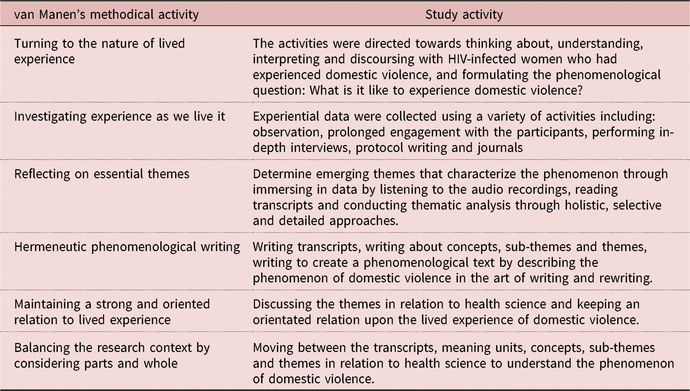
A qualitative study using a phenomenological approach was conducted. Phenomenology ‘aims to focus on people’s perceptions of the world in which they live in and what it means to them; a focus on people’s lived experience’ (Langdridge, Reference Langdridge2007). The six methodical activities proposed by van Manen (Reference van Manen1990) were used to guide the study (Table 1). Part of this study has been published previously (Mohammadi et al., Reference Mohammadi, Emadi Kochak and Gharacheh2015).
Summary of van Manen’s qualitative phenomenological approach

The participants were a purposeful sample of HIV-infected women referred to the Counseling Center for Behavioral Diseases in Imam Khomeini Hospital in Tehran, with consideration given to maximum variation in terms of age, route of infection, HIV status of the husband and duration of infection. Inclusion criteria were: age 18 years and above, being diagnosed with HIV, experiencing violence from the husband, a lack of mental disorders and being able to communicate in Persian language.
In order to obtain the participants’ experiences of domestic violence, sixteen semi-structured, face-to-face, in-depth interviews were conducted with twelve HIV-infected women. The interviews were performed by the principal researcher (the first author) after the clarification of the aim of the study with the participants. They were requested to give their permission to tape-record interviews and signed an informed consent form before attending the interview session. In addition, they were assured about the confidentiality of the collected data and the possibility of withdrawal from the study at any time without being penalized. Although none of participants needed support services, they were informed about referral support services to protect them in case their partners found out they were participating in the research.
The focus of questions asked during the interviews was: ‘Could you tell me a bit about your experiences of violence?’ and ‘What is it like to experience violence from your husband?’ Probing questions were asked to improve the depth of the interviews, such as ‘When you mention … what do you mean?’ All interview sessions were performed in a quiet room at the counselling centre. The duration of each interview ranged from 60 to 90 minutes. The interviews were continued until the required richness in the data was achieved. Eight participants were interviewed once only. Four attended an extra interview. Each interview was audio-recorded and transcribed verbatim in the Farsi language before the next interview. Then, each transcript was imported to MAXQDA 10 software, which was used for data management.
Immediately after conducting an interview, the transcribed text was analysed using holistic, selective and detailed approaches of thematic analysis. In the holistic approach, each transcript was read repeatedly to assess the sense of the whole and create a phrase that grasped the meaning of the whole experience of the participant. In the selective approach, the principal researcher looked for phrases that appeared particularly essential about the studied phenomenon – domestic violence. These phrases were highlighted to recognize themes from the initial concepts. In the detailed approach, the researcher examined each sentence of the transcripts for ‘meaning units’. Finally, the formulated meanings were interpreted and sub-themes were identified and clustered into themes. The ultimate themes were revised with the research team members and interrelated and synthesized into a comprehensive phenomenon. In order to ensure the trustworthiness of the study, Lincoln and Guba’s criteria (1985) were used. The credibility of the research findings was assured by choosing the hermeneutic phenomenological approach as the research methodology based on the research question, selecting an appropriate research setting and key informants, prolonged engagement with the participants, adopting a team approach for the data analysis, member checking and peer debriefing. To enhance dependability and confirmability, an external audit trail was used. Furthermore, a detailed description of the data was provided to enhance transferability.
Results
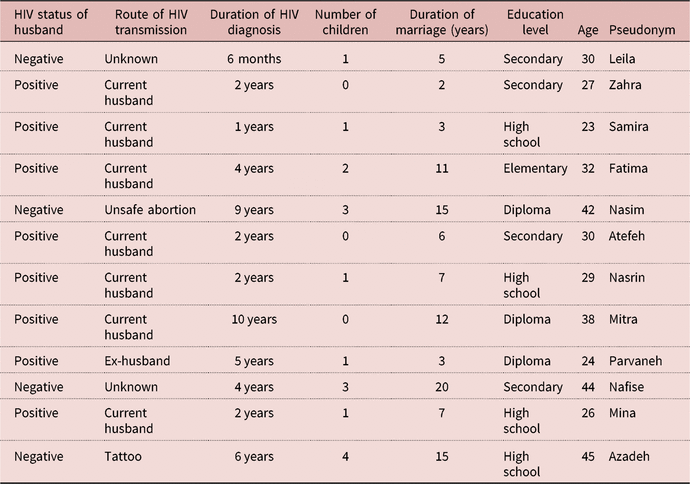
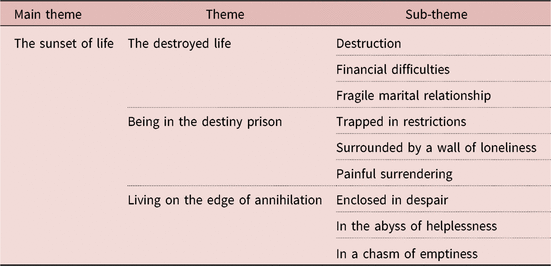
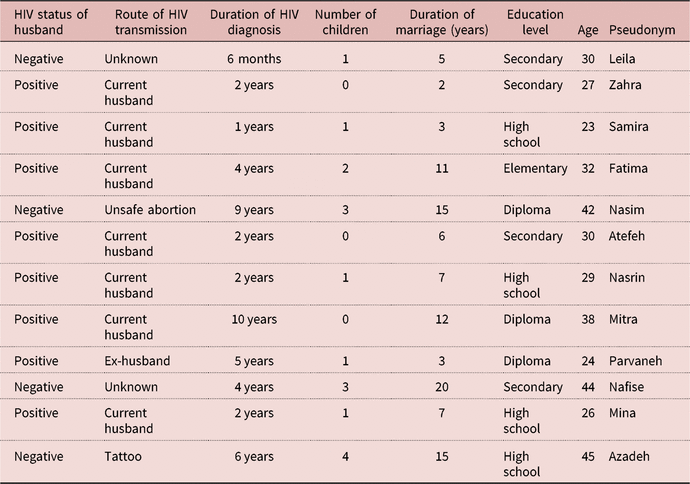
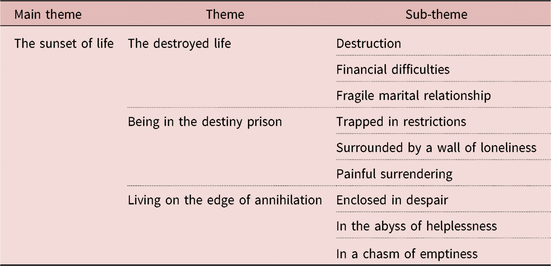
The participants were married women aged from 23 to 45 years, who had lived with HIV for between 6 months and 10 years. Eight participants reported contracting HIV from their husbands. The details of the participants’ demographic characteristics are shown in Table 2. ‘The sunset of life’ was the main theme extracted from three themes and nine sub-themes (Table 3). The ‘sunset of life’ refers to the different aspects of domestic violence that the HIV-infected women had experienced in their daily lives that had led to a couple’s emotional numbing and a fragile marital relationship. Living with domestic violence in everyday life, coupled with the many restrictions placed on them, traps women in a ‘wall of loneliness’, so that they view life as a prison that destiny had ordained for them and for which they have no option but a painful surrender. The women’s despair of their life improving on the one hand, and being forced to continue their painful life on the other, leaves them feeling as if they are ‘drowning in an abyss of helplessness’. This destroys their motivation and removes meaning from life, leading them to feel ‘trapped in a chasm of emptiness and annihilation’.
Demographic characteristics of the study participants
Themes and sub-themes of the experience of domestic violence by participants
The destroyed life
‘The destroyed life’ presents a picture of the devastating effects of domestic violence on the physical, financial, sexual and emotional aspects of the participants’ marital life. This theme was extracted from three sub-themes: destruction, financial difficulties and fragile marital relationship.
Destruction
‘Destruction’ refers to the physical aspect of domestic violence, including both physical damage that the participants experienced from their husbands and from self-harm. Most participants claimed their husband’s violent behaviour intensified after their diagnosis with HIV. Mina said:
His behaviour has become worse after the illness … He himself made me ill but instead of treating me better, he’s got worse.
The experience of physical violence was more severe in participants who had an HIV-negative husband. Nafise said:
…when he found out my illness he beat me more severely than before … The last time we fought, he burnt my hands … my illness has provided the pretext for him to beat me.
Physical violence was not only directed towards the women’s bodies, but also at inanimate objects, which induced feelings of insecurity and fear in the women. Mitra said:
…when my husband gets angry, he treats me dreadfully. He breaks the furniture … I’m frightened all the time.
For some participants, the experience of domestic violence was sometimes so severe that it became intolerable and led them to self-harm and attempt suicide. Nasrin described her experience as follows:
I was so tortured that I could not stand it anymore. I told myself I’m suffering every day so, I’ll stop it once forever … I took pills to kill myself … He made me do it.’
Financial difficulties
‘Financial difficulties’ refer to various aspects of the family’s financial problems after exposure to HIV. Infection with HIV in one of a couple might lead to either the woman or her husband losing their job and this in turn increases the family’s financial problems. Many women considered financial difficulties to be a reason for conflict and violence between spouses. Mina said:
We have too much financial trouble. We often quarrel because of it … My husband could not go to work for two years because of his illness [HIV]. Though I was sick too, I had to work.
Financial dependence was one of the other problems that the participants experienced. Some women pointed to the loss of their jobs due to their husband’s violence that led to their financial dependence on the husband. In addition, the financial burden of HIV had doubled their problems. Mitra said:
My husband did not want me to go to work. He complained about me not going to work, I was dependent on him for every little thing that I wanted. He had no money. This was very bad. We quarrelled very often … it’s too bad when you are both sick and without money.
Husband’s unemployment often led to his dependence on his own family, which opened a way for them to interfere in the marriage, intensifing the conflict between spouses. Samira said:
We have nothing of our own. My husband doesn’t have a job. My husband’s mother provides our living expenses. That is why, she allows herself to interfere in our lives … I can’t make any decisions for my life. If I protest [to my husband], this will lead to quarrel.
Furthermore, woman’s HIV-positive status opened a way for financial abuse. Women with HIV-negative husbands claimed that they were financially abused and had no right to use their own property, because if they protested they would be threatened with their HIV-positive status being disclosed to others. Nafise said, with tears in her eyes:
After he found out my illness, he constantly abused me … I work 17 hours per day. He doesn’t work. He stays at home and just eats and sleeps … He took all my property from me… He said: I’ll call your family and tell them that you are HIV-positive.
Fragile marital relationship
Living with domestic violence in the context of HIV was reported by the women to be accompanied by emotional abuse, sexual abuse, loss of trust, unpleasant feelings and marital dissatisfaction, which undermined the foundation of married life. Emotional abuse, which participants commonly experienced in different forms, ultimately led to coldness and the collapse of the emotional relationship between spouses.
Most participants had experienced a variety of disrespectful behaviours such as insults and humiliation and believed the mental scars that this emotional violence has left had much deeper effects on their marital relationship than physical violence. Fatima said;
When one gets humiliated, it will remain in one’s soul like a wound, especially in front of others… Violence is not only beatings, insults are so much worse. It is more painful. Your body may recover but your soul will never recover. Its scars remain forever.
For some participants, being infected with HIV by the husband was such a painful experience that it destroyed their romantic feelings towards their husband. These women blamed their husbands for infecting them with HIV, which led to emotional coldness and distance between the spouses. Nasrin said:
Since I found out that he is the reason I have HIV, I have no feeling for him… I can’t forgive him.
Some women expressed their husbands’ emotional coldness after the HIV diagnosis. They claimed that after exposure to HIV, their husband’s love and attention faded and the coldness gradually deepened. Samira stated:
Since he [my husband] got sick, he does not care about anything. He does not pay attention to me… It does not matter to him whether I am there or not… After my illness, he became very cold [emotionally] to me.
Another factor impairing marital relationships reported by the women was sexual abuse, which ranged from sexual coercion to rape. Some participants had to have sex with their husbands to avoid conflict and violence, despite their dissatisfaction. Nasim said:
Sometimes I don’t want to have sex but I have to do it otherwise he will become angry and a quarrel will occur between us… I have to tolerate it.
Some participants pointed out a decrease in libido and sexual activity after exposure to HIV and considered it a reason for the escalation in violence. Azadeh stated:
After HIV diagnosis, our sexual relationship became very cold. Because I could not have sex with him, he bothered me much more than before.
For most participants, being infected with HIV by the husband was associated with such emotional and psychological damage that it led women to avoid having sex with their husbands. Fatima said:
I have no desire for sex with him. He caused my HIV. He made me sick for the rest of my life.
Moreover, a husband’s sexual coldness and his avoidance of having sex with his wife was another aspect of sexual abuse which was regarded by some women as a humiliation and an insult. Leila said:
Since I became ill [HIV-infected], we haven’t had sex… He was masturbating but did not want to have sex with me. His behaviour was very offensive.
For some women, the diagnosis of HIV status meant the disclosure of the husband’s betrayal. These women believed that infidelity was one of the most important factors leading to the loss of trust in their husbands and the collapse of marital life. They regarded betrayal as the worst kind of violence from a husband. Nasrin, who was infected with HIV by her husband, stated:
At first I doubted my husband had sexual relationship with other women. After I became [HIV] positive, I was certain of that… I could never trust him… infidelity is the worst type of violence.
Being in the destiny prison
‘Being in the destiny prison’ includes three sub-themes: trapped in restrictions, surrounded by a wall of loneliness and painful surrendering. This theme indicates that domestic violence and HIV restrict women’s lives in different ways and keep them behind a ‘wall of loneliness’. Participants perceived this situation as a prison that fate created for them; a fate they could never escape from, and had to surrender to.
Trapped in restrictions
This sub-theme refers to the limitations that the participants faced in their everyday lives and they understood this as a form of domestic violence. Most participants pointed to the limitations in communication with family and friends due to their husband’s violence and being diagnosed with HIV. Zahra said:
I rarely see my family. My husband doesn’t like to socialize with my family. He doesn’t allow me to visit my family. If I go to visit them, it causes an argument and quarrelling.
Fatima said:
We do not have any contact with friends and acquaintances since we got sick [HIV-infected]. He [husband] doesn’t want me to see my friends.
Some women pointed to restrictions in entering and leaving the house so that they couldn’t leave the home without their husband. Parvaneh said:
Sometimes when he [my husband] goes out, he locks the door lest I go somewhere without his permission. I am imprisoned in my house until he comes back… this behaviour really bothers me.
In addition, the women noted that all their decisions relating to their personal and marital life were limited by their husband and their right to decide was ignored. Azadeh stated:
He always makes all the decisions instead of me. He doesn’t allow me to make any decisions about my life… even for simple shopping… As if I’m living in a cage especially since I got sick, I have nothing for myself.
Some participants said that they faced constraints and obstacles in different ways in taking care of themselves and following prescribed medications from their husbands that could compromise their health and contribute to the progression of their illness. Nafise said:
When my husband got angry, he destroyed my medicines. He said: you are going to die, so you don’t need to take drugs… Doctors say you should not discontinue your medicines because their effects would be reduced… but my husband doesn’t care about my health… If I don’t take my medicine, my condition will become worse, I won’t even be able to do my ordinary activities … I may die earlier.
Surrounded by a wall of loneliness
This sub-theme refers to the deep sense of loneliness that participants said surrounded their marital life. These women believed that ongoing exposure to domestic violence led to an emotional distance between spouses and in turn a sense of loneliness experienced in different forms. Some women, despite having a husband, felt lonely in their marital life. Parvaneh said:
Every man must support his wife but I’m always alone even in his presence… I am really alone.
The participants believed that they needed more emotional support from their husbands due to being HIV-infected. However, this need was neglected and they were left alone by their husbands. Leila said:
My husband went out at night and did not return until the morning. I told him: I’m not feeling well and I need you. But he left me alone.
For some participants, loneliness was a way to avoid conflict and violence. However, this doubled the emotional distance between the spouses, and they became more and more distant from each other. Azadeh said:
Most of the time I walk into the room and I lock the door. I do not want to see him because whenever we see each other, we’ll have a fight ahead… I’m alone all the time.
Lack of family support was also a factor that surrounded the participants in their ‘wall of loneliness’. They complained of not receiving any support from their family or husband’s family and believed that they needed more support from family due to their HIV-positive status. From their point of view, lack of family support intensified domestic violence and fuelled their loneliness. So in the midst of life’s problems they were alone, and when needed, had no helper. Nasrin said:
When my family found out about my illness [HIV infection], they didn’t come to see me. They didn’t care how I am… my husband knows that if he hurts me, I can’t tell my family. Even if I tell them, they won’t help me. If I had a supportive family, he wouldn’t dare behave in this way with me… I feel that I have no one in the world.
Painful surrendering
This sub-theme indicates that participants regarded their lives to be filled with violence and HIV disease; a bitter fate they cannot escape from and must succumb to. Fatima said:
First, when I found out that he [husband] has infected me with HIV, I got so angry with him. Every day we had fights and beatings… Now, I’ve accepted my destiny. It was my destiny to marry an addicted man and get HIV… I have a miserable fate.
A husband’s negative response to a woman’s request to use condoms caused women to accept engaging in unprotected sex, exposing them to the risk of HIV infection. Samira stated:
My husband did not use a condom and I could not say anything… I knew that I would get sick [HIV infection] sooner or later. I thought why I should argue with him.
Although the women believed that being HIV-infected by the husband was the worst type of violence, if they protested, they faced more violence from their husband. So, they had to silently endure the suffering of the disease and succumb to it to avoid violence. Mitra said:
My husband caused me to be sick [HIV-infected]; a terrible disease that no one dares to even talk about… Is there any violence worse than this?… but what can I do? If I blame him, will my condition get better?… I have to accept it.
Despite the husband’s infidelity being a bitter experience for the women that impaired their mental health, some women had to capitulate in order to prevent violence and minimize the damage to their health. Azadeh said:
He has [sexual] relationships with other women… this is why we quarrel every day… I don’t do anything anymore. I don’t care if he has a relationship or with whom… I am sick. I’m tired. I tell myself there’s no other option. I have to accept it.
Living on the edge of annihilation
‘Living on the edge of annihilation’ is one of the main themes of the phenomenon of domestic violence, and includes three sub-themes: enclosed in despair, in the abyss of helplessness and in a chasm of emptiness. This theme indicates that due to a lack of hope of any improvement in life conditions, in the present and in the future, all efforts of the participants to change their current situation and improve their married life were deemed to be futile. However, they were forced to continue in their marriages and suffer violence. This situation propelled them into an ‘abyss of helplessness’ that left them feeling empty and hopeless.
Enclosed in despair
This sub-theme represents the extreme despair extending over the women’s entire lives. According to them, the disappointment caused by domestic violence was so pervasive in their lives that they felt they were being enclosed in a deep despair and they saw no hope of improving their living condition, in the present or in the future. Azadeh described her pessimism about improving her living condition as follows:
What miracle is going to happen in my life? Will my husband’s [violent] behaviour be changed? Will my illness [HIV] be cured?… It is impossible. Talking about hope is a ridiculous thing for me. I can’t fool myself… Really there is no hope in my life.
Some women who were infected with HIV through their husbands considered despair about the future to be one of the main factors leading to violence, because they were looking to the future with a dark perspective, due to HIV, and dying from it. The sense of hopelessness was so disturbing that the women frequently blamed their husbands for infecting them with HIV. This often resulted in a quarrel. Nasrin said:
I told my husband that with this illness [HIV], what hope could I have for the future? He destroyed my future… that is why we always quarrel… I told him if I had not married him I would be healthy. I could have a good future. He got angry and beat me.
Some participants, despite their desire to have children, refused childbearing for fear of their child’s future. Mitra stated:
I wish I had a baby. My husband insisted on it too… I told him if we had hope to be alive until tomorrow. Could we have a baby in this condition? When we know we are dying, we should not have a child. What will happen in the future of the child?… sometimes we argue because of this.
In the abyss of helplessness
Due to the ongoing experience of domestic violence, the participants believed that their efforts to improve their marital lives were futile and they became tired of trying. They had no hope of improving their living conditions and no choice but to endure violence. Thus, they felt a deep sense of helplessness. Nafise expressed her helplessness as follows:
On the one hand, my illness [HIV infection], on the other hand, his violent behaviour… I did my best to improve my life… But the situation became worse. Now, I’ve got to the point where I feel no one can do anything for me. I can neither leave this life nor tolerate this everyday suffering [violence].
Some participants were so helpless that they wished their husbands would die just to rid them of the everyday living with domestic violence, because with the death of their husbands, in addition to ending their suffering, they could have their children on their own, which was not possible in case of divorce. Azadeh said, while crying:
Only with the death of my husband, I will get rid of this terrible life. My children would stay with me. No one could take them from me. I would not be a burden on my family… I will be easy only when he is dead.’
In a chasm of emptiness
Following the feelings of despair and helplessness of improving their marital life, the participants lost their motivation to live. This fuelled their sense of indifference towards life. Moreover, experiencing domestic violence, along with the HIV-related stigma, impaired women’s feelings of self-worth and left them with a sense of purposelessness and emptiness because, for them, life had lost its meaning and there was no point in living. Nasrin stated:
No matter what happens in my life… I don’t think anything can affect me anymore. With this situation that I [HIV and violence] have, what meaning could life have for me? I don’t know why I’m living. Life is really meaningless.
The experience of violence affected the meaning of self in the women and resulted in an impaired self-worth. Azadeh said:
I feel that I’m not worthwhile for anybody in this world. If I die, he [husband] won’t care about it… Why should I survive? It is better that my life is soon over… really my life has no meaning.
Lastly, ongoing exposure to violence and lack of self-worth pushed the participants into a sense of emptiness. Parvaneh said:
My life is completely empty… I have nothing to lose. There is nothing in my life, neither a healthy body nor a good husband… I’m somewhere that I feel there is nothing worth living for.
A meaningless life and sense of emptiness led most women to attempt suicide and end their lives. Consequently, the majority of participants had experienced at least one suicide attempt. Nasrin described her experience as follows:
My life was so difficult that I decided to die… death is much better than an empty life.
Parvaneh also said:
I didn’t have any motives to continue living. I would have preferred to die but not to continue this terrible life… my life had become so meaningless that I wanted to end it.
Discussion
This study explores the lived experience of domestic violence in Iranian women with HIV. The everyday experience of violence in these women has led them into a place of ‘darkness’. They have experienced a wide range of types of domestic violence in their daily lives. The destruction caused by this violence, along with financial difficulties and resulting marital fragility, has left the lives of these women’s in ruins, and they have to endure the effects every day. Domestic violence coupled with HIV imposes many restrictions on women’s lives, trapping them in a ‘wall of loneliness’. Thus, these women view life as a prison that destiny had ordained for them and they had no choice but to surrender to it.
On the one hand, the women had been disappointed by their successive efforts to improve their living conditions, and on the other hand, they were forced to tolerate violence and continue their bitter lives, leaving them feeling entirely helplessness. In addition, being constantly exposed to violence from their husband decreased women’s feelings of self-worth, removing meaning from their lives, pushing them into ‘emptiness and annihilation’. As a result, the lived experience of domestic violence in these HIV-infected Iranian women was perceived as ‘the sunset of life’.
The study participants understood the devastating effects of domestic violence (physical, sexual, emotional and financial) on their lives, and how this has led to fragile marital relationships. In addition, due to gender inequality, the patriarchal context in which they live and their lack of empowerment, they were unable to improve their marital life. For this reason, they perceived their lives as ‘the destroyed life’.
Other studies have recognized domestic violence as a major problem for women living with HIV (Makin et al., Reference Makin, Forsyth, Visser, Sikkema, Neufeld and Jeffery2008). In fact, the gender power imbalance between men and women increases women’s vulnerability to HIV and domestic violence (Madiba & Ngwenya, Reference Madiba and Ngwenya2017). So women experiencing domestic violence are more likely to be at risk of HIV, and the disclosure of their HIV-positive status increases the risk of violence against women (Hampanda, Reference Hampanda2016; Onu et al., Reference Onu, Dworkin, Ongeri, Oyaro, Neylan and Cohen2017).
In this study, the women who lived with an HIV-negative husband experienced more severe violence from the husband because of the suspicion of infidelity and bringing HIV disease into the family. Similarly, Were et al. (Reference Were, Curran, Delany-Moretlwe, Nakku-Joloba, Mugo and Kiarie2011) showed that in couples with discordant HIV statuses, where the husband’s sero-status was negative or uncertain domestic violence was more common. In the present study, self-destruction was one of the manifestations of domestic violence experienced by some participants. Sometimes the experience of violence was so severe women damaged themselves or committed suicide. Similarly, in the study of McCosker et al. (Reference McCosker, Barnard and Gerber2003), participants experienced violence as destruction. Hale and Vazquez (Reference Hale and Vazquez2011) believed self-destruction can be regarded as HIV-related violence and HIV-infected women use it as a means of coping with violence.
The effects of the emotional violence that participants experienced was much deeper and more destructive than that of physical violence and led to the collapse of emotional relationship between spouses. In particular, those women who were infected by their husbands perceived being infected with HIV as the worst kind of violence from their husbands. Other studies have also shown that many women subjected to violence by an HIV-positive partner reported being infected with HIV as a type of domestic violence (Bogart et al., Reference Bogart, Collins, Cunningham, Beckman, Golinelli, Eisenman and Bird2005). Also, the experience of domestic violence is directly related to women’s HIV-positive status (Hampanda, Reference Hampanda2016), even in those women infected by an HIV-positive husband. HIV status can escalate domestic violence and change how women experience it (Hale & Vazquez, Reference Hale and Vazquez2011). It often affects the nature of violent acts, types of power and control and changes the effects of violence by increasing the level of risk and its consequences (Stoever, Reference Stoever2008). In fact, HIV acts as a determinant contributing to gender inequality and pushes women further down the hierarchy of power (Hale & Vazquez, Reference Hale and Vazquez2011).
In the participants who were infected by their husbands, an HIV diagnosis led to the disclosure of the husband’s extramarital relations and betrayal. It caused women to lose their trust in their husbands and undermined the foundation of their marital relationships. Taherkhani et al. (Reference Taherkhani, Negarandeh, Simbar and Ahmadi2014) also revealed that Iranian women regarded a husband’s betrayal as the most intolerable type of violence, which in some cases made it difficult to continue married life. In the present study, husband’s infidelity was not only a form of emotional violence, but a way that women become infected with a deadly disease like HIV.
A variety of constrictions imposed by both HIV and violence on the women’s lives doubled their problems and led to their isolation so that they perceived their live as a prison from which there was no way to escape. So, they had to accept their destiny and surrender. As a result, they had limited social interaction with their family and friends and in turn low social support. Abraham (Reference Abraham2000) believed limitation and social isolation are painful manifestations of domestic violence resulting in loneliness. McCosker et al. (Reference McCosker, Barnard and Gerber2003) also showed that the main aspect of control over women’s lives is their isolation from social networks. This is not surprising in the Iranian cultural context because patriarchal societal norms play a major role in women’s understanding of their own position in the family and society (Abadi et al., Reference Abadi, Ghazinour, Nojomi and Richter2012). Indeed, in patriarchal societies, institutional violence structures play a major role in violence against women. The institutional environment, including formal structures such as social, legal, religious, political and economic institutions, shapes power relations within the family and establishes constraints determining individuals’ choices and actions (World Bank, 2002). This deprives some women of a great deal of freedom in their life (Abadi et al., Reference Abadi, Ghazinour, Nojomi and Richter2012) and being HIV-infected can make this situation more complicated. In this study, control over the participants’ lives even included personal tasks such as medication and self-care behaviours so that some husbands prevented their wives from receiving care and adhering to medication, and this might impair women’s health and contribute to disease progression. Previous studies have revealed that men’s interference with women’s health care is one of the manifestations of violence against HIV-infected women (Lichtenstein, Reference Lichtenstein2006; Kouyoumdjian et al., Reference Kouyoumdjian, Calzavara, Bondy, O’campo, Serwadda and Nalugoda2013) and the adverse consequences of violence are worse in these women due to their lack of access to medical care (Onsomu et al., Reference Onsomu, Abuya, Okech, Rosen, Duren-Winfield and Simmons2015).
Due to being HIV-infected, the participants felt in need of more support from family, but some of them were deprived of family support after HIV diagnosis. Conversely, in some countries, most women after HIV diagnosis receive greater support from their husband and family (Rouleau et al., Reference Rouleau, Cote and Cara2010). Given that in Iran extramarital sexual relations are regarded as great sins and are strongly condemned by Islamic law, religious values contribute to negative attitudes towards people with HIV and enhance HIV-related stigma (Rahmati-Najarkolaei et al., Reference Rahmati-Najarkolaei, Niknami, Aminshokravi, Bazargan, Ahmadi, Hadjizadeh and Tavafian2010). This may lead to more social rejection and lack of family support for HIV-infected women. The participants believed that lack of family support was one of the factors contributing to continued domestic violence. Considering that cultural norms dictate that Iranian women keep silent about violence, they may not ask for support when they are in need because of fear of additional violence by their husbands (Abadi et al., Reference Abadi, Ghazinour, Nojomi and Richter2012). Whereas the family is considered the most important source of social support, and since HIV-infected women require more support, a lack of family support has a detrimental effect on these women (Edwards et al., Reference Edwards, Irving and Hawkins2011).
Hopeless living conditions after exposure to HIV and a fragile marital relationship due to violence made the participants feel helplessness. They felt they were no longer able to do anything to change their current situation. On the other hand, they were not able to leave their marital life for several reasons. Indeed, the cultural sensitivity related to the taboo of HIV (Behboodi-Moghadam et al., Reference Behboodi-Moghadam, Khalajinia, Nasrabadi, Mohraz and Gharacheh2016) and divorce, which means losing financial support, social respect and children (Garrusi et al., Reference Garrusi, Nakhaee and Zangiabadi2008), made it difficult for these women to voice their problems and kept them in violent relationships. In a society where violence is ignored, victims of violence either have to accept it, or are accused of creating a favourable condition for violence.
Being HIV-infected and its consequences on couples’ emotional relationships and daily experience of domestic violence impaired the participants’ feelings of self-worth, leading to a lack of motivation and a sense of aimlessness. Although in the Islamic religious teaching, both man and woman are equally valuable, socio-cultural factors that greatly influence men’s behaviour strengthen discourses on masculinity, femininity and gender roles (Tizro, Reference Tizro2013), and this patriarchal structure undervalues women compared with men. As a result, the social structure does not provide women with the conditions to promote their empowerment and self-worth in order to cope with critical life conditions such as HIV and violence. Therefore, loss of life’s meaning and a sense of emptiness have caused these women to experience a ‘daily death’, propelling them to end their lives. Previous research has shown that women with HIV are more likely to commit suicide due to exposure to social stress and the psychological effects of the disease. Added to this, the negative effects of violence on the burden of HIV in women increase the risk of suicide. Thus, women with HIV who live with violence are more likely to feel despair and worthlessness and experience suicidal thoughts compared with other women (Ceccon et al., Reference Ceccon, Meneghel and Hirakata2014).
Due to the nature of qualitative research, this study focused on a limited number of women with HIV in an Iranian cultural context and cannot be generalized to other cultures. However, the findings confirm those of previous studies, and overall the results of qualitative research are not intended to be generalized (Keenan & van Teijlingen, Reference Keenan and van Teijlingen2004). In addition, the experiences of women with HIV who had no access to health care services were not included in this study but the participants were a purposeful sample of HIV-infected women with the consideration of a maximum variation from a referral hospital with free services (where HIV-infected people throughout Iran are referred to), so they could be representative of HIV-infected women in Iran.
Conclusions and policy implications
The study’s sample of Iranian women who had been subjected to domestic violence because of being HIV-infected considered being infected with HIV to be the most severe form of domestic violence. They had a sense of emptiness, and felt they were ‘on the dark path of life’. They felt they had nothing to lose and walked ‘on the edge of annihilation’. Seeing the world through this dark lens had destroyed all hope for the future and left them unable to cope with their current situation.
It is essential to strengthen the capacity of HIV counselling centres to identify and manage domestic violence against women with HIV in Iran. These should be comprehensively designed and implemented, tailored to the needs of these women, and prevention efforts should involve not only health systems but also families and communities. Family-oriented support programmes have particular importance in addressing the problem of domestic violence against women with HIV. Domestic violence can interfere with adherence to treatment, decreasing women’s quality of life and their chances of survival, so health care professionals should adopt measures to encourage women to adhere to their treatment programmes.
HIV-related violence is a sociocultural problem, rooted in individuals’ attitudes and beliefs in the community. Negative attitudes towards women need to be changed, and the evil face of violence against them, and its devastating effects on their health, should be exposed through public education using media, screening films, holding workshops and distributing brochures. Such measures would reform cultural beliefs and enhance the awareness of men perpetrating domestic violence. Women should be educated to respond actively to a crisis of violence, rather than just tolerate it; they need to be informed of their social and family rights through counselling centres and mass media. Also, empowering women to improve their socioeconomic status and take control over their own lives would help reduce domestic violence. Furthermore, religious institutions have the potential to shift social norms to respect women’s bodily integrity and their right to live free from domestic violence (Pyles, Reference Pyles2007). So, promoting spirituality and emphasizing the high place of women and the equal creation of man and woman in religious teachings, are essential to modify the incorrect beliefs and attitudes of men towards women.
In the broader aspect, the findings of this study can be of interest to policymakers. Given the complexity of domestic violence, cross-sectoral co-operation in various areas, including the health sector, education, welfare organizations, mass media, the judicial system and law enforcement agencies, is needed in order to develop and implement strategies to eliminate violence against women and protect abused women, especially women with HIV experiencing violence. Therefore, the reform and modification of women’s protection laws, prosecution and punishment of perpetrators of domestic violence, the establishment of tribunals for the investigation of domestic violence and the creation of safe houses for abused women are necessary. In addition, considering that the elimination of poverty is an important part of domestic violence prevention strategy (Weissman, Reference Weissman2007), political commitment is essential to remove policy-related obstacles (WHO, 2002), and government agencies and non-governmental organizations should take steps to provide effective assistance to families in order to tackle unemployment, addiction and poverty, which can result in further violence.
Finally, further research is needed to explore women’s and men’s perspectives on domestic violence in the context of HIV in different cultures, since this will help to establish a more comprehensive perspective on this phenomenon.
Author ORCIDs
Ranjbar Fahimeh 0000-0001-7558-9815
Acknowledgments
This is a part of the first author’s PhD dissertation in the field of reproductive health. The authors acknowledge Tehran University of Medical Sciences for their support of this project. They are grateful to the participants for sharing their experiences.
Ethical Approval
Ethical approval of the study was granted by the Ethics Committee of the Research Deputy of Tehran University of Medical Sciences.
Conflicts of Interest
The authors have no conflicts of interest to declare.
Funding
This study was financially supported by the research affairs of Tehran University of Medical Sciences (Grant No. 325/130/D/92).