We may never find all the answers, but that should not deter us from asking more and better questions.
—Richard A. Diehl 2000:25It's been one hell of a katun for Olmec studies. It began with the publication of Regional Perspectives on the Olmec (Sharer and Grove 1989), a watershed volume that defined the divide between those who regard the Gulf Olmecs as the cultura madre of Mesoamerica and those who favored a multicentric origin for Mesoamerican civilization. It drew to a close with some 30 scholars engaged in a heated debate over the implications for interregional interaction of chemical analysis of Olmec-style pottery (Blomster et al. 2005; Flannery et al. 2005; Neff et al. 2006a, 2006b; Sharer et al. 2006; Sharer 2007), the second report in four years of Olmec writing (Rodríguez et al. 2006), and an upcoming special section of Ancient Mesoamerica devoted to Early Formative period interaction (Blomster and Cheetham 2010). Between was the most active period of Olmec research since the pioneering fieldwork by Stirling, Drucker, and colleagues in the 1940s and 1950s. The increased scrutiny has revealed significant variability within Olmec culture in the “heartland” region of southern Veracruz and western Tabasco as well as highlighting variation in the form and intensity of interaction among Formative period Mesoamerican societies, including the Olmecs.
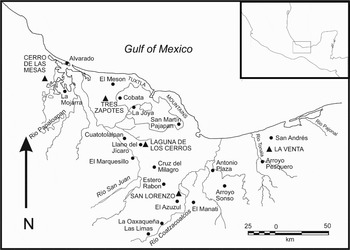
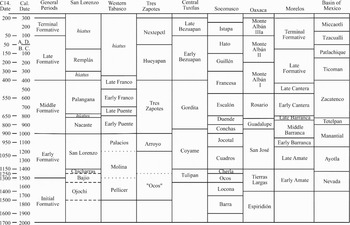
In this article I review what we have learned over the last 20 years and suggest some directions for the future. First, though, I must dispense with some preliminaries. Most readers of Ancient Mesoamerica are aware that the term Olmec has been used, problematically, to describe both a widespread Early and Middle Formative period art style and an archaeological culture associated specifically with the southern Gulf lowlands of Mexico between about 1500 and 400 b.c. (all dates are in calendar years) (Figures 1 and 2). I will not belabor the point here, but refer the reader to thoughtful discussions by Grove (1989, 1997), Clark and Pye (2000:217–218) and Lesure (2004:74–79) (see also Pool 2007:12–15). In this article, I restrict “Olmec” to the geographically and temporally bounded archaeological culture (a meaning also favored by Diehl [2004:13]). This does not preclude the likelihood that the people who created Olmec culture ventured beyond the southern Gulf lowlands or the possibility that they settled in distant lands. Rather, I contend that it is only by using a restricted definition of Olmec that associates the phenomenon with a specific region that we can discern patterns of interregional interaction with the people who inhabited that region and infer the form of those interactions. I have also adopted Diehl's (1996:29; 2004) suggestion to refer to the southern Gulf lowland region by its Aztec name, Olman (or Ulman), from which the word for its inhabitants is derived. It accurately delimits the region of Olmec culture, and it avoids casting a priori other parts of Mesoamerica in the role of hinterland to the “Olmec heartland.” Finally, I use Grove's (1989:12) “X Complex” as a neutral term to refer to the set of ceramic motifs that are typically carved and/or incised on black, gray, or black-and-white pottery between 1450 and 1000 b.c. and define an “Early Horizon” across much, but not all, of the geographical region that became Mesoamerica. I reserve “Olmec-style” for those objects that adhere to the artistic canons of Olmec culture, wherever they appear and whose occurrence can be attributed beyond a reasonable doubt to creation by or contact with the inhabitants of Olman.
Map of the southern Gulf lowlands (Olman) with sites mentioned in the text.

Formative period chronological chart of Olman. After Pool 2007: Figure 1.4.

THE LAST KATUN: WHAT HAVE WE LEARNED?
Chronology
The flurry of fieldwork over the last 20 years has generated several ceramic chronologies in Olman without, however, improving the temporal resolution for the region as a whole. Olmec phases, to borrow a phrase from John Clark, tend to be “fat,” typically spanning 200 to 300 radiocarbon years (Figure 2). They are even fatter in calendar years, the real time in which people lived their lives. The 250 radiocarbon-year-long San Lorenzo phase (1150–900 b.c.), for example, turns out to have been about 400 years long when calibrated (1400–1000 b.c.). Division of phases into subphases (such as San Lorenzo A and B, Tres Zapotes A and B, or Early and Late Puente) mark time in shorter increments but must be distinguished by observable and consistent differences in artifact attributes to be useful for fine-grained cross-correlations.
Poor chronological resolution in Gulf Olmec sites results from a combination of physical, environmental, analytical, and behavioral factors. One problem has been a relative scarcity of radiocarbon dates from stratigraphic sequences in the southern Gulf lowlands. Despite the early importance of radiocarbon dating to establishing the antiquity of Olmec culture at La Venta (Drucker et al. 1959; Coe and Stuckenrath 1964; Drucker and Heizer 1965; Heizer 1964) and San Lorenzo (Coe et al. 1967a, 1967b), few additional dates were forthcoming in the two decades following Coe's San Lorenzo project. Fortunately, that situation is improving with well-dated Formative period sequences from La Joya (Arnold 2003), Bezuapan (Pool and Britt 2000), Tres Zapotes (Pool and Ortíz Ceballos 2008), El Manatí (Rodríguez and Ortíz Ceballos 2005), San Andrés (Pope et al. 2001), and Isla Alor (Raab et al. 2000), as well as additional dates from La Venta (González Lauck 1998).
The simple accumulation of more radiocarbon dates, however, will not improve chronological resolution for much of the Middle Formative period because fluctuations in atmospheric carbon-14 that occurred within the “Hallstatt Plateau” between about 800 and 400 b.c. (ca. 650–400 b.c. in radiocarbon years) cause radiocarbon years not to vary uniformly with calendar years. As a result, chronological divisions within the 800–400 b.c. time span are necessarily best guesses, usually based on an assumption of constant rates of culture change or sedimentation (e.g., Lowe 1989; von Nagy 2003:820–853, Figure 6.1, Tables 6.4–6.5; cf. Pohl et al. 2002). Bayesian statistical methods that incorporate information from stratigraphy or seriation have not lived up to their early promise for improving both accuracy and precision of dating over this time span (Steier and Rom 2000; Steier et al. 2001), and wiggle-match dating cannot be applied effectively to the coarse-grained stratigraphy typical of most archaeological sites (van de Plaasche et al. 2001). What we really need is greater use of alternative chronometric methods that can span the problematic portion of the Middle Formative period. For example, it should be possible to use the radiocarbon sequences before and after the Middle Formative period to calibrate hydration curves for specific obsidian sources under local conditions. Archaeomagnetism and thermoluminescence offer other useful dating alternatives. All of these should be pursued to resolve issues such as the dating of the construction sequence of Complex A at La Venta and the more precise dating of the transition from the Early to the Late Franco ceramic phase used to date the San Andrés cylinder seal (Pohl et al. 2002).
Building ceramic chronologies in Olman is difficult, in part, because preservation of ceramic surface treatments and decoration that distinguish types and varieties in traditional classification is notoriously poor, especially in areas of high rainfall and acidic soils around San Lorenzo and La Venta (Coe and Diehl 1980:130–133). For some parts of Olman, diachronic trends can be identified in the relative amounts and grain size of different tempers, but while these statistical patterns provide good evidence for technological continuity and gradual change, they do not make for sharply defined phases (Arnold 2005). In addition, there has been a marked tendency for individual projects to establish their own subregional ceramic typologies rather than apply previous chronologies in the same region or other parts of Olman. In some cases, lack of publication of ceramic chronologies has contributed to this trend. In others, established chronologies from other subregions, or even the same regions, are viewed as inadequately capturing variation in the ceramic assemblage. To a certain extent such perceptions may identify real variation in the paste attributes that Gulf Coast ceramicists have tended to rely upon since the early 1980s, but it is time for a concerted effort toward building a truly regional ceramic chronology. Building on Sisson's (1970) work, von Nagy (2003) has moved the relative ceramic chronology for western Tabasco far along this path.
Olmec origins
Twenty years ago the only “pre-Olmec” occupations reported from Olman were at San Lorenzo Tenochtitlan (Coe and Diehl 1980), some nine sites in the Chontalpa (Sisson 1976), and a few redeposited sherds from the lower levels of Ortíz Ceballos's (1975) excavation at Tres Zapotes (Lowe 1989:39–41). In the 1980s the historical relationship between these early occupations and Olmec culture was still uncertain. At San Lorenzo Tenochtitlan Coe (1970:25, 32) had long emphasized typological discontinuities between pre-Olmec ceramics of the Ojochi and Bajío phases and those of the Chicharras and San Lorenzo phases, concluding that “the bearers of Chicharras culture were in large part immigrants into the area and that they were ethnically identical to the San Lorenzo Olmec” (Coe and Diehl 1980:150). Coinciding with this interpretation of discontinuity was Clark and Blake's (1989:390) suggestion that an intrusion of Mixe-Zoque speakers from the Chiapas coast contributed to the development of Gulf Olmec culture and Graham's (1981, 1989) argument that Olmec sculpture was derived from antecedents in the Pacific coast and piedmont of Chiapas and Guatemala. That said, the tide was certainly turning in favor of in situ development of the Olmec culture by 1989. Lowe (1989:39) favored “developmental continuity” of ceramic traditions from the Ojochi through the Chicharras phase, and Coe (1989:69) noted widespread agreement that the Gulf Coast heartland was the place of origin of Olmec culture while also observing that “the Olmec mental system, the Olmec art style, and Olmec engineering ability suddenly appeared in full-fledged form about 1200 b.c. [uncalibrated]” (Coe 1989:82). For his part, Clark (personal communication 2005) also soon abandoned the idea that Mokaya immigrants played a significant role in Olmec origins.
Today many more pre-Olmec sites have been documented by survey and some excavation in western Tabasco (Pope et al. 2001; Rust and Sharer 1988; von Nagy 2003), the Middle Coatzacoalcos Valley (Kruger 1996; O'Rourke 2002; Ortíz Ceballos and Rodríguez 2000; Ortíz Ceballos et al. 1997; Rodríguez and Ortíz Ceballos 1997; Symonds et al. 2002); the San Juan Valley (Borstein 2001:150), and the Tuxtla Mountains (Santley and Arnold 1996; Arnold 2003; Arnold and McCormack 2002). Sediment cores from San Andrés, Tabasco, have recovered evidence of human occupation as early as 5100 b.c. in the form of nonnative Zea pollen, and they document changes in subsistence practices as the coastline migrated seaward over the next 2,700 years. Ceramics have been reported from levels dated to before 1750 b.c. (Rust and Sharer 1998; Rust and Leyden 1994), but typological considerations suggest they may have been introduced from later levels by burrowing crabs (von Nagy 2003:759–760).
In the Tuxtla Mountains, sediment cores recovered charcoal and pollen from maize and other species associated with agricultural disturbance from deposits dated to 2880 b.c. in Laguna Pompal (Goman and Byrne 1998:85). Excavations at La Joya recovered ceramics, charred remains of maize and other crops, as well as pottery tecomates, bowls, beakers, and plates from the Tulipan phase (1500–1400 b.c.), a local equivalent of the Ojochi and Bajío phases that nonetheless exhibits continuity with the subsequent Olmec phases at La Joya (Arnold 2003:31; VanDerwarker 2006).
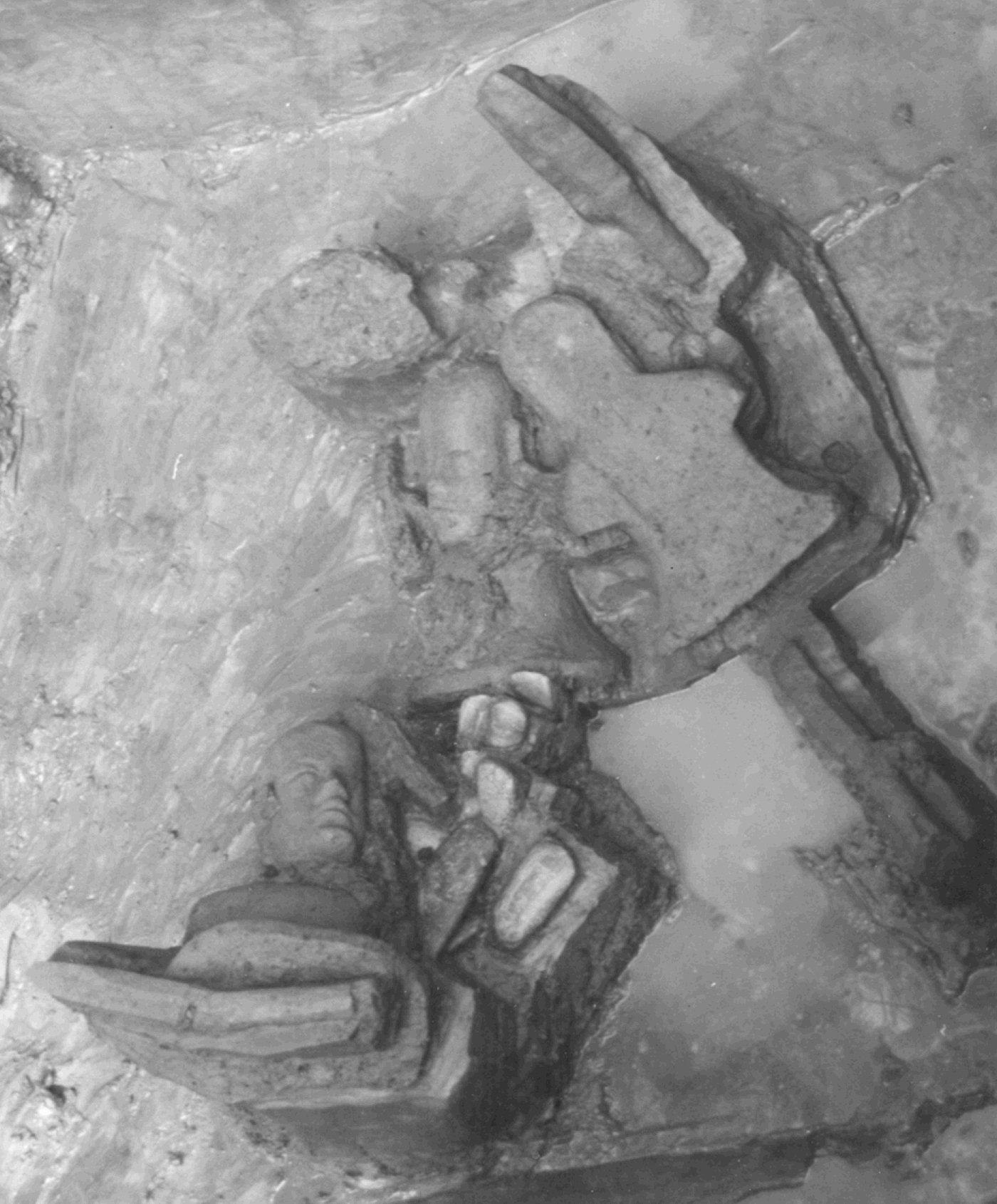
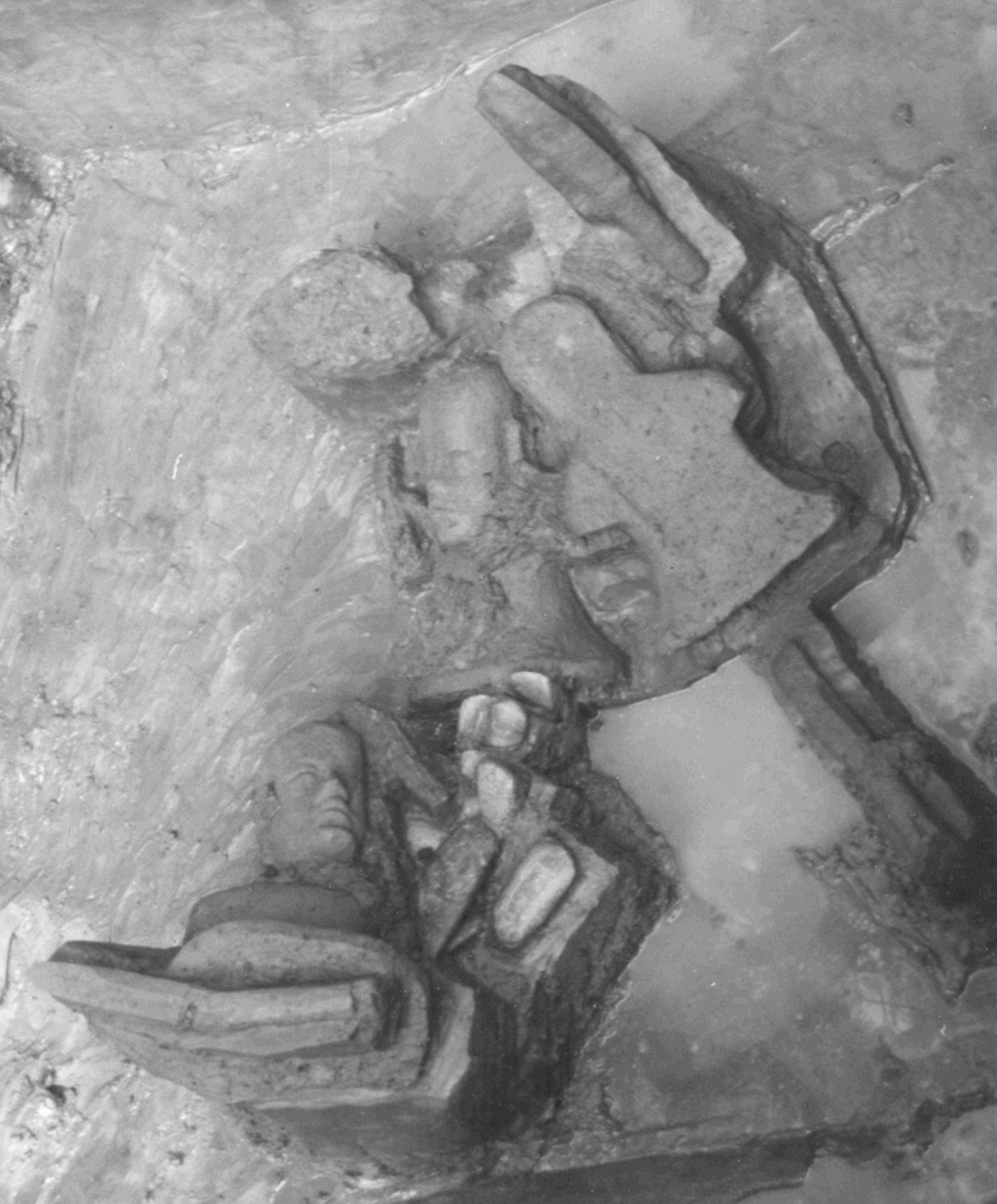
The most spectacular example of a pre-Olmec occupation in Olman is that from the region of El Manatí (Figure 3). Offerings thrown into the spring at this waterlogged site and nearby El Merced document the development of ritual practices in a sequence of three phases running from approximately 1700 to 1200 b.c. (Ortíz Ceballos and Rodríguez 2000:75). Rubber balls, hog plum seeds, otate (false bamboo) stems, copal resin, pottery vessels, and polished greenstone celts were placed in increasingly formalized offerings over the course of the Manatí A (1700–1500 b.c.) and B (1500–1400 b.c.) phases. During the Macayal A phase (1400–1200 b.c.) offerings of greenstone celts and rubber balls were joined by the wooden busts and staffs that first brought attention to the site along with wood-handled knives, bundles of plants, mats, balls of red ochre, and the skeletons of human infants, possibly sacrificed. Meanwhile, greenstone celts were deposited by the hundreds at La Merced between about 1500 and 1200 b.c., with unfinished celt preforms in various stages of production dominating the assemblage after about 1400 b.c. (Jaime Riverón 2003:253–255). An anthropomorphic votive axe associated with the second offering (ca. 1400–1200 b.c.) is not only one of a handful of its kind excavated in situ, but also dates far earlier than the Middle Formative period to which such objects are usually assigned. A slightly later offering included a square stone slab carved with the face of the “Olmec dragon,” which seems to foreshadow similar Middle Formative period reliefs.
Offering from El Manatí, Veracruz, of three wooden busts accompanied by wood batons, earspools, pectorals, greenstone celts, and cinnabar (photograph courtesy of Ponciano Ortíz Ceballos and María del Carmen Rodríguez).
In sum, the information coming out of the southern Gulf lowlands over the last two decades points to a long sequence of continuous occupation from at least the Middle Archaic period forward, with the gradual development of subsistence economies, settlement systems, craft traditions, and ritual practices that came to characterize the Olmecs after 1400 b.c. There simply is no longer any reason to believe that the origins of Olmec culture and society lie outside Olman. Much more research is necessary, however, to understand the processes by which Olmec culture developed in the Gulf lowlands.
Subsistence
As noted above, much of the earliest evidence of human occupation in the southern Gulf lowlands, at places like San Andrés and Laguna Pompal, relates to the introduction of cultivars and landscape modifications associated with clearing fields. Rather than marking the initial occupation of the lowlands, however, Zea—and later domesticated manioc, sunflower, and cotton—would seem to have been added to an existing lowland Archaic hunter-gatherer economy, which at San Andrés included domesticated dog and wild squash, oysters, clams, gar, manatee, and probably many other wild species (Pope et al. 2001). Beans appear relatively late, with the earliest claim being for some time prior to 1700 b.c. at sites along the Río Barí (Rust and Leyden 1994).
Therefore, the basic elements of an Early Formative period mixed economy were well established by 1500 b.c. They included, in addition to the above, palm nuts and other tree fruits; several species of freshwater, estuarine, and marine fish; toads, frogs, turtles, iguanas, and crocodilians; turkey; duck; and a wide variety of small and large land mammals. Hawks, rats, and mice whose remains have been recovered from Olmec sites may or may not have been eaten (Ortíz Ceballos and Rodríguez 2000; Pope et al. 2001; Rodríguez and Ortíz Ceballos 2005; Rust and Leyden 1994; VanDerwarker 2006; Wing 1980; Zurita Noguera 1997). Many of the terrestrial fauna, including deer, prefer disturbed habitats, and VanDerwarker (2006) makes a strong case that the Olmecs at La Joya relied a great deal on “garden hunting.” Also noteworthy is the heavy reliance on turtle and fish, which included marine species such as tarpon, snapper, jack, and sea catfish. While these species occasionally come up the Coatzacoalcos River as far as San Lorenzo during periods of high water, the appearance of snook, jack, and snapper at La Joya suggests the Olmecs in the central Tuxtla Mountains either made trips to the coast or traded for fish with their coastal neighbors.
There remains some question as to just how important maize was in the Early Formative period diet compared to later times. VanDerwarker's (2006) analysis of the botanical data suggests maize had become a significant component of the diet at La Joya before the end of the period (cf. Arnold 2000). On the other hand, Borstein (2001) interprets the late Early Formative period expansion of settlement away from the Río San Juan and into the Tuxtla piedmont as the result of an increasing reliance on rainfall maize agriculture, a trend which continued in the Middle Formative period. Other evidence for increasing Olmec reliance on maize is seen in the frequency of carbonized maize fragments per cubic meter at La Venta and nearby sites, which reaches a peak in late Middle Formative deposits (Rust and Leyden 1994:192–194, Table 12.3). Maize symbolism also is more evident in Middle Formative period iconography, plausibly as the result of its greater economic, as well as spiritual, importance (Taube 2000).
The mixed Olmec subsistence economy documented archaeologically would have provided an adaptive advantage in a region whose environmental diversity and dynamism is often underappreciated. Contrasts in topography, geology, and rainfall between the coast and the interior and between volcanic mountains and lowland river basins of Olman create discrete environmental zones with variant ecological processes, agricultural productivity, and resources (Pool 2007:78–91). We still have only the most basic understanding of how subsistence practices varied across Olman in response to differences in the environment and the demands of political economies, however, and the reconstruction of paleoenvironments has barely begun, despite a few palynological (Goman and Byrne 1998; Pope et al. 2001; Sluyter and Domínguez 2006) and geomorphological studies (Jiménez Salas 1990; Ortíz Pérez and Cyphers 1997; Santley et al. 2000). Collecting subsistence and environmental information from Olmec sites across Olman should be a prime objective for future research in order to evaluate how risk, resilience, and resource exploitation contributed to the origins, diversification, interaction and demise of Olmec societies.
Craft production and exchange
Understanding the role of craft production and exchange in the Olmec political economy remains a critical but elusive goal, despite some spectacular discoveries over the last 20 years. The skill required to carve hard basalt into monumental masterworks has long been cited as among the strongest indications of a specialized occupation among the Olmecs. Unfinished monuments and basalt debitage mark Llano del Jícaro as a monument carving workshop, probably under the direct control of nearby Laguna de los Cerros (Gillespie 1994, 2000a; Grove 1994), although Borstein (2001:169) argues that San Lorenzo founded Laguna de los Cerros to exploit the Llano del Jícaro basalt outcrops. Cyphers's (1996, 1997b) reports of broken and partly reworked monuments near elite residential structures on the summit of San Lorenzo, interpreted as a monument recycling workshop, further strengthens the case for elite control over this material and its conversion into mundane items as well as monumental sculpture. The recovery of six metric tons of imported multiperforate ilmenite cubes from two large pits at San Lorenzo has been offered as evidence of elite control over a craft that employed these objects, perhaps as bearings for rotary drills (Cyphers 1996; DiCastro Stringher 1997); alternatively, these pits may represent hoarding of the cubes for later dissemination or the decommissioning of objects reclaimed from users (Clark 1996:193; Pool 2007:105). In any case, a significant degree of elite control over their importation seems evident, the occasional occurrence of ilmenite cubes in rural contexts notwithstanding (e.g., Arnold 1995:195). Producing polished celts, axes, beads, earspools, and the like from imported jade and serpentine probably was a specialized task conducted under elite sponsorship. Jaime-Riverón's (2003) analysis of greenstone debitage and celt preforms represented in offerings at Early and Middle Formative period Olmec sites shows that greenstone was worked in Olmec sites and underscores the sacredness of the material as well as the finished objects.
The Olmecs appear to have established a series of overlapping obsidian procurement networks organized at the regional and community level. As a result, contemporaneous sites in eastern and western Olman differ in the relative frequencies of obsidian from different sources, with the difference in prevalence of Guatemalan obsidians in western versus eastern sites being particularly notable (Cobean et al. 1991; Pool et al. 2010.). Even within some polities, such as that dominated by La Venta, there was considerable variation in the sources of materials among settlements (Doering 2002). Obsidian was widely available at all social levels, although the common use of bipolar reduction to reduce cores to the last usable flake suggests the need for households to conserve material (Cyphers 1996:66; Doering 2002; Knight and Pool 2008). During the San Lorenzo phase prismatic blades are more common in San Lorenzo than in hinterland residential sites (O'Rourke 2002:185, 220, 225), but the degree to which elites controlled prismatic blade reduction is still uncertain.
Residential production of pottery is suggested by firing features at San Carlos (Kruger 2000) and smoothing stones and residues of clay and pigment at El Bajío (Wendt 2005:177); there is no evidence at these sites that pottery production was an intensive or highly specialized activity. Cheetham (2010) has demonstrated a remarkable degree of similarity in the size and form of “Olmec-style” pottery from San Lorenzo and Cantón Corralito, but vessel classes from neither site exhibit much standardization in their metric attributes. At San Lorenzo, coefficients of variation for rim diamaters in particular vessel classes range from 15% to 42% (excluding classes with fewer than 10 examples) (Cheetham 2010:Table 3, Table 7.2; personal communication 2010). Blomster et al. (2005) demonstrated the export of decorated pottery and figurines from Olman to other parts of Mesoamerica (see also Neff et al. 2006a, 2006b; cf. Flannery et al. 2005; Sharer et al. 2006; Stoltman et al. 2005). Further investigation is needed, however, to clarify the organization of the production and exchange systems for these exports. Cheetham's research was directed toward identifying products made by potters trained in the same technical tradition, rather than differentiating the products of specific workshops, and the variation in chemical composition of the San Lorenzo pottery reported by Blomster and colleagues (2005) seems to suggest contributions from multiple producers.
Recent research on bitumen has opened a new window on the acquisition and processing of natural resources by the Olmecs. Wendt (2002, 2005) identified the residues of substantial bitumen processing at El Bajío, and Wendt and Lu (2006) were able to narrow the possible sources chemically. Ortíz Ceballos and Rodríguez (personal communication 2007) have identified probable bitumen processing at El Paraíso, also in the Coatzacoalcos Basin. The lack of such evidence at most other Olmec sites suggests some degree of community or household specialization in processing this material, including its use for waterproofing watercraft. Again, there seems little reason to attribute such specialization to elite sponsorship. Rather, elite involvement appears to have been limited to control over the procurement and transport of locally scarce resources and exotic materials and commissioning prestige goods and monumental artworks.
Households and communities
Excavations and surveys since 1989 have provided a wealth of new information on Olmec settlement at scales ranging from the residence to the region. Twenty years ago Olmec household archaeology was virtually nonexistent. Today residential localities have been excavated at San Lorenzo (Aguilar 1992; Gregor López 1999; Zurita Noguera 1997); Las Galeras (O'Rourke 2002), El Remolino (Wendt 2003), and San Carlos (RARO 154) (Kruger 2000). These excavations provide a composite picture of a typical Olmec house as measuring about 3-×-5 m with a palm-thatched roof supported by corner posts, walls of poles or wattle-and-daub, and a floor of packed earth, clay, or sand. Variations included surfacing floors with colored clays, bentonite blocks, or bitumen. Some larger, more elaborate residences at San Lorenzo measured 9-×-12 m or more and had rammed earth walls colored with red pigment; a stone column recovered from the elite residence called the “Red Palace” may have supported a tall thatched roof (Cyphers 1996, 1997a:98, 1997d:101). In contrast, excavations at rural La Joya suggest insubstantial dwellings occupied intermittently or seasonally. The floors of the more permanent dwellings were well-maintained, and craft activities were typically conducted outside, including pottery production (Kruger 2000), bitumen processing (Wendt 2005), lithic reduction (Rojas Chávez 1990), and basalt working, including the reworking and recycling of monuments (Cyphers 1996).
A handful of investigators have examined the organization of house lots outside the residence. Kruger (2000) estimated the diameter of a rural houselot at San Carlos at about 50 m, including covered spaces, cleared activity or staging areas, and a ring of more concentrated refuse consistent with the model Killion (1992) abstracted from his ethnoarchaeological work in the Tuxtla Mountains. At the more-or-less contemporaneous site of El Bajío, however, Wendt (2005) found refuse to be concentrated near structures (inferred from clay floors) as well as rectilinear sherd concentrations suggesting provisional discard next to walls. The total distance across both domestic areas at El Bajío is about 35 to 40 m, and they are separated by about 6 to 8 m of space relatively free of debris. Overall, then, the El Bajío domestic occupation resembles the patio-centered house lot model Hayden and Cannon (1983) and Deal (1985) describe for contemporary Highland Maya households, whereas Pool (1997) found Late and Terminal Formative period houselots at Bezuapan in the Tuxtla Mountains to more closely resemble Killion's (1990) residence-centered Tuxtla houselot model.
Intensive systematic surface collection combined with auger testing and excavation has shed new light on the size, organization, and history of Olmec sites, ranging from major centers (Cyphers 1997c; Lunagómez 1995; Pool 2003; Pool and Ohnersorgen 2003; Wendt 1998, 2003) to small villages and hamlets (Kruger 2000; McCormack 2003; Wendt 2002). We now know that the Early Formative period occupation at San Lorenzo was not confined to the 52 ha summit of the plateau that supported elite structures and impressive sculptural displays. Rather, domestic occupation extends over some 500 ha, much of it on artificial terraces on the slopes of the plateau (Symonds et al. 2002:66). On the other hand, most of the 200 low mounds that dot the summit of the plateau turn out to be recent agricultural features, and the mounds in the formal complex at the center of the plateaus were not raised until the Middle Formative period Palangana phase (Cyphers 1997a:107–108; Diehl 1981:70–73).
Surface survey and auger testing confirmed the emergence of an Olmec regional center at Tres Zapotes before its Late Formative period apogee (Pool and Ohnersorgen 2003; Wendt 2003). Middle Formative period remains there are distributed over some 80 contiguous hectares, and smaller concentrations of Middle Formative period material surrounding this site core total another 70 ha. Excavations at Tres Zapotes uncovered an 80-cm-thick clay platform and domestic refuse deposits from the Middle Formative period (Pool et al 2010). At La Joya, McCormack (2003) used an intensive program of auger testing to delimit areas of domestic occupation for different episodes of settlement, inferring a pattern of decreasing mobility over the course of the Early Formative period.
Region and polity
Olmec settlement patterns exhibit a considerable range of variation at subregional and regional scales. Comparison among areas in Olman is made difficult, however, by differences in site preservation and varying site typologies (Pool 2005, 2007:124–132, 152–154; see also Clark 2007; Flannery 1998). For the Early Formative period, San Lorenzo and its hinterland exhibit the upper limit of complexity and hierarchical development, not only for the Gulf lowlands but for all of Mesoamerica (Clark 2007; Cyphers 1997c). Symonds (1995; Symonds et al. 2002:39–42) devised a site typology for the Middle Coatzacoalcos Basin that distinguished categories based on site size, density of archaeological materials, and the quantity, size, and complexity of architectural modifications and/or constructions (keeping in mind that mound-building may not have occurred until the Middle Formative period). The resulting classification contained eight categories, two of which, islotes and small hamlets (caseríos pequeños), are interpreted as seasonal occupations. The remaining six categories identify hamlets, villages, and centers of varying size and complexity. For the San Lorenzo phase 226 sites were identified in the 400 km2 area, of which 99 represented permanent settlements. At least three tiers of permanent settlement are clearly represented: the large center at San Lorenzo, small centers, and villages/hamlets. The distribution of larger sites at confluences and other key points along rivers and streams suggest a concern with controlling fluvial transportation networks, with San Lorenzo at the center of the system (Symonds et al. 2002:70–72).
Despite the acquisition of these new data, the status of San Lorenzo as capital of a chiefdom or state continues to be debated. Cyphers (1997c:273) and colleagues (Symonds et al. 2002) view San Lorenzo as an “incipient state.” Spencer and Redmond (2004b) modified Flannery's (1998) archaeological criteria for identifying a state, dropping tombs and adding foreign conquest to the presence of a four-tiered settlement hierarchy with three administrative tiers, palaces, and standardized, multi-room temples. They concluded with Flannery that San Lorenzo lacked all of these and so was not the capital of a state but the administrative center of a complex chiefdom. Clark (2007) responded that evidence for temples and palaces around 300 b.c. at Monte Albán was also lacking, then adduced evidence from survey data in the Coatzacoalcos Basin (Symonds et al. 2002) and the Mazatán area that San Lorenzo exhibited the other two criteria of a four-tier settlement hierarchy and extraregional hegemony in the San Lorenzo phase. Clark (2007:19, Figure 2.6) acknowledges that his log-normal histogram of site sizes leaves the existence of a tier of tertiary administrative centers equivocal but expects they will be resolved through additional field research and more precise dating. His assertion that San Lorenzo exerted hegemony over the Mazatán area draws support from a convincing Olmec presence at Cantón Corralito and changes in settlement patterns congruent with the rise and decline of San Lorenzo. However, comparison of Clark's Cherla and Cuadros phase histograms (2007:Figures 2.8 and 2.10) indicates a general decrease in the area of the largest sites in the survey area, and the sizes of Cantón Corralito (e 2.5 = 12 ha) and the next largest sites in the survey region (e 2 = 7 ha) do not inspire confidence that any one village controlled the region as a whole. It also is not clear whether Gulf Olmecs caused the general decline in population in Mazatán or simply exploited the demographic shift to establish an enclave in the region to oversee trade or even to escape increasingly onerous demands by Gulf Olmec elites.
In contrast to the Coatzacoalcos Valley, surveys in the Tuxtla Mountains have not identified a regional center earlier than the Late Formative period (Killion and Urcid 2001; Santley and Arnold 1996; Stoner 2008). Other surveys in the Río San Juan Basin (Borstein 2001), the El Mesón area (Loughlin 2004), the La Venta hinterland (Rust and Leyden 1994; Rust and Sharer 1988), and western Tabasco (von Nagy 2003) suggest intermediate levels of hierarchical development and differential timing of regional florescence with La Venta being the largest and most complexly organized system in the Middle Formative period (González Lauck 1996). It also appears that Laguna de los Cerros was a contemporary of San Lorenzo, growing and perhaps becoming a rival toward the end of the San Lorenzo phase (Borstein 2001). La Venta and the Middle Formative period center at Tres Zapotes were also contemporaries and possible rivals (Pool and Ortíz Ceballos 2008).
Overall, the model best supported by the data is one of overlapping cycles of development among multiple independent polities across Olman. The degree of overlap between political centers at San Lorenzo and La Venta is still unresolved, however (compare González Lauck 1990:159–167; Clark 2001:184; von Nagy 2003:1081; Pool 2007:158–160). Estimating the territorial extent of Olmec polities is still difficult, although I believe the evidence better supports rather small territories (see also Symonds et al. 2002:128). An average radius of 25 km (suggesting about 2000 km2) seems a reasonable estimate, although larger, more powerful centers may have controlled a larger area.
Art, iconography, and writing
Two major themes have dominated interpretations of Olmec art and iconography since the 1990s. One focuses on the specific meanings of symbols drawing on wide-ranging comparisons across Mesoamerica and among later societies. The other concerns the use of imagery and sculpture in creating and maintaining political authority. Taube's (1995, 1996, 2000, 2004) dazzling excursions into the meanings of Formative period motifs are a prime example of the first theme. Among Taube's several contributions, he has argued strongly for the importance of maize and rain symbolism in Olmec art (Taube 1996, 2000) and for their associations with distinct supernatural beings he identifies as the Olmec Maize God (1996), the Olmec Rain God, and the Avian Serpent (1995). Taube's approach continues the tradition of Joralemon (1971, 1976) and Coe (1968) of positing a pantheon of Olmec deities or god complexes and interpreting them through an analysis of the combinations of specific motifs, identifying their referents in nature, and, where possible, tracing their evolving representations to those in later cultural traditions. The assumption of continuity of both form and meaning in the representations of deities and their associations with natural phenomena (Coe 1989:71) also continues an interpretive tradition that Saville (1929a, 1929b) began with his identification of Olmec were-jaguar imagery as a precursor to the Aztec god Tezcatlipoca and that Covarrubias (1957) popularized in his famous derivation of Tlaloc, Cocijo, Chac, and other Mesoamerican rain gods from the same Olmec were-jaguars. Taube ranges even more broadly across space and time, seeking the meaning of Olmec “torch” motifs and celts in the forms and uses of feathered maize fetishes and “lightning celts” (chimahaya) among Puebloan societies in the Southwestern United States (2000:319–330, 2004:82). He suggests that Puebloan maize symbolism diffused from Mesoamerica as a ceremonial complex ultimately traceable to the Olmecs, noting the use of Mesoamerican macaw feathers in the construction of the fetishes (2000:320), as well as the Mesoamerican origin of domesticated maize.
Also important has been the identification of underlying principles of Olmec iconography by Taube and others (M. Coe 1965b, 1989; Joralemon 1971,1976; Reilly 1995). In addition to framing scenes in terms of the cosmos and using the form of the human body to express the cosmos, Taube (2004:34–37) identifies substitution, affixation, infixation, conflation, and personification as important conventions in Olmec iconography that also presage later Mesoamerican writing systems, if they were not already part of one or more Olmec writing systems (Pohl et al. 2002; Rodríguez et al. 2006). The common substitution of elements to create multiple and nuanced meanings and the conflation of distinct forms into composite images, however, also serves to underscore the difficulty of identifying regional variation in the meaning of Early and Middle Formative period motifs. This is especially true when interpretations rely heavily on artifacts of uncertain provenience (see Grove 1996). Does the substitution of different motifs in similar iconographic contexts in Guerrero and the Gulf Coast indicate a general equivalence of meaning or the development of distinct meanings particular to each region? Without multiple well-provenienced examples it is impossible to know.
Research on the political uses of iconography owes a great deal to Furst's (1968, 1995) argument that certain small greenstone sculptures represented shamans in the act of transforming into their animal spirit companions, typically jaguars, and the arguments of Friedel et al. (1993; Schele and Friedel 1990) that Maya kings manipulated shamanistic concepts and ritual in support of their authority (see also Houston and Stuart 1989). Reilly (1991, 1994, 1995) placed the ideas of shamanic transformation, shamanic flight, and the ability of shamans to travel along the axis mundi at the center of his interpretation of a Middle Formative period Ceremonial Complex, and others quickly expanded the use of shamanic ritual to interpret other forms of Olmec iconography and architecture (e.g., Schele 1995; Tate 1995, 1999). Although shamanic imagery and the axis mundi (Tate 1995) occur most widely in portable items mainly thought to be associated with the Middle Formative period, the themes can also be discerned in Early Formative period Olmec monuments (Cyphers 1999, 2004; Pool 2007:120). Alternative interpretations such as Tate's (1995, 1999) that “dwarves” and certain figures identified as shamans in an ecstatic stance represent fetuses and embryos have not caught on widely.
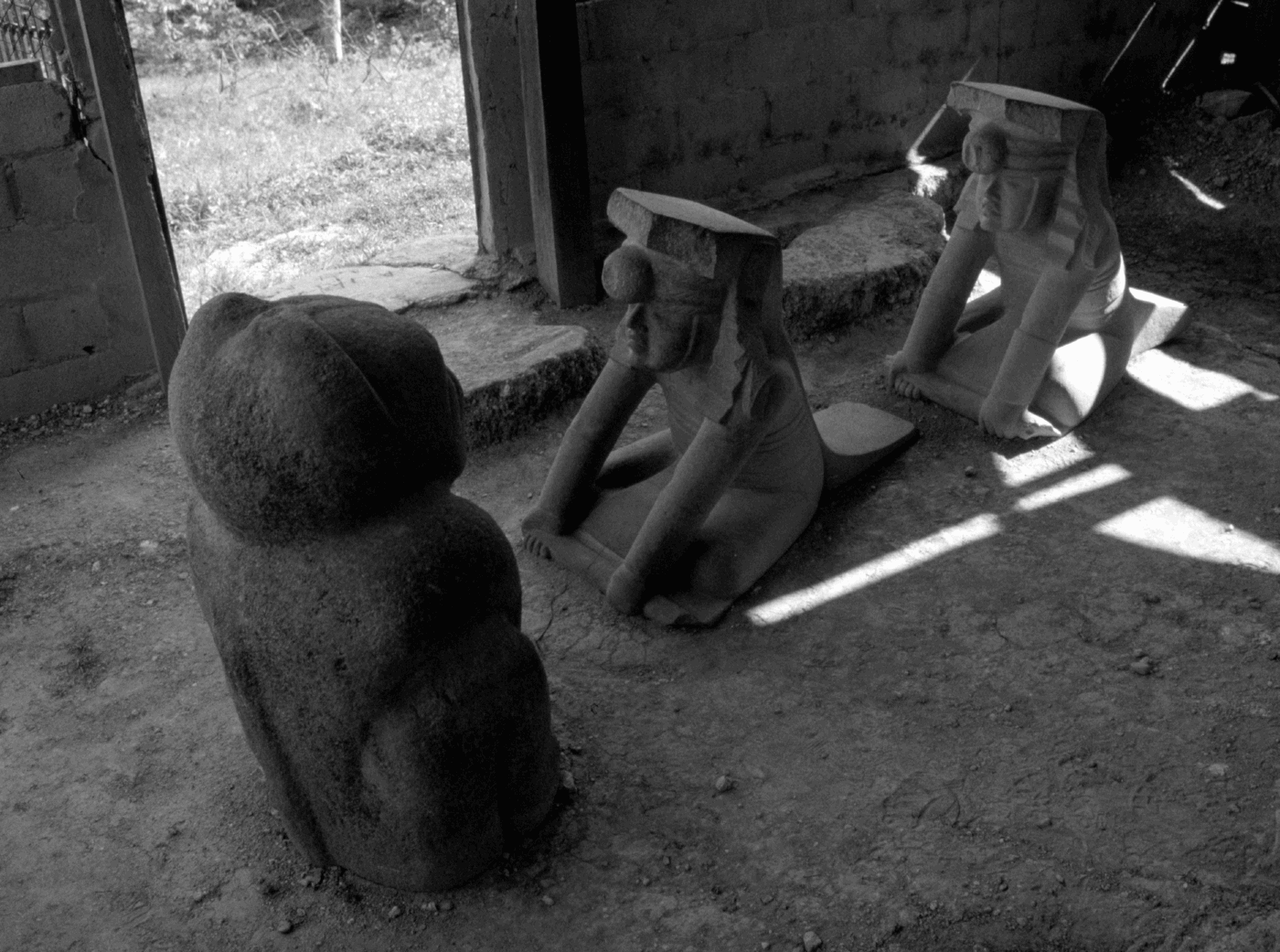
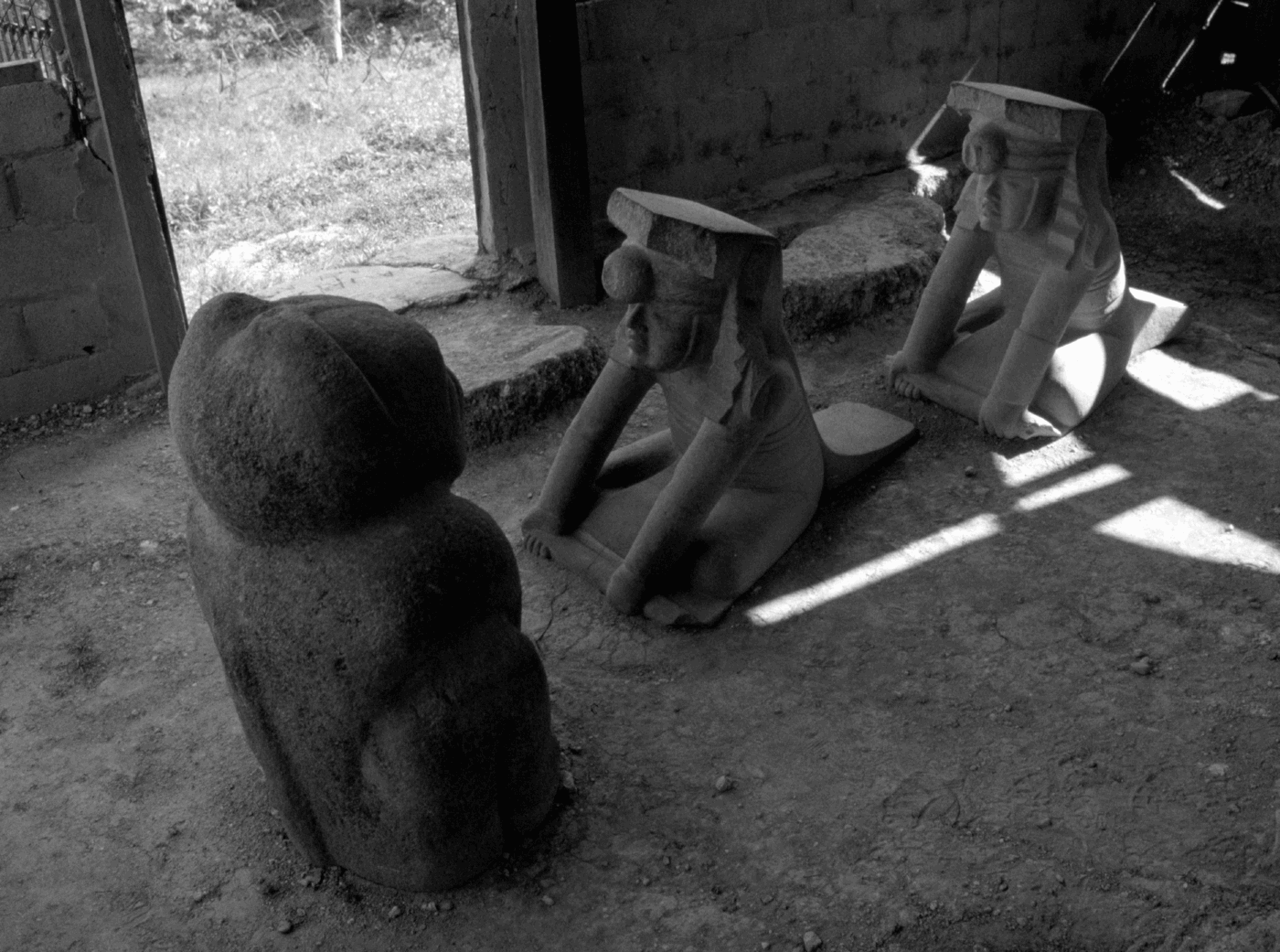
Other researchers have elaborated upon the well-founded assumption that Olmec stone monuments played a role in legitimizing ruling authority (see, for example, de la Fuente 1977, 1996, 2000) by paying particular attention to their contextual associations with other monuments, architectural features, and site layouts. Cyphers (1997a, 1997d, 1999), for example, notes several ways in which monuments appear to have been arranged at San Lorenzo (and its dependents) to reinforce and extend certain meanings. Examples include a macro-display of colossal heads arrayed in two parallel lines on the plateau's summit, the strong association of felines with water conduits in elite contexts, and the arrangement of the kneeling Azuzul twins before crouching jaguar statues (Figure 4). Likewise, Grove (1999) sees in the arrangement of different monument classes at San Lorenzo, La Venta, and Chalcatzingo the thematic segregation of sacred/ceremonial and secular/public spaces as regional differences in their associations with inner-outer and north-south orientations. I have argued for similar use of Olmec monuments at Tres Zapotes to delineate spaces and legitimize rulership in the Middle Formative period and their intentional incorporation into Late Formative period architectural layouts (Pool 2007, 2010), and Tate (1999) has provided a provocative reconstruction of the meaning of La Venta's monumental constructions and offerings with reference to geographical features of the Isthmian landscape.
Statues of human twins facing a jaguar from El Azuzual locality, Loma del Zapote, Veracruz (photo by author).
Since 1987, three discoveries have prompted much debate over early writing in Olman. The first came when a stela covered with epi-Olmec glyphs (also called Isthmian and Tuxtla script) was taken out of the Acula River at La Mojarra (Winfield Capitaine 1988). Long Count dates on the stela placed its carving in the mid-second century a.d. Several individuals took up the challenge of deciphering the 400-character-long text in a writing system that appears only on a handful of other known objects (Macri 1991; Macri and Stark 1993; Méluzin 1992, 1995). In 1993, Justeson and Kaufman reported they had deciphered the text (see also Justeson and Kaufman 1997) and began working on a translation (Kaufman and Justeson 2001). Not everyone was convinced, however, and the identification of an epi-Olmec inscription on a Teotihuacan-style mask in a private collection provided the opportunity for a critique (Houston and Coe 2004) and a subsequent rebuttal (Justeson and Kaufman 2008).
In 2002, a cylinder seal with glyph-like symbols from San Andrés, Tabasco, was reported as the earliest example of writing in the New World (Pohl et al. 2002). There is no doubt that the object is Olmec and that it comes from the Middle Formative period, although whether it dates as early as 650 b.c., as claimed, is less certain. Commentators in the accompanying article in Science (Stokstad 2002) also differed on whether the two glyph-like compounds were truly writing, with some considering the symbols to be iconographic. The third object turned up in 1997 at Cascajal, north of San Lorenzo, and was reported to Cyphers, then to the Instituto Nacional de Antropología e Historia (INAH) (Cyphers 2007b). Ortíz Ceballos and Rodríguez were sent by INAH to examine the object and learn what they could about the circumstances of its discovery, reportedly in a pile of dirt removed from a mound for roadfill (Rodríguez et al. 2006). Covered with symbols apparently arranged in rows rather than the columns that are more common in later Mesoamerican writing systems, the Cascajal block has also generated controversy, with some doubting its authenticity and others questioning whether it is of Early Formative period vintage as claimed (e.g., Bruhns et al. 2007; Cyphers 2007a, 2007b; cf. Ortíz Ceballos and Rodríguez 2007; Rodríguez et al. 2007). Geologists who examined the block at 20x magnification concluded that the patina on the block and within the incised lines of the inscriptions were of the same age. Spectrometric and X-ray diffraction analysis of the composition of the patina might provide additional confirmation that it and the carving are both ancient, although it would still be difficult to ascertain whether the block came from the Early Formative period component or the less substantial Middle Formative component documented at the site. Regardless, the search for other examples of similar writing should be intensified, not only in the field, but in the thousands of boxes of Olmec artifacts in storage.
Collapses and continuities
The seventeenth of Diehl's (1989:32) nineteen questions in the Regional Perspectives volume was “How, why, and when did Olmec culture collapse, and what do we mean by the concept of collapse in this context?” Recent settlement pattern research suggests that there was not a single overall collapse of Olmec society, but a cycling of polities with overlapping patterns of growth and decline—some more precipitous than others. The San Lorenzo polity does appear to have suffered a demographic collapse at around 1000 b.c., which left San Lorenzo a large village and decimated its surrounding population (Symonds et al. 2002). Middle Formative period population decline does not appear to have been as precipitous in the San Juan Basin, though, (Borstein 2001) and the Middle Formative saw increasing population in the Tuxtla Mountains and adjacent eastern lower Papaloapan Basin (Loughlin 2004; Santley and Arnold 1996; Stoner 2008). The abandonment of sites along the Río Barí suggest a regional demographic collapse accompanied the fall of La Venta about 400 b.c. (von Nagy 2003:1034), but settlement growth continued unabated in far western Olman (Loughlin 2004; Pool and Ohnersorgen 2003).
Research conducted since 1995 at Tres Zapotes particularly challenges the idea of a general collapse of Olmec culture. Intensive survey and systematic surface collections indicate that, unlike La Venta, the Middle Formative period Olmec center that had been established at Tres Zapotes grew to over 500 ha and embarked on the site's major period of mound construction, becoming the largest Late Formative (400–1 b.c.) and Terminal Formative (a.d. 1–300) period center in the southern Gulf lowlands, declining gradually thereafter throughout the Classic period (Pool 2008; Pool and Ohnersorgen 2003). Ceramic styles and technologies show gradual change with considerable continuity into the Late and Terminal Formative periods. Cultural continuity is also indicated by the persistence of Olmec-derived themes in epi-Olmec sculptures at Tres Zapotes, including Stela D, Stela C, and some seated and tenoned monuments (Pool 2000, 2008).
Despite these continuities, I have argued that the Late Formative period Tres Zapotes polity did enact a profound change in governance (Pool 2008). This change is particularly evidenced in the construction of four widely dispersed formal mound complexes, each of which initially appears to have conformed to a consistent basic plan that included an east-west oriented plaza, with a conical mound to the west, a long mound to the north, and a low adoratorio on the central axis of the plaza, with other mounds added as the complexes expanded (Pool 2008). Based on the redundancy of architecture in these plaza complexes, radiocarbon evidence that suggests at least three complexes were used contemporaneously, and muted differences between elites and commoners in access to exotic resources, I argue that Late and Terminal Formative period Tres Zapotes was governed cooperatively by three to four ruling factions. This represents a significant change from the concentration of power in a single ruler and the exaltation of that ruler as an individual that is emphasized in Olmec art and architecture of the Middle Formative period at Tres Zapotes and elsewhere. It also coincides with a reduction in the flow of the exotic prestige goods that supported such exclusionary politico-economic strategies into Tres Zapotes and Olman in general.
Interregional interaction
Olmec studies have seen an intensification of the mother culture-sister culture debate since 1994 (e.g., Diehl 2004; Diehl and Coe 1995; Flannery and Marcus 1994, 2000) along with a groundswell of opposition to the terms of the debate (e.g., Lesure 2004; Pool 2007). Unfortunately, this is an argument that seems to draw participants to its poles with magnetic force. Despite avowals of a desire to understand “the complex nature of the Olmec and its relationships with its neighbors” (Blomster et al. 2005:1068) or denials of an intent to “describe the Olmec as ‘no more advanced’ or contributing little” (Flannery and Marcus 2000:2), opponents tend to see deviations from their own position as support for its opposite (e.g., Flannery et al. 2005; Neff et al. 2006a: 105; Sharer et al. 2006). And even though both sides in a recent argument over the significance of results from chemical analysis of Early Formative period pottery indicate that the printed rhetoric exaggerates their differences (Neff et al. 2006a: 113; Sharer et al. 2006: 101), the rhetoric shows few signs of subsiding.
A great deal of recent debate has centered on the INAA analysis of pottery published by Blomster, Neff, Glascock in 2005 (the data for which had been circulated in a report by Neff and Glascock [2002] a few years earlier). Without going into the specific objections raised in a series of articles by their detractors, Blomster and colleagues (2005; see also Neff et al. 2006a, 2006b) demonstrated that pottery with chemical compositions traceable to the San Lorenzo area had been exchanged to each of the sites outside Olman included in the study and that each of these sites also contained carved-and-incised pottery made locally. The study did not detect any pottery at San Lorenzo that was assigned chemically to other parts of Mesoamerica or any nonlocal pottery in other sites that could be assigned to a region other than the San Lorenzo area, leading to the more provocative claim that sites outside Olman did not exchange pottery to San Lorenzo or with each other.
The possibility remains that analysis of more samples and different ceramic types may reveal some counterflow of pottery to San Lorenzo and/or the occasional exchange of vessels between other regions. It would be particularly interesting to analyze west Mexican-style vessels that occur in Early Formative period contexts in the Valley of Mexico, Morelos, and points west to see if such vessels were widely exchanged and if a particular source region dominated any such exchange. We also need a more complete understanding of variability in the chemical and petrographic composition of pottery in the southern Gulf lowlands to determine whether Gulf Olmec sites other than San Lorenzo may also have exported vessels. Nevertheless, the overall tendencies in the geographical patterning of chemical compositions identified by Blomster et al. (2005) appear robust for the carved-and-incised pottery and white wares that were the focus of their study. These patterns demand explanation in terms of the economic, social, and political practices that also yielded variability in the proportion of imports to locally made versions, of the overall proportion of X-Complex pottery to other pottery styles, and of the variability in the depositional contexts of different pottery styles.
David Cheetham's (2010) meticulous comparison of pottery from Cantón Corallito and San Lorenzo exemplifies the kind of research that should be done to evaluate different models of interaction. Cheetham found striking similarities in metric and nonmetric attributes of form and decoration in vessels from the San Lorenzo area and locally made vessels at Cantón Corralito (chemically distinguished with instrumental neutron activation analysis [INAA]). Put simply, people in San Lorenzo and Cantón Corralito used similar frequencies of carved pottery vessels that were made locally in very similar shapes and sizes and decorated in very similar ways, and they disposed of them in similar contexts. Interestingly, the locally-made ceramics at San Lorenzo and Cantón Corralito are more similar to one another in size than either are to vessels imported by Cantón Corralito (Cheetham 2010). Together with typological and formal similarities across a range of other artifact classes, Cheetham's findings offer strong support for the hypothesis that Cantón Corralito supported an enclave of Gulf Olmecs.
Recently, Blomster and Cheetham (2008) have expanded Cheetham's analytical approach to Etlatongo in the Mixteca Alta of Oaxaca, where they find less similarity in local products and therefore infer less intensive interaction with Gulf Olmecs, the presence of some Gulf imports notwithstanding. That interpretation is consistent with an increasingly well-documented picture of highly variable manifestations of interaction across Mesoamerica, particularly as represented in the Valley of Mexico (Tolstoy 1989a), the Valley of Oaxaca (Flannery and Marcus 1994), the southern Isthmus of Tehuantepec (Reyes and Winter 2006; Winter and Blomster 2008), and western Honduras (Joyce and Henderson 2001).
Much of the recent attention has focused on the Early Formative period because of its importance to questions of the origins and early dissemination of an “Olmec style.” Research on later time spans, however, highlights profound change in resource flows, network connections, and accompanying materializations of authority and alliance (Grove 1993; Stark 2007). The transition from the Early to the Middle Formative period is emerging as a particularly critical period for research. Elaboration of X-Complex motifs is characteristic of the late Early Formative period in highland Mexico, including many of the more elaborate San José phase hachured motifs (Flannery and Marcus 1994) and Manantial phase (ca. 1150–900 b.c.) profile heads rendered in an incised resist technique (Neiderberger 1976, 1987), which presage later Middle Formative period representations. Manantial-style ceramic decoration also signals more intensive interaction between the Soconusco region (Jocotal phase, ca. 1150–1000 b.c.) and central Mexico at a time of significant settlement disruption. The degree to which these changes were connected (as consequence or cause) to events in Olman is uncertain, but evidence for increased conservation of basalt at San Lorenzo in the San Lorenzo B phase is perhaps symptomatic of increased competition with other emerging centers, including Laguna de los Cerros (Borstein 2001) and possibly La Venta (Clark 2001:184).
During the Middle Formative period, many regions of Mesoamerica experienced the emergence and increasing differentiation of sociopolitical hierarchies. Tied to the emergence of these hierarchies was a shift in the predominant medium of religious iconography from ceramics to greenstone, increasing investment in monumental construction and ostentatious displays of wealth, an increasing demand for greenstone and other exotic materials, and the spread of the Olmec sculptural tradition, particularly along routes toward obsidian and greenstone sources (Grove 1993). In the Soconusco region and the Pacific piedmont of Guatemala, the disruptions of the Jocotal phase were followed by precocious monumental mound construction at Pacific coast and piedmont sites like La Blanca (Conchas phase, ca. 1000–900 b.c.), Takalik Abaj, and Izapa—a phenomenon Clark (1997) attributes to a power vacuum in Olman.
At about the same time, in Guerrero, a sunken patio with Olmec-style sculpture was being constructed at Teopantecuanitlan along with impressively long and deep stone-lined canals and drains (Martinez Donjuan 1994:159–160; Niederberger 1996b:98–99). The discovery of Olmec-related sculpture at Teopantecuanitlan in the 1980s and at Zazacapa in the current decade have highlighted the “local” elements in sculpture and architecture at Chalcatzingo (Grove 2000, 2007), showing them to be, not unique variations, but manifestations of a vigorous regional style into which Olmec sculptural elements were incorporated. Stretching from San Miguel Amuco in Guerrero, through Teopantecuanitlan, Juxtlahuaca, Oxtotitlan, and Chalcatzingo to La Yerbabuena and El Viejón in Veracruz (Castro Lainez and Cobean 1996), sites with relief carvings, sculptures, and murals adhering to varying degrees to Olmec canons mark out resource zones and probable trade routes for greenstone, obsidian, and other exotic materials (Coe 1968:94). The same can be said for the series of sites with Olmec-style carvings that extends southeastward from Olman into central Chiapas, across the Isthmus of Tehuantepec, down the Pacific coast as far as Chalchuapa, El Salvador, and northward to Naranjos, Honduras. Here too, obsidian and greenstone, especially the blue jade, green jade, and serpentine of the Motagua Valley (Seitz et al. 2001), appear to have provided much of the impetus for Olmec involvement in the political alliances and social networks expressed in carved stone reliefs. As Grove (1993) pointed out some time ago, the entire character of Middle Formative period interaction involving the Olmecs seems more focused and more formalized, although recent iconographic interpretation and a greater appreciation of regional variation in carving styles suggests Olmec interaction with the most distant locales was effected indirectly via intermediaries and that local elites negotiated the character and terms of those relationships (Grove 2000, 2007).
THE NEXT KATUN: PERSISTENT PROBLEMS AND NEW QUESTIONS
As the foregoing review indicates, olmequistas have conducted a great amount of work and have made real progress in the two decades since Diehl (1989; see also Diehl 2000) summarized what we knew and what we wished we knew. That does not mean that all, or even most, of Diehl's nineteen questions have been answered definitively. We know more about Olmec subsistence but not enough about the relative importance of different foodstuffs and how subsistence and its attendant risks varied across Olman and through time. Great progress has been made on settlement patterns, but much remains to be answered regarding the organization of Olmec households, their integration into communities, and the articulation of communities in regional settlement systems. We have a better appreciation for how Olmec rulers deployed symbols in support of their authority but understand less about the nature and degree of their control over material and human resources. Innovative examinations of Formative period symbolism have made elegant arguments for the meaning of some Olmec imagery, but whether and in what ways meanings differed in different places and times is still uncertain. Moreover, the lack of good (or often, any!) provenience for many of the objects and monuments upon which those interpretations rely continue to obscure regional difference and temporal development in art and iconography. We have more and better information about the manifestations and intensity of interaction among the Olmecs and other Formative period societies, but how those interactions were created and maintained, as well as their broader implications, remain among the most hotly debated topics in Mesoamerican archaeology. In short, all of Diehl's questions remain important, including those regarding the origin and fate of Olmec culture and the biggest one of all: “What aspects of the trajectory of Olmec culture are applicable to other societies at other times, i.e., were the Olmecs unique?” (Diehl 1989:32). It is the inability to answer this last question, because of so many uncertainties and parochial disputes, that Olmec studies have not achieved a more prominent place in recent discussions about the emergence of complex society and the origins of civilization.
How then do we “ask more and better questions,” as Diehl urged us to do? First, we should understand the “Olmec problem” as part of a much broader “Formative problem” that concerns how Mesoamerican civilizations developed, with their characteristic institutions, organization, practices, and beliefs. Past reconstructions of Formative period cultural processes pit two paradigms of how civilizations develop against one another. One views civilization as originating in a handful of societies whose unique circumstances propel them toward state-level integration and serve as the sources for the diffusion of complex institutions to less advanced societies. The other sees the evolution of civilization primarily as the result of broader processes affecting (or emerging from) the development of multiple interacting societies in a region. I lean toward the latter view for Mesoamerica, but we should accept the possibility that different civilizations have originated in different ways and treat the question as a historical one.
From a more particularistic perspective, understanding Formative period development and interaction is also critical to understanding the histories of different groups and the processes, events, and practices that contributed early on to their differentiation—that is, it is a question of the formation of group identities through forms of interaction that potentially range from outright conquest through various kinds of partial and negotiated interactions to active resistance (none of which are mutually exclusive of the others). Again, this represents a set of historical questions that can only be answered by regional studies, including detailed and rigorous comparison of artifact form, design, and context informed by theory. At present, agency-based theoretical perspectives that focus on how individuals and groups draw on the various sources of power at their disposal seem to offer the most promising framework for understanding variation in sociopolitical development and interregional interaction (Blanton et al. 1996; Clark and Blake 1994; Earle 1997:4–10; Mann 1986; see Pool 2007:284–289 for a more detailed discussion). We should be cautious, however, of turning this perspective into a top-down examination concentrating only on the agency of elites, especially as we seek to interpret variation in how symbols were deployed in different social settings.
In general, investigating the “Formative problem” will be advanced if we adopt a stance that acknowledges and seeks to understand the causes of variation within and between Formative period societies. Debates over the typological status of Formative period polities are not getting us very far in this regard (e.g., Clark 2007; Flannery 1998; Spencer and Redmond 2004b). Clark has made the strongest argument to date for San Lorenzo being the capital of a state, but even using the best evidence currently available I find that Clark's analysis leaves the typological status of San Lorenzo ambiguous (see above). I agree completely with Clark (2007:42; see also A. Smith 2003:24), however, that “We should worry less about hoary typologies and more about the properties of ancient polities and their individual histories”. In fact, Clark's article is most successful when he moves beyond argument for a San Lorenzo state and goes on to apply Friedman and Rowlands's (1977) “epigenetic” approach to address how this early complex polity emerged. Nearly everyone is now convinced that, whatever else San Lorenzo might have been, it was the head of the largest, most populous, and most hierarchically differentiated polity in Mesoamerica in its time. Whether we call that polity a state, an incipient state, a stratified society, or a paramount chiefdom, the interesting questions are the same: how did hereditary inequality develop in Olman? How was unequal access to natural resources, exotic goods, and/or esoteric knowledge converted into political authority? What sources of social, military, economic, or ideological power did leaders exploit to construct, maintain, and pass on positions of authority? To what degree did they rely on the exclusive monopolization of material and ideological sources of power as opposed to appeals to collective interests? What strategies did rulers employ to mobilize labor toward social and political ends? How far did the power of Olmec rulers extend beyond their capitals and in what arenas of social life? What effect did such efforts have on the daily lives of nonelites?
As we examine such questions we must also recognize that “Olmec” is not a monolithic entity within Olman, either temporally or spatially. Investigators, especially those who conduct fieldwork outside Olman, tend to reduce the Gulf Olmecs to a single iconic site for any one period in their millennium-long history. To the contrary, while San Lorenzo may have been the biggest thing going on in Olman in the Early Formative period, it was by no means the only thing, and the same can be said for La Venta in the Middle Formative period. Regional variation in the degree of hierarchical differentiation within Olman underscores how diverse societies were tied together through beliefs and practices expressed in a common iconography executed with a shared technological style. I have argued elsewhere that variation in Formative period sociopolitical organization in Olman is most fully understood in terms of the strategies employed by political actors operating within specific environmental and historical contexts (Pool 2007:284–289). We need to continue to investigate how Olmec leaders and rulers drew on the various sources of power depending on their social and environmental circumstances and the political contexts in which those sources of power were mobilized. It seems evident that Olmec leaders manipulated iconography and exotic materials as means of accessing ideological and economic power. Less clear is the degree to which they more directly controlled land and other basic resources or wielded military power.
Recent reports of possible Olmec writing at San Andrés (Pohl et al. 2002) and Cascajal (Rodríguez et al. 2006) add an interesting wrinkle to this question. Rather than approaching writing as one more trait to be checked off in the column of early civilizations, we need to be more concerned with questions about how and in what contexts writing may have been employed. If these are examples of writing, why are they so rare? Are they, in fact, rare, or have other early examples so far gone unrecognized? Did they serve as personal mnemonic (e.g., “shaman's writing,” as Rodríguez et al. [2006] suggest for the Cascajal block), or were they exhibited and recited in public contexts? To what degree did knowledge of writing and the broader iconographic system confer political power and under what circumstances?
Regional variations in the frequency of ceramic motifs and figurine types, the sources of exotic goods, and the intensity of interactions with other parts of Mesoamerica also suggest significant autonomy for Early Formative period villages of western Olman (Arnold 2005; Pool et al. 2010) and the Middle Formative period center at Tres Zapotes, where autonomy is also supported by differences in sculptural style (Pool and Ortíz Ceballos 2008; Pool 2008). We need to continue to investigate the ecological, economic, and social causes of variation in cultural traditions and interactions within and beyond Olman. How was economic independence linked to political autonomy? To what extent did the establishment of alternative exchange partners and the expression of variant motifs contribute to the negotiation of political relations within Olman?
As we investigate the “Formative problem” we must continue to recognize and seek explanation for variations in interaction within local contexts, and we need to explore all facets of Formative period interaction, not just interaction with the Gulf Olmecs (e.g., Henderson and Joyce 2008). There may not have been much movement of pottery with Early Horizon motifs between non-Olmec societies, but other materials, including jade, iron ore, sea shells, and amber, certainly were moving around, and toward the end of the Early Formative period, the Basin of Mexico seems to have been particularly involved in the transmission of motifs that included “were-jaguar” profile heads. In the Middle Formative period interregional flows of materials increased throughout much of Mesoamerica; Olmecs seem to have been intensively involved in this intensified trade in some regions, but much less so in others. To sort out such variability, we need to continue to ask what forms the social interactions took through which exotic materials were moved from place to place. Were such interactions exclusively the prerogative of established and aspiring elites, or were they sometimes moved through more egalitarian structures? How did individuals and groups use those interactions and their material manifestations to express their identity and negotiate their local status, whether in Oaxaca, the Soconusco region, or Olman? What do variations in the execution of symbols on pottery or in stone reflect, if anything, about the meanings of similar symbols in local contexts? Conversely, can we assume that shared imagery necessarily implies shared belief, as some argue for Early Formative period ceramic motifs (e.g., Blomster and Cheetham 2008)? Perhaps that's the way to bet, but Mesoamerica is full of examples of substantial reinterpretation of symbols (take for example the different ways Maya and non-Maya Catholics understand crosses or saints' images). More realistic is Henderson and Joyce's (2008) observation that each village house will interpret myth and its symbolic expression in its own way; comparisons of context and artifact associations may provide access to such variation in meaning.
Finally, there is a danger, as we investigate variation, that we may lose sight of the real commonalities of practice and belief that bind Formative Mesoamerica together as a distinct region of interaction. Therefore, we need to ask, to what degree does the variability we observe in the archaeological record of interaction with any particular society, such as the Olmecs, reflect the implementation of different social and political strategies or the results of common strategies being played out in different local circumstances? If we are thus able to temper our appreciation of variability and the critical role of history with a concern for discerning common processes and principles, we may ultimately be able to say both how the Olmecs were unique and what aspects of the trajectory of Olmec culture are applicable to other societies at other times. If we can do that, Olmec archaeology will again assume its rightful place in theoretical debates about the evolution of social complexity.
RESUMEN
Las dos décadas desde la publicación del libro Regional Perspectives on the Olmec han experimentado una expansión grande de la investigación básica sobre la arqueológica olmeca en las tierras bajas del Golfo de México así como nuevos trabajos importantes sobre la interacción interregional en el periodo formativo y sus efectos locales para economías y unidades políticas. Sin embargo, la investigación olmeca no ha logrado ocupar el lugar prominente que merece en la investigación comparativa sobre la evolución de la complejidad social. En este ensayo presento un resumen de los trabajos recientes y sugiero algunas direcciones para estudios olmecas en el futuro.