Impact of the Refugee Experience for 0–5 Year Olds and Rationale for Early Childhood Work with Refugee Families
The refugee experience for 0–5 year old children commonly includes disruption to attachment with key figures (including parent, grandparents and other community members), direct traumatic experiences, such as witnessing or experiencing violence, physical injuries, kidnapping, bombardments or shootings and the sensation of flight in a context of terror. The child may also be adversely affected by perinatal stress, the parent's post-traumatic signs and symptoms, exposure to environmental toxins, multiple losses, deprivation of food, shelter, and access to health care, resettlement stress, reduction of social supports, and national and international socio-political events. Assessment and intervention with very young refugee children need to take account of the fact that in many instances the child and care giver are both powerless in the traumatising experience or circumstance, and the parent/care giver and child may trigger each other's traumatic memories of those experiences that they shared.
Trauma is mainly expressed in the very young child through implicit, somatic, behavioural and emotional signs. Clinical data with a sample of 55 children aged 0–5 years from refugee-like backgrounds, and seen at STARTTS (Murdoch, Signorelli, Askovic & Coello, Reference Murdoch, Signorelli, Askovic and Coello2016; Signorelli, Gluckman, Hassan, & Coello, Reference Signorelli, Gluckman, Hassan and Coello2016), indicated that 98% of the children screened on the STARTTerS Screening Tool (SST) (Signorelli & Coello, Reference Signorelli and Coello2014) had delays or difficulties in at least two out of the nine domains screened, and 95% were affected in an average of 7 domains. The domains included health, gross motor milestones, sensory processing, regulation of emotions and behaviours, emotional development, social development, language and communication, symbolic play and age appropriate learning. This high incidence of delays and problems in the clinical sample was similar to that found in samples from a STARTTS ethics approved Community Based Participatory Research (CBPR) project using focus groups and interviews with participants from the Mandaean, Karen and Assyrian refugee communities (Signorelli, Reference Signorelli2013a). This CBPR study represents the first stage in the community engagement model, which is the subject of this article.
This incidence is significantly higher than that indicated in the Australian Early Development Census (AEDC) data (Commonwealth of Australia, 2016a; 2016b). The National AEDC teacher report tool, used with children who are starting school, includes physical good health and wellbeing, social competence, emotional maturity, language and school-based cognitive skills, and communication skills and general knowledge. In the Fairfield and Liverpool local government areas of Sydney, which have high percentages of residents from Culturally and Linguistically Diverse Backgrounds, and of refugees, 13.9% and 10.8%, respectively, of children were noted to be developmentally vulnerable on two or more of the five developmental domains assessed. It has to be noted that different assessment tools are being used, and the age range used in the STARTTS study is broader and includes children younger than school age. The AEDC tool assesses children aged 4–6 years of age, with a mean age of 5.5 and 5.6, while the SST is used with 0–5 year olds. The AEDC tool is also not refugee specific, whereas the SST items have been chosen to include those clinical signs and symptoms, which have been shown in child development literature to be potential signs and symptoms of trauma, although also not specifically with refugees (Azarian et al., Reference Azarian, Lipsitt, Miller, Skriptchenko-Gregorian, Williams and Banyard1999; Centre on the Developing Child at Harvard University [CDCHU], 2007; 2010; 2011; National Scientific Council on the Developing Child [NSCDC], 2004; 2005; 2007; Perry Reference Perry2000; Tunnecliffe, Reference Tunnecliffe1996; Van der Kolk, Reference Van Der Kolk2005; Reference Van Der Kolk2010; Van der Kolk & Saporta, Reference Van Der Kolk and Saporta1991).
Early intervention may be able to reverse the effects of trauma on the developing brain, assist in repair of ruptured attachment, help children to catch up in their development and prevent other life-long sequelae (Brisch, Reference Brisch2012; CDCHU, 2007; 2010; 2011; Ludy-Dobson & Perry, Reference Ludy-Dobson, Perry and Gil2010; NSCDC, 2005; 2007a; 2007b; Perry, Pollard, Blakley, Baker, & Vigilante, Reference Perry, Pollard, Blakley, Baker and Vigilante1995; Powell, Cooper, Hoffman, & Marvin, Reference Powell, Cooper, Hoffman and Marvin2014; Schore, Reference Schore2001; Van der Kolk, Reference Van Der Kolk2005; Reference Van Der Kolk2010). Longitudinal studies are needed, however, to test the life-long impact.
Cultural, Historical and Contextual Influences on the Family
In addition to the traumatising experiences outlined above, refugees by definition represent minority groups. Even in specific refugee communities, there will be sub-groups who may have diverse values and beliefs, and who will have been persecuted and pressured to conform. They are affected by social, political and/or historical pressures. In some ways, the resettlement experience brings a parallel set of pressures to conform to the rules of the new culture, and this can pollute the settlement and recovery context.
The Western individualistic basis of the early development studies, and some therapeutic approaches, may not match the collective patterns of the refugee communities (Armin & Shaw, Reference Armin and Shaw2011; Bemak, Chung, & Bornemann, Reference Bemak, Chung, Bornemann, Pedersen, Draguns, Lonner and Trimble1996; De Anstiss, Ziain, Procter, Warland, & Baghurst, Reference De Anstiss, Ziain, Procter, Warland and Baghurst2009; Kim, Reference Kim2011) and there is a need to accommodate the needs of diverse populations and child-rearing practices (De Anstiss et al., Reference De Anstiss, Ziain, Procter, Warland and Baghurst2009; McArdle & Spina, Reference McArdle and Spina2007).
Interventions need to be tailored to embrace the collectivistic focus on interdependence and compliance, while at the same time helping the child to transition to a new focus on self-expression and individual achievement, which the child will encounter in the Australian school system. Using play within a dyadic parent–child relationship, as a central part of the therapeutic intervention, will be unfamiliar to many refugee families. Adults may not be used to playing with their children, and there are widely diverse cultural perspectives on the value, role and impact of praise on the child's social and emotional development within the community context (Signorelli, Reference Signorelli2013a).
The STARTTS CBPR data, together with other sources (Mehraby & Signorelli, Reference Mehraby and Signorelli2015), indicate that cross-cultural differences exist in perinatal, birth and infant care practices, behavioural norms, eye contact, expectations about expression of emotions and discipline (Signorelli, Reference Signorelli2013b). These may lead to misunderstanding and incorrect judgments about parent–child interactions, attachment patterns and commitment to a therapeutic process (Schaffer, Reference Schaffer2011; Signorelli, Reference Signorelli2013b).
Some mothers may also not report postnatal depression because of the community assumptions and expectations about new mothers being happy (Naw, Reference Naw2012). In this instance, the baby may be affected by the mother's emotional unavailability or reduced engagement in their shared social nervous system, and this has been observed with some parents and children assessed at STARTTS.
Possible Barriers to Utilisation of Early Childhood Services by Refugee Families
In addition to the potential mismatch between the Western individualistic interventions, and collectivist patterns of refugee families and communities, ‘idioms of distress’ may influence the parent's awareness of the child's symptoms and also influence help-seeking behaviours (Hinton & Lewis-Fernandez, Reference Hinton and Lewis-Fernandez2010; Nichter, Reference Nichter2010). Idioms of distress are diverse and culturally derived symbols, behaviours, language or meanings, which may express, explain and/or transform suffering (Bäärnhielm & Ekblad, Reference Bäärnhielm and Ekblad2008; Barrett, Reference Barrett1997; de Jong & Reis, Reference De Jong and Reis2010; Idemudia, Reference Idemudia2004; Kohrt & Hruschka, Reference Kohrt and Hruschka2010; Mehraby, Reference Mehraby2012; Pedersen, Kienzler, & Gamarra, Reference Pedersen, Kienzler and Gamarra2010; Van Duijl, Nijenhuis, Komproe, Gernaat, & de Jong, Reference Van Duijl, Nijenhuis, Komproe, Gernaat and de Jong2010).
Clinical and community development service delivery experience at STARTTS, together with information from the CBPR focus groups and interviews and communications with other providers (Edwards, Reference Edwards2012; Signorelli Reference Signorelli2012, Reference Signorelli2013a; Signorelli et al., Reference Signorelli, Coello and Momartin2015), have revealed several other factors that impact on service utilisation for 0–5 year olds with their care givers from refugee backgrounds. These may include differences in health and healing practices or normalisation of symptoms against a context of continuous stress and traumatic experiences over decades and across generations. There may be anger and distrust of government organisations and other service providers because of experiences of human rights violations, war and other forms of organised violence, or because of previous experiences of health professionals being involved in political repression (Hsu, Davies, & Hansen, Reference Hsu, Davies and Hansen2004; Naw, Reference Naw2012; Saint Arnault, Reference Saint Arnault2009; Ussher et al., Reference Ussher, Rae, Rhyder-Obid, Perz, Newman and Wong2011). Home visits, for instance, may trigger traumatic memories of control and harassment by authority figures in the country of origin. Fear and distrust (Adamson, Bhui, & Warfa, Reference Adamson, Bhui and Warfa2011) may stem from perceived power differentials, or fears and misapprehensions about child protection processes, potential loss of immigration status and other Australian legal systems (Signorelli, Reference Signorelli2013a).
Other Access and Utilisation Issues
The STARTTS CBPR research data suggest that the families may be unaware of the connection between the children's many signs and symptoms and their experience of having been traumatised. Some parents may not perceive the benefits of perinatal health and parent support services or out-of-home health or early childhood programmes if these did not exist in their country of origin (Signorelli, Reference Signorelli2013a). Families may also not perceive the need for interventions because of diverse parenting practices, values and culturally accepted patterns or stages of child development (Brant, Reference Brant1990; Ellis et al., Reference Ellis, Lincoln, Charney, Ford-Paz, Benson and Strunin2010; Guzder & Rousseau, Reference Guzder and Rousseau2010; Harkness & Super, Reference Harkness and Super2009; Keller, Voelker, & Yovski, Reference Keller, Voelker and Yovsi2005; Kramer, Kwong, Lee, & Chung, Reference Kramer, Kwong, Lee and Chung2002; McCubbin, Thompson, Thompson, McCubbin, & Kaston, Reference McCubbin, Thompson, Thompson, McCubbin and Kaston1993; Moffic, Reference Moffic2005; Reebye, Ross, Jamieson, & Clark, Reference Reebye, Ross, Jamieson and Clark2013). Other factors may include lack of awareness of available services, lack of language access and support, transport availability, or variable levels of literacy and education (De Anstiss et al., Reference De Anstiss, Ziain, Procter, Warland and Baghurst2009; McArdle & Spina, Reference McArdle and Spina2007).
Concerns about confidentiality, stigma and preservation of particular social structures in various cultures (Kramer et al., Reference Kramer, Kwong, Lee and Chung2002; Pedersen et al., Reference Pedersen, Kienzler and Gamarra2010) can lead to concerns about social exclusion, marriageability of the children and loss of dignity, if individuals display emotions or discuss their psychological state. In addition, some refugee families may need reassurance that attendance at a trauma recovery service does not mean they or their children are crazy or defective because Western concepts of counselling and psychological issues are unfamiliar to them (Signorelli, Reference Signorelli2013a).
Refugee families may also be reluctant to seek help because of shame, or feeling guilty about not being able to protect their children in the past (Coello, Reference Coello2016), or there may simply be competing settlement and health priorities. Some families also focus their concern more on the older children and adolescents who are confronting cultural transition issues, and whose behaviours may seem to clash with the family's traditional values and practices.
Societal variations around gender roles, attachment styles, multiple attachment figures and disruption to traditional social support frameworks will be compounded by fragmentation of communities and enforced role changes due to death or disappearance of spouses, or increases in divorce rates within refugee communities after resettlement (Barowsky & McIntyre, Reference Barowsky and McIntyre2010; Schaffer, Reference Schaffer2011).
In exploring these many aspects, the CBPR approach combines strength based, culturally informed, participatory and power-sharing factors (Israel et al., Reference Israel, Parker, Rowe, Minkler, Lopez, Butz and Halstead2005; Israel, Coombe, & McGranaghan, Reference Israel, Coombe and McGranaghan2009; O'Fallon & Dearry, Reference O'Fallon and Dearry2002). In this methodology, some community members participate in the design of the research, ideally followed by collaborative service planning and delivery of culturally appropriate services (Ellis et al., Reference Ellis, Lincoln, Charney, Ford-Paz, Benson and Strunin2010; Fitzgerald et al., Reference Fitzgerald, Yang, Hay, Mitchell, Ing, Ya, McNamara, Ferguson and Barnes1997; Israel et al., Reference Israel, Parker, Rowe, Minkler, Lopez, Butz and Halstead2005). This, in turn, can lead to successful public health interventions (Israel et al., Reference Israel, Coombe and McGranaghan2009) and eventual improvement in health and wellbeing through increased community participation and service utilisation (Viswanathan et al., Reference Viswanathan, Ammerman, Eng, Garlehner, Lohr, Griffith and Whitener2004). CBPR studies have been carried out in many cultural contexts (Abdi, Ahari, Amani, Habibzadeh, & Yousefi, Reference Abdi, Ahari, Amani, Habibzadeh and Yousefi2012; Velasquez, Knatterud-Hubinger, Mendenhall, Narr, & Solheim, Reference Velasquez, Knatterud-Hubinger, Mendenhall, Narr and Solheim2011) in relation to adolescents and adults (Srinivasan & Collman, Reference Srinivasan and Collman2005; Commanda et al., Reference Commanda, Freeman, Gibson, Macaulay, McCabe and Robbins1999; Ellis et al., Reference Ellis, Lincoln, Charney, Ford-Paz, Benson and Strunin2010), but not in relation to early childhood services.
The CBPR model is consistent with the STARTTS systemic model (Aroche & Coello, Reference Aroche and Coello1994) and it is crucial for building trust with refugees whose post-traumatic symptomatology is characterised by powerlessness in the context of persecution, organised violence, repression and war (Aroche & Coello, Reference Aroche and Coello1994). The model recognises that both parties are experts in their own field and that this expertise can be shared in order to increase service utilisation.
The STARTTS early childhood CBPR project, initially conducted with the Karen and Mandaean communities (Signorelli, Reference Signorelli2013a), and more recently with the Assyrian and Chaldaean communities, contributes to our understanding of refugee communities’ perceptions, and consideration of appropriate early childhood services delivery for refugee families and communities.
This approach is consistent with the literature on community engagement, community capacity building and inter-agency collaboration (Bartolomei & Ward, Reference Bartolomei and Ward2013; Doney, Pittaway, Bartolomei, & Ward, Reference Doney, Pittaway, Bartolomei and Ward2013; Lohoar, Price-Robertson & Nair, Reference Lohoar, Price-Robertson and Nair2013; McDonald & Rosier, Reference McDonald and Rosier2011, Reference McDonald and Rosier2013; Moore, McDonald, McHugh-Dillon, & West, Reference Moore, McDonald, McHugh-Dillon and West2016; White & Winkworth, Reference White and Winkworth2012). The service provider will be working ‘with them’, rather than doing things ‘to’ or ‘for’ them (Moore et al., Reference Moore, McDonald, McHugh-Dillon and West2016). Community members are seen as the experts in their own culture, community issues and strategies, while service providers have expert knowledge relating to child development, the impact of trauma on development, and the benefits of early interventions, and of a range of suitable interventions. This approach can be strengths based, inclusive and sustainable, in ways that allow for coordination of services, local autonomy and investment in community capacity (Doney et al., Reference Doney, Pittaway, Bartolomei and Ward2013; Moore et al., Reference Moore, McDonald, McHugh-Dillon and West2016). The service provider has to be flexible to meet local needs and to act as a resource for the community.
Community development and community engagement can also serve to address utilisation issues. The model described in this article also explores the relational and networking basis for increasing social capital. Social capital has been defined as patterns and qualities of the relationships in the community which are based on trust, reciprocity, cooperation and social norms, and are expressed through bonding, bridging and linking interactions (Australian Bureau of Statistics (ABS), 2002; 2004; Bartolomei & Ward, Reference Bartolomei and Ward2013).
The consultation phase of the STARTTS community engagement model demonstrates a modified ‘bottom up’ approach (Moore et al., Reference Moore, McDonald, McHugh-Dillon and West2016), using focus groups and interviews to explore the community needs, goals, priorities, characteristics, perceptions, values and aspirations of the family and community rather than imposing ‘our’ preferred interventions on ‘them’. This approach requires the building of trust and respect in a balanced partnership, ongoing relationship and collaboration, information sharing, informed decisions and choices regarding place and interventions. When these processes stop, it is possible that any improvements made may be reversed, so it is important to build sustainable connections that may, nevertheless, change over time. Underpinning all these processes is the will of all parties to communicate openly, change and be flexible, in order to understand and incorporate the families’ and community's aspirations, expectations, concerns and values into the programme plans and decisions (Coello, Reference Coello2016; Moore et al., Reference Moore, McDonald, McHugh-Dillon and West2016).
Implications for Service Delivery in the Context of Cultural Transition
Bearing in mind normal developmental stages and challenges, the resultant interventions have to reflect the complex interaction of the child's and care givers’ trauma and refugee experiences, embracing an ecological approach to addressing the potential barriers to service utilisation. Every piece of this jigsaw puzzle needs to be considered in the interventions provided. Applying an ecological approach is particularly appropriate to working with refugees. Just as trauma is seen to impact on not only the individual but also the family, support network, refugee community and mainstream society and institutions, interventions need to address all these levels. Attempts are made to include a cultural mix in the activities used in interventions or strategies used, and to check the cultural appropriateness of activities, such as music, song and dance.
The interventions with this age group require a marriage of clinical, community development and community engagement approaches and endeavours to match the bio-psychosocial framework of trauma. Nowhere is this truer than in early childhood work that involves all areas of the child's development.
Professionals need to be mindful of the fact that for the family to participate in Western-based therapeutic interventions may require cultural transitions. The nature and benefit of play, for example, may need to be explained to parents and care givers, so that they understand what is happening in the therapeutic context. Psychoeducation is very important for empowerment and capacity building with the care givers. Expected changes in how the parents relate to their children may compound the fact that families often have had to seek asylum in several locations, and therefore have already had to adapt to new local traditions, leading to confusion, loss of traditional, cultural and religious value, and existential dissonance for the individual. The cultural transition can also generate intergenerational or gender conflict as families negotiate the space between their culture of origin and the values and practices of the host culture.
The experience of a wide range of health, therapy and education service providers indicates that refugee families may not engage with traditional western models delivered in clinical settings or settings that may be perceived to be stigmatising. The engagement at the community level may facilitate access to clinical services. Encouragement and guidance of a trusted individual may be a more effective way to increase access to services.
This links with Perry's (Reference Perry2011) suggestion that trauma recovery for children can be enhanced by therapeutic, educational and enrichment opportunities that are provided in the broader community contexts and the use of a broad range of activities, such as sport, music, dance or theatre that activate and integrate various levels of the neurological system. This requires practitioners to have a flexible approach to how interventions are provided and to be prepared to explore with each family and community what is the appropriate form of service delivery for them.
Early Childhood Interventions at STARTTS
At STARTTS therapy is directed towards trauma recovery, enhancing the child's development in all areas, enhancing the relationship between the parent and child, parent support and education and increasing the child's readiness for preschool or school (Signorelli, Coello, & Momartin, Reference Signorelli, Coello and Momartin2015). Resultant improvements in most areas of development are consistent with the literature already cited relating to early intervention.
The STARTTS programme uses a combination of modalities, such as music therapy, sensorimotor activities, play therapy, dramatic play, and a range of other psychotherapeutic approaches (Signorelli & Coello, Reference Signorelli and Coello2011). All of these intervention models acknowledge the importance of the wider care giver system but have not been studied in the context of refugee communities.
In order to address issues for the 0–5 year olds, it is important to consider common interacting issues for the parent and child that exacerbate each one's symptoms, reactions and responses. Both may need help with regulation of affect and behaviours, and post-traumatic responses. The child's dysregulated behaviours, re-enactment or symbolic play can trigger the post-traumatic responses of the parents, and the same can happen in reverse. For example, the child's crying may trigger memories of bombings or other violent situations in which their parent felt powerless. These memories may, in turn, trigger feelings of fear and shame for the parents, and the parents may cope by distancing themselves from the child, dissociating, or becoming angry, over permissive or overprotective. Parents support and enhancing the parent–child relationship are not enough on their own, however. The child will also need help to ‘catch up’ in their development through interactive and reparative play with the therapist and/or the parent, other positive therapeutic interventions, and engagement with and through other growth enriching environments and activities.
Use of Social Engagement and Capacity Building Models to Respond to the Utilisation Challenges
The STARTTS community engagement model presented in this paper seeks to implement insights gained from the Early Childhood CBPR research project, as well as strengths-based approaches (Macy et al., Reference Macy, Behar, Paulson, Delman, Schmid and Smith2004; Sue & Sundberg, Reference Sue, Sundberg, Pedersen, Draguns, Lonner and Trimble1996), and cultural and contextual awareness (Papadopoulos, Reference Papadopoulos and Papadopoulos2006).
A series of community consultations (Harell-Bond, Reference Harell-Bond2006; Hinchey, Reference Hinchey2007; Lingam, Reference Lingam2001; STARTTS, 2003; 2004; 2006a; 2006b; 2008; 2009; 2015; 2016; Yoldi, Reference Yoldi2008; Zu, Reference Zu2009) have been followed by consultative reflections on participation in various therapeutic programmes (Scroope & Signorelli, Reference Scroope and Signorelli2009; Signorelli & Dawlatly, Reference Signorelli and Dawlatly2010). Such broad consultations need to be followed-up with more specific consultations relating to the early childhood group and their needs.
It is important to gain knowledge and understanding about the specific families’ or communities’ history, culture, religion and general world view, rather than making generalisations or assumptions about cultural influences and patterns. This includes the issues relating to play, praise and other cultural child-rearing practices, values and expectations outlined above. The best resource for this information is the client. There is also a need for similar open dialogue with potential organisations with which we may partner.
Creation and Implementation of a Community Engagement Model for Early Childhood Work with Refugees
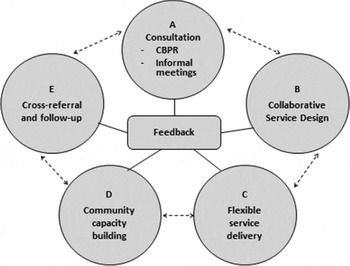
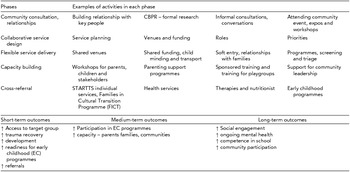
The integration of community development and clinical strategies is evident in the STARTTS Growing Playing Learning Together (GPLT) Community Engagement Model, shown in Figure 1 and Table 1 (Signorelli et al., Reference Signorelli, Gluckman, Hassan and Coello2016). The model aims to address the utilisation issues, and to increase opportunities to screen, assess and assist the 0–5 year olds as needed.
Phases of the STARTTS growing playing learning together (GPLT) community engagement model.

Implementation of the phases of the STARTTS GPLT community engagement model.

Source: Signorelli et al. (Reference Signorelli, Gluckman, Hassan and Coello2016).
The model involves five phases that operate in a circular manner. The first phase involves participative research and consultation, which then leads to collaborative service design, flexible service delivery and community capacity building. The collaboration is between service providers and the refugee community and the between other service providers. Better understanding about each service leads to cross-referral. Feedback is ongoing.
First Phase of the GPLT Community Engagement Model: Consultation
Following on from the STARTTS community consultations (STARTTS, 2003; 2006a; 2006b; 2008; 2009; 2015; 2016), staff also familiarise themselves with other information about the target refugee community in discussion with bilingual and bicultural staff. Initial interviews conducted with bilingual staff (Signorelli & Coello, Reference Signorelli and Coello2011) have provided some insights into collectivist patterns of family structure and attachment and contextual patterns in play and learning activities in refugee communities. It is important, however, to continue with ongoing trust building and relationship building with community leaders and members.
In addition to gaining the necessary contextual community and cultural knowledge and understanding of the community's refugee experiences, service gaps can be identified, as well as appropriate strategies and the potential for collaborative planning and development.
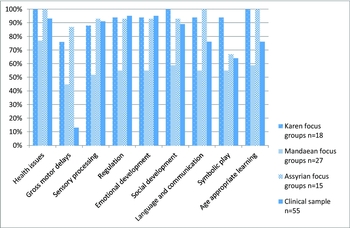
Figure 2 below shows the perceived high incidence of potential signs and symptoms of trauma in the 0–5 year olds, as evident in perceptions of participants in CBPR focus groups with three different refugee communities, and a clinical sample of children seen in the STARTTS early childhood programme.
Perceived incidence of potential signs and symptoms of trauma in 0–5 year olds in three refugee communities: Karen, Mandaean and Assyrian, and in clinical sample.

While there is broad consistency in most areas between the research groups and the clinical group, differences can be observed between the specific refugee communities. Generalisations across refugee communities, therefore, cannot be made. The Mandaean research group gave consistently lower levels of perceived difficulties than the Karen and Assyrian group and the clinical sample. Fewer people in the clinical group identified delays in gross motor development than did participants in the research focus groups.
This, together with the CBPR project and informal consultations and conversations provides specific insights in relation to early childhood work. Participation in community events and service sector expos and workshops provides opportunities for relationship building with the community and between service providers.
Initial Findings from the Consultation Phase of the Model
In addition to the data in Figure 2 relating to potential trauma related signs and symptoms in the young children between 82% and 100% of parents and research participants indicated that there is a high incidence of parental stress relating to health, settlement and loss of family and social support (Signorelli & Bibby, Reference Signorelli and Bibby2016).
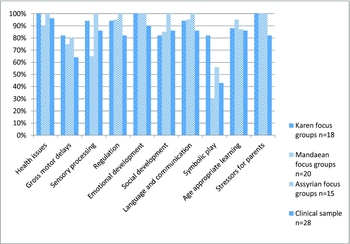
In spite of perceptions of a high level of signs and symptoms, research participants did not seem to have linked these problems or delays to the stresses associated with their refugee experiences. Figure 3 shows that most of the signs and symptoms are considered by refugee communities to be important.
Perceived importance of potential signs and symptoms of trauma in 0–5 year olds in three refugee communities: Karen, Mandaean and Assyrian, and in clinical sample.

Some communities gave a low rating for the importance of symbolic play and sensory processing. This may have implications for families’ understanding of early childhood therapeutic interventions. The importance of all the other areas was rated highly by all communities.
Families and community groups identified broad goals for their children, relating to health, education, good behaviour and social relationships at school, achieving a balance between preserving the community's language and culture, and adaptation to the new Australian culture. Some participants expressed a desire for their children to have a future characterised by self-reliance, independence and gender equality.
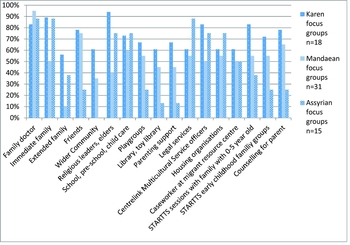
Figure 4 shows research data on where families would turn for help, if needed.
Help seeking preferences for three refugee communities: Karen, Mandaean and Assyrian.

With all the data, there were differences in preferences between and within these communities. The Karen and Mandaean participants in the focus groups were reflecting on children who have been in Australia longer than the participants in the Assyrian groups. This may explain why the Karen community was more inclined to engage with a broad range of services, which have become more familiar with them over time. The newer arrivals from the Assyrian community seemed to be more focused on engaging with settlement services, such as financial and housing support, and will be engaging legal assistance to try to bring their relatives to Australia.
Some community members will turn to other family members for support and some will not, because of confidentiality issues, fear of stigma, and possible blame for the child's difficulties. There was a preference for engagement with only a few familiar, trusted services.
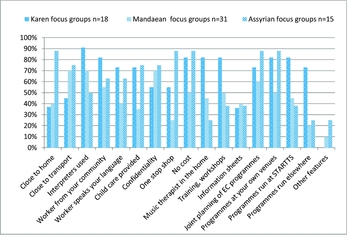
Figure 5 shows service features that would help the various communities to engage with the service.
Preferred features of services that would be utilised by three refugee communities: Karen, Mandaean and Assyrian.

Service providers cannot transfer knowledge about one community to another without taking the time to explore the specific preferences of each family and community with whom they work. The Karen and Mandaean participants, for instance, preferred an interpreter to a bilingual worker or worker from their community, while the Assyrian participants prefer the last two options. Other factors, such as physical proximity of the service to their home, and low cost, were more important to the Assyrians, perhaps because they were more recent arrivals.
Other qualitative data indicated that participants in the research focus groups expressed concerns about adults’ and adolescents’ problems and discussed related intergenerational issues, changes in community structure and supports, increases in marital separation and divorce, domestic violence issues and fear of child protection systems. They sometimes seemed to avoid considering the issues for the 0–5 year olds perhaps because of feelings of guilt or reminders of their own early childhood experiences in the context of war and traumatising experiences. Some participants suggested that the consultation be extended to religious and community leaders, who could, in turn, allay concerns about these issues and encourage service participation.
Second Phase of the GPLT Community Engagement Model: Collaborative Service Design
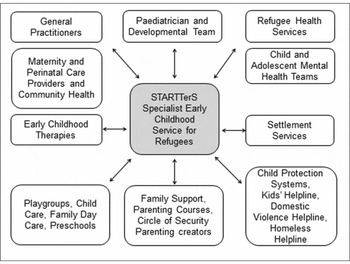
At the collaborative delivery and cross-referral phases of the STARTTS Early Childhood Community Engagement model, there are many networks with which to engage, in order to address the issues for young child and their care givers, in culturally appropriate ways. Figure 6 identifies a range of services that need to be considered in this process.
Potential service provider collaborative networks.

Collaboration begins with finding the key people in a specific community or in relevant organisations. In addition to consulting with bilingual staff from the respective target communities, STARTTS has been able to benefit from assistance with appropriate linkages from the relevant Communities for Children (CfC) facilitating partner, settlement services and Local Council Children's Workers. Collaboration has also included information exchange and reciprocal or shared training on issues relating to refugees.
Planning conversations can be formal or informal and may involve written agreements as to the roles and contributions of the partners. Identifying suitable venues may entail taking group programmes to venues where clients are already engaged, or feel most comfortable, such as supported playgroups, parent networks or support programmes, Schools as Community Centres, and settlement service organisations. This co-location can be particularly crucial for the early childhood age group as parents find it difficult to manage public transport with strollers, and it can be exhausting taking potentially dysregulated children out on public transport.
In the case of the Karen community, co- location of a supported playgroup at the STARTTS office was established following the CBPR focus groups. This was close to home for the community members, who were also engaging with other STARTTS programmes. The playgroup was run by a caseworker from the Auburn Migrant Resource Centre (Auburn Diversity Services Incorporated), who was also already working with STARTTS in the Families in Cultural Transition Programme (FICT). This group eventually had to cease because of funding constraints, but collaboration was later established with another Karen Supported Playgroup, through the CfC programme. This included outsourcing of the Sing and Grow music therapy group programme, from Playgroup Queensland, and a Circle of Security Parenting (COSP) course.
Similarly, following participation in the CBPR project, a group of members of the Mandaean community decided to form an Early Childhood Committee, together with STARTTS. This committee asked STARTTS to run early childhood group training workshops, which could assist in the children's trauma recovery and development. These workshops included structured play sessions for children with their parents, using music and movement and other appropriate play activities, followed by informal supervised play for the children while the counsellor talked with the parents and group leaders about the benefits of the activities, and how they can adapt these for their culture, and use them at home. The committee then decided to start a playgroup with seeding funding and other support from STARTTS, and also subsequently formed their own Mandaean Women's and Children's Committee within their Association structure, which at times liaised with STARTTS on the ongoing programmes being run, and on funding needs.
Third Phase of the GPLT Community Engagement Model: Flexible Service Delivery
The evolution of these collaborative programmes with the Karen and Mandaean communities has assisted STARTTS to obtain funding through the Fairfield CfC programme, facilitated by The Smith Family.
The Sing and Grow programme, COSP® courses, and other workshops have subsequently been introduced to the Assyrian community, at schools, parent groups and playgroups. This has been extended to supported playgroups with the other Arabic, Karen and Vietnamese communities, through the CORE Community Services, Fairfield Council and Karitane. A key component of the project is ongoing attendance at each of the sessions by the Early Childhood Counsellor, who then has the opportunity to screen the children, build trust with the parents, serve as a consultant for the parents, and facilitate the appropriate referral processes.
Networking through the CfC programme and local council's Childhood Coordinator has led to a new collaboration between STARTTS and the Fairfield Settlement Services International (SSI) programme. This is designed to enable both organisations to access parents with 0–5 year old new arrivals under the Australian government's additional intake of refugees from Syria. It is estimated that 20% of this intake will include 0–5 year olds, many of whom are in a single parent family due to death or kidnapping of the fathers. The series of four- to ten-week workshops and information sessions enables both organisations to provide their services to this target group. The local School of Arts provided a venue free of charge for the first group. A formal agreement was drawn up, articulating what each party would contribute, including food, venue, childcare, workshop and information sessions, and provision of bilingual worker and session leaders. In addition to the early childhood workshops with parents and children, unstructured child minding and early childhood activities were provided by STARTTS and the Community First Step's Roving Child Care Programme. After the information sessions, there was opportunity for parents to engage in consultations with the STARTTS Early Childhood Counsellor. The workshop format created for this project is now also being offered to other supported playgroups.
A similar project has now been established for the neighbouring Liverpool area, with Liverpool Migrant Resource Centre, SSI, STARTTS and Mission Australia., as word has spread about the Fairfield collaboration. For this second programme, collaborative services have been adapted to suit the resources available in the participating partner organisations.
In all these services, language and cultural support is provided through use of bilingual workers, or professional interpreters, who also provide cultural information. Bilingual key phrases and words are included and parents are encouraged to introduce early childhood songs and games from their own culture, thus respecting and reinforcing their strengths and cultural heritage in supporting their child. Translated information sheets are in preparation.
Fourth Phase of the GPLT Community Engagement Model: Community Capacity Building
All these collaborative activities and programmes can serve to build capacity for the child, parent, service providers and community. The parents’ capacity is built through increases in parenting skill, confidence, understanding of the child's needs and strengths, and knowledge about other relevant services they can access. The capacity of the parent/child dyad is built through activities that facilitate engagement of the social nervous system (Porges, Reference Porges2011), shared activities, participation in co-regulation activities and cultural transition. The activities serve to build the child's capacity through trauma recovery, enhancement of development, and preparation for transition to pre-school and school.
In addition to the above activities, STARTTS has used some CfC funding, together with other funding, to sponsor community members to undertake training as COSP course leaders. The Assyrian, Chaldaean and Mandaean community members sponsored so far are being given the opportunity to run COSP courses for members of their own community with co-facilitation support and debriefing as necessary by STARTTS counsellors.
Fifth Phase of the Model: Cross-Referral
Informal conversations with families at all the above activities, together with the resultant trust building, enables the early childhood counsellors to act as consultants to the families, and to make referrals as appropriate, to STARTTS or to a range of health or early childhood services.
Results
Short-Term Outcomes of the Implementation of the Community Engagement Model
In addition to clients being seen individually at STARTTS, the community engagement model has led to opportunities to work with, and screen, 163 Karen adults and children over a period of 2 years, 165 Mandaean caregivers and children over a period of 3 years, 193 Assyrian and other caregivers and children over a period of 1 year, and 63 new arrival care givers and children over a period of 6 months. This included participation in clinical group programmes, COSP courses, and the research focus groups (65 participants).
Access and participation levels increased when services were provided in more accessible/familiar places, such as schools, where the older sibling attended, near shopping centres and public transport, or at the relevant community association facilities. Playgroups were effective ‘soft entry’ screening points. As trust built, 10–20% of group participants were subsequently referred to STARTTS for counselling and other interventions. The increased trust built in this way also enabled parents to consult with the counsellor regarding concerns about their children, and this has led to uptake of individual therapy or other groups. Weekly or regular monthly attendance by the counsellor at playgroups and other early childhood programmes was more effective in relationship building than casual attendance by the counsellor. Observations and pre- and post-evaluations of the CfC and other groups suggest increased skills and confidence of the parents, increased engagement of the parents in play activities with their children and improvements in the children's’ self-regulation and social development. Sponsorship of members of specific community groups for COSP training, other trainings, leader support and mentoring led to increased capacity and competence.
Medium-Term and Long-Term Outcomes of the Community Engagement Model
Through individual therapeutic interventions and community-based group programmes, the STARTTS programme has been able to help families re-engage with child care and preschool programmes. Some children had previously been withdrawn from child care or preschools when they were not ready for those experiences, due to behavioural issues, eating issues, language and communication issues or extreme separation anxiety. Parents may have had misapprehensions about resultant stigma, shame and blame, but with support have been able to help their children return to those developmental programmes when ready.
Following on from the capacity building programme, group programmes and individual therapy services, three of the Mandaean parents have gone on to study for certificates and diplomas in child care or community services, or degrees in social work or counselling. One has then gone on to start a Family Day Care programme. The Sabian-Mandaean Association's Women's and Children's Committee continue to review and plan services and activities for children and families, and the association has negotiated with STARTTS to provide counselling services at the Association's community centre.
It is not yet possible to review medium-term outcomes with the other communities involved in the programmes described in this paper, because the programmes have only commenced in the last year.
Anticipated or desired long-term outcomes, such as ongoing participation in school and other community activities, or ongoing mental health and social engagement can also not be measured yet.
Discussion
Implications for Service Delivery
It is important for providers to creatively devise strategies in collaboration with parents, which can enhance the care givers’ understandings of appropriate interventions and knowledge of existing services. Collaborative, culturally appropriate service development may enhance service utilisation and help participants to feel safe, which is a fundamental requirement for trauma recovery (Herman, Reference Herman1997).
Service providers can include group programmes, experiential training for parents and community members, information and skills development to enable communities to provide their own early childhood programmes and family support. Service providers need to consult with their target groups or families as to which form of language support they prefer.
Service providers need to consider liaising with general practitioners so they can provide service information to their patients, and to encourage cross-referral. Extensive consultation with other service providers is also needed in order to find effective and efficient ways to address the access and stigma issues.
It is important in planning intervention strategies to be aware of the client's length of stay in Australia, as the family's focus will change over time. The family's initial focus will be on urgent settlement and immediate health issues and on their concerns about whether they will attain their longer term overall goals. As settlement issues resolve, the parents or care givers can broaden their focus to include the developmental and trauma recovery needs of the 0–5 year olds, and trauma recovery for other family members and communities, which can then, in turn, serve the longer term goals. Services need to have a range of approaches to accommodate these differing goals for the family, and adopt soft entry points that will help to inform families of available services to address the child's needs in a timely manner taking account of the need for early intervention.
Challenges and Limitations of this Community Engagement Approach
Refugee communities may not initiate programmes to enhance utilisation of early childhood services because of stigma issues. Hence, community engagement strategies are not fully ‘bottom up’ programmes, within the definitions of community development. The CBPR methodology, however, is frequently used to engage communities in collaborative goal setting and co-design of services.
Community engagement involves relationship building, and hence depends on ongoing and consistent commitment to shared goals. It takes persistence to work at building ongoing trust and relationships with other providers, families and communities, and flexibility to work in new ways. Service providers may have entrenched ways of working based on years of research, experience, values, and philosophical positions, and because of specific funding requirements. It is also important to check that service providers and community participants are in tune with a common purpose and shared expectations, while contributing their own specific skills and roles towards reaching those goals. It is important to foster an understanding with refugee communities that the programmes have goals such as enhancing trauma recovery and/or development for parent and child, rather than simply providing child minding.
It can be challenging to build relationships with community leaders and other key community representatives with ascendancy and influence. Each community may have many sub groups, and one leader may not represent the views of other groups. Community members will also have arrived in Australia at different historic times, and consequently have had very different traumatising experiences, or have diverse ideologies. Consequently, there may be overt and covert tensions, and service providers need to be able to navigate these differences within the community with diplomacy, tact and respect.
Working together with other organisations involves finding ways to simplify the multiple demands for paperwork, such as using one intake form and then sharing the data with the client's consent. Each provider has to comply with funding accountability requirements and having to complete multiple data sheets can be very daunting, especially for those refugees or asylum seekers who have experienced state terrorism, or who have limited or no literacy in their own language or in English. The need for creating Memoranda of Understanding, and navigating multiple bureaucratic systems, while important, can be daunting and may discourage collaboration for some service providers. Communications need to be clear to reduce confusion or miscommunication about each party's agreed contribution and roles, and to continue building trust.
Timetabling can be complex and challenging when several service providers are involved, and some participants have commented that the groups to date have been scheduled for times when most men cannot attend. It is important, therefore, to consider providing consultations and parenting courses after hours and possibly to run some of the early childhood workshops, with parents and children, on Saturdays.
Case conferencing is important when several service providers are working with the same families and this has to be done with consideration for confidentiality, and with consent of the families concerned.
There can be logistical challenges in regard to the use of shared venues. While they may be made available at no or low cost, there is a risk of double bookings or of venues being unsuitably noisy, or the children being minded may be in too close proximity to the parents when the parents are engaging in the parent support and training activities. Further, there can be storage issues with shared venues, and sustainability issues with relation to funding and fee for service arrangements. There can also be logistical challenges in use of interpreters and translators. This may include difficulty being able to book an interpreter with the correct community language for the whole eight week or ten week programme in order to maintain consistency. It is very important that any translations done are back translated professionally, and then reviewed by members of the target community to ensure that the translations are accurate in relation to the intended meaning and tone of the documents, and in relation to the specific local language variations of the group members.
Strengths of the Model
In spite of these challenges, implementation of this community engagement model leads to better access, collaboration, outcomes and knowledge of other service providers about refugee issues. Use of this model has led to increased community and family access to, and utilisation of, therapeutic and trauma informed developmental early childhood services. These therapeutic services can reverse the harmful developmental effects of the child's, families’ and communities’ traumatising experiences. Provision of modelling, support and psychoeducation for parents, can facilitate positive parent–child interactions, help to prevent long-term behavioural, social and emotional difficulties for the child, and enhance the child's development and trauma recovery.
The model helps to increase trust in the families and communities, and wellbeing in the children. Group programmes can help to redress the loss of social connections and increase a sense of community, and service collaboration can increase the effectiveness of funding resources.
Recommendations and Conclusion
Providers and funding bodies need to facilitate similar community engagement processes rather than simply adding services – so that services are more likely to be used by refugee communities.
The STARTTS research and consultation activities to date have influenced an evolving approach to provision of early childhood services and information for refugee families and communities, and training and support for community members. These strategies can enable communities to run their own trauma informed early childhood activities, or better access existing services. These activities have led to increased community development linkages, and increased opportunities to screen and serve children and families. They have provided the opportunity to learn about the incidence of trauma related developmental issues in the children, across their community.
More collaborative, culturally appropriate programmes need to be developed that address perinatal and preventive health and developmental needs of mother and infants. The GPLT workshop programme developed in this community engagement model provides an opportunity for group participants to identify the strategies, stories, songs and activities that are used in their own culture, which can address their very young children's emotional, social and developmental challenges arising from their trauma.
Further action is needed to develop and validate appropriate refugee specific assessment and screening tools, and develop consistent evaluation tools and follow-up mechanisms that can assist in assessment of medium-term and long-term outcomes of early childhood trauma recovery and development programmes. It is important to develop an appropriate methodology to evaluate integrated clinical and community development programmes against the refugee context of complexity. This can lead to testing the model in more remote rural or regional areas where many refugees are re-settled.
It will be important to provide feedback to community and religious leaders about the results of the CBPR and other consultations, and the outcomes of the various early childhood programmes. This feedback process may, in turn, renew the circle of the community engagement processes.
Practitioners and service provider organisations that are working with refugees need to reflect on their models and how accessible those programmes are. In order for clients to participate in services, not only do the barriers to access and utilisation need to be addressed, but it is necessary to build trust, and share and exchange knowledge and expertise with communities and families.
Services and funding bodies need to take into account that this collaborative community engagement process is lengthy and resource intensive but may ultimately lead to better service delivery, health, development and relational outcomes for the children and families from refugee backgrounds.
Acknowledgements
Research support: Helen Bibby, Research Team Leader – for assistance with data analysis.
Organisations involved in Consultation and collaboration:
Randa Warda and staff, The Smith Family, Fairfield CfC Facilitating partners
SSI Fairfield and Liverpool, Fairfield Council Children's Workers, St. Hurmizd Assyrian Primary School and early childhood programmes, Mission Australia Miller, Liverpool Migrant resource Centre, Fairfield Parents Café, CORE Community Service, Canley Vale Supported Playgroup, Fairfield Supported Playgroup, Karitane Linking Families Supported Playgroup, Fairfield School of Arts Youth Theatre, Auburn Diversity Services Inc., Sabian-Mandaean Community Centre Liverpool, Playgroup Queensland Sing and Grow Programme, Playgroup NSW, Community First Step.
Associate researchers in the CBPR project:
Wah Wah Naw, Daniel Zu, Yassmen Yahya, Shakeh Momartin, Esber Melhem, Nicky Gluckman, Naila Hassan.
Other STARTTS community development staff: Lina Ishu, Elizabeth Schaffer, for personal communications about specific cultural issues and working with cultural transition.
Ethics Committee of SWSLHD
STARTTS staff and students assisting with programmes: Lucrecia Cardona Velez, Judith Luff, Julienne Dimon