1. INTRODUCTION
Inland vessels, in addition to seagoing vessels, have been widely equipped with the Automatic Identification System (AIS) since 2005 and the system plays a significant role in increasing water transport safety and navigation efficiency. AIS messages provide fundamental information for maritime surveillance and research, such as route identification (Meijer, Reference Meijer2017), ship manoeuvrability (Rong and Mou, Reference Rong and Mou2013) and risk analysis (Zhang et al., Reference Zhang, Kopca, Tang, Ma and Wang2017). However, AIS data is prone to error and may suffer from data quality issues. For inland water transport, AIS data quality might be affected by a number of different factors, such as masking from surrounding buildings, signal attenuation or even data falsification. In the presence of dense regional traffic flows or other environmental factors (for example, mountains or mega structures), missing AIS data can occur frequently.
Most of the AIS message can be collected by deploying AIS stations while data reliability should be rigidly explored for proper use (Jaskólski et al., Reference Jaskólski2013; Reference Jaskólski2014). The importance of AIS data quality has been identified and investigated (Harati-Mokhtari et al., Reference Harati-Mokhtari, Wall, Brooks and Wang2007). Chu et al. (Reference Chu, Liu, Ma, Liu and Zhong2014) explored the spatial distribution and degradation characteristics of AIS messages in mountainous waterways. It was found that missing AIS data occurrences appeared frequently in the Yangtze River. Meijer (Reference Meijer2017) discussed possible issues with AIS data quality in route identification and Estimated Time of Arrival (ETA) estimation. A framework is thus proposed to improve data quality. In contrast, Harati-Mokhtari et al. (Reference Harati-Mokhtari, Wall, Brooks and Wang2007) investigated the potential impact of AIS data reliability on marine navigation safety and examined the implications of associated human error.
In practice, data completeness is another problem regularly encountered. Efforts have been devoted to resolve this issue. Two types of methods have been extensively adopted: statistical analysis methods and data-driven methods.
Statistical analysis methods, such as spline interpolation, have proved to be effective for simple sample data scenarios (Sun et al., Reference Sun, Wu, Chu, Xie, Liu and Li2016). Tian and Jia (Reference Tian and Jia2016) used a Vondrak filter and a cubic spline interpolation method to restore ship trajectories. Sang et al. (Reference Sang, Wall, Mao, Yan and Wang2015) evaluated piecewise linear interpolation, piecewise cubic interpolations and piecewise cubic spline interpolation for restoring inland ship trajectories. For short distance cases, an integrated method of interpolation and ship manoeuvrability model was proposed. Thus, the ship trajectory was characterised into three types (line, curve and arc) with five steps (line, curve, arc and curve, line) during turning sections. Interpolation repairing was carried out through different trajectory categories of inland waterway ships.
Reasonable ship trajectory restoration precision might be achieved by the interpolation method. However, this is recognised as case-dependent and its capability in resolving the long-distance restoration problem is often limited, for example in scenarios with dense traffic flow or complex geometry such as mountainous and meandering waterways (Chu et al., Reference Chu, Liu, Ma, Liu and Zhong2014). Therefore, the interpolation method is more suitable for short-term trend estimation. In cases of large amounts of AIS data loss over a long distance, the accuracy of the interpolation method will be significantly reduced.
The data-driven approach provides a useful alternative for resolving missing data problems (Gan et al., Reference Gan, Liang, Li, Deng and Cheng2018; Kawan et al., Reference Kawan, Wang, Li and Chhantyal2017), the accuracy of which is not significantly affected by the constraints of environmental factors but appears to be sensitive to the quantity and quality of the training data. With the rapid developments of computational power and communication technology, data-driven methods typically represented by machine learning have already been applied in the field of maritime data processing. Xu et al. (Reference Xu, Liu and Yang2012) proposed a ship trajectory prediction model based on a three-layer Back-Propagation (BP) neural network. Liu et al. (Reference Liu, Ling and Kou2013) considered the ship manoeuvrability problem as a combined system comprising partially prediction and partially estimation problems, and thus presented a dynamic recurrent neural network physical model for ship trajectory prediction.
Deep learning methods have also been successfully utilised to resolve time series problems. Kanarachos et al. (Reference Kanarachos, Christopoulos, Chroneos and Fitzpatrick2017) presented a deep learning algorithm combining wavelets, neural networks and the Hilbert transform for anomaly detection. The method appears to be robust in Seismic Electrical Signal processing and the algorithm is transferable. Khosroshahi et al. (Reference Khosroshahi, Ohn-Bar and Trivedi2016) proposed a Long Short Term Memory (LSTM) model for extracting ego-motion-compensated surrounding trajectories from data clips using the benchmark of Karlsruhe Institute of Technology and Toyota Technological Institute. In the European Conference on Machine Learning and Principles and Practice of Knowledge Discovery in Databases (ECML PKDD 2015), fruitful accomplishments using deep learning methods for taxi trajectory prediction were presented and discussed. De Brébisson et al. (Reference De Brébisson, Simon, Auvolat, Vincent and Bengio2015) utilised a Multi-Layer-Perceptron (MLP) and bi-directional Recurrent Neural Networks (RNN) to predict the destination of a taxi. They concluded that RNN might be more appropriate for trajectory prediction, but MLP yields better results. Although ship trajectories from AIS data are not completely analogous to vehicle trajectory data, they share some basic features. In both time and space domains, each data point on a ship trajectory is deemed to be correlated with its neighbouring points.
To the authors' best knowledge, limited reported attempts (for example, Sang et al., Reference Sang, Wall, Mao, Yan and Wang2015; Xu et al., Reference Xu, Liu and Yang2012) have been made to restore vessel trajectories based on AIS data, among which the deep learning method is rarely used. Meanwhile, AIS data accuracy and quality depends on the navigational state and base stations. The efficiency of vessel trajectory restoration therefore differs with reach geometry in inland rivers. Vessel trajectory restoration with multiple missing points or over a long distance are noted as challenging tasks. This paper focuses on inland ship trajectory restoration and prediction. Case studies in the Yangtze River (China) are also conducted and the results are presented.
The paper is structured as follows: Section 2 provides a brief description of bi-directional recurrent neural networks. In Section 3, data pre-processing and correlation analysis of ship trajectories are presented. In Section 4, model establishment is further demonstrated. Results and discussions are provided in Section 5, while final conclusions are drawn in Section 6.
2. BI-DIRECTIONAL RNN AND LSTM
2.1. Recurrent Neural Networks
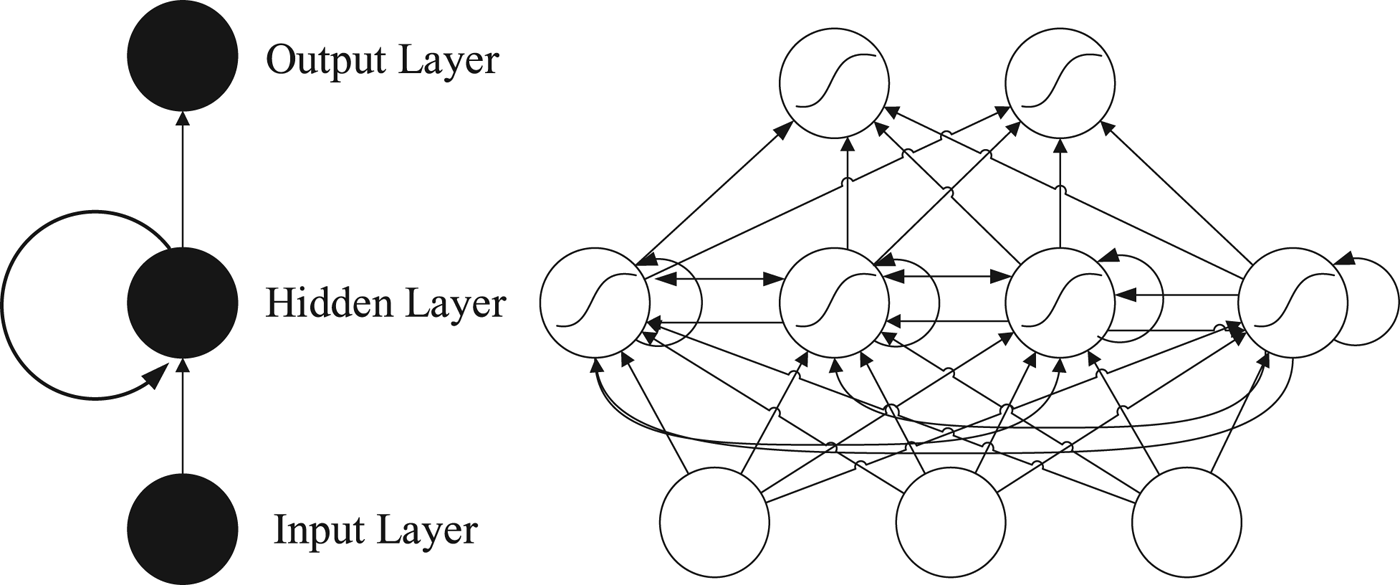
A RNN was one type of neural network model proposed in the 1980s (Rumelhart et al., Reference Rumelhart, Hinton and Williams1986; Elman, Reference Elman1990) for time series modelling. In the classic Artificial Neural Network (ANN) models the signal of each neuron can only propagate to the upper layers while the sample processes are independent at all times. For RNN models, the output of the neuron can be directly applied to itself at the next time step. The input of the i-th layer neurons at time m consists of the outputs of both the (i − 1)-th layer and its own at time m − 1. A typical RNN network structure is similar to an artificial neural network which consists of an input layer, a hidden layer and an output layer.
The hidden layer of a RNN network is always self-circulating (as shown in Figure 1). The calculations of the output layer and hidden layer are written as follows:
 $$O_t = g\lpar Vs_t\rpar $$
 $$S_t = f\lpar Ux_t+Ws_{t-1}\rpar $$
where O t is the output at time t, V is the output weight matrix, U is the input weight matrix and W is the self-loop weighting matrix. S t−1 is the weight matrix of the model input for the current round and f is the activation function. The output layer is a fully connected layer and the hidden layer is calculated cyclically. By substituting Equation (2) into Equation (1) and iterating, the following can be obtained:
 $$\eqalign{O_t & =g\lpar Vs_{t}\rpar \cr &=Vf\lpar Ux_t+Ws_{t-1}\rpar \cr &=Vf\lpar Ux_t+Wf\lpar Ux_{t-1}+Ws_{t-2}\rpar \rpar \cr &=Vf\lpar Ux_t+Wf\lpar Ux_{t-1}+Wf\lpar Ux_{t-2}+Ws_{t-3}\rpar \rpar \rpar \cr &=Vf\lpar Ux_t+Wf\lpar Ux_{t-1}+Wf\lpar Ux_{t-2}+Wf\lpar Ux_{t-3}+\ldots\ldots\rpar \rpar \rpar \rpar } $$
Recurrent neural network (RNN).

It is noted that the output value O t of the cyclic neural network is related to the previous input values (such as x t, x t−1, x t−2, x t−3…), while RNN preserves time information through neuronal circulations, and thus achieves better results sequentially.
Both spatial and temporal characteristic information is critical for ship trajectory extraction, especially for the time series of ship latitude and longitude. In a traditional neural network, however, time information cannot be stored. To achieve better interpretation of inland ship navigation, a method based on Recurrent Neural Networks (RNN) is proposed for AIS data repairing as well as ship trajectory restoration (with examples on the Yangtze River). The fixed length input of ship trajectory points is not a single Global Positioning System (GPS) point, but a window of successive GPS points. The window shifts along the prefix by one point at each RNN time step.
2.2. Long Short-Term Memory Networks (LSTMs)
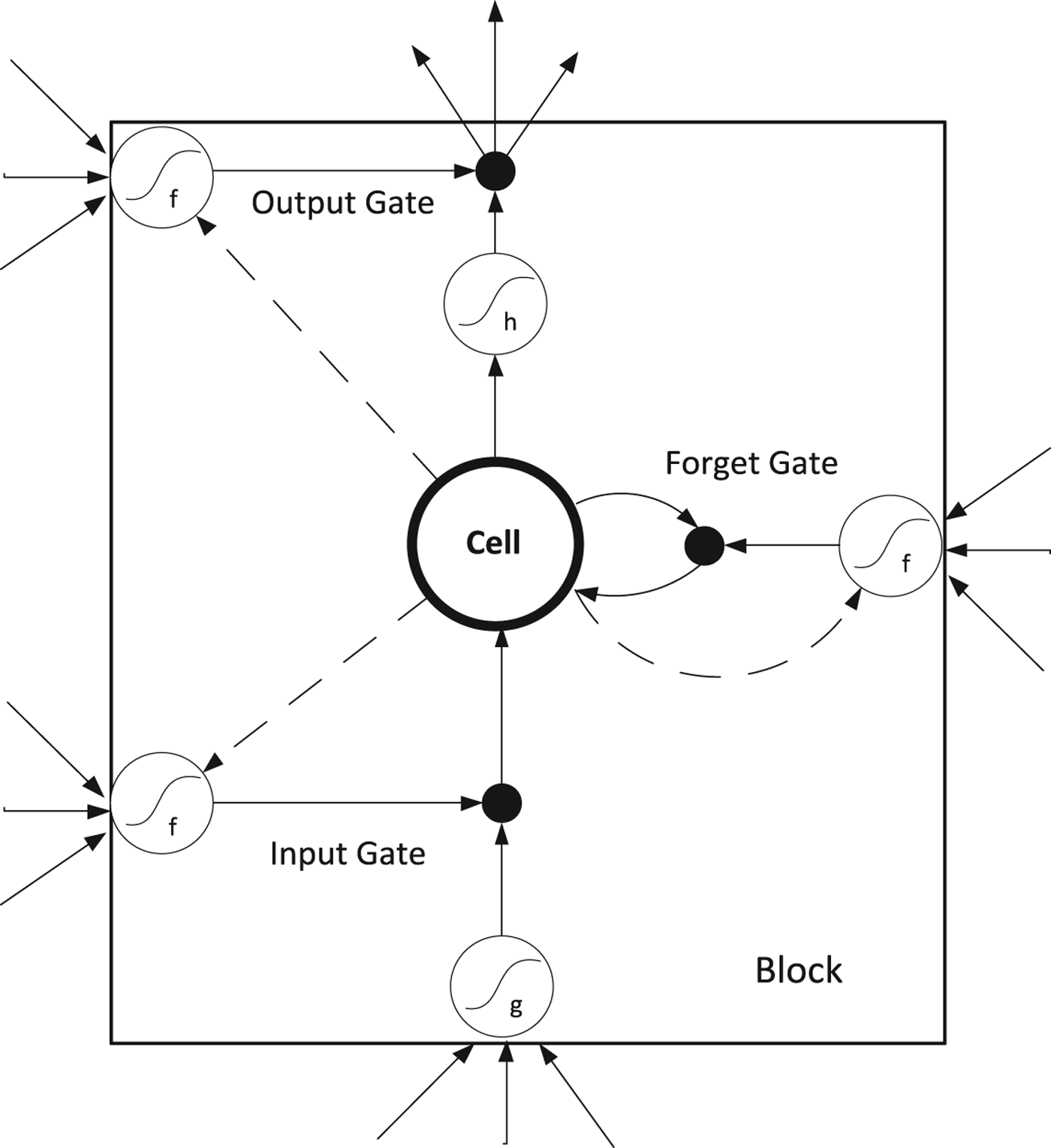
Hochreiter and Schmidhuber (Reference Hochreiter and Schmidhuber1997) applied the LSTM network to resolve the problem of gradient disappearance in RNN. By adopting the concept of the Gate and the operation of the switch Gate, time information can be effectively stored. The structure of LSTM is reproduced and shown in Figure 2.
The structure of LSTM (Graves, Reference Graves2012, with permission from Springer Nature).

Each Gate represents a fully connected layer. The input of the gate is a set of vectors and the output is a real vector. The magnitude of each element in the output vector falls between 0 and 1. Typically, a Gate can be expressed as:
 $$g\lpar x\rpar =\sigma\lpar Wx+b\rpar $$
where W is the weight of the Gate and b is the offset matrix. The LSTM includes three different types of Gate: Forget Gate, Output Gate and Input Gate. The Forget Gate is used to determine how much of the unit state g t−1 remains in the current state g t, the Input Gate is used to determine how much of the current network input x t is saved to the cell state g t and the Output Gate is used to control how much of the unit state g t is assigned to the LSTM current output. These three Gates are written as follows:
 $$f_t = \sigma\lpar W_f\lsqb h_{t-1}\comma \; x_t\rsqb +b_f\rpar $$
 $$i_t =\sigma\lpar W_i\lsqb h_{t-1}\comma \; x_t\rsqb +b_i\rpar $$
 $$o_t = \sigma\lpar W_o\lsqb h_{t-1}\comma \; x_t\rsqb +b_o\rpar $$
in which b is the offset matrix and W is the weight matrix of the Gate. The output state of the final LSTM is determined by the output gate and the unit status.
 $$h_t=O_t \circ \tanh\lpar c_t\rpar $$
where the activation function tanh is calculated as follows:
 $$tanh\lpar z\rpar =\displaystyle{{e^z-e^{-z}}\over{e^z+e^{-z}}} $$
2.3. Bi-directional LSTM RNN
Each point on the ship trajectory is correlated with preceding and succeeding points. However, the traditional neural network model can only be one-way learning. Schuster and Paliwal (Reference Schuster and Paliwal2002) proposed a Bi-directional Recurrent Neural Network (BRNN) to solve the problem of two-way learning, in which two variables (s and s′) are included in the hidden layer for forward and backward calculations, respectively. The final output value is determined by both s and s′. Assuming o t as an LSTM unit output at time t, all variables are written as:
 $$o_t = g\lpar Vs_{t}+V^{\prime}s_t^{\prime}\rpar $$
 $$s_t = f\lpar Ux_t+Ws_{t-1} $$
 $$s_t^{\prime}= f\lpar U^{\prime}x_t+W^{\prime}s_{t-1}^{\prime}\rpar $$
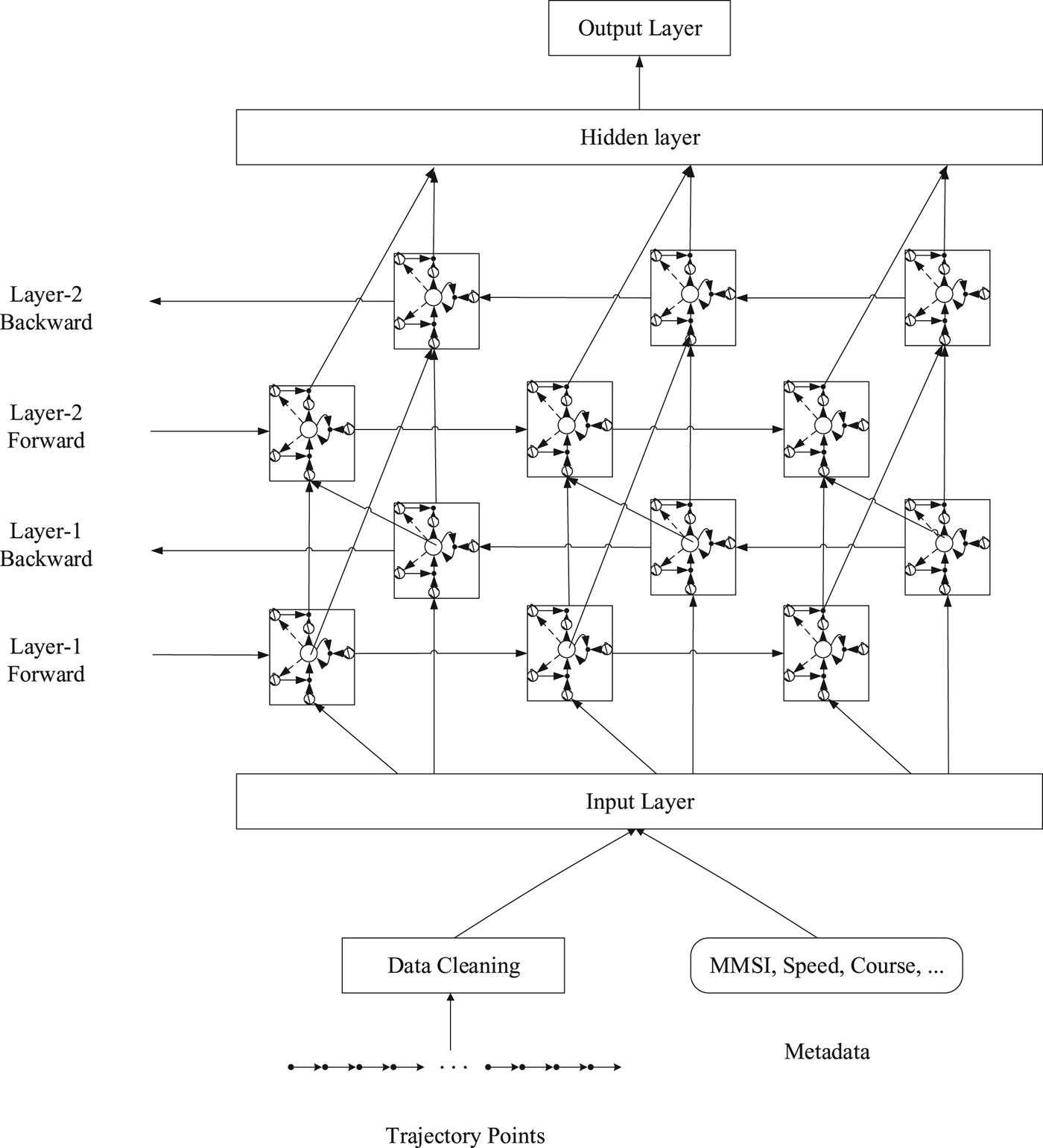
in which x t is the input data of the LSTM structure at time t and U, V, W are the weight matrices. A BRNN model based on LSTM (BLSTM-RNN) is therefore proposed. We take a two-layer LSTM structure as an example; its schematic diagram is shown in Figure 3.
A schematic diagram of BLSTM-RNN.

In contrast with the classic RNN network, bi-directional training is adopted in the BRNN to ensure full use of trajectory data. One RNN reads the prefix forwards while the other RNN reads the prefix backwards. The two final internal states of the two RNNs are then concatenated to the output layer. The forward layer connects with the forward layer, while the backward layer connects with the backward layer. As shown in Equation (10), the final predictions are obtained as a weighted combination of two-way outputs. The weight coefficients are determined by the gradient descent method.
By utilising the BRNN method demonstrated above, inland ship trajectory restoration is accomplished. Its capability is further evaluated and compared with conventional methods in the following sections.
3. DATA SOURCES AND PREPROCESSING
3.1. Data sources
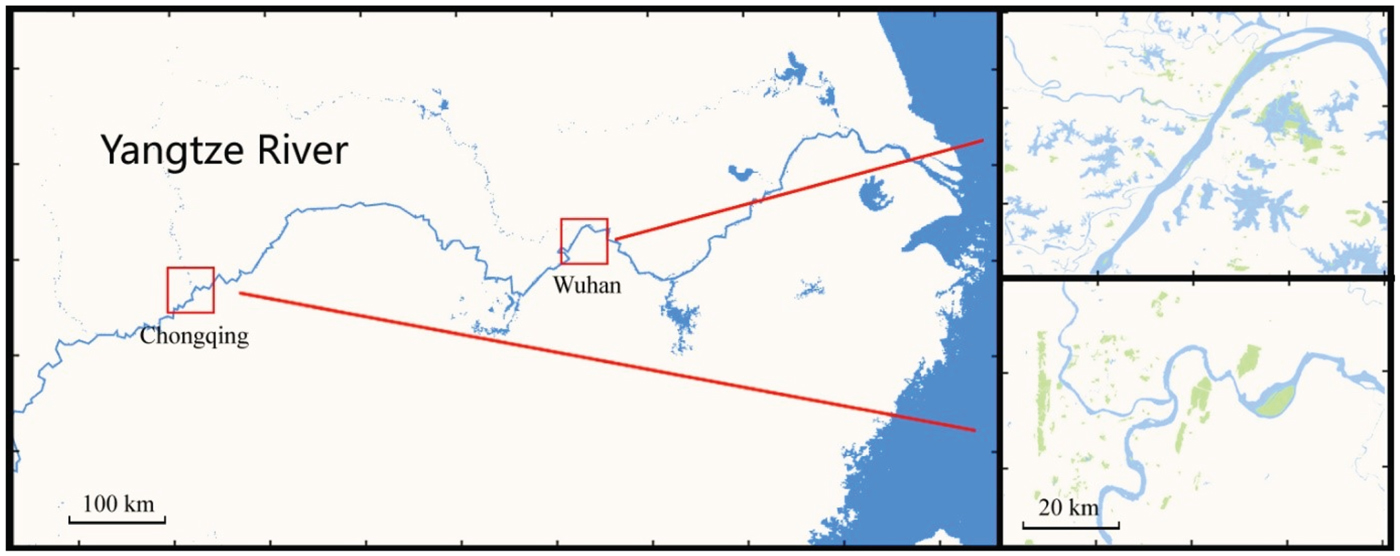
This study uses inland AIS data (provided by the Changjiang Maritime Bureau, Ministry of Transport, Peoples' Republic of China) to achieve ship trajectory restoration. Case studies were performed in the upper (Chongqing) and middle (Wuhan) reaches of the Yangtze River China. The Chongqing reach has a meandering channel pattern and is located upstream of the Three Gorges Dam (TGD) while the Wuhan reach is characterised as a straight multi-bridge waterway. Two reaches are selected partially due to their distinct planform geometry and partially due to their significant importance to the development of inland shipping in China. The layout of the research domain is illustrated in Figure 4.
Layout of the research domain.

A total number of 15,035,914 AIS records were collected, of which 5,048,576 were derived from Wuhan and 9,987,338 from Chongqing. The AIS data time spans from September 2016 to March 2017. Examples of raw AIS message are presented in Table 1.
Example of raw AIS data

Two types of AIS ship stations (Type-A and Type-B) are widely utilised in the Yangtze River (Sang et al., Reference Sang, Wall, Mao, Yan and Wang2015). Their working frequency is generally different, 10 s for Type A and 30 s for Type B. Due to communication link problems, two critical issues concerning AIS message data need to be appropriately addressed.
3.1.1. Time interval standardisation
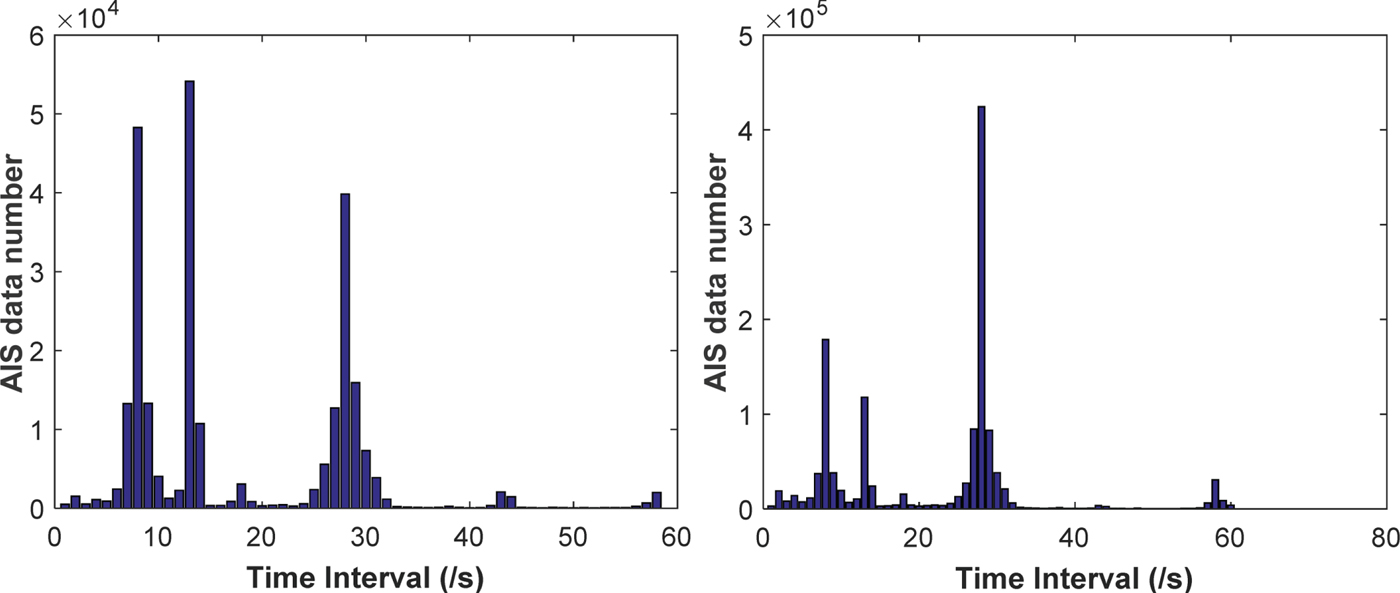
Since the return frequency is not strictly consistent for different AIS ship stations, standardisation analysis of the time interval is necessary. Figure 5 shows the distribution of return period for Type-A and Type-B ship stations on the Yangtze River.
Time interval distribution for type A (left) and type B (right) ship stations in the Yangtze River.

Spikes are observed in the time interval distribution of AIS data. For both types of ship stations, three time intervals of 10 s, 15 s and 30 s are identified as main components, which are further utilised for AIS data classification with a confidence interval of 90%. Assuming that a certain time error is acceptable, a data processing method is applied to filter out extra sampling frequencies (Equation (13)).
 $$\left\{\matrix{\displaystyle{{\min\vert T_i-T\vert} \over {T}}< 0{\cdot}1 & \hbox{acceptable} \cr \displaystyle{{\min\vert T_i-T\vert} \over {T}}>0{\cdot}1 & \hbox{interpolation}}\right\}$$
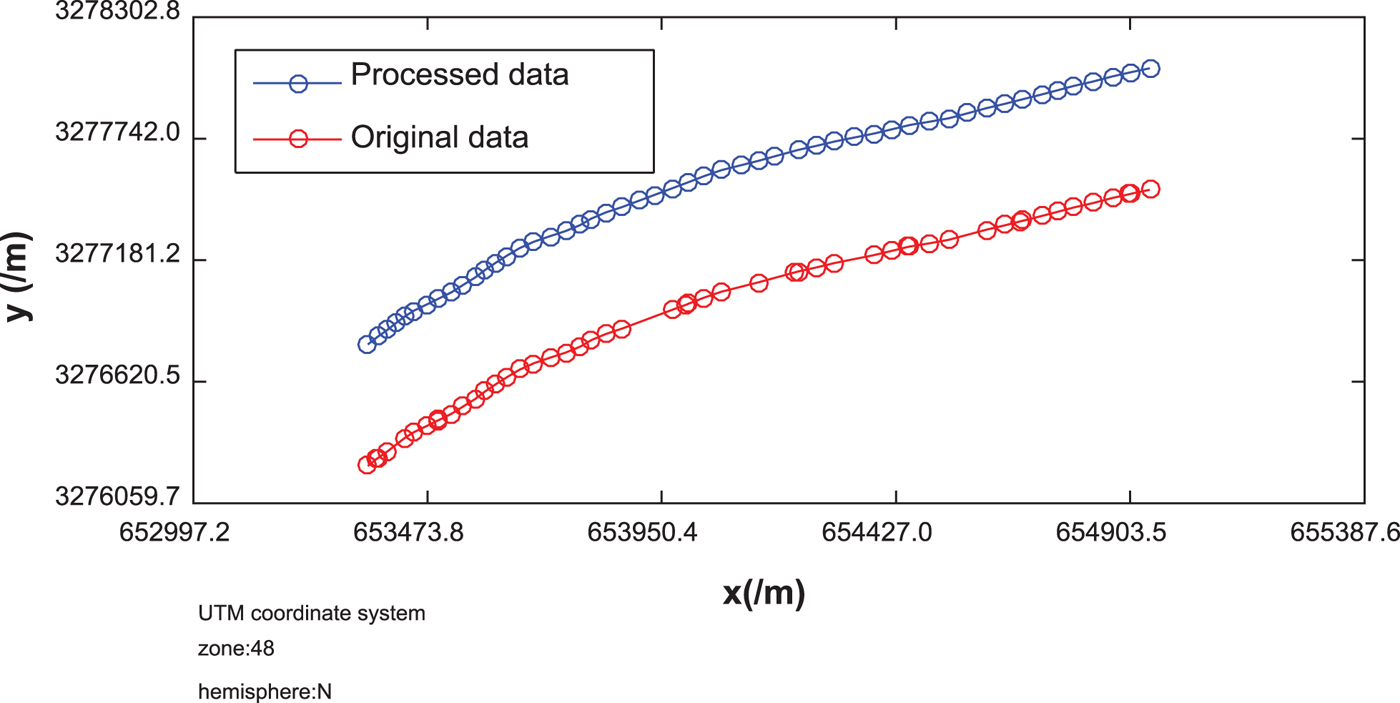
in which T = {10, 15, 30} represents the three main components and T i represents the i-th sample frequency in the sample sequence. Here, a tolerance of 10% is accepted. The comparison with uniform frequency sampling of AIS sequences is shown in Figure 6.
Comparison between original AIS sequence and uniform frequency sampling results.

3.1.2. Drifting and erroneous points
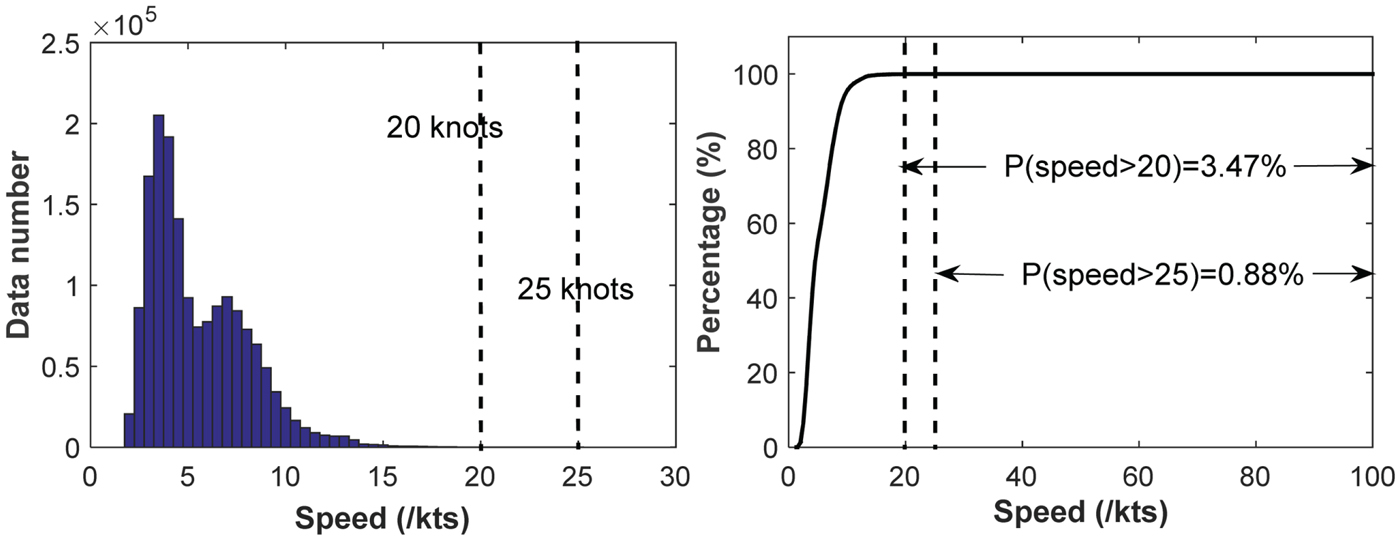
Drifting and erroneous points frequently exist in the raw inland AIS data, leading to erroneous ship trajectories. Three fundamental parameters (COURE_ROT: ship course; SPEED_RES: ship speed; and LL_RES: offset distance) have been included in the ship behaviour description. The offset distance is calculated in terms of Euclidean distance. All records falling out of the threshold are identified as drifting points and removed. Examples of the speed distribution are presented in Figure 7.
Ship speed distribution in Wuhan reach, Yangtze River.

Following the recommendation of the International Telecommunications Union (ITU-R M.1371-5, 2014), the speed of an inland ship is categorised as 2–14 knots, 14–23 knots and greater than 23 knots and transmitted in standard time intervals of 30 s, 15 s and 5 s, respectively. According to field observations and Chinese inland maritime safety regulations, the inland ship speed rarely exceeds 25 knots. Therefore, the following rules for inland ship speed is applied in the AIS data analysis:
 $$\left\{\matrix{\hbox{Speed}_i>14\, &\, T_i \in \lcub 30\rcub & \hbox{Abnormal} \cr \hbox{Speed}_i>20\, &\, T_i \in \lcub 15\rcub & \hbox{Abnormal} \cr \hbox{Speed}_i>25\, &\, T_i \in \lcub 5\rcub & \hbox{Abnormal}}\right\}$$
All AIS records with speed larger than the threshold value are eliminated. The magnitude of the ROT (Rate Of Turn) variable depends on the vessel speed v and the vessel length l. Its maximum value is calculated by:
 $$\max \hbox{ROT}_i = \displaystyle{{v_i\times\Delta t}\over{2l}}. $$
Given a constant ship speed over a finite time interval, the offset distance can be calculated as follows:
 $$\max D_i=v_i\times \Delta t+T_e $$
in which an error term T e is introduced considering non-uniform speeds (ship acceleration or deceleration) in practice. The rate of fault tolerance is simply defined as 10%, that is,  $T_{{\rm e}}=v_{i}^{\ast}\Delta t^{\ast}0{\cdot}1$. By applying the aforementioned thresholds, raw AIS data cleansing is achieved and the data is prepared for correlation analysis.
3.2. Correlation Analysis
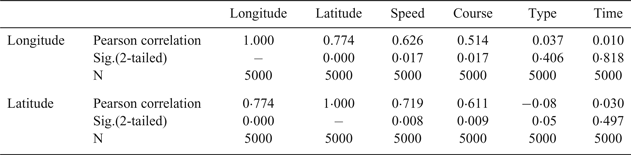
Not every feature is useful in the metadata. The input variables should be determined through correlation analysis. The analysis between different variables (excluding Maritime Mobile Service Identity (MMSI) number) has been conducted and is tabulated in Table 2. Variables corresponding to the highest correlation values are therefore selected as the inputs of a RNN model.
Correlation analysis results.

N is the length of AIS sample; the Pearson coefficient was calculated, and a two-tailed significance test was carried out. High correlations were found for larger P values and small significance value (less than 0·05); otherwise, the statistical correlation is considered as not significant. Finally, the input variables of the RNN model were determined as latitude, longitude, speed and course.
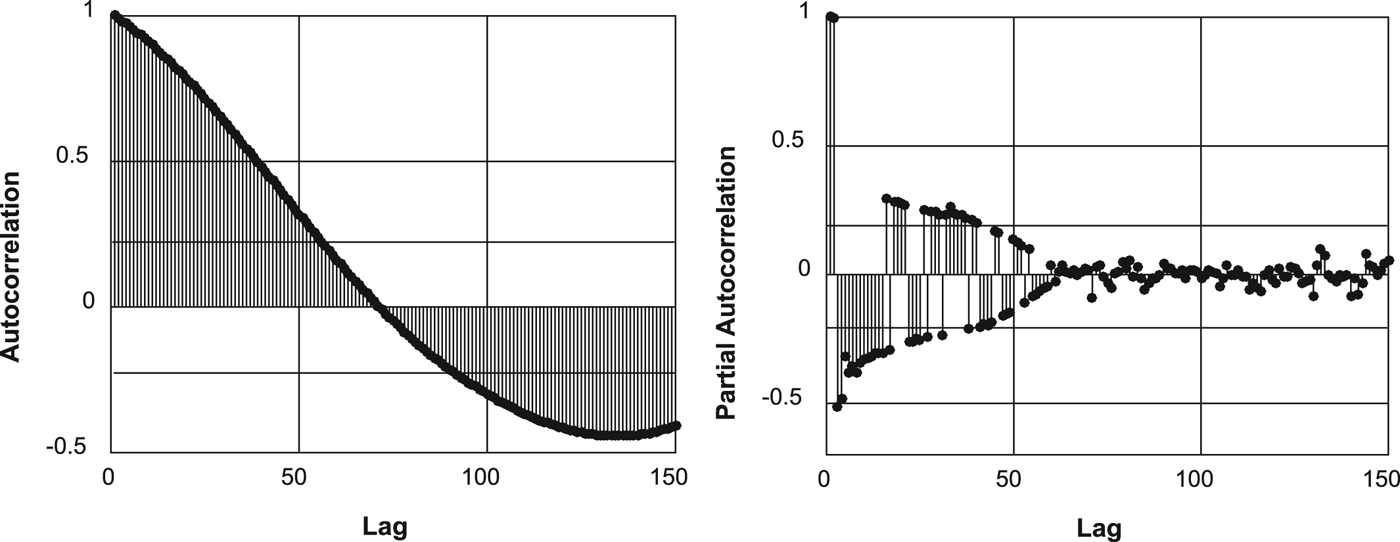
Ship trajectories can always be described as time sequences of the ship's spatial location. Thus, the track information (points before and after the missing or erroneous part) are included in the feature dataset. The length of the RNN input dataset is fixed and determined by applying the traditional linear regression method (Autoregressive Integrated Moving Average model, Contreras et al., Reference Contreras, Espinola, Nogales and Conejo2003). The latitude and longitude sequence was treated as a spatial-temporal autocorrelation sequence. Both Autocorrelation Coefficient (ACF) and Partial Autocorrelation Coefficient (PACF) are calculated and are presented in Figure 8, on which basis the lag value is obtained. The calculation formula is written as follows:
ACF (left) and PACF (right) computations for AIS dataset in the Wuhan reach, Yangtze River.

 $$ACF=\displaystyle{{\sum_{i=1}^n\lpar x_i+\bar{x}\rpar \lpar x_{i+k}+\bar{x}\rpar }\over{\sum_{i=1}^n\lpar x_i+\bar{x}\rpar ^2}} $$
As noted in Figure 8, the lag value is determined as 41, that is each trajectory point x i has a strong correlation with the surrounding trajectory points {x i−41, x i−39, …x i−1} and {x i+1, x i+2…x i+41}.
4. MODEL ESTABLISHMENT
4.1. Input layer and output layer
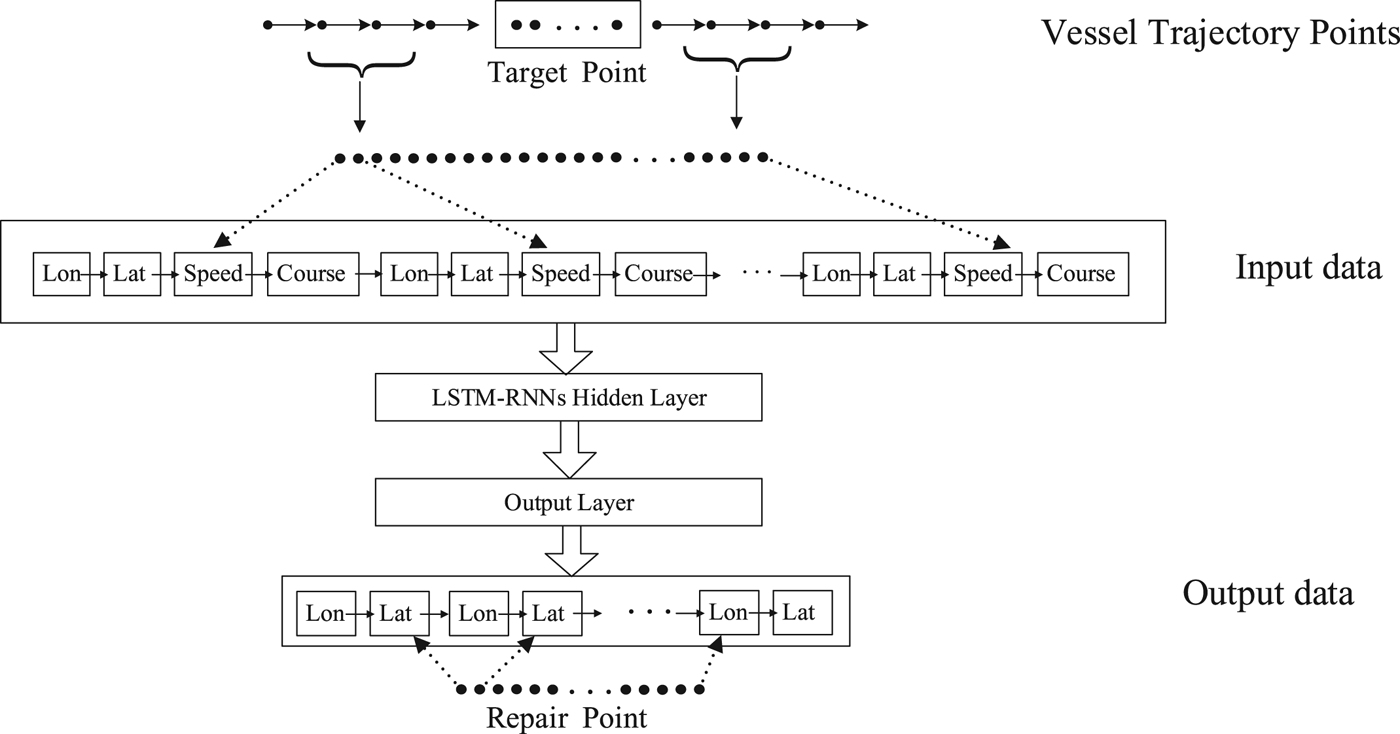
The BLSTM-RNNs input layer is similar to that of a neural network model. The lag value was determined as 41 in Section 3.2. Concerning the main attributes (longitude, latitude, speed and course) of each track point, the model input dataset is reformed as a vector and each includes 82*4 neurons (Number of points * Number of attributes). The data flow of the BLSTM-RNNs based model is schematically presented in Figure 9.
Data flow of the LSTM-RNNs-based model.

4.2. Training dataset
The original AIS data were divided into 142,655 groups, including 100,129 groups from Chongqing reach and 42,526 groups from Wuhan reach. Each group contained a series of continuous trajectories with varying lengths. Applying the data pre-processing scheme (see Section 3.1), a trajectory sequence with evenly spaced time intervals was derived. After data cleansing, a total number of 137,924 ship trajectory sequences with length greater than 100 were obtained for model establishment.
Assuming that p points were restored, then the model input dataset consisted of p + 82 points. Trajectory segments were obtained by applying a moving window method. When provided a ship trajectory sequence of t, the number of segments is calculated as t − (p + 82) + 1. Therefore, 100,000 groups were randomly selected for model training while approximately 20,000 groups were used for model testing.
4.3. Parameter assignment
The Keras package in Python 2·7 (https://pypi.org/project/Keras/) was utilised to establish the BLSTM-RNN model. The selections of major functions and parameters are demonstrated below.
(1) The activation functions sigmoid, tanh and relu are commonly applied in neural networks. Due to the particularity of the Gate in the RNN network, it is necessary to ensure that the output of the gate falls between 0 and 1. Thus, sigmoid and its variants are chosen as the activation function. The sigmoid function is written as follows:
(18) $$f\lpar x\rpar =\displaystyle{{1}\over{1+e^{-x}}}\quad \lpar 0< f\lpar x\rpar < 1\rpar $$
In the connection layer, tanh is used as the activation function since the sigmoid function results in a large gradient loss in the range of [−4, 4] (Chung et al., Reference Chung, Gulcehre, Cho and Bengio2014). The tanh here is different from the tanh of the Gate activate function in Equation (9), it is expressed as:
(19)$$tanh\lpar x\rpar = 2sigmoid\lpar 2x\rpar -1 $$(2) The number of hidden layers is set as two, and the
batch size is set as 30. The number of training rounds (epoch) is set as 50 (Glorot and Bengio, Reference Glorot and Bengio2010).
(3) The LSTM block number is set as 656 (that is, Number of (input)*2 + 1). To avoid the data over-fitting problem, the dropout value is set as 0·5 (Zaremba et al., Reference Zaremba, Sutskever and Vinyals2014; Srivastava et al., Reference Srivastava, Hinton, Krizhevsky, Sutskever and Salakhutdinov2014).
(4) The Singular Value Decomposition (SVD) initialisation method (Saxe et al., Reference Saxe, Mcclelland and Ganguli2013) has been adopted for Gate and W weight initialisation.
(5) One of the Stochastic Gradient Descent (SGD) methods, mini-batch gradient descent, is utilised as an optimisation method in the model presented here. The initial value of the learning rate is set as 0·1 and the update momentum parameter is set as 0·9.
(6) The sample dataset sequence is randomly disrupted and divided into two parts, 80% for model training and 20% for model testing.


All input data of RNN model training are normalised:
 $$y_i = \displaystyle{{x_i-x_{{\rm min}}}\over{x_{{\rm max}}-x_{{\rm min}}}}{\ast}\lpar y_{{\rm max}}-y_{{\rm min}}\rpar $$
where x max and x min correspond to the maximum and minimum values in the training dataset, y max = 0 and y min = 1 are the maximum and minimum values after data normalisation. This ensures that the magnitude of input variables falls between 0 and 1.
For activation functions of the connection layer, relu, tanh and sigmoid have been tested. Three metrics, RMSE, ACC and TOC are introduced to evaluate the model performance. In which, TOC means the Time Of Computation; RMSE represents the Root Mean Square Error and is written as Equation (21):
 $$RMSE=\sqrt{\displaystyle{{1}\over{N}}\sum_{i=1}^n\lpar x_i-y_i\rpar ^2} $$
The proportion of accurate results is denoted as the ACC rate (Wang et al., Reference Wang, Liao and Chen2002) and the threshold of residual error (T) is defined as 0·001. The model converges as the number of training rounds increases to 30. It can be found that relu is the most appropriate activation function in terms of training speed and ACC.
 $$\left\{\matrix{\vert x_{i} -y_{i}\vert < T \quad x_{i} \in accuracy \cr ACC = \displaystyle{{\hbox{Accurate number}}\over{\hbox{Total sample number}}}} \right. $$
The relu tends to be stable after epoch 17 with a minimum RMSE value (see Figure 10). The TOC for each epoch does not deviate greatly for the relu, tanh and sigmoid functions (410 s, 390 s and 415 s respectively) using an i7-6700 Central Processing Unit (CPU) and a GTX 970 Graphics Processing Unit (GPU).
Computations of ACC and RMSE for different types of activation functions (tanh, sigmoid and relu).

Similar tests have been carried out for four different gradient descent optimization methods, named as SGD, Adaptive Gradient Algorithm (Adadelta), Adaptive Moment Estimation (Adam) and Root Mean Square Prop (RMSprop). The testing results indicate that SGD performs the best and is further selected for network optimisation. All evaluations and results are compared and presented in Figure 11. The training time of each round can be reduced to 310 s when the optimisation is carried out.
Computations of ACC and RMSE for different types of optimisation methods (Adam, SGD, Adadelta and RMSprop).

5. RESULTS AND DISCUSSIONS
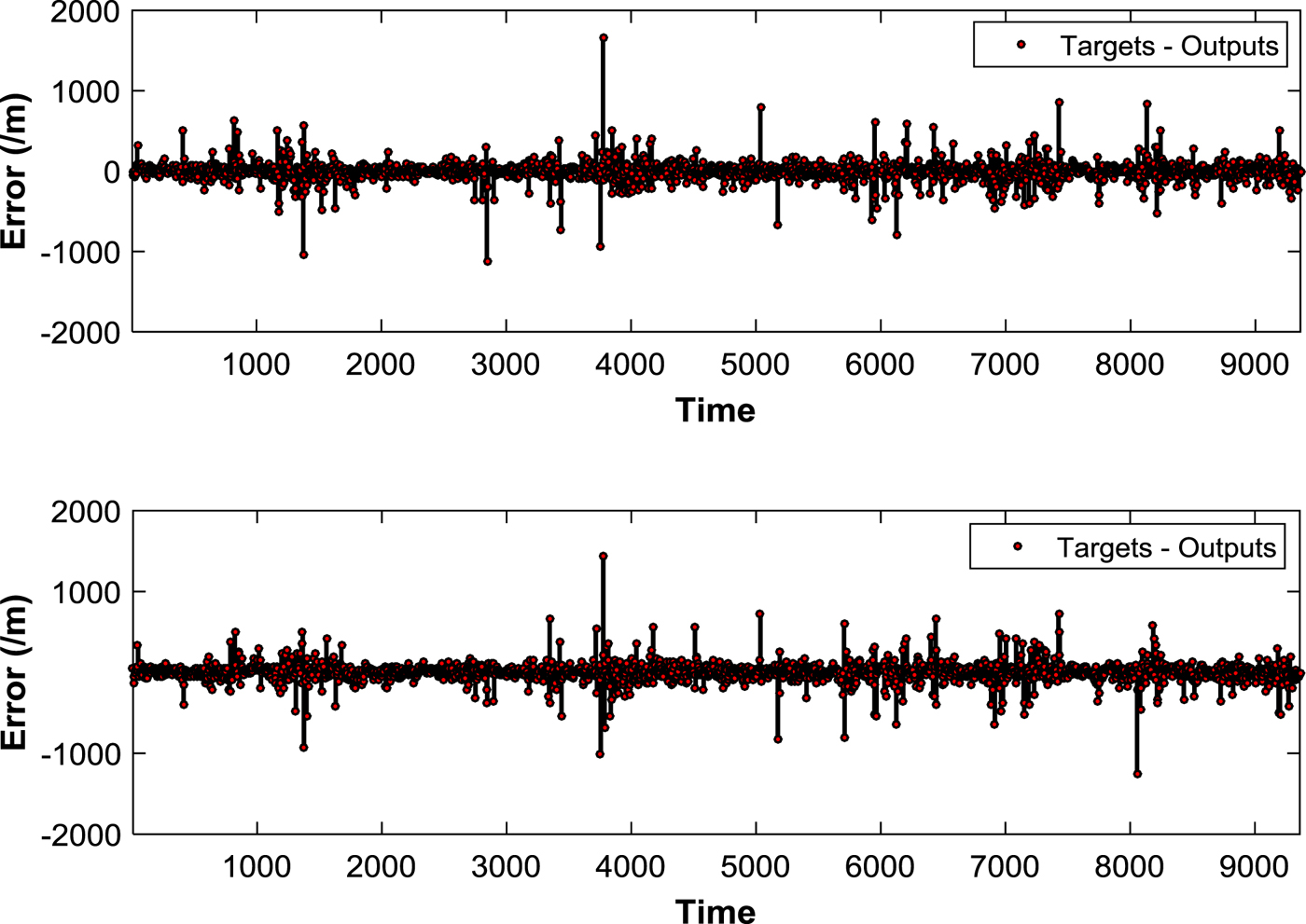
A total number of 100,000 datasets were utilised in the training and testing of the BLSTM-RNNs network. The temporal distributions of the residual errors in data repairing were derived for both Chongqing and Wuhan reaches and are shown in Figure 12.
Temporal distribution of residual error in the Longitude (upper panel) and Latitude (lower panel).

Two extra indices were introduced as R-square (R 2) and Mean Absolute Percentage Error (MAPE). The determination coefficient (R 2) falls in a range of 0 to 1, while larger values indicate more reliable predictions. MAPE is a measure of prediction accuracy of a forecasting method in statistics, for example, trend estimation (Song et al., Reference Song, Witt and Jensen2003), and has an advantage of being scale independent (Goodwin and Lawton, Reference Goodwin and Lawton1999). They are calculated as follows:
 $$MAPE = \displaystyle{{1}\over{N}}\left\{\sum_{i=1}^n\, \displaystyle{{\vert x_i-y_i\vert}\over{x_i}}\right\}$$
 $$R^2=1-\displaystyle{{\sum_{i=1}^n\lpar x_i-y_i\rpar ^2}\over{\sum_{i=1}^n\lpar x_i-\bar{y}_i\rpar ^2}} $$
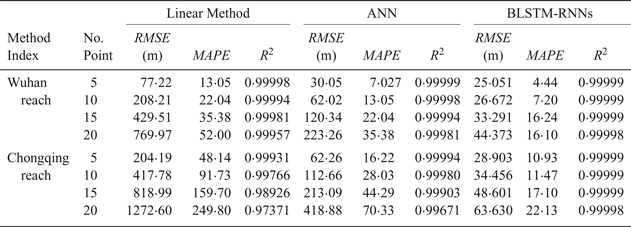
In this study, both linear and nonlinear methods are applied and compared. The linear method simply reconstructs the ship trajectory through S = V*T, after which the trajectory is restored by estimating the moving points of the ship through speed, course and time interval (Liu et al., Reference Liu, Zou and Li2015). The nonlinear Neural Network method uses a three-layer ANN model for the ship trajectory fitting (Xu et al., Reference Xu, Liu and Yang2012). The performance of BLSTM-RNNs and its counterpart (linear interpolation and ANN) were thus evaluated and are tabulated in Table 3 for the two reaches in the Yangtze River.
Accuracy evaluations of different methods at Wuhan and Chongqing reaches for a single missing point

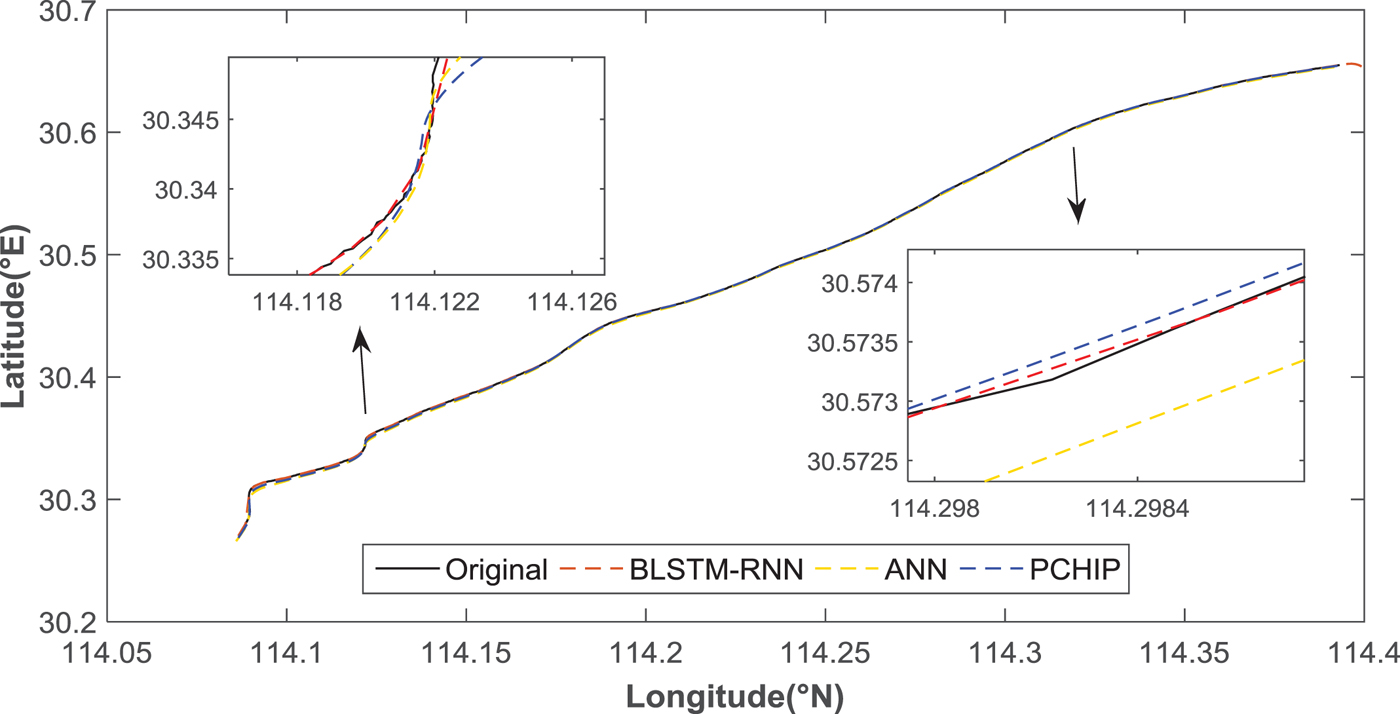
Ship trajectory restoration is more effective at Wuhan reach. Favourable results have been obtained by all three methods. However, the linear interpolation method appears to be inadequate for ship trajectory restoration at Chongqing reach. This is probably due to the nature of ship behaviours being always complex due to the dynamic hydrological processes in the mountainous waterways. Nonlinear methods (ANN and BLSTM-RNNs) produce little difference between the two research domains. Comparison between RNN and ANN indicates the superiority of BLSTM-RNNs. By computing Euclidean distance with latitude and longitude information, the average residual error for ANN and BLSTM-RNNs is 37·76 m and 24.41 m, respectively. Considering the length of inland ships, the accuracy of the model presented here is generally acceptable. Examples of ship trajectory restoration are shown in Figure 13.
Ship trajectory restoration by using different methods for single missing point.

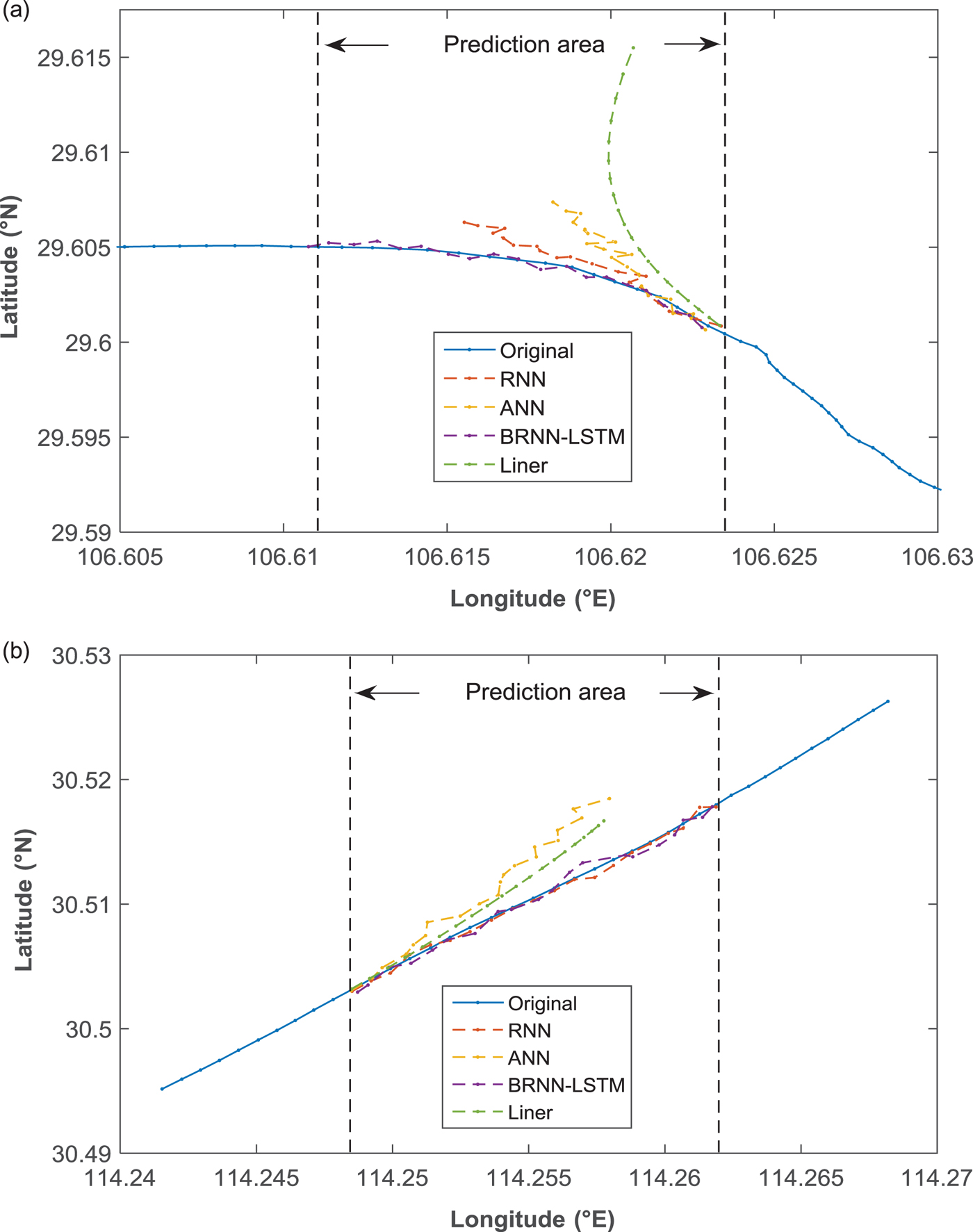
The case of multiple missing points is challenging and further discussed as follows. Suppose x i = {x 1, x 2, x 3, …, x n} is the ship trajectory data, and {x n−k, x n−k+1, …, x n} is the data sequence to be treated. {x 1, x 2, …, x n−k−1} denotes the model input at point x n−k. The predicted value x n−k is merged into existing data to form a new sequence as {x 1, x 2, …, x n−k}, which is further applied for the prediction of point x n−k+1. By iterating this process, the missing data points are progressively calculated. The results of multiple-point repairing by using different methods are also summarised and presented in Table 4.
Accuracy evaluations of different methods at Wuhan and Chongqing reaches for multiple missing points

In contrast to linear and non-linear methods, the BLSTM-RNNs provide more promising results with smaller RMSE and MAPE but higher R 2. Furthermore, performance is weakly affected by river geometry for multiple missing points scenarios while the accuracy of linear methods degrades remarkably. Nonlinear methods (for example, ANN, RNN) could provide useful results for AIS data restoration. This is further strengthened in the BLSTM-RNNs method due to the bi-directional predictions, that is, the context information of the missing data points (in Figure 14). Better model predictions would be derived when sufficient training data are available.
Ship trajectory restoration by applying different methods for multiple missing points. (a) Meandering reach at Chongqing; (b) Straight reach at Wuhan.

Sang et al. (Reference Sang, Wall, Mao, Yan and Wang2015) presented a novel method for inland ship trajectory restoration based on ship navigational features. Their method is thus verified at Shishou Bend of the Yangtze River. The residual errors of latitude fall in a range of [ − 5 · 1 × 10−6, 6 · 8 × 10−6] and are equivalent to this study (RMSE: 4 · 253 × 10−6 at Wuhan reach). Owing to the bi-directional prediction characteristics of the BLSTM-RNNs model, ship trajectory could be restored efficiently for multiple missing points in meandering waters (as presented in Table 4). This is not discussed in the work of Sang et al. (Reference Sang, Wall, Mao, Yan and Wang2015).
6. CONCLUSIONS
In this paper, Recurrent Neural Networks (RNN) and a LSTM network have been integrated and introduced to ship trajectory restoration by using inland AIS data in the Yangtze River, China as an example. Due to the Gate structure, LSTM presents promising results in dealing with time sequence problems. The performance of BLSTM-RNNs and its counterpart (linear interpolation and ANN) has been compared and evaluated for two distinct reaches (Chongqing and Wuhan) in the Yangtze River. The linear interpolation method appears to be effective and computationally efficient for dealing with simple situations, for example, straight waterways. However, the model results indicate that the proposed deep learning method is feasible and that accuracy has been greatly improved with smaller RMSE and MAPE but larger R 2. This is more obvious for waterways with complex geometry where ship behaviours are more complicated and linear methods are inadequate in achieving ship trajectory restoration. Ship trajectories with multiple missing points could be effectively restored by the BLSTM-RNNs model. The model results could be beneficial for inland ship behaviour analysis and navigation risk assessment.
Last but not least, it is noted that the residual error (calculated in terms of Euclidean distance) of the BLSTM-RNNs-based deep learning method decreases to an order of 10 m for both straight and meandering reaches. Under the circumstance of large channel curvatures or dense traffic flow, ship behaviours might become more complicated, that is, frequent course changes. This would lead to an increase of model errors and might be tackled by optimising the RNN structure or increasing input data attributes.
ACKNOWLEDGMENTS
This research is supported by the National Natural Science Foundation of China (Z.J., grant number 51709220), the National Key Research and Development Program of China (X.C., grant number 2018YFB1600404), Key Laboratory of Hydraulic and Waterway Engineering of the Ministry of Education, Chongqing Jiaotong University (Z.J., grant number SLK2018A02) AND the Fundamental Research Funds for the Central Universities (C.Z., grant number 2017-YB-021). The authors would like to express their thanks to Changjiang Maritime Bureau (Ministry of Transport, P. R. China) for providing AIS data of the Yangtze River in China.